Rauðfeldargjá canyon in Snæfellsnes
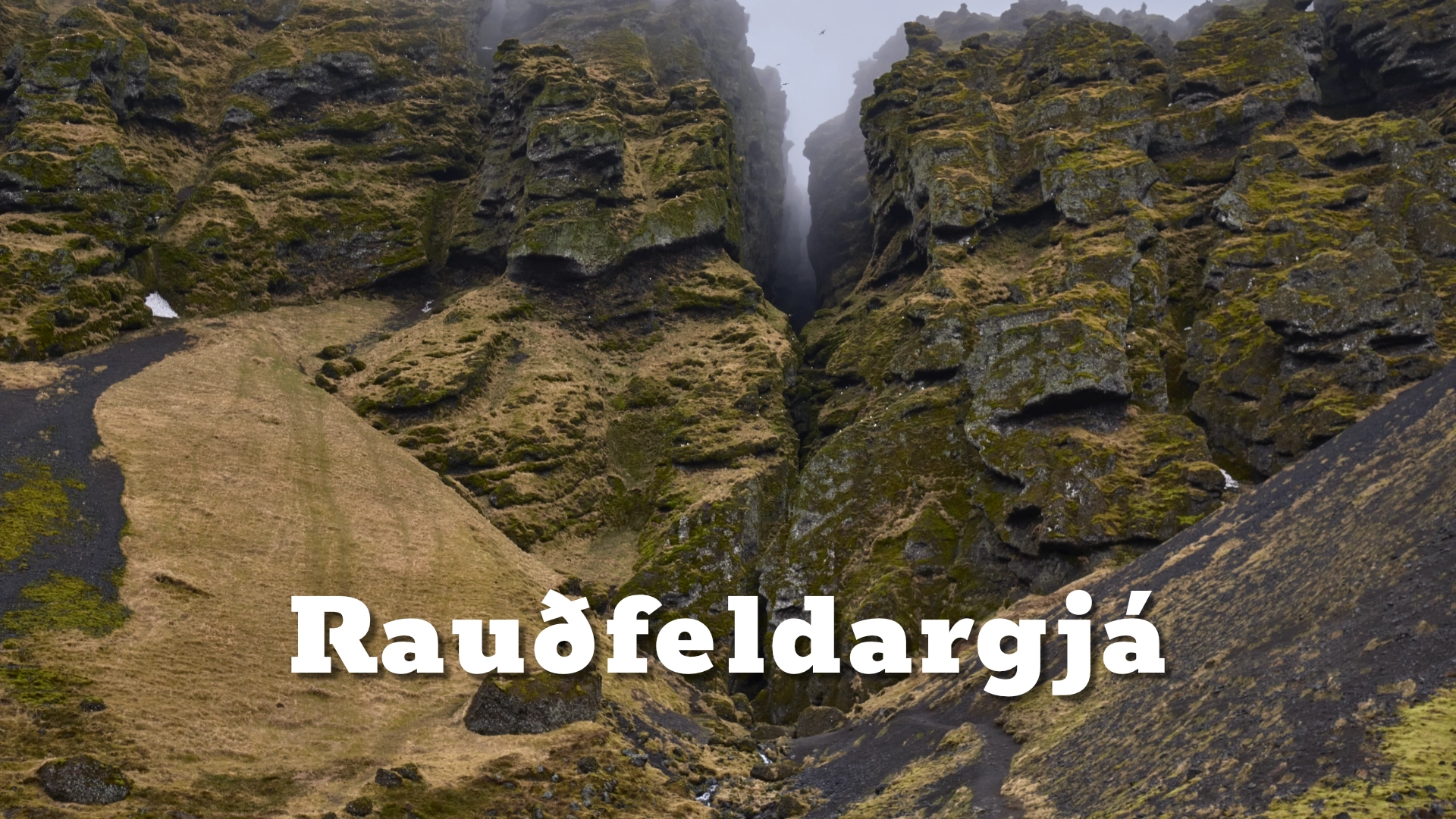
Rauðfeldargjá is a narrow gorge cut into the mountainside on the south side of Snæfellsnes. A stream runs through the cleft, and most visitors follow it as far as the first waterfall before turning back. The gorge takes its name from Rauðfeldur, one of the central figures in a tragic episode from the saga of Bárður Snæfellsás.
The location of Rauðfeldargjá canyon in Snæfellsnes
Latitude
64.7995
Longitude
-23.6469
Rauðfeldargjá canyon in Snæfellsnes
Walking into Rauðfeldargjá
The normal visit to Rauðfeldargjá does not require technical climbing. You enter by following the stream into the gorge, using the rocks along the watercourse as you move inward.
In ordinary conditions it is usually possible to reach the first section without deliberately wading, although water levels vary and wet feet are always possible. The rocks are frequently wet and slippery, and the confined space means footing matters more than the short distance might suggest.
Inside, the walls rise steeply on both sides and the light becomes much weaker than it appears from outside. The first waterfall is the natural turning point for most visitors.
Continuing beyond it is a different proposition. The route becomes a difficult scramble and climb, and going farther may involve moving directly through the water. That is not part of the normal visit and relatively few people continue beyond the waterfall.
Rockfall is also a consideration inside the narrow gorge, although it does not need to be exaggerated. The important point is simply that the environment becomes more confined and less forgiving the farther you continue.
Why the gorge is called Rauðfeldargjá
The name comes from Rauðfeldur, a young man in the saga of Bárður Snæfellsás. Bárður and his brother Þorkell settled on Snæfellsnes, with Þorkell living at Arnarstapi together with his sons Rauðfeldur and Sölvi, while Bárður lived nearby with his daughters.
Bárður’s eldest daughter was Helga. One winter, drift ice lay close to the coast, and while the young people were playing near the sea Rauðfeldur pushed Helga onto the ice.
She drifted away from land and eventually all the way to Greenland. Bárður believed his daughter had been lost and, in his anger, seized Rauðfeldur and threw him into the gorge that afterwards carried his name.
He then killed Sölvi by throwing him from a cliff at Arnarstapi, later known as Sölvahamar.
Helga had, however, survived and eventually returned to Iceland. The story is one of the most dramatic episodes in the saga tradition surrounding Bárður Snæfellsás and the landscape of western Snæfellsnes.

Bárður and the landscape
The killing of Rauðfeldur and Sölvi belongs to a much larger cycle of stories about Bárður Snæfellsás. After the conflict with his brother and the loss he believed he had suffered, Bárður gradually withdrew from ordinary human society.
The sagas eventually place him within Snæfellsjökull, where he became a protective and supernatural figure associated with the mountain and the peninsula.
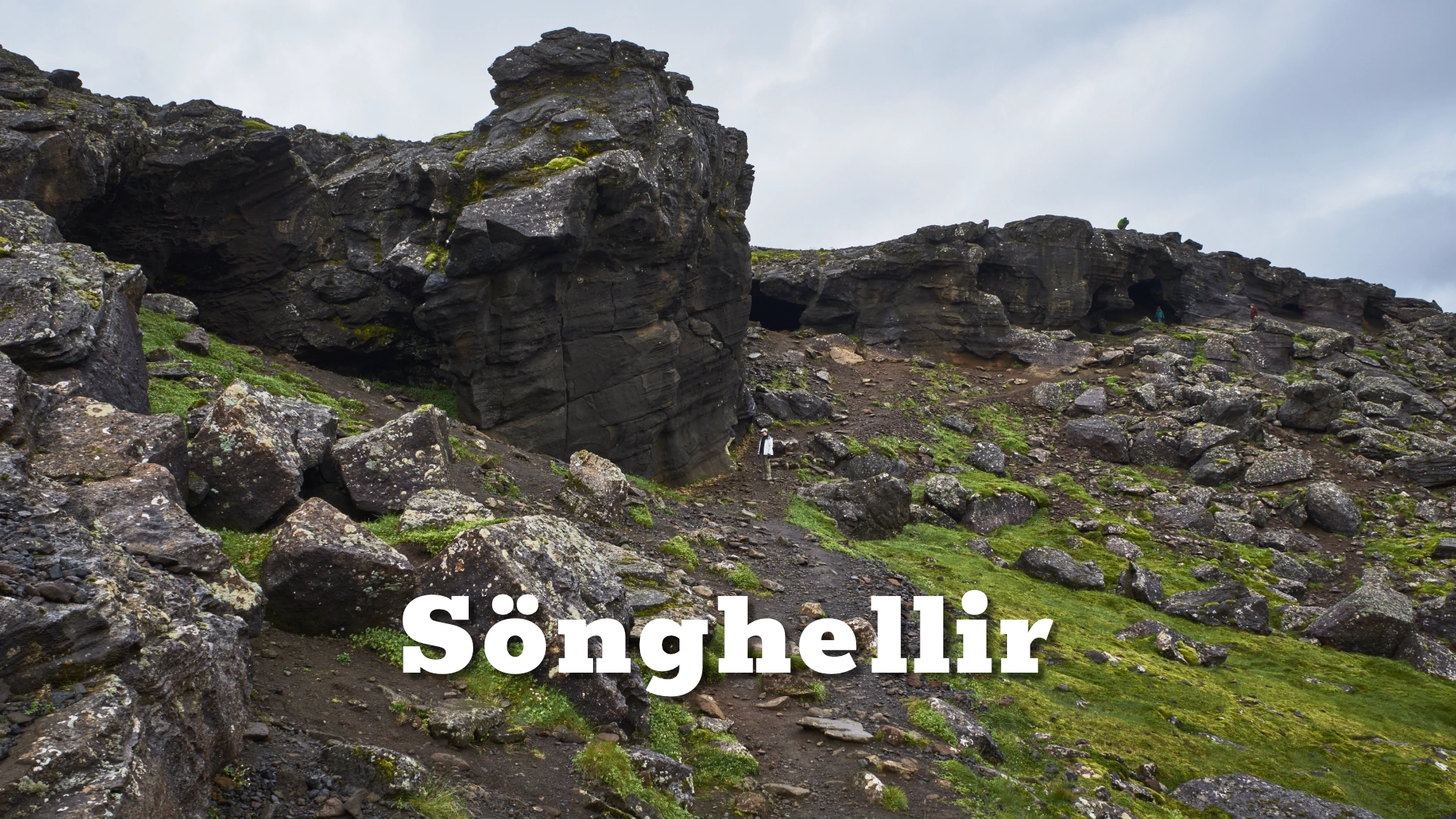
That is why Bárður appears repeatedly in place names and stories across this part of Snæfellsnes. Rauðfeldargjá is one part of that much larger narrative landscape, alongside Arnarstapi, Sönghellir and other locations connected with the saga.
The gorge therefore carries more than a name. Its physical form and its story have become inseparable, and understanding the saga explains why such a small place has remained so prominent in the cultural geography of Snæfellsnes.
Visiting in different conditions
Rauðfeldargjá can be visited throughout the year, but conditions change the character of the place considerably.
In summer, the stream, moss and reflected light inside the gorge create a very different atmosphere from the open slopes outside. The confined space can remain cool and damp even when conditions beyond the entrance are mild.
In winter, snow and ice can make both the approach and the interior much more slippery. Water levels also vary with season and weather, which matters because the route follows the stream itself.
A visit that is straightforward on one day can therefore be wetter or more difficult on another. There is a parking area below the gorge, and the approach from there climbs steadily towards the opening.
The practical lesson is simple: the distance is short, but the conditions inside the gorge matter more than the distance itself.
A place to stop rather than conquer
Rauðfeldargjá is not a gorge where reaching the deepest possible point is the purpose. For most people, the experience is complete by the time they reach the first waterfall.
The change from open landscape to enclosed rock is what makes the visit memorable. The sound of the stream becomes louder, the light narrows, and the line of sky above becomes increasingly small as the walls close in.
Turning around at the waterfall is therefore not missing part of the destination. It is the normal visit.
The gorge works best when understood as an experience of entering a confined landscape rather than as a challenge to see how far it can be followed.
Interesting facts:
- Rauðfeldargjá takes its name from Rauðfeldur, a young man from the saga of Bárður Snæfellsás.
- Rauðfeldur and his brother Sölvi were the sons of Bárður’s brother Þorkell.
- Bárður’s daughter Helga survived after drifting away from Snæfellsnes on sea ice.
- According to the saga, Bárður killed Rauðfeldur by throwing him into the gorge.
- He killed Sölvi at Sölvahamar near Arnarstapi.
- Most visitors turn back at the first waterfall inside Rauðfeldargjá.
- Continuing beyond the waterfall involves a difficult scramble and climb rather than an ordinary walk.
- The gorge can be visited in winter, although ice changes the conditions considerably.
Image Gallery


Photography tips:
- The main challenge inside Rauðfeldargjá is the extreme contrast between the dark interior and the bright entrance or strip of sky above.
- Decide whether the image is about the gorge interior or the outside light and expose accordingly rather than trying to force everything into one exposure.
- Handheld photography is usually the most practical option because the narrower sections leave little room for a tripod.
- Protect equipment from spray, damp rock and contact with the wet walls, especially when moving through tighter parts of the gorge.
- The moss-covered walls can reflect soft green light into the interior, particularly when the sky is bright but direct sunlight does not reach the gorge.
- Do not photograph only towards the waterfall. Looking back towards the entrance can be equally strong, with the bright outside landscape framed by dark rock.
- Wider lenses are useful for showing the height and confinement of the gorge, while slightly longer focal lengths can isolate the stream, rock textures and layers of reflected light.
- The first waterfall is usually the natural photographic endpoint as well as the natural walking endpoint. There is little reason to continue farther solely for a photograph.
Destinations nearby