Stykkishólmur on Snæfellsnes peninsula
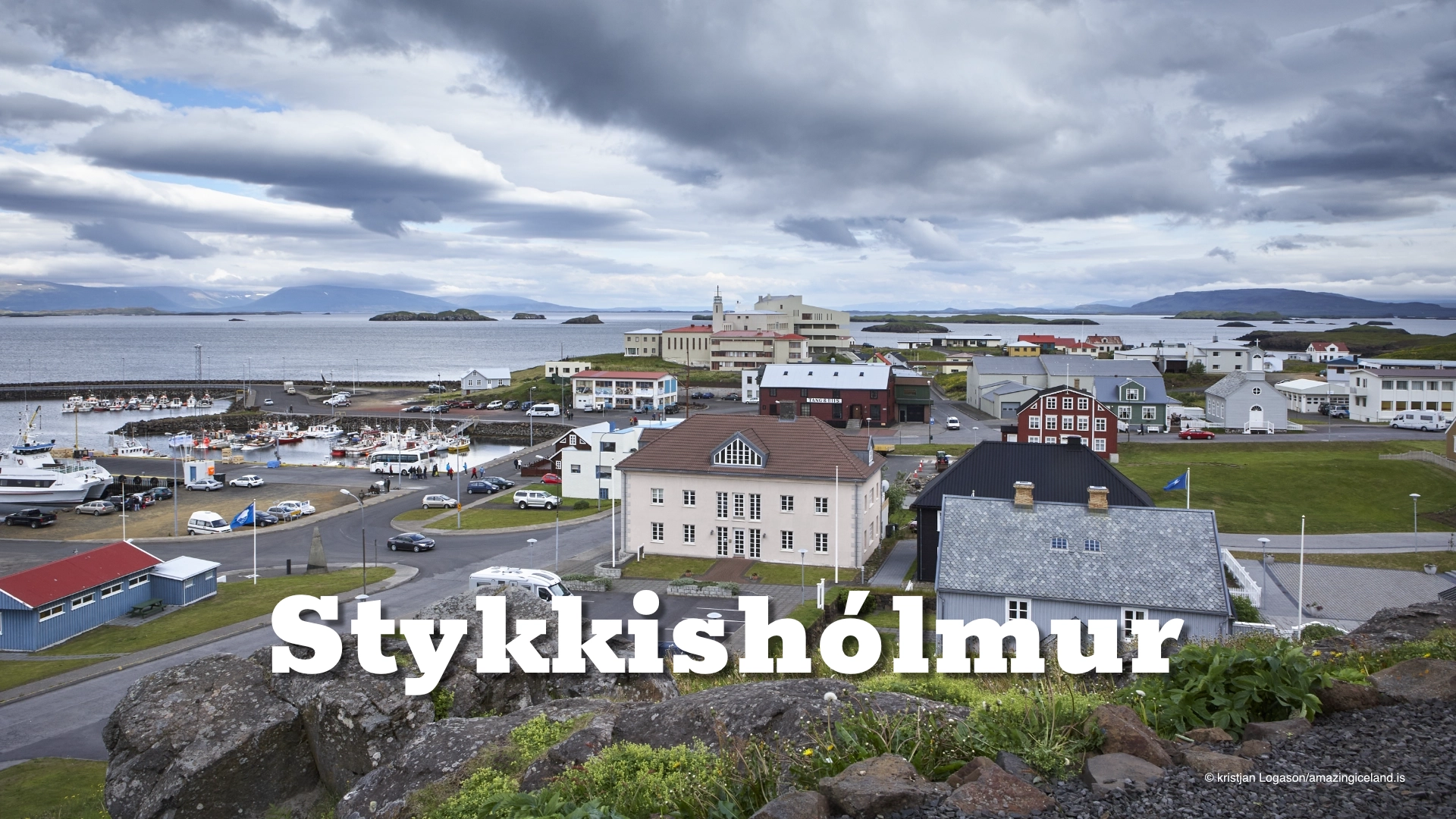
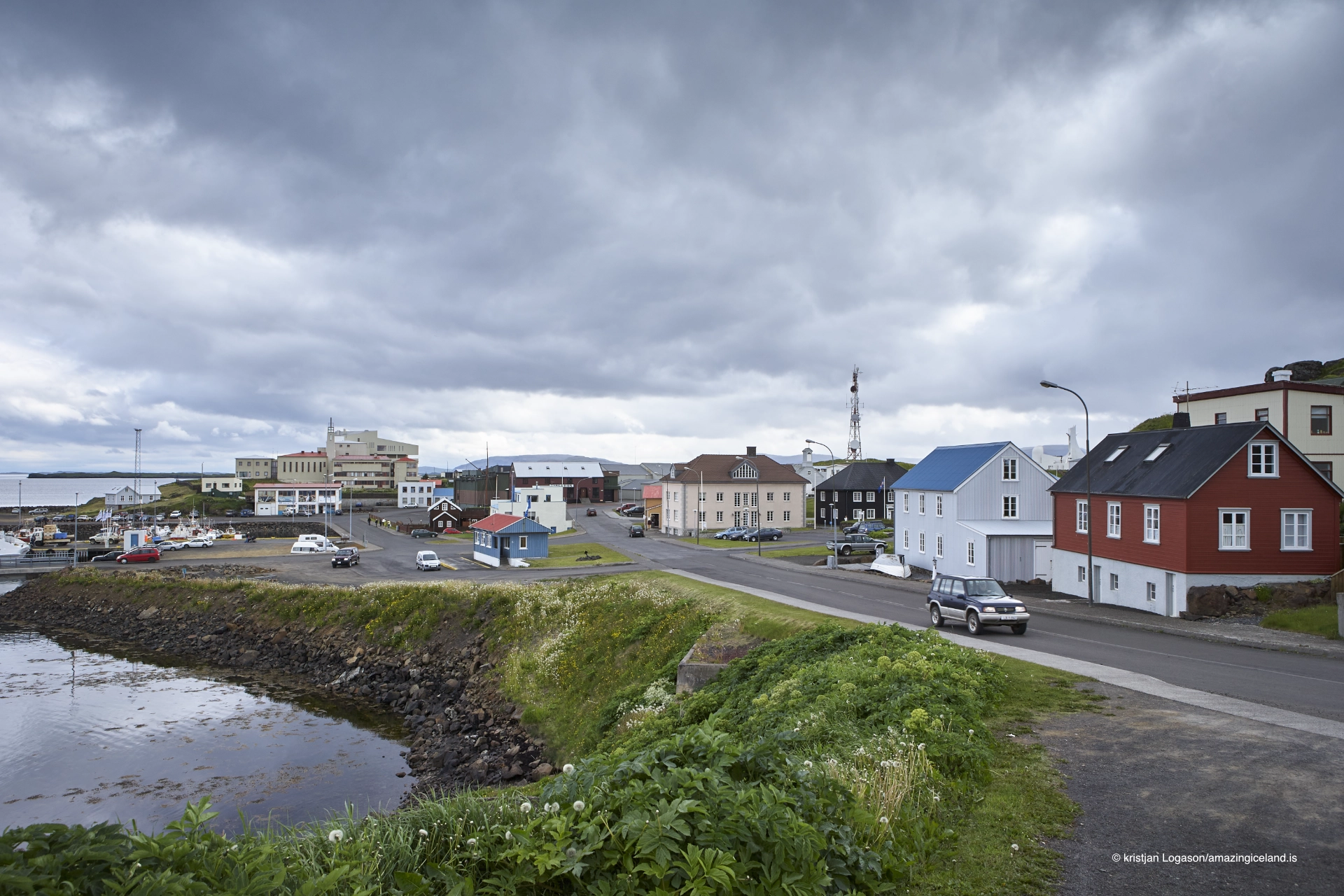
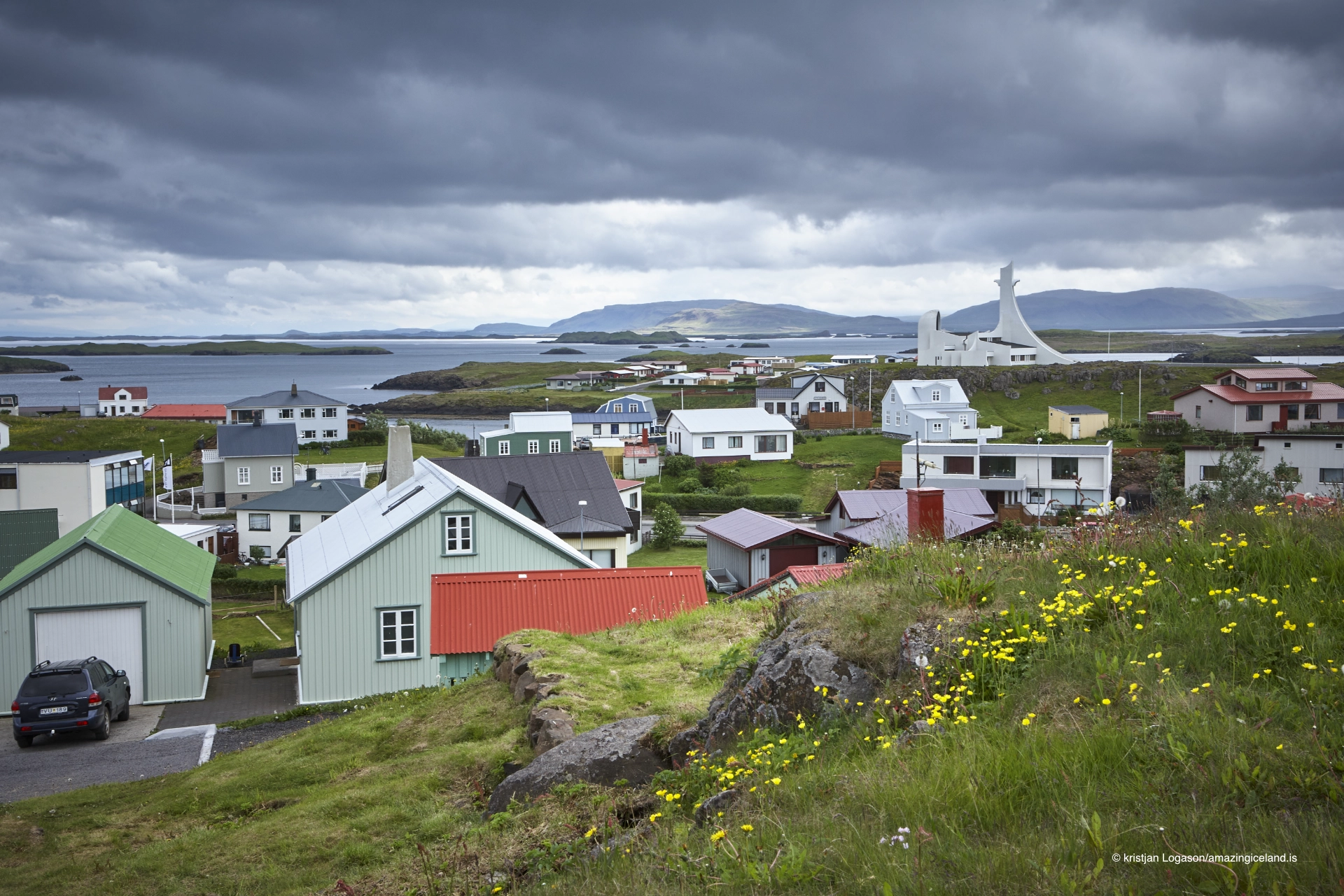
On the northern coast of Snæfellsnes, **Stykkishólmur** looks out across the islands and skerries of Breiðafjörður. It is the largest settlement on the peninsula, but it remains compact enough that most of the town can be explored comfortably on foot.
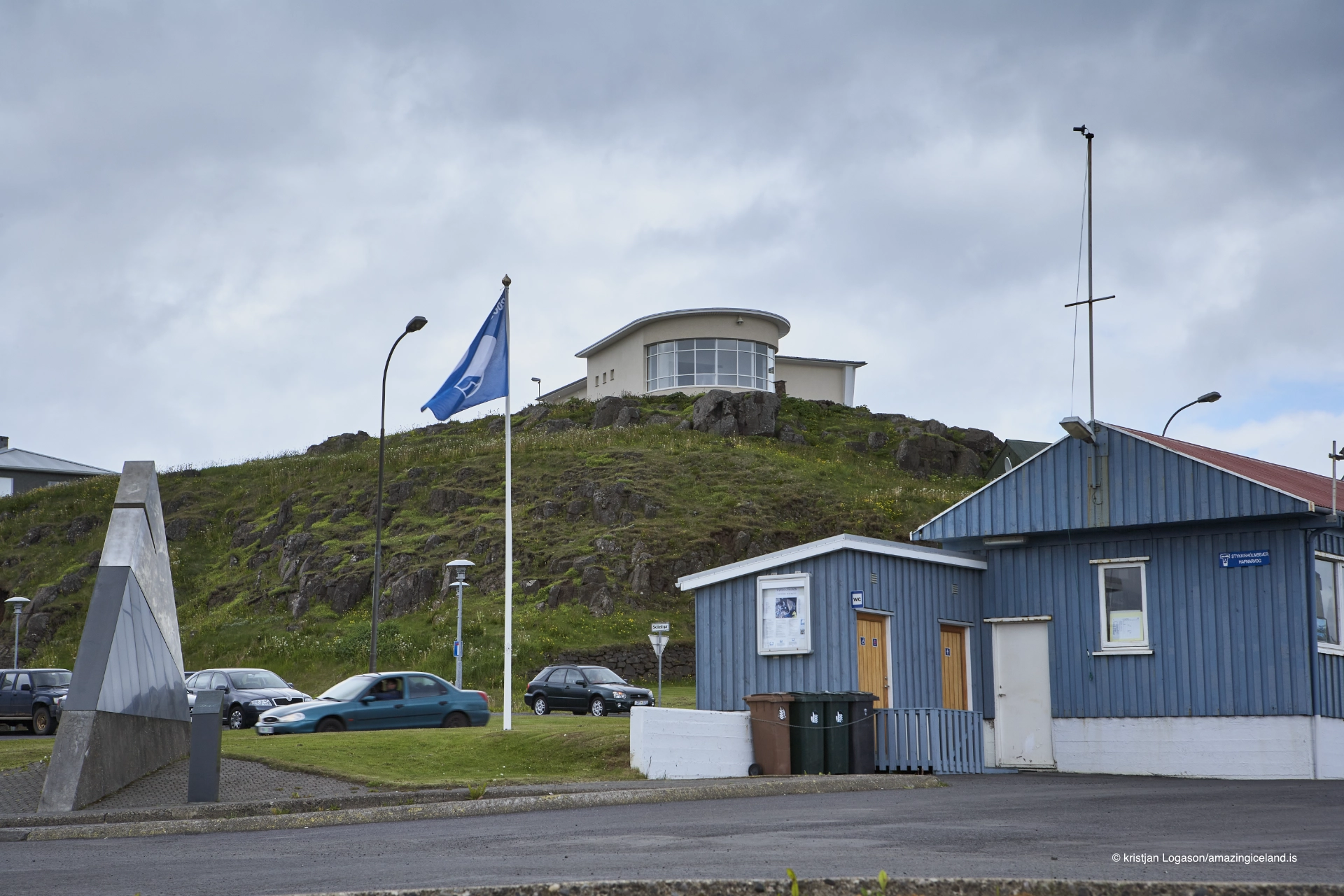
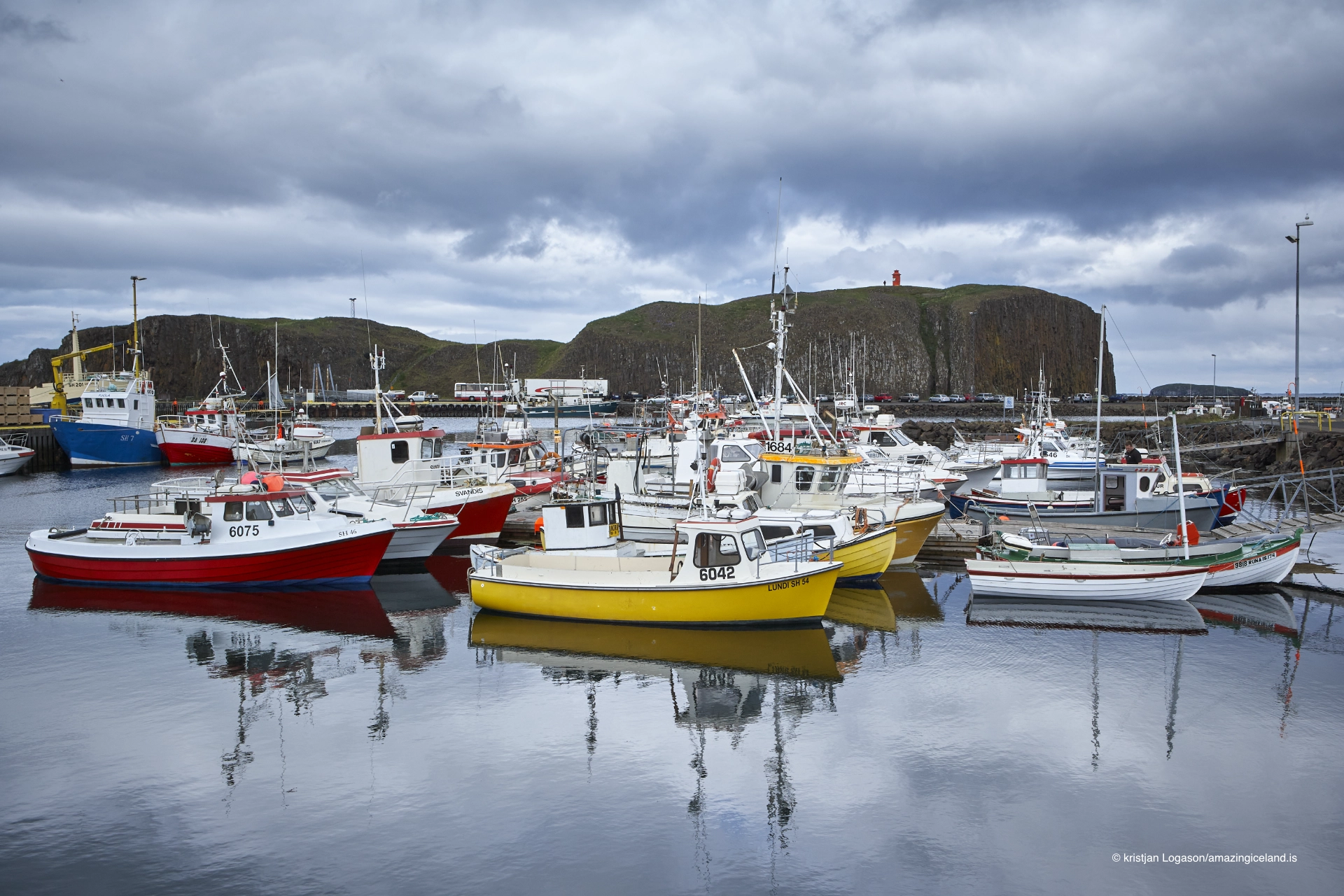
The harbour has always been the centre of Stykkishólmur. Around it are some of the most distinctive historic buildings on Snæfellsnes, the island of Súgandisey, the ferry connection across Breiðafjörður and a cultural history that developed alongside trade, administration and fishing.
Stykkishólmur is therefore more than somewhere to stop while travelling around Snæfellsnes. The town has enough history, architecture and relationship with Breiðafjörður to stand as a destination in its own right.
The location of Stykkishólmur on Snæfellsnes peninsula
Latitude
65.0756
Longitude
-22.7292
Stykkishólmur on Snæfellsnes peninsula
Why a town grew here
Stykkishólmur occupies one of the naturally sheltered harbour sites on the southern side of Breiðafjörður. The name appears in written sources as early as 1274, although the settlement that developed into the present town came much later.
A royal trading licence was granted for Stykkishólmur in 1596, establishing its role as a recognised trading place. The harbour was the reason. Breiðafjörður is filled with islands, reefs and skerries, and the protected water around Stykkishólmur provided valuable anchorage on a coast where safe harbours were important.
By the early 19th century, a permanent settlement was developing around trade, fishing and services connected with the bay. In 1850, Stykkishólmur became an administrative centre for the southern part of Vesturamt, strengthening its position as much more than a fishing settlement.
That history still explains the shape of the town. Stykkishólmur grew because the harbour connected it with Breiðafjörður, and much of its later importance developed from that same relationship with the sea.
Árni Thorlacius and Norska húsið
One of the people most closely connected with 19th-century Stykkishólmur is Árni Thorlacius. He took over his family’s business interests in the town in 1827 and became an important figure in its commercial and cultural development.
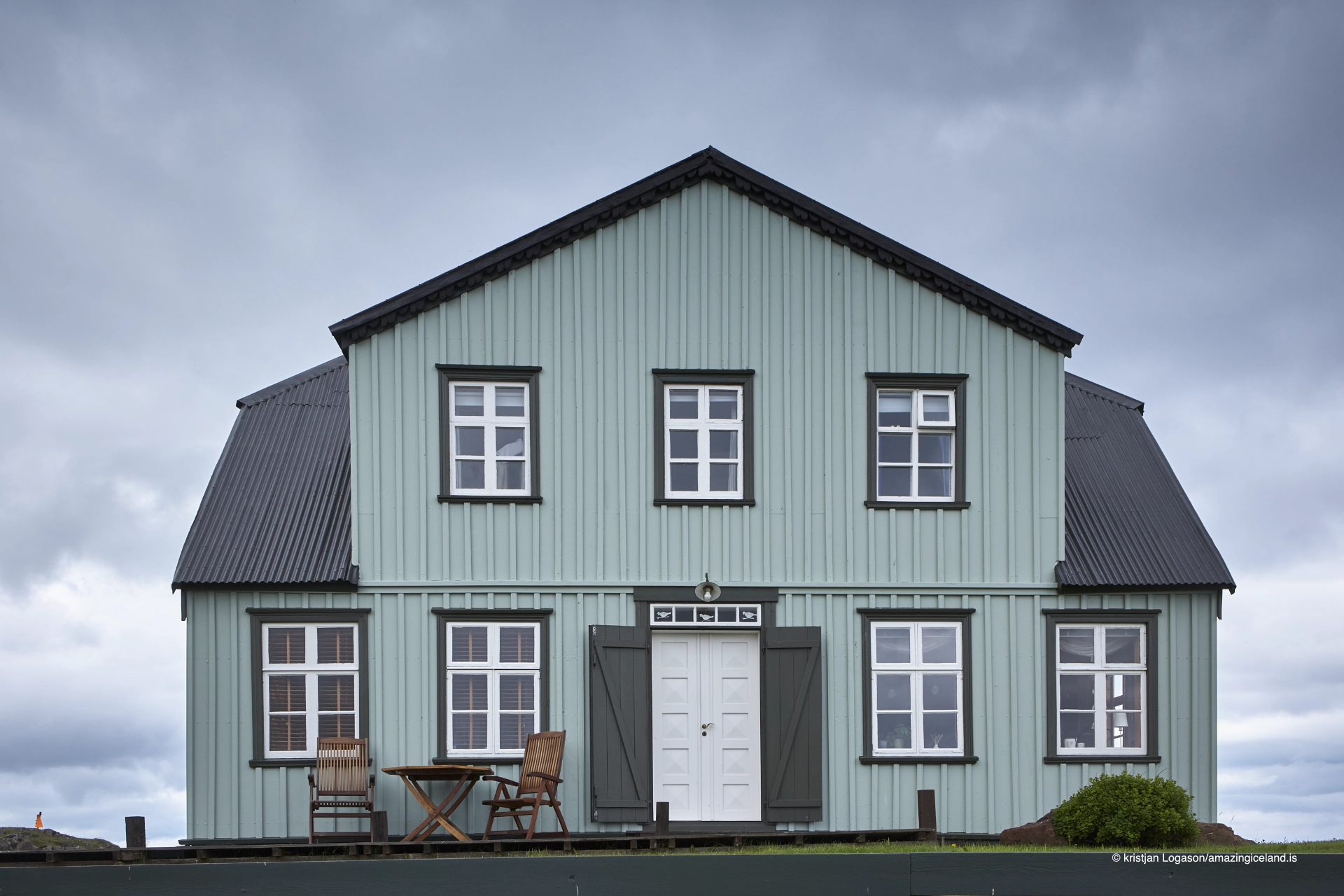
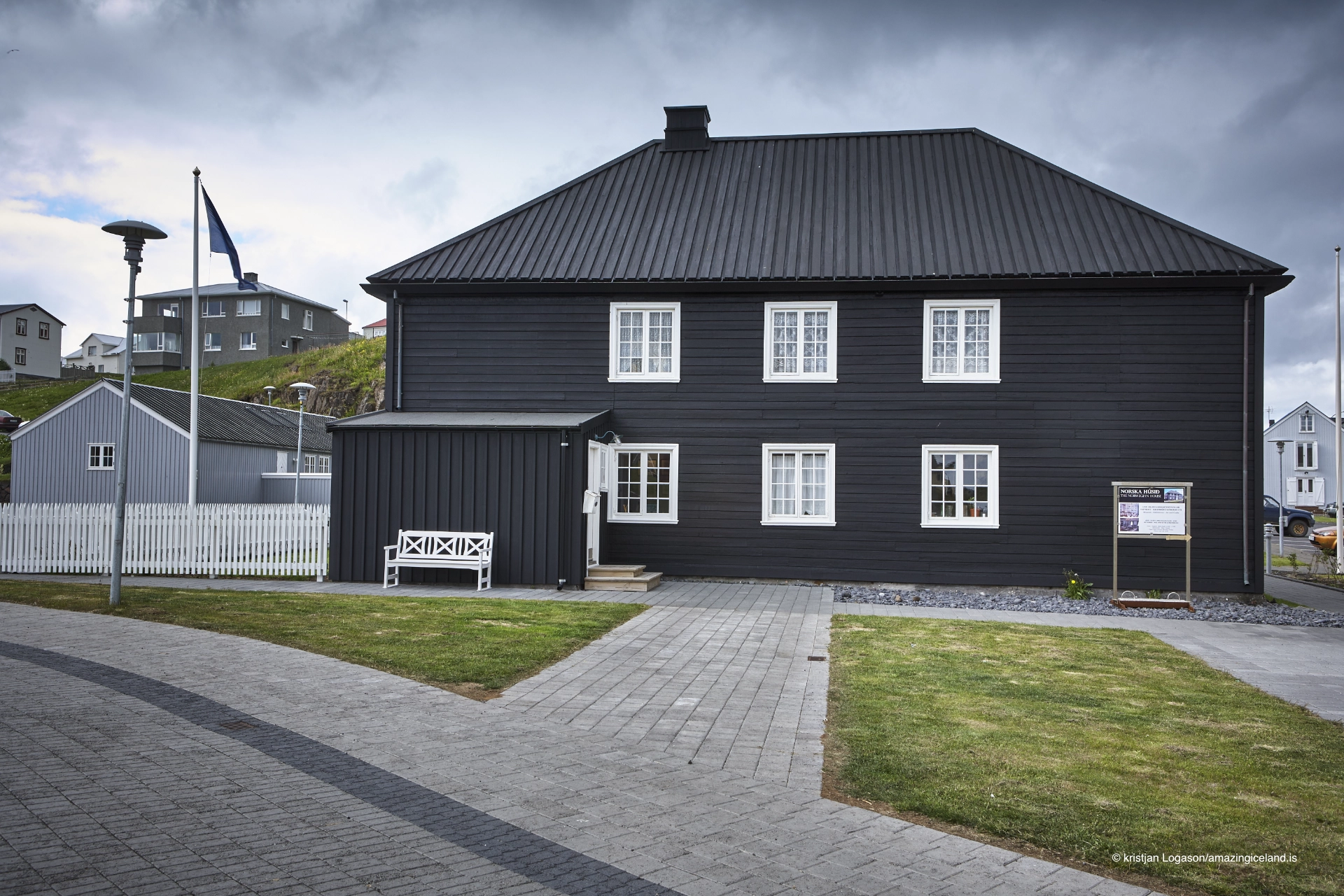
In 1832, he built Norska húsið — the Norwegian House. The timber was imported from Norway, and the building is regarded as the first two-storey residential house built in Iceland.
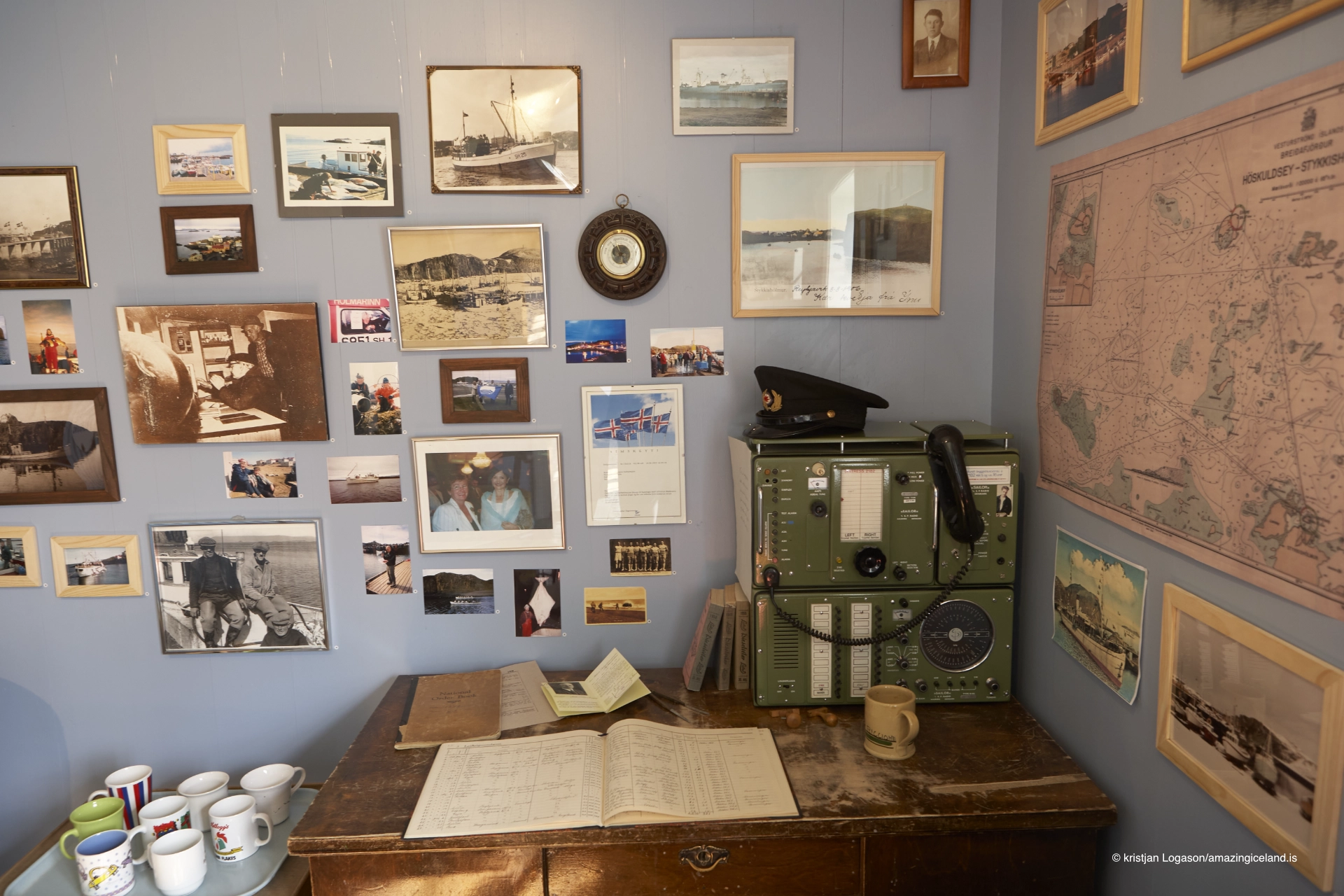
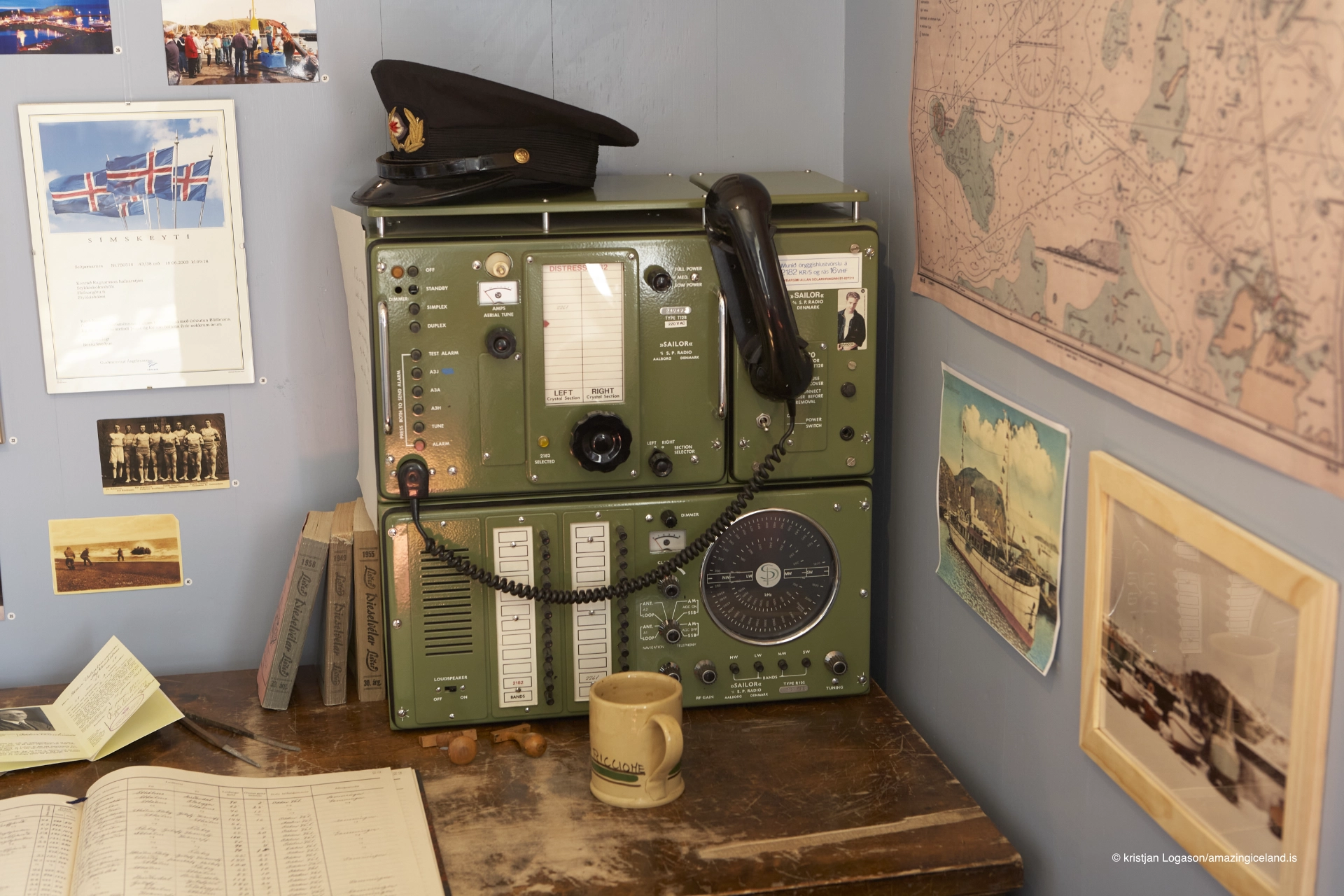
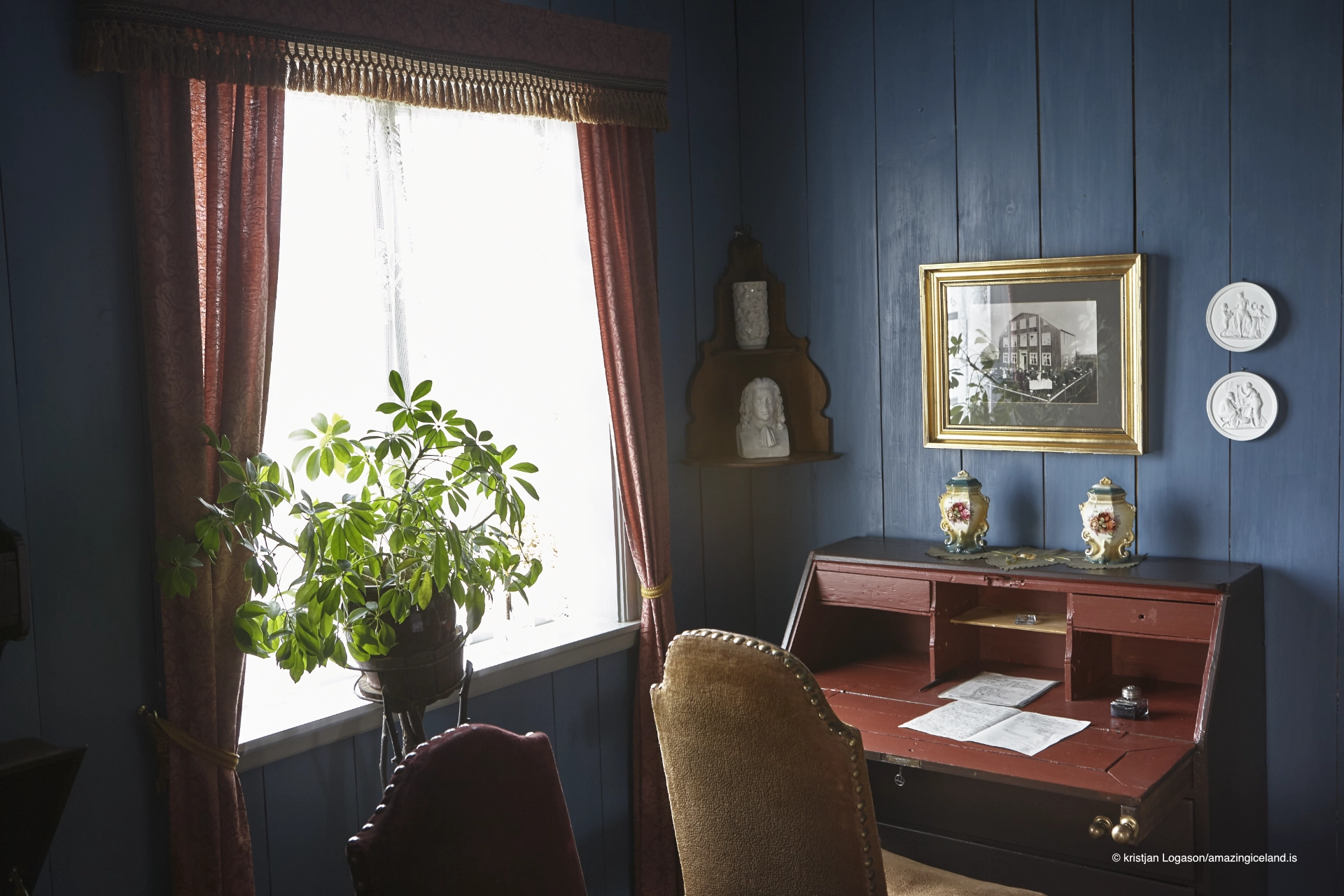
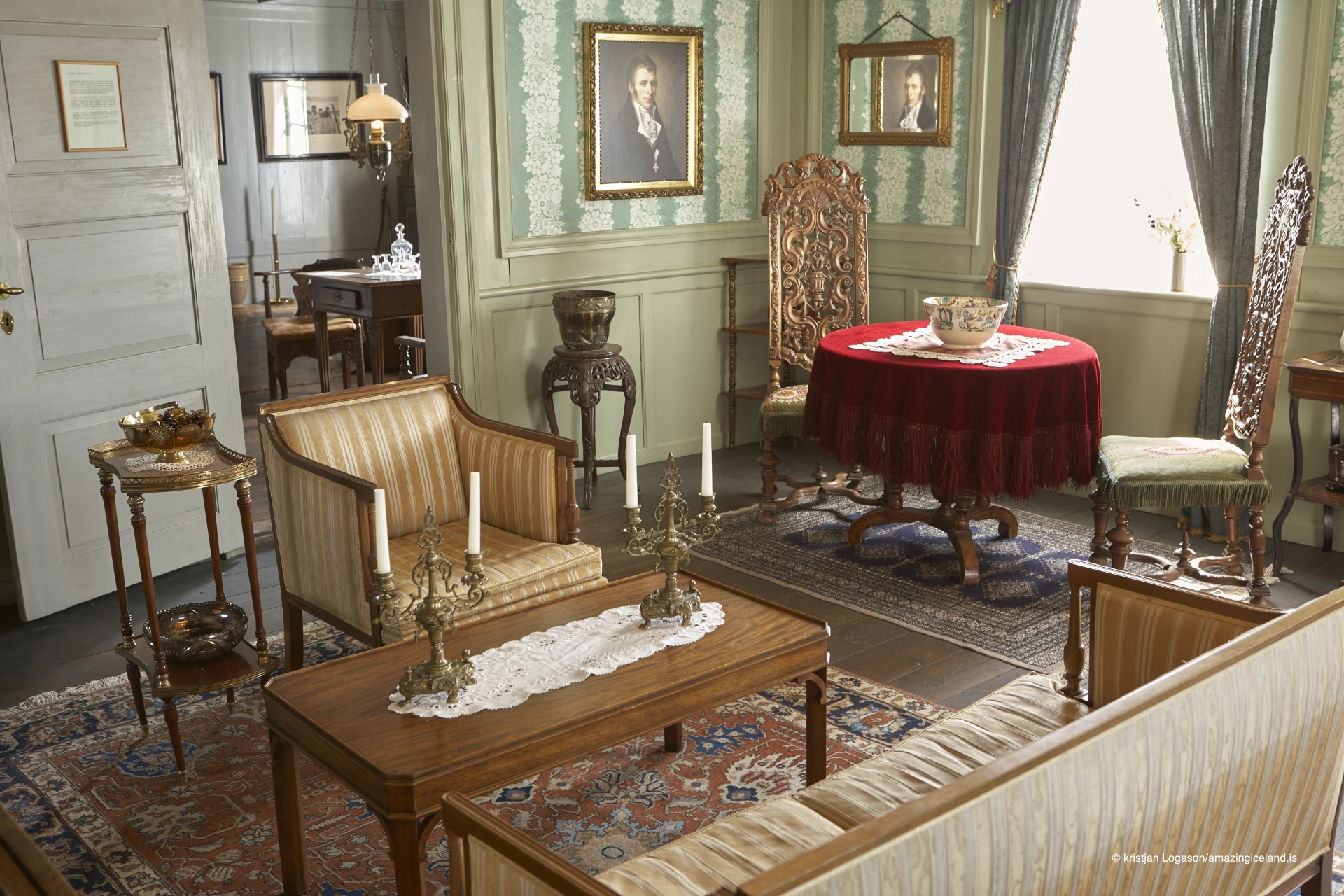
Today, Norska húsið is the regional museum for Snæfellsnes and Hnappadalur. Its rooms preserve something of the domestic world of Árni and his wife, Anna Magdalena Steenback, while the museum also holds material connected with the wider history of the peninsula.
Árni’s contribution to Stykkishólmur was not limited to trade and buildings. In 1845, he began regular weather observations in the town. Those measurements developed into the longest continuous series of meteorological observations in Iceland.
It is a remarkably quiet piece of scientific history for a small harbour town, and one that adds another layer to Stykkishólmur beyond fishing and commerce.

Súgandisey and the harbour
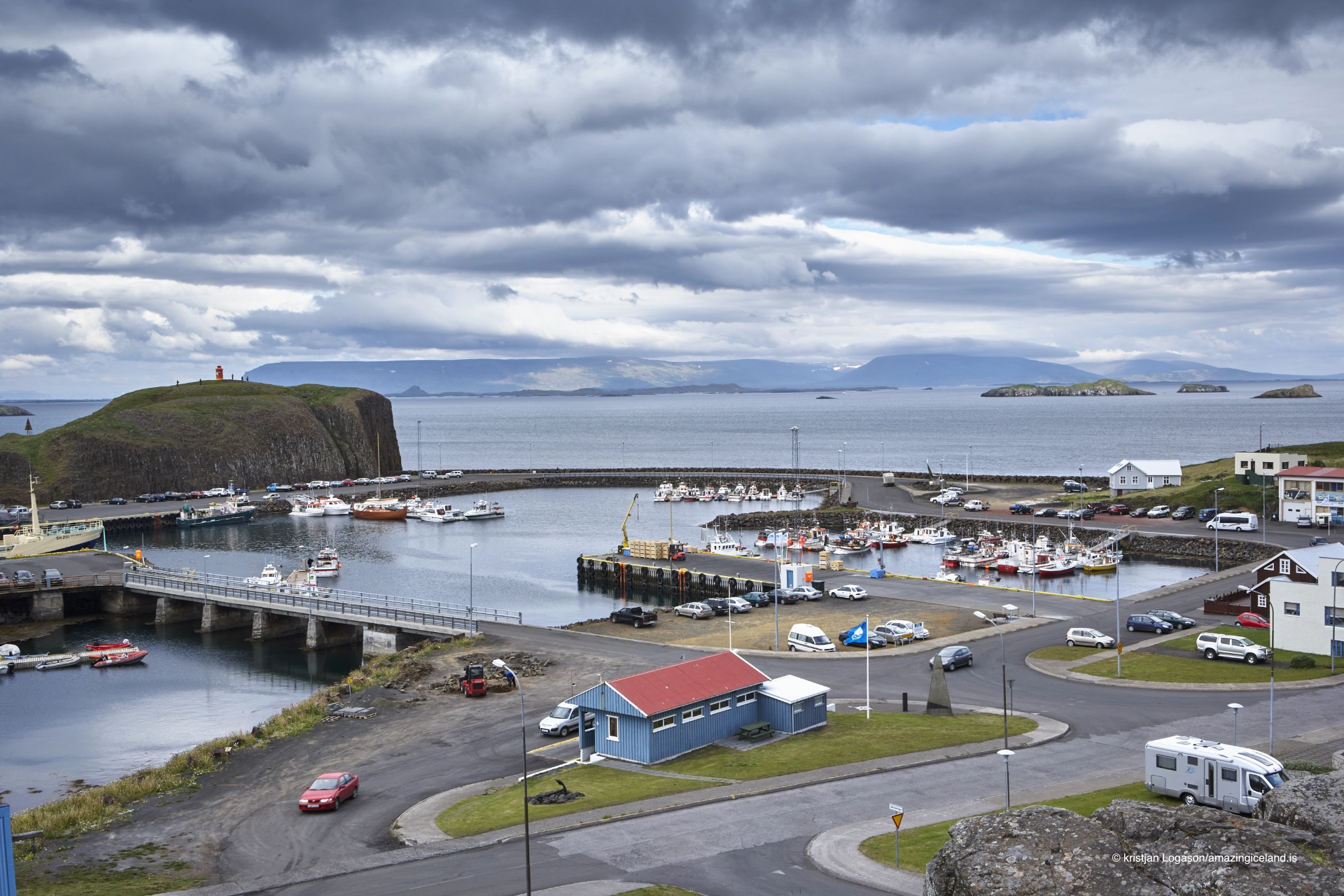
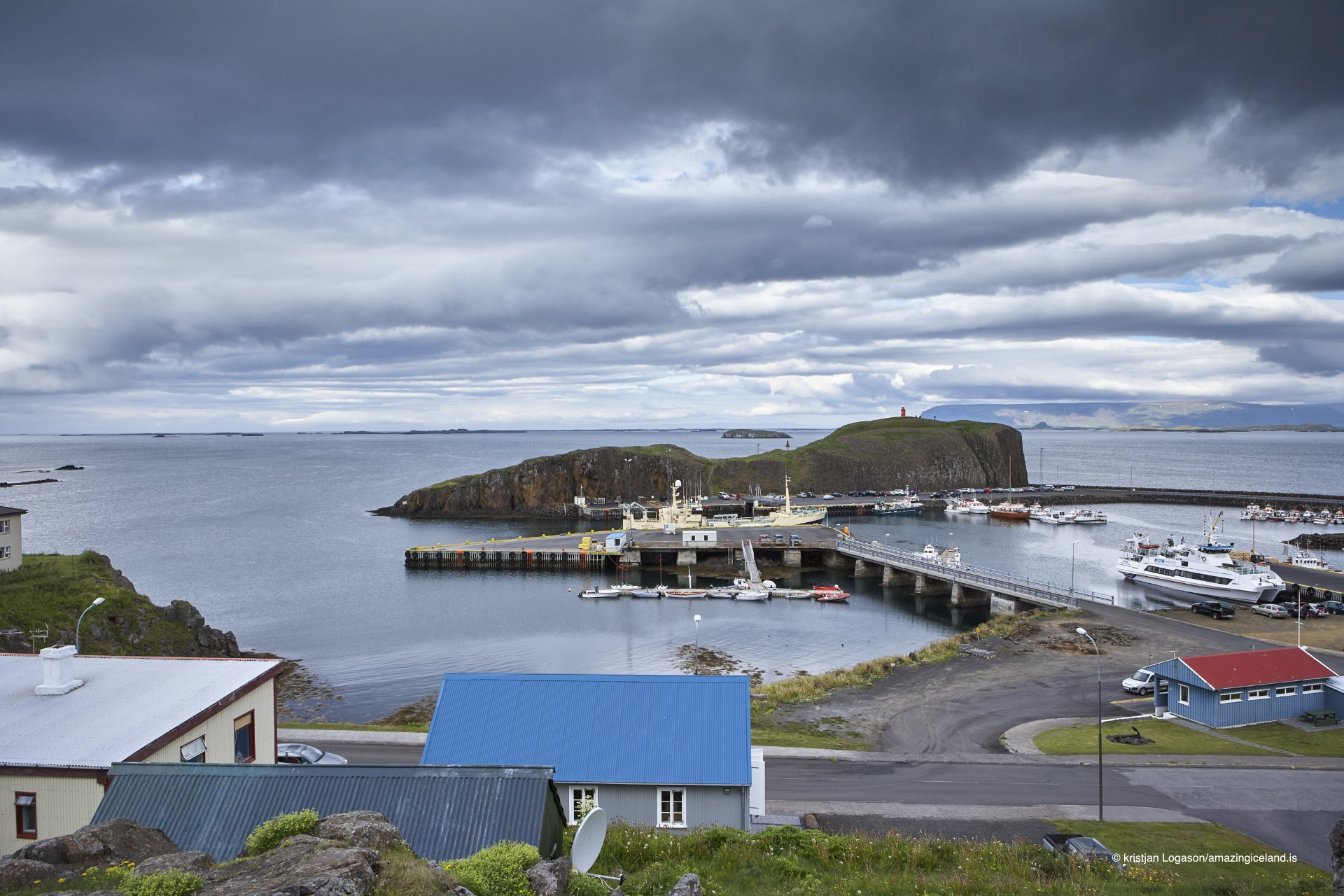
At the mouth of the harbour lies Súgandisey, one of the best places from which to understand the physical setting of Stykkishólmur. Today the island is connected directly to the town and reached by steps and a walking path.
That connection is relatively recent. Súgandisey was joined to the mainland by landfill in 1989, when harbour facilities were expanded for the ferry across Breiðafjörður.
The small lighthouse on the island is older. It was originally built at Grótta in 1897 and moved to Súgandisey in 1942.
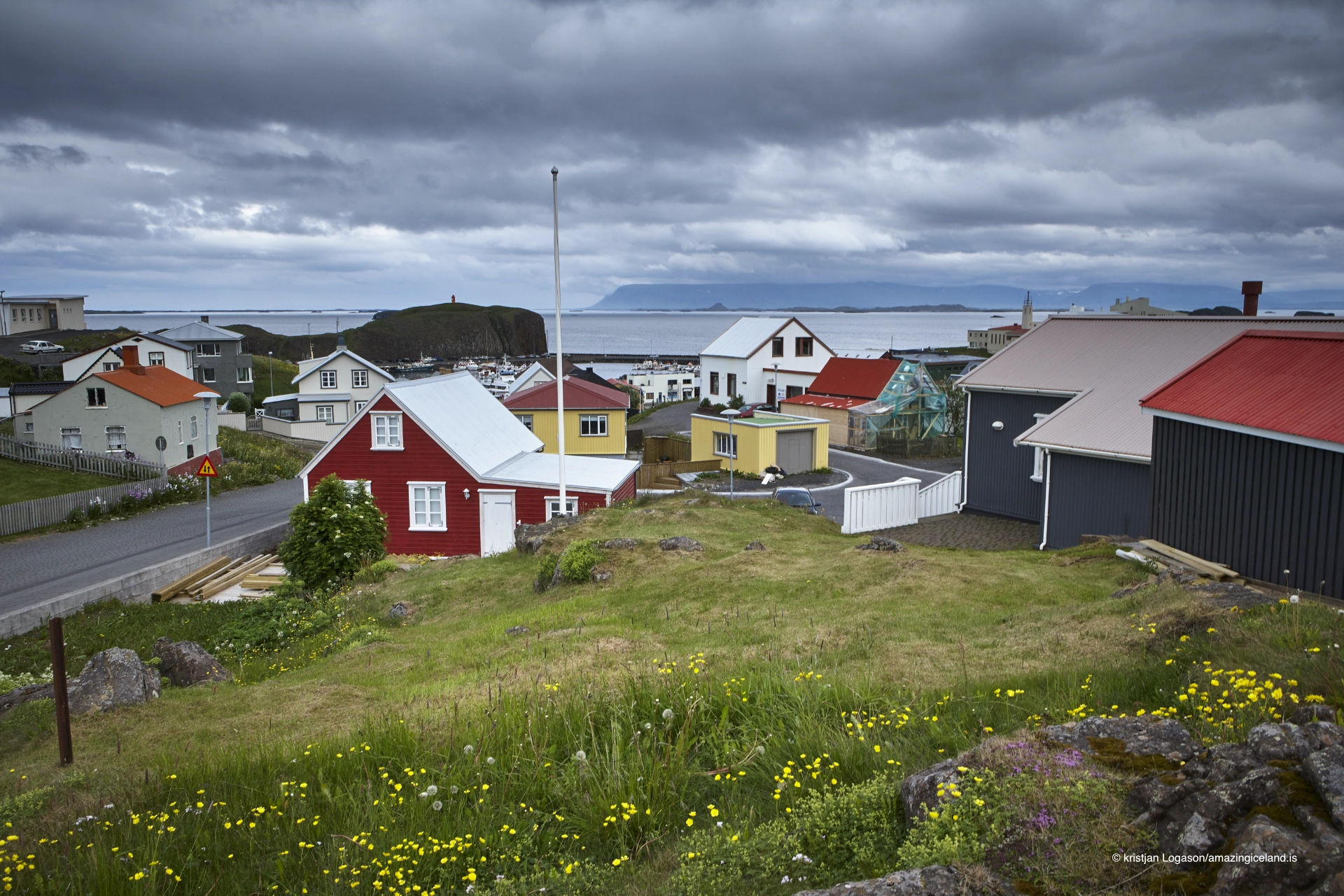
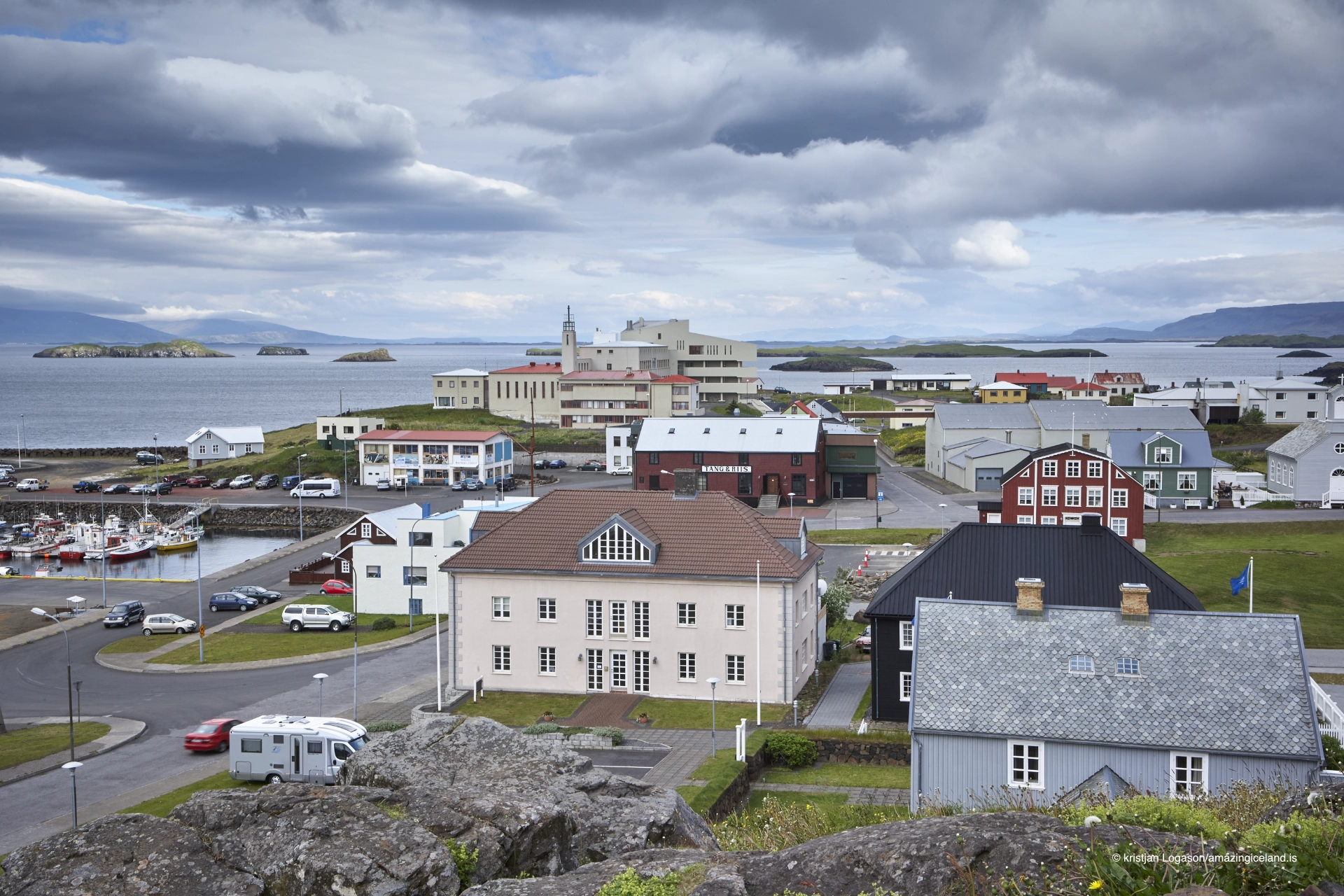
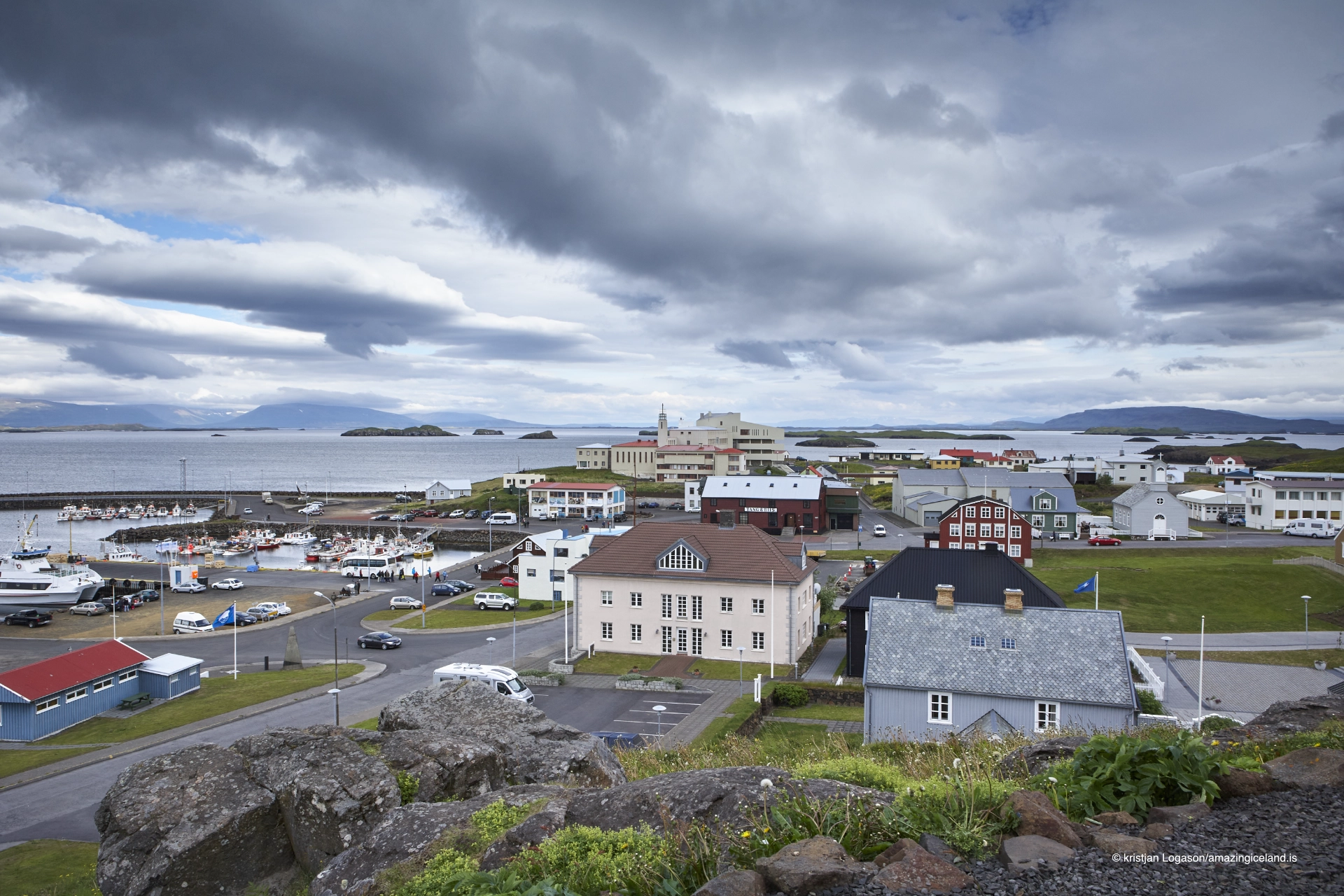
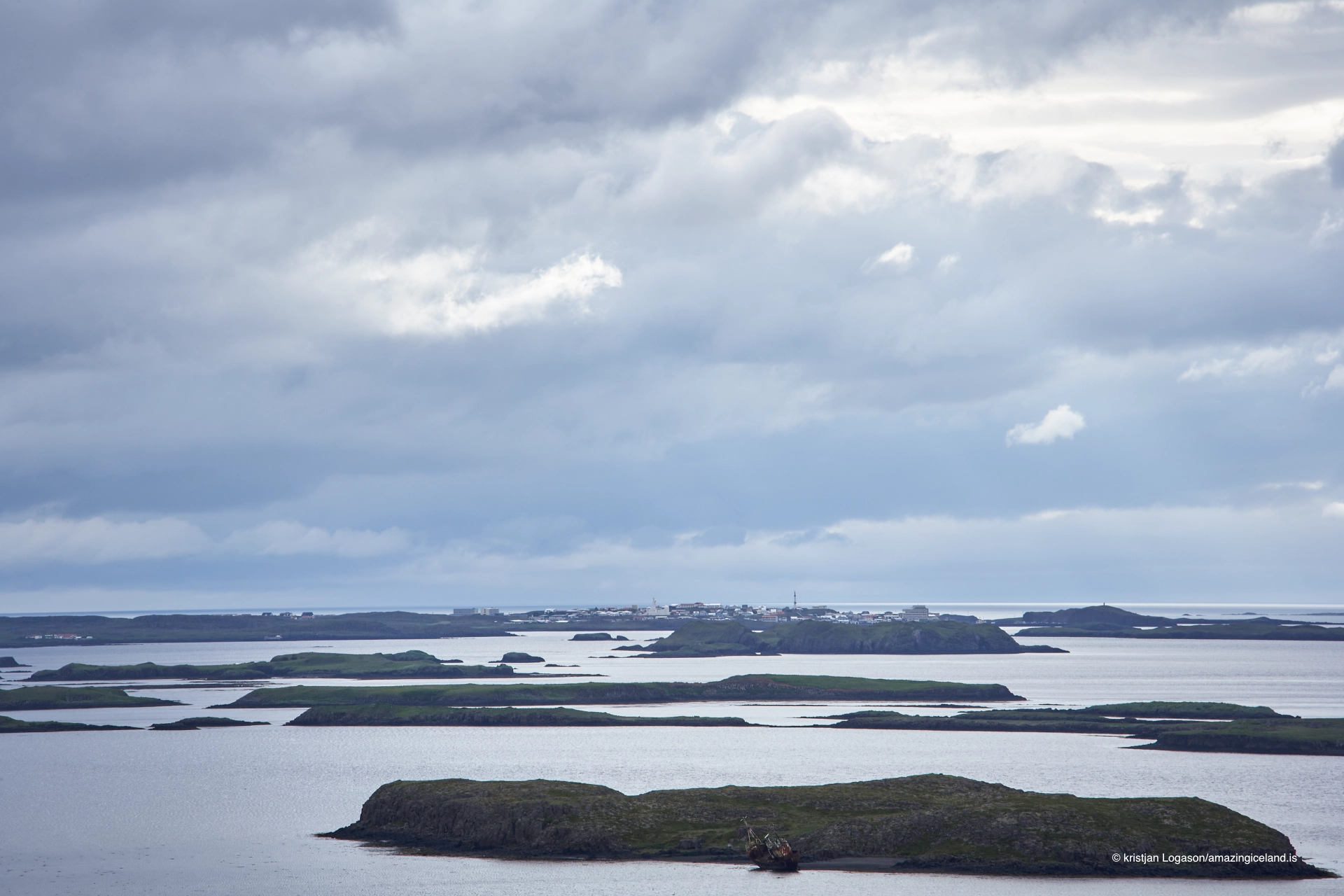
A walk to the top gives one of the clearest views of the town. The harbour lies immediately below, Stykkishólmur spreads behind it, and Breiðafjörður opens outward into layers of islands and skerries.
From this viewpoint, the logic of the settlement becomes obvious. Stykkishólmur faces the bay because the harbour and the sea shaped everything that developed around them.
A town with buildings worth knowing by name
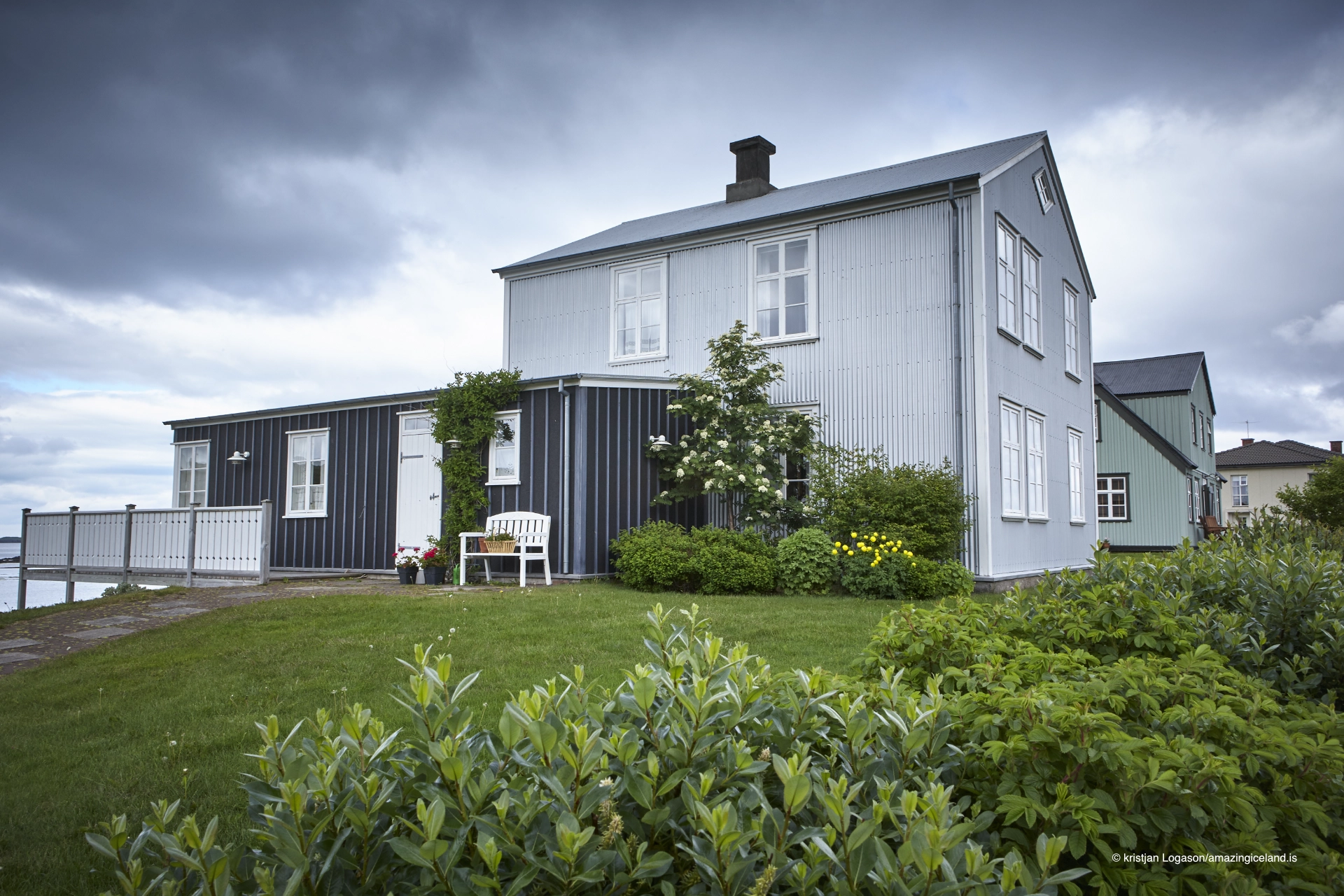
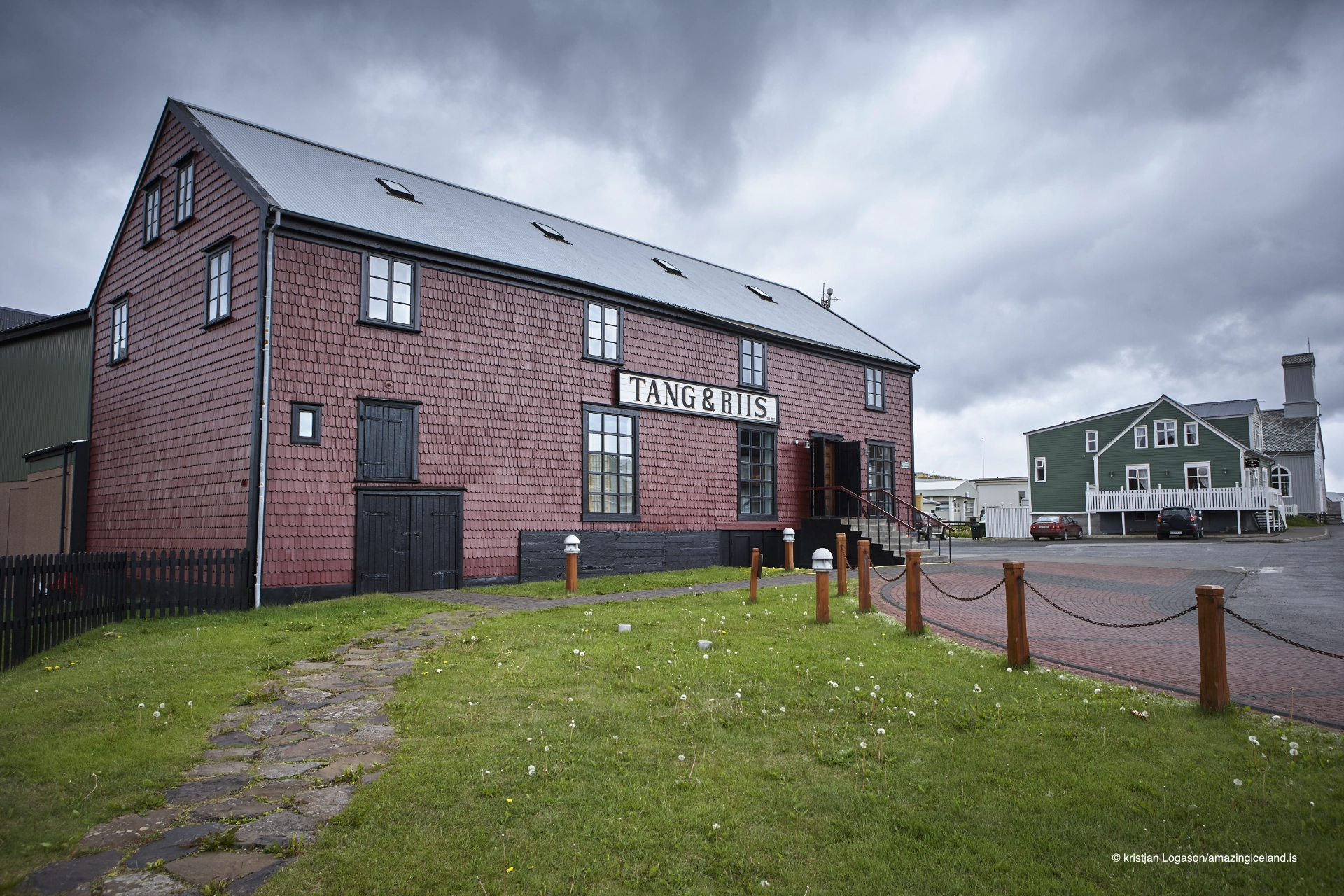
Stykkishólmur has retained more of its historic townscape than many Icelandic settlements. Norska húsið is one of its most important older buildings, but it is only part of the architectural story.
The old church dates from 1878–79 and belongs to the period when Stykkishólmur was strengthening its role as a regional centre.
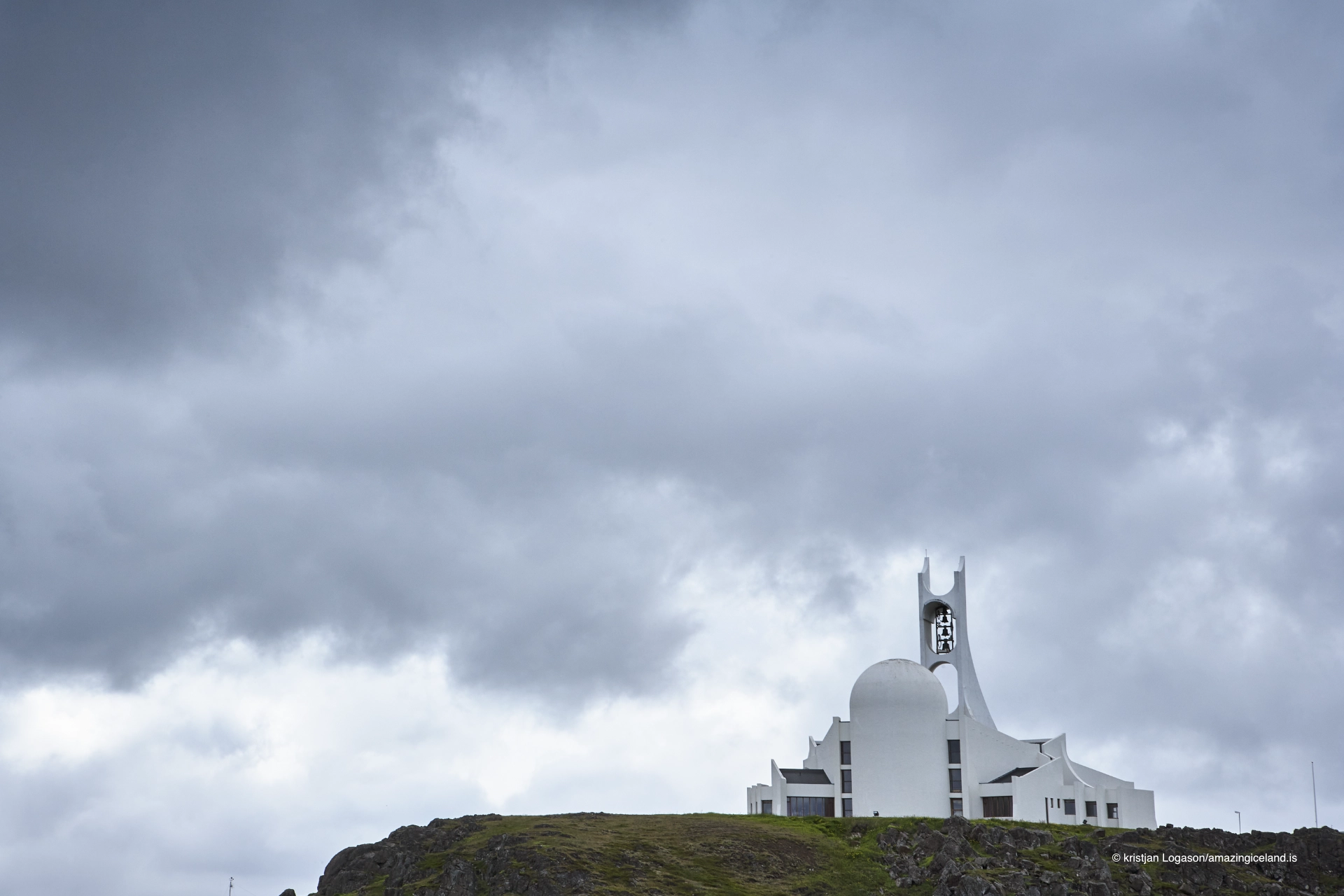
The modern Stykkishólmskirkja stands in complete contrast. Designed by architect Jón Haraldsson and consecrated in 1990, it is one of the town’s most recognisable landmarks. Its sculptural form rises above the otherwise low townscape and can be seen from several directions.
Another unusual cultural landmark is Vatnasafn — the Library of Water. Artist Roni Horn transformed the former library building into an installation centred on water, weather and Icelandic landscape.
Its best-known work consists of 24 glass columns containing water collected from Icelandic glaciers. Together, these buildings give Stykkishólmur a cultural depth that is easy to miss if the town is treated only as a harbour or ferry terminal.
The ferry and Breiðafjörður
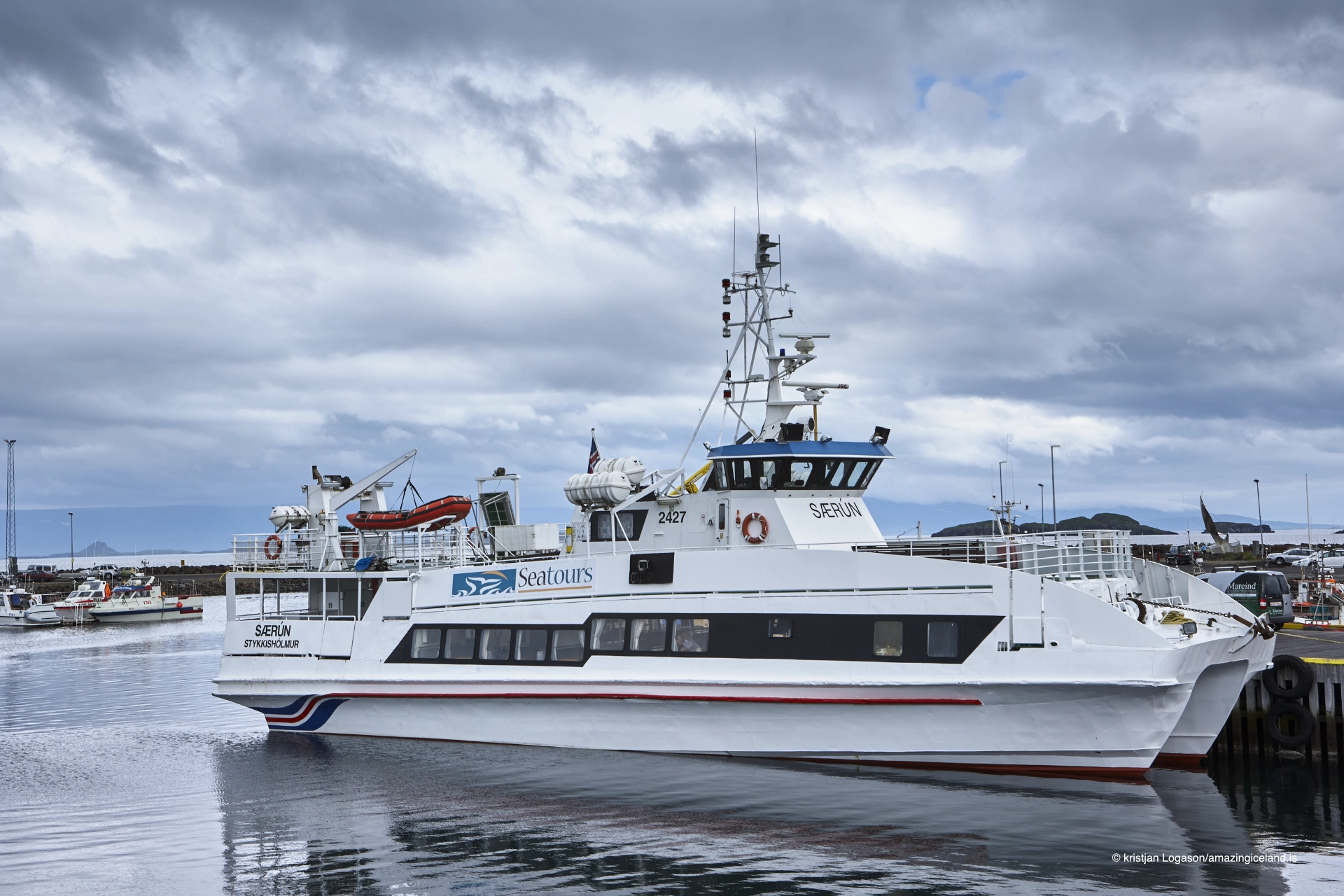
The harbour still connects Stykkishólmur directly with Breiðafjörður. The ferry Baldur sails between Stykkishólmur and Brjánslækur in the Westfjords, with Flatey as an intermediate stop.
The service has changed over the years and schedules vary, so departure times should always be checked before travelling. The importance of the route, however, goes well beyond its practical value.
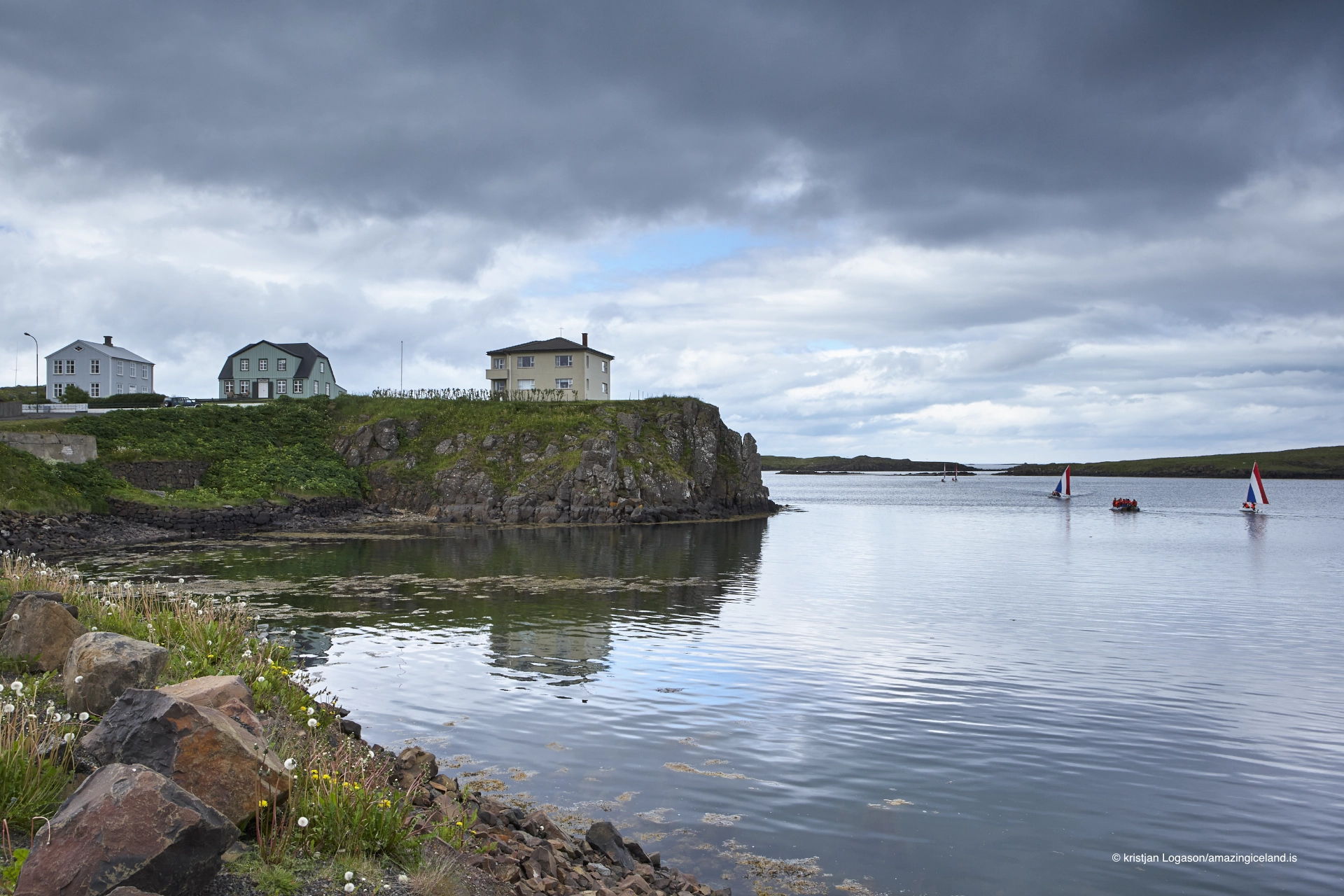
For centuries, Stykkishólmur looked towards Breiðafjörður and its islands more naturally than towards the interior of Iceland. Trade, fishing and travel followed the water, and the ferry continues that relationship today.
Boat trips from the harbour also take visitors among the islands and skerries of Breiðafjörður. The bay and Flatey deserve their own destination pages, but Stykkishólmur remains one of the main gateways into that wider maritime landscape.
A town to walk
Stykkishólmur works particularly well on foot. The harbour, Súgandisey, older wooden buildings, Norska húsið and the centre of town are close enough together that there is little reason to treat them as separate stops.
Walking also makes the different layers of Stykkishólmur easier to understand. At the harbour it remains a working coastal town. A few streets away, 19th-century buildings reveal its trading and administrative history, while the modern church and Library of Water belong to a much more recent cultural identity.
Stykkishólmur also functions as a fully serviced town, with accommodation, food, shops, fuel, a swimming pool and other everyday services. Those facilities make it a practical base on Snæfellsnes, but they are not the reason to visit.
The town itself is the destination.
Nearby Helgafell belongs to the same historic landscape and works naturally alongside Stykkishólmur, although its history deserves a separate destination page.
Danish on Sundays
Stykkishólmur developed a slightly different social character from many smaller Icelandic settlements during the 19th century. As the town became an administrative centre, officials and educated families with strong Danish connections became part of local life.
That history survives in an old joke about the town: people from Stykkishólmur speak Danish on Sundays.
Like many local sayings, it exaggerates for effect. But it also reflects a real period when Stykkishólmur had an unusually strong administrative, commercial and cultural connection with Denmark.
It is a small detail, but it says something useful about the town. Stykkishólmur was not only a fishing harbour on the edge of Breiðafjörður; it was also a place where trade, administration and outside cultural influences met.
Interesting facts:
-
- Stykkishólmur is the largest settlement on the Snæfellsnes Peninsula.
- The name Stykkishólmur appears in written sources from 1274.
- A royal trading licence was granted for the harbour in 1596.
- Norska húsið was built in 1832 by Árni Thorlacius.
- Regular weather observations began in Stykkishólmur in 1845 and developed into Iceland’s longest continuous meteorological record.
- Stykkishólmur became an important regional administrative centre in 1850.
- Súgandisey was connected to the mainland in 1989.
- The lighthouse on Súgandisey was originally built at Grótta in 1897 and moved here in 1942.
- Stykkishólmskirkja was consecrated in 1990.
- The Library of Water contains 24 glass columns filled with water from Icelandic glaciers.
- The ferry across Breiðafjörður connects Stykkishólmur with Flatey and Brjánslækur.
Image Gallery

Photography tips:
-
- Use Súgandisey for the strongest overall view of Stykkishólmur. From the island, the harbour can form the foreground with the town behind it, while looking outward gives layered views across Breiðafjörður.
- At harbour level, concentrate on the relationship between boats, piers, low buildings and the bay. This gives a very different sense of the town from the higher viewpoint on Súgandisey.
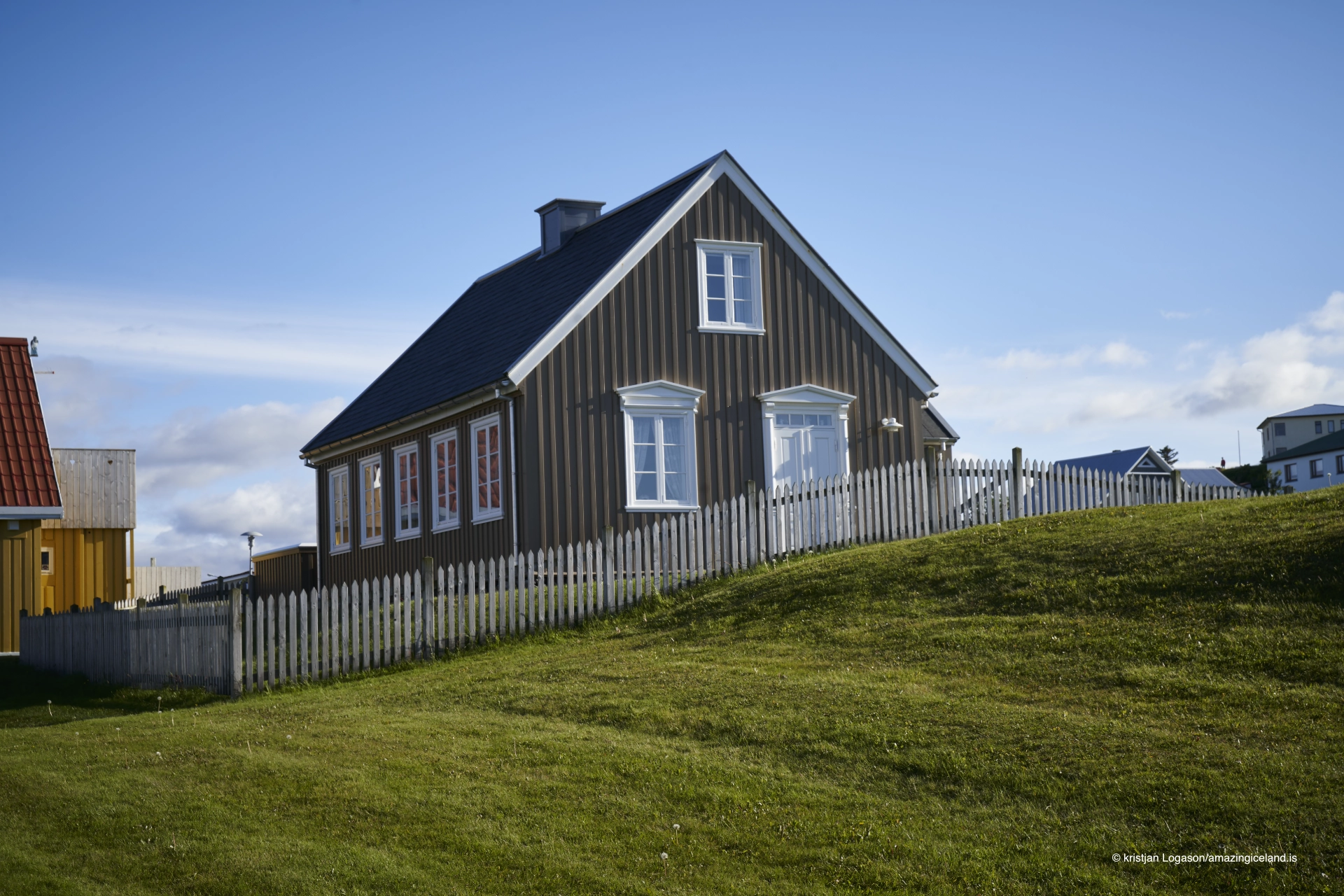
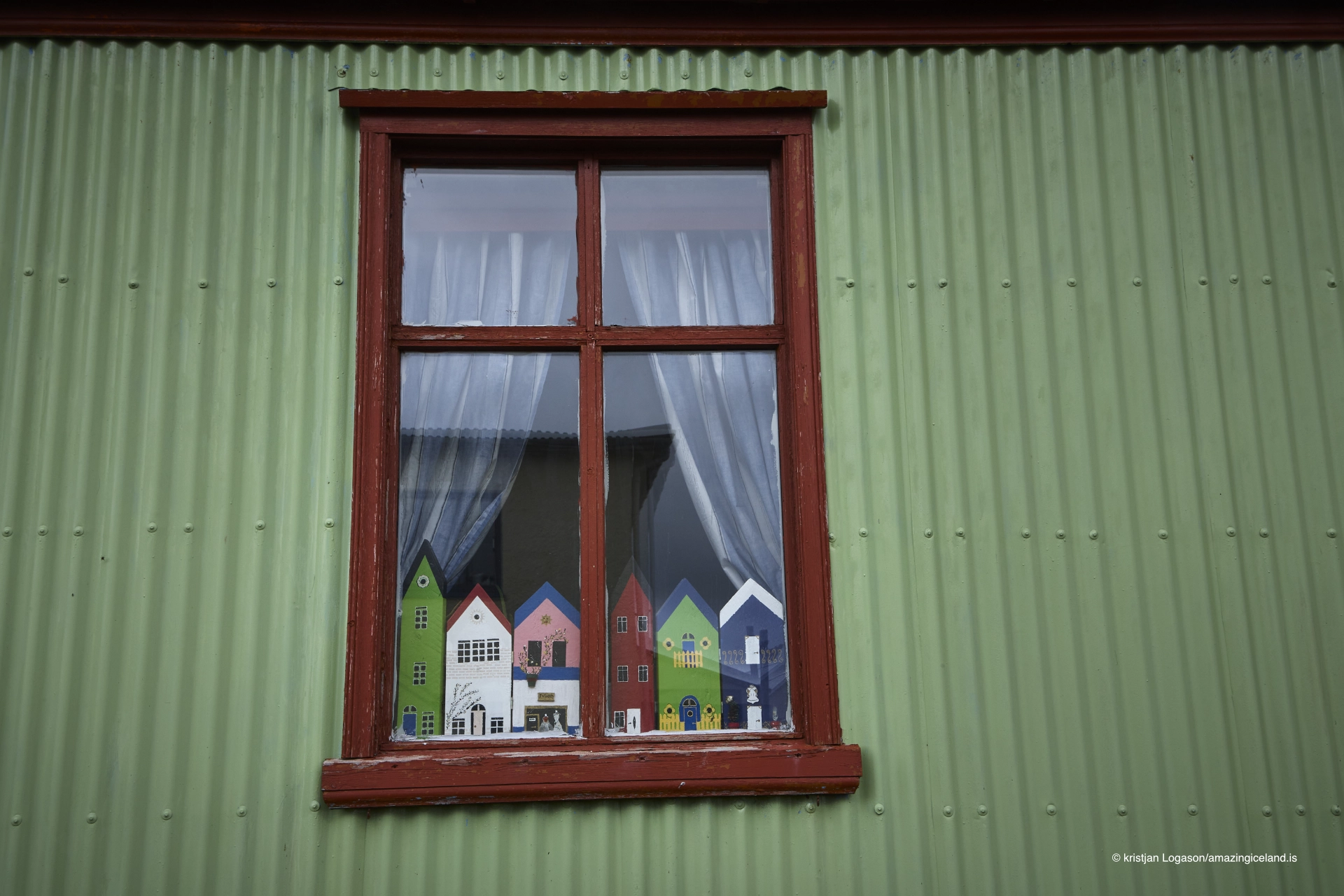
- Treat the architecture as several separate subjects. The older wooden houses work well as details and street scenes, while Stykkishólmskirkja is a more graphic and sculptural subject.
- The contrast between the historic buildings and the modern church can be used deliberately to show two very different periods in the development of the town.
- Low-angle light works particularly well on the older houses because it brings out timber surfaces, colour and architectural detail.
- Breiðafjörður changes quickly with weather. Low cloud, broken sunlight and evening light can separate the layers of islands far better than perfectly clear midday conditions.
- Longer focal lengths can compress the islands and skerries across the bay, while wider lenses work better for showing the relationship between town, harbour and surrounding water.
- The harbour is often strongest early or late in the day, when activity is lower and the light gives more separation between boats, buildings and the surrounding landscape.
Destinations nearby