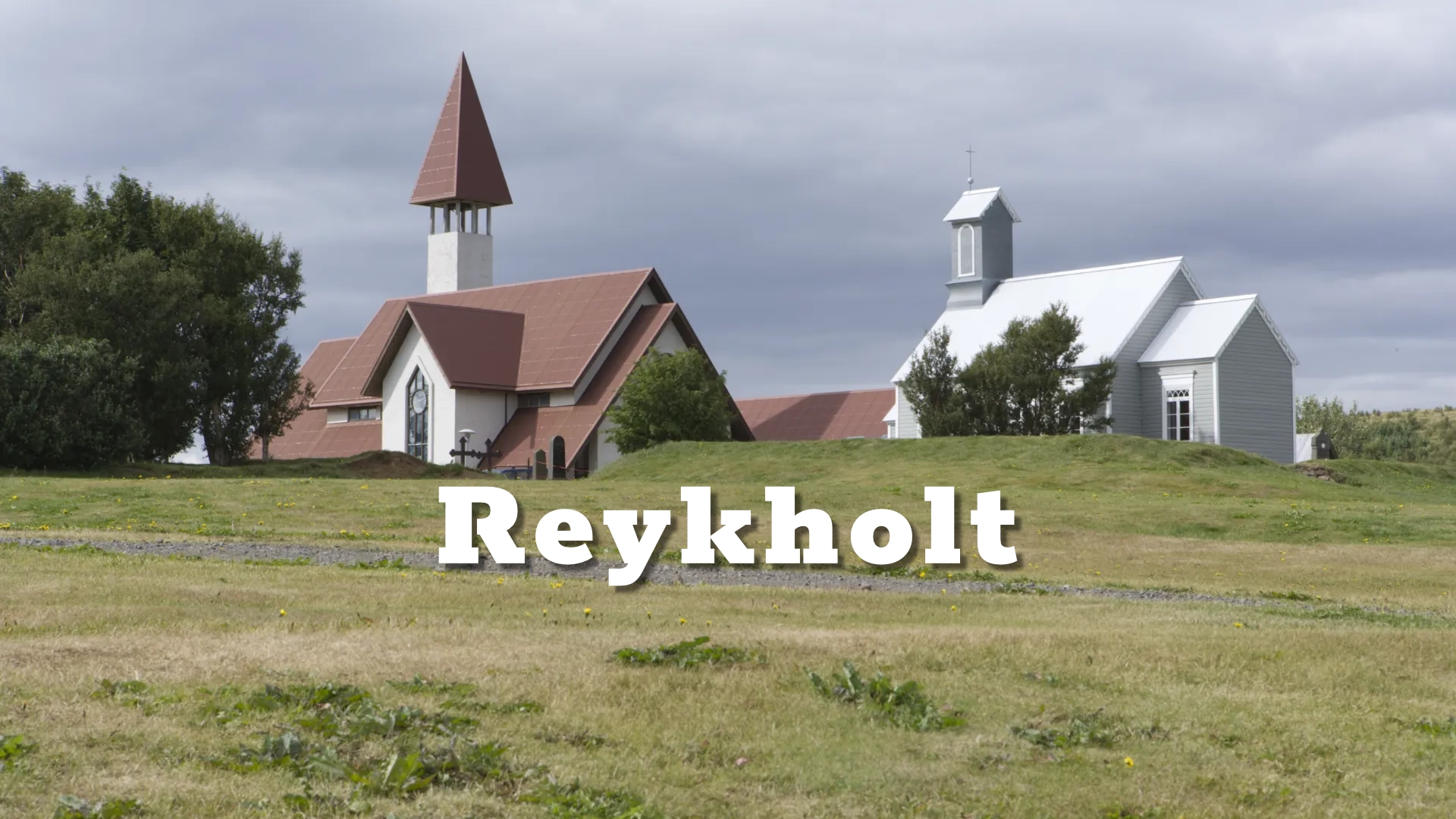
Reykholt in Borgarfjörður
Reykholt lies in Reykholtsdalur in West Iceland, where one of the country’s most important medieval estates developed around learning, political authority and the practical use of geothermal water. Snorri Sturluson moved here in 1206 and made Reykholt his principal residence and power base. The works associated with him profoundly shaped what later generations know about Norse mythology, skaldic poetry and the history of the Scandinavian kings. Visitors now encounter that legacy through Snorralaug, archaeological remains, two churches and Snorrastofa, which continues Reykholt’s role as a place of research, education and cultural life.
The location of Reykholt in Borgarfjörður
Latitude
64.6649
Longitude
-21.2922
Reykholt in Borgarfjörður
Snorri Sturluson and the survival of Norse tradition
Snorri Sturluson was born in 1179 and became one of the most powerful and influential Icelanders of the Sturlung Age. He was a chieftain, poet and scholar, and served twice as lawspeaker at the Alþingi. After moving to Reykholt in 1206, he developed the estate into a centre from which he managed political alliances, property and influence while pursuing the literary work for which he is now remembered.
Both Snorra Edda and Heimskringla have long been attributed to Snorri. Snorra Edda preserves essential knowledge about Norse mythology and explains the complex language and conventions of skaldic poetry. Heimskringla presents the history of the Norwegian kings, bringing together poetry, oral tradition and earlier written material. Their importance reaches far beyond medieval studies because so much of the modern world’s image of the Norse gods and the Viking Age rests on traditions transmitted through these texts.
J.R.R. Tolkien studied Old Norse language and literature deeply, and the mythological world preserved by Snorri formed part of the literary inheritance that influenced Middle-earth and The Lord of the Rings. Tolkien did not simply reproduce the old stories. He transformed their gods, dwarfs, heroic traditions and sense of a layered legendary past into a mythology of his own. His work then became a major influence on later fantasy writers, carrying elements of the Norse tradition preserved by Snorri into modern literature through another route. Other writers have also returned directly to the Eddas, ensuring that Snorri’s influence continues well beyond scholarship.
A priest in Reykholt once expressed that influence in a memorable sentence: without Snorri, there would be no Viking movies. It is not meant as a literal claim about filmmaking. It explains how deeply modern literature, visual culture and popular ideas about the Viking world depend on material associated with Snorri. Without it, the cultural vocabulary through which that world is repeatedly recreated would be profoundly different.
Power, conflict and Snorri’s death
Snorri’s scholarship cannot be separated from his political life. Iceland in the early 13th century was entering the violent struggles later known as the Sturlung Age, when powerful families competed for control and the Norwegian crown sought greater influence in the country. Snorri travelled to Norway, entered the service of King Hákon Hákonarson and became entangled in expectations that he would support the king’s ambitions in Iceland.
When Snorri later left Norway against the king’s wishes and returned to Reykholt, his political position weakened. In September 1241, men acting under the authority of his former son-in-law and rival Gissur Þorvaldsson came to the estate. Snorri sought refuge in the cellar beneath one of the buildings, but he was found and killed there. Tradition records his final words as Eigi skal höggva—“Do not strike.”
His death made Reykholt one of the defining locations in the history of the Sturlung Age, but the place should not be understood only as the scene of a killing. It was the residence from which Snorri exercised power, maintained relationships across Iceland and Norway, and became associated with works that outlasted the political order in which he lived.

Snorralaug and the medieval use of hot water
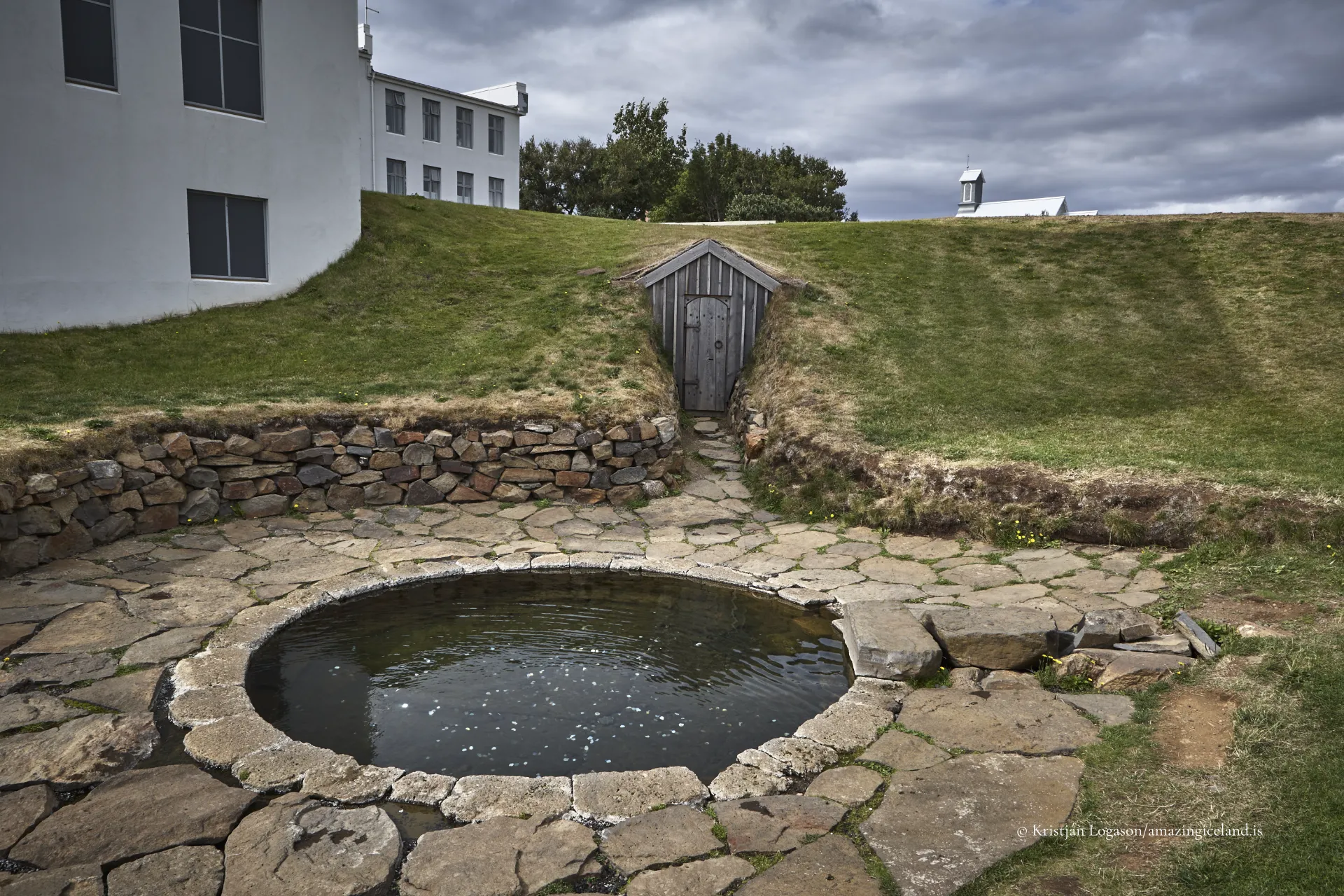
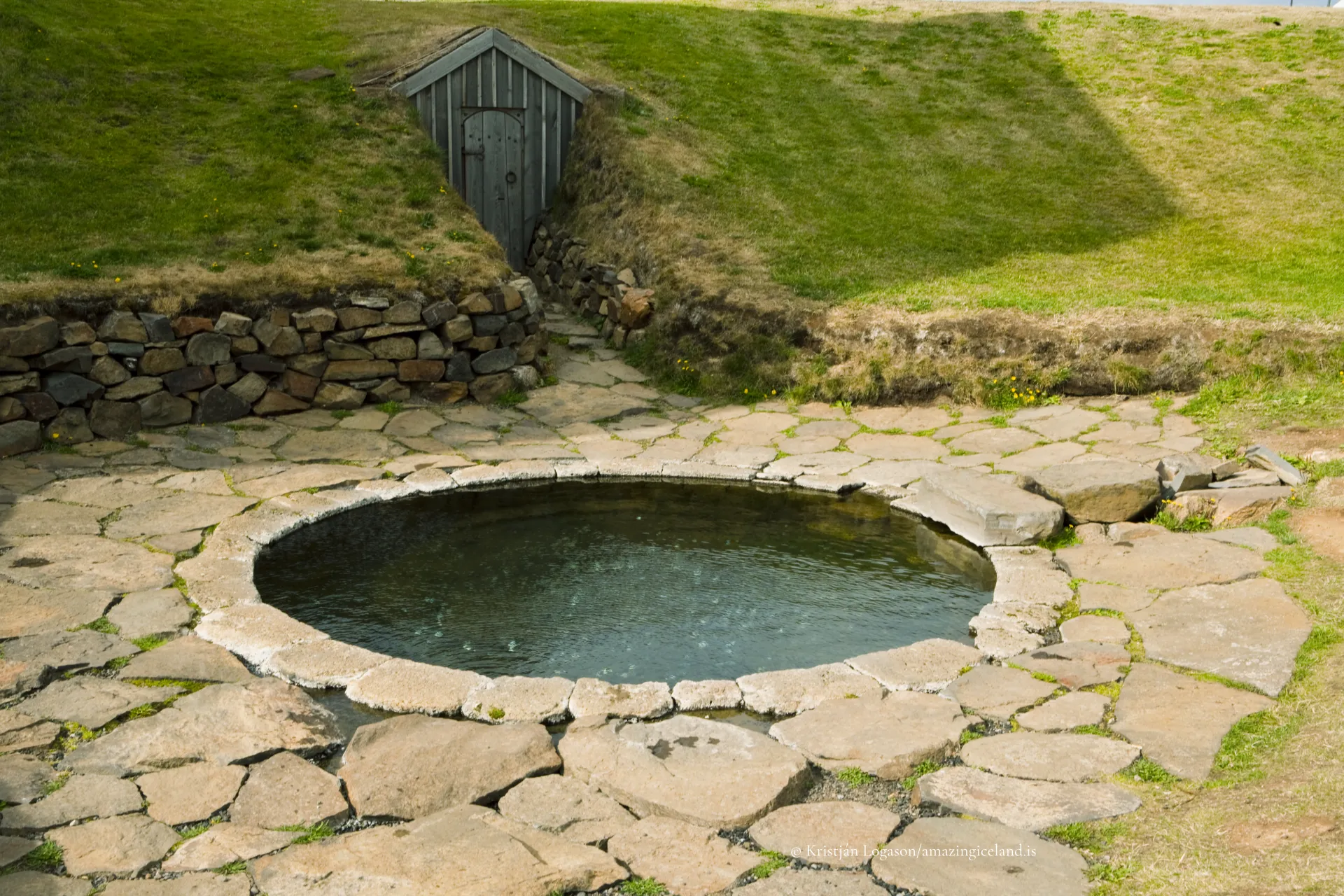
Snorralaug is the clearest surviving physical connection between Reykholt’s geothermal setting and its medieval history. Hot water reaches the stone-built pool from the spring Skrifla through a conduit. The pool is traditionally associated with Snorri, although its present form is not entirely medieval: it was restored in 1858 and the surrounding stonework reflects later intervention as well as the older site.
Bathing in Snorralaug is forbidden. It is an archaeological monument, and the water can be extremely hot. The pool should therefore be viewed as part of the historic site rather than treated as a usable geothermal bath.
Reykholt also preserves remains associated with a passage between the residential area and Snorralaug. Parts of it were discovered during construction of the sports hall in 1931. The protective structure now visible at the site shelters the archaeological remains; it is not a reconstruction of the complete medieval passage. Visitors can see the remains but cannot enter them.
Together, Snorralaug, the hot-water conduit and the passage show that geothermal water was incorporated deliberately into life at the estate. They give a practical dimension to Reykholt’s history, connecting literary and political influence with the organisation of an inhabited medieval place.
Two churches and a continuing cultural centre
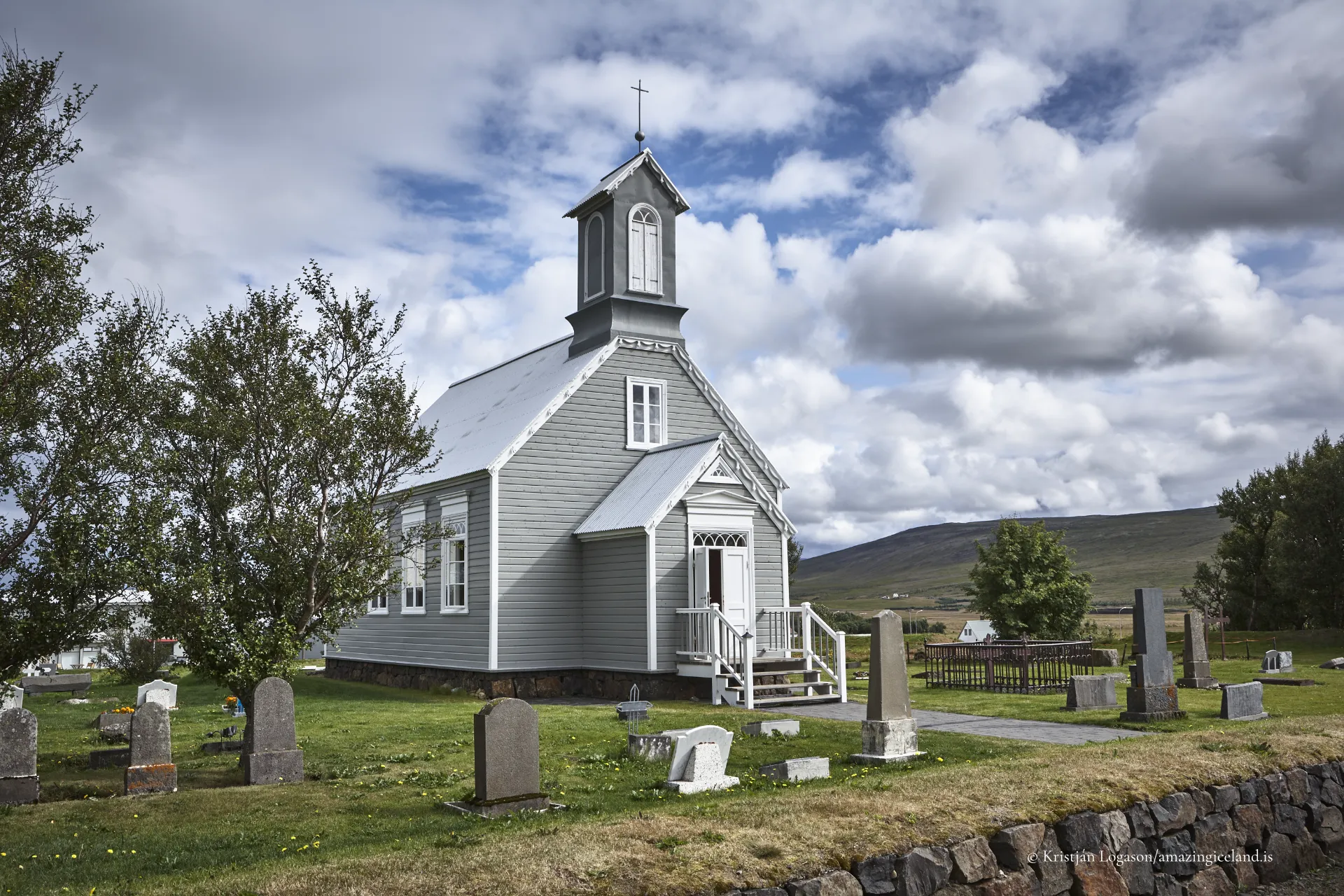
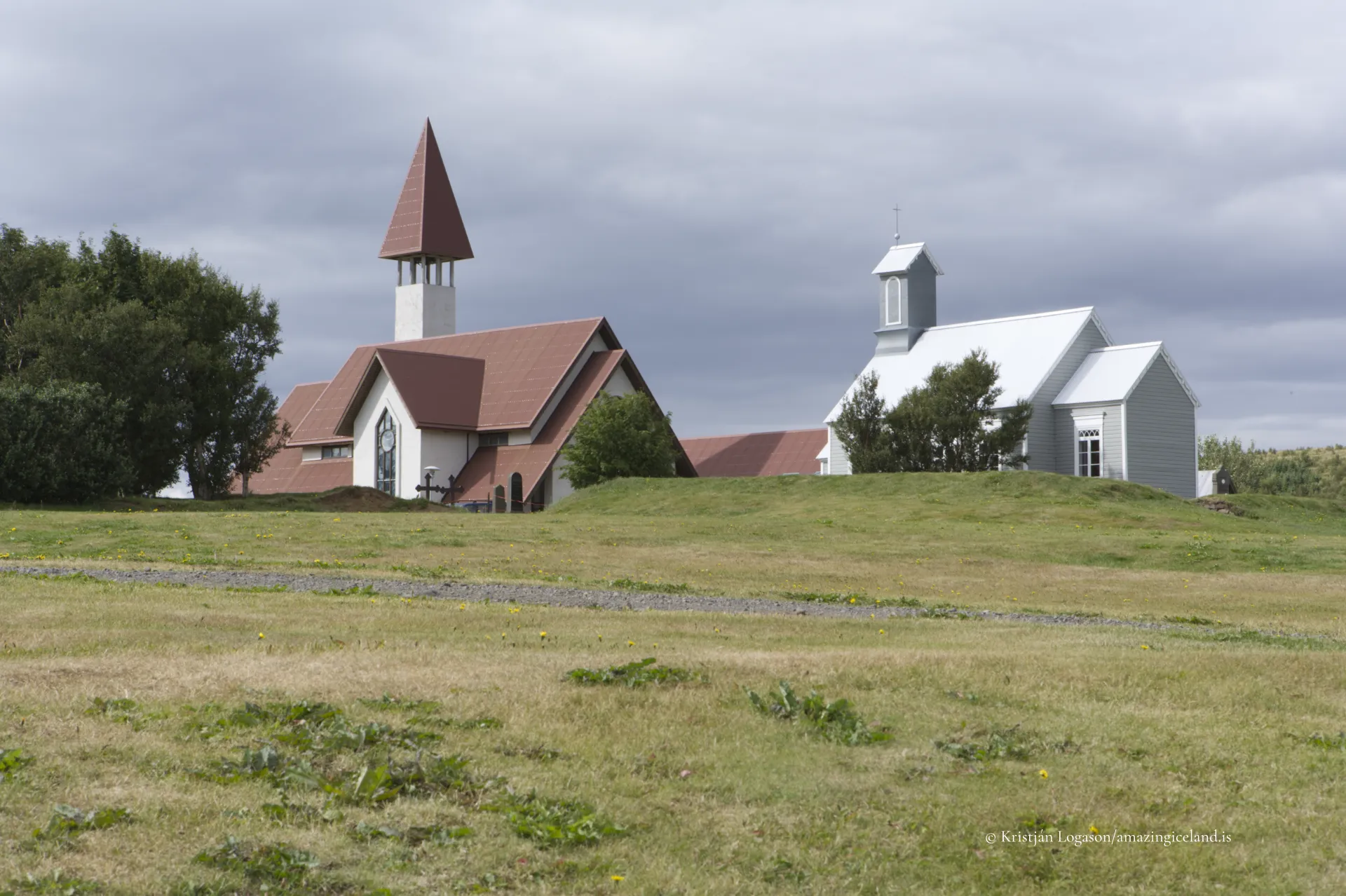
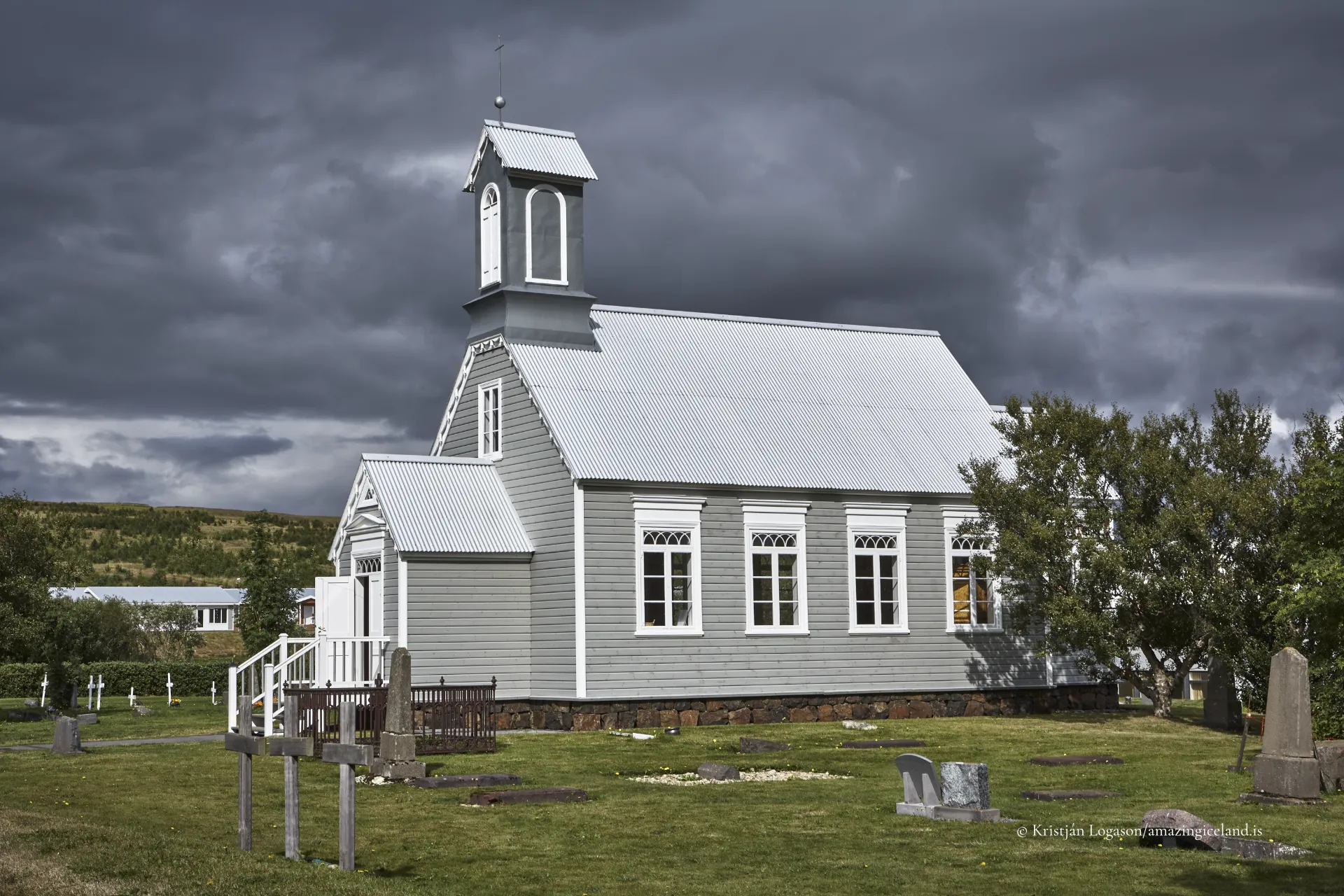
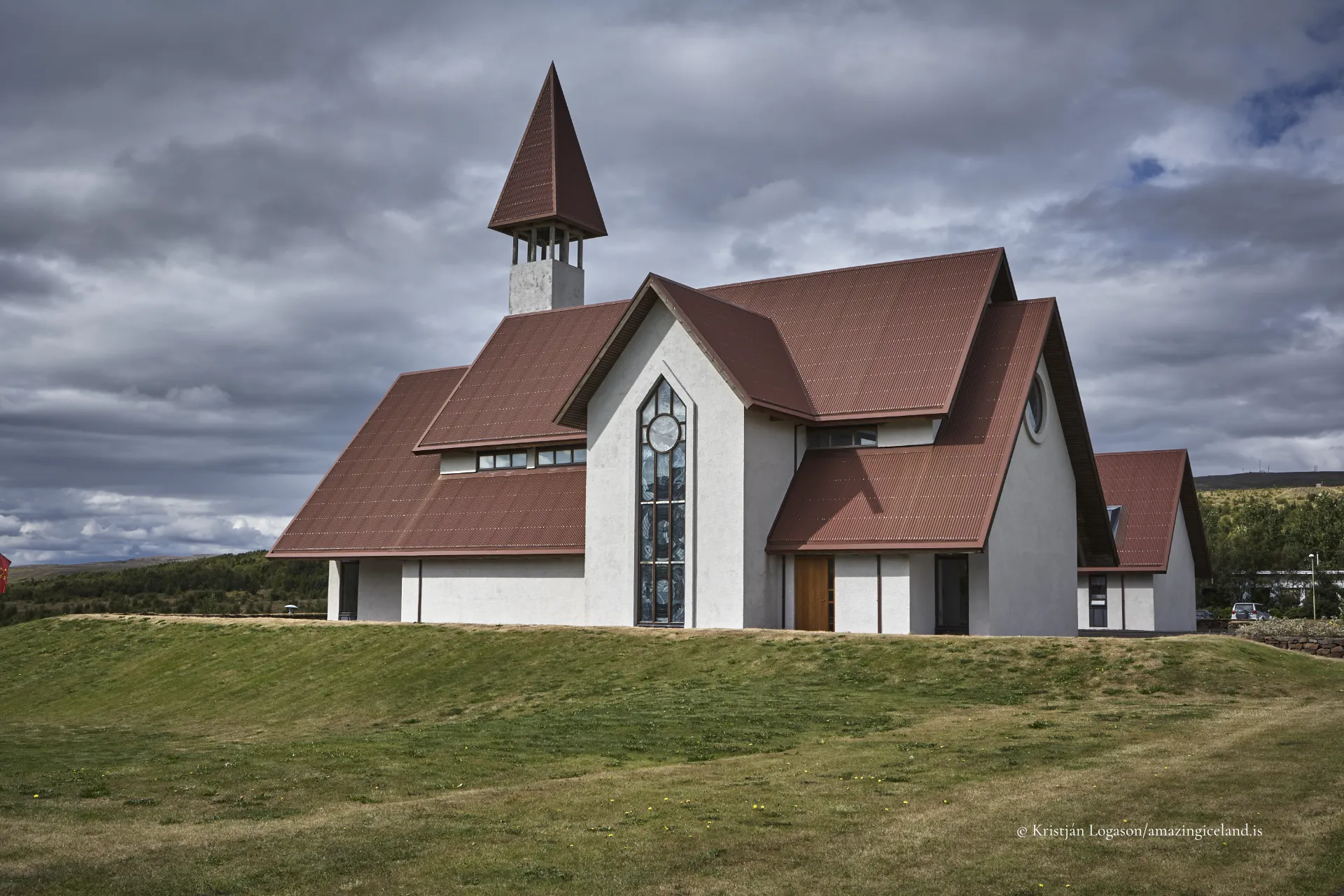
Two church buildings stand at Reykholt. The older church was built between 1885 and 1887 and remained the parish church until 1996. The present church was consecrated that year and forms part of the complex containing Snorrastofa. The two buildings belong to different periods, but together they show the continuing religious and cultural importance of the site after the medieval estate had disappeared.
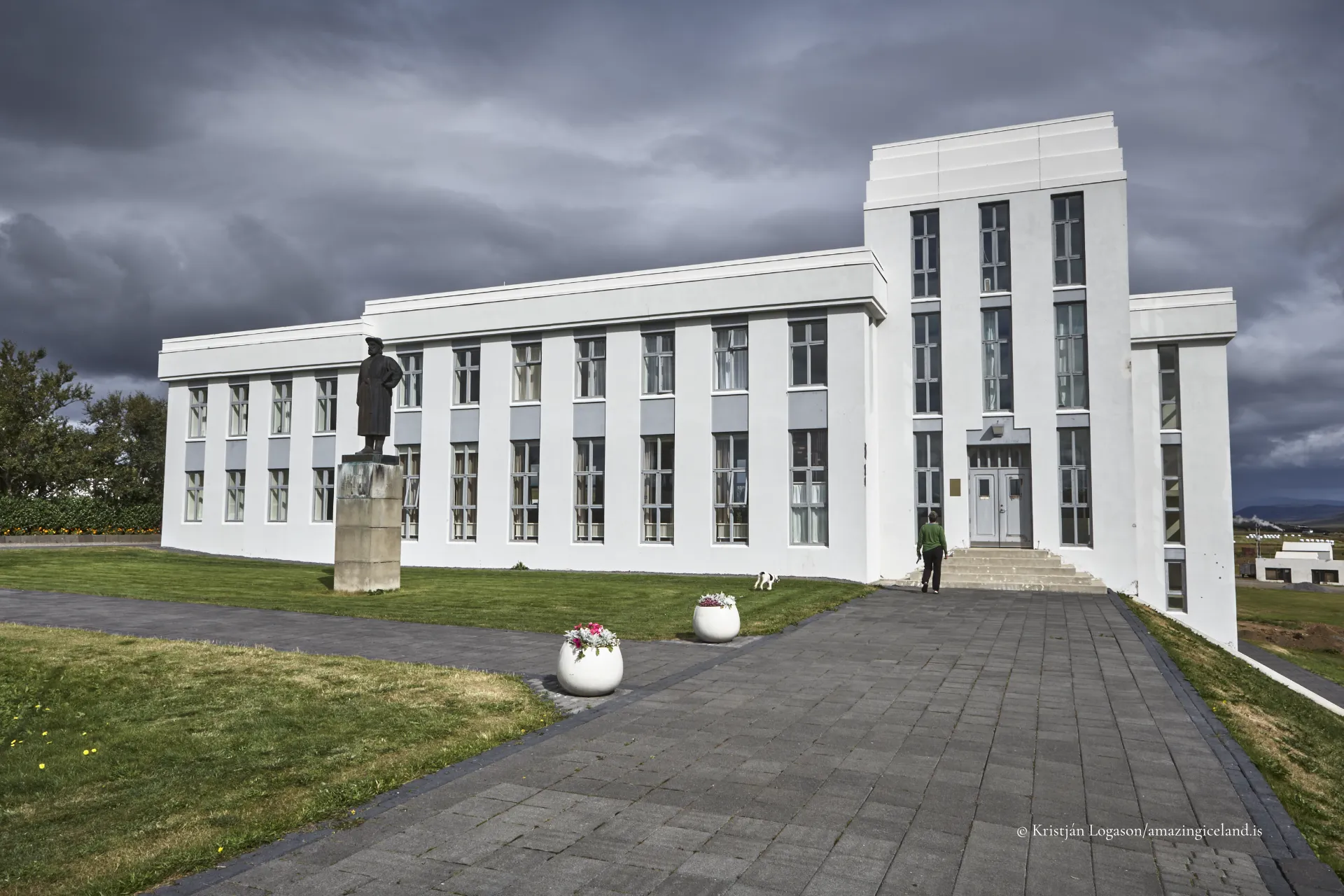
Snorrastofa is more than a memorial museum. Its exhibition introduces Snorri, medieval Reykholt and the world in which his writings and political career developed, while the institution also supports research, education, library work and cultural events. In that sense, the modern centre continues one of Reykholt’s oldest roles: it remains a place where literature, history and scholarship are actively studied and communicated.
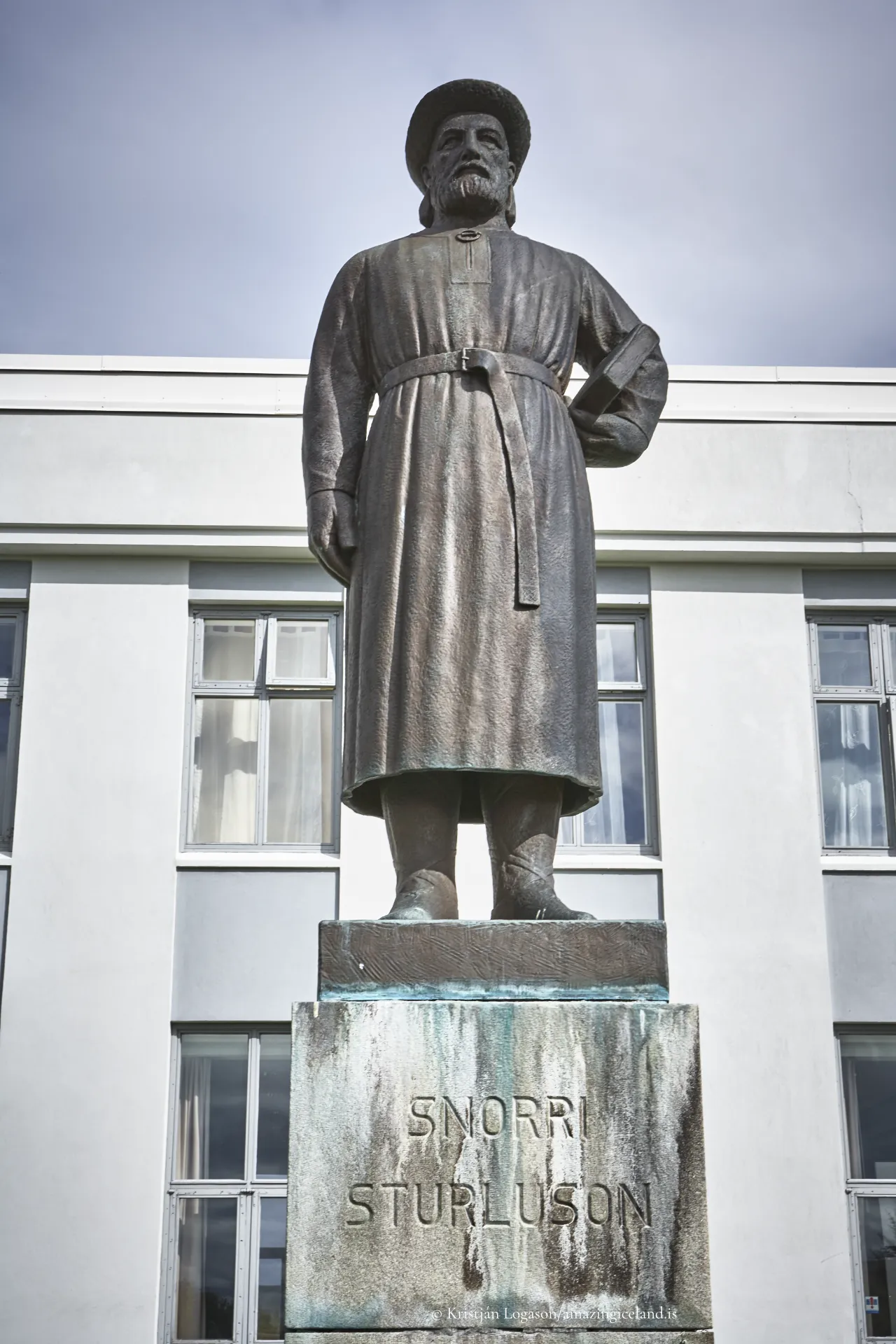
The outdoor historic area, including Snorralaug, the archaeological remains, churches and statue of Snorri, can be explored even when Snorrastofa is closed. Museum access and organised activities vary, so visitors who want to enter the exhibition should check current arrangements before travelling.
Visiting Reykholt
Reykholt is straightforward to explore, but it deserves more than a brief stop. Allow at least one hour for Snorrastofa and the outdoor historic site. Short, generally level paths connect the principal features, and the area is easy to walk. The outdoor grounds remain freely accessible, while Snorrastofa operates separately throughout the year.
The site is not visually dominated by one monument. Its character lies in the relationship among Snorralaug, the two churches, archaeological remains and the modern cultural complex within Reykholtsdalur. Walking between them helps explain how a medieval centre of power became a place through which Snorri’s legacy continues to be examined rather than simply commemorated.
Interesting facts:
-
- Snorri Sturluson moved to Reykholt in 1206 and was killed there in September 1241.
- He served twice as lawspeaker at the Alþingi.
- Snorra Edda and Heimskringla have long been attributed to Snorri.
- Snorralaug receives geothermal water from the spring Skrifla and was restored in 1858.
- Remains of the passage associated with Snorralaug were discovered during construction work in 1931.
- Reykholt has two church buildings: the older church from 1885–1887 and the present church consecrated in 1996.
Image Gallery
Photography tips:
-
- Give Snorralaug, the two churches and the complete historic complex equal consideration. Together they describe Reykholt more fully than any single feature.
- Use wider contextual views to connect the buildings and archaeological remains with Reykholtsdalur. The surrounding valley is part of the site’s character rather than an incidental background.
- Suitable light depends on the season. Even light can hold detail across pale buildings, stone and vegetation, while directional or broken light can give the wider complex more depth.
- Winter adds no particular photographic advantage, although snow changes the balance between the churches, paths and surrounding ground.
- Aerial photography can clarify the layout of the historic area and its position within the valley. Check current flight rules and avoid disturbing activity around the churches and cultural centre.
Destinations nearby