Ytri Tunga seal beach in Snæfellsnes
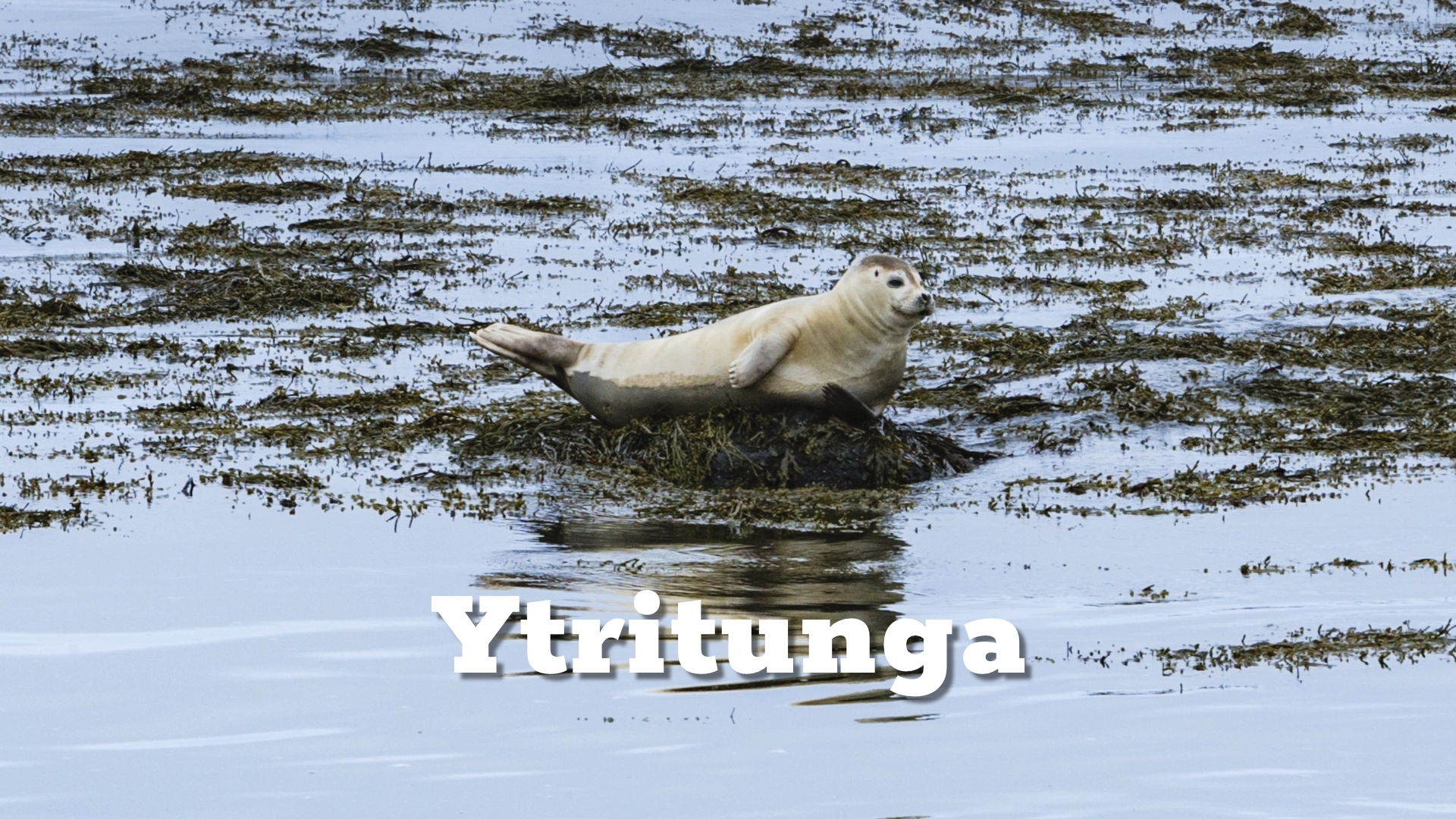
Ytri Tunga is best known for its seals, but the beach makes more sense when the animals are understood as part of the coastline rather than as an attraction placed there for visitors. Harbour seals and grey seals regularly haul out on the low rocks close to shore, particularly where the tide exposes suitable resting places.
Sightings are possible throughout the year, but they are never guaranteed. The number of seals, where they choose to rest and whether they appear at all can change with the tide, weather, sea conditions and the behaviour of the animals themselves.
The setting adds considerably to the experience. Dark rocks break through sand that can shift from pale gold to reddish brown depending on moisture and light, while Snæfellsjökull can rise clearly inland behind the coast when visibility is good. Ytri Tunga is therefore more than a place to tick seals off a list; it is a small but distinctive piece of the southern Snæfellsnes shoreline.
The location of Ytri Tunga seal beach in Snæfellsnes
Latitude
64.8029
Longitude
-23.0803
Ytri Tunga seal beach in Snæfellsnes
The rocky shore the seals use
The coastline at Ytri Tunga is made up of sand, shallow water and low rocky outcrops extending into the sea. As the tide falls, more of these rocks are exposed, creating resting places where seals can leave the water and lie undisturbed for a time.
This behaviour is known as hauling out. Seals come ashore to rest, conserve energy and carry out parts of their life cycle that cannot happen continuously in the water. A good haul-out site therefore needs easy access from the sea, exposed resting surfaces and enough space for the animals to remain undisturbed.
Ytri Tunga provides exactly that kind of shoreline. The same geography that makes the site useful to seals also makes them relatively easy to observe from land, because many of the rocks lie close enough to the beach to be seen clearly without approaching the animals themselves.
Lower water can increase the amount of exposed rock and sometimes improves the chances of seeing seals resting out of the sea. It is still only one factor, however. The animals decide whether the rocks are worth using on any particular day.
Harbour seals and grey seals
Two seal species are regularly seen at Ytri Tunga: harbour seals and grey seals. Both use the Icelandic coast, but they differ enough in size and head shape that identification can sometimes be possible even from a reasonable distance.
Harbour seals are generally smaller, with a rounded head, relatively short muzzle and large dark eyes. Grey seals are larger and tend to have a longer, heavier head profile, particularly adult males.
In practice, the distinction is not always obvious. A wet seal partly hidden between rocks may show little more than its head and back, and distance, light and posture can make size difficult to judge.
The more interesting part of a visit is often simply watching what the animals are doing. Some remain almost motionless on the rocks, while others lift their heads, shift position as the water changes or slide back into the sea. Seen this way, Ytri Tunga becomes less about identifying individual animals and more about observing how seals actually use the coastline.

Watching without disturbing them
The principle behind seal watching at Ytri Tunga is straightforward: the seals should not have to change their behaviour because people are present. Visitors should remain at least 50 metres from the nearest seal, increasing that distance to at least 100 metres when pups are present.
Distance alone is not the only measure. A resting seal that repeatedly lifts its head, becomes alert, begins shifting position or moves towards the water because someone has approached is already showing that the person is too close.
The route between a seal and the sea should also remain open. Water is the animal’s escape route, and standing between a seal and the shoreline can make it feel trapped even when the physical distance appears acceptable.
Pups that appear to be alone should be left alone as well. Their mothers may simply be feeding offshore and return later. Approaching because a pup appears abandoned can create unnecessary disturbance and may interfere with normal behaviour.
The best encounters at Ytri Tunga are therefore usually quiet ones. Stay back, watch for a while and allow the animals to decide whether they remain on the rocks or return to the sea.
A beach that changes with light and tide
Ytri Tunga is often described as a golden-sand beach, but that description is too simple. The colour can shift considerably depending on moisture, weather and the angle of the light, ranging from pale gold through reddish brown to darker tones where the sand is wet.
Similar coloured coastal material continues west towards Hraunlandarif, giving this part of southern Snæfellsnes a very different character from the black volcanic beaches more commonly associated with Iceland.
The tide changes the appearance of the shoreline just as much as the light. At lower water, dark rocks, shallow pools and seaweed become more prominent, while at higher water much of that structure disappears beneath the sea.
In clear weather, Snæfellsjökull provides the larger backdrop. The glacier-covered volcano rises inland behind the coast and places Ytri Tunga within the wider geography of the peninsula. That relationship between seals, beach and mountain is easy to miss when attention is focused only on the animals.
Visiting Ytri Tunga
Ytri Tunga is reached from Road 54 on the southern side of the Snæfellsnes Peninsula. A parking area provides access to a marked walking route leading towards the coast and the areas where seals are most often seen.
The walking route is roughly 1.7 kilometres in total and crosses mixed ground including grass, small rocks and some steps. There are no facilities at the beach, so Ytri Tunga should be treated as a natural coastal stop rather than a serviced wildlife attraction.
Sightings can occur throughout the year, but no season, tide or time of day guarantees seals. Some visits will produce several animals resting close to shore, while others may offer only distant seals or none at all.
That variability is part of the place rather than a failure of it. Even without seals, the changing sand, exposed rocks, seaweed, open coastline and view towards Snæfellsjökull still make Ytri Tunga a distinctive stop on the southern side of Snæfellsnes.
Interesting facts:
- Harbour seals and grey seals both use the coast at Ytri Tunga.
- The seals haul out on rocks along the shoreline to rest between periods in the water.
- Lower water often exposes more of the rocks used by resting seals.
- Seal sightings are possible throughout the year but are never guaranteed.
- Visitors should remain at least 50 metres from seals and at least 100 metres away when pups are present.
- A seal should always have an unobstructed route back to the sea.
- The sand at Ytri Tunga can appear golden, reddish or somewhere between depending on light and moisture.
- Similar coloured coastal material continues west towards Hraunlandarif.
- Snæfellsjökull can be seen inland from the beach in clear weather.
- There are no visitor facilities at the beach.
Image Gallery


Photography tips:
- Ytri Tunga is one of those places where the correct wildlife practice also produces better photographs. A long lens allows you to remain comfortably outside the recommended distance while still isolating the animal or placing it within the surrounding shoreline.
- Behaviour should matter more than filling the frame. A relaxed seal resting with its head down gives a far more natural photograph than one staring directly at the camera because the photographer has approached too closely. If the animal becomes alert or begins changing position in response to you, move back.
- The rocks and water around the seals are part of the subject. At lower tide, wet stone, seaweed and shallow pools can create useful layers around the animals, while a slightly wider composition can show how small they are within the coastline.
- Snæfellsjökull offers another possibility when visibility is good. A longer lens can sometimes compress the relationship between the coast and the mountain, while wider views can show the seals within the larger landscape rather than reducing Ytri Tunga to wildlife alone.
- The changing colour of the sand is also worth watching. Wet and dry areas can differ substantially in tone, particularly under low or overcast light, and those colour shifts can become part of the composition.
- Do not use flash and do not fly drones around the seals or nesting birds. The purpose is to photograph wildlife behaving naturally, not to make the wildlife react for the sake of the photograph.
Destinations nearby