Reykhólar
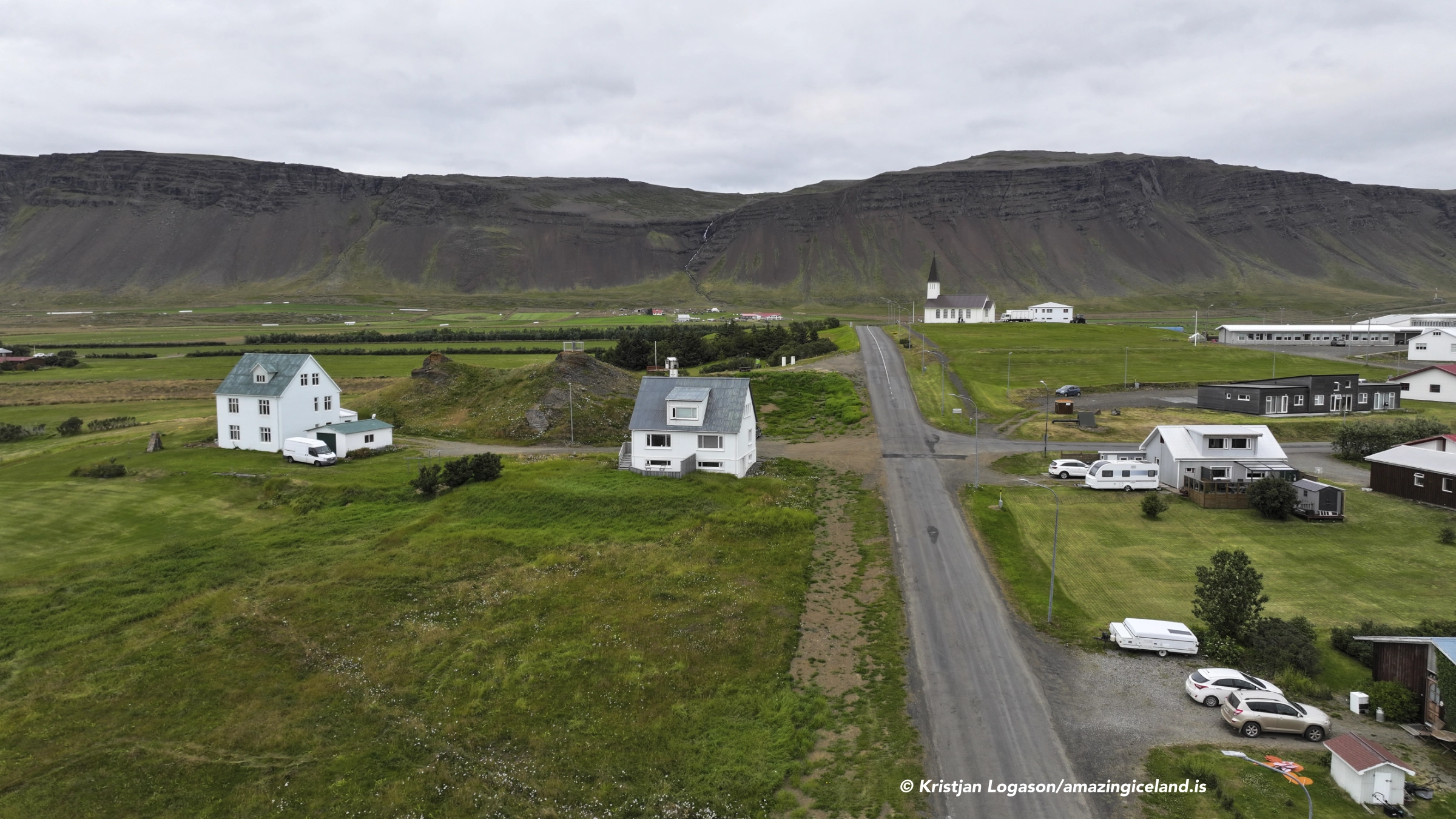
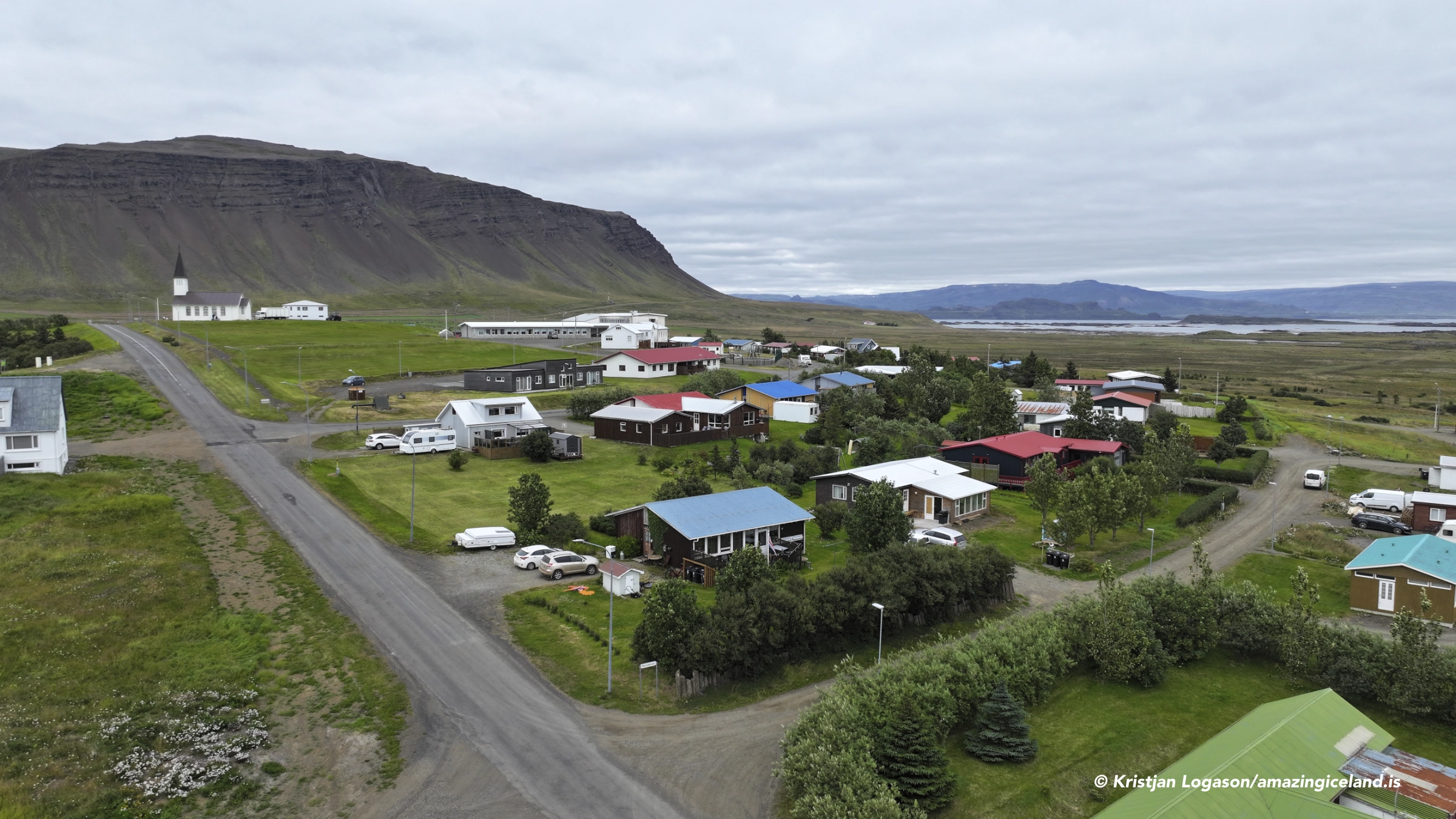
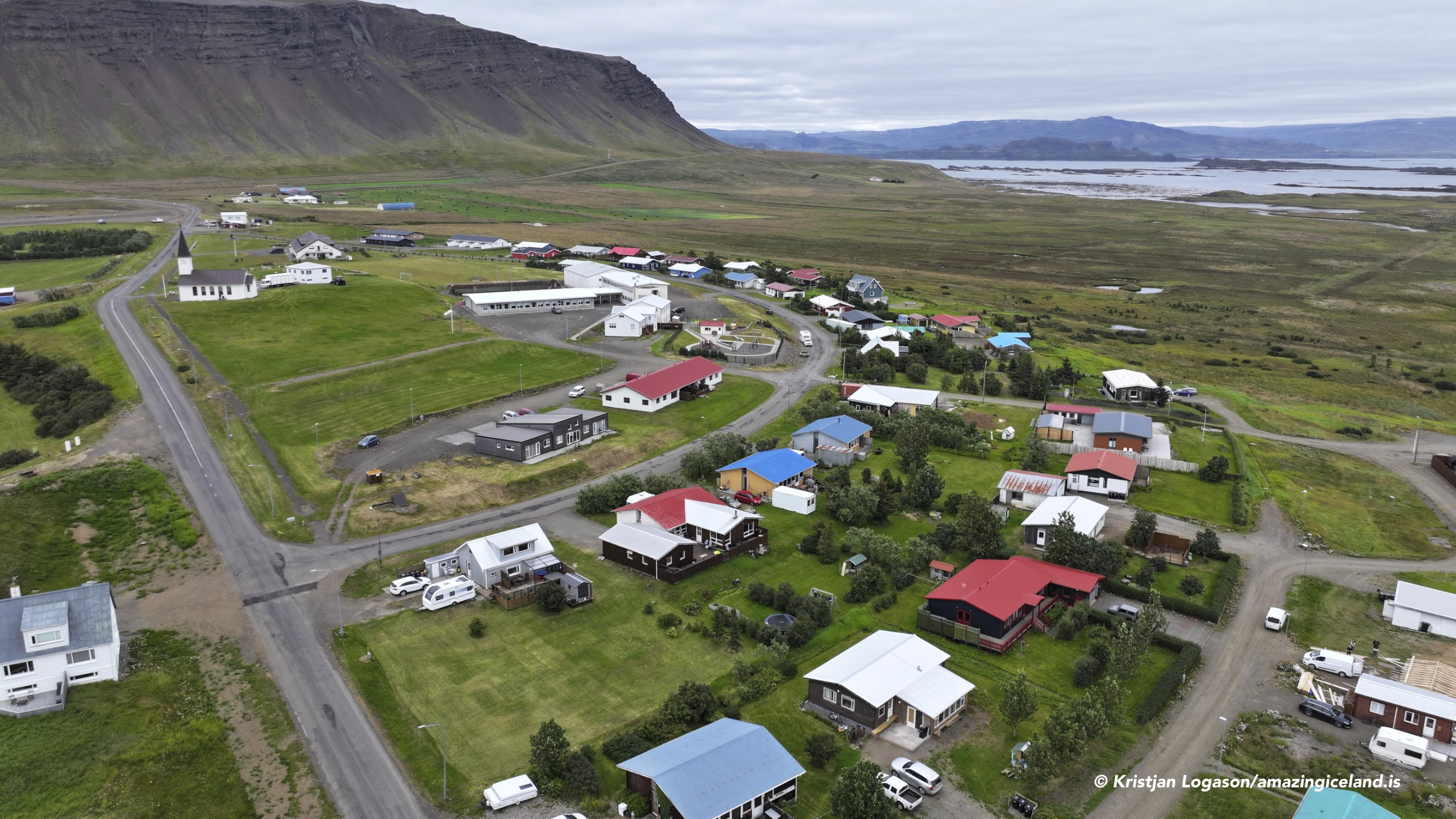
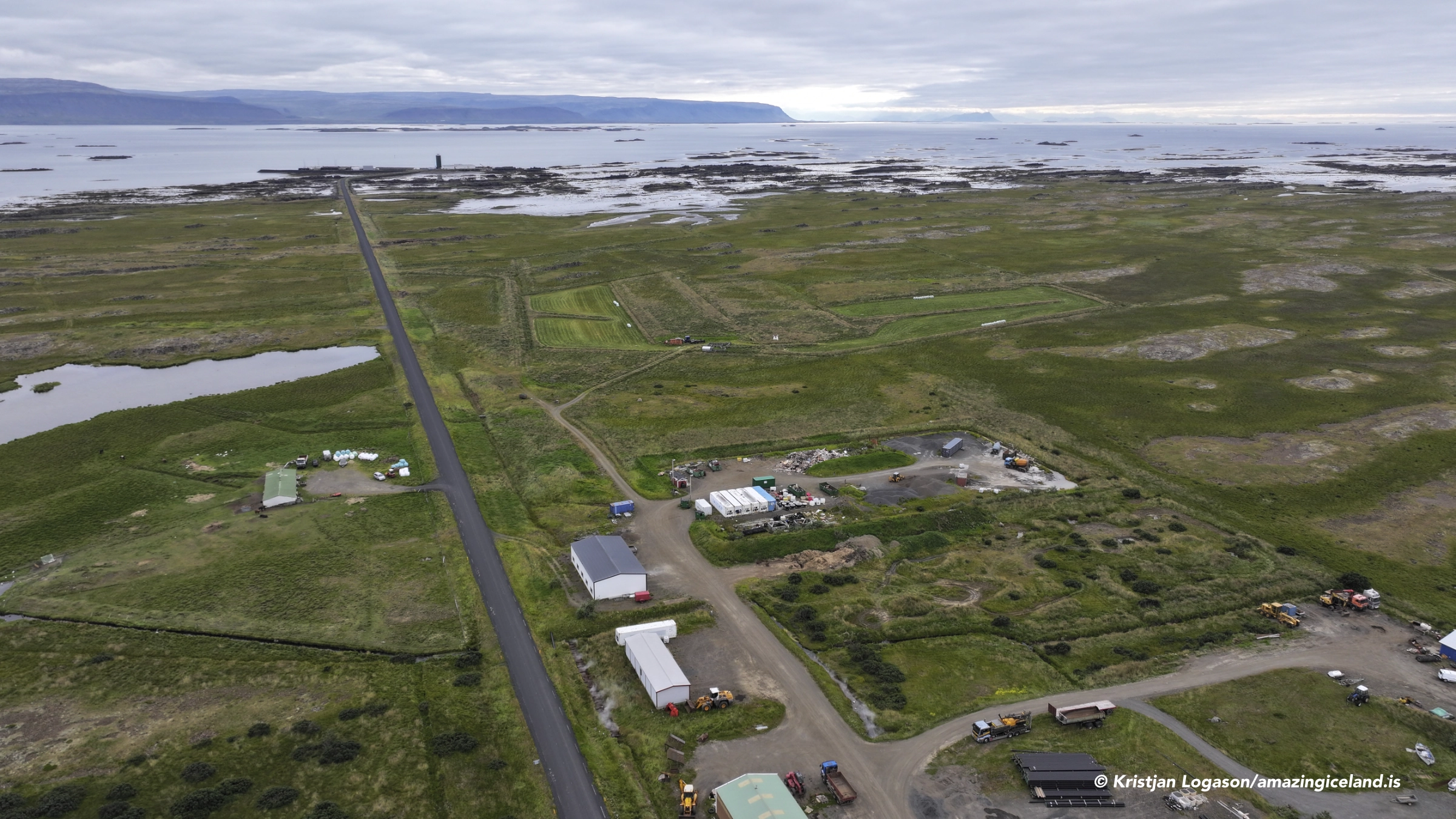
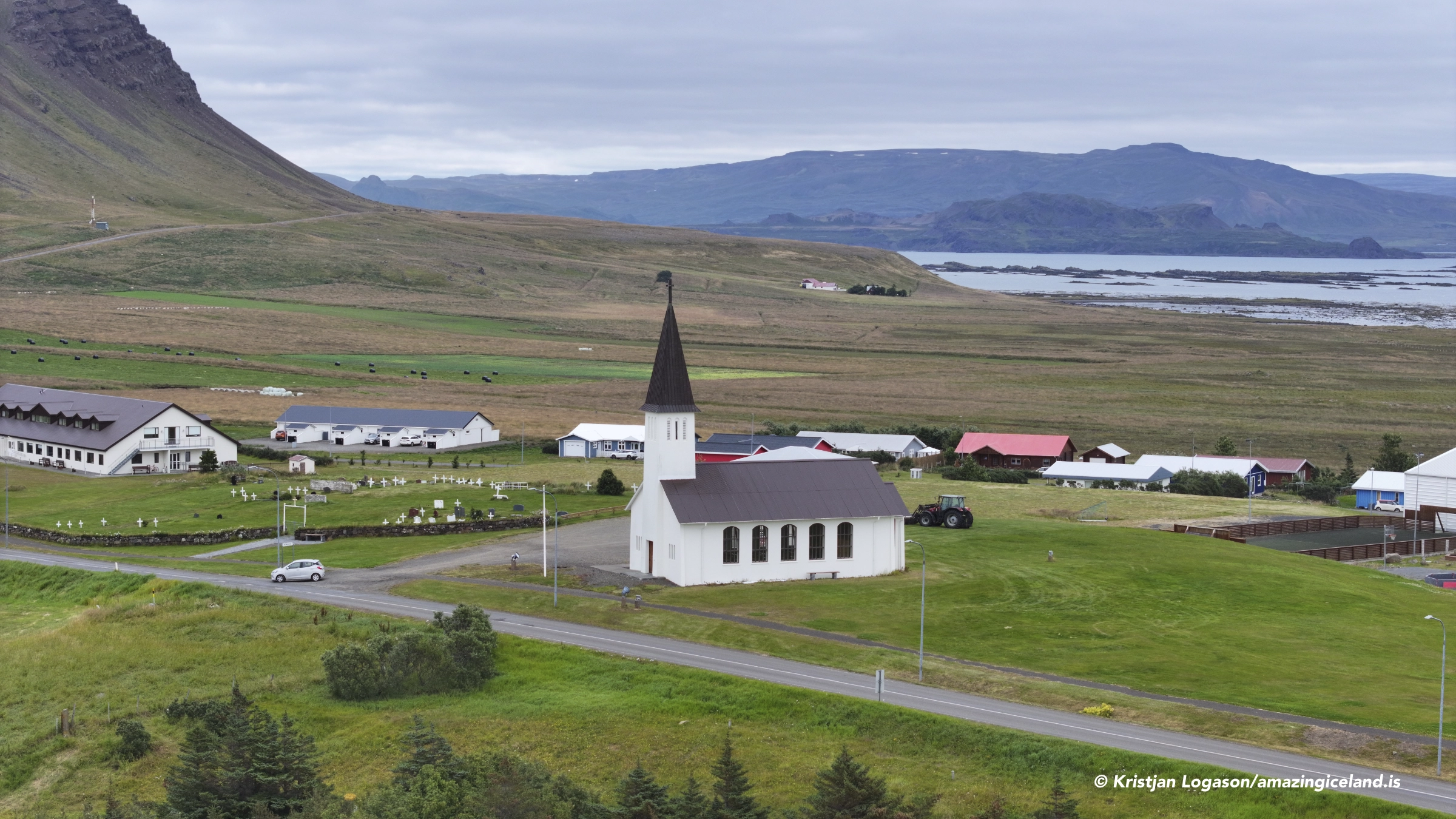
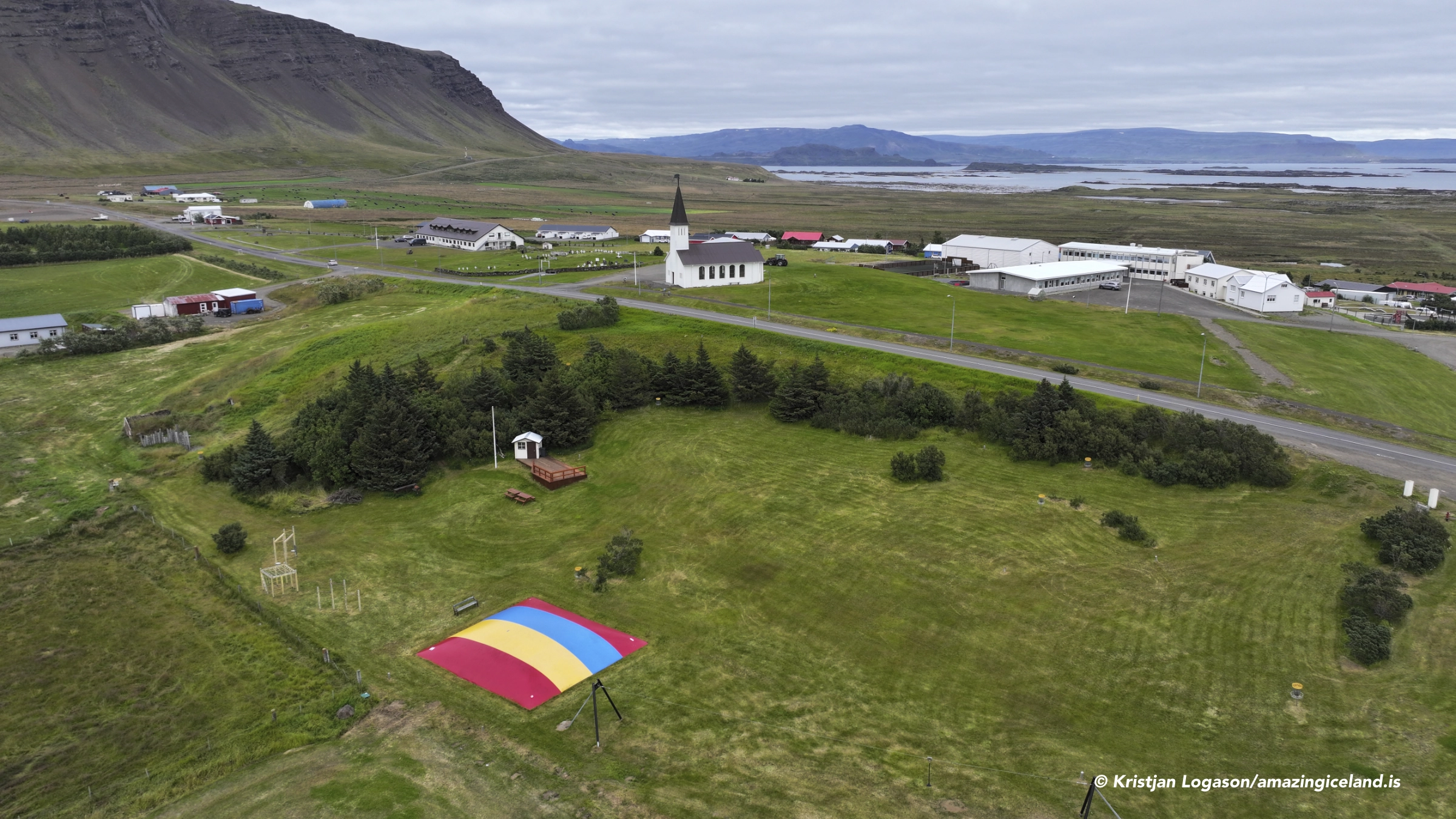
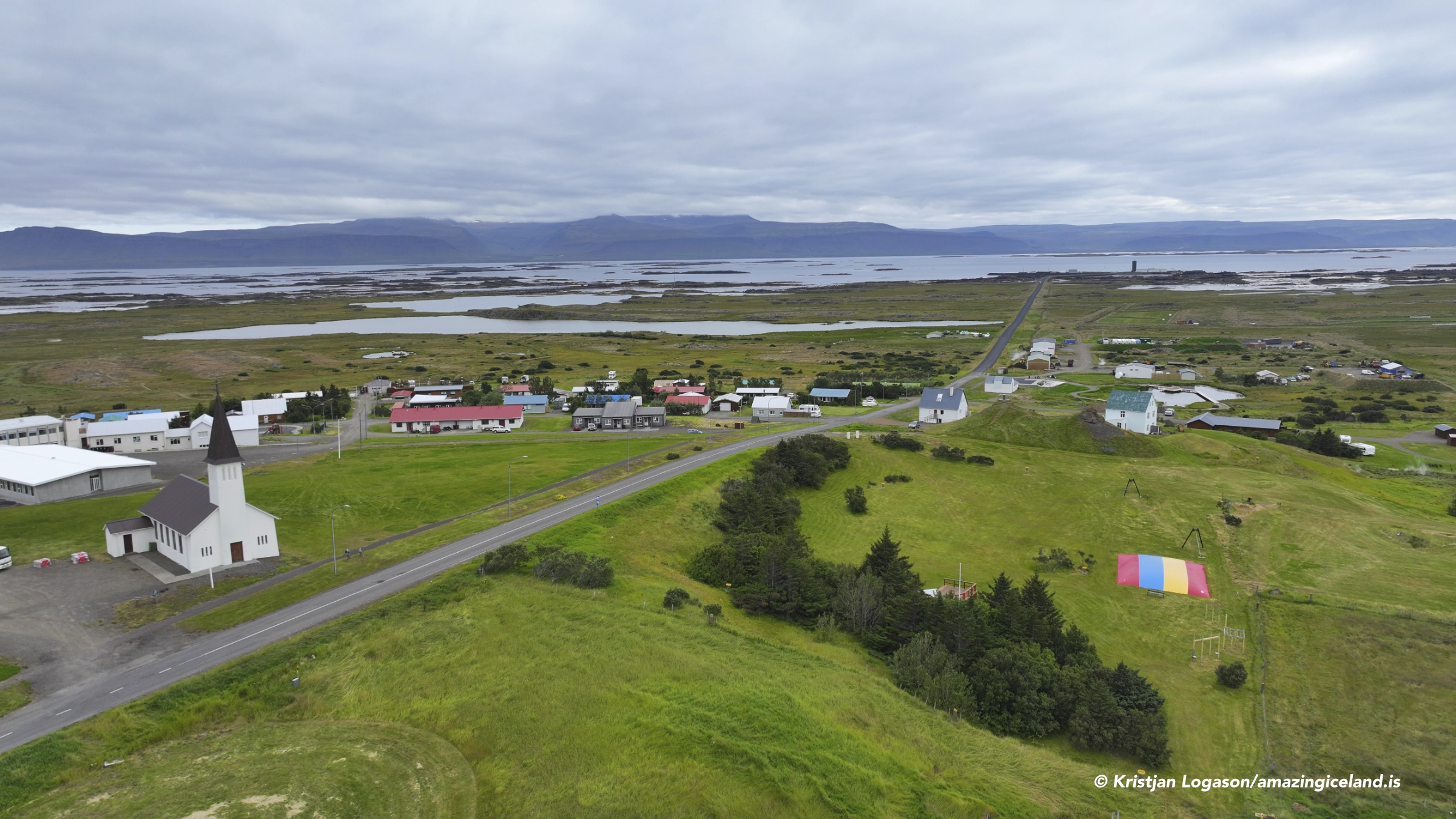
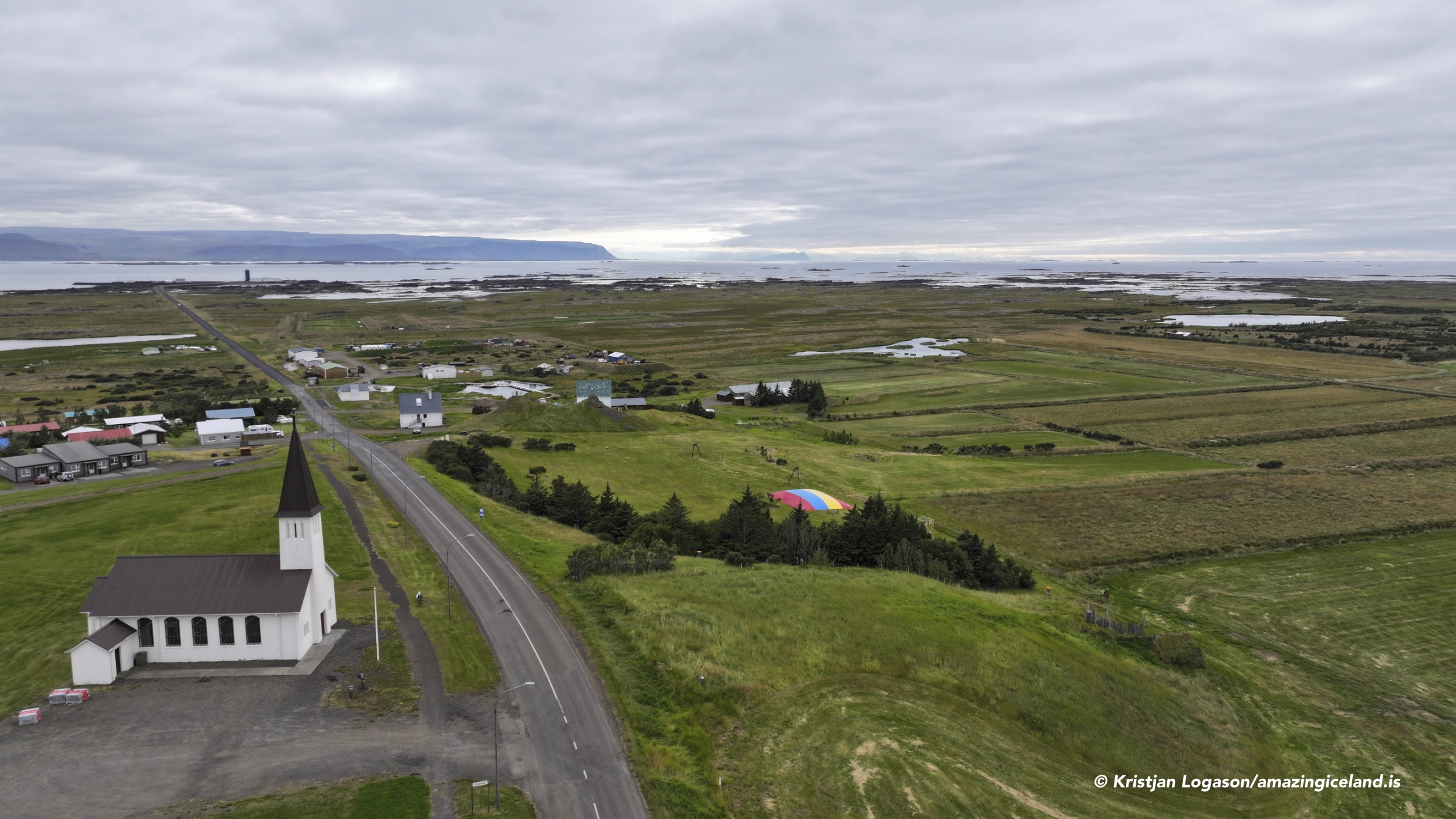
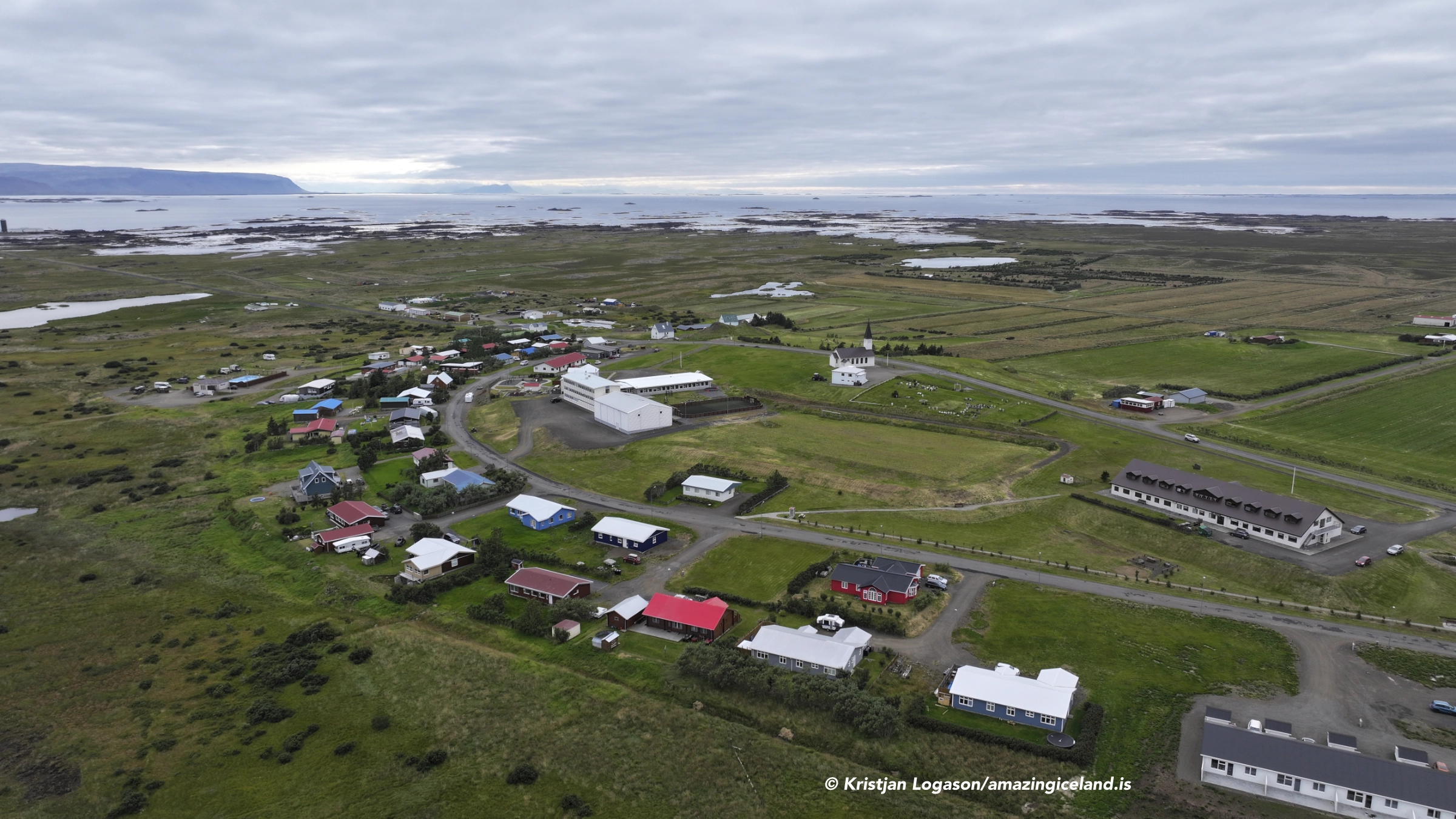
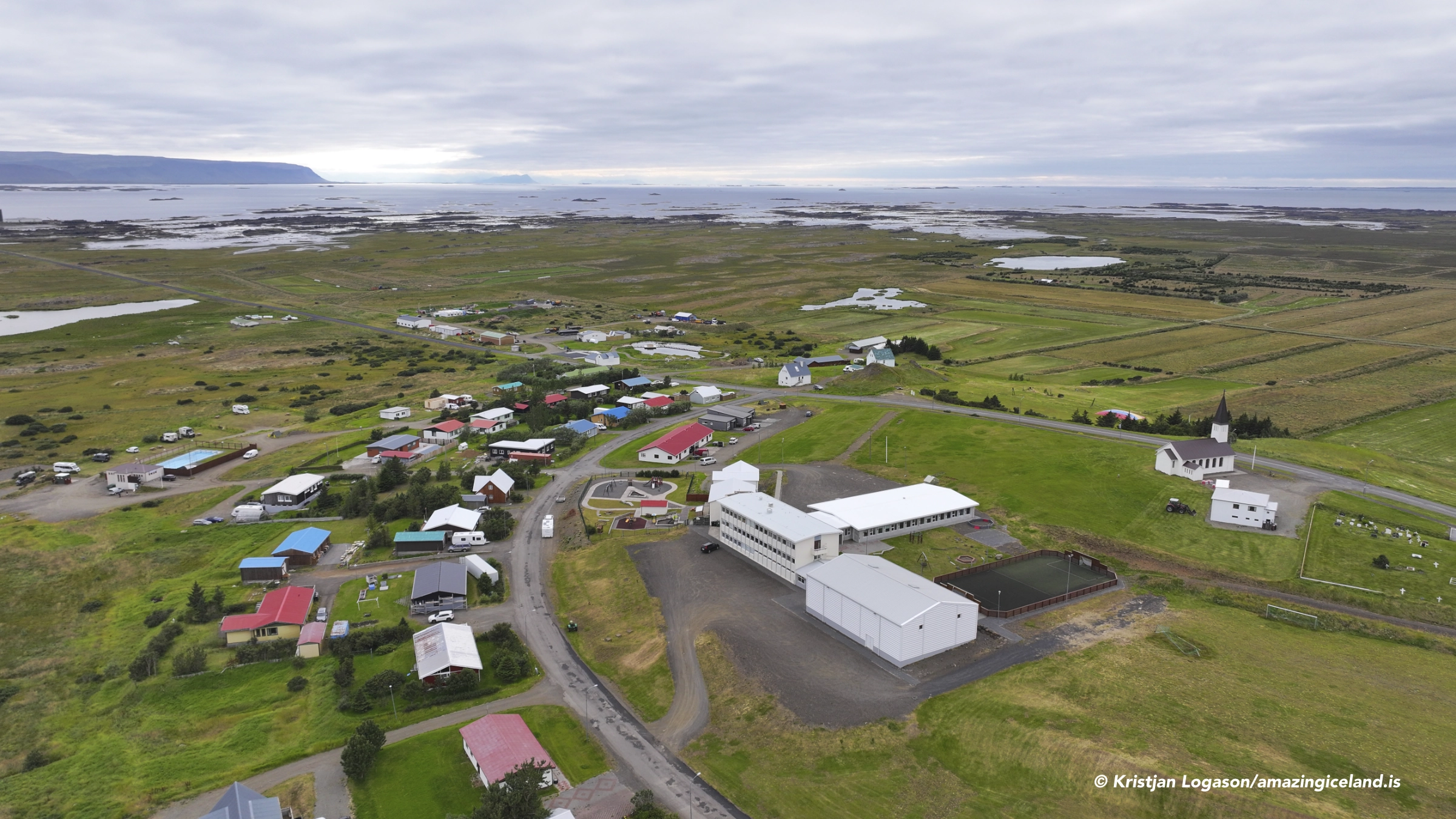
Reykhólar stands in the southern Westfjords, where geothermal ground meets the shallow, island-filled waters of Breiðafjörður. Heat rises close to the surface, while tidal flats, marshes, ponds and extensive seaweed beds form one of Iceland’s most productive coastal environments.
The community has always depended on this combination. The medieval estate derived much of its wealth from farmland and rights attached to hundreds of islands. Birds, eggs, eiderdown, seaweed, fish and seals provided resources that could be harvested from the fjord, while geothermal heat supported bathing, washing and cultivation.
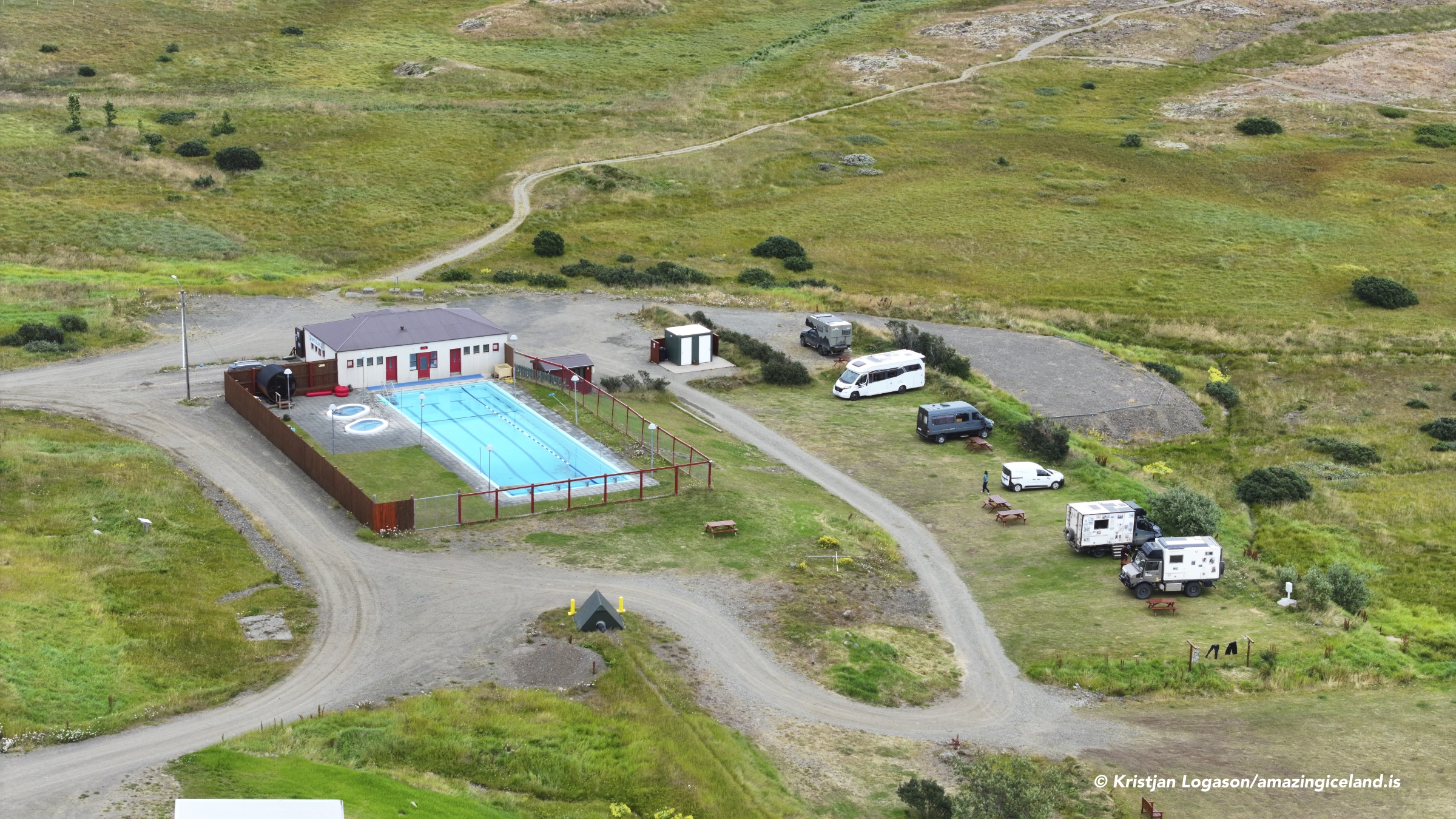
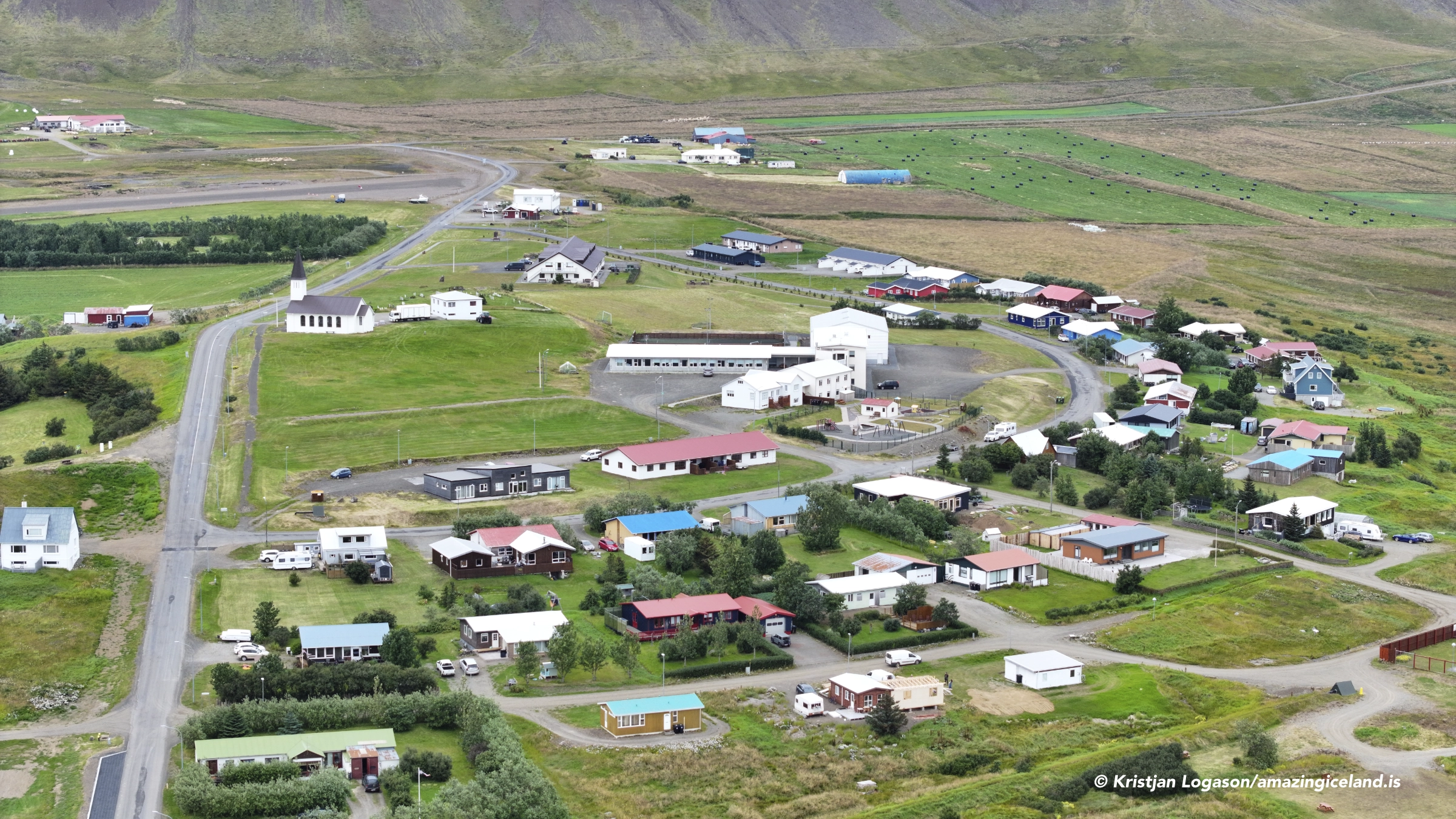
Modern Reykhólar continues this pattern through the geothermal drying of seaweed and production of sea salt. The swimming pool, harbour, shoreline and geothermal areas bring the same relationship into everyday village life.
Reykhólar also has an unusually substantial literary history. A wedding held here in 1119 included poetry, games and a saga composed and performed by a local farmer. The scene, recorded later in *Þorgils saga ok Hafliða*, has become important evidence for understanding oral storytelling before most Icelandic sagas were written down.
A short stop allows visitors to see the village, harbour, geothermal landscape and Grettislaug. The Boat and Gift-of-Nature Exhibition provides the clearest explanation of how people traditionally used Breiðafjörður and why Reykhólar became such a valuable estate.
The location of Reykhólar
Latitude
65.4480
Longitude
-22.2012
Reykhólar
Where hot ground meets a shallow sea
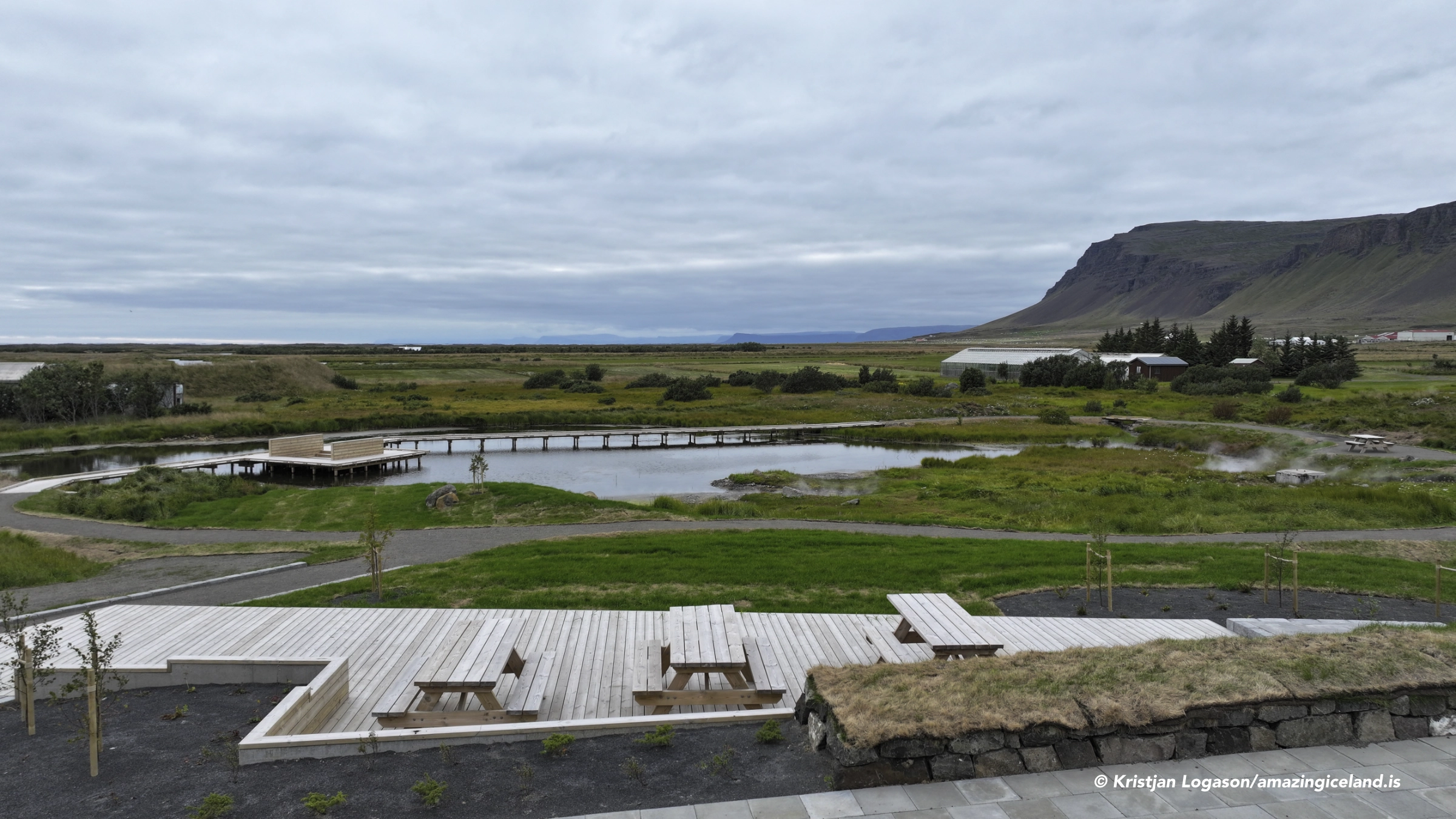
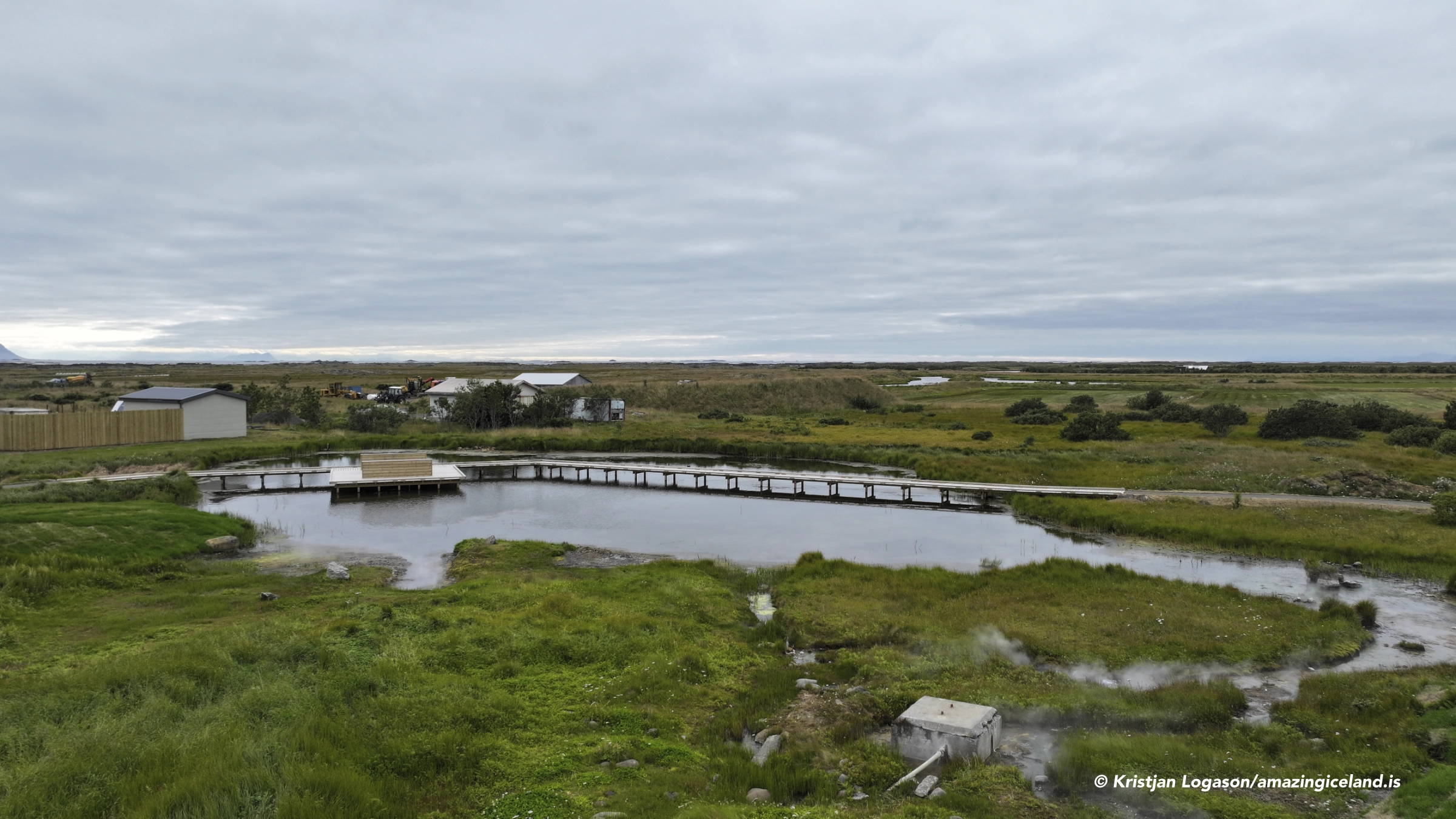
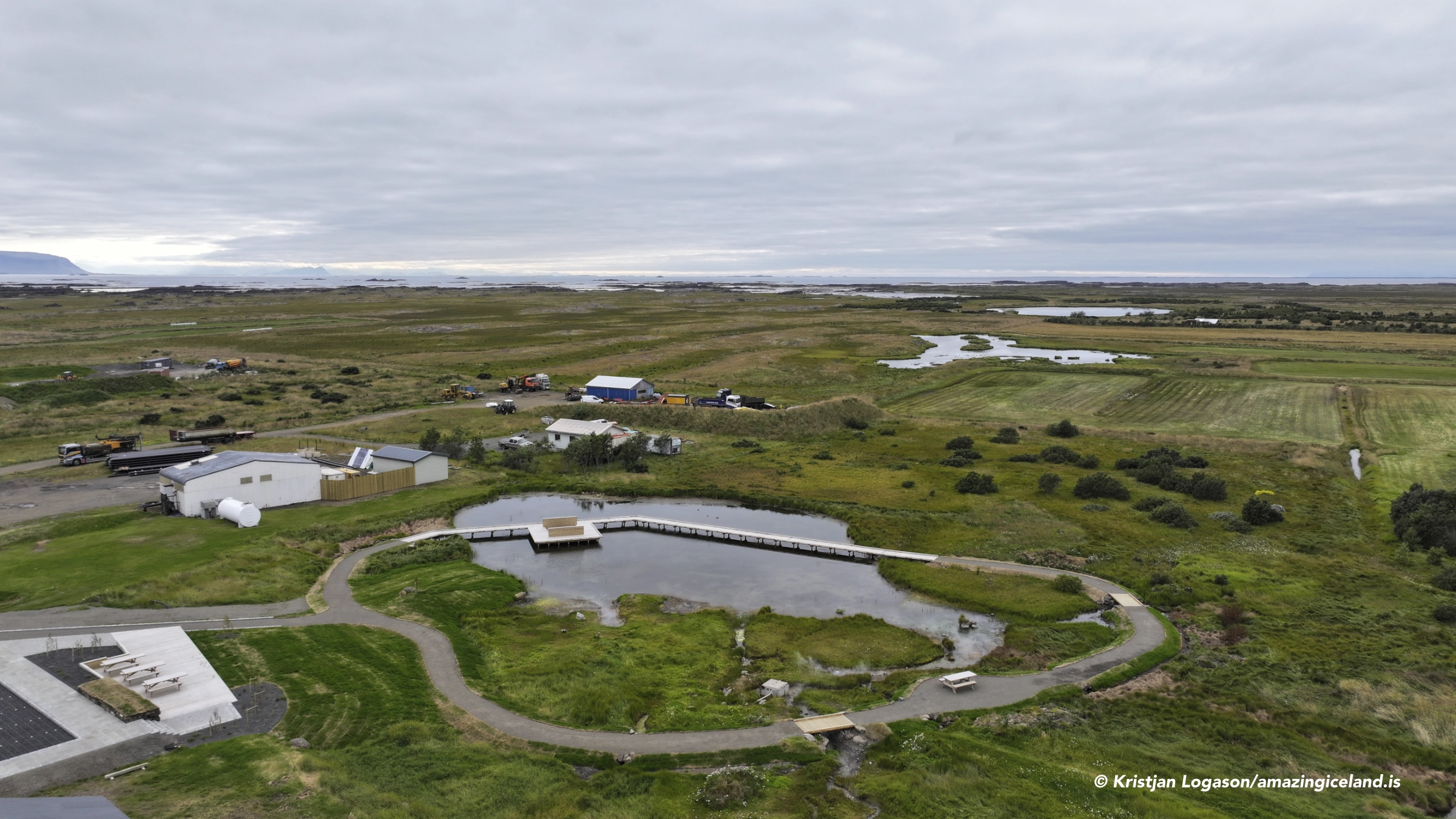
Reykhólar is one of the principal geothermal areas of the Westfjords. Warm and hot water reaches the surface at several locations around the village, and the geothermal system has long been used for heating, bathing and industry.
The natural environment is more complex than visible steam and hot springs alone. Geothermal wetlands support specialised vegetation adapted to warm soil and unusual water conditions. The Reykhólar geothermal area is included in Iceland’s natural heritage register partly because of these habitats and the plants associated with them.
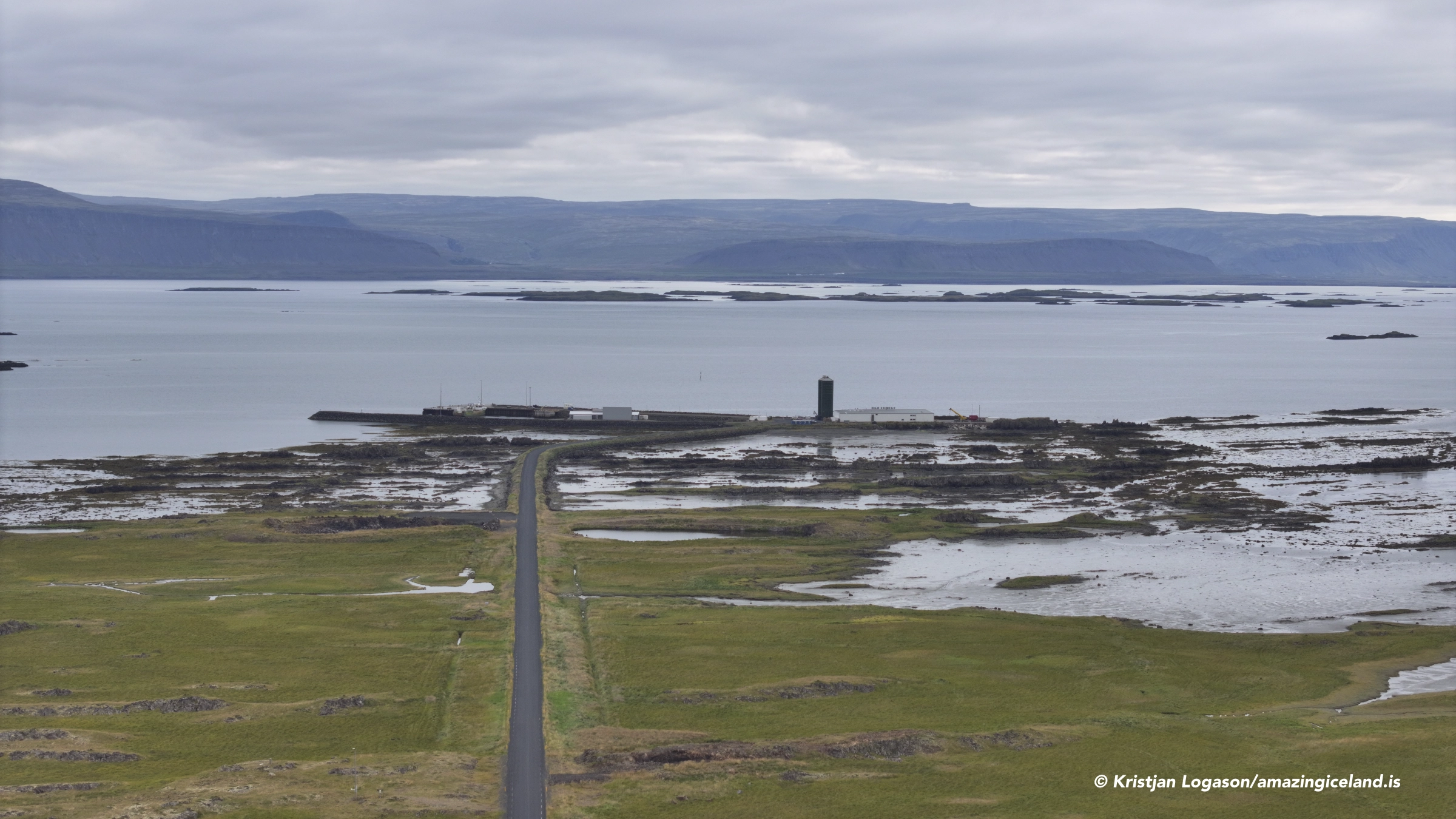
Breiðafjörður provides the other half of the landscape. The sea nearest the shore is shallow, with extensive tidal flats and a considerable difference between high and low tide. Islands, skerries, channels and seaweed beds continue far into the bay.
The village developed between these two resources. Geothermal heat could be used on land, while the fjord provided food, fertiliser, eiderdown and access to the islands. Modern seaweed and salt production are therefore not unrelated industries placed in a small village. They are contemporary versions of a much older practice of using what the warm ground and shallow sea provide together.
An estate with hundreds of islands
Reykhólar was historically regarded as one of Iceland’s most valuable estates. Good farmland contributed to that status, but much of its importance came from rights and resources spread across Breiðafjörður.
Historical descriptions associate approximately three hundred islands with the estate. The number should be understood as an indication of scale rather than as a modern cadastral count. Each island could carry several forms of value: nesting birds, eggs, eiderdown, grazing, seaweed, fishing access or seasonal occupation.
This made Breiðafjörður a different economic landscape from an ordinary coastal farm. Wealth was not measured only through the land surrounding the farmhouse. It extended across tidal water to islands, reefs and harvesting grounds that required boats, local knowledge and careful timing.
The estate also became a place of political and social importance. Chieftains, travellers and saga figures stayed at Reykhólar, and the farm appears repeatedly in medieval literature. The scale of its resources made it possible to accommodate large gatherings and maintain influence well beyond the immediate district.
The Boat and Gift-of-Nature Exhibition in the village explains this system through traditional boats and the resources people gathered from the fjord. Its subjects include egg collecting, bird hunting, eiderdown, seaweed, seals and the timber boats used to reach and work among the islands.

A wedding and a saga in 1119
Þorgils saga ok Hafliða, part of the larger Sturlunga saga compilation, describes a wedding held at Reykjahólar in 1119. The account was written later, but it preserves an unusually detailed description of how guests at a medieval Icelandic feast entertained one another.
The wedding celebrated Yngvildr Þorðardóttir. The programme included poetry, verbal contests and storytelling. Among the guests was Hrólfr of Skálmarnes, a farmer who performed a saga he had composed himself.
His story concerned Hröngviðr the Viking, Óláfr King of Warriors, the plundering of the burial mound of Þráinn the Berserk and the adventures of Hrómundr Gripsson. Verses were woven into the performance. The saga text also connects this kind of entertainment with what the Norwegian king Sverrir later called lygisögur, or lying sagas: imaginative stories that were valued because they were entertaining.
The importance of the passage lies in its specificity. It gives a date, place, occasion, performer and description of the material. Instead of merely assuming that stories circulated orally before they were written, scholars can point to a medieval narrative describing a saga being performed at an Icelandic wedding. The Reykhólar scene consequently remains a significant case study in research on Old Norse performance and oral tradition.
Reykhólar is also connected with Grettir Ásmundsson. Chapter 50 of Grettis saga says that Grettir came to Reykjahólar and spent part of a winter with the chieftain Þorgils Arason. The foster-brothers Þorgeir Hávarsson and Þormóður Kolbrúnarskáld were staying there as well, creating a difficult gathering that Þorgils kept under control.
The village swimming pool is named Grettislaug after Grettir. The name gives the medieval connection a place in ordinary community life rather than leaving it solely in books and academic discussion.
Seaweed and geothermal heat
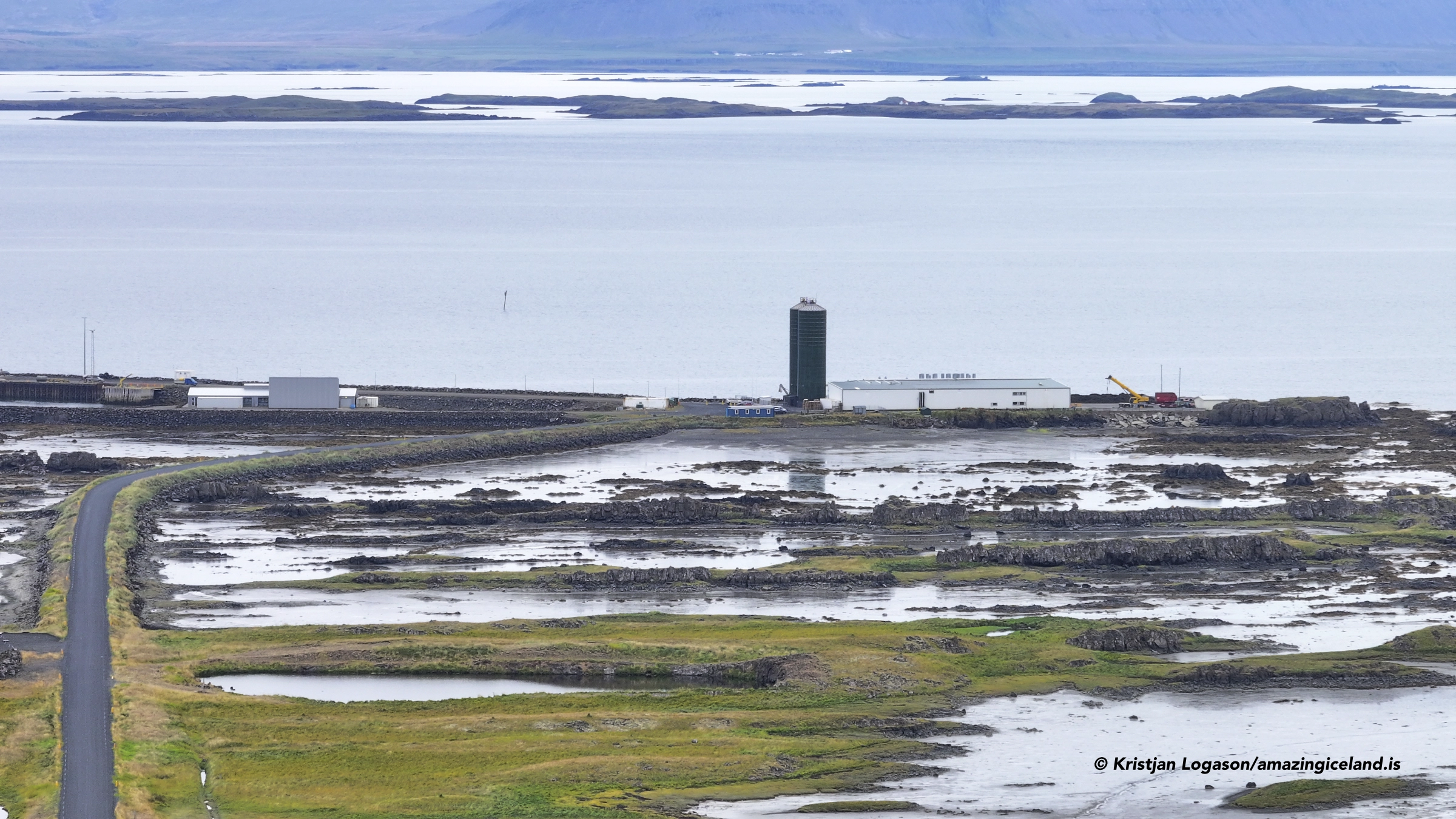
Þörungaverksmiðjan, generally known internationally as Thorverk, is central to the modern economy of Reykhólar. The company was founded in 1975 and re-established in 1986. It harvests seaweed from Breiðafjörður and uses geothermal water from Reykhólar as the heat source for drying it.
The principal raw materials are rockweed and kelp. After harvesting, the seaweed is dried and milled for use in products such as animal feed, fertiliser and other processed materials. Geothermal heat allows a wet marine resource to be processed in a location far from the larger industrial centres of Iceland.
Harvesting must account for the time required for the seaweed beds to regrow. Different areas are therefore used in rotation rather than being cut continuously. The resource is monitored and harvesting is regulated, linking the industry to the long-term productivity of Breiðafjörður rather than simply to the capacity of the factory.
The factory is more than an unusual use of geothermal energy. It is one of the principal foundations of employment in the village and a direct continuation of the long relationship between Reykhólar and the resources of the bay.
Visitors can see the industrial landscape and may occasionally observe harvesting or activity around the processing facilities. These remain working sites rather than conventional attractions, and access should follow signs and current instructions.
Salt from seawater
Reykhólar also has one of Iceland’s oldest documented connections with geothermal salt-making. In 1753, an attempt was made to produce salt by using hot water to evaporate seawater from Breiðafjörður.
Salt was an important imported commodity, especially for preserving fish and meat. Producing it domestically would have reduced dependence on supplies from Europe. Danish salt-makers and Icelandic geothermal conditions were brought together in an experiment that demonstrated the method was possible.
Salt-making continued for a period in the Westfjords but did not develop into a permanent large-scale industry. Technical difficulties, inconsistent production and the economics of imported salt eventually brought the early work to an end.
The method was revived at Reykhólar in 2012. Seawater is pumped into open pans and heated indirectly with geothermal water until crystals form. The process uses the heat of the geothermal system without mixing geothermal minerals into the seawater.
Modern production takes place on Karlsey, close to the seaweed operation. The two industries use different parts of Breiðafjörður, but both depend on the same relationship between marine raw materials and geothermal process heat. Seaweed is removed from the water and dried; seawater is brought ashore and reduced to salt.
Visitors can see the modern industrial setting, but production buildings should be treated as workplaces. Any closer access depends on current arrangements rather than being assumed as part of a village walk.
Tidal flats and birdlife
The shallow water around Reykhólar creates extensive feeding habitat for birds. As the tide retreats, mudflats and coastal shallows expose invertebrates and other food, while inland ponds, marshes and moorland add further nesting and feeding environments.
Waders, ducks, geese, swans, divers, terns and other coastal species can all be found in the wider area. White-tailed eagles are also regularly seen around Breiðafjörður, although no wildlife sighting should be treated as guaranteed.
Birdwatching does not require a long expedition from the village. The shoreline, wet ground and open views allow visitors to observe the relationship between different habitats within a comparatively small area. Binoculars or a long lens are useful because much of the activity occurs across shallow water where approaching closely would disturb the birds.
The harbour adds a human scale to the same landscape. Boats, tidal channels and working shoreline structures show how people continue to move through an environment governed by tide and shallow water. The village and fjord should therefore be understood together rather than as separate historical and natural subjects.
A short stop in Reykhólar
The shoreline and harbour provide the best starting point. From there, the low shape of the coast, shallow water and islands of Breiðafjörður become clearer than they are from the approach road.
The geothermal areas reveal the second part of the village’s identity. Steam, warm ground and the infrastructure carrying hot water show that geothermal energy is not merely a distant resource used by industry. It forms part of the everyday environment. Visitors should remain on established public access and avoid stepping onto uncertain hot or wet ground.
Grettislaug provides the most direct recreational use of the geothermal resource. The swimming pool is named for Grettir Ásmundsson, connecting bathing in the present village with one of the saga figures associated with the medieval estate.
The Boat and Gift-of-Nature Exhibition is the most useful indoor stop. Its boats and displays explain how island rights, birds, eiderdown, seaweed, fish and seals supported life around Breiðafjörður. This historical context also makes the modern seaweed and salt industries easier to understand.
Reykhólar is best treated as a short stop. The village, harbour, geothermal features, Grettislaug and exhibition can be combined without making it a full-day destination. Birdwatching or time in the pool may extend the visit according to conditions and interest.
Vaðalfjöll can be included as a separate excursion in the wider Reykhólahreppur area. The rocky summits rise above Þorskafjarðarheiði and provide broad views over Breiðafjörður, the southern Westfjords and Dalir. The walk requires more time and effort than the village visit and should not be treated as part of the same short stop.
Interesting facts:
- Reykhólar stands where a substantial geothermal system meets the shallow northern coast of Breiðafjörður.
- Geothermal wetlands around the village support specialised plant communities.
- Historical accounts associate approximately three hundred Breiðafjörður islands with the Reykhólar estate.
- A wedding held at Reykhólar in 1119 preserves one of the best-known medieval descriptions of saga-telling as entertainment.
- Hrólfr of Skálmarnes performed a saga of his own composition at the wedding.
- Grettis saga says that Grettir Ásmundsson spent part of a winter at Reykhólar.
- The village swimming pool is named Grettislaug.
- Geothermal heat has been used to dry seaweed at Reykhólar since the 1970s.
- Geothermal salt-making was first attempted at Reykhólar in 1753.
- The salt-making method was revived in 2012.
- The Boat and Gift-of-Nature Exhibition explains how Breiðafjörður’s islands and wildlife supported local life.
Image Gallery
Photography tips:
- The strongest overall composition is the village in relation to Breiðafjörður. Include shallow water, islands and distant land rather than filling the frame with buildings alone.
- Morning and evening light reveal the low relief of the shoreline more clearly than strong midday light. Side-light can separate tidal channels, wet ground and small islands.
- The appearance of the coast changes substantially with the tide. High water simplifies the bay and can support reflections, while low tide reveals channels, mudflats and patterns in the shore.
- Use a moderate telephoto lens to compress the village, islands and distant mountains into a layered view across Breiðafjörður.
- Visible geothermal steam is strongest in cool, calm air. Place it against darker ground or distant slopes so that it remains distinct in the frame.
- The harbour can provide boats and working structures as foreground, helping connect the village with its dependence on the bay.
- Industrial subjects are strongest when they show the relationship between processing buildings, geothermal steam and the water from which the raw materials come. Photograph from public areas and respect working access.
- Bird photography requires a long lens. Keep distance from feeding and nesting birds and avoid crossing wet ground simply to obtain a closer position.
- Early or late light across shallow water can produce subtle colour and reflection, but wind and tide determine whether the surface remains calm.
Destinations nearby