Sönghellir cave in Snæfellsnes west Iceland
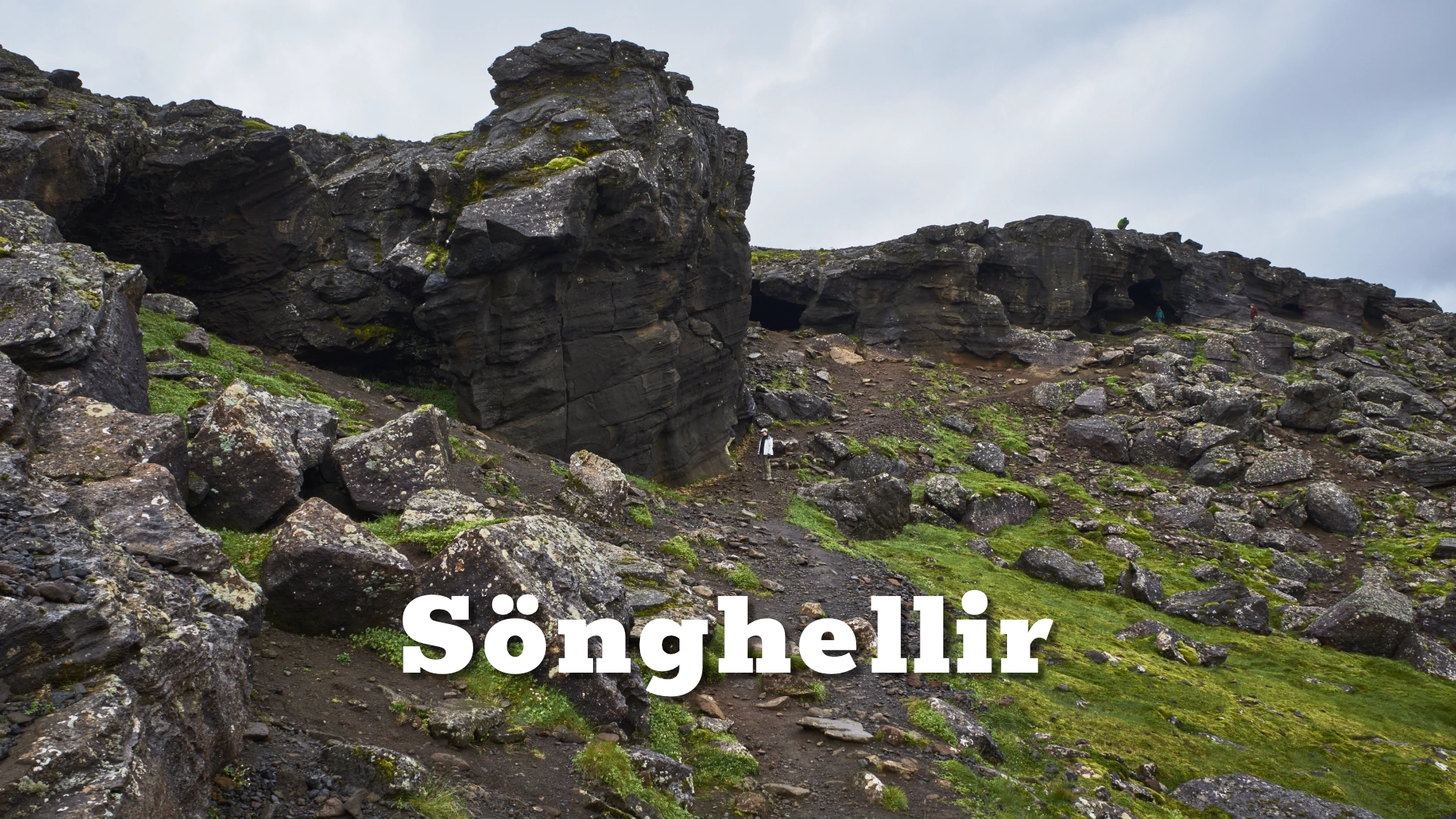
Sönghellir is a small cave on the southern flank below Snæfellsjökull, reached from the seasonal mountain road leading towards the glacier-covered volcano. The cave is cut into **móberg**, not lava, and its narrow entrance opens into an interior that is much higher than it first appears.
The acoustics are what give the cave its name. Sönghellir means **Cave of Songs**, and even a few spoken words or a single sung note are enough to hear the sound return clearly from the walls.
The cave itself is not large, but the combination of echo, old carvings, local folklore and the elevated view over southern Snæfellsnes gives the site more character than its size might suggest.
The location of Sönghellir cave in Snæfellsnes west Iceland
Latitude
64.78205
Longitude
-23.68369
Sönghellir cave in Snæfellsnes west Iceland
Inside Sönghellir
The echo inside Sönghellir is genuinely strong and is the defining feature of the cave. The interior is narrow, but the height of the chamber gives sound enough space to reflect repeatedly, creating an effect that is obvious almost immediately after entering.
A normal speaking voice is enough to demonstrate it. Singing makes the acoustics even clearer, which explains why the cave became associated so strongly with sound and eventually acquired its present name.
The walls also carry names and dates carved by earlier visitors. Some are old enough to have become part of the human history of the cave rather than simply recent damage.
That distinction matters. The existing inscriptions are now part of what visitors come to see, but they should be left exactly as they are. Adding another name today would not continue a tradition in any meaningful sense; it would simply damage the cave.
Bárður and local tradition
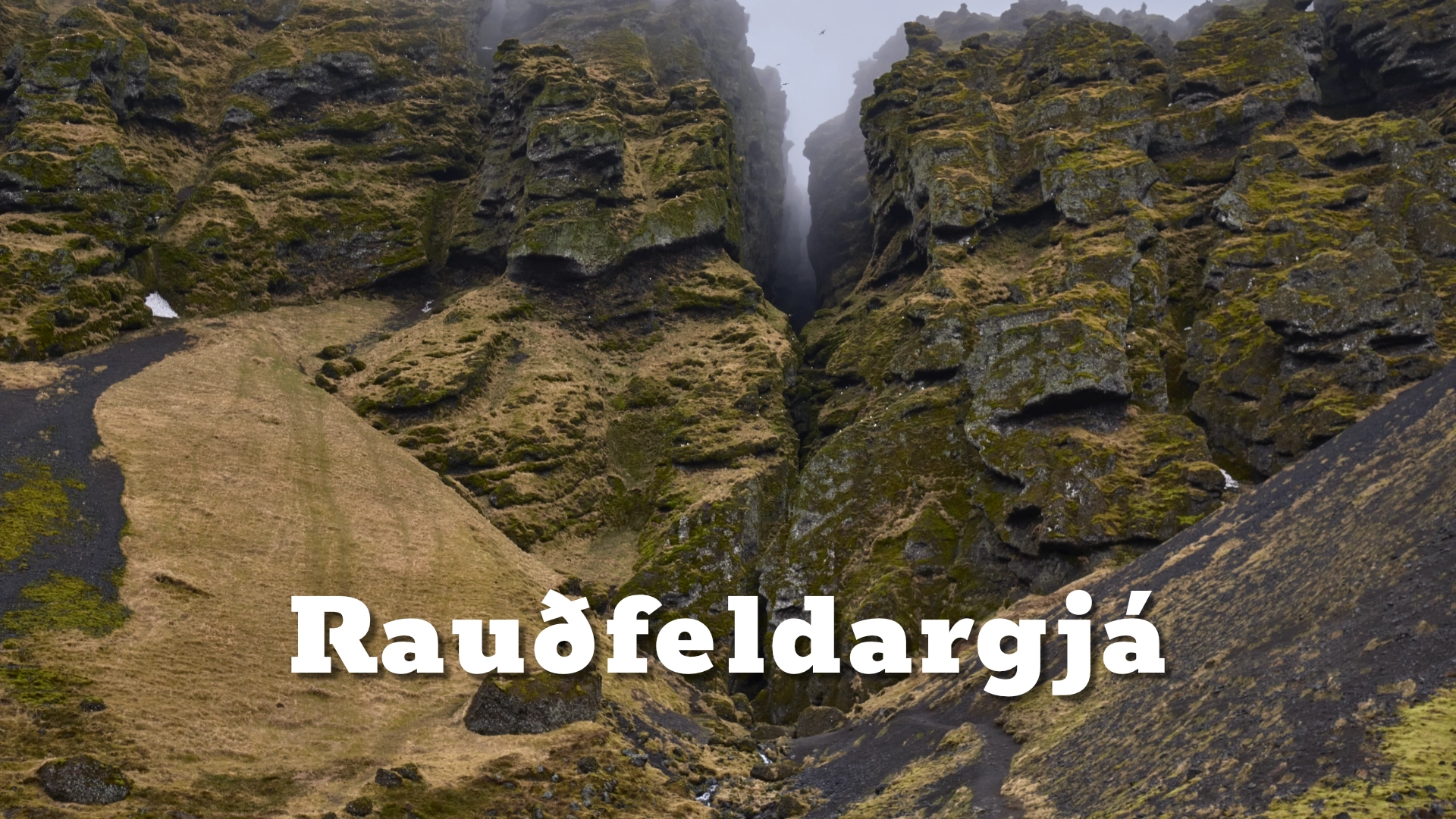
Sönghellir is one of several places on western Snæfellsnes connected in tradition with Bárður Snæfellsás. His story belongs to a much larger landscape around Snæfellsjökull, with different episodes attached to places such as Arnarstapi, Rauðfeldargjá and other sites across the peninsula.
The cave should therefore not be treated as the single place that explains Bárður. It is one location within a network of stories spread across Snæfellsnes.
Local folklore also says that elves used Sönghellir to practise their singing. There is no reason to present that as anything other than folklore, but it fits naturally with a cave whose most memorable quality is the way sound behaves inside it.
The story works because the cave already feels acoustic before any legend is added. The echo is real; the elves belong to the imaginative tradition that grew around it.

The other caves and the view
Several smaller cave openings lie near Sönghellir. They are unnamed and are now too small to enter, but they help show that the main cave is part of a broader eroded móberg landscape rather than an isolated feature.
The parking area itself is also an important part of the visit. From this elevated position, the view opens back across southern Snæfellsnes towards the coast, giving a much broader sense of the peninsula than the confined interior of the cave.
For some visitors, that view may be as memorable as Sönghellir itself. The contrast between the dark, narrow chamber and the open landscape outside is part of what makes the stop work.
In changing weather, cloud and light can move quickly across the slopes and lowlands below. That makes the setting feel far larger than the cave alone would suggest.
Seasonal access
Sönghellir is reached from the seasonal mountain road leading towards Snæfellsjökull. The cave should therefore be treated primarily as a summer destination, since access depends on the road being open and usable.
Once at the parking area, the cave is close by and the visit itself is short. The main commitment is getting there rather than walking any significant distance after arrival.
Road conditions can change with snow, thaw, rain and seasonal maintenance, so access should never be assumed simply because the route appears on a map.
Sönghellir works best as a small stop within a wider journey through the southern Snæfellsnes landscape rather than as a destination requiring a long visit on its own.
Interesting facts:
- Sönghellir is a móberg cave, not a lava tube.
- Its name means Cave of Songs.
- The interior is narrow but high and has a very strong echo.
- Names and dates carved into the walls record earlier visitors.
- Local tradition links the cave with Bárður Snæfellsás.
- Local folklore says elves once used Sönghellir for singing.
- Several smaller unnamed cave openings lie nearby.
- The parking area gives a wide view over southern Snæfellsnes.
- Access depends on the seasonal mountain road being open.
Image Gallery


Photography tips:
- Inside the cave, the main challenge is the contrast between the dark interior and the bright entrance. Decide whether the photograph is about the interior or the outside light and expose accordingly.
- A wider lens works well because the cave is narrow, but avoid forcing the perspective so much that the chamber appears larger than it really is.
- The entrance can be used as a natural frame around the landscape outside, especially when cloud or directional light gives structure to the view.
- The carved names and dates make useful close details, particularly when side light from the entrance reveals texture in the wall.
- Handheld photography is usually the simplest approach inside because the space is confined and the visit is short.
- Outside, treat the broad view from the parking area as a separate photographic subject rather than merely a record shot of the cave.
- Changing weather often improves the landscape view, especially when broken cloud or low light separates the slopes and coastline below.
- The contrast between the dark cave interior and the open southern Snæfellsnes landscape can work well as a small photographic sequence rather than a single image.
Destinations nearby