Gestur the Arctic Fox in Snæfellsnes
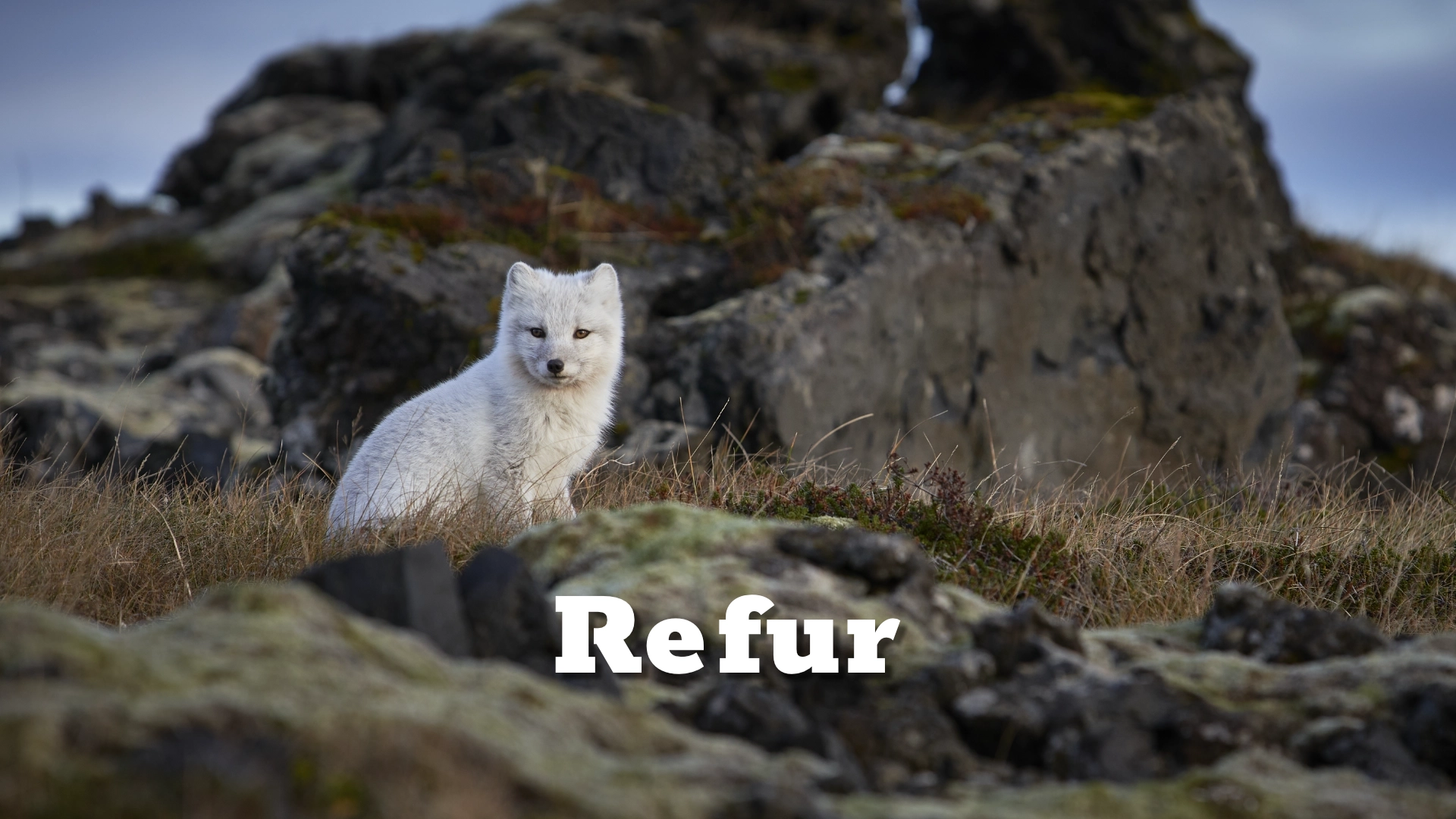
Gestur was an Arctic fox photographed at **Malarrif**, inside Snæfellsjökull National Park, in November 2021. He was curious enough to remain nearby, watching and investigating rather than disappearing immediately into the lava.
That behaviour fits what is known about foxes inside Snæfellsjökull National Park. They are protected there and can sometimes be noticeably more curious around people than foxes in areas where they are regularly hunted.
Gestur was still a wild Arctic fox. That distinction matters, because the value of the encounter came from allowing him to control the distance rather than trying to force a closer view.
The location of Gestur the Arctic Fox in Snæfellsnes
Latitude
64.7333
Longitude
-23.9007
Gestur the Arctic Fox in Snæfellsnes
Meeting Gestur at Malarrif
The encounter with Gestur took place at Malarrif on the southern side of Snæfellsjökull National Park. The photographs were made during one encounter in November 2021, when he was already carrying his dense winter coat.
Gestur approached out of curiosity and remained close enough for an extended series of photographs. There was no need to follow him, block his movement or try to attract him closer.
That is the best way to experience an Arctic fox. If the animal chooses to remain nearby, let it decide the distance. If it moves away, let it go.
The encounter was memorable precisely because it was not controlled. Gestur behaved like a wild animal making his own decisions, and the photographs came from waiting rather than from pursuing him.
Why foxes here can be curious
Arctic foxes are protected inside Snæfellsjökull National Park, where known den territories are monitored and foxes are regularly seen moving through lava fields, coastal areas and higher ground.
Because they are not hunted within the park, some individuals can behave with greater curiosity around people than foxes elsewhere in Iceland. That does not make them tame.
A fox that remains nearby is still evaluating whether a person represents a threat. Its willingness to stay should therefore be read as tolerance or curiosity, not as an invitation to approach.
Gestur’s behaviour belongs in that context. He was comfortable enough to remain close, but he was still entirely responsible for the encounter.

Iceland’s only native land mammal
The Arctic fox (Vulpes lagopus) is Iceland’s only native terrestrial mammal. It reached Iceland naturally after the last Ice Age, long before people settled the country.
It is generally thought that foxes were capable of travelling across Arctic sea ice, although the precise route by which the species reached Iceland is not known.
The extraordinary mobility of Arctic foxes was demonstrated clearly in 2018, when a satellite-tracked female travelled from Svalbard to Ellesmere Island in Canada, covering more than 3,500 kilometres of Arctic terrain and sea ice in only 76 days.
The oldest Arctic fox remains found in Iceland are about 3,500 years old, although the species is believed to have been present considerably longer.
Arctic foxes are small, usually weighing only a few kilograms, but they are exceptionally well adapted to cold environments. Dense fur, a compact body and relatively short extremities reduce heat loss and allow them to survive conditions that would be difficult for most mammals of similar size.
The winter coat
Gestur was photographed in winter, when Arctic foxes develop their thickest coat. The change is dramatic enough to alter the apparent shape of the animal, making the body look rounder and the legs shorter than they do during summer.
The species occurs in more than one colour form. The familiar white form becomes pale or white in winter and darker in summer, while the blue form remains darker throughout the year.
In the lava landscape around Malarrif, the winter coat creates a strong contrast with the subdued browns, greys and black volcanic ground. That contrast is one of the reasons winter foxes are visually so striking even when the weather itself is flat.
The coat is not simply seasonal decoration. It is one of the most important adaptations allowing the Arctic fox to conserve heat through Icelandic winters.
Seeing Arctic foxes responsibly
Snæfellsnes is a good region for encountering Arctic foxes, but sightings should never be treated as guaranteed. Even in places where foxes are seen regularly, they remain wild animals moving according to their own needs.
If you see one, keep your distance and never feed it. Do not follow a fox that is moving away, position yourself across its intended route or approach a den.
Feeding is particularly damaging because it teaches wild animals to associate people with food and can change behaviour in ways that make future encounters less natural and potentially more dangerous for the fox.
A curious animal may decide to approach on its own. If that happens, stay still, keep quiet and allow the fox to control the encounter.
The aim should never be to get as close as possible. The aim should be to avoid becoming the reason the animal changes what it was doing.
Interesting facts:
- The Arctic fox is Iceland’s only native terrestrial mammal.
- Gestur was photographed at Malarrif in November 2021.
- Arctic foxes are protected inside Snæfellsjökull National Park.
- Foxes within the park can sometimes be more curious around people than animals living where hunting occurs.
- Arctic foxes are thought to have been capable of reaching Iceland across sea ice after the last Ice Age.
- In 2018, a satellite-tracked female Arctic fox travelled from Svalbard to Ellesmere Island in Canada in only 76 days.
- The oldest Arctic fox remains discovered in Iceland are about 3,500 years old.
- Arctic foxes develop an exceptionally dense winter coat.
- Snæfellsnes is a good region for seeing Arctic foxes, although encounters are never guaranteed.
- Wild foxes should never be fed.
Image Gallery


Photography tips:
- Use a long lens and let the fox determine the distance. The strongest photographs come from behaviour that remains natural.
- Do not follow an animal simply to improve the background or angle. If the fox changes direction because of you, you are already affecting the scene too much.
- Stay in one position when possible. A curious fox may move closer on its own once it no longer feels pressured.
- In winter, pale fur can be difficult to expose against snow or bright sky, while darker lava often gives much better tonal separation.
- Low viewpoints can work well, but only if they can be reached without advancing towards the fox.
- Look for moments when the fox stops paying attention to the photographer. Those are usually the photographs that feel most natural.
- Behaviour is often more interesting than portraiture. Walking, listening, scenting and watching the surroundings can say far more about the animal than a tight head-and-shoulders frame.
- Do not photograph around dens at close range and never use food to influence the animal’s position or behaviour.
Destinations nearby