Ölkelda natural mineral spring in Snæfellsnes Iceland
Ölkelda is a naturally carbonated mineral spring on the Snæfellsnes Peninsula, located on private farmland close to Route 54. The spring has long been known for its iron-rich mineral water and for the steady release of dissolved carbon dioxide that makes the water bubble naturally from the ground.
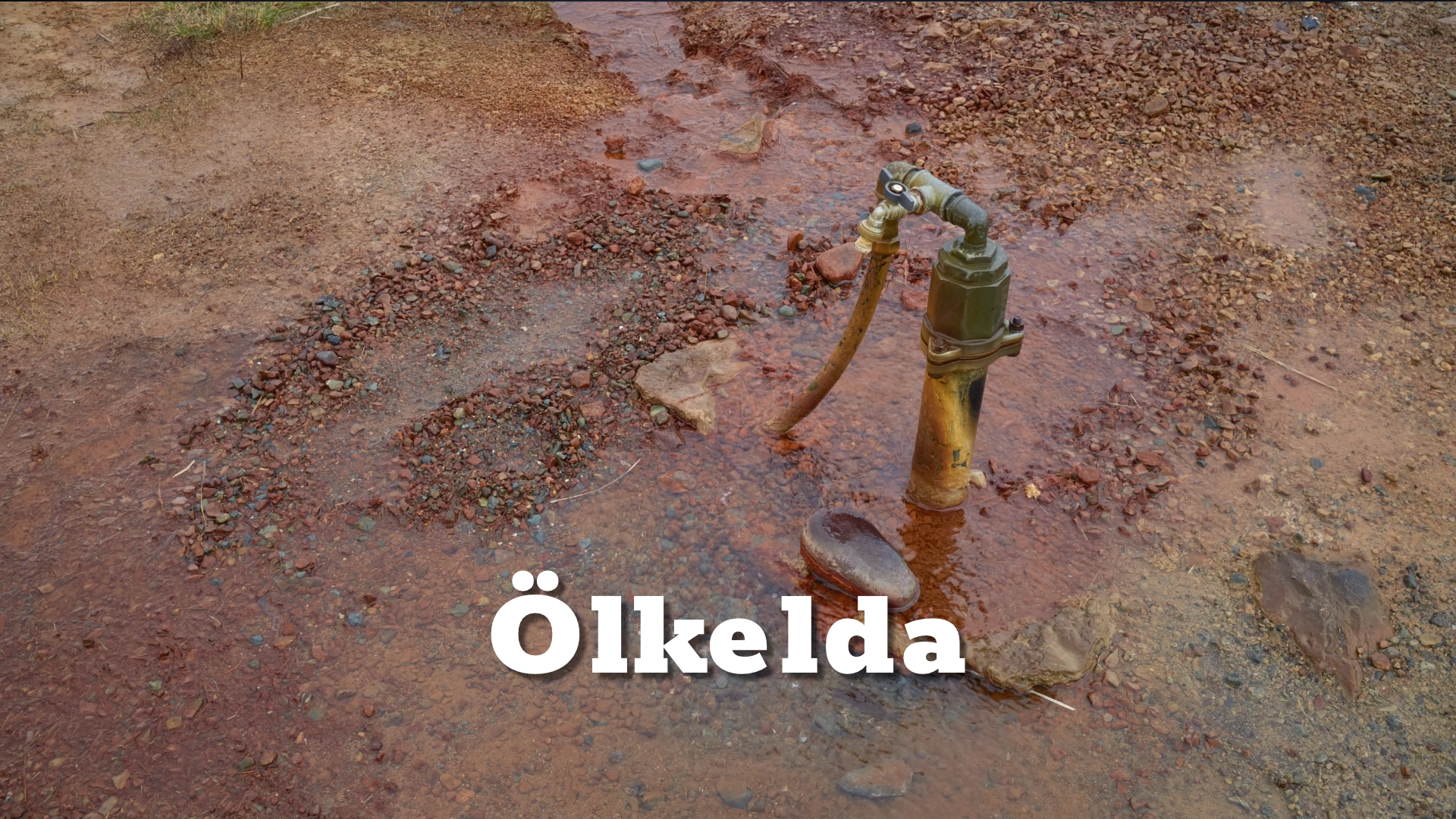
The water has a very distinctive character. Its iron content leaves reddish deposits around the spring head, while the combination of minerals and carbonation gives it a strong taste that people tend to react to quite differently.
Ölkelda is not a large destination, but that is part of its appeal. It offers a direct and unusually simple encounter with the geology beneath Snæfellsnes: naturally carbonated water rising to the surface and carrying dissolved minerals with it.
The location of Ölkelda natural mineral spring in Snæfellsnes Iceland
Latitude
64.8368
Longitude
-22.9768
Ölkelda natural mineral spring in Snæfellsnes Iceland
What an ölkelda is
The Icelandic word ölkelda means an “ale spring” or “ale well.” The name refers to naturally carbonated mineral springs where dissolved carbon dioxide makes the water bubble in a way that historically reminded people of fermenting ale.
There is nothing “holy” in the name. That translation has circulated online, but it does not reflect the actual meaning of the Icelandic word.
Ölkelda is not the only naturally carbonated spring on Snæfellsnes. Several similar mineral springs are found around the peninsula, reflecting the geological conditions beneath the region.
This particular spring is among the better known and easiest to visit, which is why the name Ölkelda has become closely associated with the site itself rather than only with the wider type of spring.
What is in the water
The water at Ölkelda has been analysed and contains a broad range of dissolved minerals. Published descriptions list iron, calcium, potassium, sodium, magnesium, fluoride, chloride, sulphate, bicarbonate and carbonic acid among its components.
The iron is the most visually obvious. As the water reaches the surface and reacts with air, it leaves reddish and rust-coloured deposits around the spring.
The taste is equally distinctive. The water is strongly carbonated and has a pronounced iron flavour, making it very different from ordinary Icelandic drinking water.
Some people find it refreshing, while others find the metallic taste difficult. Either reaction makes sense, because the character of the water is strong enough that it is unlikely to be mistaken for anything else.

Drinking from the spring
People genuinely drink the water at Ölkelda, and visitors are welcome to taste it directly from the spring.
An information sign at the site also preserves long-standing claims about the water’s health benefits and specifically states that it is “good for heart and kidneys.”
That claim is worth recording because it forms part of the interpretation presented at Ölkelda itself. It should, however, be understood as a traditional or site claim rather than as medical advice.
The mineral composition of the water can be analysed and described scientifically. Claims about specific health effects are a different matter and should not be treated as equivalent to those measurements.
The interest of the spring does not depend on proving any medicinal effect. The naturally carbonated water and its unusual mineral content are already enough to make Ölkelda distinctive.
The spring at the farm
Before the present arrangement, the mineral water emerged directly from the ground. The spring was built up in 1904, when the farmer at Ölkelda made the source easier to use.
Today the spring remains on private farmland and is signposted from Route 54. It can normally be reached by an ordinary car, making it one of the easiest geological curiosities on Snæfellsnes to access.
There is a donation box at the site, and visitors are welcome to stop and taste the water. A small contribution is appreciated because the spring is located on working private land rather than at a formally managed visitor centre.
That setting is part of the character of the place. Ölkelda feels less like an attraction and more like a small local feature that has simply remained accessible to people passing through the area.
A small stop with a long history
Ölkelda is not a destination built around scale. There is no long walk, dramatic viewpoint or major volcanic formation to explore.
The experience is much simpler. You stop at a working farm, look at the iron-stained ground, watch naturally carbonated water rise from beneath Snæfellsnes and decide whether you actually like the taste.
That simplicity is what makes the place interesting. The spring reveals a geological process that is otherwise easy to miss because most of the activity is taking place underground.
In a landscape known for glaciers, volcanoes and lava fields, Ölkelda is a reminder that Snæfellsnes also expresses its geology through water, minerals and gases moving quietly beneath the surface.
Interesting facts:
- Ölkelda means “ale spring” or “ale well.”
- The water is naturally carbonated by dissolved carbon dioxide.
- Mineral analysis has identified iron, calcium, potassium, sodium, magnesium and several other dissolved substances.
- Iron in the water stains the ground around the spring red.
- The spring was built up in 1904.
- The water has a strong combination of carbonation and iron taste.
- The information sign at the spring states that the water is “good for heart and kidneys.”
- Ölkelda is one of several naturally carbonated mineral springs found around Snæfellsnes.
- A donation box is provided for visitors.
Image Gallery


Photography tips:
- Concentrate on the spring itself rather than the wider landscape. The strongest subject is the water source and the mineral staining around it.
- Look for the rust-red iron deposits and the contrast between those colours, the surrounding vegetation and the clear bubbling water.
- Close photographs of the spring head usually communicate the character of Ölkelda better than broad landscape views.
- Overcast light works particularly well because it reduces harsh reflections and helps bring out the colour in the mineral deposits.
- A polarising filter can sometimes help control reflections on the water surface, but avoid removing them completely if they help show movement and texture.
- Slightly longer focal lengths are useful for isolating details in the spring without having to move too close to the water source.
- If people are tasting the water, a restrained documentary image can add scale and explain the purpose of the stop more clearly than another photograph of the spring alone.
Destinations nearby