Laugar í Sælingsdal
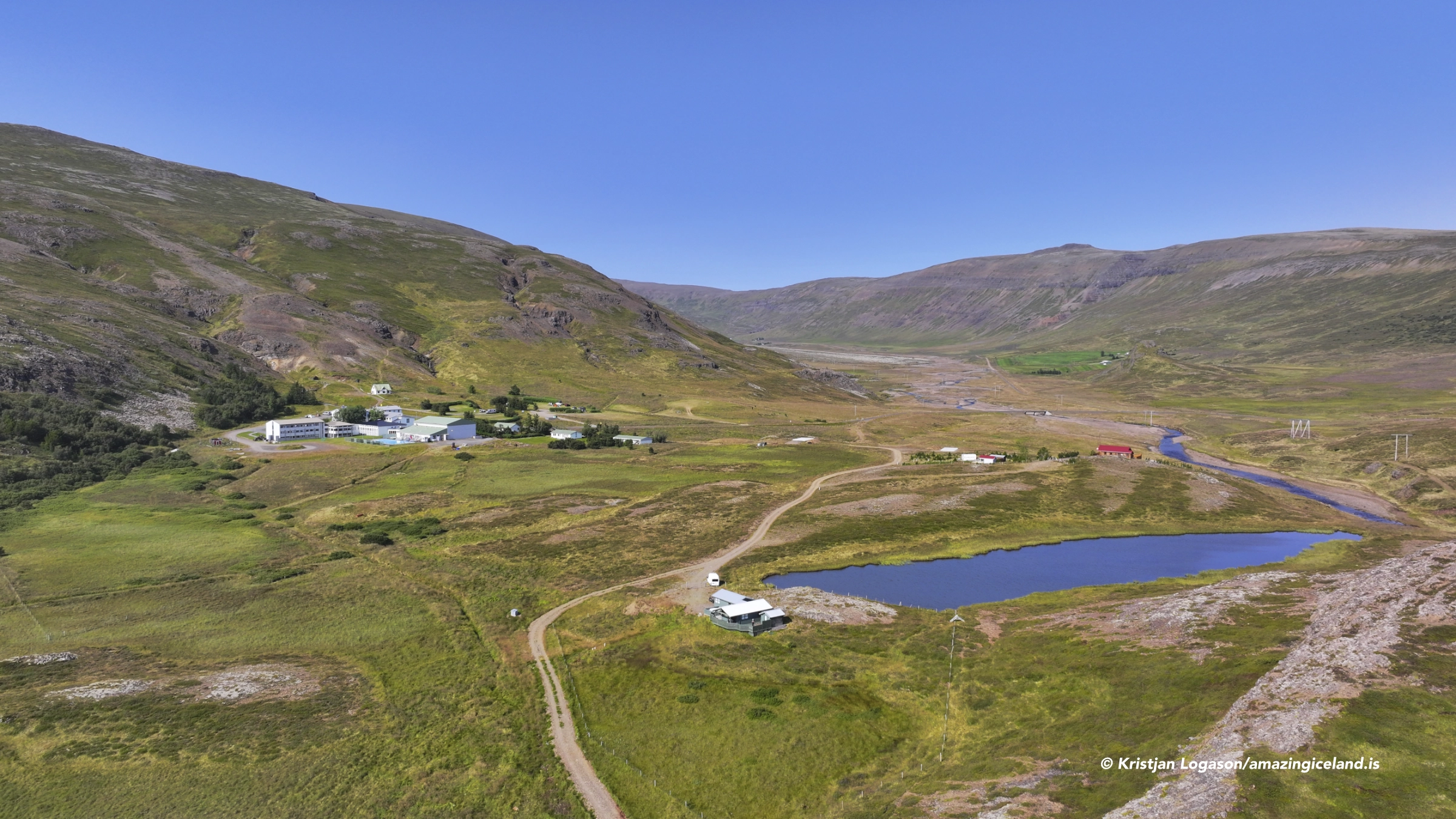
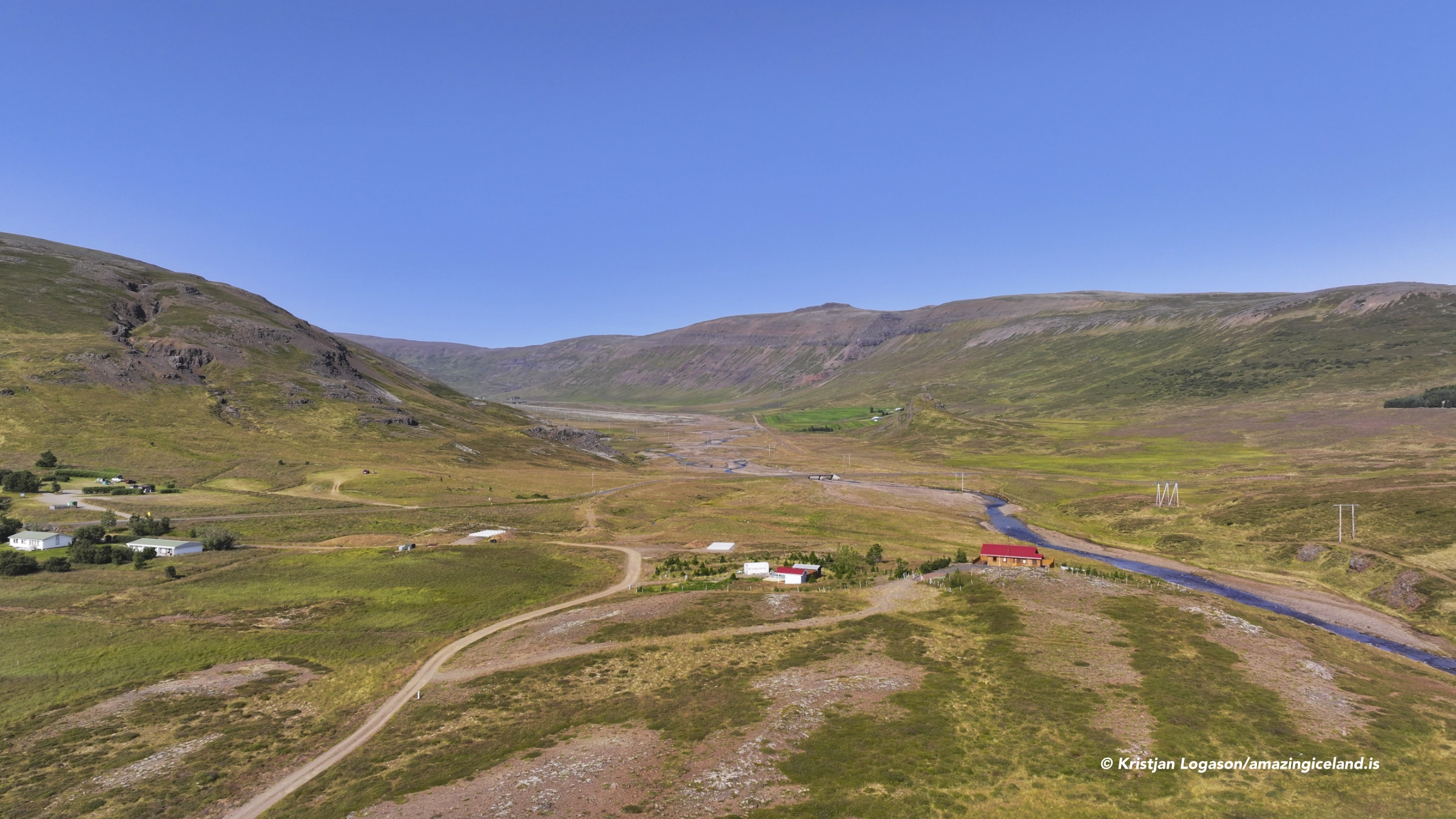
Laugar stands near the opening of Sælingsdalur, a moderately broad valley extending inland from Hvammsfjörður in Dalir. The active farms that once shaped the valley have disappeared, and the land becomes quieter towards its partly protected inner reaches. Almost all visible geothermal activity is concentrated around Laugar itself, where hot springs emerge beneath the hillside and have supported bathing, heating and community life across very different periods.
The strongest historical connection is with Guðrún Ósvífursdóttir, one of the most complex characters in the Icelandic sagas. *Laxdæla saga* places her at Laugar and repeatedly connects the geothermal bathing place with her meetings with Kjartan Ólafsson and Bolli Þorleiksson. Their relationship developed into one of the richest tragic narratives in medieval Icelandic literature.
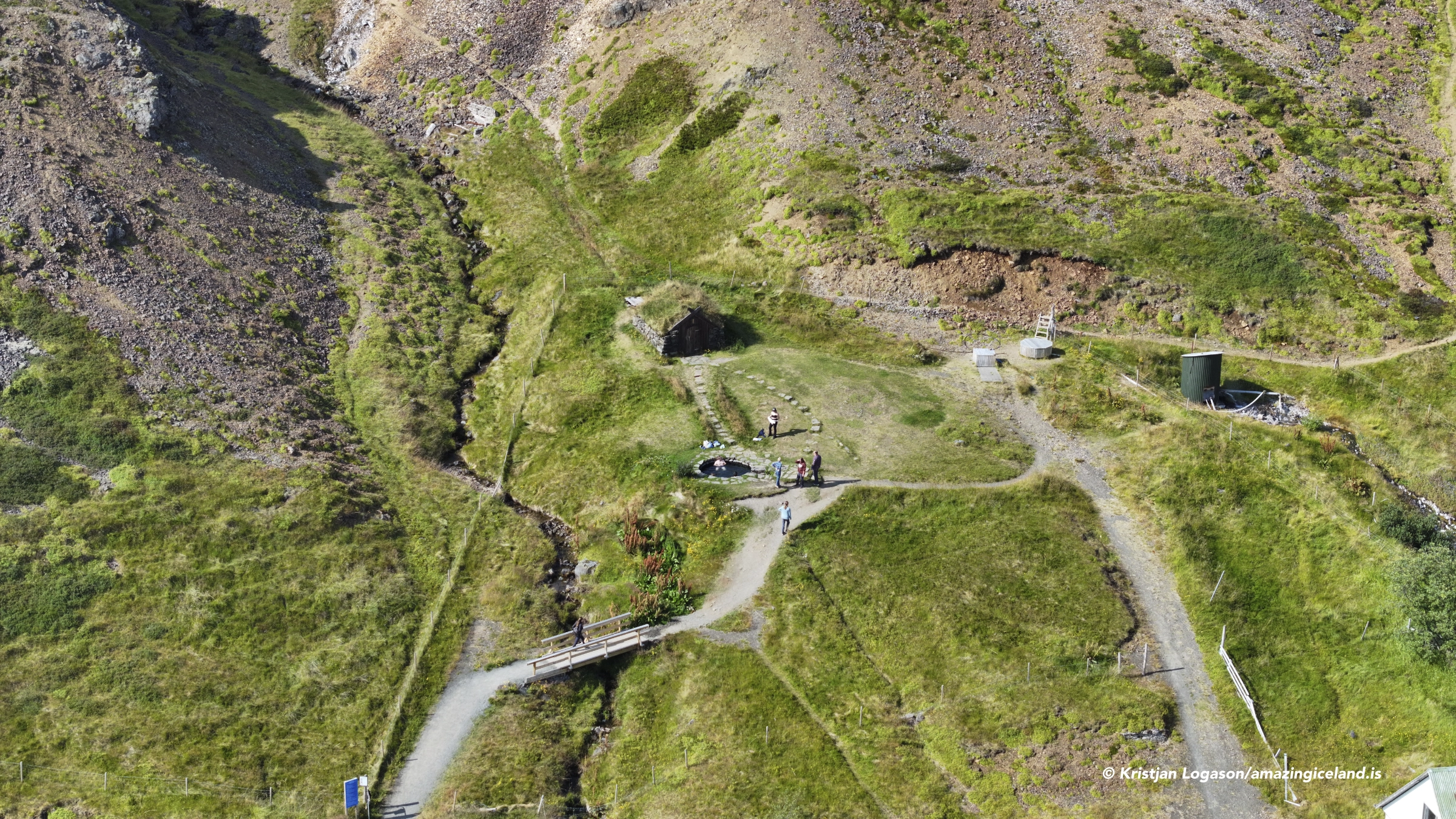
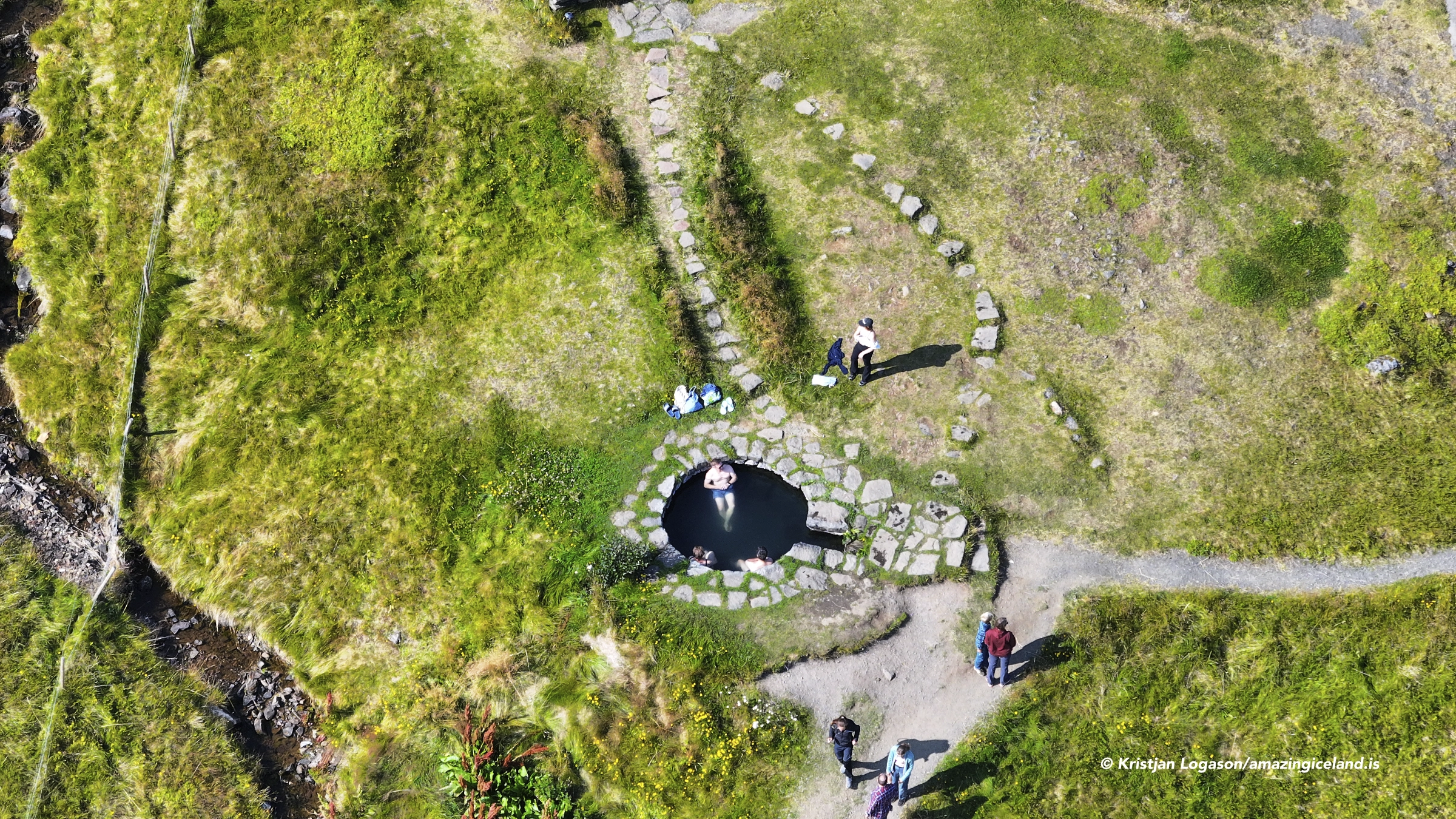
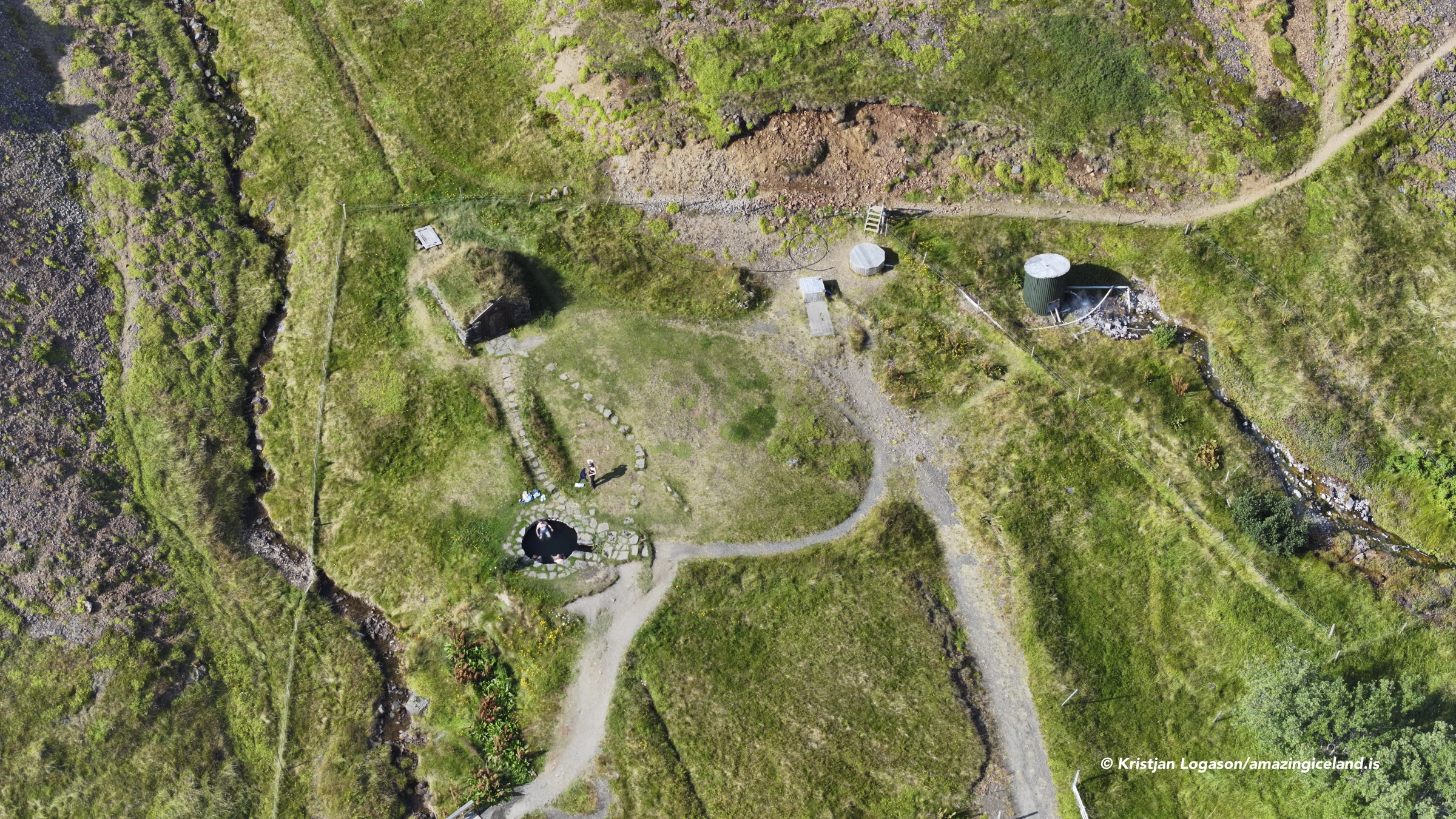
The present Guðrúnarlaug is a reconstruction completed in 2009 near the presumed location of the old pool, rather than an unchanged saga-age structure. Nevertheless, the relationship between the geothermal water, the place-name and the saga is genuine. An easy path leads to the warm stone-lined pool, which comfortably accommodates approximately six to eight people and remains an inviting place to bathe.
The location of Laugar í Sælingsdal
Latitude
65.2460
Longitude
-21.8019
Laugar í Sælingsdal
Geothermal water at the opening of the valley
The name Laugar refers to the geothermal pools that have long distinguished this part of Sælingsdalur. Hot water rises beneath the hillside near the opening of the valley, creating a concentrated geothermal area within an otherwise green and quiet landscape. The water has been used for bathing, swimming and heating, giving Laugar a practical importance beyond its place in medieval literature.
The position also helps explain why the site repeatedly became a gathering point. It is sheltered within the valley but remains close to routes through Dalir and towards western and northern Iceland. Travellers could stop here, local people could meet, and the warm water gave the place a value that neighbouring farms could not easily reproduce.
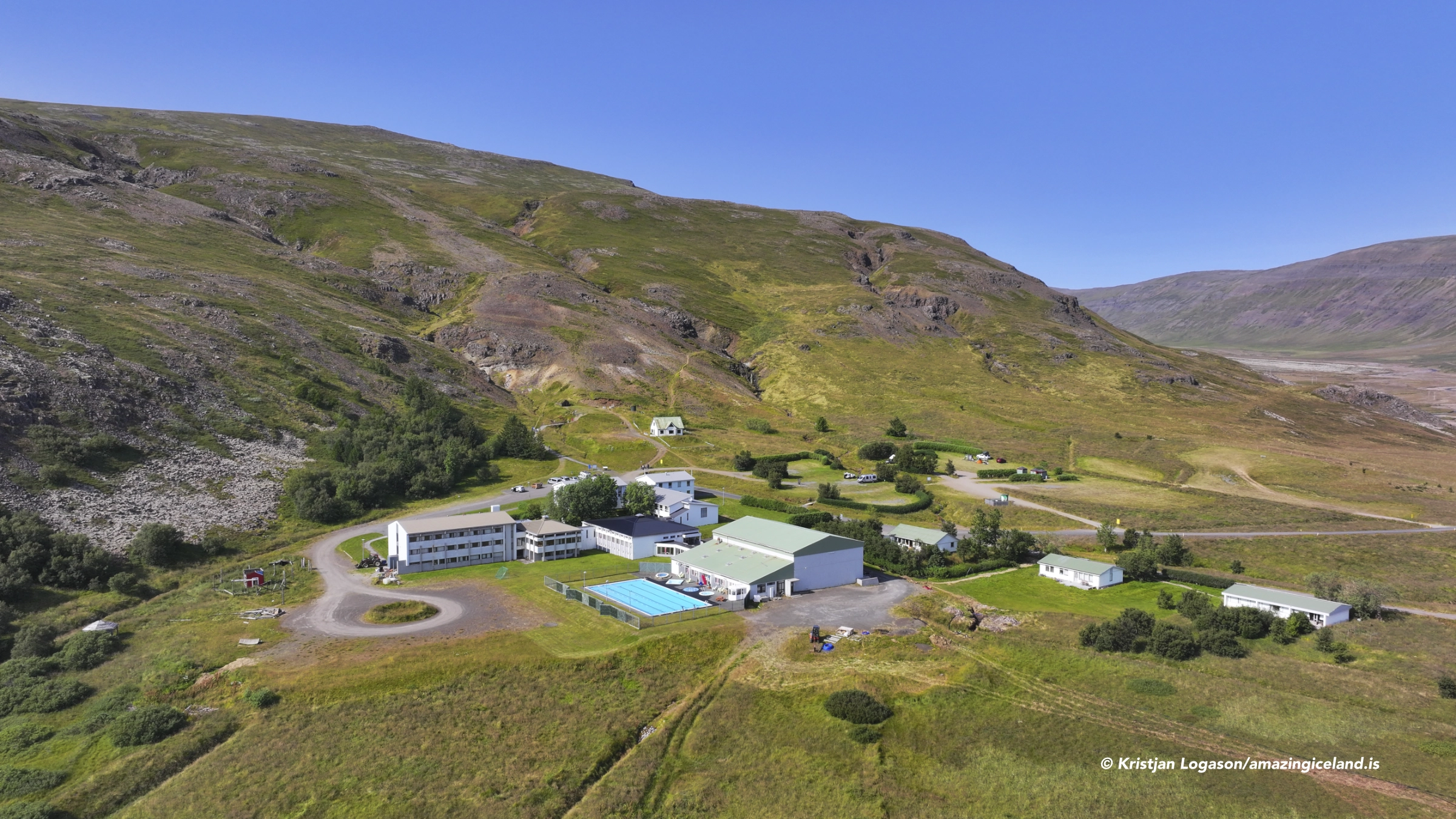
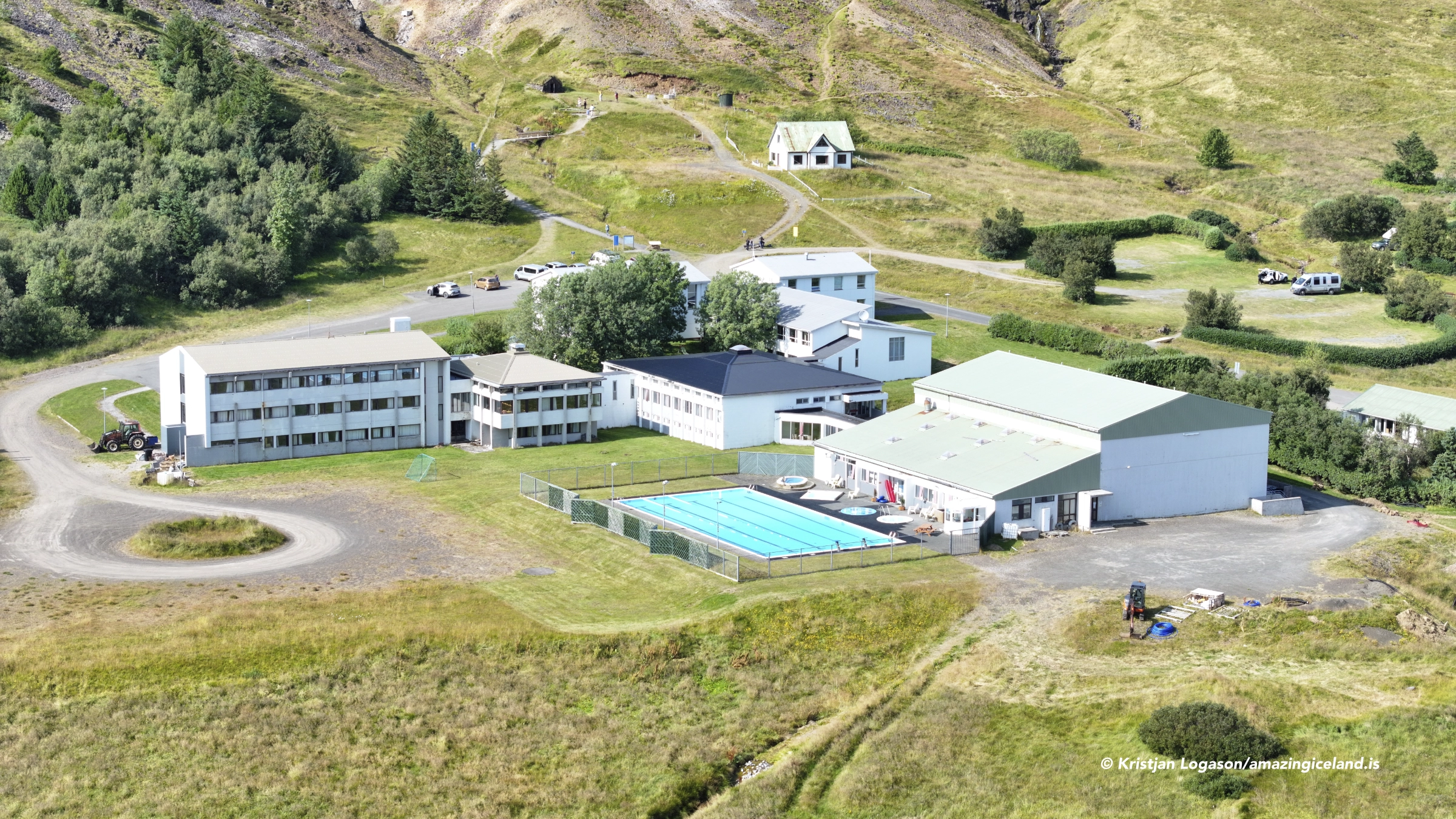
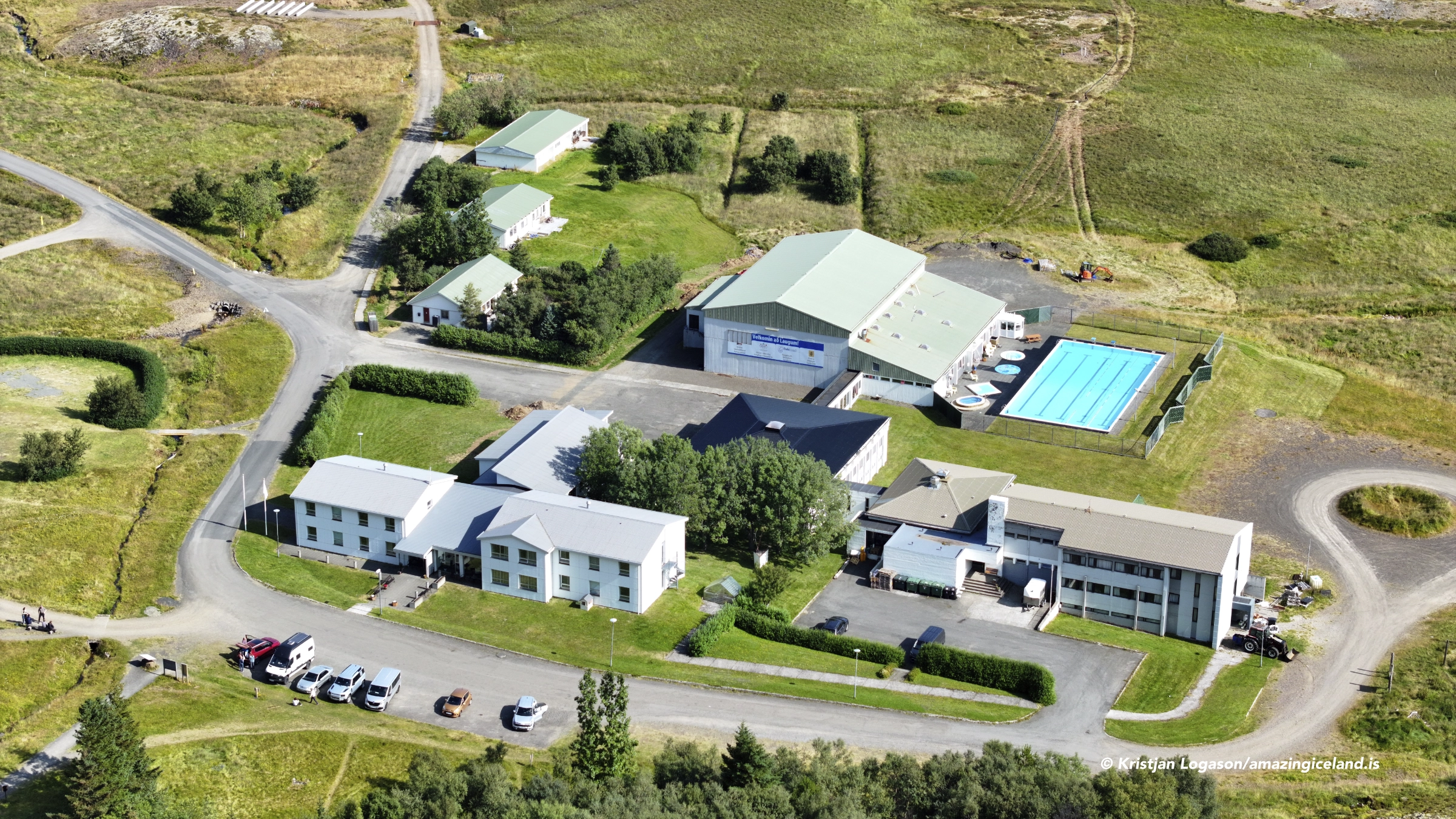
Today the geothermal area supports two distinctly different bathing experiences. Guðrúnarlaug is a small stone-lined pool intended for quiet bathing, while Sælingsdalslaug is a modern 25-metre outdoor swimming pool with hot tubs, a wading pool and sauna. They should not be confused: the first is a reconstruction inspired by the historic bathing place, while the second continues the organised swimming tradition established at Laugar during the 20th century.
Guðrún’s dreams beside Sælingsdalslaug
According to Laxdæla saga, Ósvífur spaki lived at Laugar with his wife, Þórdís, their sons and their daughter Guðrún. The saga describes Ósvífur as a wise and prosperous man whose large household occupied an important position within the district. Guðrún grew up at Laugar and later returned to live there during parts of her second and third marriages.
One of the saga’s defining scenes takes place at Sælingsdalslaug. Gestur Oddleifsson stopped at the bathing place while travelling to Alþingi, and Guðrún came to meet him there. She told him of four dreams that had troubled her: a headdress she threw into water, a silver ring that slipped from her hand, a gold ring that broke against a stone and a heavy golden helmet that fell into Hvammsfjörður.
Gestur interpreted the four objects as Guðrún’s four future husbands. The dreams foreshadow divorce, drowning, violent death and another loss connected with water. The scene introduces Guðrún not simply as a woman caught between powerful men, but as an intelligent and forceful character who understands that a difficult future lies ahead of her.
The present pool cannot be claimed as the exact physical structure beside which that conversation occurred. The saga does, however, place Guðrún and Gestur at Sælingsdalslaug, making the geothermal bathing place part of the narrative rather than a later connection created solely for visitors.

Guðrún, Kjartan and Bolli
Kjartan Ólafsson and Bolli Þorleiksson were cousins and foster-brothers who had grown up together with an unusually close bond. Laxdæla saga says that Kjartan often travelled to Sælingsdalslaug and that Guðrún was commonly at the bathing place when he arrived. Bolli accompanied him, placing all three central characters together at Laugar before rivalry and resentment divided them.
Guðrún and Kjartan were considered exceptionally well matched, but Kjartan decided to travel abroad. Guðrún would not commit herself to waiting for him for several years, and his stay in Norway became longer than expected. Bolli returned to Iceland before Kjartan and gave Guðrún the impression that Kjartan might remain in Norway and marry Ingibjörg, the sister of King Ólafur Tryggvason.
Guðrún initially refused Bolli, saying she would marry no one while Kjartan remained alive. Under pressure from her family, however, she eventually married Bolli. Kjartan returned soon afterwards and married Hrefna, escalating a personal conflict that spread through both households.
The saga places several decisive confrontations at Laugar. A valuable headdress belonging to Hrefna disappeared during a feast there, and suspicion fell upon Guðrún’s family. Kjartan later retaliated by surrounding the buildings at Laugar and preventing the household from leaving for three nights, an act considered an extreme humiliation. A subsequent dispute over the purchase of land drove the two sides still further apart.
Guðrún then challenged Bolli to defend his honour against Kjartan. Members of the Laugar household prepared an ambush in Svínadalur, and although Bolli was initially reluctant to attack his foster-brother, he eventually struck the fatal blow. When he returned to Laugar, Guðrún met him with the cold observation that while she had spent the morning spinning wool, he had killed Kjartan.
Bolli was later killed in revenge elsewhere in Sælingsdalur. Late in Guðrún’s life, when her son asked which of her husbands she had loved most, she answered indirectly that she had treated the man she loved best the worst. The statement is generally understood as a final acknowledgement of her feelings for Kjartan, and it gives the earlier meetings at Laugar much of their lasting emotional weight.
Guðrúnarlaug reconstructed
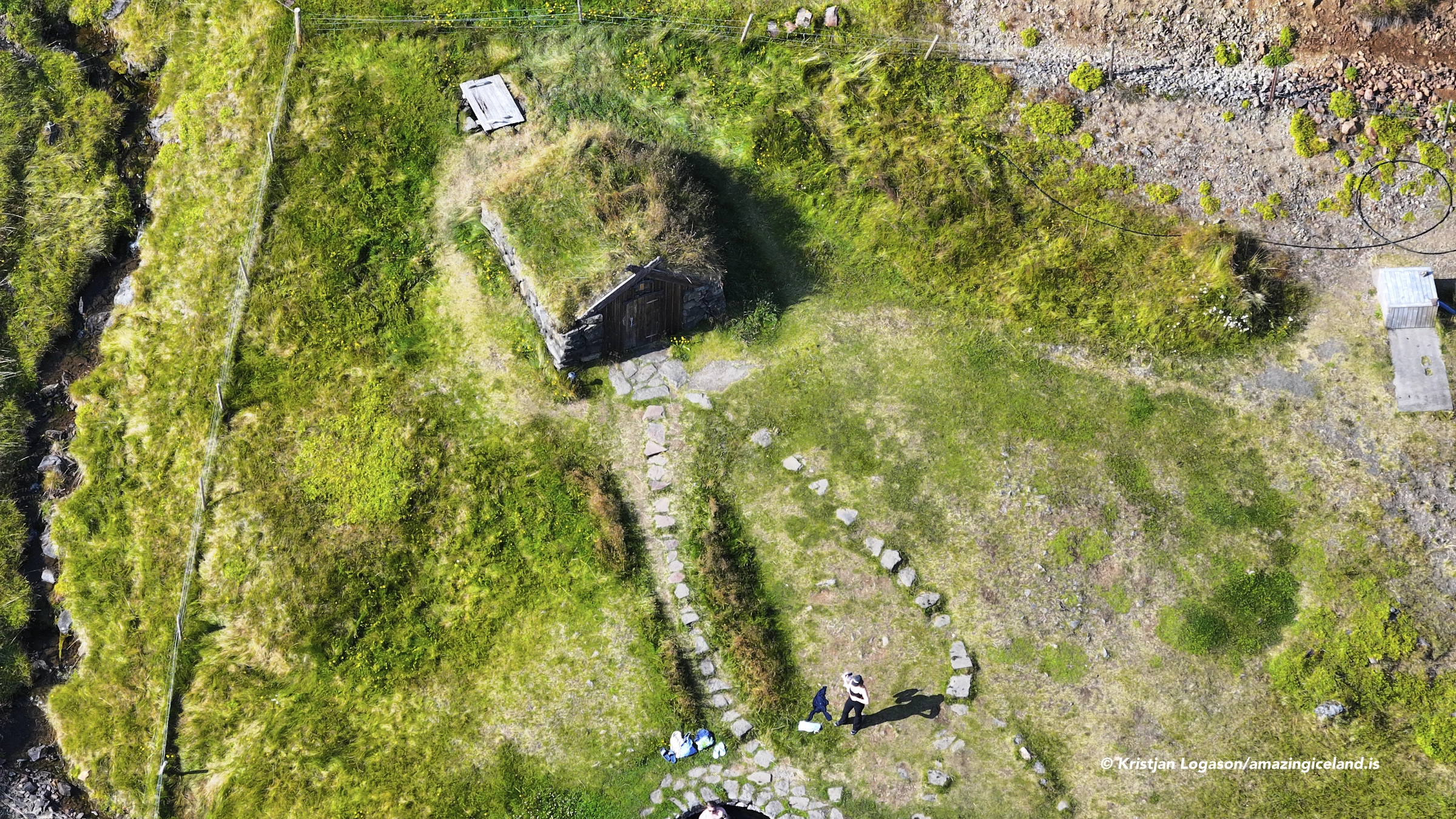
The earlier bathing pool is believed to have been lost beneath a landslide around 1870. Guðrúnarlaug was reconstructed in 2009 near the place where the old pool is thought to have stood, using stonework and a simple form intended to evoke an earlier Icelandic bathing place. A small turf-covered changing shelter, traditionally described as a blygðunarhús or “house of modesty”, stands beside it.
An easy path leads from the main Laugar area to the pool. The water is warm and genuinely suitable for bathing, while the pool’s small scale limits comfortable use to approximately six to eight people. Visitors should therefore allow others space and avoid treating it like a large public swimming facility.
The reconstruction succeeds because it does not require the visitor to believe that every stone has survived since the saga age. Its importance lies in restoring the act of bathing to the same geothermal landscape in which the saga places Guðrún, Kjartan, Bolli and Gestur. The warm water, turf shelter and surrounding valley provide a physical connection to a social practice that was already old when the saga was written.
The school that shaped modern Laugar
Geothermal water also influenced the modern development of Laugar. A swimming pool was built here in 1932, and a residential district school operated from 1944 until 2000. The school brought children from across Dalir to live and study at Laugar, making the place an educational and social centre for more than half a century.
The former school buildings continue to dominate the modern site. They have been adapted for accommodation and other uses, but their scale and arrangement still reveal the institutional community that developed around the school, swimming facilities and geothermal heating. For generations of people from Dalir, this modern history is as significant as the saga landscape.
Byggðasafn Dalamanna, the regional folk museum, is also accessible at Laugar. Its collections extend the story beyond the saga by documenting everyday life and social change in Dalir. Together, the school buildings, museum and swimming facilities show how Laugar remained a regional gathering place long after its medieval household had disappeared.
A short visit or a longer stay
A focused visit requires approximately one hour. This allows time to walk the easy path to Guðrúnarlaug, examine the interpretation of the saga, see the former school complex and understand the relationship between the geothermal area and the valley. Bathing or visiting the regional museum naturally extends the stay.
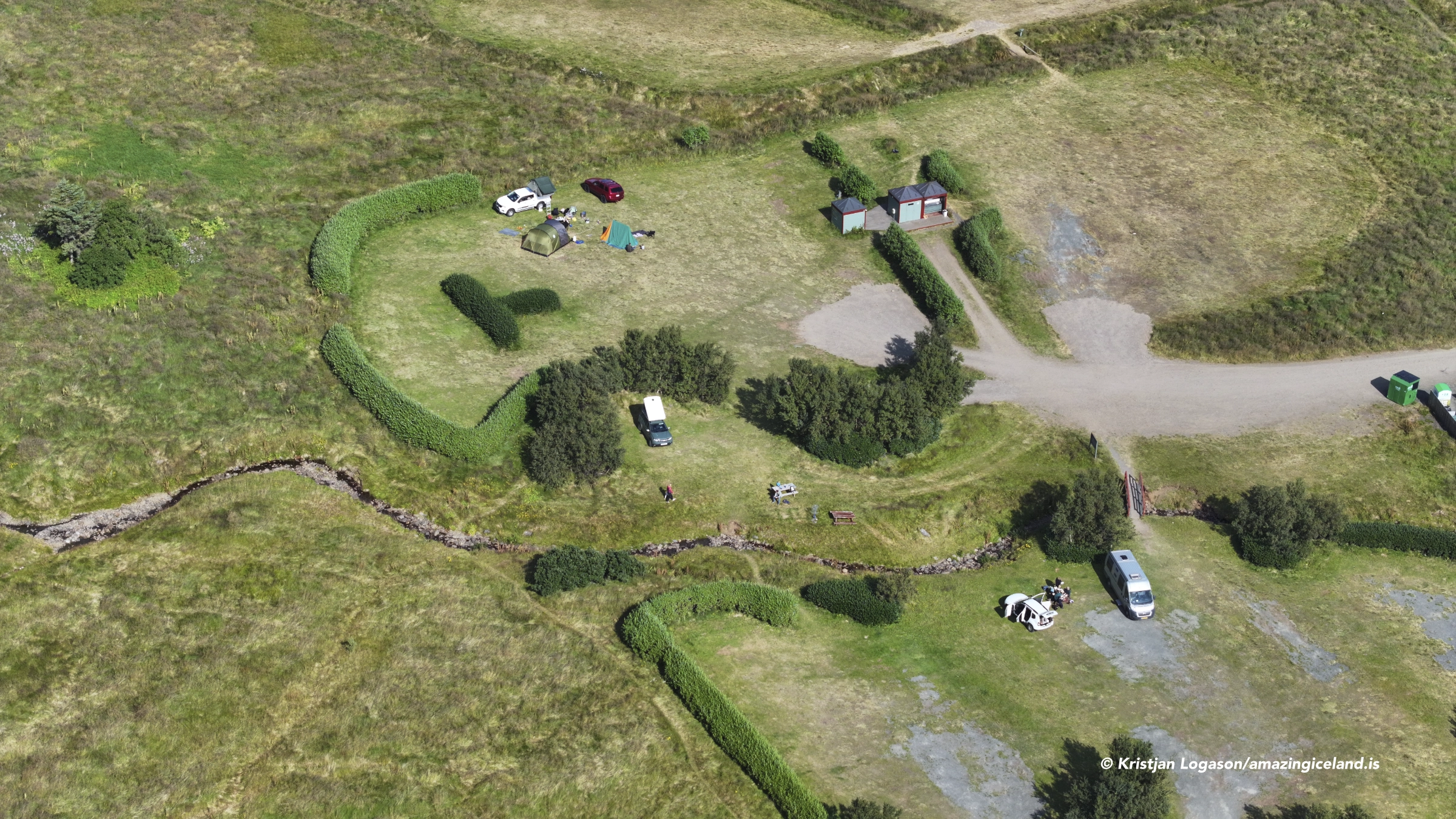
Laugar can also support a much longer visit. A well-situated campground provides a base for exploring Sælingsdalur, and walking routes lead into the surrounding hills and the quieter inner valley. Higher ground opens views back towards Hvammsfjörður and the wider Breiðafjörður landscape.
The location works particularly well after visiting other sites connected with Laxdæla saga in Dalir. Laugar brings several strands of that journey together: the saga’s literary tragedy, the physical landscape in which it is set and the geothermal bathing tradition that still gives the place its identity. From here, travellers can continue west or north, making Laugar both a destination and a natural transition into the next part of the journey.
Interesting facts:
- Laxdæla saga identifies Laugar as the home of Ósvífur spaki and his daughter Guðrún Ósvífursdóttir.
- Guðrún described her four prophetic dreams to Gestur Oddleifsson beside Sælingsdalslaug.
- The saga says Kjartan frequently visited the bathing place to talk with Guðrún, usually accompanied by Bolli.
- The present Guðrúnarlaug was reconstructed in 2009 near the presumed location of the earlier pool.
- The original pool is believed to have been lost beneath a landslide around 1870.
- A swimming pool was built at Laugar in 1932, beginning the site’s modern history as a centre for swimming and physical education.
- A residential school operated at Laugar from 1944 until 2000.
- The reconstructed Guðrúnarlaug and the modern 25-metre Sælingsdalslaug are separate pools.
Image Gallery
Photography tips:
- Use Guðrúnarlaug and its turf-covered changing shelter together. The relationship between stonework, warm water and turf architecture provides the clearest visual expression of the reconstructed historic bathing place.
- Steam and surface movement can help reveal the warmth of the water in cool conditions. A person bathing can provide scale, but the pool is small and other visitors should be given privacy.
- Photograph the former school buildings as a group rather than as isolated structures. Their relationship to the swimming facilities and geothermal hillside explains the modern development of Laugar.
- Wider photographs should show Laugar at the opening of Sælingsdalur, where the concentrated geothermal settlement gives way to the uninhabited inner valley.
- From suitable higher viewpoints, include Hvammsfjörður and the wider Breiðafjörður landscape to place Laugar within the geography of Dalir.
- The modern swimming pool, museum, historic pool and valley can all contribute to the photographic story. Together they show the continuity between saga, education, community life and present-day use.
Destinations nearby