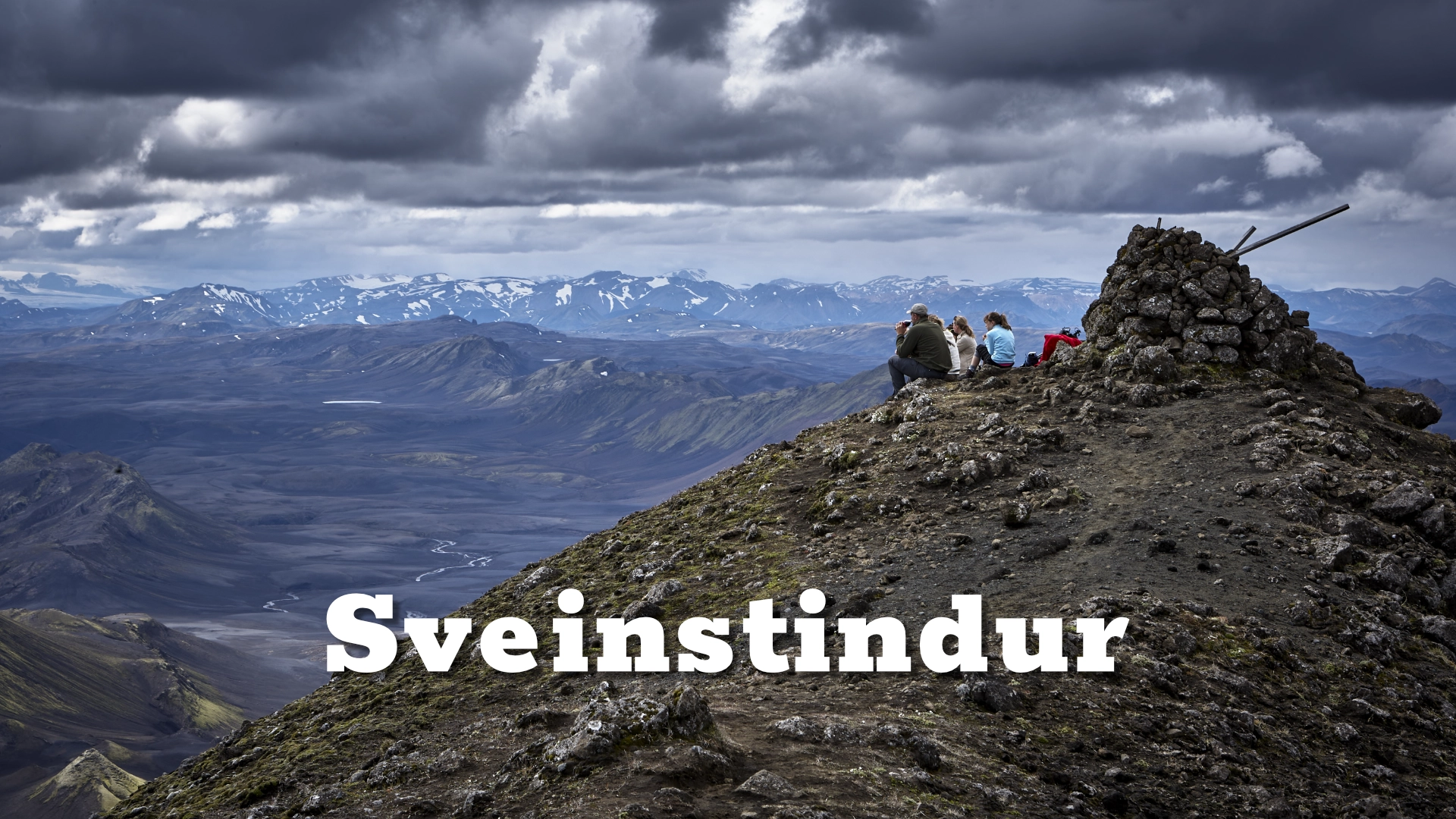
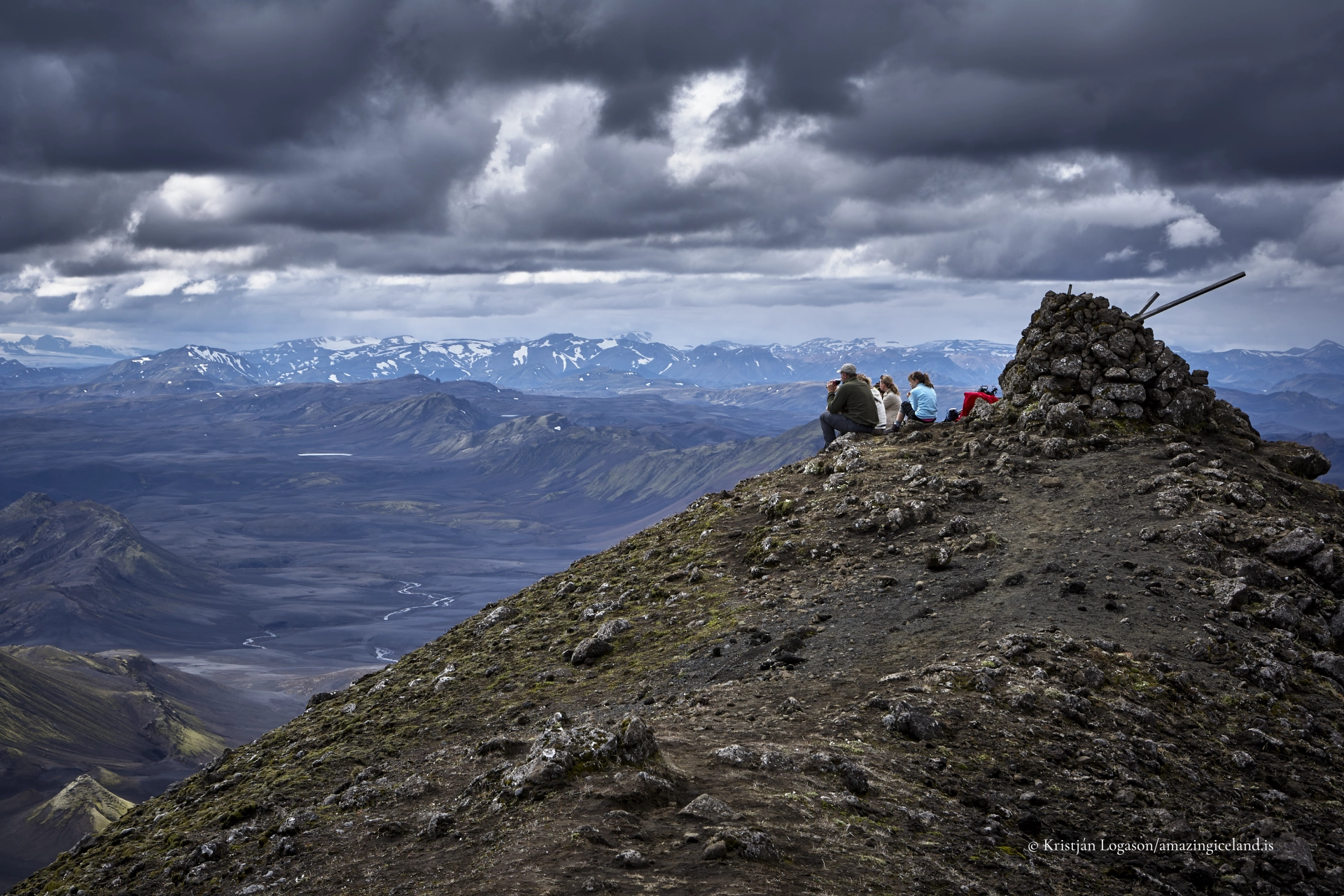
In the southern highlands of Iceland, overlooking Langisjór, Sveinstindur rises abruptly from an otherwise low-relief landscape. The mountain is known not for technical difficulty, but for its position: a singular vantage point where the structure of the highlands becomes immediately readable.
The location of Sveinstindur in the highlands of Iceland
Latitude
64.1487
Longitude
-18.1946
Sveinstindur in the highlands of Iceland
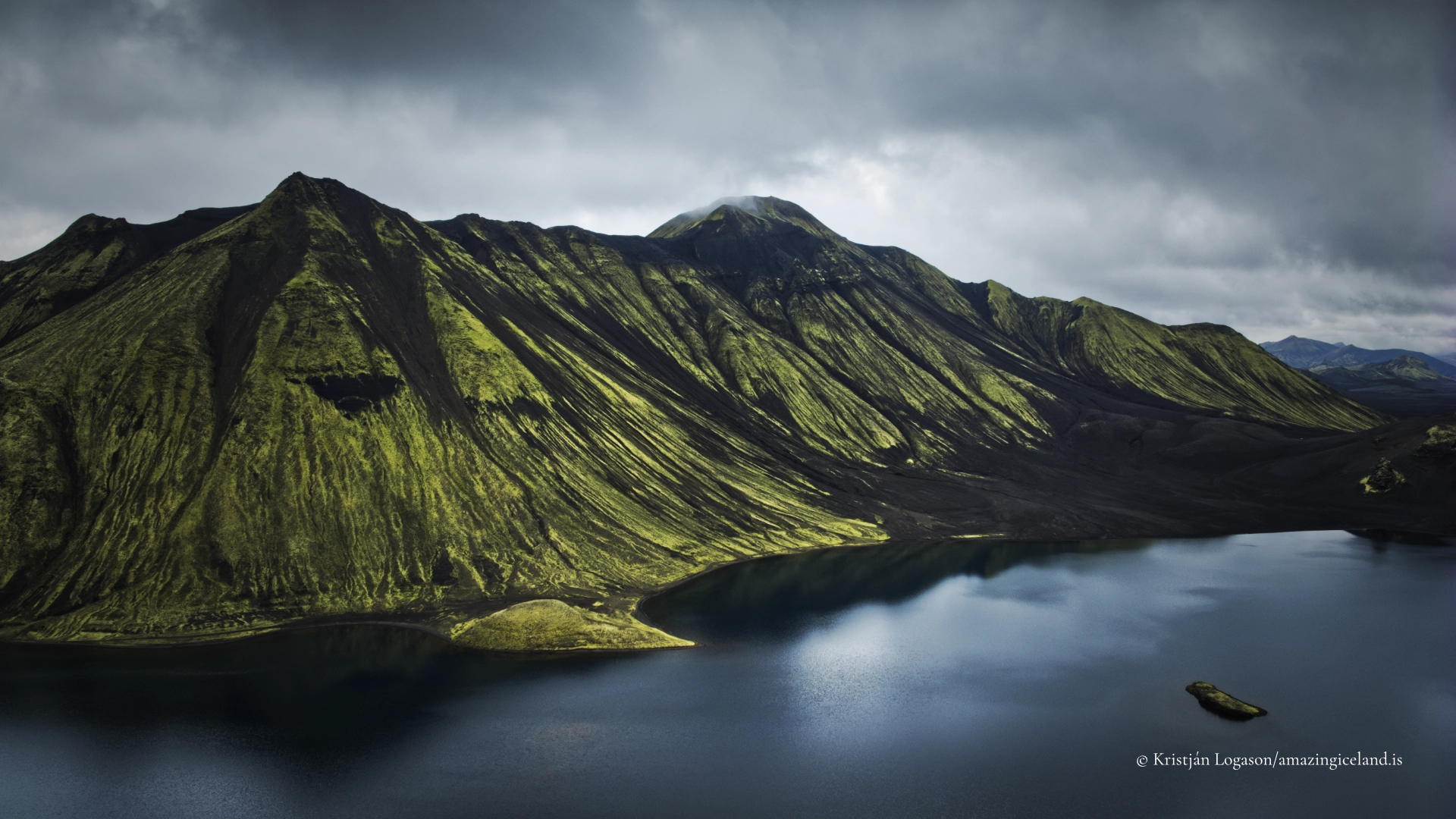
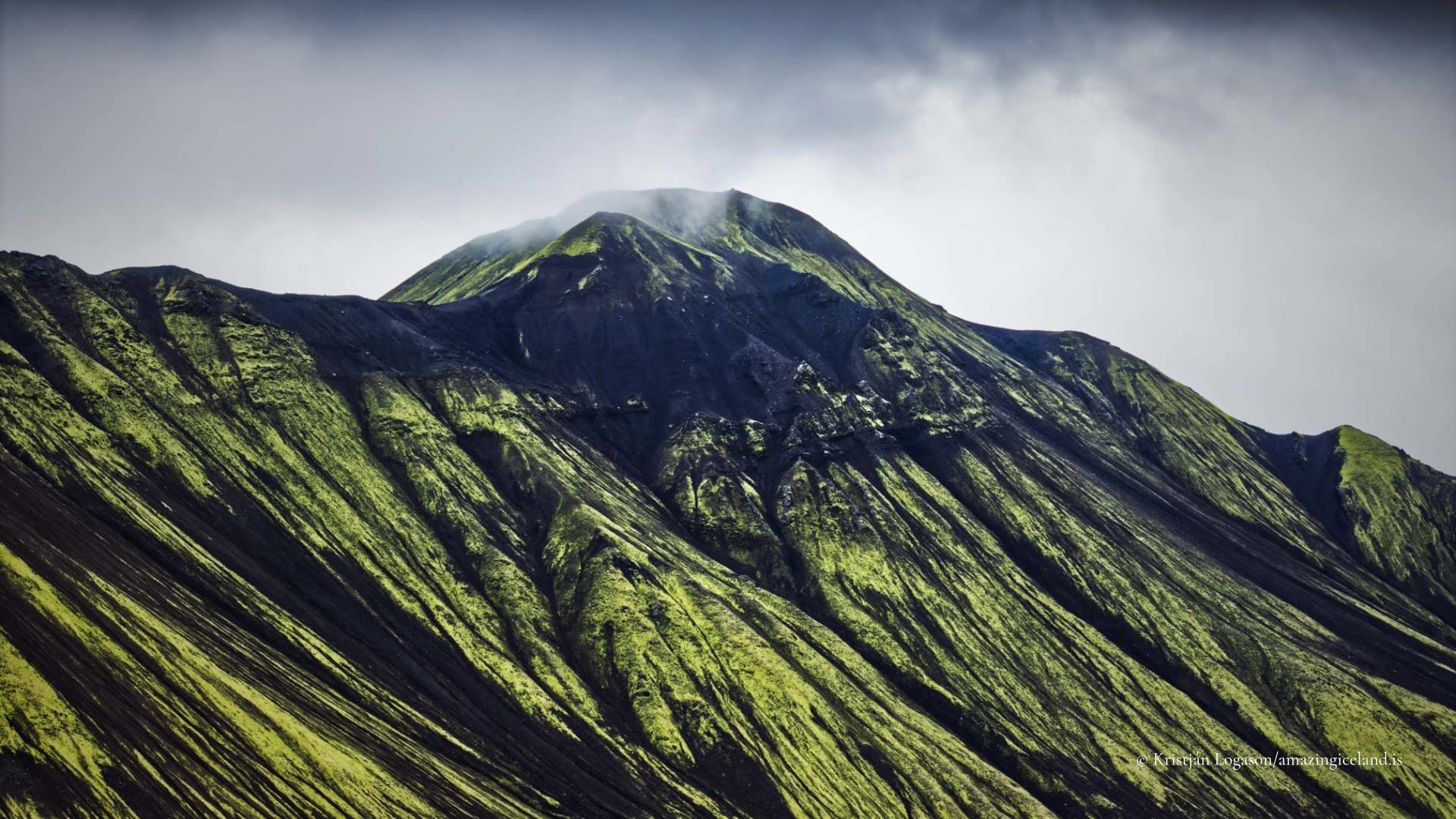
Sveinstindur is a rhyolite mountain located on the western margin of Langisjór, within the southern highlands of Iceland. The summit reaches approximately 1,090 meters above sea level, rising sharply above the surrounding lava fields and glacial outwash plains. This relative prominence, rather than absolute height, defines the mountain’s significance.
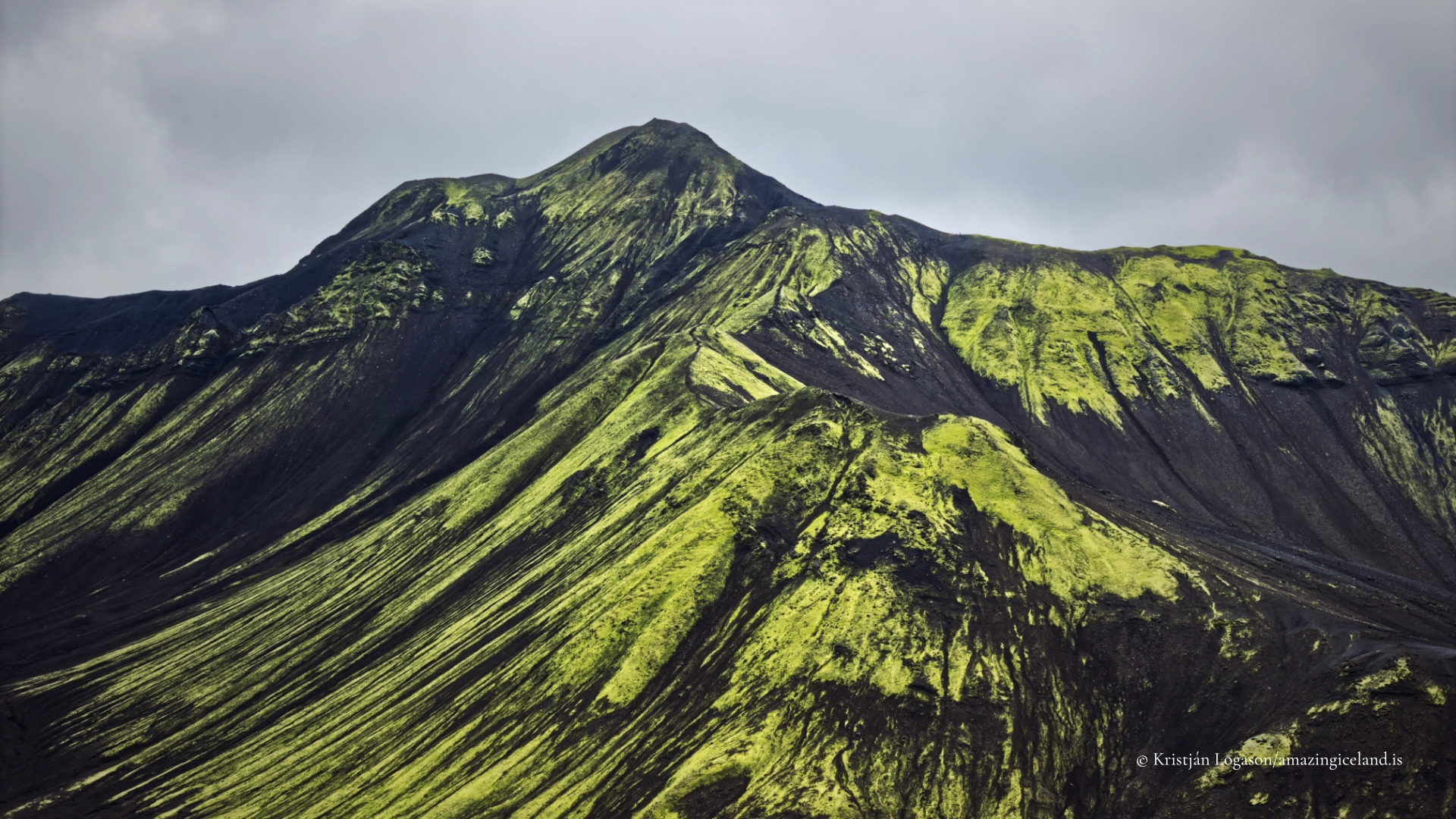
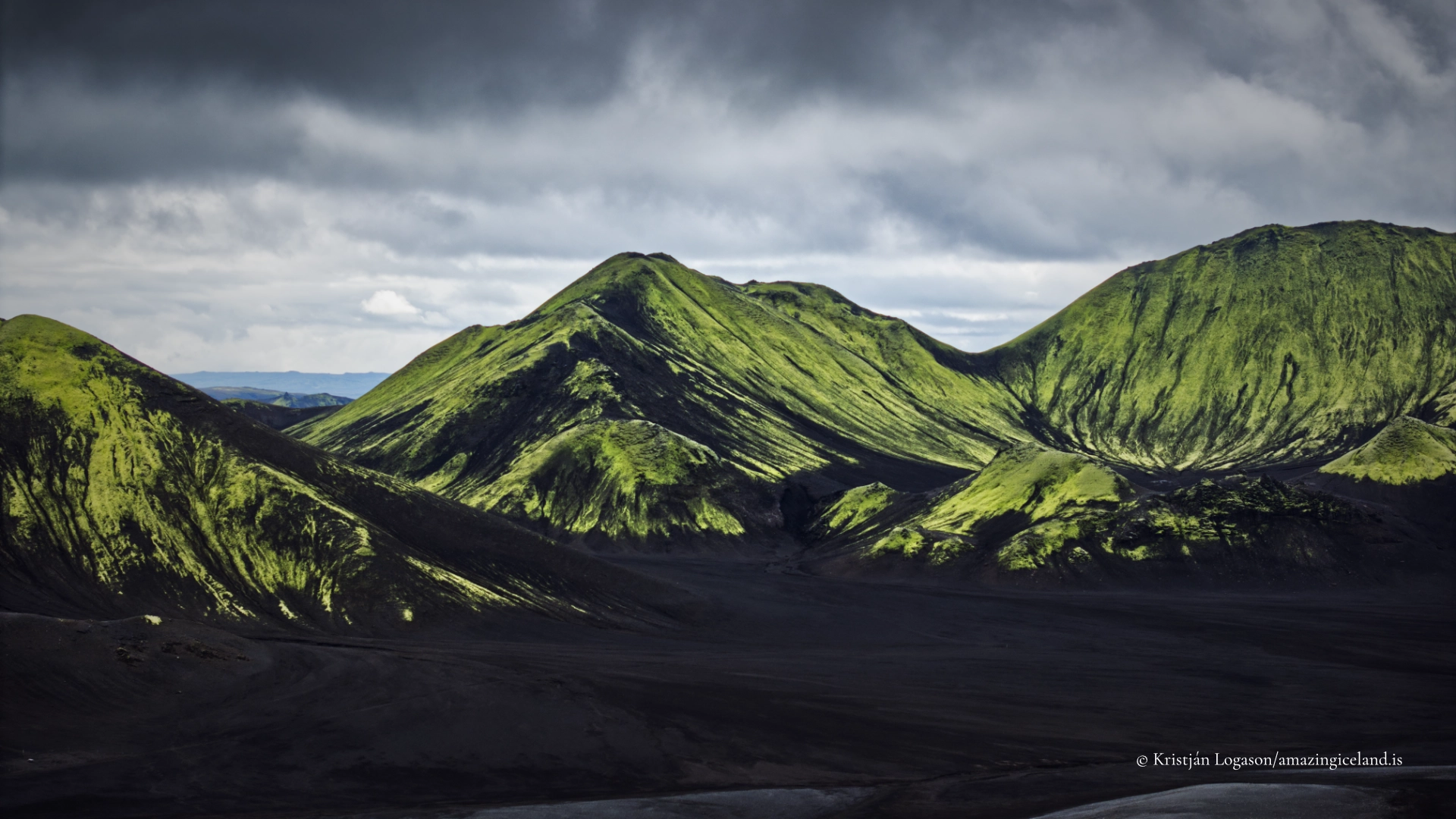
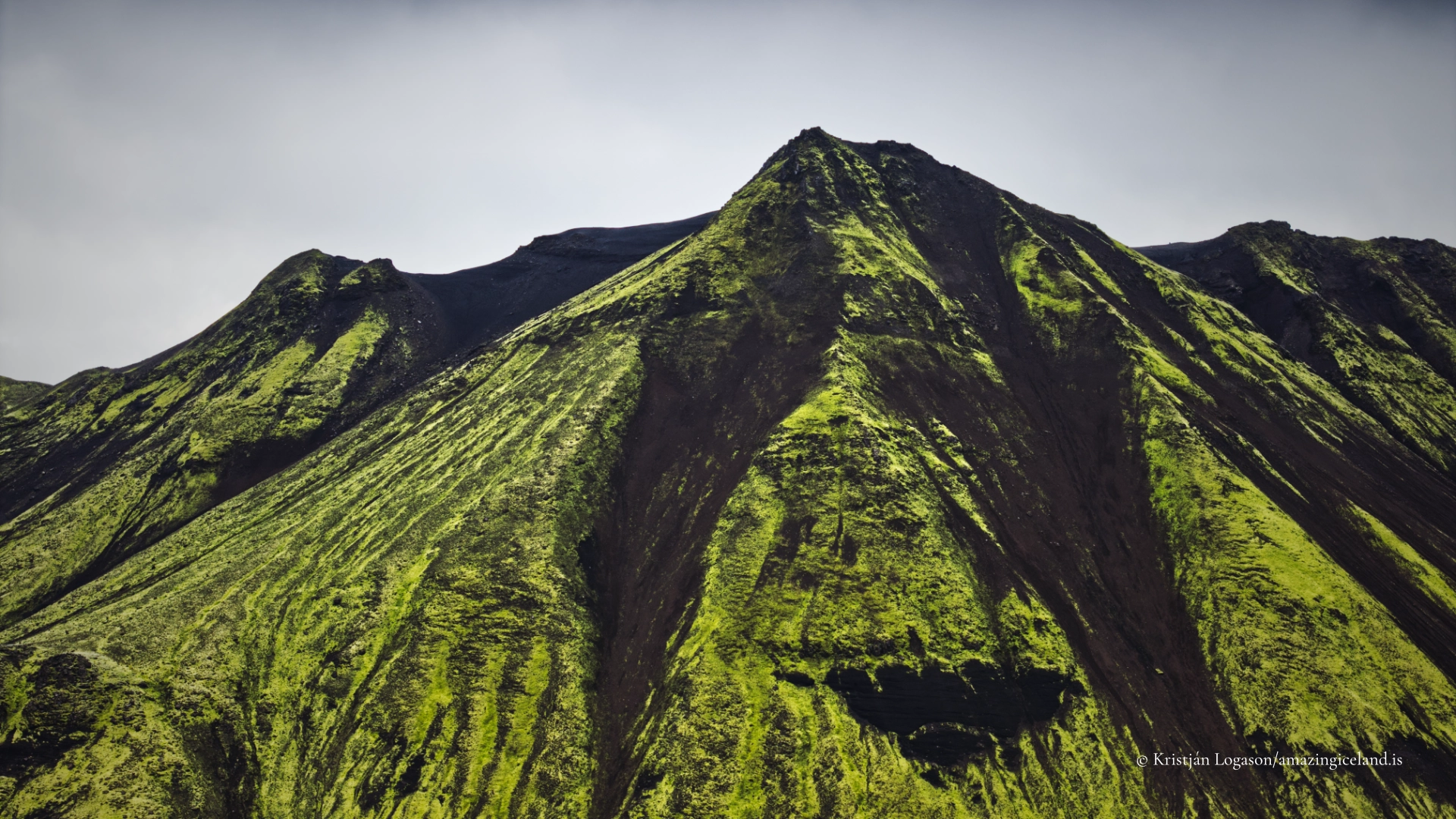
Geologically, Sveinstindur belongs to the same rhyolitic volcanic system that characterizes parts of the Torfajökull region. Rhyolite, being silica-rich, weathers differently from Iceland’s more common basalt, producing lighter colors, fractured surfaces, and sharp ridgelines. These properties give Sveinstindur its distinct visual separation from the darker plains below.
From a geomorphological perspective, the mountain acts as a structural outlier—a remnant of volcanic activity preserved above later lava flows and sedimentation.
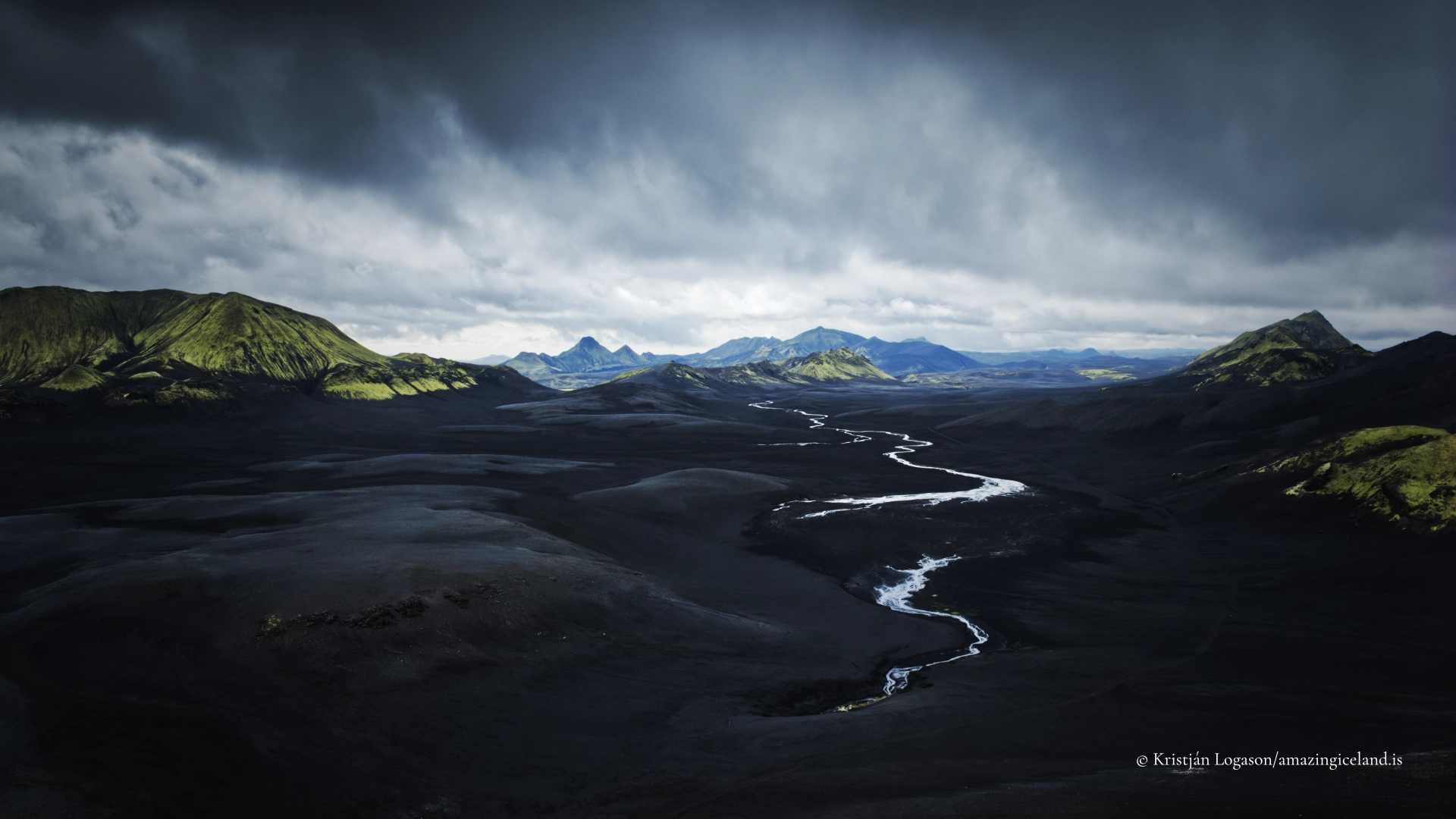
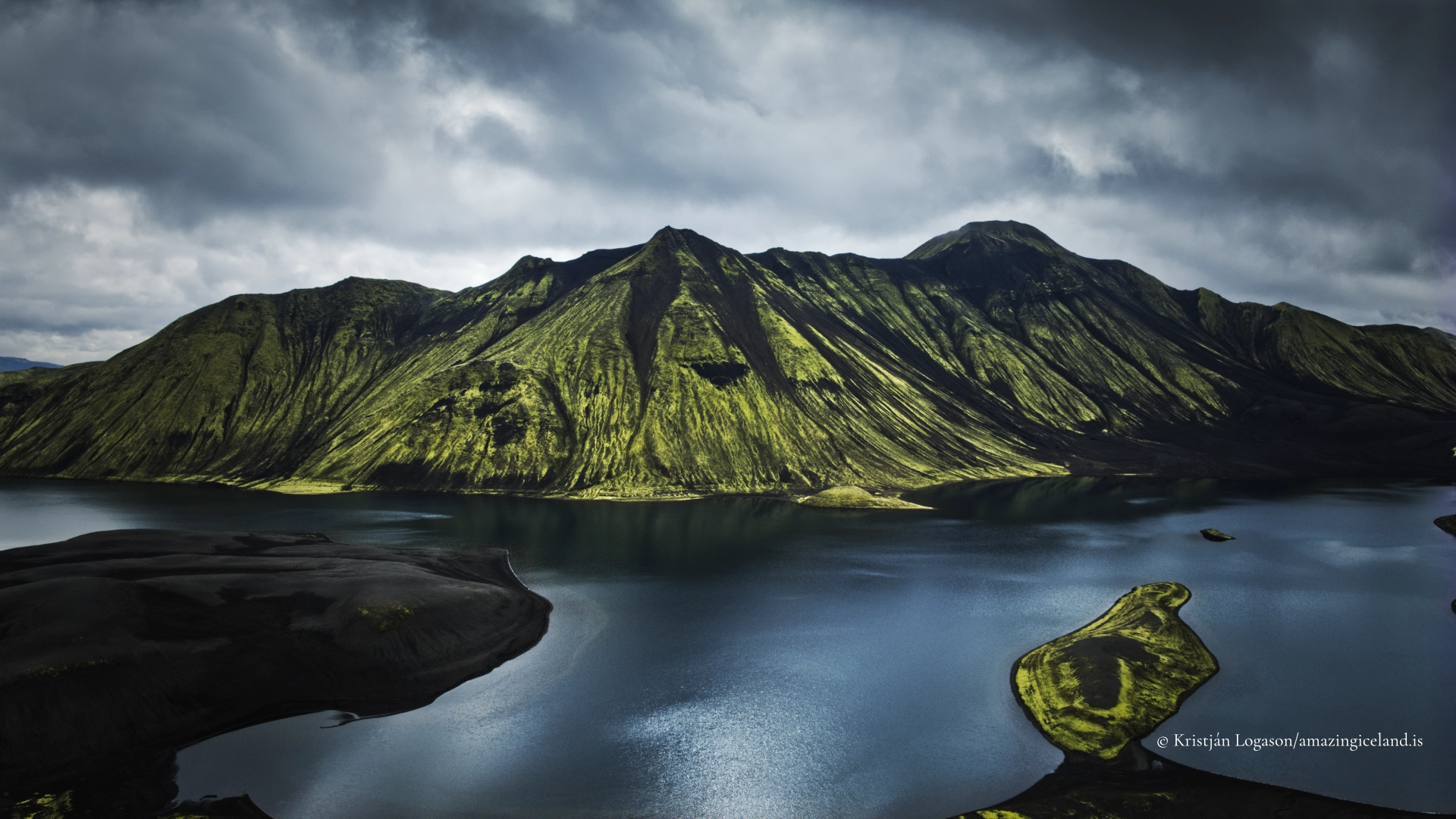
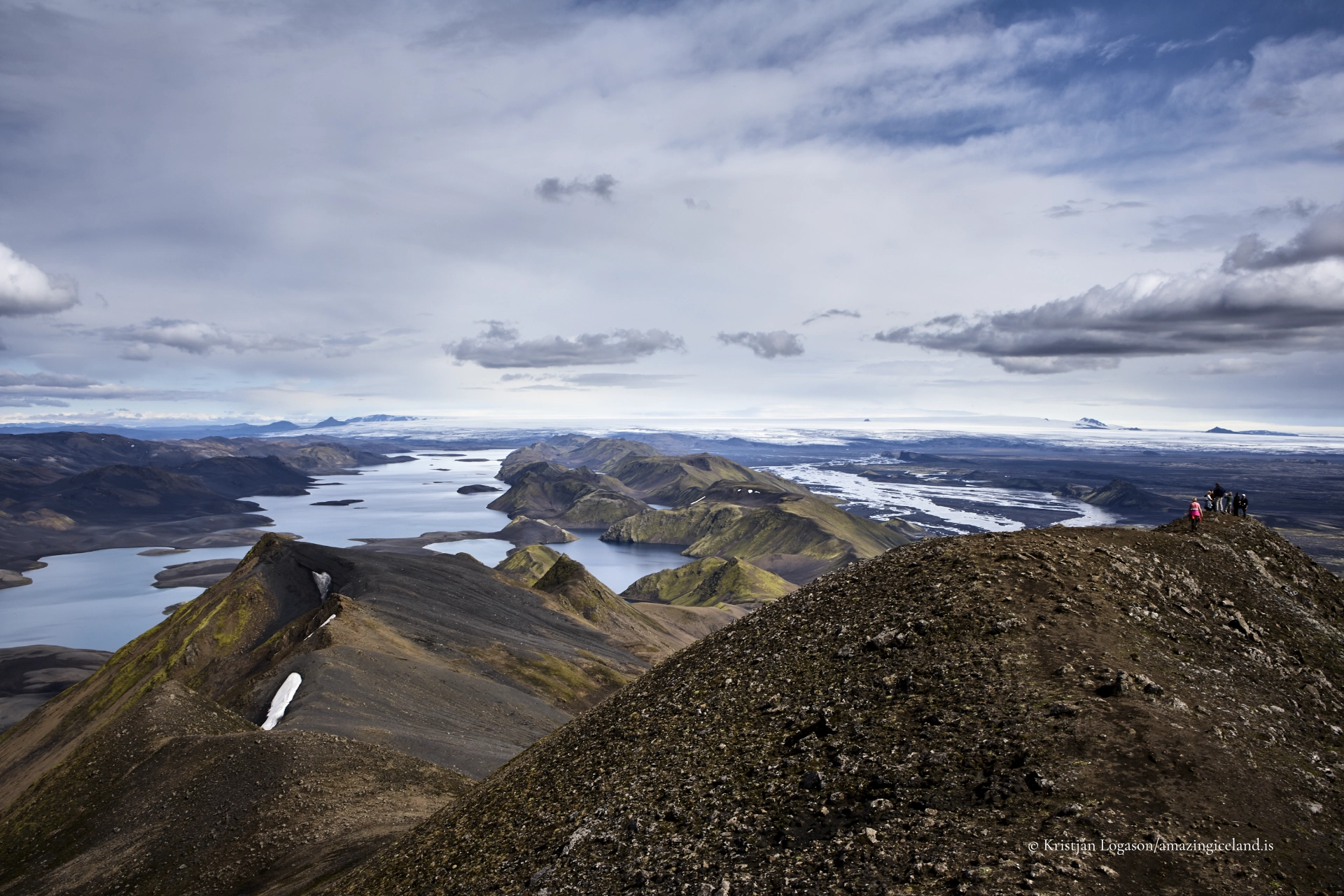
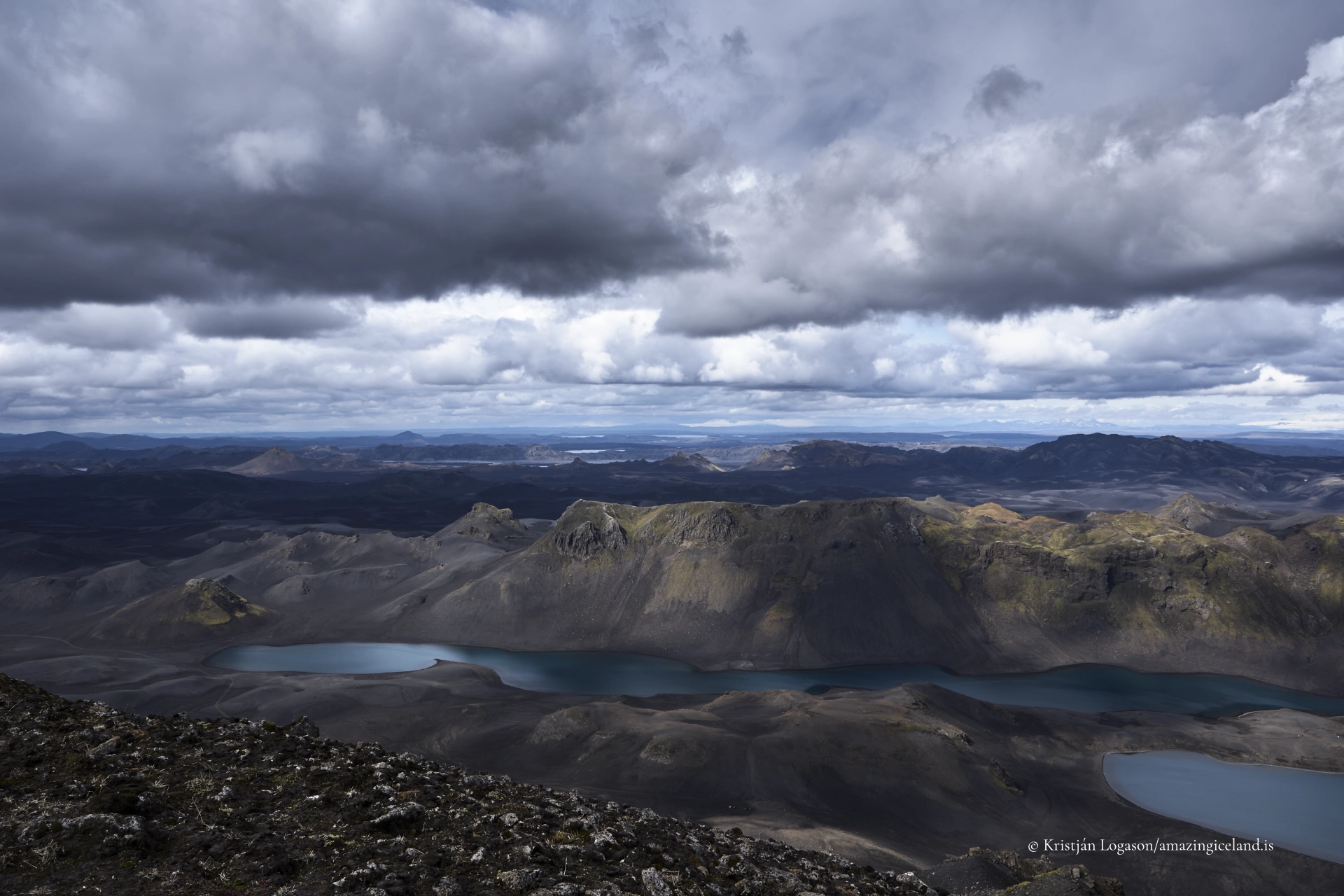
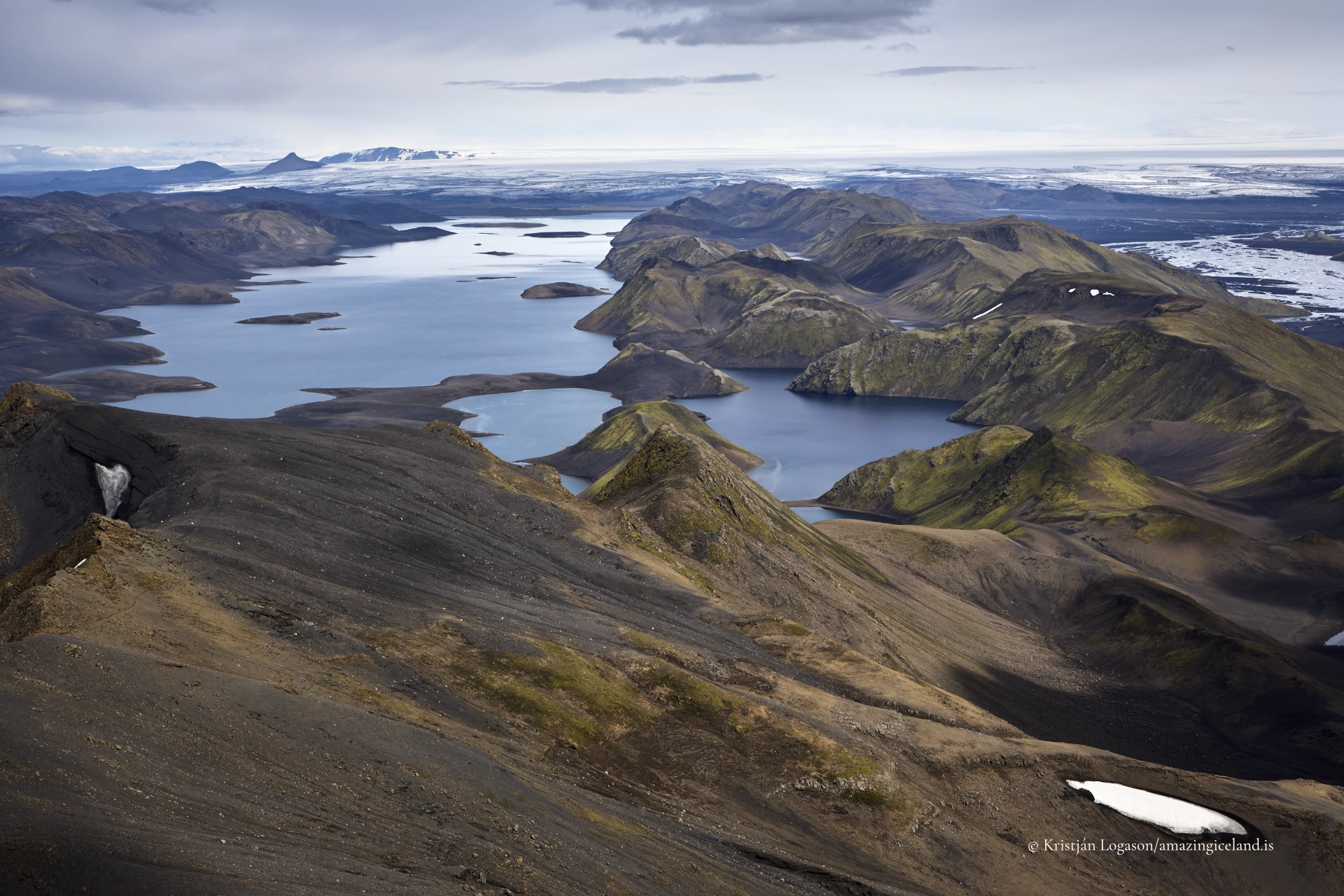
Langisjór lies directly east of Sveinstindur, extending south–north as a narrow, elongated highland lake formed through a combination of glacial excavation and lava damming. From the summit, the lake’s full length becomes visible, framed by lava fields to the west and glacial margins toward Vatnajökull in the east.
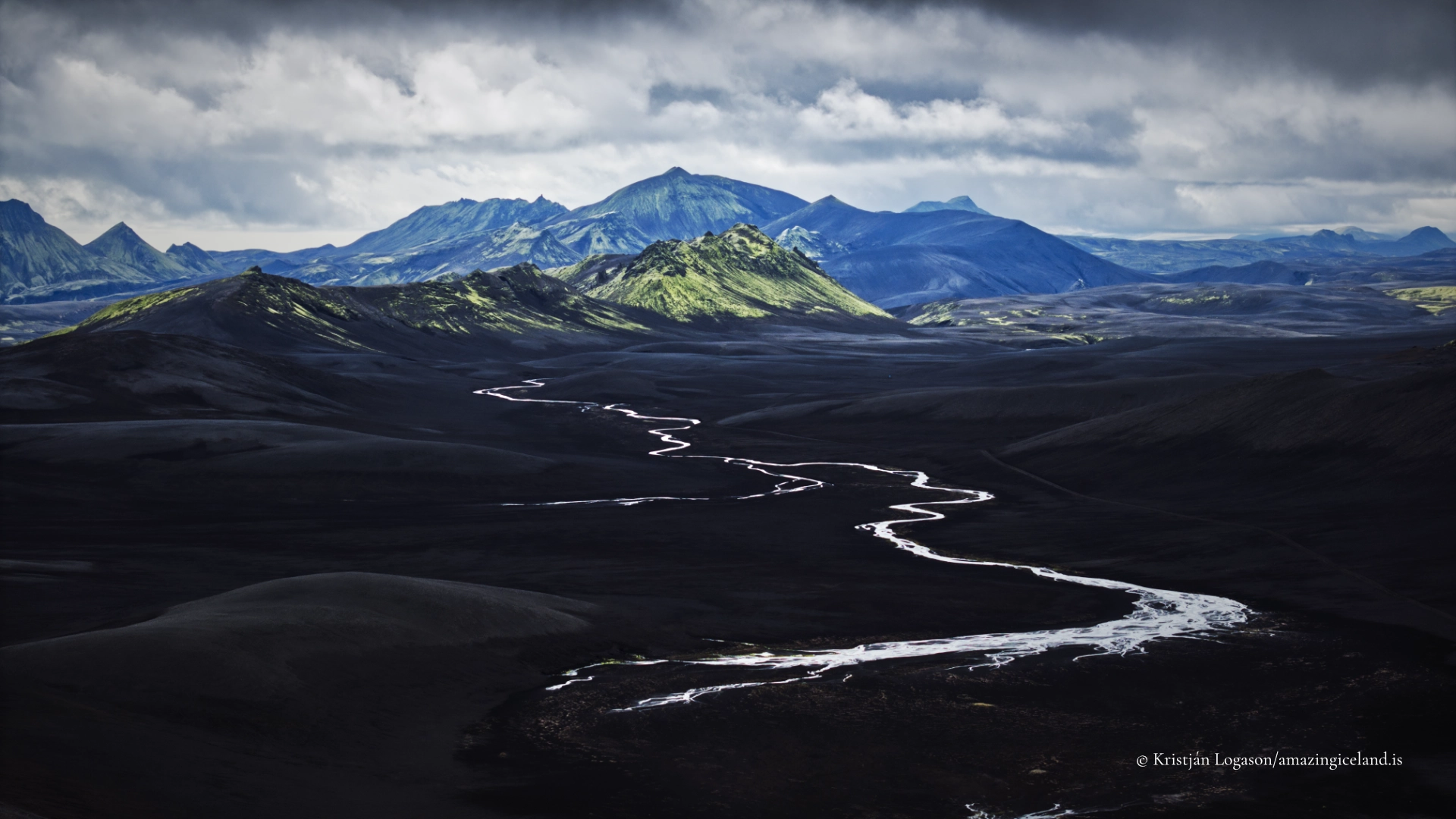
This spatial relationship is central to Sveinstindur’s importance. Few locations in Iceland offer such a clear, uninterrupted overview of a highland system where glaciers, lava flows, and water bodies intersect. The summit functions as a topographic index, allowing processes normally experienced separately to be seen simultaneously.
Visibility from Sveinstindur extends far beyond Langisjór. On clear days, the glacier margins of Vatnajökull are visible, reinforcing the mountain’s role as a point of regional coherence.
Access to Sveinstindur is via highland routes and requires favorable weather and ground conditions. While the ascent itself is non-technical, it involves steep sections and exposure near the summit ridge. There are no constructed paths or safety infrastructure, and conditions can change rapidly.
This lack of development preserves the mountain’s clarity. Sveinstindur is not a recreational peak shaped for throughput; it remains governed by terrain, weather, and individual judgment. The experience is defined by ascent rather than arrival.
Ecologically, the area around Sveinstindur is sparse. Vegetation is limited to hardy mosses and low-growing plants adapted to wind, cold, and shallow soils. This minimal biological presence further emphasizes geological structure over surface detail.
Seasonality is pronounced. Snow can persist late into summer, and cloud cover often obscures the summit. Clear conditions are brief and consequential, reinforcing the idea that Sveinstindur rewards timing rather than persistence alone.
The mountain’s isolation also means there is little ambient noise or visual distraction. Sound, scale, and distance are unmediated, reinforcing the analytical quality of the experience.
Sveinstindur ultimately functions as a reading point rather than a destination in the conventional sense. It offers no shelter, no facilities, and no spectacle independent of context. Its value lies in alignment: elevation, position, and openness combining to make the highlands intelligible.
Interesting facts:
- Sveinstindur rises to approximately 1,090 m above sea level.
- The mountain is composed primarily of rhyolite, not basalt.
- It offers a complete view along the length of Langisjór.
- On clear days, Vatnajökull’s glacier margin is visible from the summit.
- There is no marked trail or infrastructure on the mountain.
Image Gallery

The Locomotive Elite
What do Donald Trump and Iceland’s Locomotive Elite have in common?
Far more than you think.
In The Locomotive Elite, you’ll uncover how a tiny clique in Iceland captured extensive control—of banks, courts, media, and even the central bank.
For decades they ruled, first democratically, then through corruption and in the end through crime, enriching themselves and their cronies while dismantling oversight.
The result?
One of the most spectacular financial collapses in modern history.
Photography tips:
- Summit context matters: Wide frames showing Langisjór define the image.
- Avoid foreground clutter: The view itself carries the composition.
- Neutral color grading: Rhyolite and lava fields reward restraint.
- Work fast: Clear conditions are often brief.
- Human scale optional: Small figures can communicate exposure and proportion.
Good cameras for Iceland
Sony A7R V

Sony A7s lll
Canon R6
Nikon Z6 lll
Destinations nearby
Good to have in Iceland