Skálholt
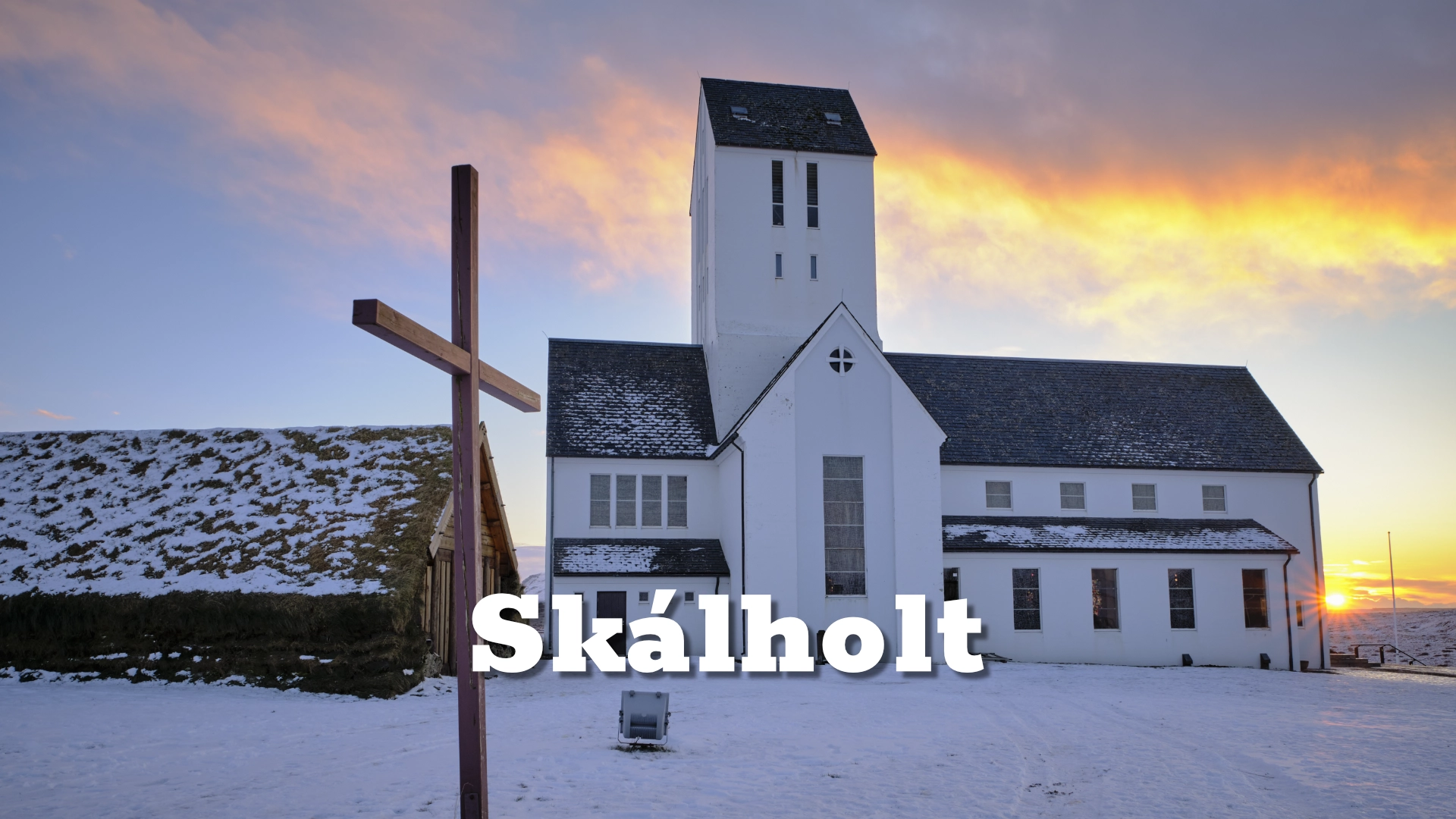
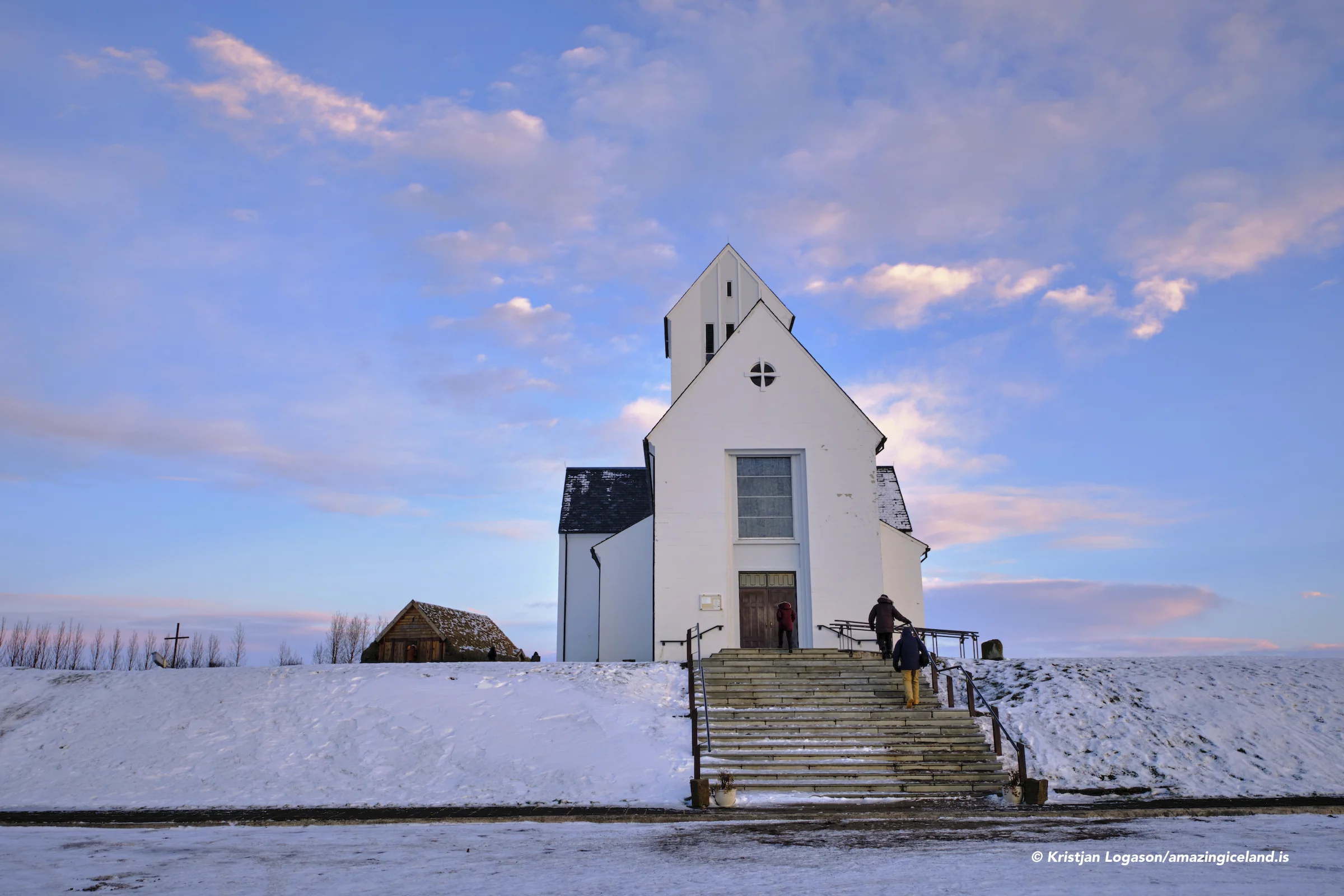
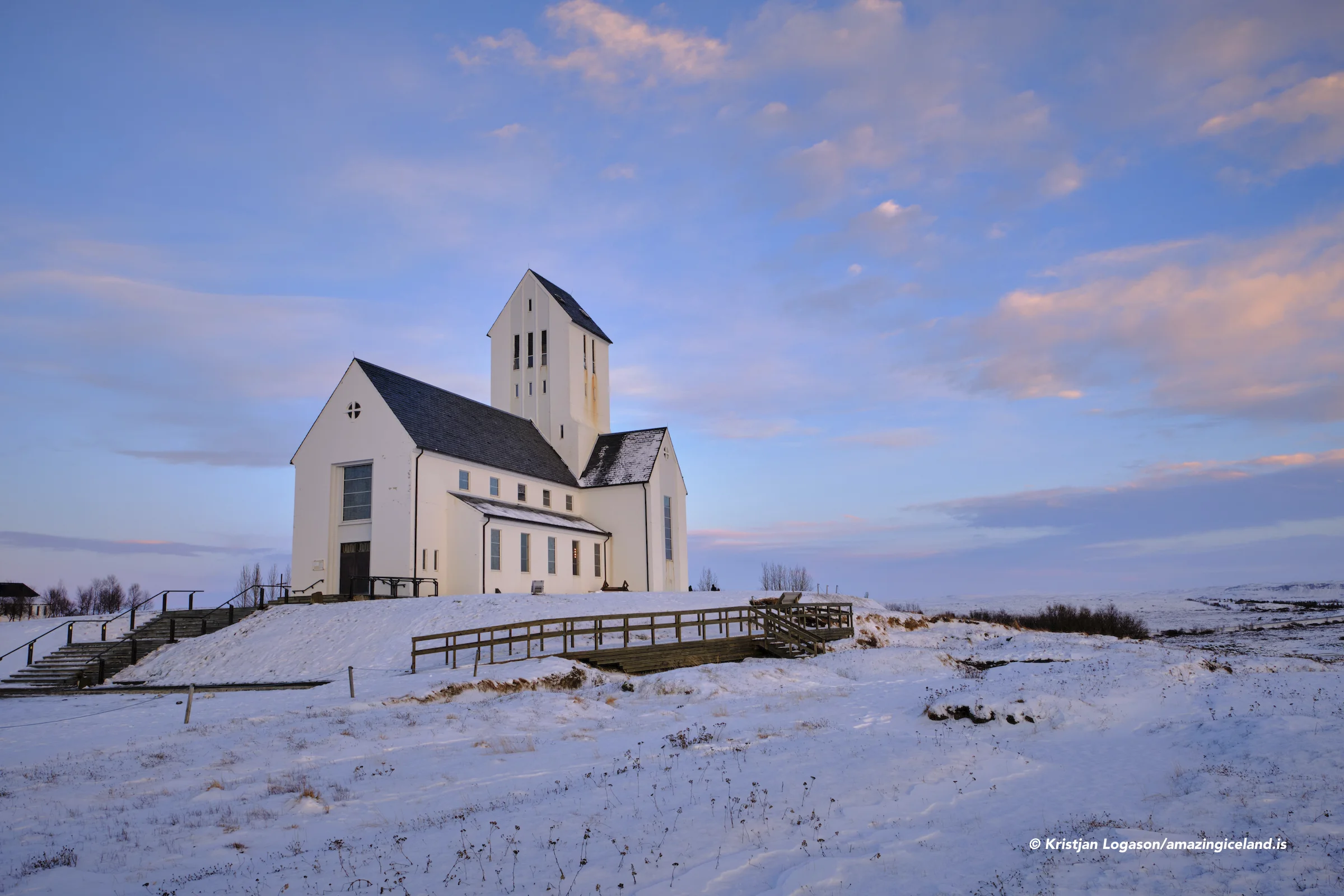
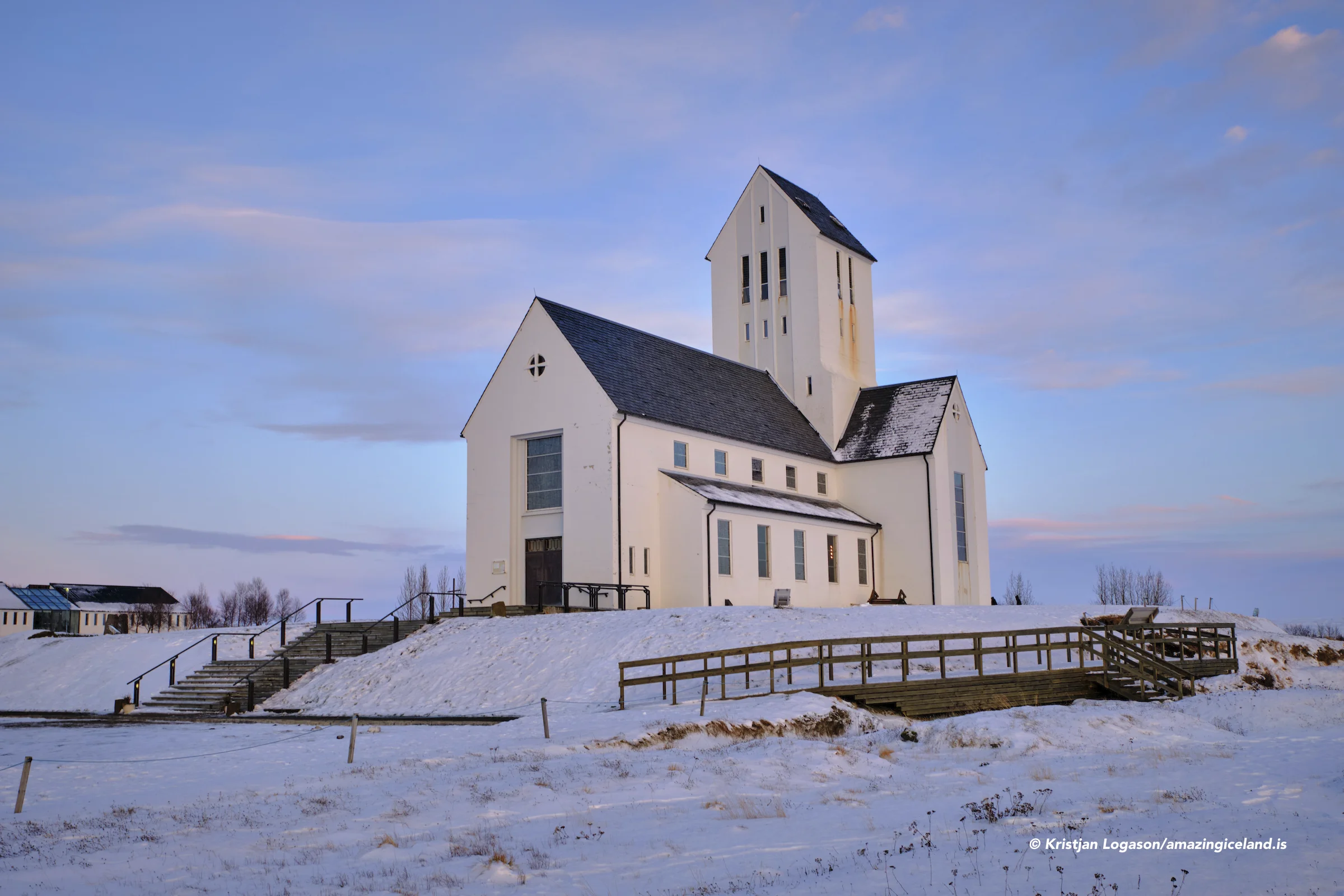
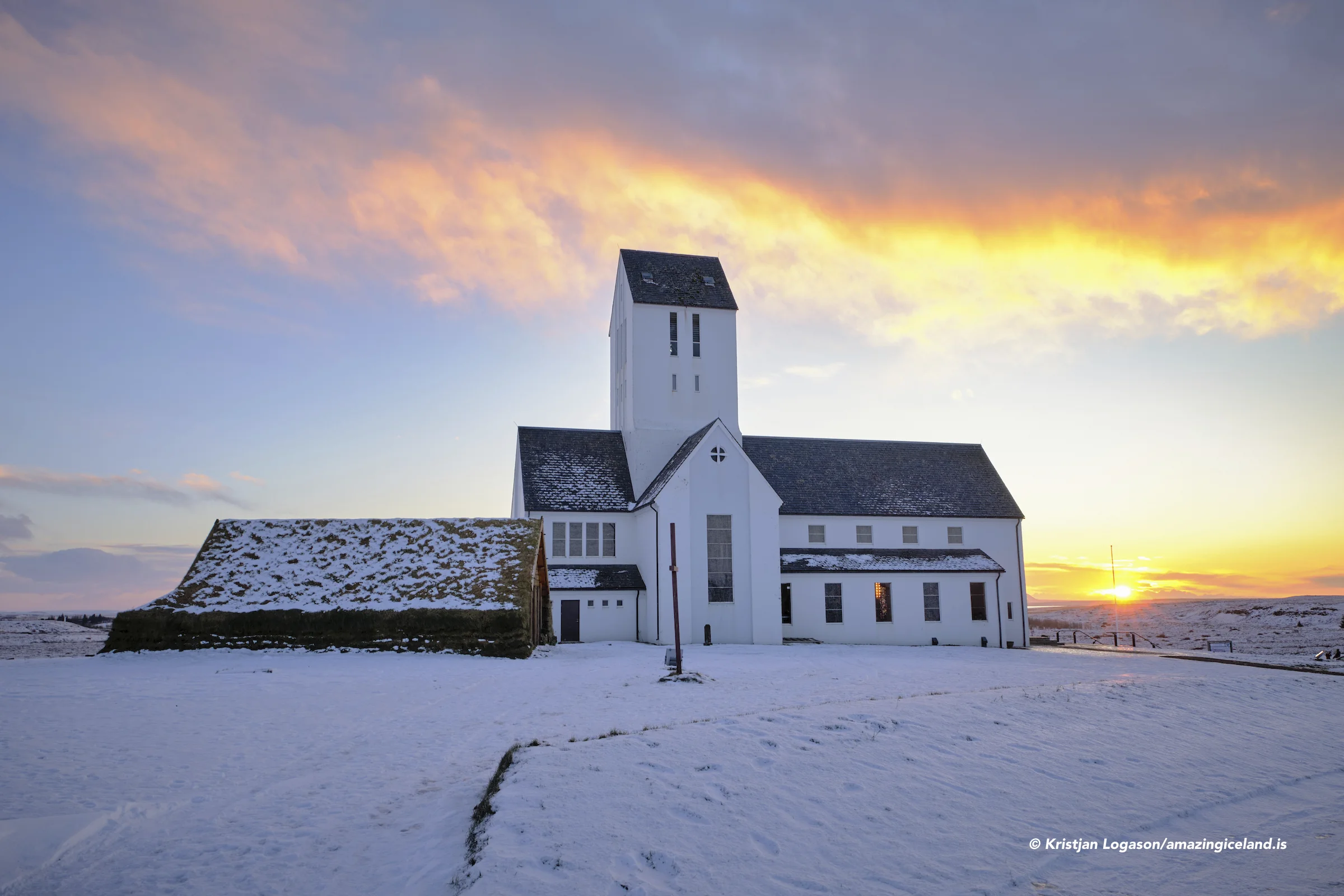
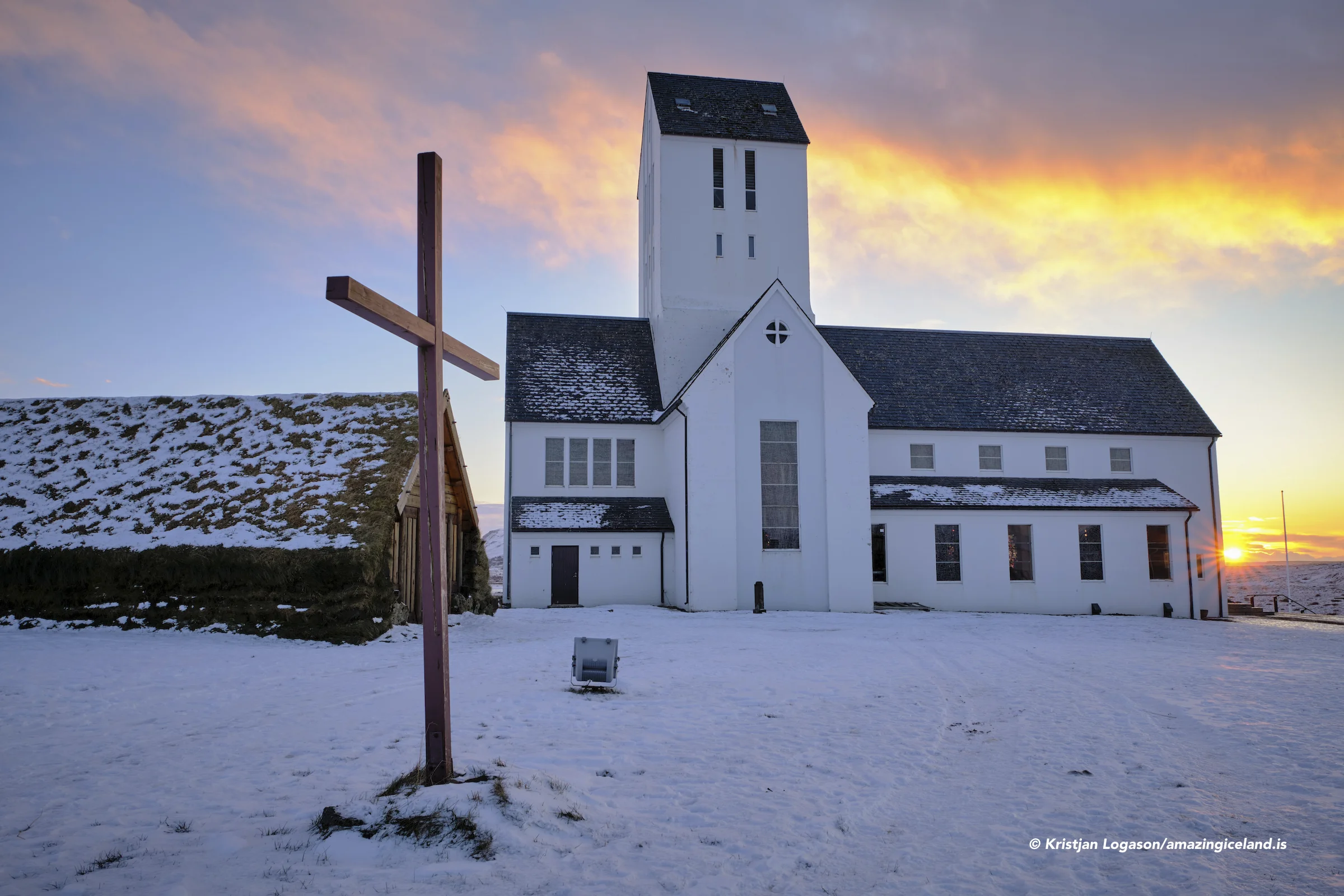
Skálholt stands on a low rise between Hvítá and Brúará in Biskupstungur. What visitors see today is dominated by a cathedral consecrated in 1963, yet this quiet place was once one of the principal centres of power, education and religious life in Iceland.
The country’s first bishop took his seat at Skálholt in 1056. A school operated there, with interruptions, from the late eleventh century until 1785, while successive bishops controlled extensive landholdings and participated directly in the political and cultural life of the country. According to the institution’s own count, the present cathedral is the tenth church to stand on the same ground.
Very little of medieval Skálholt remains above ground. Its history must instead be read through excavated building foundations, protected earthworks, old approach tracks, objects preserved inside the cathedral and the stone coffin of Bishop Páll Jónsson in the crypt. Understanding the contrast between the quiet modern site and the scale of what once stood there is central to experiencing Skálholt.
The location of Skálholt
Latitude
64.1253
Longitude
-20.5245
Skálholt
Iceland’s first episcopal seat
Skálholt was settled by Teitur Ketilbjarnarson, a descendant of one of the families that claimed land in the region during the settlement period. His grandson, Gissur hvíti Teitsson, lived at Skálholt and is said to have built its first church after Christianity was accepted by law at the Alþingi around the year 1000.
Gissur’s son Ísleifur Gissurarson was consecrated the first bishop of Iceland in 1056 and established his seat on the family property. He also founded a school at Skálholt. His son and successor, Gissur Ísleifsson, then secured the institution’s future by giving the land to the episcopal see. According to Hungurvaka, the intention was that a bishop should remain there for as long as Iceland was inhabited and Christianity endured.
Skálholt was not a capital in the modern administrative sense, and Iceland had no such capital during the Middle Ages. It was nevertheless a höfuðstaður: a principal place where religious authority, education, landownership and scholarship were concentrated. After the establishment of the northern bishopric at Hólar, the two episcopal seats became the country’s most important centres of organised learning.
Ten churches on the same ground
The succession of churches at Skálholt reveals both the importance of the site and how little of its architecture survived. Timber buildings were vulnerable to fire, weather and deterioration, and each generation of bishops inherited the responsibility of repairing or replacing what came before.
One of the most ambitious medieval churches was built by Bishop Klængur Þorsteinsson using timber brought from Norway. It was consecrated in 1153 but burned after being struck by lightning in 1309. Its replacement was completed in 1311 and remained until another fire in 1526 or 1527.
Ögmundur Pálsson, the last Catholic bishop of Skálholt, rebuilt the cathedral with imported timber brought inland from Eyrarbakki. Later churches followed after the Reformation, including Gíslakirkja and the large timber cathedral built by Bishop Brynjólfur Sveinsson in 1650.
Brynjólfur’s cathedral survived the destructive South Iceland earthquake of 1784, even though almost every other building at Skálholt was brought down. It remained in use, after extensive alterations and increasingly difficult maintenance, until 1850. A much smaller parish church replaced it in 1851–52 and stood until work began on the modern restoration of Skálholt.
The foundation uncovered during excavations in 1954 belonged to Gíslakirkja, which stood from 1567 to 1650. It is sometimes incorrectly identified as the foundation of Ögmundur Pálsson’s earlier cathedral.

Conflict, drowning and execution
The authority concentrated at Skálholt also made it a setting for political conflict. Several protected remains around the cathedral are connected with episodes of violence that shaped Icelandic church history.
In 1433, Bishop Jón Gerreksson was seized and drowned in Brúará during an attack led by Teitur ríki Gunnlaugsson. The bishop’s retainers, traditionally said to have been Irish, were also killed. Íragerði, north-north-west of the main farm site, is believed to be where they were buried.
A century later, the Reformation divided the two episcopal seats. Skálholt accepted Lutheranism while Jón Arason, the Catholic bishop of Hólar, attempted to resist the religious and political changes being imposed by the Danish Crown. In 1548, the men at Skálholt constructed a defensive position against him. Virkishóll, immediately east of the churchyard, is thought to contain its remains.
Jón Arason and his sons Ari and Reverend Björn were eventually captured and taken to Skálholt. All three were beheaded there on 7 November 1550. Their deaths marked the decisive end of organised Catholic resistance to the Reformation in Iceland.
A monument now stands at what is believed to have been the execution site. It was erected in 1912 at the expense of an Englishwoman, Disney Leith. The monument is therefore not a surviving element from the Reformation but part of the much later effort to remember and interpret what happened at Skálholt.
Brynjólfur Sveinsson and Ragnheiður
Brynjólfur Sveinsson served as bishop of Skálholt from 1639 to 1674 and became one of the most influential scholars in Icelandic history. He collected old manuscripts and supported the copying and preservation of texts at a time when many medieval books were being lost.
The manuscript now known as the Codex Regius of the Poetic Edda entered Brynjólfur’s possession in 1643. He later sent it, along with other important Icelandic manuscripts, to King Frederik III of Denmark. Although sending the manuscripts abroad remains a complicated part of Brynjólfur’s legacy, their preservation fundamentally shaped modern knowledge of Old Norse literature. The Codex Regius eventually returned to Iceland in the twentieth century.
Brynjólfur’s place in Icelandic cultural history is inseparable from the tragic story of his daughter, Ragnheiður Brynjólfsdóttir. In 1661, rumours circulated about a relationship between the nineteen-year-old Ragnheiður and Daði Halldórsson, a young man employed in the bishop’s household. On 11 May, she swore a public oath of chastity at Skálholt before a gathering of clergymen.
On 15 February 1662, Ragnheiður gave birth to a son by Daði. The child was named Þórður. Ragnheiður died on 23 March 1663, aged only twenty-one.
Her story has remained part of Icelandic cultural memory through historical writing, fiction, theatre and music. Guðmundur Kamban’s Skálholt works were particularly influential in shaping the familiar dramatic interpretation. The recorded events are powerful enough without treating later literary reconstruction as established fact. The oath, the birth and Ragnheiður’s early death are documented, but her private feelings and the motives of those around her cannot be known with the same certainty.
Þorlákur helgi and Þorláksbúð
Þorlákur Þórhallsson served as bishop of Skálholt from 1178 until his death on 23 December 1193. He attempted to strengthen the authority of the Church and reform religious practice, often against opposition from powerful Icelandic chieftains.
Reports of his holiness and miracles spread after his death. His remains were raised on 20 July 1198, and accounts of his miracles were read at the Alþingi the following year. The summer feast of Þorlákur on 20 July was formally recognised in 1237. His death day, 23 December, became the winter Þorláksmessa and remains one of the most familiar dates in the Icelandic calendar. On 14 January 1984, Þorlákur was formally designated the patron saint of Iceland with the approval of Pope John Paul II.
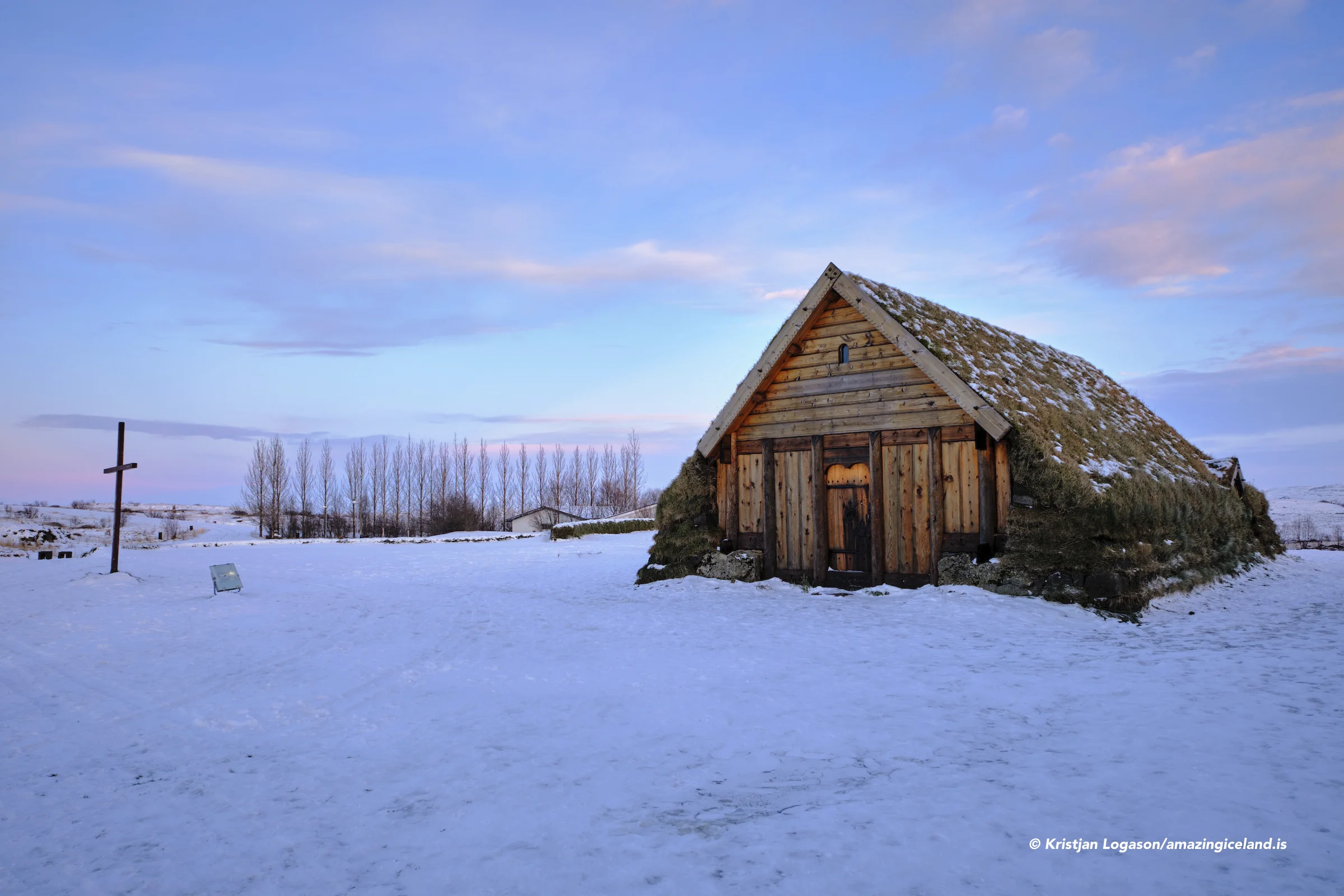
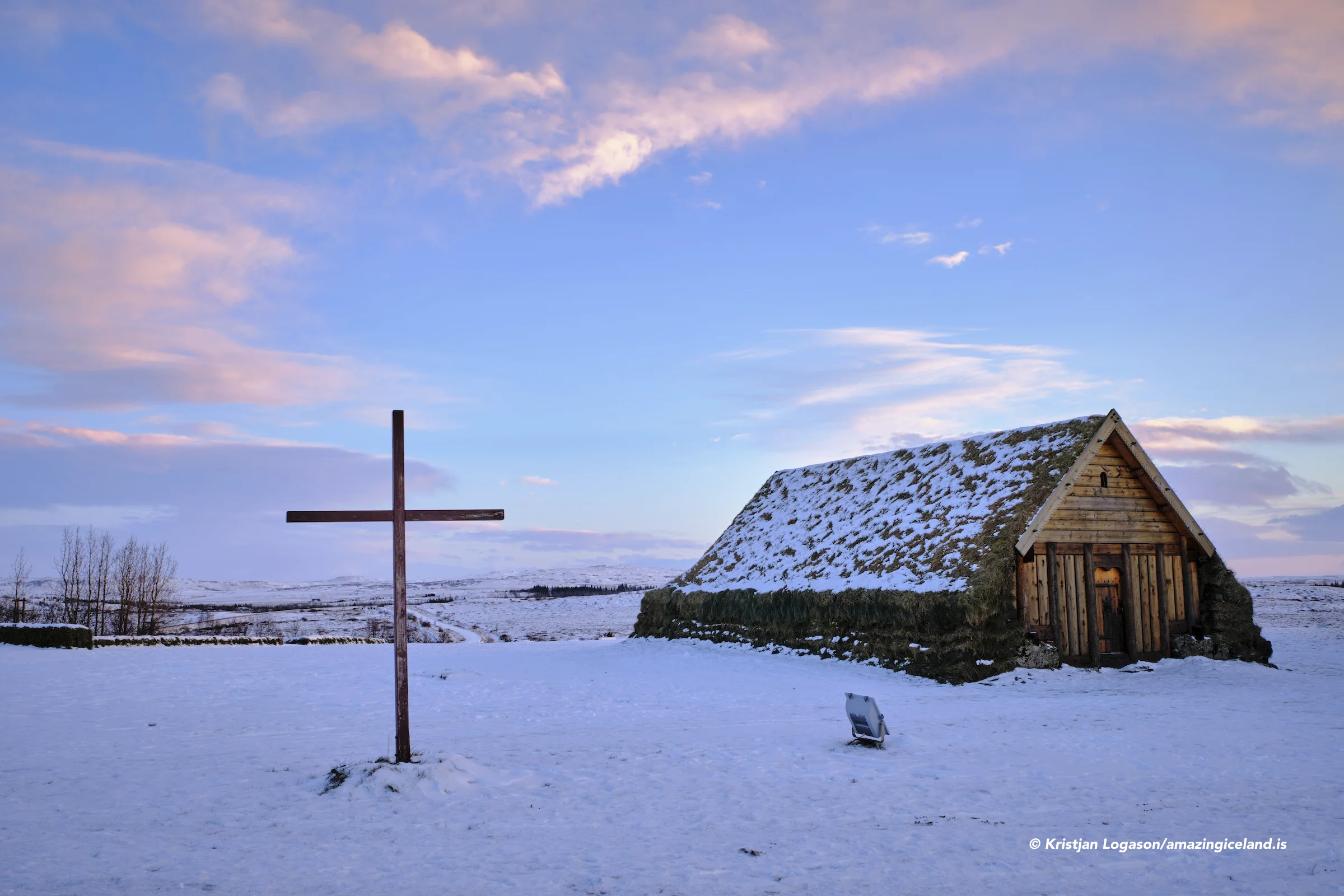
Þorláksbúð stands inside the churchyard north-east of the cathedral. An older ruin at the site was associated with a building used for religious services when the cathedral itself was unavailable. Following archaeological investigation, the present turf and stone structure was built over the ruin in 2011.
The reconstruction became controversial. The heritage authorities did not object to the general idea of presenting a building connected with Þorláksbúð, but argued that the proposed structure did not follow the dimensions of the surviving ruin and would disturb the carefully planned relationship between the twentieth-century cathedral and Skálholtsskóli. Húsafriðunarnefnd responded by placing the two modern buildings and their immediate surroundings under emergency protection.
The building was nevertheless completed after permission was granted locally and the Church Council decided not to oppose the work. Skálholt describes it as a replica of the turf house at Keldur, intended to refer more broadly to buildings that stood at Skálholt from the sixteenth century onwards. It should therefore not be mistaken for a preserved medieval building or a precise reconstruction of a known structure.
The earthquake and the end of the old Skálholt
The earthquake of 16 August 1784 severely damaged farms and settlements across South Iceland. At Skálholt, Brynjólfur’s timber cathedral remained standing, but almost all the other buildings belonging to the episcopal establishment collapsed. Storms later that year caused further destruction.
The disaster came as Iceland’s administrative institutions were becoming increasingly concentrated in Reykjavík. The school was transferred from Skálholt in 1785, ending a teaching tradition that had lasted, with interruptions, for more than seven centuries.
The lands belonging to the episcopal see were sold, and Bishop Hannes Finnsson purchased Skálholt himself. After his death, his widow Valgerður Jónsdóttir continued living there and had the surviving church substantially repaired between 1802 and 1804. In 1801, the bishoprics of Skálholt and Hólar were formally united in Reykjavík.
Skálholt did not disappear, but its national role had ended. The former episcopal centre became a farm and parish church, while the buildings and earthworks associated with its long institutional history gradually deteriorated or vanished beneath the ground.
Rebuilding Skálholt in the twentieth century
The modern restoration of Skálholt began with archaeology. Excavations directed by Kristján Eldjárn between 1954 and 1958 investigated the old church foundations and surrounding structures before the present cathedral was built.
The most important discovery was a carved stone coffin containing the remains of Bishop Páll Jónsson, who died in 1211. The coffin is now displayed in the crypt beneath the cathedral with grave slabs and other objects recovered at Skálholt. An underground passage also forms part of the crypt presentation, although the precise age and development of the passage are less certain than the site’s long history sometimes suggests.
The present cathedral was designed by Hörður Bjarnason, the State Architect, and built between 1956 and 1963. It was consecrated on 21 July 1963, the same day Skálholtsstaður was formally handed to the national church. The restrained modern architecture does not attempt to recreate a medieval cathedral. Instead, it provides a setting for surviving historical objects and major works of twentieth-century Icelandic art.
Inside are stained-glass windows by Gerður Helgadóttir and a mosaic above the altar by Nína Tryggvadóttir. These works are central to the experience of the interior and make the cathedral important in its own right rather than merely as a memorial to earlier buildings.
Skálholtsskóli opened in 1972, designed by Manfreð Vilhjálmsson and Þorvaldur S. Þorvaldsson. Both the school and cathedral are now protected for their importance in Icelandic architectural history. Summer concerts have been held at Skálholt since 1975, and in 1992 the site again became an episcopal seat with the appointment of a suffragan bishop.
Archaeological work has continued around the cathedral, revealing parts of the settlement occupied during the seventeenth and eighteenth centuries. These excavated rooms provide the clearest impression of the collection of houses that once surrounded the church.
Visiting Skálholt
Skálholt lies beside Route 31 and is a short, signposted detour from the principal Golden Circle route. Despite its historical importance, it is usually quiet outside religious services, concerts and organised events.
Allow about an hour for a useful visit. Begin inside the cathedral, where the stained glass, altar mosaic and surviving historical objects establish the connection between the present church and the earlier episcopal seat. Continue into the crypt to see the stone coffin of Bishop Páll Jónsson, the grave slabs and the underground passage.
The excavated buildings beside the cathedral should be the third priority. Their low foundations show that Skálholt was not simply an isolated church but a working settlement containing residential, educational and administrative buildings.
The wider grounds contain the monument to Jón Arason, Þorláksbúð and numerous protected archaeological remains. These can be found and understood without a guide, although exploring all the marked sites requires more time than the central visit. The church remains a consecrated place in regular use, while the surrounding churchyard is an active burial ground.
Opening arrangements for the cathedral, crypt and guided visits can change. Visitors planning to enter at a particular time should check the official Skálholt information before travelling.
Interesting facts:
- Ísleifur Gissurarson became Iceland’s first bishop in 1056 and established his episcopal seat at Skálholt.
- A school operated at Skálholt, with interruptions, from the late eleventh century until 1785.
- The present cathedral is counted as the tenth church to stand on the same ground.
- Bishop Jón Gerreksson was drowned in Brúará in 1433.
- Jón Arason and his sons Ari and Reverend Björn were executed at Skálholt on 7 November 1550.
- Ragnheiður Brynjólfsdóttir swore her public oath at Skálholt on 11 May 1661.
- The timber cathedral built by Brynjólfur Sveinsson survived the destructive earthquake of 1784.
- Bishop Páll Jónsson’s thirteenth-century stone coffin was discovered during excavations in 1954.
- The present cathedral was consecrated on 21 July 1963.
- The stained-glass windows are by Gerður Helgadóttir, and the mosaic above the altar is by Nína Tryggvadóttir.
- Skálholt again became an episcopal seat in 1992.
- More than one hundred protected archaeological remains have been recorded across the Skálholt property.
Image Gallery
Photography tips:
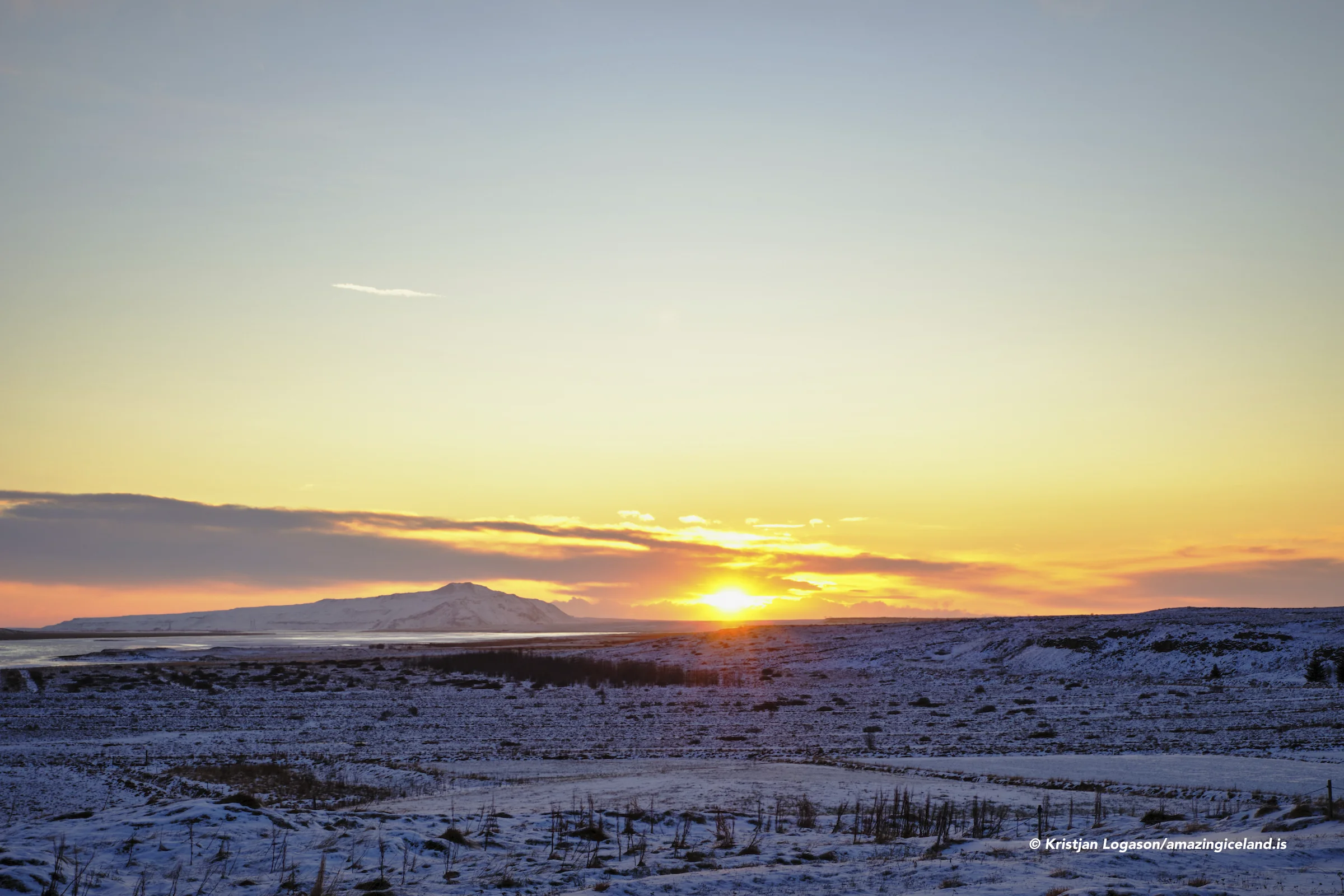
- The strongest overall subject is the cathedral within the wider agricultural landscape. Photographing from farther away explains its position on the low rise and gives the building a sense of place.
- A moderate telephoto lens can compress the cathedral against the surrounding fields and distant landscape. A wider lens is useful closer to the site when the church, school and open ground need to be shown together.
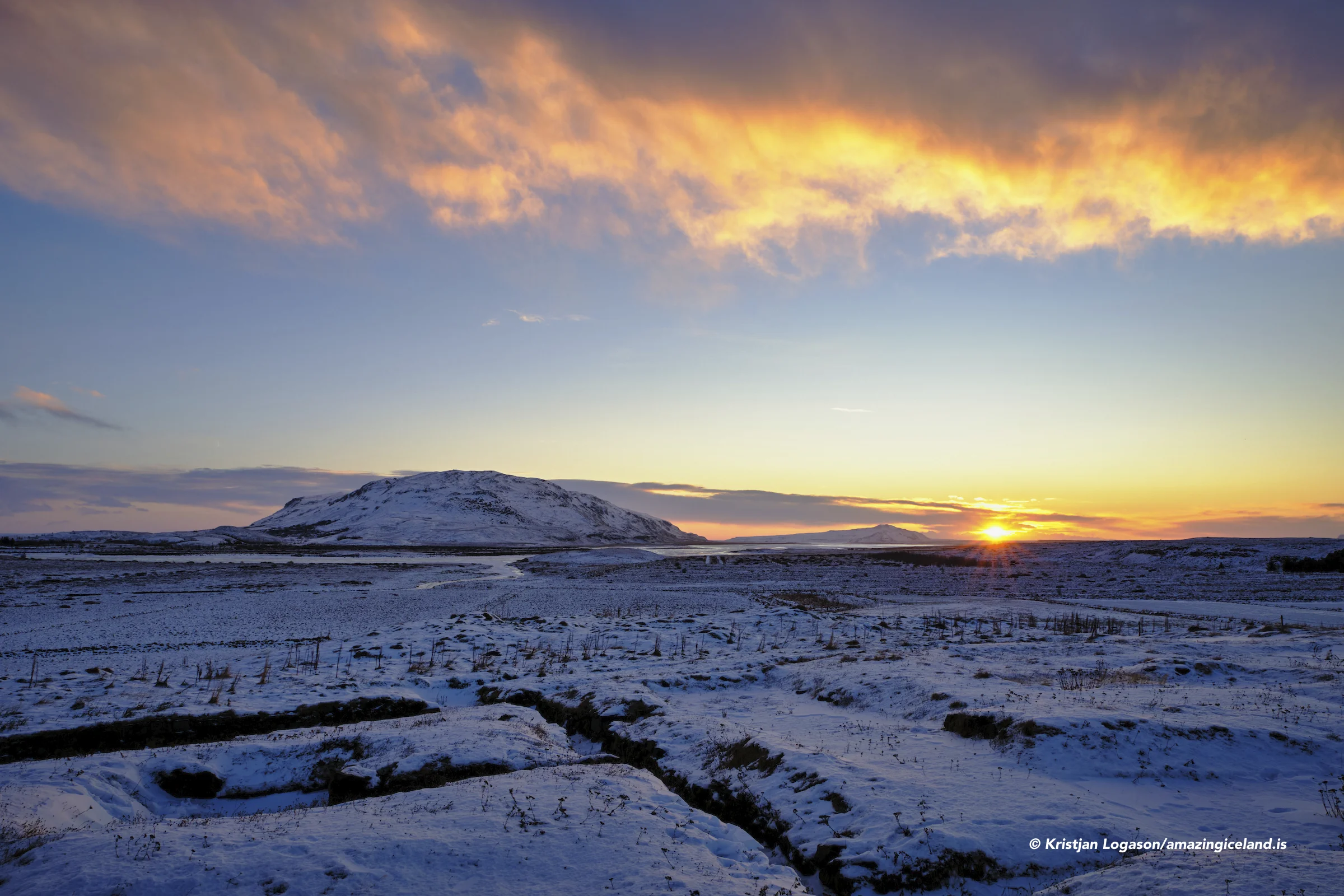
- Low side light gives shape to the excavated foundations and other shallow earthworks. Flat midday light can make these remains difficult to read.
- Inside the cathedral, watch the highlights in Nína Tryggvadóttir's altar mosaic and Gerður Helgadóttir's stained glass. The brightness range may require careful exposure or bracketing.
- The crypt is dark and confined. Use a fast lens or higher ISO rather than direct flash, and work quietly because the space contains human remains.
- Remember that the cathedral is an active church and the surrounding ground is a burial place. Avoid photographing during services unless permission has been given.
Destinations nearby