Reykholt í Biskupstungum
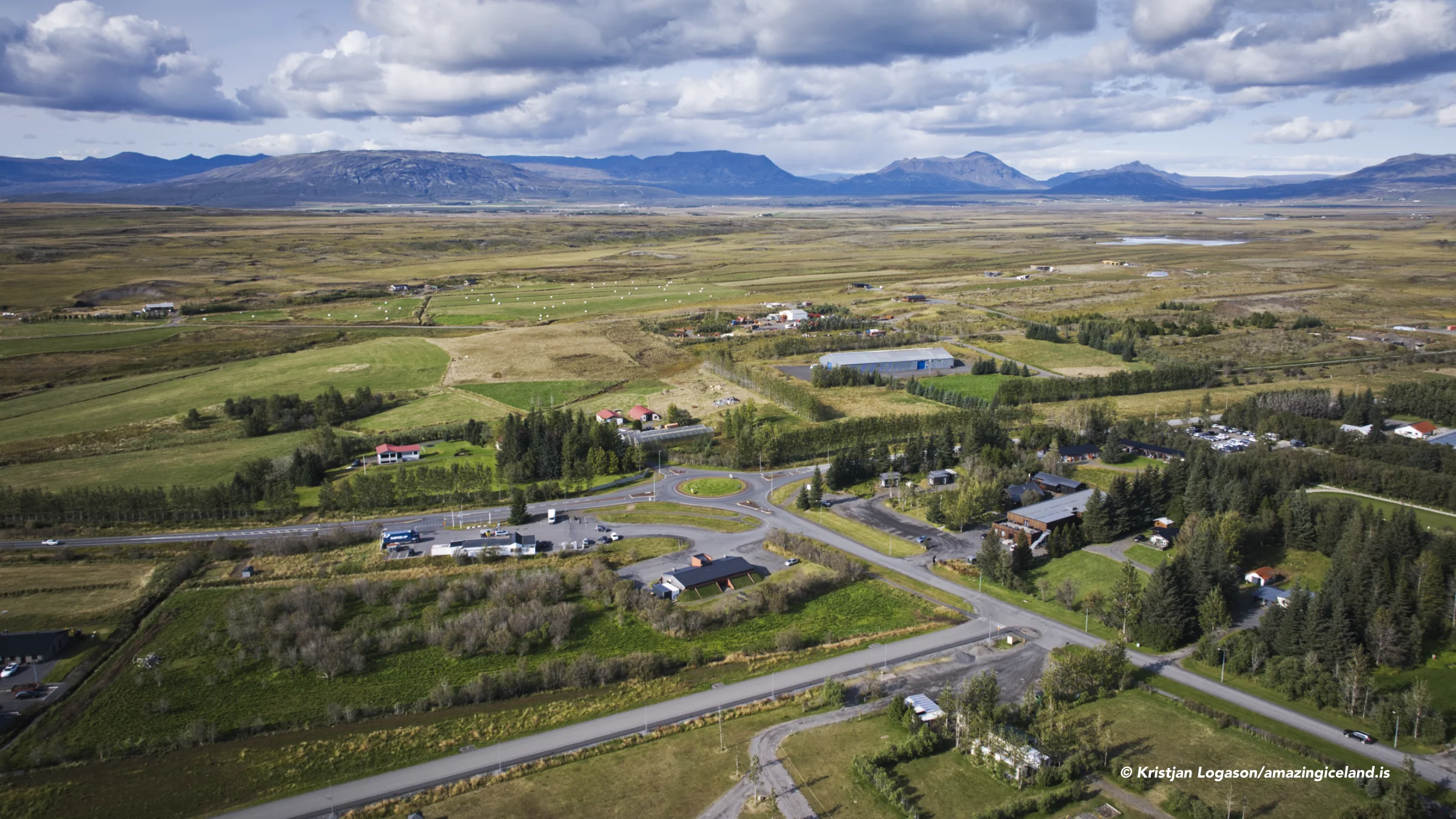
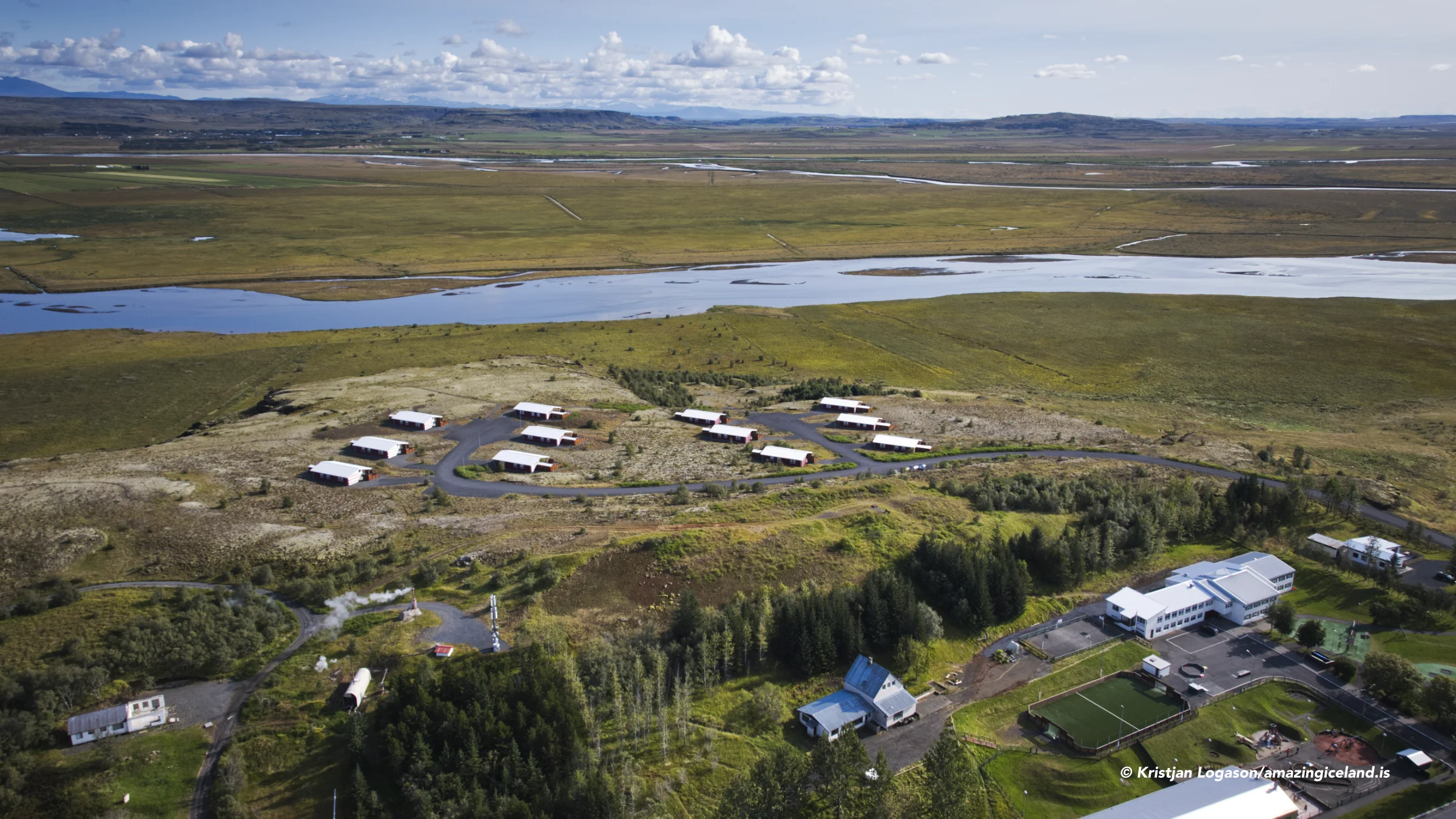
Reykholt lies in Biskupstungur on the western side of Tungufljót, surrounded by the agricultural landscape of the upper Árnessýsla region. It should not be confused with Reykholt in Borgarfjörður, the former home of Snorri Sturluson. The two settlements share a name derived from geothermal activity but have entirely separate histories.
The South Iceland Reykholt developed because geothermal water made year-round horticulture possible. Its origin can be traced to Reykholtshver, a hot spring historically used for washing clothes. The first greenhouse was built beside the spring in 1932, followed by the first established horticultural station in 1938. Greenhouses, homes and mature vegetation gradually spread across the low ridge and turned Reykholt into one of Iceland’s most important horticultural communities.
Friðheimar is now central to the village’s public identity. Its tomato cultivation, greenhouse restaurant and Icelandic horses attract visitors who might otherwise pass Reykholt while travelling between the principal Golden Circle destinations. The business deserves a separate destination page, but it also belongs firmly within the story of Reykholt because it demonstrates how geothermal horticulture has developed into food production, visitor experience and international recognition.
The village itself is not a conventional sightseeing destination. Apart from visiting Friðheimar or dining at restaurant Mika, there is little reason for most travellers to spend an extended period in the centre. A one-hour stop is sufficient for seeing the greenhouses, vegetation and general pattern of the settlement.
The location of Reykholt í Biskupstungum
Latitude
64.1787
Longitude
-20.4479
Reykholt í Biskupstungum
From a laundry spring to a greenhouse community
Reykholtshver is central to the history of the settlement even though visitors cannot readily identify the spring today. Its official archaeological registration records it as a historic washing place, where naturally heated water was used for the practical work of cleaning clothes. The beginning of Reykholt was therefore modest: geothermal water was useful long before it became the foundation of a specialised agricultural community.
The first greenhouse was constructed at Reykholtshver in 1932. A more established horticultural station followed in 1938, and other growers gradually settled in the area. Geothermal water supplied reliable heat, while electric lighting later allowed production to continue through the darkest months of winter. Reykholt consequently developed around ylrækt, the cultivation of plants in heated greenhouses, rather than around conventional livestock farming or fishing.
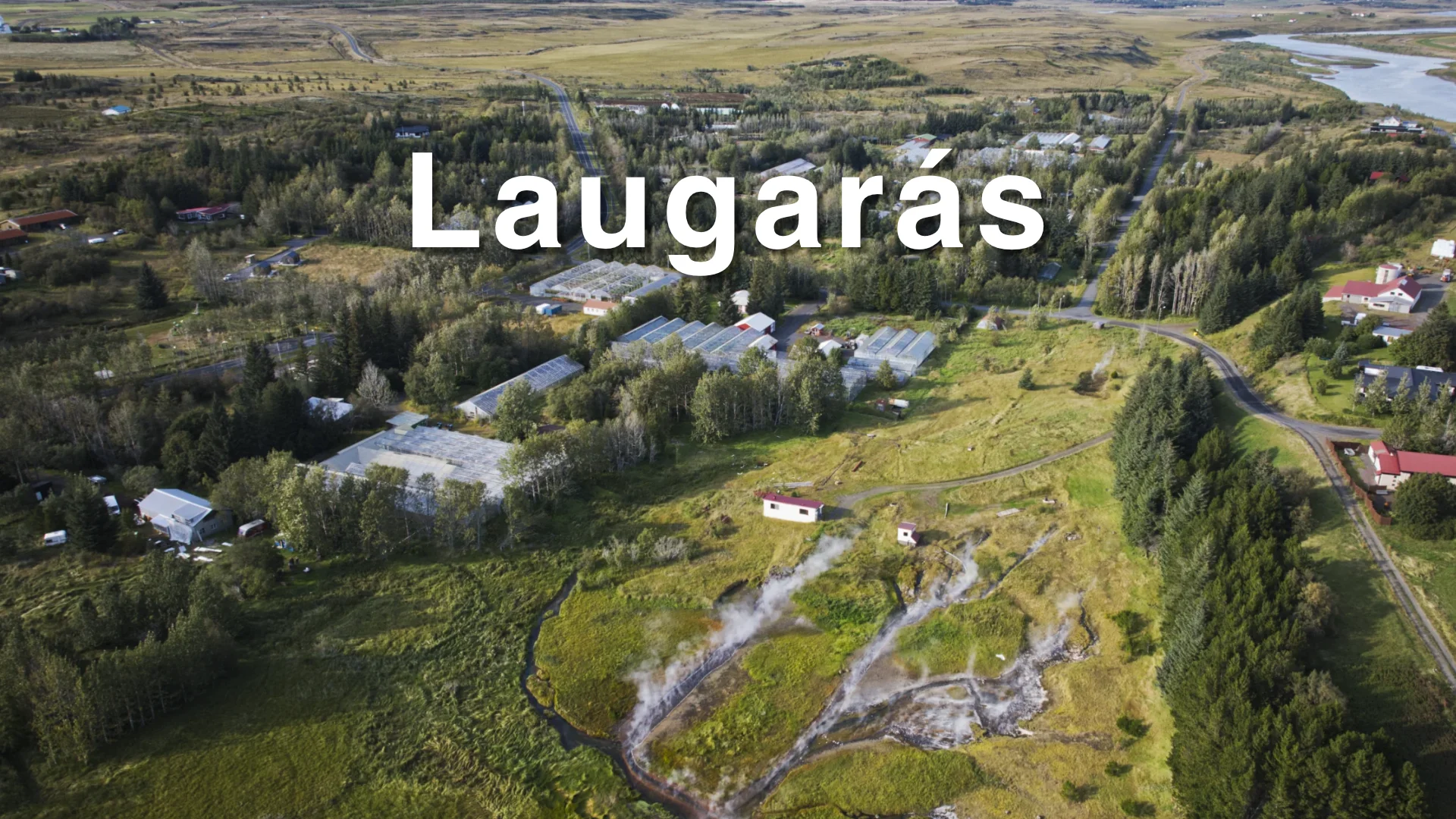
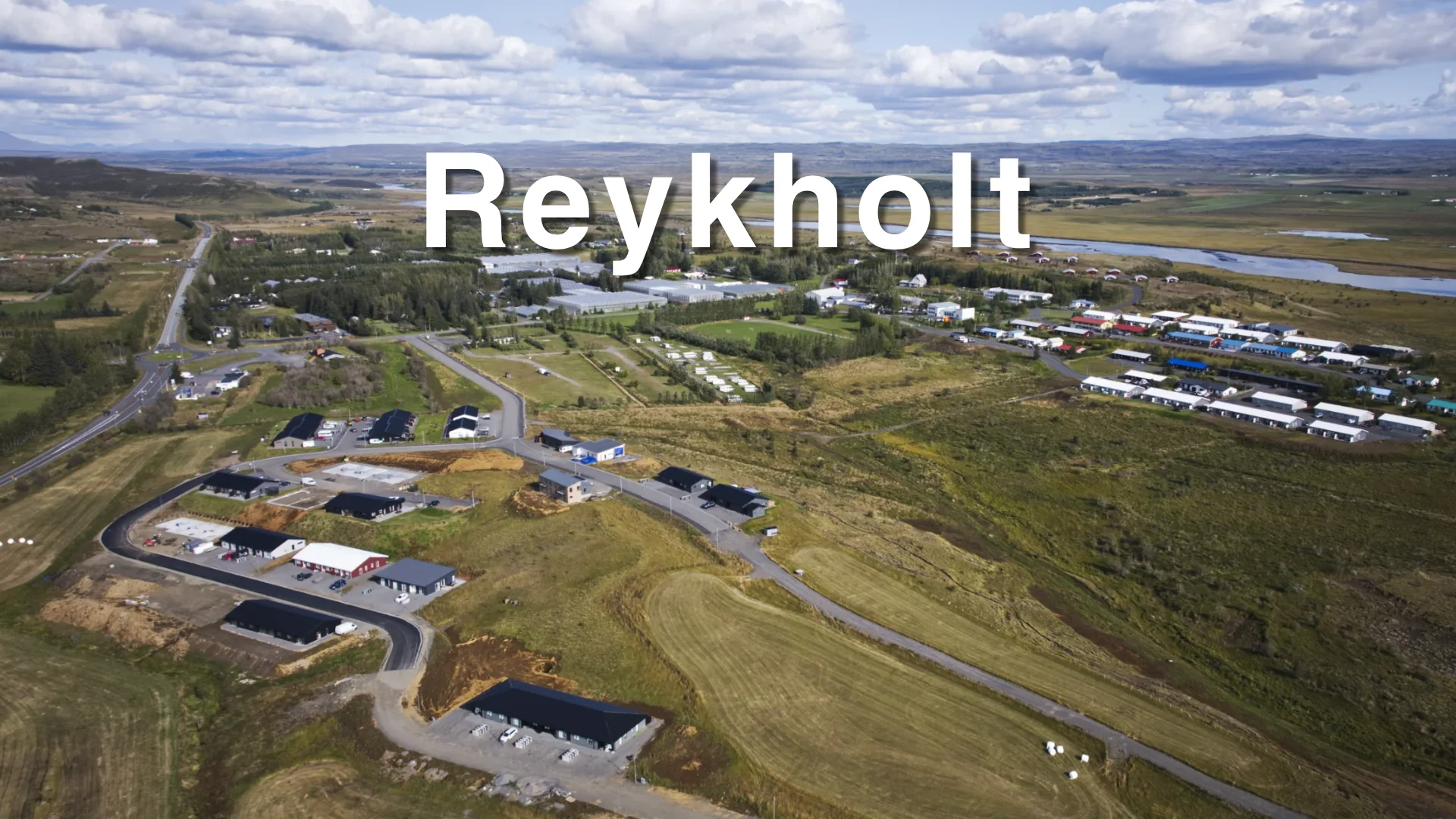
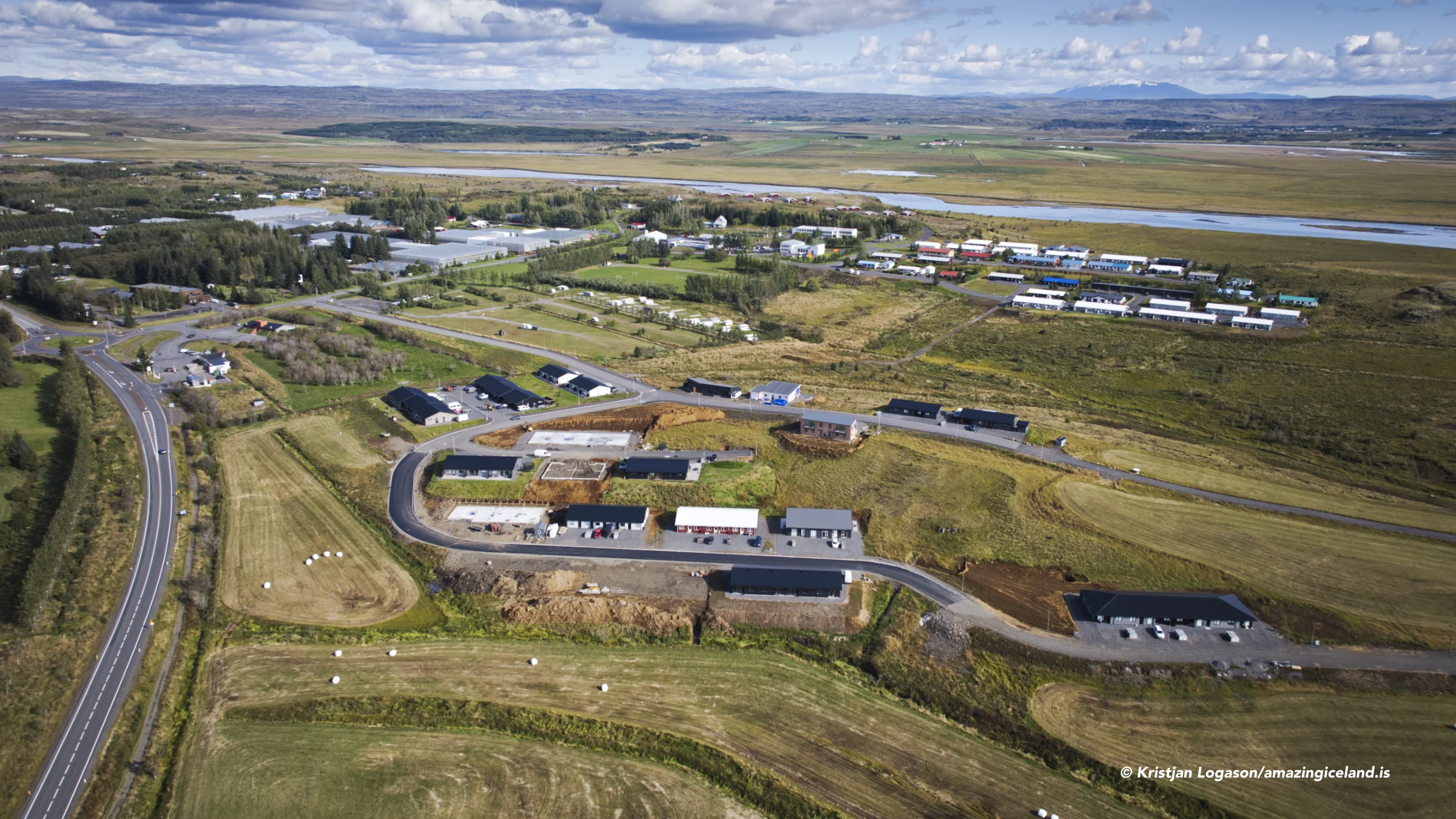
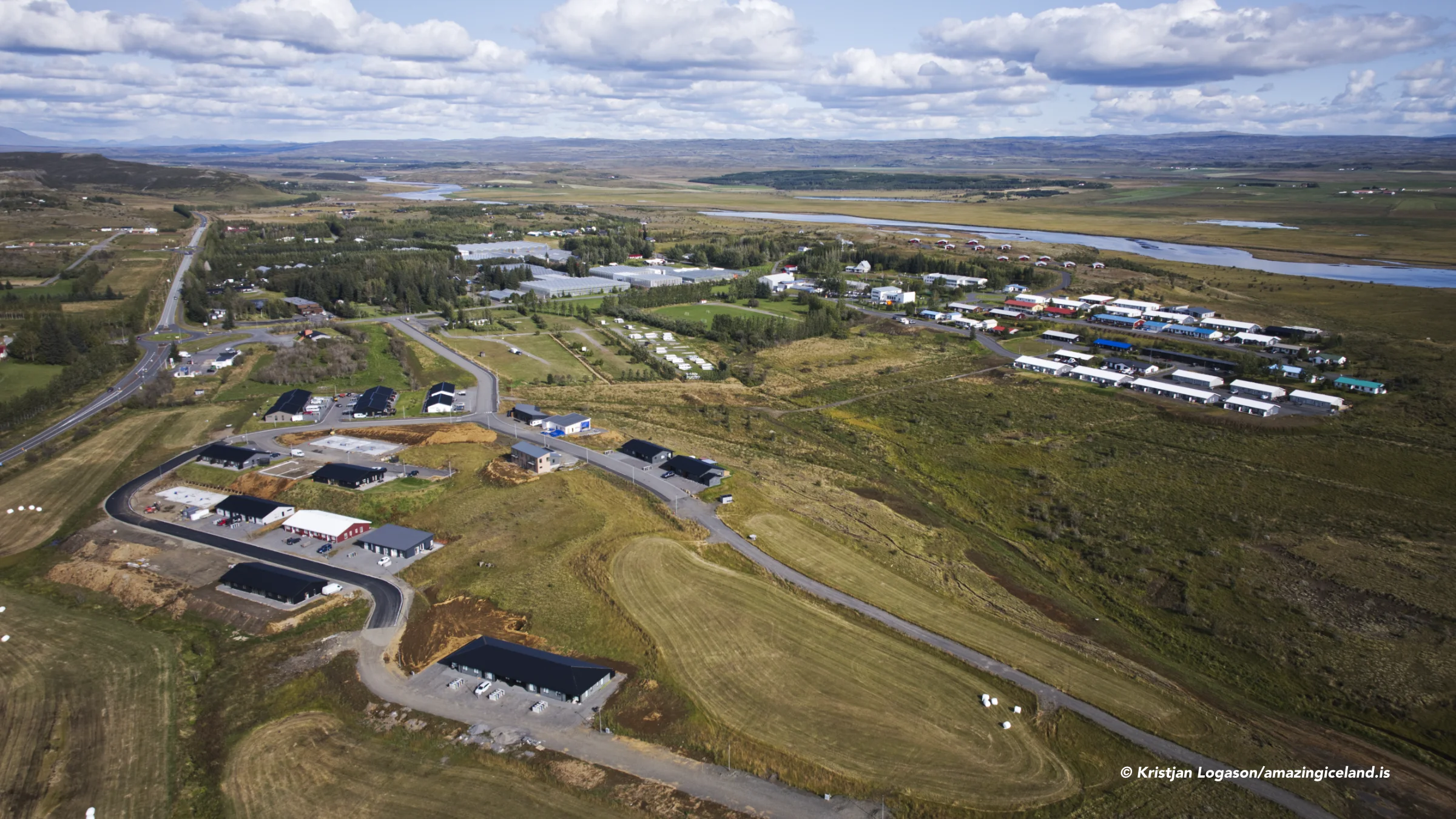
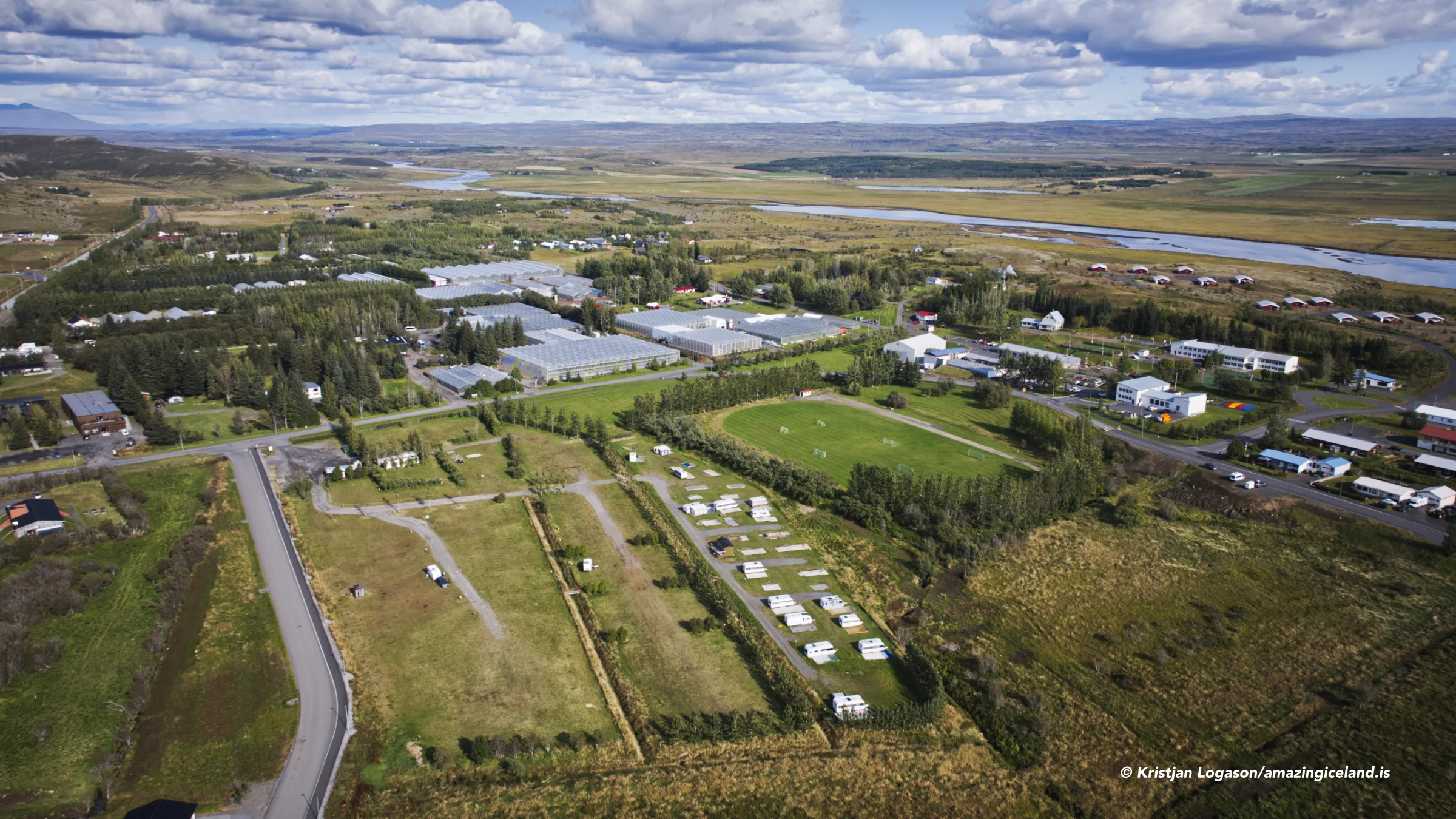
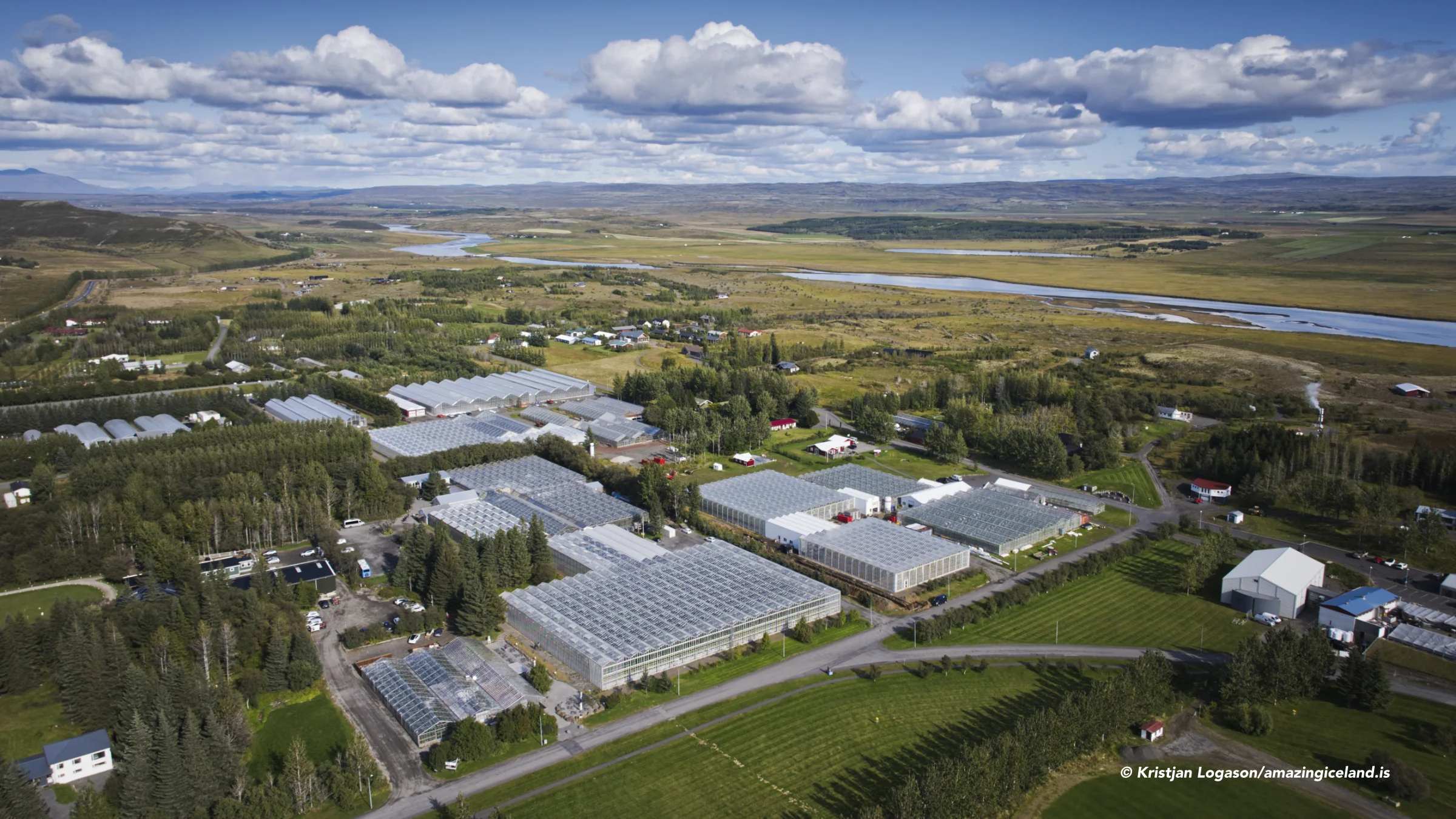
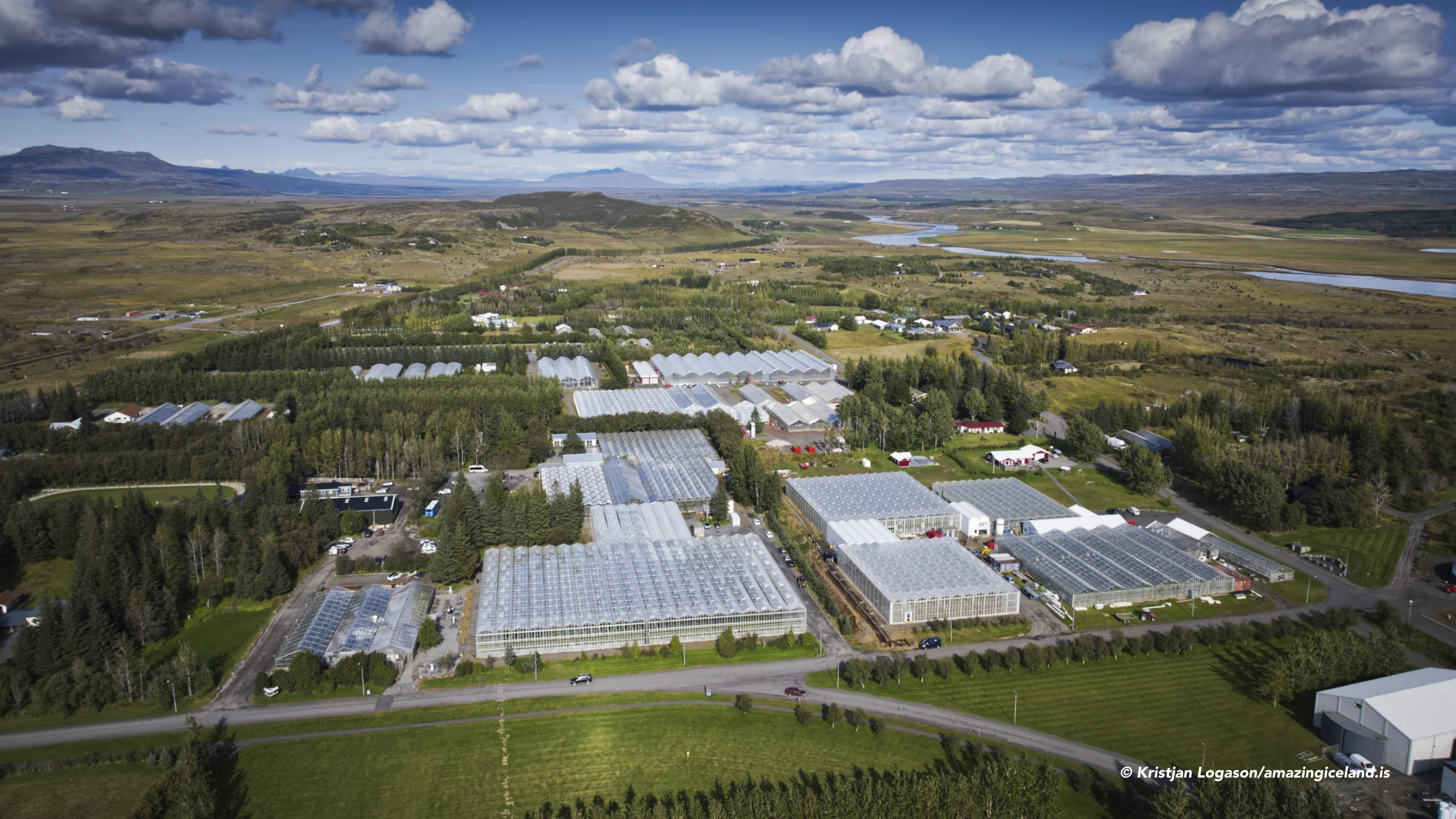
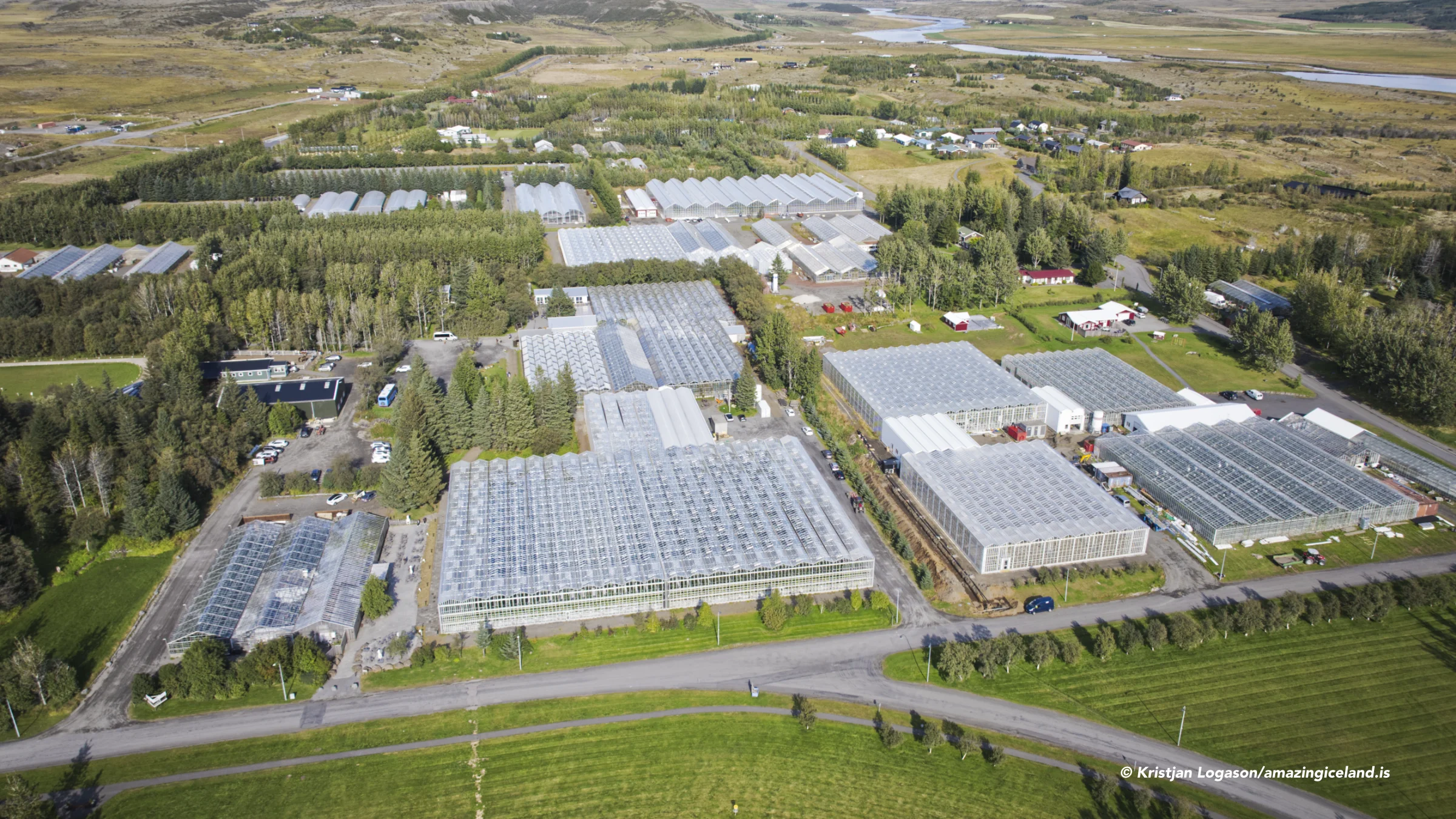
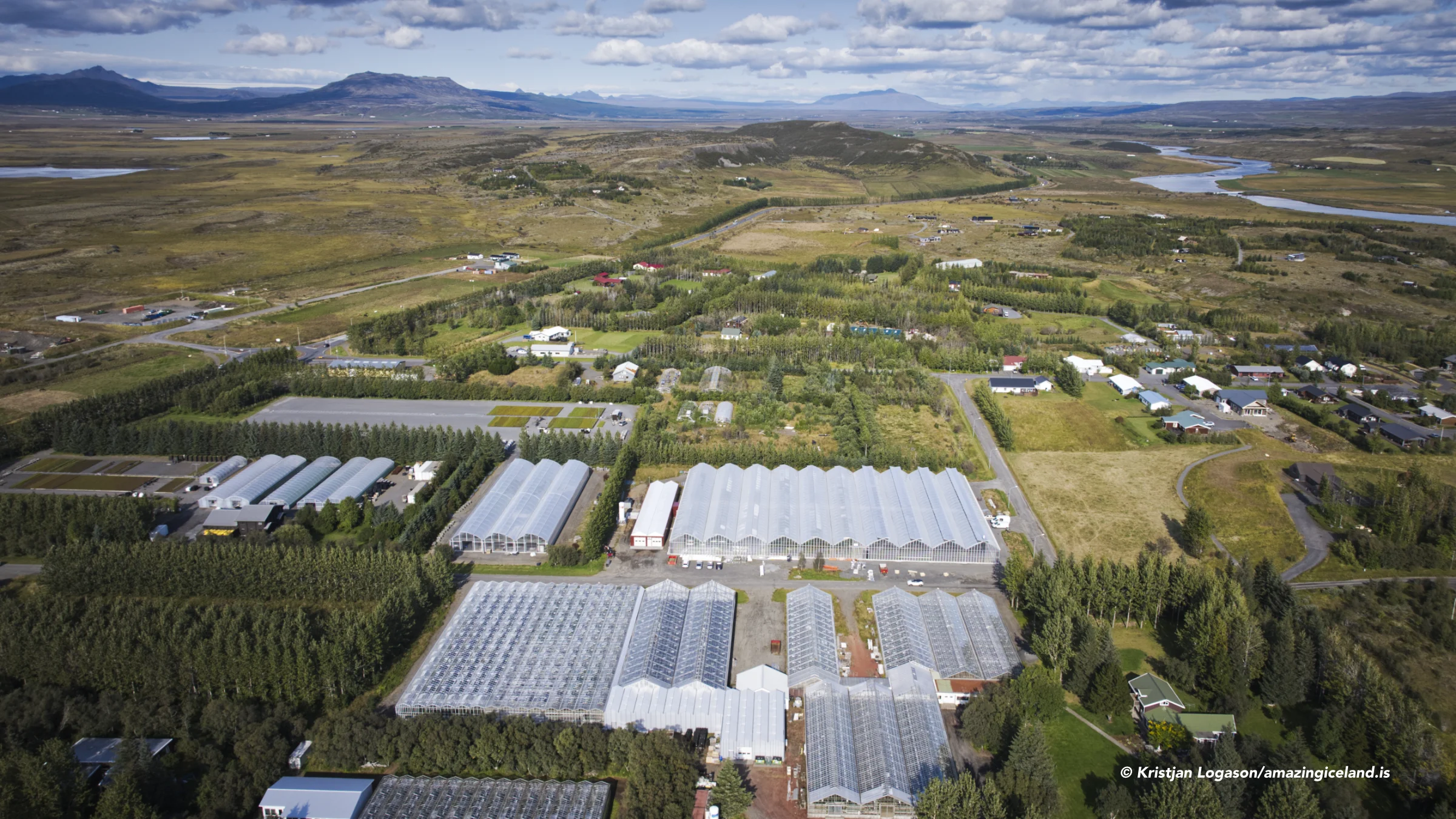
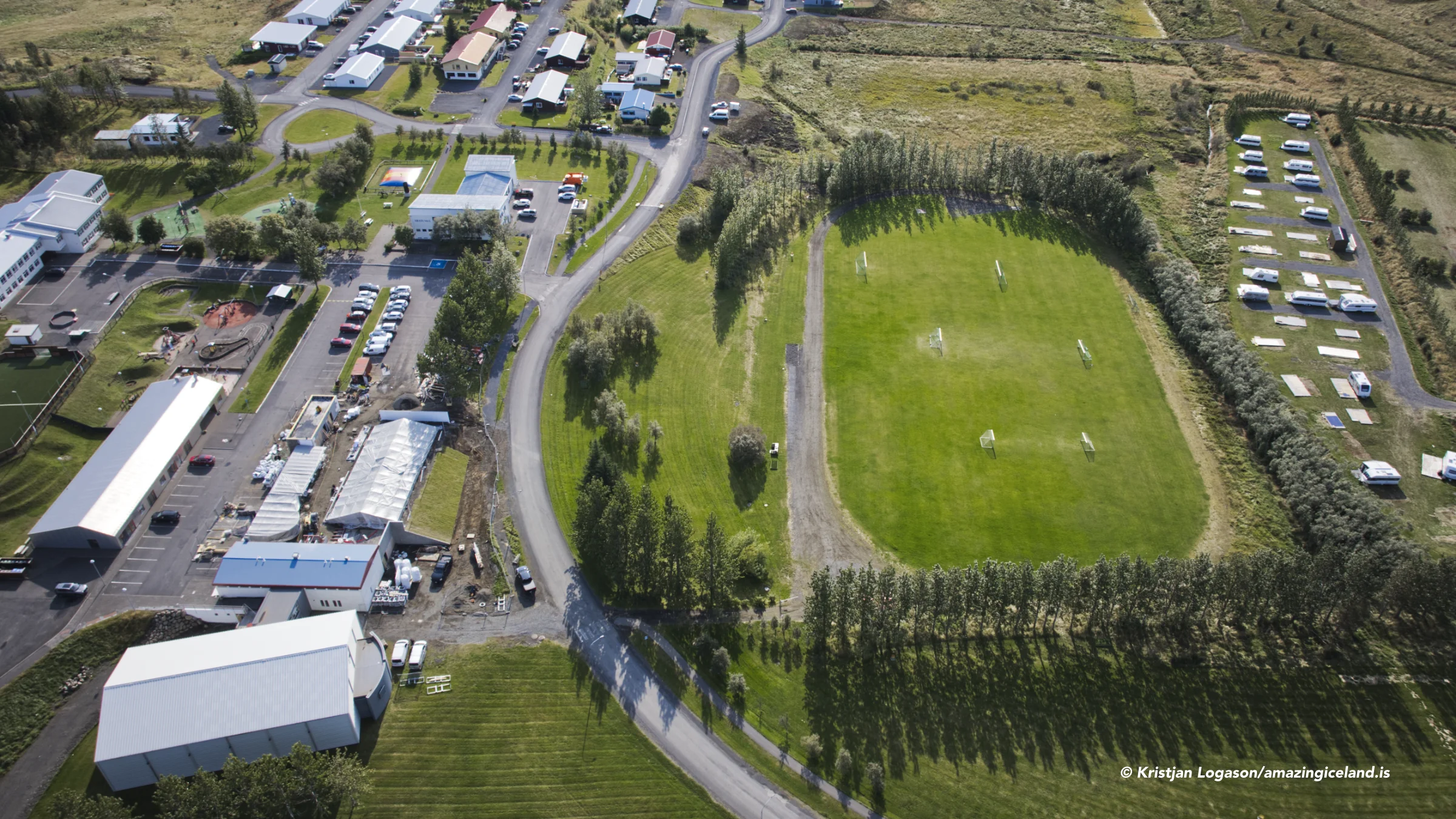
This development remains visible in the structure of the village. Many properties combine a residence with greenhouses or other horticultural buildings on the same plot. Homes are generally low, while greenhouse roofs and walls form larger geometric shapes between them. Mature trees and dense vegetation soften the industrial appearance and distinguish Reykholt from the more open farmland surrounding it.
The historical importance of Reykholtshver does not make it a visitor attraction in its own right. There is no prominent geothermal feature that travellers can stop to inspect. Its importance lies instead in explaining why the settlement exists and how an ordinary local resource became the basis of a specialised community.
A village shaped by geothermal horticulture
Geothermal water is the working foundation of Reykholt. It heats homes and community facilities, but its most visible use is in the greenhouses spread throughout the settlement. These structures allow growers to control temperature, moisture and light in a climate where most warm-season crops could not otherwise be produced throughout the year.
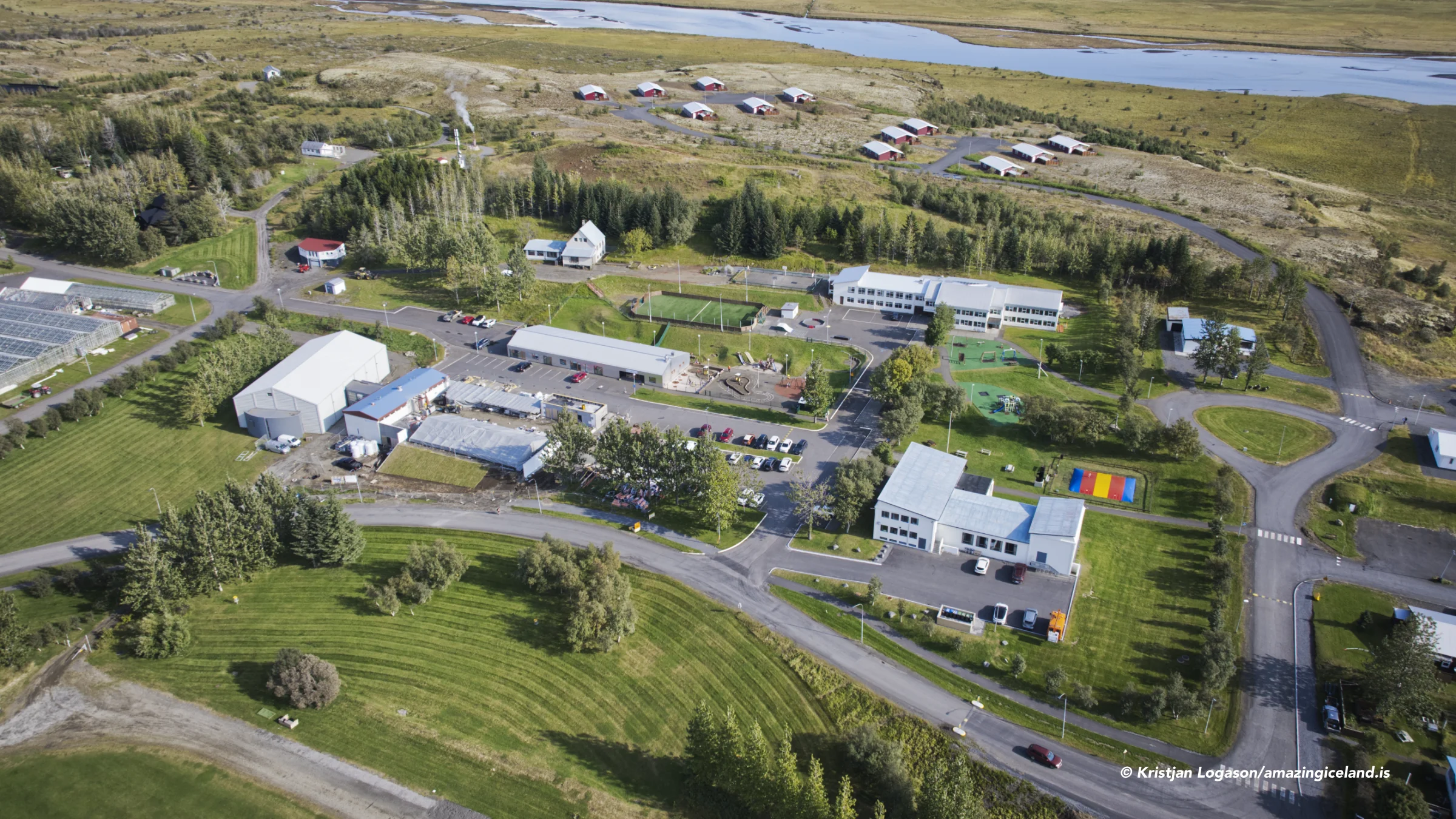
The horticultural landscape differs from a single large industrial area. Greenhouses, homes, gardens, shelterbelts and service buildings are mixed together. The result is a settlement where food production forms part of the ordinary residential environment rather than being separated from it.
Vegetation is one of the clearest expressions of the same geothermal and horticultural culture. Trees and gardens have matured around the village, creating an unusually green environment within the open countryside of Biskupstungur. This growth was planted and cultivated rather than naturally produced by geothermal heat alone, but the horticultural knowledge concentrated in Reykholt helped shape it.
The village is now regarded as Iceland’s leading geothermal horticultural area. Its importance does not depend on one greenhouse or one business. It comes from the concentration of growers, knowledge, infrastructure and geothermal resources built up across nearly a century.

Friðheimar and the public face of Reykholt
Friðheimar has become the best-known horticultural operation in Reykholt and one of the most recognisable visitor experiences in the Golden Circle region. The farm was established in 1946 and was taken over by Knútur Rafn Ármann and Helena Hermundardóttir in 1995. They developed its tomato production, Icelandic horse breeding and visitor facilities together.
Tomatoes are cultivated throughout the year in geothermally heated greenhouses with supplementary lighting. Temperature, humidity, irrigation and carbon dioxide can be regulated, while biological pest control reduces the need for conventional pesticides. The operation demonstrates the level of technology required to turn geothermal heat into dependable commercial food production.
The restaurant among the tomato plants has made the production process part of the visitor experience. Rather than seeing packaged produce removed from its place of origin, visitors eat inside the environment where the principal ingredient is grown. Greenhouse visits and horse presentations add other dimensions, linking horticulture with the Icelandic horse and the longer agricultural history of the region.
Friðheimar should eventually be treated as a destination in its own right, but it remains central to understanding Reykholt. It has made the village visible to an international audience and shown how geothermal horticulture can support tourism as well as food production. Current arrangements should always be checked directly, particularly because some experiences require advance booking.
One hundred years of settlement
Reykholt marked the centenary of its settlement in 2026. Over that period it developed from a small geothermal and agricultural community into a growing village with horticultural businesses, schools, community facilities, restaurants and tourism.
The rate of change has accelerated in recent years. Reykholt had 270 residents at the beginning of 2018 and 368 at the beginning of 2024. By the centenary celebrations in 2026, the population was described as approaching 500. These figures show that older portrayals of Reykholt as a nearly static village are no longer accurate.
Population growth has also made Reykholt increasingly multicultural. Horticulture, tourism and related services require a substantial workforce, bringing people from different countries into a community that remains small enough for these demographic changes to be clearly felt.
The relationship between work and settlement remains important. Reykholt has not grown simply because it occupies a convenient position on the Golden Circle. Its employment base, geothermal resources and horticultural knowledge have allowed it to function as a living community rather than only as a roadside service point.
Difficult ground beneath a growing village
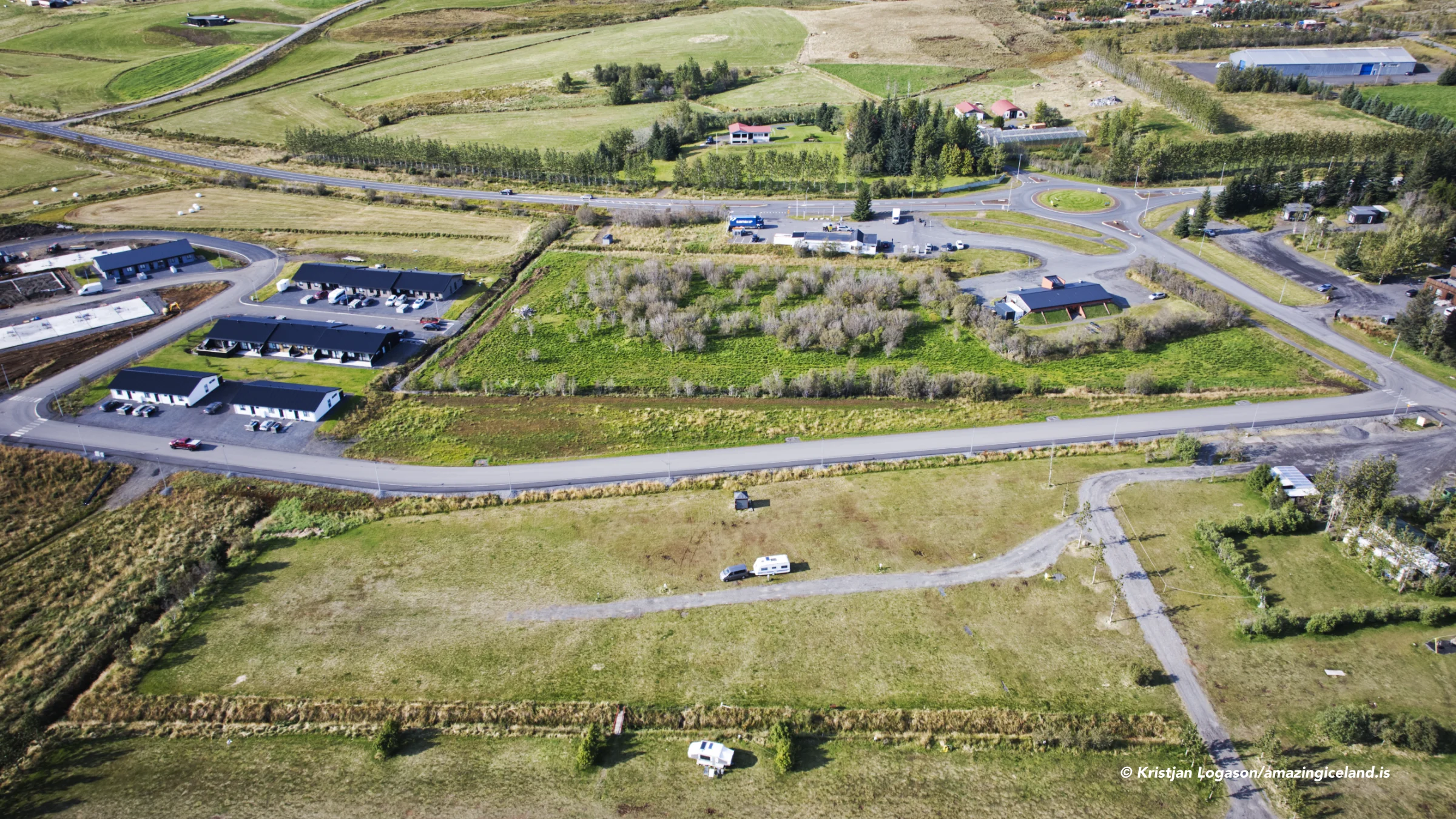
The geothermal and wet ground that supported Reykholt’s development has also complicated its expansion. A planned residential area at Hveratunga contained more than sixty proposed building plots, but investigations found peat and soft material extending five metres or more before reaching solid ground.
Constructing conventional foundations under those conditions would have been difficult and expensive. The municipality consequently abandoned the residential plans and redesignated the area for recreational use.
The decision provides a useful physical counterpoint to Reykholt’s horticultural success. Geothermal water and moisture helped create the conditions for greenhouse cultivation, but the same landscape cannot automatically support every form of construction. Growth must account for the actual structure of the ground beneath the village, not simply the availability of land beside it.
A one-hour stop
Reykholt is best approached as a short stop rather than as a full sightseeing destination or travel base. Driving through the village reveals the mixture of homes, greenhouse buildings, gardens and mature vegetation that defines its character. There is no need to search for Reykholtshver because the historic spring is not presented as a recognisable attraction.
Most visitors stop for Friðheimar or restaurant Mika. These are specific destinations within the community rather than parts of a formal village walk. A meal or organised greenhouse experience may require more time, but approximately one hour is sufficient for a general look at Reykholt itself.
The village is also conveniently positioned among the destinations of the upper Árnessýsla region. Geysir, Gullfoss, Skálholt and Brúarhlöð are all within the wider area. Reykholt nevertheless works better as one part of that journey than as the principal base from which to explore it.
Interesting facts:
- Reykholt í Biskupstungum is unrelated to Reykholt in Borgarfjörður, the home of Snorri Sturluson.
- Reykholtshver is registered as a historic place for washing clothes.
- The first greenhouse at Reykholt was built in 1932.
- The first established horticultural station followed in 1938.
- Reykholt marked one hundred years of settlement in 2026.
- The village is one of Iceland’s principal centres of geothermal horticulture.
- Friðheimar combines year-round tomato cultivation with food service and Icelandic horses.
- Reykholt has grown rapidly and developed into an increasingly multicultural community.
- More than sixty proposed residential plots at Hveratunga were abandoned because of deep peat and soft ground.
Image Gallery
Photography tips:
- Greenhouses and vegetation are the strongest subjects in Reykholt. Compose them together to show how horticulture has shaped the whole settlement.
- No particular time of day is essential. Work with the available light rather than treating Reykholt as a sunrise or sunset location.
- Overcast light can reduce harsh contrast between reflective greenhouse glass and darker vegetation.
- Side-light makes the repeated frames, rooflines and transparent surfaces of the greenhouses more distinct.
- A normal or moderate telephoto lens can organise the mixture of greenhouses, trees and houses without including too much unrelated roadside space.
- Use longer focal lengths to compress several greenhouse structures and areas of vegetation into a denser horticultural landscape.
- Close details can include greenhouse frames, condensation, leaves and the contrast between cultivated growth and manufactured structures where public access permits.
- Avoid entering greenhouse properties or photographing closely into working areas without permission.
Destinations nearby