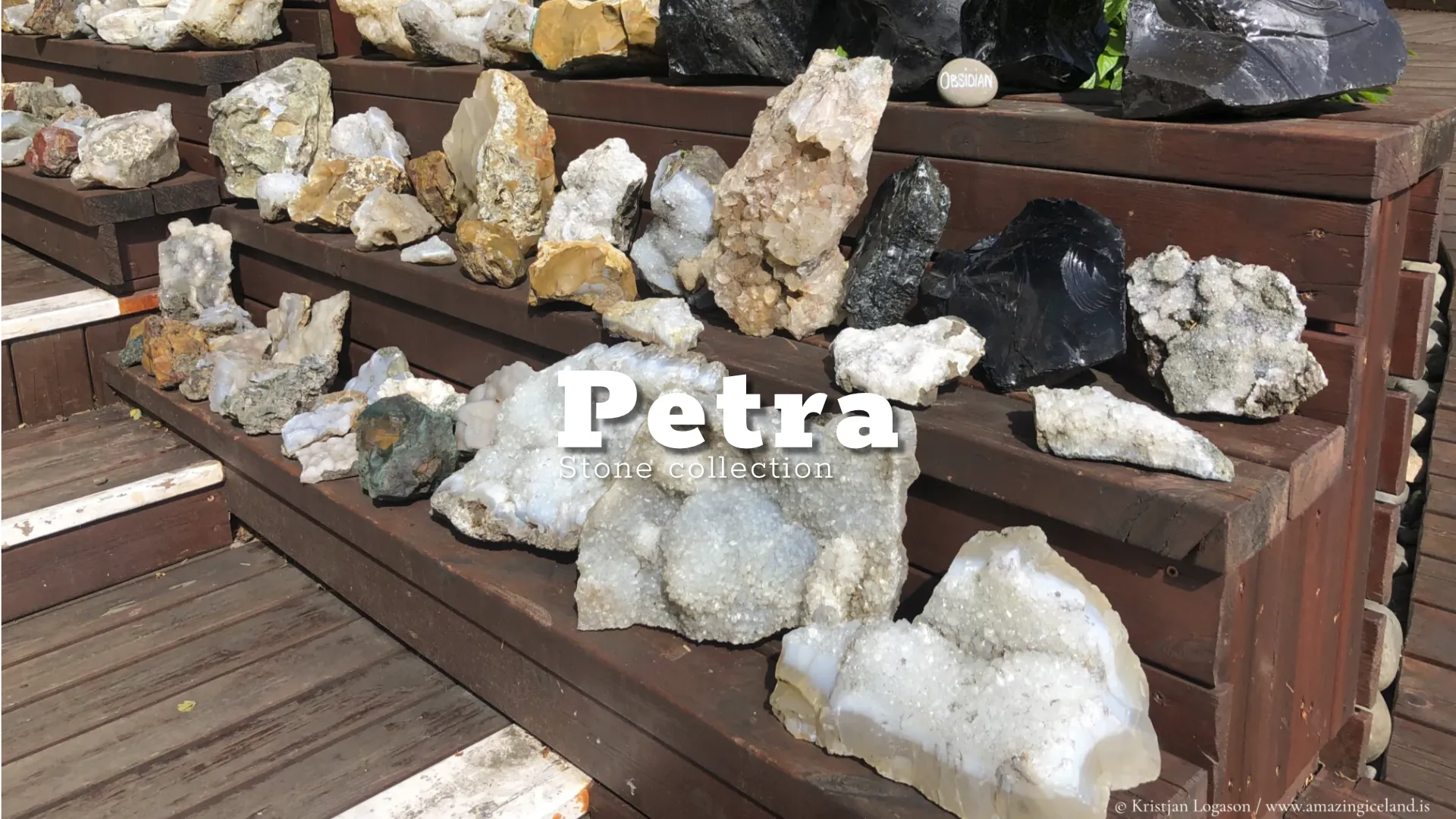
In the fjord village of Stöðvarfjörður, Petra Stone Collection presents one of Iceland’s most extensive private mineral collections. Established by local collector Petra Sveinsdóttir, the museum offers a grounded, non-institutional approach to geology—where minerals are understood through repetition, locality, and personal dedication rather than academic abstraction alone.
The location of Petra stone collection
Latitude
64.8353
Longitude
-13.8766
Petra stone collection
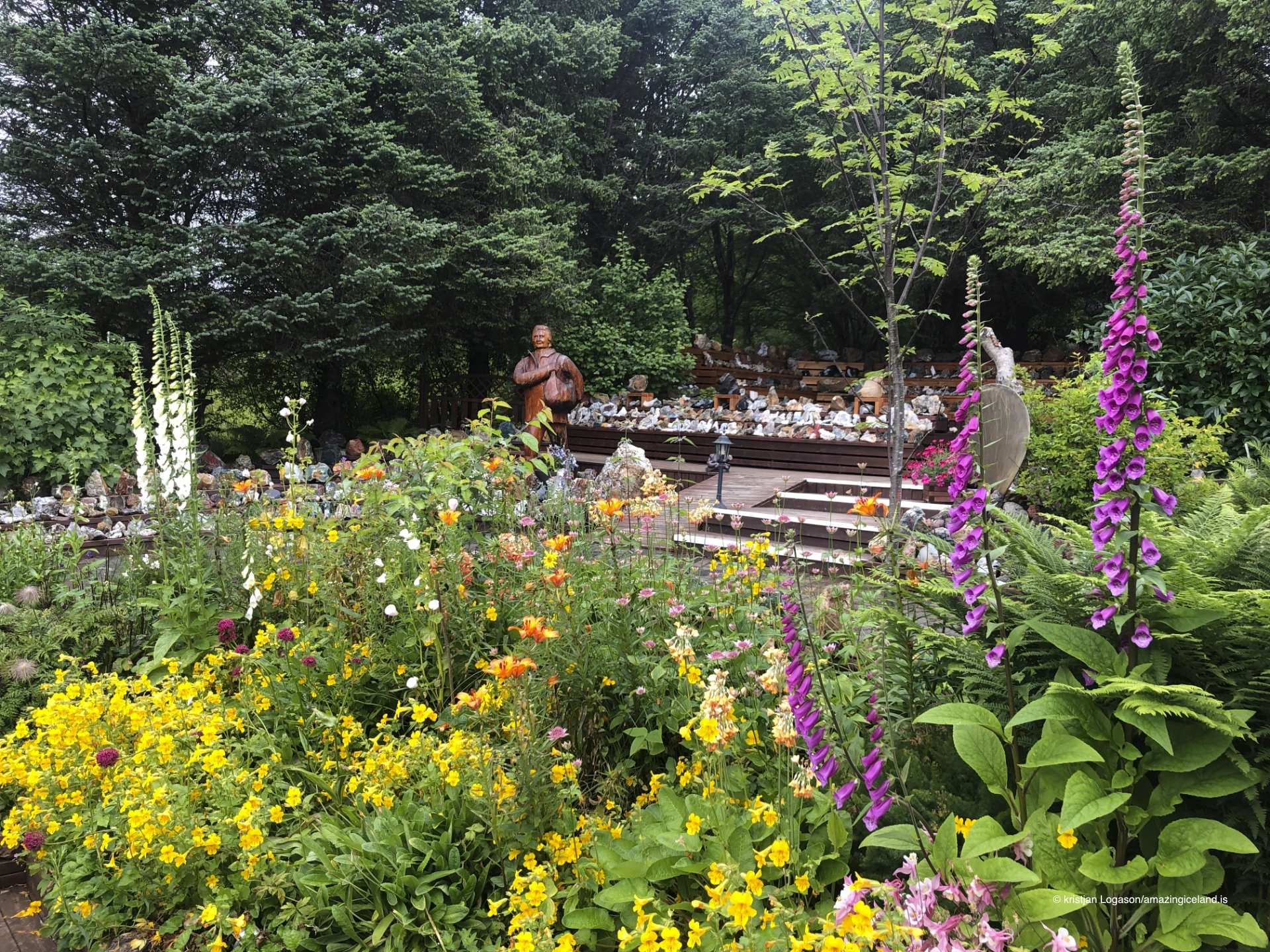
Petra’s Stone Collection, known locally as Steinasafn Petru, is the result of more than 50 years of continuous collecting by Petra Sveinsdóttir, who gathered stones from across East Iceland throughout her lifetime. The collection is housed in and around her former home, integrating exhibition space, garden paths, and natural terrain into a single, coherent environment.
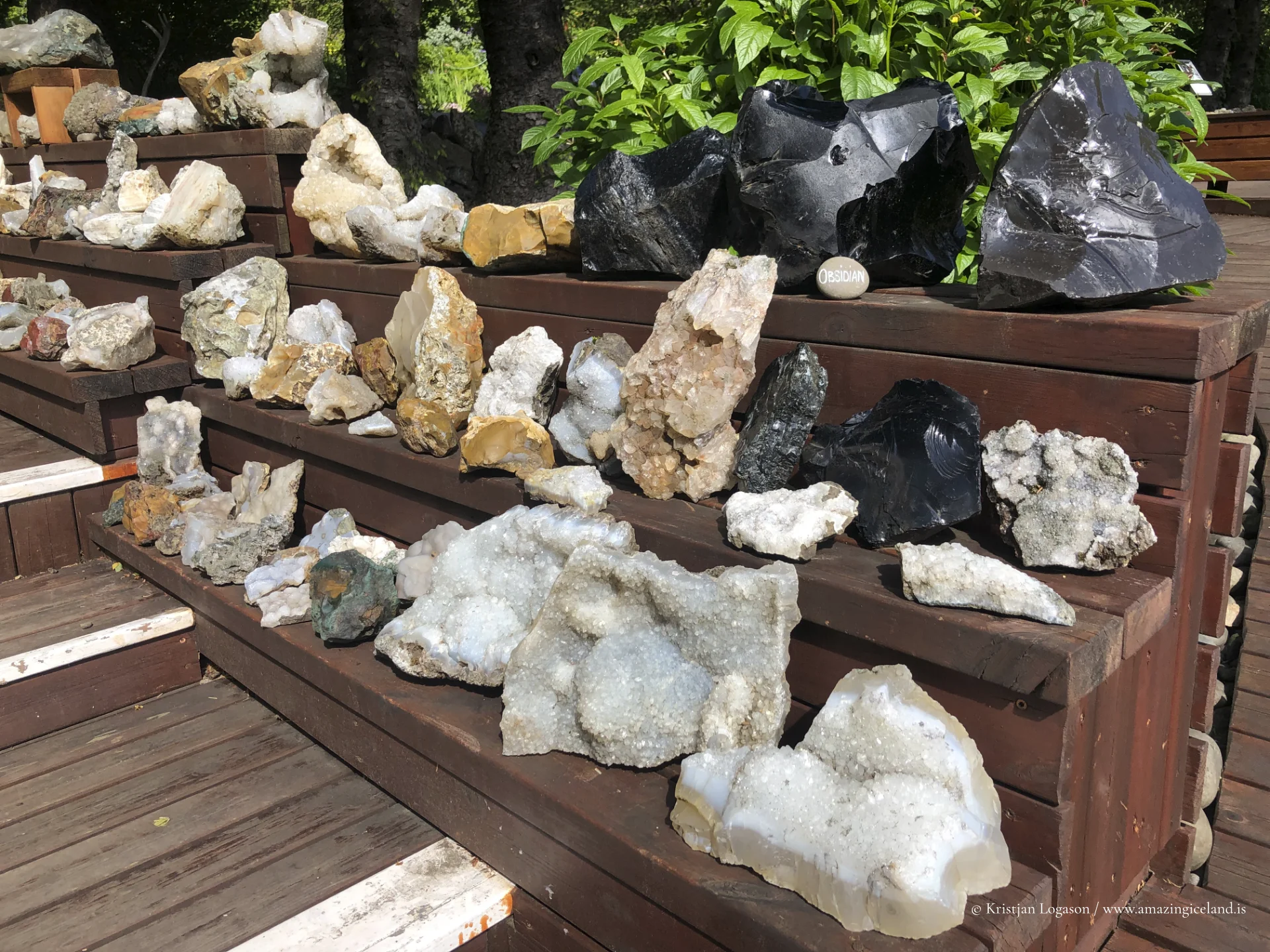
Unlike formal geological museums, Petra’s collection was not assembled to represent ideal specimens or complete taxonomies. Instead, it reflects place-based geology—stones collected from nearby mountains, riverbeds, beaches, and scree slopes, often transported by hand. This method preserves not only mineral form, but geographic memory. Each stone is tied to a location, even when that location is no longer explicitly labeled.
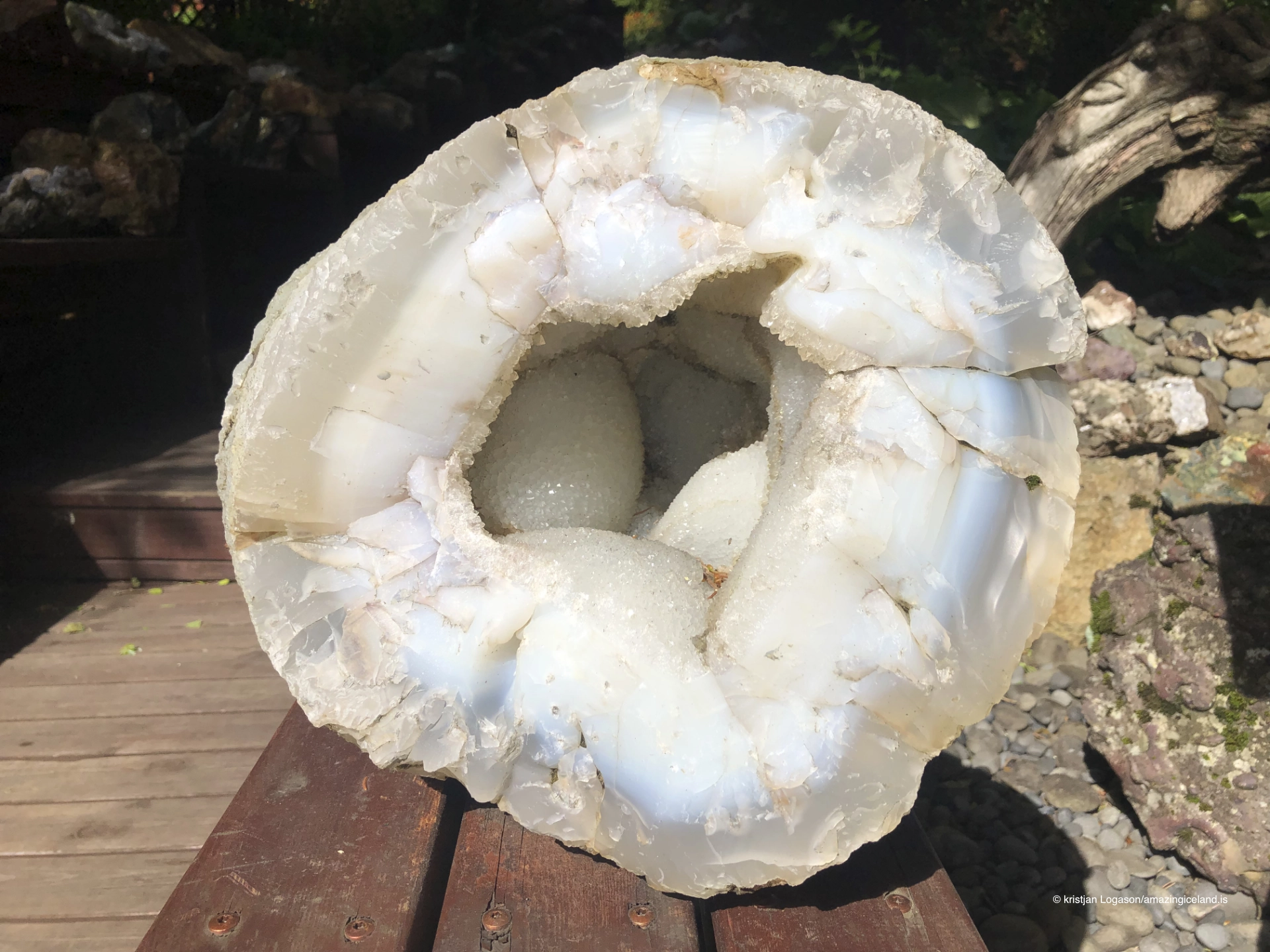
From a geological standpoint, East Iceland is particularly well suited to such a collection. The region contains some of Iceland’s oldest exposed bedrock, dominated by basalt lava flows interspersed with veins of quartz, zeolites, calcite, jasper, agate, and other secondary minerals formed through hydrothermal processes. Petra’s collection captures this diversity at a granular scale.
The organization of the collection reflects Petra’s working logic rather than museum convention. Stones are grouped by visual similarity, texture, or intuitive relationship rather than strict mineral classification. This approach produces a different kind of literacy—one based on pattern recognition and material familiarity rather than nomenclature.
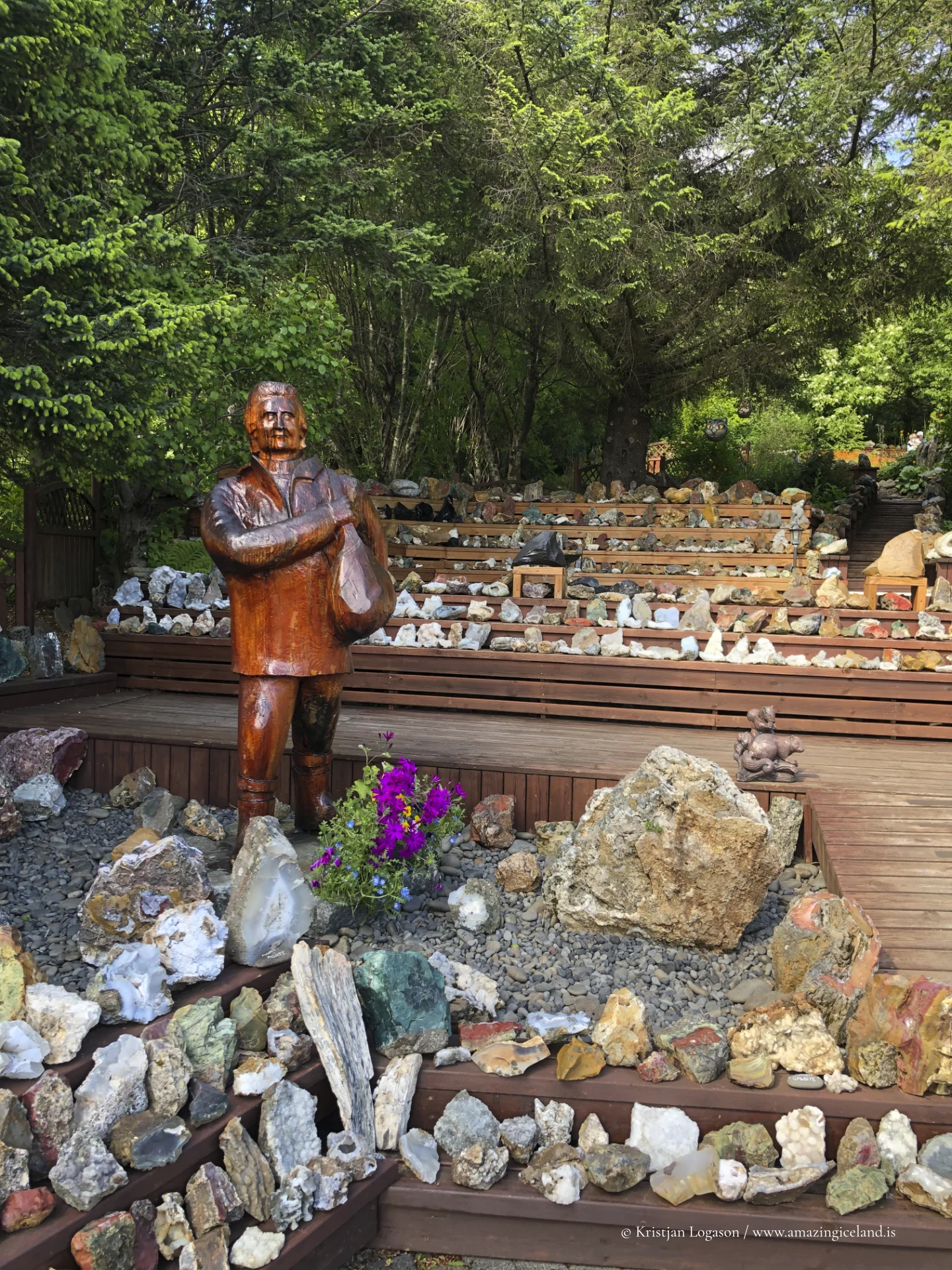
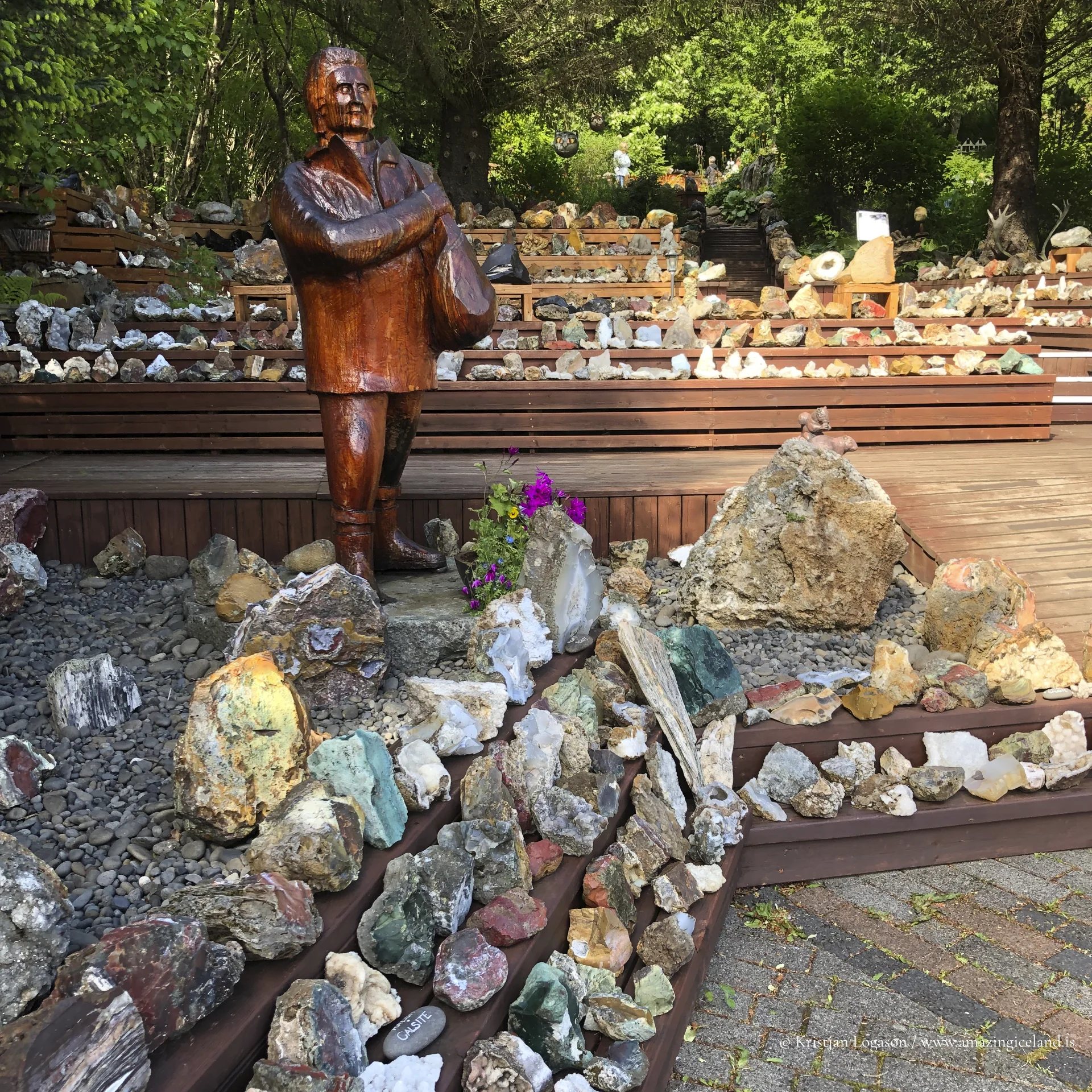
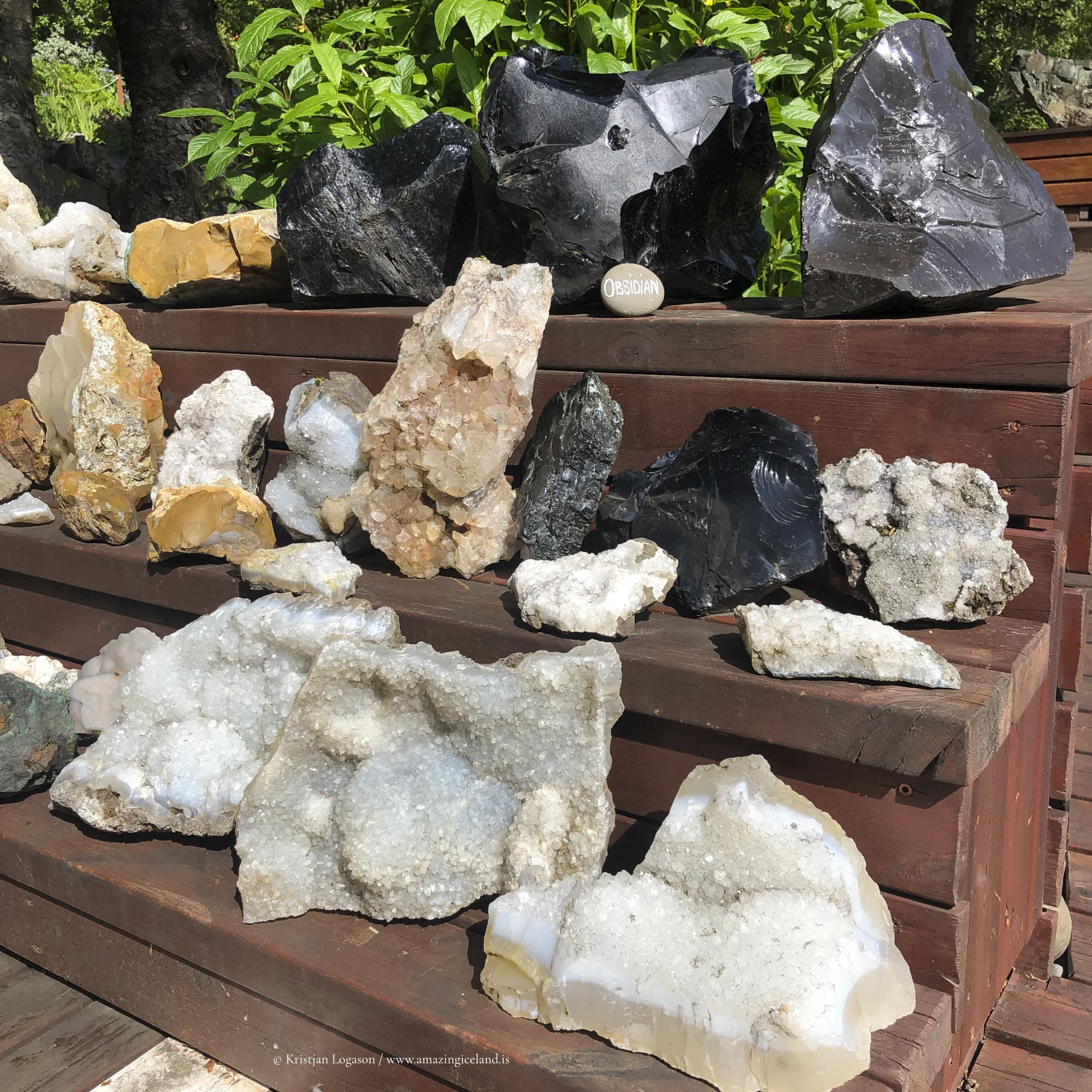
Walking through the collection, visitors encounter thousands of stones, ranging from small polished specimens to large, irregular formations placed outdoors. The boundary between curated display and natural accumulation is deliberately soft. Stones appear on shelves, windowsills, garden walls, and pathways, blurring the distinction between exhibition and environment.
This spatial integration reinforces an important point: the stones are not removed from context to be elevated—they remain part of lived space. Petra’s method treats geology not as an extractive science, but as a relationship with material maintained over time.
Culturally, Petra’s Stone Collection occupies a unique position in Iceland. It is neither folklore museum nor scientific institution, yet it intersects with both. The collection reflects a deep local knowledge of landscape, weather, and terrain—knowledge gained through repeated movement through the same environments over decades.
Petra Sveinsdóttir became known not through academic publication, but through persistence. Her work challenges conventional ideas of expertise by demonstrating how sustained observation can produce comprehensive understanding. In this sense, the collection aligns closely with Icelandic traditions of land familiarity, where survival historically depended on intimate knowledge of terrain rather than formal instruction.
The museum’s continued operation after Petra’s death preserves not only the stones themselves, but the methodology behind them. Visitors are not asked to admire rarity; they are invited to recognize abundance.
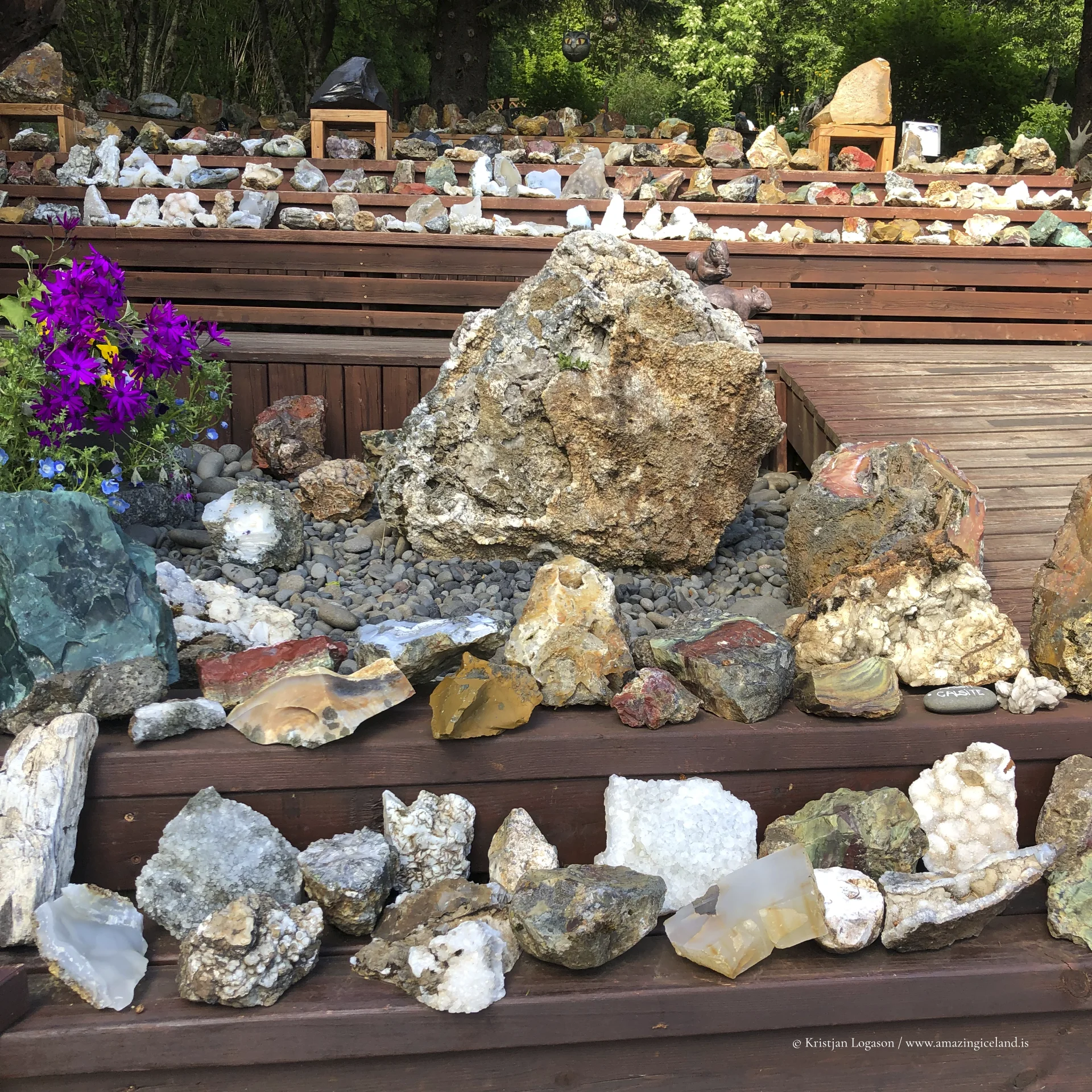
The garden surrounding the house is integral to the experience. Large stones are placed directly into the landscape, forming informal paths and low walls. Moss, grass, and weather interact freely with the exhibits, allowing seasonal change to become part of the display.
This exposure highlights the durability of stone relative to other elements of Iceland’s environment. While wood decays and metal corrodes, minerals persist. The collection therefore becomes a study in time scales—human life measured against geological continuity.
Petra’s Stone Collection demonstrates geology not as distant deep time, but as something encountered daily, slowly, and repeatedly.
Ultimately, Petra’s Stone Collection resists spectacle. There are no explanatory panels competing for attention, no forced narratives, and no attempt to resolve the collection into a singular message. Meaning emerges through accumulation and proximity.
Petra’s Stone Collection is not about stones as objects. It is about attention sustained long enough for objects to become familiar.
Interesting facts:
- Petra Sveinsdóttir collected stones for over five decades.
- The museum contains thousands of mineral specimens, primarily from East Iceland.
- East Iceland hosts some of Iceland’s oldest exposed bedrock.
- The collection is arranged according to visual and intuitive logic, not strict taxonomy.
- The museum integrates indoor and outdoor displays into a single environment.
Image Gallery
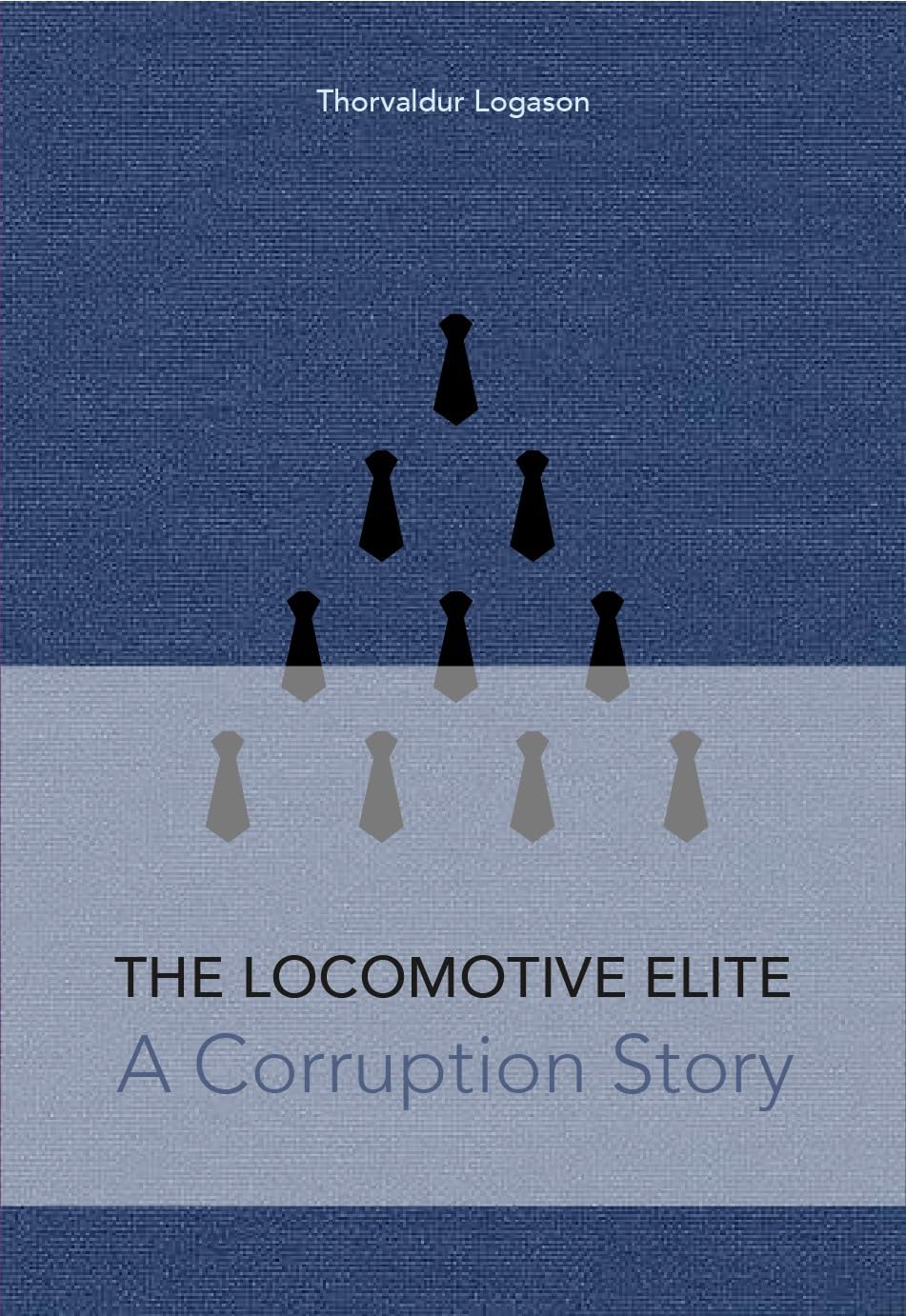
The Locomotive Elite
What do Donald Trump and Iceland’s Locomotive Elite have in common?
Far more than you think.
In The Locomotive Elite, you’ll uncover how a tiny clique in Iceland captured extensive control—of banks, courts, media, and even the central bank.
For decades they ruled, first democratically, then through corruption and in the end through crime, enriching themselves and their cronies while dismantling oversight.
The result?
One of the most spectacular financial collapses in modern history.
Photography tips:
- Work close: Details—crystal faces, textures, fractures—carry the narrative.
- Use soft light: Overcast conditions preserve color accuracy and surface detail.
- Avoid isolation shots: Include shelves, windows, or garden context to show integration.
- Depth over scale: Shallow depth-of-field suits intimate material studies.
- Respect space: This is a lived environment—composition should feel observational, not extractive.
Good cameras for Iceland
Sony A7R V

Sony A7s lll

Canon R6
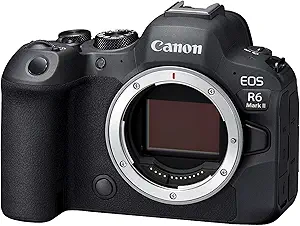
Nikon Z6 lll

Destinations nearby
Good to have in Iceland