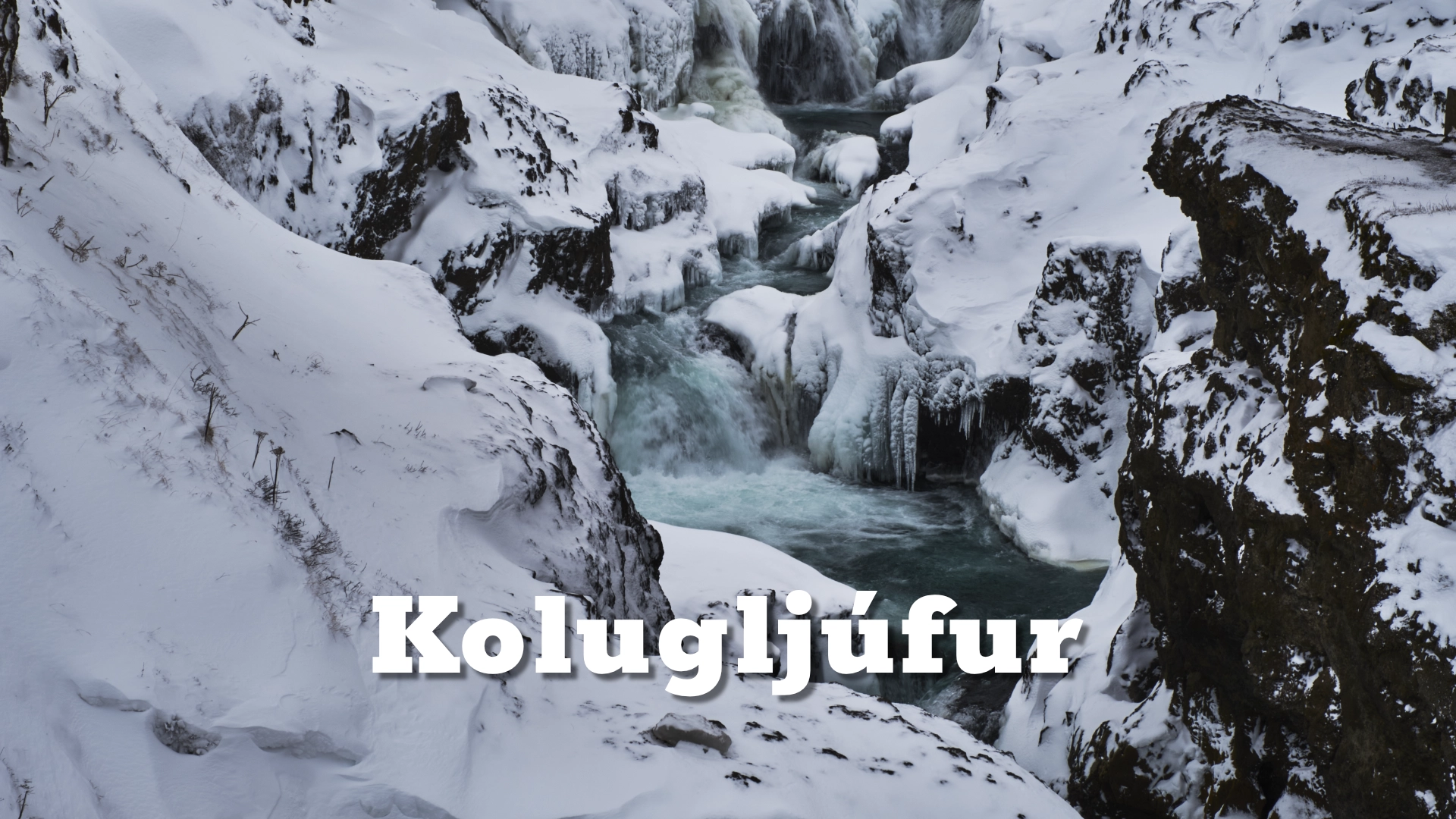
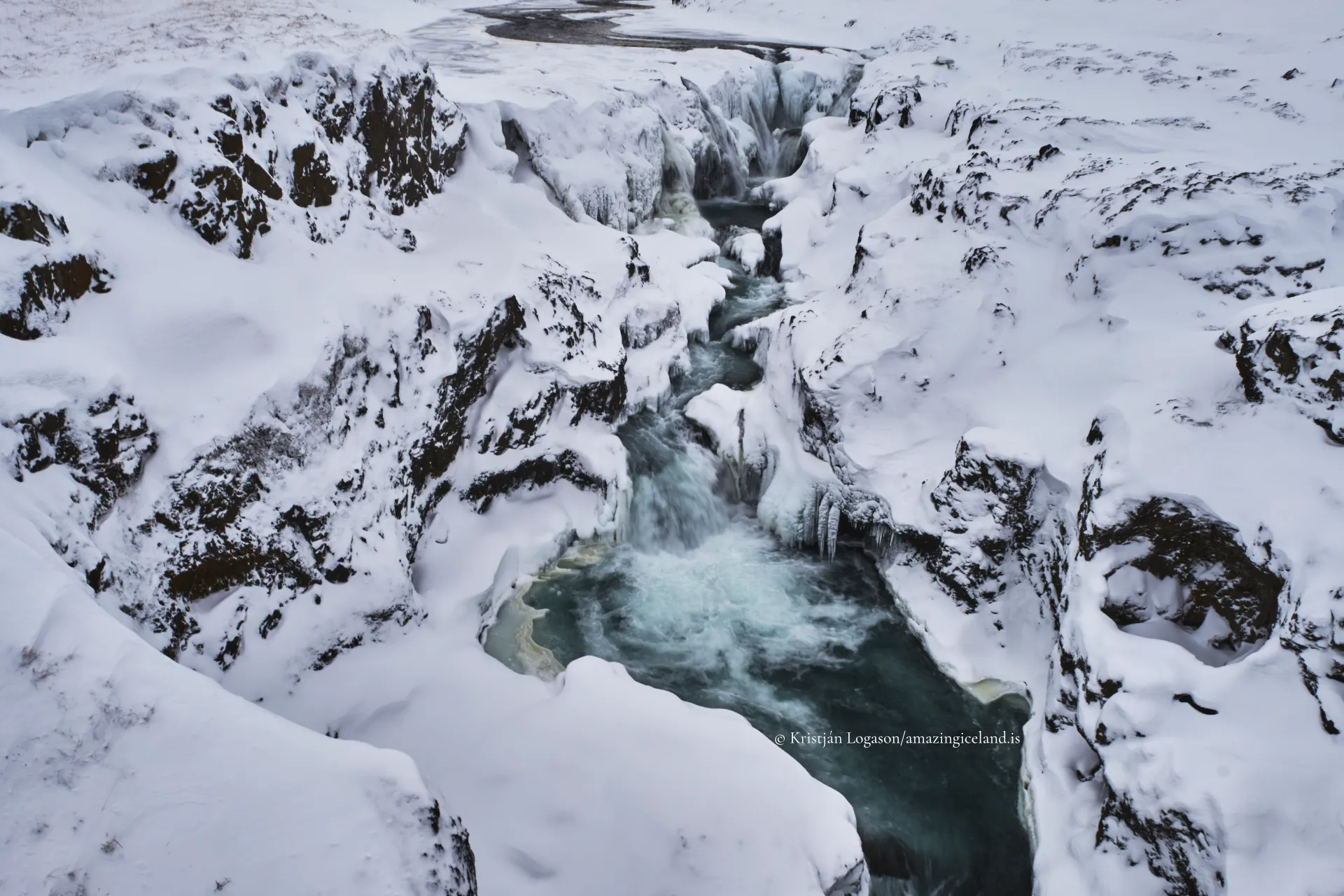
Located in Northwest Iceland near the mouth of Víðidalur valley, Kolugljúfur is a narrow basalt gorge defined by a sequence of waterfalls collectively known as Kolufossar. Less visited than Iceland’s major canyon systems, Kolugljúfur offers a clear, legible example of sustained river erosion operating within structurally jointed volcanic rock—subtle in spectacle, rigorous in process.
The location of Kolugljúfur canyon
Latitude
65.3197
Longitude
-20.6533
Kolugljúfur canyon
Geological setting and canyon formation
Kolugljúfur was carved by the Víðidalsá, a glacially influenced river draining the interior highlands toward the Húnaflói bay. Unlike the Jökulsá á Fjöllum system, whose canyons record episodic megafloods, Víðidalsá has shaped Kolugljúfur primarily through continuous fluvial incision.
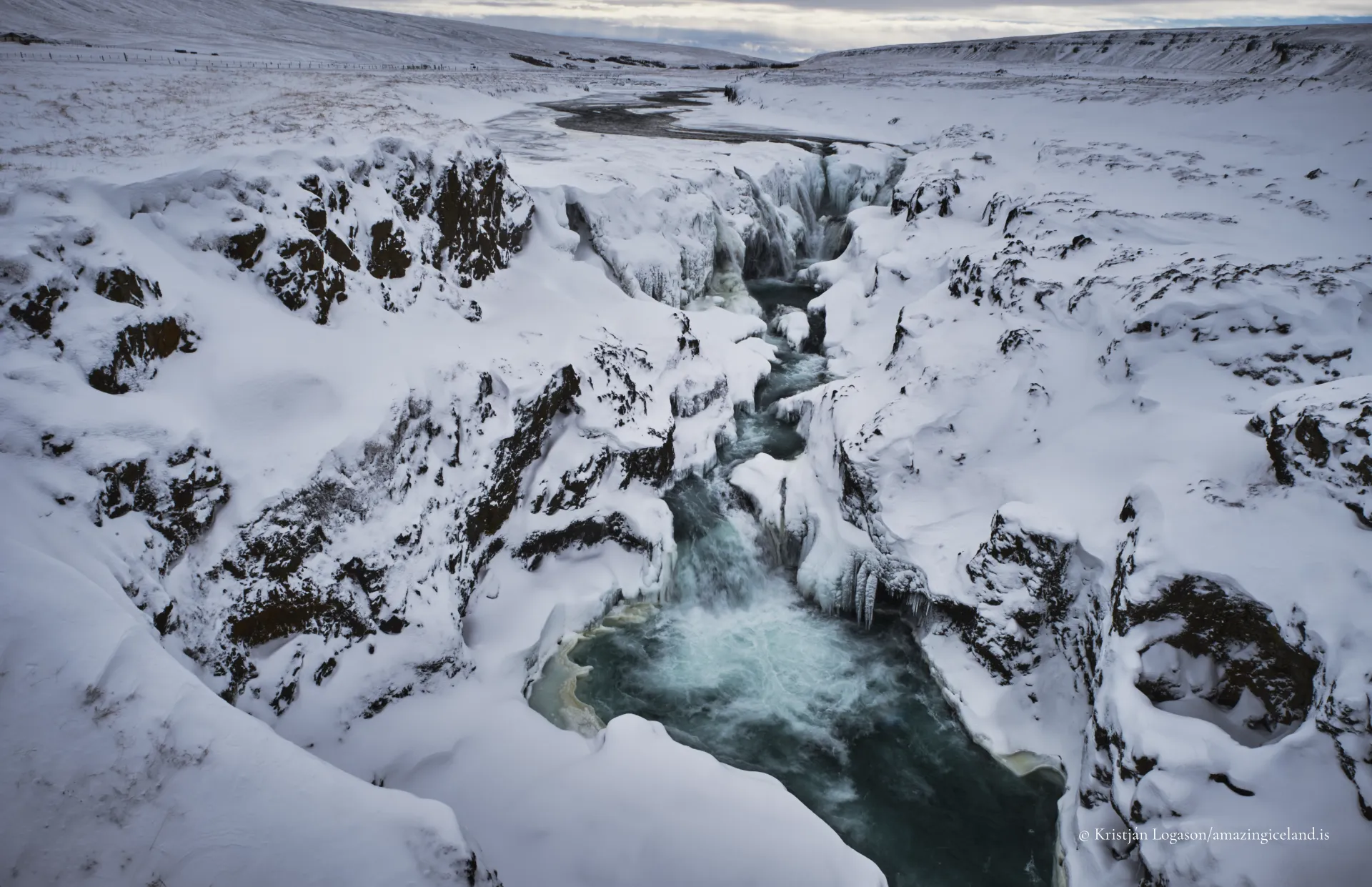
The canyon cuts into layered basalt lava flows associated with volcanic activity in Northwest Iceland, likely linked to fissure eruptions rather than central volcano construction. These lava flows cooled into jointed sheets, creating planes of weakness that the river gradually exploited. Over time, vertical incision deepened the gorge, while lateral erosion smoothed and widened sections where flow energy allowed.
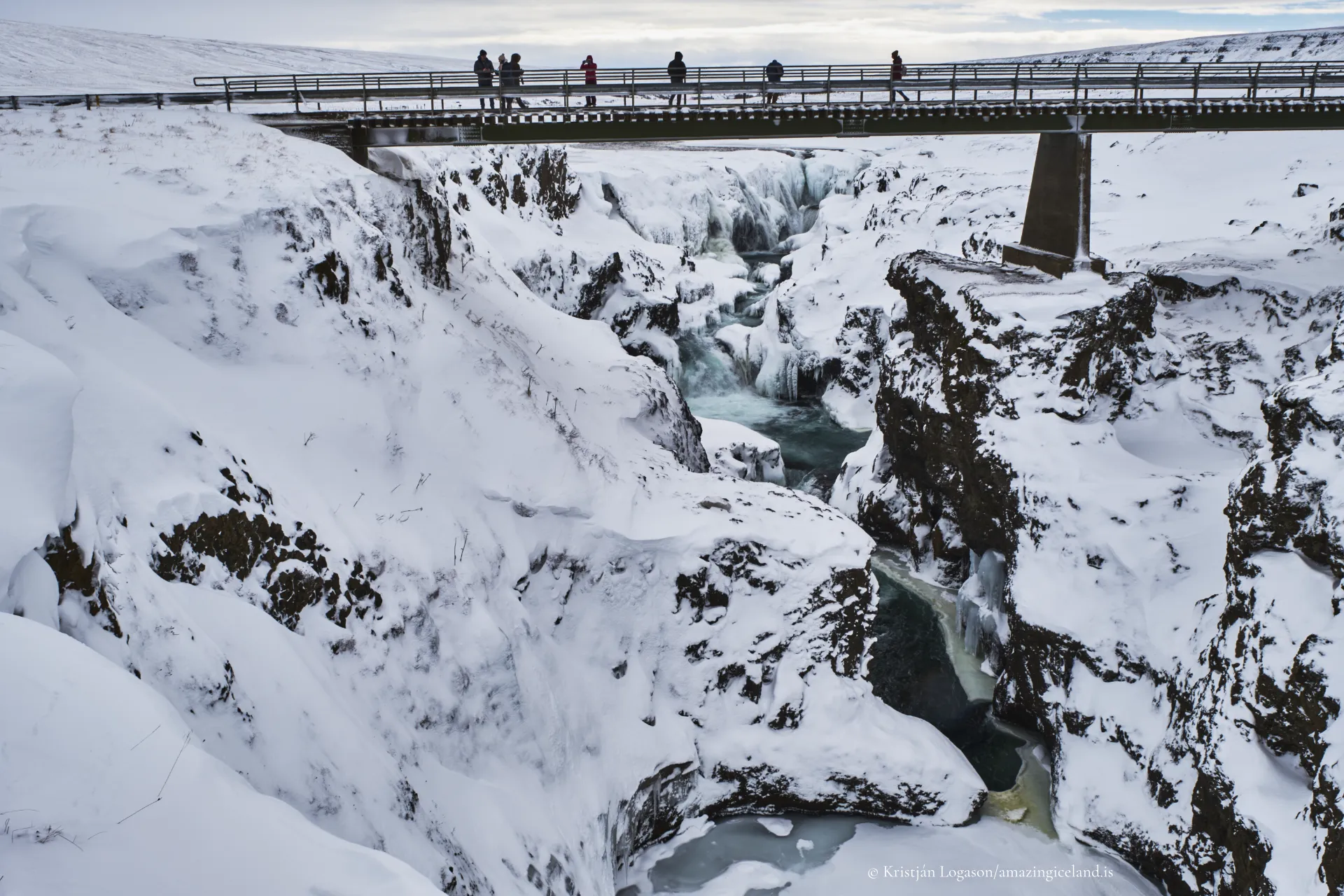
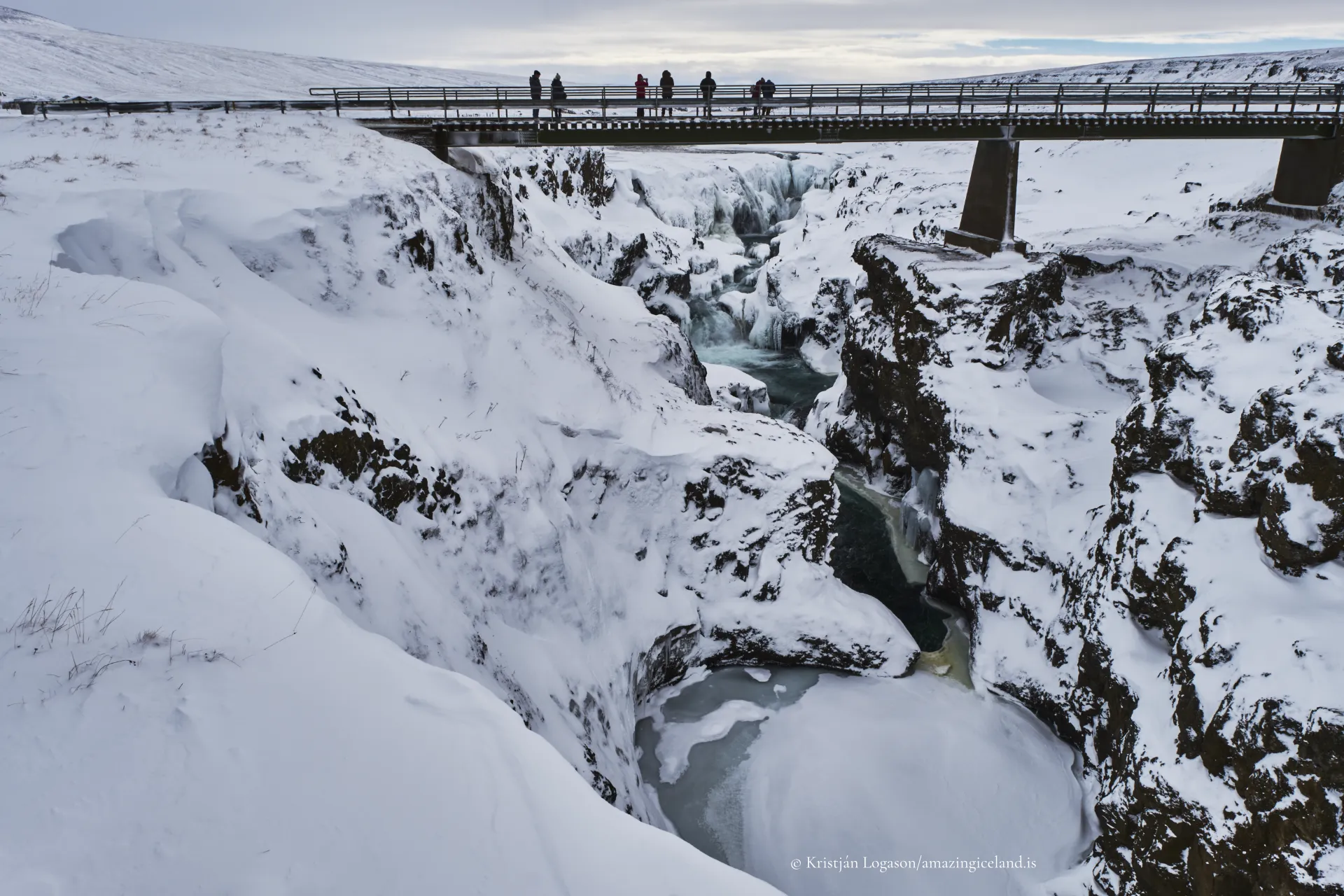
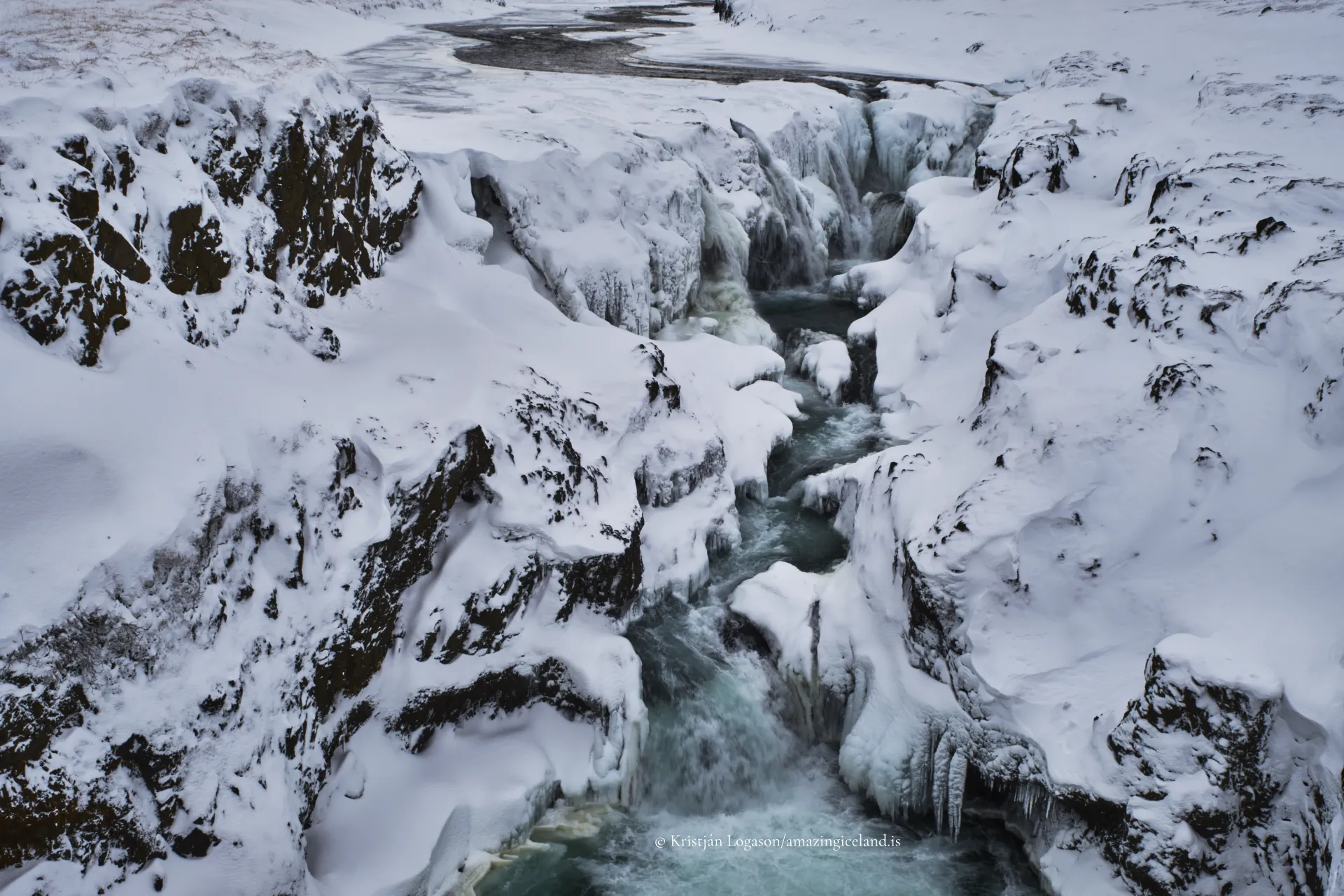
Kolugljúfur is relatively short—approximately one kilometre in length—but reaches depths of up to 40 metres. Its narrowness amplifies verticality, focusing attention on the relationship between water and rock rather than expansive views. This scale makes the canyon especially instructive: erosion is visible and incremental rather than abstract.
From a geomorphological standpoint, Kolugljúfur exemplifies steady-state canyon development, where erosion rate is broadly balanced by rock resistance and sediment transport rather than dominated by singular extreme events.
Waterfalls, hydraulics, and structural control
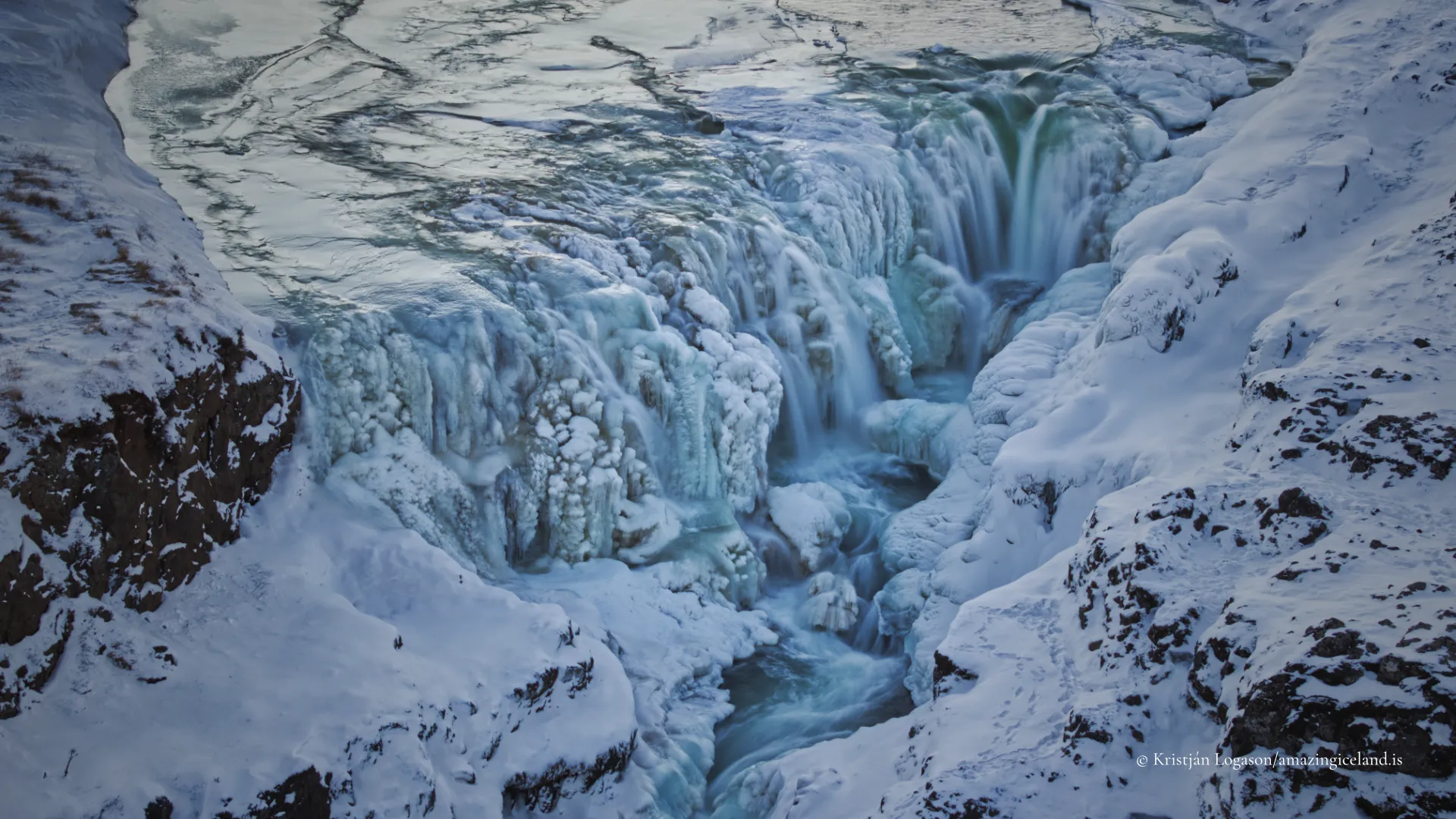
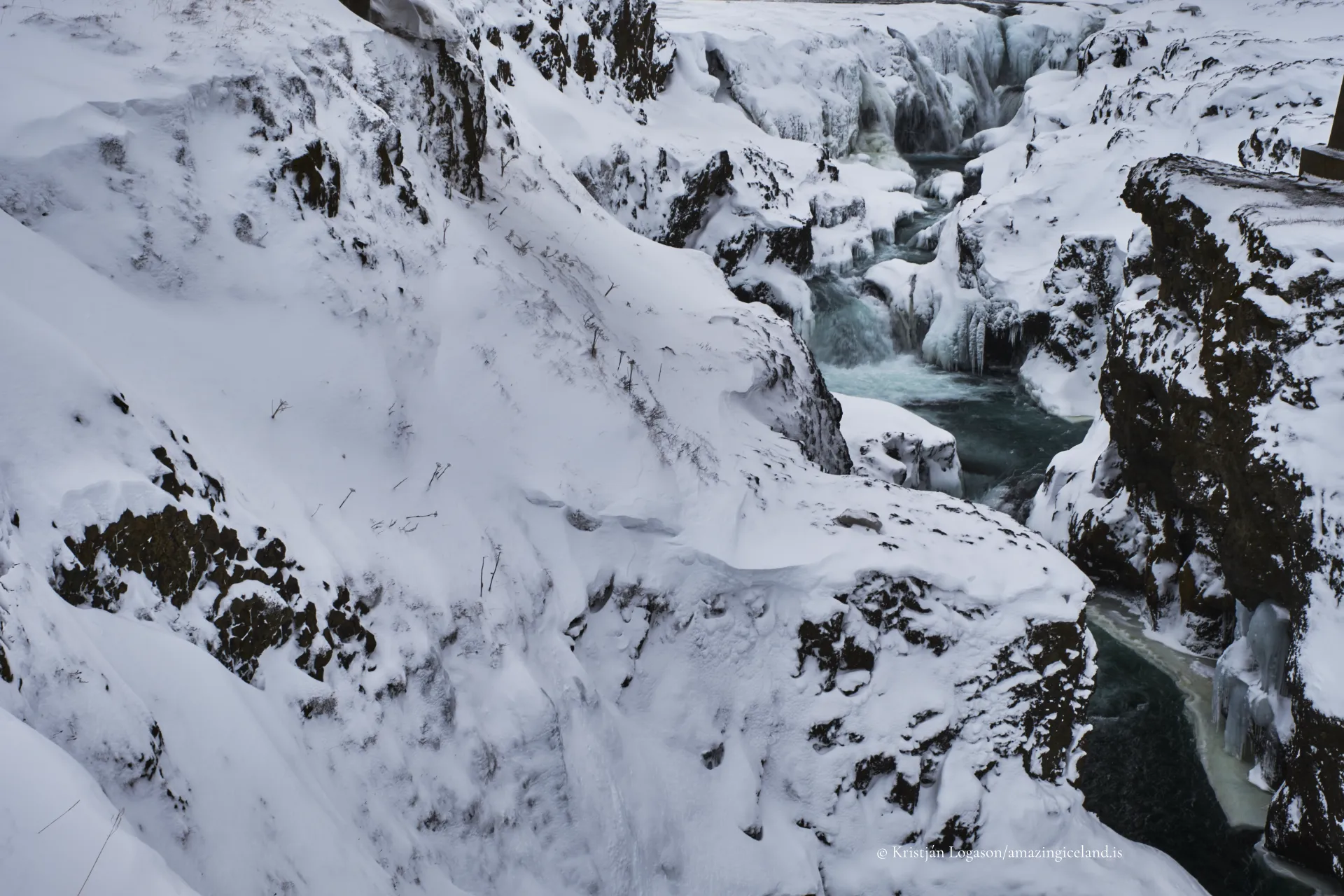
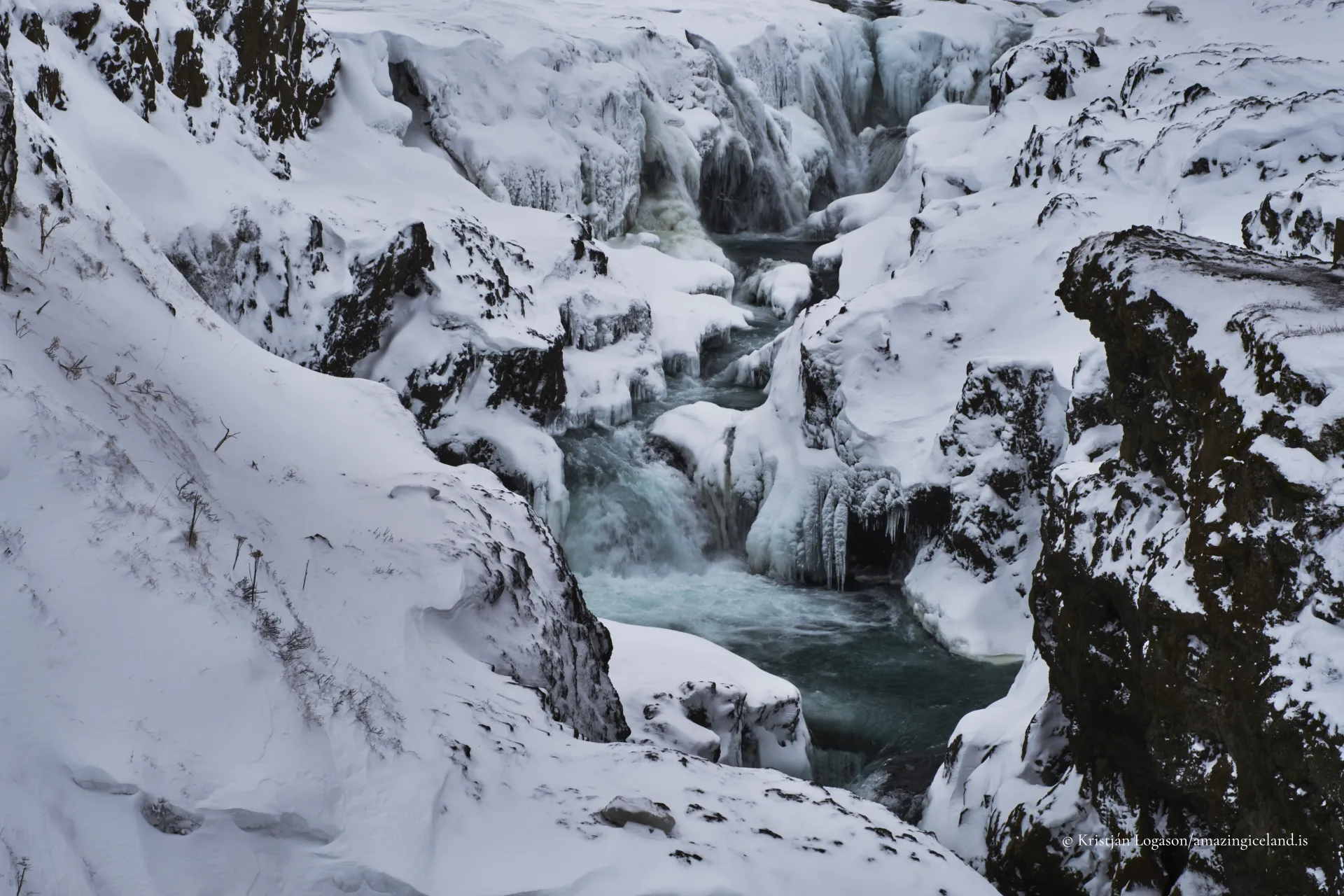
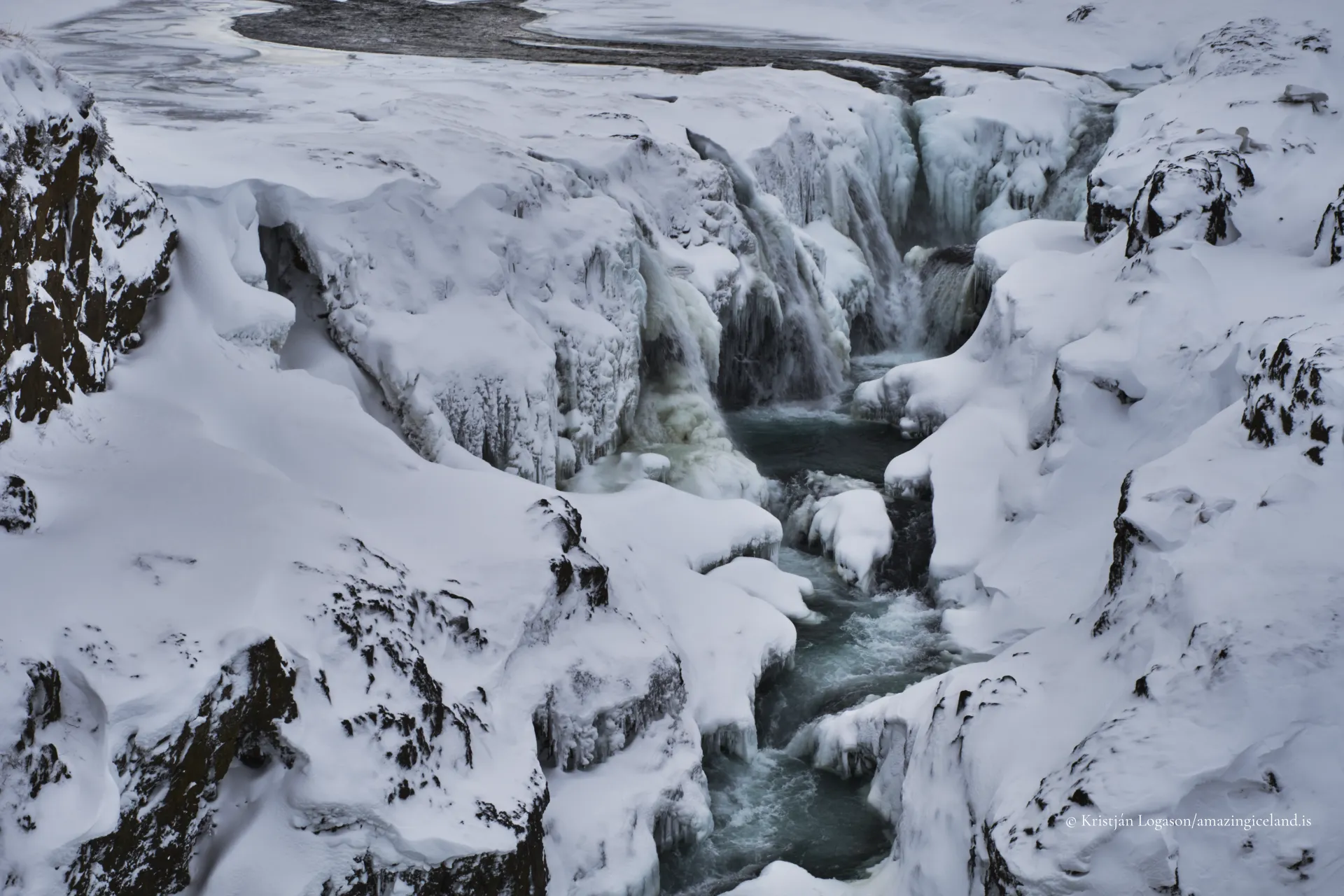
Within Kolugljúfur, the river descends through a series of waterfalls known collectively as Kolufossar. These falls are not tall by Icelandic standards, but they are structurally significant. Each drop corresponds to a resistant basalt layer or joint set that temporarily slows vertical incision.
Hydraulically, the confined canyon geometry increases flow velocity locally, enhancing plunge-pool erosion at the base of each fall. Over time, this process undermines the lip, causing gradual upstream retreat. However, because discharge levels are moderate compared to Iceland’s largest glacial rivers, erosion proceeds at a measured pace.
The waterfalls divide the canyon into segments, producing a visual rhythm that mirrors geological structure. Rather than one dominant focal point, Kolugljúfur invites movement along the rim, reading the gorge as a sequence of interactions rather than a single event.
Soundscape plays a supporting role. The enclosed walls contain and reflect water noise, but without the overwhelming force associated with larger systems. This restraint contributes to the canyon’s contemplative character.
Mythology, naming, and cultural layer
Kolugljúfur derives its name from Kola, a giantess in Icelandic folklore said to have lived in the canyon. According to tradition, Kola attempted to block the river but was ultimately swept away by the water. As with many Icelandic place names, the narrative personifies natural force rather than attempting to deny it.
This folkloric association aligns closely with the canyon’s character. Kolugljúfur is not shaped by sudden catastrophe but by persistent resistance and eventual yielding—an ideal setting for stories about endurance, struggle, and inevitability.
Culturally, such narratives function as interpretive tools rather than explanations. They embed memory in landscape, ensuring that even modest sites retain identity and continuity within regional consciousness.
Visiting Kolugljúfur—access, safety, and scale
Kolugljúfur is easily accessed from Route 1 via a short gravel road, making it one of the more approachable canyon sites in Northwest Iceland. A parking area sits close to the gorge, with informal paths leading to viewpoints along the rim.
There are no constructed barriers along most of the canyon edge. Basalt surfaces can be fractured and undercut, and vegetation may obscure drop-offs. Visitors should maintain distance from the edge, particularly in wet or windy conditions.
The canyon is compact and does not require extended hiking, making it suitable for short, focused visits. However, its modest scale benefits from deliberate pacing. Moving slowly along the rim allows the sequence of waterfalls and erosional forms to emerge clearly.
Seasonality affects water volume and color. Spring and early summer bring higher discharge from snowmelt, while late summer emphasizes structure and texture. Winter conditions can obscure edges with snow and ice and require additional caution.
Kolugljúfur in regional context
Within Iceland’s canyon spectrum, Kolugljúfur occupies a middle register. It lacks the catastrophic origin of Ásbyrgi and the overwhelming force of Dettifoss, but it compensates with clarity and accessibility. It demonstrates how Icelandic rivers shape basalt not only through extremes, but through persistence.
For visitors moving between North and Northwest Iceland, Kolugljúfur serves as a transitional landscape—bridging volcanic plateaus and agricultural lowlands, mythic scale and human scale. Its value lies not in superlatives, but in legibility.
Seen in sequence with other sites, Kolugljúfur reinforces a critical point: Iceland’s landscapes are not all products of singular drama. Many are the result of long, quiet negotiation between water and stone.
Interesting facts:
- Kolugljúfur is approximately 1 km long and up to 40 m deep.
- The canyon was carved by steady river erosion, not glacial megafloods.
- The waterfalls within the gorge are collectively known as Kolufossar.
- The canyon is named after Kola the giantess, a figure from Icelandic folklore.
- Kolugljúfur is one of the most accessible basalt canyons in Northwest Iceland.
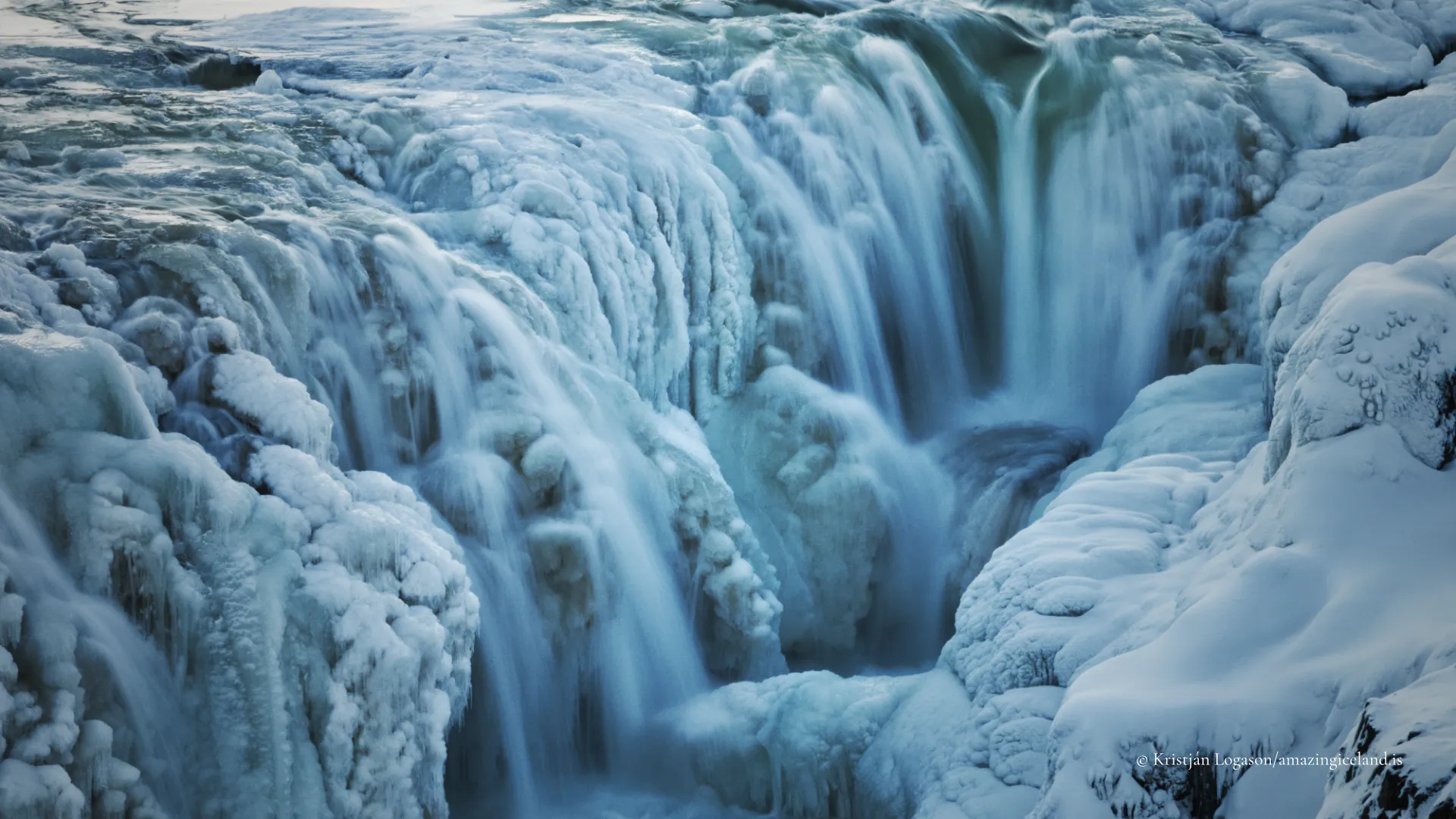
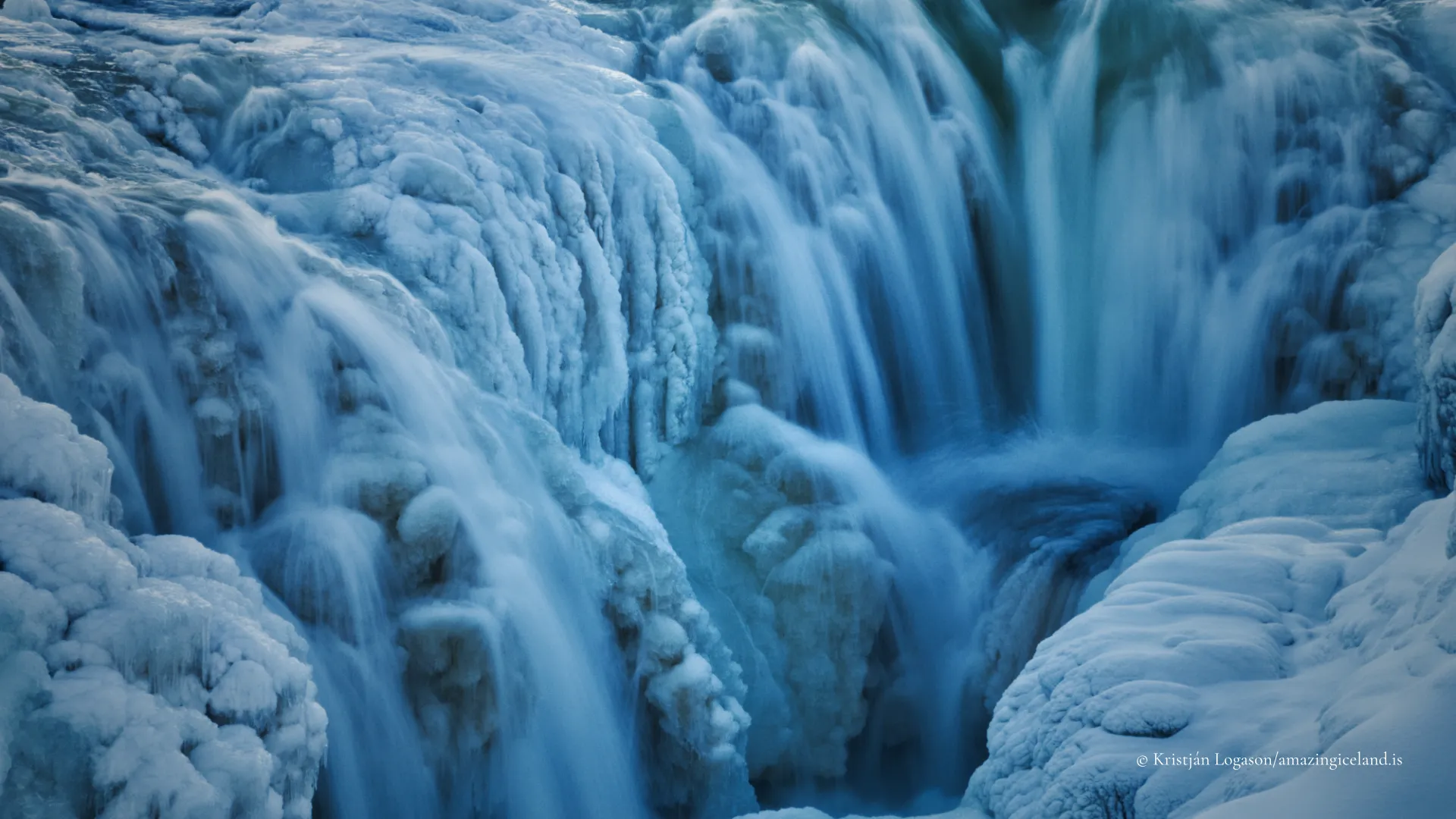
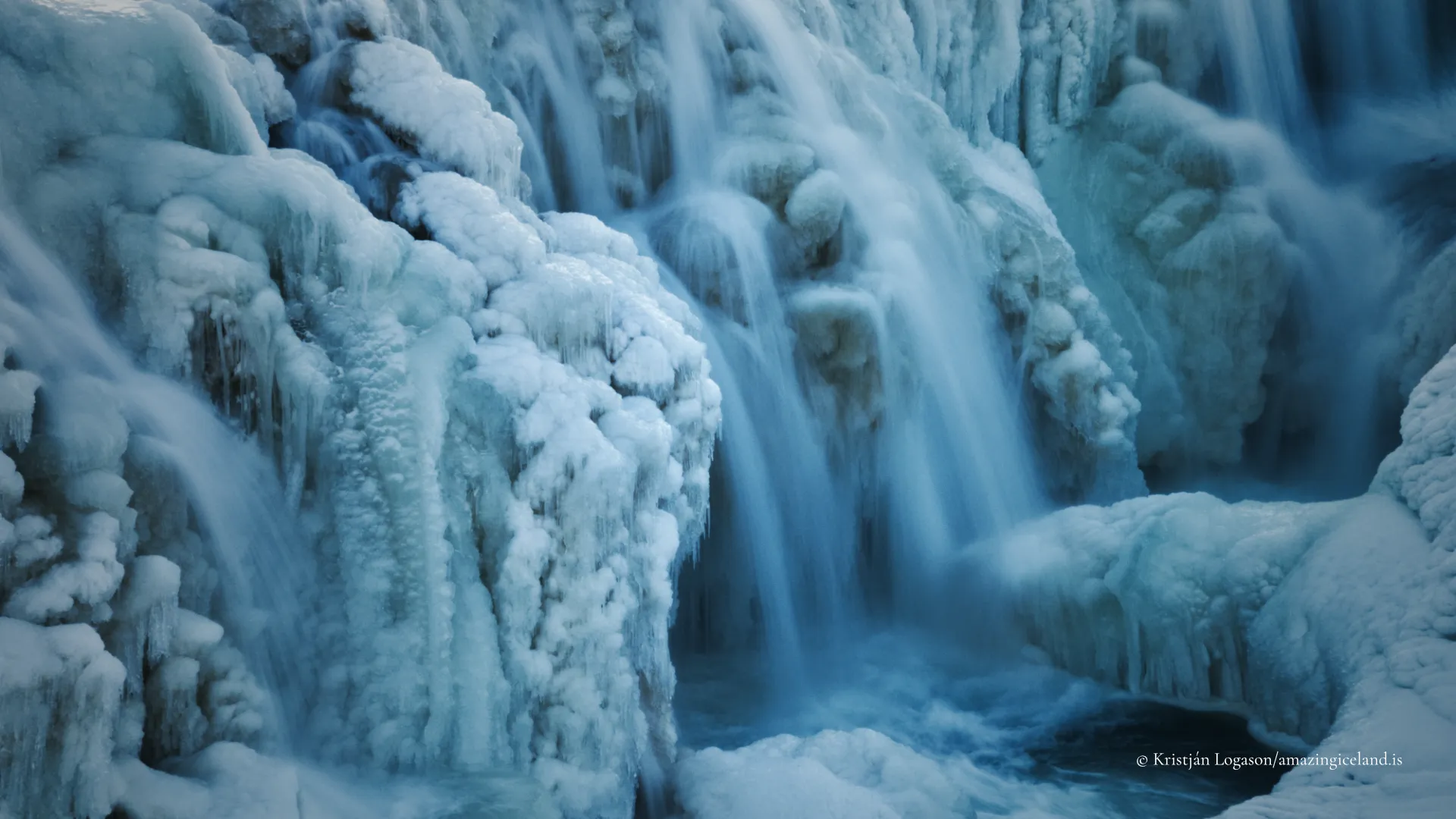
Image Gallery
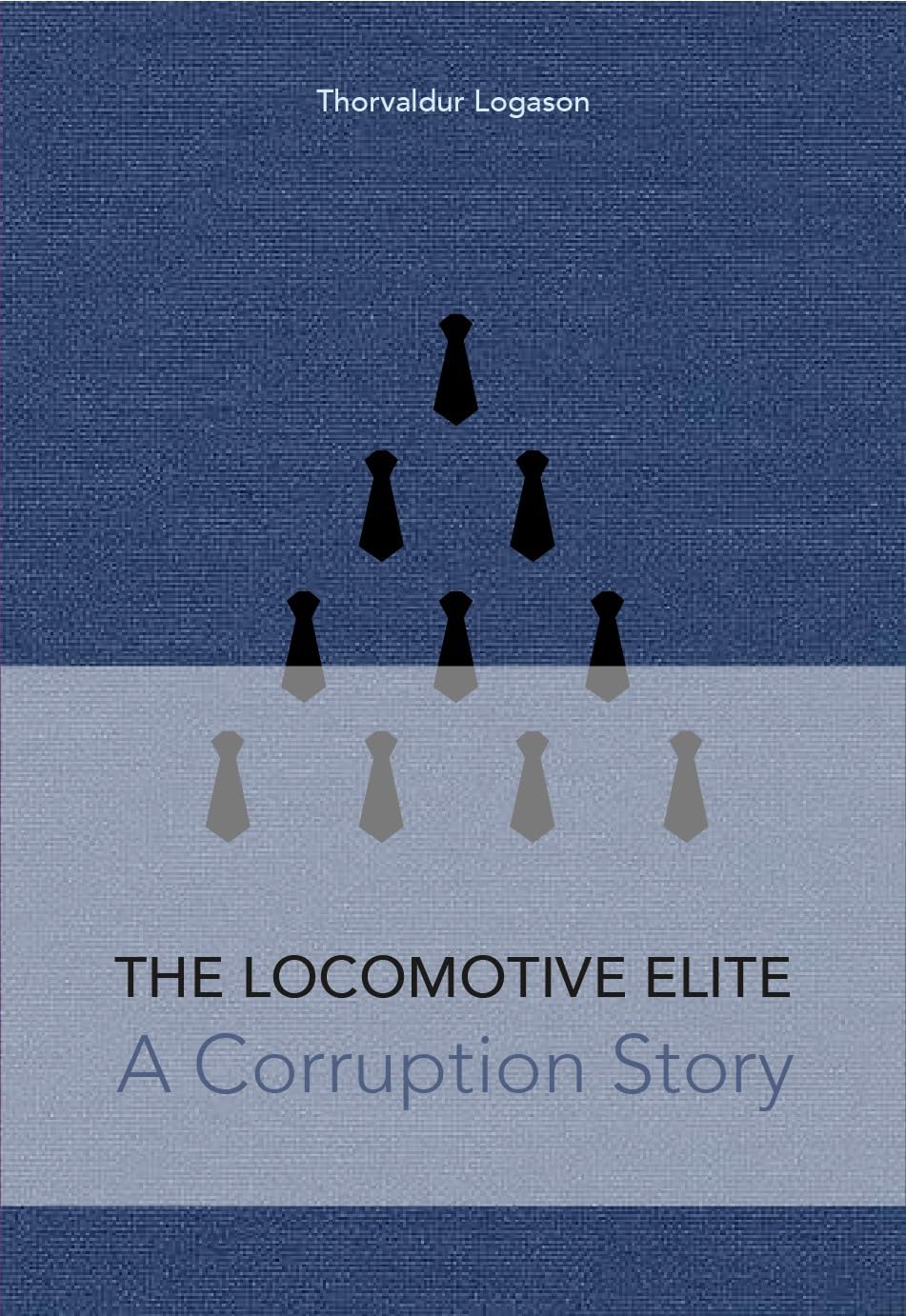
The Locomotive Elite
What do Donald Trump and Iceland’s Locomotive Elite have in common?
Far more than you think.
In The Locomotive Elite, you’ll uncover how a tiny clique in Iceland captured extensive control—of banks, courts, media, and even the central bank.
For decades they ruled, first democratically, then through corruption and in the end through crime, enriching themselves and their cronies while dismantling oversight.
The result?
One of the most spectacular financial collapses in modern history.
Photography tips:
- Work from the rim: vertical compositions emphasize depth effectively.
- Include multiple falls: sequence tells the geological story better than isolation.
- Overcast light suits basalt: reduces contrast and preserves texture.
- Avoid edge distortion: step back to maintain depth perception.
- Seasonal water color matters: spring flow adds power; late summer adds clarity.
Good cameras for Iceland
Sony A7R V

Sony A7s lll

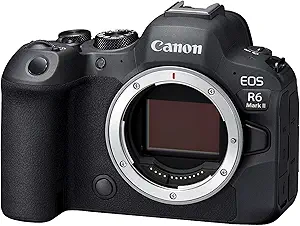
Canon R6
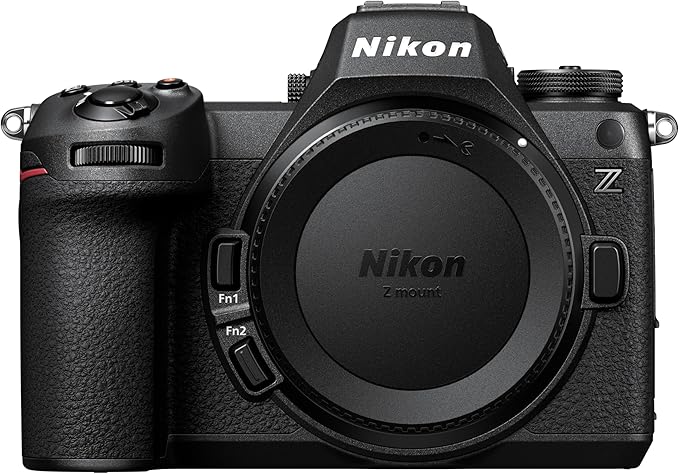
Nikon Z6 lll
Destinations nearby
Good to have in Iceland