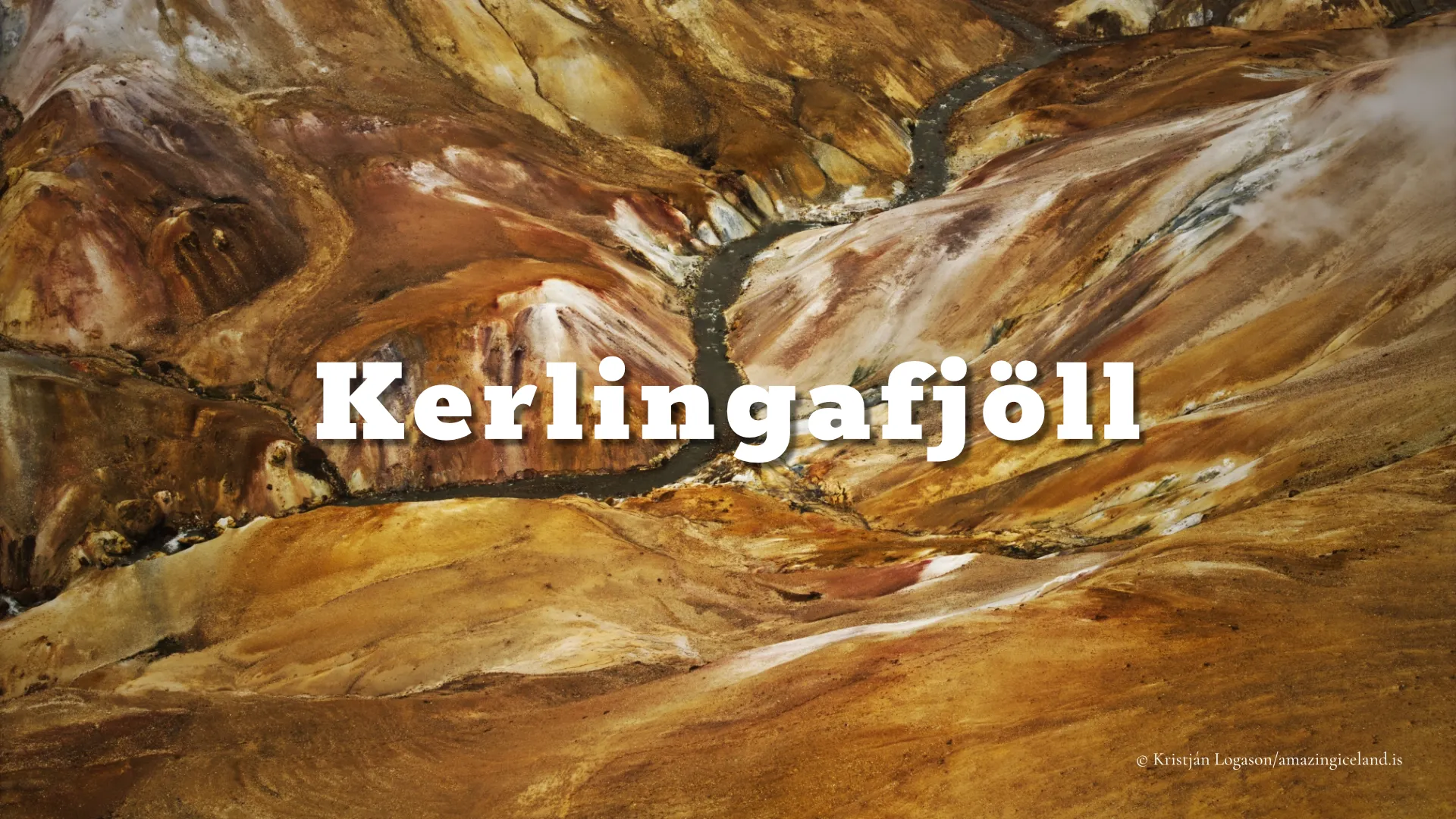
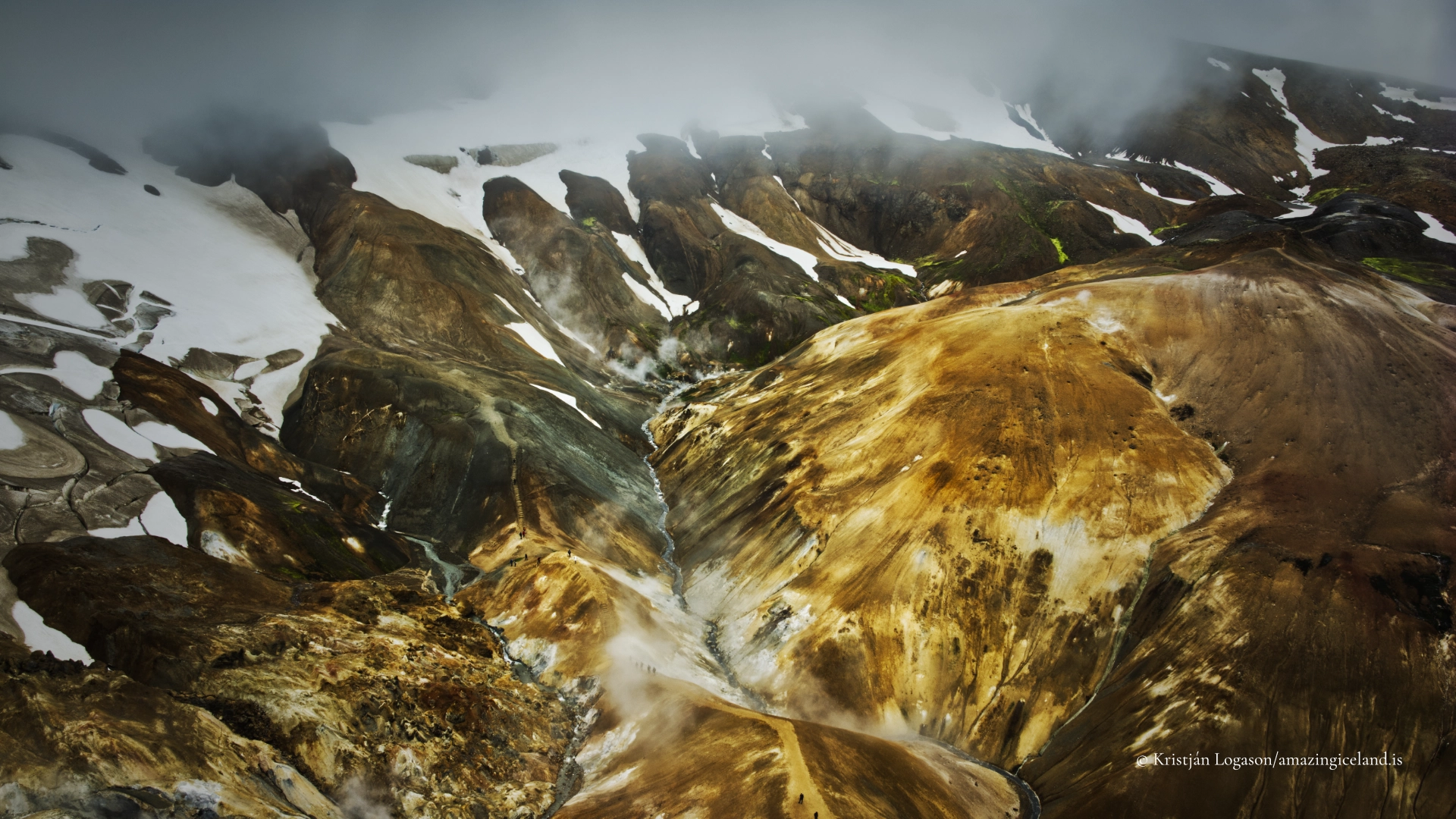
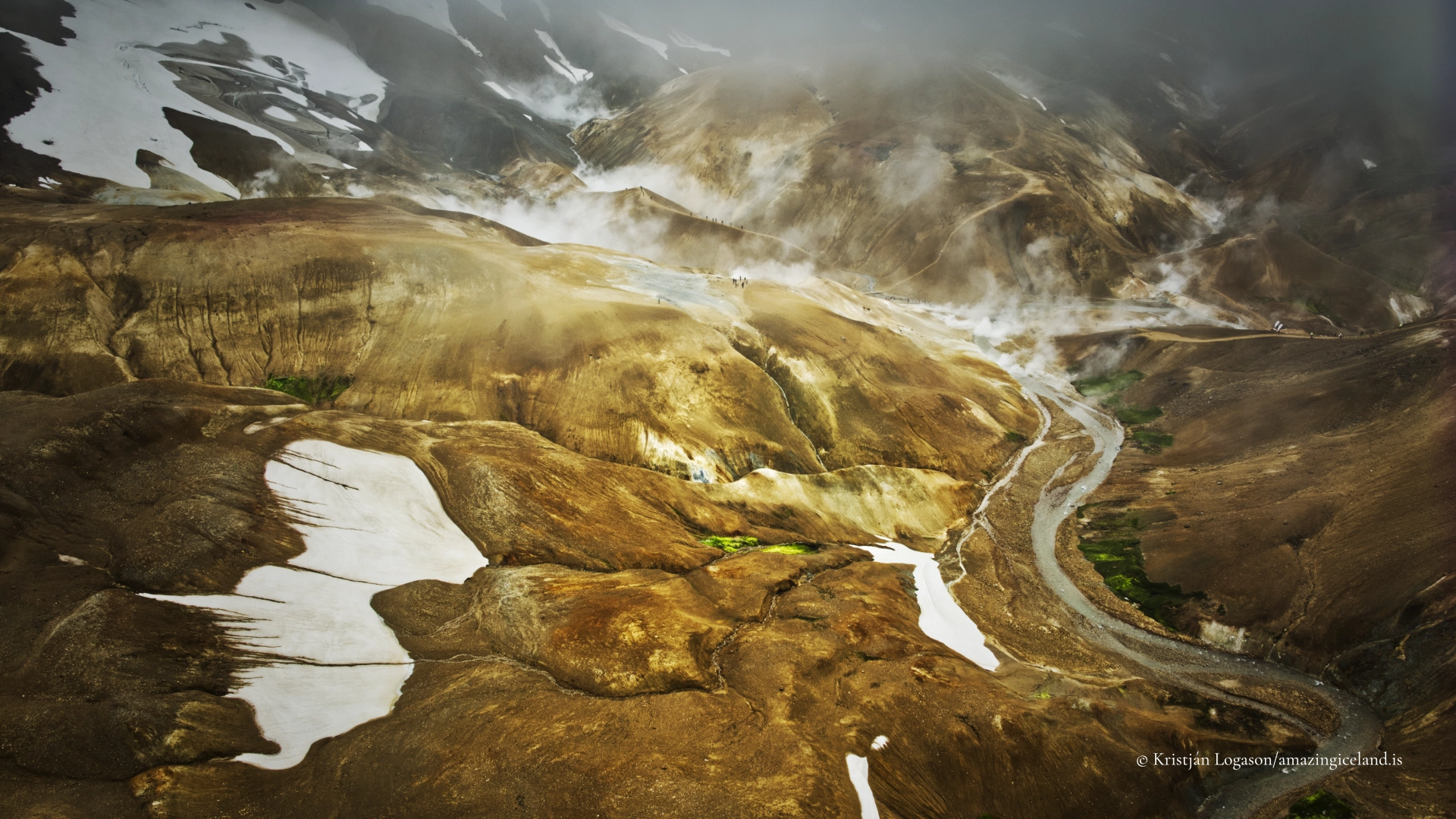
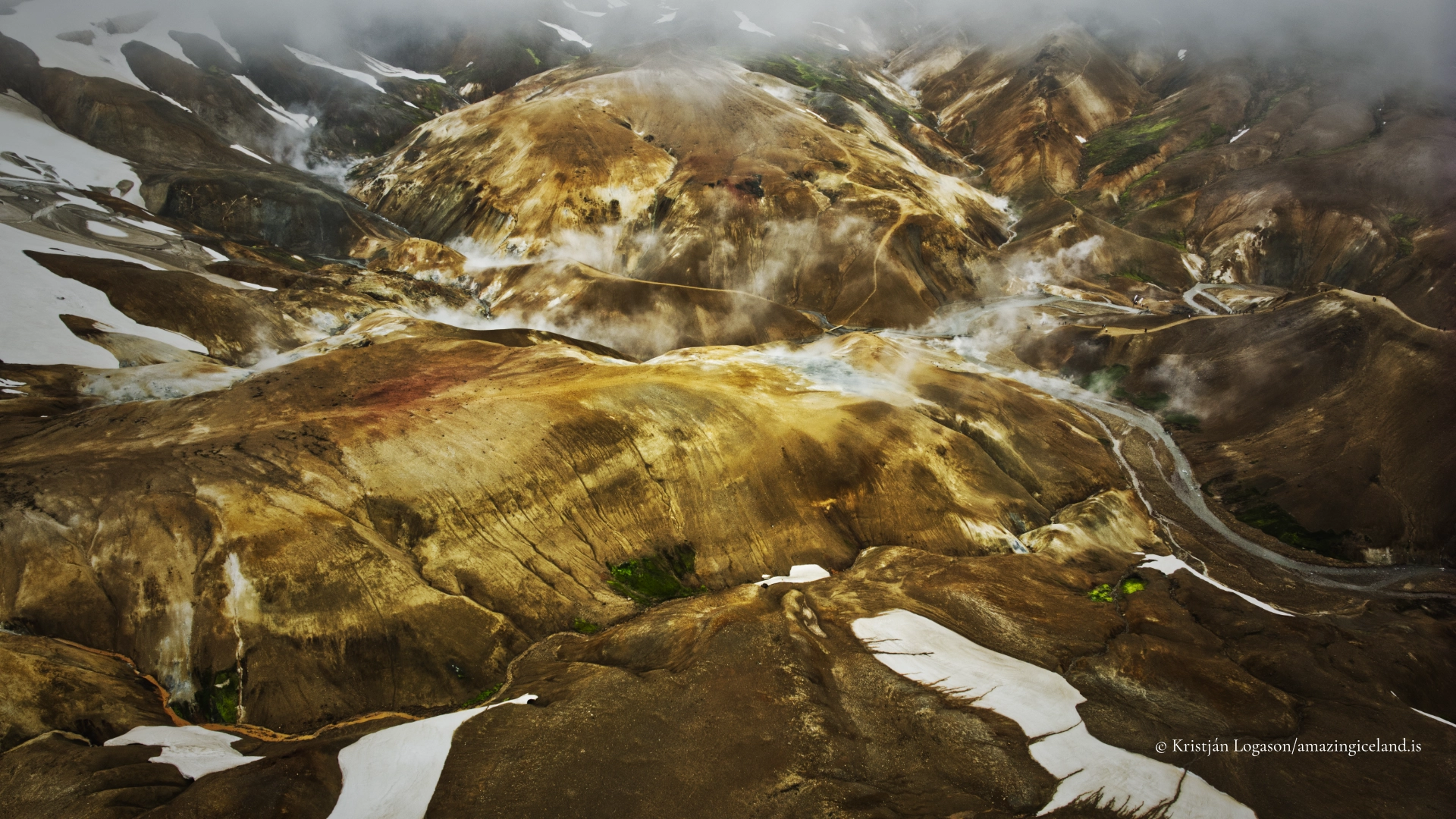
Located deep within Iceland’s central Highlands, Kerlingarfjöll is a rhyolitic mountain massif known for its vivid mineral colors and extensive geothermal activity. At its core lies Hveradalir, a valley of steaming vents, boiling mud pots, and sulfur-stained slopes that exposes the mechanics of Iceland’s geothermal systems at close range. Together, they form one of the most geologically expressive environments in the Icelandic interior.
The location of Kerlingarfjöll mountain range and Hveradalir geothermal area
Latitude
64.6596
Longitude
-19.3322
Kerlingarfjöll mountain range and Hveradalir geothermal area
Kerlingarfjöll occupies a central position in Iceland’s Highlands, north of Hofsjökull and west of the Kjölur highland route. The mountain range reaches elevations of approximately 1,500 m above sea level, with peaks composed largely of rhyolite, a silica-rich volcanic rock that weathers into pale yellows, reds, and greys. This composition immediately distinguishes Kerlingarfjöll from the darker basalt-dominated landscapes that characterize much of Iceland.
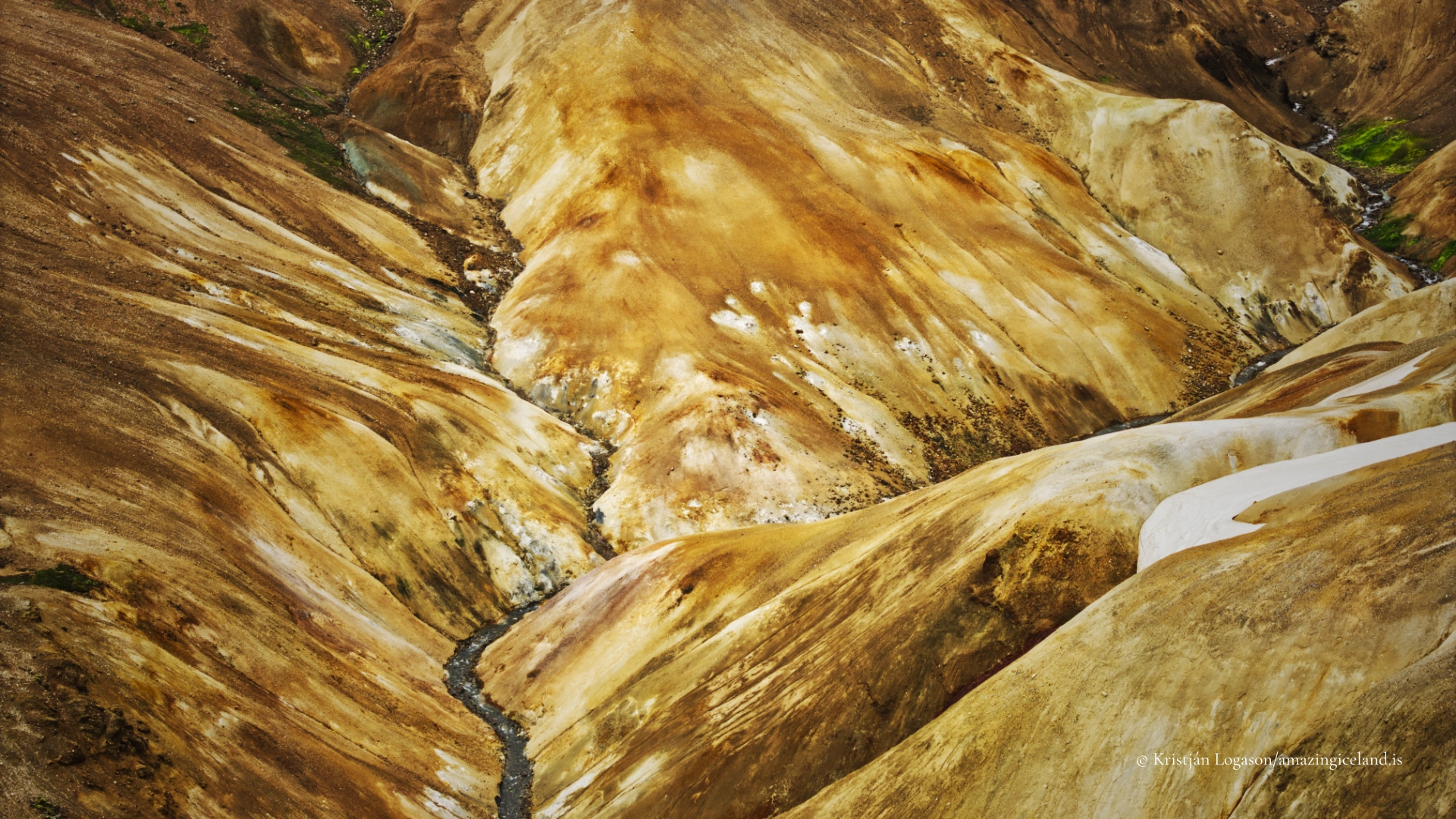
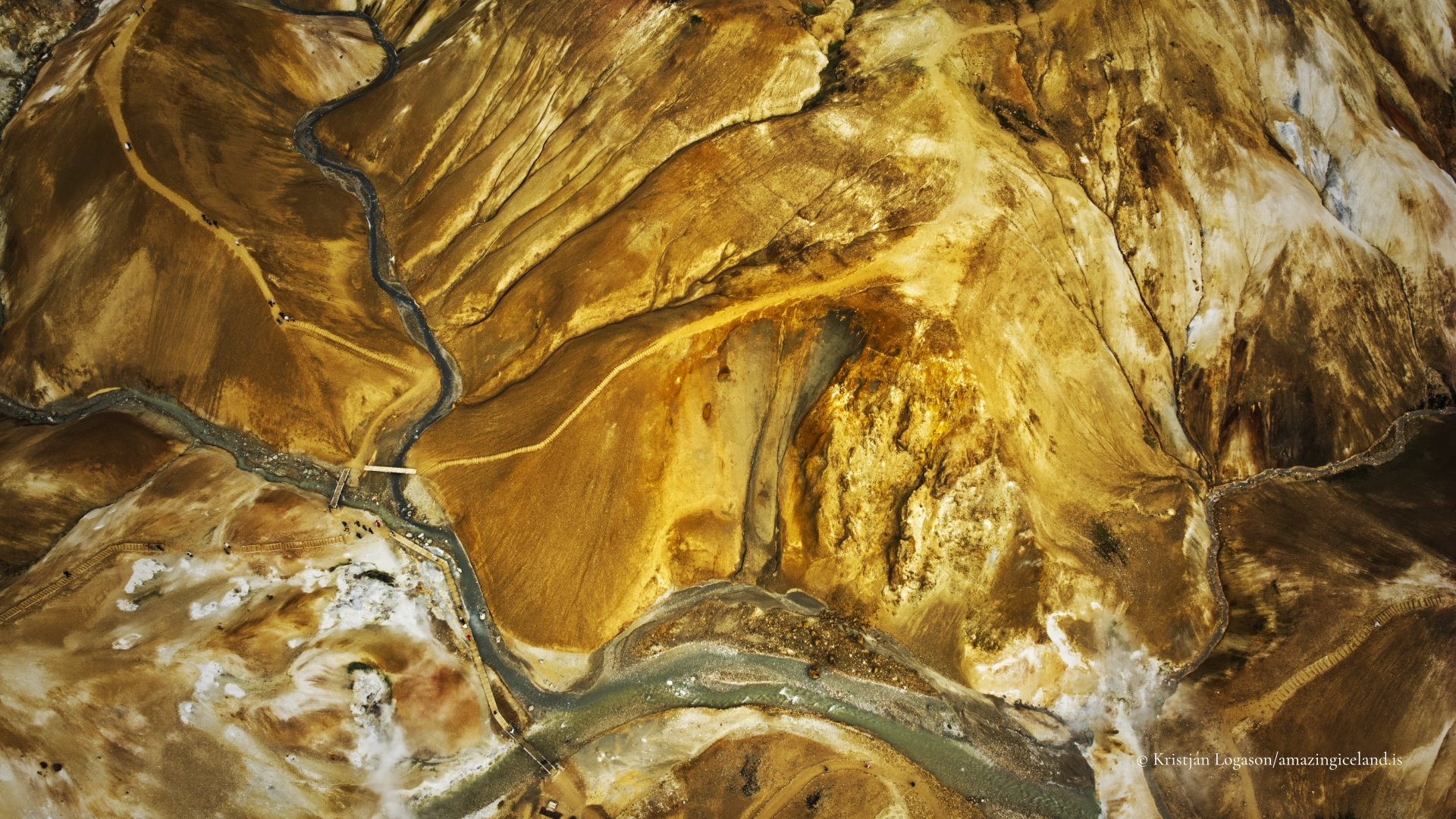
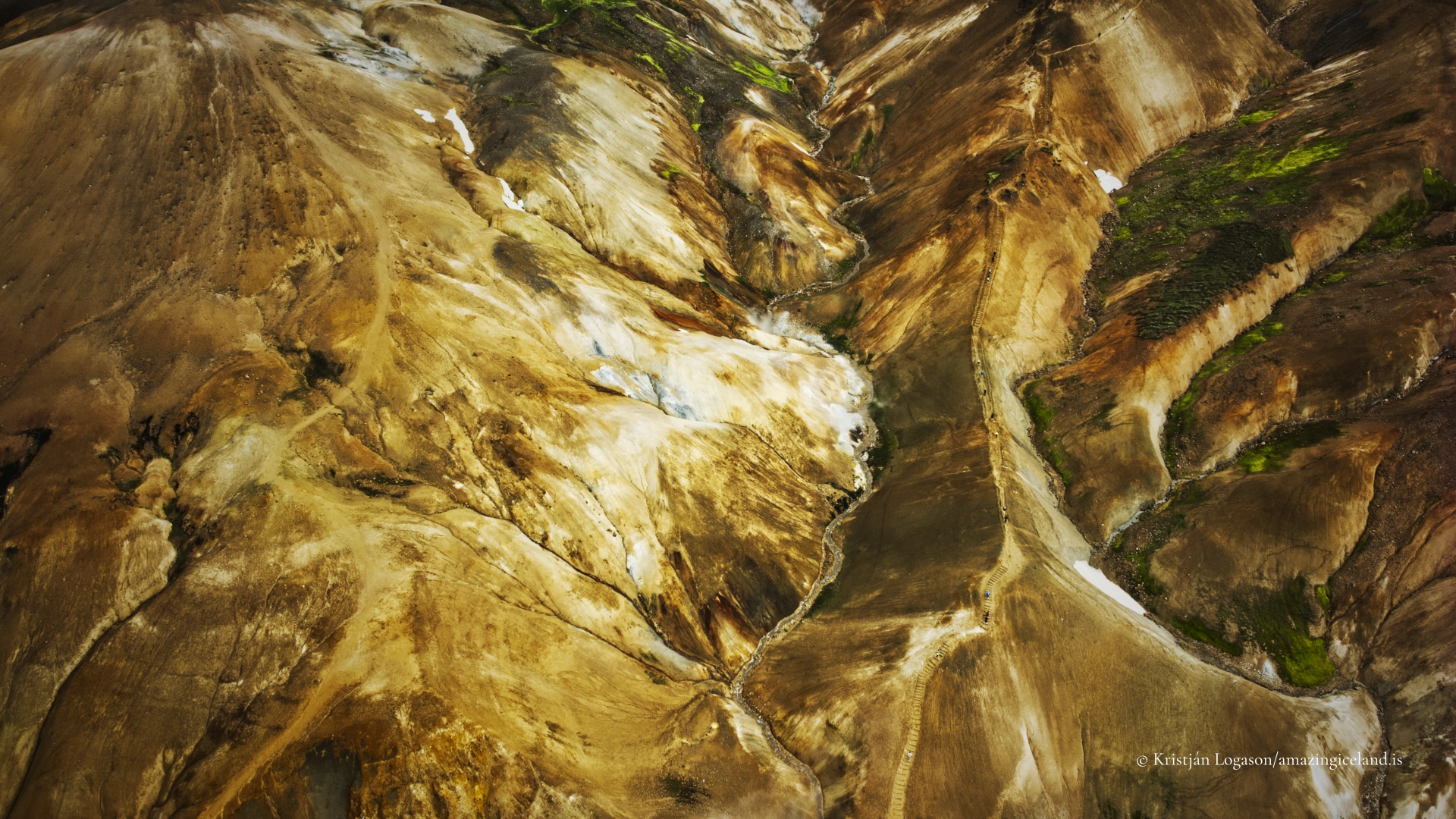
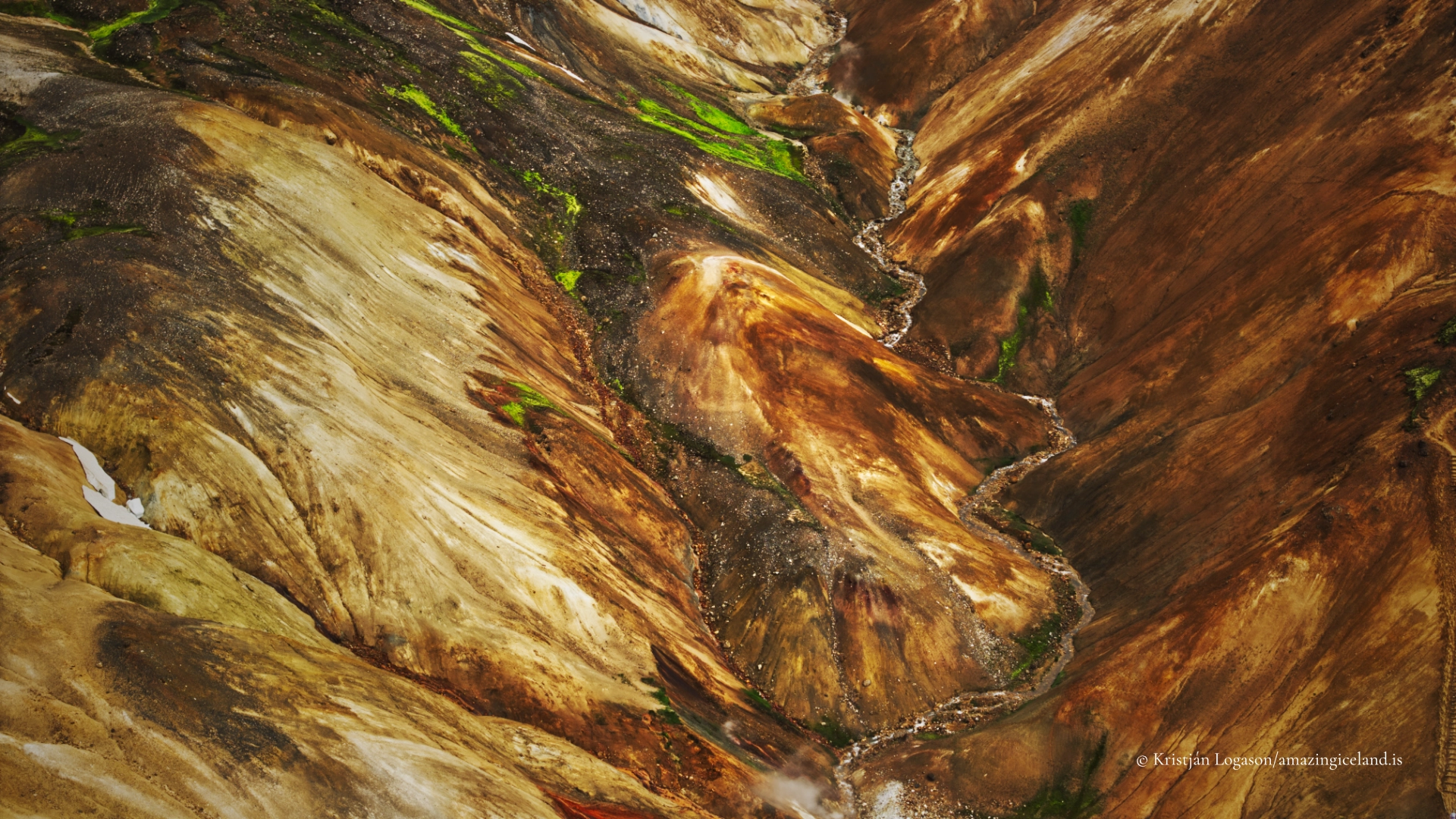
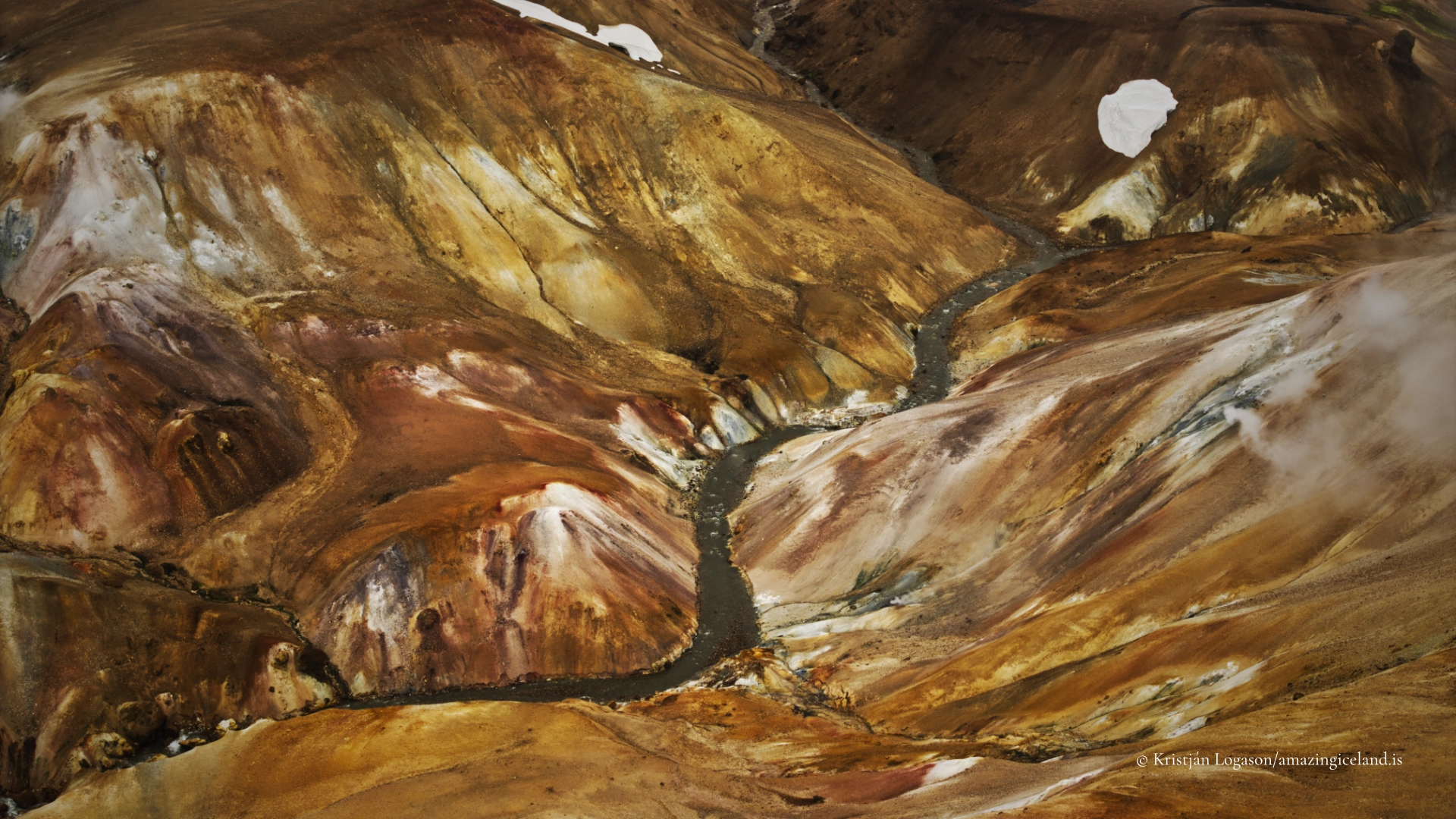
Rhyolite’s visual appeal is not superficial. Its formation is tied to high-silica magma and explosive volcanic processes, often associated with subglacial or ice-marginal eruptions. Over time, hydrothermal alteration further modifies these rocks, producing clay minerals and oxidized surfaces that amplify color variation. In Kerlingarfjöll, erosion has exposed these altered layers at scale, creating slopes that appear almost stratigraphic in color rather than texture.
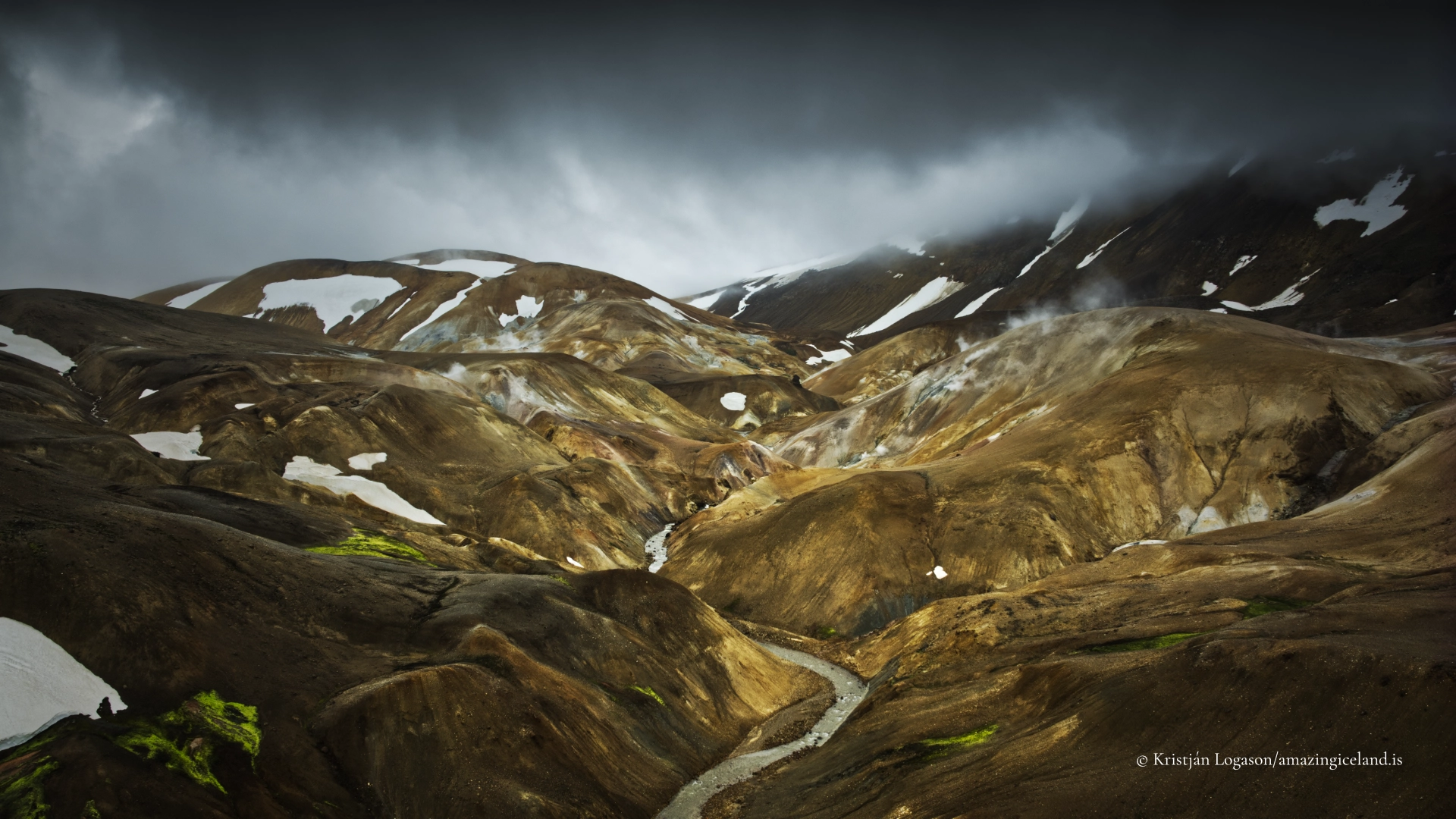
Climatically, Kerlingarfjöll exists in a persistent state of marginality. Snow can remain year-round in shaded gullies, while geothermal heat prevents complete freezing in others. This juxtaposition—steam rising beside snowfields—is not incidental; it is the defining condition of the area. The interaction between heat and cold accelerates physical weathering, contributing to unstable slopes and frequent small-scale landslides. From a geomorphological standpoint, the landscape is young, active, and constantly adjusting.
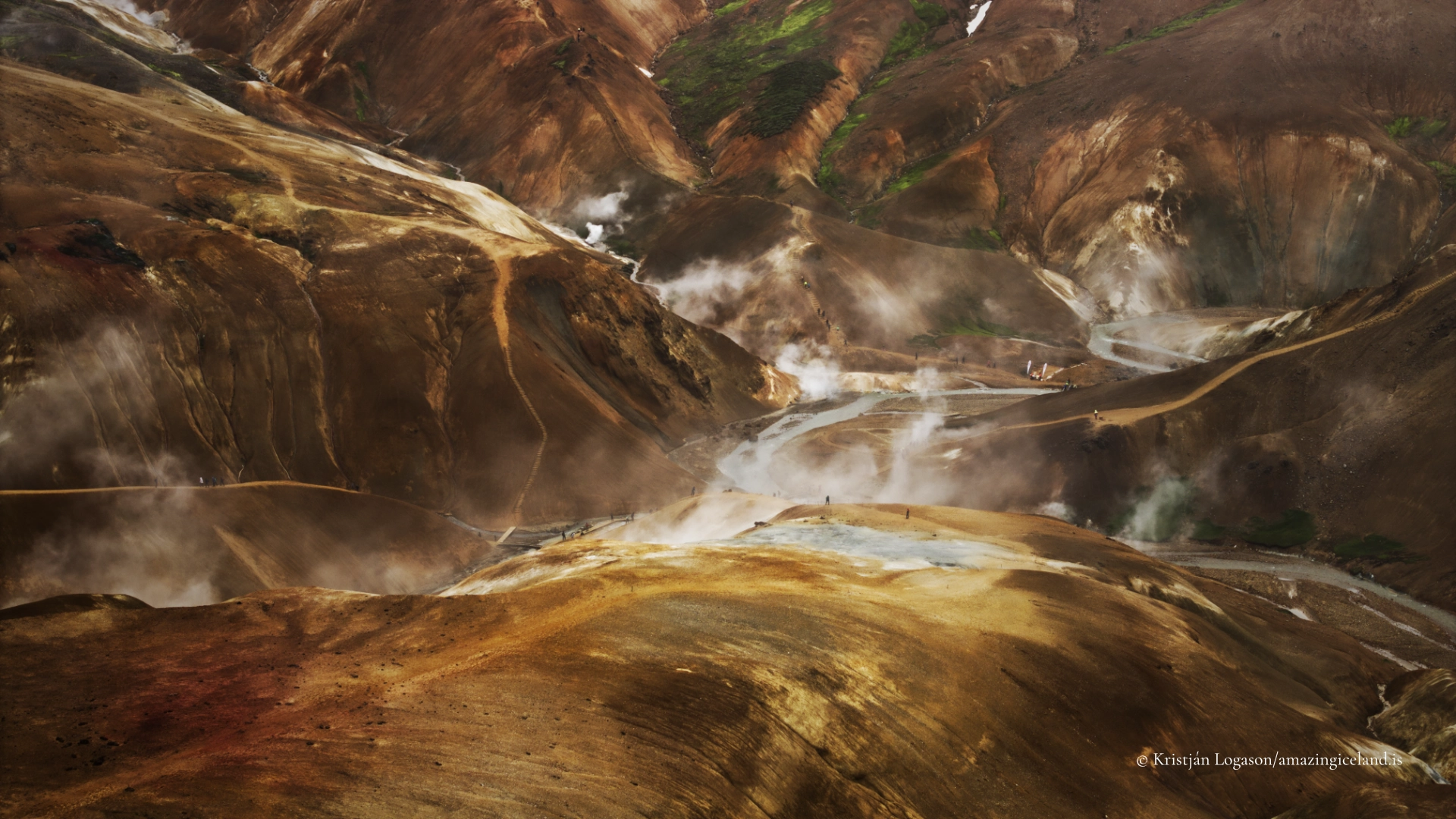
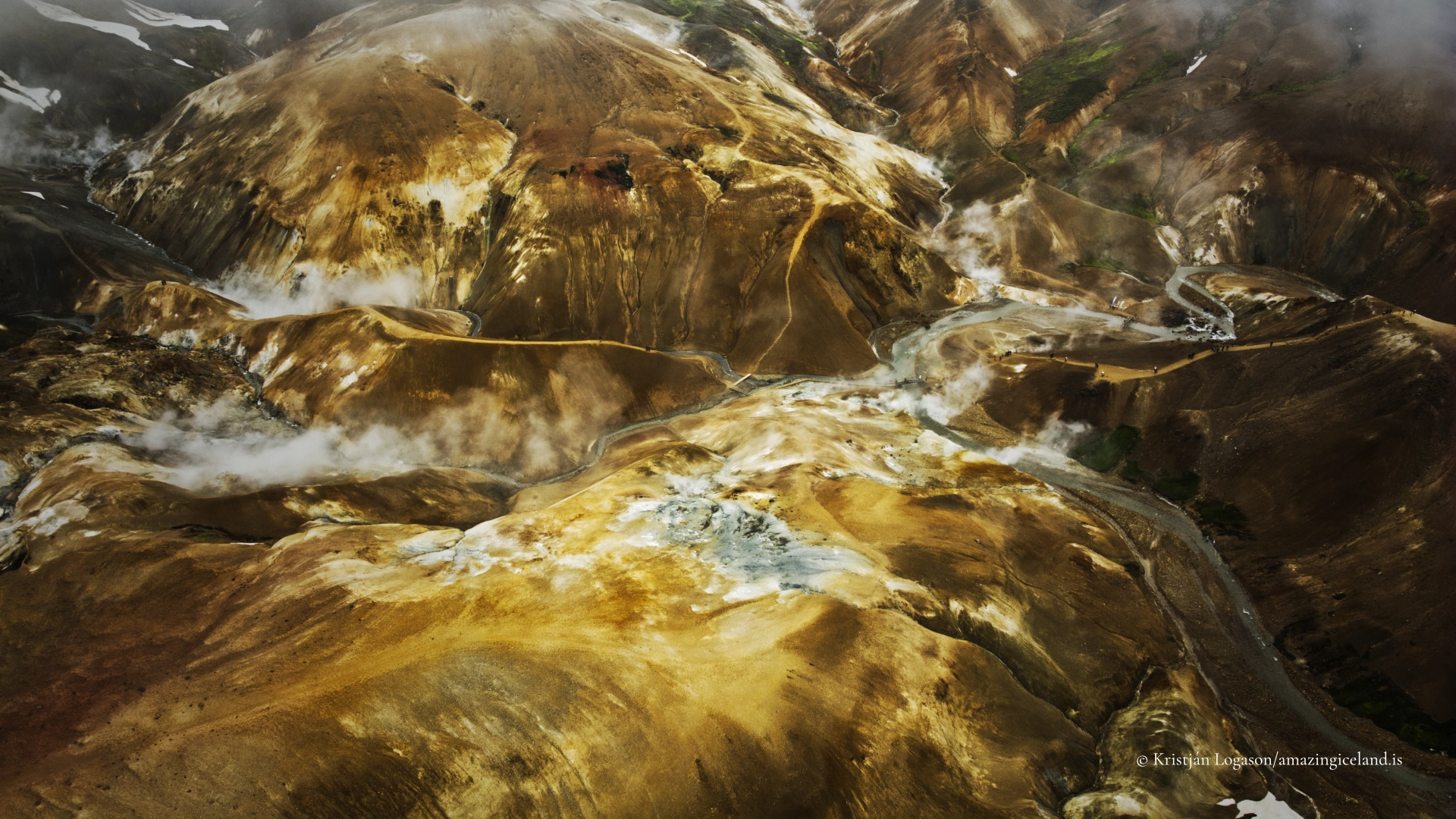
At the heart of Kerlingarfjöll lies Hveradalir, one of Iceland’s most concentrated geothermal valleys. The name translates loosely to “Valley of Hot Springs,” though this understates the intensity of the site. Hveradalir is dominated by fumaroles, solfataras, boiling mud pots, and steaming ground, all driven by shallow geothermal reservoirs heated by underlying magmatic systems.
Temperatures near vents can exceed 90–100°C, and subsurface conditions are substantially hotter. Sulfur compounds released through fumaroles oxidize rapidly at the surface, producing the yellow deposits that mark active zones. Clay alteration from acidic fluids weakens surrounding rock, creating soft ground that can shift or collapse. This is why marked paths are not merely advisory—they are essential for both safety and conservation.
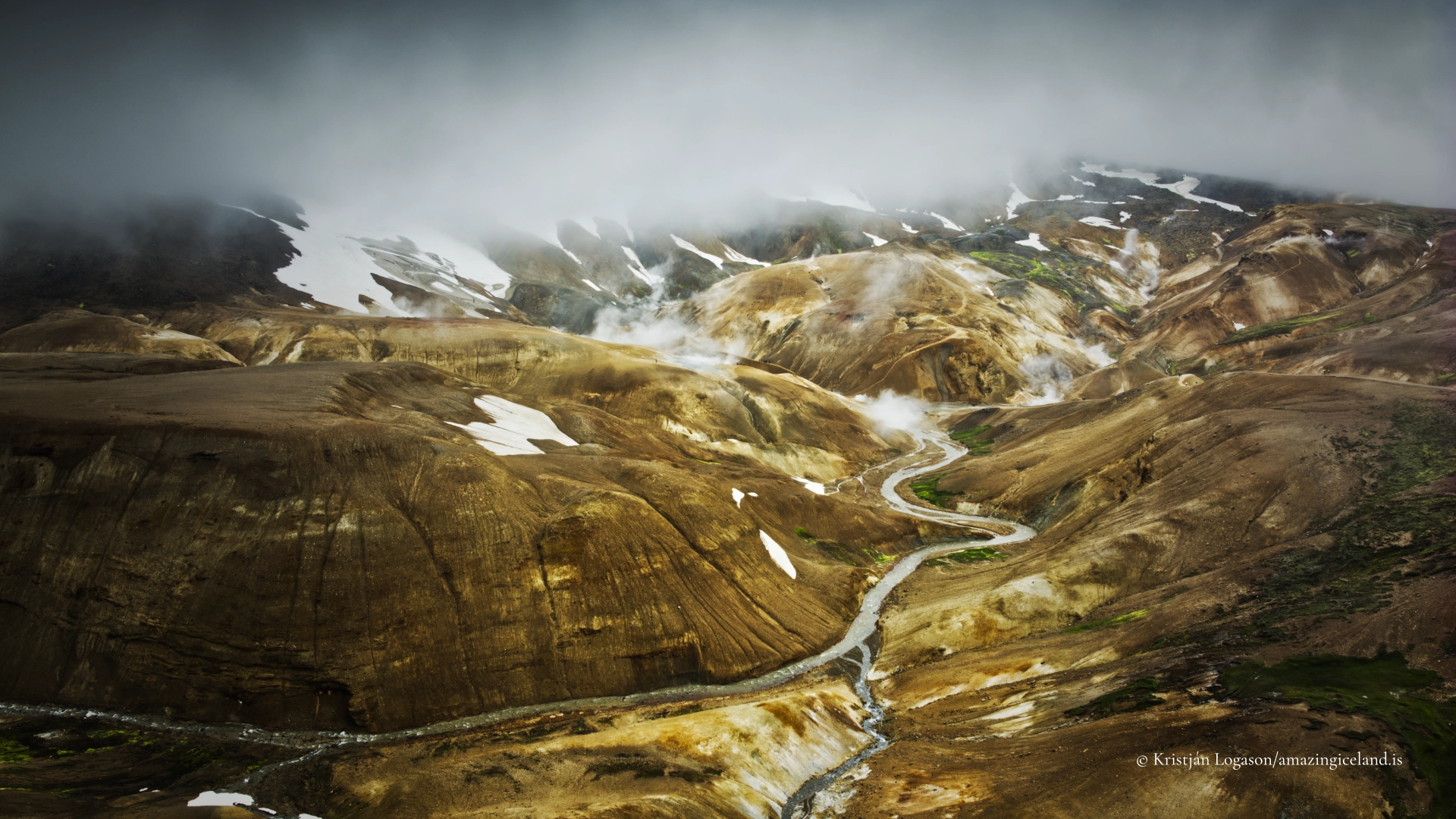
Hveradalir offers a near-surface expression of geothermal chemistry. The visible steam plumes represent water vapor separated from liquid at depth, while mud pots form where acidic fluids decompose surrounding rock into fine sediment. These features are dynamic: vents migrate, intensify, or shut down over time, making Hveradalir a landscape defined by process rather than permanence.
Human interaction with Kerlingarfjöll has historically been limited by access. The area is reached via the Kjölur Route, typically using F35, with seasonal access depending on snow and road conditions. Even with recent infrastructure improvements, Kerlingarfjöll remains weather-exposed and isolated, reinforcing its role as a destination for deliberate travel rather than incidental visitation.
The lack of permanent settlement or historical farming in the area reflects environmental reality. Soils are thin, thermal activity destabilizes ground, and climatic conditions are hostile to sustained agriculture. As a result, Kerlingarfjöll has remained largely a scientific and recreational landscape rather than a cultural one—valued for observation, exploration, and study rather than habitation.
For hikers, the area offers a dense network of trails that traverse ridges, valleys, and geothermal basins. These routes provide not only access but interpretation: moving through Kerlingarfjöll is effectively moving through a cross-section of Icelandic geothermal geology. Elevation changes are moderate but continuous, and exposure to wind and weather is constant.
Kerlingarfjöll’s visual intensity is inseparable from its instability. Colors shift with moisture, light, and chemical change; steam alters visibility minute by minute. This makes the area particularly resistant to simplification. Photographs can suggest scale, but they rarely convey the multisensory reality—the sulfur odor, the sound of venting steam, the warmth radiating through cold air.
From a conservation perspective, this instability demands restraint. Rhyolite slopes and hydrothermally altered ground erode rapidly under foot traffic. Once disturbed, recovery is extremely slow, especially at altitude. Contemporary management therefore emphasizes designated trails and minimized impact, aligning with broader Highland conservation principles.
Kerlingarfjöll and Hveradalir together form one of Iceland’s clearest demonstrations of geothermal landscapes operating in real time. There is no single defining feature, no dominant landmark that resolves the experience. Instead, meaning emerges through accumulation: multiple vents, overlapping ridges, recurring color shifts, and the persistent reminder that heat is shaping the ground beneath your feet.
If Langisjór invites reading through stillness, Kerlingarfjöll demands engagement with movement and change. The terrain is transitional, unstable, and openly energetic. In this sense, the area functions as a boundary zone—between ice and fire, between solid ground and fluid systems, and between observation and caution.
Kerlingarfjöll is not simply part of the Highlands; it explains them.
Interesting facts:
- Kerlingarfjöll is composed largely of rhyolite, a silica-rich volcanic rock uncommon in Iceland.
- Peaks in the range reach approximately 1,500 m above sea level.
- Hveradalir is one of Iceland’s most active geothermal valleys, with constant surface activity.
- The area lies north of Hofsjökull, one of Iceland’s largest ice caps.
- Ground instability is caused by acidic hydrothermal alteration, not erosion alone.
Image Gallery

The Locomotive Elite
What do Donald Trump and Iceland’s Locomotive Elite have in common?
Far more than you think.
In The Locomotive Elite, you’ll uncover how a tiny clique in Iceland captured extensive control—of banks, courts, media, and even the central bank.
For decades they ruled, first democratically, then through corruption and in the end through crime, enriching themselves and their cronies while dismantling oversight.
The result?
One of the most spectacular financial collapses in modern history.
Photography tips:
- Work in layers: Foreground steam, mid-ground ridges, and distant snowfields create natural depth.
- Overcast excels: Diffused light enhances mineral colors and controls contrast in steam-heavy scenes.
- Mind wind direction: Steam movement changes composition rapidly; patience matters more than position.
- Avoid saturation excess: Colors are real—overprocessing undermines geological credibility.
- Stay on trails: Footprints damage fragile ground and are visually difficult to remove without misrepresentation.
Good cameras for Iceland
Sony A7R V

Sony A7s lll

Canon R6

Nikon Z6 lll

Destinations nearby
Good to have in Iceland