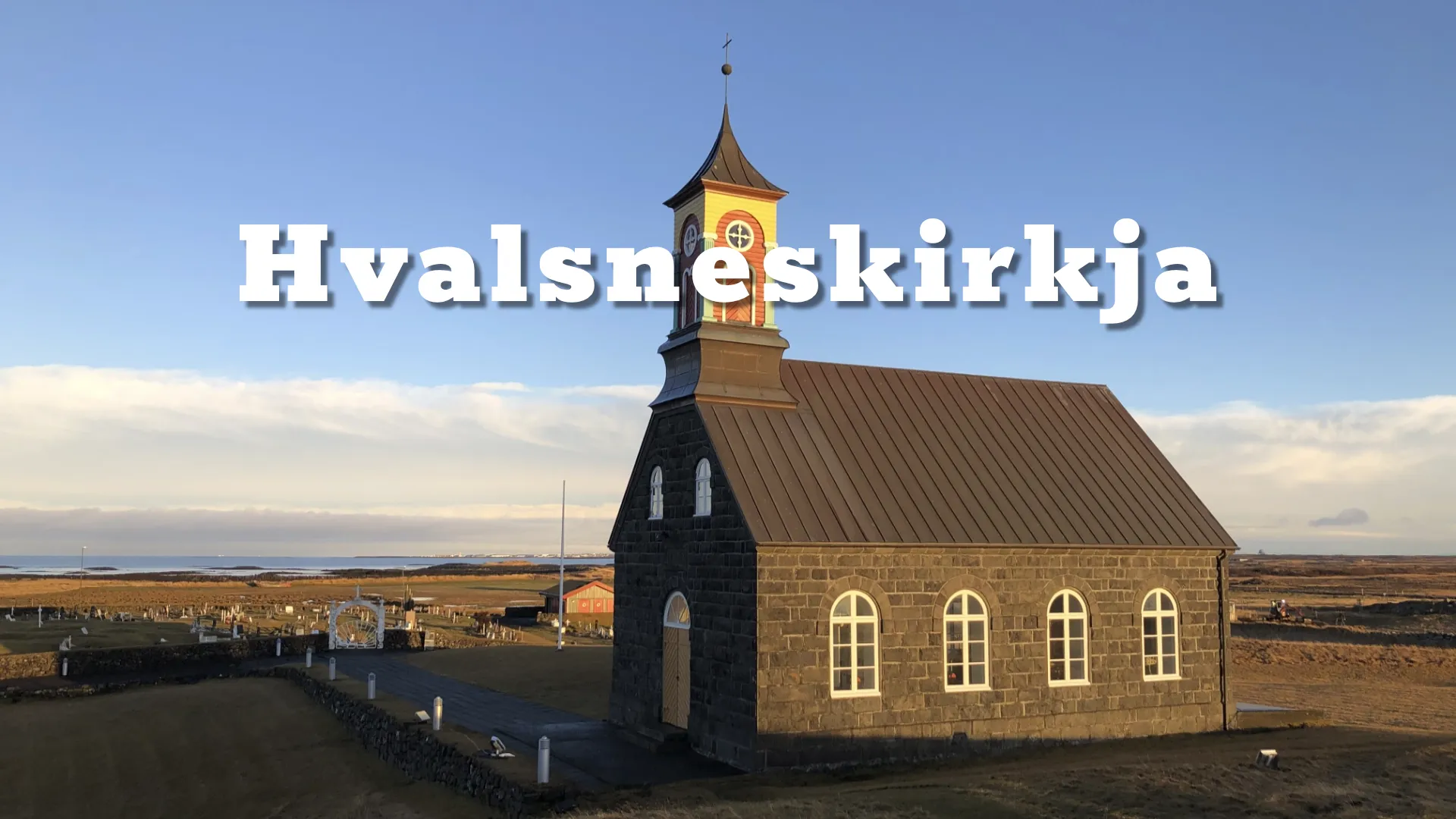
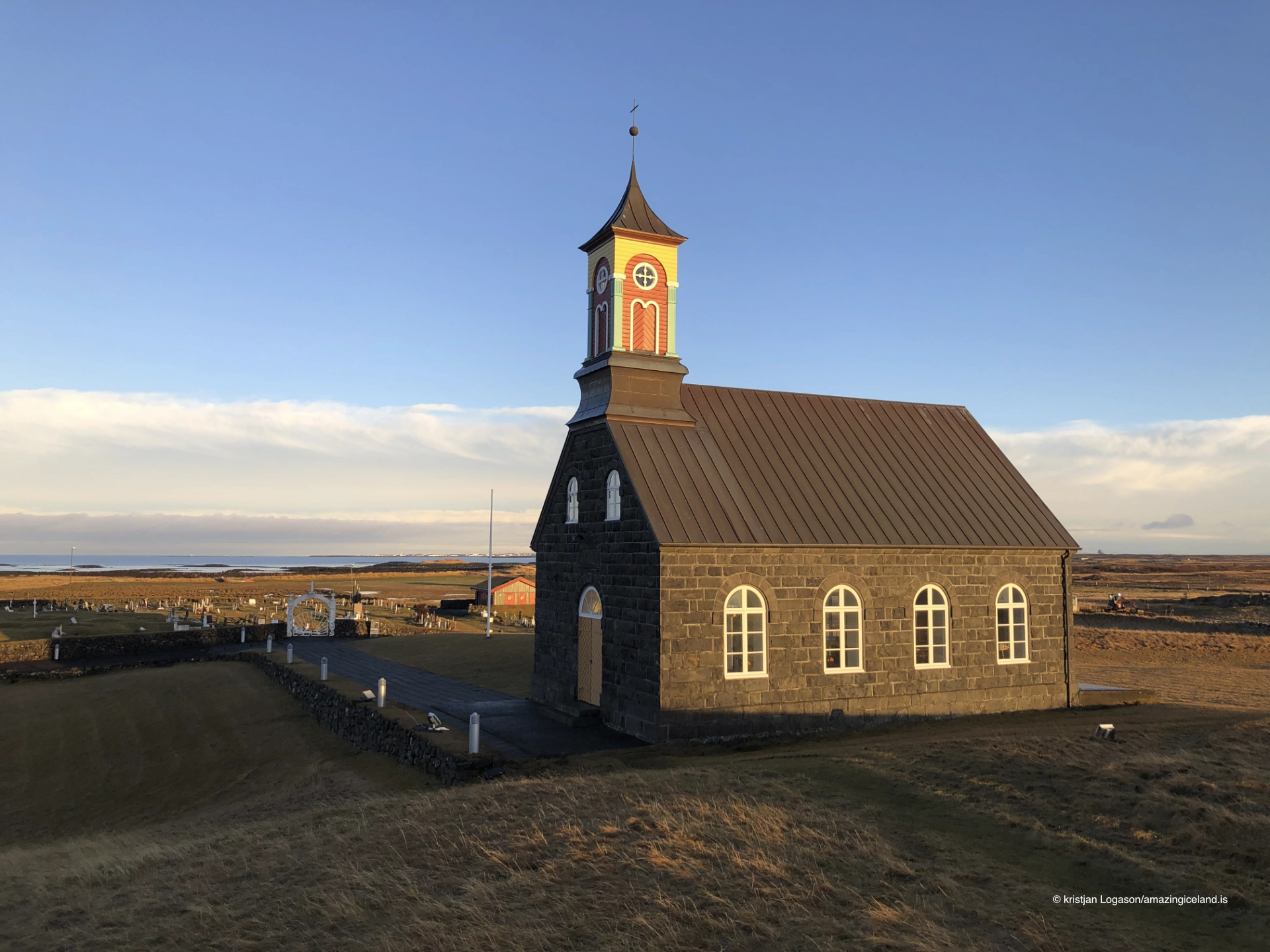
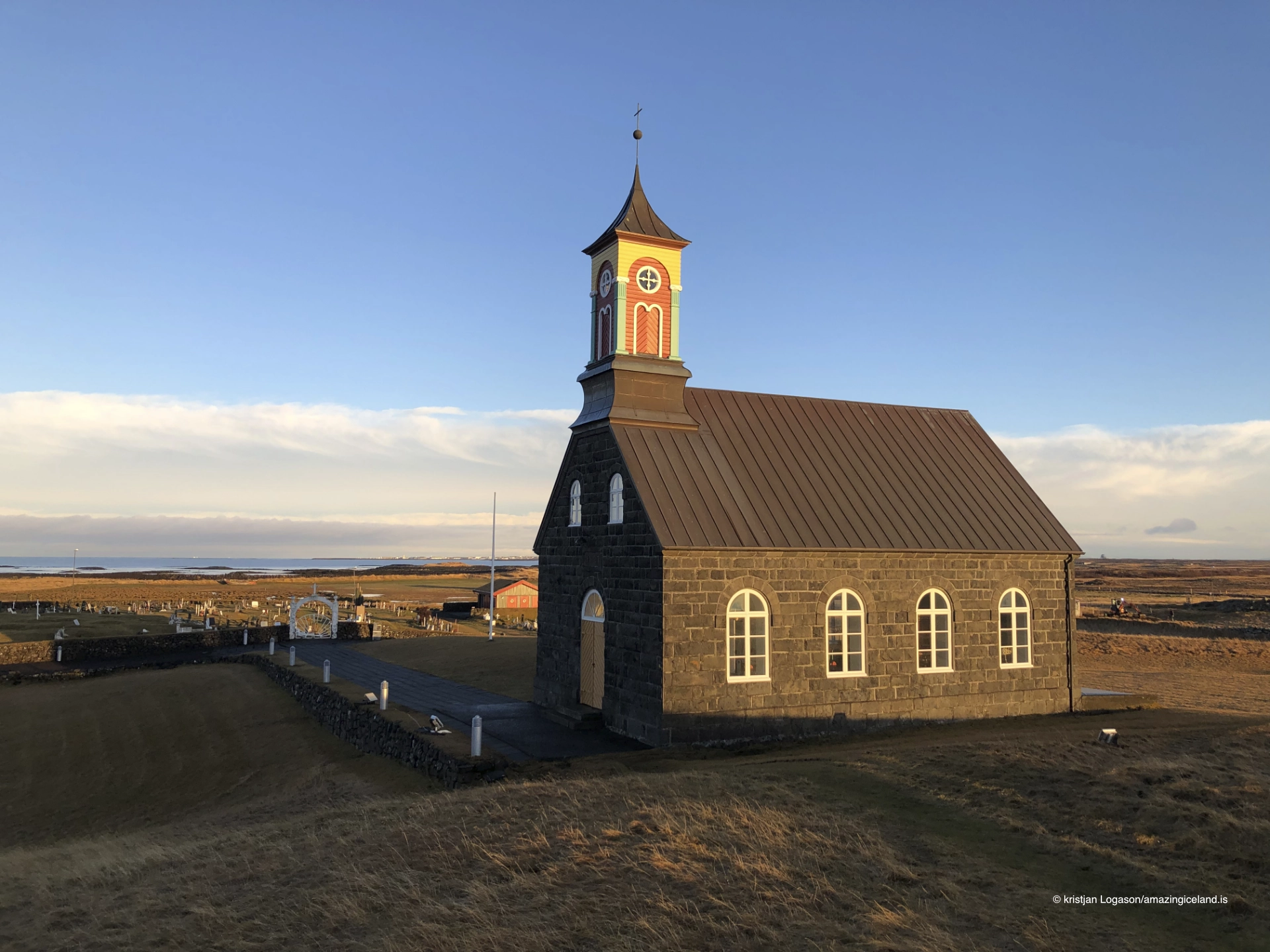
Hvalsneskirkja, located on the Reykjanes Peninsula, is a historic and culturally significant church in Iceland. Built in 1887, it was the first church in Iceland constructed outside a traditional graveyard. This stone-built structure, with an interior crafted from driftwood, stands as a testament to the resourcefulness and craftsmanship of its builders.
The location of Hvalsneskirkja church in Reykjanes
Latitude
63.989971687254815
Longitude
-22.735713791417886
Hvalsneskirkja church in Reykjanes
The History and Architecture of Hvalsneskirkja
Hvalsneskirkja was consecrated in 1887, funded by Ketill Ketilsson, a farmer and shipowner from Kotvogur, who owned the land at Hvalsnes. The church is constructed entirely from carved basalt lava blocks retrieved from the surrounding area, while its interior woodwork was gathered from nearby shores. The church measures 12.60 meters in length and 8.02 meters in width, covering approximately 100 square meters, and can accommodate up to 100 people. Extensive repairs were undertaken in 1945 under the supervision of the state architect to ensure its preservation.
One of the church’s most fascinating historical connections is to the stranded sailship Jamestown, which was loaded with timber. Much of this wood was repurposed for construction projects in Reykjanes, including parts of Hvalneskirkja. The church remains operational today and is an important cultural and religious landmark in the region.
Notable Priests and Their Legacy
Among the most significant figures associated with Hvalsneskirkja is Hallgrímur Pétursson (1614–1674), one of Iceland’s most cherished poets and religious figures. He was inaugurated as a priest at Hvalsnes in 1644 and served there until 1651. During his tenure, Hallgrímur played a pivotal role in shaping the spiritual life of the community. His hymns, particularly Passíusálmar (The Passion Hymns), remain a cornerstone of Icelandic religious literature.
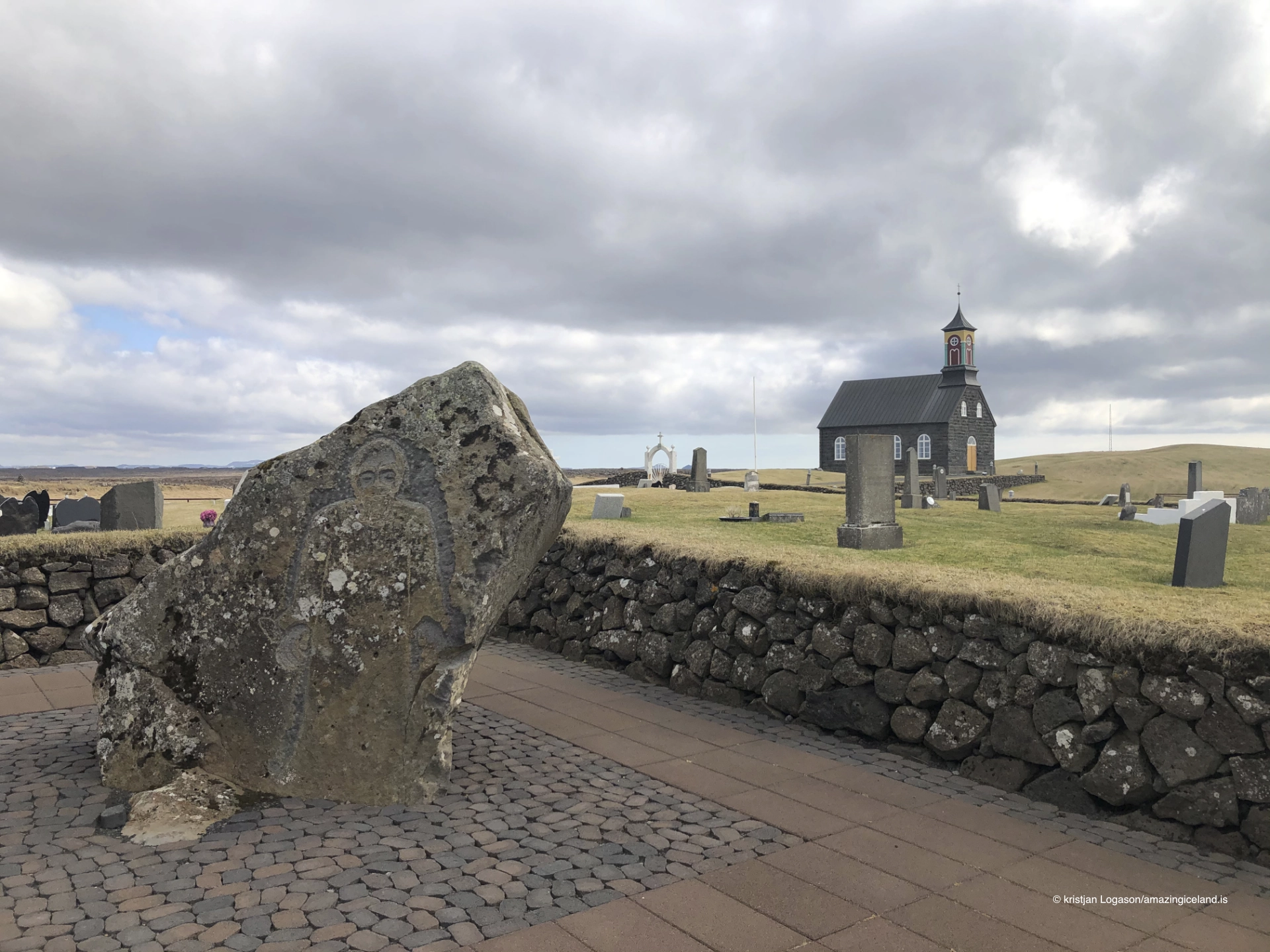
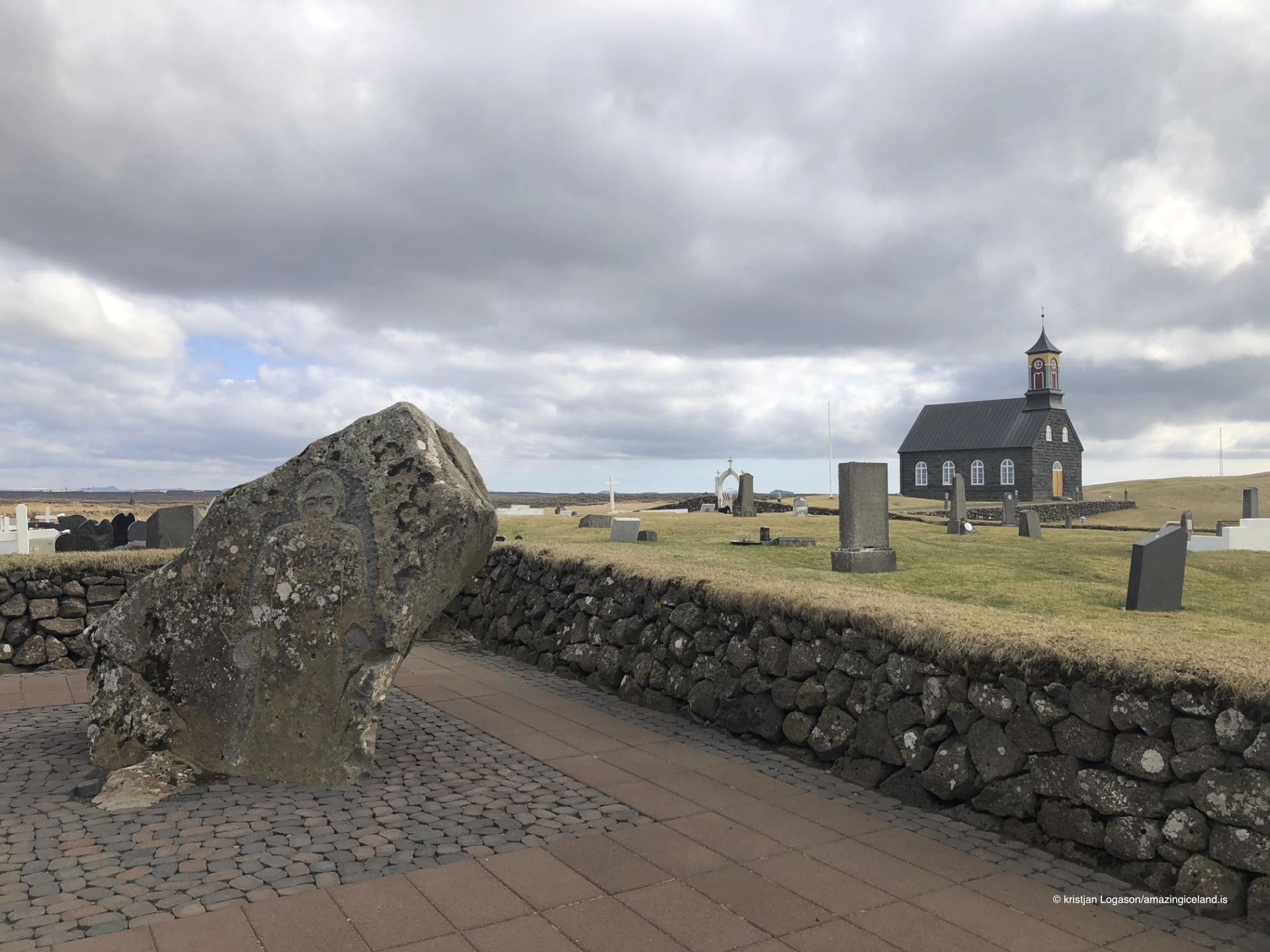
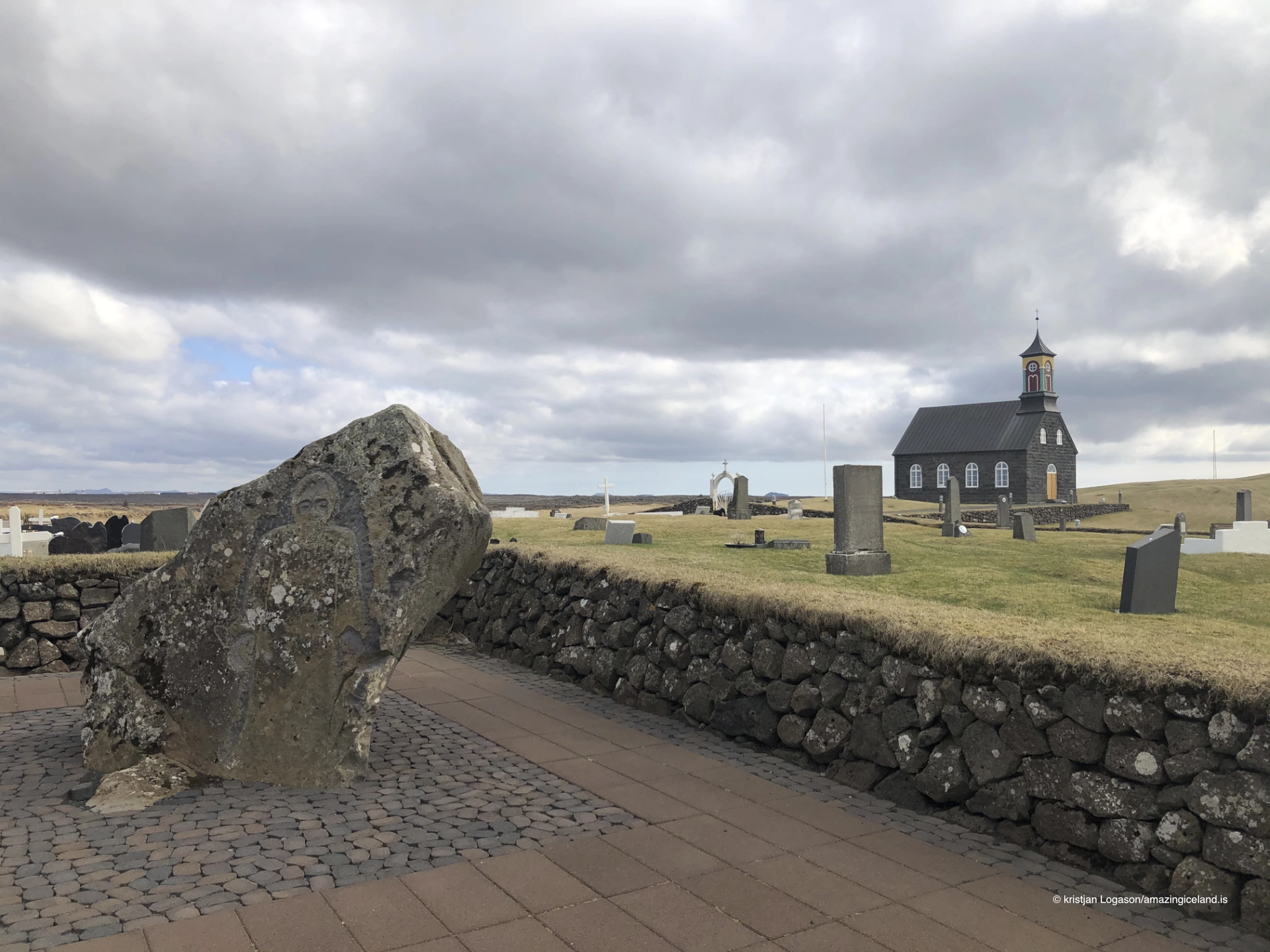
A deeply personal and tragic connection to the church is the loss of Hallgrímur’s daughter, Steinunn Hallgrímsdóttir, who died at the age of four in 1649. It is believed that Hallgrímur himself crafted her tombstone, which remains one of the church’s most treasured artifacts. The stone was lost for centuries but was rediscovered in 1964, having been used as part of a walkway leading to the church. This relic stands as a poignant reminder of Hallgrímur’s legacy and personal history.
The Altarpiece and Cultural Significance
The altarpiece of Hvalsneskirkja is a striking replica of the one in Domkirkjan, Reykjavík’s main Lutheran church. Painted in 1886, the artwork reflects the artistic and religious traditions of the time. The church’s preservation efforts have ensured that this piece, along with the overall structure, remains a key part of Iceland’s cultural heritage.
Hvalsneskirkja’s unique history, from its connection to Hallgrímur Pétursson to its remarkable tombstone and architectural significance, makes it an invaluable part of Iceland’s ecclesiastical landscape. Visitors today can experience a place where faith, history, and craftsmanship converge, preserving the legacy of those who built and worshiped in this extraordinary church.
Conclusion
Hvalsneskirkja is more than a historical structure—it is a symbol of Iceland’s religious and cultural endurance. Its architecture showcases the ingenuity of its builders, while the legacy of Hallgrímur Pétursson and his daughter Steinunn adds a deeply personal historical dimension. The discovery of Steinunn’s tombstone and the artistic significance of the altarpiece further enhance the church’s importance. As it continues to function as a place of worship and historical reflection, Hvalsneskirkja remains a cherished landmark that connects Iceland’s past with its present.
Interesting facts:
It is believed that Hallgrímur himself crafted her tombstone, which remains one of the church’s most treasured artifacts.
Image Gallery
The Locomotive Elite
What do Donald Trump and Iceland’s Locomotive Elite have in common?
Far more than you think.
In The Locomotive Elite, you’ll uncover how a tiny clique in Iceland captured extensive control—of banks, courts, media, and even the central bank.
For decades they ruled, first democratically, then through corruption and in the end through crime, enriching themselves and their cronies while dismantling oversight.
The result?
One of the most spectacular financial collapses in modern history.
Photography tips:
Good cameras for Iceland
Sony A7R V

Sony A7s lll

Canon R6

Nikon Z6 lll

Destinations nearby

Good to have in Iceland