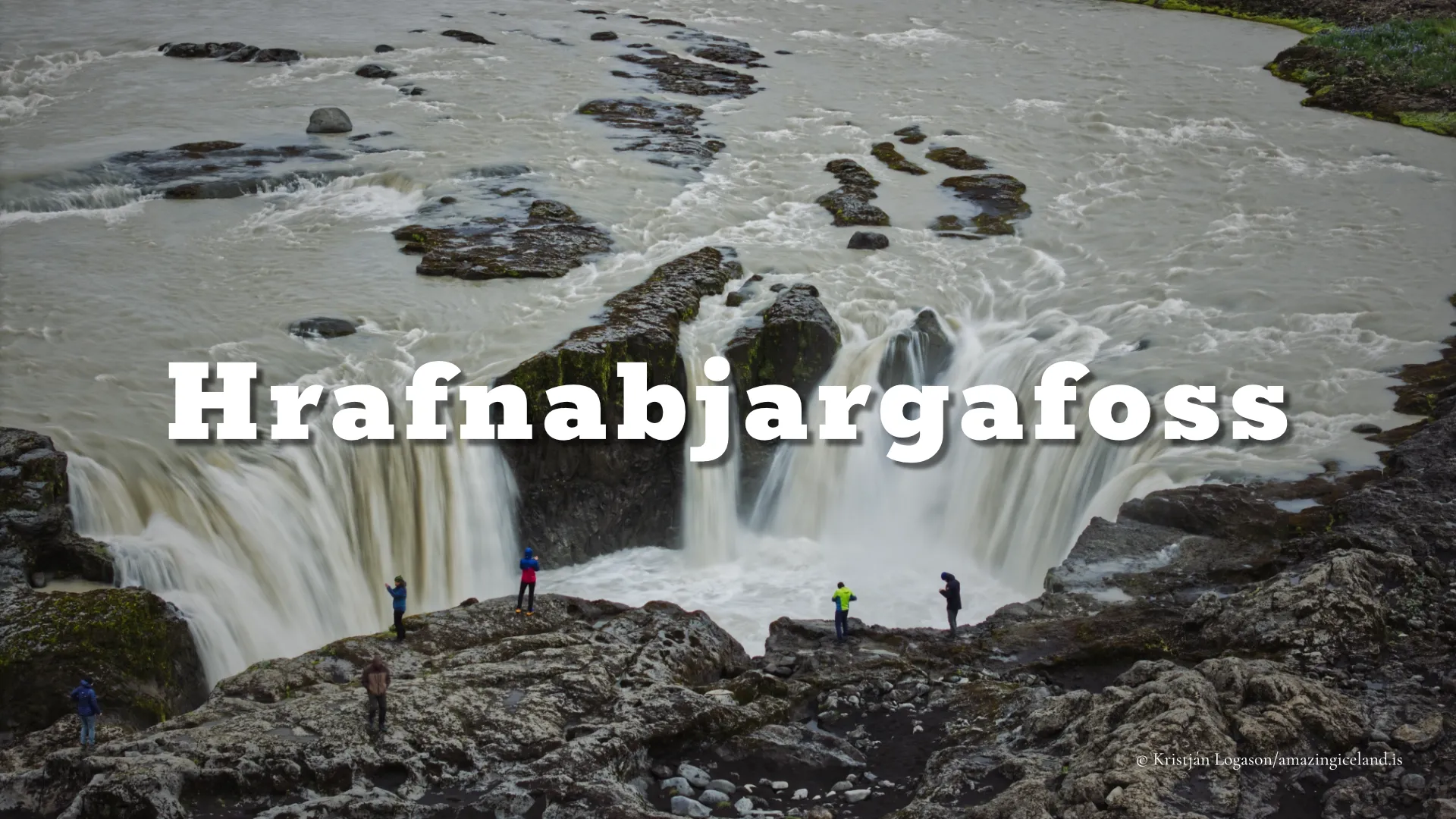
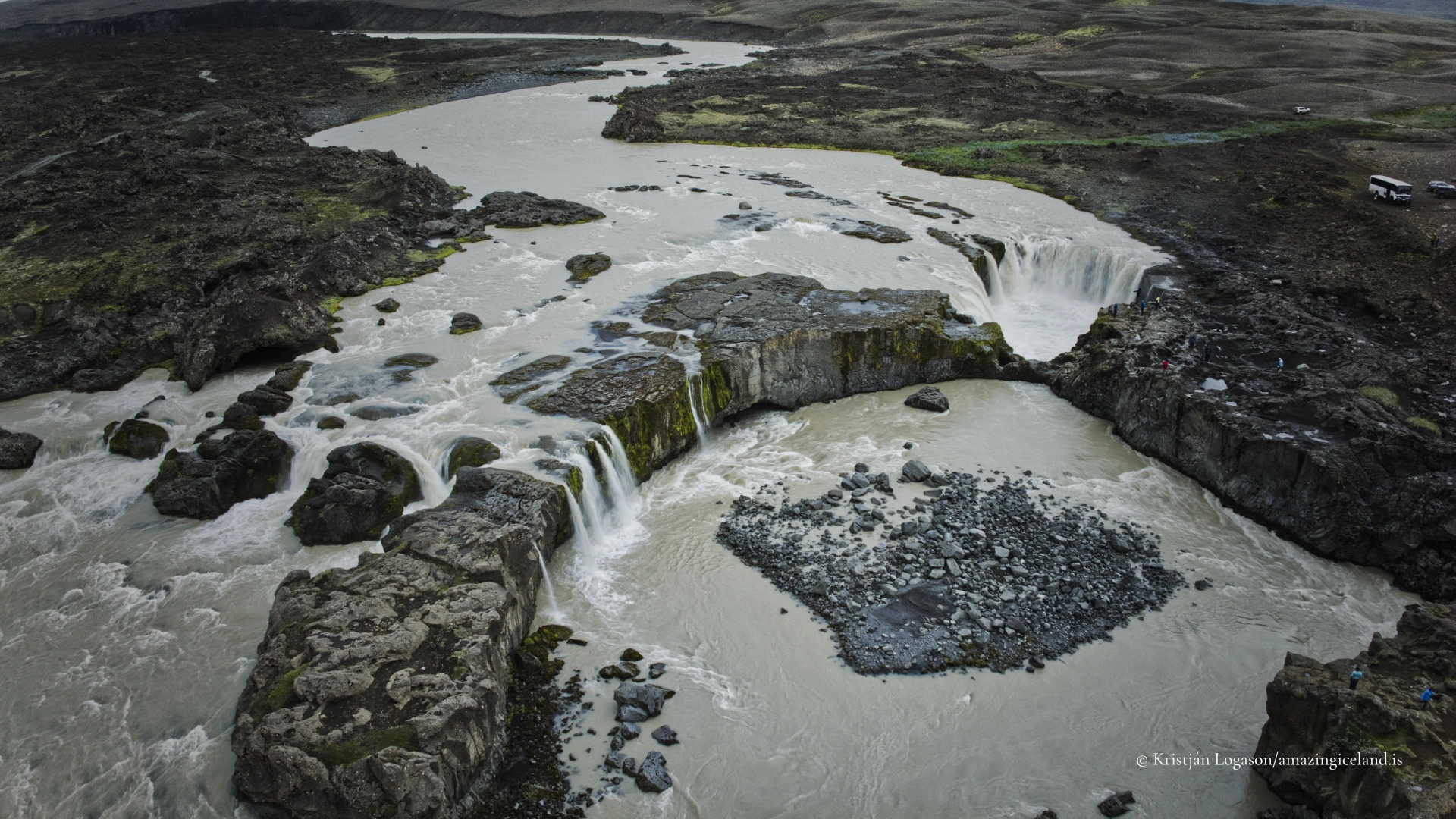
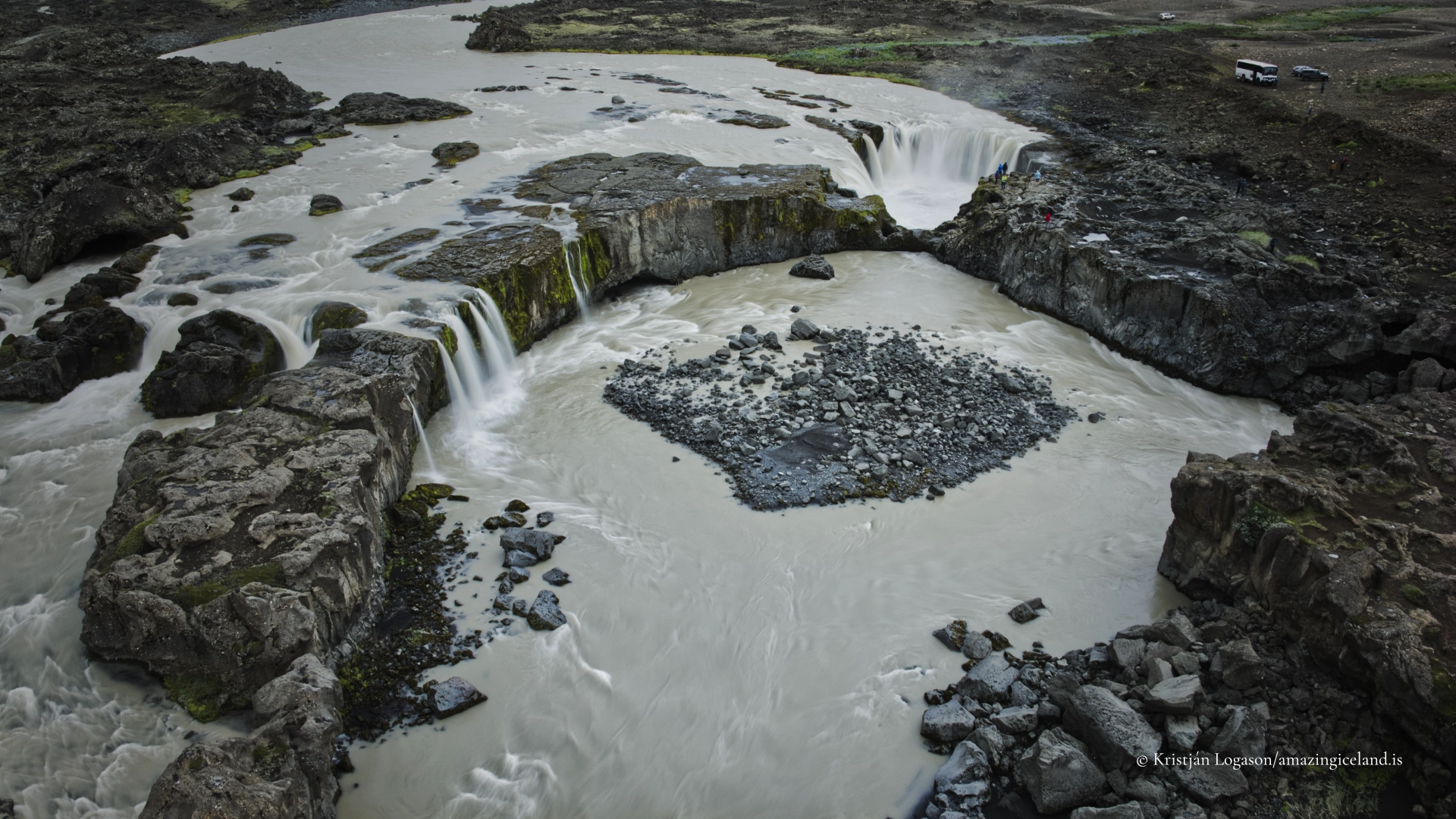
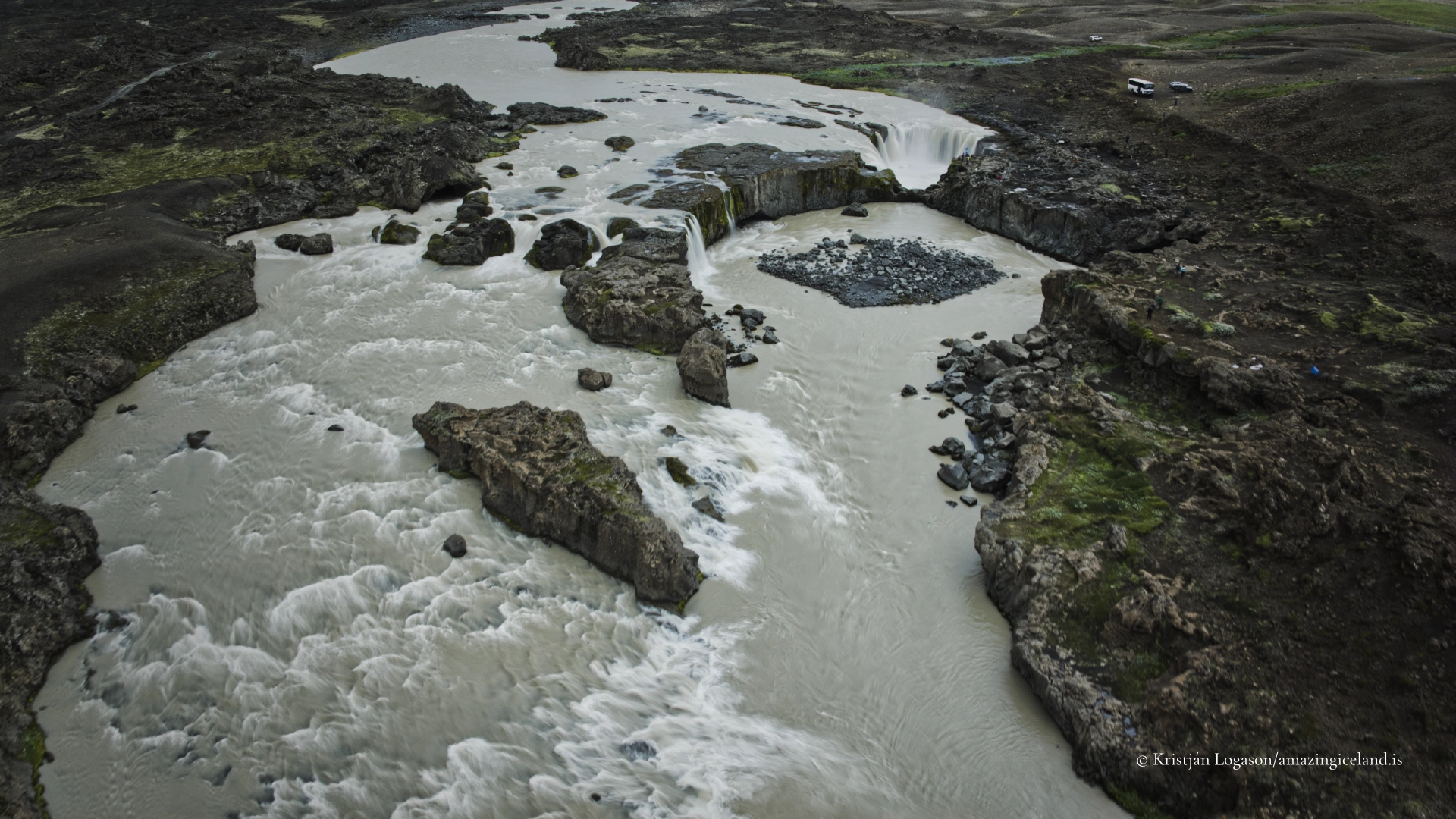
Downstream from Aldeyjarfoss in Bárðardalur, Hrafnabjargafoss occupies a more mature phase of river–rock interaction. The waterfall marks a point where the Skjálfandafljót is fully entrenched in basalt, its flow compressed into a narrow canyon that amplifies force and complexity. The result is one of North Iceland’s most underrated yet geologically coherent waterfall systems.
The location of Hrafnabjargafoss waterfall by highland road F26
Latitude
65.3519
Longitude
-17.3708
Hrafnabjargafoss waterfall by highland road F26
Geological setting and canyon formation
Hrafnabjargafoss lies on the Skjálfandafljót, the same glacial river that forms Aldeyjarfoss upstream. While both waterfalls share a basaltic foundation, their geomorphology diverges significantly due to differences in channel width, structural control, and erosional maturity.
The bedrock surrounding Hrafnabjargafoss consists primarily of basalt lava flows associated with volcanic activity in the Icelandic highlands, most likely linked to the Bárðarbunga volcanic zone. These lava flows cooled into relatively massive units with vertical and subvertical jointing, providing planes of weakness that the river later exploited.
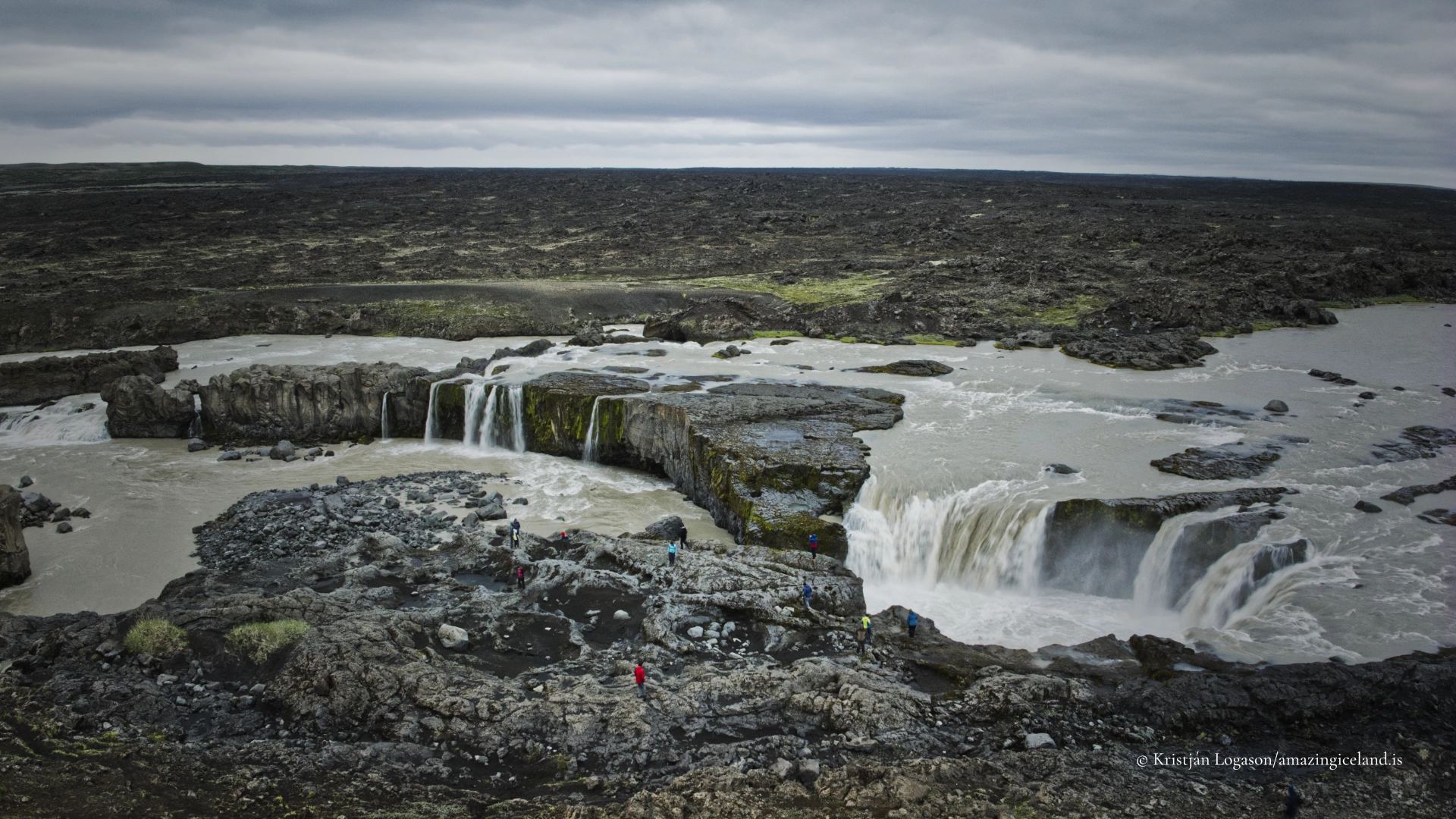
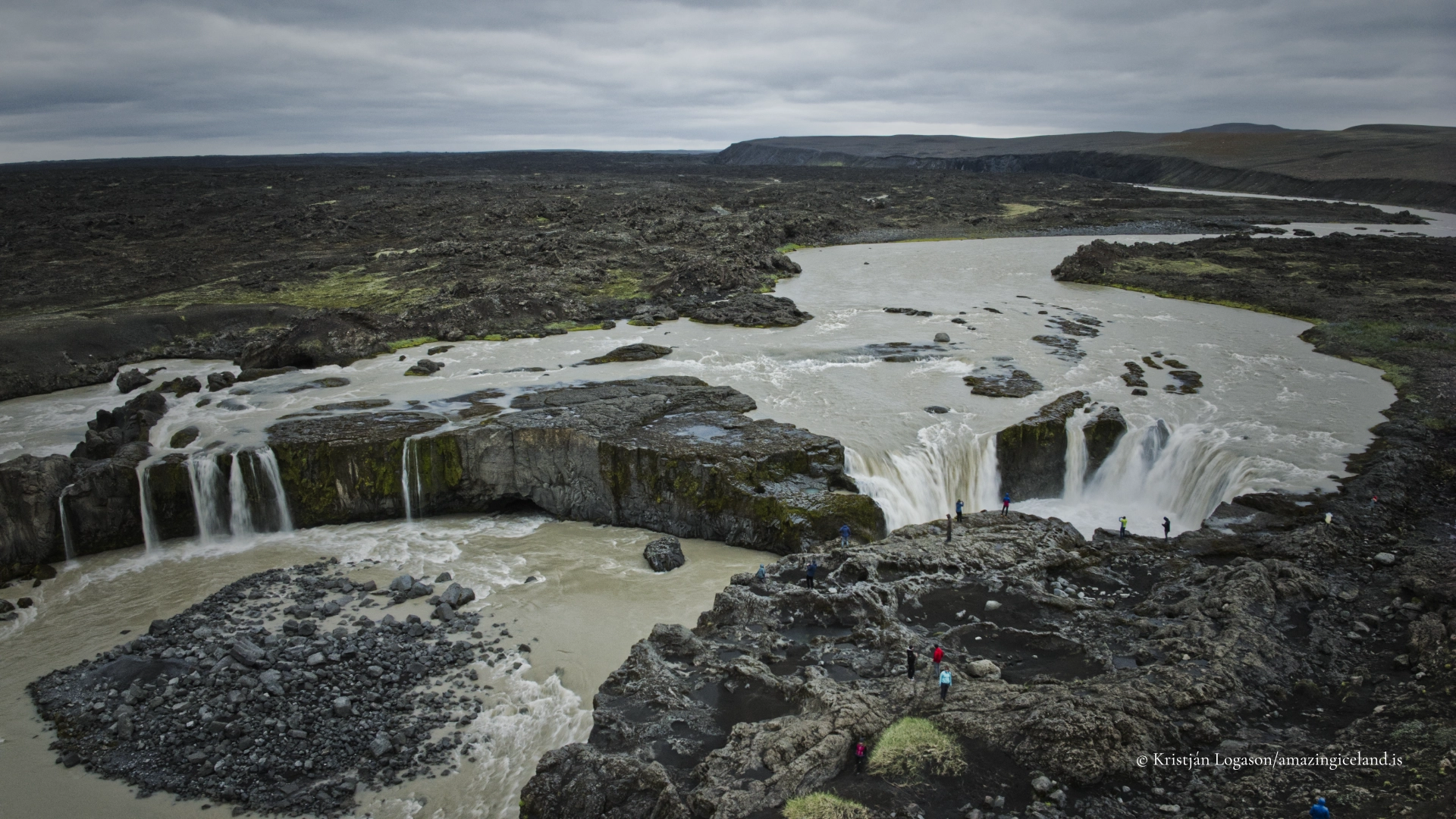
Unlike Aldeyjarfoss, where columnar basalt creates a semi-circular amphitheatre, Hrafnabjargafoss is defined by linear confinement. The river is forced through a narrow basalt corridor, where erosion is concentrated laterally and vertically at once. Over time, this has produced a steep-sided canyon with multiple drops, rapids, and plunge zones rather than a single dominant fall.
This configuration highlights an important geomorphological principle: waterfalls are not only products of elevation change, but of energy density. At Hrafnabjargafoss, the same volume of water is compressed into a smaller cross-section, increasing erosive power and visual intensity without requiring dramatic height.
Hydraulics, erosion, and visual character
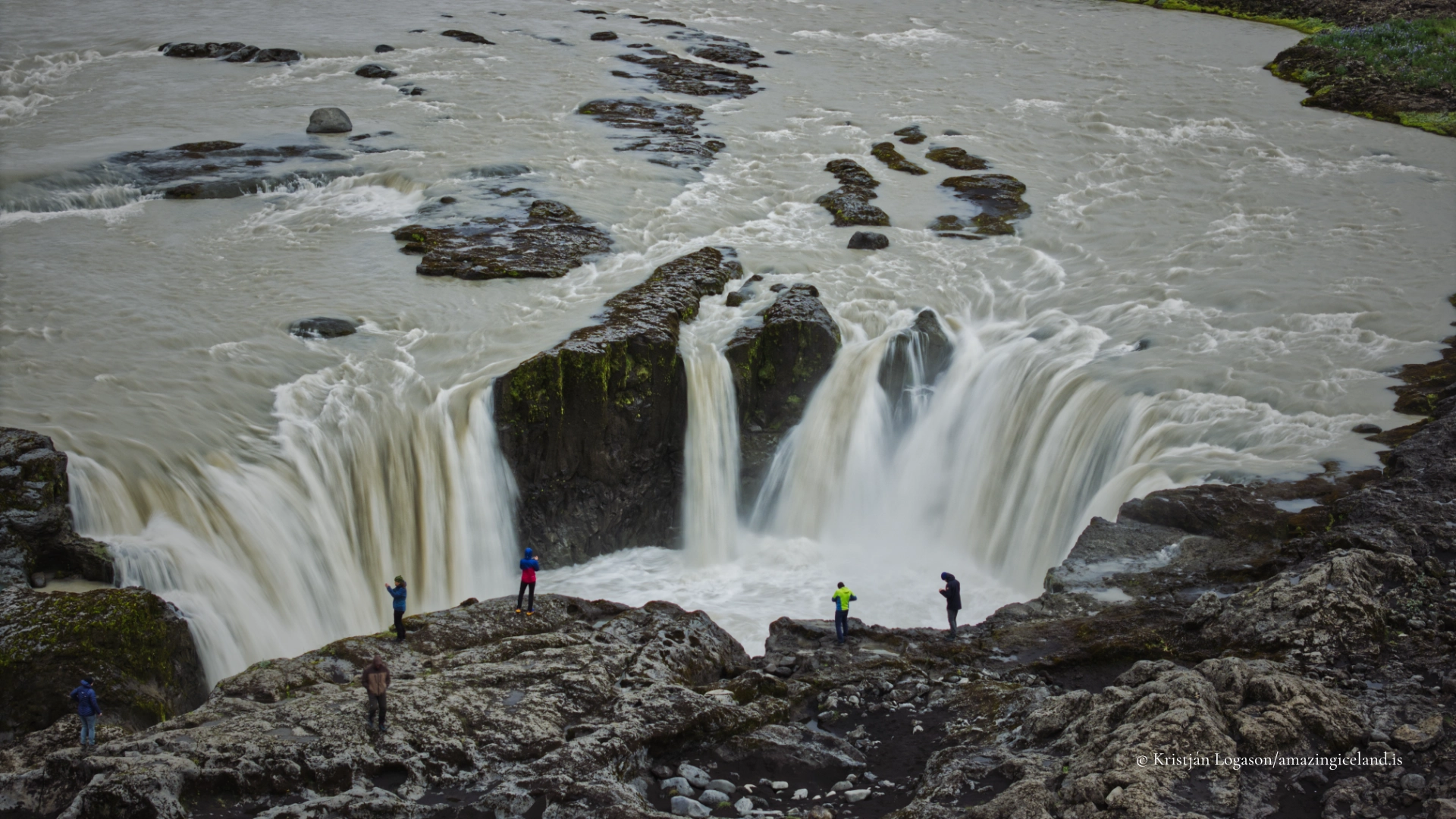
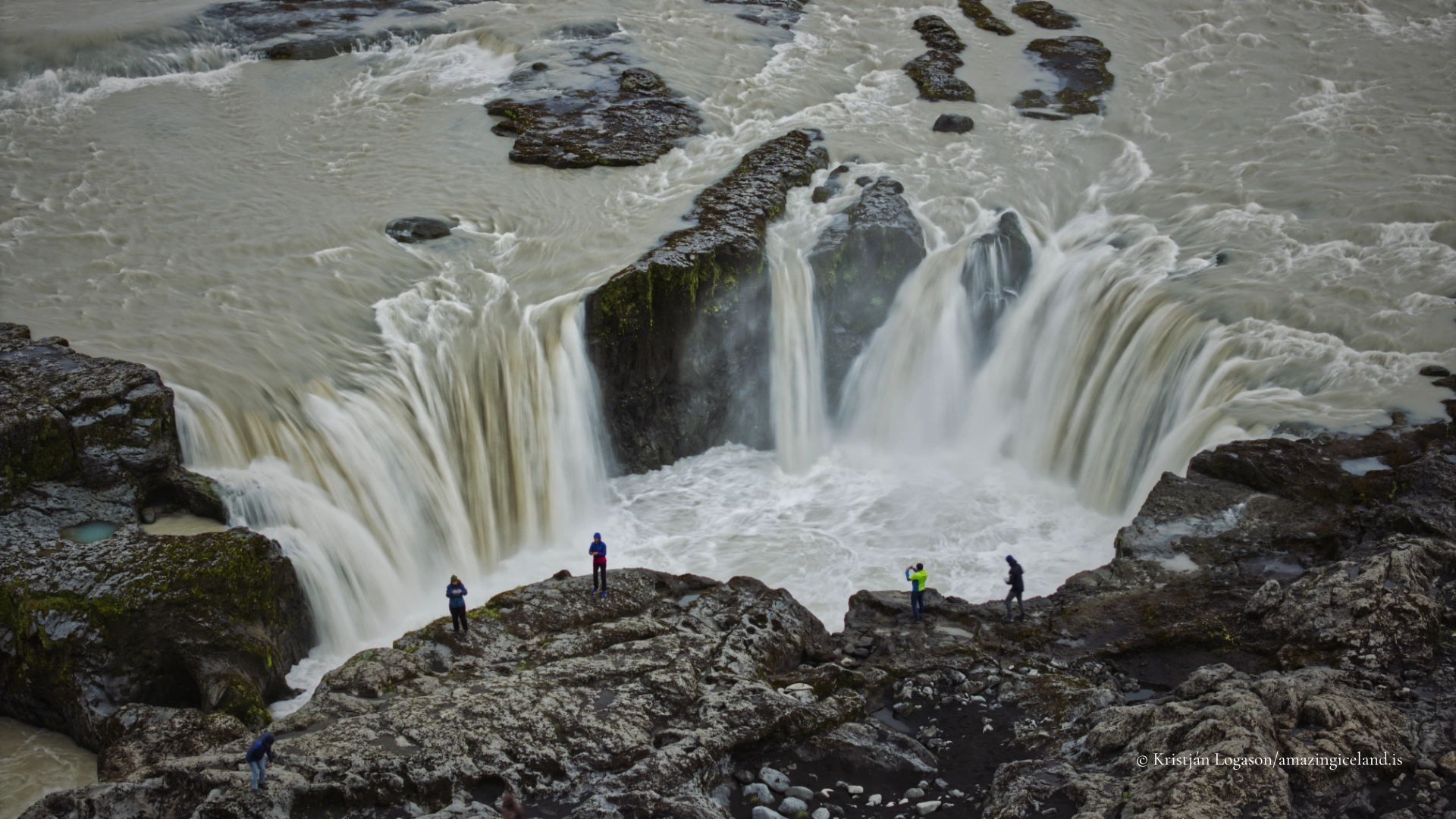
Hydrologically, Hrafnabjargafoss is a high-energy system. The Skjálfandafljót’s discharge fluctuates seasonally with glacial melt and precipitation, but its confinement at this point ensures consistently turbulent flow. Water accelerates through the canyon, breaks into multiple channels, and collides with basalt walls, generating complex circulation patterns and persistent spray.
From an academic perspective, the site demonstrates structurally controlled fluvial erosion. The river preferentially erodes along joints and fractures, deepening the canyon incrementally rather than retreating uniformly upstream. This results in an irregular waterfall profile with staggered drops and asymmetric flow paths.
Visually, Hrafnabjargafoss lacks the immediate iconic clarity of taller, singular waterfalls. Its strength lies in density: sound, motion, and texture are concentrated within a compact area. Basalt walls rise close to the flow, reducing peripheral visual noise and directing attention toward the mechanics of the river itself.
This makes Hrafnabjargafoss particularly valuable for comparative interpretation. When viewed after Aldeyjarfoss, the contrast is instructive—one emphasizes volcanic geometry, the other hydraulic aggression. Both are expressions of the same river interacting with the same rock type under different structural conditions.
Visiting Hrafnabjargafoss—access, perception, and care
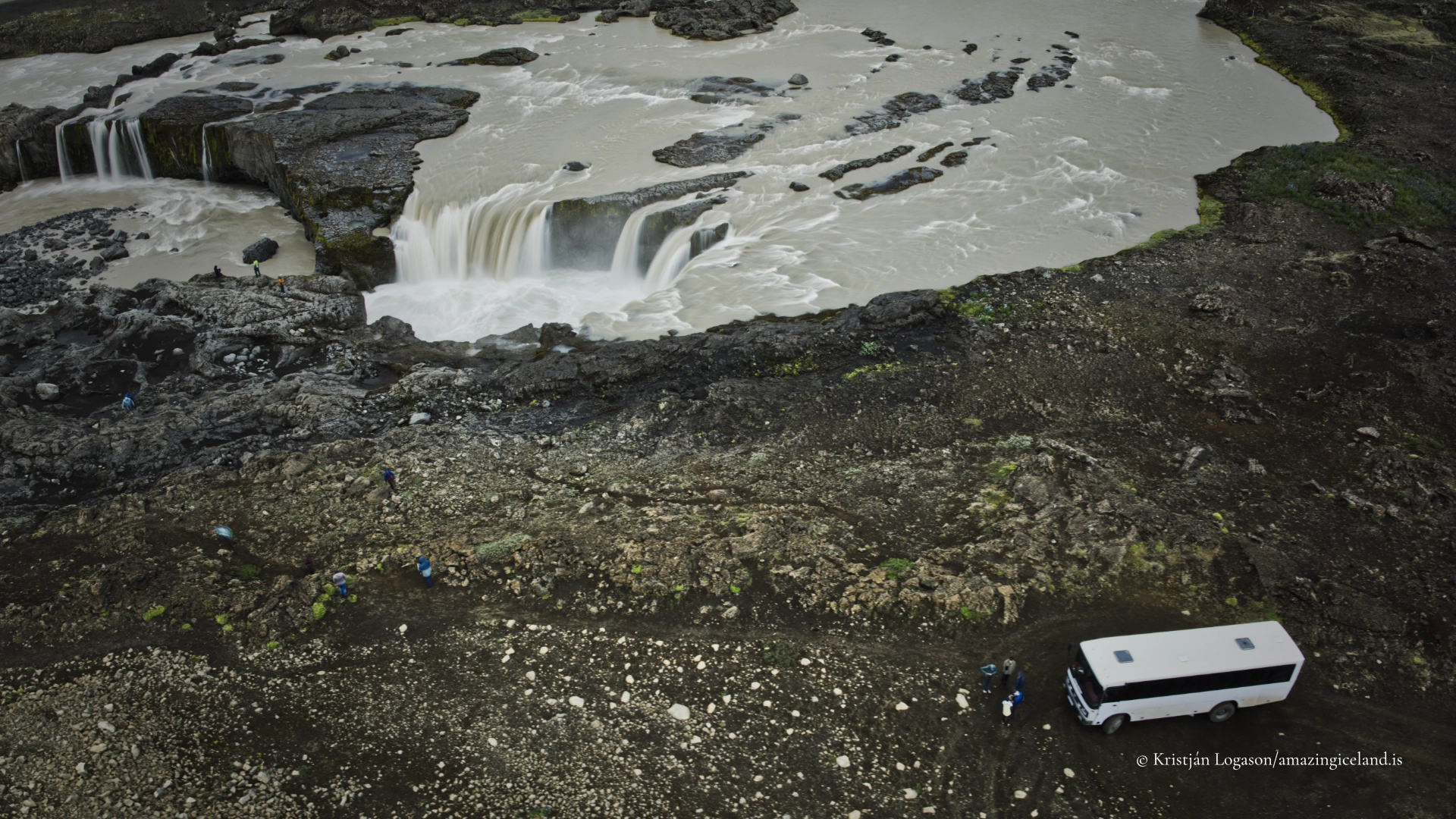
Hrafnabjargafoss is accessed via the same highland-edge road network as Aldeyjarfoss, with a short spur leading to a small parking area near the canyon rim. As with all routes in this area, access is highly seasonal and typically limited to summer months. Road conditions can change rapidly with weather, and visitors should check current status before committing.
From the parking area, informal paths lead toward viewpoints overlooking the canyon. There are no constructed safety barriers, and the basalt surface near the edge can be unstable or undercut. The sound of the river may mask subtle hazards, reinforcing the need for distance and situational awareness.
The experience of Hrafnabjargafoss is best approached laterally rather than frontally. Moving along the canyon rim allows the waterfall system to be read as a sequence of interactions rather than a single event. This mode of observation aligns with the site’s geological logic and reduces pressure to approach unsafe edges.
In itinerary terms, Hrafnabjargafoss functions as a deepening of the Aldeyjarfoss narrative rather than a repetition. Where Aldeyjarfoss resolves into a clear visual statement, Hrafnabjargafoss remains unresolved—energetic, fragmented, and ongoing. This makes it particularly compelling for visitors attuned to process rather than postcard imagery.
Interesting facts:
- Hrafnabjargafoss is wider and more hydraulically complex than Aldeyjarfoss, despite being less vertically dramatic.
- The waterfall system is carved entirely into basaltic bedrock, without contrasting lithologies.
- The canyon geometry concentrates flow, producing exceptionally turbulent water even at moderate discharge levels.
- The name Hrafnabjargafoss refers to nearby cliffs historically associated with ravens (hrafn).
- The site is rarely crowded, largely due to seasonal access limitations rather than lack of significance.
Image Gallery

The Locomotive Elite
What do Donald Trump and Iceland’s Locomotive Elite have in common?
Far more than you think.
In The Locomotive Elite, you’ll uncover how a tiny clique in Iceland captured extensive control—of banks, courts, media, and even the central bank.
For decades they ruled, first democratically, then through corruption and in the end through crime, enriching themselves and their cronies while dismantling oversight.
The result?
One of the most spectacular financial collapses in modern history.
Photography tips:
- Think in sequences: wide shots establish canyon context; tighter frames isolate flow paths and turbulence.
- Avoid edge-centric compositions: depth and scale are better communicated from oblique angles along the rim.
- Use fast shutter speeds selectively: freezing chaotic water emphasizes hydraulic energy over form.
- Work with sound and movement: anticipate spray drift and shifting highlights caused by turbulence.
- Minimalism works: basalt walls naturally simplify the frame—avoid over-composing.
Good cameras for Iceland
Sony A7R V

Sony A7s lll

Canon R6

Nikon Z6 lll

Destinations nearby
Good to have in Iceland