Grettislaug – Bathing within Sight of Drangey
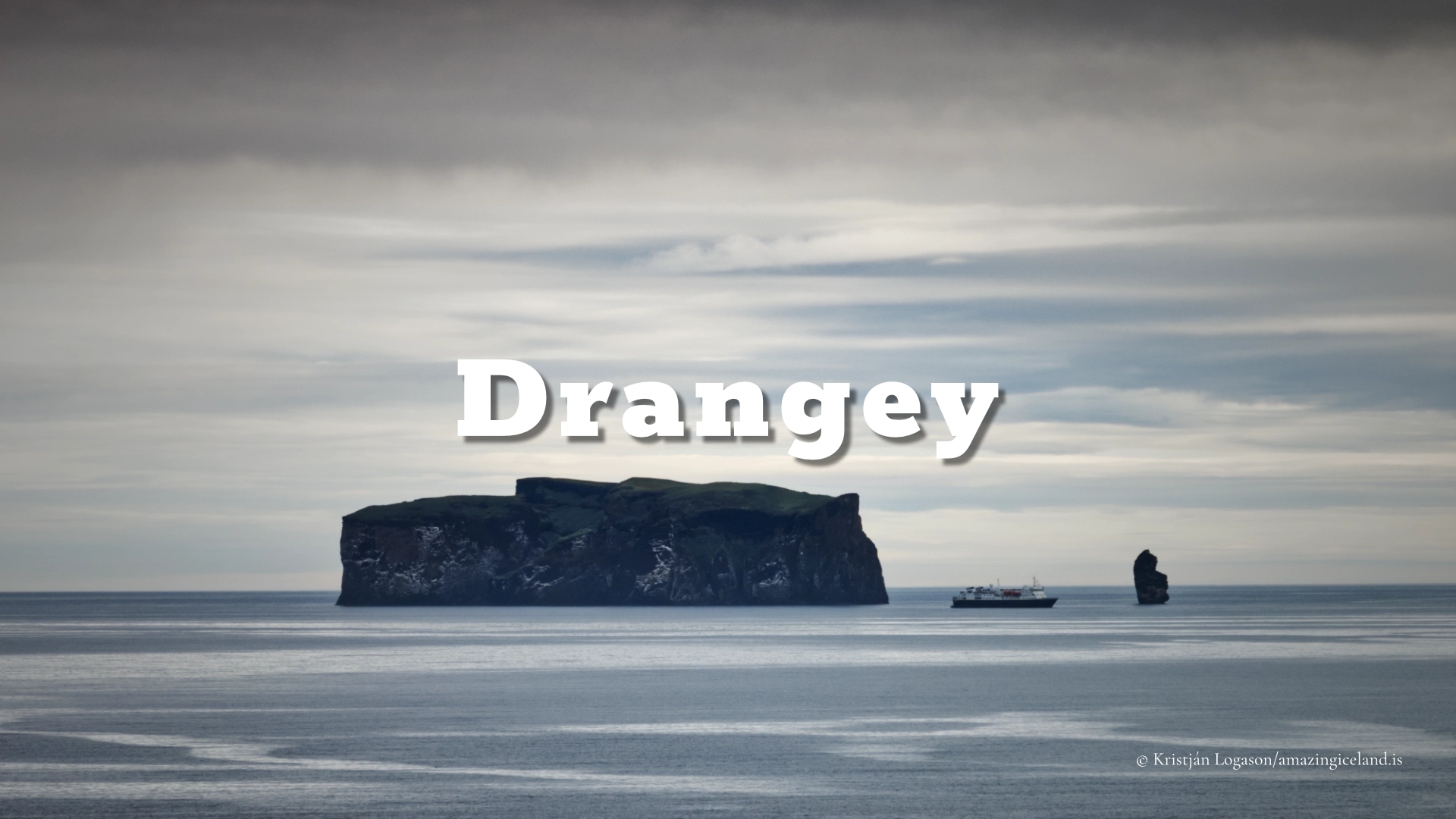
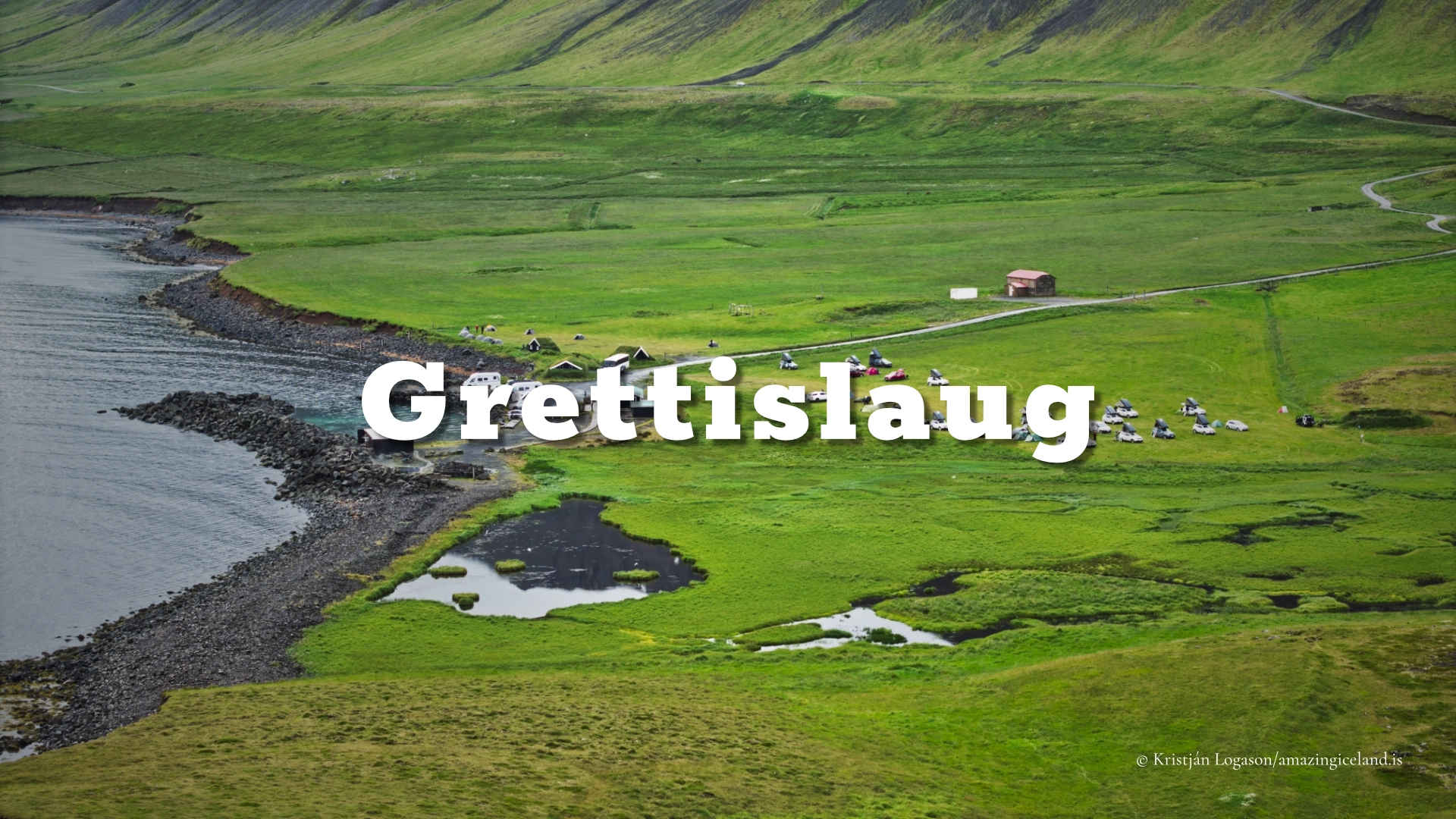
Grettislaug lies beside the sea at Reykir on Reykjaströnd, facing north across Skagafjörður. Warm geothermal water fills two stone-lined pools close to the shore, while Drangey rises from the sea directly ahead.
The setting makes Grettislaug different from an ordinary geothermal bathing place. The view across the fjord is also the centre of one of the most memorable episodes in *Grettis saga*. According to the saga, the outlaw Grettir Ásmundarson swam several kilometres from Drangey to Reykir after the fire on the island went out. He reached the coast exhausted, bathed in warm water and found shelter at the farm.
The saga confirms that warm bathing water was associated with Reykir when the story was written. It does not prove that the present stone pool is the same pool in which Grettir bathed. The pools visible today are modern constructions shaped by a much later history of storms, local memory and rebuilding.
Even so, the relationship between story and landscape is unusually immediate. From the warm water, visitors can look directly towards Drangey and see the distance Grettir was said to have crossed.
The location of Grettislaug – Bathing within Sight of Drangey
Latitude
65.8822
Longitude
-19.7369
Grettislaug – Bathing within Sight of Drangey
Reykir and the Pools beside the Sea
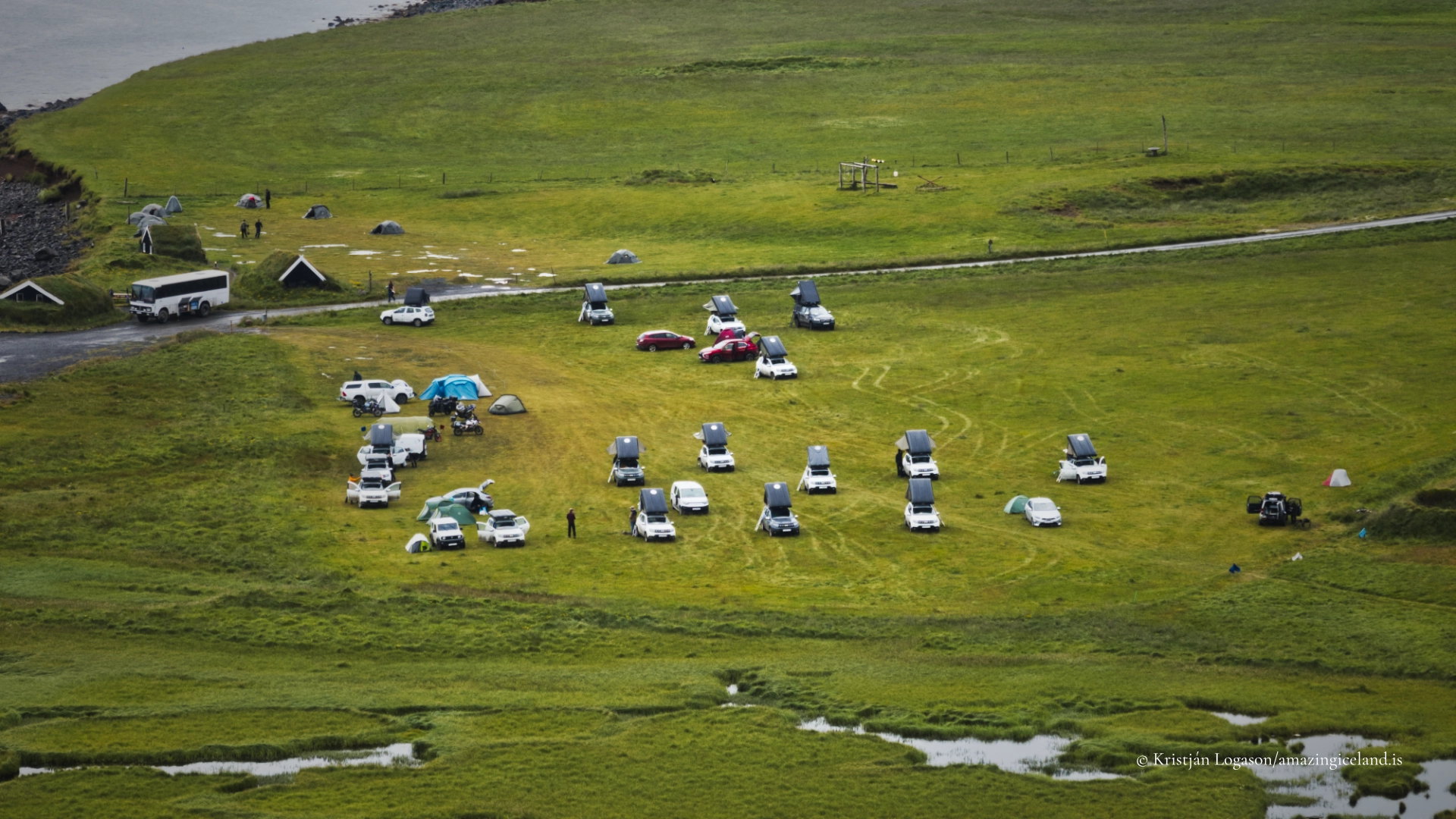
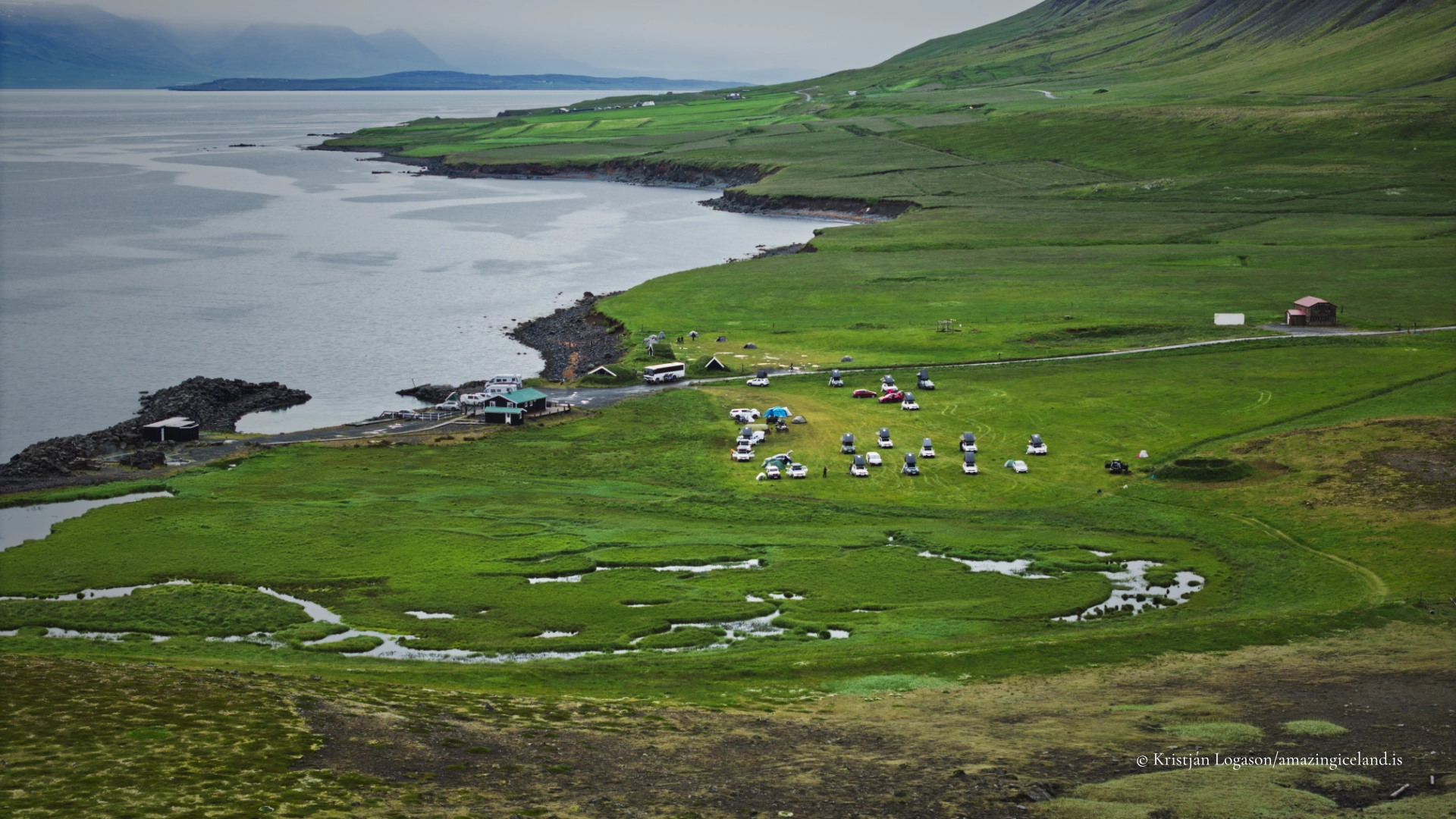
Reykir was once an agricultural farm at the outer end of Reykjaströnd. Farming there has ended, but the place has not been abandoned. It is now used seasonally for geothermal bathing, camping, accommodation and visitor services.
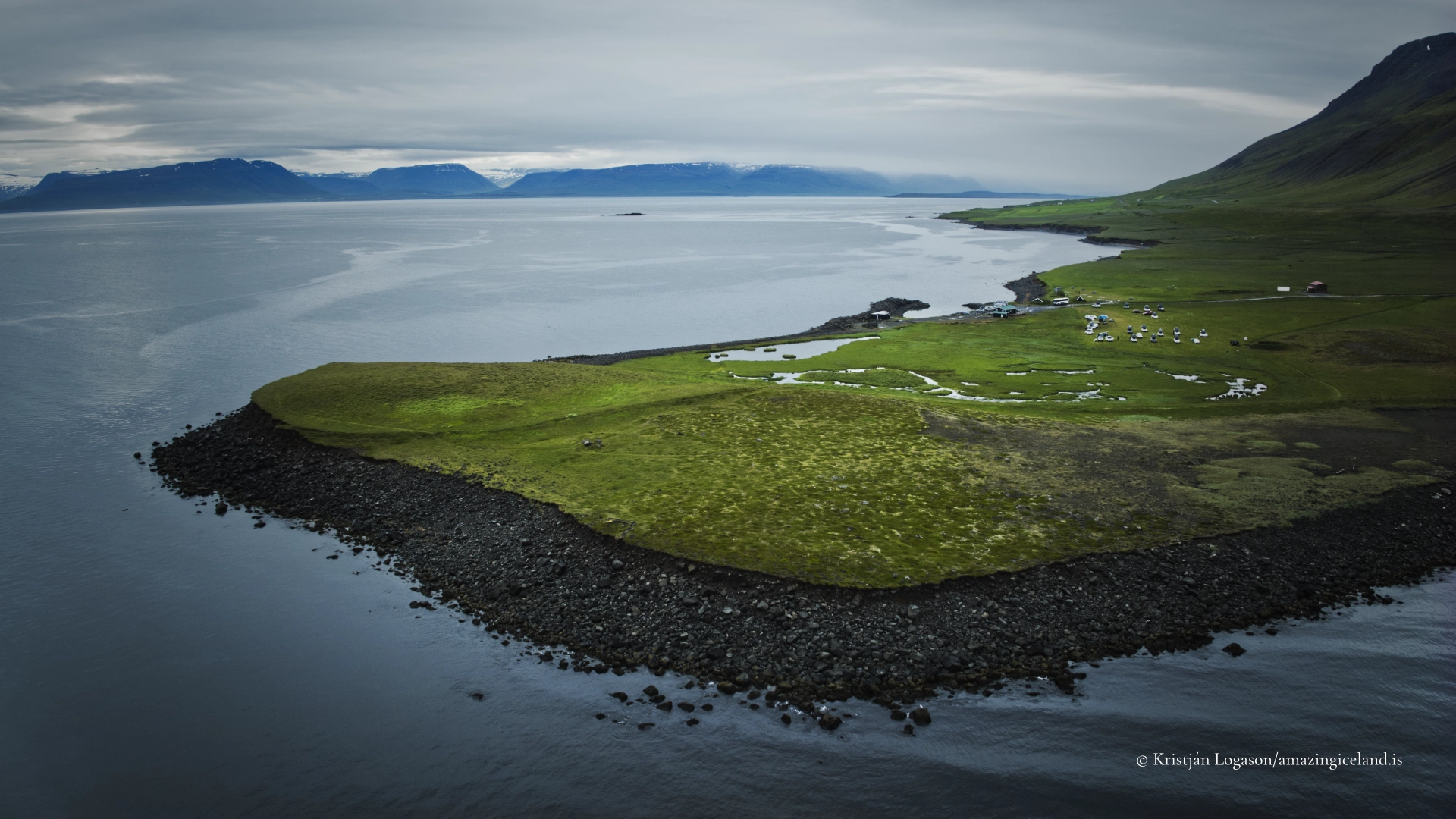
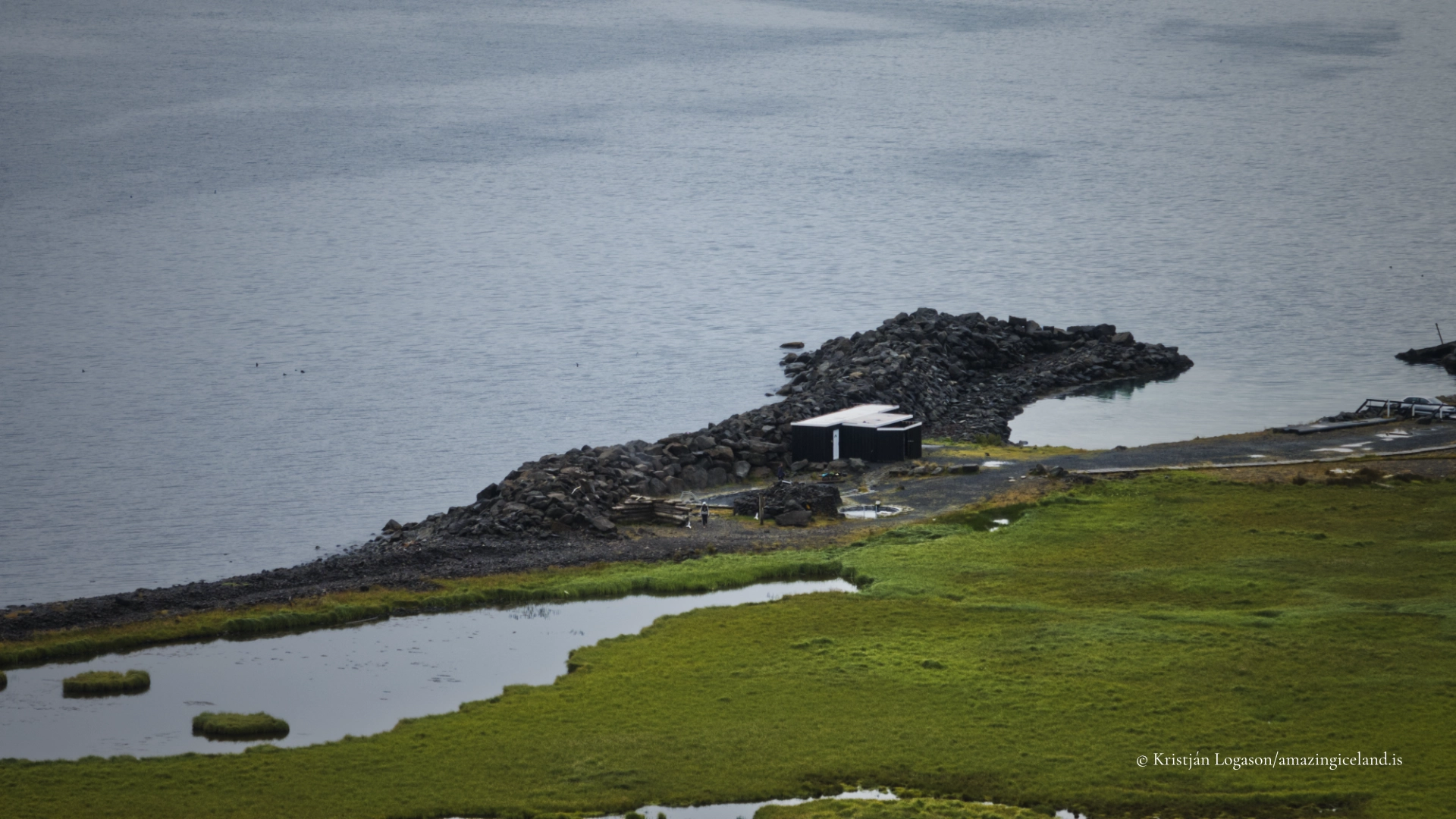
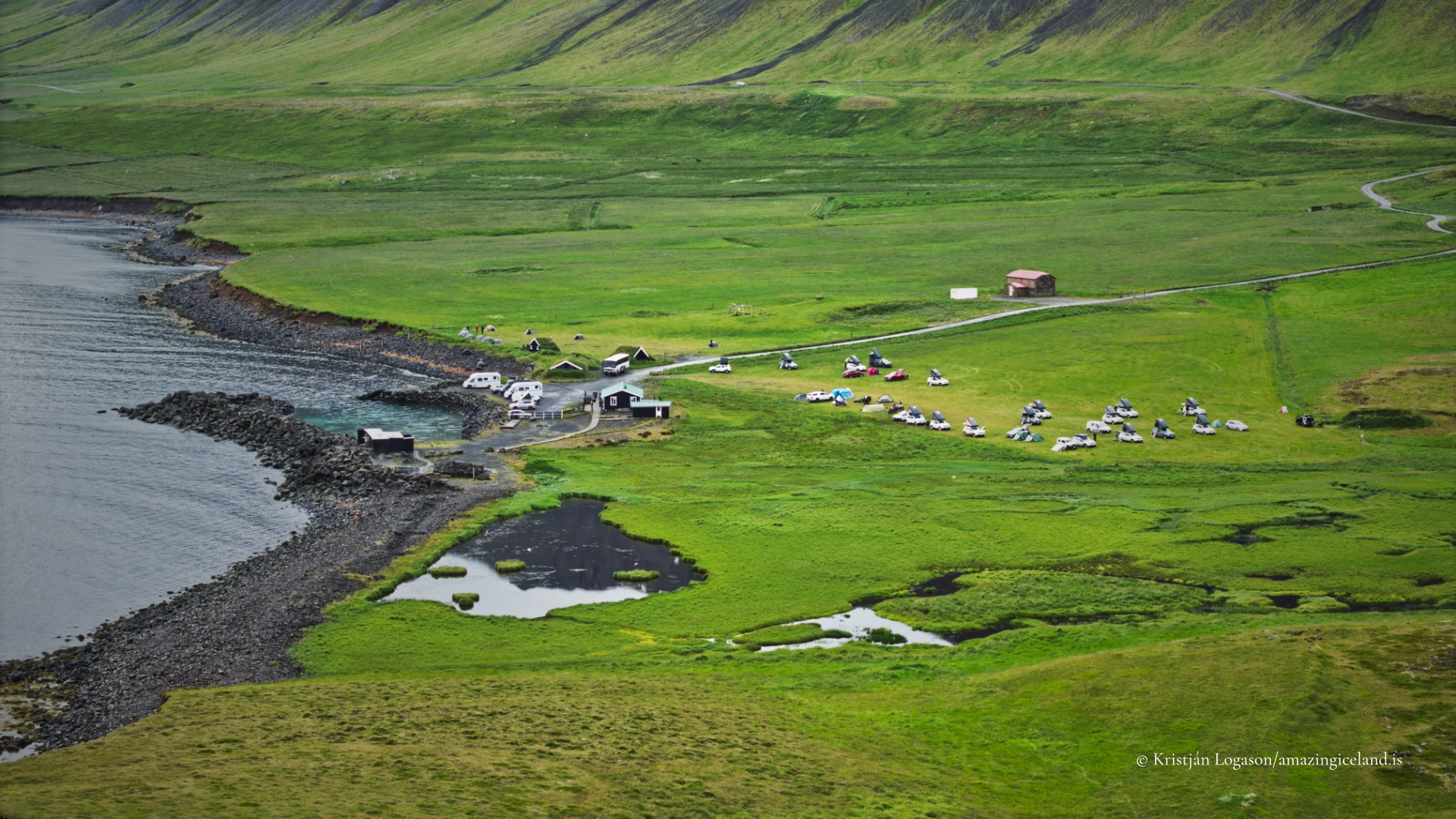
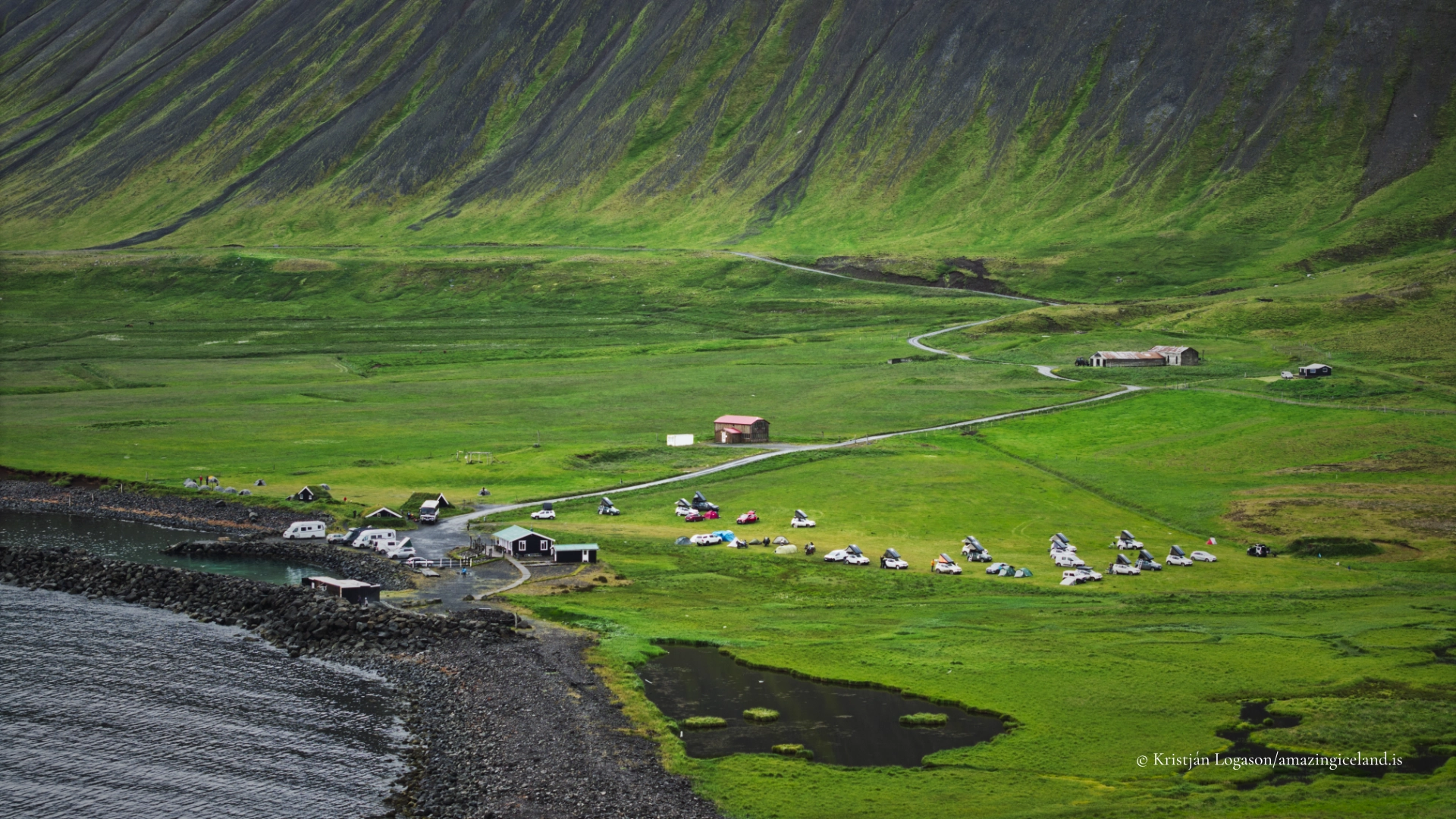
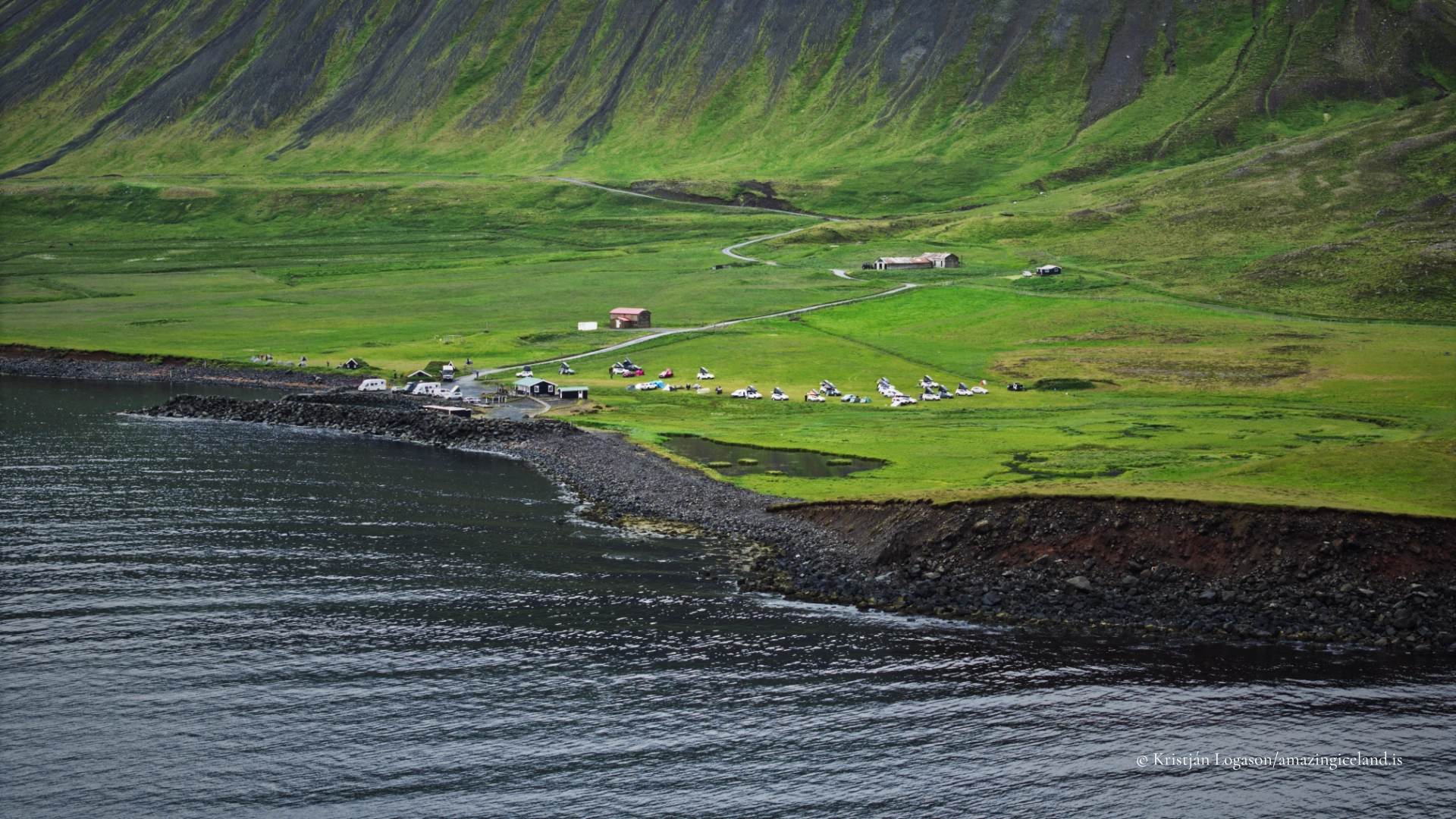
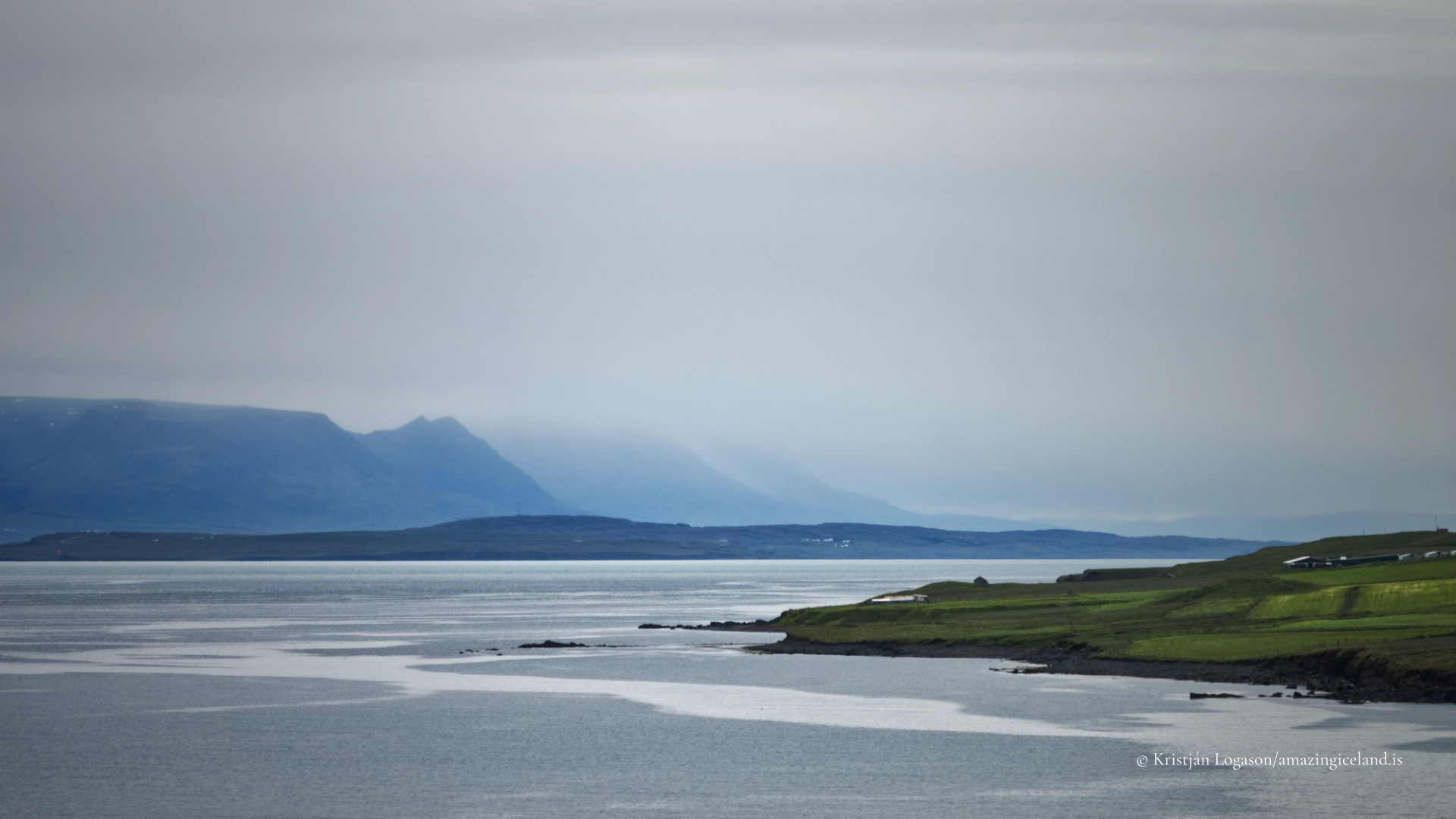
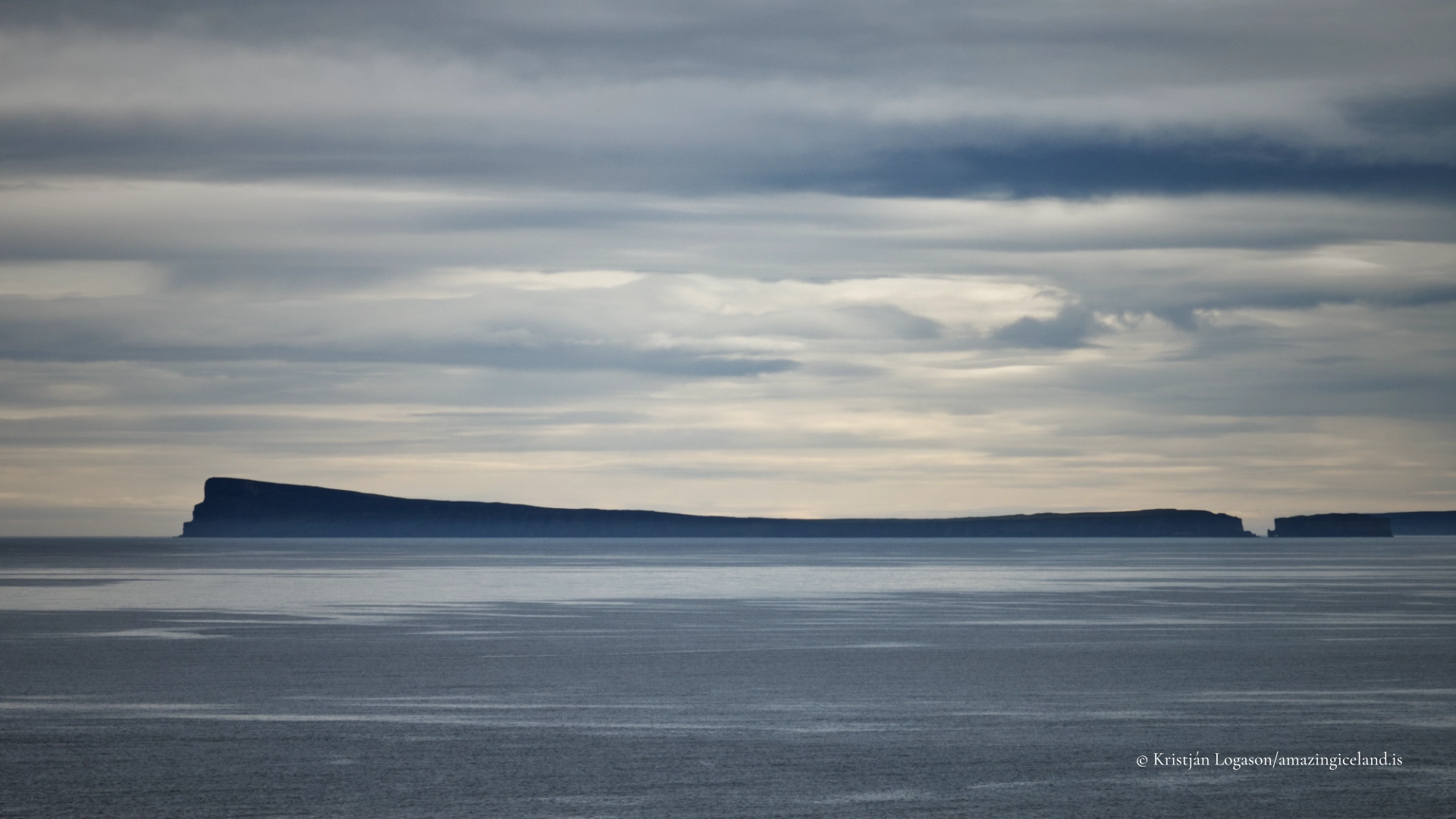
The pools, buildings, small harbour and coastline form one connected place between the coastal slopes and the open fjord. Drangey dominates the view, with Málmey farther across Skagafjörður.
There are two geothermal pools: Grettislaug and Jarlslaug. Both are filled with naturally warm water. Temperatures commonly vary between approximately 39 and 42°C, not only between the pools but also within them. Water can feel warmer near an inlet and cooler where it circulates or mixes.
These are simple outdoor pools rather than mechanically controlled baths. Weather, water flow and the number of bathers can all affect how the temperature feels. Their value lies in the combination of warm water, exposed coast and the uninterrupted view towards Drangey.
The name Grettislaug connects the place with Grettir Ásmundarson and the saga episode at Reykir. Jarlslaug commemorates Jón Eiríksson of Fagranes, known as Drangeyjarjarl—the Earl of Drangey—who led the modern rebuilding of the pools.
Storm, Reconstruction and Local Memory
Warm water has long emerged near the shore at Reykir. The form of the bathing places has changed as people contained the water and attempted to protect the pools from the sea.
Earlier shore pools were reportedly destroyed during the great storm of 1934. Their exposed position left them vulnerable to powerful waves and coastal weather.
The present Grettislaug and Jarlslaug were built in 1992 under the leadership of Jón Eiríksson of Fagranes. A protective stone wall was constructed between the bathing area and the sea, sheltering the pools from ordinary wave action while leaving the coast, salt air and changing surface of Skagafjörður central to the experience.
The present operators are connected with Jón’s family, continuing the local relationship with the pools and Drangey. The precise family line is less important here than the continuity of care for a place that combines geothermal water, local history and one of Iceland’s best-known saga landscapes.
The construction date needs to be understood clearly. The stones surrounding today’s pools are not medieval remains, nor is the present Grettislaug the unchanged pool described in the saga. It is a modern bathing place built where warm water and the tradition of Grettir’s visit have far older roots.
That distinction strengthens the story rather than diminishing it. The modern pool does not need invented archaeological continuity. Its meaning comes from the enduring relationship between the warm springs at Reykir and Drangey across the water.

Grettir, Drangey and the Lost Fire
Grettir Ásmundarson is the central figure of Grettis saga. Strong, proud, difficult and repeatedly destructive to himself and others, he becomes an outlaw and spends years surviving beyond the protection of Icelandic law.
The later part of the saga places Grettir on Drangey with his younger brother Illugi and their servant Glaumur. The island offered an exceptional natural refuge. Its cliffs rise steeply from Skagafjörður, access is difficult, and anyone approaching could be seen from above.
Drangey provided birds, eggs and grazing, but the men remained dependent on tools and supplies that could not easily be replaced. Fire was essential for warmth and cooking. On an isolated island without a reliable supply of timber, allowing it to die was not a minor inconvenience.
According to the saga, Glaumur had been responsible for tending the fire but failed to do so. The men had no boat available, and life on Drangey suddenly became impossible without reaching the mainland.
Grettir decided to swim.
The saga describes him entering the sea late in the day in calm weather and with a favourable current. He swam several kilometres across open Skagafjörður from Drangey towards Reykjanes.
The achievement is remarkable even within a saga filled with demonstrations of Grettir’s strength. The water is cold, the crossing exposed and the island farther from shore than it can initially appear.
The Swim and the Warm Water at Reykir
Grettir reached land after sunset, exhausted and extremely cold. He made his way to Reykir and entered a warm pool, where he recovered from the crossing.
The association between Grettir and geothermal bathing is therefore not merely a modern name attached to a convenient pool. Warm water at Reykir forms part of the saga episode itself.
After bathing, Grettir entered the warm farmhouse and fell into a deep sleep that lasted well into the following day.
His arrival then leads into one of the saga’s characteristically coarse comic scenes. Women at the farm discover the sleeping stranger and examine the enormous outlaw whose strength was already famous. A servant woman mocks him for appearing less impressive below the waist than above it.
Grettir wakes, answers her with a verse defending himself and pulls her into bed to settle the insult in a direct and thoroughly medieval manner.
The episode is bawdy rather than heroic. It belongs to a saga that moves between danger, violence, supernatural terror, humiliation and crude humour. Grettir completes an almost impossible swim, yet the narrative immediately brings the great outlaw into an intimate domestic comedy.
A modern reader may find aspects of the encounter uncomfortable because the saga does not treat consent as a modern account would. It should not be romanticised. Removing it entirely, however, would hide some of the rough humour through which the saga shapes Grettir. He is never allowed to remain a simple hero: his strength inspires admiration, while his arrogance, conflicts and conduct continually complicate it.
The Return to Drangey
Grettir did not swim back to Drangey carrying fire.
According to the saga, Þorvaldur, the farmer at Reykir, later lent Grettir a boat and went with him back to the island. The journey by boat solved the immediate crisis caused when the fire went out.
Modern summaries sometimes reduce the episode to Grettir swimming ashore for embers, warming himself in the pool and then swimming back. That version makes the story more symmetrical, but it is not the sequence preserved in Grettis saga.
The lost fire explains why Grettir had to leave Drangey. The bath and sleep at Reykir explain how he recovered after the crossing. Þorvaldur’s boat explains how he returned. The saga does not need the additional claim that Grettir carried burning embers through the water; its actual story is already extraordinary.
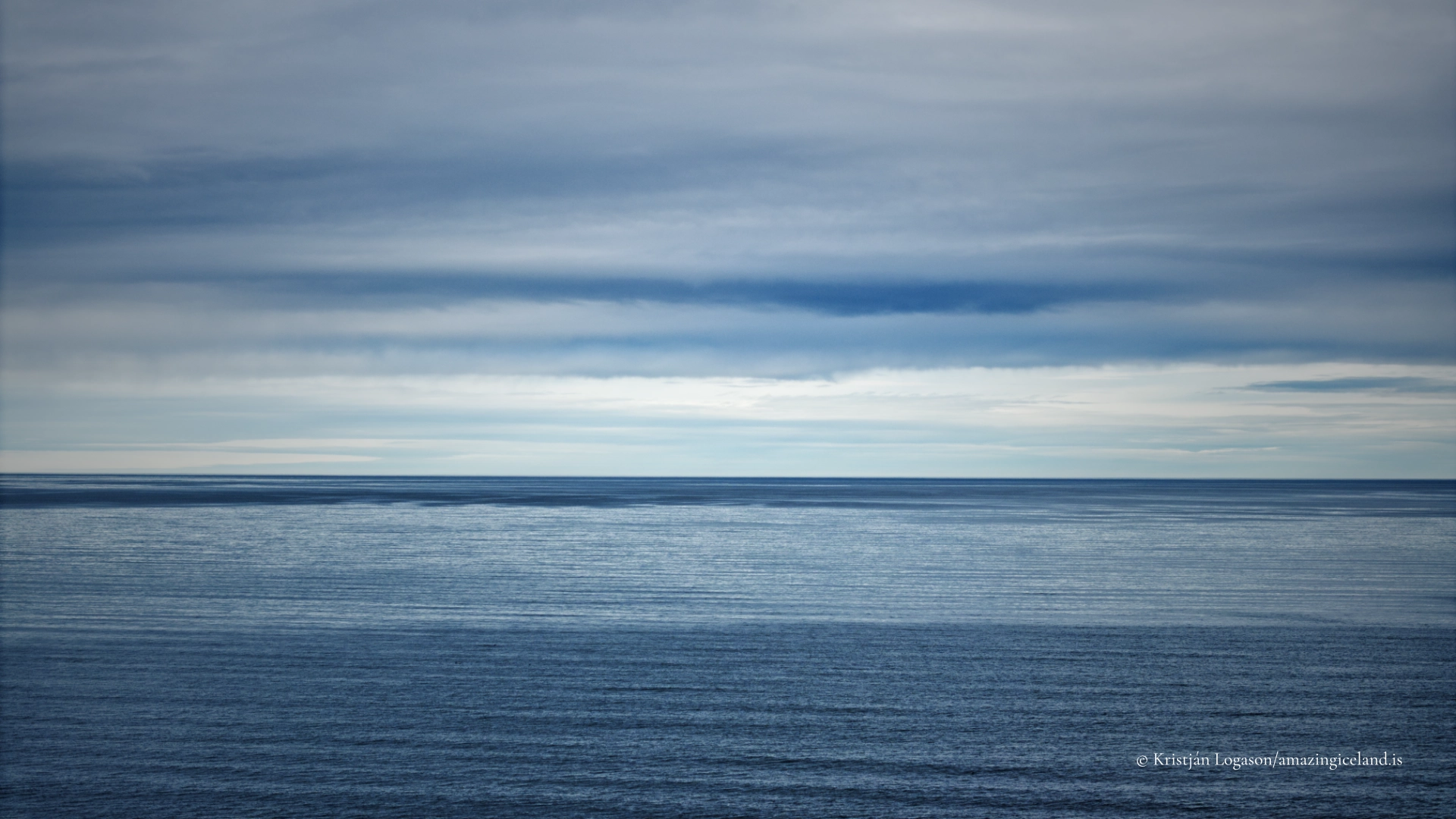
From Grettislaug, the geography clarifies the danger. Drangey is fully visible, yet a wide expanse of cold and unpredictable water separates it from Reykir. The island looks near enough to define the view and far enough to make the swim difficult to comprehend.
That visible distance is the heart of the destination. Visitors can sit in warmth at the end of the crossing and look towards the island where Grettir’s fire had gone out.
Saga, Evidence and the Present Pool
Grettis saga was written long after the period in which its events are set. Like the other Icelanders’ sagas, it combines memories of people and places with oral storytelling, literary construction and the concerns of the society that preserved it.
Its reference to warm bathing water at Reykir is valuable evidence for the association between the place and geothermal bathing. It is not archaeological proof that Grettir used a particular surviving structure.
No stonework around the present pools should be described as a remnant of his bath. Grettislaug and Jarlslaug were constructed in modern times, while the shore had already been altered by storms and human work.
The site’s authenticity lies elsewhere. The warm water is real. Reykir is real. Drangey still stands in the same position across Skagafjörður, and the distance between island and shore can be judged by eye.
The present pools allow the landscape of the saga to be experienced rather than merely read about. That connection is strong enough without claiming that the stones surrounding the water are medieval.
A small harbour lies beside the pools and recalls the practical relationship between Reykir and Drangey. Older visitor information describes excursions leaving from this harbour, but current scheduled Drangey tours depart from Sauðárkrókur marina. Arrangements may change, and trips must be booked and confirmed in advance. They are seasonal and depend on suitable sea and weather conditions.
Drangey should not be treated as an informal extension of a visit to the pool. Landing requires local knowledge and boat transport, while ascending the island is steep and demanding.
Road Access, Season and Facilities
Grettislaug lies at the end of Road 748, north of Sauðárkrókur along Reykjaströnd. The road becomes gravel and is normally manageable in an ordinary car during summer conditions.
Drivers should allow time for the journey. The road is narrow in places, and livestock and other road users may be encountered. Winter and shoulder-season access is less reliable. Snow, ice, wind and changing road conditions can make the final section difficult or unsuitable, so current conditions should be checked before travelling.
During the attended season, access is paid for at the small café. Changing areas, showers and toilets are available, together with camping and accommodation at Reykir. Visitors should confirm current seasonal operation before setting out rather than relying on fixed dates that may change.
The pools may remain physically accessible when the operation is unattended, but visitors must be prepared for the café and all facilities to be closed. Reaching the water does not guarantee access to a changing room, shower, toilet or staff assistance.
Everyone should wash before entering when the showers are available. Food, soap and glass containers do not belong in or beside the pools. Clothing should not be changed openly when proper facilities are available.
The pools are shared spaces. Visitors should respect people who come for the quiet setting, and children require close supervision around warm water, wet stone and the nearby sea.
The protective wall limits the ordinary effect of the sea, and tides are not normally a bathing hazard in conditions suitable for visiting. If waves and wind are severe enough to break heavily across the shore, it is not sensible to use the pools.
Responsible Bathing and a View across the Fjord
Natural geothermal pools do not offer the exact control of a conventional swimming pool. Temperature and flow can vary, and visitors should move within the water carefully before settling in the warmest areas.
It is easy to remain immersed too long, particularly in cold air. Leave the water if you feel light-headed, overheated or unwell, and remain hydrated. Geothermal water may also affect jewellery and some materials.
Nothing should be added to the pools, and the stonework must not be rearranged. The water system, pool edges and protective wall are maintained for everyone who visits. Parking and established walking areas should be used, and birds and other wildlife along the coast should be left undisturbed.
Privacy is especially important at a bathing place. People should not be photographed recognisably without clear permission. The same principle applies to drones: a legal flight can still be intrusive if it passes close to people in the pools.
Grettislaug is strongest when understood as a relationship rather than a single feature. The two pools, harbour, buildings, shore and Drangey explain one another.
The comfort of warm water on the mainland stands against the cold expanse of Skagafjörður. Looking across that water towards the outlaw’s refuge makes Grettir’s predicament visible in a way that no measurement or brief saga summary can achieve.
Interesting facts:
-
- Grettislaug and Jarlslaug are two stone-lined geothermal pools beside the sea at Reykir on Reykjaströnd.
- Water temperature commonly varies between approximately 39 and 42°C, including variation within the individual pools.
- Earlier shore pools were reportedly destroyed in the great storm of 1934.
- The present pools were built in 1992 under the leadership of Jón Eiríksson of Fagranes, known as Drangeyjarjarl.
- Jarlslaug commemorates Drangeyjarjarl, while Grettislaug is named for the outlaw Grettir Ásmundarson.
- Grettis saga says that Grettir swam several kilometres from Drangey after the island’s fire went out, bathed at Reykir and slept in the farmhouse.
- Grettir returned to Drangey by boat with Þorvaldur of Reykir; the saga does not say that he swam back carrying fire.
- The present stone pools are modern constructions, not surviving medieval structures, although the saga itself associates Reykir with warm bathing water.
- Current scheduled Drangey tours depart from Sauðárkrókur rather than Reykir harbour and must be booked in advance.
- Road 748 becomes gravel and ends at Reykir; it is normally manageable by an ordinary car in summer conditions.
Image Gallery
Photography tips:
-
- The essential composition is the relationship between the warm pools and Drangey. Include enough of the pool and shoreline for the island to explain the setting.
- Avoid using an excessively wide lens if it makes Drangey appear insignificant. A normal lens often balances bathers, stone edges, sea and island more effectively.
- A short telephoto can compress the distance and make Drangey visually stronger, but the image should not falsely imply that the island is close to shore.
- Human-scale details—hands on the stone edge, steam around a face or someone looking towards Drangey—can describe the experience better than an empty aerial overview.
- Obtain clear permission before photographing identifiable bathers. Drone flights should remain distant enough to preserve privacy.
- Use the two pools to create depth, or include the nearby buildings to show that Grettislaug and Jarlslaug belong to Reykir rather than an isolated wilderness.
- The harbour can provide foreground lines leading towards Drangey and connect the saga landscape with the practical history of journeys across the fjord.
- Soft overcast light retains detail in the dark island cliffs, pale sky, water and stone. Low sunlight can separate Drangey from the horizon and add colour to the fjord.
- Cold air can create steam above the pools. Backlighting reveals it well, but exposure must preserve detail in the brighter sky and water.
- A drone can show the complete relationship between the pools, harbour, buildings, coast and Drangey. Follow current rules, allow for rapidly changing coastal wind and give seabirds generous distance.
Destinations nearby