Drangey – The Island That Protected and Trapped Grettir
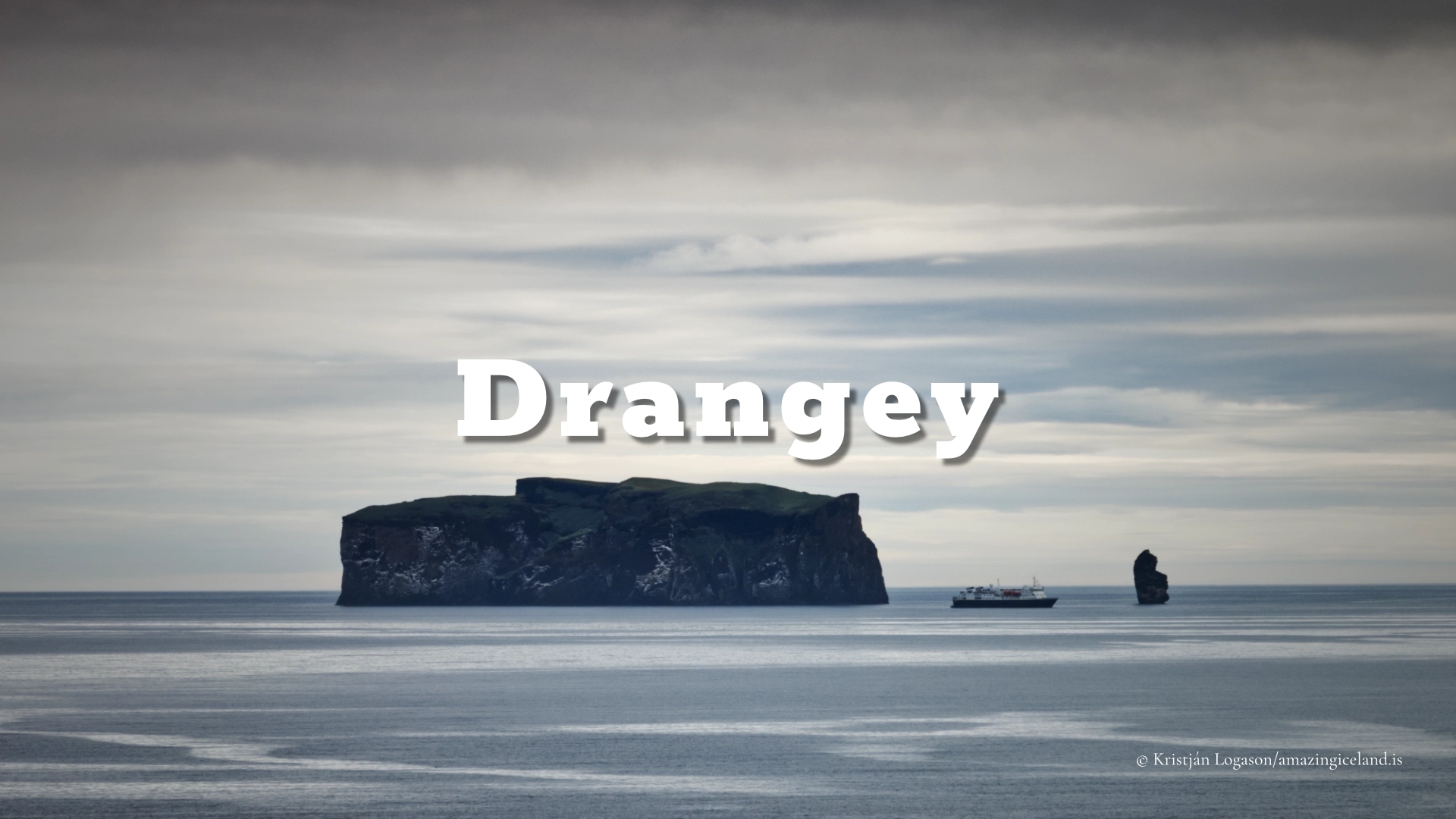
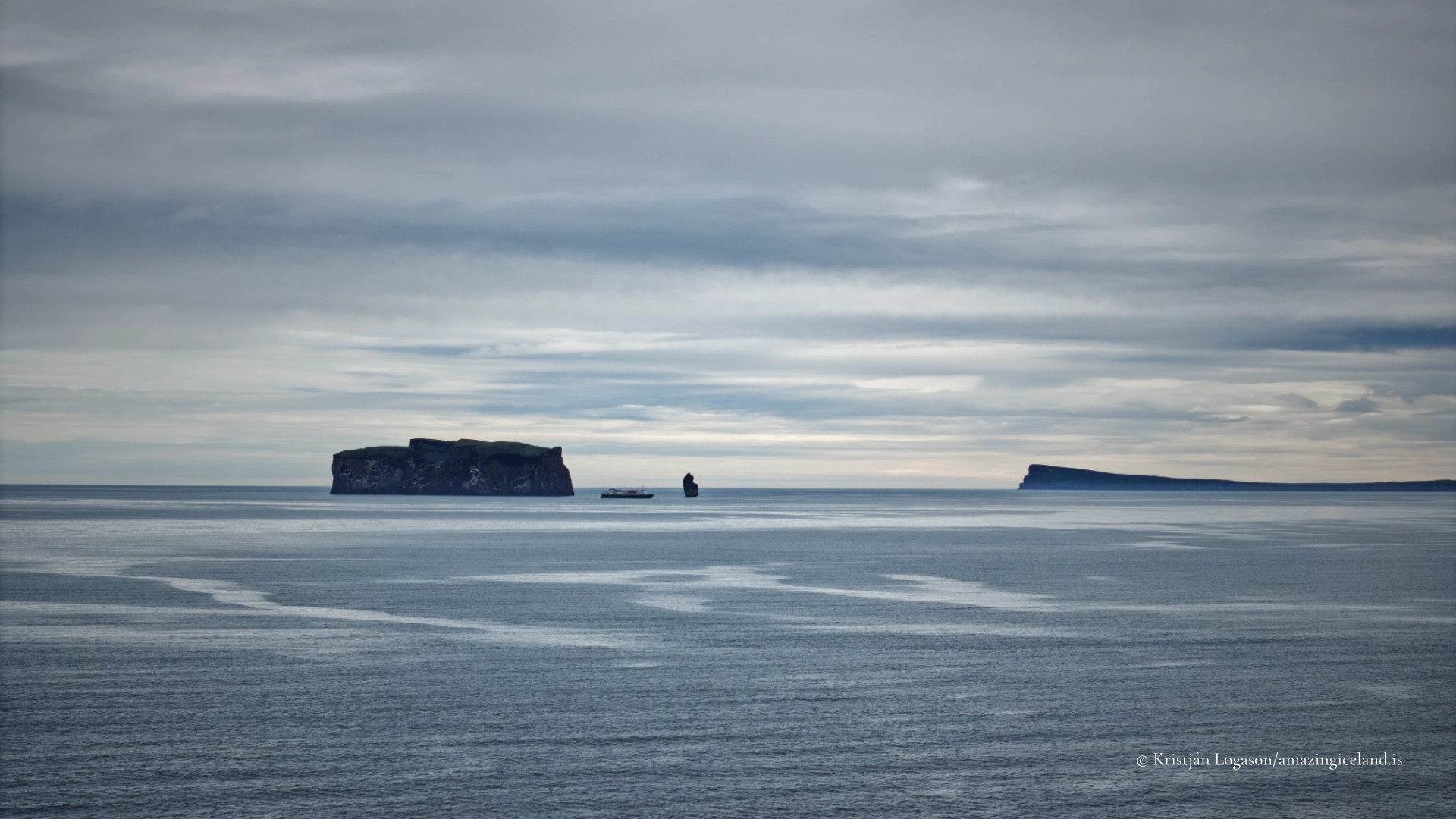
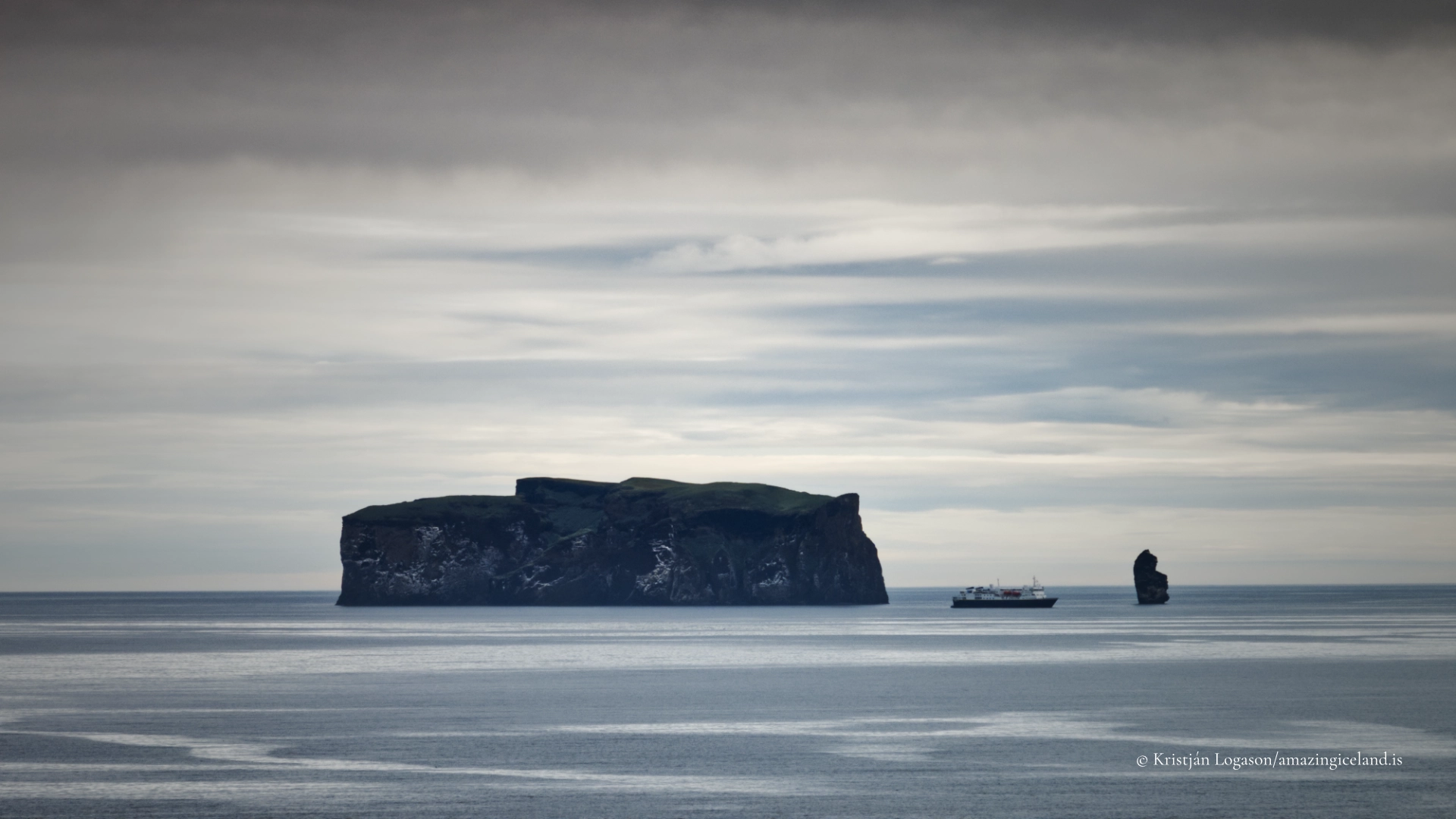
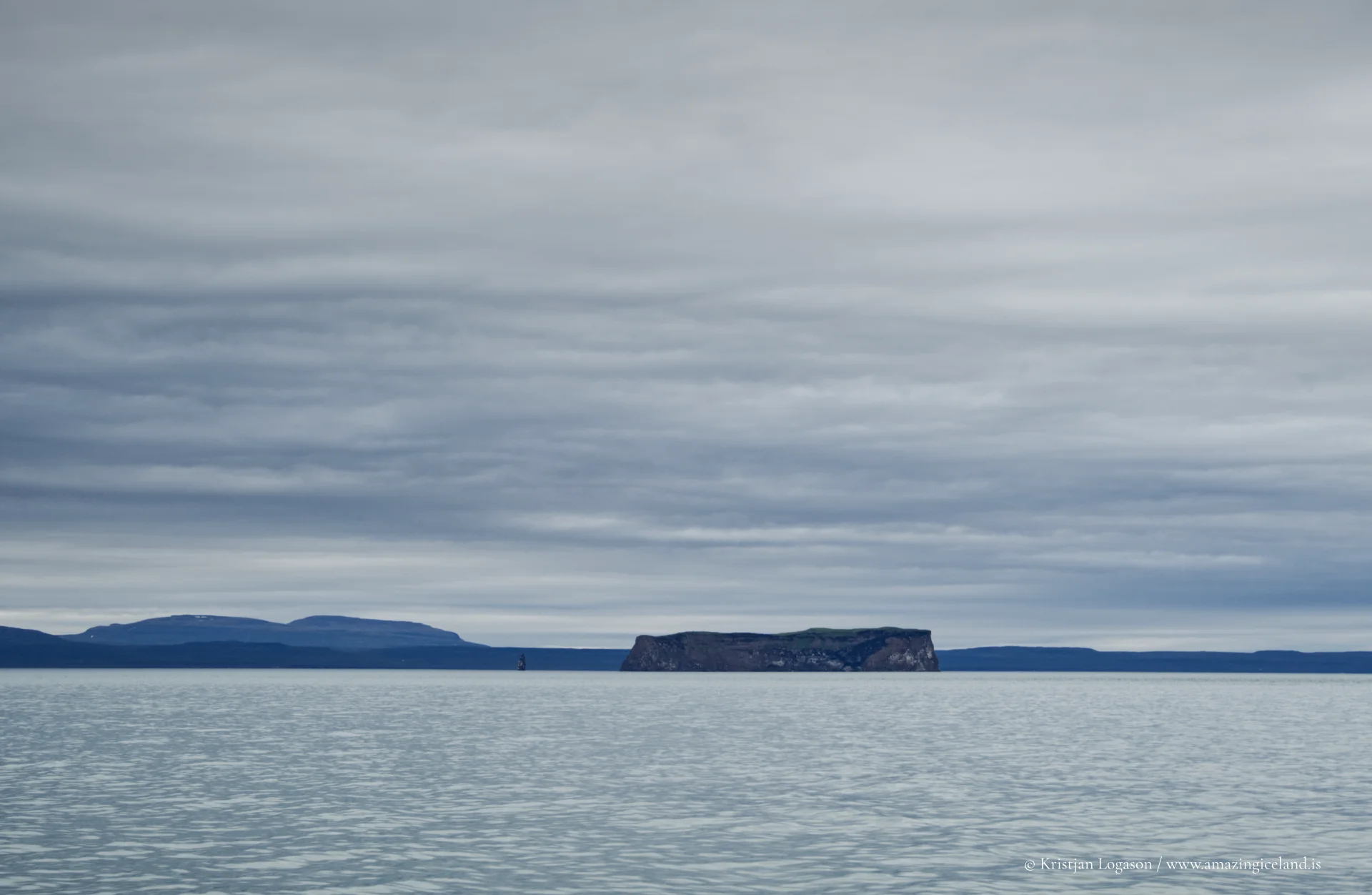
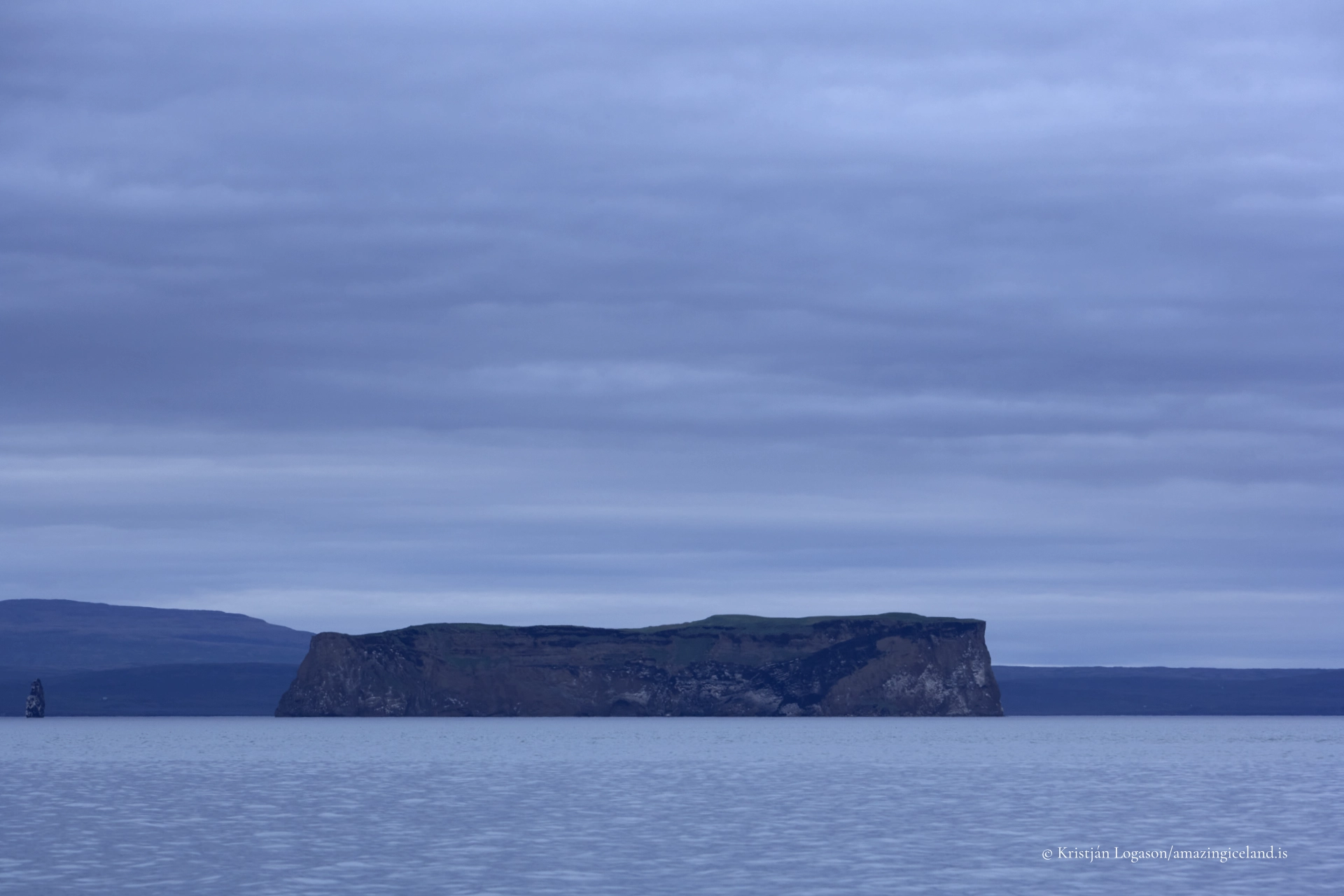
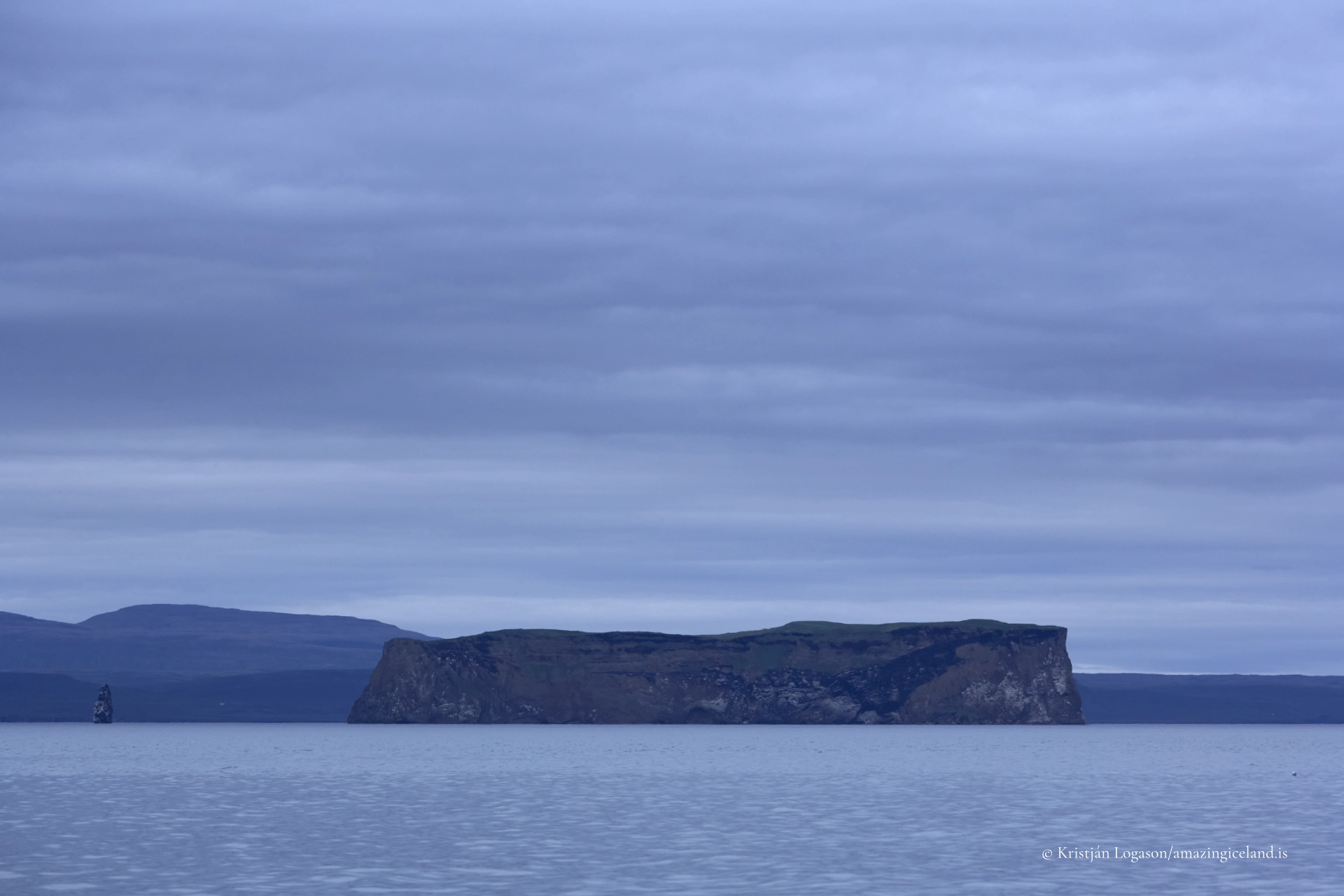
Drangey rises almost 180 metres from the waters of Skagafjörður. Its flat summit and near-vertical cliffs give it the appearance of a fortress standing alone in the fjord.
The island can be seen from much of the surrounding coast, but its true scale is difficult to understand from land. Only when approaching by boat do the cliffs reveal their height, the seabirds gathering along their ledges and the narrowness of the route by which people reach the summit.
Drangey is inseparable from the story of Grettir Ásmundarson, the outlawed hero of *Grettis saga*. Grettir spent the final three years of his life on the island with his younger brother Illugi and their servant Glaumur. The cliffs protected them from ordinary attack, but the same isolation eventually prevented their escape.
That relationship between protection and imprisonment still defines Drangey. Its inaccessibility preserved great seabird colonies, made egg collection and bird hunting dangerous specialised work, and continues to determine whether modern visitors can land and climb.
A visit is not simply a boat trip to an island. It is an encounter with a landscape in which geology, saga, traditional livelihoods and physical experience are unusually difficult to separate.
The location of Drangey – The Island That Protected and Trapped Grettir
Latitude
65.9491
Longitude
-19.6855
Drangey – The Island That Protected and Trapped Grettir
A Fortress in Skagafjörður
Drangey is the eroded remnant of an ancient volcanic formation composed mainly of palagonite tuff, created when volcanic material interacted with water beneath ice or in another wet environment.
Erosion removed much of the surrounding material, leaving the resistant island standing above the fjord. Its upper surface is comparatively level, while the edges fall sharply towards the sea.
From a distance, this produces a deceptively simple outline. The cliffs appear almost continuous, giving little indication that any route to the top could exist. Closer to the island, ledges, fractures and variations in the rock become visible, together with the activity of thousands of seabirds.
The island’s form has controlled almost everything that has happened there. Landing is possible only under suitable conditions. Reaching the summit requires following one established ascent. Access to nesting birds historically depended upon ropes, knowledge of the cliffs and a willingness to work in extremely exposed places.
Drangey is therefore not merely the setting for its human history. Its geography created that history.
Grettir, Illugi and Glaumur
Grettir Ásmundarson is one of the most complex figures in the Icelandic sagas. Exceptionally strong and capable of great courage, he was also difficult, unlucky and repeatedly drawn into conflict. After being declared an outlaw, he survived longer than any other outlaw described in the sagas.
During the final three years of his life, Grettir sought refuge on Drangey with his younger brother Illugi and their servant Glaumur. The island offered an almost ideal defence. Anyone attempting to reach them had first to cross the fjord, land beneath the cliffs and climb the restricted route that Grettir and his companions controlled from above.
Yet survival depended upon supplies, cooperation and continued control of the ascent. There was nowhere else to go once attackers gained access.
According to Grettis saga, Grettir became gravely ill after wounding his leg while cutting wood. Only after the injury had weakened him and left him unable to defend the island properly were his enemies able to reach the summit and attack.
Grettir was killed, and Glaumur was slain with him. Illugi was offered his life if he agreed to abandon his brother, but he refused. He chose to die beside Grettir rather than accept terms from the men who had killed him.
Grettir’s killers were not celebrated as heroes. The attack was not regarded as a fair fight: they had overcome a sick and wounded man who could no longer meet them with his full strength. Within the honour culture reflected by the saga, attacking a man in that condition was an act of cowardice rather than courage.
Illugi’s loyalty transforms the ending from the defeat of one isolated outlaw into a tragedy involving all three companions. Grettir was killed, but not honourably beaten. The cliffs that had protected them for years had finally become the walls of a trap.

The Swim to Reykir and Grettislaug
One of the best-known episodes from Grettir’s years on Drangey is his swim across the cold waters of Skagafjörður to Reykir.
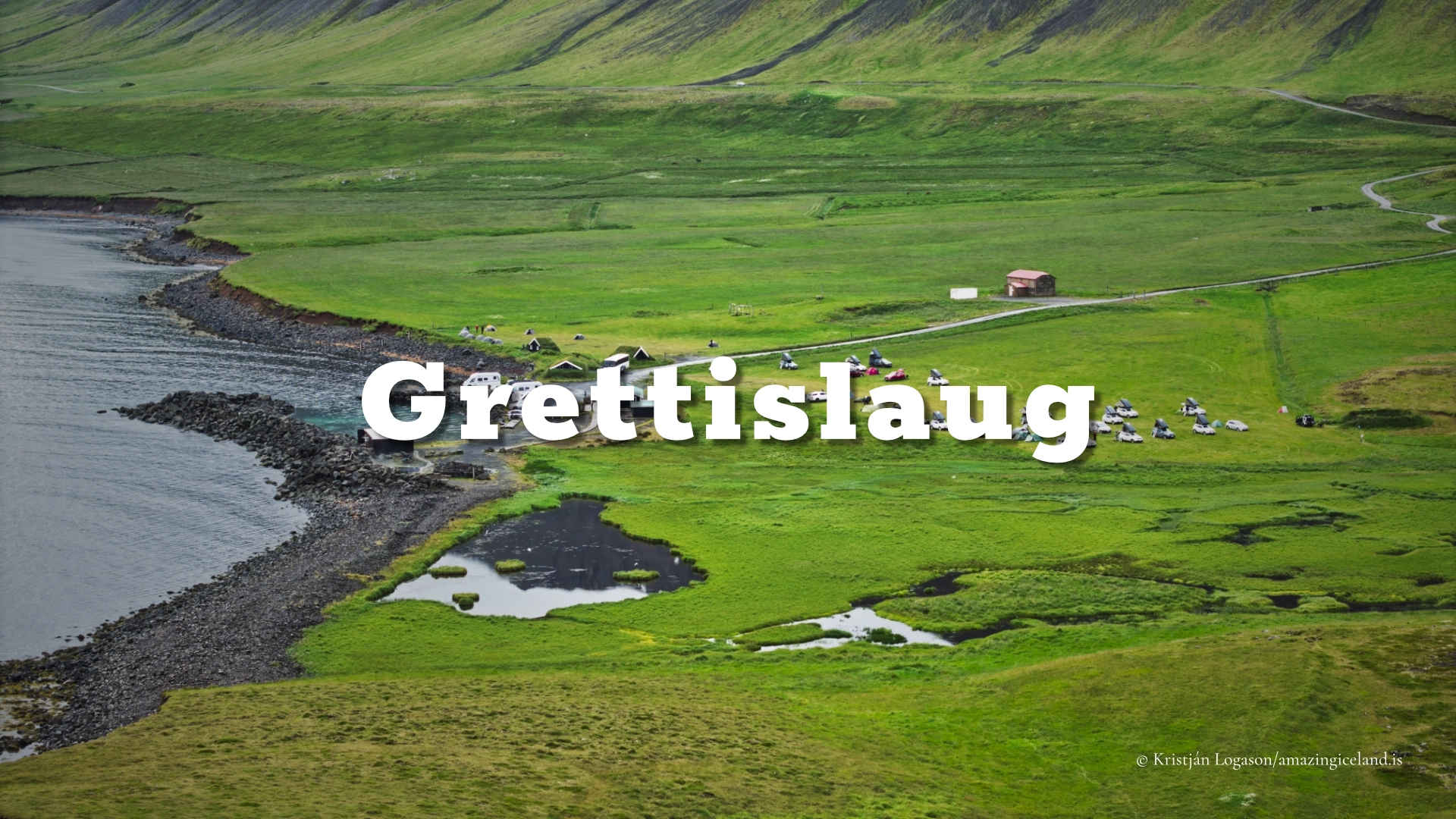
The men needed fire, and Grettir undertook the dangerous crossing between the island and the mainland. After reaching Reykir, he is said to have recovered in a warm geothermal pool. That pool later became known as Grettislaug—the Pool of Grettir.
The fuller story belongs naturally to Grettislaug, which remains the strongest companion destination to Drangey. Visiting both places allows the landscape of the saga to be understood from opposite sides of the water: the island where Grettir found refuge and the shore he reached after the swim.
Organised excursions no longer necessarily depart from Reykir. Current trips leave from Sauðárkrókur marina, following a recent change from the historic departure area near Grettislaug. The narrative connection between Reykir and Drangey nevertheless remains fundamental, and both places can still be included in the same day.
Reaching Drangey by Boat
Drangey cannot be reached independently from the mainland. Access requires an organised boat journey with people who understand the currents, landing place, weather and condition of the ascent.
Current excursions depart from Sauðárkrókur marina. Departure arrangements, operating periods and schedules can change, so visitors should consult current information and book in advance rather than rely on older descriptions that direct them to Reykir.
The crossing provides the first close view of the island. From the boat, the apparent simplicity of Drangey begins to break apart. The cliffs show layers, recesses and nesting ledges, while birds move continuously between the rock and the sea.
Sea and weather conditions determine whether the trip can proceed. Even when an excursion has been booked, sailing, landing and climbing cannot be guaranteed. Conditions that appear manageable on shore may be different around the island, and the final decision must remain with those operating the trip.
This uncertainty is not an inconvenience added to the Drangey experience. It is part of the reality of visiting an isolated sea cliff. The same exposure that shaped the island’s history still controls access today.
Landing and Climbing to the Summit
The modern ascent follows a constructed route from the landing place towards the top of Drangey. It includes steep sections assisted by ropes, chains and a ladder.
Technical climbing experience is not required, but this should not be interpreted as an effortless walk. Visitors need reasonable mobility, secure footwear and enough confidence to move through steep and exposed terrain. Comfort with heights matters more than conventional hiking distance.
The equipment assists the climb but does not remove the physical character of the route. Rock may be wet, wind can increase the sense of exposure, and people respond differently to looking down towards the sea.
The trip is presented as suitable for visitors of different ages, but each person must judge the ascent according to individual ability and confidence. Age alone does not determine who will be comfortable. Those who decide against climbing can normally remain near the landing place or on the boat, subject to the arrangements and conditions that day. There should be no pressure to continue merely because others in the group are climbing.
Once on the summit, the experience changes. The flat upper surface feels unexpectedly open after the confined ascent, with extensive views across Skagafjörður towards the mountains and settlements around the fjord.
The summit makes the strategic value of Drangey immediately understandable. Approaching enemies could be seen from far away, while the cliff route was narrow enough to defend. It also reveals the other side of Grettir’s isolation: beyond the edge, every direction leads first to the sea.
Seabirds and Traditional Harvesting
Drangey supports large seabird colonies. Guillemots, puffins, fulmars and other species nest on or around the cliffs, taking advantage of ledges that are difficult for land predators to reach.
Their presence gave the island considerable economic importance. For generations, farms around Skagafjörður relied upon Drangey for birds and eggs. Harvesting was not an occasional activity carried out by a few adventurous individuals. It developed into organised seasonal work requiring local knowledge, cooperation and specialised skills.
Egg collectors and bird hunters worked on the cliffs using ropes. The exposure was extreme, and safety depended upon the people controlling the ropes above as much as upon the person descending towards the nesting ledges.
Birds were also taken from boats below the cliffs using snares made from horsehair. This demanded an understanding of both bird behaviour and movement at the base of the island, where swell and falling rock could add to the danger.
These practices belonged to an economy in which the resources of cliffs, islands and coastal waters were essential to survival. They should neither be romanticised as harmless tradition nor judged as though they arose within modern conditions of food supply. They were skilled and hazardous forms of work deeply connected with the farms of Skagafjörður.
Today, the colonies must be approached with restraint. Visitors should follow instructions, avoid moving towards nesting birds and never cause birds to leave eggs or chicks.
Drangey, Kerling and the Vanished Karl
Long before Drangey became identified primarily with Grettir, its unusual position in the fjord inspired another explanation.
According to Icelandic folklore, two night-travelling trolls were crossing Skagafjörður with their cow. Before they could reach shelter, daylight caught them in the open and turned all three to stone.
Drangey is the cow standing in the middle of the fjord. Kerling—the old woman—remains as a sea stack to the south. Karl—the old man—once stood to the north but has disappeared through erosion.
The story does not attempt to describe the island scientifically. It translates the arrangement of the rocks into a recognisable group crossing the water and suddenly frozen in place.
The vanished Karl also gives the story an unusual relationship with the changing landscape. Folklore preserves the memory of a formation that no longer stands, while erosion continues to alter the surviving cliffs and sea stacks.
Drangey can therefore be read in two complementary ways: as the resistant remains of an ancient volcanic environment and as a cow eternally separated from two trolls by the arrival of daylight. Both stories begin by taking the island’s shape seriously.
Weather, Preparation and Personal Judgement
A Drangey excursion normally involves several hours on the water and island. Visitors should prepare for colder and windier conditions than those experienced in Sauðárkrókur or elsewhere along the coast.
Warm layers, a windproof and waterproof outer layer, gloves and secure walking footwear are sensible even when the day begins dry and calm. Clothing should allow free movement on the assisted ascent.
A small backpack is more practical than carrying loose items. Cameras, phones and other equipment should remain secured during the climb so that both hands are available when using ropes, chains or the ladder.
Instructions from those operating the trip take priority throughout the visit. Landing arrangements, time on the summit and whether the climb can proceed may all change according to sea, wind and the condition of the route.
Visitors should also be honest about discomfort with heights. Deciding not to climb is not a failed visit. The boat journey, cliffs and birdlife provide a substantial experience from sea level, and no one should continue beyond personal limits simply because the ascent is described as non-technical.
Drangey rewards confidence and care, not haste.
Interesting facts:
-
- Drangey rises almost 180 metres from Skagafjörður and has a comparatively flat summit enclosed by steep cliffs.
- The island is primarily composed of palagonite tuff rather than the remains of ordinary basalt lava flows.
- Grettir Ásmundarson spent the final three years of his life on Drangey with his brother Illugi and their servant Glaumur.
- Grettir’s killers were not regarded as heroes because they attacked him only after illness and a severe wound had left him unable to defend himself properly.
- Grettir’s legendary swim from Drangey to Reykir connects the island directly with the geothermal pool Grettislaug.
- Generations of local people collected eggs and hunted seabirds on the cliffs using ropes, and from boats with horsehair snares.
- In folklore, Drangey is the cow of two trolls turned to stone by daylight. Kerling remains south of the island, while Karl to the north has disappeared through erosion.
Image Gallery
Photography tips:
-
- Drangey is both a monumental form in the fjord and an intimate story of approach, landing and ascent. Photographing both aspects gives a more complete account than an isolated aerial view.
- From the mainland, a normal or telephoto lens can emphasise the island’s flat summit and vertical cliffs. Including coastline, boats or mountains provides scale.
- On the approach, a normal lens often preserves the island’s apparent mass better than an extremely wide lens. A telephoto can isolate nesting ledges, layers in the tuff and birds against the rock.
- Use a shutter speed appropriate to your intention around seabirds: a fast speed retains wing position, while a slower exposure can describe their constant movement around the cliffs.
- Never approach nests or make birds change their behaviour for a photograph. If a bird leaves an egg or chick, the photographer is already too close.
- The ascent offers valuable human scale, but cameras and loose equipment must remain secured. Stop only where doing so will not obstruct or endanger another visitor.
- On the summit, include an edge, foreground or human figure to show that the broad surface is isolated by cliffs and sea in every direction.
- Anyone considering a drone should consult those operating the trip before bringing one, follow all current flight rules and never fly close enough to nesting or congregating birds to disturb them or alter their behaviour.
- Fog, low cloud and directional light can reinforce Drangey’s isolation, while clear conditions reveal its relationship with the wider geography of Skagafjörður.
Destinations nearby