Bíldudalur village in Arnarfjörður
Bíldudalur stands at Bíldudalsvogur, a small bay on the southern side of Arnarfjörður. The village is pressed between the shoreline and steep, layered mountains, giving it a dramatic setting even by Westfjords standards. Its harbour is less active than it once was, but it remains central to the character of the settlement and is worth exploring on foot.
The village developed through trade and fishing, later suffered as the fishing industry contracted and quotas moved away, and then found new employment through salmon farming, calcified-algae processing and tourism. That recovery has not been uncomplicated. Salmon farming is now one of the largest industries in the area and an important source of employment, but it remains deeply controversial both locally and nationally.
Bíldudalur also has a cultural identity larger than its population might suggest. It was the birthplace of the artist Muggur, maintains museums devoted to Icelandic music and its industrial past, and is home to Skrímslasetrið, the Icelandic Sea Monster Museum. Visitors should allow around an hour for the village itself and between one and a half and two hours when including the Sea Monster Museum.
The location of Bíldudalur village in Arnarfjörður
Latitude
65.6851
Longitude
-23.5990
Bíldudalur village in Arnarfjörður
Between the mountains and the harbour
The physical setting is the first thing to understand about Bíldudalur. The village occupies a narrow strip of land beneath the mountains on the southern shore of Arnarfjörður. Streets and houses follow the limited space between the slopes and Bíldudalsvogur, while the harbour opens the settlement toward the much broader fjord.
This position made Bíldudalur useful for fishing and trade but also contributed to its isolation. Travel between communities in the Westfjords was historically difficult, particularly before roads and tunnels created more reliable connections. Even today, distances that appear short on a map can involve mountain roads, long fjord crossings and rapidly changing weather.
The harbour feels quieter than it did during the village’s strongest fishing periods, yet it remains worth walking around. Boats, older industrial buildings and modern aquaculture activity show different stages of the local economy in one compact area. Looking back from the shore also reveals how closely the village is held beneath the mountain slopes.
Merchants, fishing and Muggur
Bíldudalur became an important trading site after the end of the Danish trade monopoly in the late eighteenth century. Merchant Ólafur Thorlacius acquired the trading post, operated sailing ships and exported fish to Spain. Around the beginning of the twentieth century, Pétur J. Thorsteinsson developed another major period of trade and fishing activity, during which the village grew rapidly.
Gamla smiðjan, the Old Smithy, survives from that era. Built around 1895, it supplied metalwork for boats and other maritime activity for more than a century. The building and its equipment preserve an unusually direct connection with the industrial history of the harbour. Access and opening arrangements should be confirmed before planning a visit.
Pétur J. Thorsteinsson’s son Guðmundur Pétursson Thorsteinsson, known as Muggur, was born in Bíldudalur in 1891. He became a painter, graphic artist, writer and occasional film actor after studying at the Royal Danish Academy of Fine Arts. Although he left Bíldudalur as a child and spent much of his working life abroad, his birthplace remains part of the village’s cultural history.
Muggur is particularly remembered for writing and illustrating Sagan af Dimmalimm, the story of a princess and an enchanted swan. Written in 1921 and published after his death, it became one of Iceland’s most enduring children’s stories. Muggur died from tuberculosis in Denmark in 1924, only 32 years old.

Sea monsters, music and memory
Arnarfjörður has long been associated with reports of strange creatures seen in the sea and along the shoreline. These accounts belong to Icelandic folk tradition rather than zoological fact, but their number and variety have given the fjord a particular place in the country’s folklore. Skrímslasetrið in Bíldudalur collects and interprets these stories through oral accounts, images and multimedia exhibits.
The creatures described in the traditions take several forms. The fjörulalli was said to come ashore and move along the coast, while the hafmaður resembled a human figure from the sea. Other accounts describe the armoured skeljaskrímsli and the maned faxaskrímsli. The names reflect attempts to categorise something unfamiliar, often seen briefly in poor light or difficult weather.
The museum’s value lies less in persuading visitors that such animals exist than in preserving the testimony of people who believed they had encountered them. These stories show how coastal communities interpreted the sea at a time when survival depended on it but much of what happened beneath its surface remained unknown. Visitors should allow enough time to listen to the accounts rather than treating the museum as a collection of imaginary creatures.
Bíldudalur also preserves a different part of Icelandic popular culture through Melódíur minninganna, or Melodies of the Past. Created by local singer Jón Kr. Ólafsson, the exhibition contains records, instruments, posters and memorabilia from Icelandic musical history. Together, the two museums give the village an unusually strong cultural offering for a settlement of its size.
Quotas, isolation and a changed economy
Like many small fishing communities, Bíldudalur was deeply affected when fishing rights became concentrated and quota left the village. Employment declined, younger residents moved away and the difficulties created by the Westfjords’ isolation became more severe. Between 2000 and 2011, the population fell by more than 40%, reaching 187 people.
In 2013, Bíldudalur entered the national Brothættar byggðir programme for communities considered vulnerable to continuing decline. Residents identified housing, healthcare, transport and opportunities for young people as major concerns. The programme concluded at the end of 2016 after employment and population figures had improved enough for residents, the municipality and Byggðastofnun to agree that the special support was no longer required.
Salmon farming was central to that economic change. Arnarlax began operating from Bíldudalur in 2012 and became a major employer, while Íslenska kalkþörungafélagið developed the processing of calcified red algae gathered from Arnarfjörður. The algae industry is less visible to an ordinary visitor than the salmon-farming activity, but it provides another important economic foundation and reduces the settlement’s dependence on a single industry.
The economic benefits of salmon farming coexist with serious disagreement over open-net aquaculture. Local opinion is divided: employment and population recovery matter greatly in a small and isolated community, while concerns remain about escaped farmed salmon, disease, sea lice and effects on wild ecosystems. In 2021, damage to an Arnarlax pen in Arnarfjörður left the company unable to account for more than 81,000 salmon. The Icelandic Food and Veterinary Authority imposed a fine of ISK 120 million for failures connected with reporting and responding to the escape; that fine was later upheld by the ministry.
The incident should not erase the industry’s importance to Bíldudalur, but neither should the recovery story be presented without it. The modern village illustrates one of the most difficult questions facing the Westfjords: how small communities can maintain employment and population while protecting the natural systems on which they ultimately depend.
Visiting Bíldudalur and Arnarfjörður
An ordinary car is sufficient for reaching Bíldudalur in normal summer conditions. The roads are paved, but the approaches cross exposed Westfjords terrain where fog, wind, snow and sudden weather changes can affect driving. Conditions should always be checked outside summer, and some routes toward the northern and central Westfjords are not maintained as dependable year-round connections.
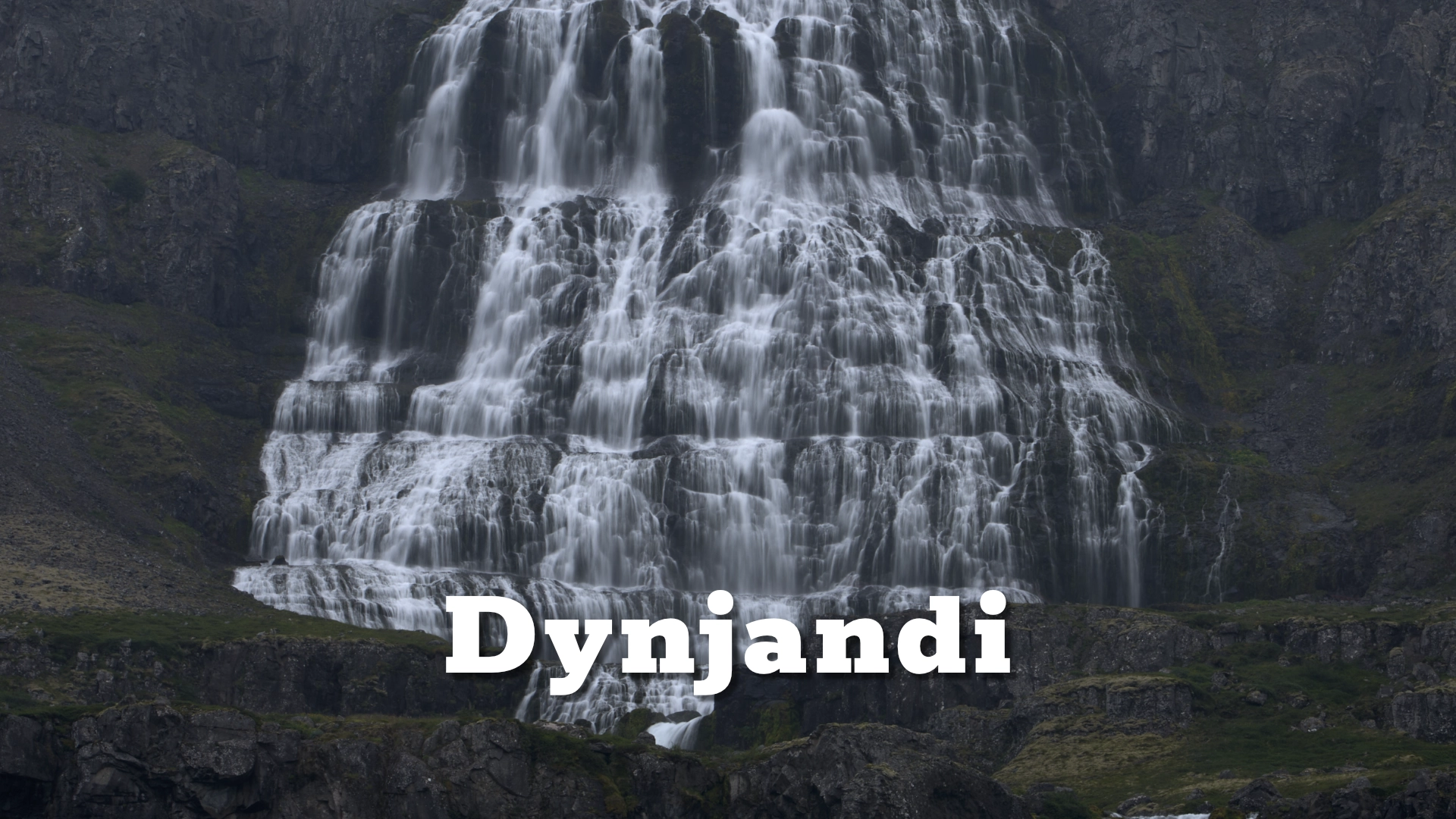
The village has fuel, a shop, food, accommodation, campsites, toilets, a swimming facility and other basic services. It makes a practical base for exploring Arnarfjörður, including Ketildalir and Selárdalur, as well as for journeys toward Dynjandi, Tálknafjörður and Patreksfjörður. Opening times can vary considerably with the season.
Bíldudalur Airport lies approximately five kilometres southeast of the village. As of 2026, scheduled flights connect it with Reykjavík most days of the week, with a flight time of roughly 40 minutes. The airport also serves travellers continuing by ground transport to neighbouring communities. Flight schedules are operational information and should be checked directly before planning a journey.
Around one hour is enough for a walk through the village and harbour. Visiting Skrímslasetrið increases the recommended time to between one and a half and two hours, while the music exhibition, Old Smithy or a longer shoreline walk can extend the stay further.
Interesting facts:
- Bíldudalur developed as an important trading and fishing centre after the end of the Danish trade monopoly.
- Merchant Ólafur Thorlacius operated ships from Bíldudalur and exported fish to Spain.
- Muggur, author and illustrator of Sagan af Dimmalimm, was born in Bíldudalur in 1891.
- Gamla smiðjan was built around 1895 and served the village’s maritime industries for more than a century.
- Arnarfjörður has one of Iceland’s strongest traditions of reported sea-monster encounters.
- Bíldudalur entered the Brothættar byggðir programme in 2013 and completed its participation at the end of 2016.
- The village’s population fell by more than 40% between 2000 and 2011 before employment and population began to recover.
- Salmon farming and calcified-algae processing are now major parts of the local economy.
- More than 81,000 salmon were unaccounted for following damage to an Arnarlax pen in Arnarfjörður in 2021.
- Bíldudalur has scheduled air connections with Reykjavík most days of the week.
Image Gallery


Photography tips:
- The strongest overall composition shows the village and harbour held between Bíldudalsvogur and the steep mountain slopes.
- Evening light can reach across Arnarfjörður and bring greater depth to the layered mountains and shoreline.
- Use a wide lens from the harbour or shoreline to show the relationship between settlement, water and mountains.
- A telephoto lens can compress houses, harbour structures and the slopes behind the village.
- Boats, older industrial buildings and modern aquaculture activity can be used together to show the changing economy of Bíldudalur.
- Calm conditions may create reflections in Bíldudalsvogur, while broken cloud and shafts of light suit the scale and structure of Arnarfjörður.
- Gamla smiðjan offers potential for detailed photographs of tools, machinery and surfaces if access is available.
- Museum interiors require permission, particularly where displays or archival material may be subject to restrictions.
- Elevated viewpoints can show the form of the village more clearly, but steep terrain and private property must be respected.
Destinations nearby