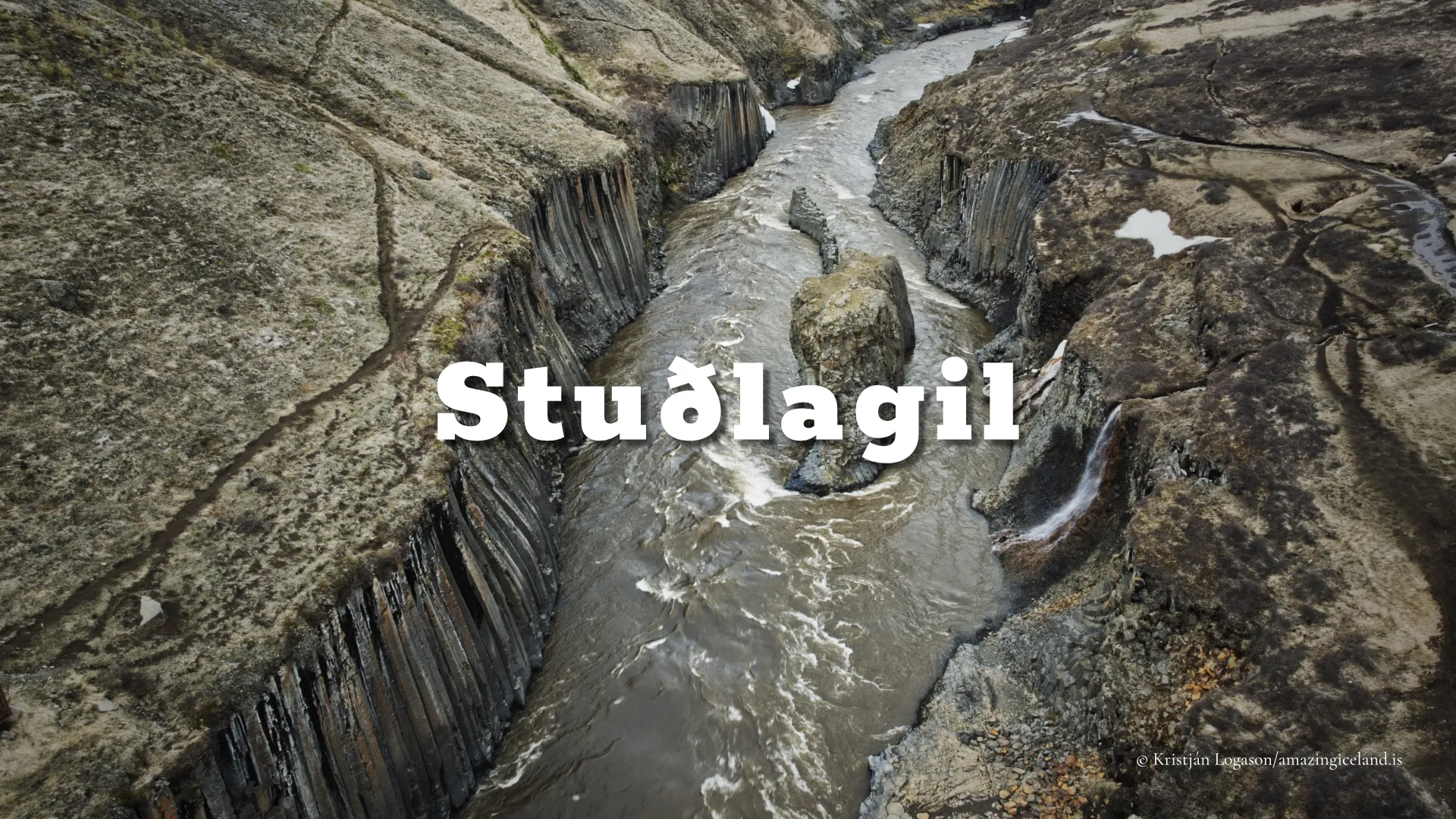
In eastern Iceland, along the course of the Jökla river, Stuðlagil presents a landscape defined by structure rather than ornament. Here, tightly packed basalt columns line a narrow canyon whose visibility is the result of modern hydrological change, offering a rare opportunity to read volcanic architecture at full scale.
The location of Stuðlagil basalt column canyon
Latitude
65.1995
Longitude
-15.2890
Stuðlagil basalt column canyon
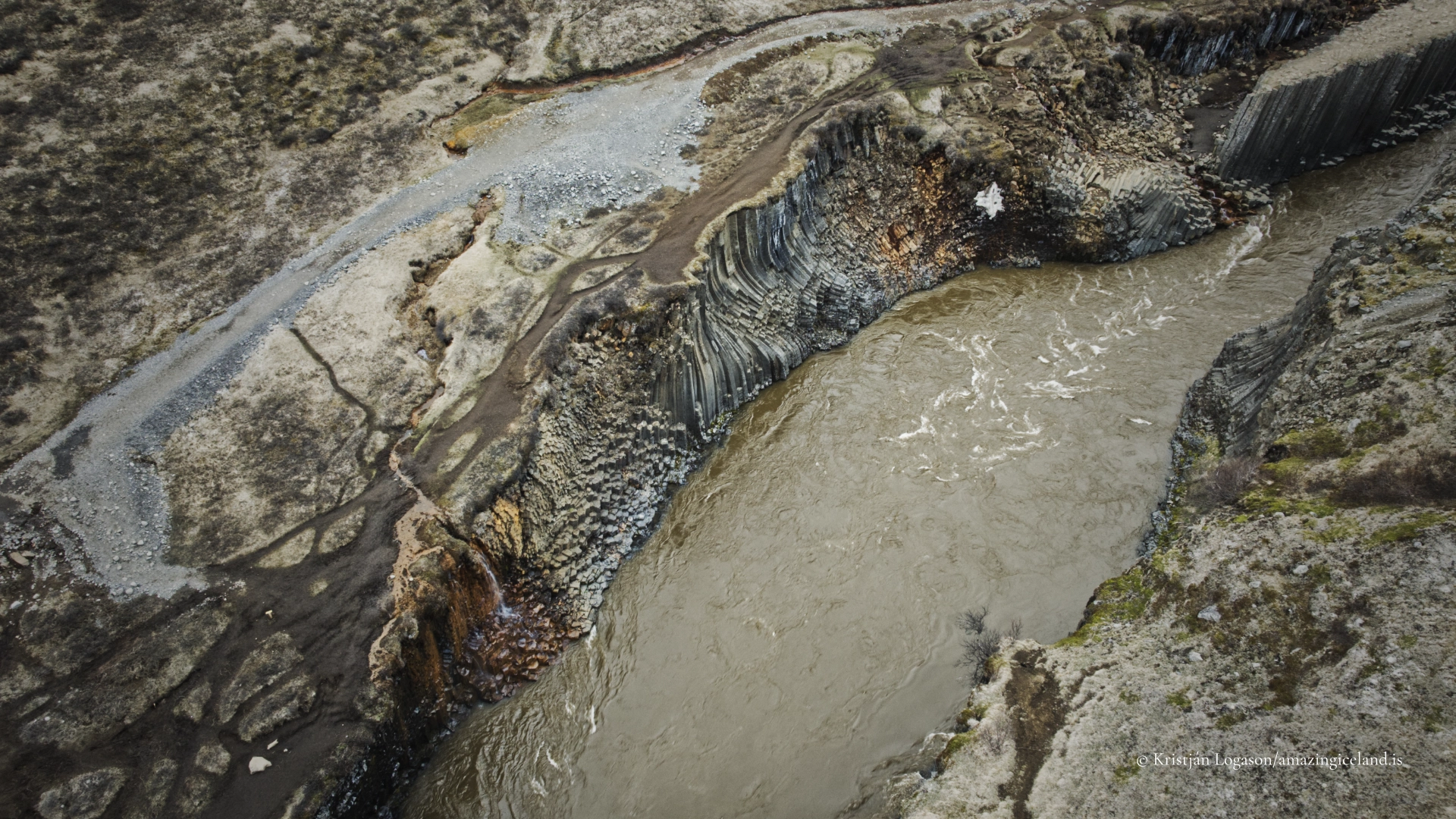
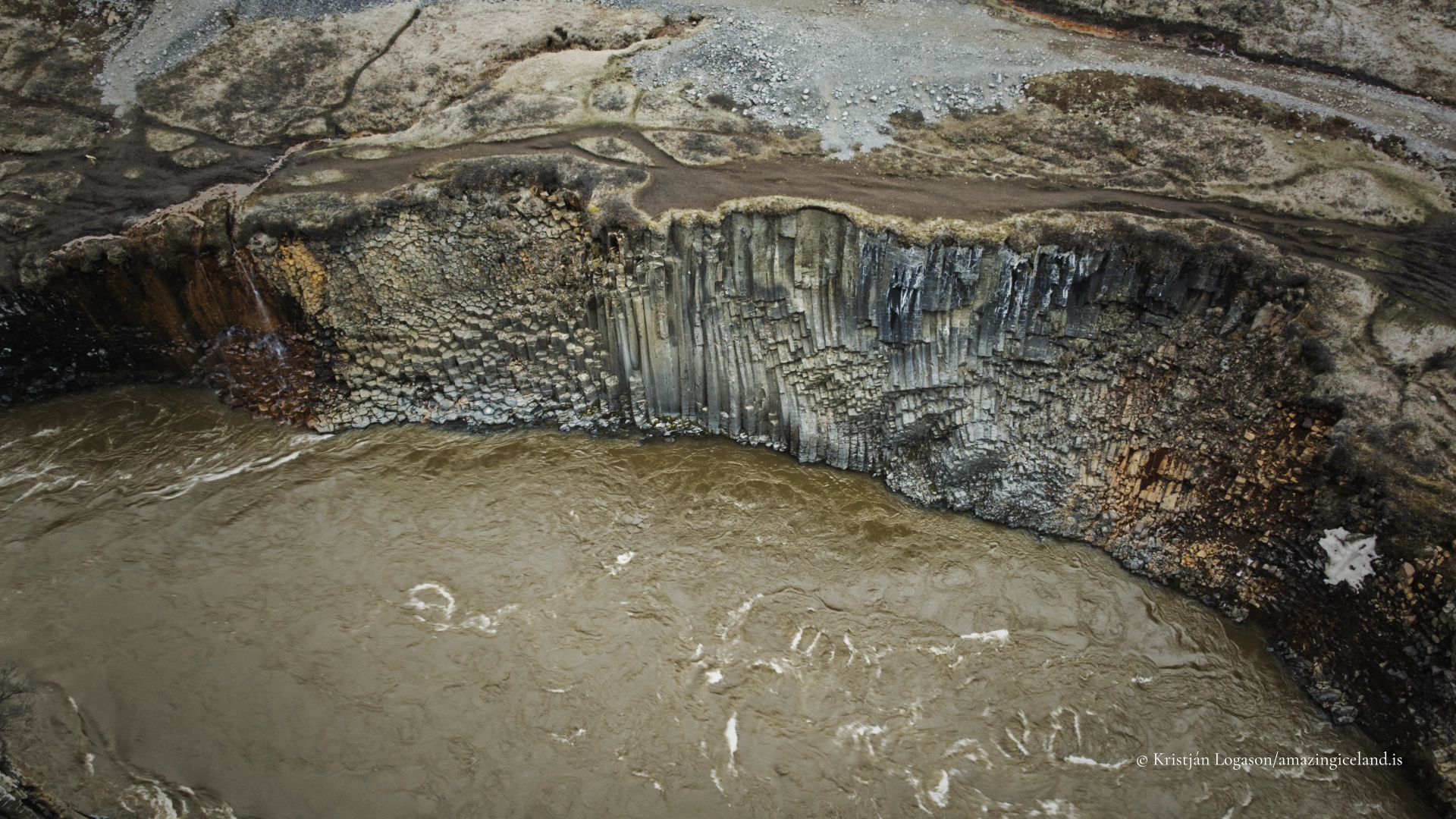
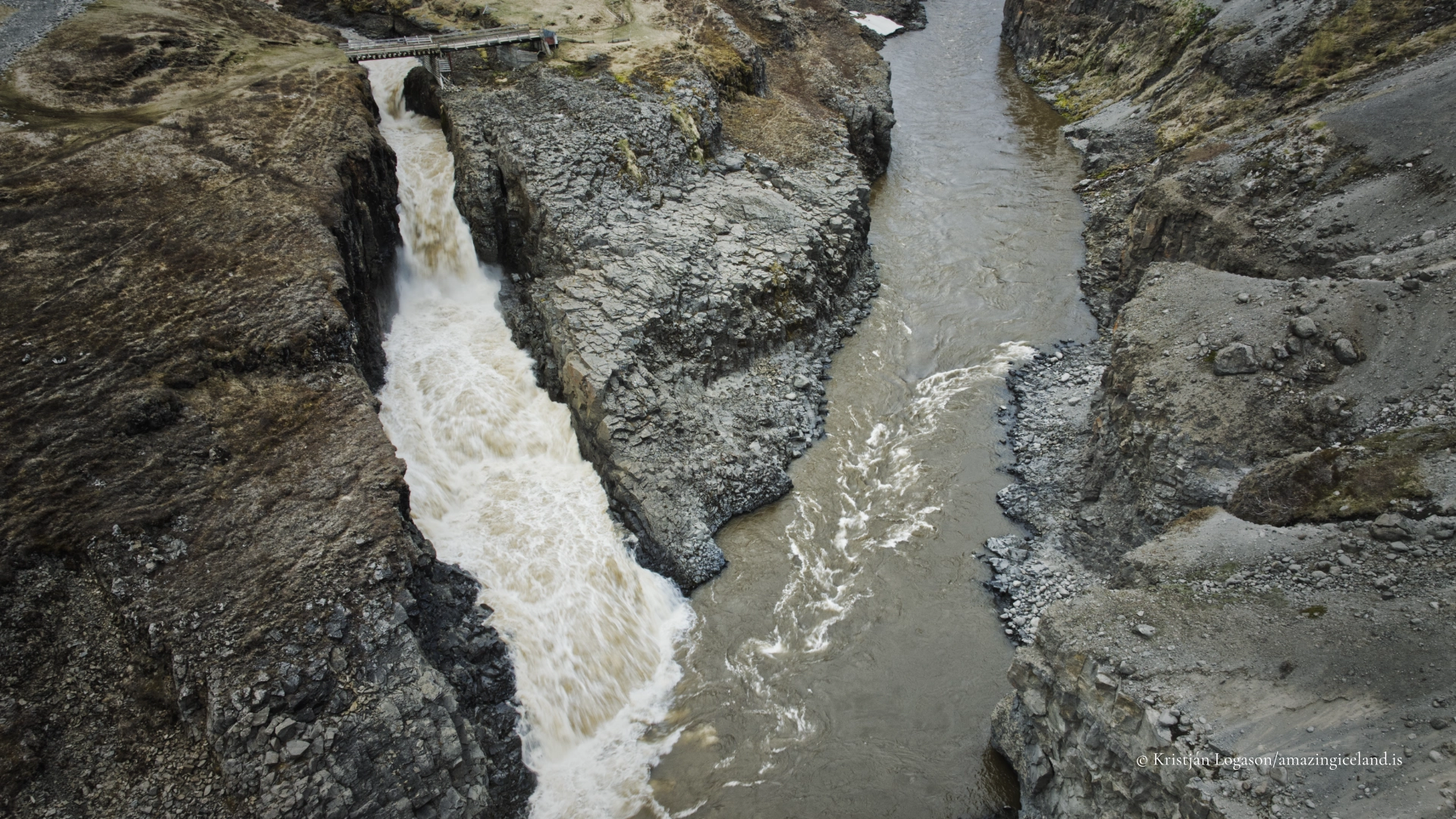
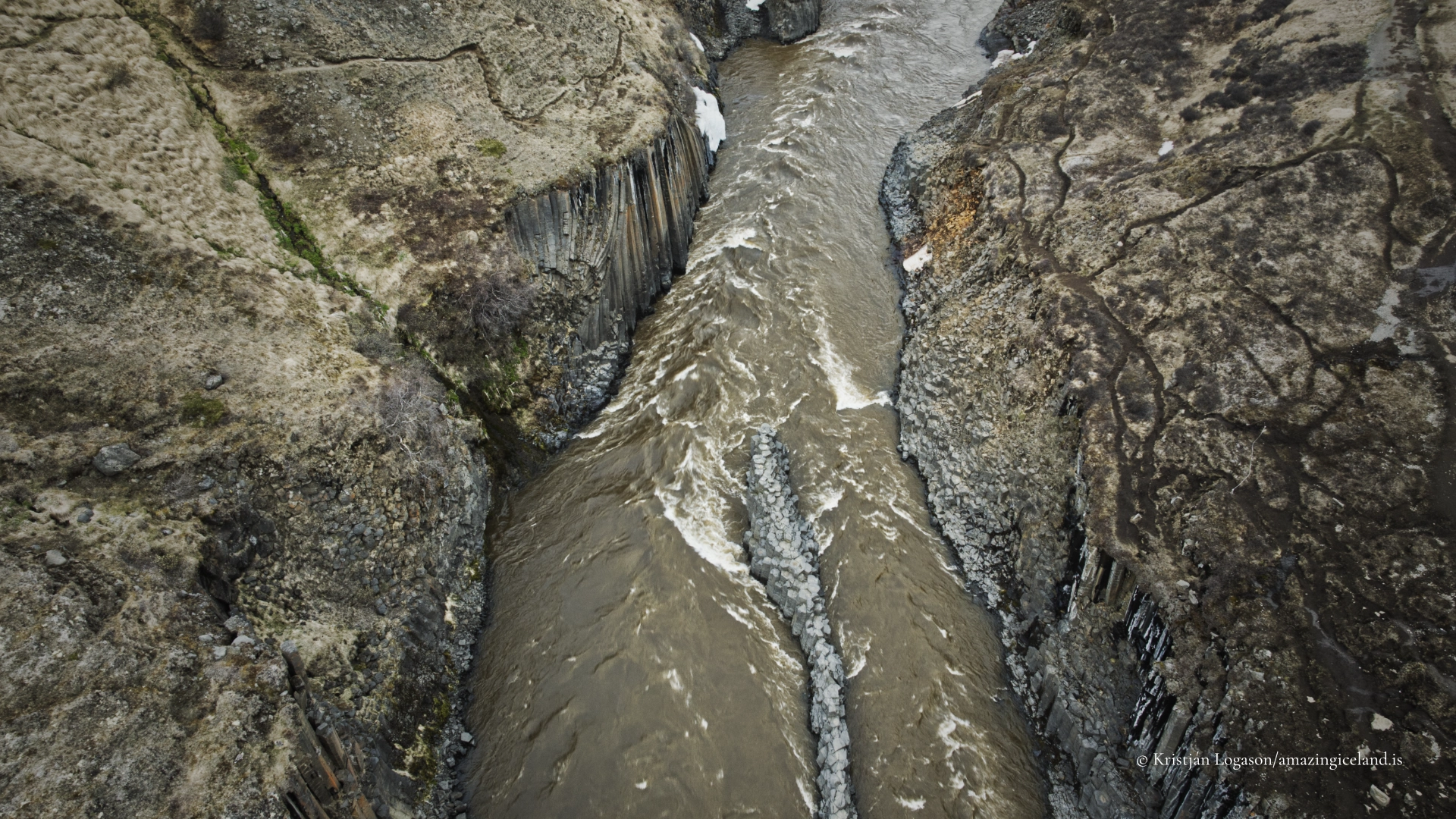
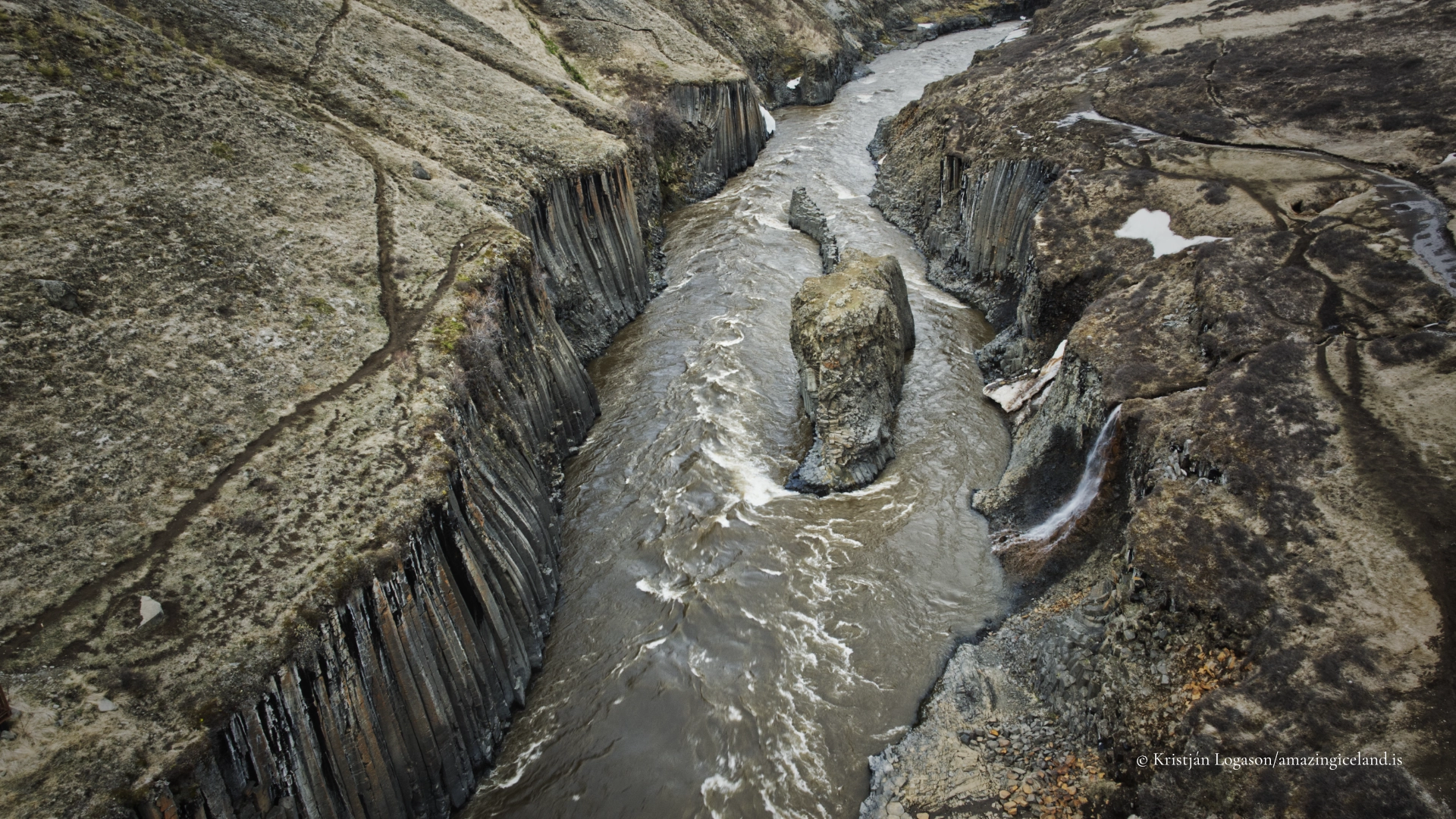
Stuðlagil is located in Jökuldalur valley in East Iceland, where the Jökla river—historically one of the country’s most powerful glacial rivers—cut through thick basalt lava flows. The canyon’s defining feature is its extensive columnar basalt formations, formed when cooling lava contracted and fractured into hexagonal and polygonal columns. These structures are not decorative anomalies; they are the natural consequence of uniform cooling in thick lava bodies, preserved here with exceptional continuity.
For much of the 20th century, Stuðlagil was largely hidden beneath fast-moving, sediment-heavy glacial water. The river’s volume and opacity obscured the canyon walls, limiting visibility and access. This changed following the construction of the Kárahnjúkar Hydropower Project upstream, which significantly reduced flow in this section of the river. As water levels dropped and sediment load decreased, the canyon’s basalt architecture emerged with striking clarity.
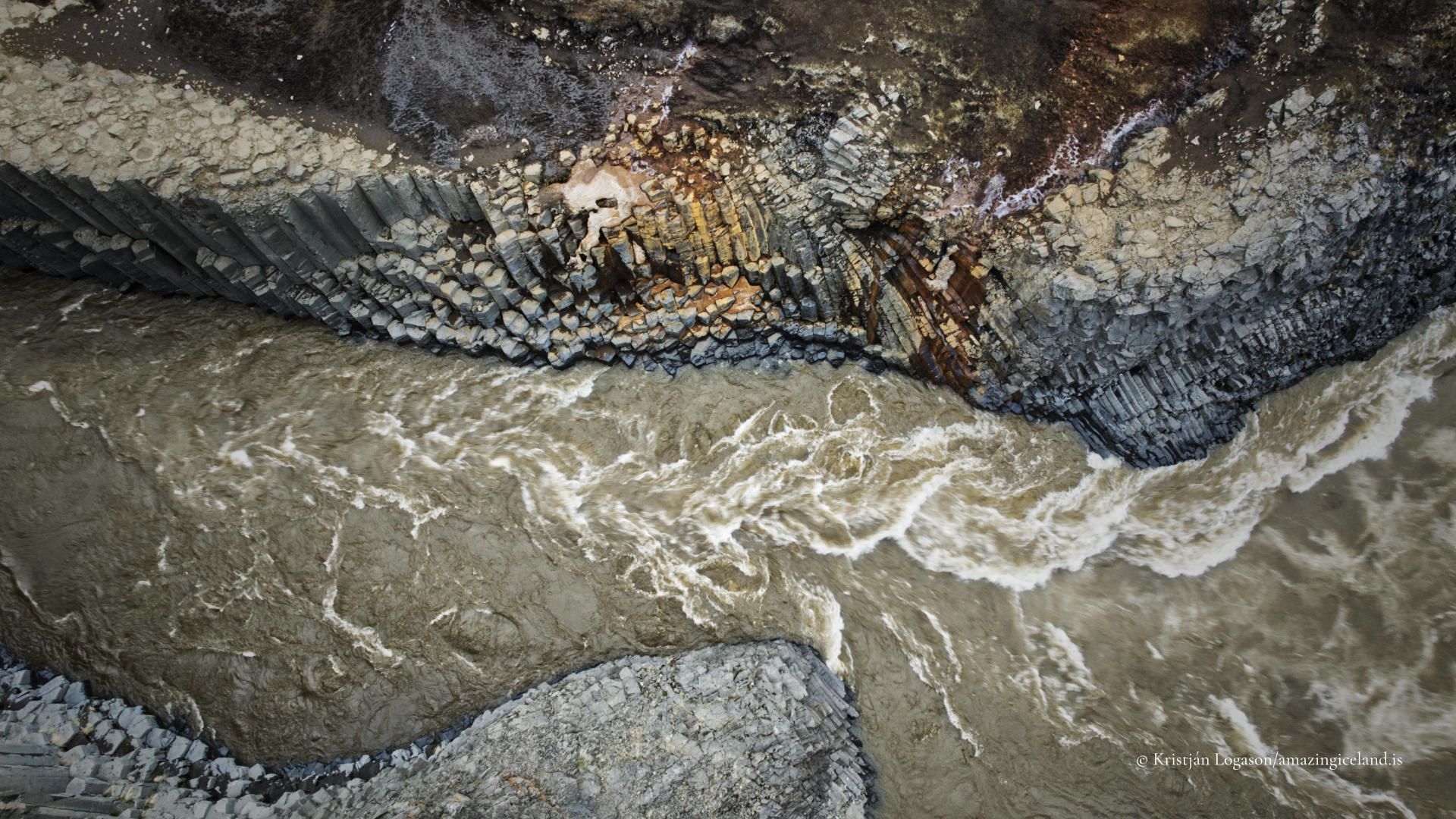
From a geological perspective, Stuðlagil offers an unusually readable example of volcanic cooling processes. The columns vary in diameter and regularity, reflecting subtle differences in cooling rate and lava composition. Their vertical alignment guides both erosion and water movement, reinforcing the canyon’s narrow, linear form.
The relationship between water and rock at Stuðlagil is central to its character. Unlike canyons carved gradually by low-energy rivers, Stuðlagil was shaped by high-energy glacial flow, capable of exploiting fractures and weaknesses in basalt layers. Once exposed, the canyon transitioned from an erosional system to a visual archive—its walls no longer actively cut at the same scale, but clearly legible as a result of past force.
Color plays a functional role here. When water levels are low, the river often appears turquoise or green, contrasting sharply with the dark grey basalt. This color shift is not inherent to the rock, but to reduced sediment concentration and light refraction in clearer water. In higher flow conditions, the river darkens, reclaiming visual dominance and partially obscuring the canyon’s geometry.
This variability reinforces a key interpretive point: Stuðlagil is not fixed. It is a conditional landscape, dependent on flow regulation, season, and weather. Understanding it requires awareness of both natural processes and human intervention.
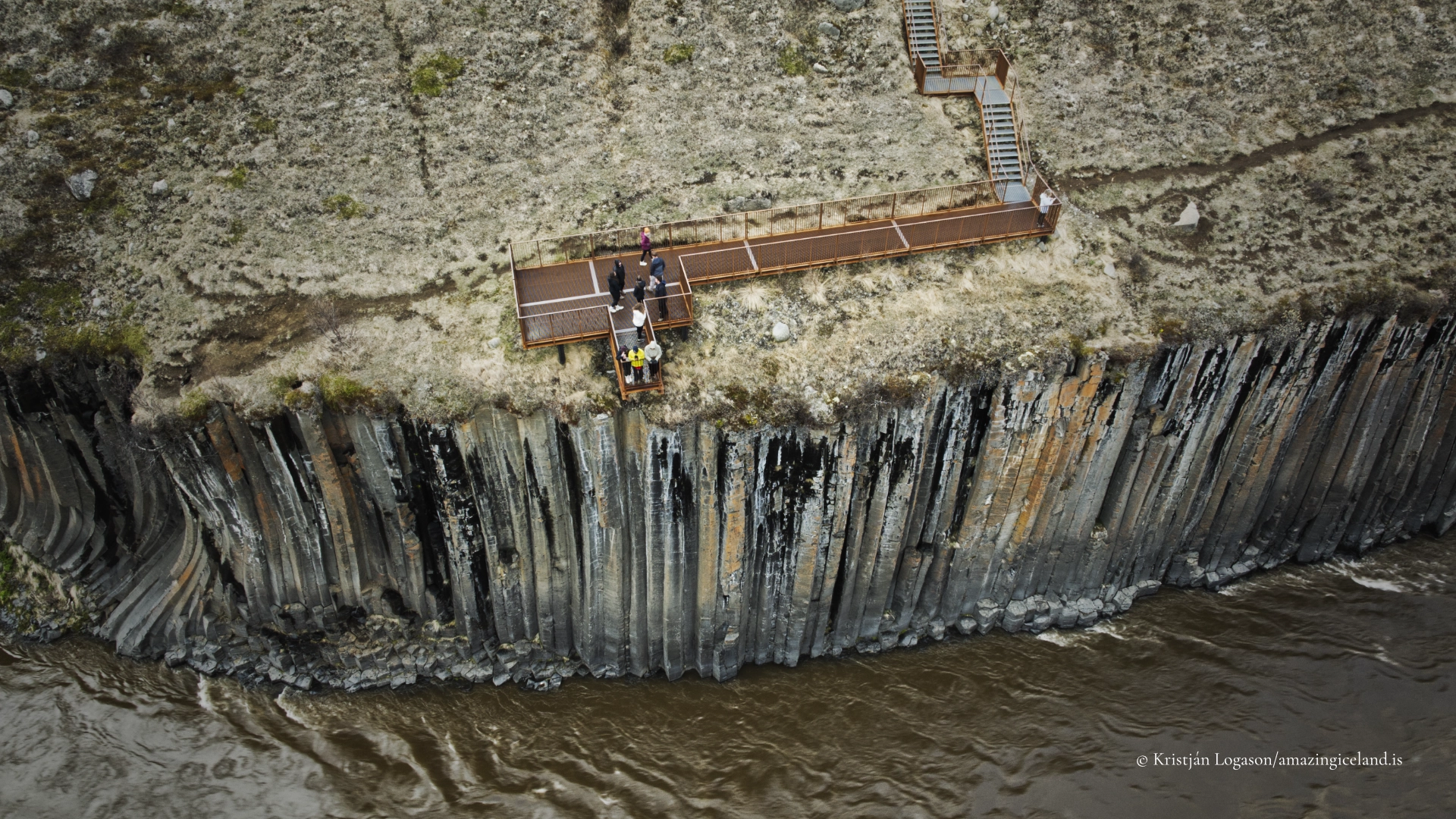
Access to Stuðlagil has evolved alongside its visibility. Today, the canyon can be approached from both sides of the river, though conditions differ markedly. The eastern approach offers easier access and viewing platforms, while the western side involves longer hikes and steeper terrain, providing closer proximity to the canyon floor when conditions allow.
These access differences shape experience. Elevated viewpoints emphasize pattern, repetition, and scale, while canyon-level perspectives highlight texture, fracture, and spatial confinement. Both are valid readings, and together they reinforce the canyon’s structural logic.
From a safety and conservation standpoint, the site demands caution. Basalt columns fracture cleanly but unpredictably, and loose blocks can shift without warning. The river, though reduced, remains cold and potentially hazardous. Designated paths and restraint are not optional—they are integral to preserving both visitor safety and the canyon’s fragile edges.
Stuðlagil also occupies a complex cultural and environmental position. Its popularity is a direct consequence of infrastructural change, raising important questions about visibility, impact, and stewardship. The canyon existed long before it was seen; its sudden prominence reflects how landscapes are often revealed, not created, by human systems.
This context does not diminish its value. Instead, it frames Stuðlagil as a site where geology and modern decision-making intersect. The canyon becomes a reference point for discussions about energy development, river management, and unintended outcomes—both positive and challenging.
Stuðlagil can be read simultaneously as a pristine geological feature and as a case study in altered hydrology. The two readings are inseparable.
Ultimately, Stuðlagil is defined by precision. Its columns are tightly packed, its canyon walls abrupt, and its scale unambiguous. There is little softness here, visually or conceptually. The landscape does not invite embellishment; it invites measurement and observation.
Within broader destination framework, Stuðlagil functions as a structural counterpoint to waterfalls and glaciers. Where those emphasize motion and transformation, Stuðlagil emphasizes form—what remains after force has passed. It is Iceland rendered as geometry, exposed just long enough to be understood.
Interesting facts:
- Stuðlagil contains one of Iceland’s largest visible concentrations of columnar basalt.
- The canyon became widely visible only after reduced river flow following upstream hydropower development.
- Columnar basalt forms as lava contracts during cooling, creating polygonal fractures.
- The Jökla river was historically one of Iceland’s most sediment-heavy glacial rivers.
- Access and visibility vary significantly with season and water release schedules.
Image Gallery
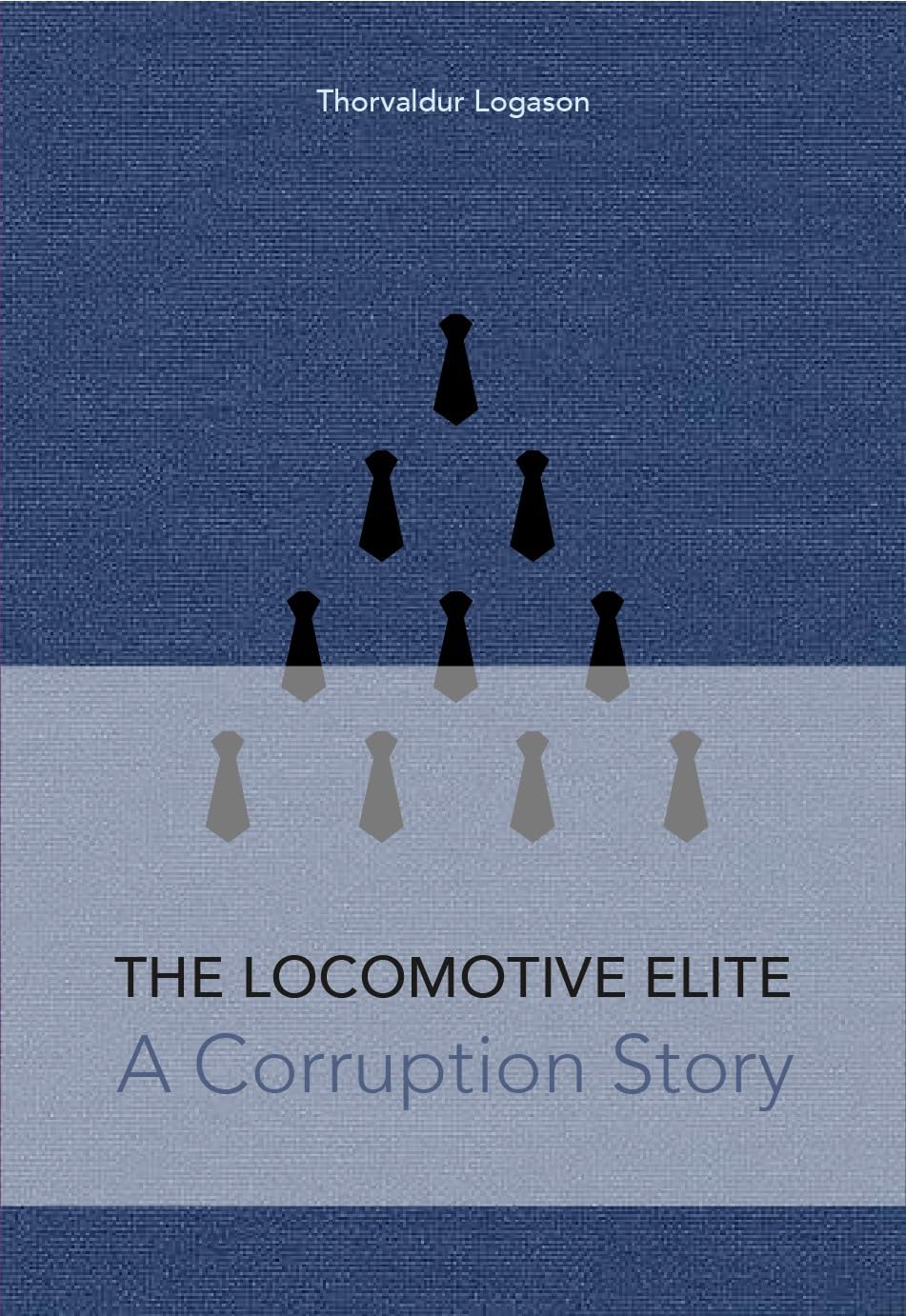
The Locomotive Elite
What do Donald Trump and Iceland’s Locomotive Elite have in common?
Far more than you think.
In The Locomotive Elite, you’ll uncover how a tiny clique in Iceland captured extensive control—of banks, courts, media, and even the central bank.
For decades they ruled, first democratically, then through corruption and in the end through crime, enriching themselves and their cronies while dismantling oversight.
The result?
One of the most spectacular financial collapses in modern history.
Photography tips:
- Choose your elevation: Upper viewpoints emphasize pattern; lower access emphasizes scale and texture.
- Work with water color: Clear, low-flow conditions enhance contrast; higher flow emphasizes power and depth.
- Vertical framing: Columns reward vertical compositions that follow their natural alignment.
- Avoid edge compression: Keep distance from canyon rims; scale reads better with foreground restraint.
- Neutral processing: Excess contrast or saturation undermines geological credibility—let structure carry the image.
Good cameras for Iceland
Sony A7R V

Sony A7s lll

Canon R6

Nikon Z6 lll

Destinations nearby
Good to have in Iceland