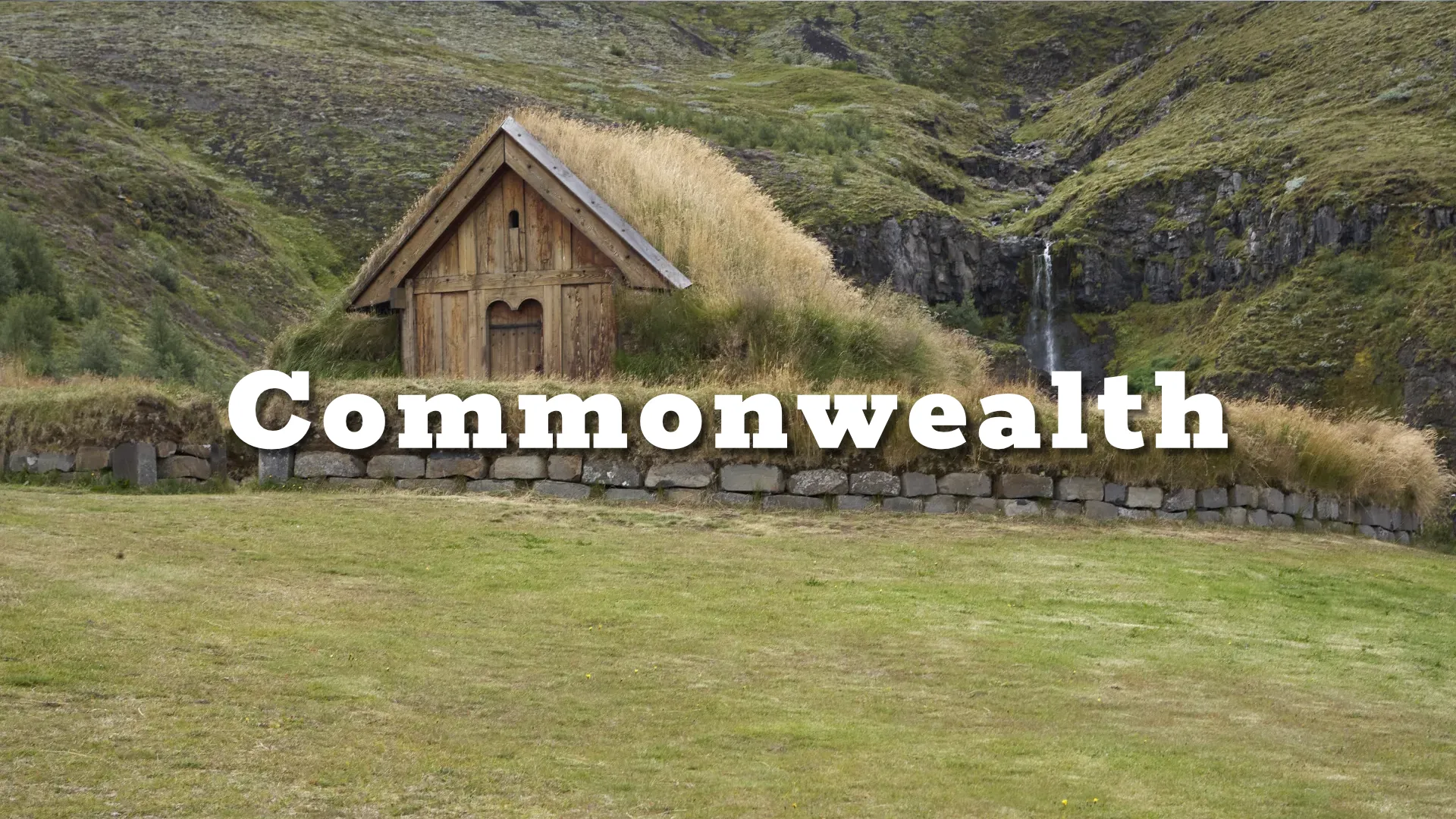
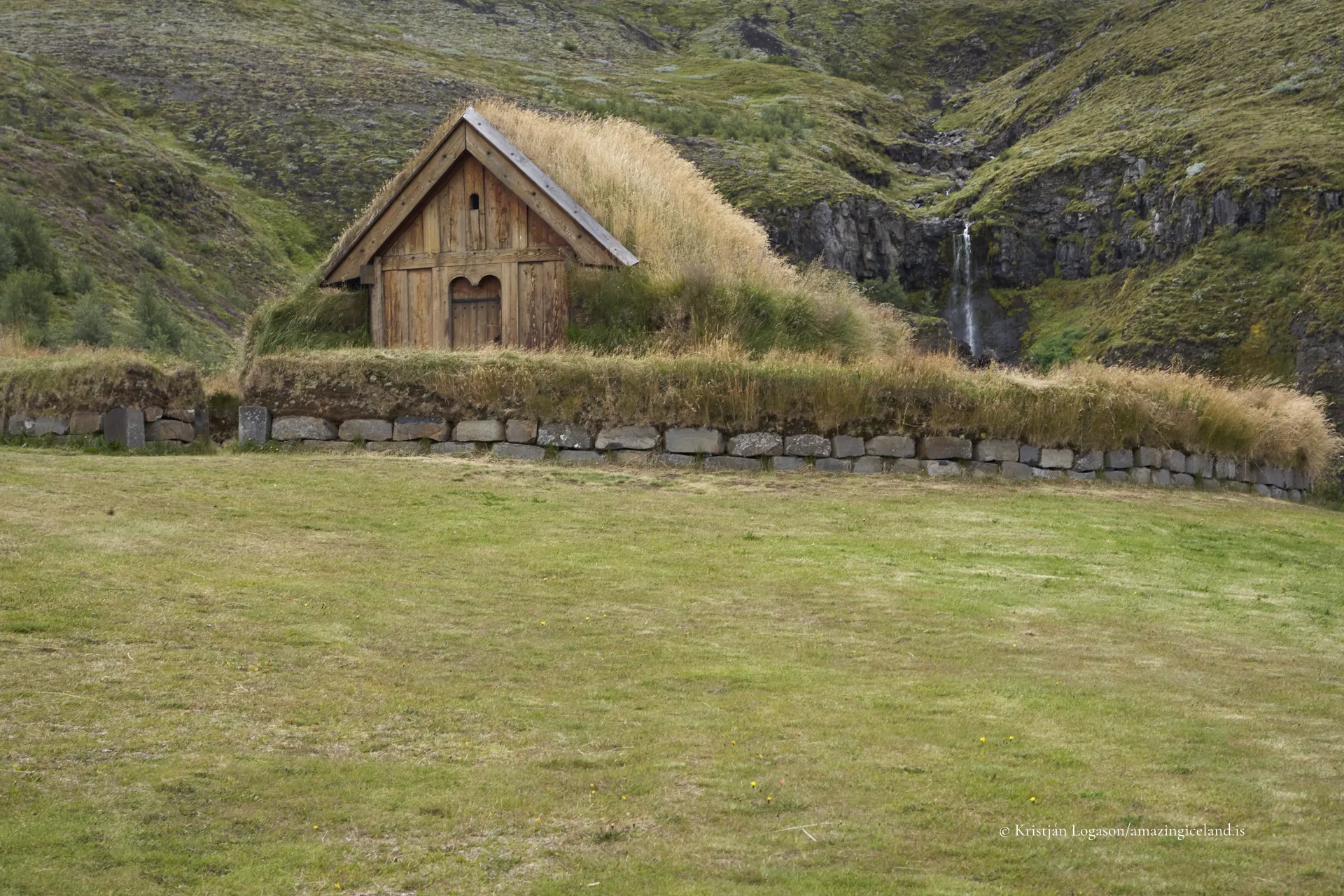
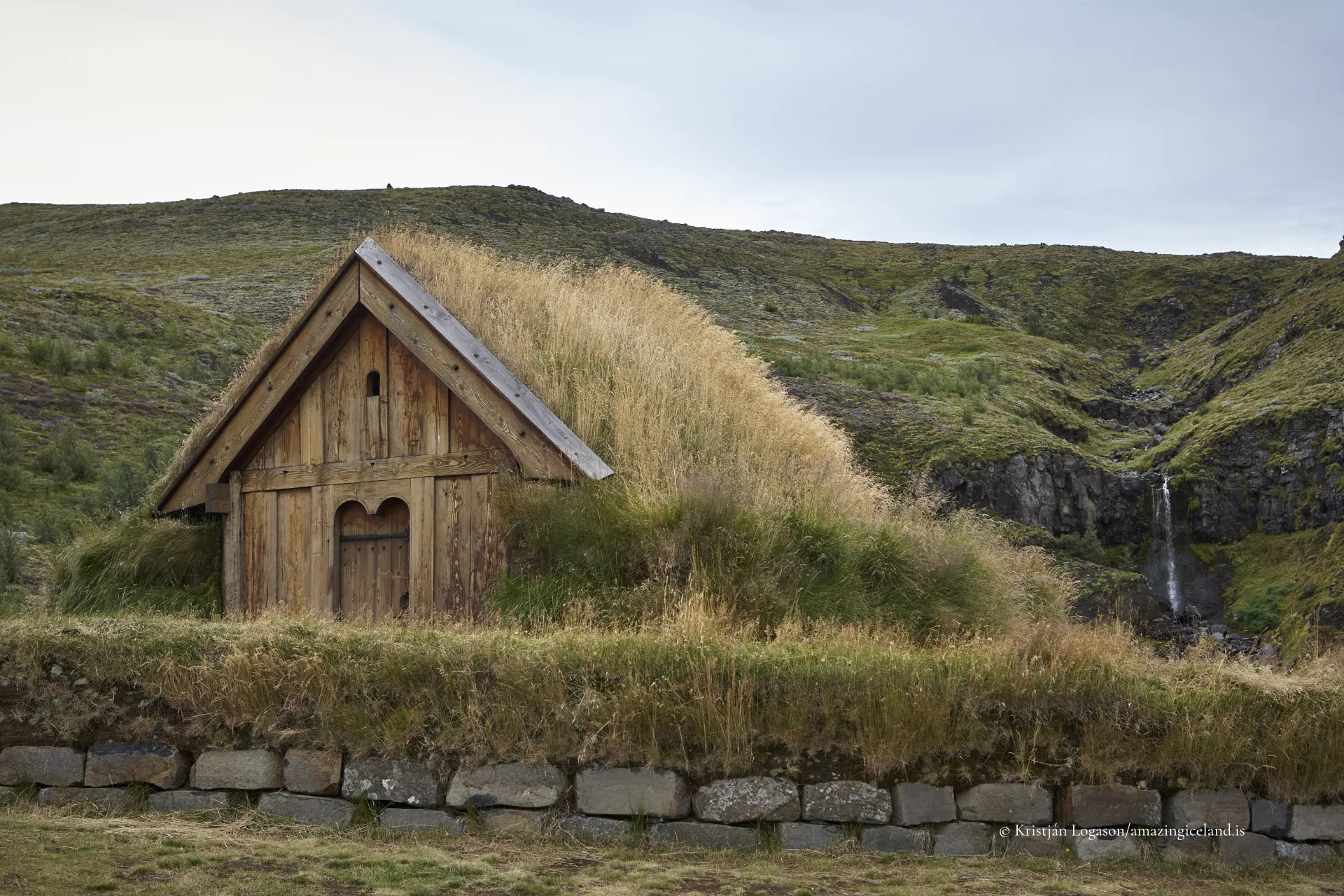
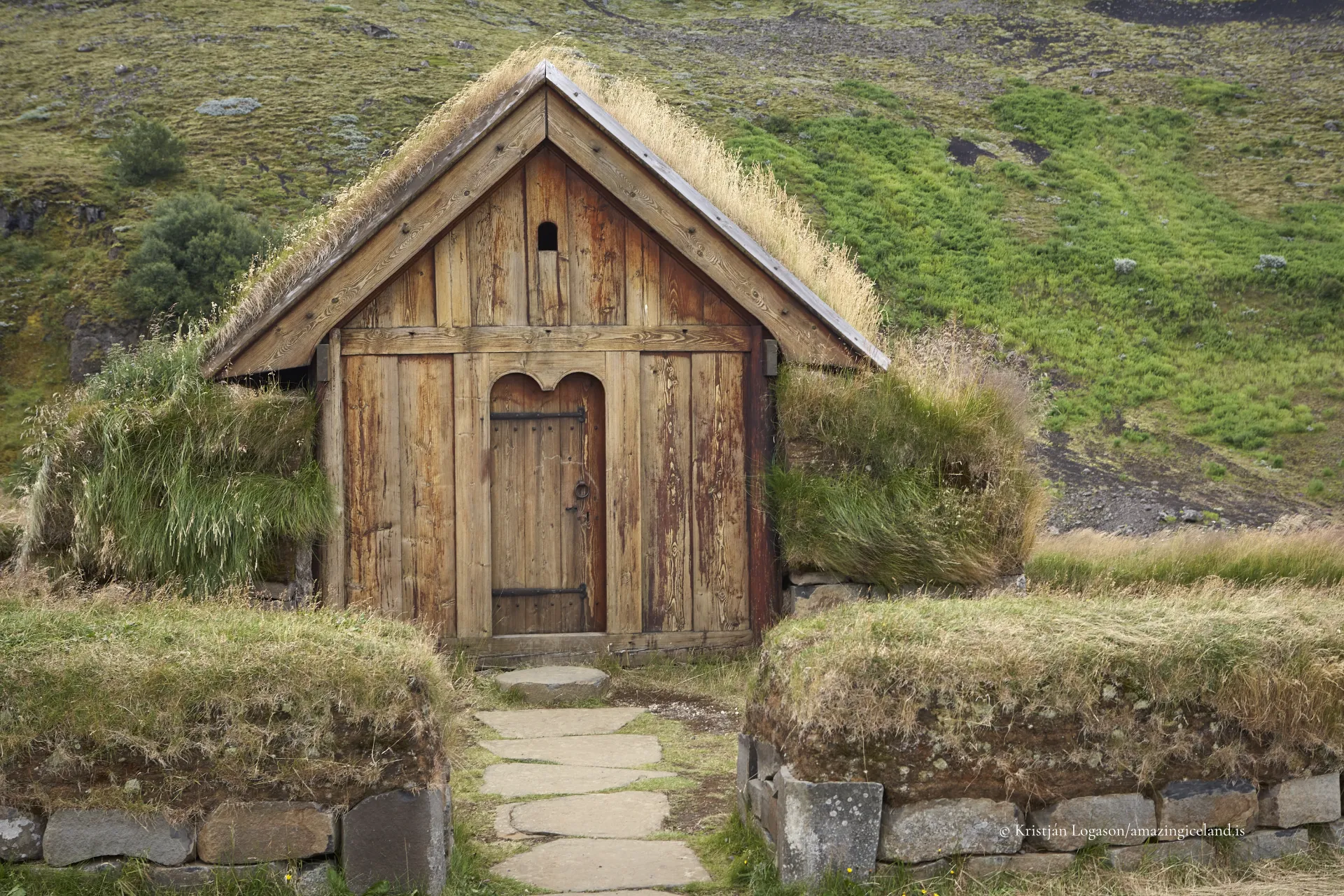
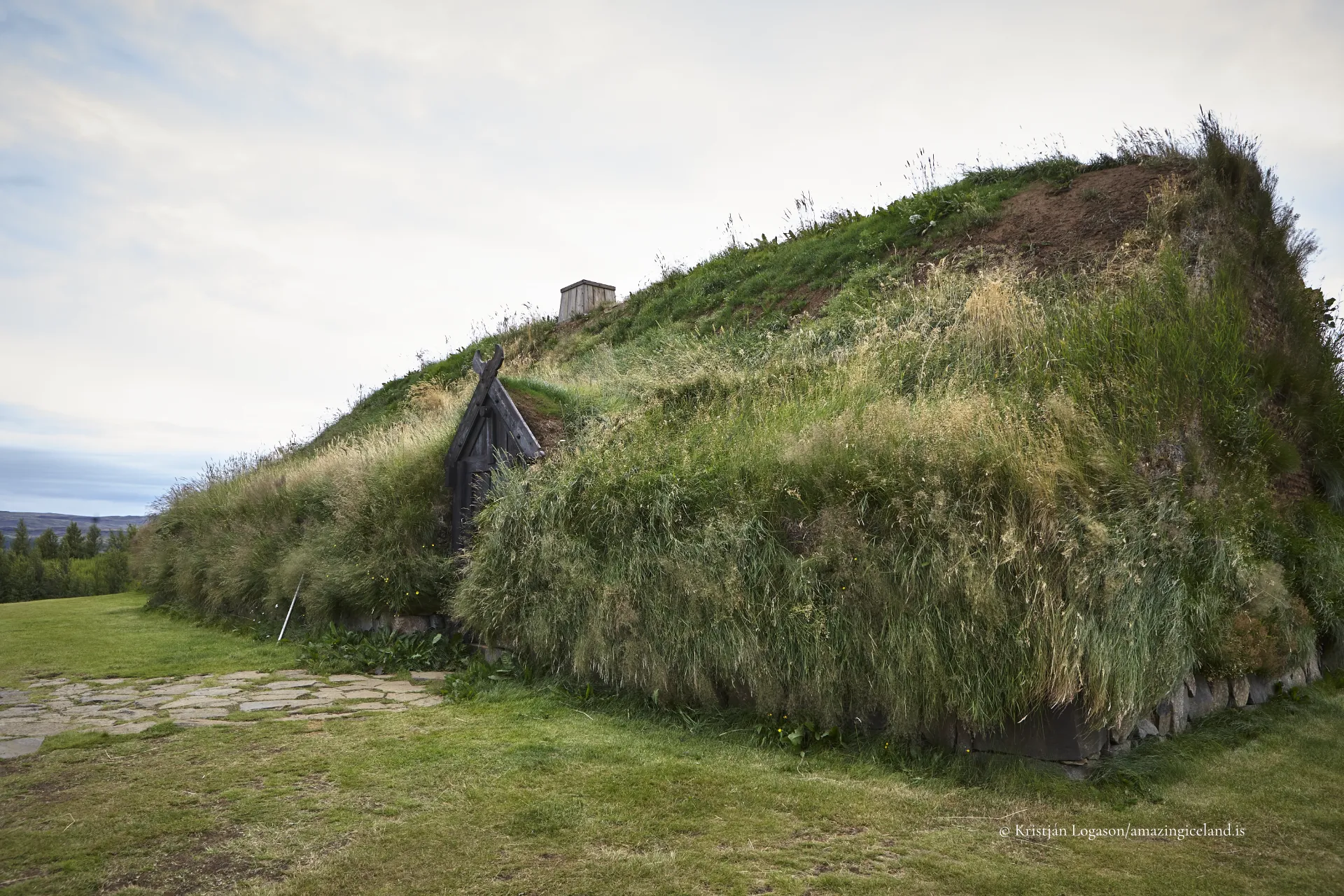
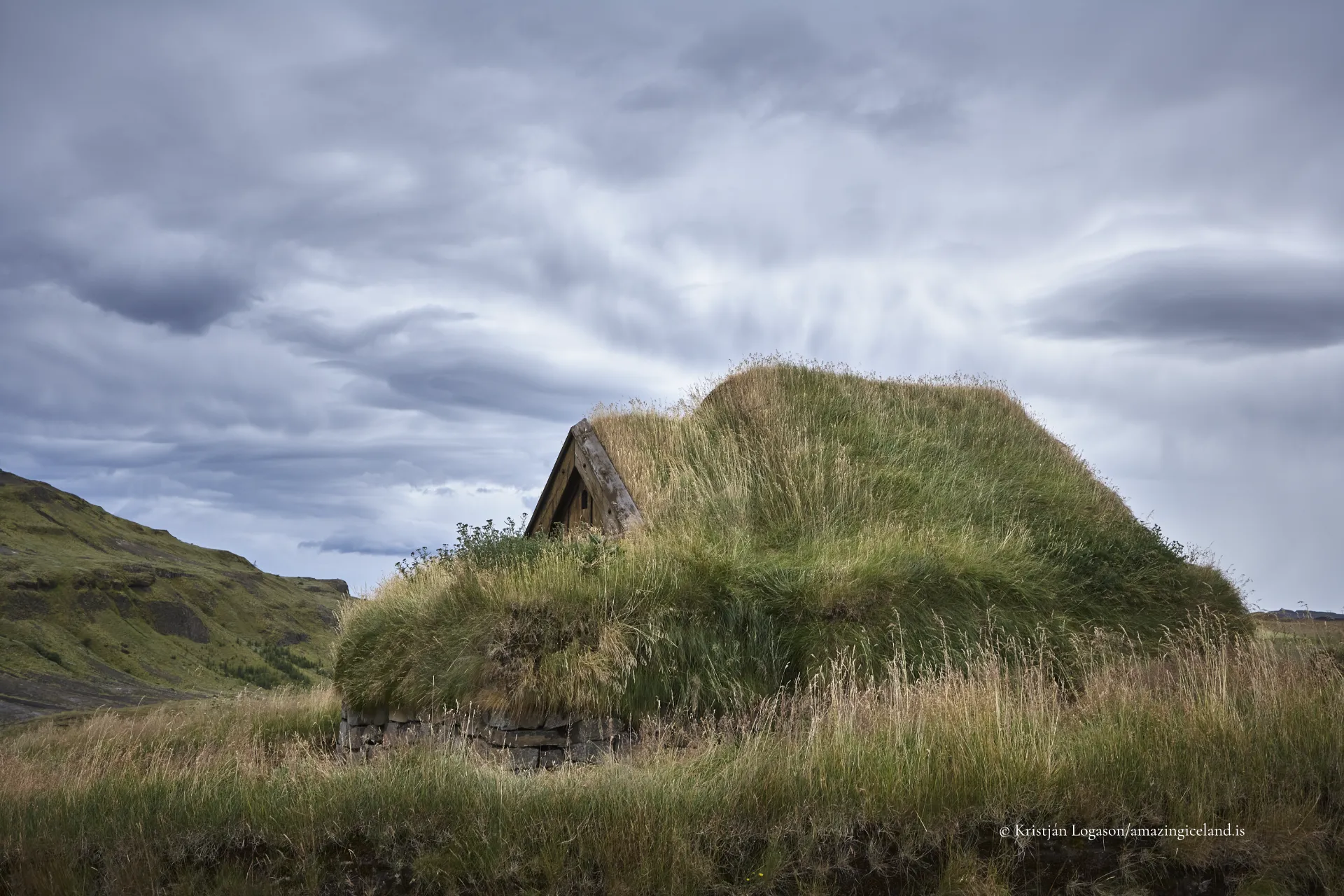
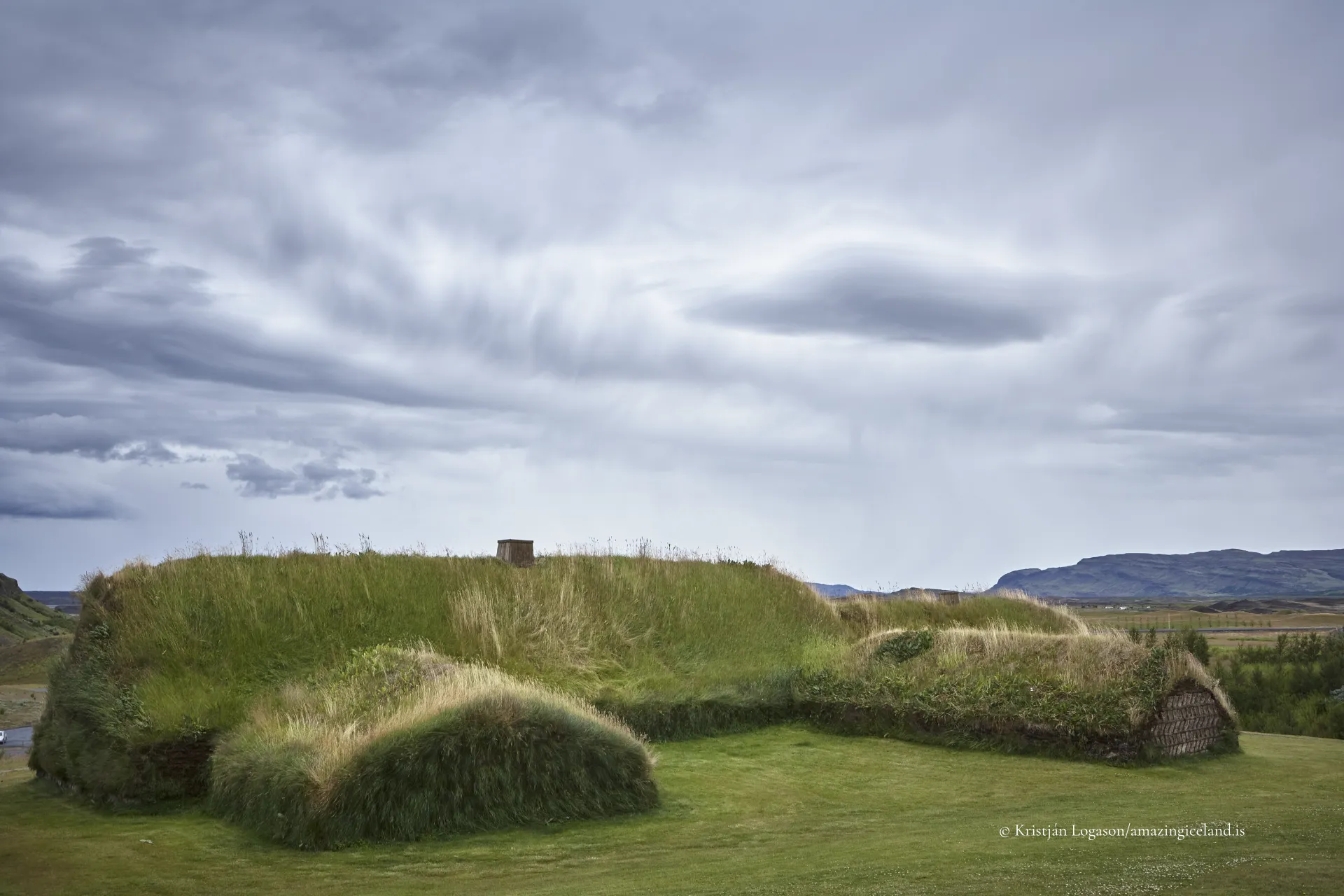
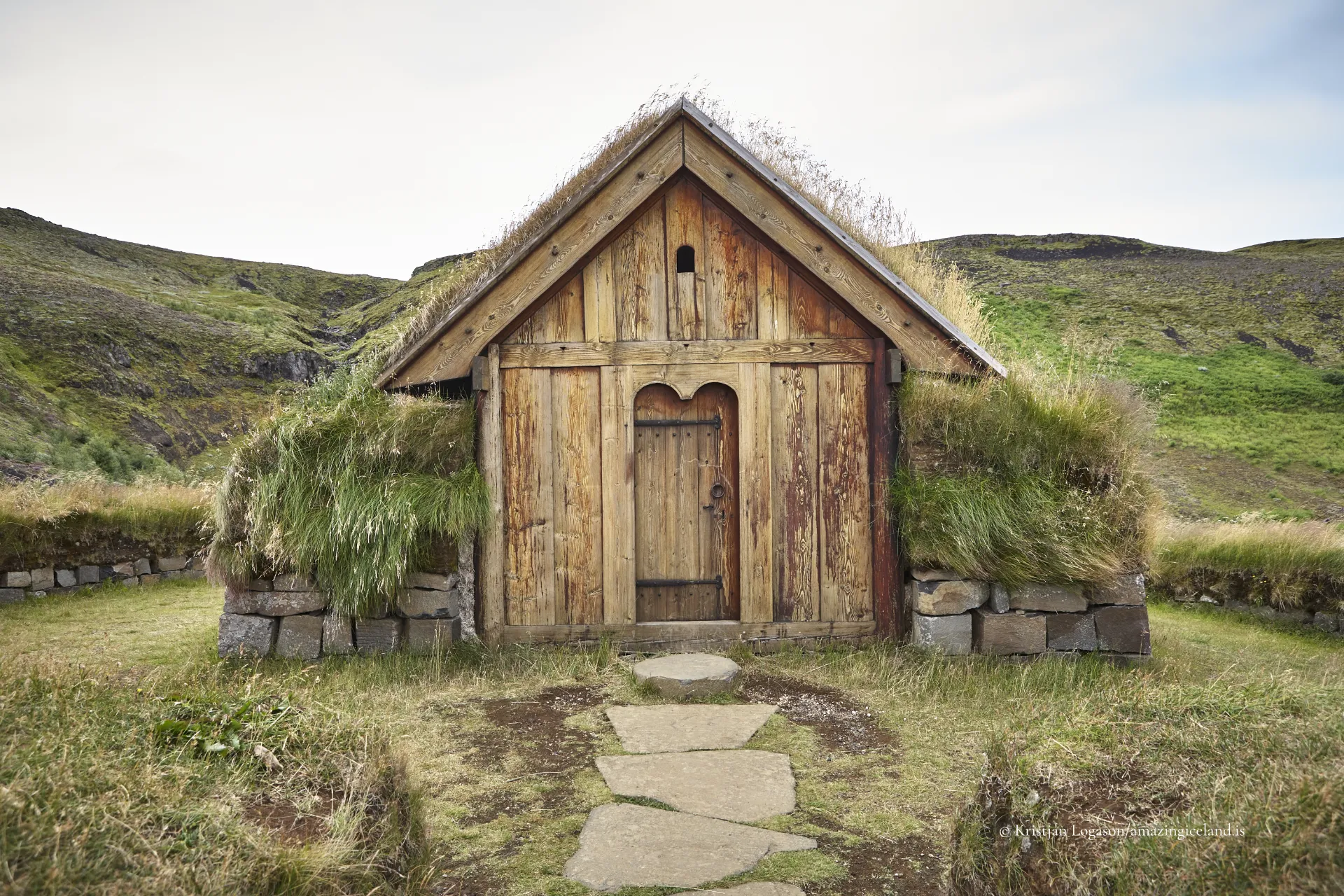
In Þjórsárdalur, near the excavated ruins of Stöng, stands Þjóðveldisbærinn Stöng—commonly referred to as the Commonwealth Farm. Constructed in 1974, the building is a historically informed reconstruction based primarily on archaeological evidence from Stöng and other medieval Icelandic farm sites.
The location of The Commonwealth farm in Þjórsárdalur
Latitude
64.0463
Longitude
-19.9515
The Commonwealth farm in Þjórsárdalur
Þjóðveldisbærinn was built to represent a farmstead from the Icelandic Commonwealth period, the era between the establishment of the Alþingi in 930 and the submission to Norwegian rule in 1262–1264. The reconstruction is located close to the original Stöng excavation site but is separate from the protected ruins.
The structure reflects the layout revealed during the 1939 excavation of Stöng. That excavation uncovered the remains of a large longhouse buried beneath ash from the 1104 eruption of Hekla. The reconstruction incorporates those floor plans, wall dimensions, and spatial divisions.
It is essential to distinguish between the excavated ruins at Stöng and the reconstructed farm. The Commonwealth Farm is an interpretive structure; Stöng is the archaeological source.
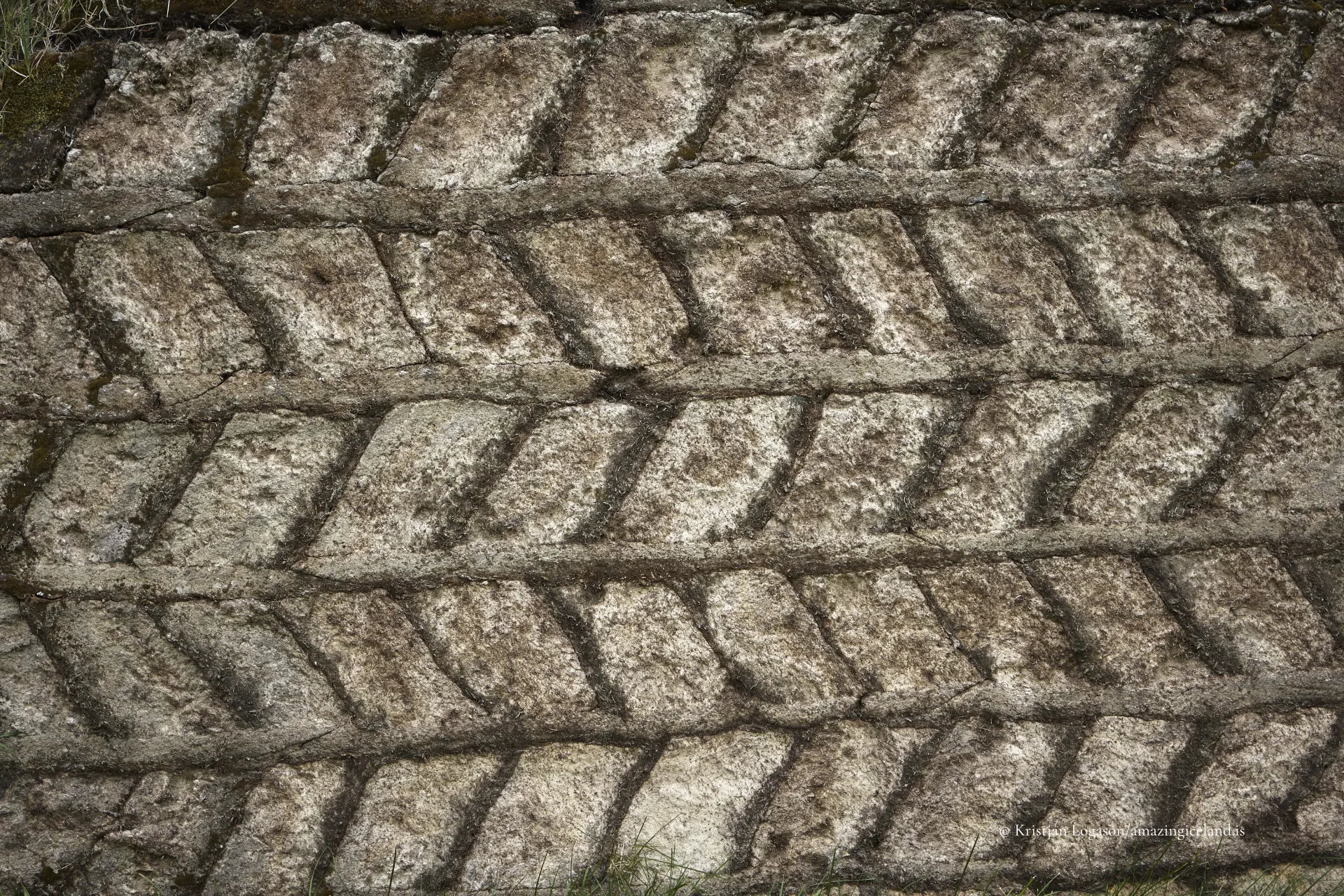
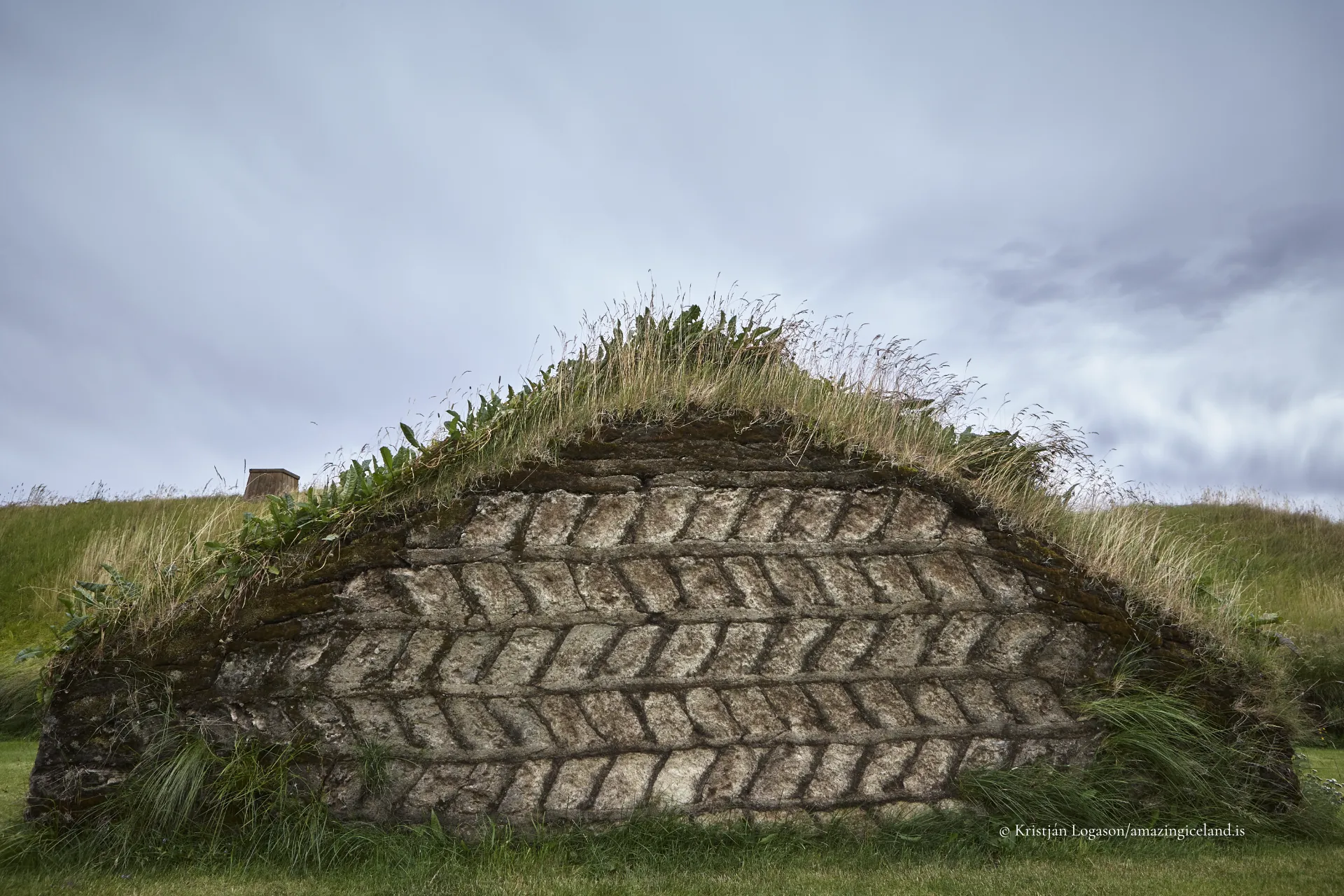
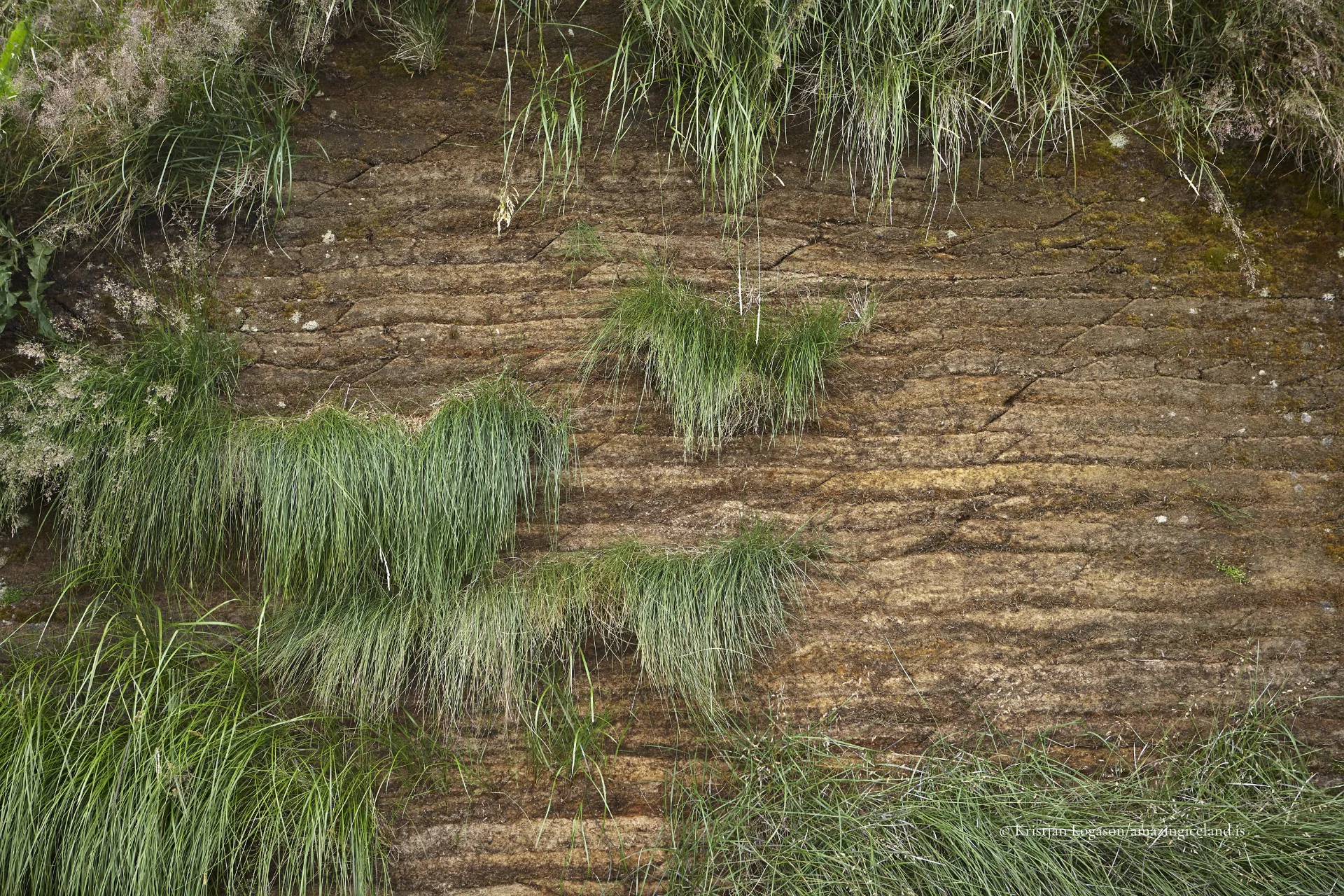
The reconstructed longhouse is built primarily from turf, stone, and timber—materials consistent with medieval Icelandic construction techniques. Thick turf walls provide insulation, while the interior layout includes a central hall, side rooms, and storage areas.
Roofing consists of timber framing covered with turf, reflecting construction methods adapted to limited forest resources. Imported driftwood and sparse local birch would historically have supplemented structural needs.
The building demonstrates how Icelandic settlers adapted Scandinavian longhouse traditions to a treeless volcanic environment. Architectural form was retained, but material expression evolved.
Internally, the Commonwealth Farm illustrates domestic organization during the Viking Age. The central hall functioned as the primary communal space for cooking, sleeping, and social activity. Side chambers likely served as storage areas or specialized rooms.
Fire would have been central, both literally and socially. Hearth placement within longhouses was critical for heating and food preparation, while smoke ventilation relied on roof openings rather than chimneys.
This reconstruction allows spatial experience of a Viking Age interior—something the ruins alone cannot provide.
The reconstruction was built for the 1100th anniversary of Iceland’s settlement (874–1974). Its purpose was educational rather than archaeological experimentation. The structure was designed to demonstrate scale and construction principles rather than to replicate every detail precisely.
Because it stands within Þjórsárdalur, near Stöng, the setting reinforces its contextual authenticity. The surrounding lava fields and visible presence of Hekla provide environmental framing consistent with the medieval farm’s historical conditions.
The building has since been used for educational programs and as a filming location.
The Commonwealth Farm ultimately functions as a spatial bridge between text and excavation. Sagas describe farm life; Stöng provides physical remains; Þjóðveldisbærinn translates both into inhabitable form.
It does not replace the archaeological site but complements it. The reconstruction clarifies scale, proportion, and lived environment without altering the protected ruins.
Interesting facts:
- The reconstruction was completed in 1974, marking 1100 years since settlement.
- It is based largely on excavations at Stöng (excavated in 1939).
- Stöng was buried by ash from Hekla’s 1104 eruption.
- The Commonwealth period lasted from 930 to 1262–1264.
- The building is constructed from turf, stone, and timber in traditional style.
Image Gallery
The Locomotive Elite
What do Donald Trump and Iceland’s Locomotive Elite have in common?
Far more than you think.
In The Locomotive Elite, you’ll uncover how a tiny clique in Iceland captured extensive control—of banks, courts, media, and even the central bank.
For decades they ruled, first democratically, then through corruption and in the end through crime, enriching themselves and their cronies while dismantling oversight.
The result?
One of the most spectacular financial collapses in modern history.
Photography tips:
- Work low and frontal: Turf structures benefit from level composition.
- Interior exposures require care: Low light demands restrained ISO and balanced highlights.
- Include landscape context: Lava and distant Hekla reinforce authenticity.
- Avoid theatrical angles: The structure’s strength lies in proportion.
- Detail shots: Turf wall cross-sections communicate construction technique.
Good cameras for Iceland
Sony A7R V

Sony A7s lll

Canon R6

Nikon Z6 lll

Destinations nearby
Good to have in Iceland