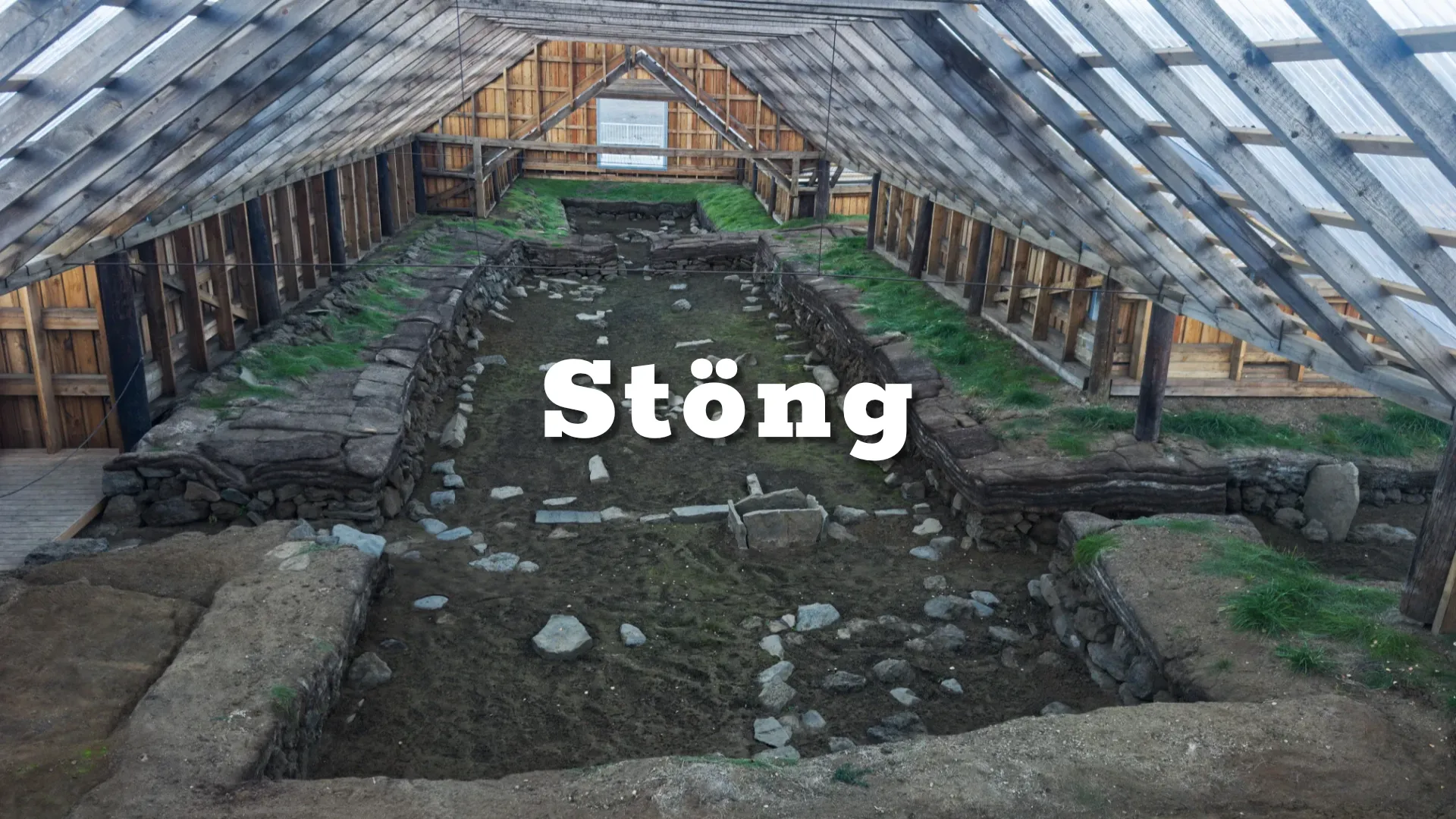
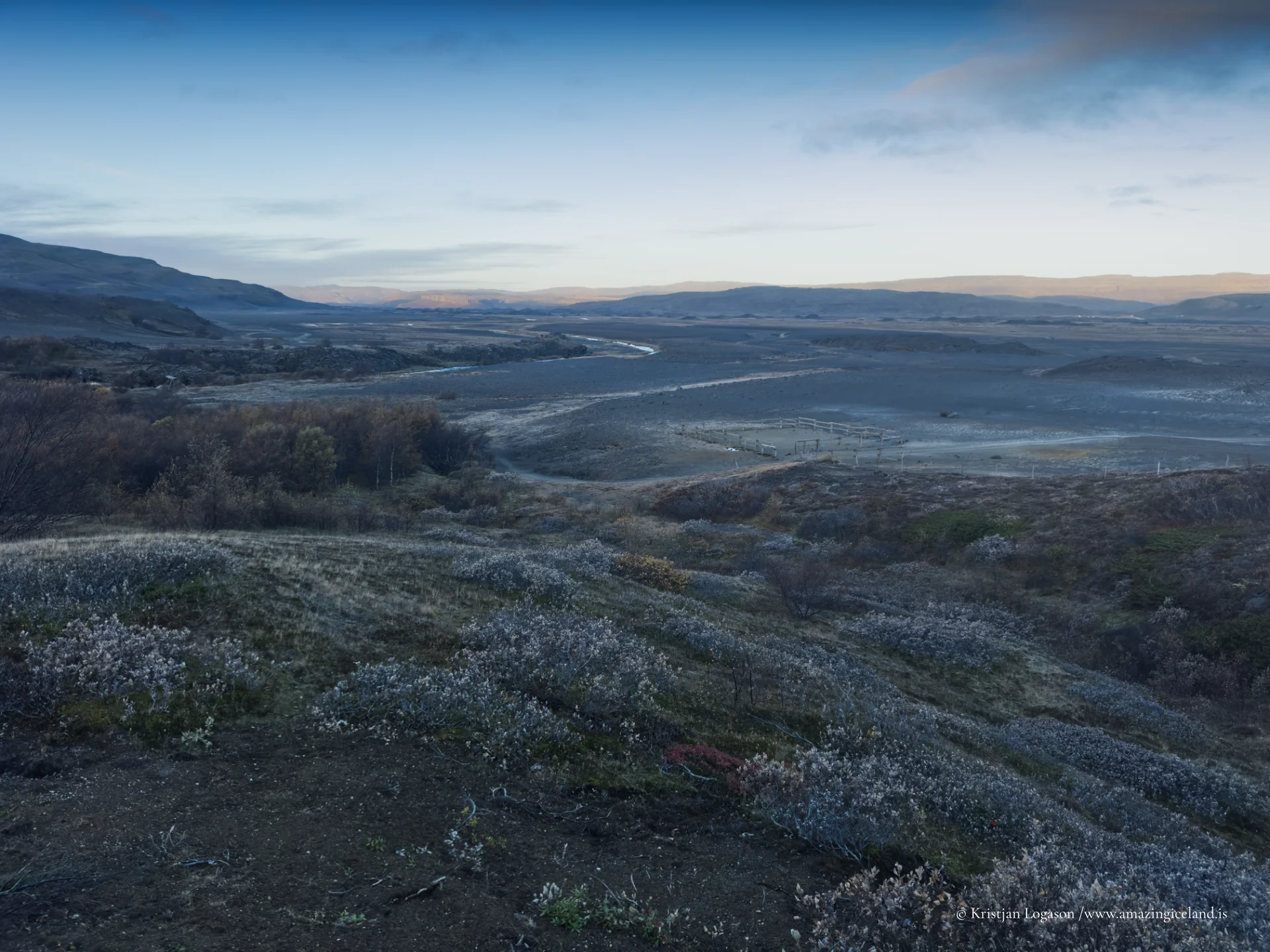
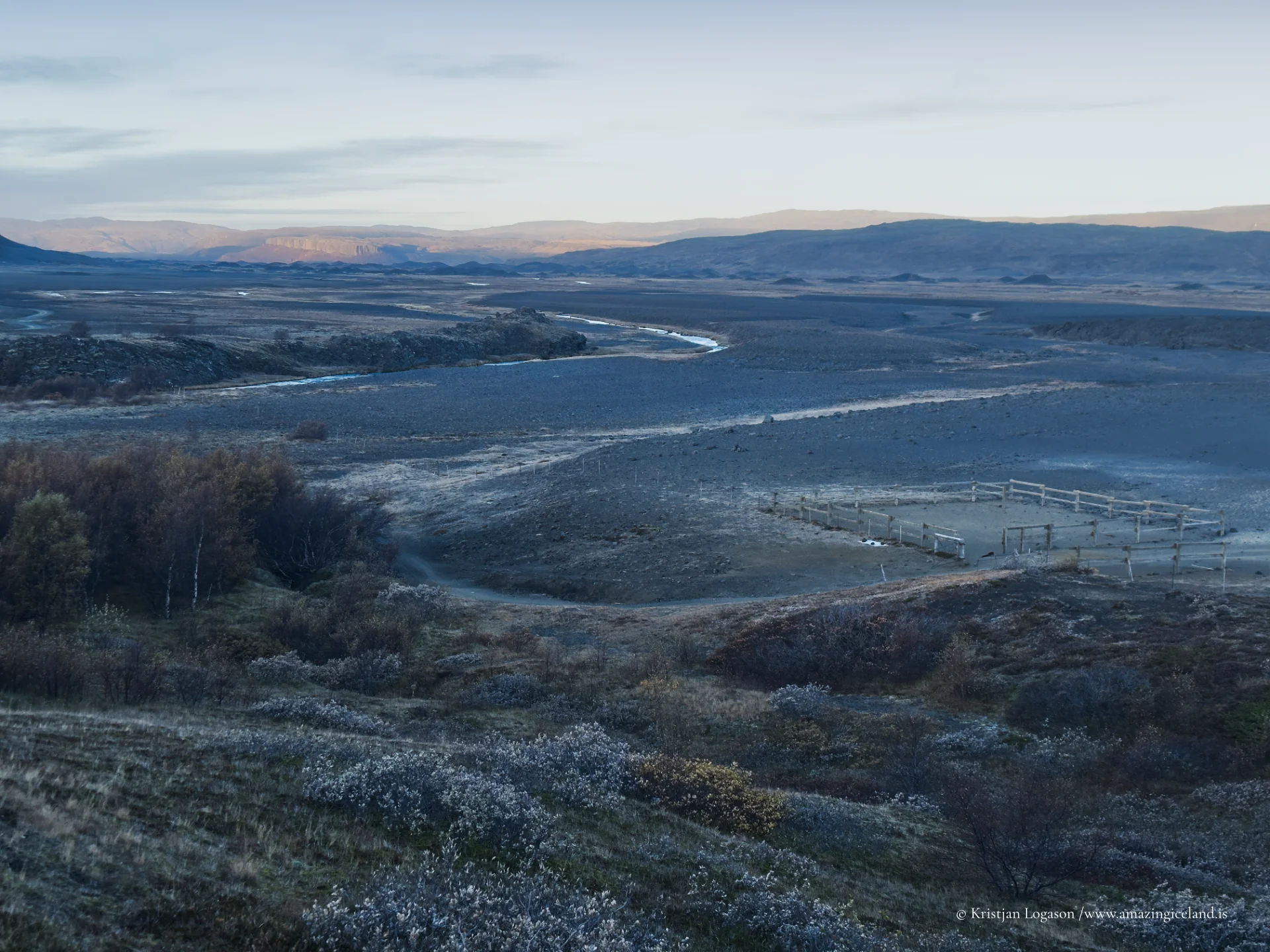
In Þjórsárdalur, beneath the shadow of Hekla, the archaeological site of Stöng preserves the remains of a Viking Age longhouse buried by volcanic ash in the 12th century. Excavations at Stöng have made it one of the clearest physical records of early Icelandic farm life.
The location of Stöng Viking Age longhouse
Latitude
64.0469
Longitude
-19.9495
Stöng Viking Age longhouse
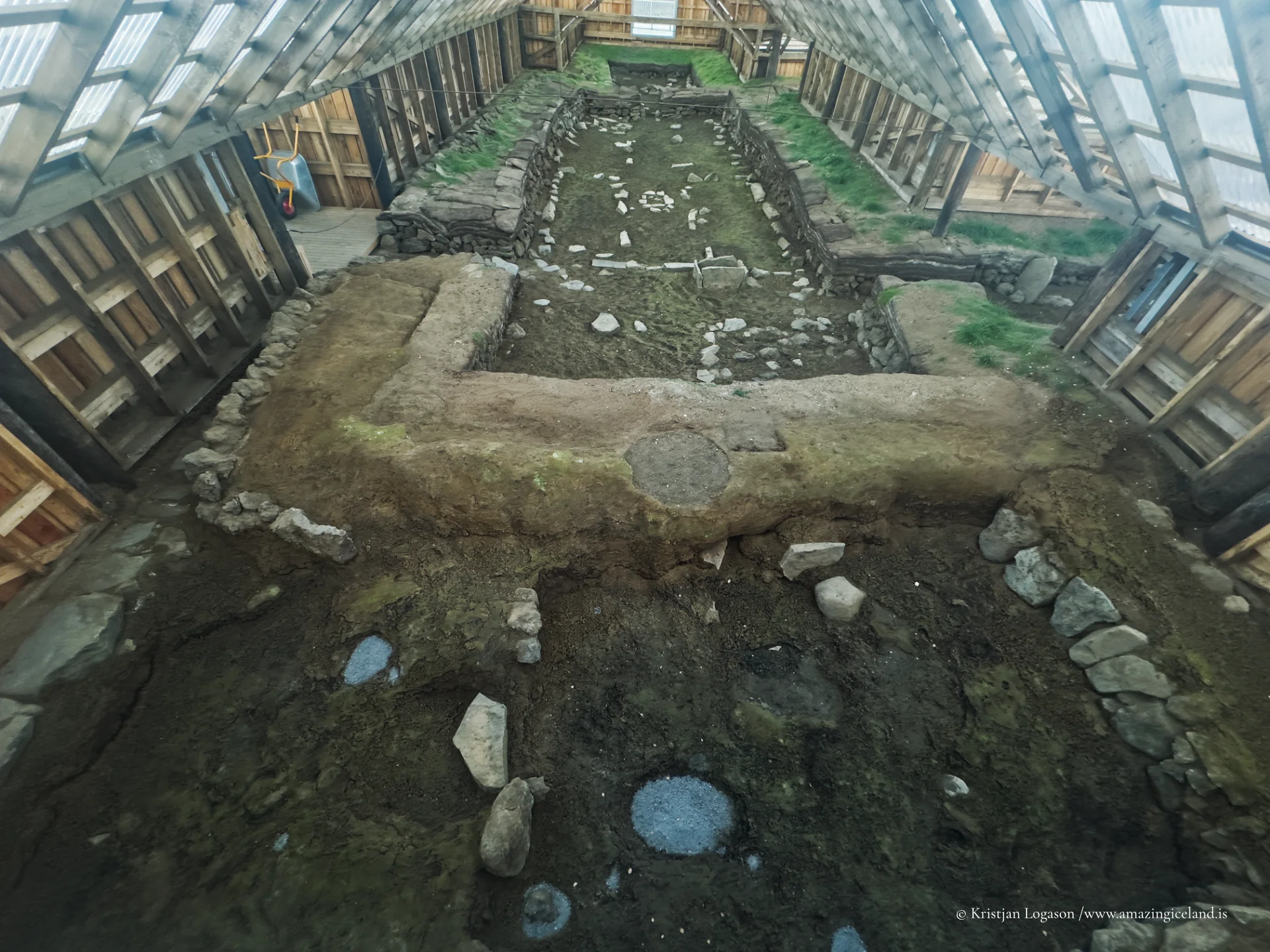
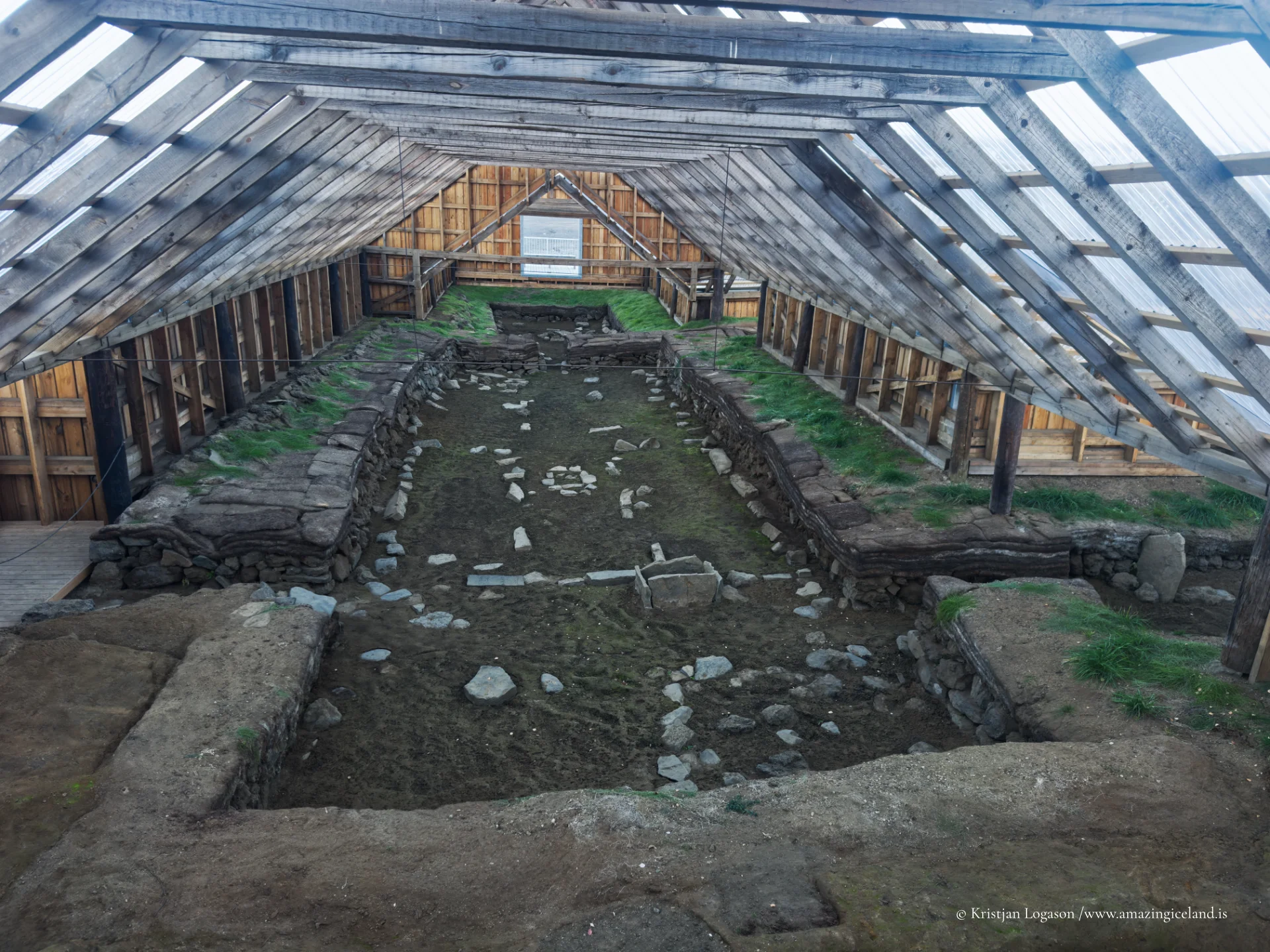
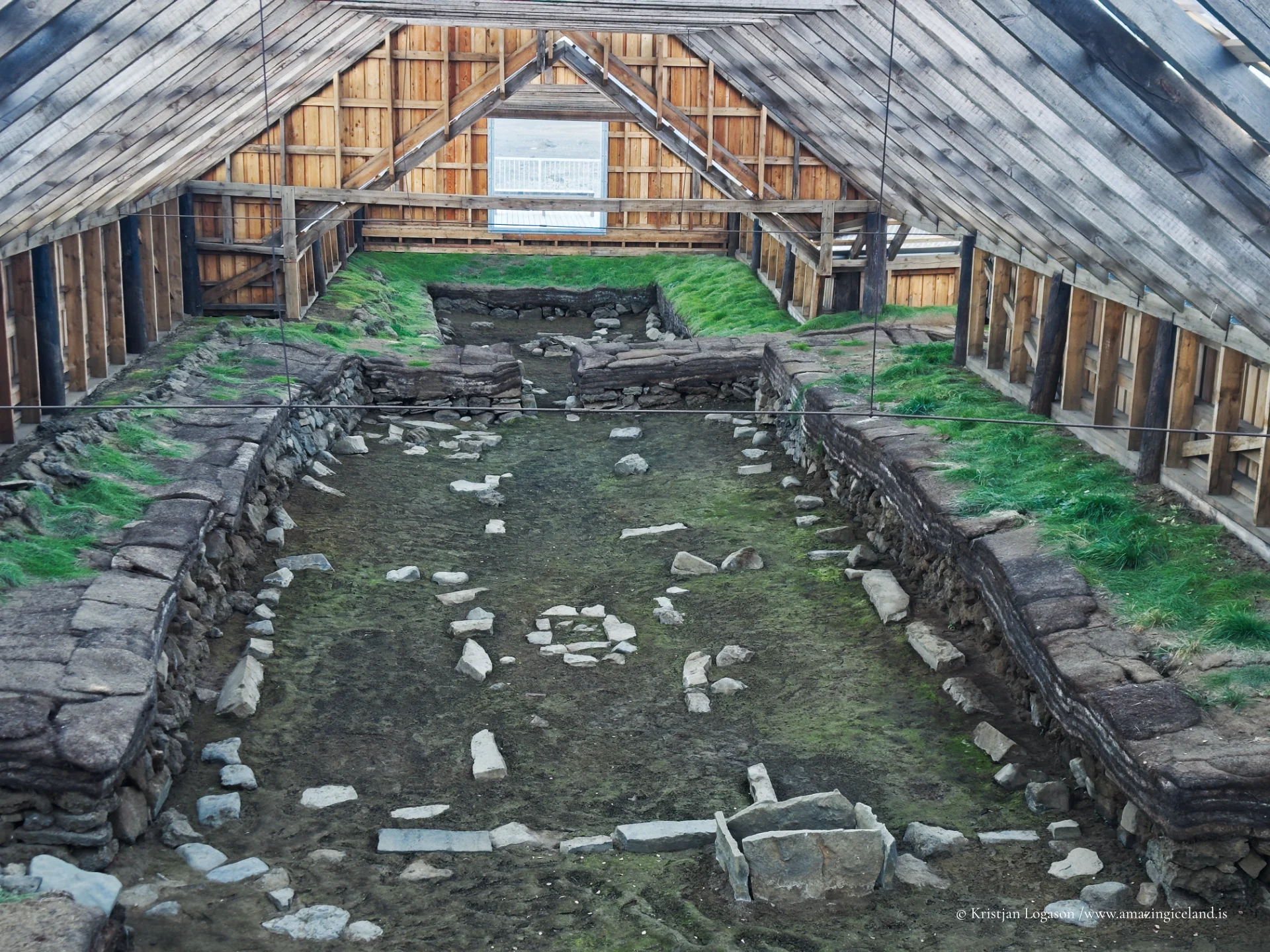
Stöng was a farmstead established during Iceland’s settlement period, likely in the late 9th or early 10th century. The site was excavated in the 20th century and revealed the remains of a large longhouse structure, along with attached rooms and secondary buildings.
The farm was buried under tephra from a major eruption of Hekla, traditionally dated to 1104. The ash layer preserved structural outlines and floor plans, allowing archaeologists to document wall thickness, room divisions, and domestic features with unusual clarity.
From an archaeological perspective, Stöng is significant because it provides structural evidence, not merely artifact distribution. The ash acted as a sealing layer, protecting foundations and floor surfaces from erosion.
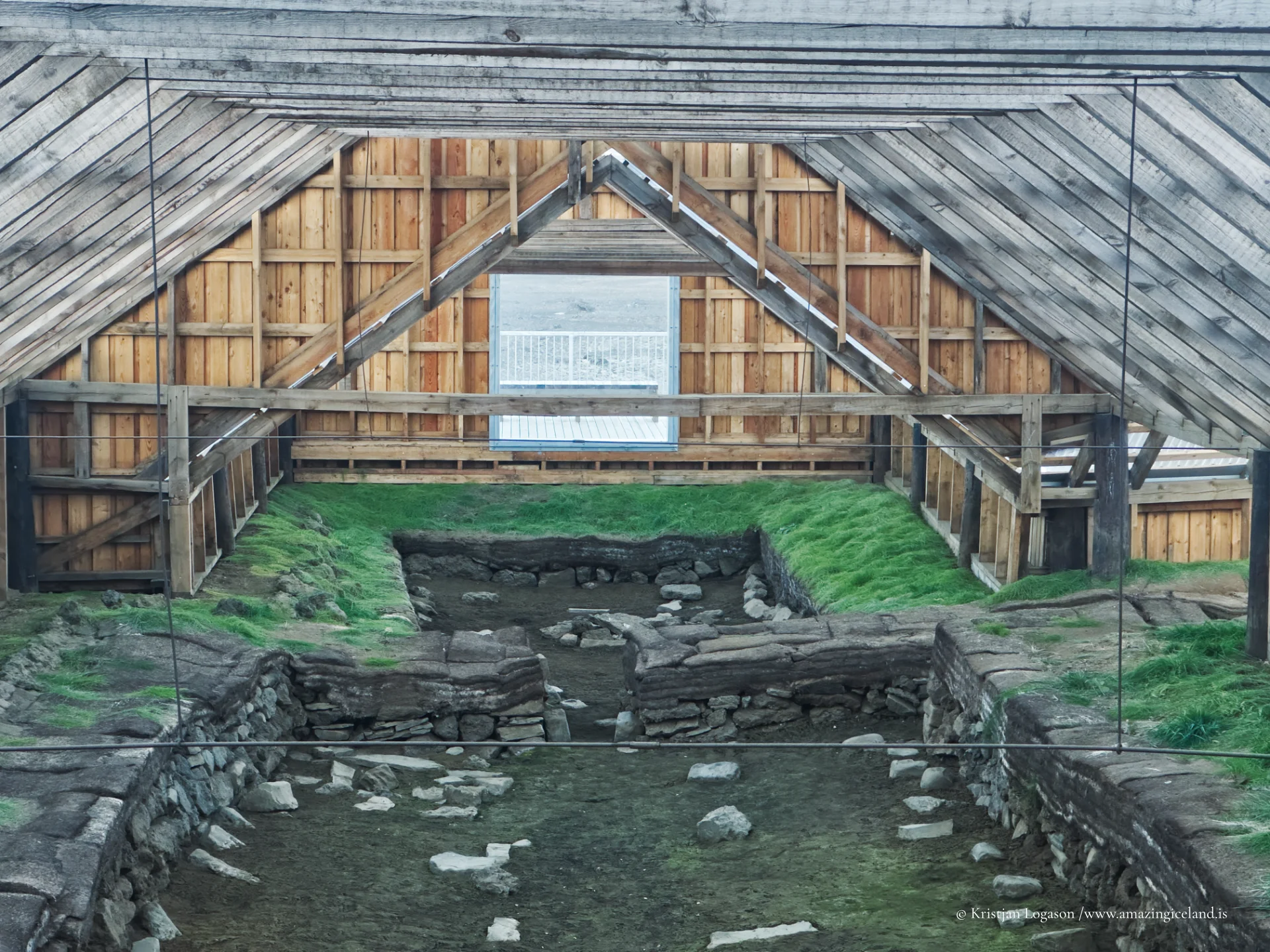
The excavated remains show a central longhouse hall with thick turf-and-stone walls. Internal divisions suggest living space, storage, and possibly specialized work areas. The longhouse form aligns with broader Scandinavian building traditions while adapting to Icelandic materials and climate.
Findings at Stöng indicate mixed subsistence: livestock, limited agriculture, and resource use adapted to a marginal volcanic valley. The farm’s location in Þjórsárdalur reflects the expansion of settlement into inland regions during favorable climatic phases of the medieval period.
The site does not indicate wealth or monumental scale; instead, it illustrates a functional rural household embedded within a volatile environment.
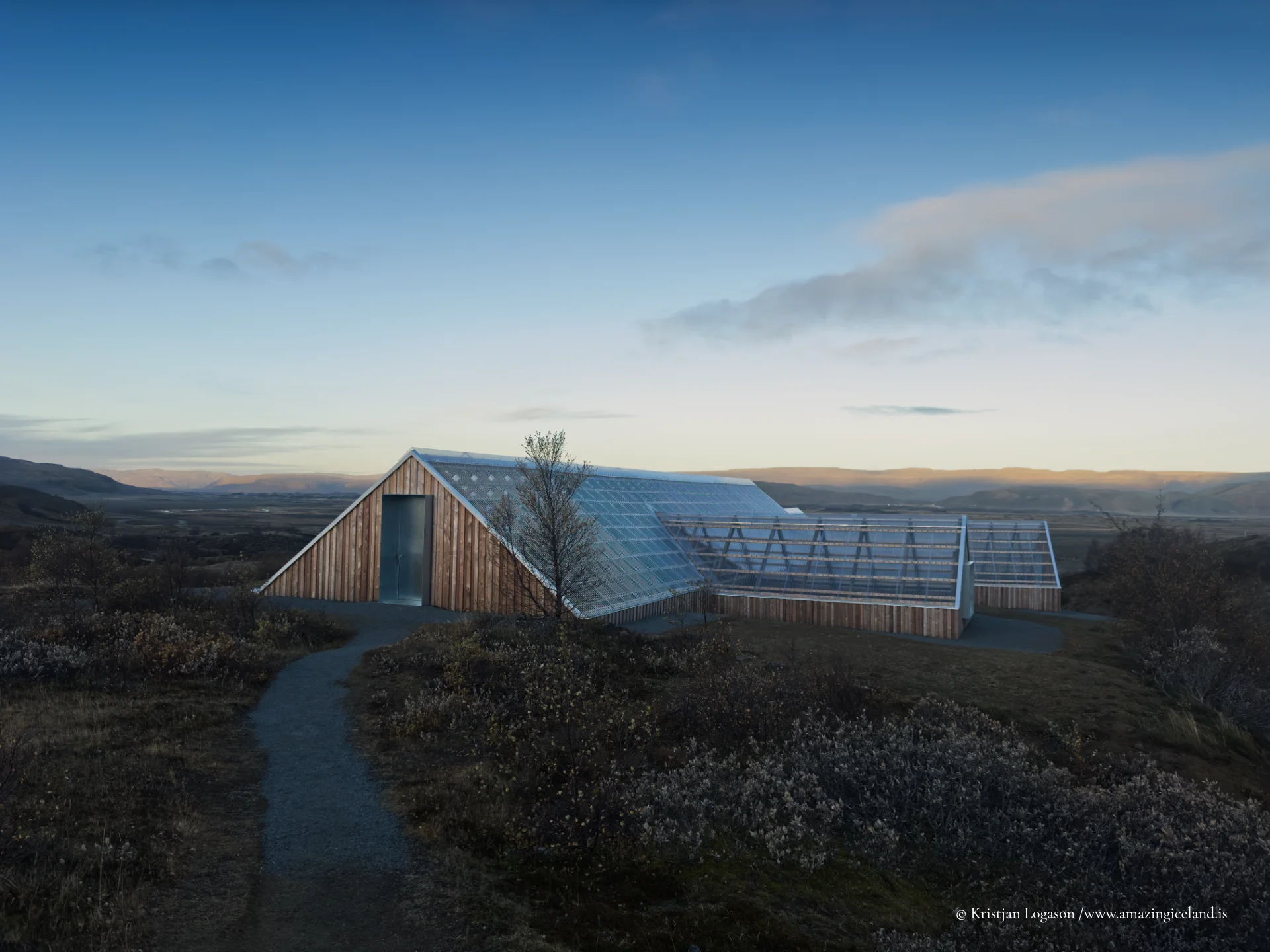
In order to protect the original ruins from weathering, a reconstructed farmhouse known as Þjóðveldisbærinn Stöng was built nearby in 1974. This reconstruction is based on archaeological evidence from Stöng and other contemporaneous sites.
It is important to distinguish between the excavated ruins and the reconstructed building. The original site preserves authentic structural remains under protective covering, while the reconstruction serves as an interpretive model to demonstrate how such a farm may have appeared during the Commonwealth period.
This dual presence allows both preservation and education without altering the original archaeological context.
The eruption of Hekla in 1104 appears to have had severe consequences for farms in Þjórsárdalur. Tephra layers across the valley indicate widespread ashfall that disrupted agriculture and habitation. While Stöng’s abandonment may not have been instantaneous, the eruption marks a turning point in the valley’s settlement history.
Tephrochronology—dating through volcanic ash layers—has played a key role in understanding this timeline. Stöng is frequently cited in discussions of how volcanic events intersected with medieval rural life in Iceland.
This connection between eruption and preservation makes Stöng both a casualty and a source of knowledge.
Stöng ultimately represents a rare archaeological moment frozen in geological time. Unlike saga narratives, which describe farm life through text, Stöng provides spatial and material confirmation of domestic structure.
Within Icelandic archaeology, the site stands as one of the clearest examples of how volcanic processes can preserve rather than erase cultural history.
Interesting facts:
- Stöng was likely settled in the late 9th or early 10th century.
- The farm was buried by ash from Hekla’s 1104 eruption.
- Excavations revealed a well-defined longhouse floor plan.
- A reconstructed farmhouse, Þjóðveldisbærinn, was built in 1974 nearby.
- The site is central to Icelandic tephrochronological research.
Image Gallery
The Locomotive Elite
What do Donald Trump and Iceland’s Locomotive Elite have in common?
Far more than you think.
In The Locomotive Elite, you’ll uncover how a tiny clique in Iceland captured extensive control—of banks, courts, media, and even the central bank.
For decades they ruled, first democratically, then through corruption and in the end through crime, enriching themselves and their cronies while dismantling oversight.
The result?
One of the most spectacular financial collapses in modern history.
Photography tips:
- Respect structure: Emphasize wall thickness and room layout from elevated angles.
- Avoid dramatization: Neutral tones suit archaeological context.
- Include landscape context: Hekla and surrounding lava explain preservation.
- Detail framing: Turf edges and stone bases communicate material reality.
- Separate ruin from reconstruction: Photograph them distinctly to avoid confusion.
Good cameras for Iceland
Sony A7R V

Sony A7s lll

Canon R6

Nikon Z6 lll

Destinations nearby
Good to have in Iceland