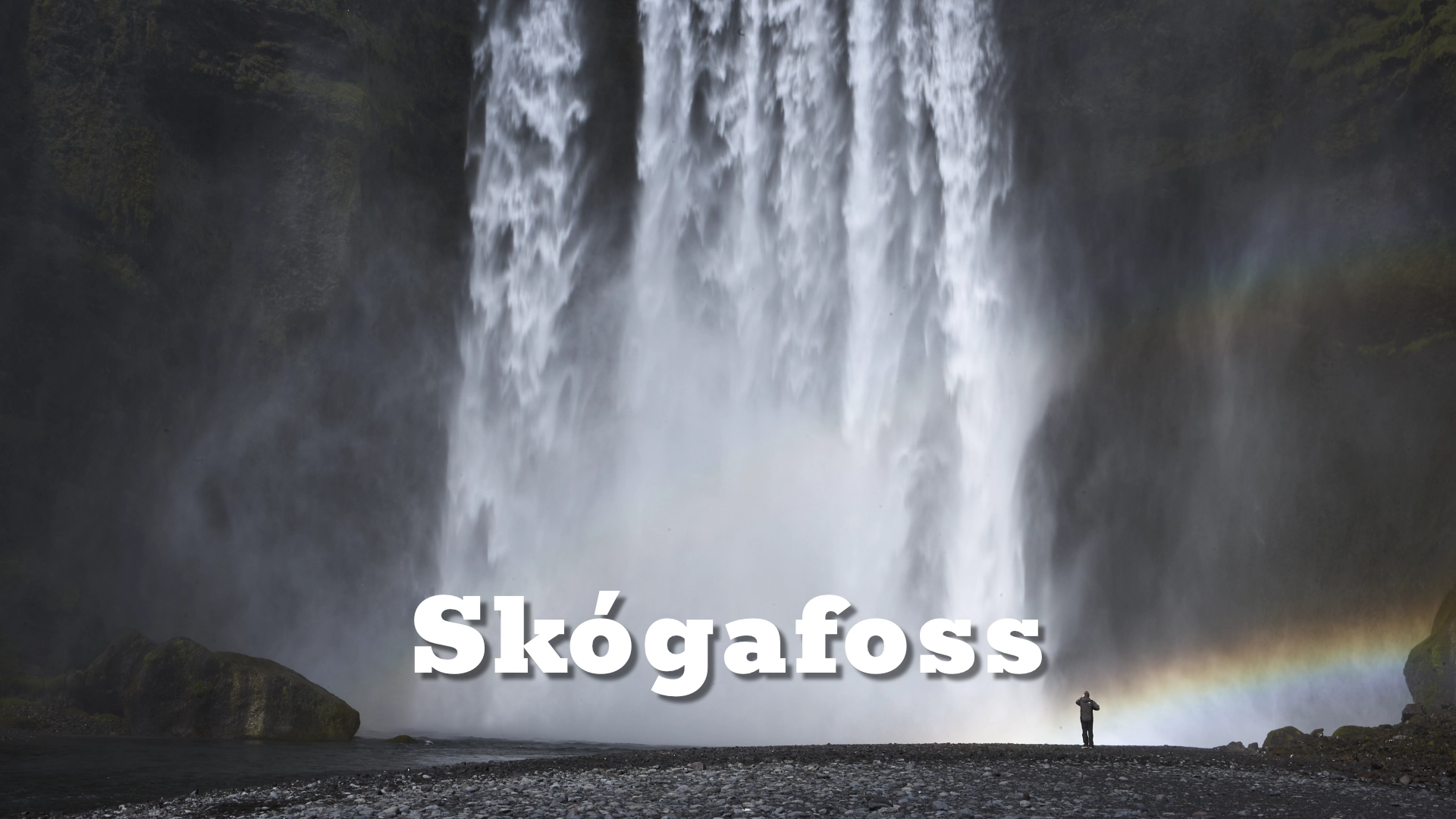
Skogafoss waterfall on the south coast of Iceland
Skógafoss is difficult to misunderstand. The Skógá river reaches the edge of an old sea cliff and drops almost vertically for about 60 metres in a broad curtain roughly 25 metres wide.
There is no gorge hiding it and no long walk required to reach the base. The waterfall stands directly in front of the coastal plain near Skógar, with visitors able to walk close enough to feel the spray and hear the full force of the water.
A staircase climbs the eastern side of the cliff to the top, and beyond it the Skógá river continues inland through a protected landscape containing a whole series of additional waterfalls.
The location of Skogafoss waterfall on the south coast of Iceland
Latitude
63.5320
Longitude
-19.5115
Skogafoss waterfall on the south coast of Iceland
A waterfall on an old coastline
The cliff at Skógafoss once stood much closer to the sea. At the end of the Ice Age, the coastline ran along the base of the mountains here. Uplift of the land and the gradual accumulation of sediment across the South Coast later pushed the shoreline farther south, leaving the old sea cliff inland.
Skógafoss now drops from that former coastal edge onto a broad lowland plain.
The waterfall is formed by the Skógá river, which rises in the highlands between Eyjafjallajökull and Mýrdalsjökull. Most of the time the river maintains a substantial and fairly consistent flow, but severe weather can increase discharge considerably and produce flooding.
That variability is important because Skógafoss is not a static feature. Its appearance changes with water volume, wind and season, even though its basic shape remains immediately recognisable.
At the base of Skógafoss
The easiest way to understand Skógafoss is from below. The path from the parking area leads directly towards the plunge pool, and the closer you get, the more the waterfall fills both sight and sound.
Spray is almost constant near the base. In calm conditions it rises as fine mist. In wind it can be driven sideways across the viewing area and soak clothing and equipment very quickly.
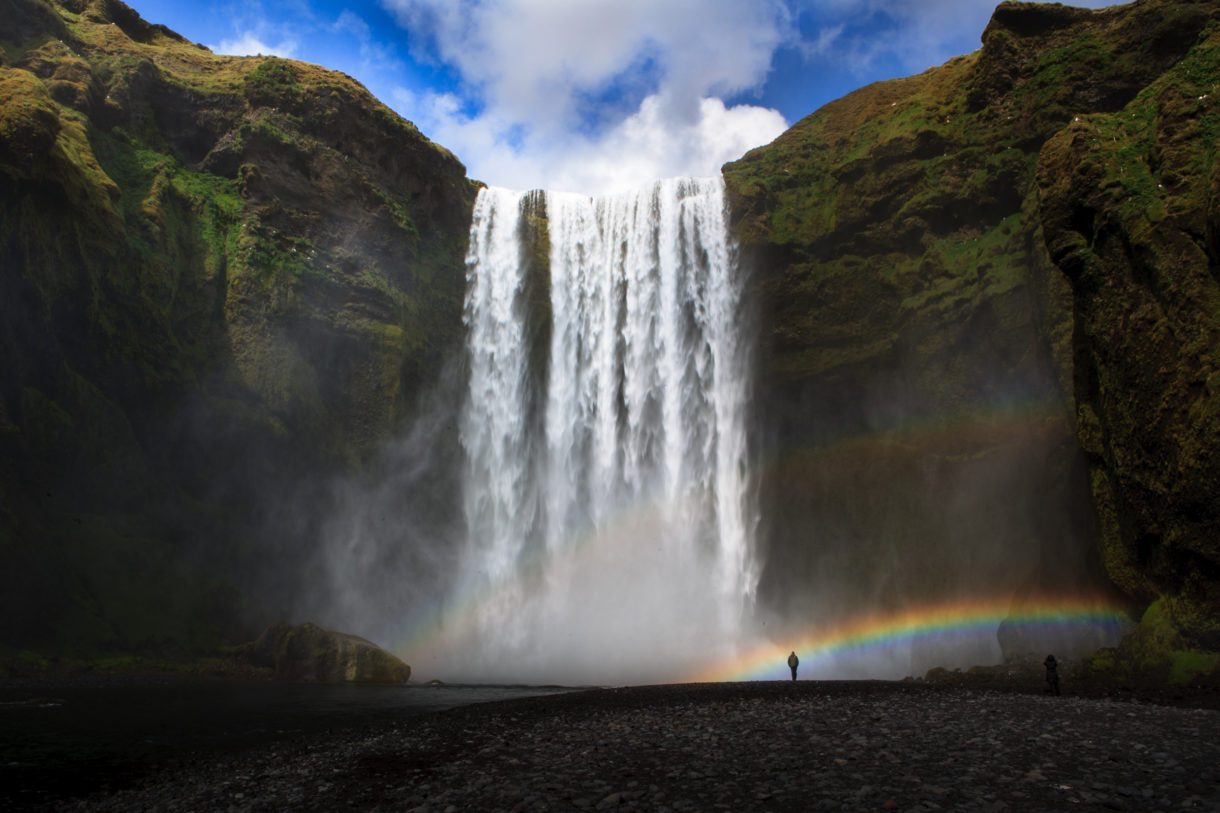
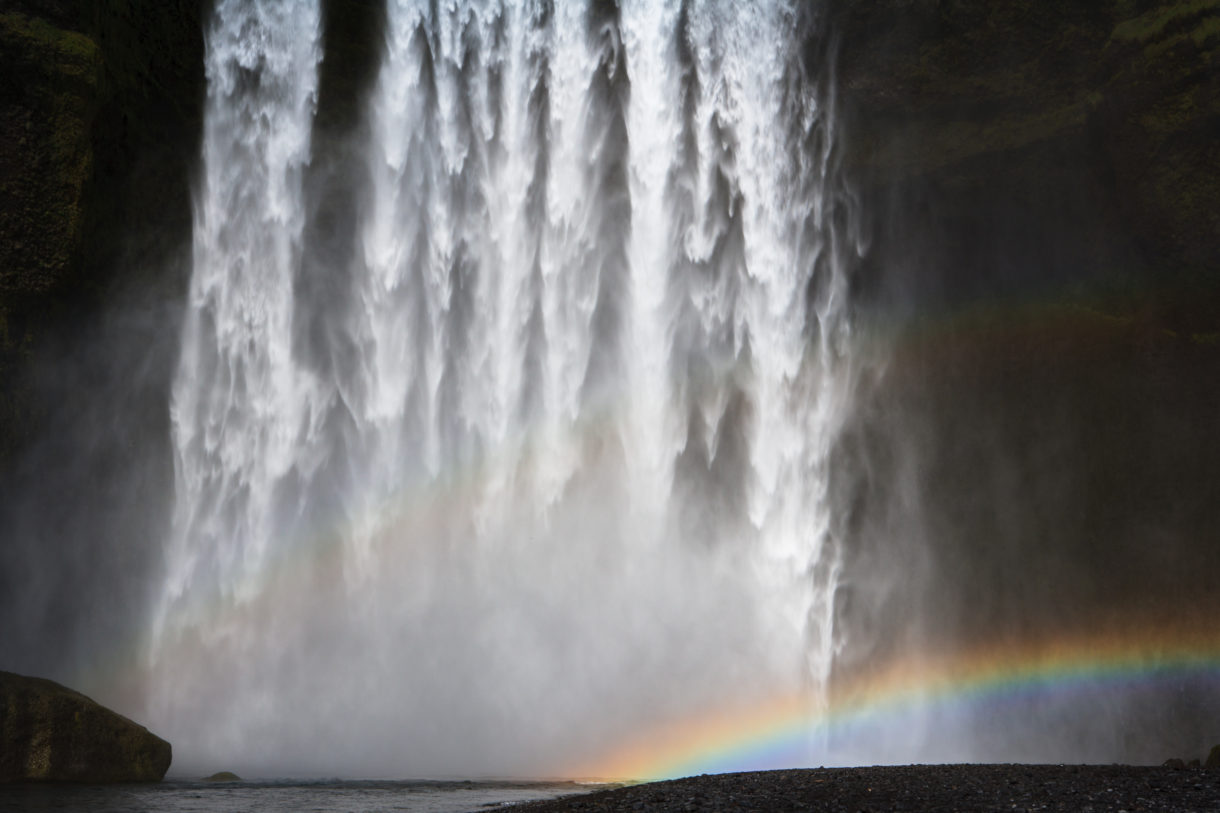
The mist is also responsible for one of Skógafoss’s best-known features. When sunlight reaches the waterfall from the right angle, rainbows frequently form in front of the falls, sometimes more than one at once.
The ground nearest the waterfall is wet and can be slippery. There is no need to stand directly against the plunge pool to experience the scale of Skógafoss. From slightly farther back, the full width of the waterfall and the height of the cliff are often easier to appreciate.

429 steps and the waterfalls above
A staircase of 429 steps climbs the hillside east of Skógafoss. The climb gives a completely different view.
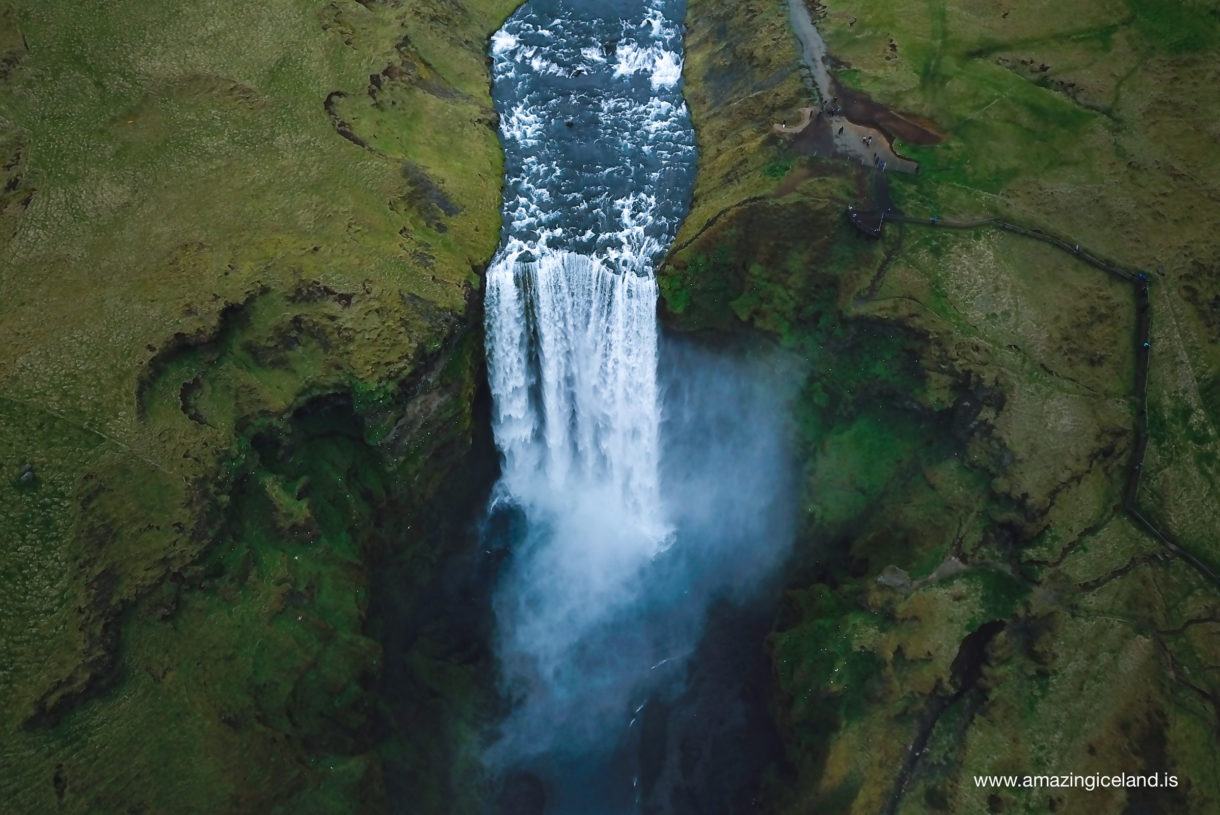
From the top, the broad curtain seen from below becomes a narrow river reaching the cliff edge and suddenly disappearing over it.
The staircase can become icy in winter. When snow and ice are present, both the climb and descent require much more care than the number of steps alone suggests.
The top of Skógafoss is also not the end of the landscape. The Skógá river continues inland through a protected corridor containing numerous additional waterfalls.
Among those officially named along the upper river are Hestavaðsfoss, Fosstorfufoss and Skálabrekkufoss. Walking farther inland changes the experience from a single landmark into a river landscape.
Skógafoss is the largest and most famous waterfall in the system, but it is only the first one encountered from the coast.
Þrasi and the treasure behind the waterfall
Skógafoss also carries one of Iceland’s better-known waterfall legends. According to tradition, Þrasi Þórólfsson, an early settler in the area, hid a chest of treasure behind the waterfall.
The story says that people later tried to retrieve it. They managed to catch hold of a ring attached to the chest, but the ring broke away and the treasure disappeared again behind the falling water.
The ring itself became part of the story. Tradition links it with Skógar, where it was preserved and later associated with the local museum collection.
Whether a chest of gold ever existed is another question entirely. What matters is that the story has remained attached to Skógafoss for generations and gives the waterfall a cultural identity beyond its geology.
Fimmvörðuháls begins here
The route above Skógafoss also leads towards Fimmvörðuháls. This is important because the first part of the trail can look deceptively like an easy extension of the waterfall visit. It is not.
The full Fimmvörðuháls route between Skógar and Þórsmörk is a serious highland crossing of roughly 25 km with major ascent, exposed terrain and weather that can change quickly.
Fimmvörðuháls will have its own destination page, where the route belongs in full. For a Skógafoss visit, it is enough to know that the trail begins here and that the path above the waterfall can be followed for shorter distances without committing to the complete crossing.
Visiting Skógafoss
Skógafoss lies immediately off Route 1 beside the village of Skógar. Parking and basic visitor facilities are available near the waterfall.
Skógar Museum is also close by and provides a natural cultural counterpart to the waterfall, especially given the local Þrasi treasure tradition.
Skógafoss can become very busy during the day. Early morning and late evening usually offer more space, particularly in summer when daylight extends far beyond normal visiting hours.
Winter does not normally prevent access to the base of the waterfall, but ice can affect paths, the viewing area and especially the staircase.
Skógafoss on screen
Skógafoss has appeared repeatedly in international film, television and music. It has been used in productions including Vikings, Game of Thrones, Thor: The Dark World, The Secret Life of Walter Mitty, Dilwale and Land Ho!
The waterfall also appears in Sólstafir’s Fjara and Justin Bieber’s I’ll Show You.
Its popularity as a filming location is easy to understand. Skógafoss requires very little visual manipulation. The scale, symmetry and open landscape are already present.
Interesting facts:
-
- Skógafoss is about 60 metres high and roughly 25 metres wide.
- The waterfall drops from an old sea cliff that once stood much closer to the shoreline.
- A staircase of 429 steps leads to the top.
- The stairs can become icy in winter.
- The Skógá river continues inland past a series of additional waterfalls.
- Fimmvörðuháls begins above Skógafoss but is a serious highland route rather than a short extension of the waterfall walk.
- Local tradition says Þrasi Þórólfsson hid a chest of treasure behind the waterfall.
- Skógafoss has appeared in numerous films, television productions and music videos.
Image Gallery


Photography tips:
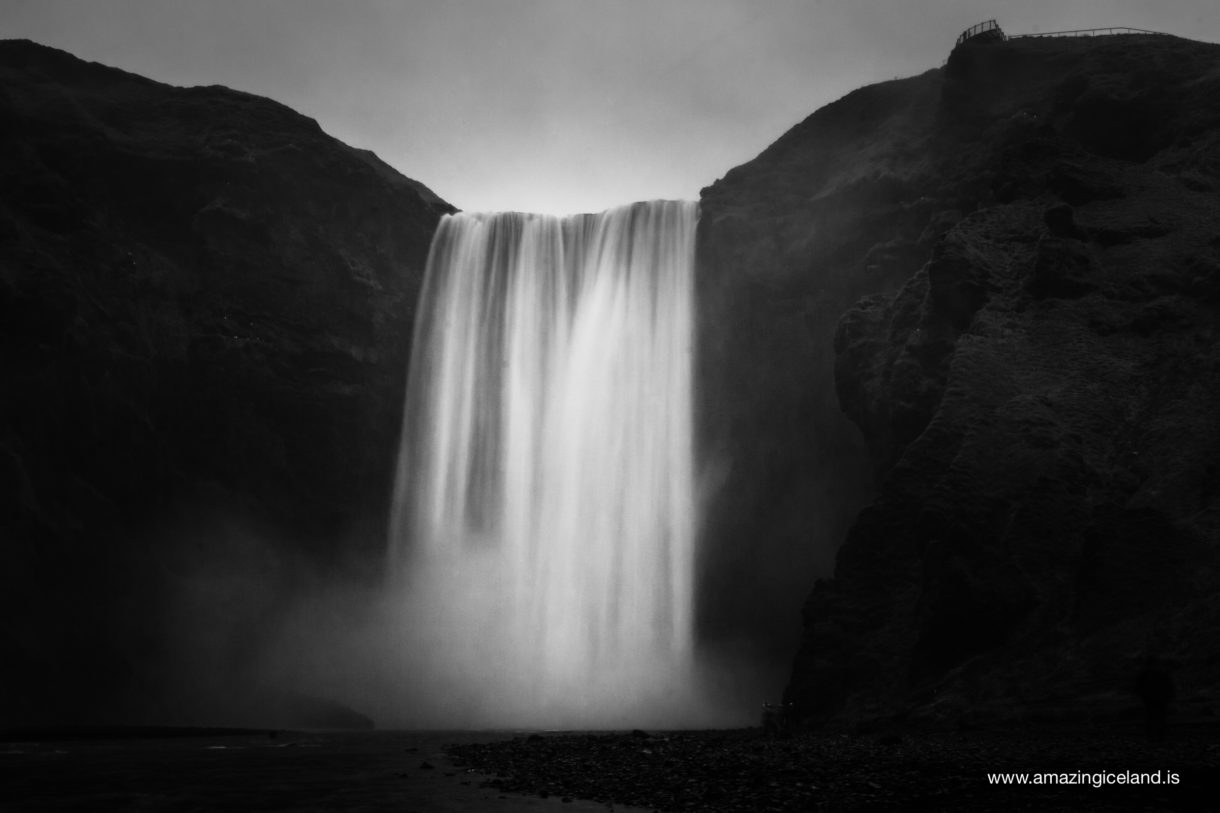
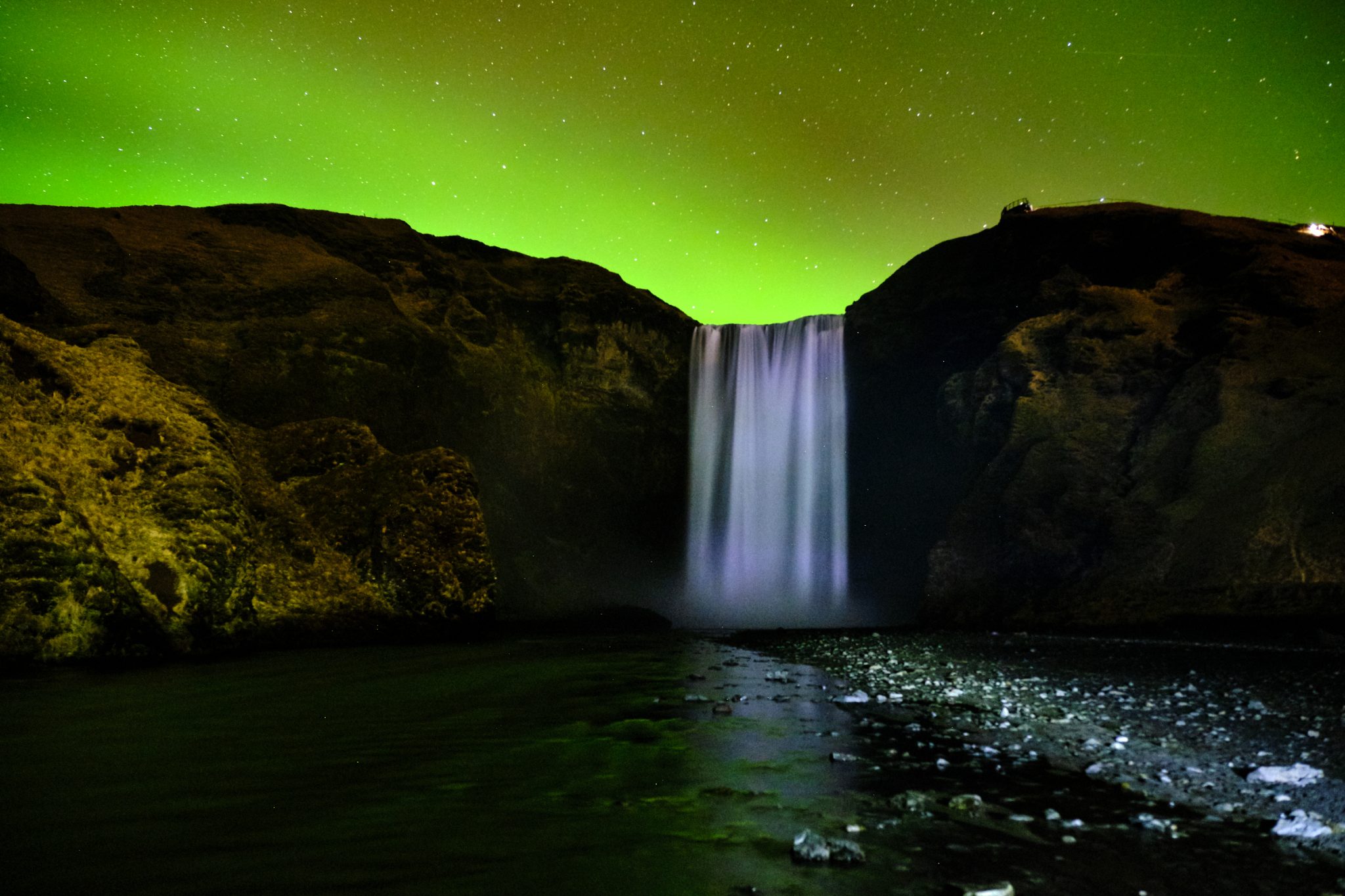
- Skógafoss can be photographed successfully from several very different positions. The classic view is from directly in front.
- Including people near the base gives immediate scale and often communicates the size of the waterfall better than an empty frame. Rainbows are common when sunlight reaches the spray from behind the photographer.
- The strongest compositions often depend more on the direction of light than on the amount of water. Moving farther back allows the entire waterfall and old sea cliff to sit within the wider landscape.
- Closer views emphasise spray, water texture and people near the plunge pool. Longer lenses can isolate details within the falling water or compress figures against the cliff.
- The staircase provides a completely different perspective. From the top, the strongest subject is often not the waterfall itself but the Skógá river approaching the cliff, the sudden drop, and the view south across the coastal plain.
- Following the river farther inland opens up additional waterfall compositions that are very different from the main Skógafoss view.
- In winter, ice along the cliff and waterfall can add structure, but the staircase can become hazardous and conditions should decide whether the upper viewpoint is worth attempting.
- Spray near the base is relentless. Keep a lens cloth ready and expect the front element to need cleaning repeatedly.
- Aerial views can show the relationship between the waterfall, river and old cliff particularly well, but any drone use should respect current rules, the protected landscape and people below.
Destinations nearby