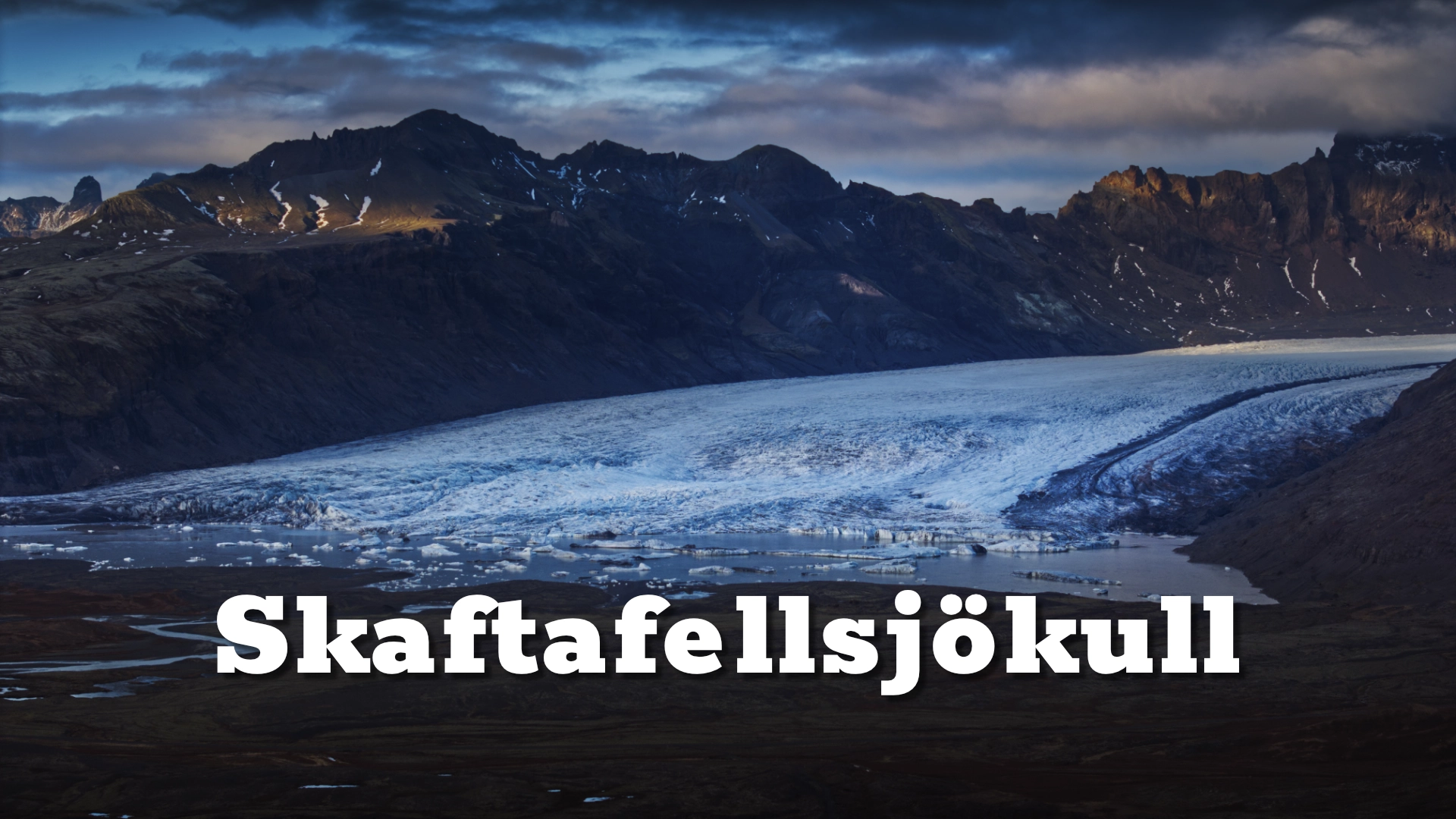
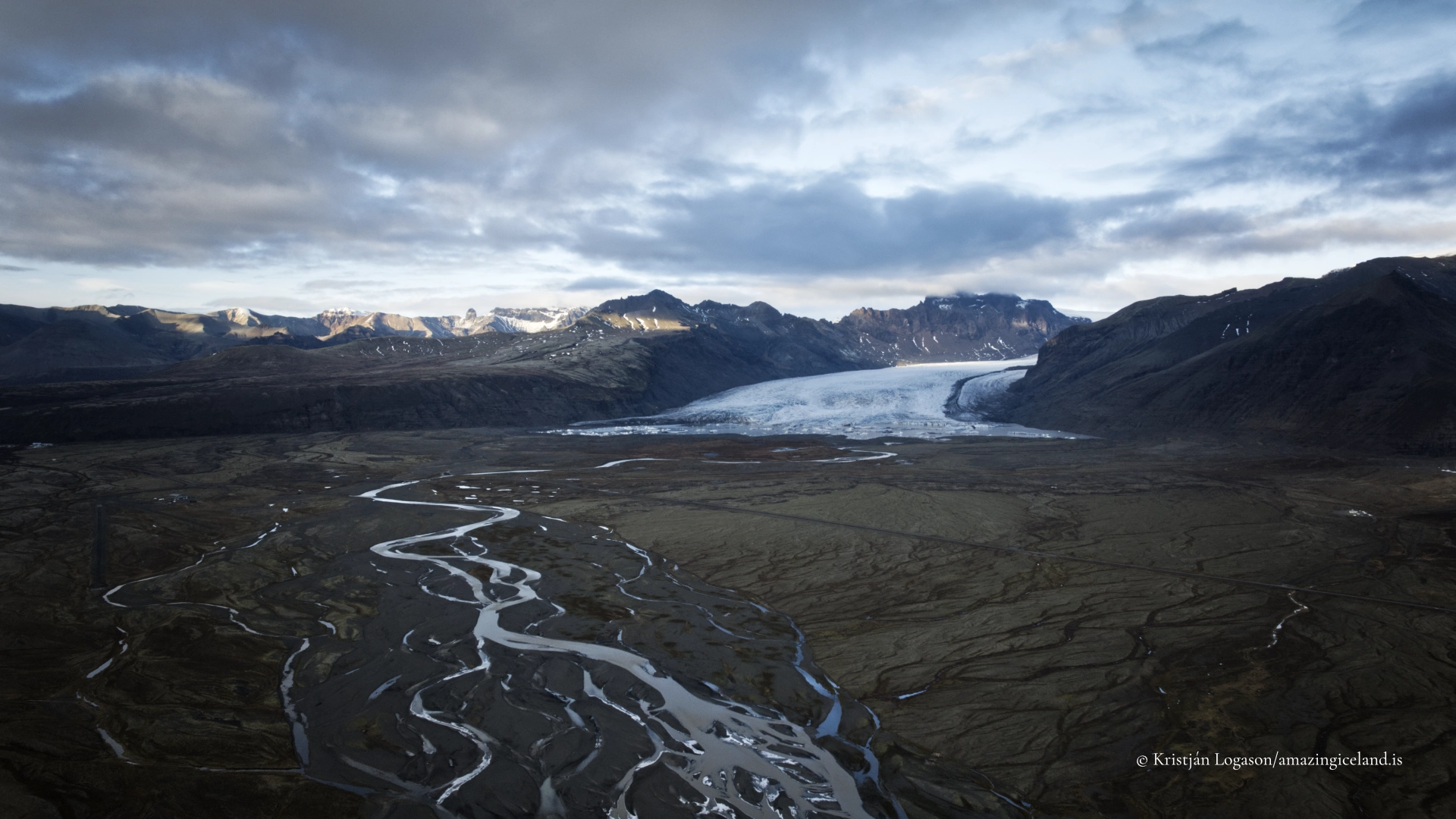
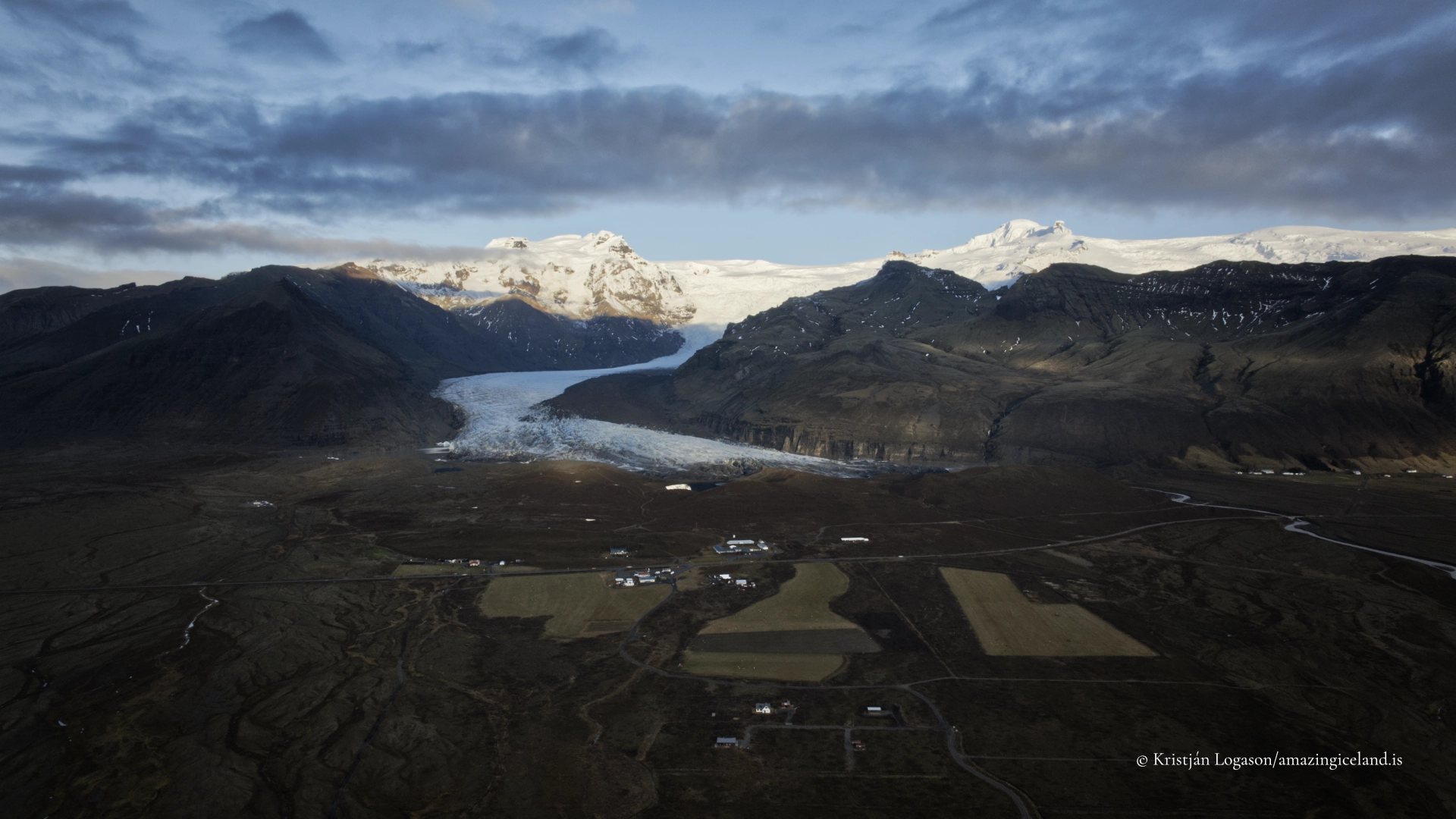
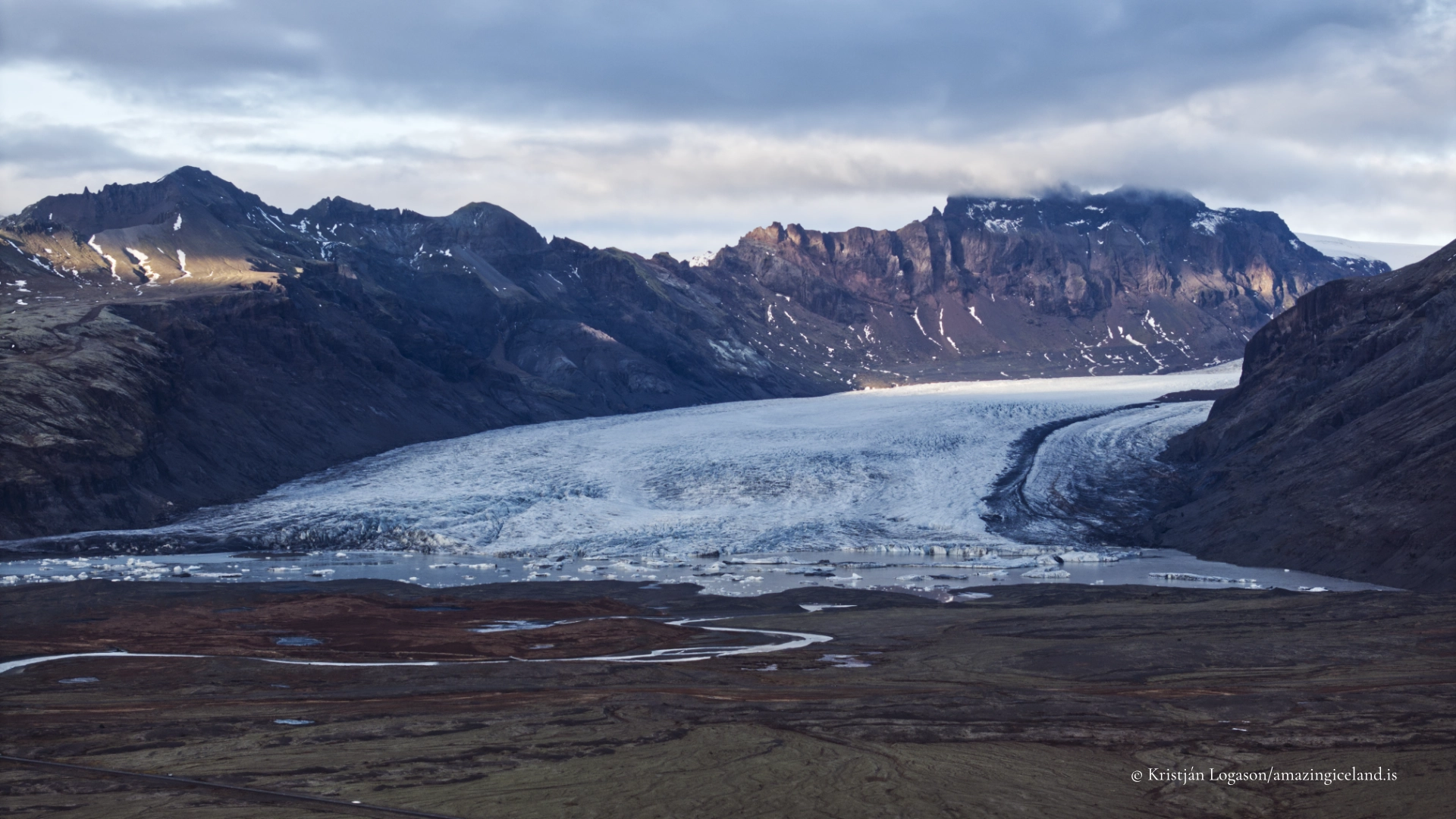
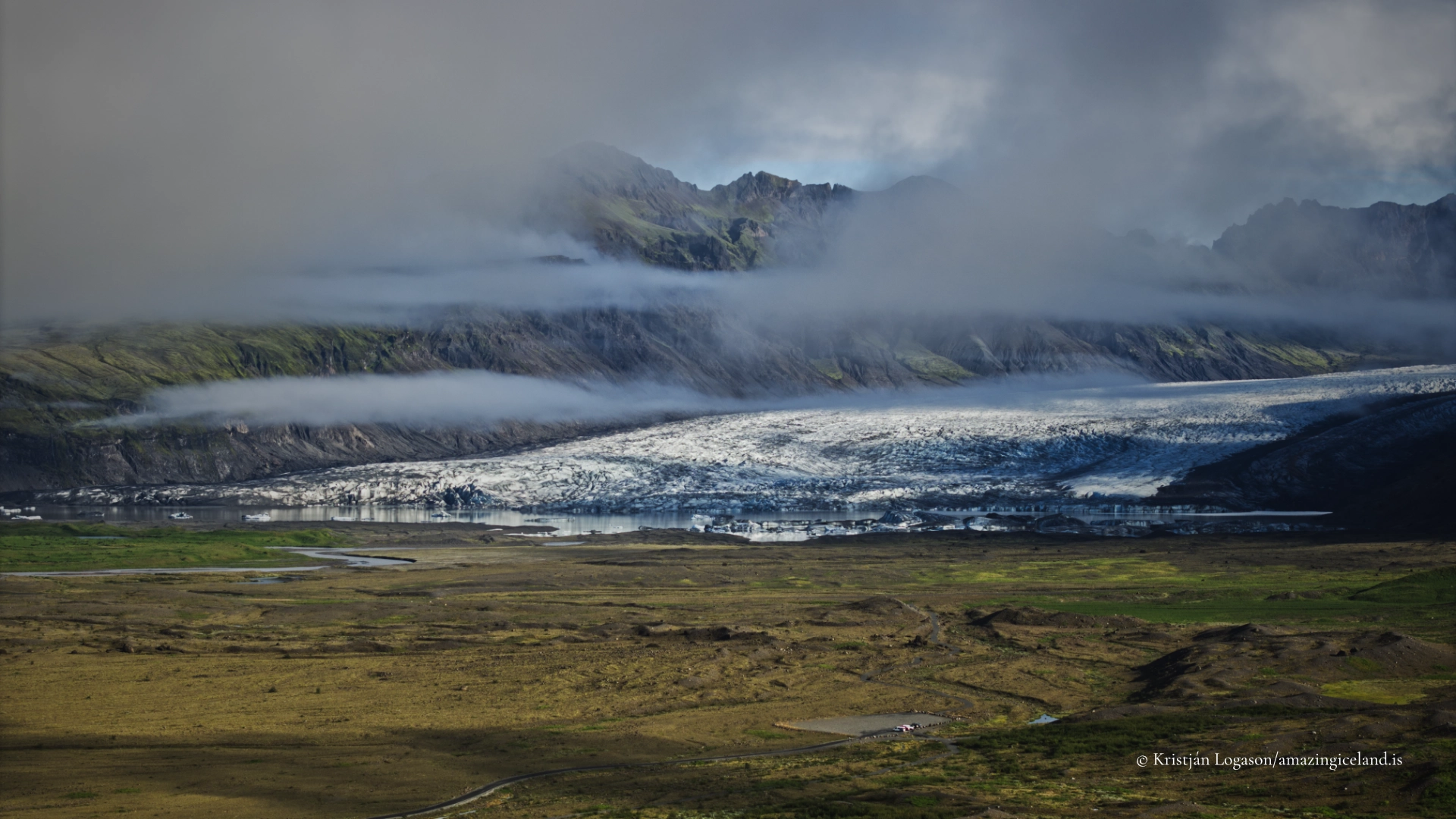
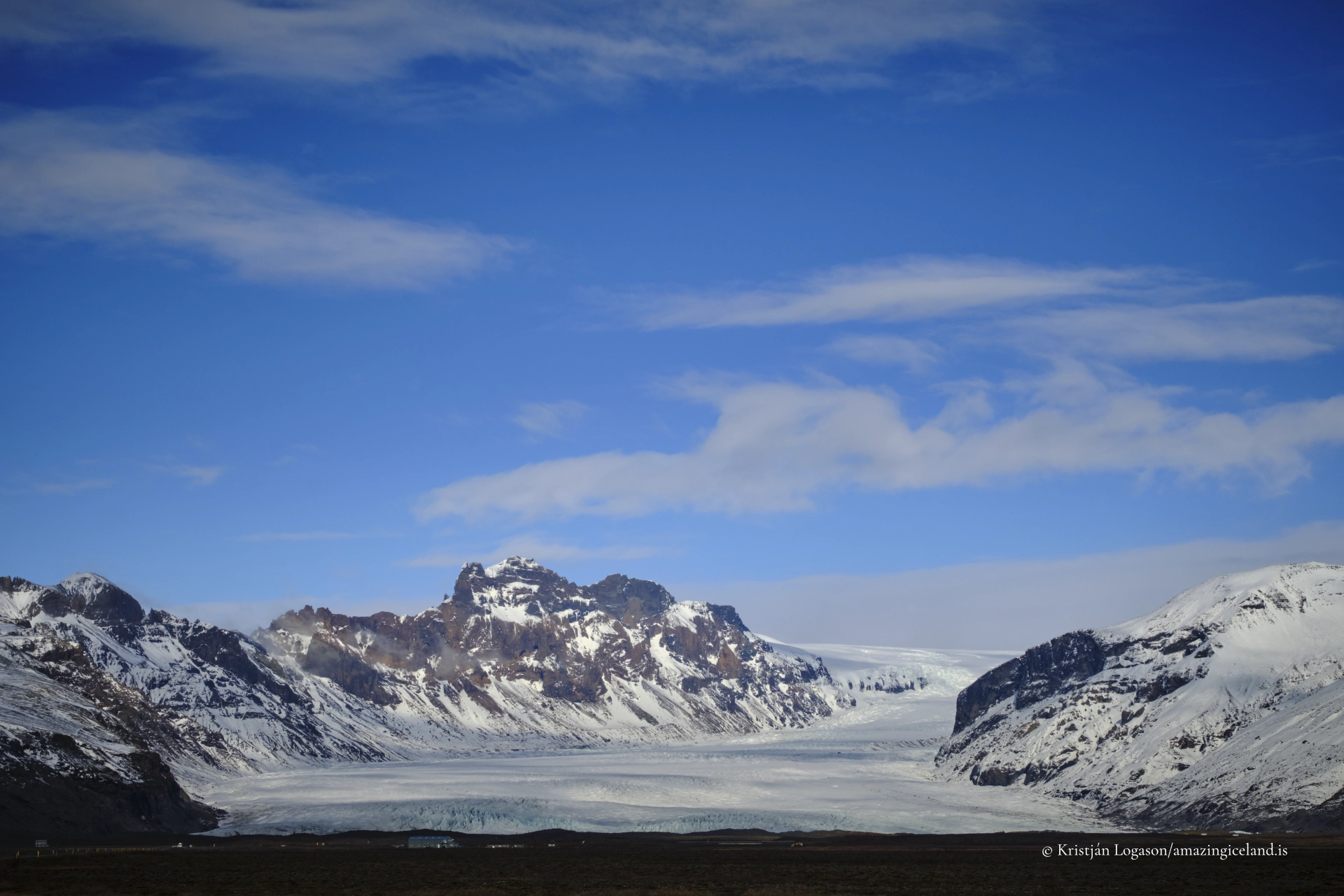
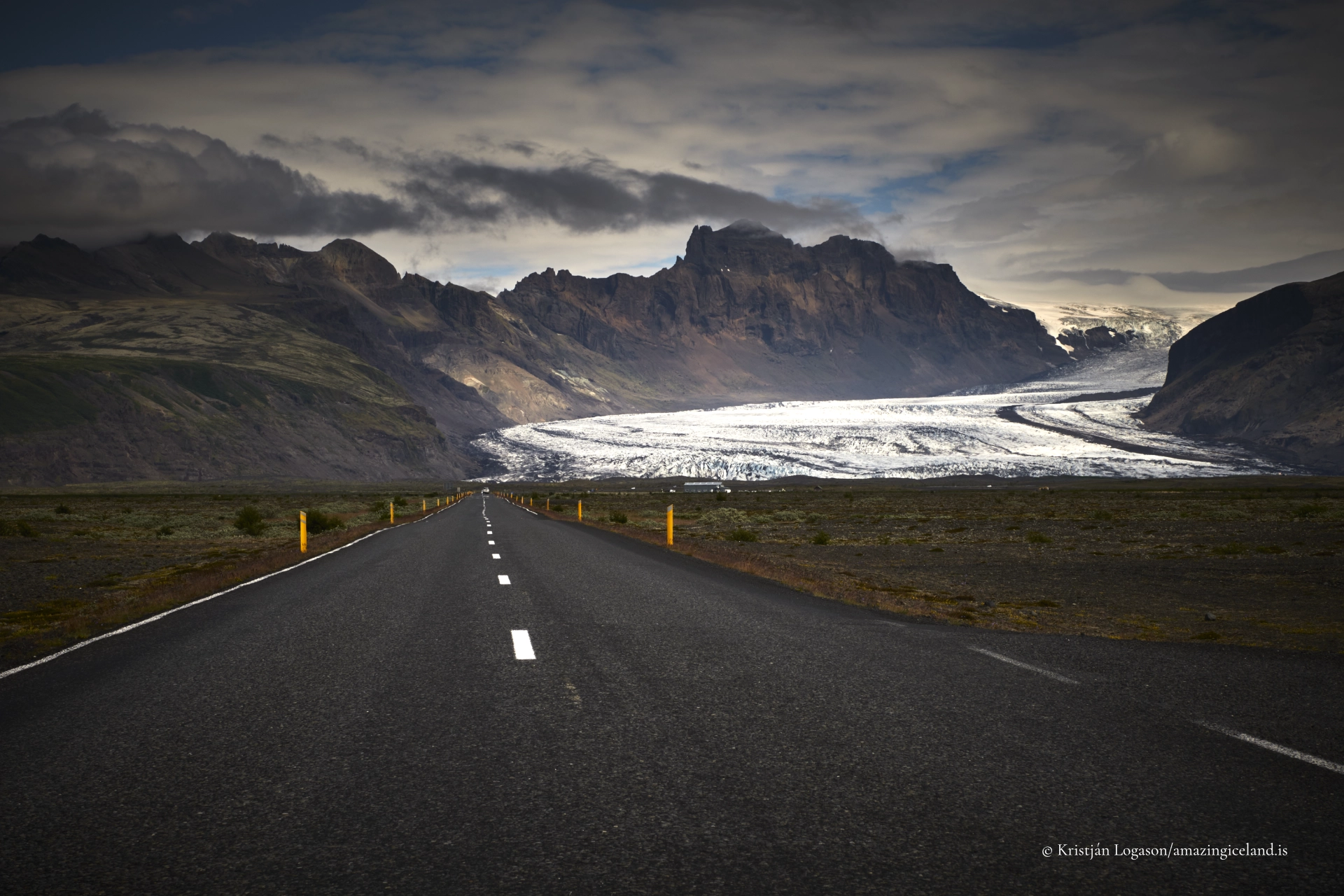
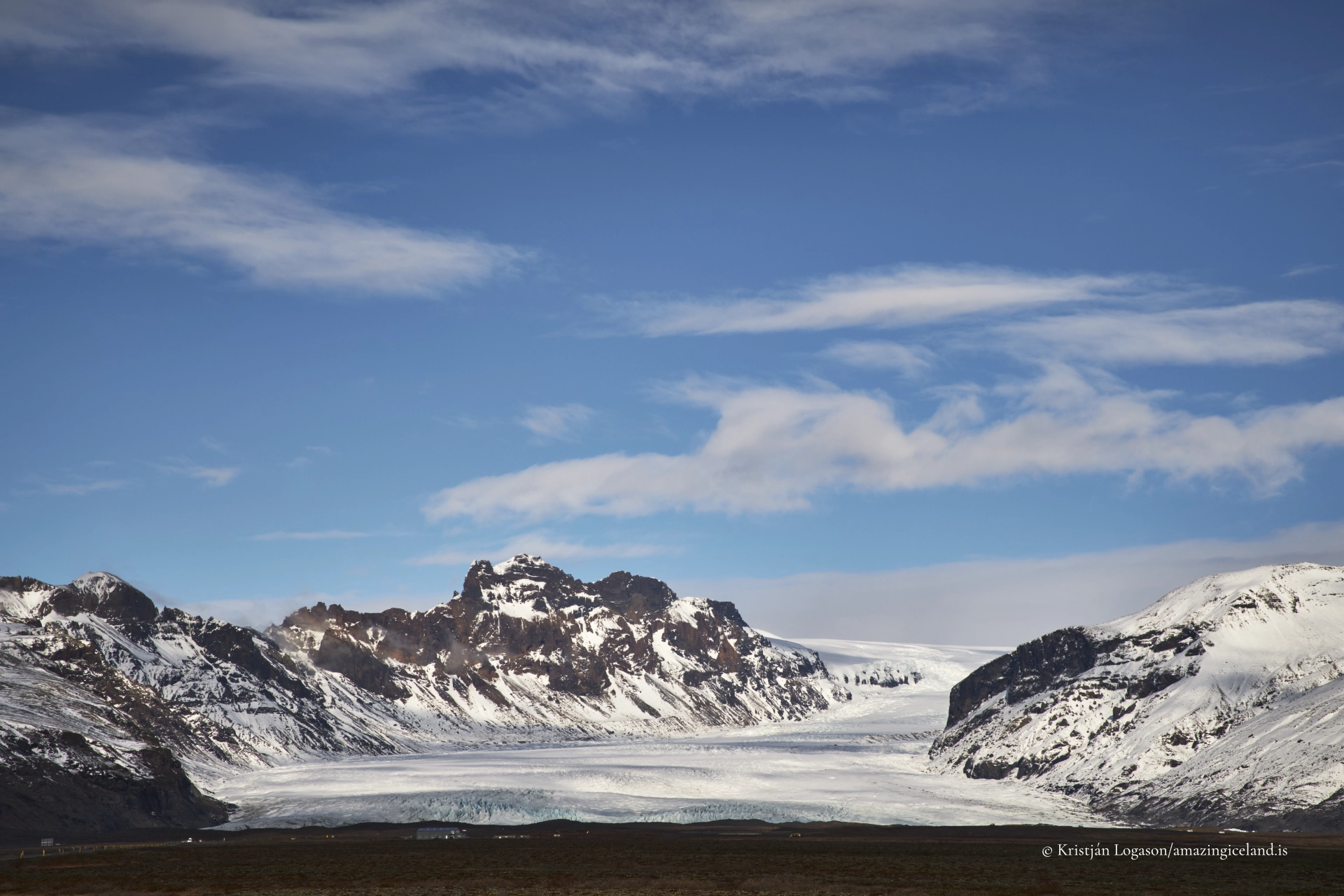
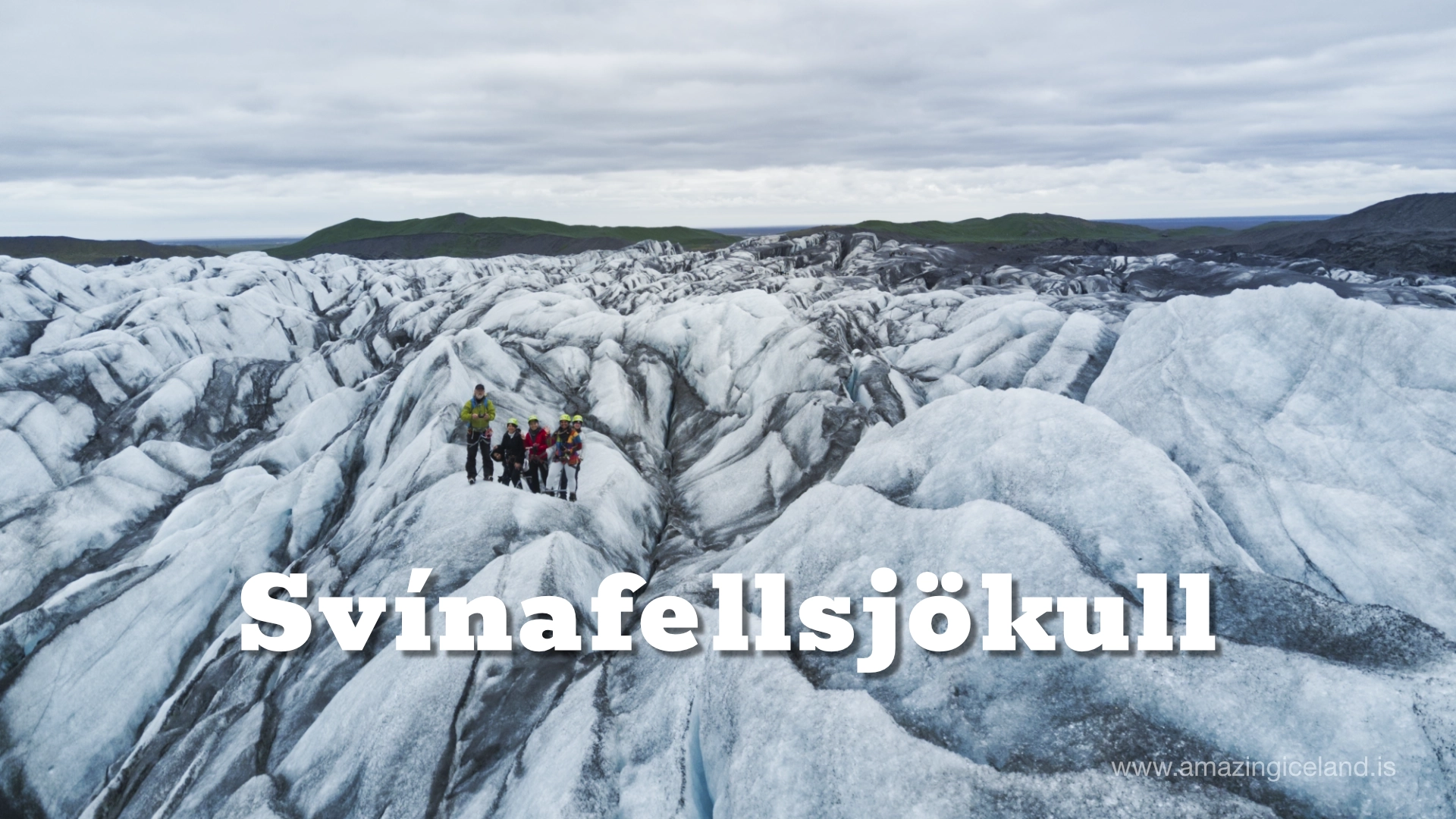
Within Skaftafell, along the southern edge of Vatnajökull, Skaftafellsjökull descends gently from the ice cap. Unlike nearby icefalls and fractured tongues, Skaftafellsjökull is characterized by relatively smooth flow and clearly defined retreat margins.
The location of Skaftafellsjökull glacier in Skaftafell national park
64.0189
Latitude
Longitude
-16.9716
Skaftafellsjökull glacier in Skaftafell national park
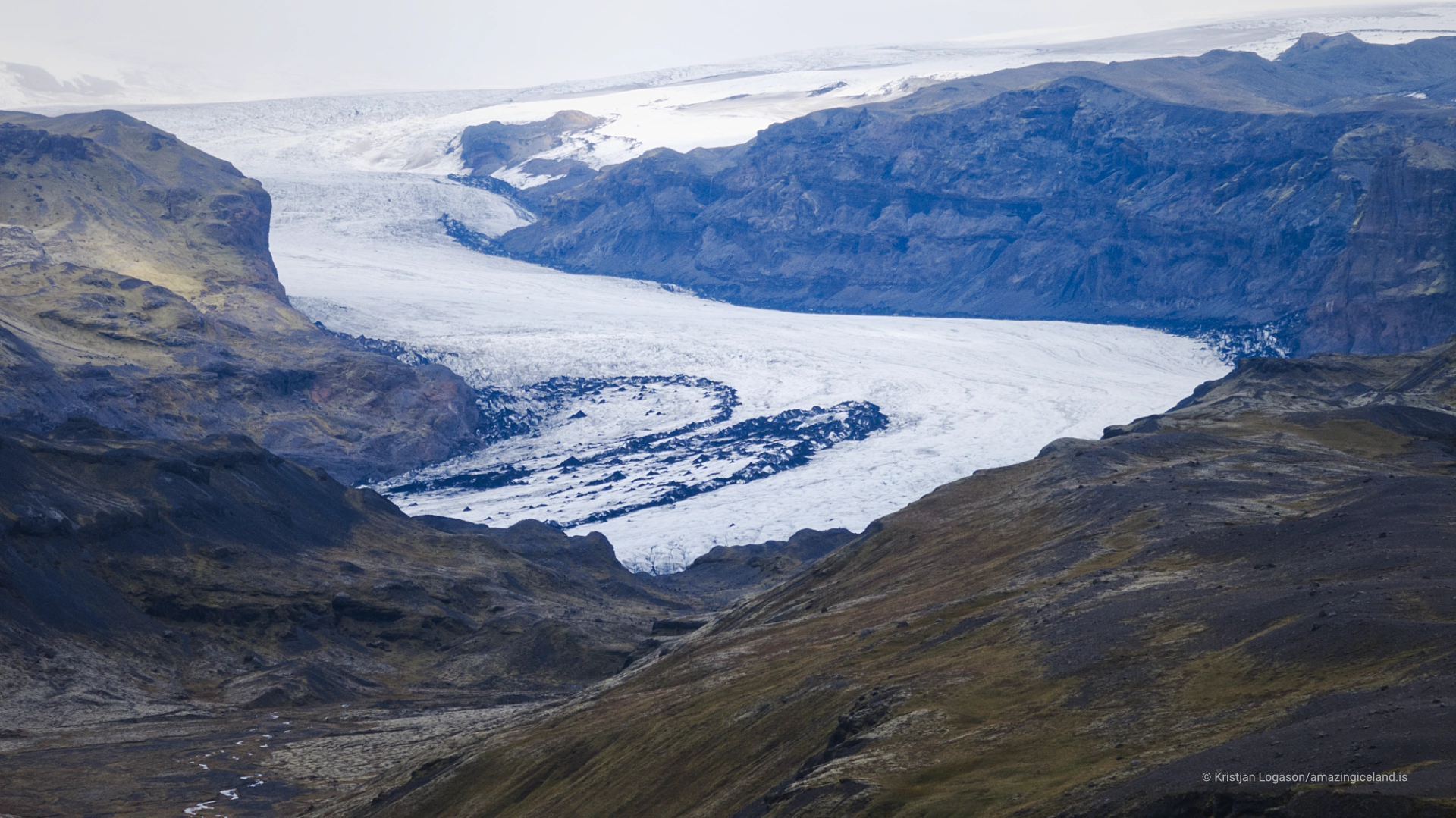
Skaftafellsjökull is a south-facing outlet glacier originating from Vatnajökull’s Öræfajökull sector. The glacier flows over a moderate gradient, producing a comparatively uniform surface with fewer large-scale collapses than steeper outlet glaciers nearby.
This moderate slope governs the glacier’s behavior. Ice flow remains continuous rather than segmented, and crevasse patterns are more widely spaced and predictable. As a result, changes in mass balance are expressed primarily through terminus retreat and thinning, rather than through structural failure.
From a glaciological perspective, Skaftafellsjökull represents a low-stress outlet system, where flow is controlled by thickness and meltwater rather than slope-driven acceleration.
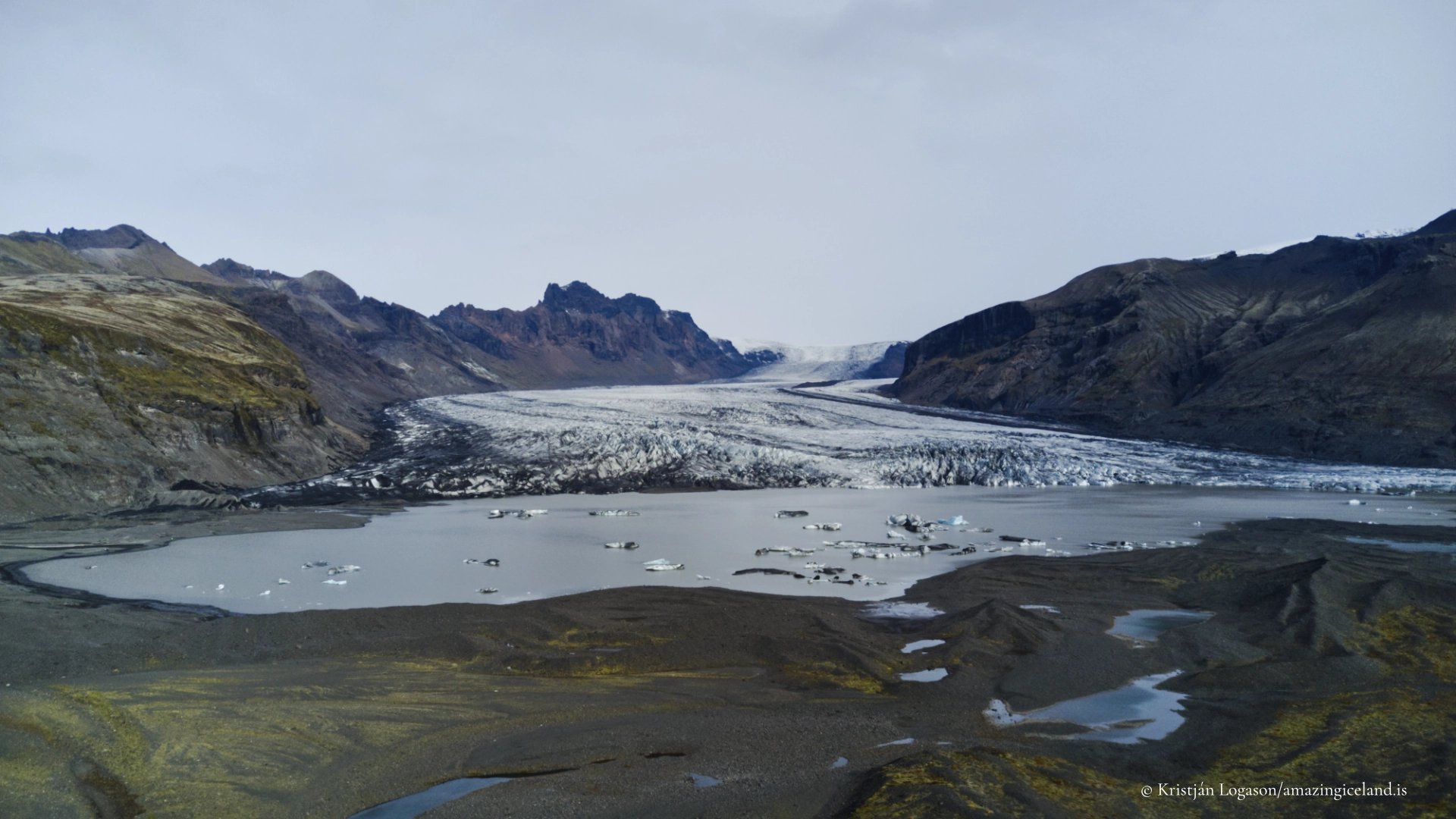
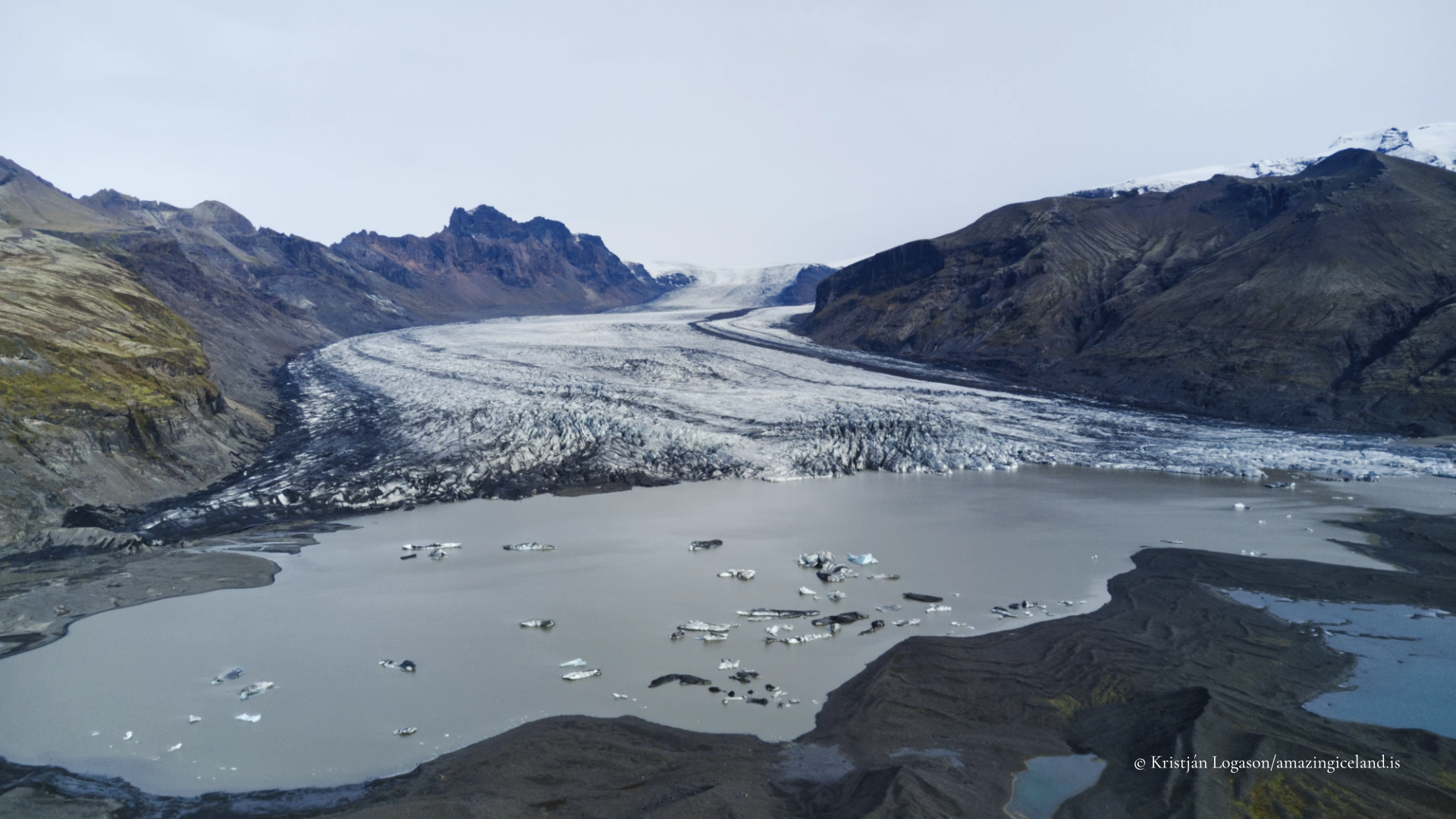
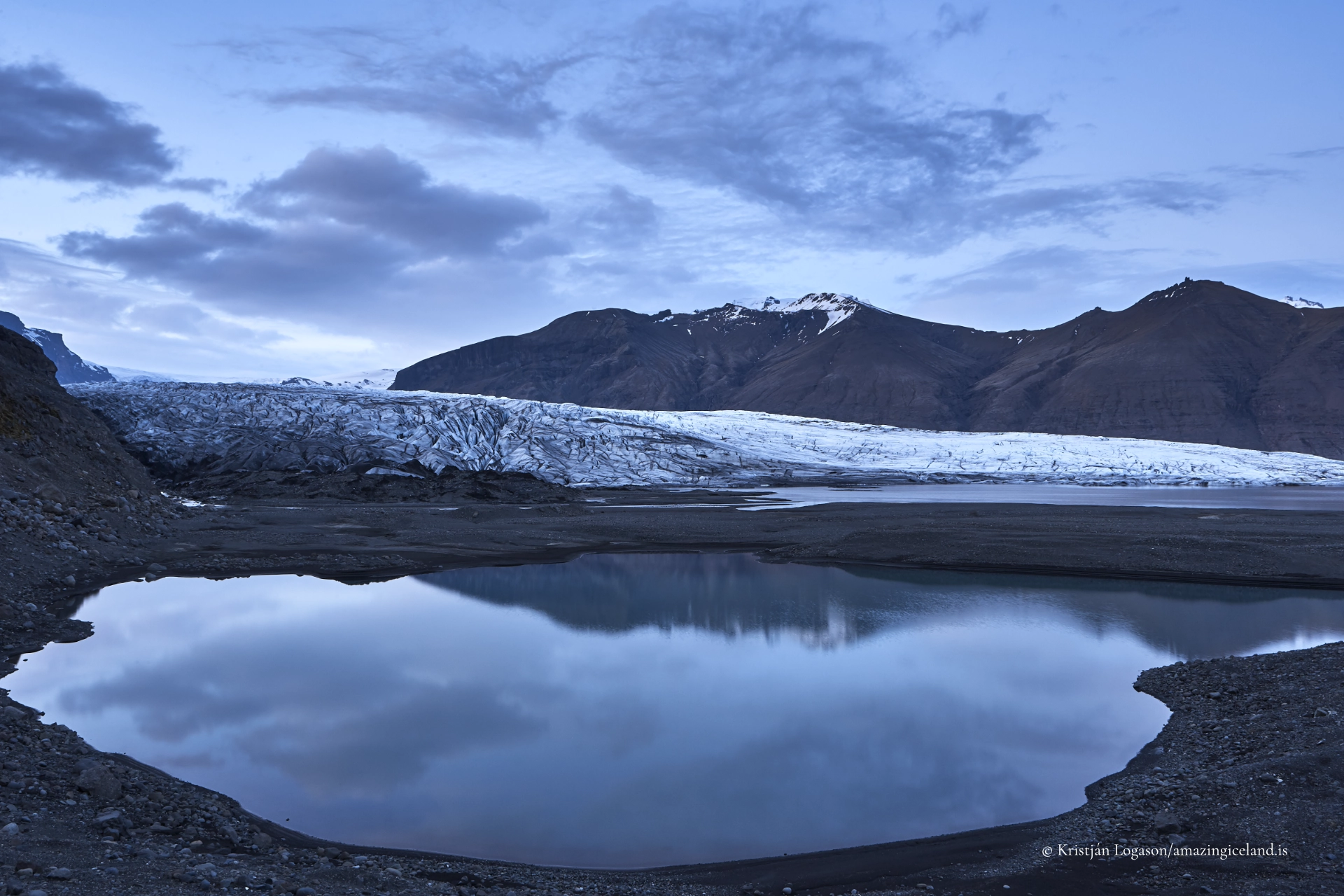
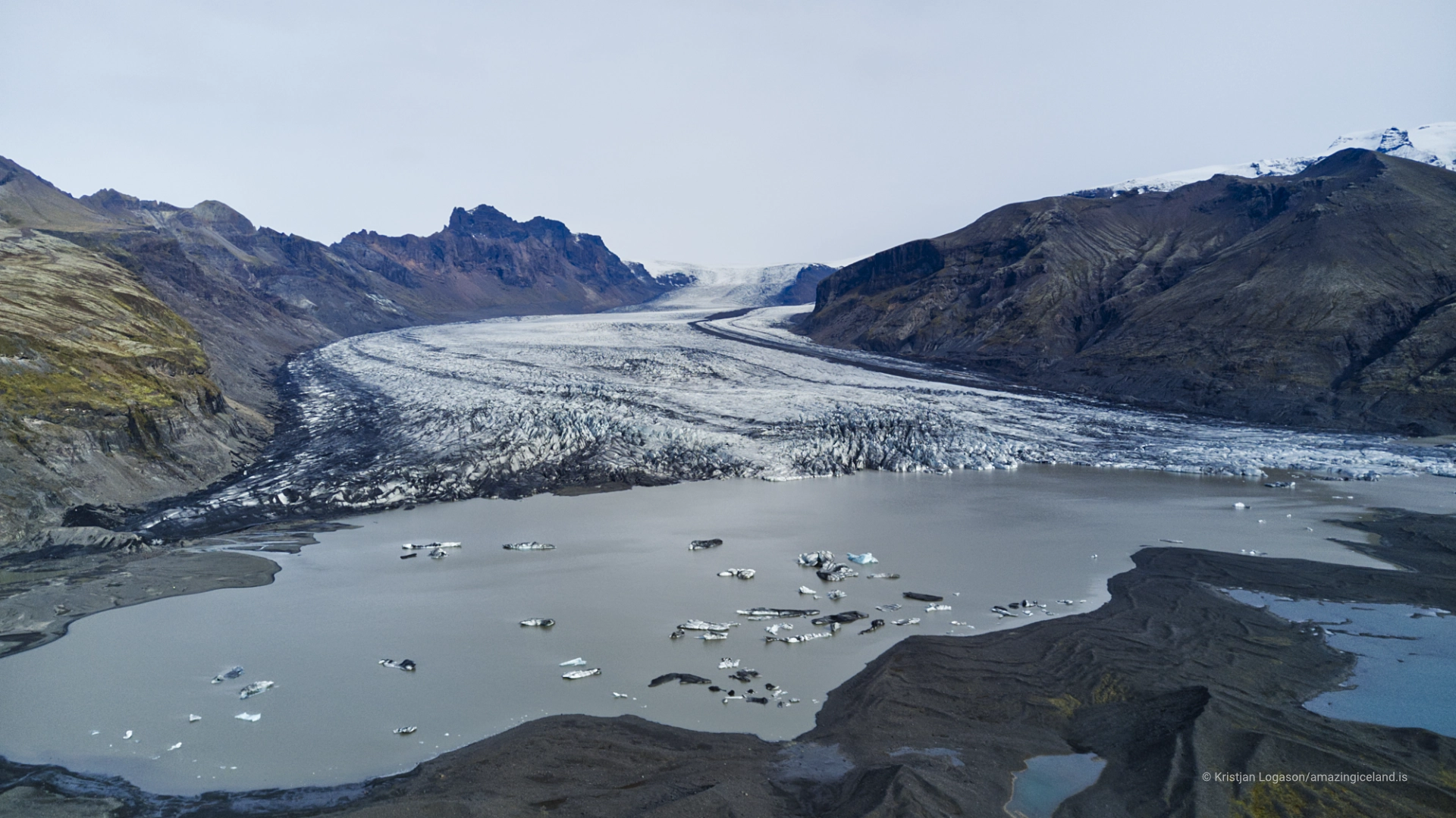
The glacier’s forefield is particularly informative. Moraines, meltwater channels, and exposed sediment plains mark successive stages of retreat, forming a clear chronological sequence. These features allow the glacier’s recent history to be read directly from the landscape.
As the glacier has withdrawn, newly exposed ground has undergone rapid colonization by mosses and pioneer vegetation. This process illustrates early-stage ecological succession following deglaciation, a key area of study within Skaftafell.
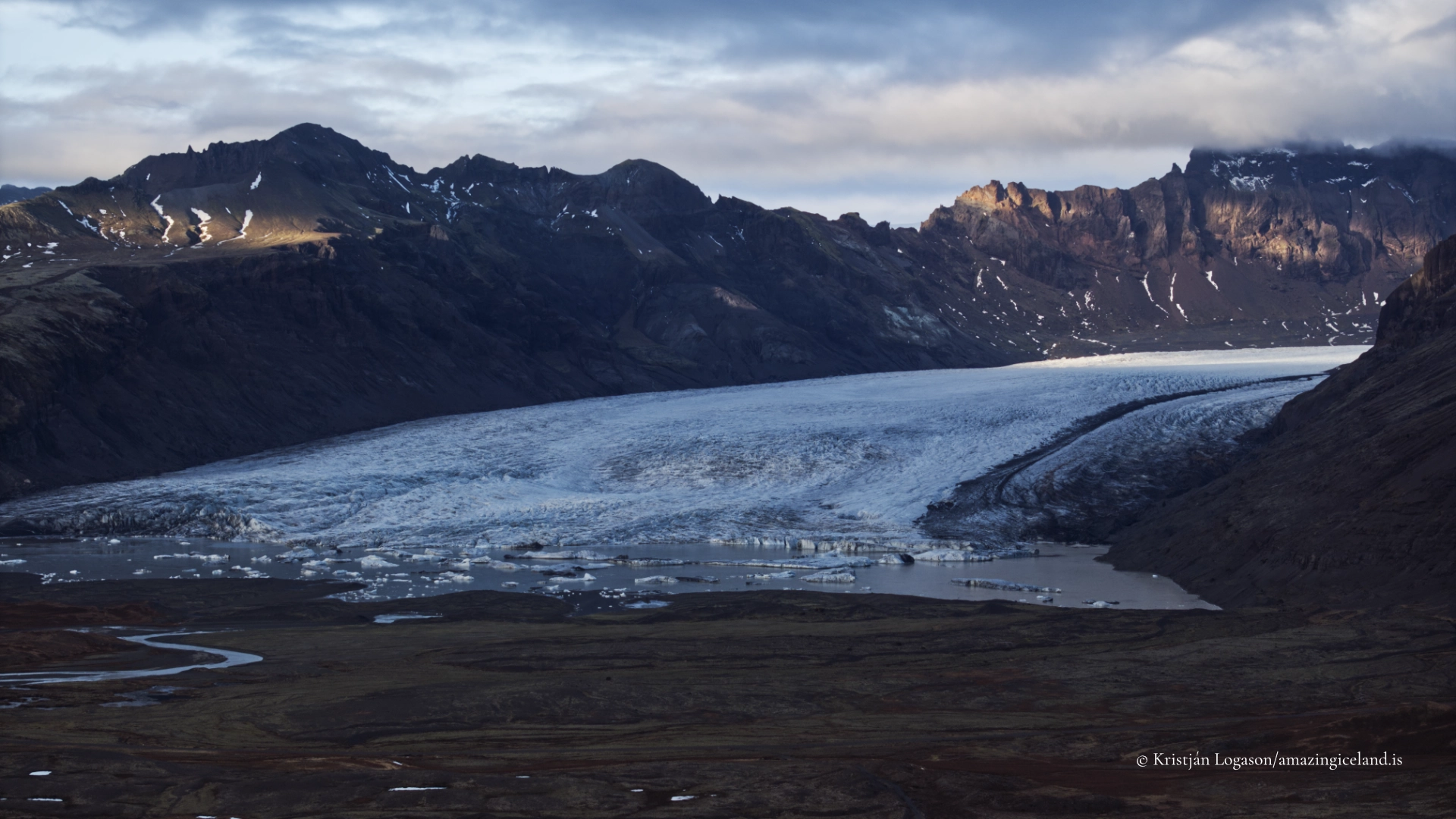
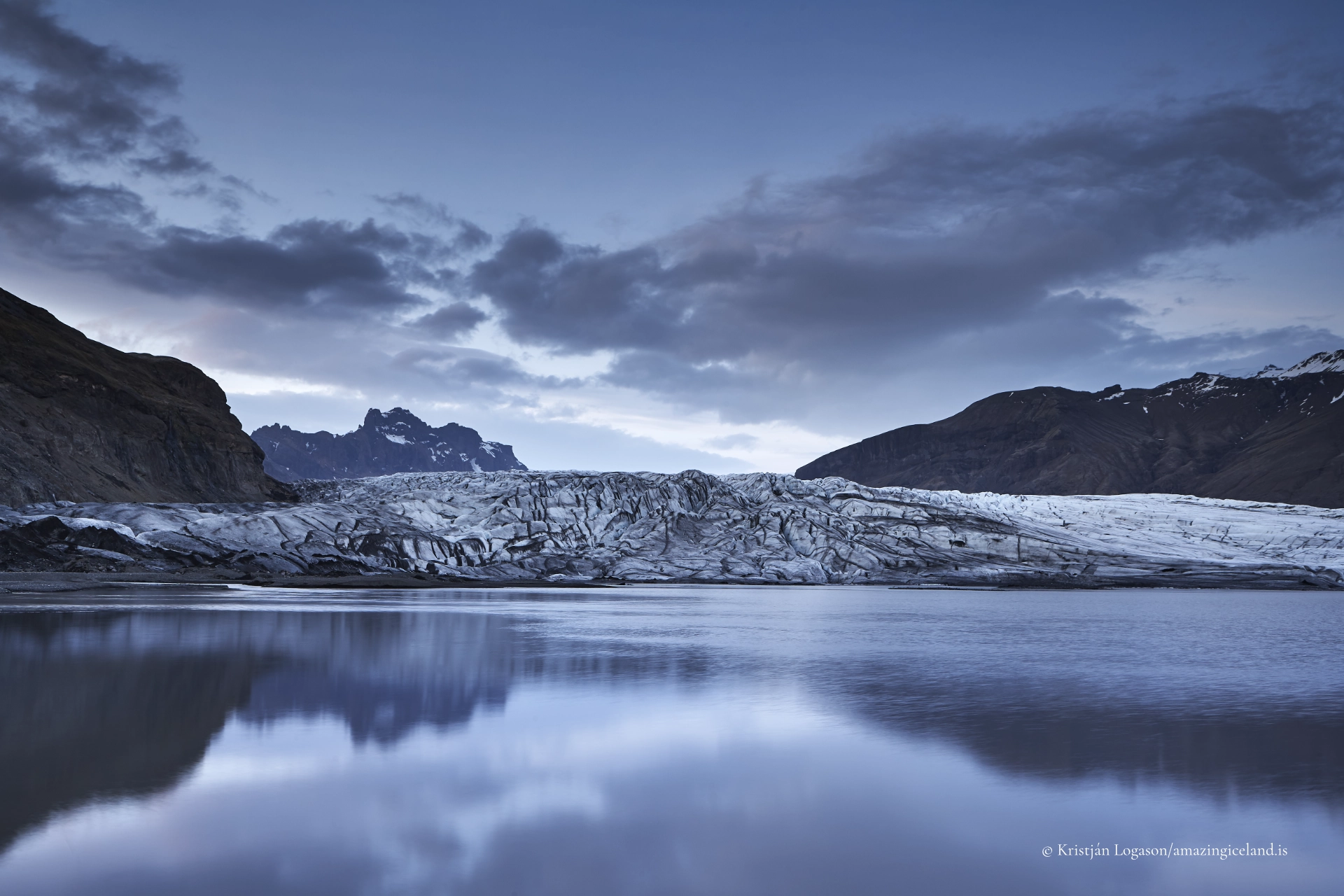
The terminus itself is now separated from earlier positions by hundreds of meters, a retreat that has accelerated since the late 20th century in line with regional warming trends.
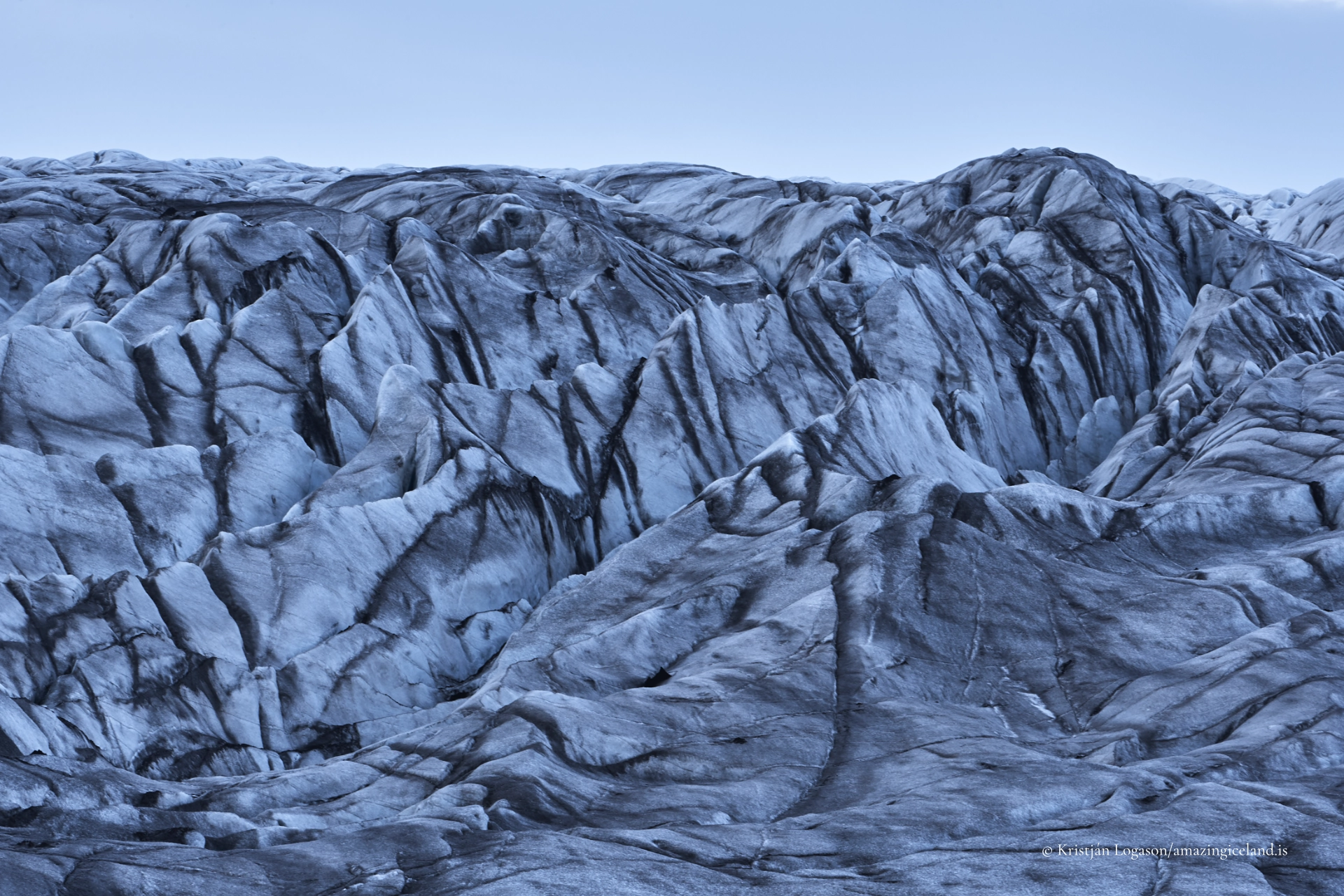
Unlike heavily debris-covered glaciers, Skaftafellsjökull retains relatively clean ice at its lower tongue. This makes surface features—such as flow lines, crevasses, and meltwater channels—particularly visible and accessible for observation.
Meltwater emerging from beneath the glacier feeds braided streams that cross the forefield, carrying fine sediment toward Skeiðarársandur. These hydrological pathways link the glacier directly to downstream outwash systems.
Human interaction with Skaftafellsjökull has been carefully managed. Marked trails lead to viewpoints near the terminus, allowing close visual access while maintaining safety. There is no infrastructure on the ice itself, and entry onto the glacier is limited to guided activities.
Because of this accessibility, Skaftafellsjökull has long served as an educational reference glacier within Skaftafell. Its behavior is easy to interpret, making it suitable for illustrating broader patterns of glacial change to both researchers and visitors.
The glacier’s calm appearance can be misleading. Beneath the surface, thinning and flow adjustment continue, reinforcing the importance of long-term observation over short-term impression.
Skaftafellsjökull ultimately exemplifies a measured retreat. The glacier does not fracture violently or collapse dramatically; it withdraws, leaving evidence behind in layered moraine and newly formed terrain.
Interesting facts:
- Skaftafellsjökull is an outlet glacier of Vatnajökull.
- It flows over a moderate slope, producing relatively smooth ice surfaces.
- Retreat is expressed mainly through terminus withdrawal and thinning.
- The forefield shows clearly layered moraines from recent decades.
- The glacier is widely used as an educational reference site.
Image Gallery

The Locomotive Elite
What do Donald Trump and Iceland’s Locomotive Elite have in common?
Far more than you think.
In The Locomotive Elite, you’ll uncover how a tiny clique in Iceland captured extensive control—of banks, courts, media, and even the central bank.
For decades they ruled, first democratically, then through corruption and in the end through crime, enriching themselves and their cronies while dismantling oversight.
The result?
One of the most spectacular financial collapses in modern history.
Photography tips:
- Use the forefield: Moraines and meltwater channels tell the story of retreat.
- Mid-distance framing: Capture flow lines and terminus together.
- Neutral exposure: Clean ice benefits from restrained highlights.
- Seasonal contrast: Late summer reveals retreat most clearly.
- Avoid drama: Accuracy matters more than impact here.
Good cameras for Iceland
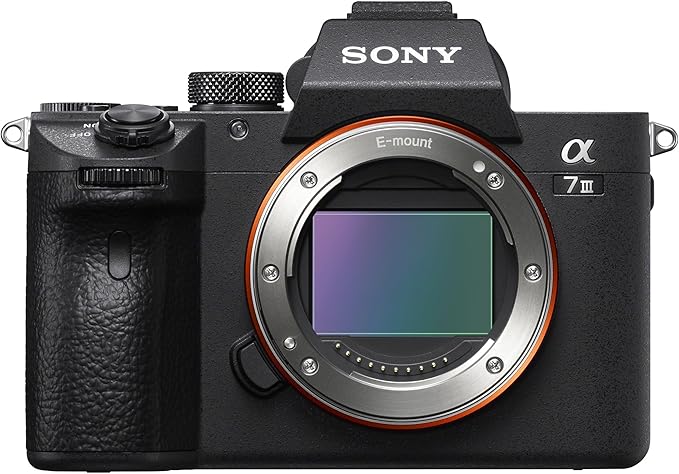
Sony A7R V

Sony A7s lll
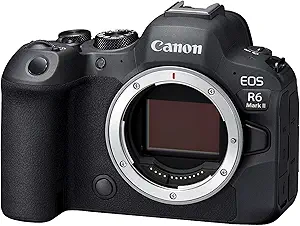
Canon R6
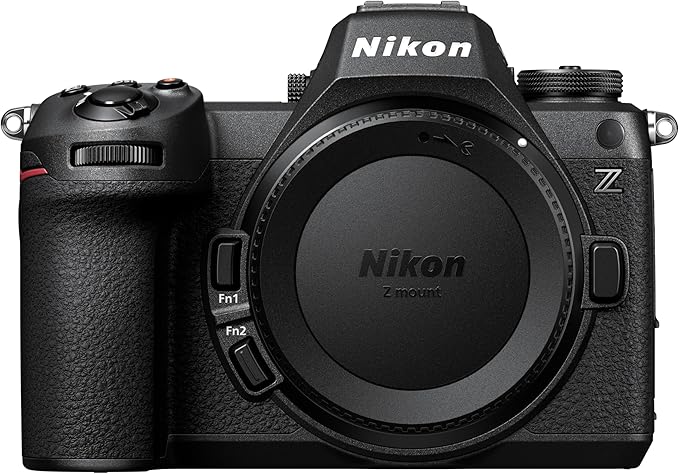
Nikon Z6 lll
Destinations nearby
Good to have in Iceland