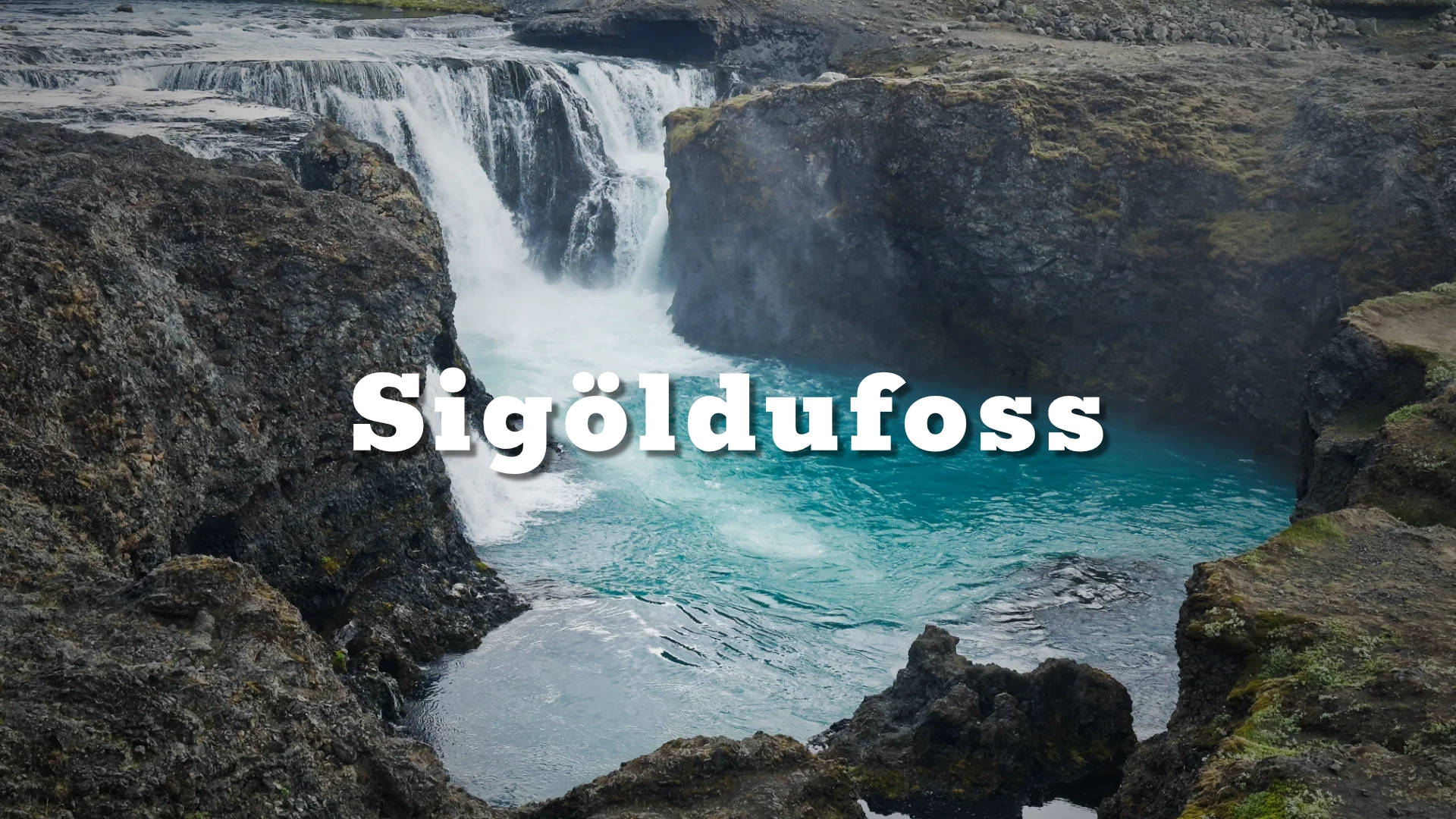
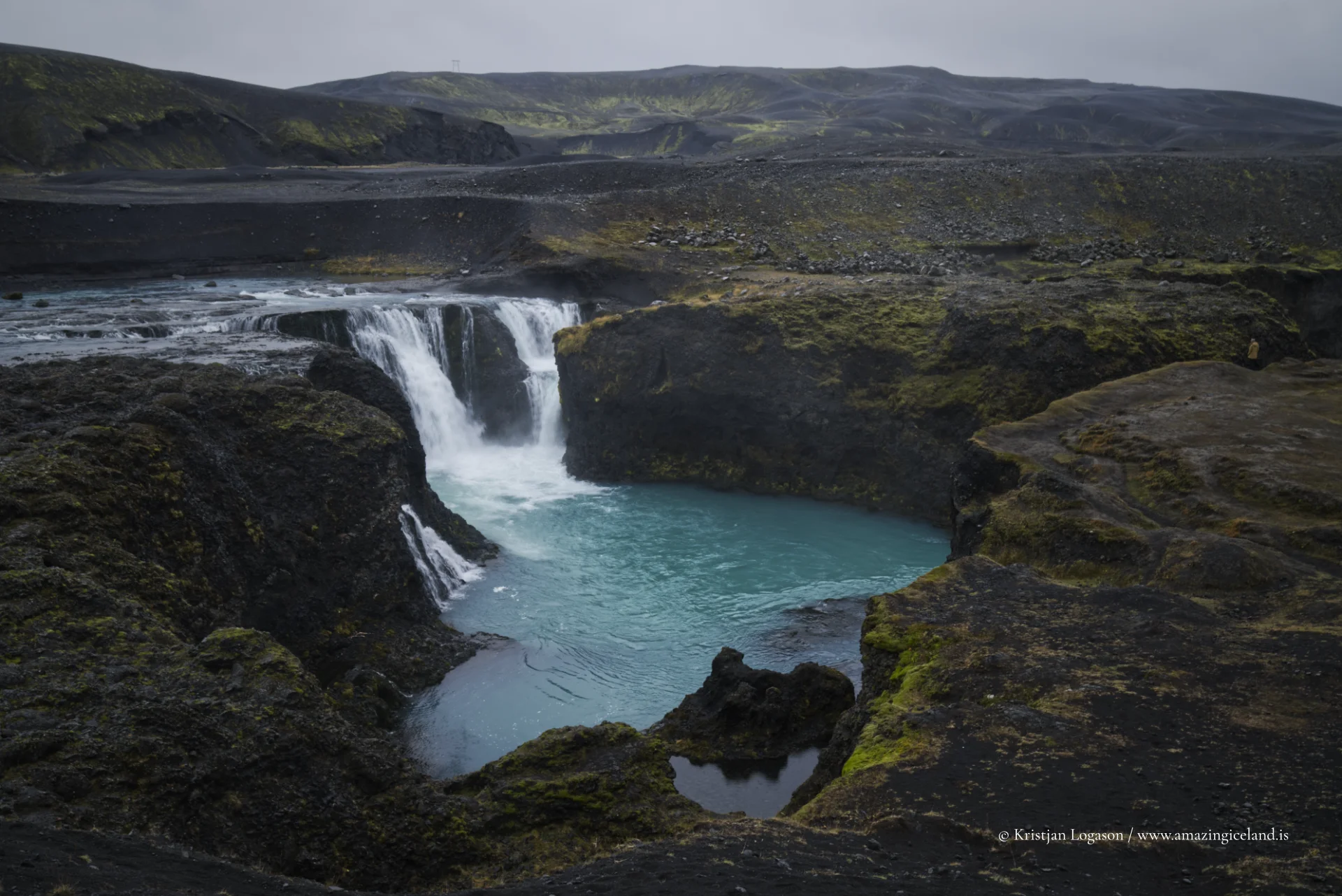
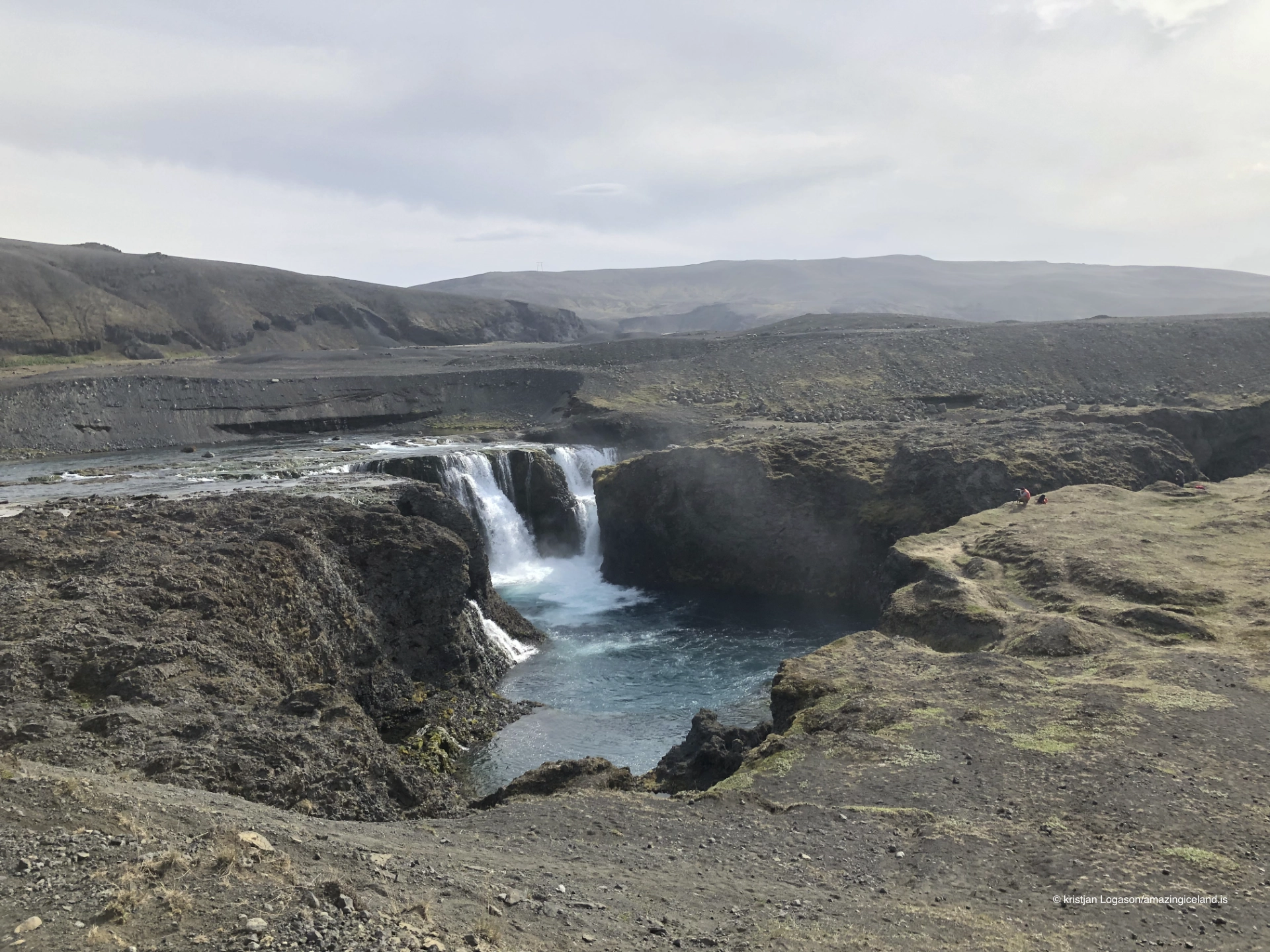
Sigöldufoss is a broad waterfall on the river Tungnaá, located directly beside the highland road F208 in the central highlands of Iceland. Closely associated with the Sigölduvirkjun hydropower area, the waterfall represents a meeting point between natural river dynamics and engineered flow control, while still retaining strong visual and geological presence.
The location of Sigöldufoss waterfall in Tungna river
Latitude
64.1608
Longitude
-18.8809
Sigöldufoss waterfall in Tungna river
Sigöldufoss lies within the Tungnaá river system, one of the major glacial rivers draining the interior highlands north of Vatnajökull. The waterfall is situated just downstream from the Sigöldulón reservoir and near the Sigölduvirkjun power station. Despite this proximity, Sigöldufoss remains clearly readable as a waterfall rather than an industrial spillway, particularly when viewed from the roadside along F208.
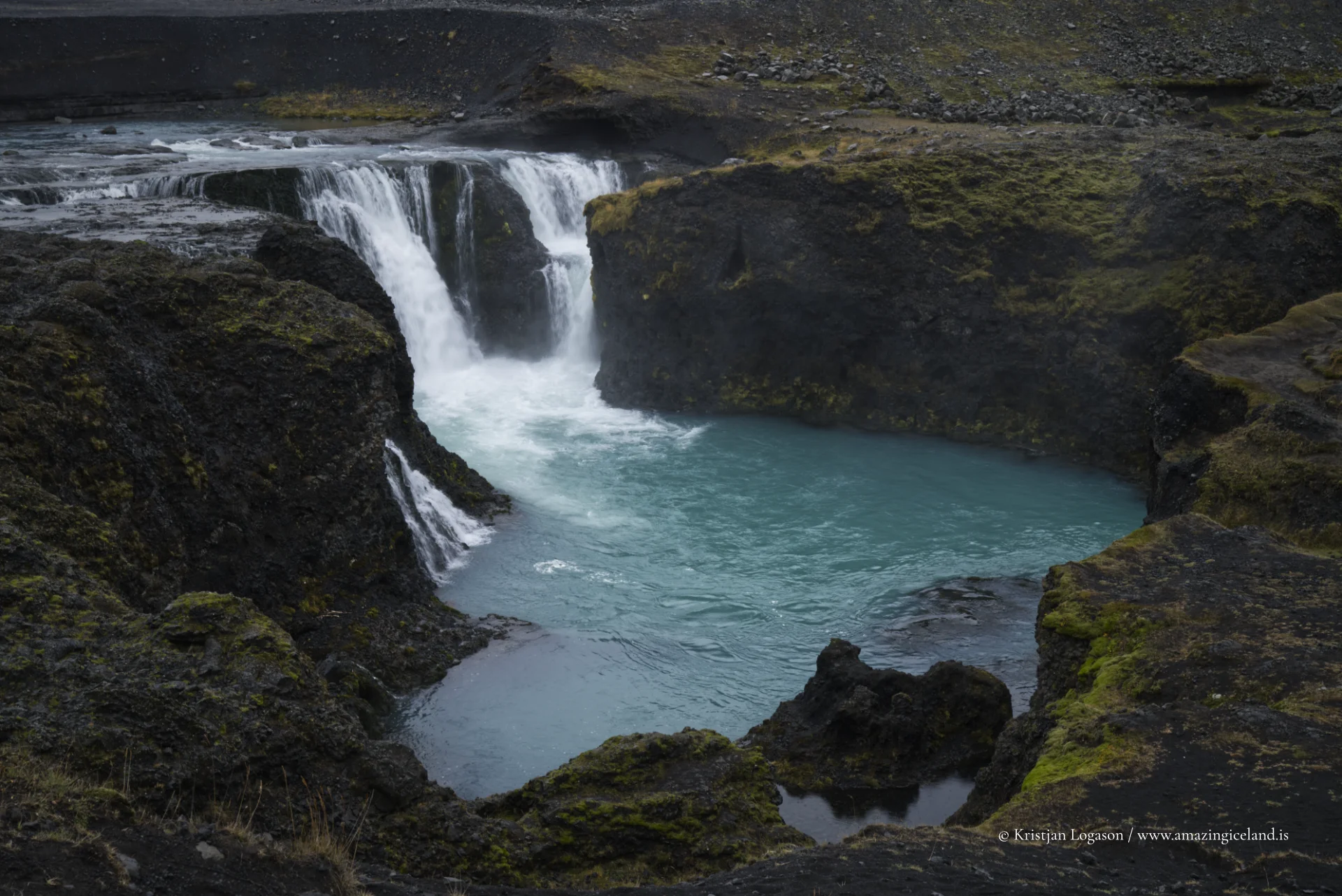
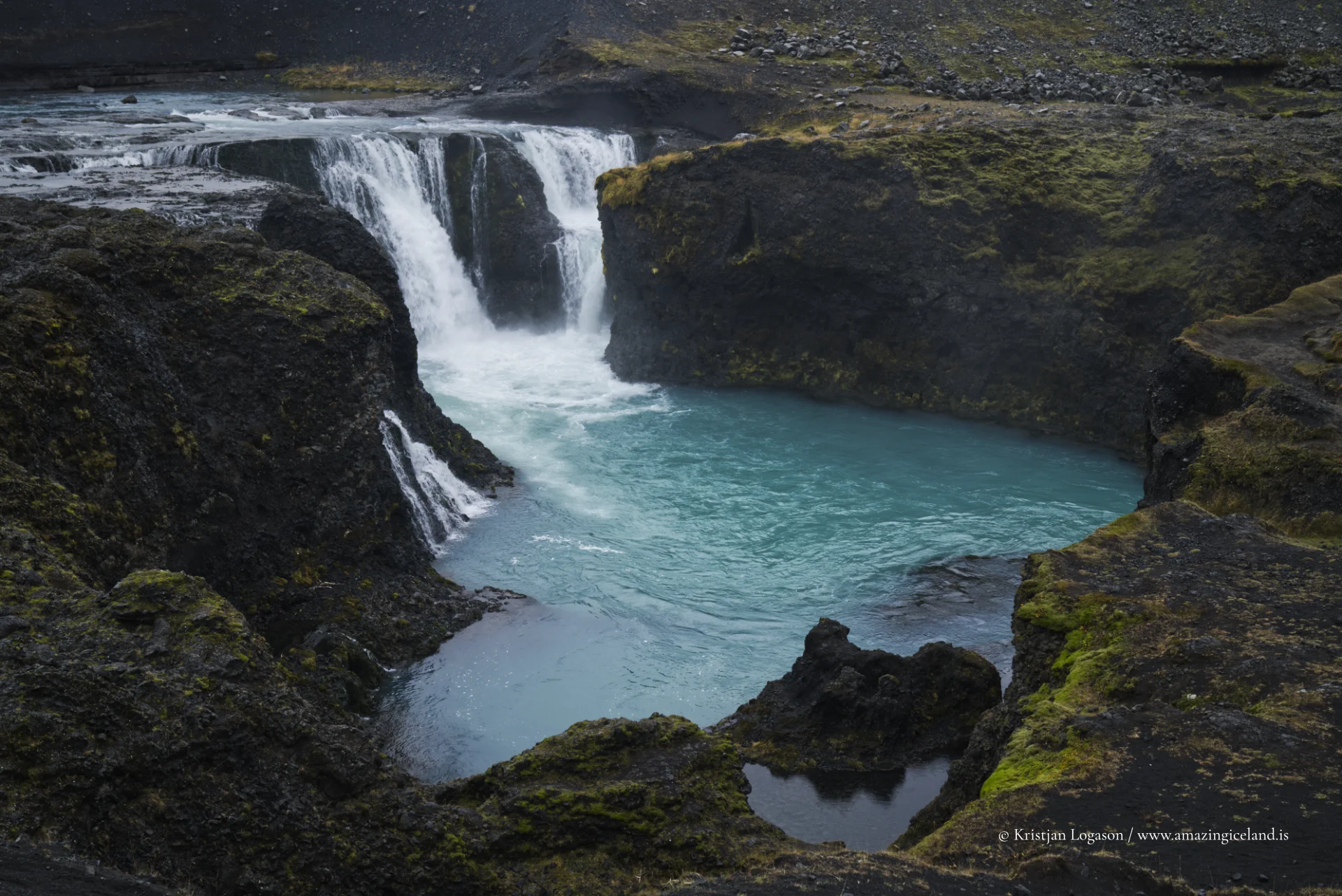
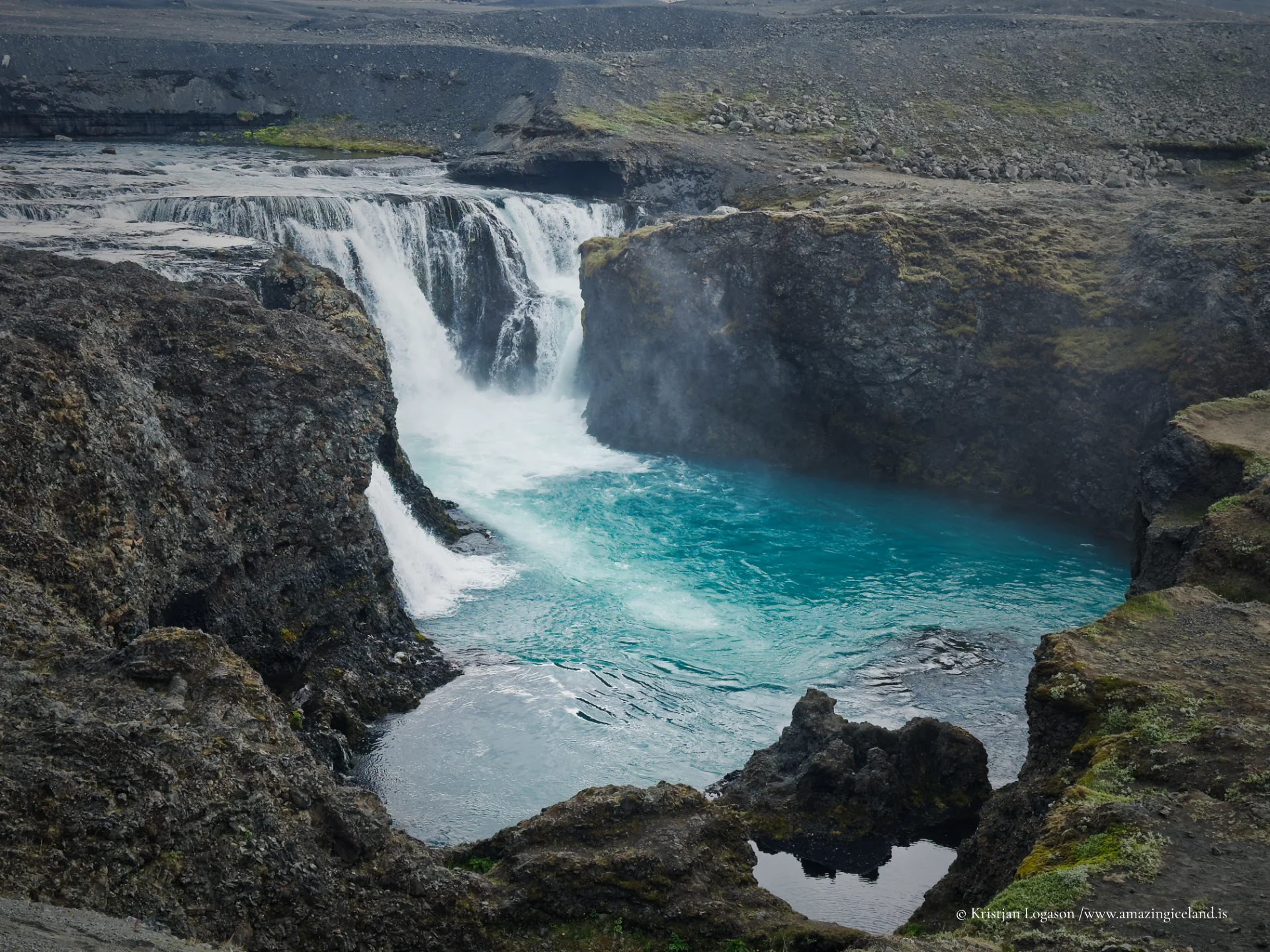
In form, Sigöldufoss is wide rather than tall. Water spreads across a broad lip and descends in a segmented curtain, breaking into multiple channels as it flows over uneven volcanic bedrock. This geometry reflects both the natural structure of the river channel and the moderated discharge characteristic of regulated rivers. Unlike narrow plunge falls, Sigöldufoss presents itself as a horizontal feature—its scale perceived through width and volume rather than height.
The surrounding landscape is typical of this section of the highlands: dark lava fields, sparse vegetation, and open horizons. The lack of visual clutter allows the waterfall to stand out clearly, even though it is not dramatic in vertical relief.
Sigöldufoss cannot be separated from the hydropower infrastructure that defines this stretch of the Tungnaá. Water flow through the river is regulated as part of Iceland’s highland energy system, meaning that discharge levels at the waterfall can vary depending on operational conditions.
This regulation has altered the river’s natural flow regime, reducing seasonal extremes and smoothing variability. However, it has not erased the waterfall as a geomorphological feature. Instead, Sigöldufoss illustrates how river morphology persists even when hydrology is managed. The bedrock channel, erosion-resistant layers, and established drop remain in place, shaping how released water behaves.
Visually, this results in a waterfall that can appear markedly different from one visit to the next. At higher discharge, Sigöldufoss presents a continuous, forceful curtain; at lower flow, individual channels and rock features become more prominent. This variability is not random but systemic—linked directly to water management upstream.
Importantly, Sigöldufoss demonstrates a common Icelandic highland reality: landscapes that are neither purely natural nor purely artificial. Instead, they exist as layered systems where human intervention overlays, but does not entirely replace, geological structure.
Sigöldufoss is often encountered incidentally while travelling along F208, yet it rewards deliberate stopping. Its roadside location allows close observation without extended hiking, making it accessible even within tight travel schedules. Unlike more remote waterfalls, Sigöldufoss can be studied calmly from stable ground, encouraging slower, more analytical viewing.
From an observational perspective, the waterfall is useful for understanding scale in highland rivers. The Tungnaá carries a substantial volume of water, and Sigöldufoss reveals how that volume is distributed across a wide channel rather than concentrated into a single drop. This reinforces the sense of breadth that characterises much of the Icelandic interior.
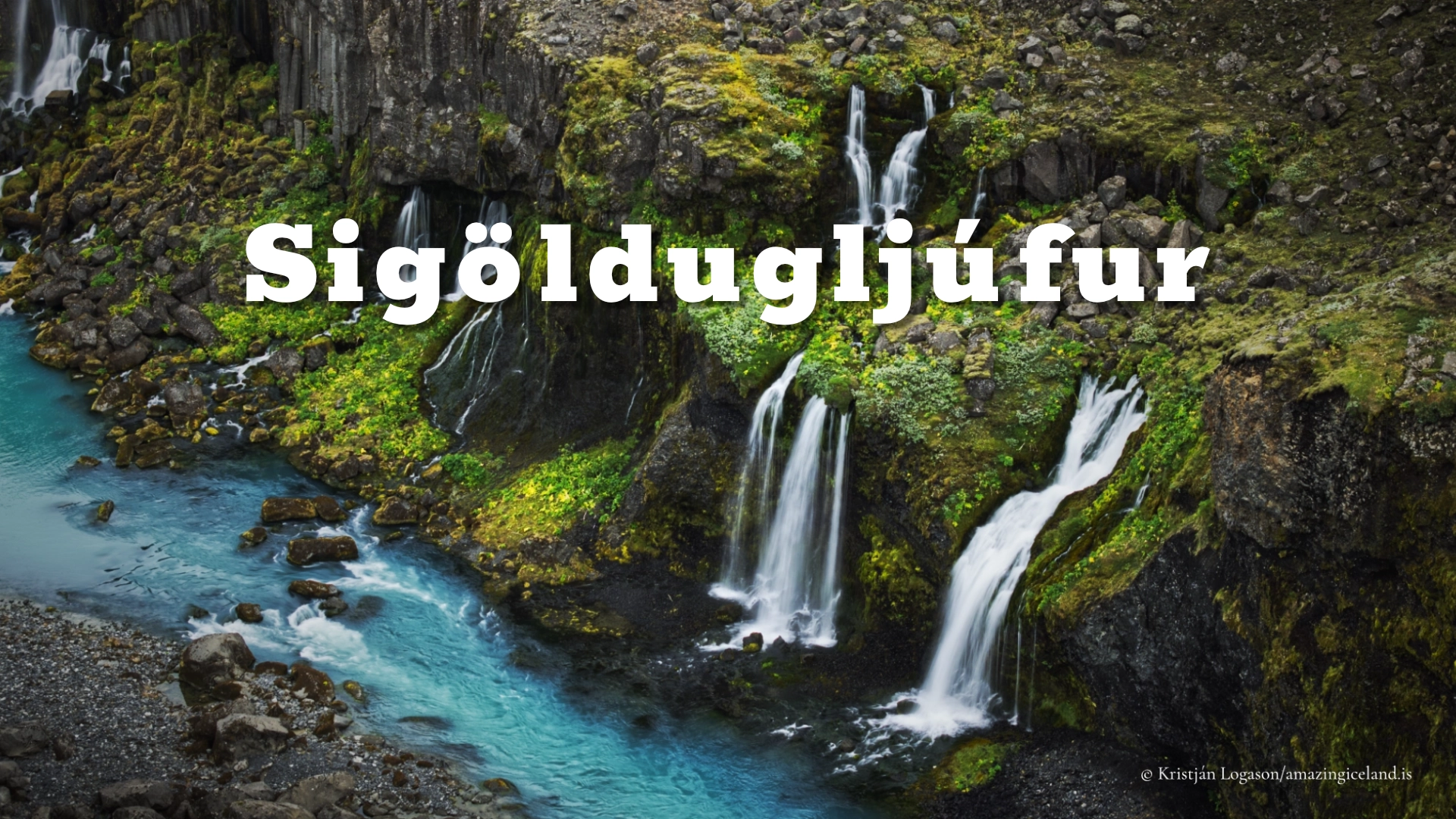
Within the broader Fjallabak and F208 sequence, Sigöldufoss functions as a transitional feature. It sits between open desert-like stretches of road and more visually complex sites such as Sigöldugljúfur and Landmannalaugar. As such, it marks a shift—from expansive, linear travel to more concentrated geological interest.
Sigöldufoss does not compete with Iceland’s iconic waterfalls in terms of spectacle, nor does it attempt to. Its value lies in clarity and context: a readable river, a visible drop, and an honest presentation of how water moves through a managed highland system. For visitors interested in understanding Iceland rather than simply consuming it, this restraint is a strength.
Interesting facts:
- River system: Sigöldufoss is part of the Tungnaá, a major highland river.
- Regulated flow: Water volume varies depending on upstream hydropower operations.
- Wide profile: The waterfall is defined more by width than height.
- Roadside access: Located directly beside F208, requiring no hike.
Image Gallery

The Locomotive Elite
What do Donald Trump and Iceland’s Locomotive Elite have in common?
Far more than you think.
In The Locomotive Elite, you’ll uncover how a tiny clique in Iceland captured extensive control—of banks, courts, media, and even the central bank.
For decades they ruled, first democratically, then through corruption and in the end through crime, enriching themselves and their cronies while dismantling oversight.
The result?
One of the most spectacular financial collapses in modern history.
Photography tips:
- Flow awareness: Water volume can change; check conditions if flow level matters to your composition.
- Mid-range shutters: 1/4–1s retains texture across the wide curtain.
- Context frames: Include surrounding lava fields to convey scale and openness.
- Low angles: Emphasize horizontal spread rather than vertical drop.
- Neutral processing: Avoid dramatizing contrast—Sigöldufoss benefits from honest rendering.hike.
Good cameras for Iceland
Sony A7R V

Sony A7s lll

Canon R6

Nikon Z6 lll

Destinations nearby
Good to have in Iceland