Seljavallalaug is not a spa and not a modern swimming pool. It is a simple concrete pool built in 1923 in a narrow valley on Iceland’s South Coast, originally created so local people and children could learn to swim.
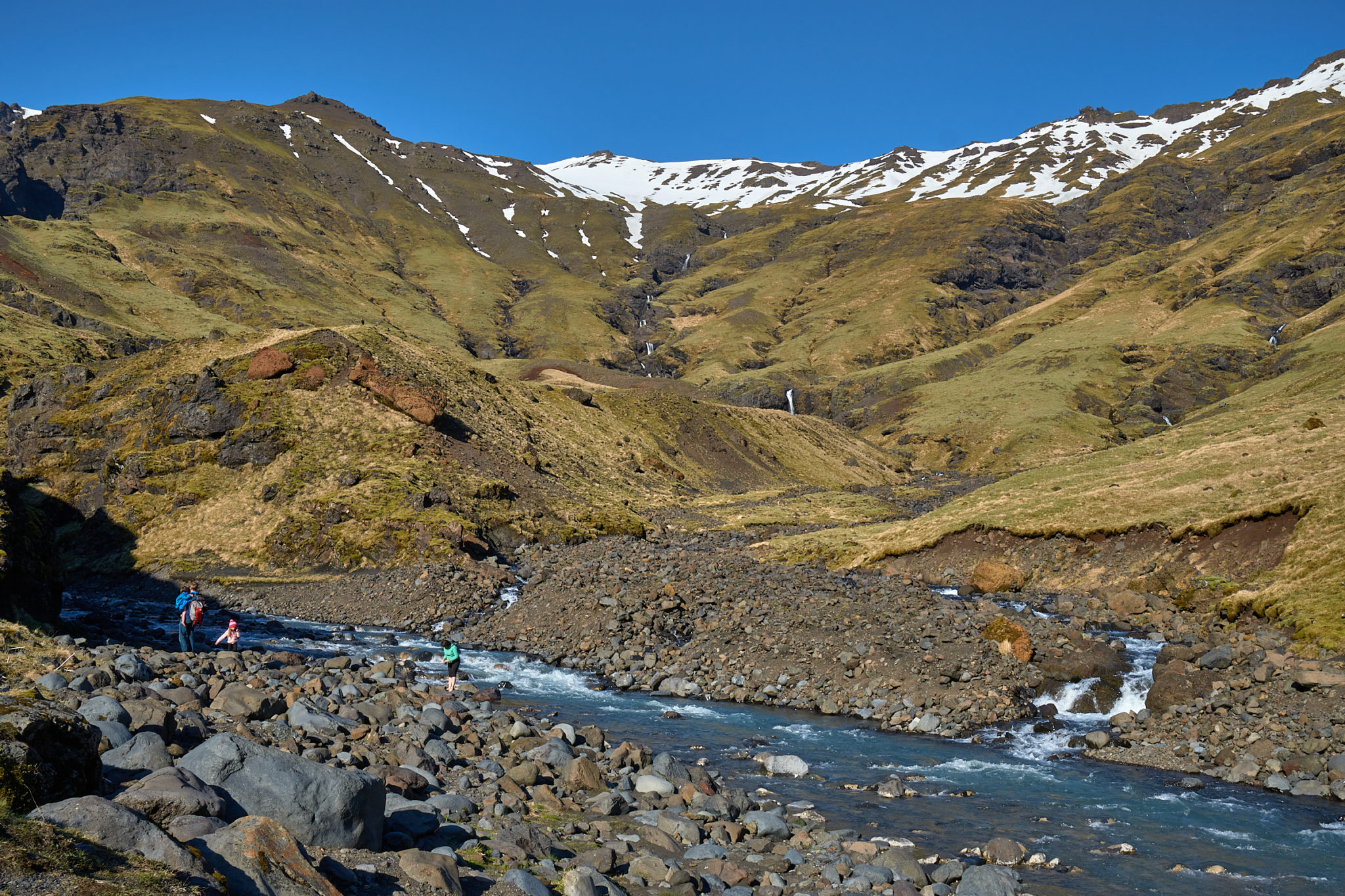
The setting is what makes it memorable. The pool sits against the mountains beneath Eyjafjallajökull, reached only on foot from the end of the road. There is no lifeguard, no staffed reception and no managed bathing experience waiting at the end of the walk.
Seljavallalaug is free to use and maintained by volunteers. That means visitors are expected to treat it accordingly.
Garbage in, garbage out.
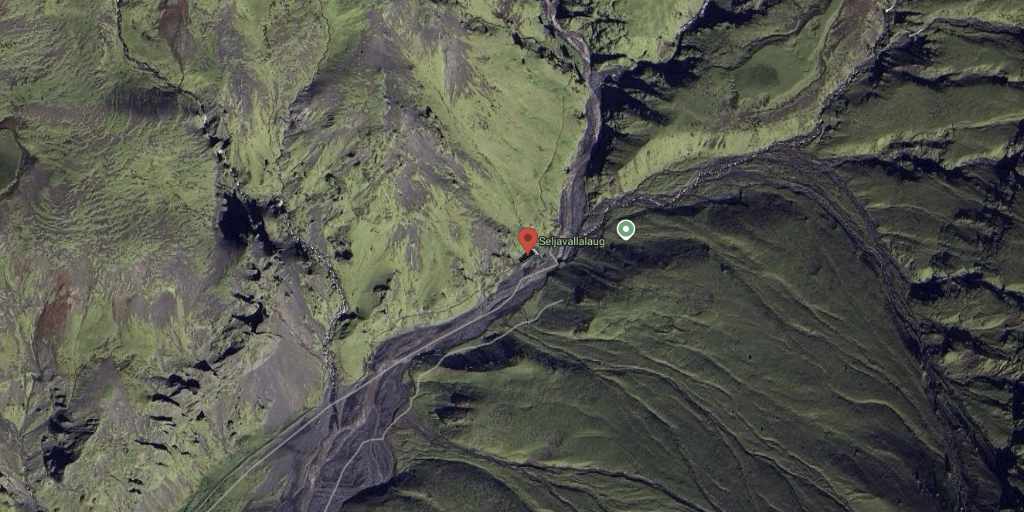
The location of Seljavallalaug swimming pool on the south coast of Iceland
Latitude
63.5656
Longitude
-19.6076
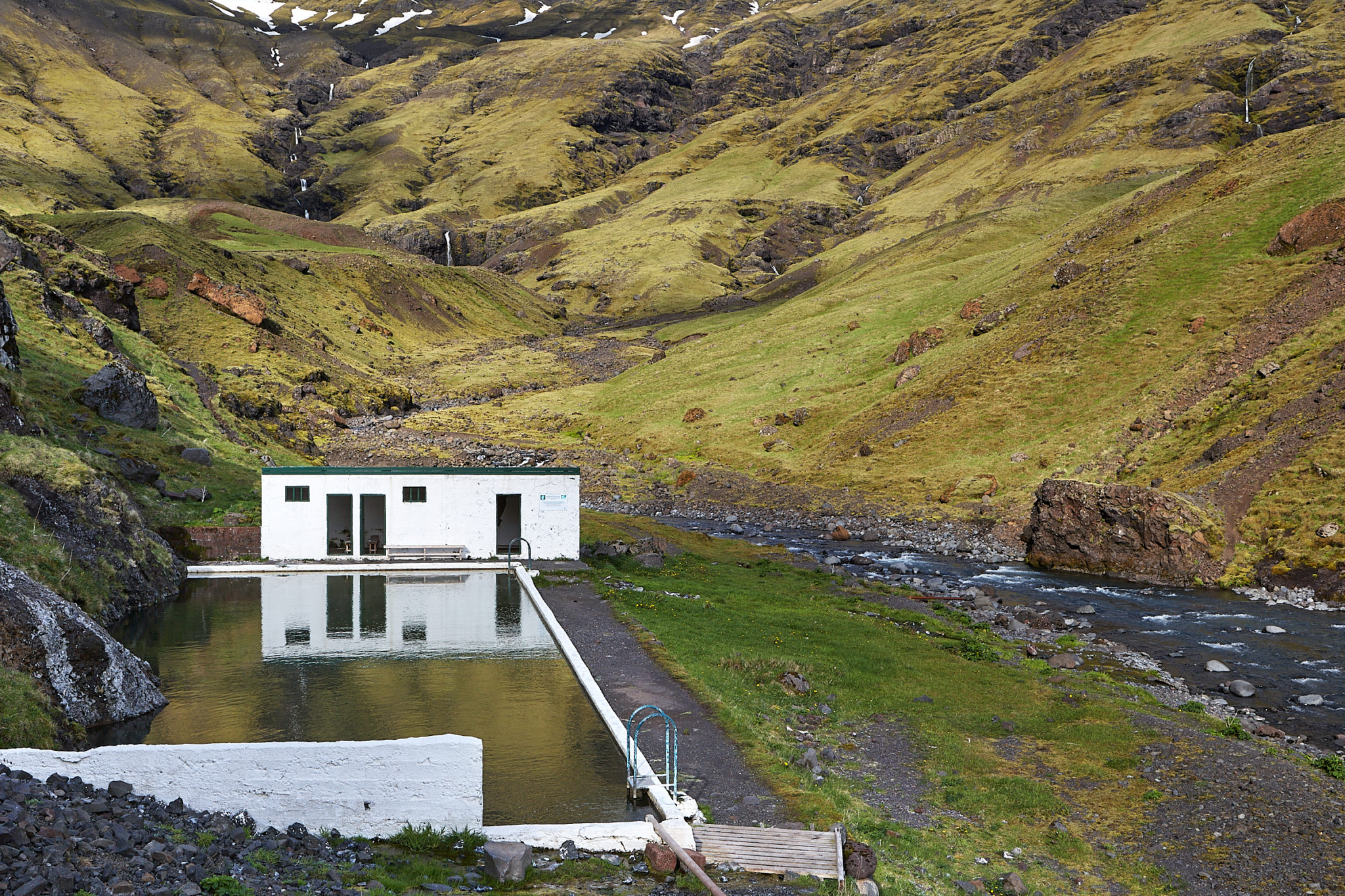
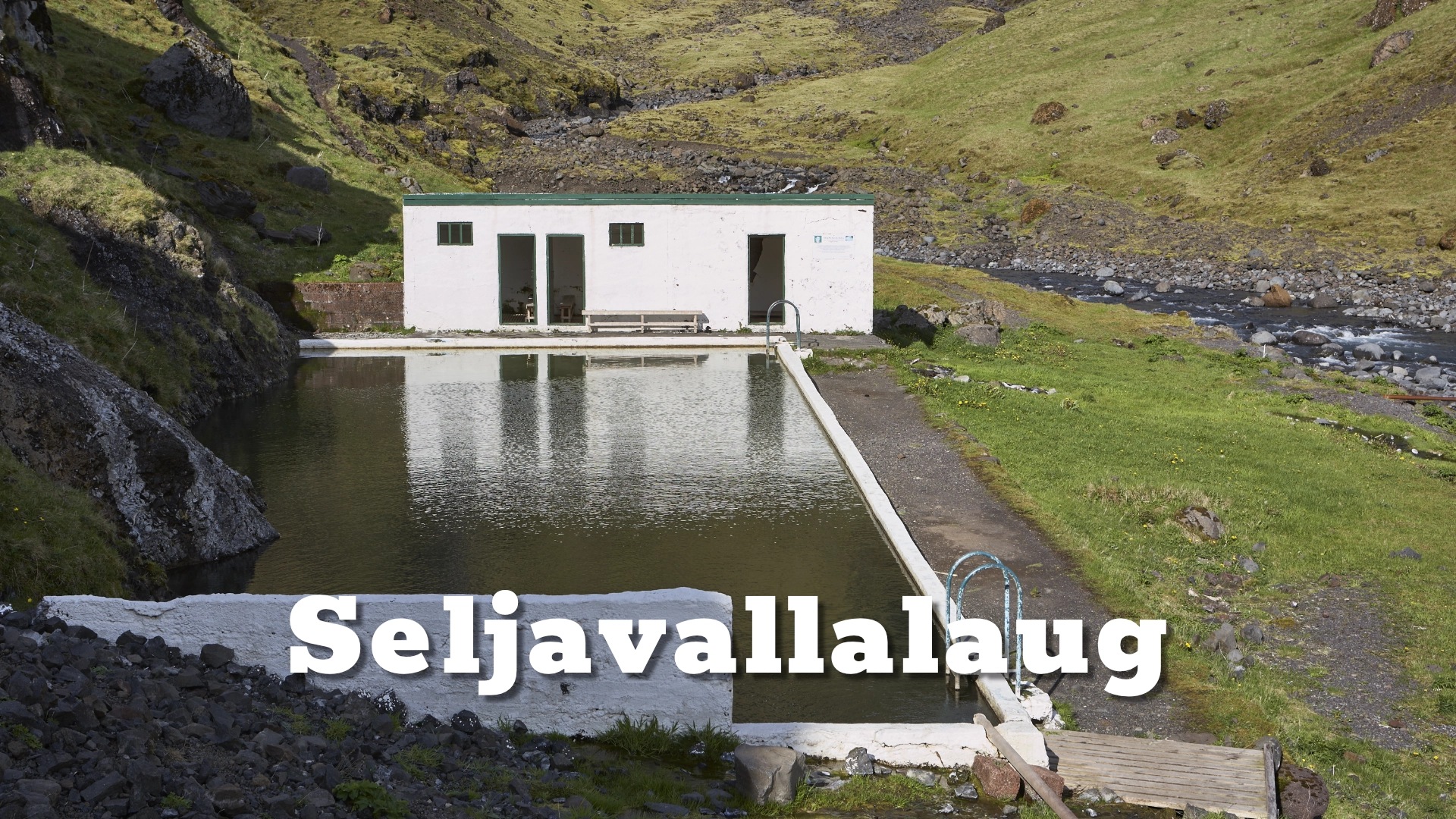
Seljavallalaug swimming pool on the south coast of Iceland
Built for learning to swim
Seljavallalaug was built in 1923 by Björn Andrésson with help from local people and the area’s sports association. The purpose was practical.
Swimming was an important skill in a country where fishing, rivers and coastal travel were part of everyday life, but many people still had little opportunity to learn. Seljavallalaug gave the people of Seljavellir and surrounding farms a proper place for swimming instruction.
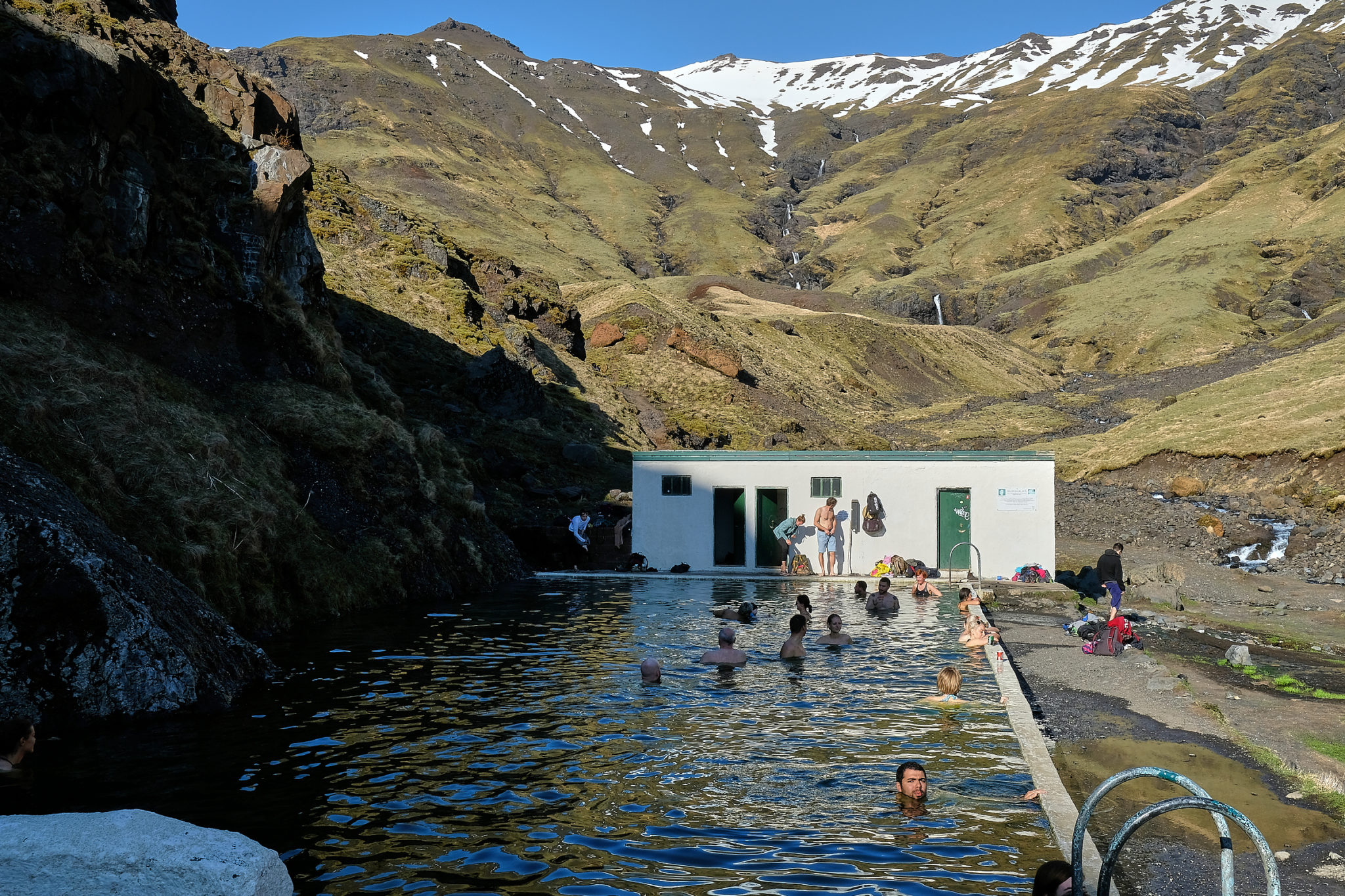
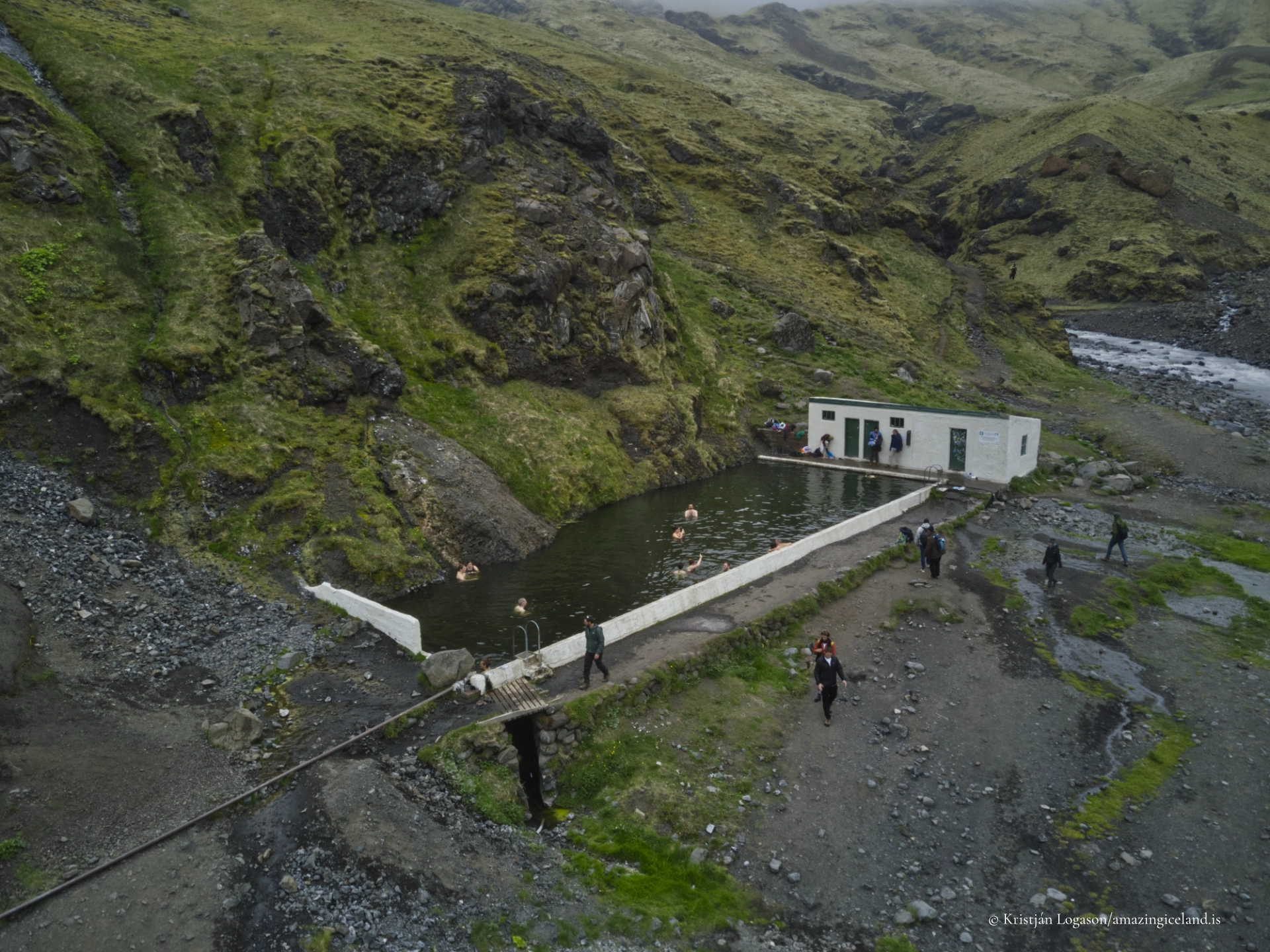
From 1927, swimming lessons were conducted here as part of compulsory education. The pool measures roughly 25 metres long and 10 metres wide and was Iceland’s largest swimming pool until 1936.
It is generally regarded as the second-oldest swimming pool in Iceland still in use, after the pool at the Secret Lagoon in Flúðir. For many years Seljavallalaug remained primarily a local facility. Its present reputation as a destination came much later.
Getting to Seljavallalaug
Access begins from Route 1 on the South Coast, turning onto Road 242 towards Raufarfell and continuing towards the end of the valley. From the parking area, the rest of the journey is on foot.
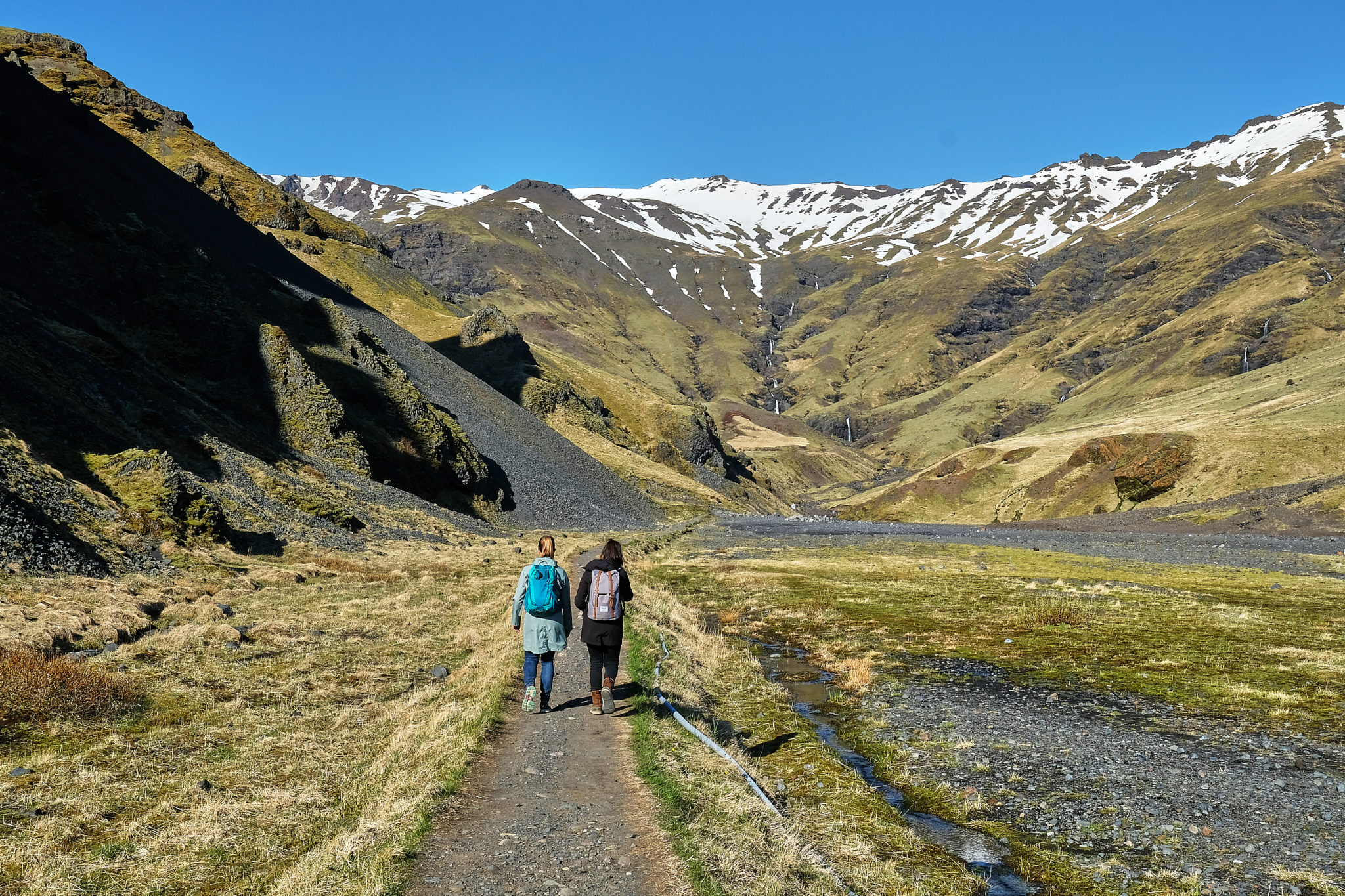
The walk is roughly 1.2 km one way and usually takes around 15–20 minutes. It is not a difficult hike in normal summer conditions, but the route follows uneven ground through the valley and can be wet.
In winter the situation changes considerably. Snow, ice and water can make the path more difficult, and sections that are straightforward in summer may require much more care.
People do use Seljavallalaug in winter, but winter use should not be confused with easy access. Conditions on the walk need to be judged on the day.
The approach is part of the destination. The valley gradually closes around the path, and the pool remains largely hidden until near the end.

What the pool is really like
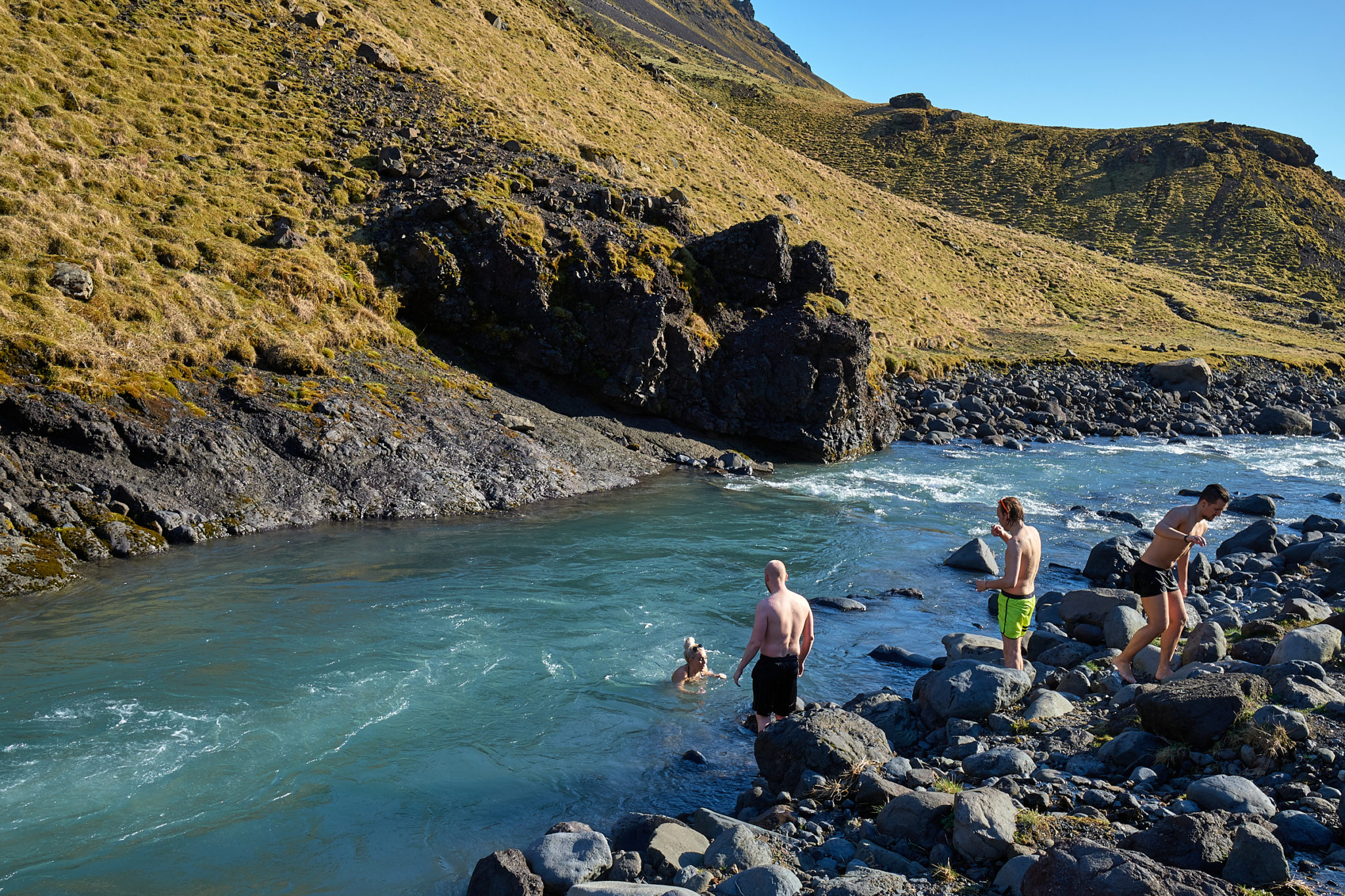
Seljavallalaug is geothermally heated, but it should not be expected to feel like a hot spring. The temperature varies and the water is often only warm.
That difference matters. Visitors arriving expecting something comparable with a modern geothermal lagoon or hot pot may find the water surprisingly cool.
The pool is also not maintained like a municipal swimming pool. It is looked after by volunteers, and cleaning takes place on an informal basis rather than through permanent staffing. Algae, sediment and slippery surfaces can therefore be present.
There is a simple changing shelter beside the pool, but it is in rough condition and should not be expected to provide the comfort or facilities of a maintained swimming pool.
There is no lifeguard. Nobody is supervising swimmers or continuously monitoring conditions. Anyone entering the pool does so at their own risk.
Eyjafjallajökull and the 2010 eruption
Seljavallalaug sits directly beneath the landscape shaped by Eyjafjallajökull. When the volcano erupted in 2010, the valley and pool were covered by volcanic ash.
The pool filled with ash and debris and could no longer be used in its existing condition. Volunteers returned the following year and cleaned it out.
That episode fits the history of Seljavallalaug remarkably well. The pool was created through local effort in 1923, and almost ninety years later it survived a volcanic eruption because people again volunteered their time to restore it.
That is a more important part of Seljavallalaug than the idea that it is a hidden geothermal attraction. The pool continues to exist because people have repeatedly chosen to look after it.
Visiting and etiquette
There is no entrance fee for Seljavallalaug. There is also no staff collecting rubbish, cleaning changing rooms during the day or repairing damage after every visitor.
That puts more responsibility on the people who use it. Take everything you bring into the valley back out with you. Do not leave towels, bottles, food packaging or clothing behind.
Garbage in, garbage out.
The pool should also be treated as a historic community facility rather than as an abandoned structure that can absorb unlimited use.
Conditions vary through the year, and sometimes the pool will be cleaner, warmer or more inviting than at other times. That variability is part of what Seljavallalaug is.
Anyone looking for guaranteed water temperature, changing facilities, showers and supervised bathing should choose a maintained swimming pool instead.
Seljavallalaug offers something different: a piece of Icelandic swimming history still being used in the landscape where it was built.
Interesting facts:
-
- Seljavallalaug was built in 1923.
- Björn Andrésson led its construction with help from local people and the local sports association.
- From 1927, swimming lessons were held here as part of compulsory education.
- The pool is approximately 25 × 10 metres.
- It was Iceland’s largest swimming pool until 1936.
- It is generally regarded as Iceland’s second-oldest swimming pool still in use.
- The pool is free, unstaffed and maintained by volunteers.
- It filled with volcanic ash during the 2010 Eyjafjallajökull eruption and was cleaned by volunteers afterward.
- The water is geothermally heated but often only warm rather than hot.
Photography tips:
- The strongest photographs of Seljavallalaug usually show where the pool is rather than simply what it looks like. Wide compositions work well because the rectangular pool sits in strong contrast to the steep, irregular mountains around it.
- Including people in the water can help communicate scale and the unusual relationship between a constructed swimming pool and an otherwise natural valley.
- The walk in is also part of the photographic story. Images of people approaching through the valley show how isolated the pool feels and explain the destination better than a tightly framed photograph of the water alone.
- Overcast conditions often work well here. Soft light holds detail in both the darker mountain slopes and the water without turning the surface into a strong reflection.
- In winter, snow can simplify the landscape dramatically, but the harder access conditions matter more than the photograph. Do not assume the summer route will behave the same way under snow and ice.
- Aerial views can show the geometry of the pool particularly clearly, but any drone use should respect people bathing below and avoid disturbing the experience of others.