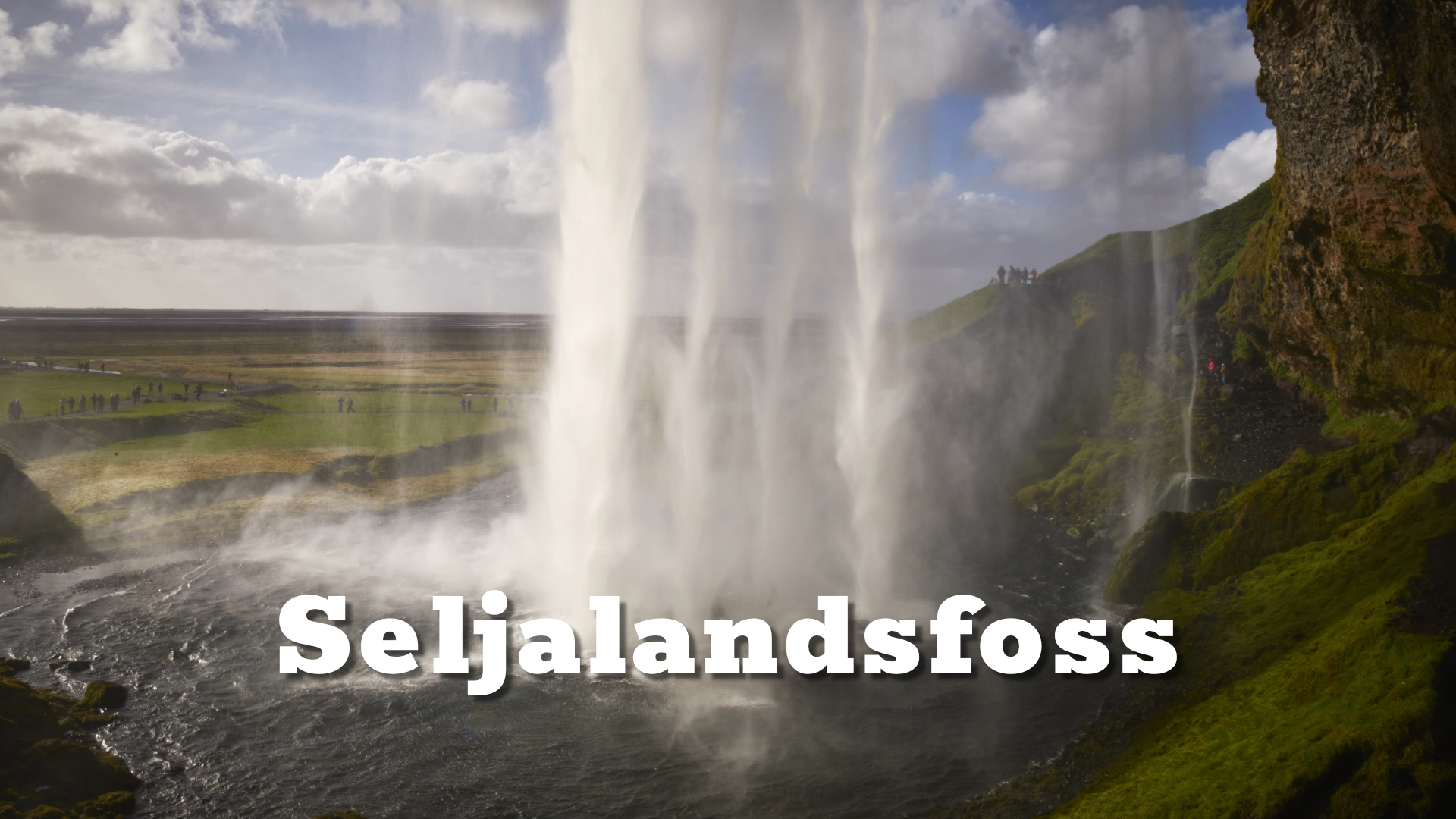
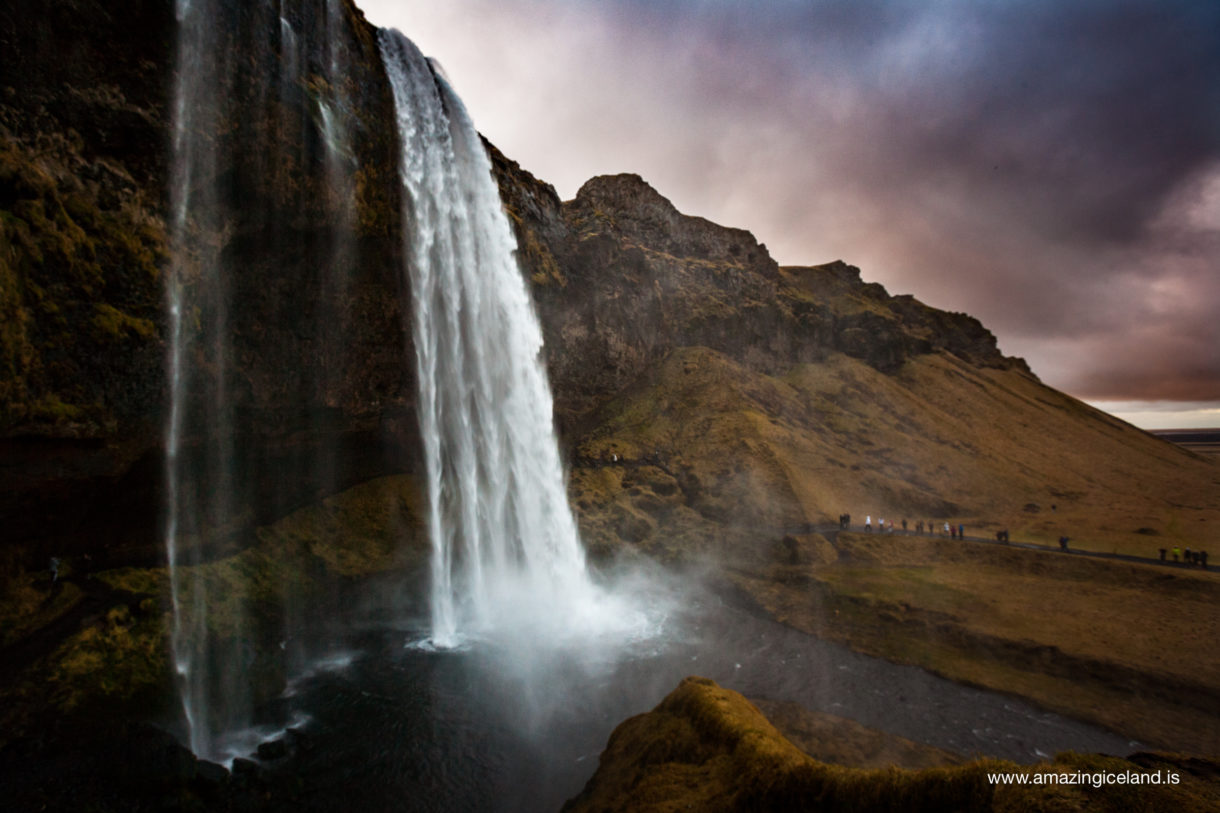
Situated along Iceland’s South Coast, Seljalandsfoss combines accessibility with uncommon physical intimacy. Fed by meltwater from the glacier-volcano Eyjafjallajökull, the waterfall drops cleanly over a recessed basalt cliff, forming one of the few locations in Iceland where visitors can observe a major waterfall from both front and rear perspectives. This duality—visibility and enclosure—defines Seljalandsfoss as much as its height or setting.
The location of Seljalandsfoss waterfall on the south coast of Iceland
Latitude
63.6156
Longitude
-19.9895
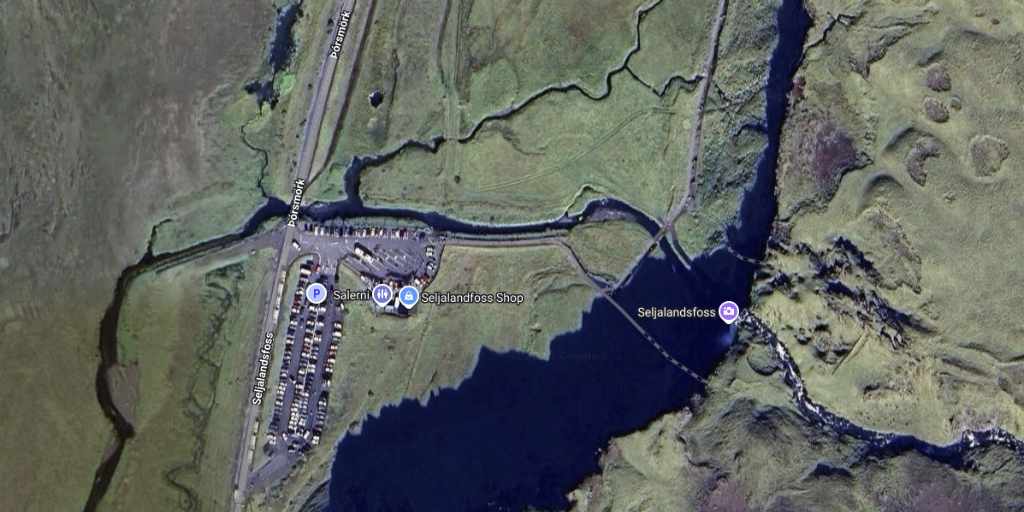
Seljalandsfoss waterfall on the south coast of Iceland
Geological setting and formation
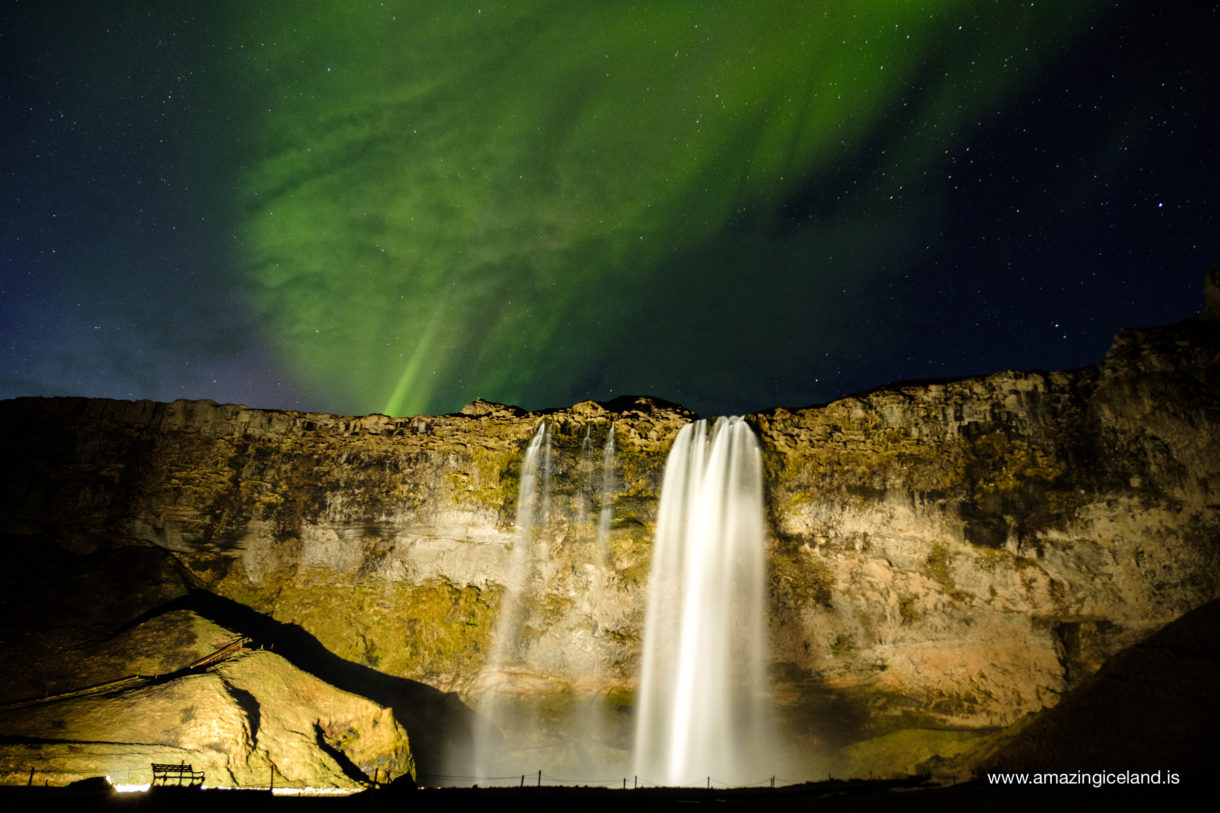
Seljalandsfoss drops approximately 60 metres from the former coastline cliff that once marked the edge of Iceland’s southern shore. Over millennia, post-glacial uplift and sediment deposition have shifted the coastline southward, leaving the waterfall stranded inland. This geological context explains the cliff’s abrupt profile and the recessed alcove behind the falling water—a feature essential to Seljalandsfoss’s unique accessibility.
The waterfall is part of the Seljalandsá river system, which originates beneath the ice cap of Eyjafjallajökull. Meltwater percolates through volcanic rock, gathers into surface channels, and eventually plunges over the cliff edge. Unlike rivers fed by large glacial outwash plains, Seljalandsá is relatively narrow and focused, producing a waterfall that is vertically elegant rather than laterally expansive.
The concave shape of the cliff is not accidental. Differential erosion in layered basalt has created a softer zone behind the waterfall, allowing the rock face to retreat unevenly. Over time, this process formed the shallow cavern that now accommodates the walking path. In geological terms, Seljalandsfoss is a product of selective erosion, where water exploits structural weakness rather than overwhelming resistance through volume alone.
This distinction matters. Seljalandsfoss is not a brute-force waterfall like Dettifoss, nor a broad cascade like Gullfoss. Its power lies in precision: water, rock, and space aligned in a way that allows human-scale interaction without diminishing the system’s integrity.
Walking behind Seljalandsfoss—experience and risk
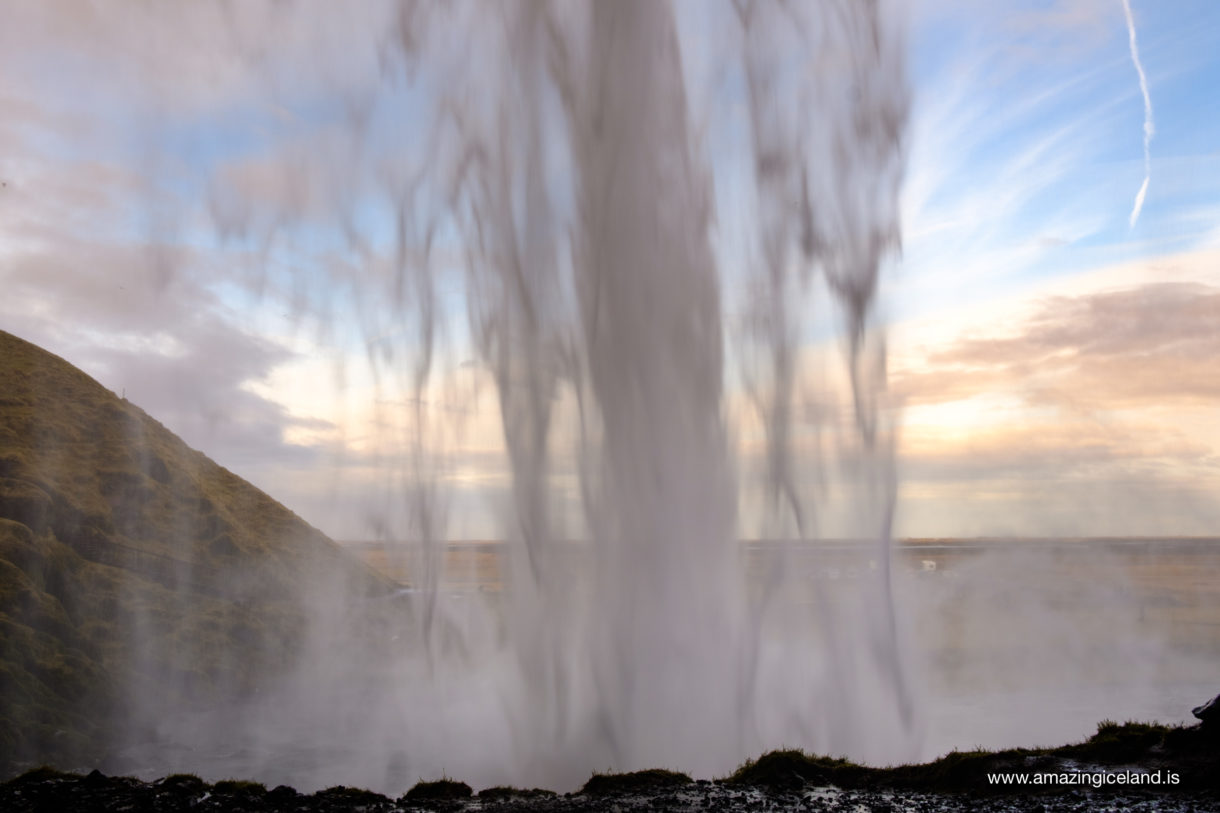
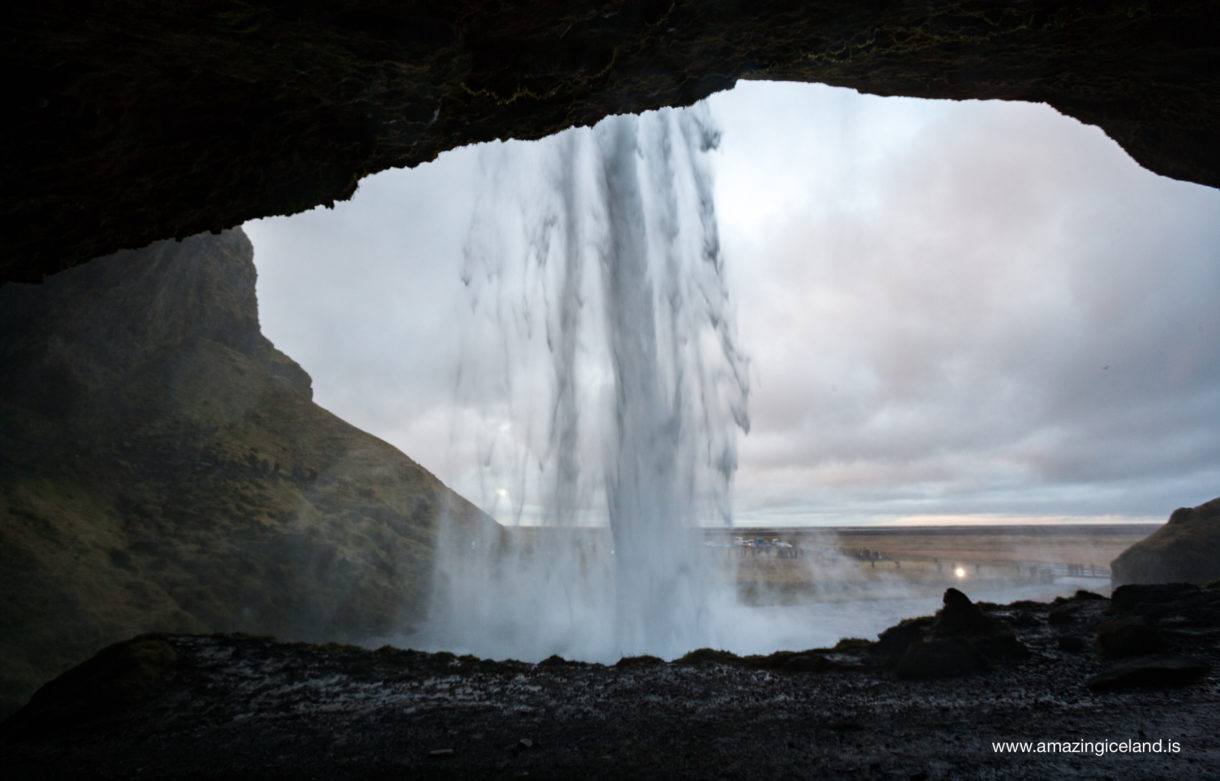
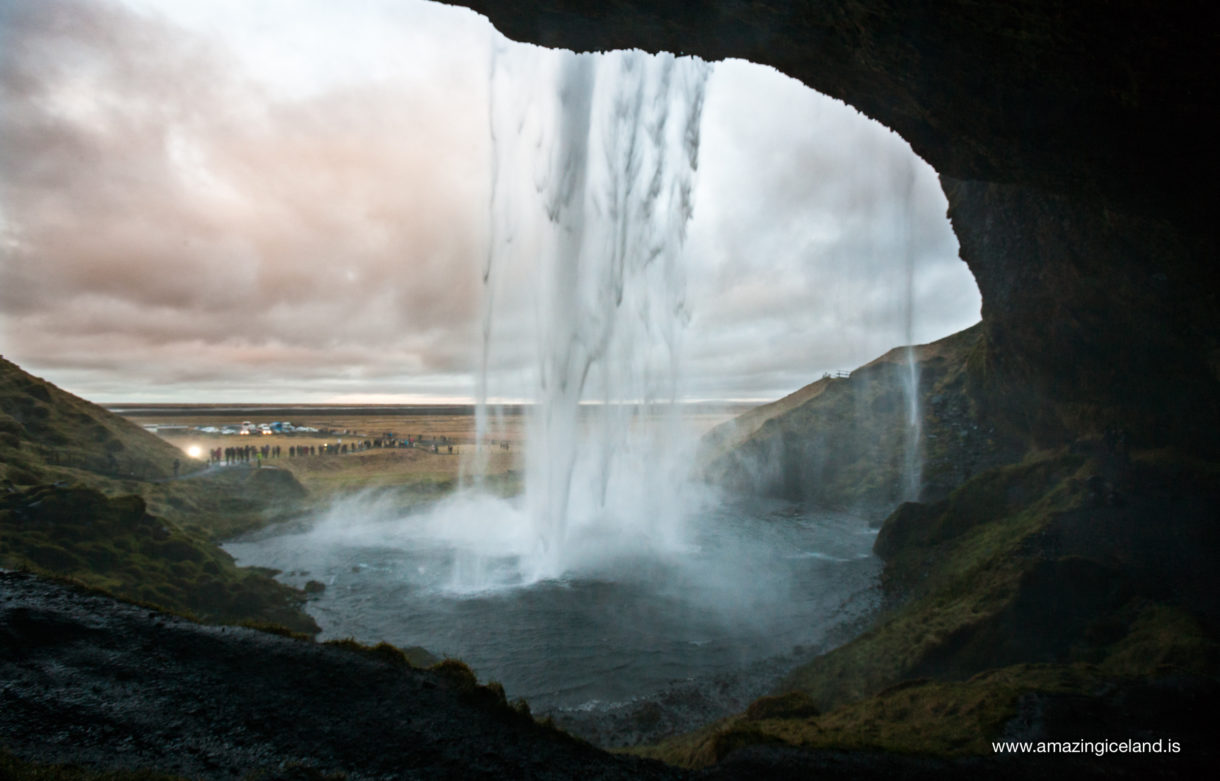
The path behind Seljalandsfoss is the site’s defining feature and its primary draw. During summer and favorable shoulder-season conditions, visitors can follow a natural footpath that arcs behind the waterfall, emerging on the opposite side with an outward-facing view framed entirely by falling water.
This experience is fundamentally physical. Spray saturates clothing almost immediately, sound reverberates off the rock walls, and visibility fluctuates with wind direction and light angle. Unlike constructed viewpoints, the path is unmediated: there are no railings, glass barriers, or platforms separating visitor from environment. The waterfall asserts itself continuously.
Despite its popularity, the route is not technically difficult. The walk is short and generally level, but the surface is uneven, muddy, and often slick. Good footwear with reliable traction is essential. While the path is widely considered safe in summer, safety here is conditional—dependent on weather, temperature, and visitor judgment.
Environmental change has demonstrably affected Seljalandsfoss in the recent past. On January 15, 1967, extreme rainfall—recorded at 101 millimetres in nearby Skógar—caused unusually high discharge in the river. The force of the water damaged the cliff edge at the lip of the falls, narrowing the flow and subtly altering the waterfall’s geometry. This event serves as a reminder that Seljalandsfoss, despite its iconic status, remains an evolving landform.
Walking behind the waterfall should therefore be approached as an active assessment, not a guaranteed entitlement. Conditions should always be evaluated on arrival, and retreat is a valid decision when ice, flooding, or falling debris are present.
Seasonality, access, and landscape context
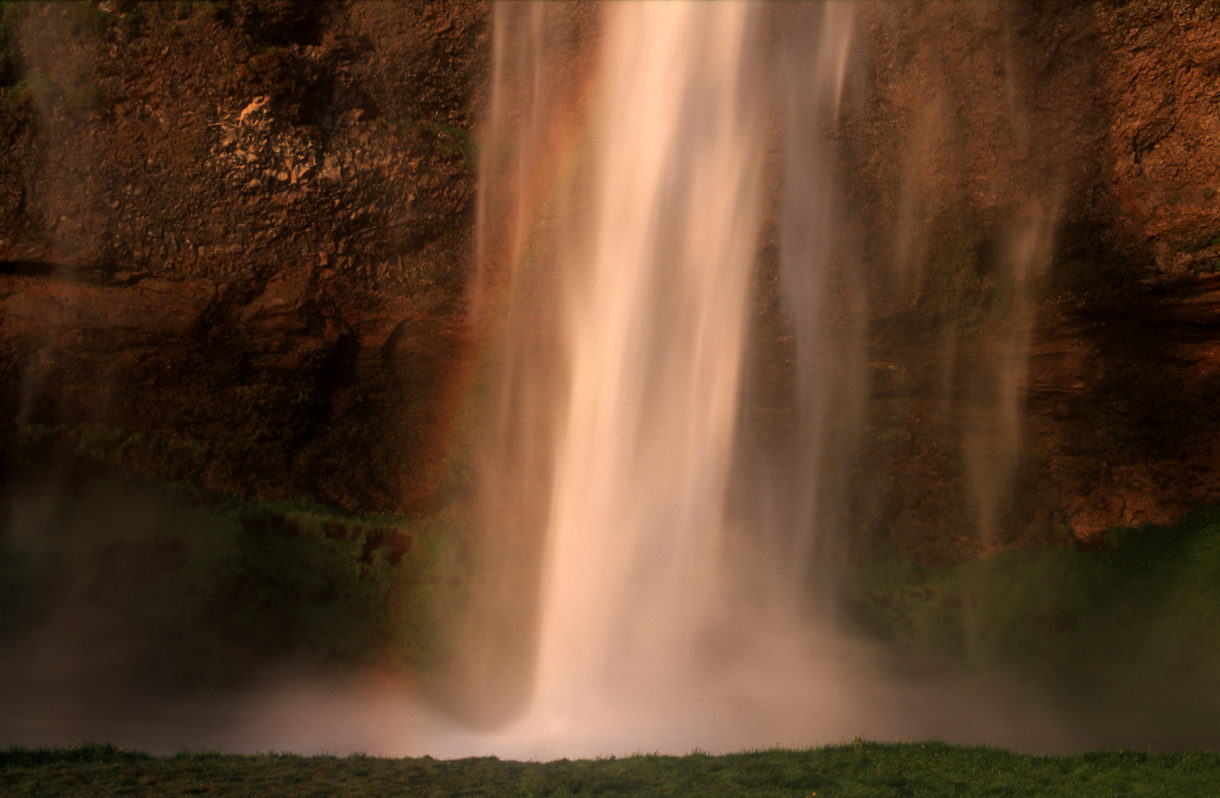
Seasonality reshapes Seljalandsfoss more dramatically than many visitors anticipate. In summer, long daylight hours allow extended observation, and vegetation softens the surrounding slopes. The waterfall reads as open and inviting, with mist catching low-angle evening light and producing frequent rainbows.
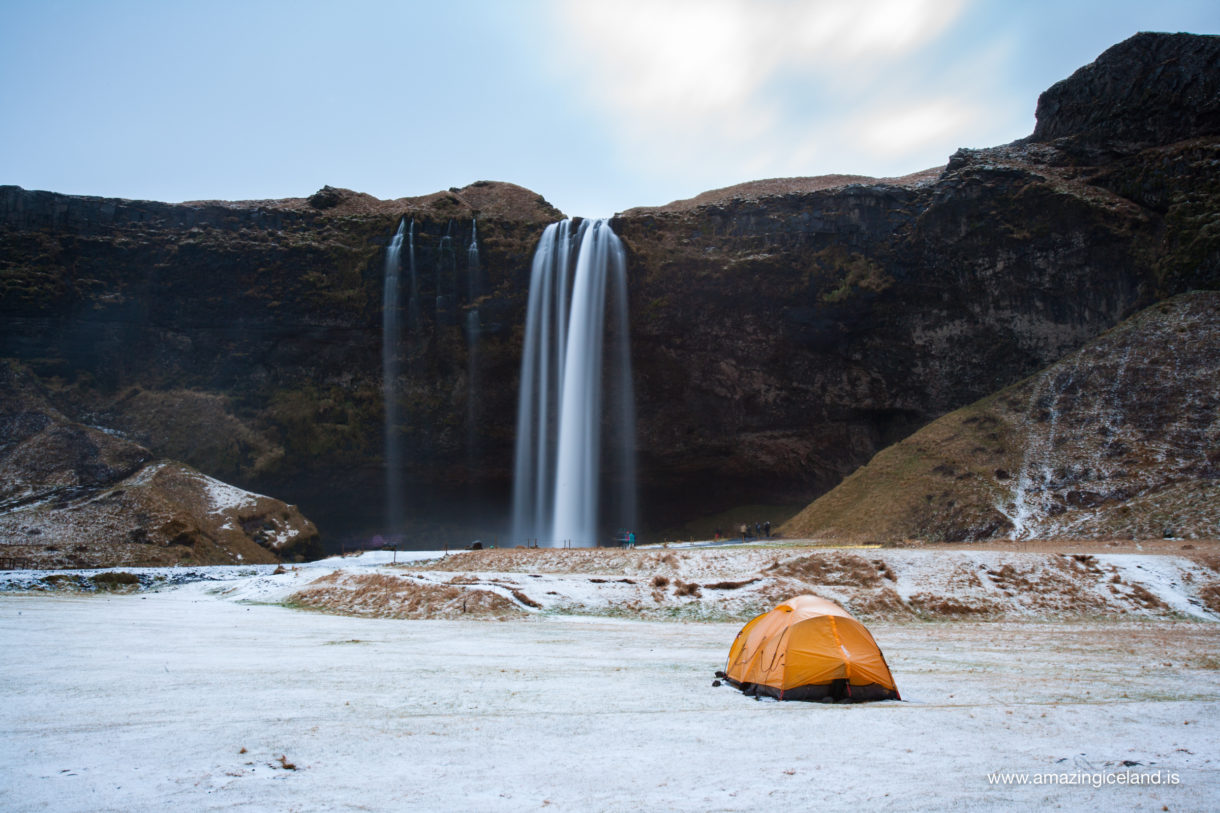
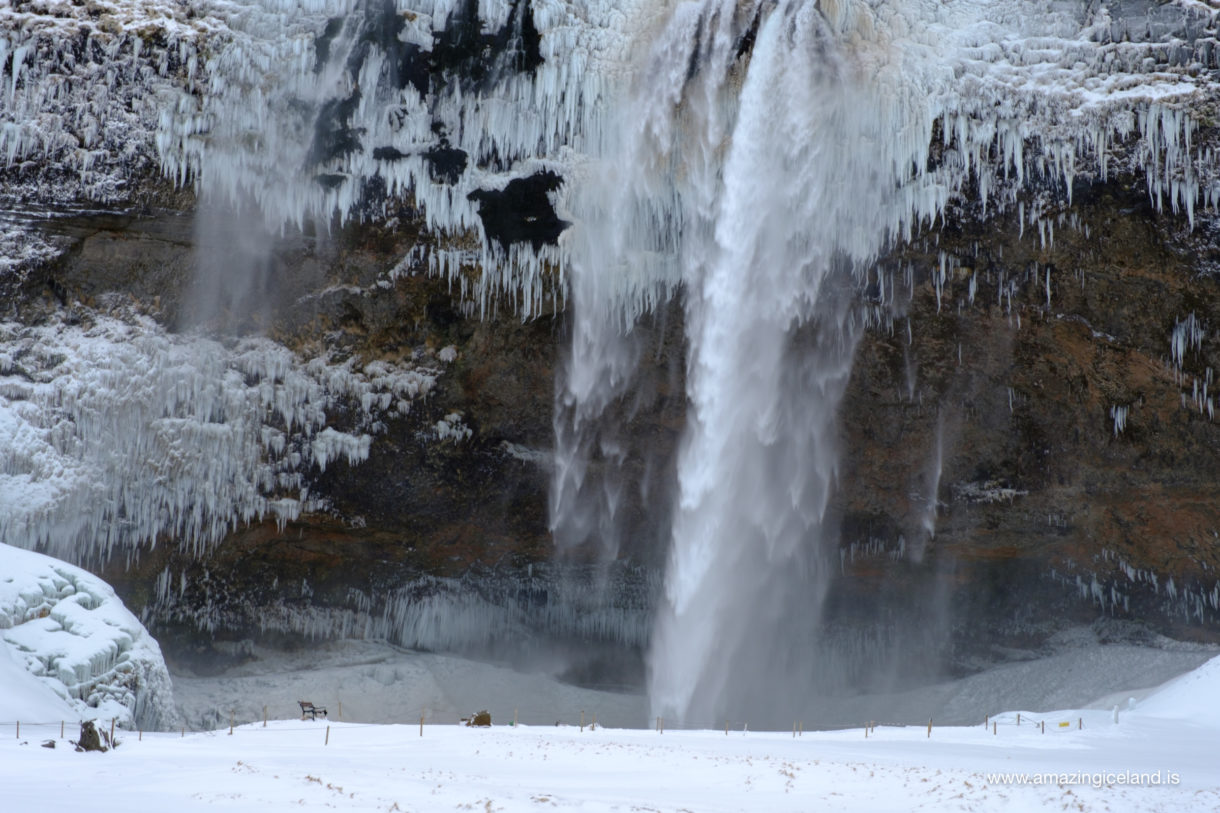
In winter, the character shifts entirely. Ice accumulates along the cliff face, icicles form overhead, and spray freezes on contact with surrounding rock. For safety reasons, the path behind the waterfall is often closed during icy periods, and even when open, requires caution and appropriate equipment such as crampons. Artificial lighting installed near the site ensures visibility during the darkest months, reinforcing Seljalandsfoss’s role as a year-round landmark—but not guaranteeing year-round access behind the falls.
Seljalandsfoss also functions as a spatial gateway. Just inland, Road 249 leads toward the highland valley of Þórsmörk, while a short walk north reveals the hidden waterfall Gljúfrabúi, concealed within a narrow gorge. Together, these features create a compact but diverse landscape cluster where open exposure, enclosure, and transition coexist.
In the broader context of Iceland’s South Coast, Seljalandsfoss occupies a pivotal role. It is often one of the first major waterfalls encountered when traveling east from Reykjavík, shaping initial expectations of Icelandic nature. Its accessibility makes it popular, but its spatial complexity ensures that repeated visits remain meaningful.
What ultimately distinguishes Seljalandsfoss is not novelty, but balance. It allows proximity without trivialization, accessibility without total domestication. The waterfall remains in control, and the visitor is permitted entry only on its terms.
Interesting facts:
- Seljalandsfoss is approximately 60 metres high, making it tall but not among Iceland’s largest waterfalls.
- It is one of very few major waterfalls in Iceland that allow full access behind the cascade.
- Seljalandsfoss was a waypoint during The Amazing Race 6.
- The waterfall appeared in the film CKY2K and in music-related media featuring Björk.
- It also appears in the official music video for I’ll Show You by Justin Bieber, filmed across South Iceland.
- A documented flood event in 1967 permanently altered the waterfall’s flow profile.
Image Gallery



The Locomotive Elite
What do Donald Trump and Iceland’s Locomotive Elite have in common?
Far more than you think.
In The Locomotive Elite, you’ll uncover how a tiny clique in Iceland captured extensive control—of banks, courts, media, and even the central bank.
For decades they ruled, first democratically, then through corruption and in the end through crime, enriching themselves and their cronies while dismantling oversight.
The result?
One of the most spectacular financial collapses in modern history.
Photography tips:
- Protect your equipment: constant mist requires waterproof covers and frequent lens cleaning.
- Wide-angle lenses are ideal when shooting from behind the waterfall to capture enclosure and scale.
- Shutter speed control: around 1/15 sec or slower produces silky water; faster speeds isolate strands.
- Tripods can be useful but must be stabilized carefully on wet ground.
- Light awareness: late evening and early morning offer the most controlled contrast and frequent rainbows.
- Stay on marked paths in summer to prevent erosion of fragile vegetation on surrounding slopes.
Good cameras for Iceland
Sony A7R V

Sony A7s lll

Canon R6
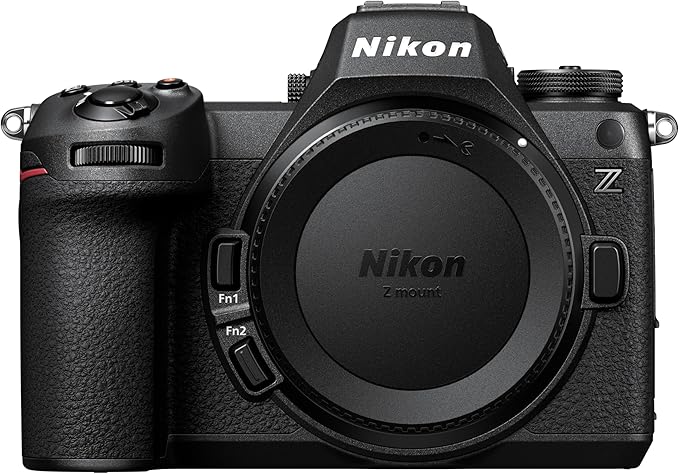
Nikon Z6 lll
Good to have in Iceland