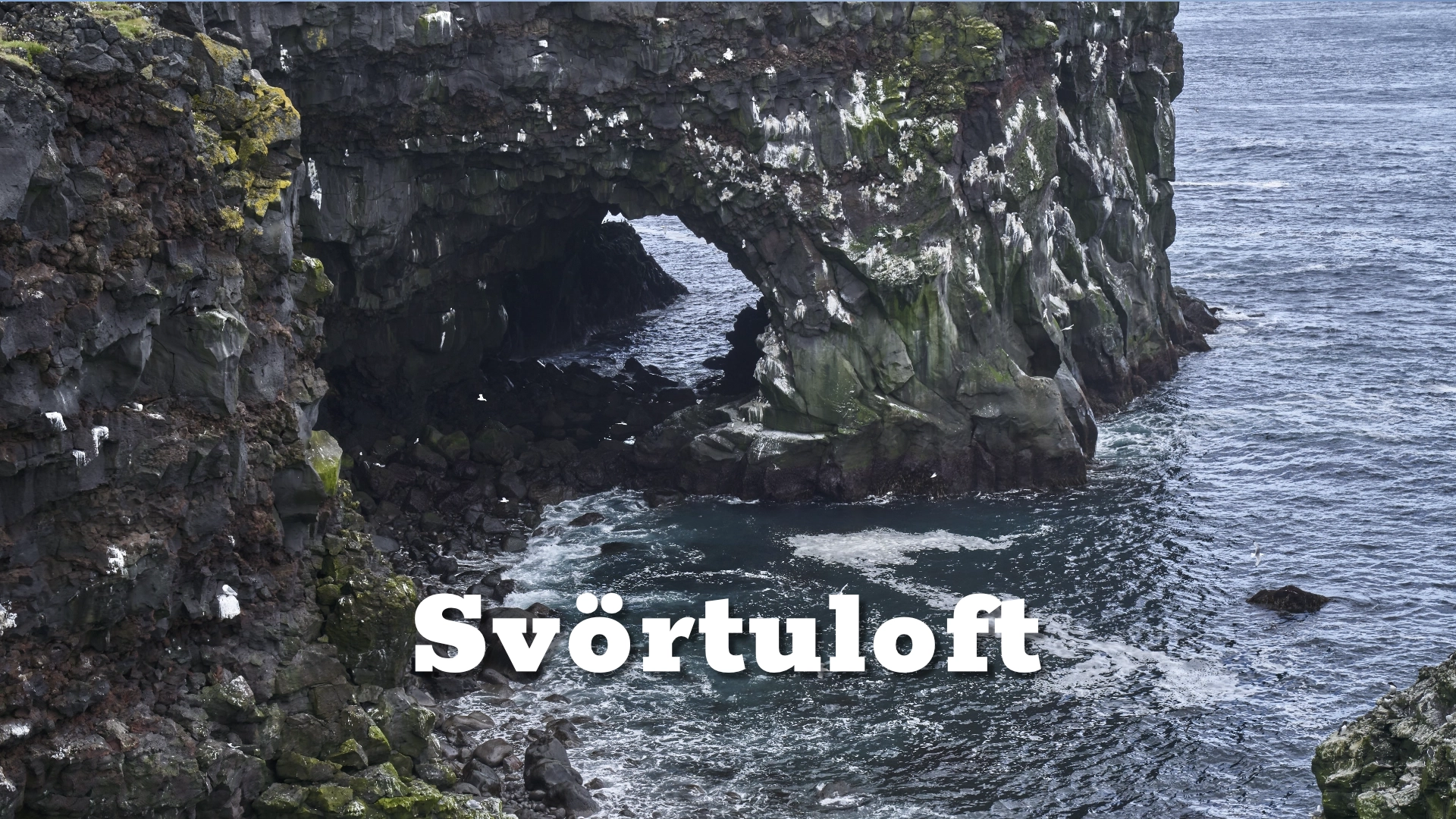
Saxhólsbjarg, Nesbjarg and Svörtuloft lighthouse in Snæfellsnes
Saxhólsbjarg and Nesbjarg are on the western edge of Snæfellsnes, inside **Snæfellsjökull National Park**, a long stretch of dark sea cliffs faces directly into the Atlantic. The same coast carries different names depending on where you stand and how the landscape has traditionally been approached.
From land, the southern section is **Saxhólsbjarg** and the northern section **Nesbjarg**. From the sea, sailors traditionally knew the cliffs collectively as **Svörtuloft**.
The lighthouse at **Skálasnagi** stands above the southern part of the cliff line, while a fenced viewing platform gives a safe view across the cliffs, seabird colonies and open ocean. The different names can make the area sound more complicated than it is, but in reality this is one continuous coastal landscape.
The location of Saxhólsbjarg, Nesbjarg and Svörtuloft lighthouse in Snæfellsnes
Latitude
64.8638
Longitude
-24.0390
Saxhólsbjarg, Nesbjarg and Svörtuloft lighthouse in Snæfellsnes
One cliff coast, several names
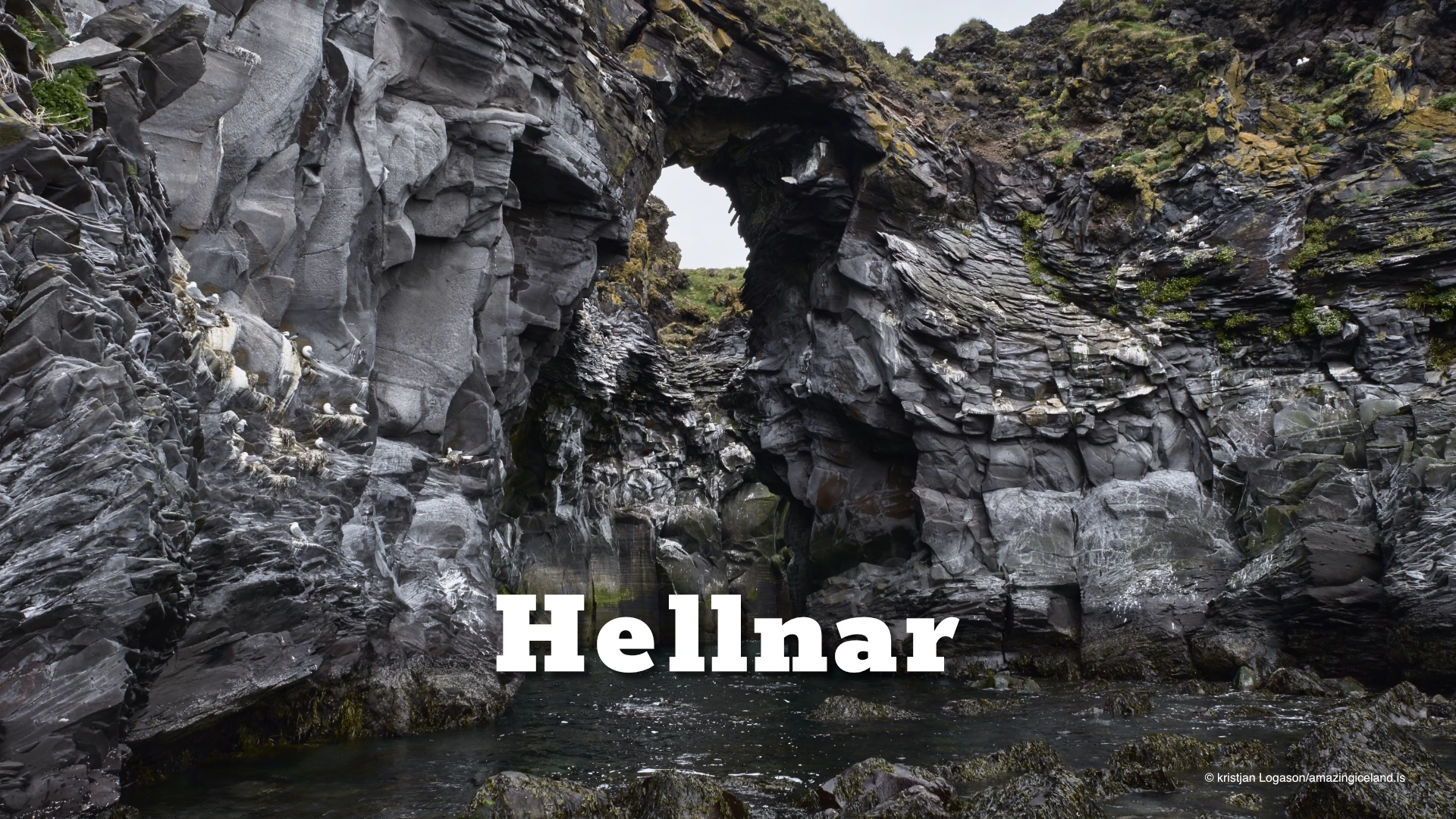
The cliffs were formed where lava reached the sea and was later cut back by constant wave erosion. Over time, the Atlantic has carved the coastline into steep basalt faces, ledges and isolated rock formations.
The naming reflects how the coast was understood from different directions. From land, the southern section is called Saxhólsbjarg, after nearby Saxhóll, while the northern section is known as Nesbjarg.
From the sea, the same cliff line was traditionally known as Svörtuloft. The name describes the dark appearance of the coast from offshore and belongs to the maritime geography of western Snæfellsnes.
The result is not three separate destinations, but one continuous section of coast with several traditional names. Understanding that makes the landscape easier to read and also explains why different maps and sources may use different names for what is essentially the same cliff system.
Skálasnagaviti lighthouse
The lighthouse at Skálasnagi has had two main structures. The first was built in 1914 and was a 10-metre iron-frame lighthouse designed by Thorvald Krabbe.
The exposed marine environment was hard on the structure. Salt, wind and weather caused corrosion, and by the early 20th century replacement had become necessary.
In 1931, the iron lighthouse was replaced by the concrete tower that stands there today. The present Skálasnagaviti is a square concrete lighthouse about 9.5 metres high, designed by engineer Benedikt Jónsson.
Its relatively low height is sufficient because the lighthouse already stands high above the sea on the cliff edge. From the surrounding viewpoints, the small white structure becomes a strong visual contrast against the black cliffs and open Atlantic.

Seabirds on the cliffs
Saxhólsbjarg and Nesbjarg are important seabird cliffs. Among the species nesting along this outer Snæfellsnes coast are black-legged kittiwakes, northern fulmars, common guillemots, Brünnich’s guillemots and razorbills.
The cliffs are most active during spring and the breeding season, when birds occupy the ledges and move constantly between the rock faces and the sea below.
At that time, the birdlife becomes an essential part of the landscape rather than something separate from it. The sound and movement of the colonies change the character of the coast completely.
The viewing platform gives a good position from which to watch the birds without approaching the cliff edge. A long lens or binoculars is useful because much of the activity takes place below or across the face of the cliffs.
Visiting Svörtuloft and Skálasnagi
The lighthouse and viewing area are reached from Road 574. The final approach is narrow and is best treated as a summer road, particularly when weather or road conditions are poor.
At the cliff edge there is a fenced viewing platform giving a clear view over the sea and black cliffs without any need to move towards open edges.
Another way to experience the coast is on foot from Öndverðarnes. The walking route between Öndverðarnes and Skálasnagi is about 2 kilometres and takes roughly an hour.
Whales are sometimes seen offshore from this part of the peninsula. With luck that can include orcas, although sightings are never predictable and should be treated as an added possibility rather than a reason to plan the visit.
The value of the stop lies mainly in the relationship between the lighthouse, cliffs, seabirds and Atlantic rather than in any single feature on its own.
Atlantic weather
This coast is exposed directly to the North Atlantic, and the weather changes its character quickly. In calm conditions, the dark cliffs and lighthouse dominate the scene.
In rougher weather, the ocean becomes the main subject. Large waves can strike the base of the cliffs with considerable force and send spray high into the air.
That can be one of the most impressive ways to see Svörtuloft, but it is also when the established viewing area matters most. Stormy conditions should be watched and photographed from the fenced platform or another established safe position, not by moving closer to the edge.
The strength of the place comes from that exposure. The cliffs, lighthouse and seabirds all exist within a landscape being constantly worked by wind, salt and Atlantic swell.
Interesting facts:
- The southern section of the cliff line is called Saxhólsbjarg.
- The northern section is known as Nesbjarg.
- From the sea, sailors traditionally called the cliffs Svörtuloft.
- The present lighthouse is Skálasnagaviti.
- The first lighthouse at Skálasnagi was built in 1914.
- The present concrete lighthouse was built in 1931.
- The original iron lighthouse was designed by Thorvald Krabbe.
- The present lighthouse was designed by Benedikt Jónsson.
- Kittiwakes, fulmars, guillemots and razorbills nest along the cliffs.
- Orcas and other whales can occasionally be seen offshore.
- The cliffs lie inside Snæfellsjökull National Park.
Image Gallery


Photography tips:
- Use the relationship between the lighthouse and the black cliffs as the main visual idea rather than treating either subject in isolation.
- The low white lighthouse can be framed against the Atlantic, the dark basalt or the broader line of the coast to emphasise scale and contrast.
- Early summer is the best period for including strong seabird activity in the landscape.
- For birds, use a long lens and work from the established viewing area. Much of the colony is below and across the cliff face, so there is no need to approach the edge.
- Rough weather can produce dramatic photographs of waves striking the cliffs, but use the fenced viewing platform or another established safe position.
- Longer focal lengths are useful for isolating sections of cliff, birds or the lighthouse, while wider lenses work better when the aim is to show the full relationship between land and sea.
- Overcast conditions often suit the dark cliffs because they preserve texture and keep contrast manageable.
- Strong wind is common, especially in exposed weather, so camera stability and secure equipment matter more than carrying unnecessary gear.
Destinations nearby