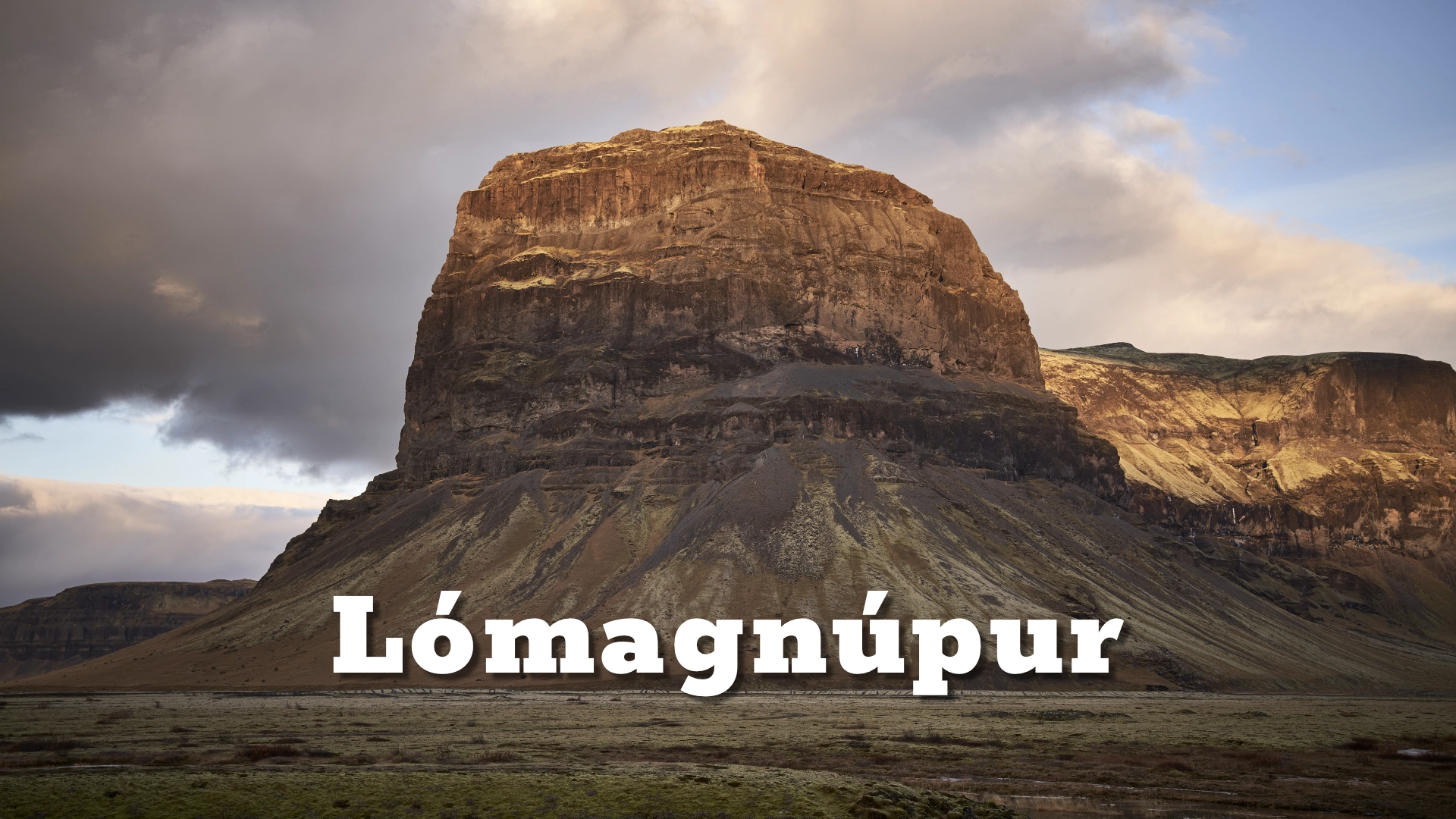
Along Iceland’s South Coast, near the eastern edge of the Eldhraun lava field, Lómagnúpur rises sharply from the surrounding lowlands. Its sheer basalt face, visible from long distances, contrasts with the flat plains below and offers a clear example of how volcanic stratigraphy and glacial erosion intersect to produce dramatic, isolated landforms.
The location of Lómagnúpur standing rock
63.9021
Latitude
Longitude
-17.8924
Lómagnúpur standing rock
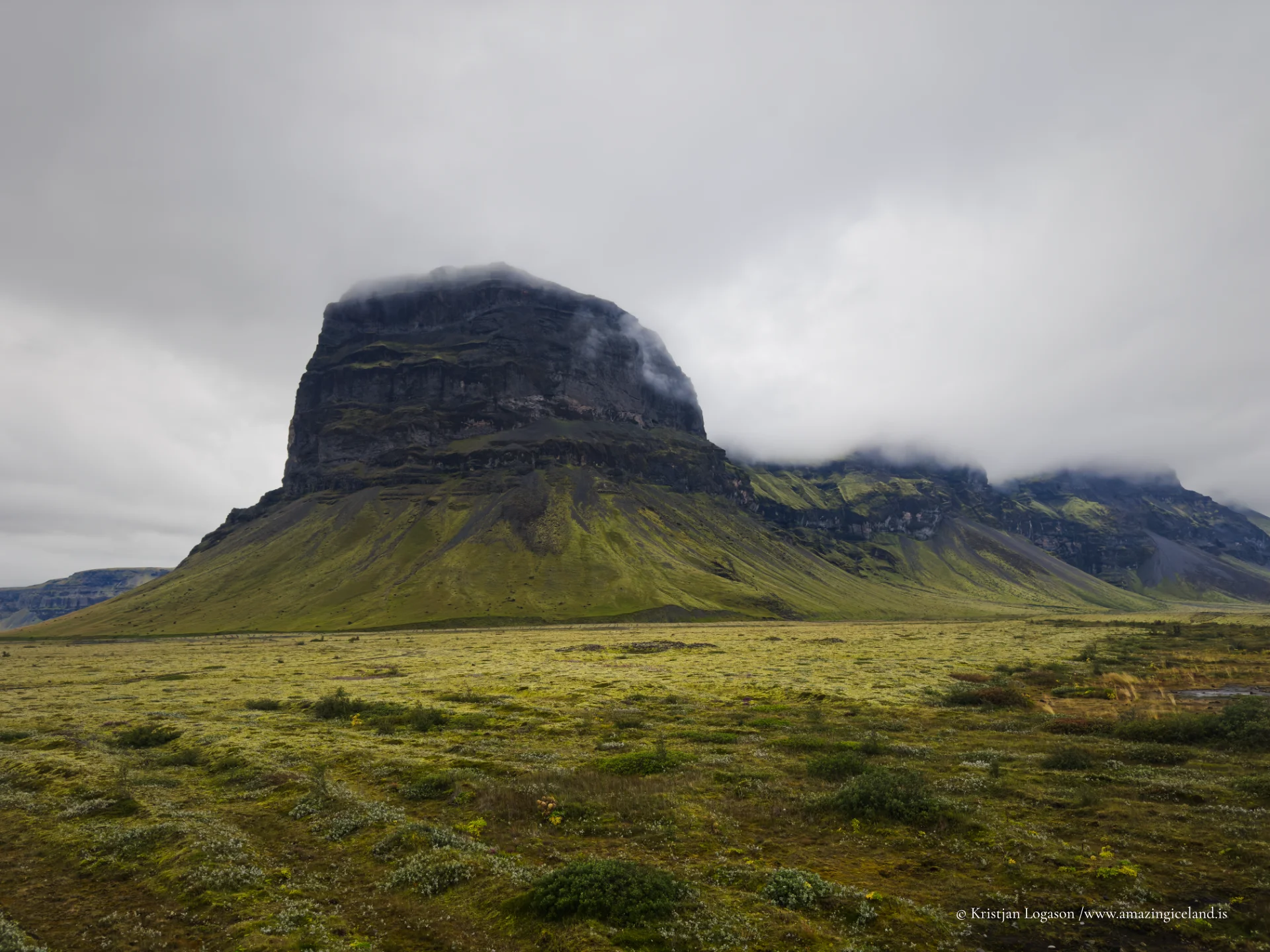
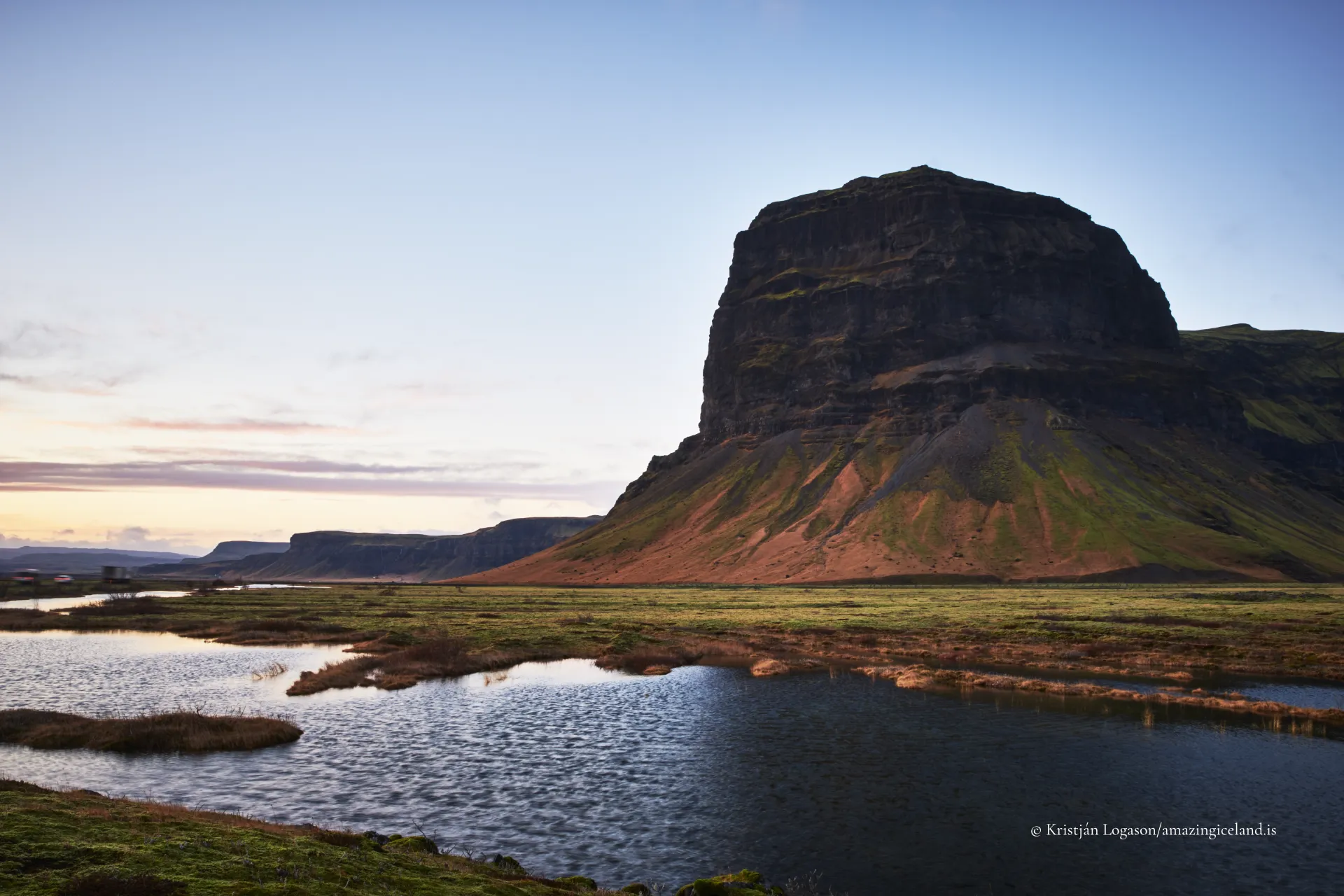
Lómagnúpur is located in South Iceland, east of Kirkjubæjarklaustur and directly adjacent to the Eldhraun lava field. The mountain reaches approximately 767 metres above sea level, but its impact is defined less by absolute height than by relative scale. The surrounding terrain is low and open, which allows the cliff face to dominate the landscape visually and spatially.
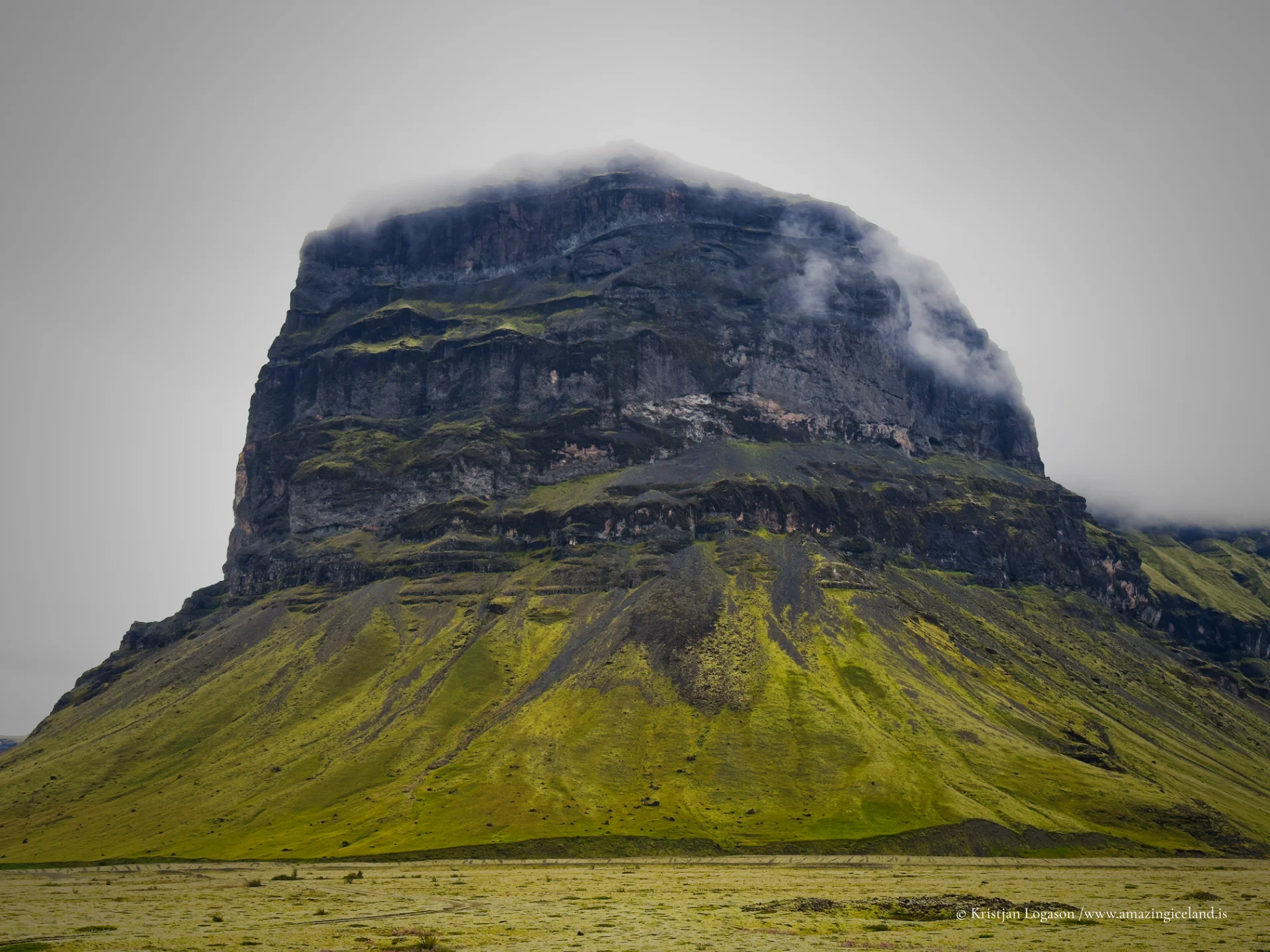
Geologically, Lómagnúpur consists primarily of layered basalt, deposited through successive volcanic eruptions. These layers were later modified during repeated glacial advances, which steepened the mountain’s southern and western faces. Rather than being carved into a valley, Lómagnúpur was left standing as surrounding material was eroded away—a classic example of selective erosion.
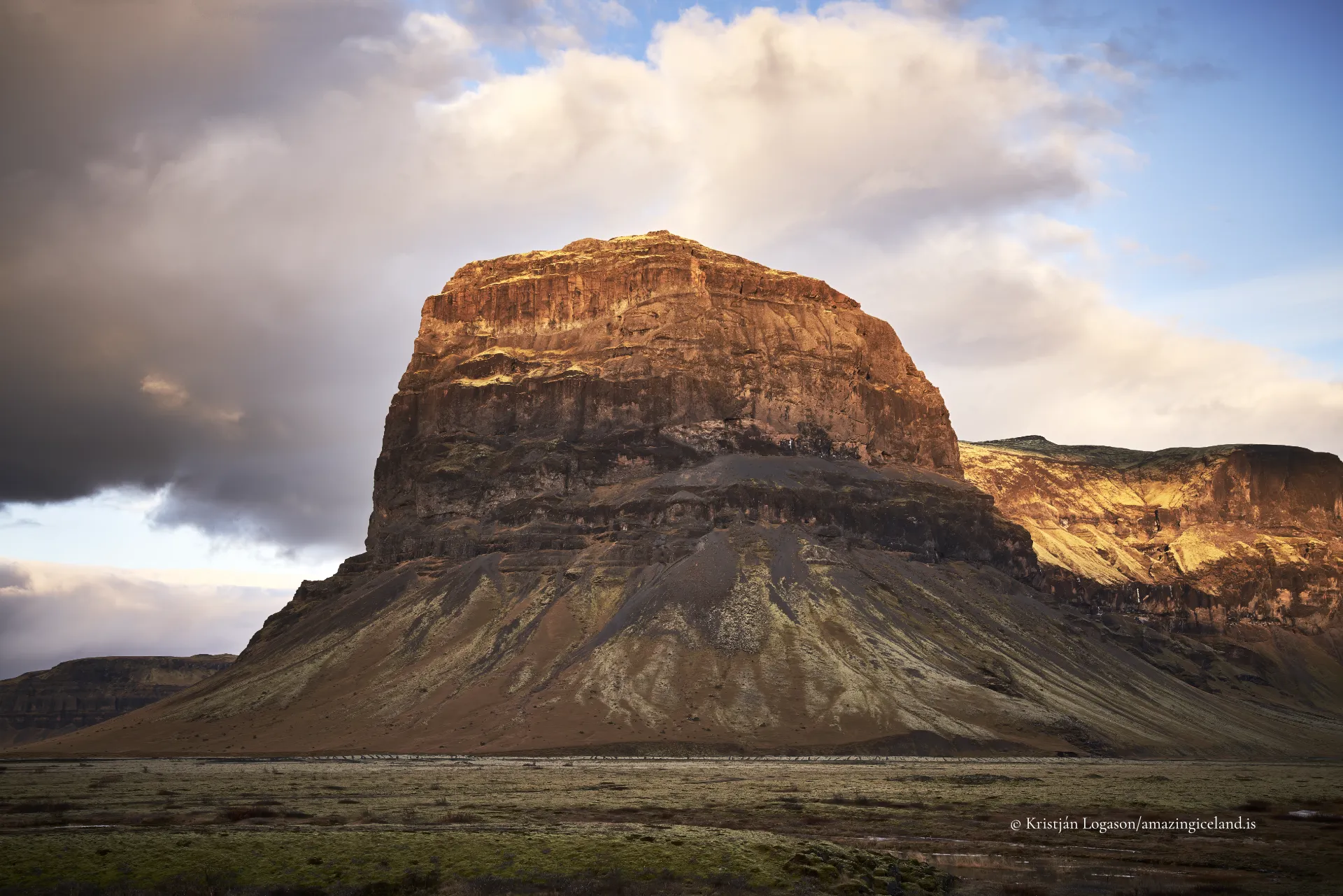
The cliff face itself is nearly vertical in places, exposing stacked lava layers and fracture lines that reveal internal structure with unusual clarity. Unlike mountains defined by ridgelines and summits, Lómagnúpur is defined by its wall. It functions less as a peak and more as a geological cross-section, turned outward toward the plains.
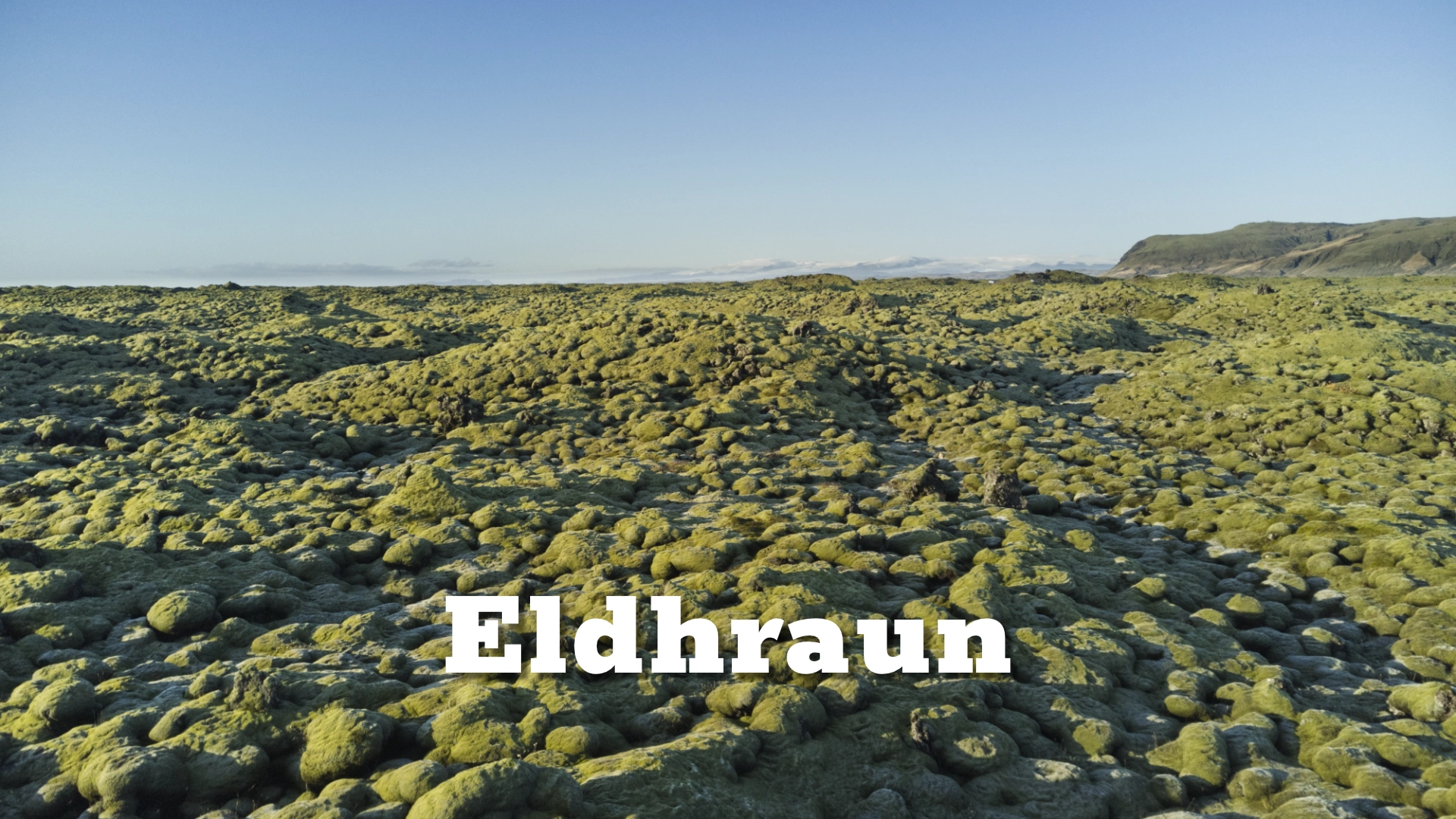
The position of Lómagnúpur at the edge of Eldhraun is critical to understanding its context. Eldhraun, formed during the Laki eruption of 1783–1784, spread lava across vast lowland areas, stopping abruptly at the base of the mountain. This juxtaposition places one of Iceland’s most historically significant lava fields directly against one of its most imposing cliff faces.
From a landscape-reading perspective, this boundary is instructive. The lava field represents lateral expansion; Lómagnúpur represents vertical resistance. Together, they illustrate how Icelandic landscapes are assembled through competing forces—eruption, erosion, and containment.
Hydrologically, the mountain influences local drainage. Meltwater and precipitation descending from its upper slopes collect at the base, feeding small streams that disappear into the porous lava. This interaction between impermeable cliff and permeable lava field reinforces the sense of Lómagnúpur as a dividing line within the terrain.
Culturally, Lómagnúpur occupies a distinct place in Icelandic folklore and historical imagination. The mountain is referenced in medieval sagas and local legend, often associated with outlaws and exile. Its isolation, steepness, and commanding presence made it a natural symbol of separation—between society and wilderness, law and abandonment.
These narratives do not contradict the geological reality; they emerge from it. Lómagnúpur’s physical form encourages symbolic interpretation precisely because it stands apart. Even today, its silhouette retains a sense of finality—an edge beyond which the landscape changes character.
Unlike many prominent Icelandic mountains, Lómagnúpur has no marked hiking routes to its summit. The cliffs are unstable, and the terrain above is exposed and weather-sensitive. As a result, the mountain remains largely observed rather than traversed, reinforcing its role as a visual and conceptual landmark rather than a recreational objective.
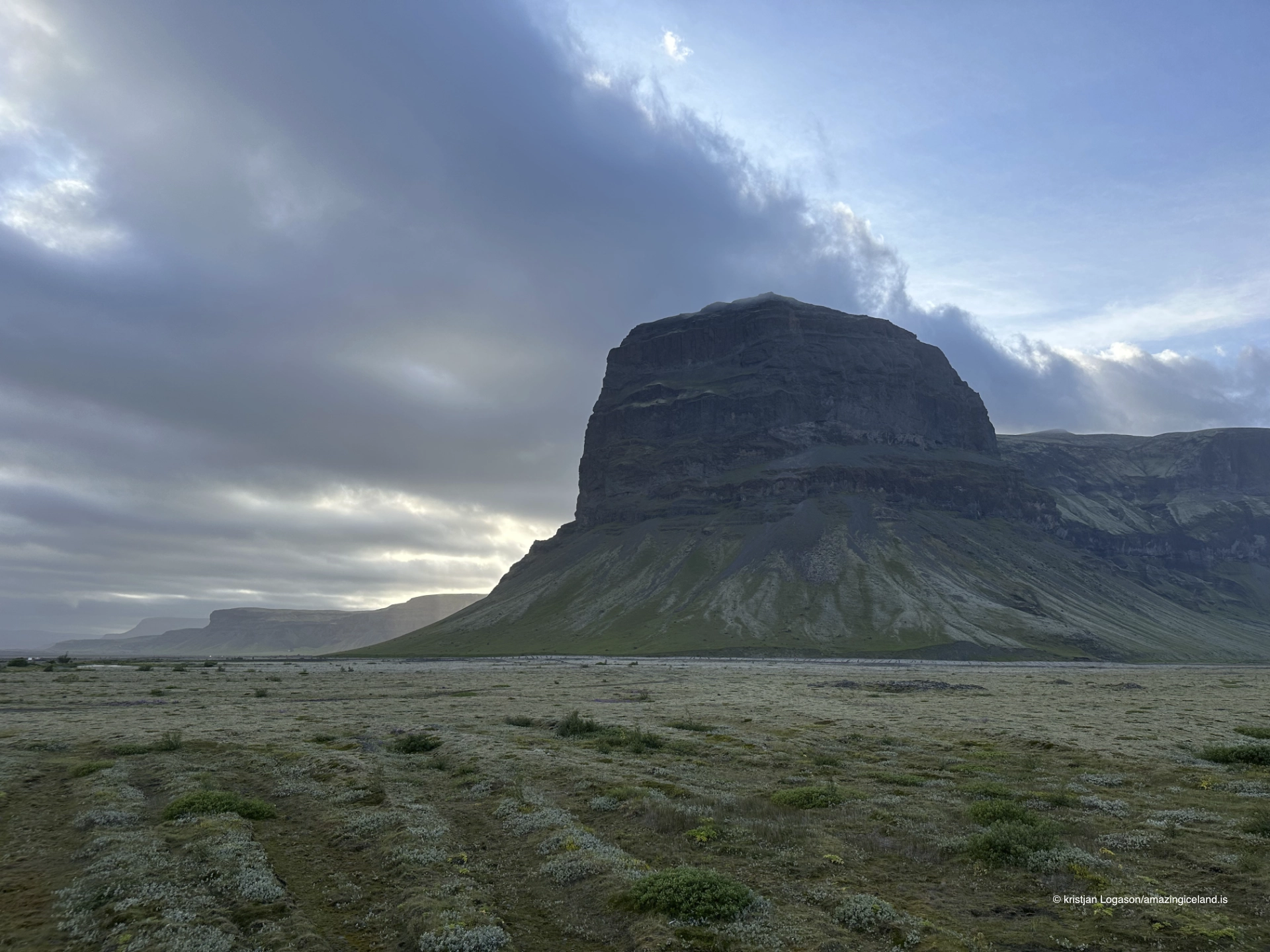
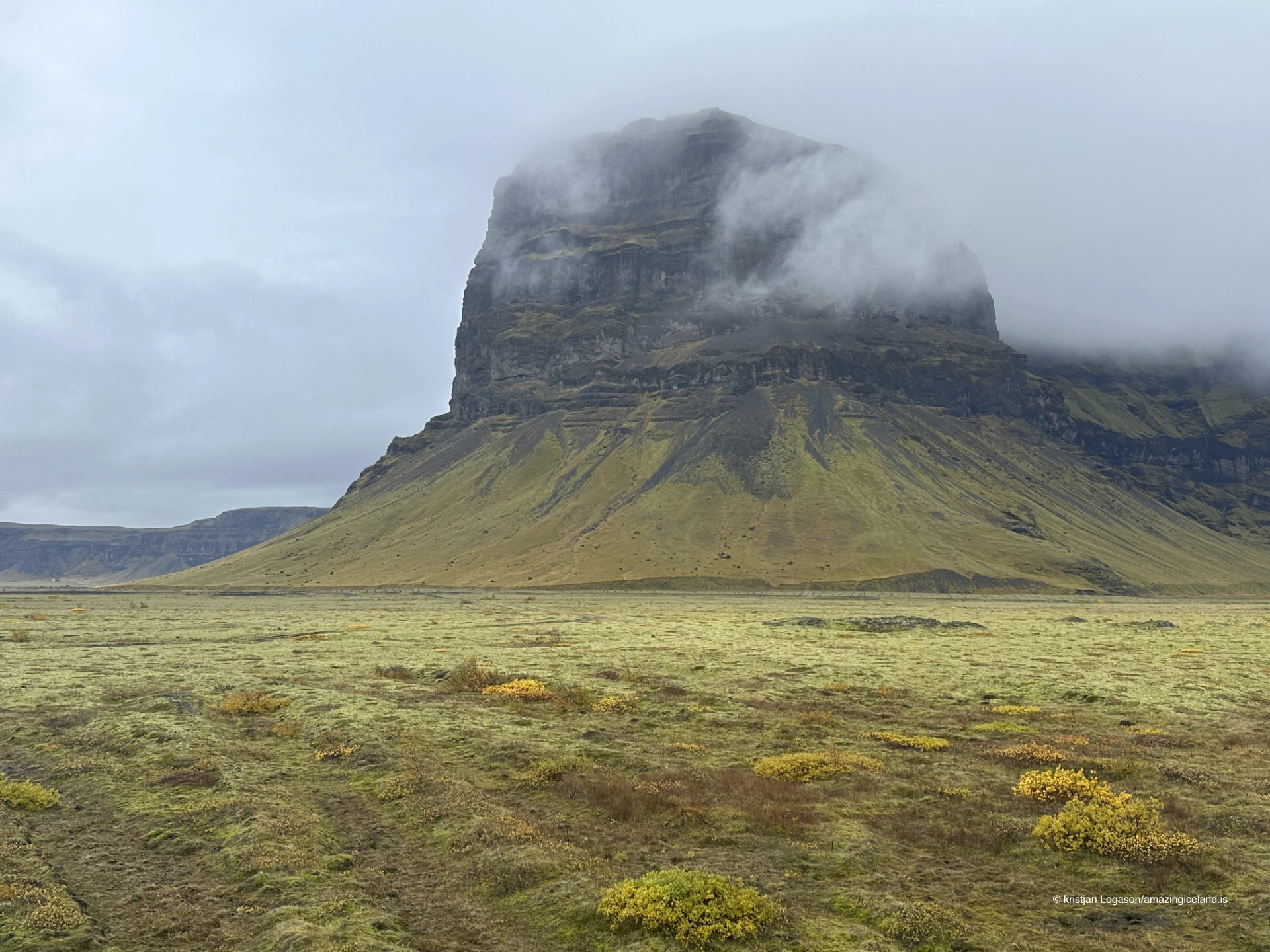
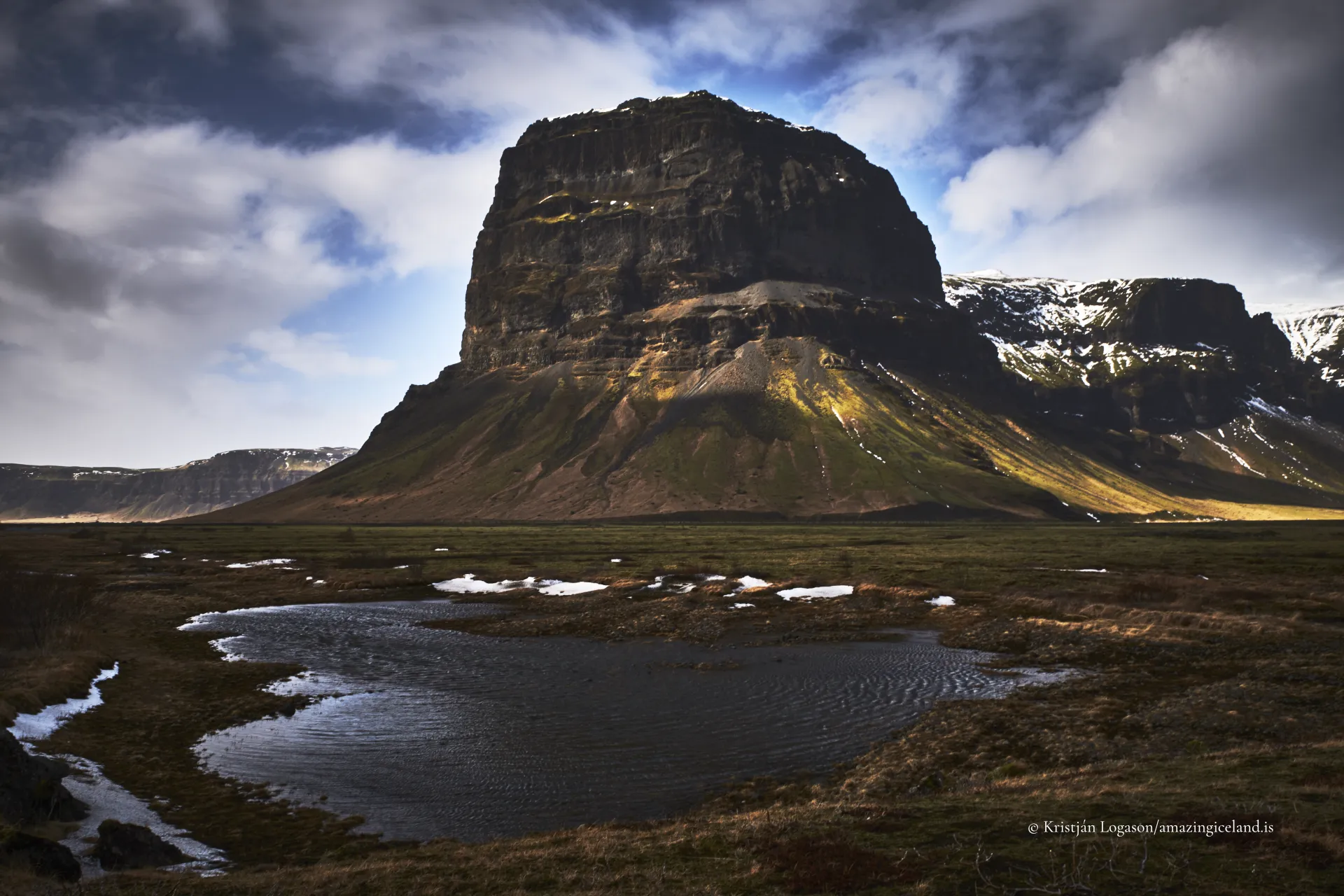
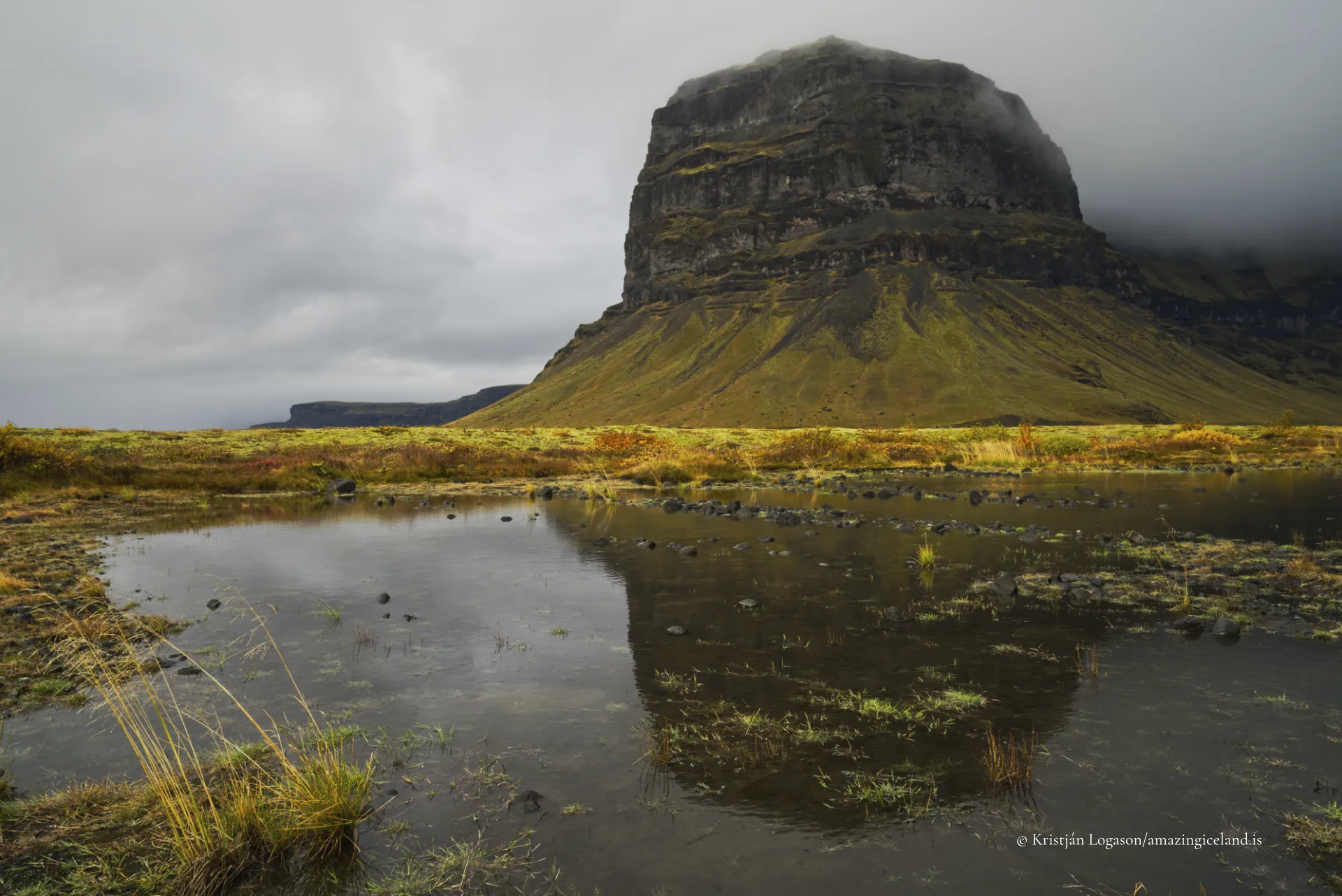
Seasonal conditions alter how Lómagnúpur is perceived. In summer, low-angle light emphasizes the texture of the cliff face, revealing subtle color variation within the basalt layers. Clouds often interact with the upper slopes, partially obscuring the top and reinforcing the mountain’s vertical dominance.
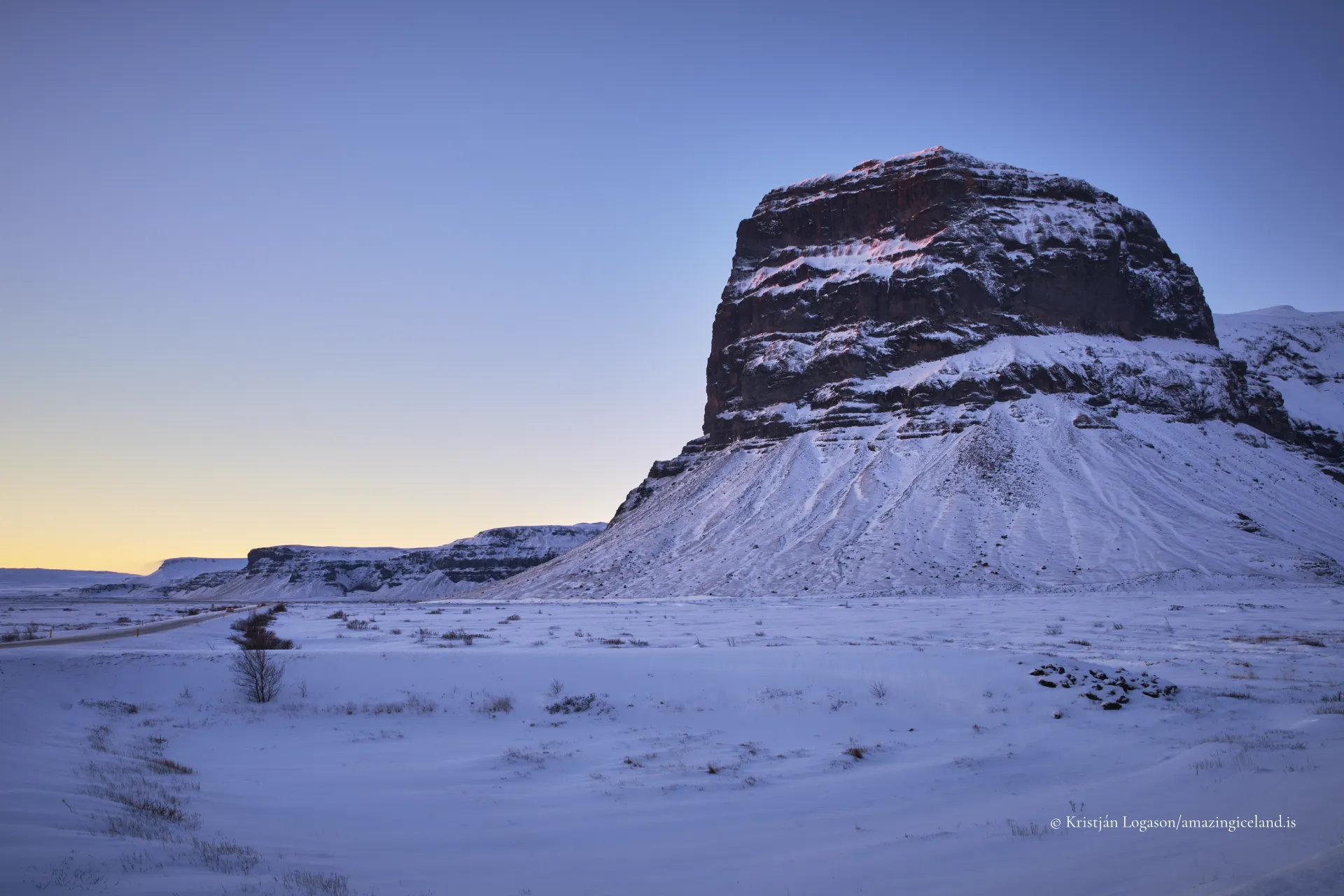
In winter, snow highlights ledges and fracture lines, while the surrounding plains flatten under white cover. The contrast between cliff and ground becomes even more pronounced, reducing the landscape to elemental forms: vertical and horizontal, dark and light.
Wind exposure is constant. Lómagnúpur stands directly in the path of weather systems moving east or west along the South Coast, making it a reliable indicator of changing conditions. Clouds gather, disperse, and reform around its upper edge, turning the mountain into an atmospheric instrument as much as a geological one.
Beyond geology and saga reference, Lómagnúpur is also closely linked to one of Iceland’s most enduring symbolic systems: the Landvættir, or land guardians. According to medieval tradition recorded in Heimskringla, Iceland is protected by four guardian spirits, each associated with a cardinal direction and a defining landform.
In this system, the Giant (Bergrisi) is the guardian of East Iceland. He is commonly interpreted as a figure of raw strength and immovability—an embodiment of the region’s steep mountains, exposed cliffs, and resistance to intrusion. Lómagnúpur, with its sheer vertical face and isolated presence, has long been identified as one of the physical landscapes that visually reinforce this symbolism.
The Giant is not a mythological ornament, but part of Iceland’s formal identity. Alongside the Bull of the West, the Dragon of the East, and the Eagle of the North, the Giant appears on Iceland’s national coat of arms, flanking the shield beneath the crown. Together, these figures represent territorial integrity, natural force, and guardianship—concepts that bridge folklore, geography, and statehood.
Importantly, these guardians are not abstract creatures detached from place. Each is tied to a specific type of landscape. In the case of the Giant, the association is with verticality, mass, and permanence—qualities that Lómagnúpur expresses with unusual clarity. The mountain’s resistance to erosion, its refusal to become a route or passage, and its role as a boundary marker all align with the Giant’s symbolic function.
Seen through this lens, Lómagnúpur is not only a remnant of volcanic stratigraphy, but a sentinel landscape—one that explains why Iceland’s guardians were imagined not as distant beings, but as extensions of the land itself.
Interesting facts:
- Lómagnúpur rises approximately 767 m above sea level.
- The mountain is composed mainly of layered basalt lava flows.
- It stands at the eastern edge of the Eldhraun lava field.
- Lómagnúpur appears in Icelandic sagas and folklore, often linked to exile.
- There are no marked hiking routes due to cliff instability and exposure.
Image Gallery
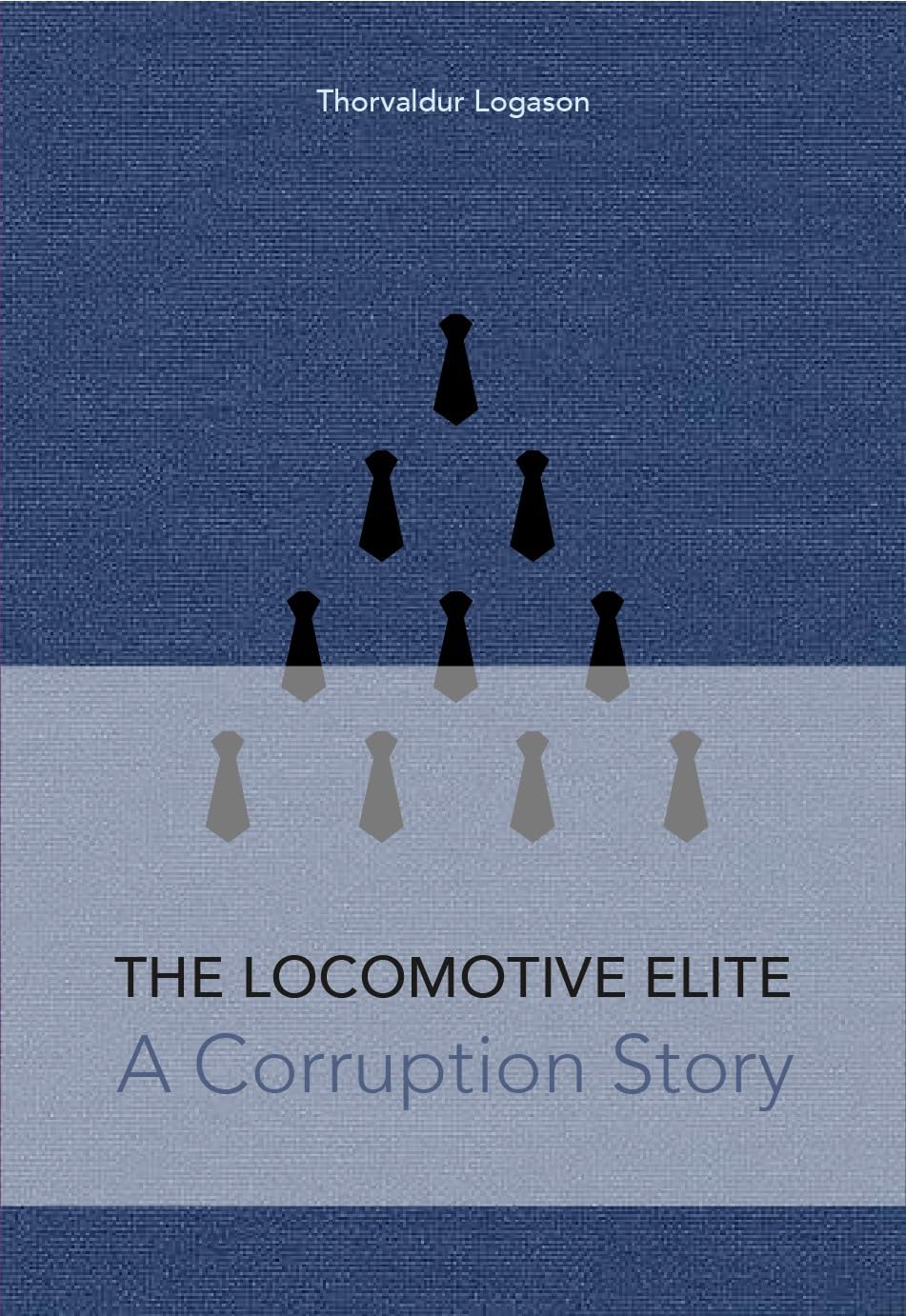
The Locomotive Elite
What do Donald Trump and Iceland’s Locomotive Elite have in common?
Far more than you think.
In The Locomotive Elite, you’ll uncover how a tiny clique in Iceland captured extensive control—of banks, courts, media, and even the central bank.
For decades they ruled, first democratically, then through corruption and in the end through crime, enriching themselves and their cronies while dismantling oversight.
The result?
One of the most spectacular financial collapses in modern history.
Photography tips:
- Use distance deliberately: The mountain reads best when framed against open plains.
- Side light matters: Early or late light reveals basalt layering and surface texture.
- Weather interaction: Clouds at the summit add scale and narrative without obscuring form.
- Minimal foregrounds: Lava fields or grassland work better than cluttered detail.
- Avoid summit fixation: The cliff face is the subject; vertical framing often works best.
Good cameras for Iceland
Sony A7R V

Sony A7s lll

Canon R6

Nikon Z6 lll

Destinations nearby
Good to have in Iceland