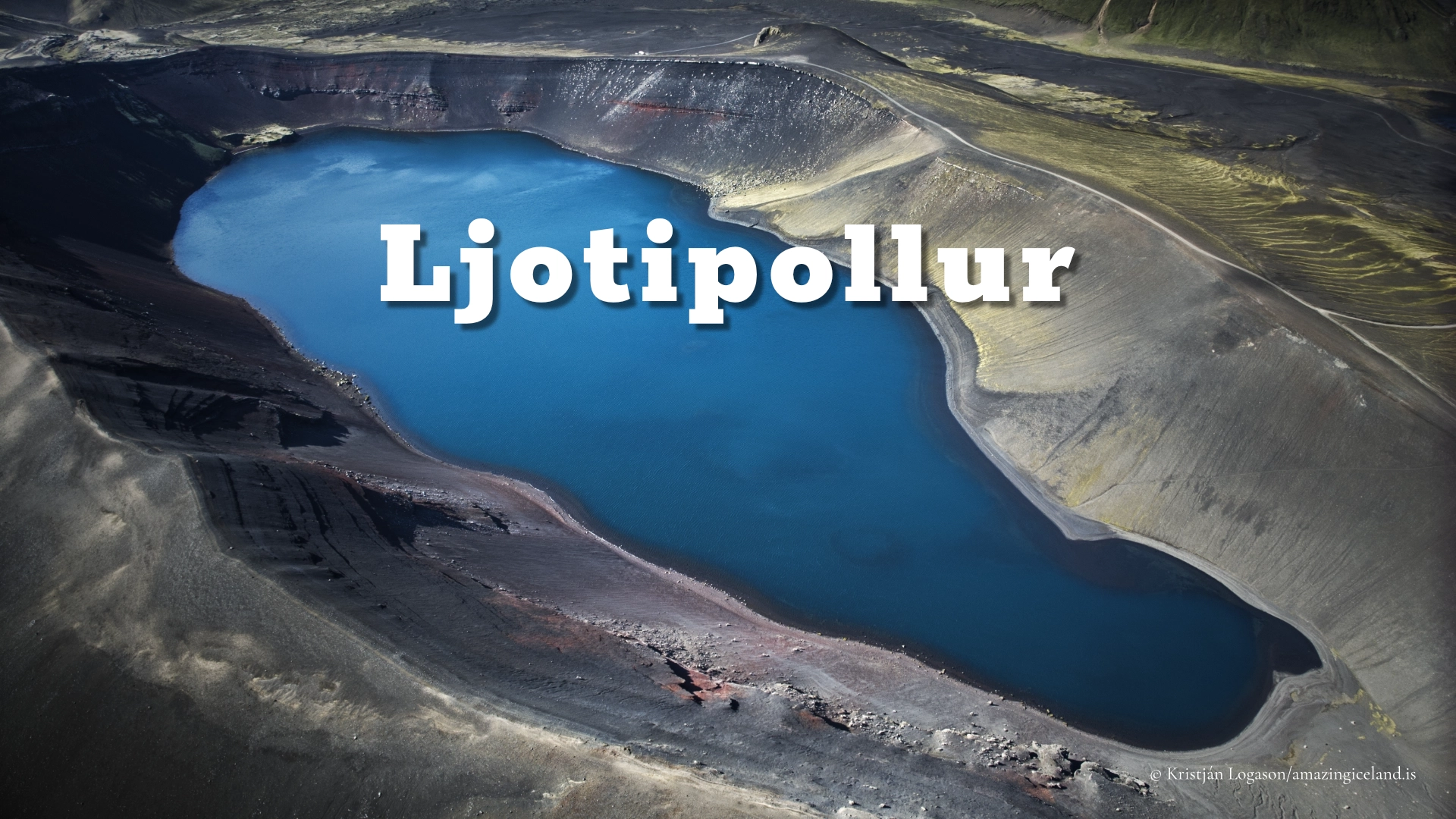
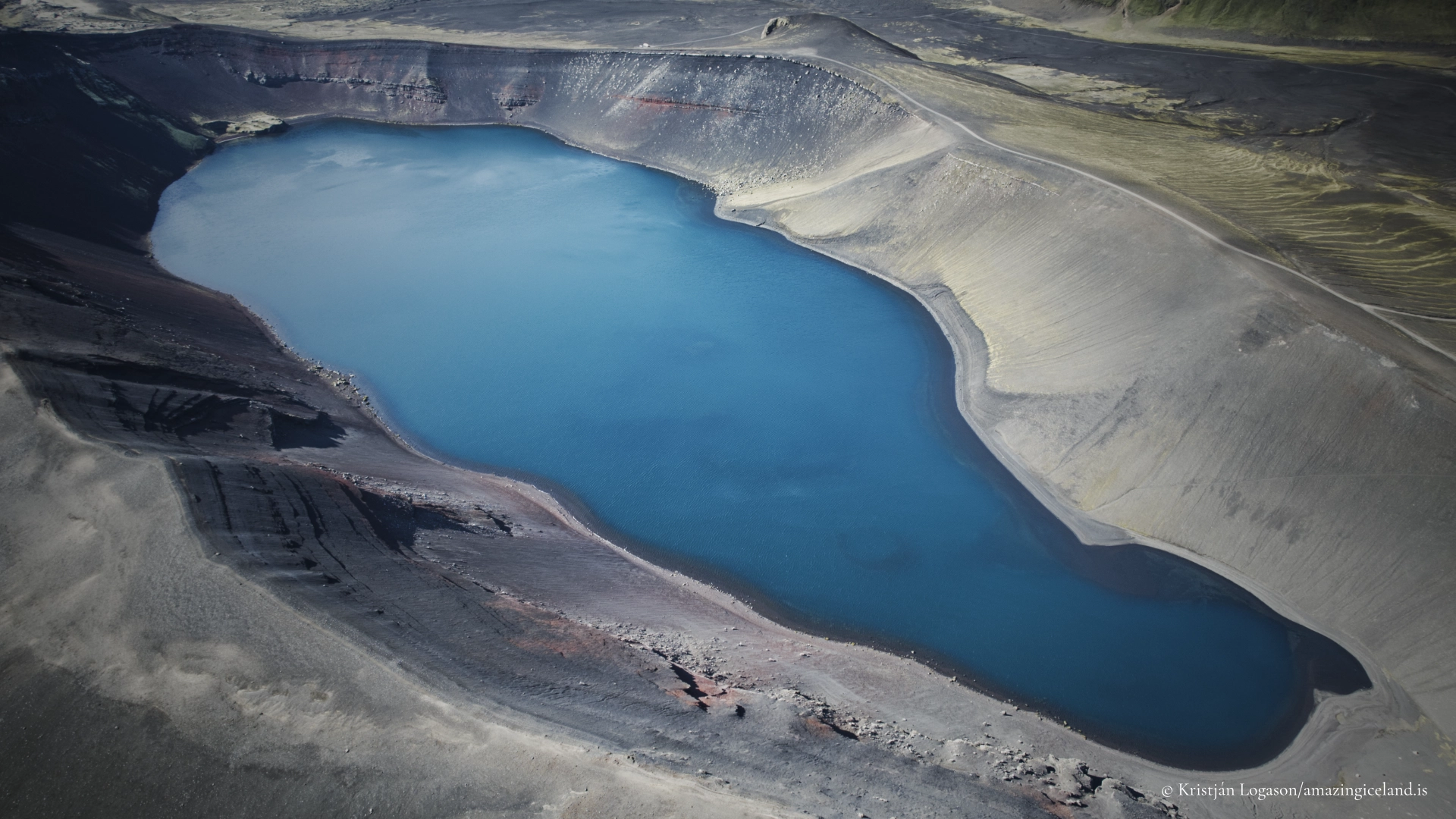
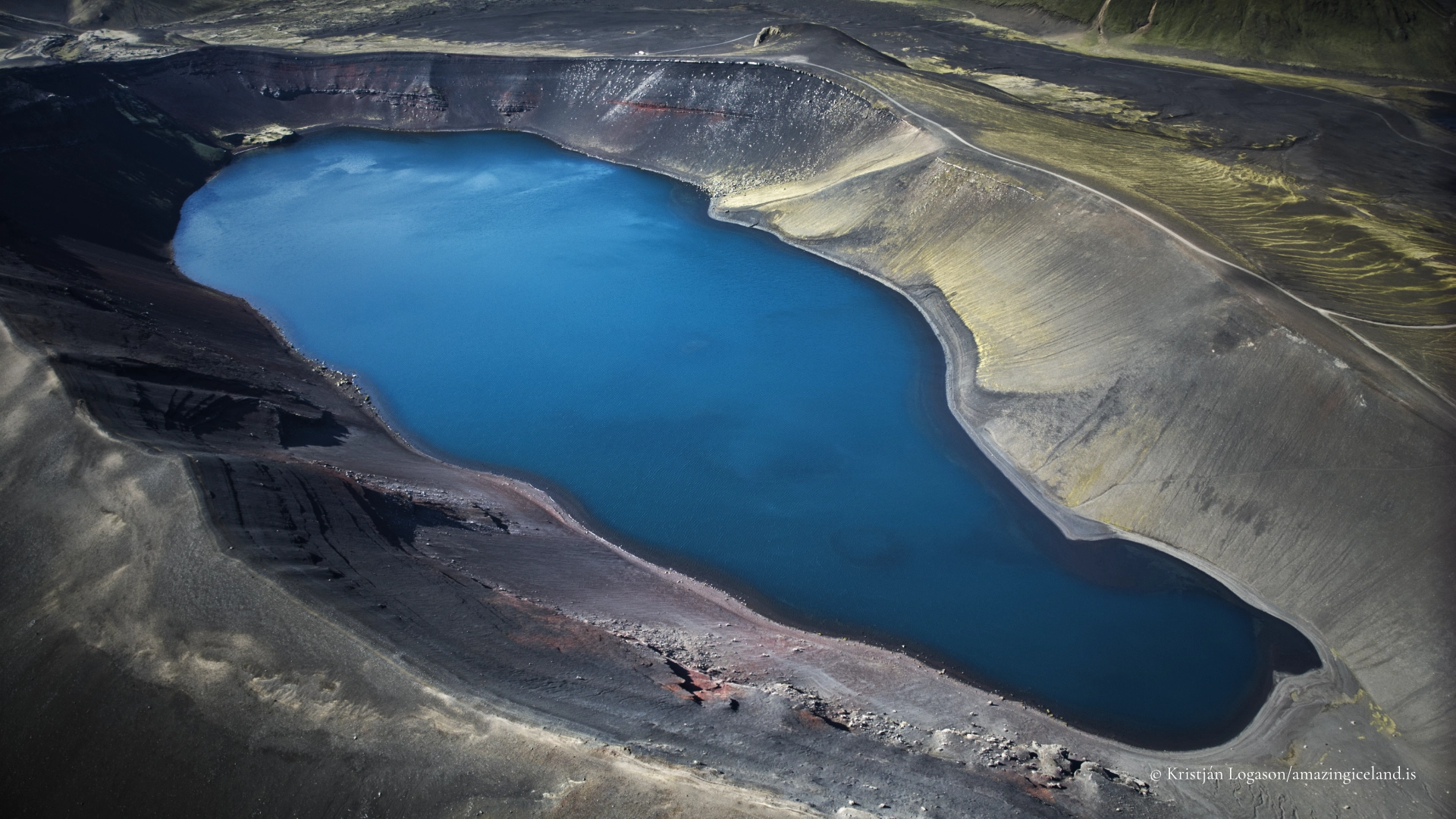
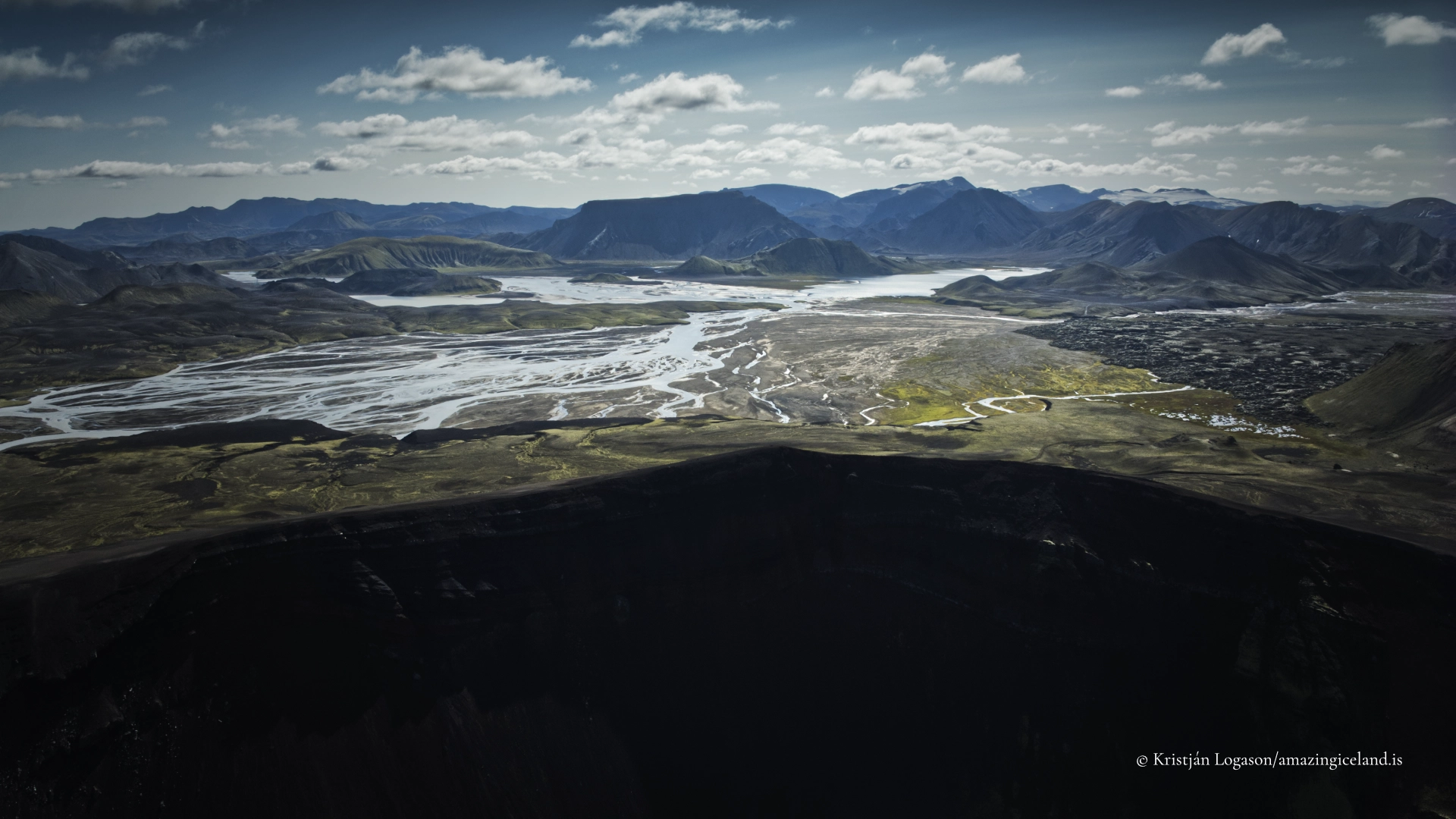
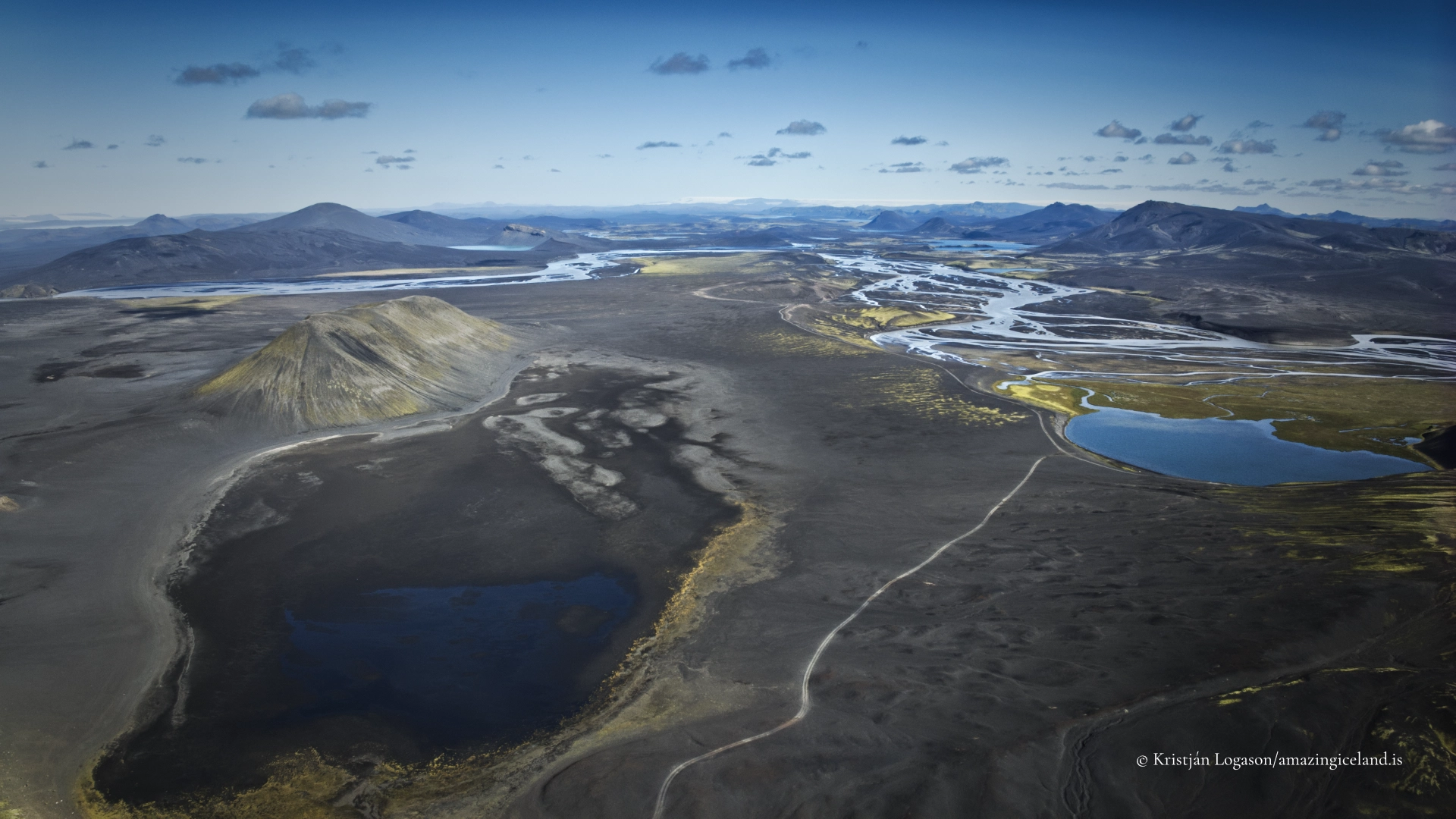
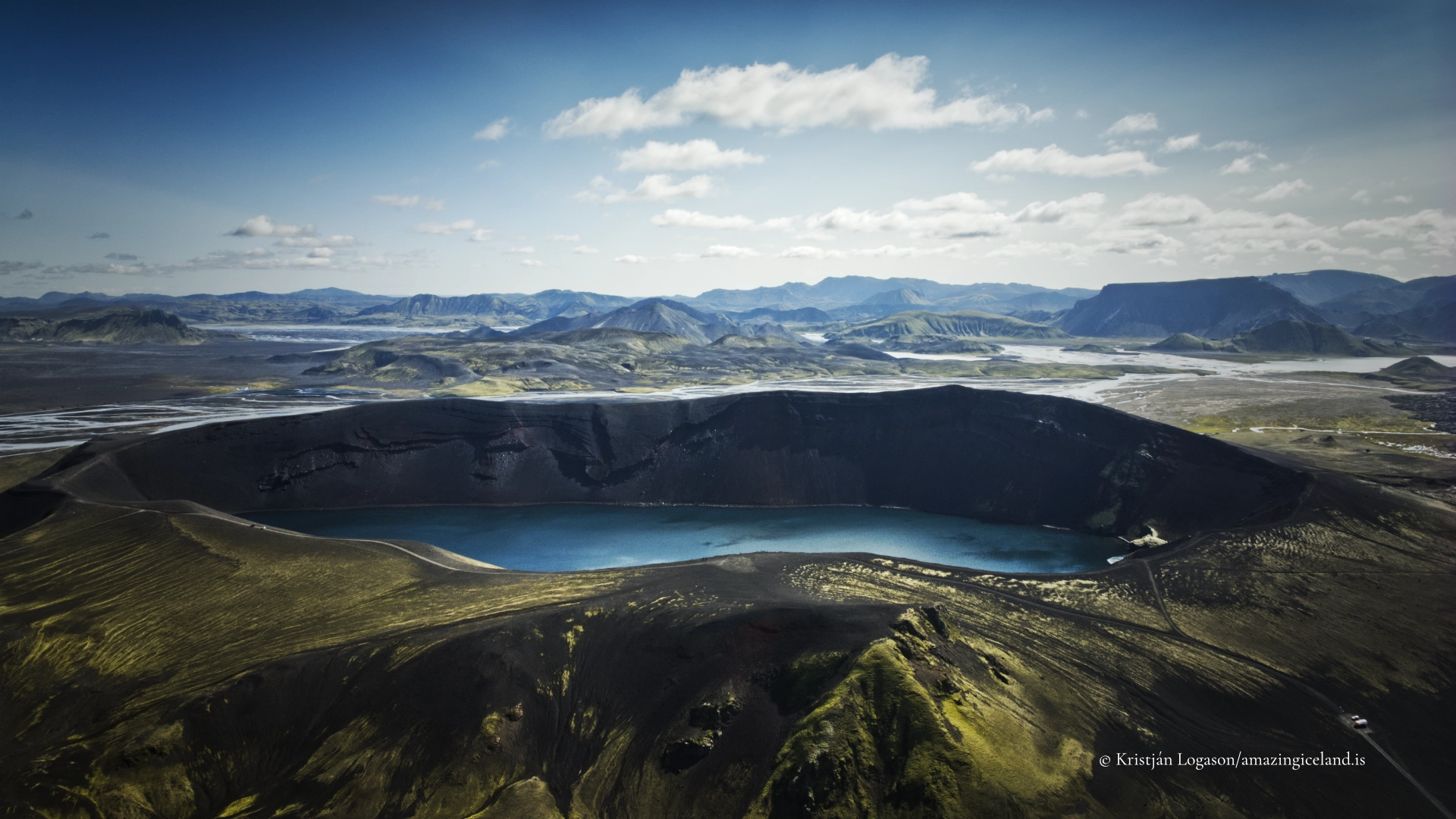
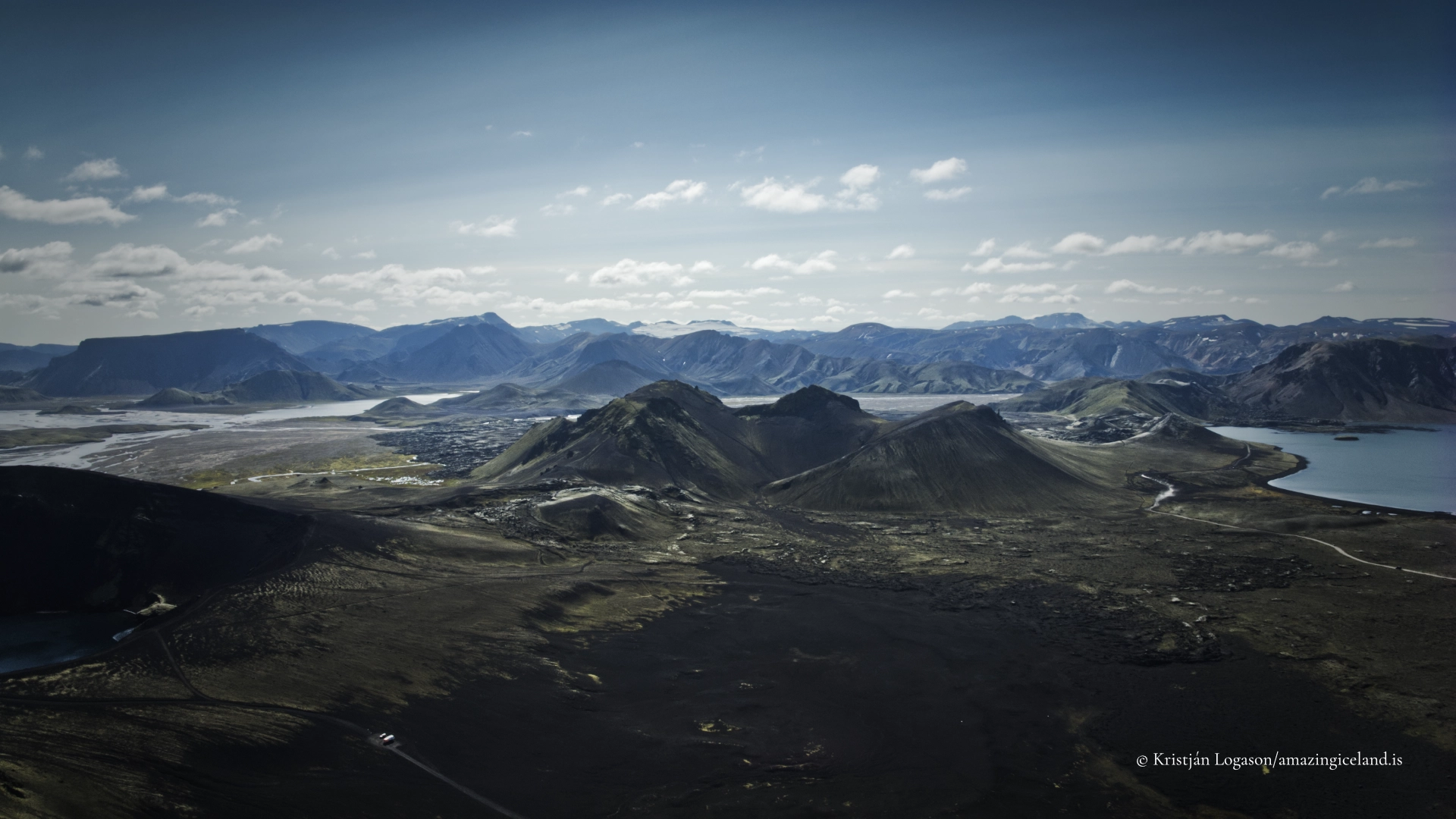
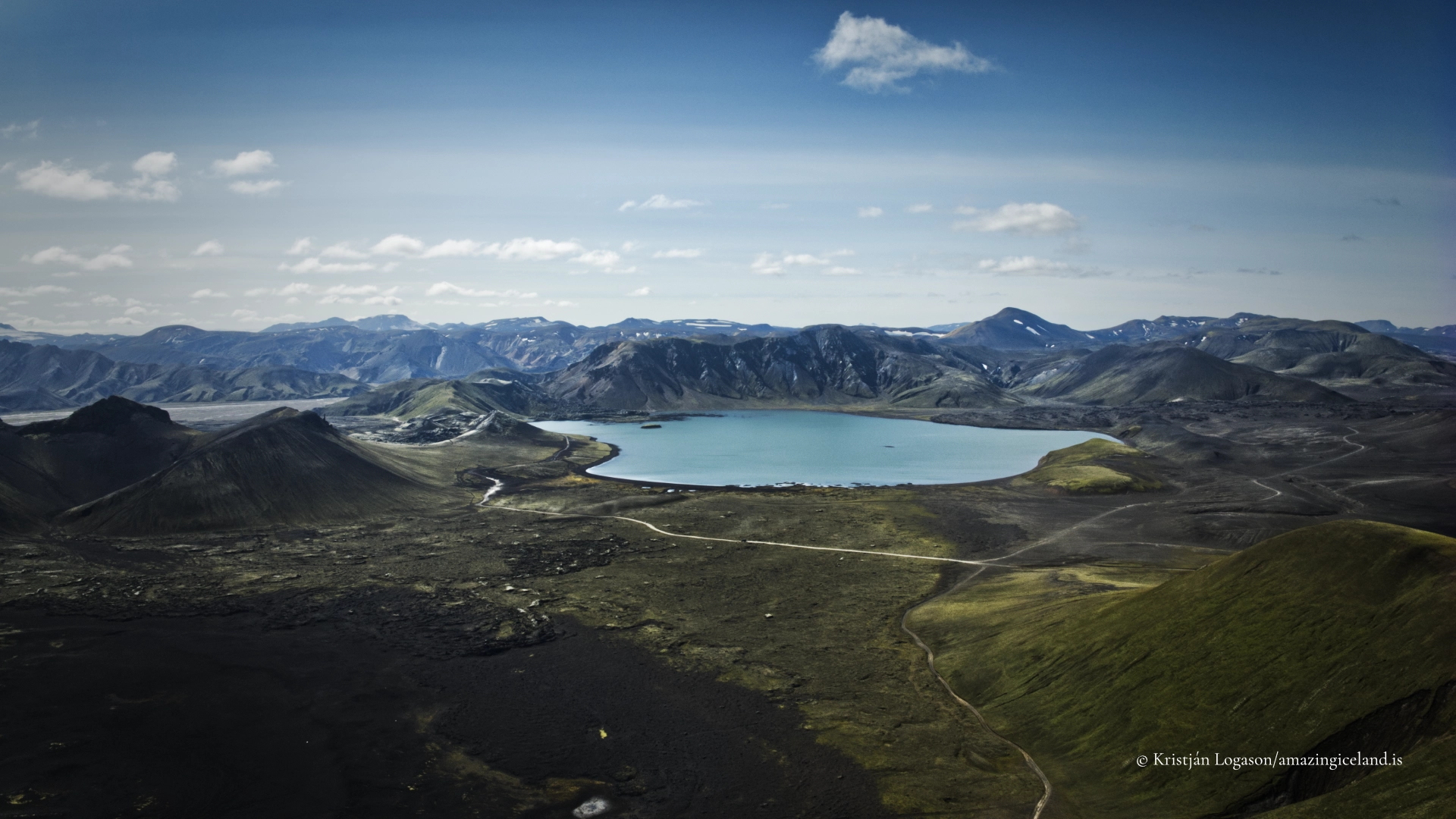
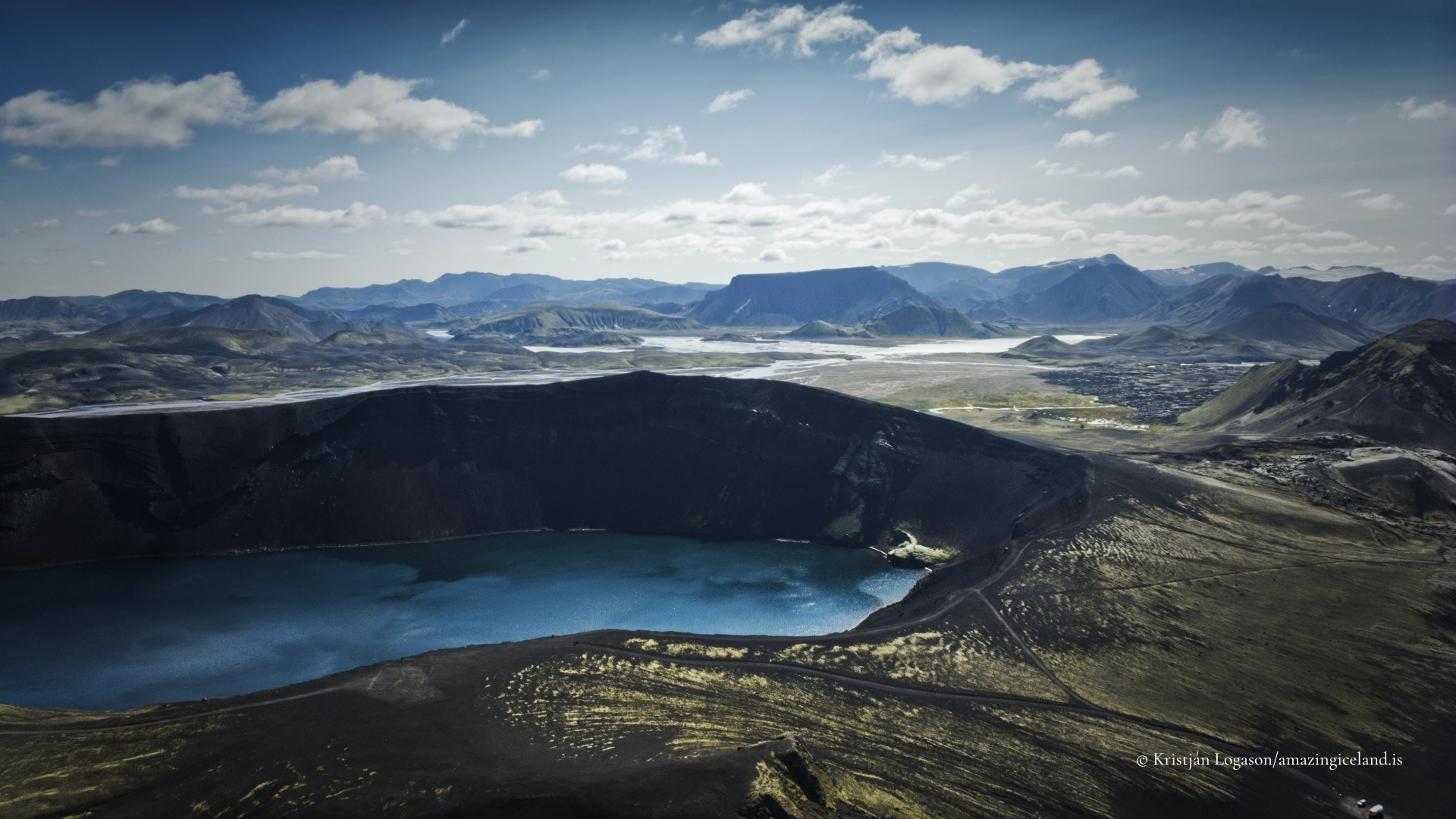
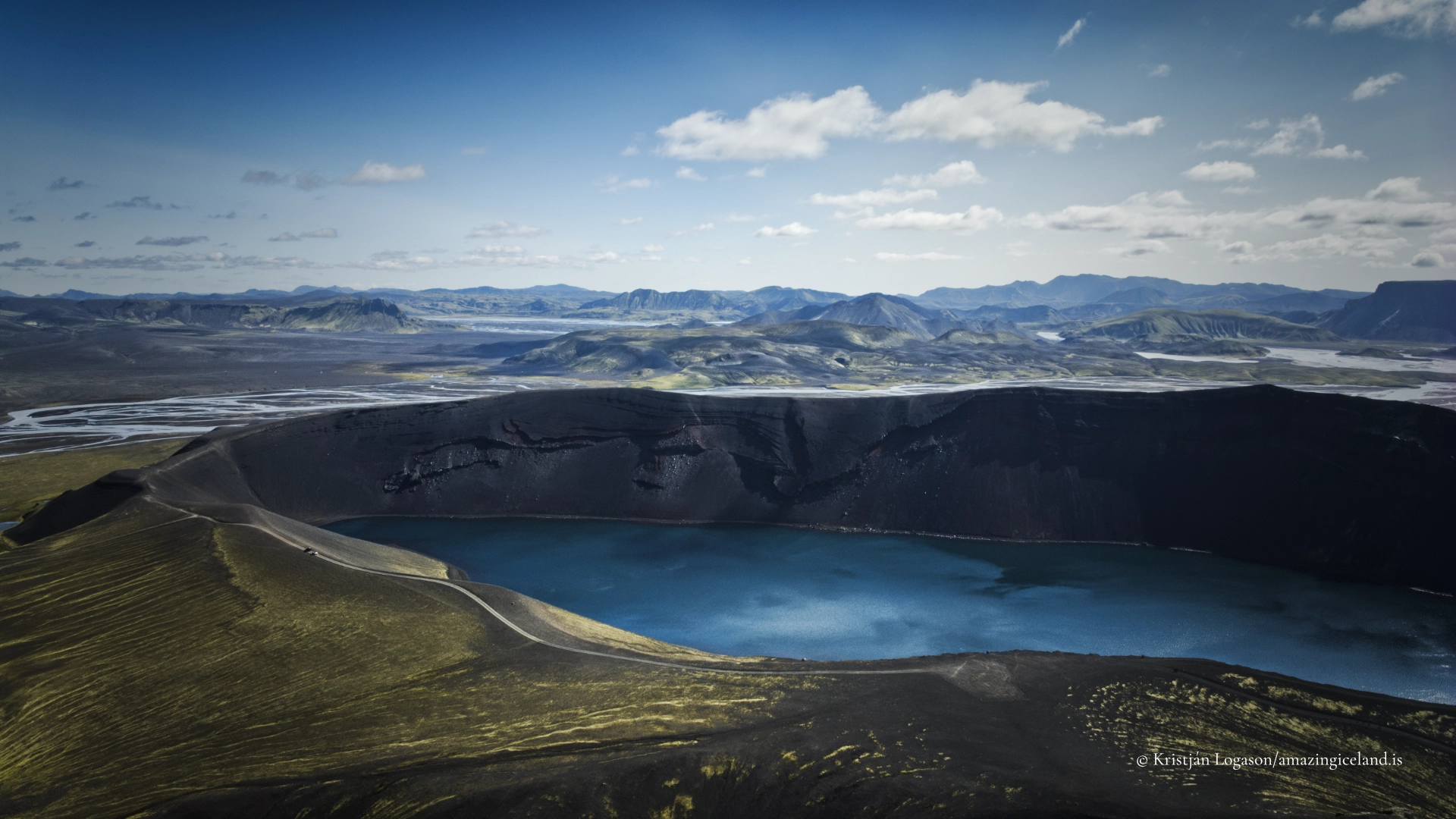
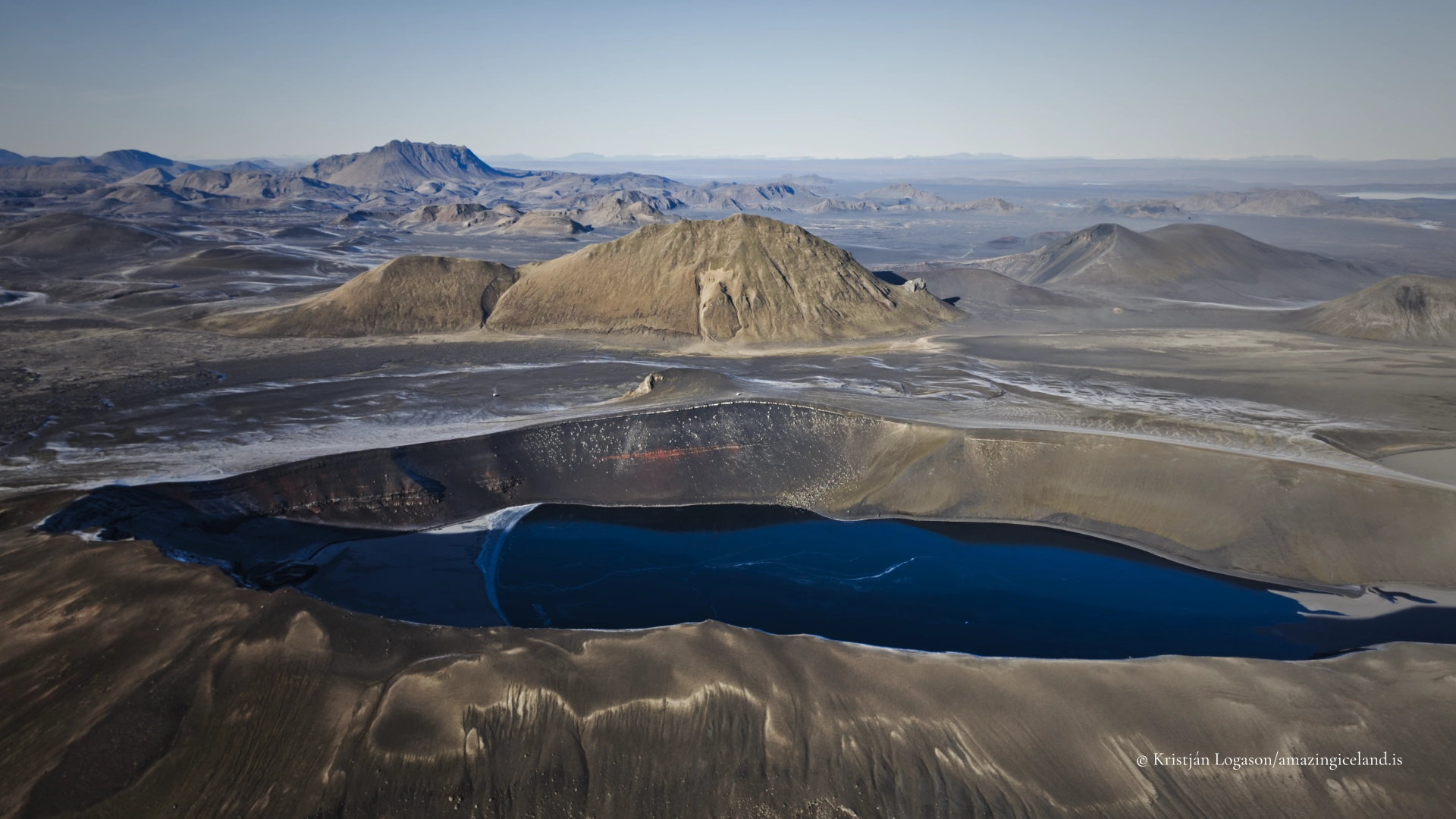
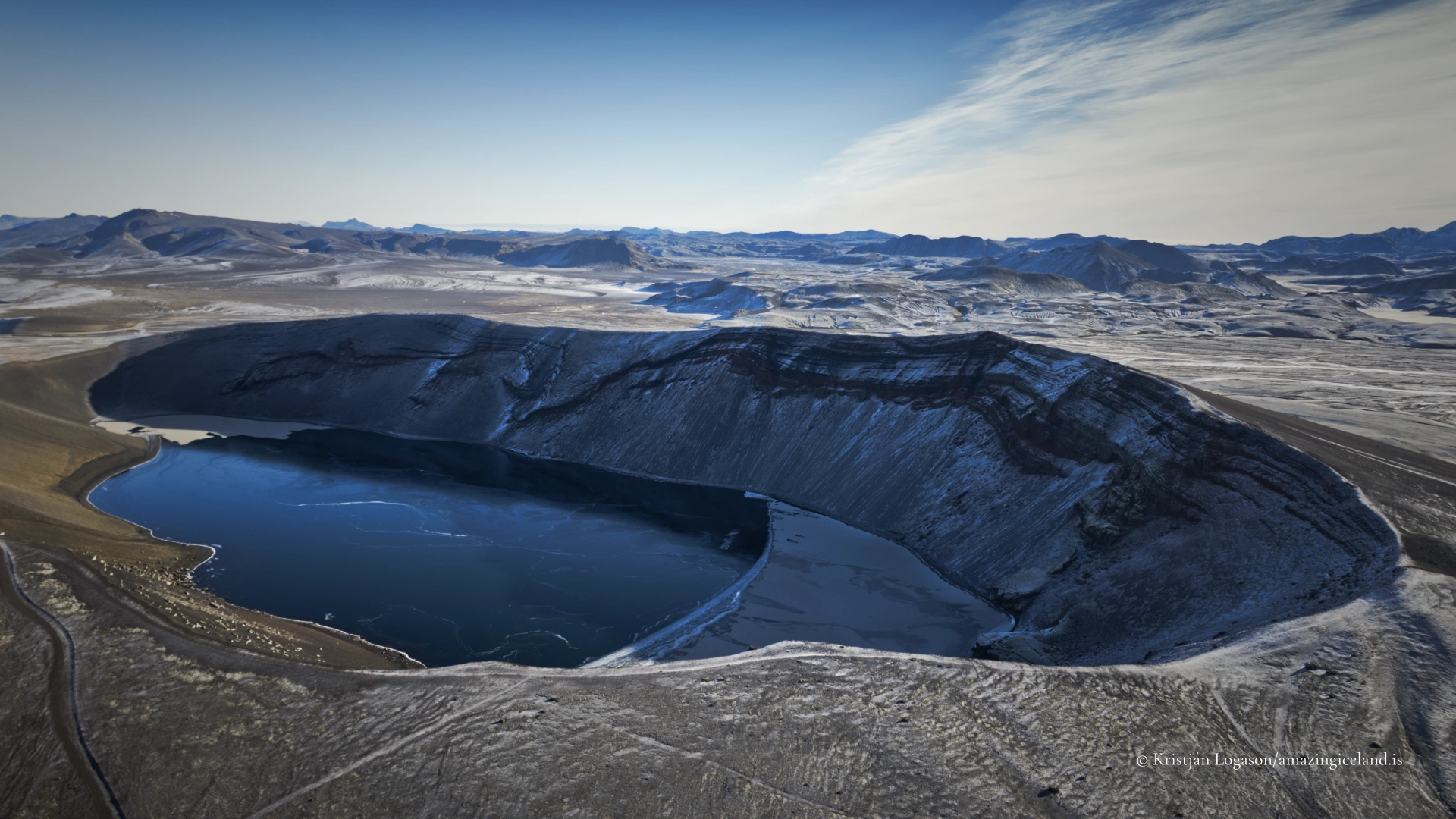
Ljótipollur is a volcanic crater lake in the Fjallabak Nature Reserve, located just east of Landmannalaugar and accessed from F208 via a short mountain track. Despite its name—“the Ugly Puddle”—Ljótipollur is widely regarded as one of the most visually striking crater lakes in Iceland, defined by deep red slopes, dark volcanic rock, and a calm, intensely coloured lake at its centre.
The location of Ljótipollur crater lake near Landmannalaugar
Latitude
64.1136
Longitude
-19.0154
Ljótipollur crater lake near Landmannalaugar
Ljótipollur is a maar-type explosion crater, formed during a violent phreatomagmatic eruption when magma interacted with groundwater. The crater is generally dated to the late 15th century, most commonly associated with the 1477 Veiðivötn eruption, the same eruptive episode responsible for several prominent volcanic features across the central highlands and Fjallabak area.
Unlike shield volcanoes or fissure-fed lava fields, maar craters are defined by excavation rather than construction. Ljótipollur was created when explosive forces blasted existing material outward, leaving behind a steep-sided depression that later filled with water. This origin explains the crater’s sharply defined rim and the contrasting layers of material visible on its slopes.
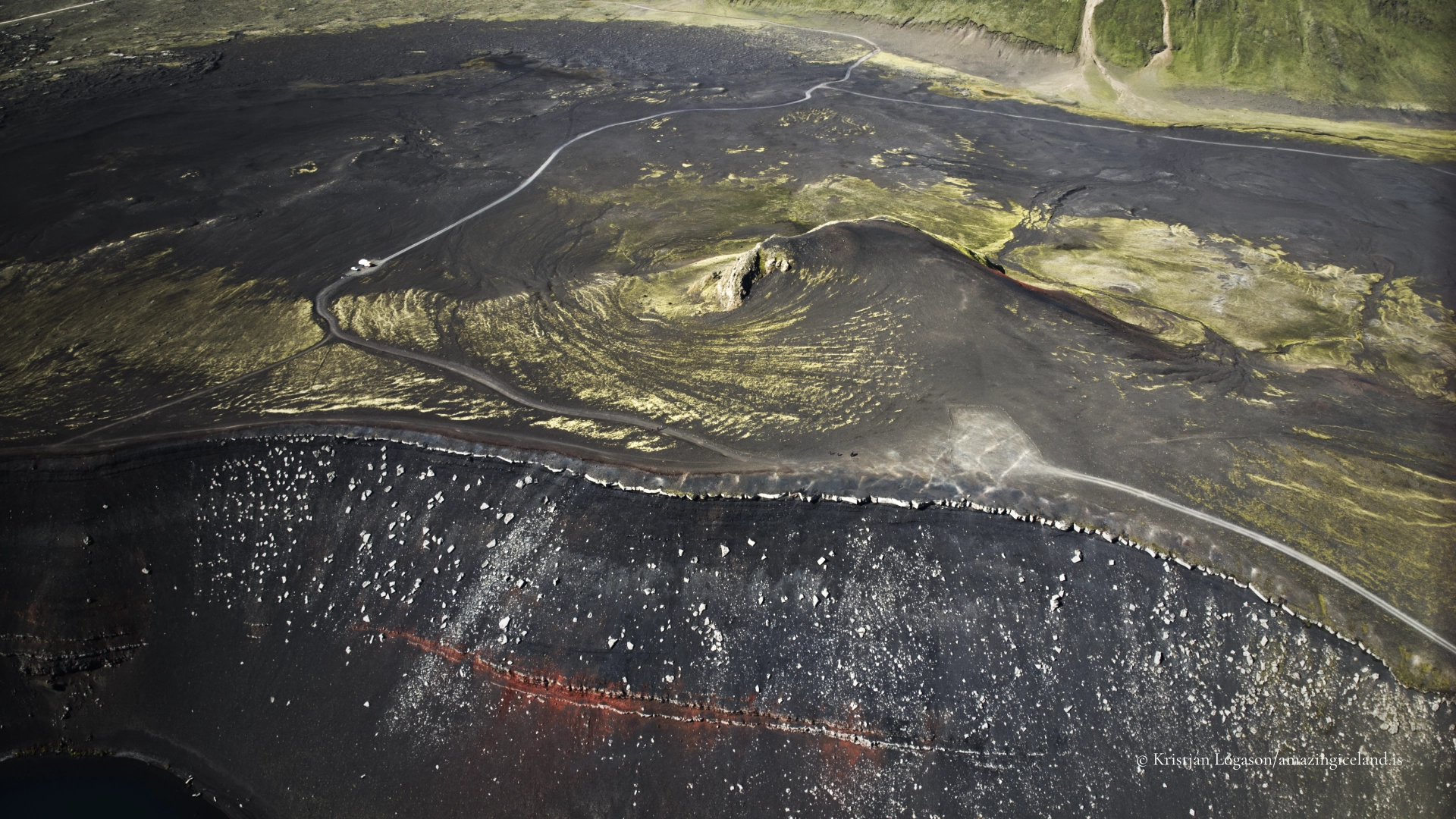
The surrounding colours—reds, browns, blacks, and muted greens—are the result of oxidised volcanic tephra mixed with basaltic fragments. Iron-rich material, exposed to air and weather over centuries, produces the characteristic red tones that make Ljótipollur immediately recognisable, even from a distance.
The lake, sediment, and visual character
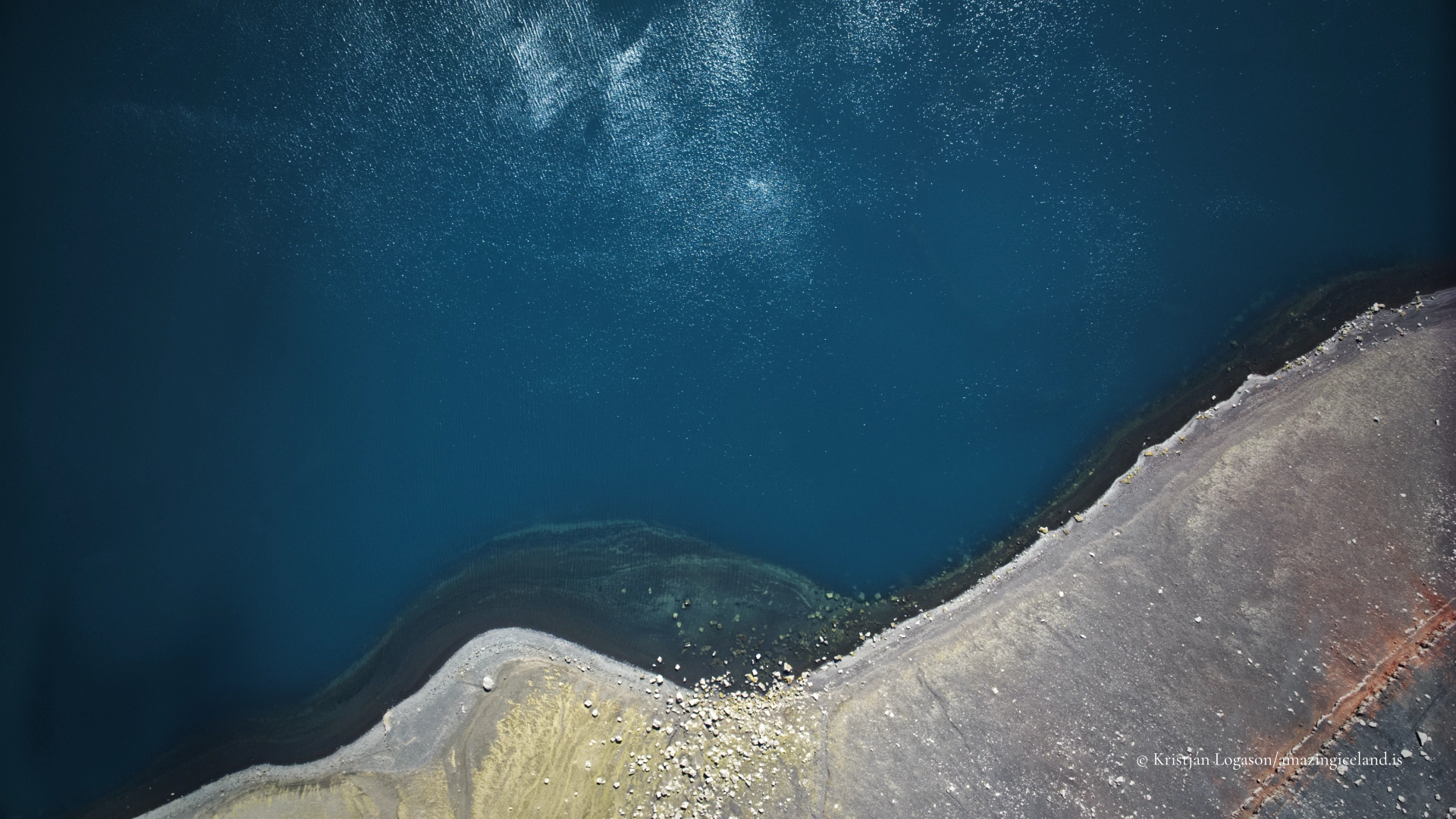
The lake within Ljótipollur occupies much of the crater floor and is notably deeper than many nearby highland lakes. While precise depth measurements vary by source and season, it is commonly cited as being over 40 metres deep, reinforcing the impression of a substantial water body rather than a shallow pond.
Water colour in Ljótipollur shifts between dark blue, grey-blue, and greenish tones depending on light conditions, cloud cover, and wind. Unlike the milky turquoise seen in glacially fed waters, Ljótipollur’s colour is clearer and darker, reflecting both its depth and the absence of significant suspended glacial sediment. The surface often appears calm, protected from wind by the crater walls, which enhances reflections and tonal depth.
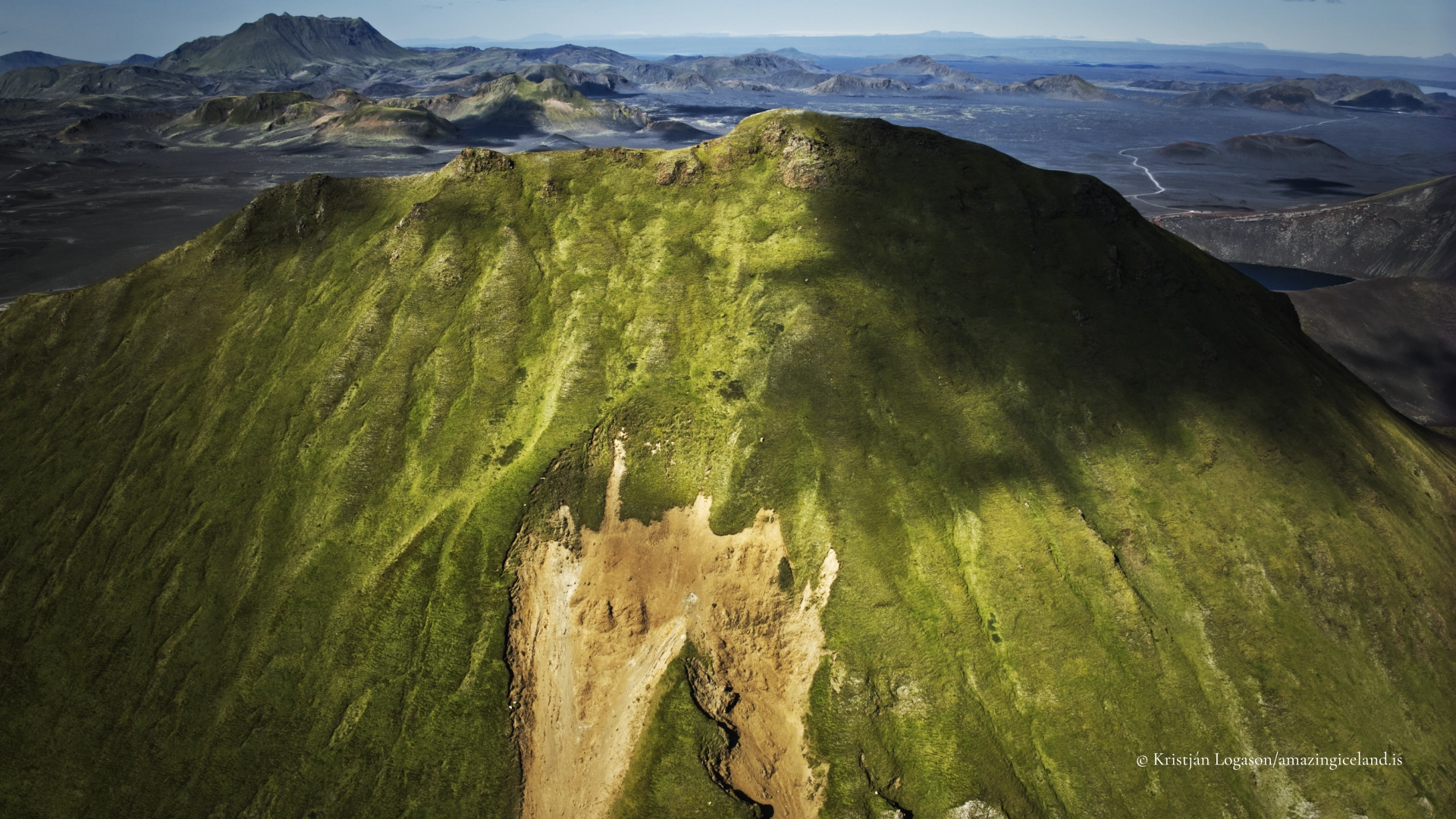
Vegetation is sparse on the inner slopes, limited to mosses and hardy plants capable of surviving in loose volcanic material. The relative lack of plant cover keeps the geological structure exposed and readable, allowing visitors to observe layering, erosion patterns, and gravity-driven movement of material downslope.
Access, perspective, and place within Fjallabak
Ljótipollur is reached via a short side road from F208, typically navigable by high-clearance vehicles during the summer highland season. From the parking area, a brief walk leads to the crater rim, where the full form of the lake and surrounding slopes becomes visible. There is no developed infrastructure at the site—no platforms or barriers—so visitors experience the crater directly, with minimal mediation.
From an observational standpoint, Ljótipollur works exceptionally well because its entire structure can be understood from a single elevated viewpoint. The crater rim provides a complete overview: the symmetry of the depression, the distribution of colour, and the relationship between water and rock are immediately legible. This clarity is one reason Ljótipollur has become a key visual reference point in discussions of Icelandic explosive volcanism.
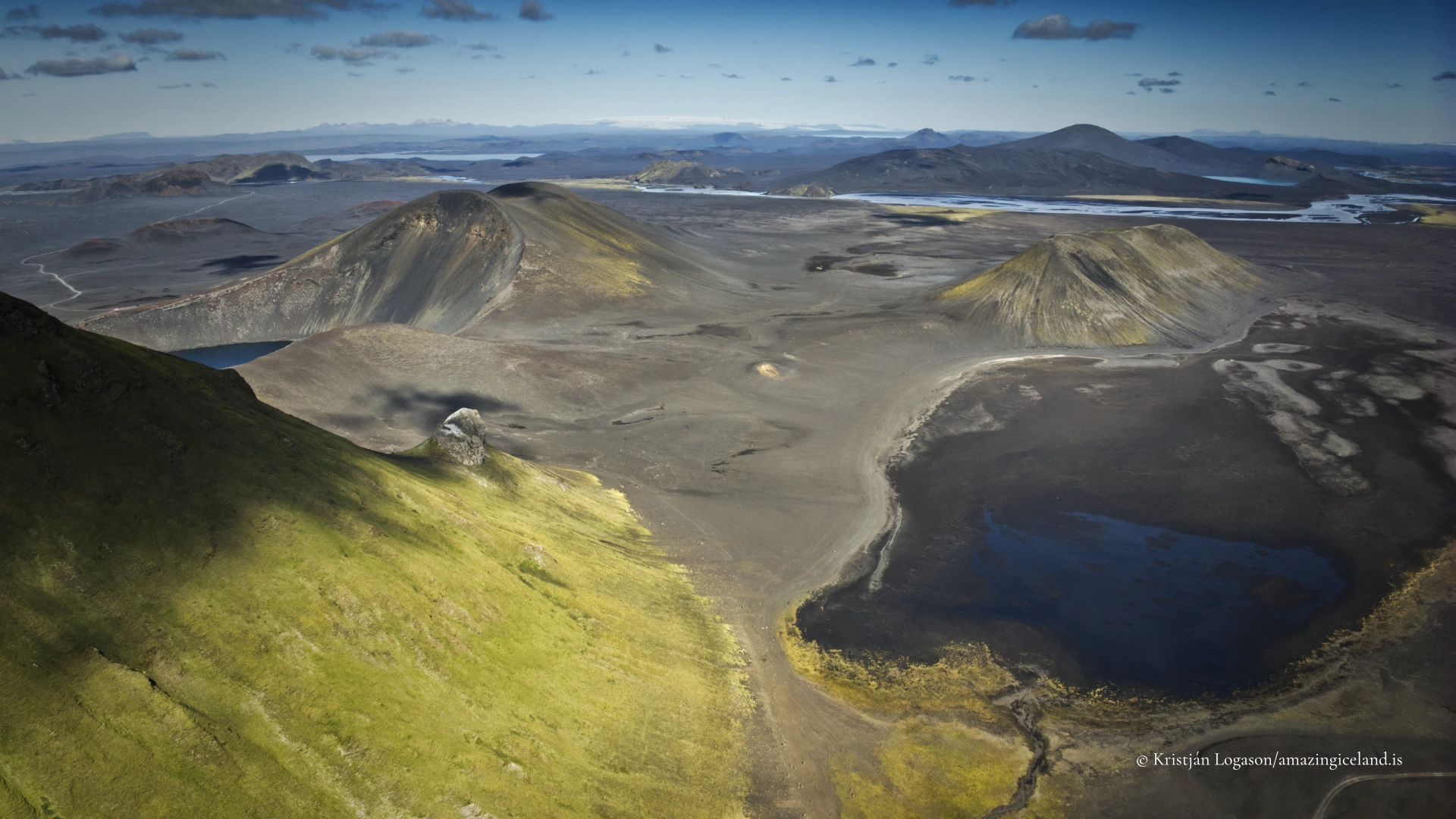
Within the broader Fjallabak landscape, Ljótipollur contrasts strongly with nearby features such as Hnausapollur and Frostastaðavatn. Where Hnausapollur emphasises colour through suspended sediment and Frostastaðavatn through reflection, Ljótipollur derives its impact from depth and enclosure. It feels inward-looking—a contained system rather than an open basin.
Despite increasing visibility in photographs and travel media, Ljótipollur retains a sense of restraint. It does not invite movement through the landscape in the way hiking areas do; instead, it encourages stillness and observation. This makes it an effective counterpoint to the more active geothermal and trail-based experiences nearby.
Interesting facts:
- Misleading name: Ljótipollur translates to “Ugly Puddle,” a name widely considered ironic given the crater’s visual appeal.
- Maar crater: Formed by an explosive interaction between magma and groundwater.
- Significant depth: Often cited as being over 40 m deep, unusually deep for a highland crater lake.
- Historic eruption: Associated with the 1477 Veiðivötn eruption, one of Iceland’s largest historical volcanic events.
Image Gallery
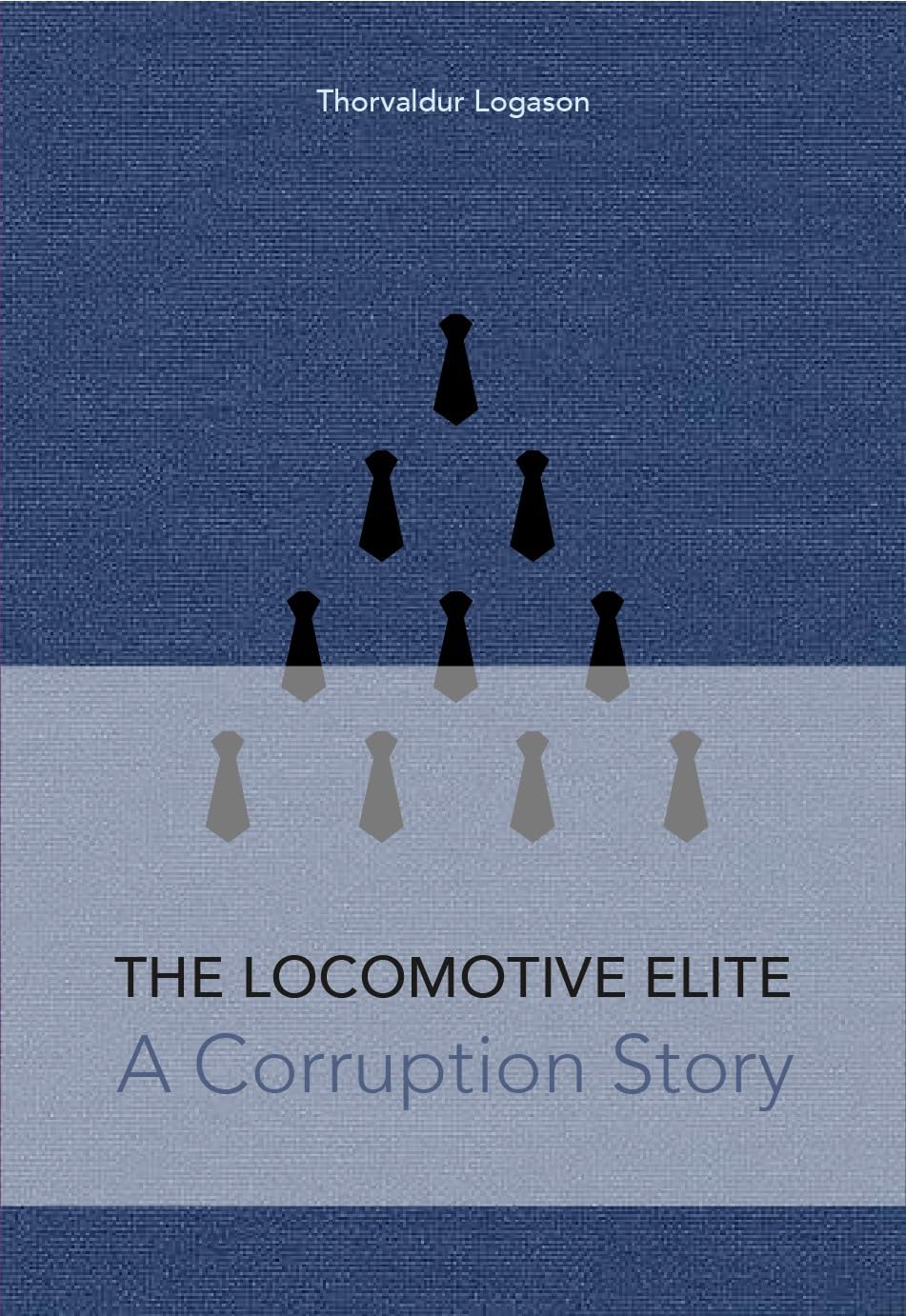
The Locomotive Elite
What do Donald Trump and Iceland’s Locomotive Elite have in common?
Far more than you think.
In The Locomotive Elite, you’ll uncover how a tiny clique in Iceland captured extensive control—of banks, courts, media, and even the central bank.
For decades they ruled, first democratically, then through corruption and in the end through crime, enriching themselves and their cronies while dismantling oversight.
The result?
One of the most spectacular financial collapses in modern history.
Photography tips:
- Shoot from the rim: Elevated viewpoints best reveal the crater’s symmetry and colour layering.
- Overcast is ideal: Soft light enhances red and brown tones without harsh contrast.
- Avoid scale references: People on the rim quickly reduce the sense of depth; clean frames read stronger.
- Telephoto details: Isolate slope textures and colour transitions for abstract compositions.
- Minimal processing: Let natural contrast between red tephra and dark water carry the image.
Good cameras for Iceland
Sony A7R V
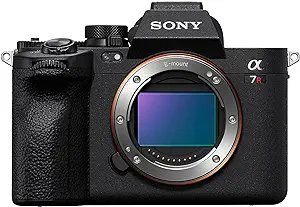
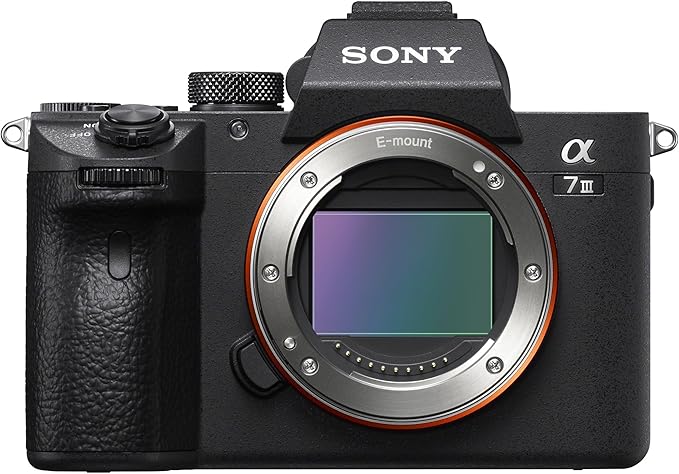
Sony A7s lll
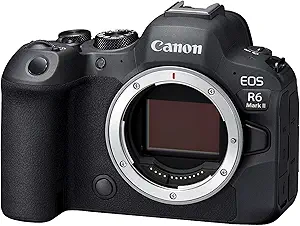
Canon R6
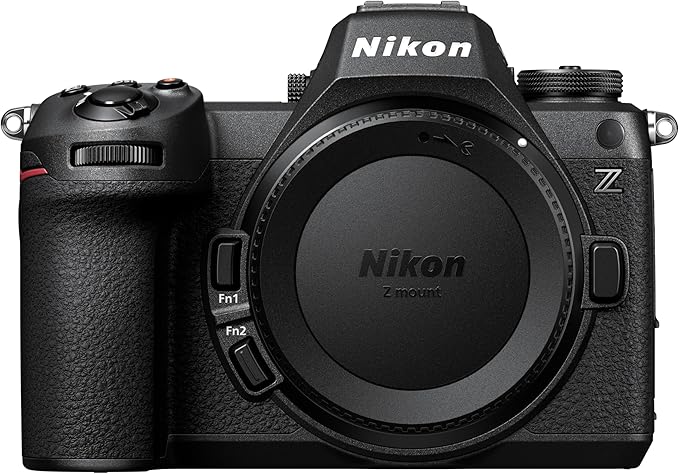
Nikon Z6 lll
Destinations nearby
Good to have in Iceland