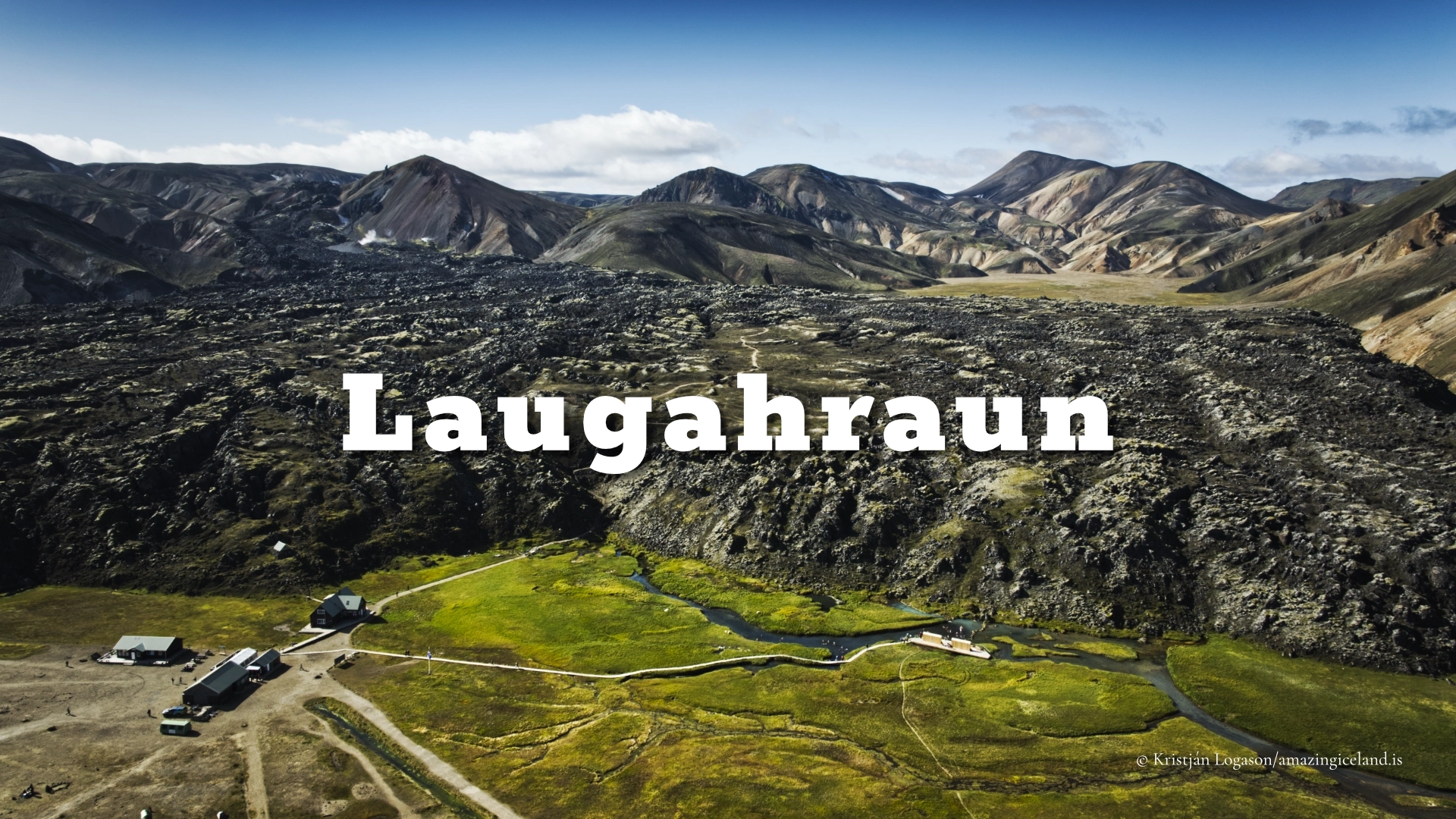
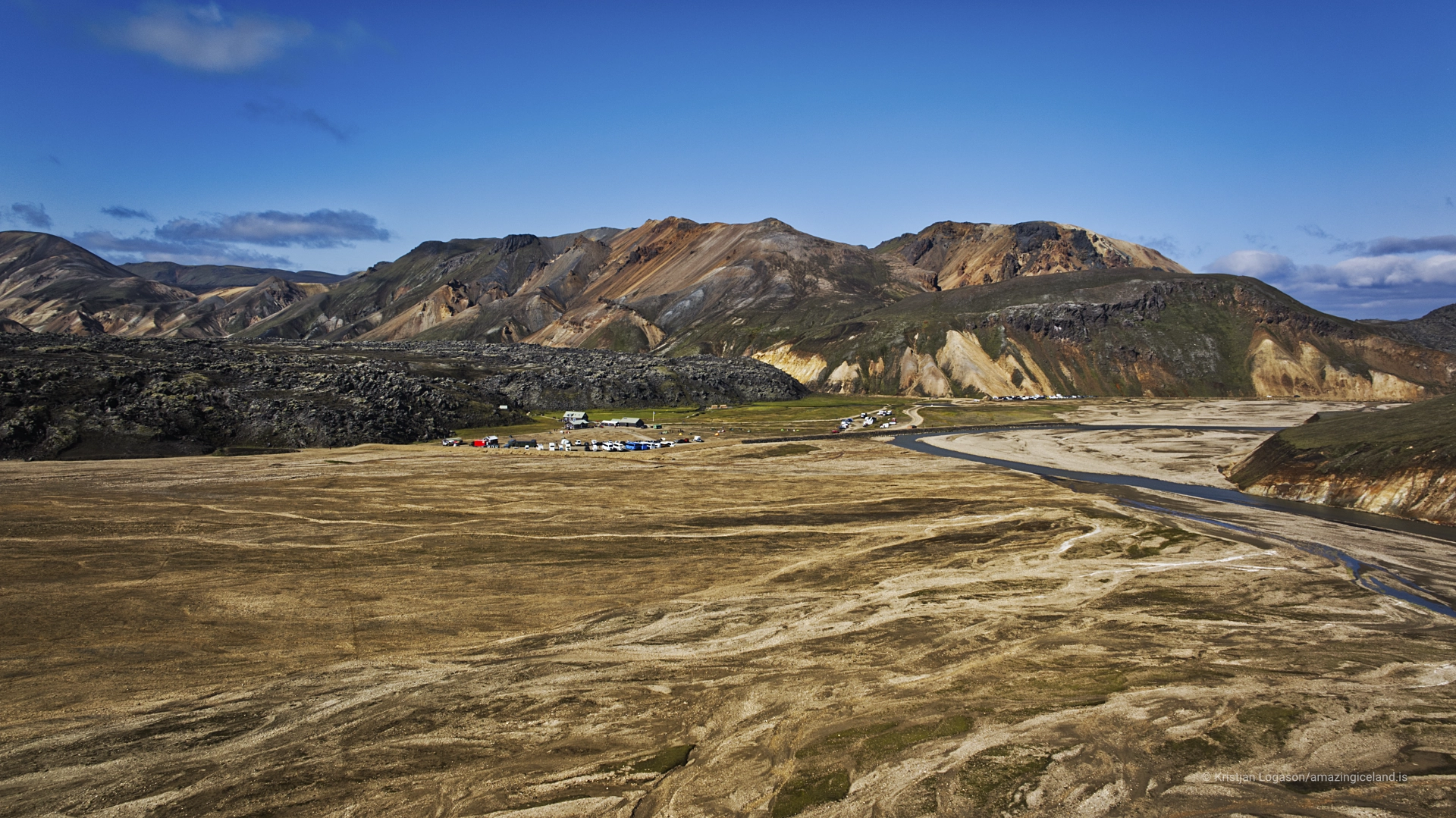
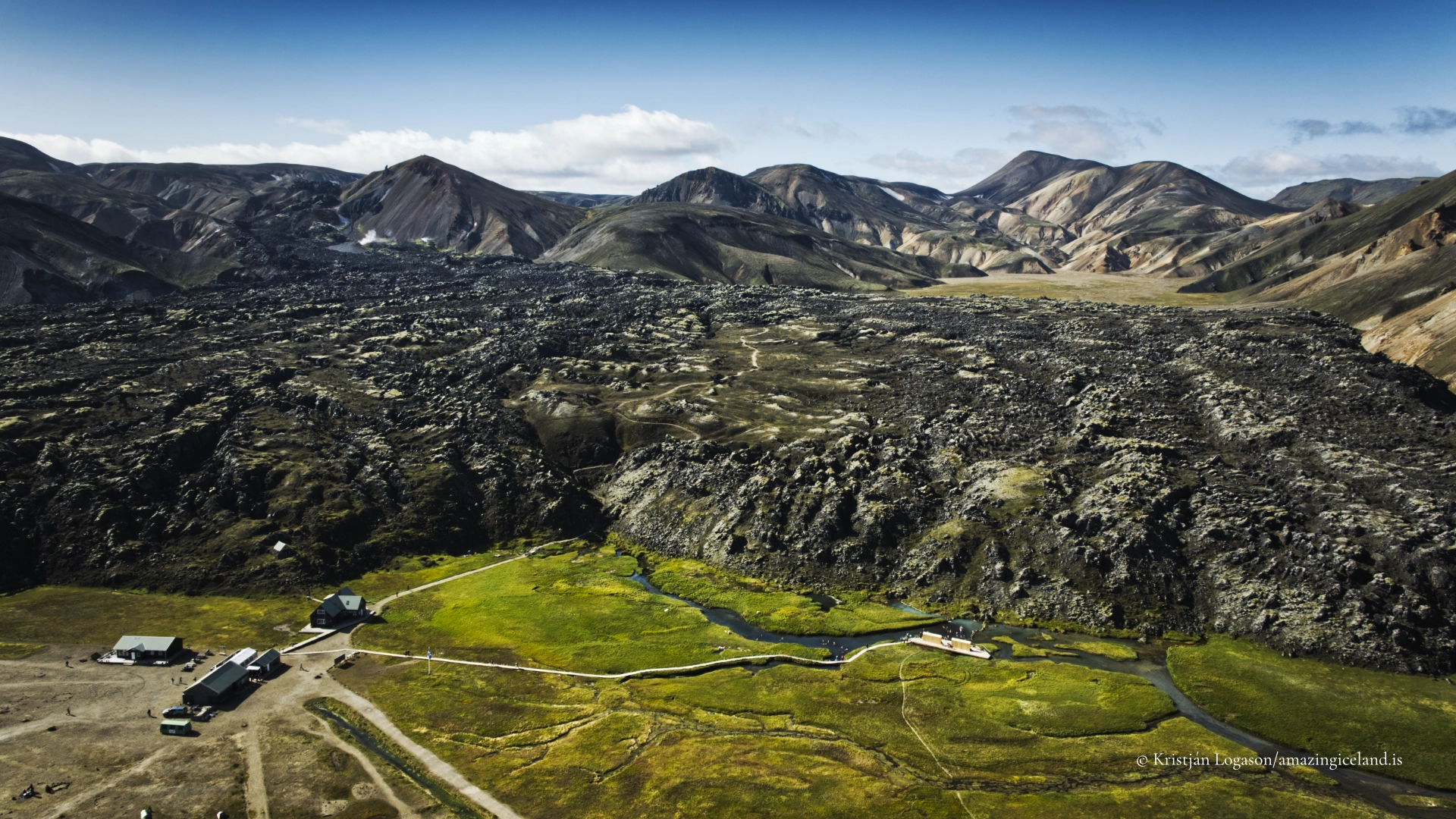
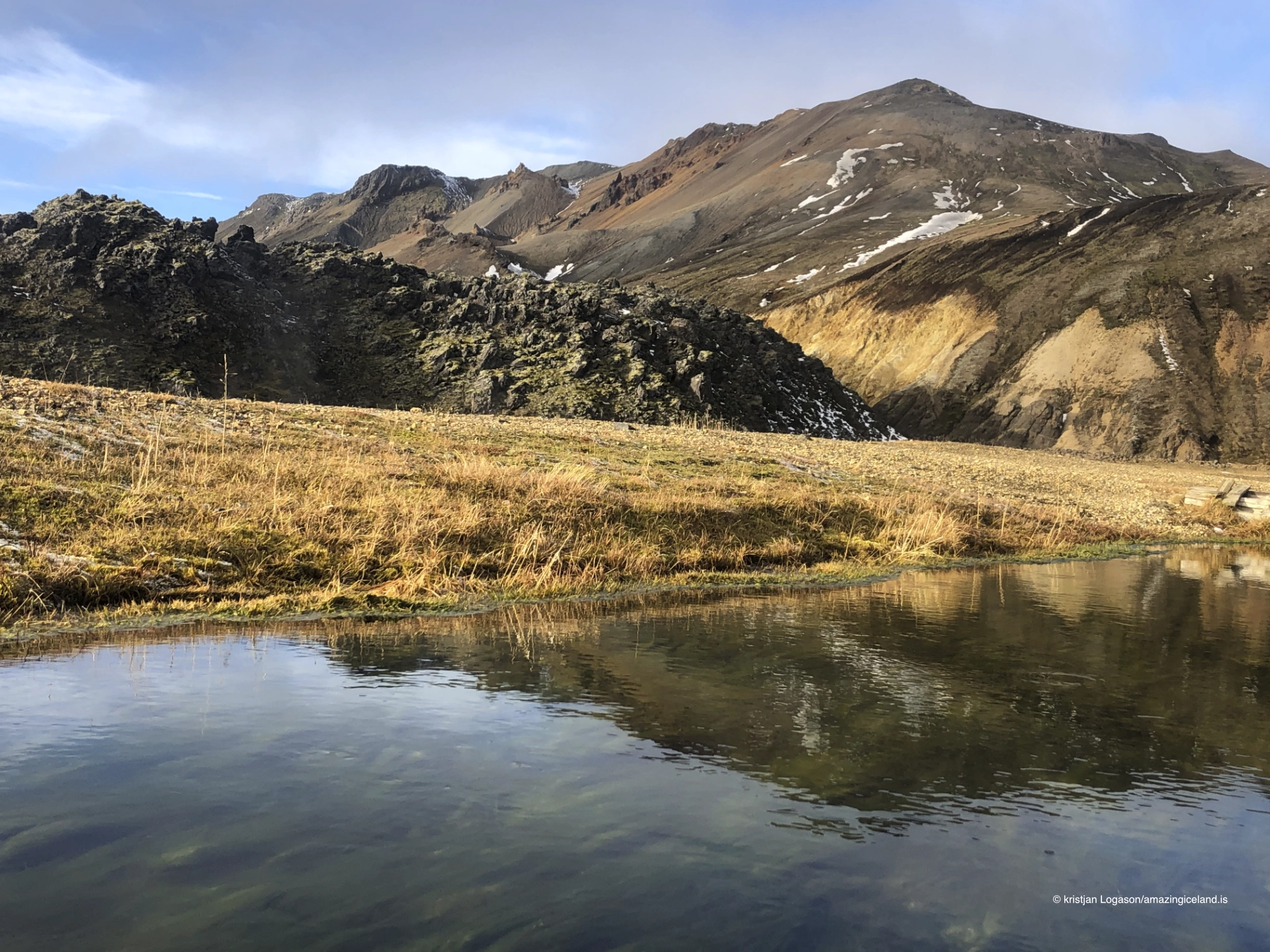
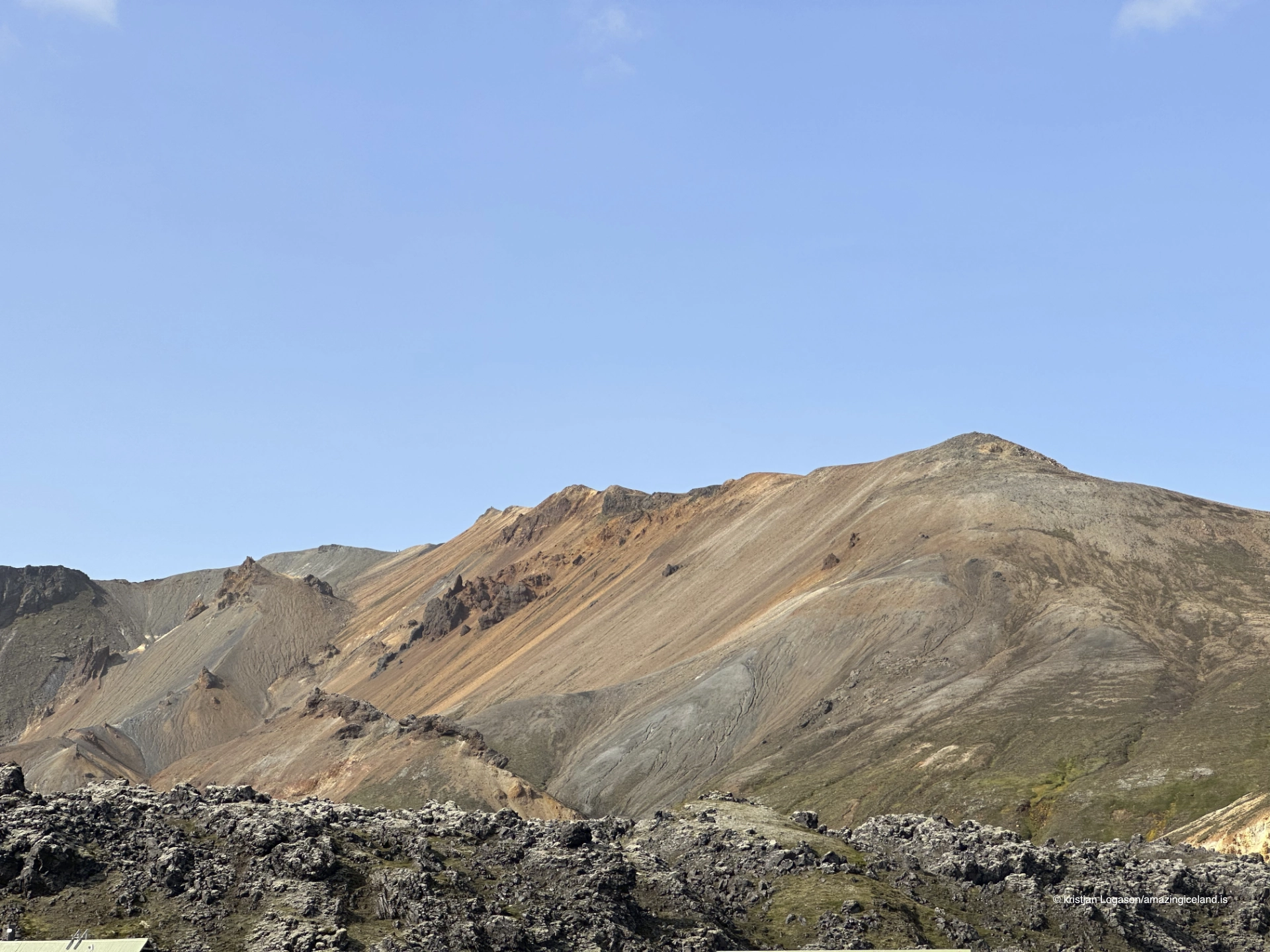
Laugahraun is a young basaltic lava field at Landmannalaugar, formed during the 1477 Veiðivötn eruption. Dark, fractured, and still sharply textured, it stands in direct contrast to the surrounding rhyolite mountains and geothermal slopes. More than a backdrop, Laugahraun is a defining structural element of the Landmannalaugar landscape, shaping access, water flow, and human movement through the area.
The location of Laugahraun lava field in Landmannalaugar
Latitude
64.0439
Longitude
-19.2682
Laugahraun lava field in Landmannalaugar
Laugahraun was created during the 1477 fissure eruption associated with the Veiðivötn–Bárðarbunga volcanic system, one of the largest historical eruptions in Iceland. This event produced extensive lava flows across the central highlands, and at Landmannalaugar, the lava advanced into an existing rhyolite-dominated landscape.
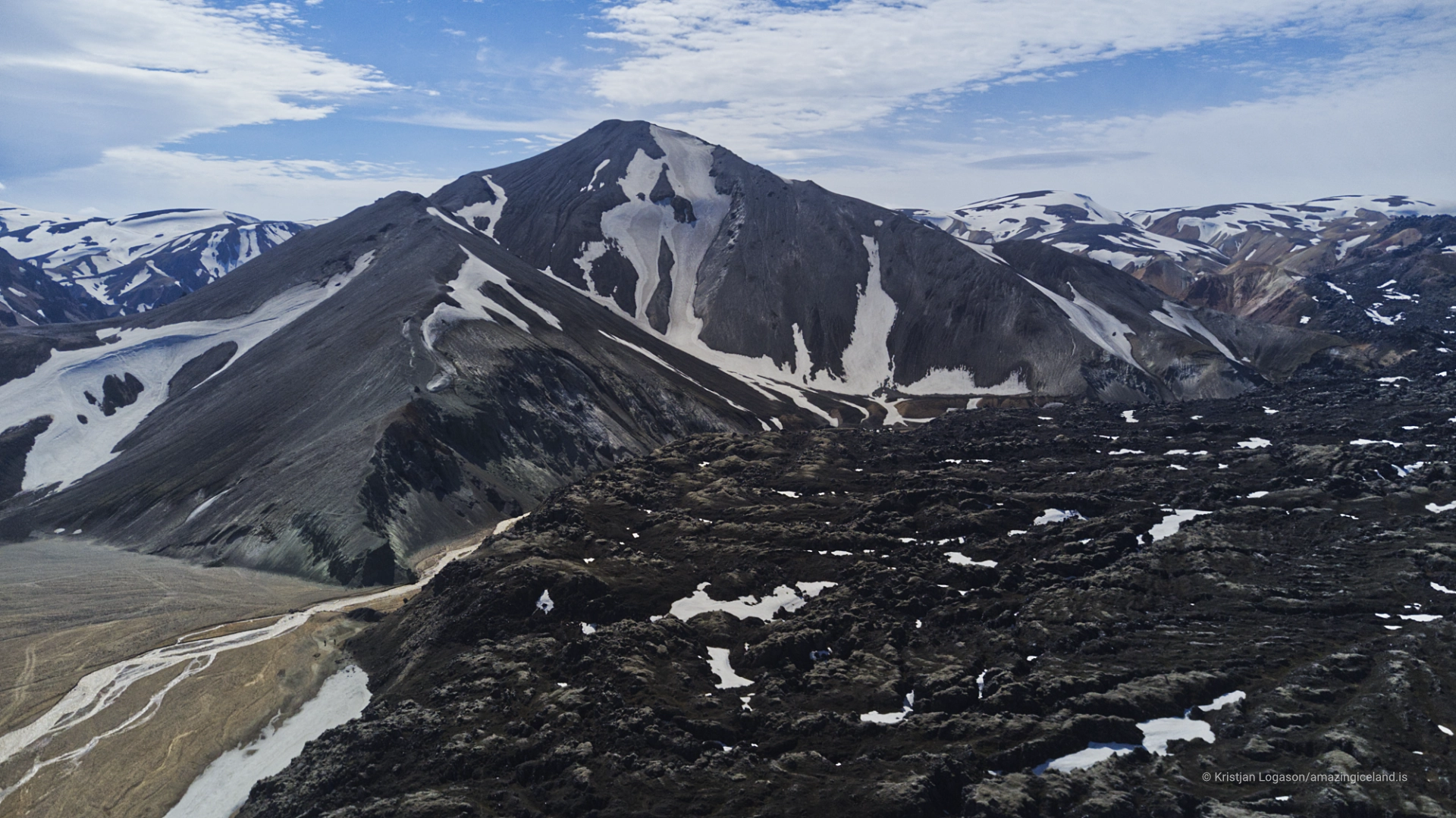
Unlike the silica-rich rhyolite that defines much of the surrounding terrain, Laugahraun is composed of basaltic lava, which is lower in silica, more fluid during eruption, and typically forms broader, more cohesive flows. The result is a lava field characterised by rough surfaces, pressure ridges, fractures, and blocky textures that remain sharply defined despite more than five centuries of exposure.
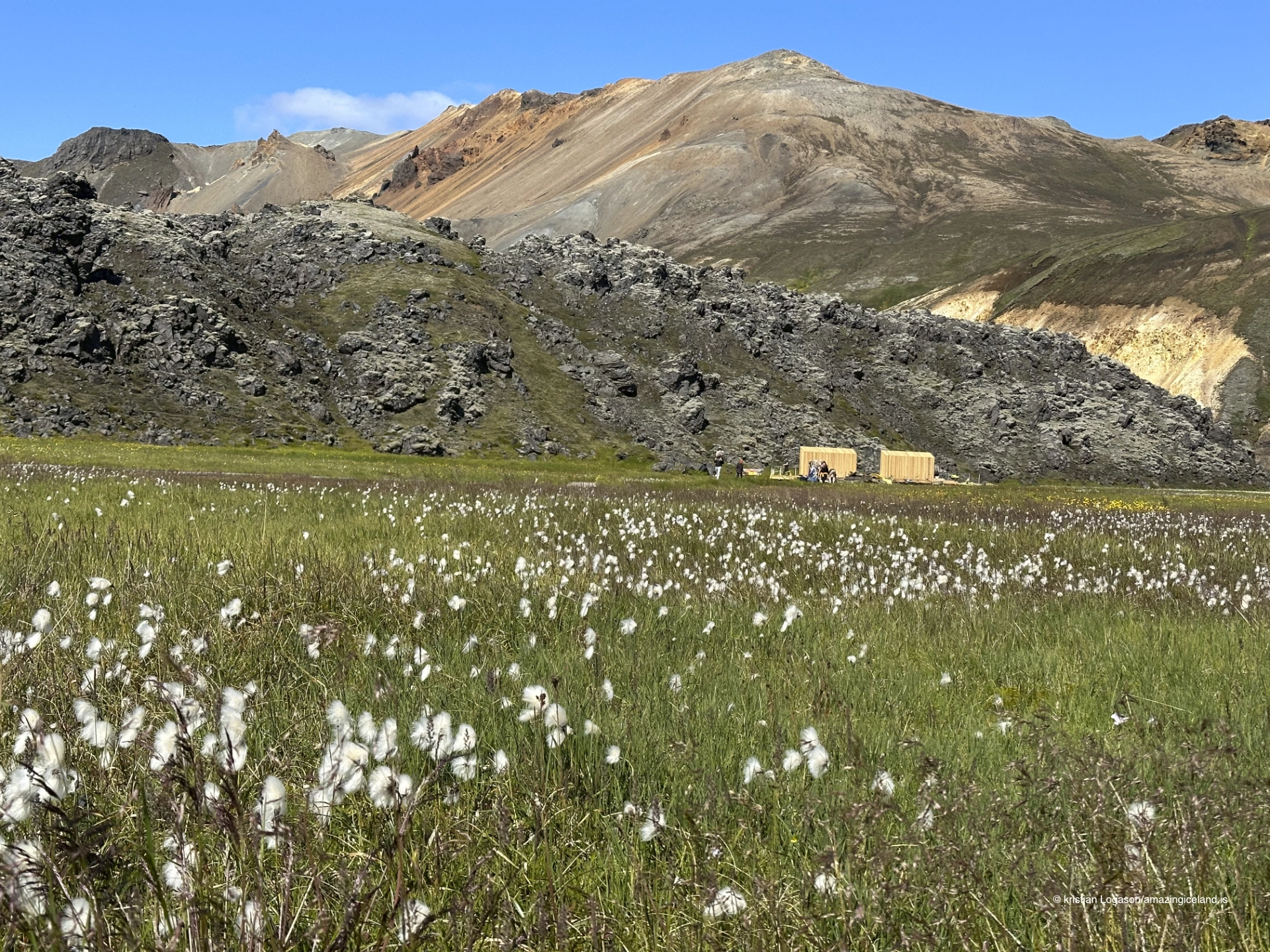
The relative youth of Laugahraun is evident in its minimal soil development and sparse vegetation. Where older lava fields in Iceland may be softened by moss and plant cover, Laugahraun remains largely exposed, allowing its original flow structures to be observed clearly. Cooling features such as surface cracking and uneven crusts are still visually dominant, giving the field a raw, unfinished appearance.
Relationship to Landmannalaugar and geothermal features
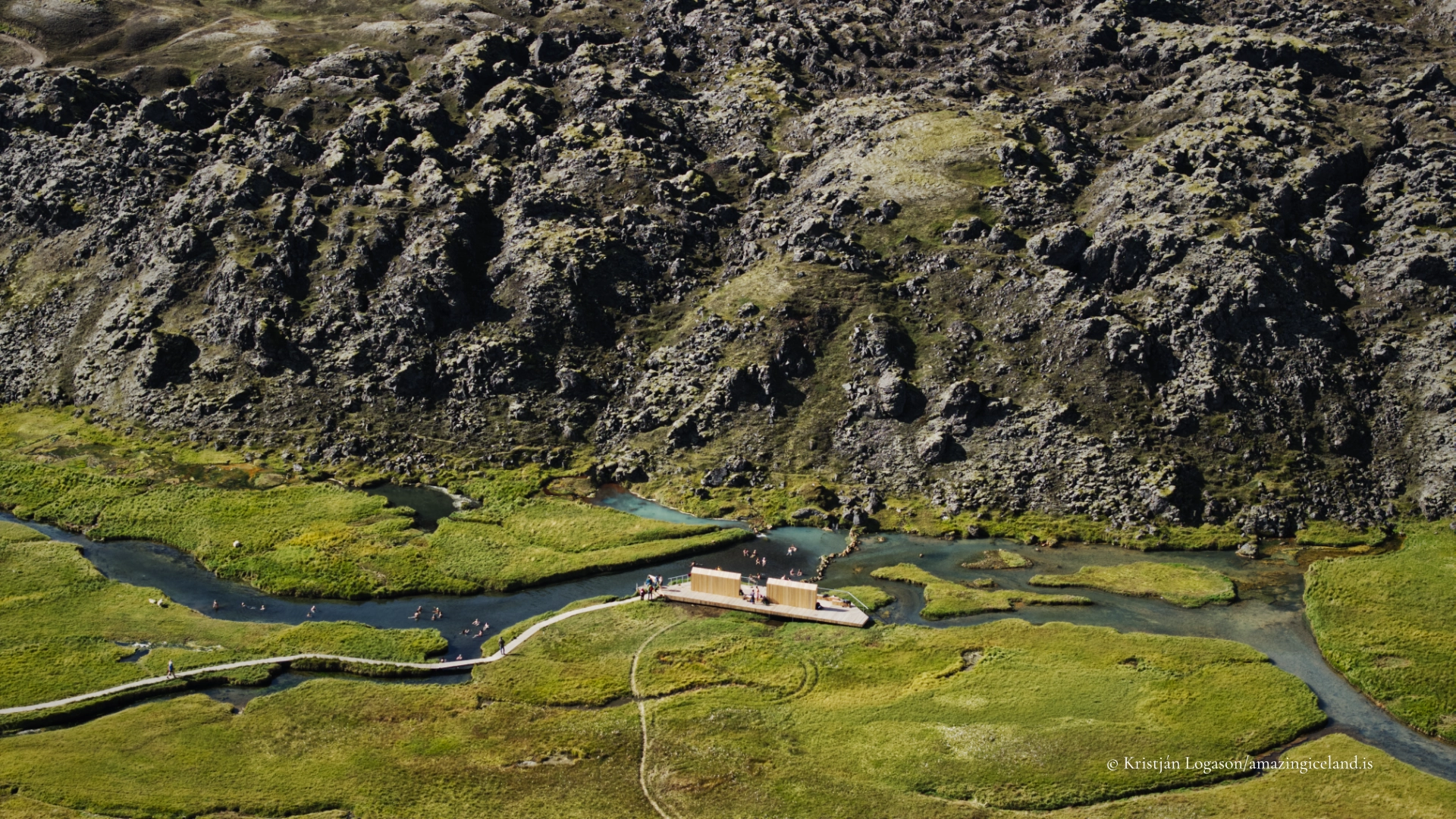
Laugahraun plays a crucial role in shaping the Landmannalaugar basin. It forms a dark boundary along the edge of the geothermal area and directly influences the movement of water and people through the site. The well-known natural hot spring at Landmannalaugar emerges at the interface between the lava field and softer sediments, where permeability differences allow geothermal water to surface and mix with cold streams.
From a geomorphological perspective, this boundary is significant. Basaltic lava is highly fractured and permeable, allowing water to move through it efficiently, while adjacent sediments and altered rhyolite behave differently. The meeting of these materials creates natural outlets for groundwater and heat, explaining why geothermal features cluster along the lava’s margins rather than within its interior.
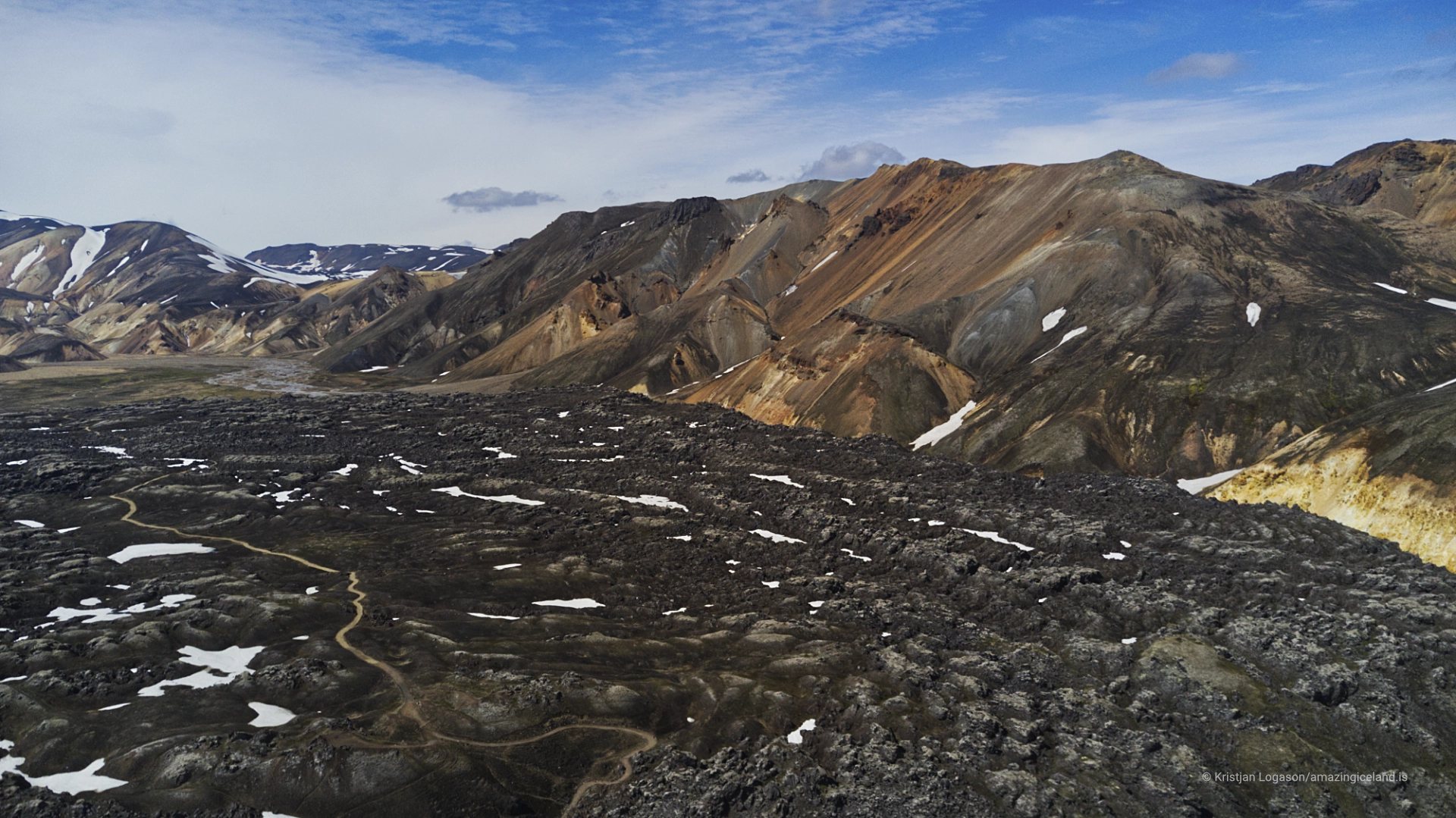
The lava field also constrains access routes. Trails, paths, and informal walking lines follow the edges and weaknesses of the lava rather than crossing it indiscriminately. This reinforces the lava’s presence as an active spatial force rather than a static surface—Laugahraun dictates how the landscape is used, not just how it looks
Texture, scale, and experiential significance
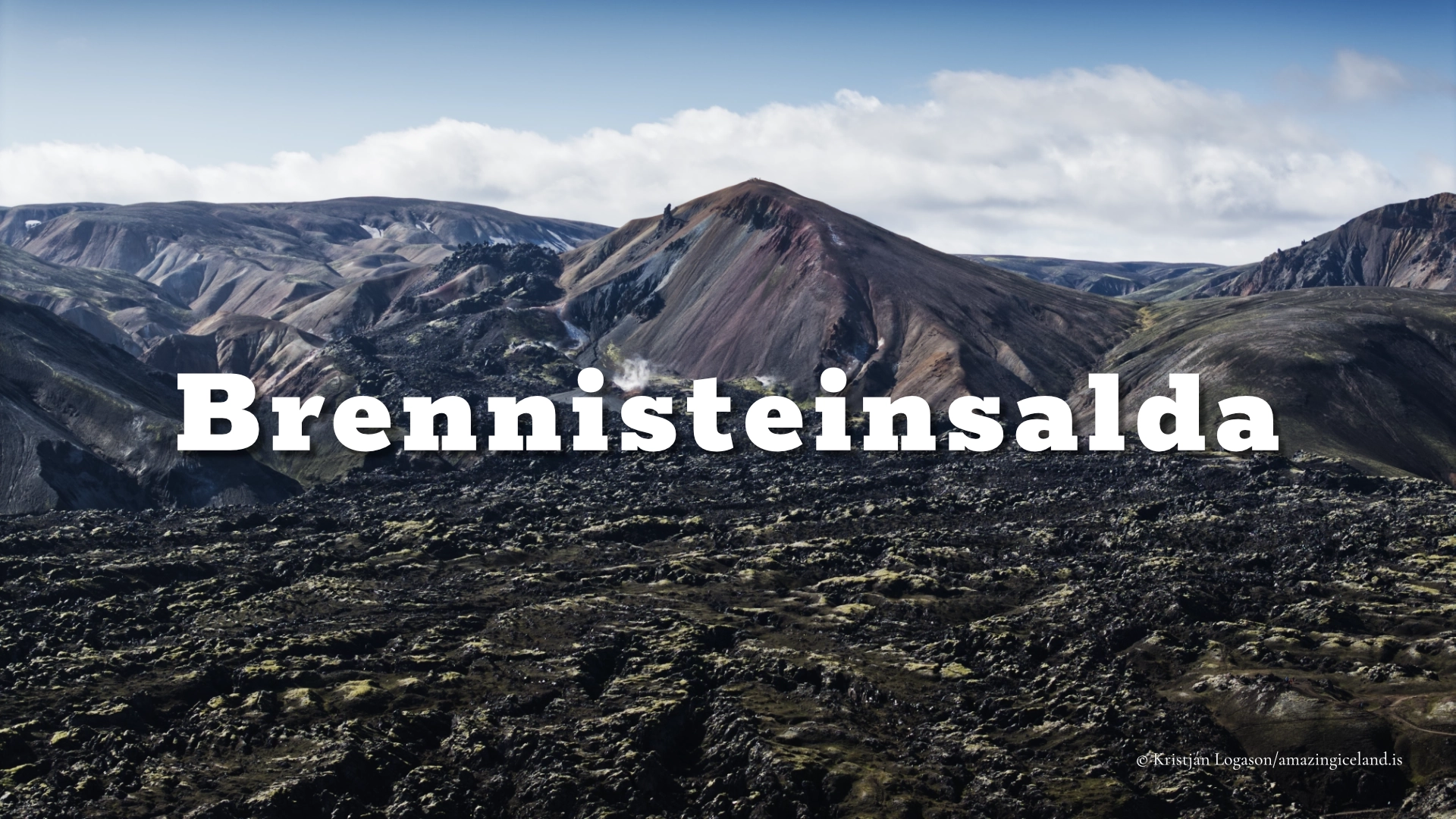
Experientially, Laugahraun provides an essential counterpoint to Landmannalaugar’s colour-rich rhyolite mountains. Where Brennisteinsalda and nearby peaks draw attention through mineral staining and geothermal alteration, Laugahraun absorbs light. Its dark surface reduces visual noise and anchors the scene, allowing surrounding colours to stand out more clearly.
At ground level, the lava field invites close inspection. Fractures, broken crusts, and angular blocks reveal the mechanics of lava movement and cooling. Walking near—but not across—the field highlights the physical challenge such terrain presents, reinforcing respect for both its fragility and its sharpness.
Laugahraun also carries historical weight. As a product of a documented eruption, it serves as a tangible reminder that the dramatic landscapes of Landmannalaugar are not ancient relics but relatively recent outcomes of powerful geological events. The lava is young enough that its formation lies within recorded human history, yet old enough to have integrated fully into the highland environment.
Within the broader Fjallabak context, Laugahraun functions as a visual and conceptual anchor. It connects the explosive rhyolite volcanism of the Torfajökull system with the basaltic fissure eruptions that characterise Iceland’s rift zones. In doing so, it demonstrates how multiple volcanic processes intersect in a single place.
Laugahraun does not demand attention through scale or drama. Instead, it rewards slow observation. Its value lies in texture, contrast, and context—qualities that deepen understanding of Landmannalaugar as a coherent geological system rather than a collection of isolated sights.
Interesting facts:
- Historic eruption: Laugahraun formed during the 1477 Veiðivötn eruption.
- Basaltic contrast: It is basaltic lava within a predominantly rhyolitic landscape.
- Geothermal boundary: The Landmannalaugar hot spring emerges at the lava’s edge.
- Minimal vegetation: Sparse plant growth highlights the lava field’s youth.
Image Gallery
The Locomotive Elite
What do Donald Trump and Iceland’s Locomotive Elite have in common?
Far more than you think.
In The Locomotive Elite, you’ll uncover how a tiny clique in Iceland captured extensive control—of banks, courts, media, and even the central bank.
For decades they ruled, first democratically, then through corruption and in the end through crime, enriching themselves and their cronies while dismantling oversight.
The result?
One of the most spectacular financial collapses in modern history.
Photography tips:
- Use contrast intentionally: Frame Laugahraun against colourful rhyolite slopes for maximum visual impact.
- Texture over scale: Close and mid-range compositions reveal the lava’s fractured surface.
- Low light benefits: Side light emphasizes cracks and relief in the lava crust.
- Avoid crossing: For both safety and preservation, photograph from established paths and edges.
- Neutral colour grading: Let the lava remain dark; lifting shadows too much flattens texture.h.
Good cameras for Iceland
Sony A7R V

Sony A7s lll

Canon R6

Nikon Z6 lll

Destinations nearby
Good to have in Iceland