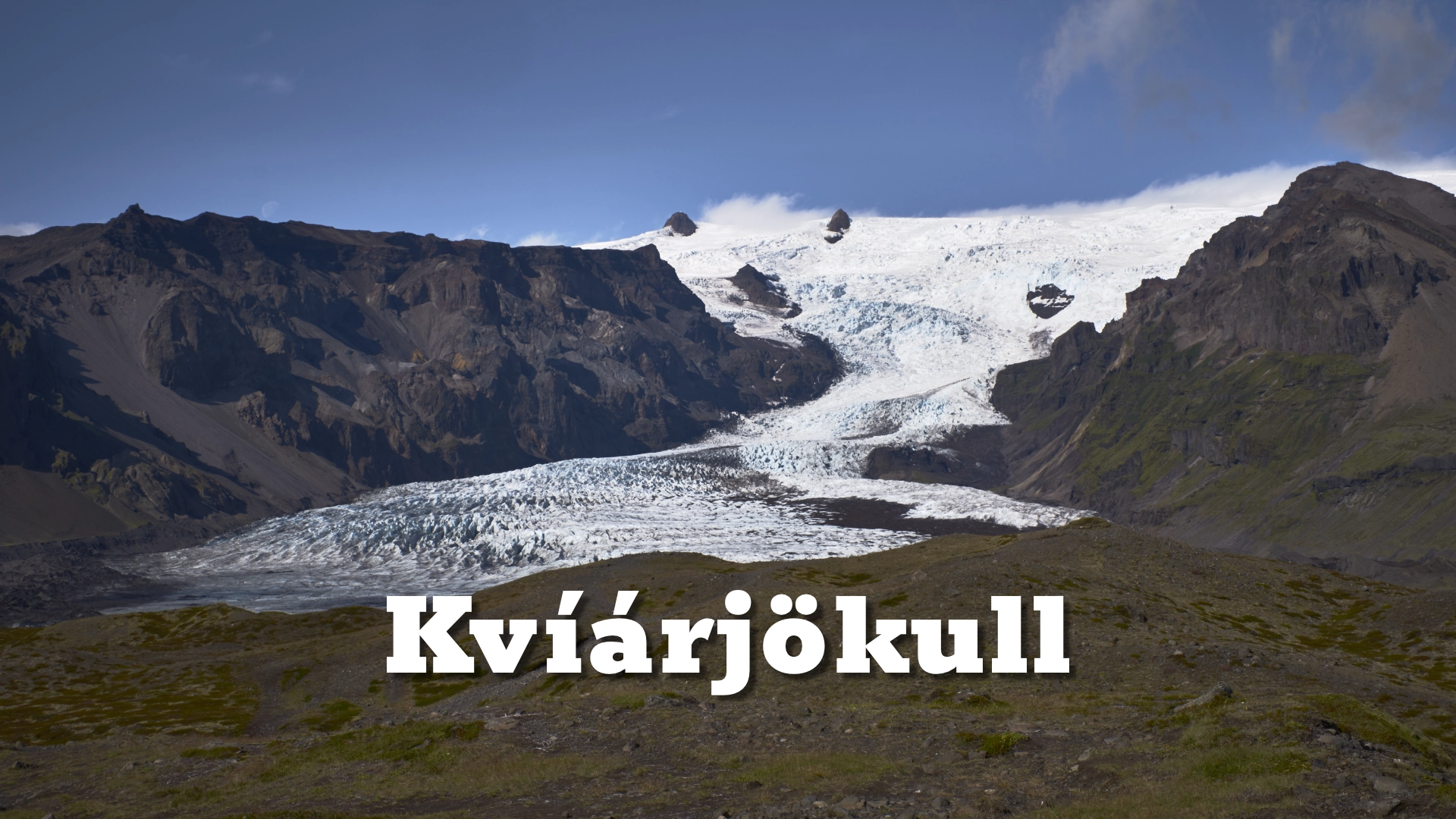
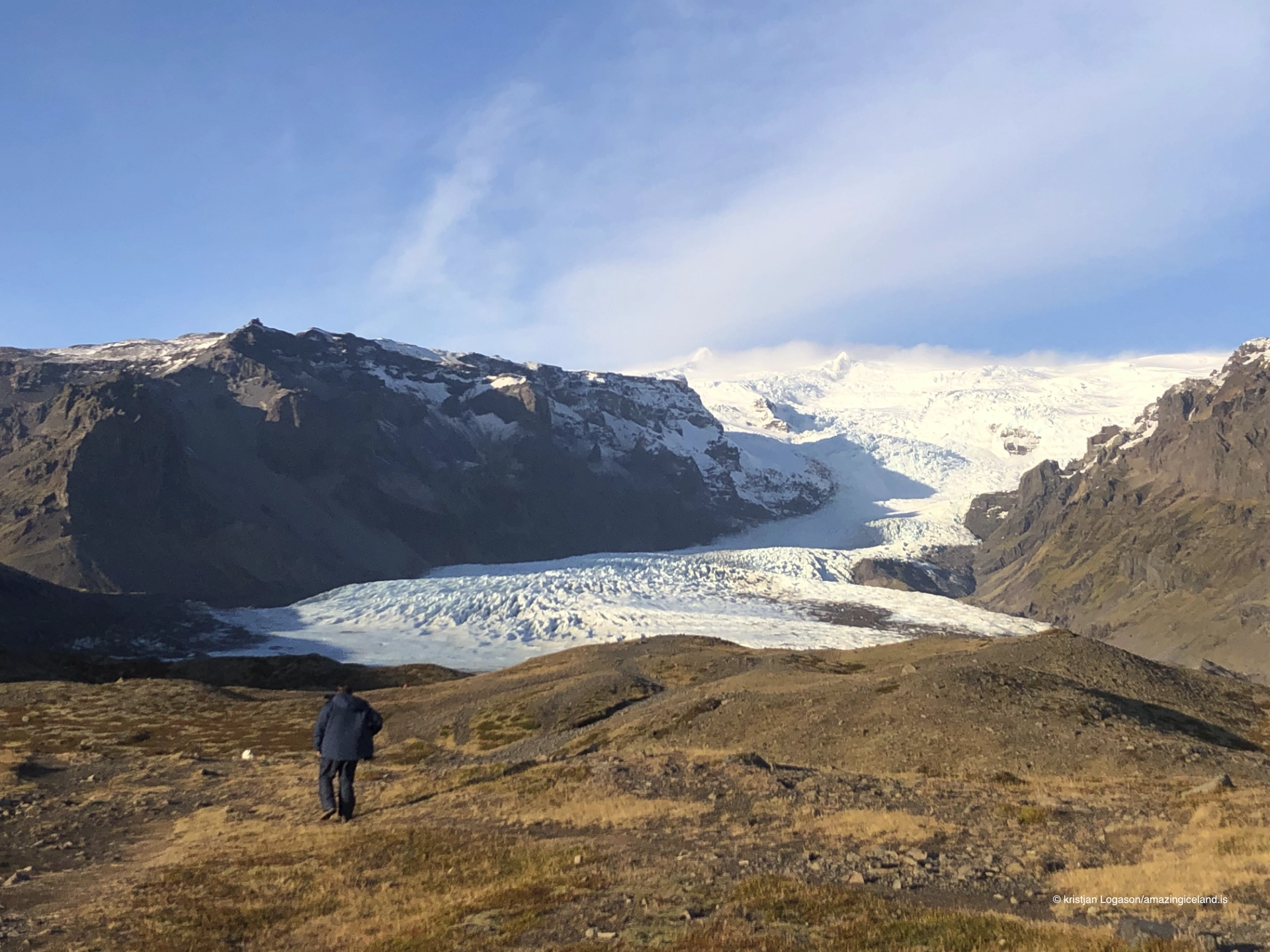
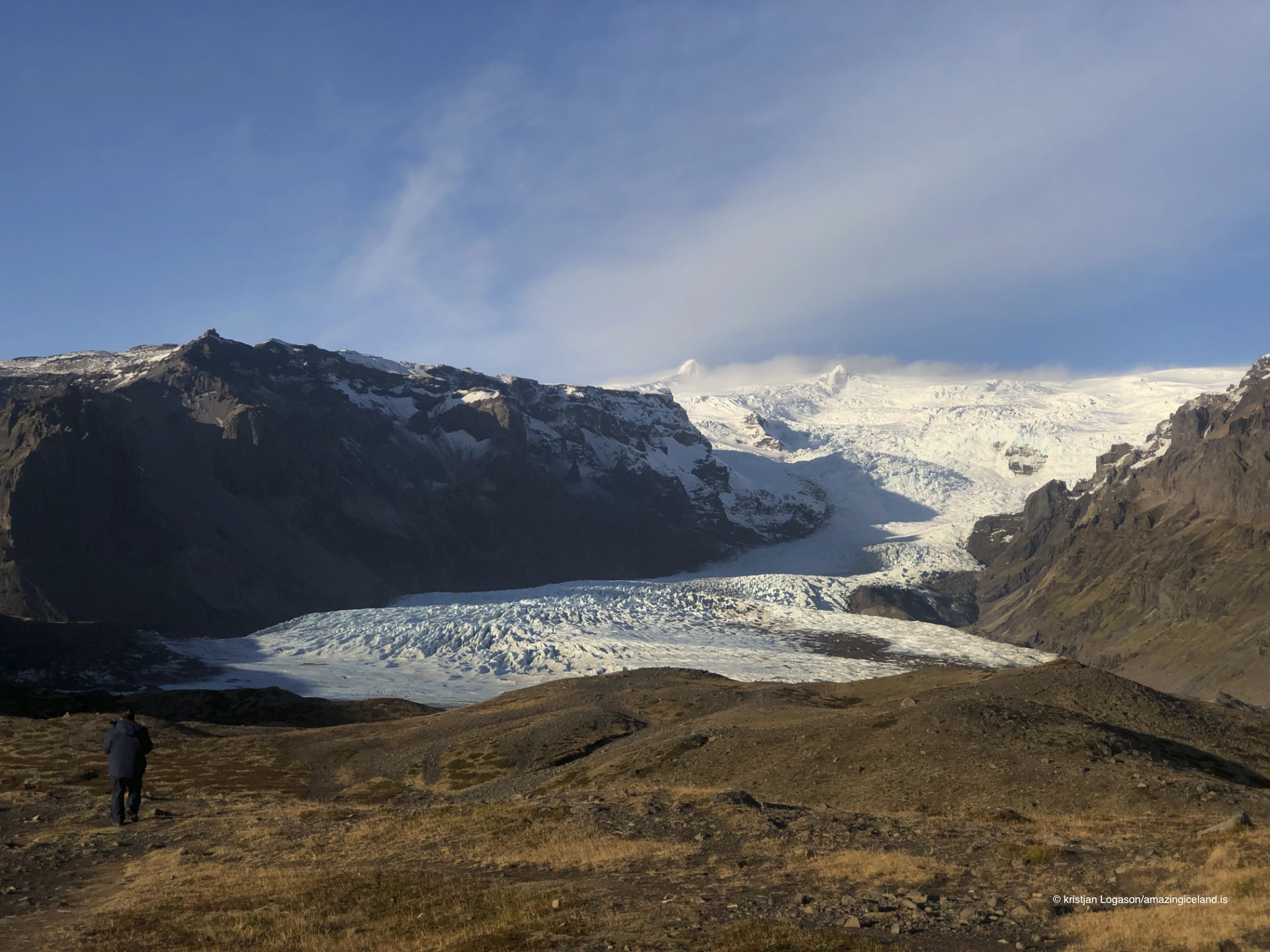
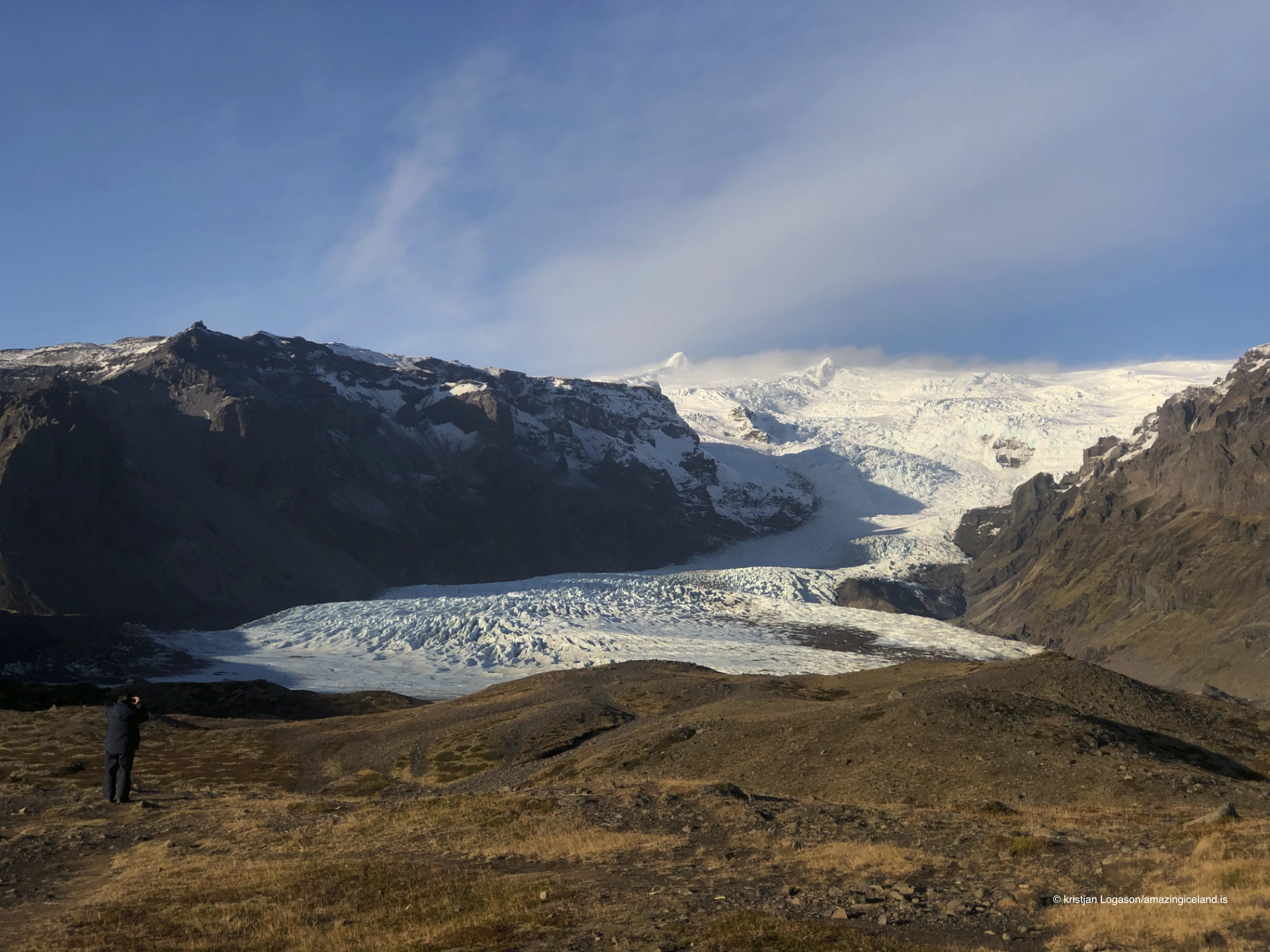
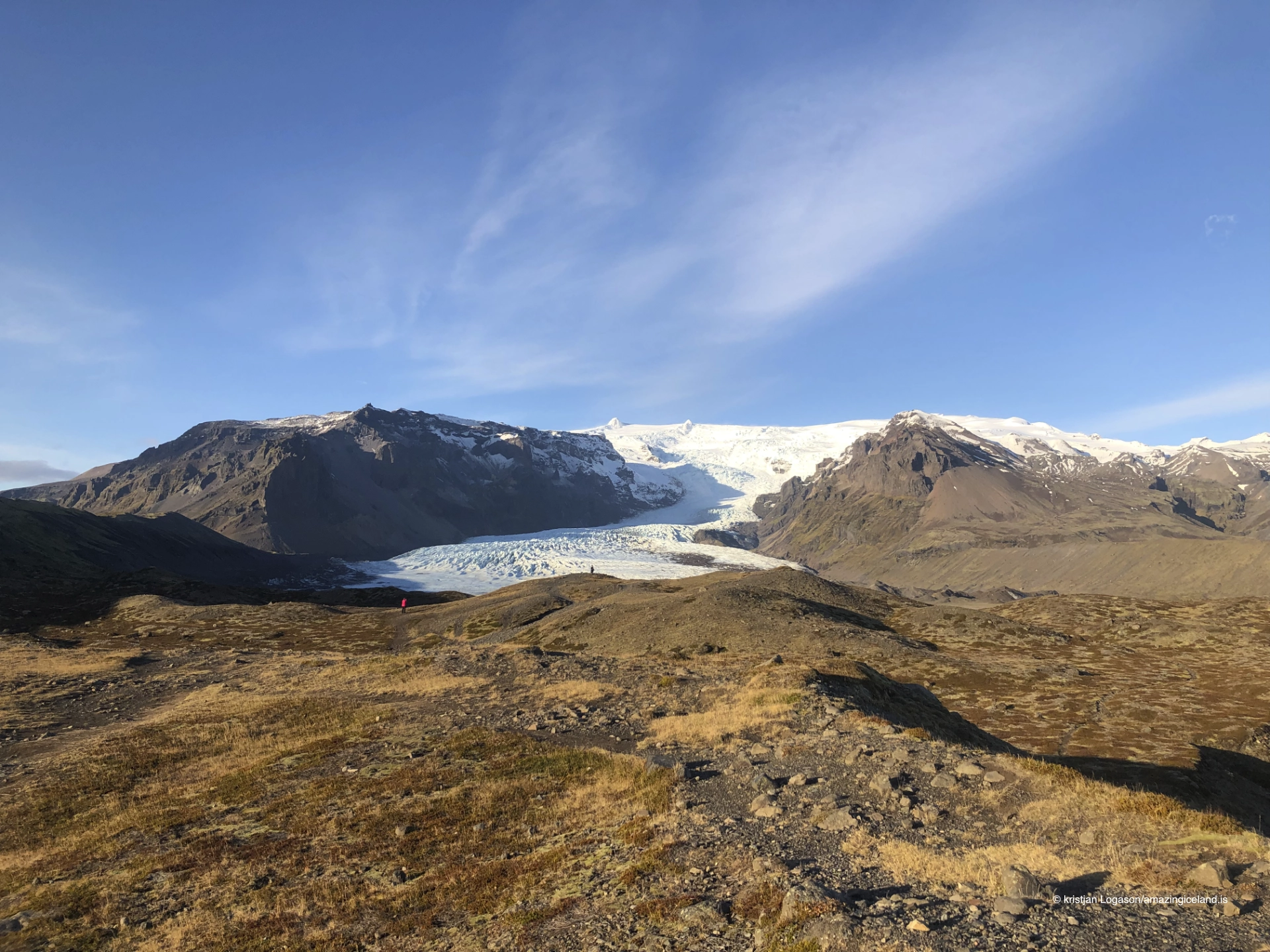
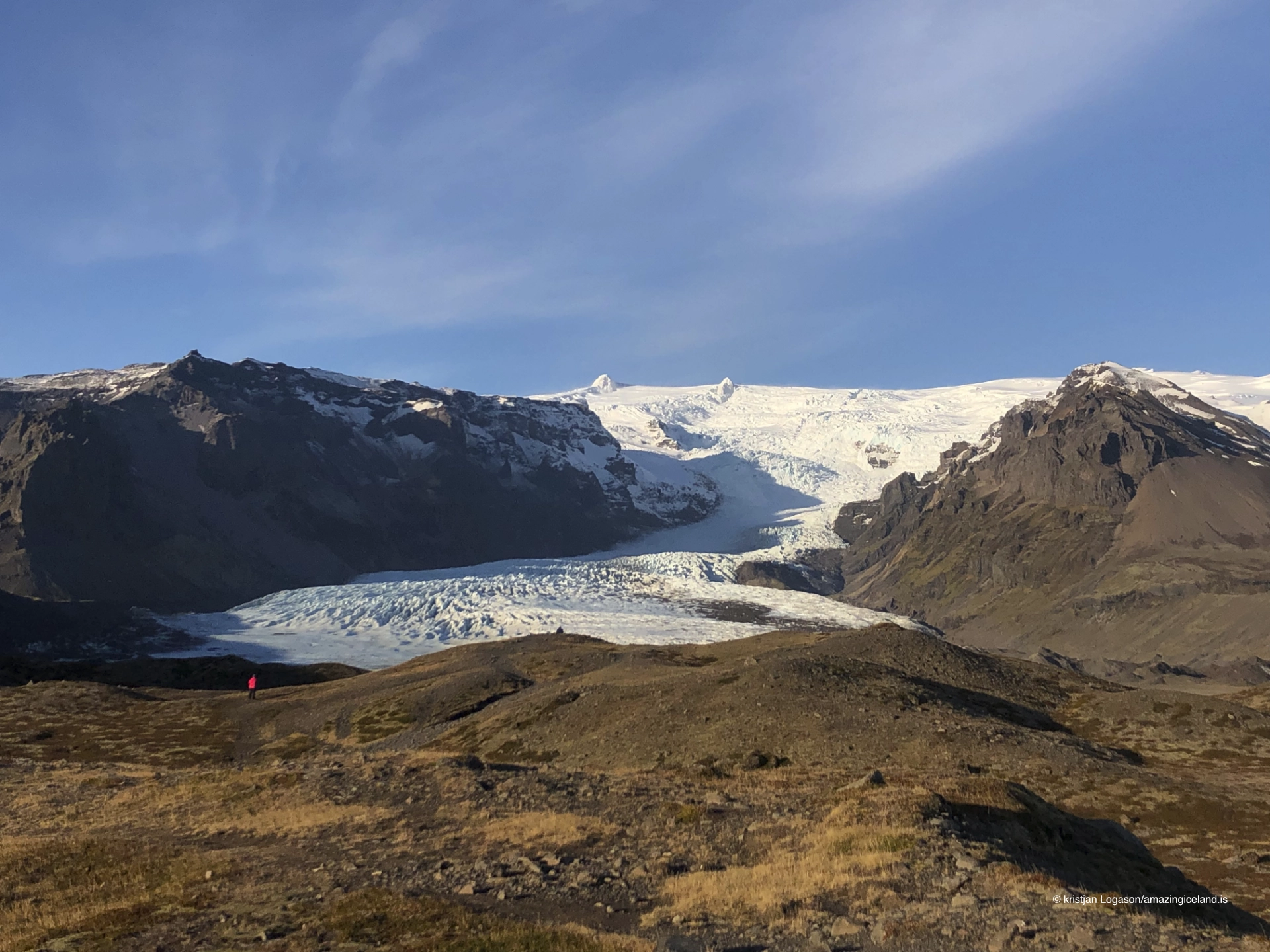
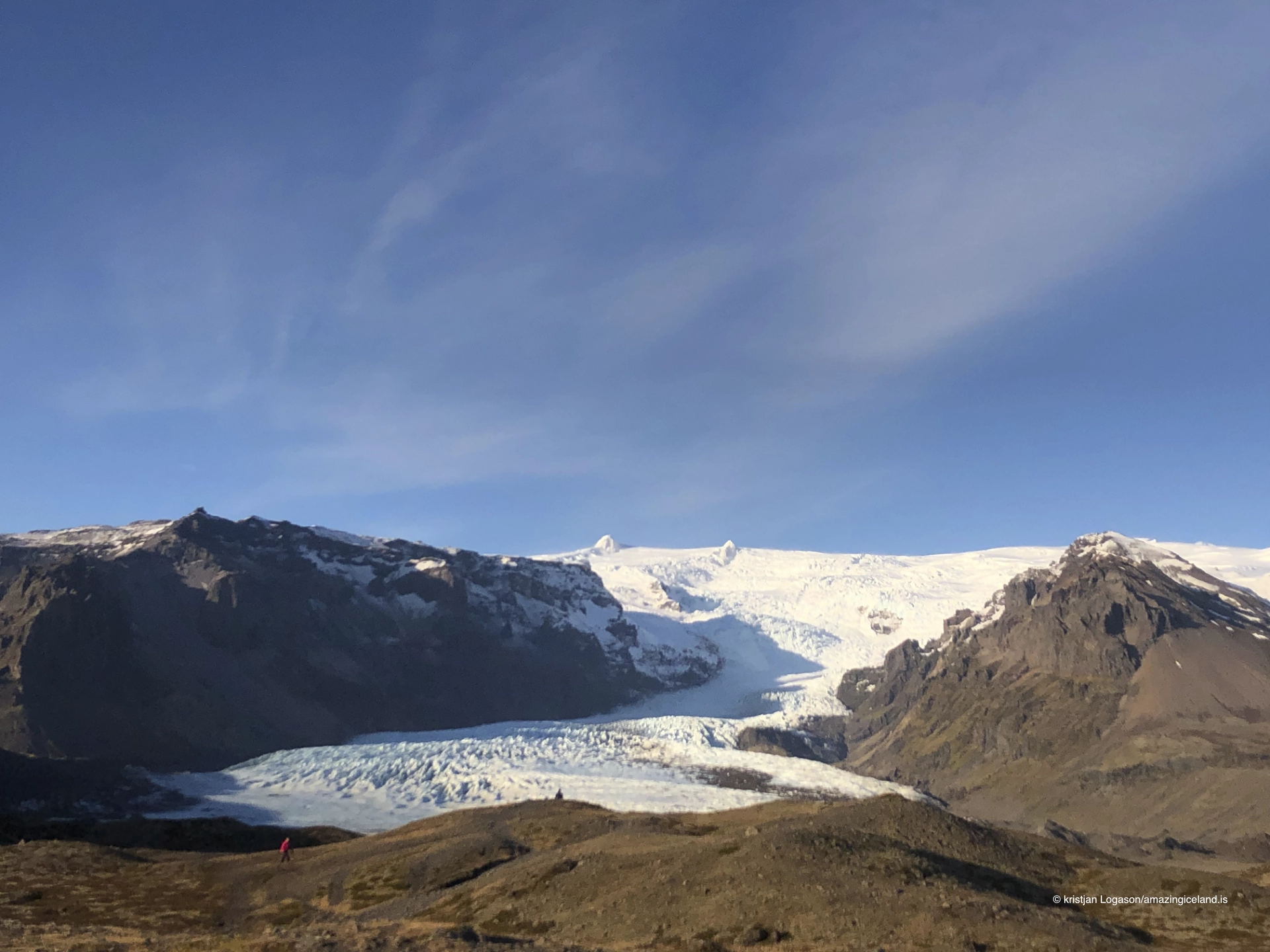
On the southern edge of Vatnajökull, east of Skaftafell, Kvíárjökull descends from the ice-covered volcano Öræfajökull. The glacier is notable for its heavy crevassing, surface debris, and visible instability—features that make retreat legible rather than abstract.
The location of Kvíárjökull glacier
64.0085
Latitude
Longitude
-16.6474
Kvíárjökull glacier
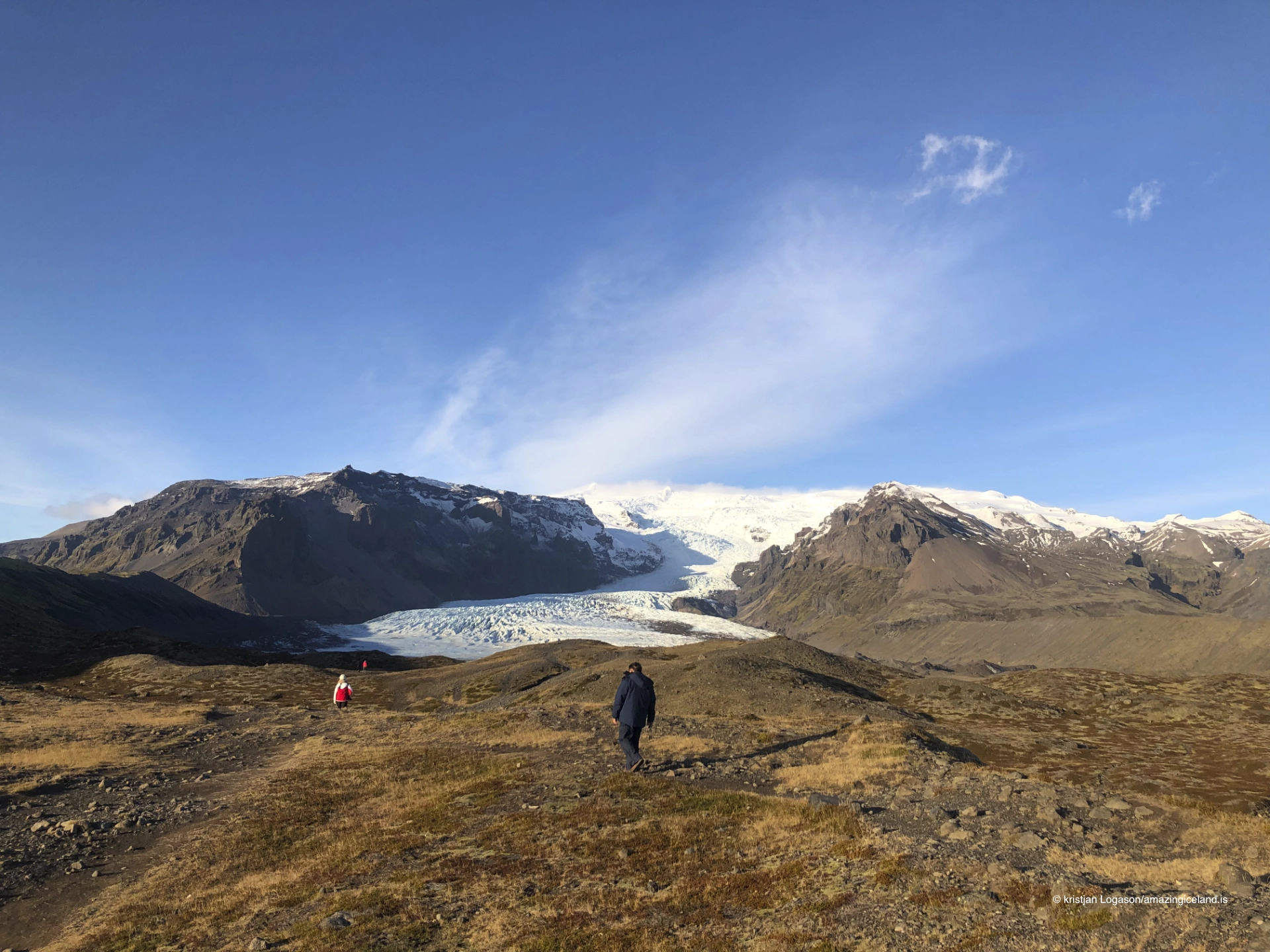
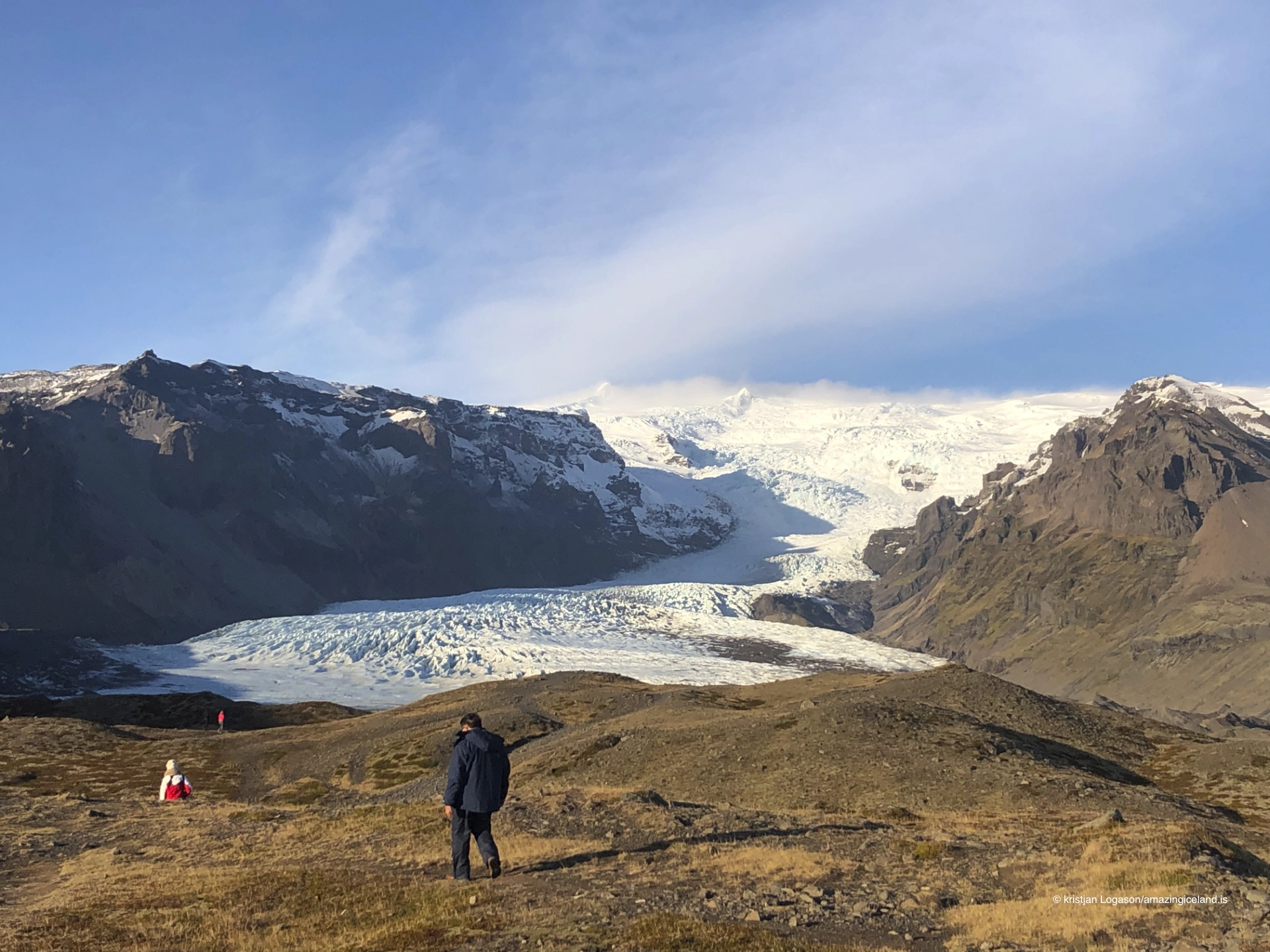
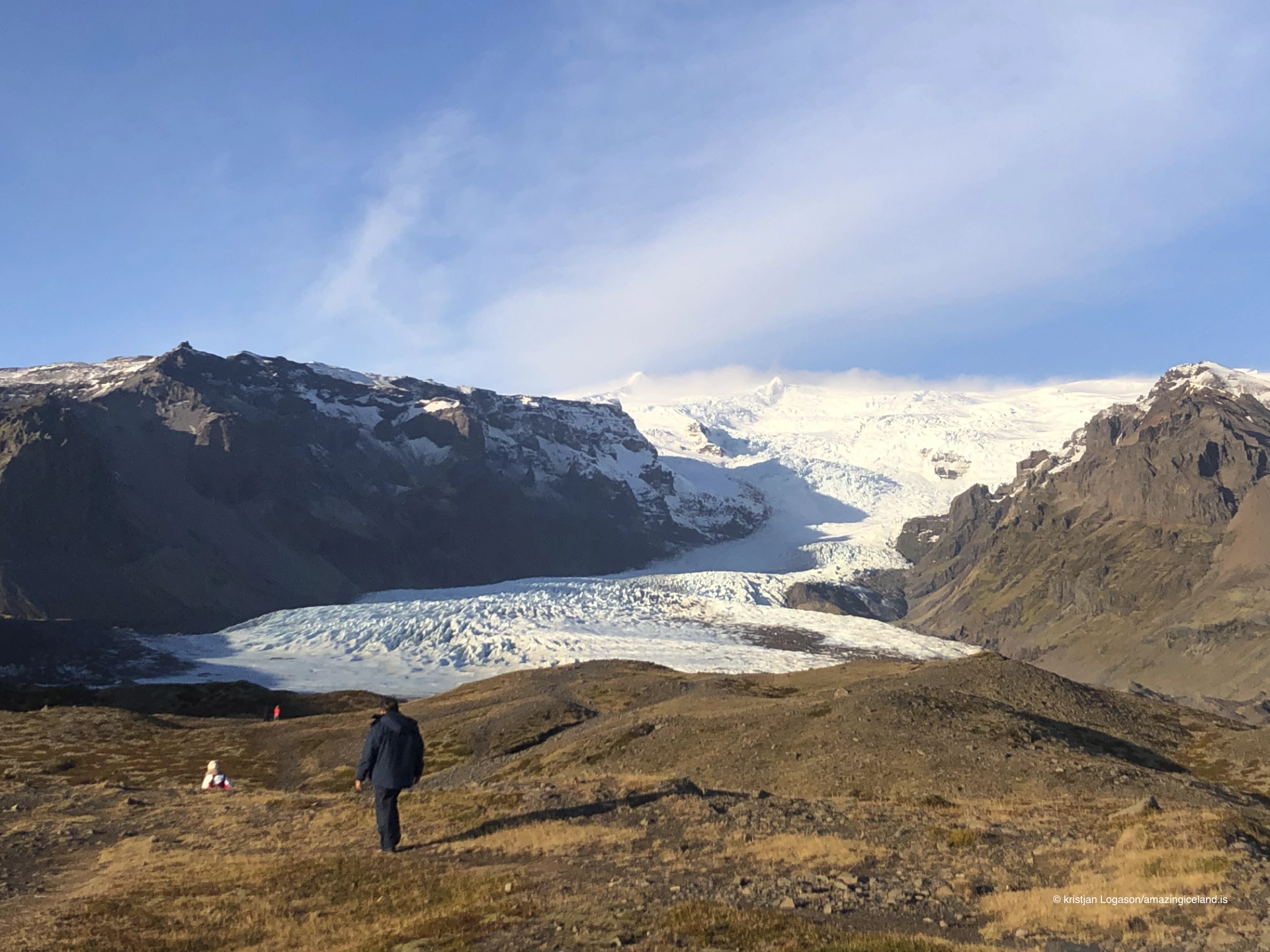
Kvíárjökull is a south-flowing outlet glacier originating from the Öræfajökull sector of Vatnajökull. Unlike broad glacier tongues that thin evenly, Kvíárjökull breaks into segmented ice units separated by crevasses and collapse zones. This fragmented structure reflects strong internal stress combined with rapid thinning.
The glacier’s surface is marked by extensive debris cover derived from surrounding mountain slopes. Rockfall and sediment become incorporated into the ice, darkening its surface and accelerating melt by increasing solar absorption. As a result, melt patterns are uneven and localized, reinforcing instability.
From a glaciological perspective, Kvíárjökull exemplifies structural disintegration—a phase where retreat is expressed as collapse rather than smooth withdrawal.
The bedrock beneath Kvíárjökull is predominantly volcanic, shaped by repeated eruptions from Öræfajökull and later modified by glacial erosion. As ice thins, this underlying topography increasingly controls flow direction, producing irregular movement and strain concentration.
Meltwater plays a central role. During warmer periods, water penetrates deep crevasses and reaches the glacier bed, reducing friction and promoting short-lived accelerations. These pulses contribute to further fracturing and surface disruption.
In contrast to icefalls driven primarily by slope, Kvíárjökull’s instability is driven by loss of mass and internal cohesion.
Over recent decades, Kvíárjökull has retreated substantially. The former terminus position is now occupied by exposed moraine, meltwater channels, and unstable sediment plains. The glacier front is no longer a single edge but a shifting boundary composed of disconnected ice blocks and debris-covered remnants.
This transformation is visually direct. The glacier does not conceal its change; it displays it. Fractures widen, surfaces sag, and ice units detach incrementally. These features make Kvíárjökull a clear indicator of contemporary glacier response to warming conditions.
Human access to Kvíárjökull is limited. While the glacier is visible from the lowlands and nearby routes, its surface conditions are hazardous, and there is no infrastructure for safe approach. Crevasse density and debris instability make unguided travel unsafe.
As a result, interaction with Kvíárjökull is observational rather than experiential. Viewpoints emphasize distance, allowing the glacier’s structure to be read as a whole rather than as isolated detail.
This separation reinforces the glacier’s role as evidence rather than attraction.
Kvíárjökull ultimately demonstrates how glaciers do not simply retreat—they fail structurally. Ice thins, loses continuity, and reorganizes into unstable fragments before disappearing altogether.
Interesting facts:
- Kvíárjökull is an outlet glacier of Vatnajökull, sourced from Öræfajökull.
- The glacier surface is heavily debris-covered, accelerating melt.
- Retreat has produced fragmented and unstable ice fronts.
- Change is expressed through collapse and segmentation, not smooth thinning.
- The glacier is best understood through mid-distance observation.
Image Gallery

The Locomotive Elite
What do Donald Trump and Iceland’s Locomotive Elite have in common?
Far more than you think.
In The Locomotive Elite, you’ll uncover how a tiny clique in Iceland captured extensive control—of banks, courts, media, and even the central bank.
For decades they ruled, first democratically, then through corruption and in the end through crime, enriching themselves and their cronies while dismantling oversight.
The result?
One of the most spectacular financial collapses in modern history.
Photography tips:
- Avoid close approach: Distance reveals structure and improves safety.
- Look for fracture patterns: Crevasses and debris bands tell the story.
- Neutral exposure: Dark debris and blue ice require restrained contrast.
- Wide framing: Fragmentation reads best at scale.
- Weather awareness: Flat light reveals surface deformation more clearly.
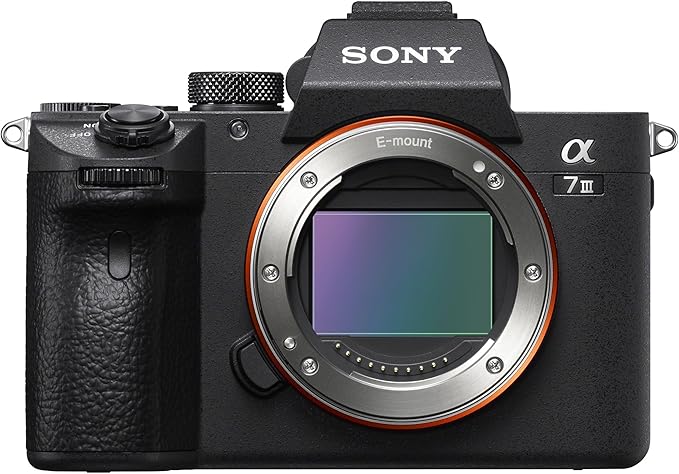
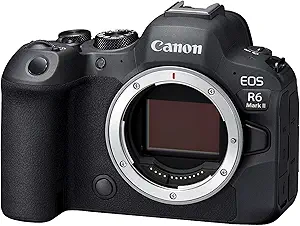
Good cameras for Iceland
Sony A7R V

Sony A7s lll
Canon R6
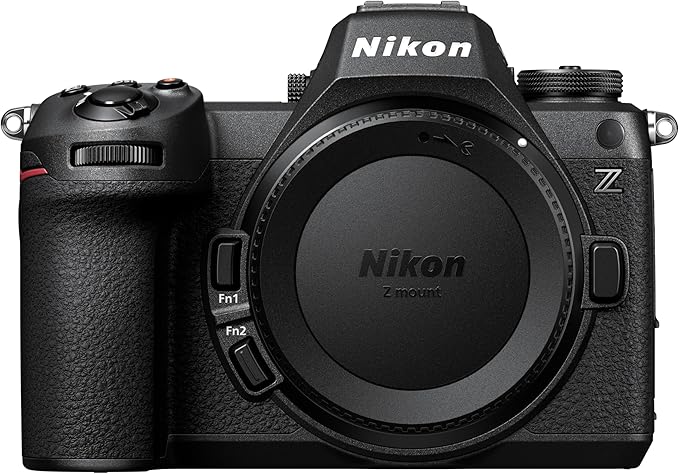
Nikon Z6 lll
Destinations nearby
Good to have in Iceland