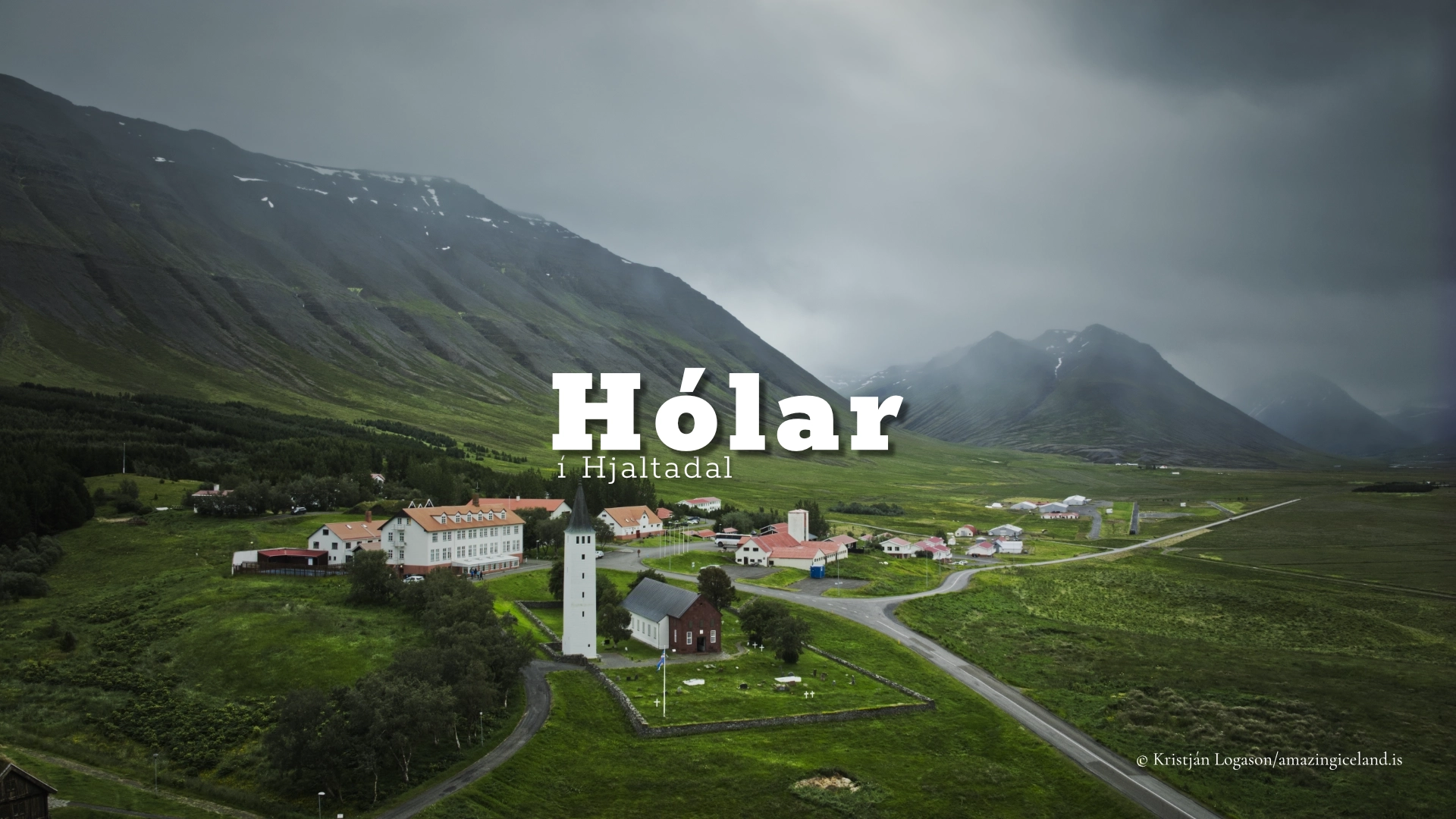
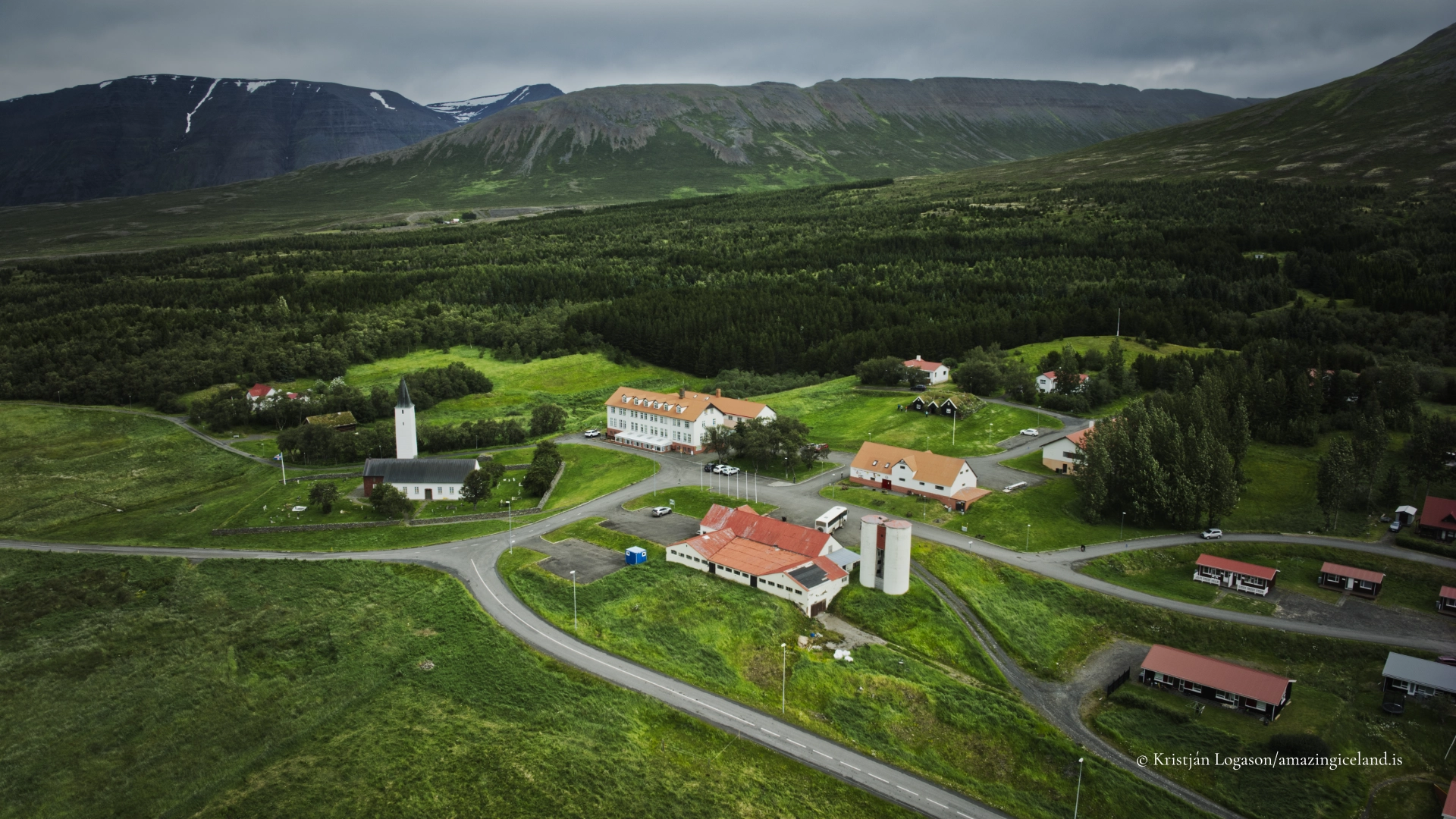
In the valley of Hjaltadalur, in North Iceland, Hólar í Hjaltadal stands as one of the country’s most important historical and cultural centers. For centuries, Hólar functioned as an episcopal seat, an educational institution, and a focal point of intellectual life in northern Iceland.
The location of Hólar í Hjaltadal
Latitude
65.7336
Longitude
-19.1347
Hólar í Hjaltadal
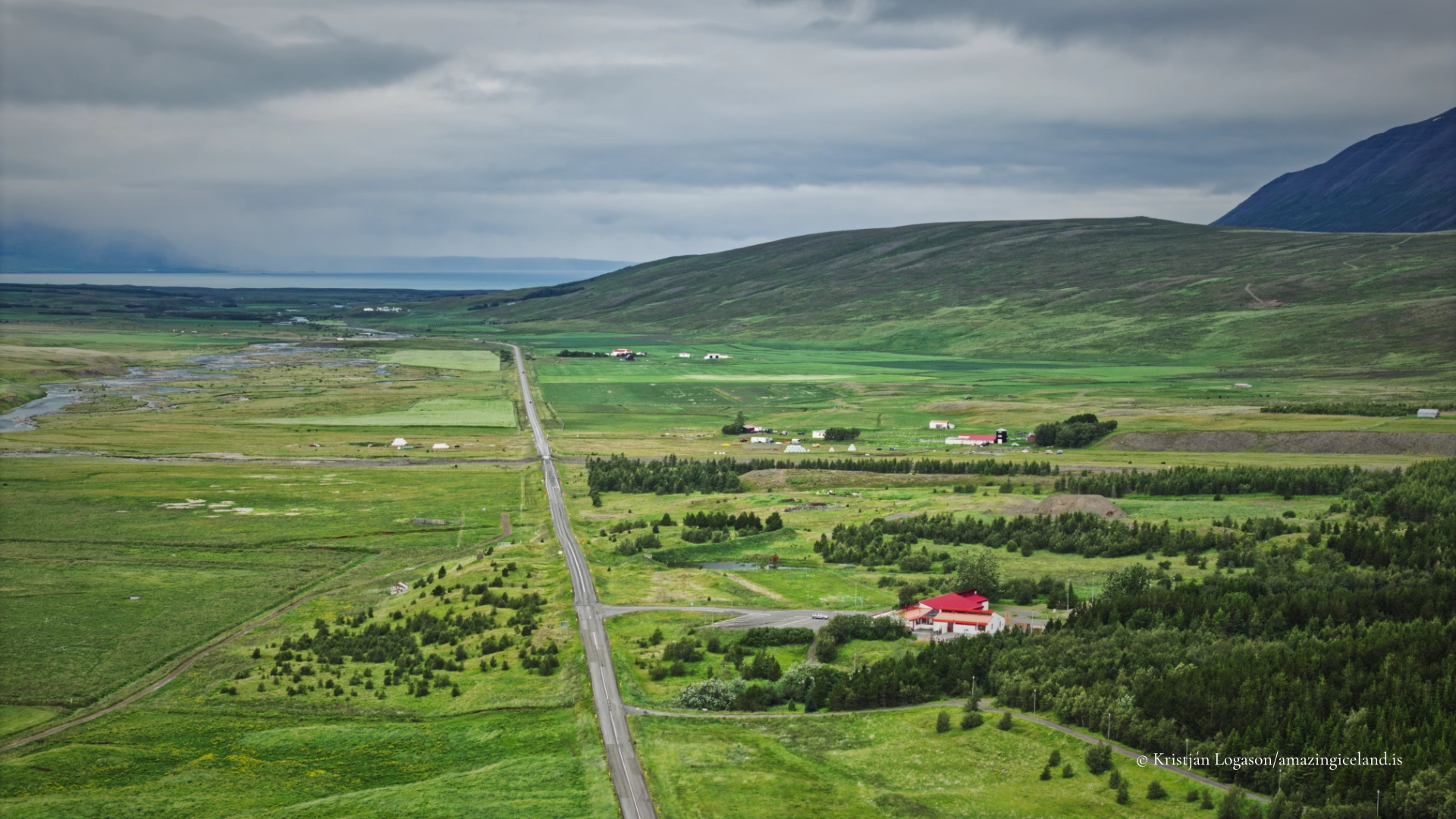
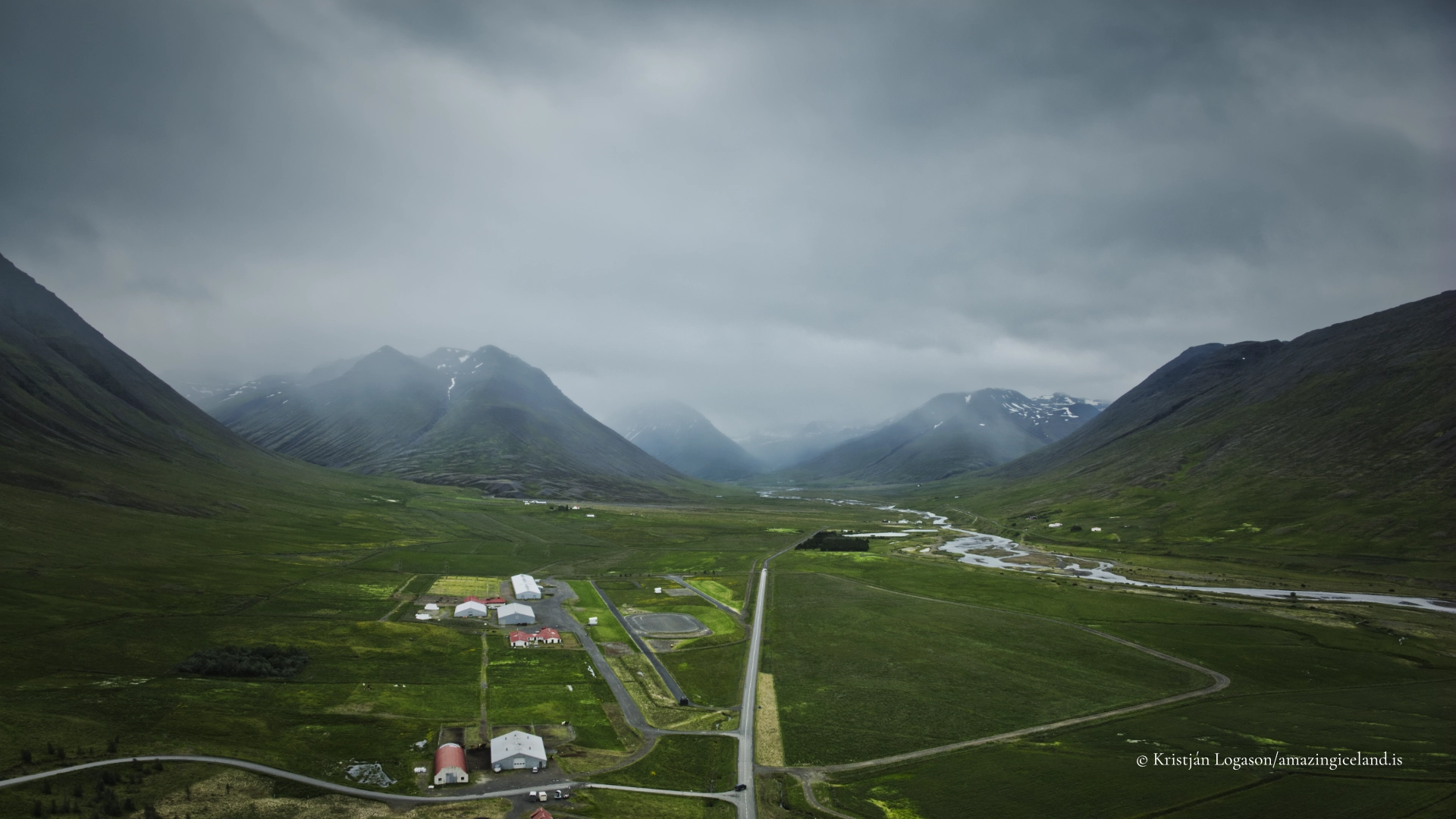
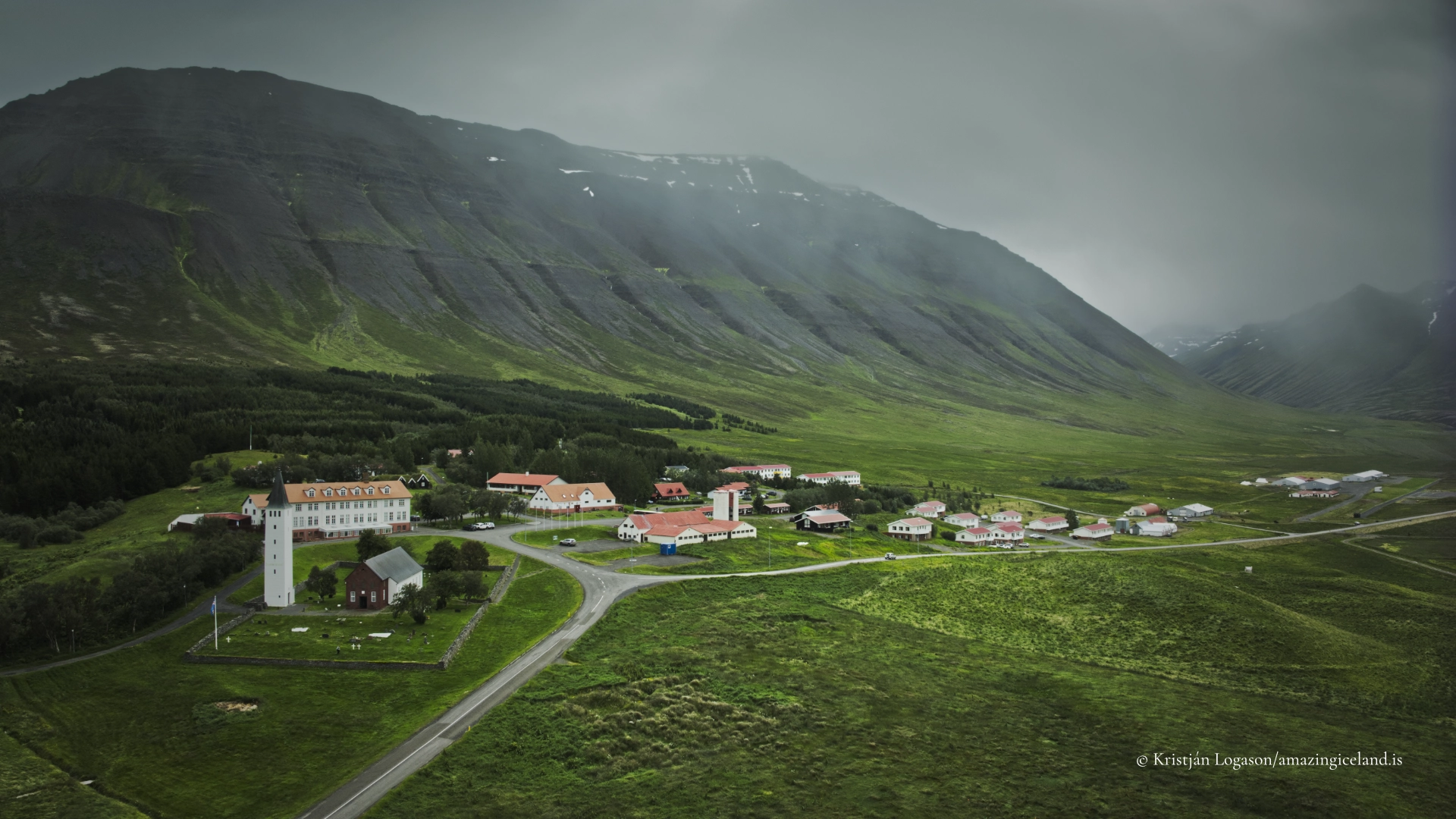
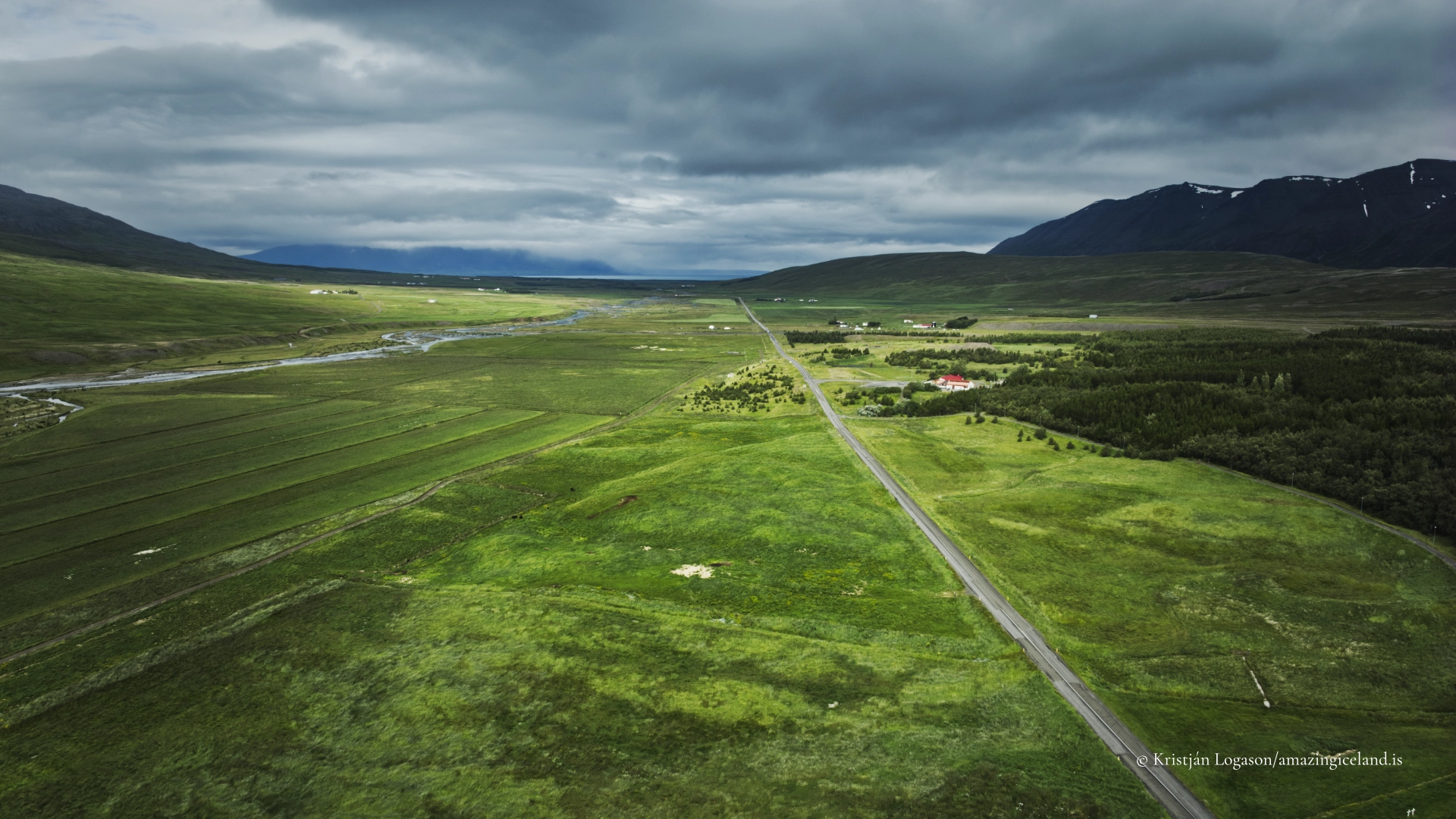
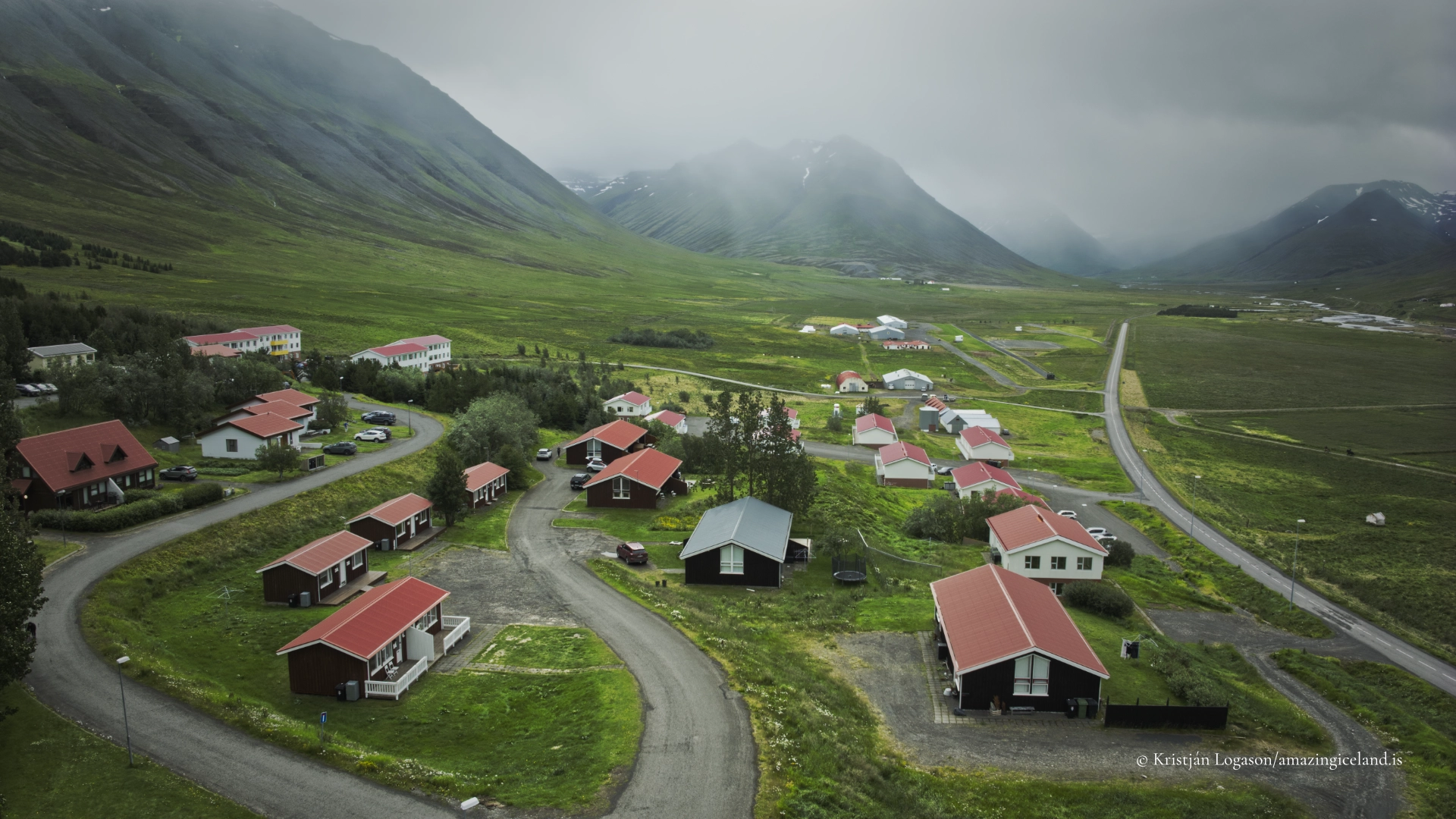
Hólar is situated in Hjaltadalur, a narrow but fertile valley characterized by shelter from wind, access to freshwater, and manageable agricultural land. This setting made sustained institutional presence possible in a region otherwise dominated by dispersed farms and seasonal movement. From a geographical perspective, the valley offers stability rather than abundance—an essential condition for long-term establishment.
The site was founded as an episcopal seat in 1106, making Hólar one of Iceland’s two medieval bishoprics, alongside Skálholt in the south. From its foundation, Hólar served not only as a religious center, but also as an administrative and cultural authority across northern Iceland. Its influence extended far beyond the valley itself, shaping regional governance and education.
Unlike temporary power centers tied to individual chieftains, Hólar represented institutional continuity. Its authority was embedded in buildings, land ownership, and structured learning rather than personal dominance.
Hólar’s role in Icelandic education is central to its significance. For centuries, it functioned as one of the country’s primary learning centers, training clergy, scholars, and administrators. Literacy, manuscript production, and theological study flourished here, contributing directly to the preservation of Icelandic written culture.
The site is closely associated with Guðbrandur Þorláksson, bishop of Hólar from 1571 to 1627. Under his leadership, Hólar became a major center of printing and scholarship. Guðbrandur oversaw the publication of the first complete Icelandic Bible in 1584, a milestone in the development of the Icelandic written language.
This printing activity elevated Hólar from a regional religious center to a national cultural institution. Its output shaped linguistic standardization and ensured continuity of Icelandic literacy during a period of profound religious and political change.
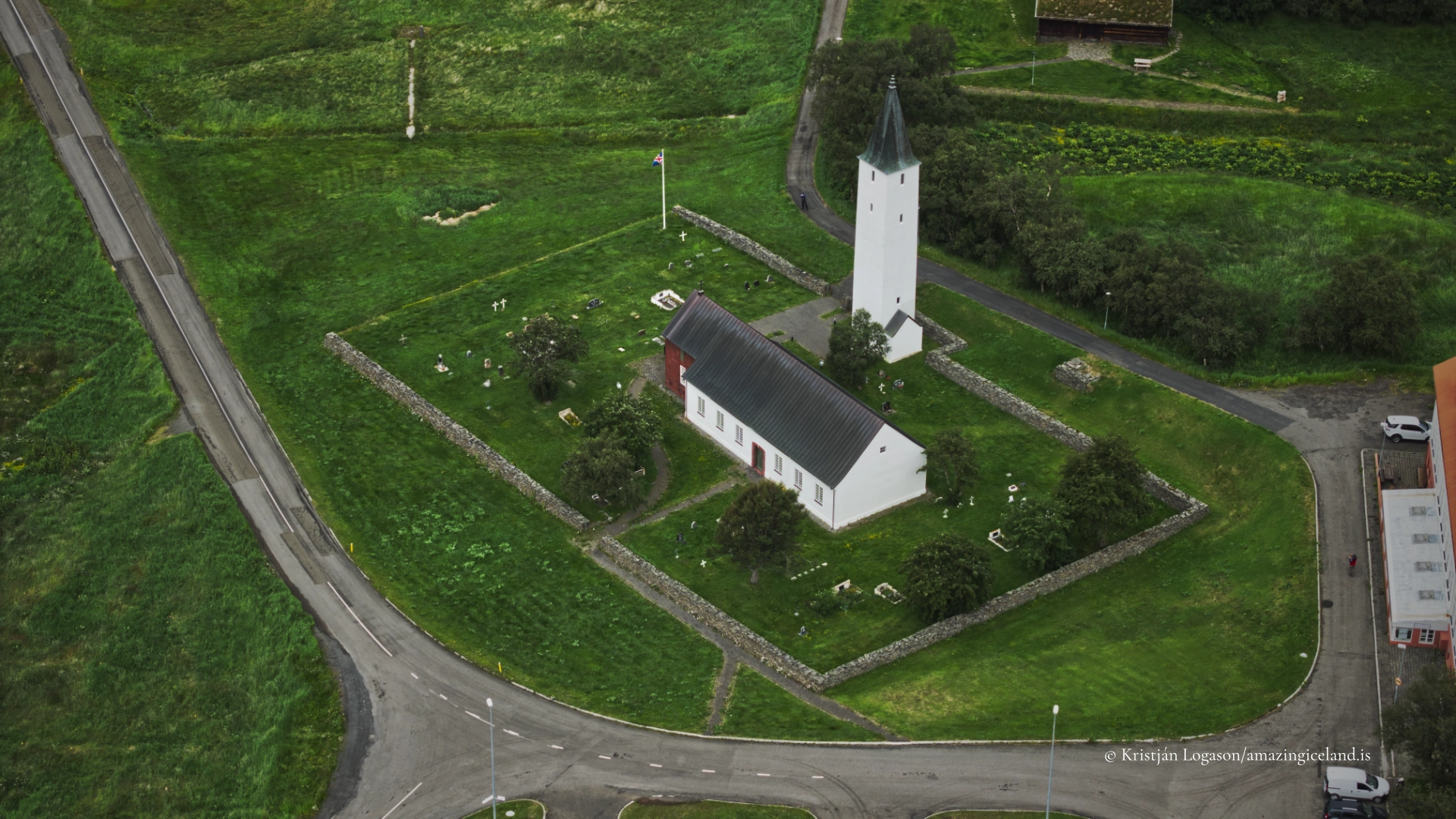
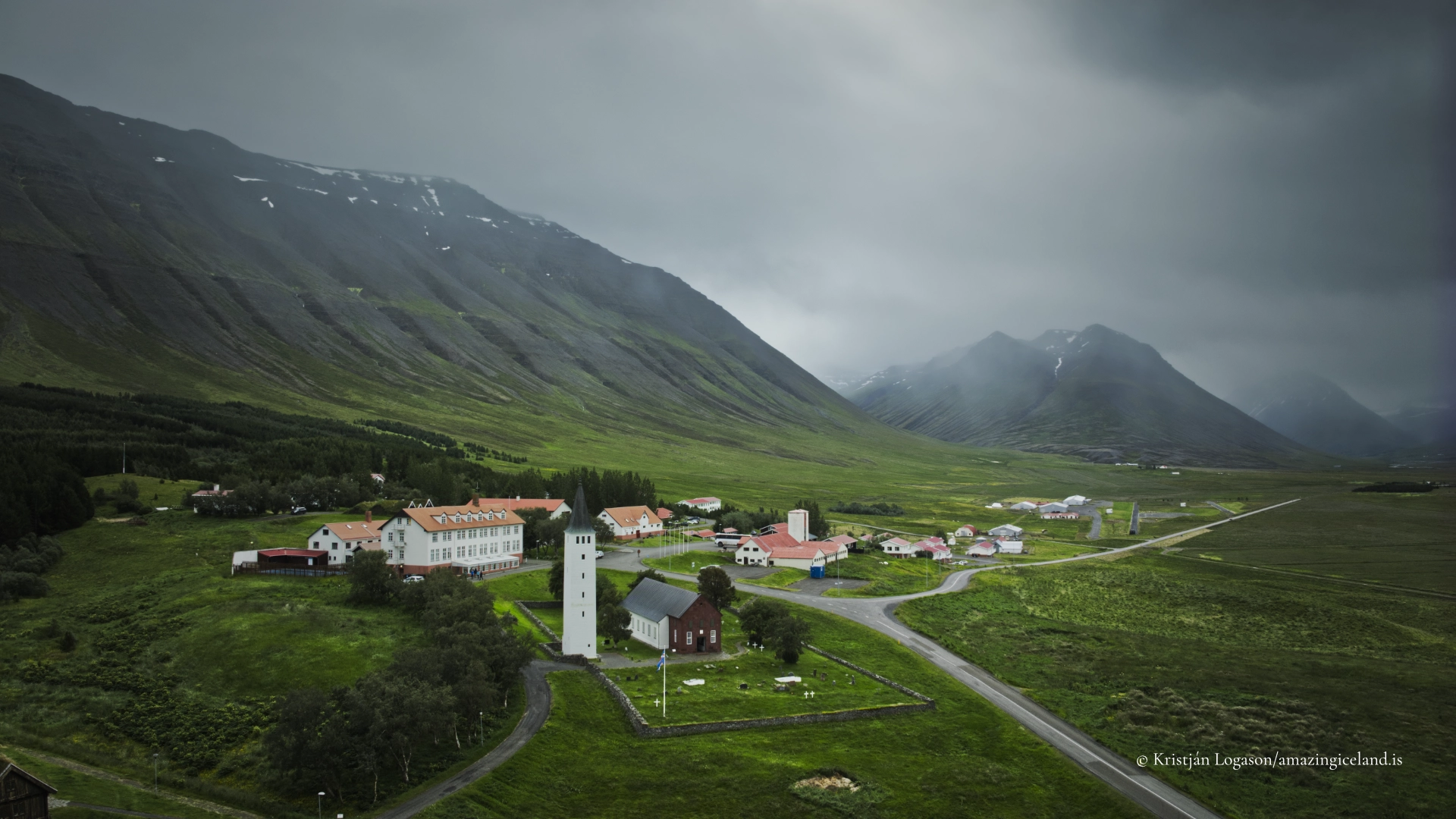
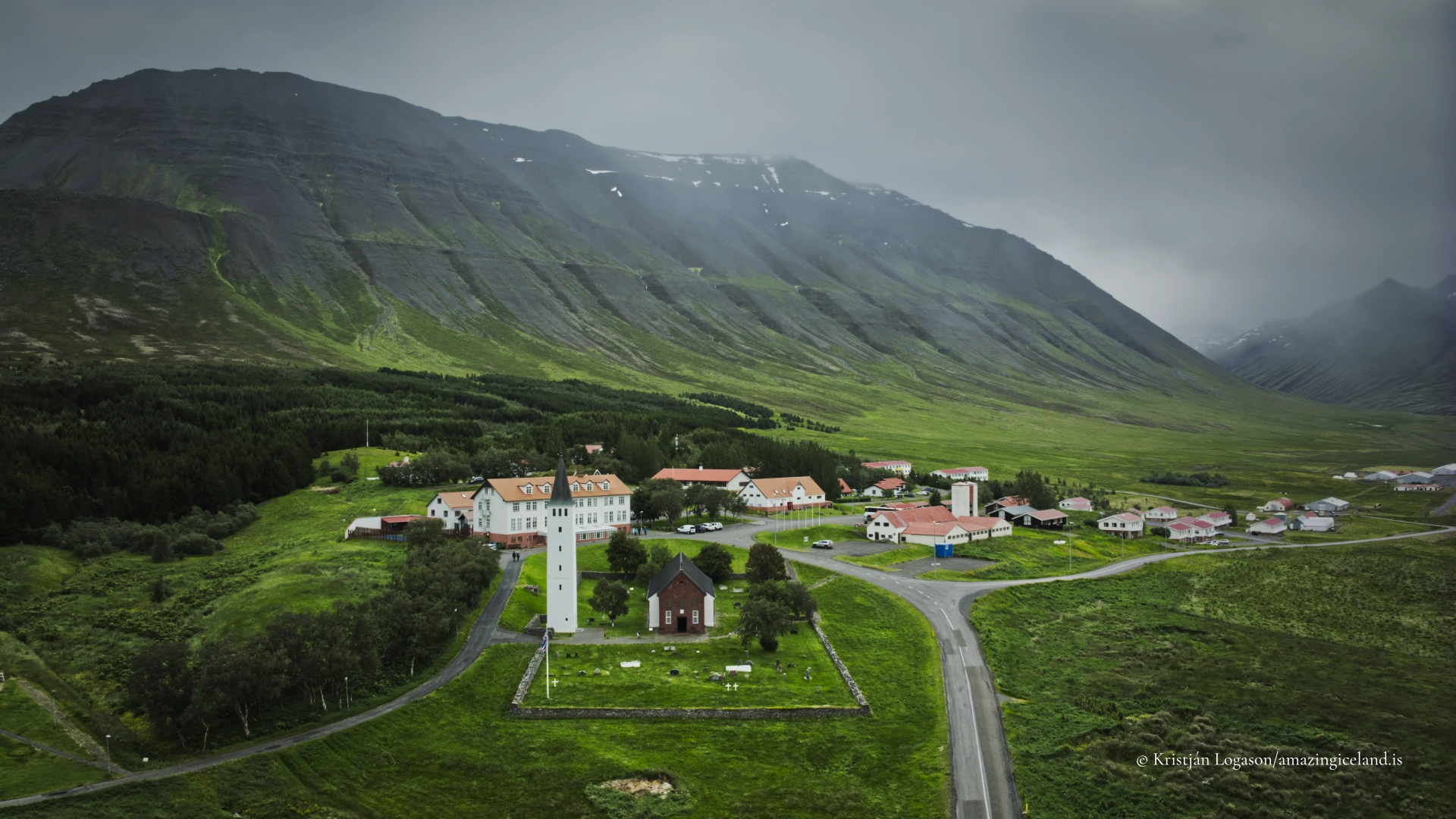
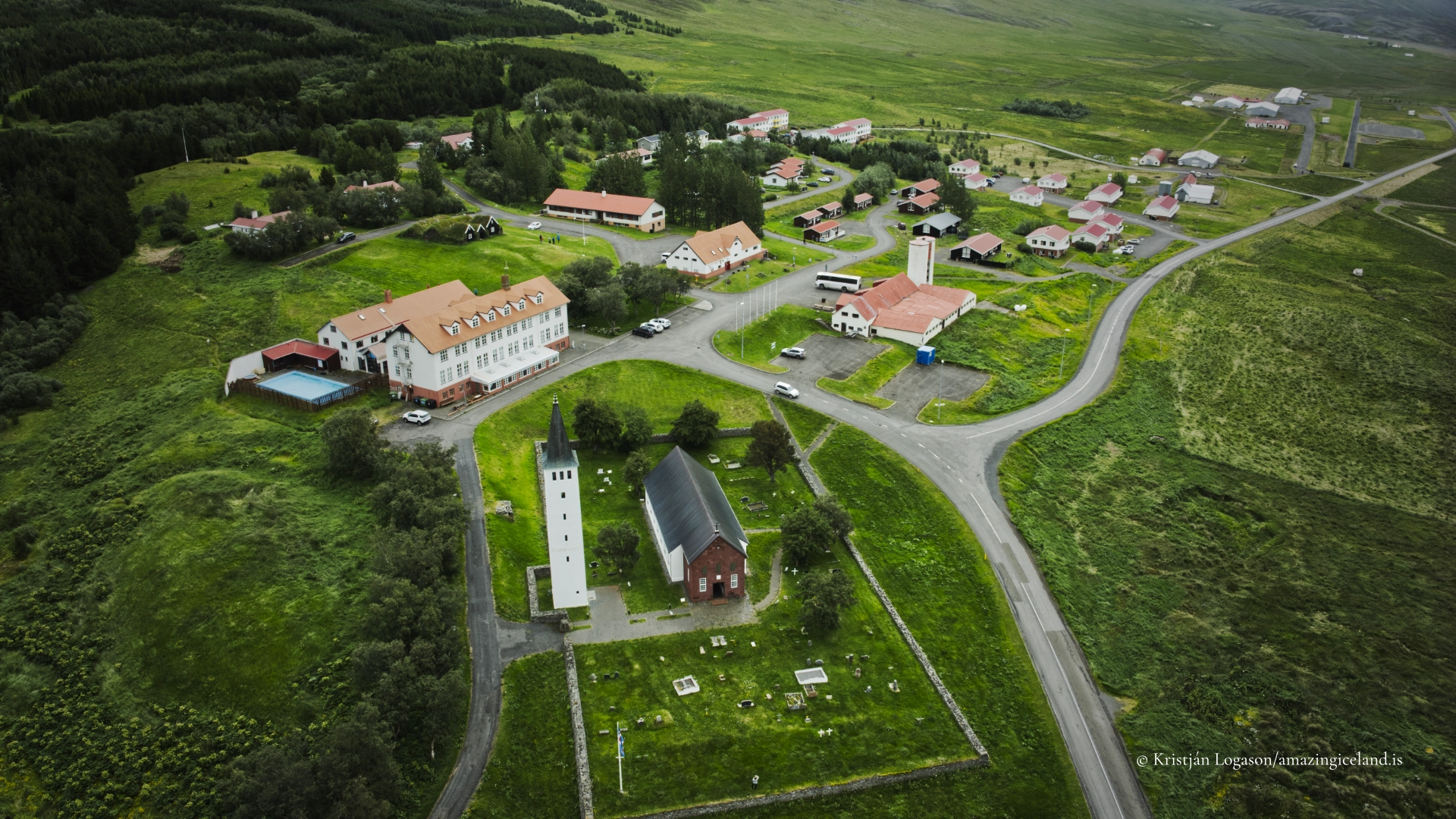
Architecturally, Hólar reflects layered history rather than singular monumentality. The most prominent structure today is Hólar Cathedral, consecrated in 1763. Built of red sandstone, the cathedral is the oldest surviving stone church in Iceland and represents a shift toward permanence and durability in ecclesiastical architecture.
The surrounding buildings include former schoolhouses, residences, and service structures, many adapted or rebuilt over time. Together, they form a compact institutional landscape rather than a traditional village. This spatial concentration reinforces Hólar’s identity as a center rather than a settlement.
Hólar offers a rare example of continuous institutional occupation in Iceland, where most power structures were mobile or short-lived.
Hólar also occupies a complex position in Iceland’s religious history. During the Reformation, the site became a focal point of resistance to Lutheranism under Bishop Jón Arason, who was executed in 1550. His death marked the definitive end of Catholic resistance in Iceland and transformed Hólar’s role within a new religious order.
Rather than declining, Hólar adapted. Under Lutheran governance, it continued as a center of education and culture, demonstrating institutional resilience. This adaptability is key to understanding its longevity.
Today, Hólar houses educational and cultural institutions connected to agriculture, heritage, and research. The site remains active, not as a relic, but as a functional continuation of its historical role.
Hólar í Hjaltadal ultimately represents concentration in a dispersed landscape. It shows how authority, learning, and cultural memory can persist when anchored in place and institution rather than individual power.
Interesting facts:
- Hólar was founded as an episcopal seat in 1106.
- It was one of Iceland’s two medieval bishoprics.
- Hólar Cathedral (1763) is the oldest surviving stone church in Iceland.
- The first complete Icelandic Bible was printed at Hólar in 1584.
- The site remains an active educational and cultural center.
Image Gallery
The Locomotive Elite
What do Donald Trump and Iceland’s Locomotive Elite have in common?
Far more than you think.
In The Locomotive Elite, you’ll uncover how a tiny clique in Iceland captured extensive control—of banks, courts, media, and even the central bank.
For decades they ruled, first democratically, then through corruption and in the end through crime, enriching themselves and their cronies while dismantling oversight.
The result?
One of the most spectacular financial collapses in modern history.
Photography tips:
- Work with structure: Buildings carry meaning—compose clearly and without distortion.
- Include the valley: Hjaltadalur explains why the site endures.
- Avoid dramatization: Neutral light suits institutional history.
- Detail matters: Stone, inscriptions, and surfaces carry narrative weight.
- Seasonal restraint: Winter emphasizes form; summer emphasizes continuity.
Good cameras for Iceland
Sony A7R V

Sony A7s lll

Canon R6

Nikon Z6 lll

Destinations nearby
Good to have in Iceland