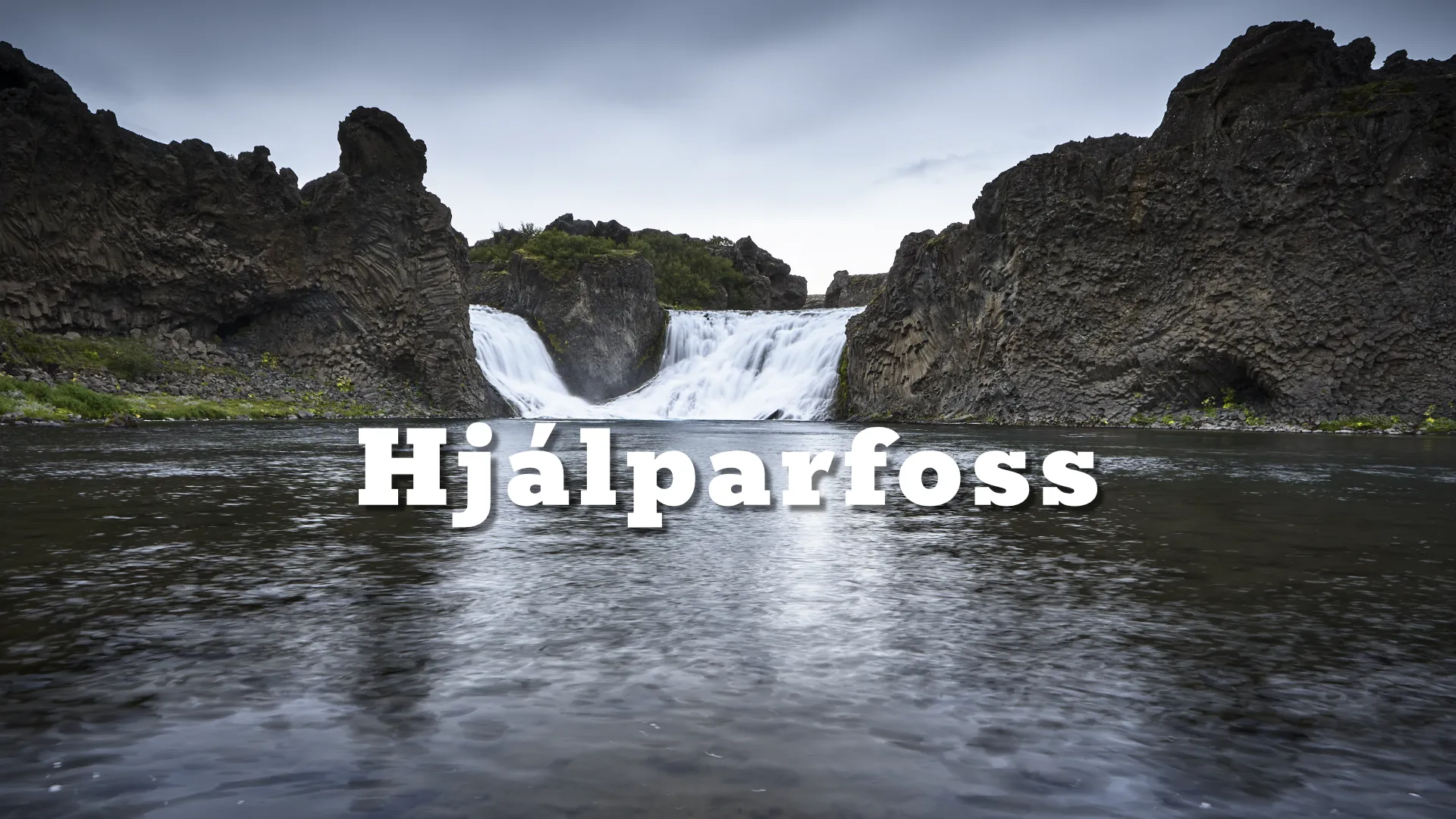
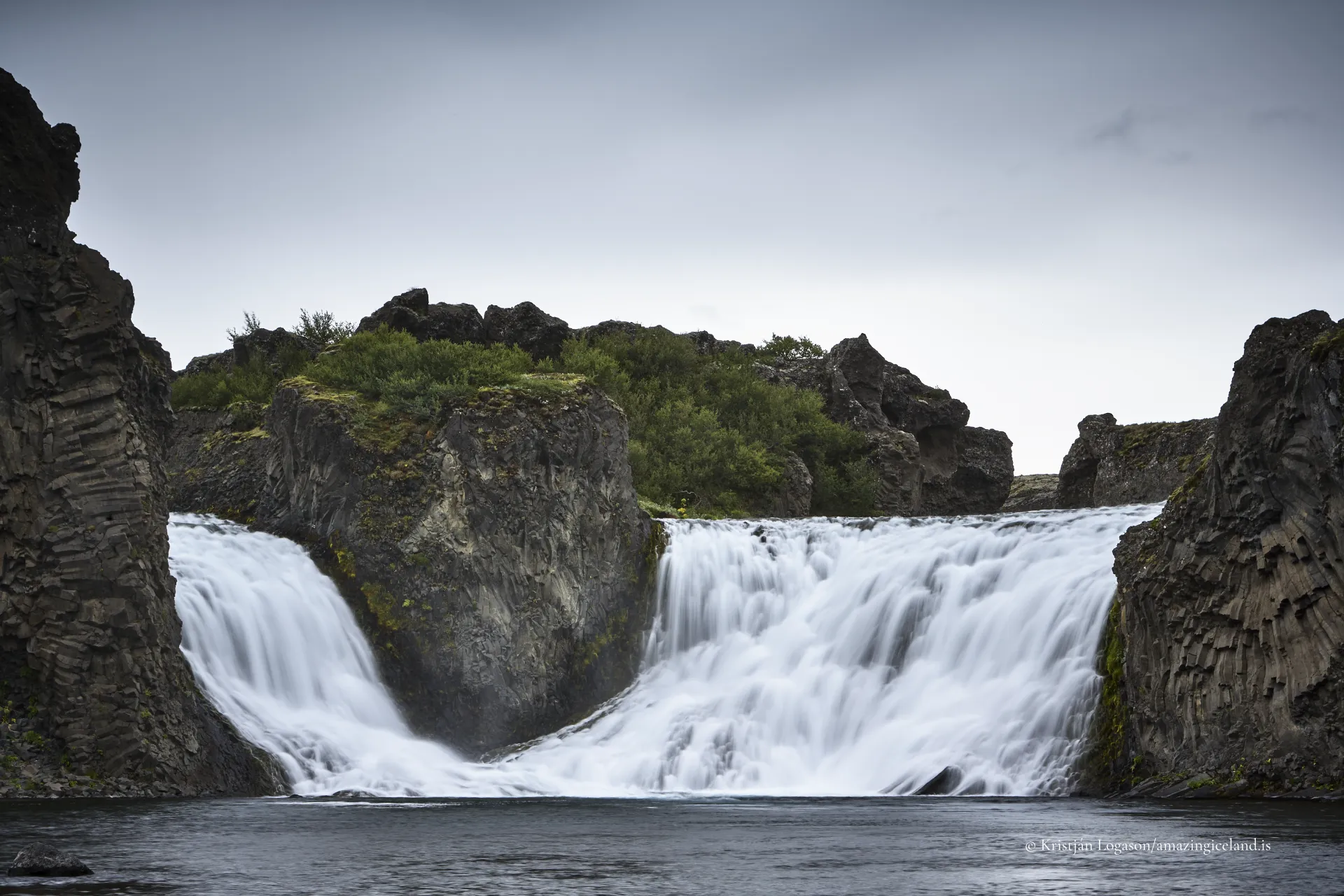
In Þjórsárdalur, where the river Fossá meets the greater Þjórsá, Hjálparfoss descends in two parallel cascades over a basalt ledge. The waterfall’s form reflects volcanic structure more than erosive depth.
The location of Hjálparfoss waterfall
Latitude
64.1267
Longitude
-19.8958
Hjálparfoss waterfall
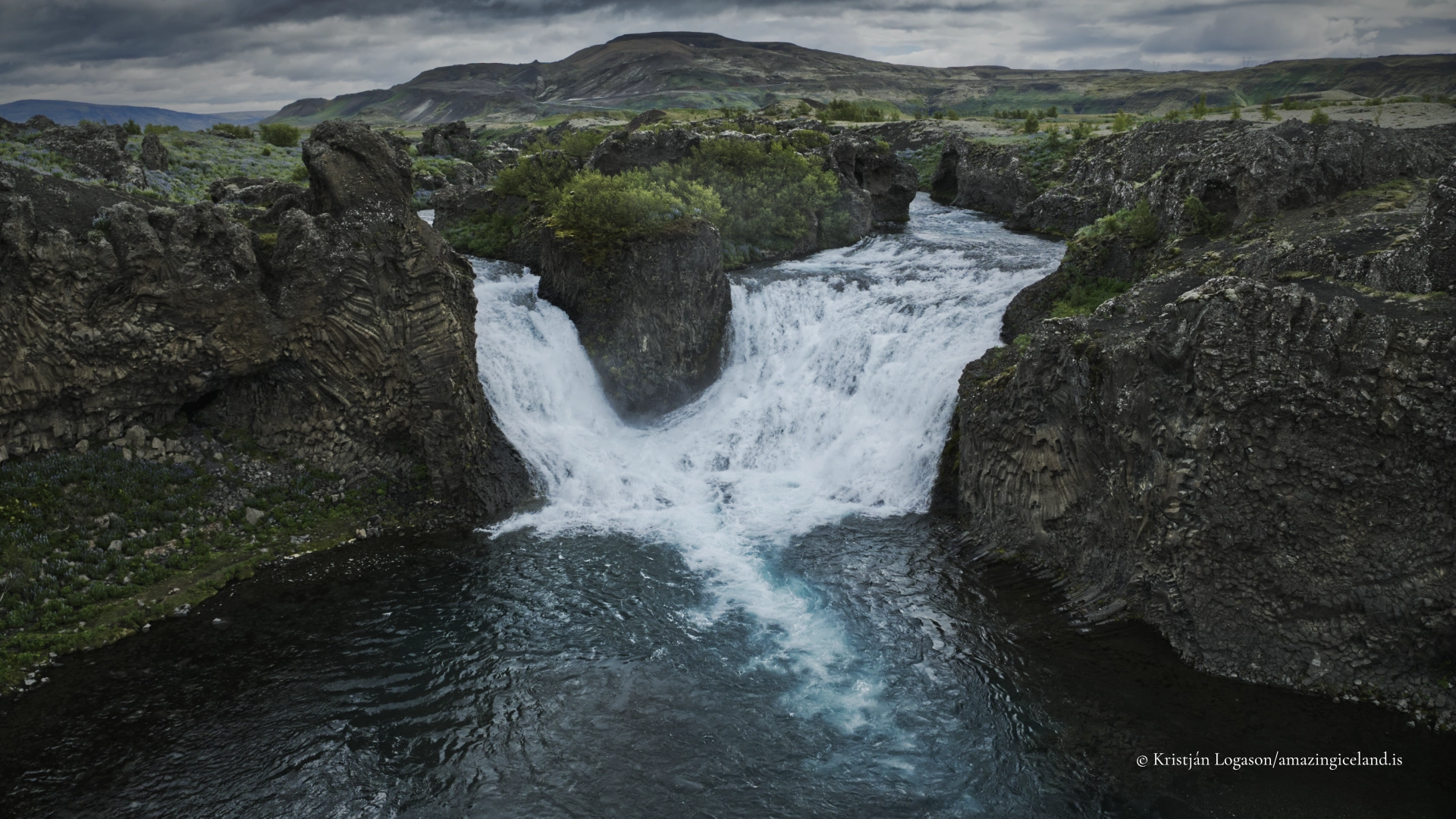
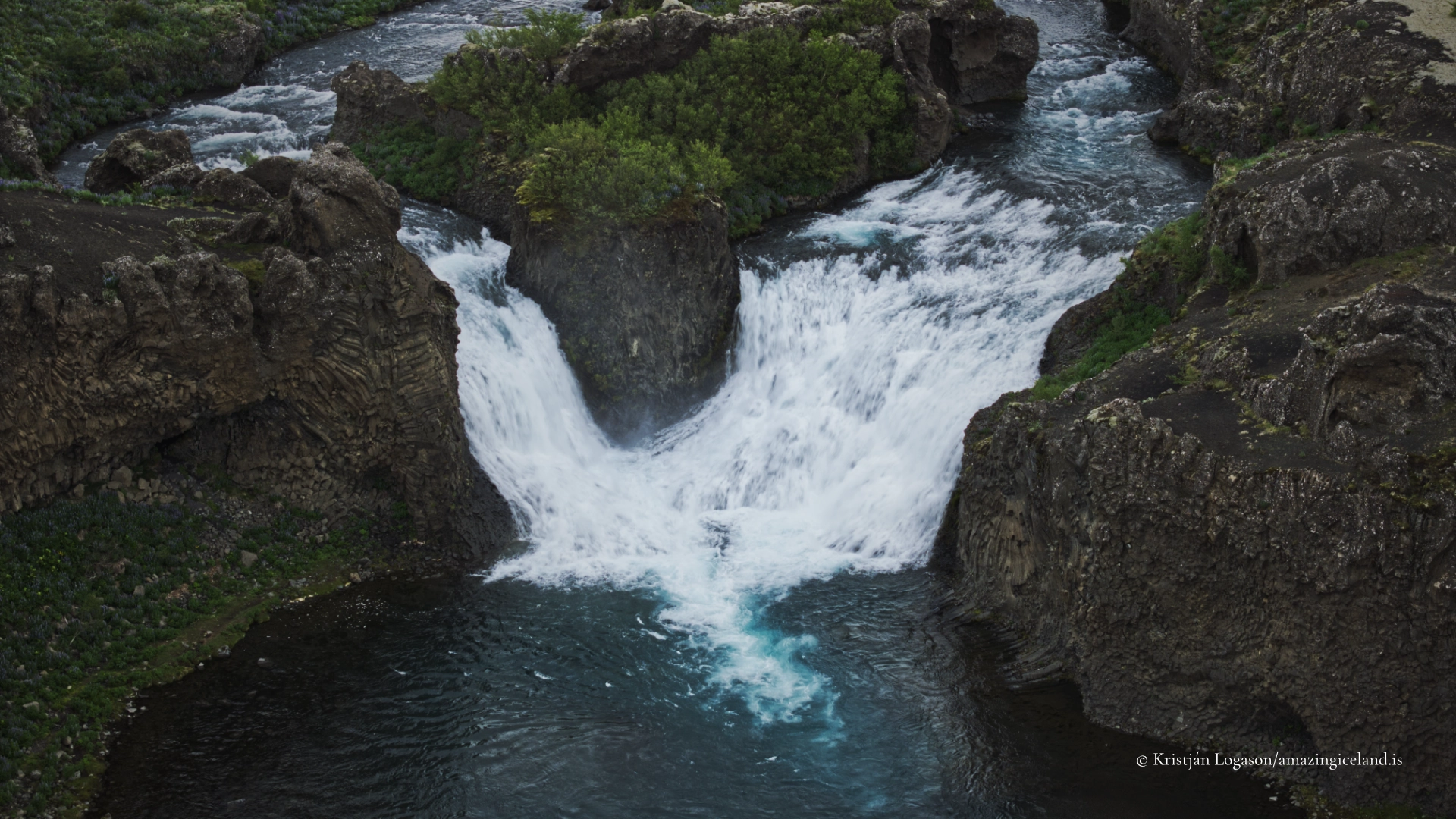
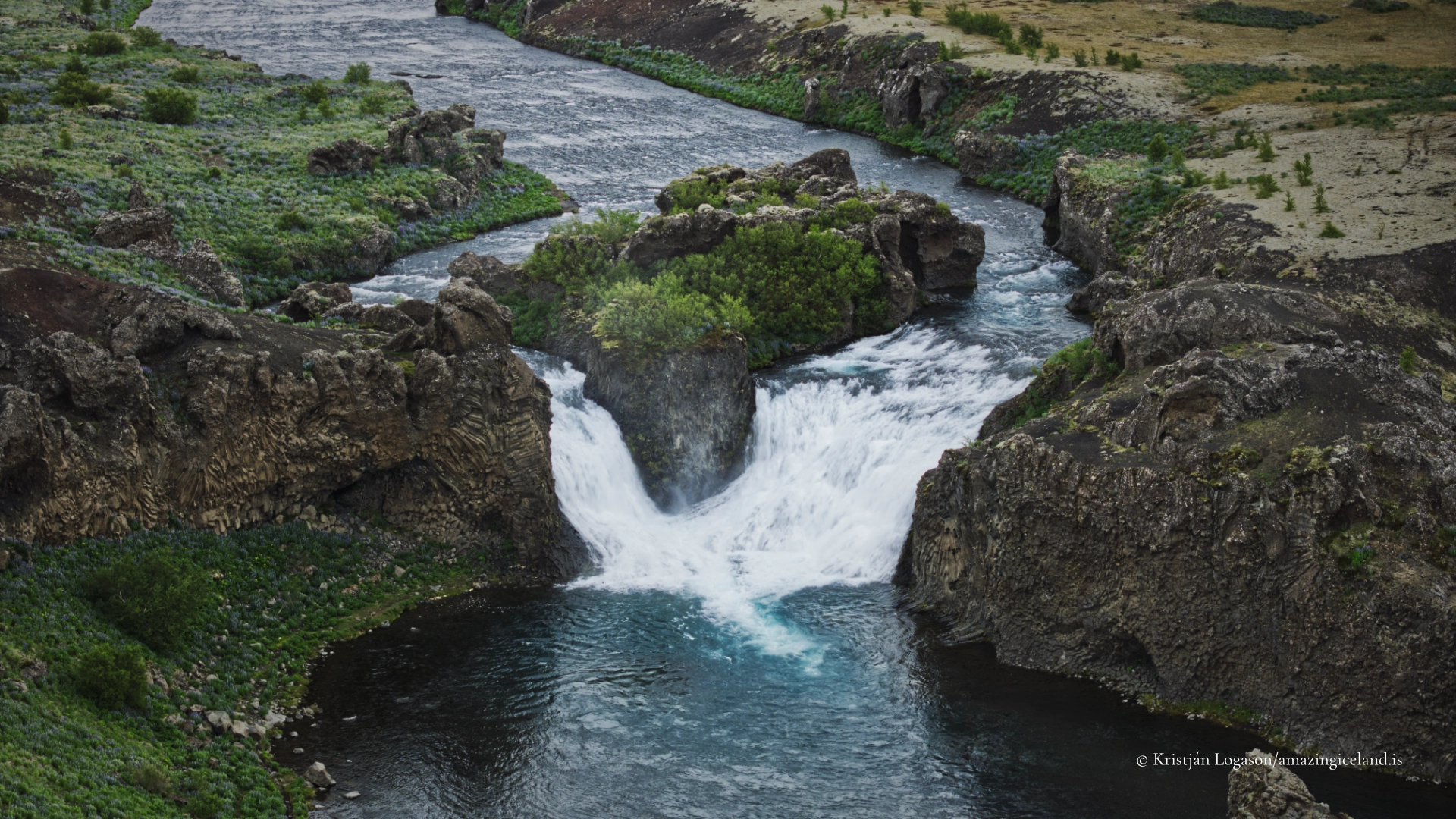
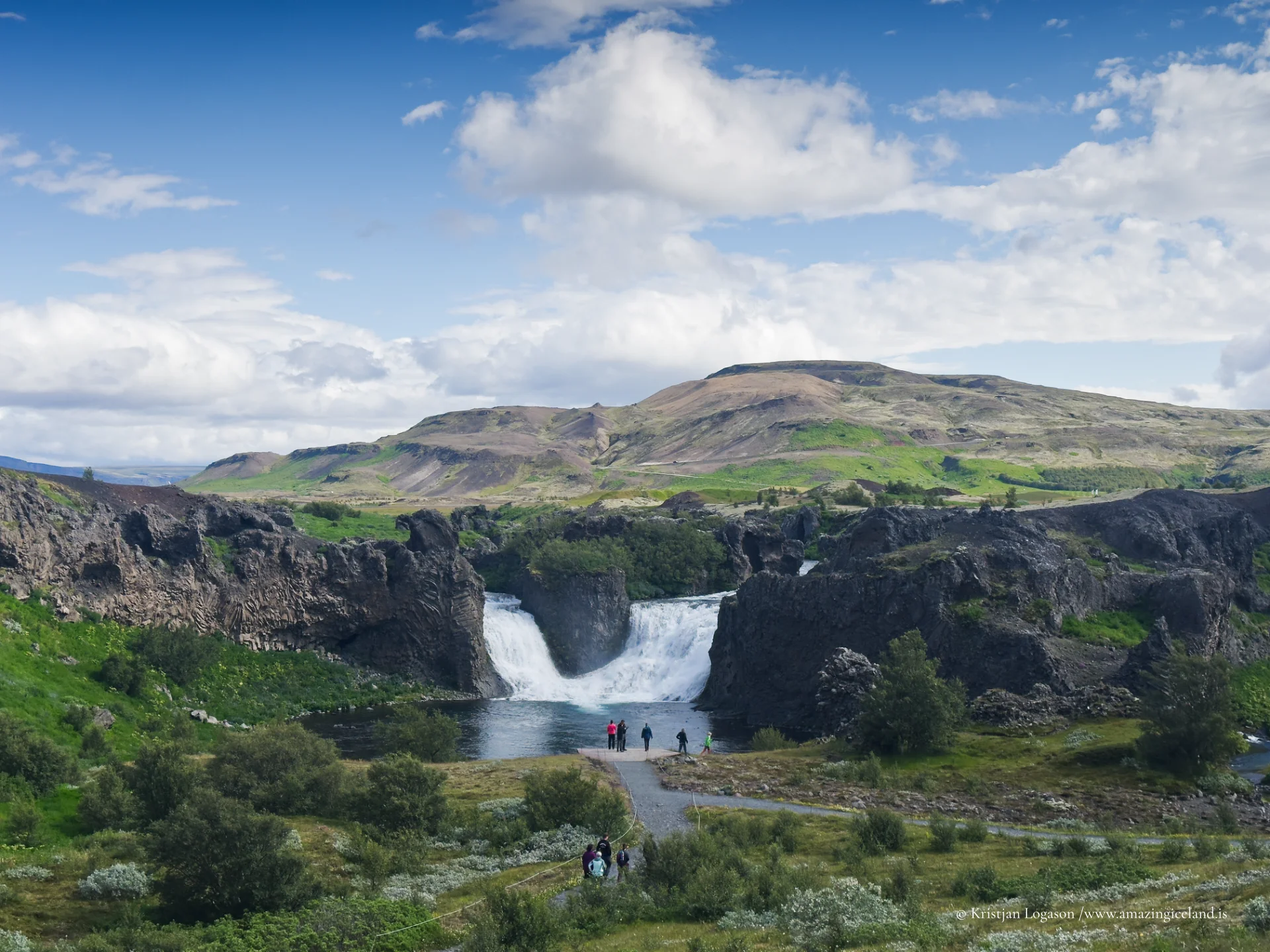
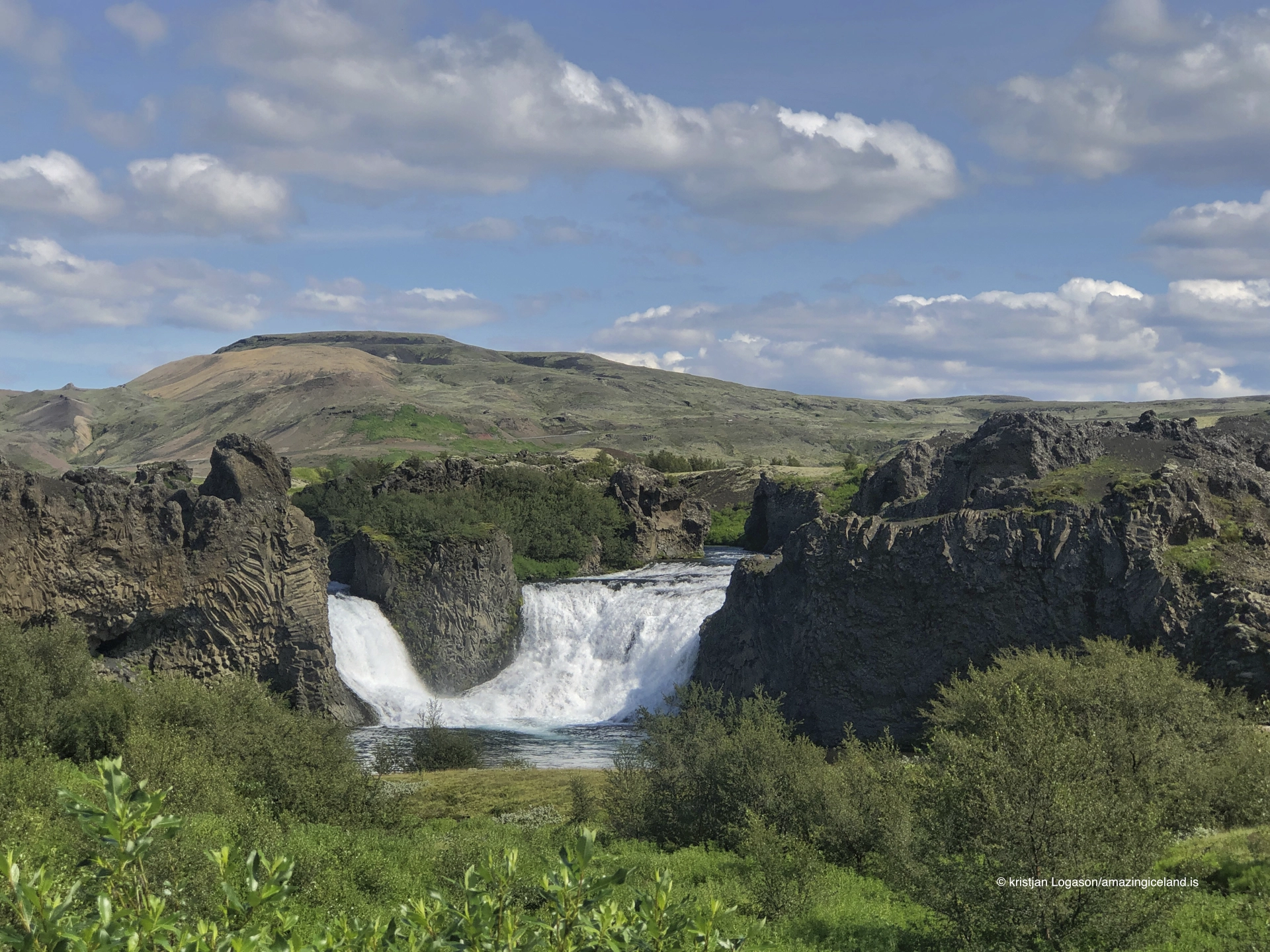
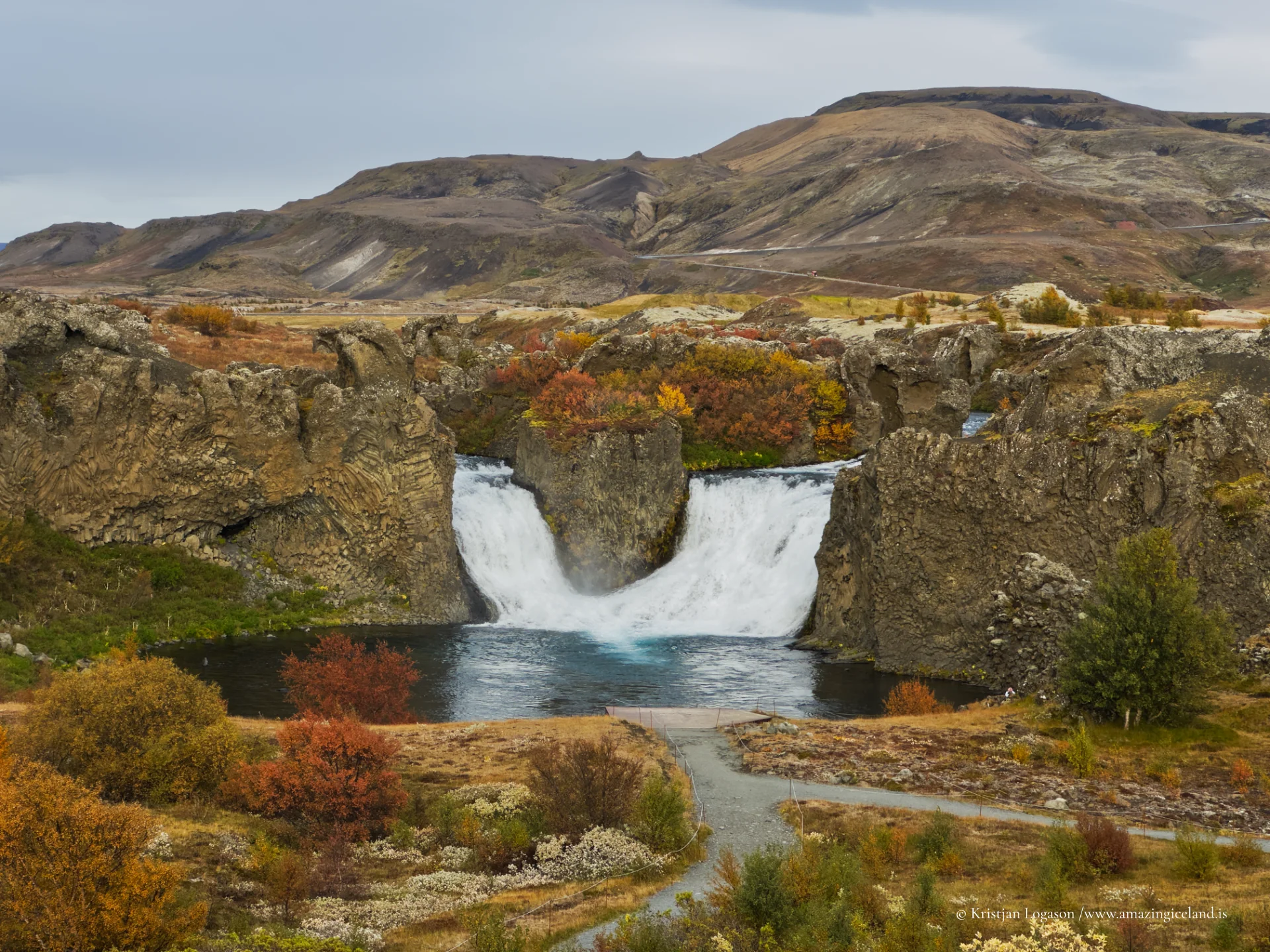
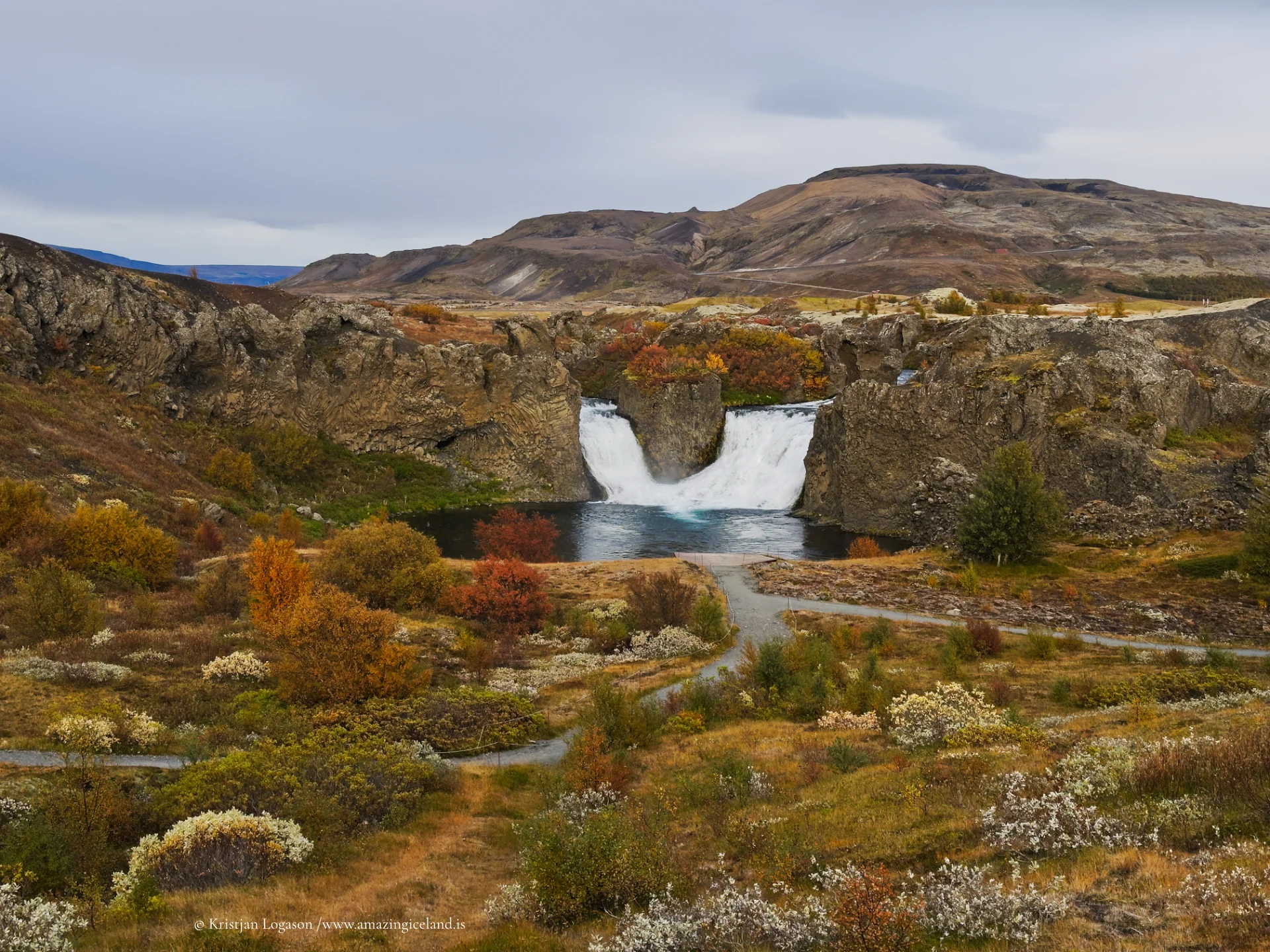
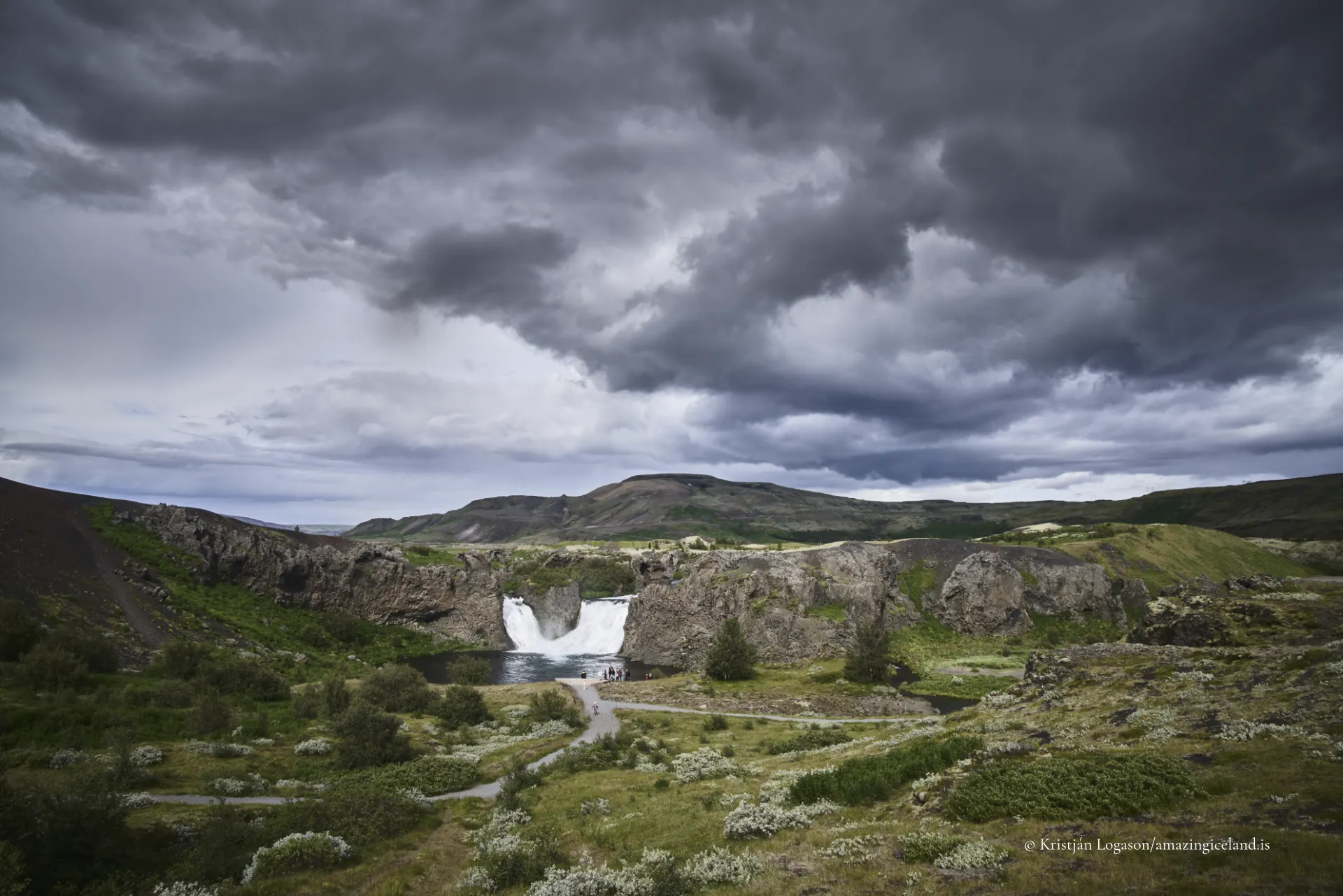
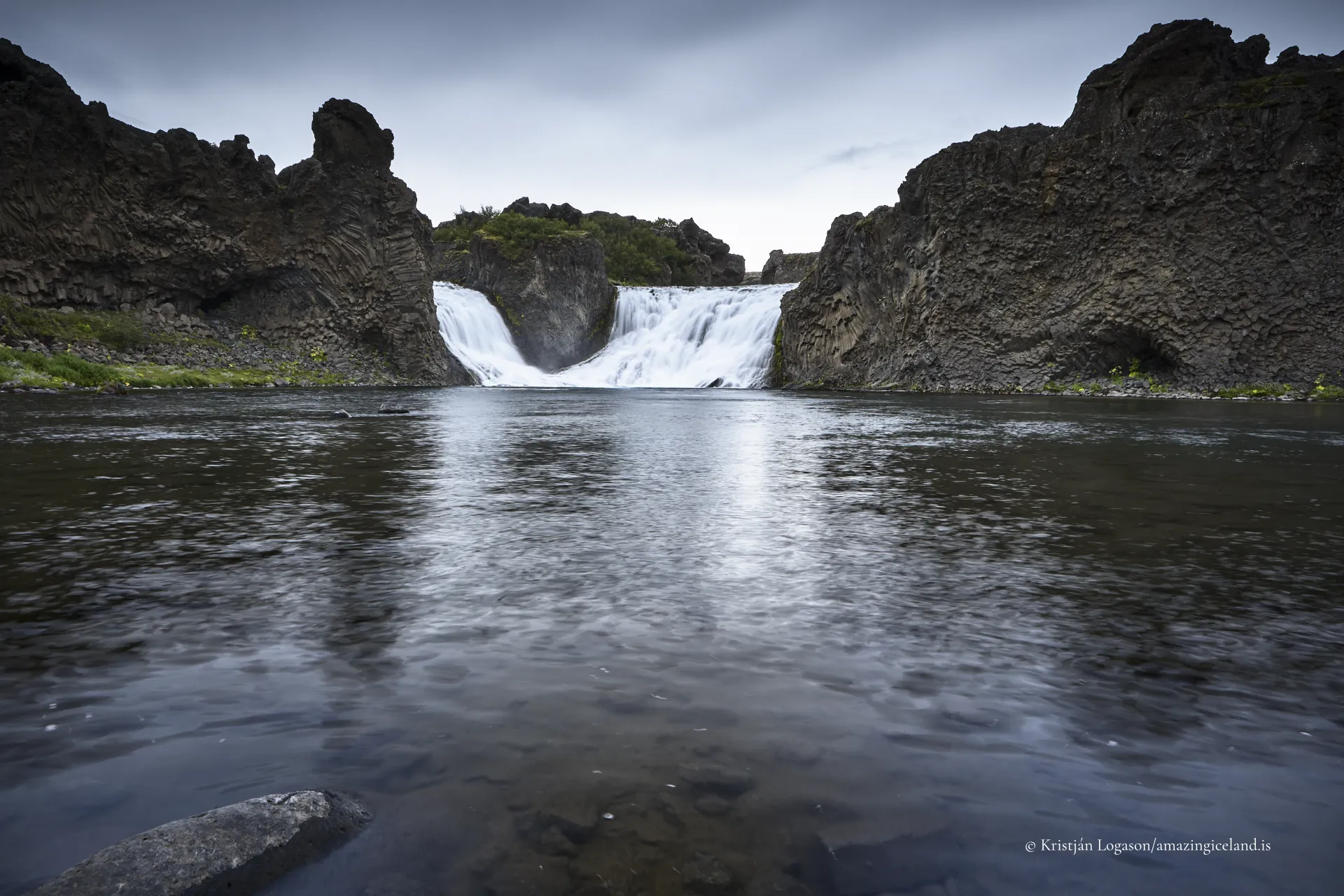
Hjálparfoss consists of two adjacent waterfalls separated by a central rock formation. The cascades drop approximately 20 meters into a broad, bowl-shaped pool before merging downstream. This twin configuration is not coincidental; it results from the geometry of the underlying lava flows.
The basalt substrate, formed during historical eruptions of Hekla, created a stepped ledge across the river course. Over time, water exploited vertical fractures within the basalt, producing two primary descent channels rather than a single continuous fall.
From a geomorphological perspective, Hjálparfoss is an example of structurally guided fluvial erosion, where volcanic layering dictates waterfall form.
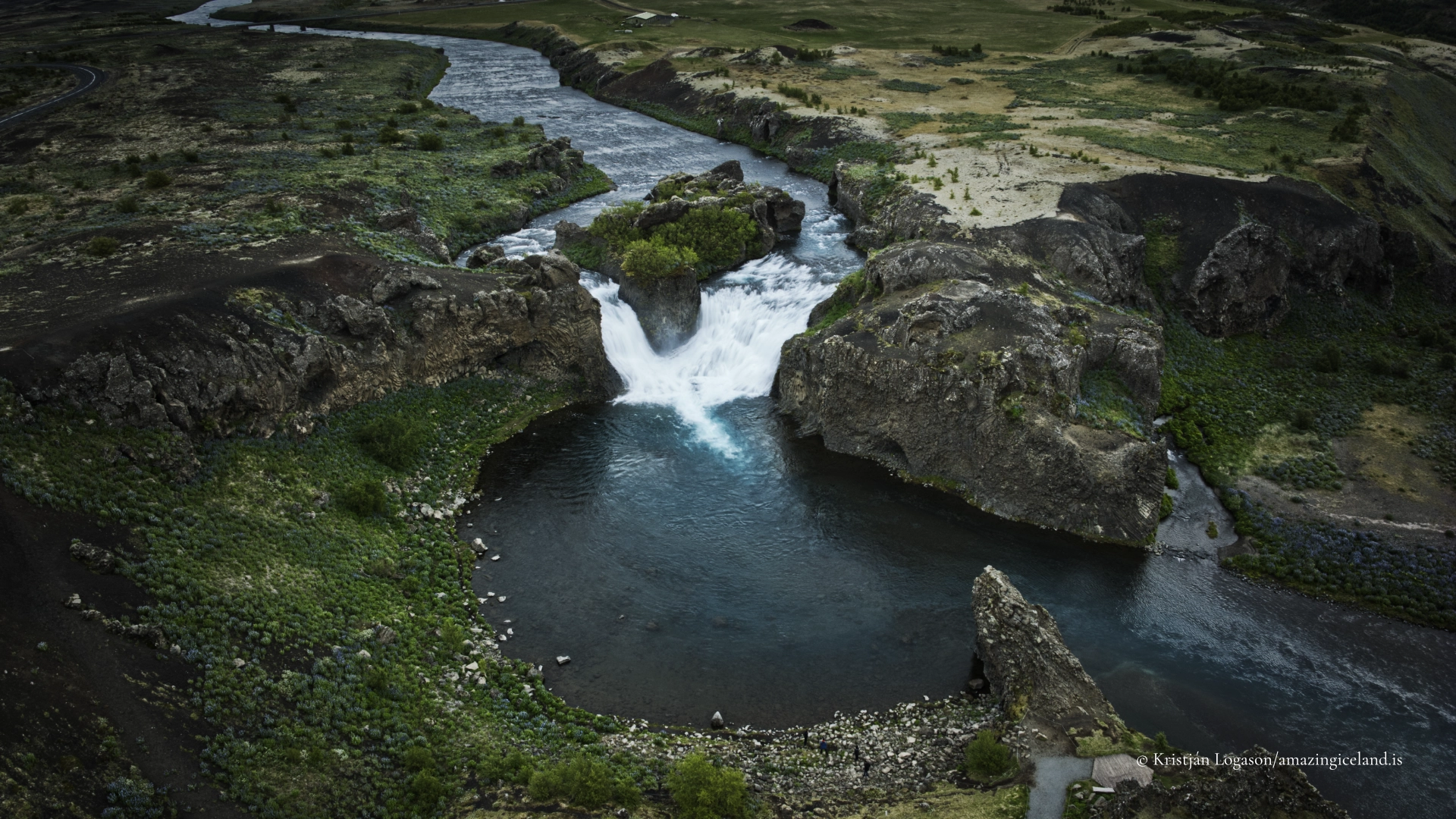
Hydrologically, Hjálparfoss marks the meeting point of Fossá and Þjórsá. The latter is Iceland’s longest river, carrying significant glacial and highland meltwater. The confluence increases discharge below the falls, though the waterfall itself is primarily shaped by the smaller Fossá channel.
Seasonal variation influences water clarity and volume. During snowmelt and heavy rainfall, discharge increases substantially, amplifying both width and sound intensity. In drier periods, the twin structure becomes more visually distinct.
Unlike waterfalls fed directly by glaciers, Hjálparfoss does not typically exhibit heavy sediment coloration, though upstream conditions can influence turbidity.
The name “Hjálparfoss” translates to “Help’s waterfall.” Historical accounts suggest the site offered relief and freshwater access to travelers crossing the harsher interior routes of Iceland. The waterfall’s location at the edge of highland approaches made it a practical stopping point.
This functional history aligns with the broader settlement narrative of Þjórsárdalur, where farms such as Stöng once occupied the valley before volcanic disruption in the 12th century.
The waterfall therefore belongs not only to geological structure but also to patterns of movement and survival within a marginal environment.
Basalt columns frame portions of the amphitheater surrounding Hjálparfoss. These columnar formations result from cooling contraction of thick lava flows. Their vertical alignment contrasts with the horizontal water surface below, reinforcing the visual symmetry of the twin cascades.
The bowl-shaped plunge pool demonstrates how hydraulic energy concentrates at the base of the falls, gradually enlarging and smoothing the basin over time. Despite this ongoing erosion, the overall structure remains stable due to the durability of basalt.
Infrastructure near the site remains limited and practical, with access paths and parking positioned to preserve the basin’s open form.
Hjálparfoss ultimately represents balance: two streams converging, two cascades descending, volcanic rigidity meeting fluid motion. It is not the tallest waterfall in the region, but it is among the most structurally coherent.
The site demonstrates how Icelandic waterfalls often emerge where lava fields intersect active river systems, producing form through fracture rather than sheer drop.
Interesting facts:
- Hjálparfoss consists of two parallel cascades.
- The falls drop approximately 20 meters.
- It lies at the confluence of Fossá and Þjórsá rivers.
- The surrounding basalt columns formed through cooling contraction of lava.
- The name suggests the waterfall historically aided travelers crossing the region.
Image Gallery

The Locomotive Elite
What do Donald Trump and Iceland’s Locomotive Elite have in common?
Far more than you think.
In The Locomotive Elite, you’ll uncover how a tiny clique in Iceland captured extensive control—of banks, courts, media, and even the central bank.
For decades they ruled, first democratically, then through corruption and in the end through crime, enriching themselves and their cronies while dismantling oversight.
The result?
One of the most spectacular financial collapses in modern history.
Photography tips:
- Center the symmetry: The twin falls are the defining feature.
- Use mid-range focal lengths: Preserve proportion without distortion.
- Overcast conditions help: They soften contrast between water and basalt.
- Include the plunge pool: It anchors the composition.
- Work slightly elevated: This reveals the amphitheater structure.
Good cameras for Iceland
Sony A7R V

Sony A7s lll

Canon R6

Nikon Z6 lll

Destinations nearby
Good to have in Iceland