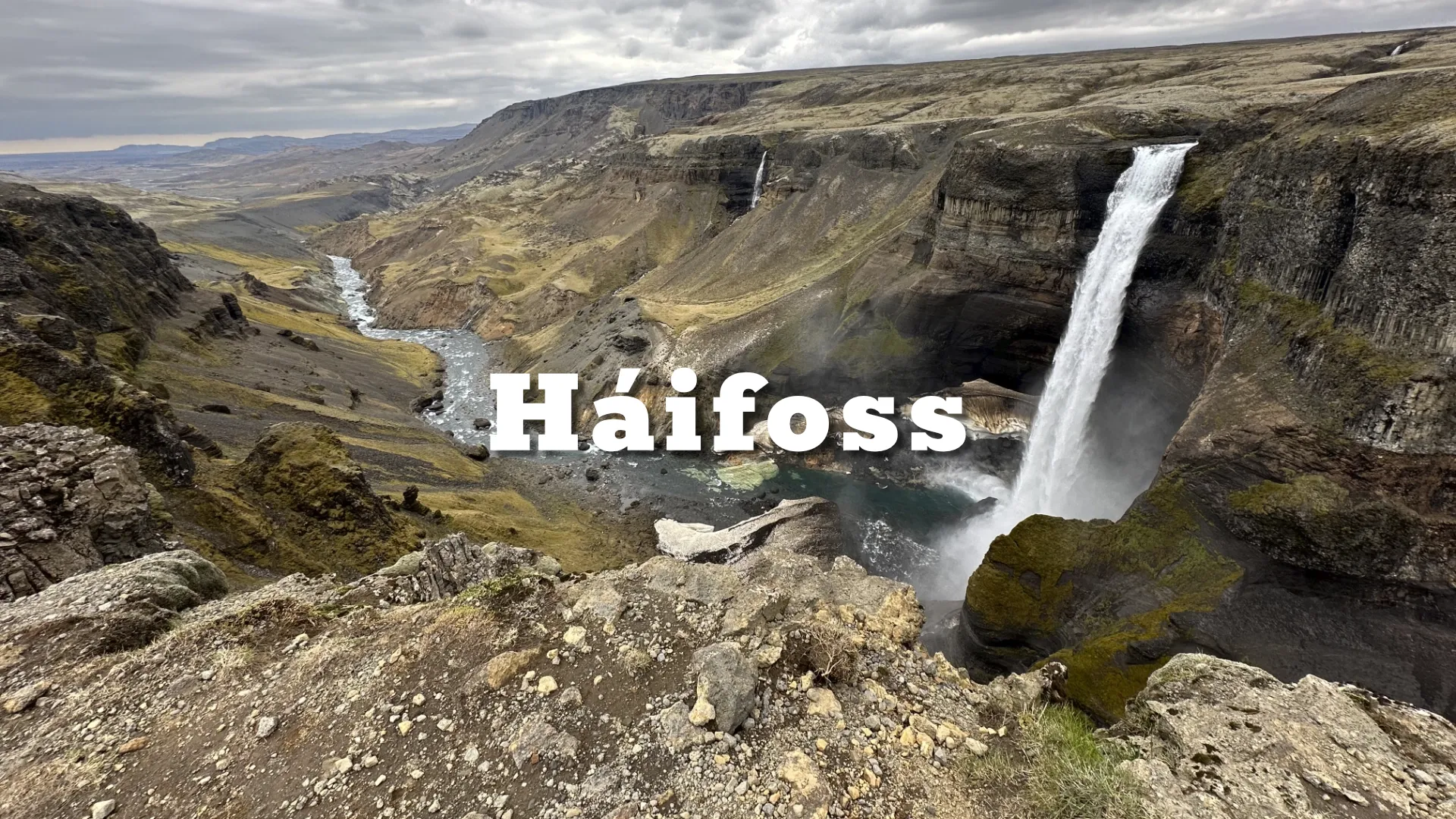
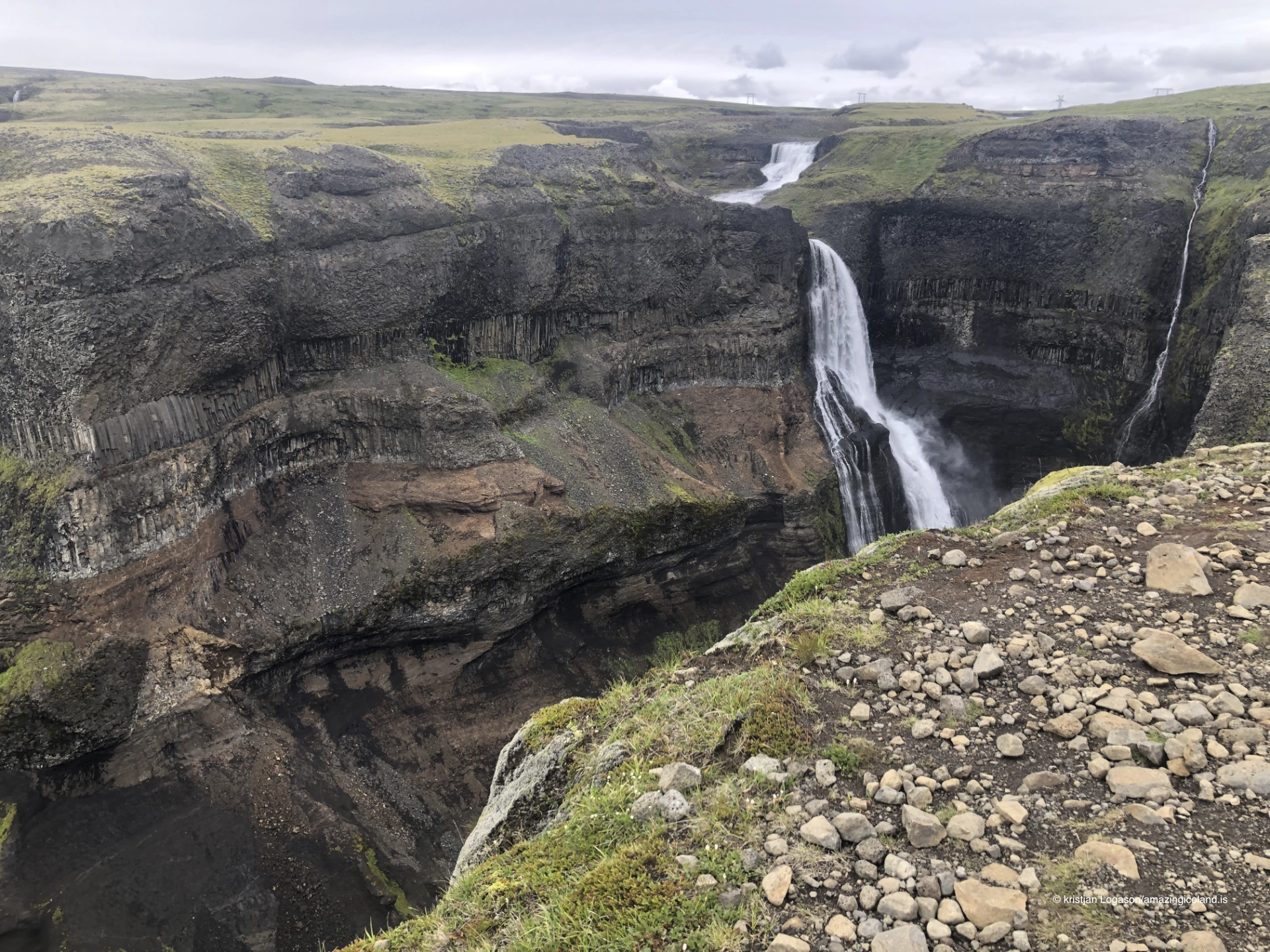
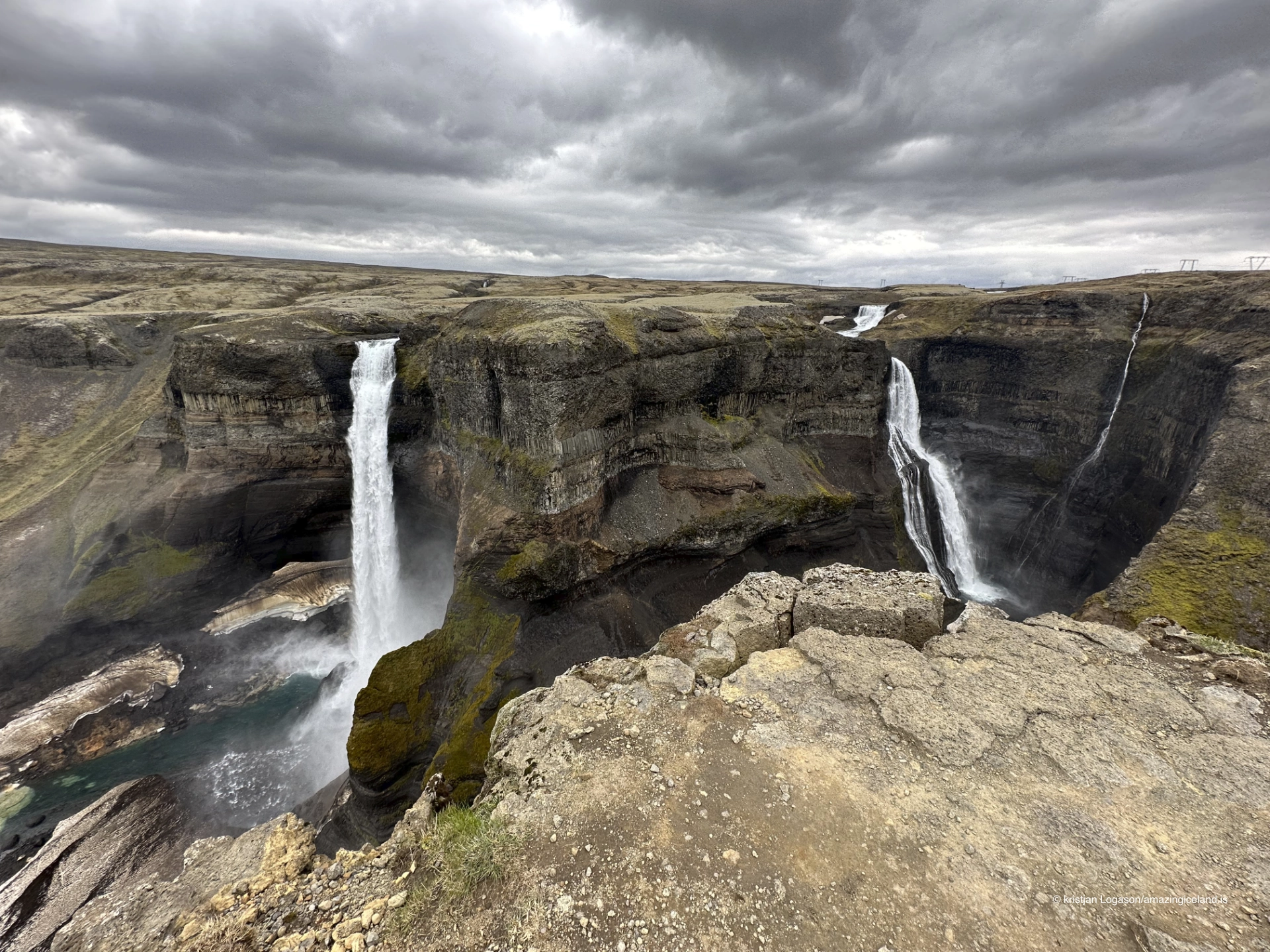
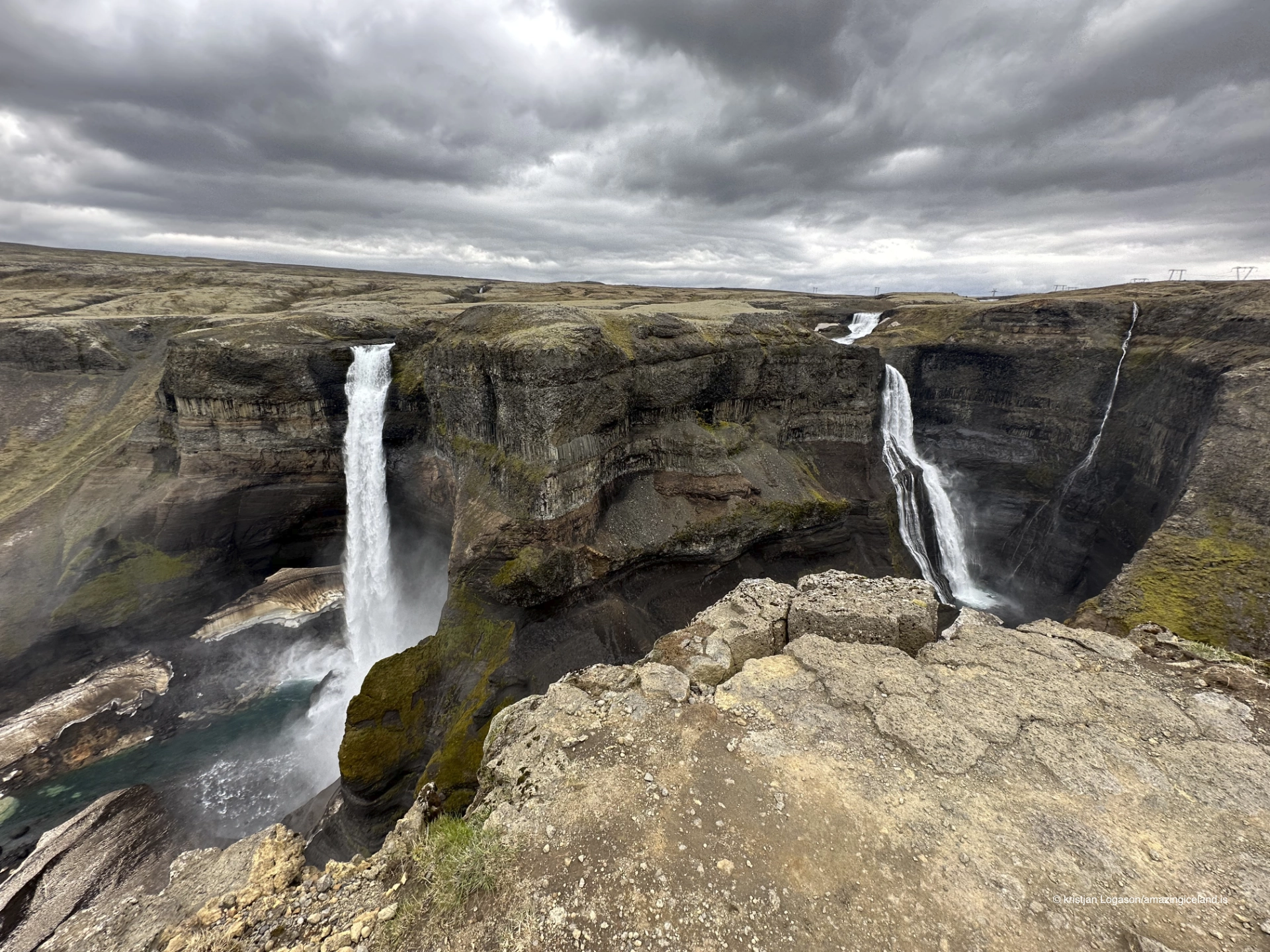
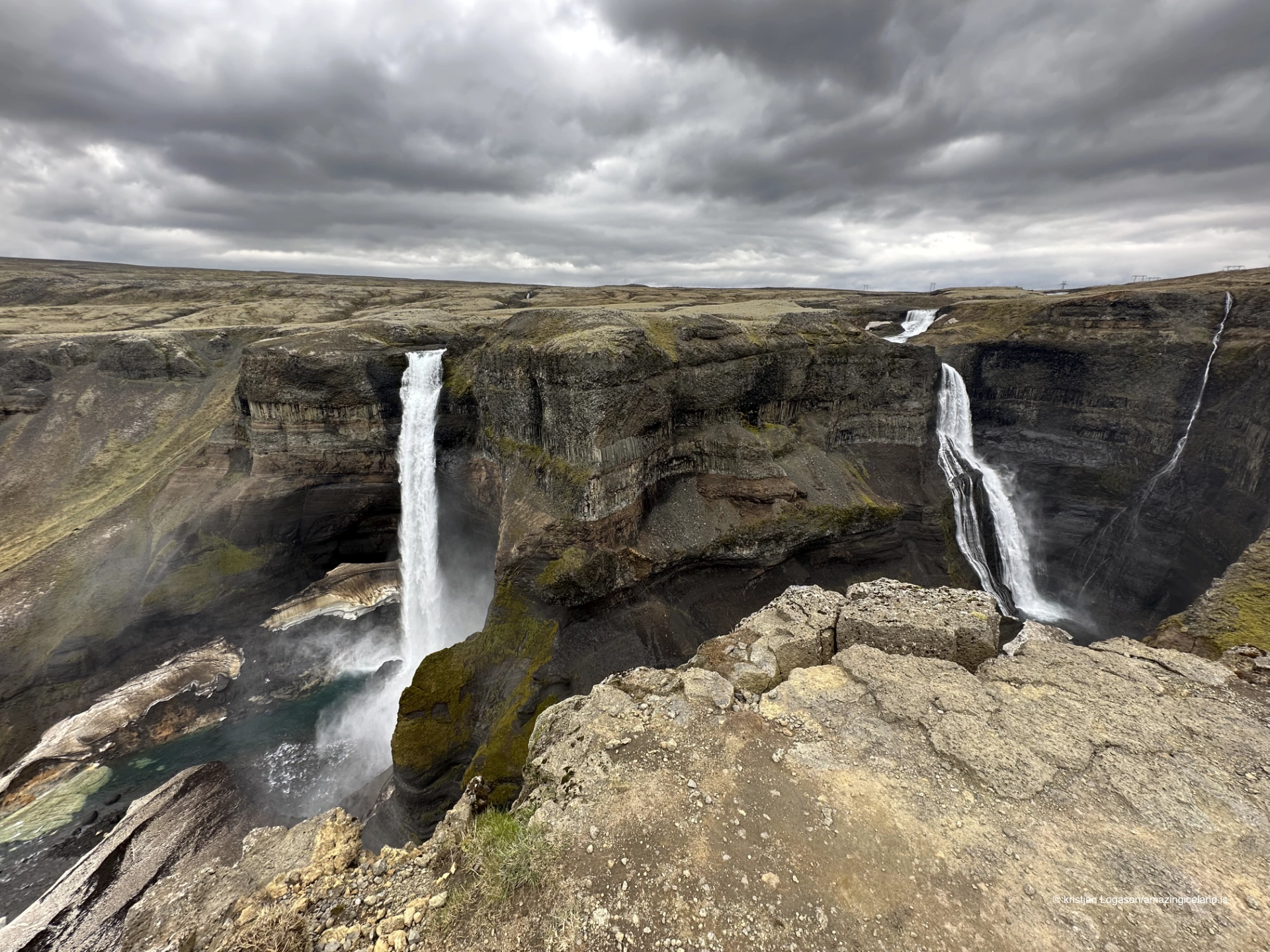
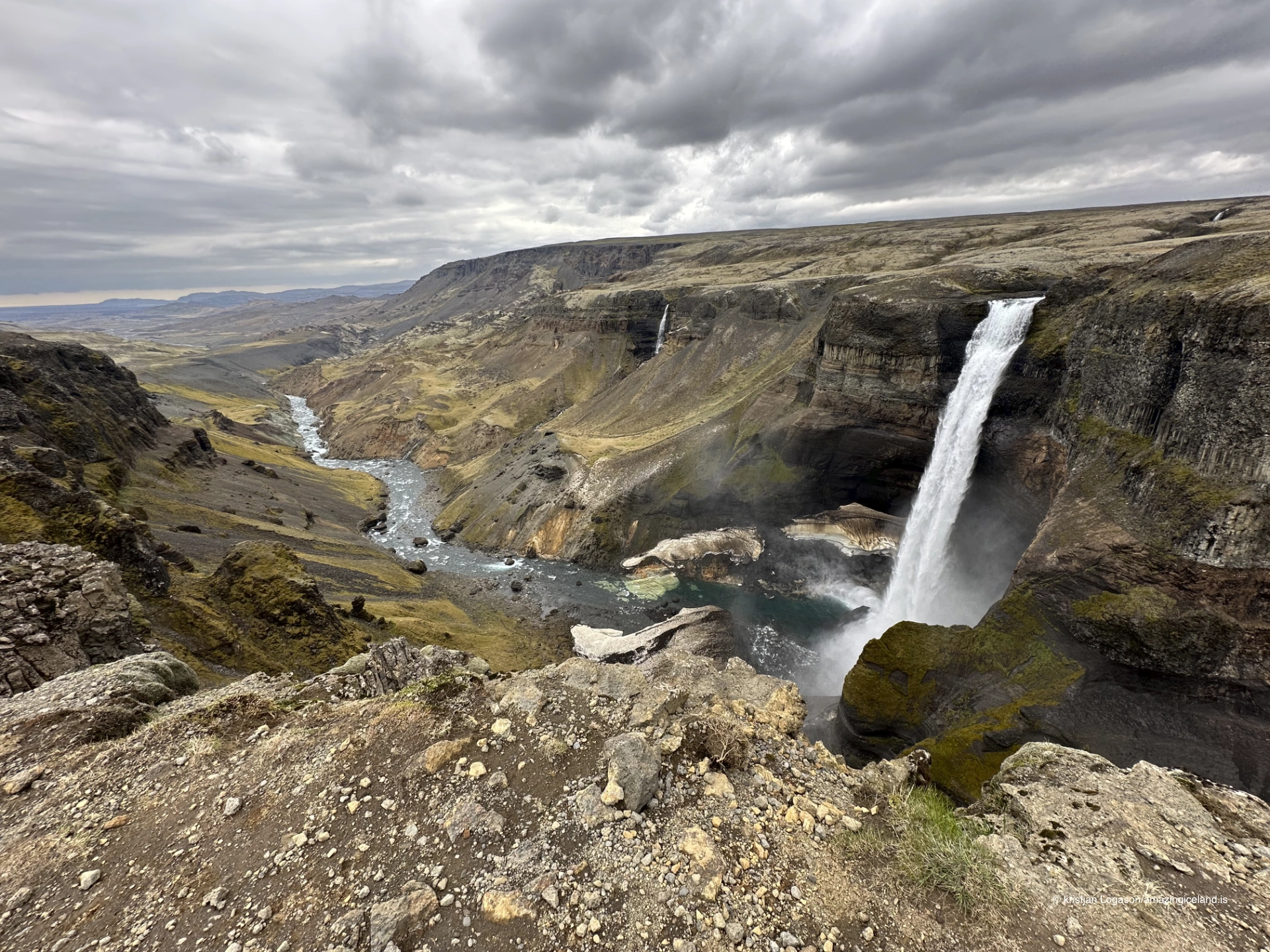
In Þjórsárdalur, the river Fossá plunges into a steep canyon, forming Háifoss and its neighboring cascade Granni. The waterfalls descend from the edge of a lava plateau shaped by eruptions of Hekla, exposing both volcanic structure and river erosion.
The location of Háifoss and Granni waterfalls
Latitude
64.2056
Longitude
-19.6870
Háifoss and Granni waterfalls
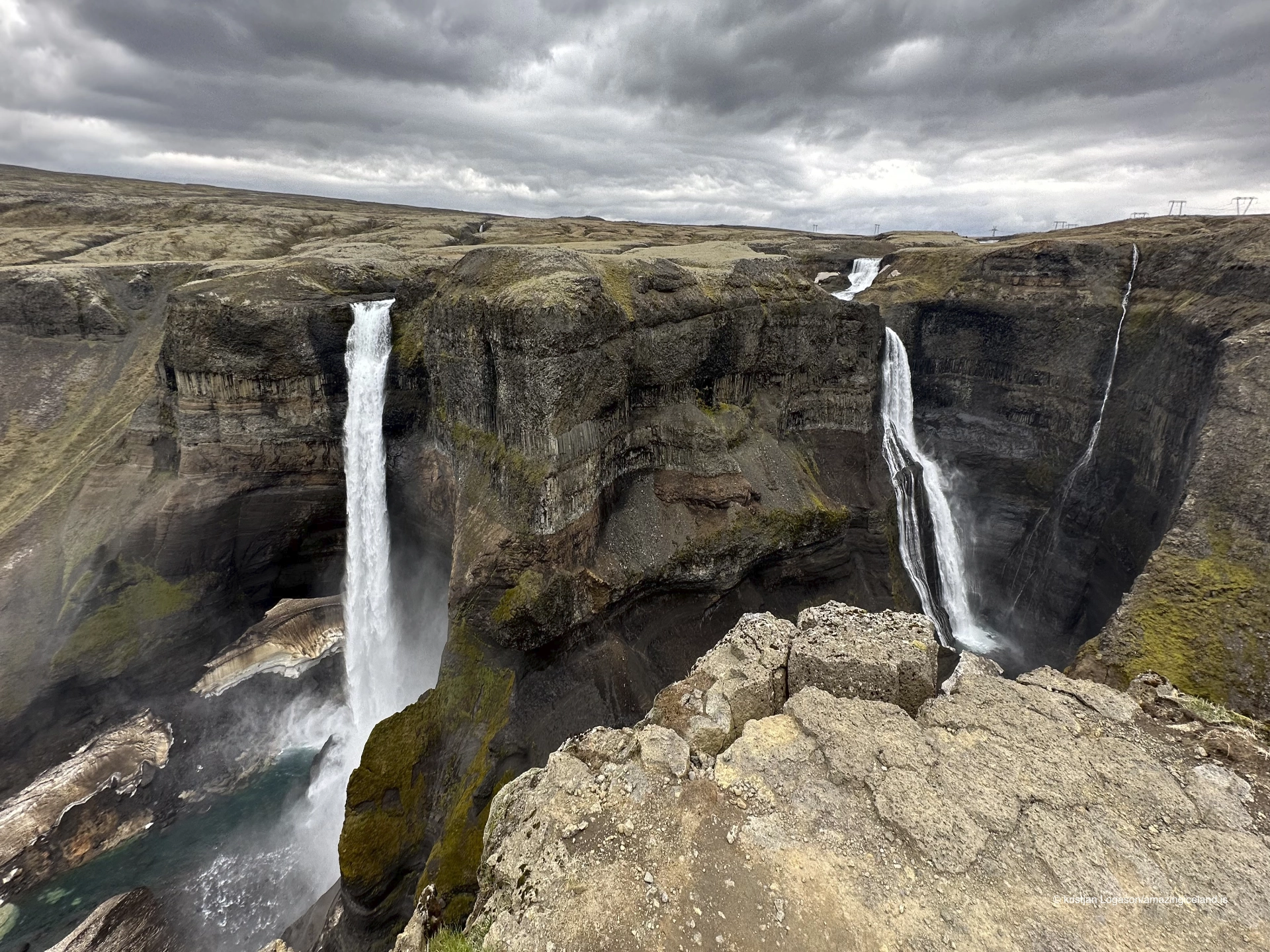
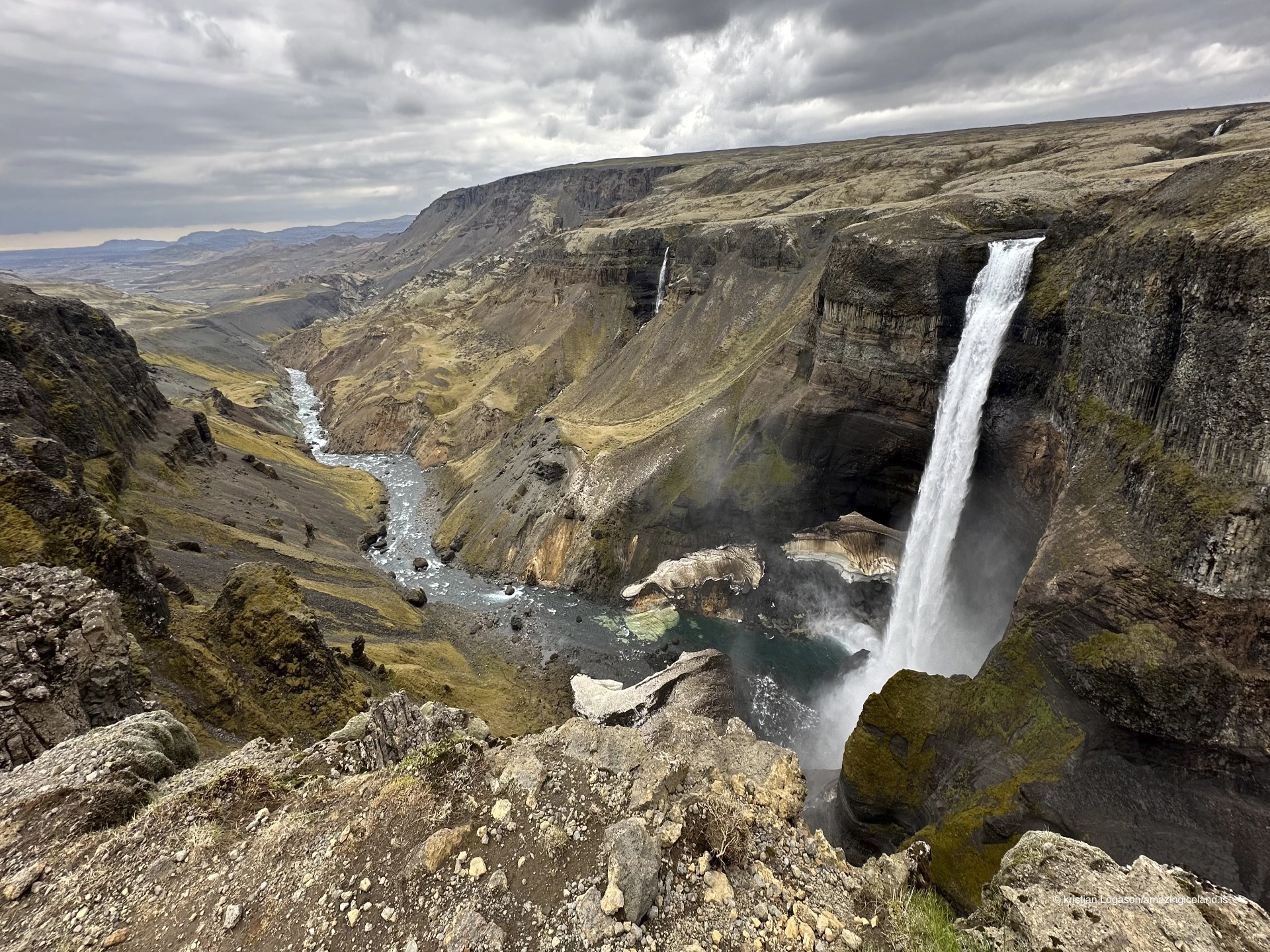
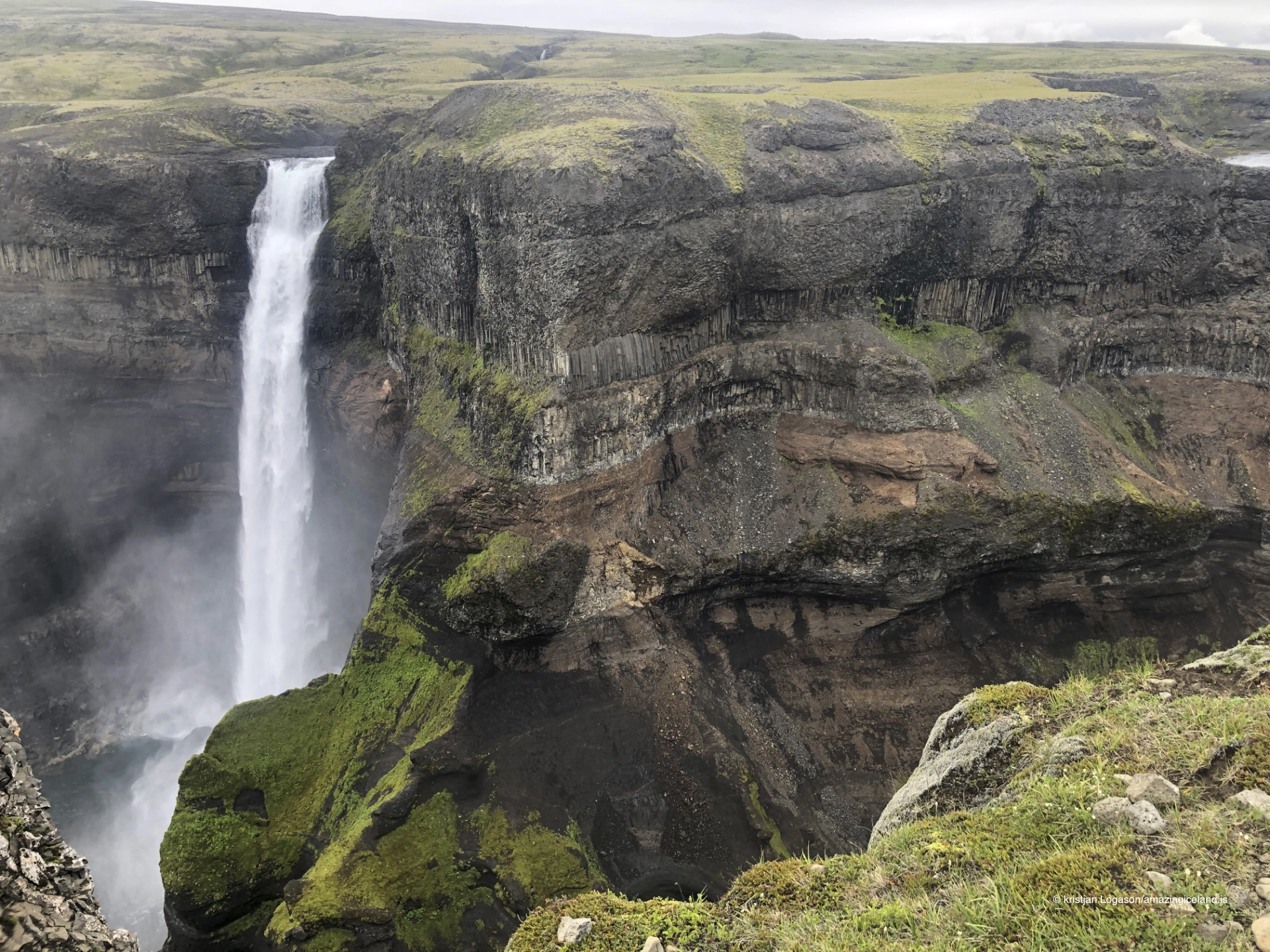
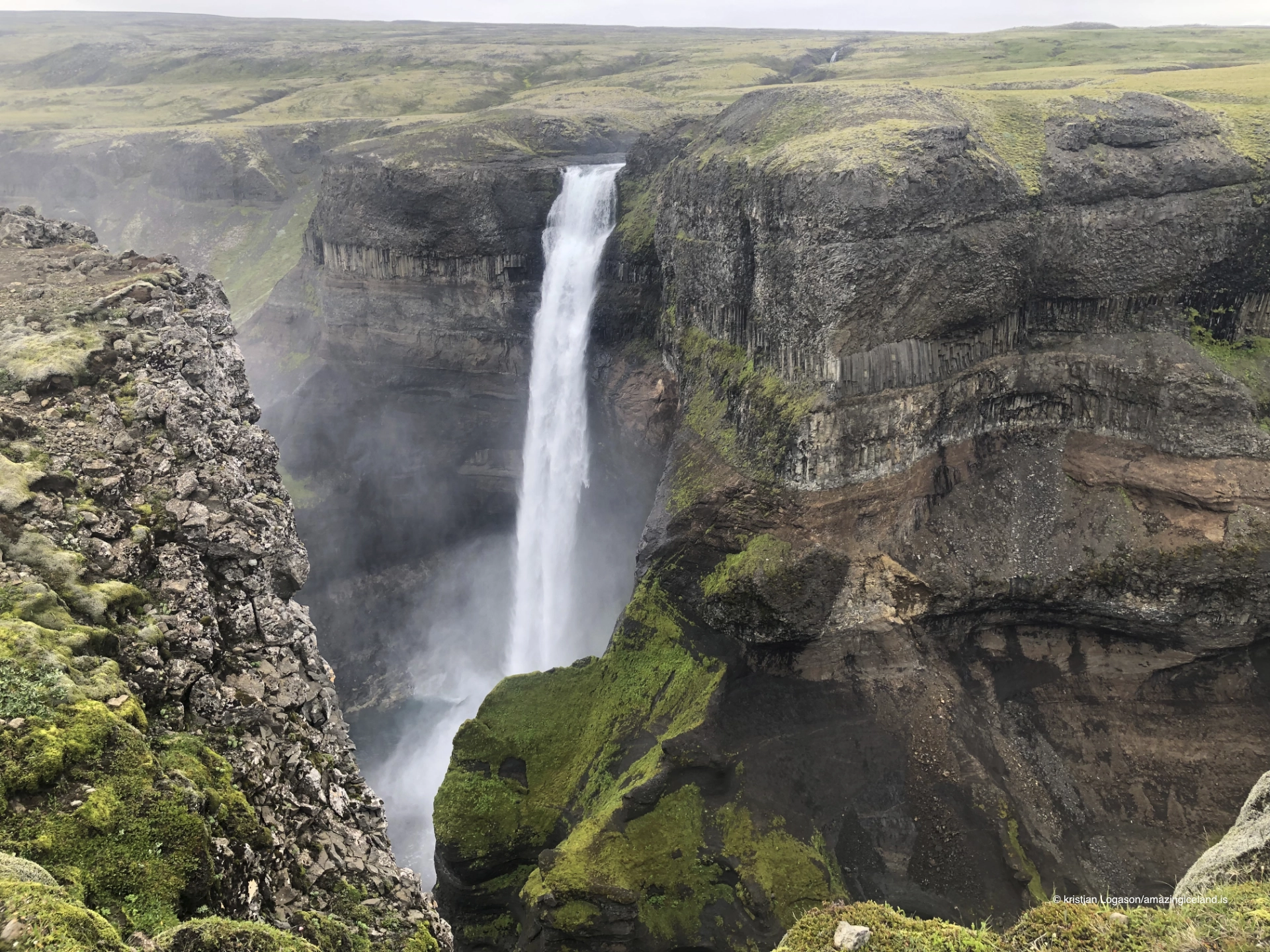
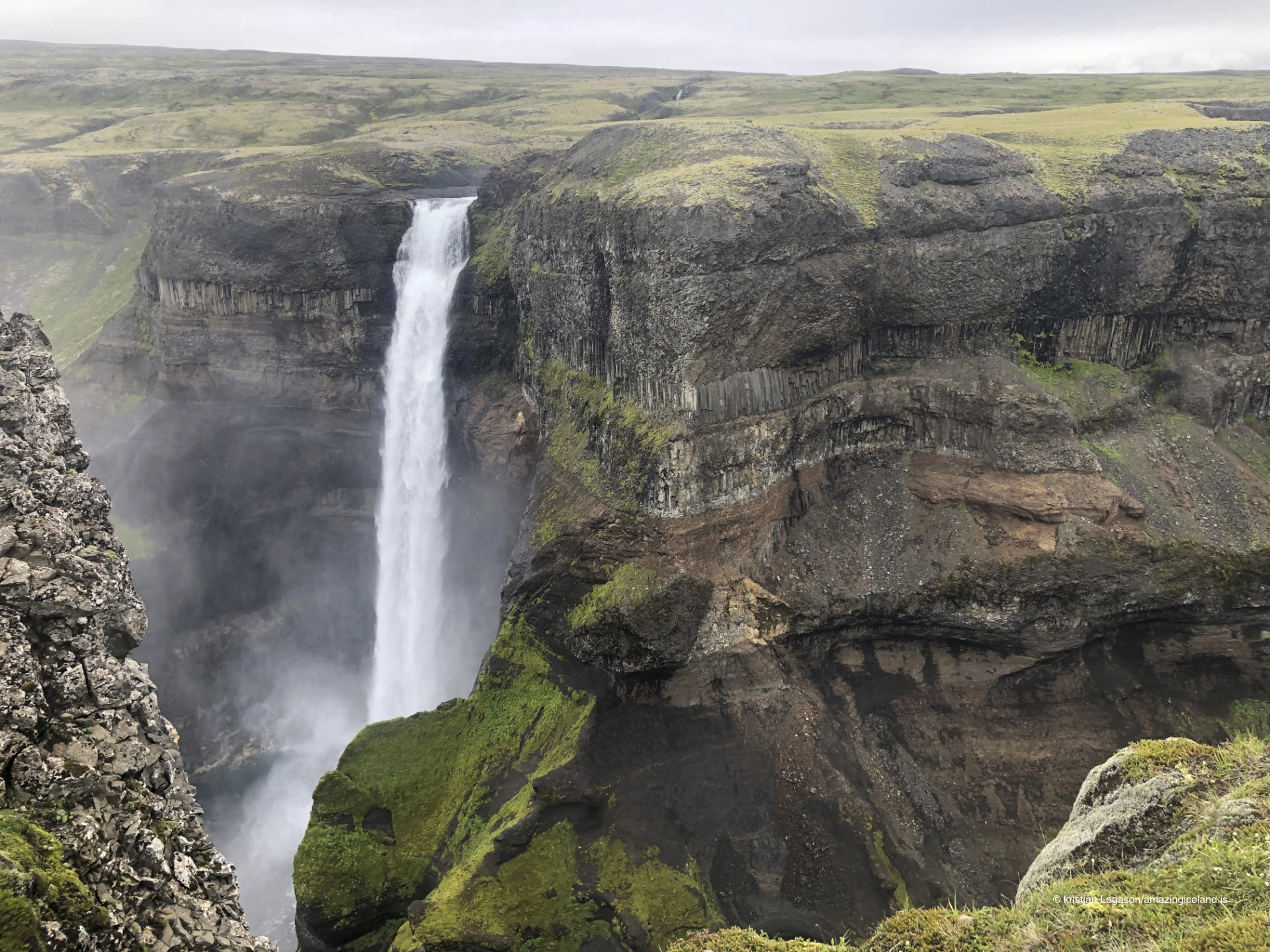
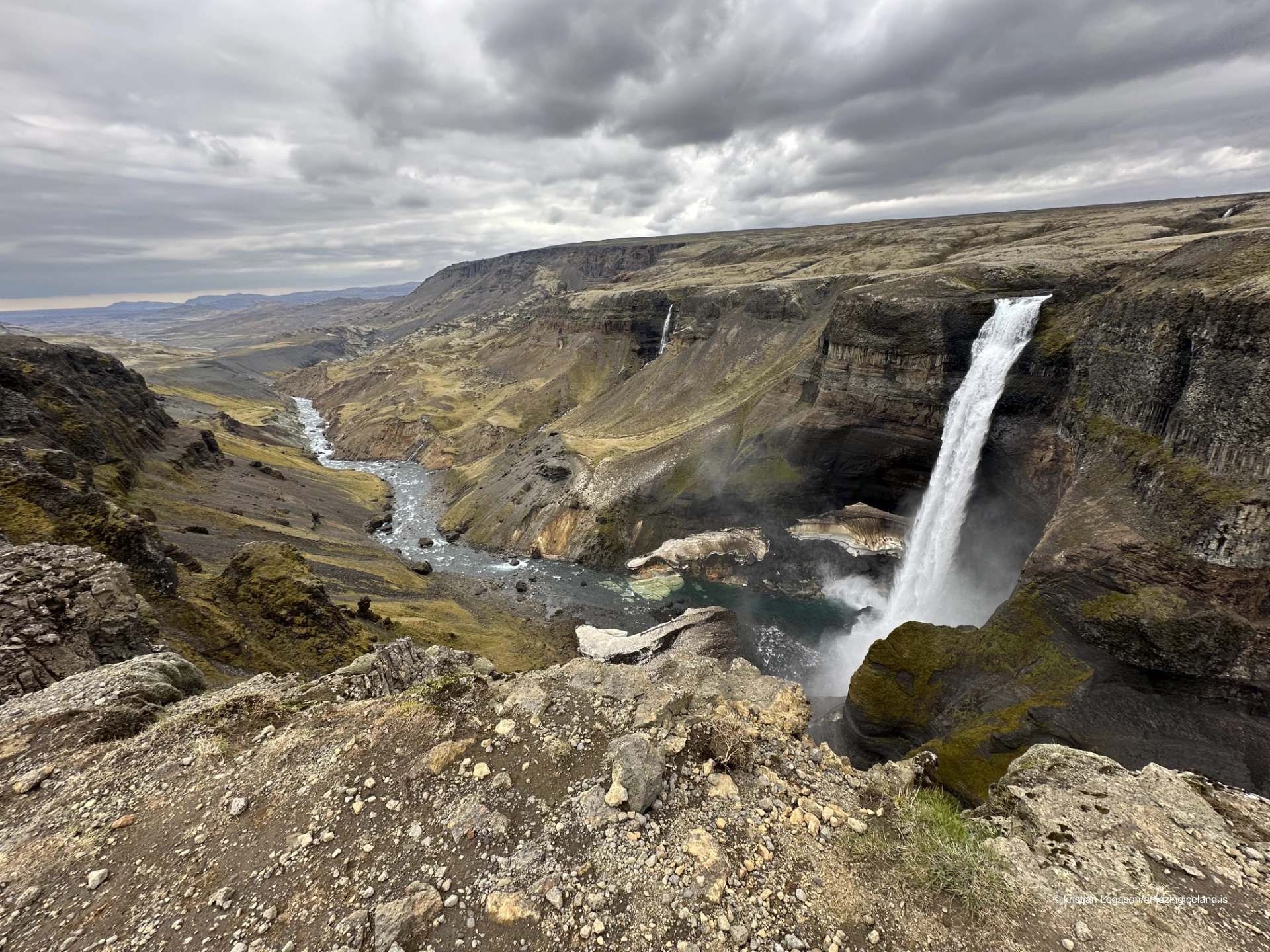
Háifoss (“High Waterfall”) drops approximately 122 meters, placing it among the tallest waterfalls in Iceland. The fall descends in a single uninterrupted plunge from the plateau above into a narrow canyon below.
The canyon itself was carved by sustained fluvial erosion rather than glacial excavation. Fossá exploited fractures within layered basalt lava flows, gradually incising the plateau and creating steep vertical walls. The height of the falls reflects the thickness of these lava deposits and the depth of erosion achieved over time.
From a geomorphological perspective, Háifoss represents lava plateau incision by river erosion, not tectonic fault displacement.
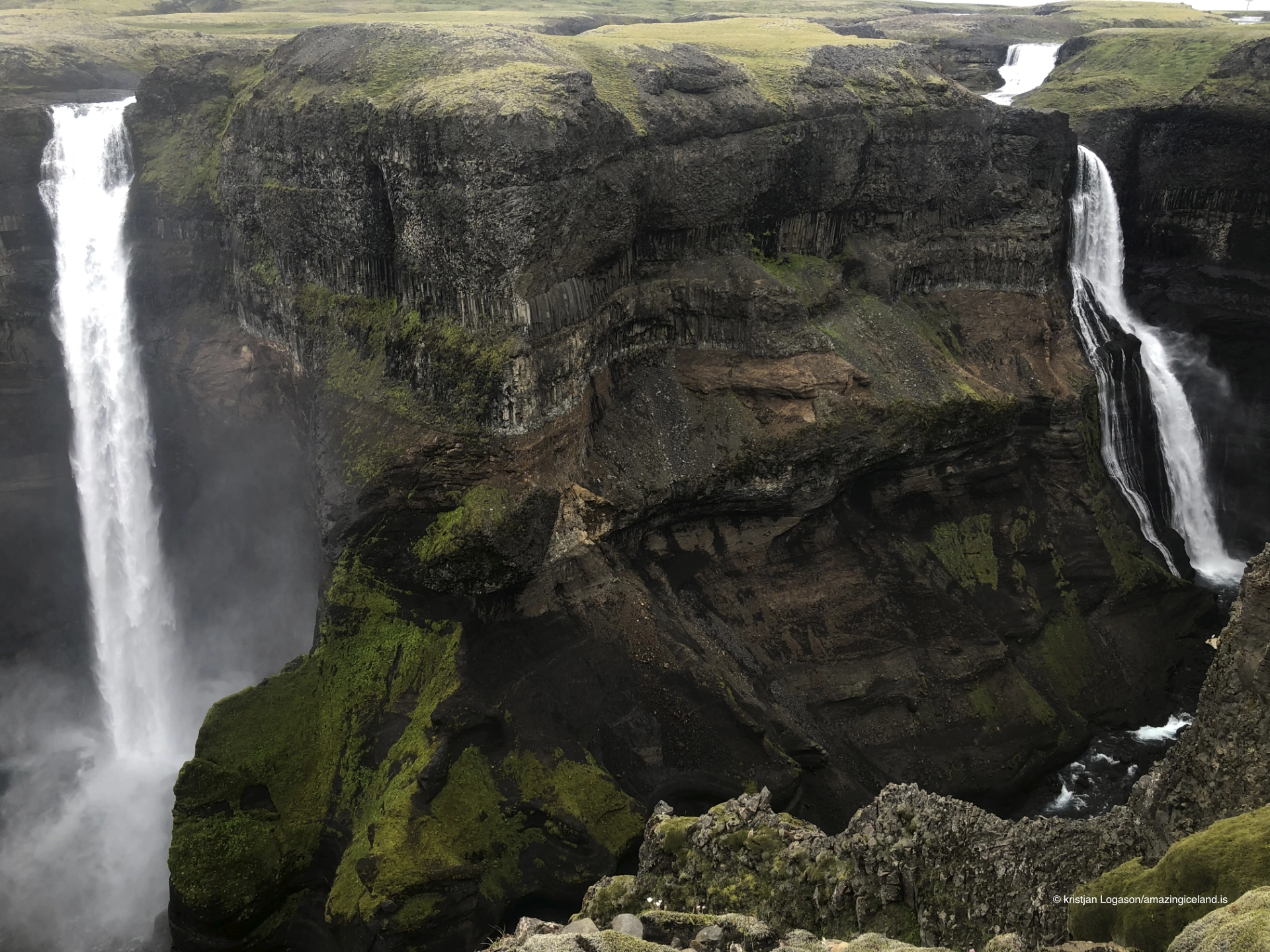
Immediately adjacent to Háifoss is Granni (“Neighbor”), a narrower waterfall descending from the same plateau edge. The two waterfalls are separated by a rock rib, creating a striking visual pairing.
Hydrologically, both falls are fed by Fossá upstream, though channel division near the brink produces the twin effect. Seasonal variation significantly influences flow volume. During snowmelt and heavy rainfall, discharge increases dramatically, reinforcing the scale of the drop.
Unlike waterfalls directly fed by glaciers, Fossá’s flow is primarily influenced by precipitation and highland meltwater rather than glacial sediment load.
The plateau above the falls consists of lava flows associated with historical eruptions from Hekla. Over time, erosion by Fossá carved a canyon estimated to be over 100 meters deep in places, revealing stratified basalt layers.
Below the falls, the canyon floor contains large boulders and sediment deposited through ongoing rockfall and river transport. The height of the cliffs and ongoing erosion mean that the canyon remains geomorphically active.
This vertical exposure allows clear observation of volcanic layering rarely visible elsewhere in Þjórsárdalur.
Historically, the surrounding valley supported farms such as Stöng, until the 1104 eruption of Hekla deposited ash across the region. While Háifoss itself was not directly altered by that event, the broader volcanic system that created the plateau has shaped settlement viability in the valley.
Access to Háifoss requires travel along highland roads and favorable weather conditions. There is no extensive infrastructure at the canyon rim, and caution is essential near the cliff edge.
The site remains relatively undeveloped compared to waterfalls closer to main tourist routes.
Háifoss and Granni together demonstrate how volcanic construction and river erosion intersect. Lava built the plateau; water cut through it. The twin waterfalls express this interaction clearly and without embellishment.
The pairing also provides a rare example of parallel high waterfalls sharing a single canyon edge, reinforcing the structural coherence of the site.
Interesting facts:
- Háifoss drops approximately 122 meters, making it one of Iceland’s tallest waterfalls.
- Granni flows directly beside Háifoss from the same plateau edge.
- Both are fed by the river Fossá.
- The canyon exposes layered basalt lava flows.
- The surrounding plateau was shaped by eruptions of Hekla.
Image Gallery

The Locomotive Elite
What do Donald Trump and Iceland’s Locomotive Elite have in common?
Far more than you think.
In The Locomotive Elite, you’ll uncover how a tiny clique in Iceland captured extensive control—of banks, courts, media, and even the central bank.
For decades they ruled, first democratically, then through corruption and in the end through crime, enriching themselves and their cronies while dismantling oversight.
The result?
One of the most spectacular financial collapses in modern history.
Photography tips:
- Elevated viewpoints are essential: The full drop is best seen from the rim.
- Use scale references carefully: Human figures communicate height but require safe positioning.
- Mid-range focal lengths preserve proportion.
- Overcast light helps balance cliff shadows and water highlights.
- Include both falls when possible: The relationship defines the scene.
Good cameras for Iceland
Sony A7R V

Sony A7s lll

Canon R6

Nikon Z6 lll

Destinations nearby
Good to have in Iceland