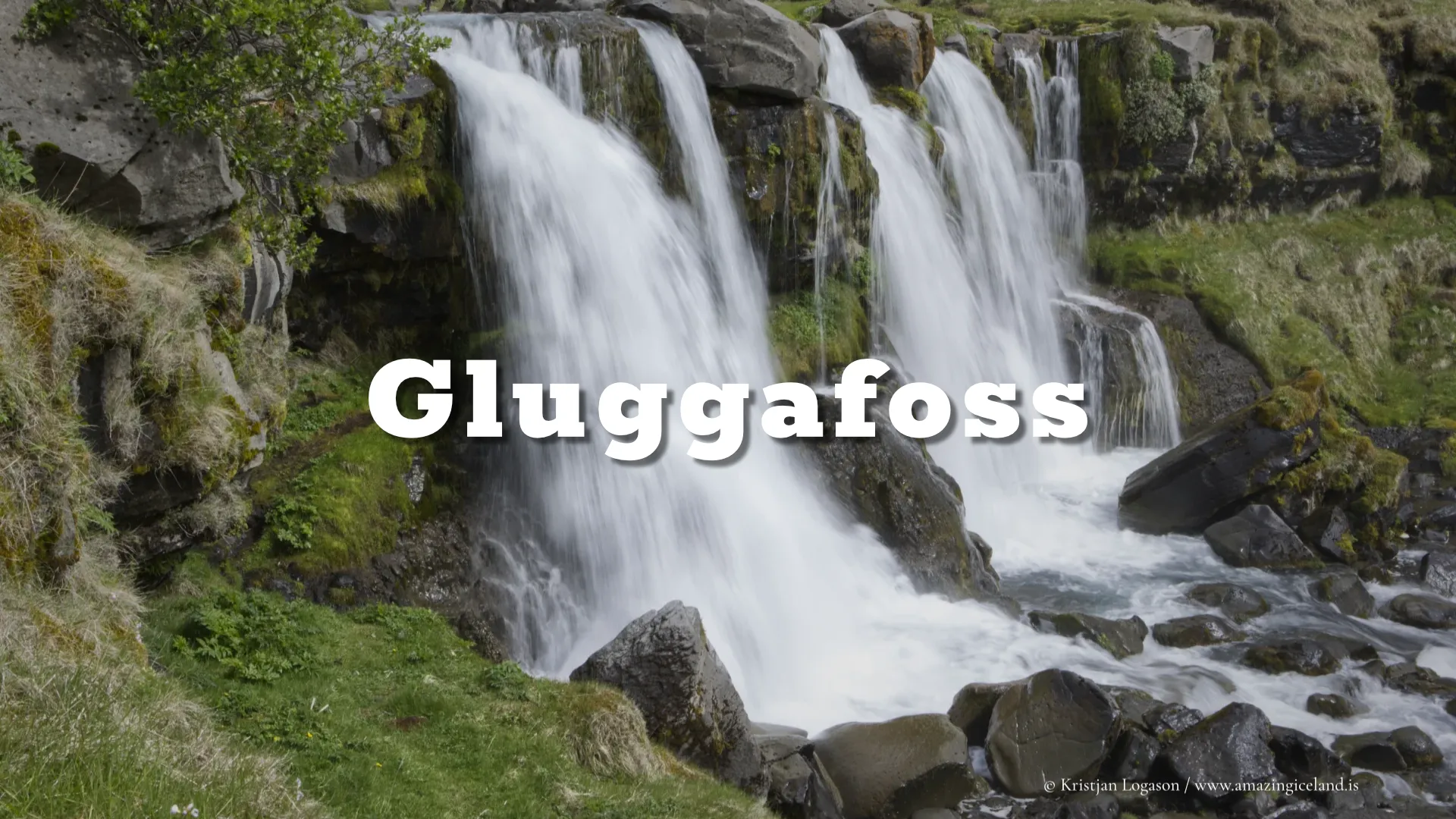
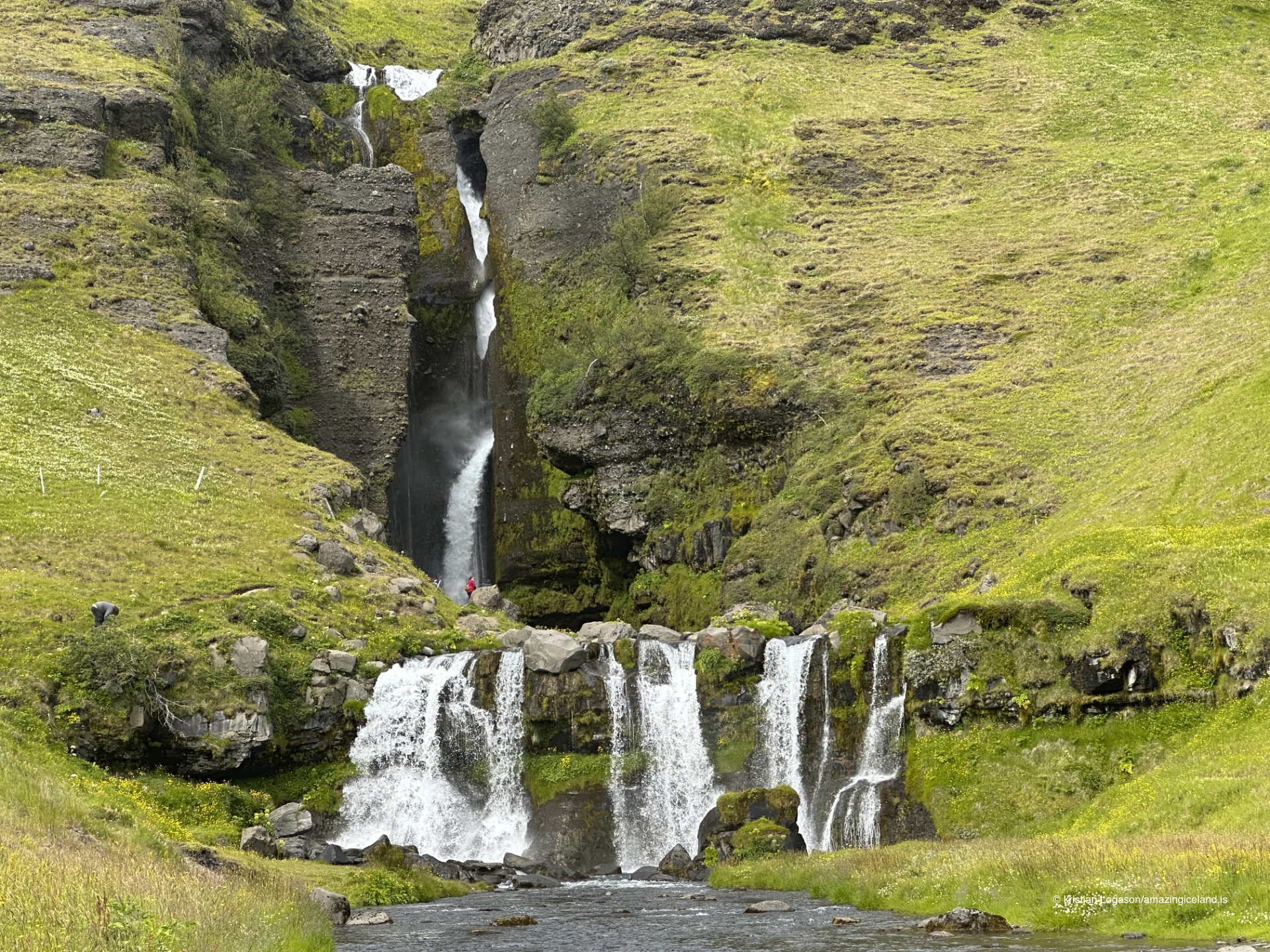
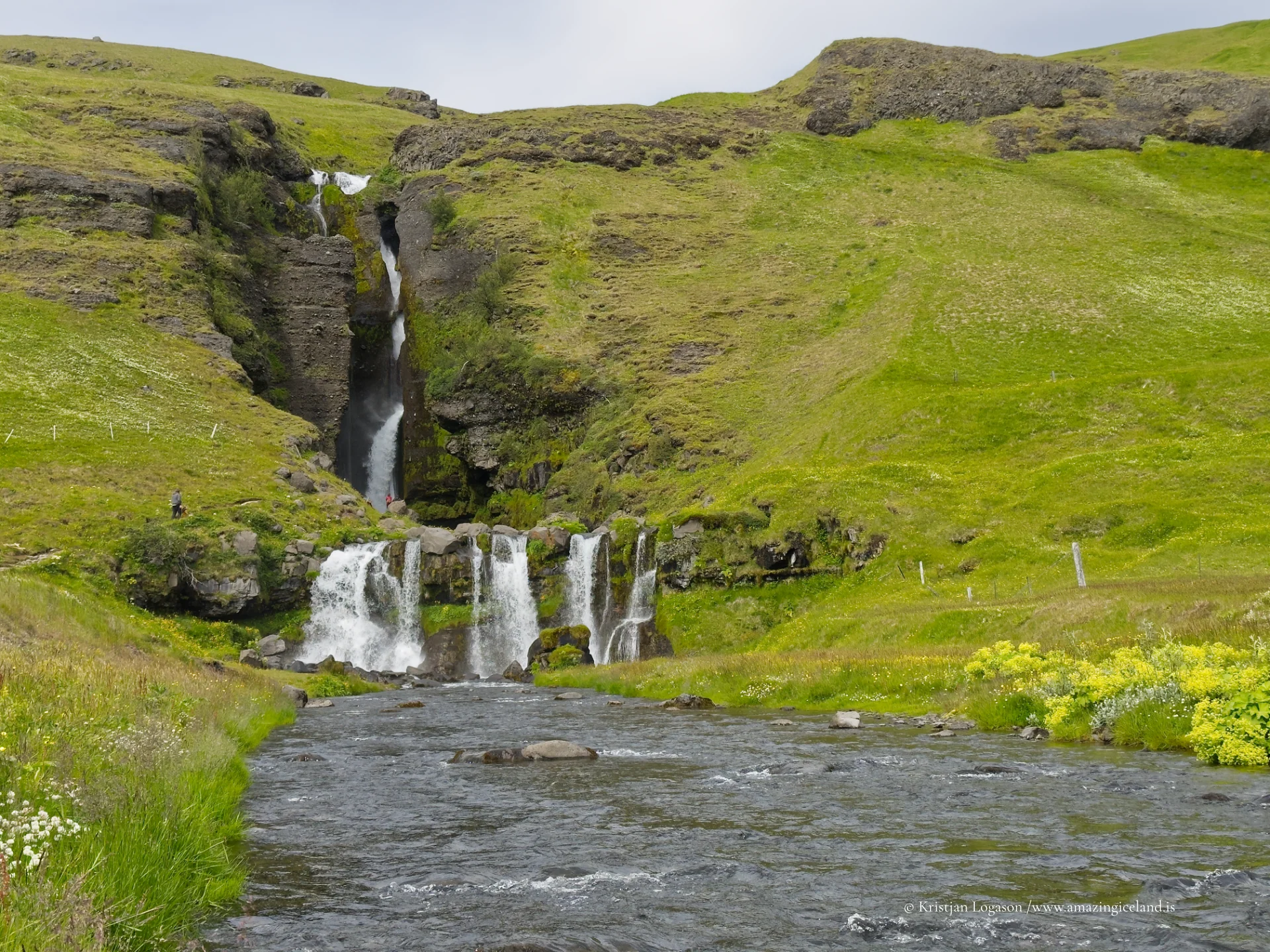
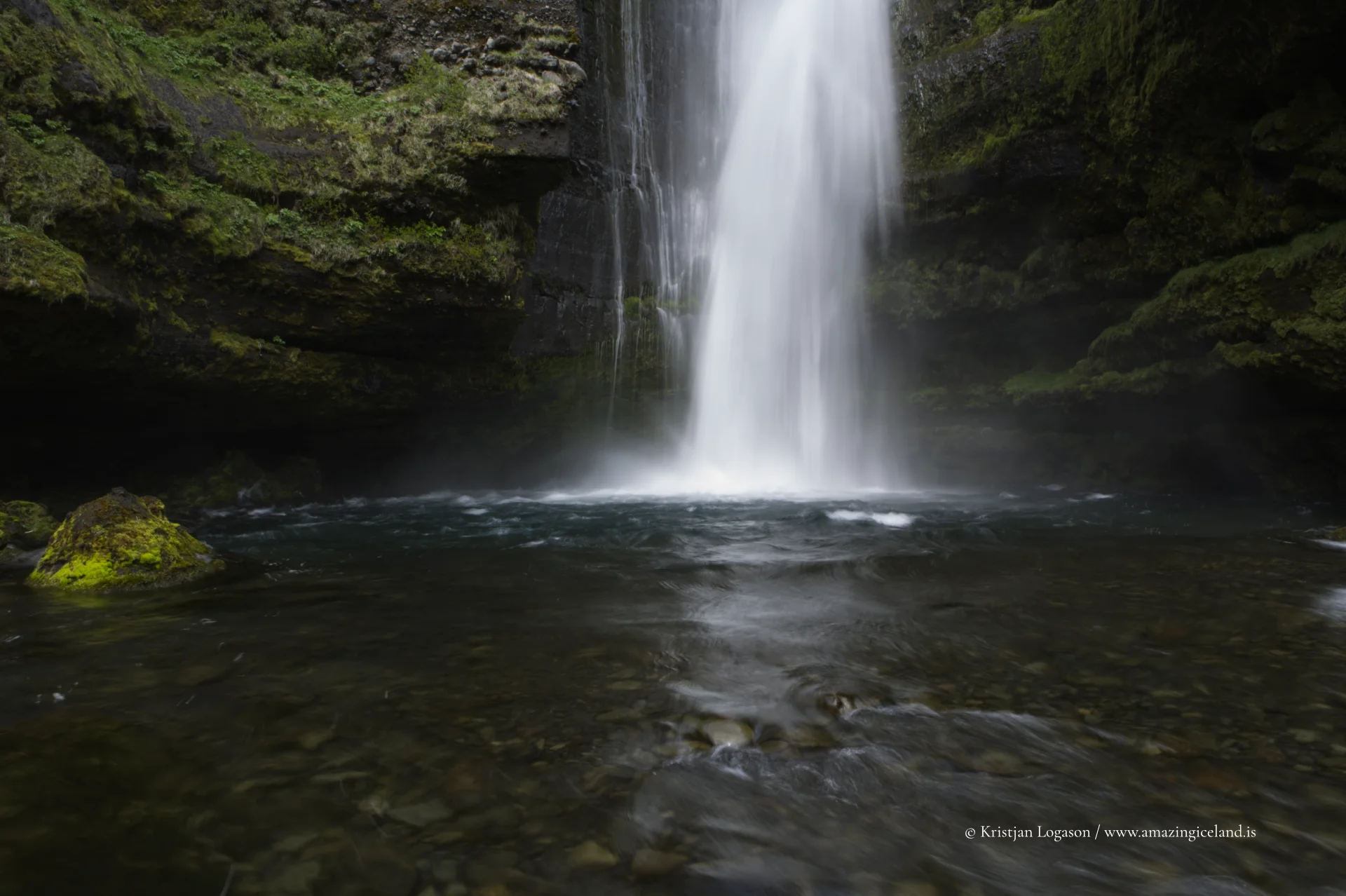
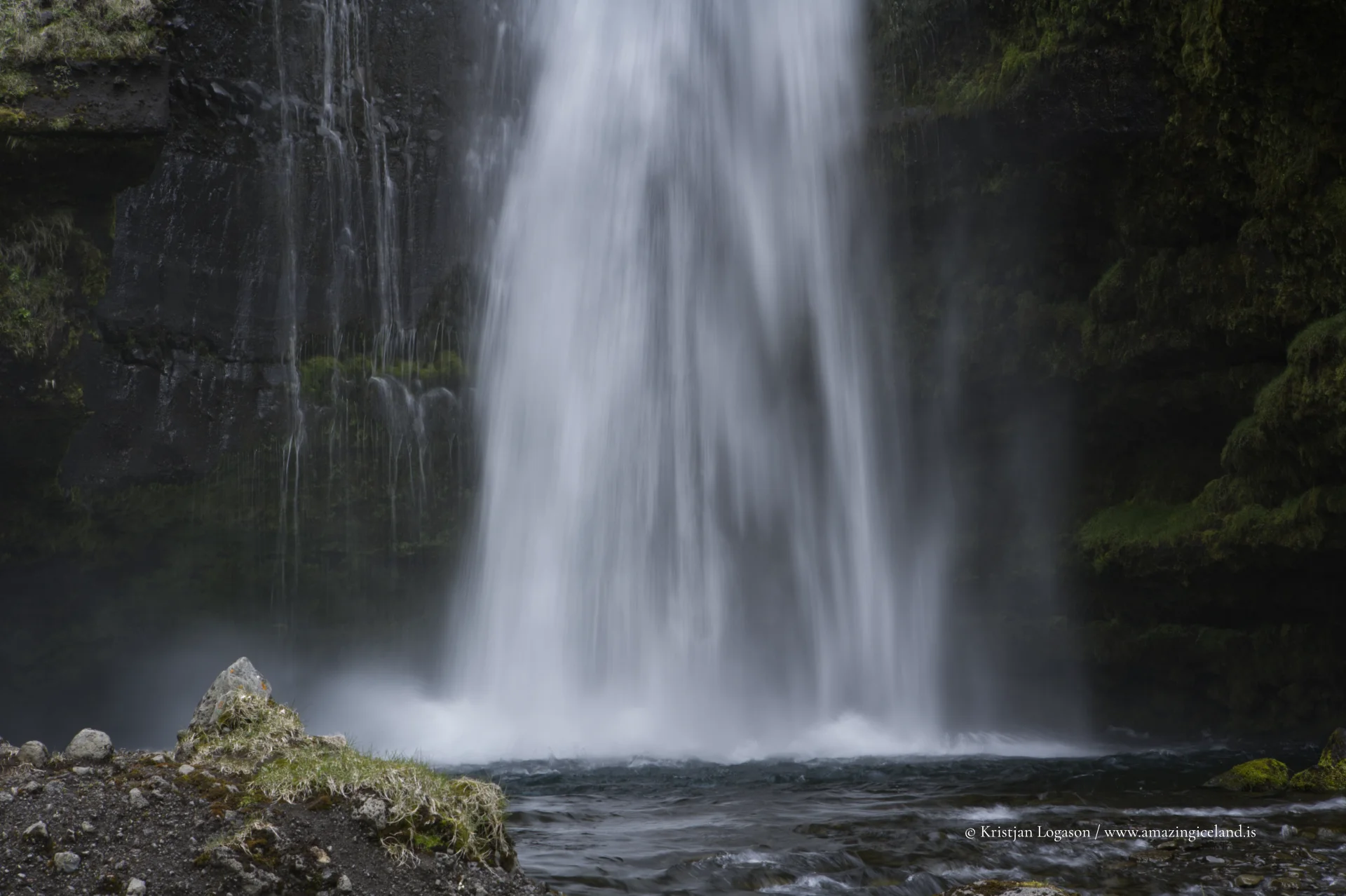
On the river Merkjá, near the foothills of the southern highlands, Gluggafoss descends in a series of cascades. Also known as Merkjárfoss, the waterfall is named for the small openings—“gluggar,” or windows—visible in the rock face behind the falling water.
The location of Gluggafoss waterfall
Latitude
63.7929
Longitude
-19.7447
Gluggafoss waterfall
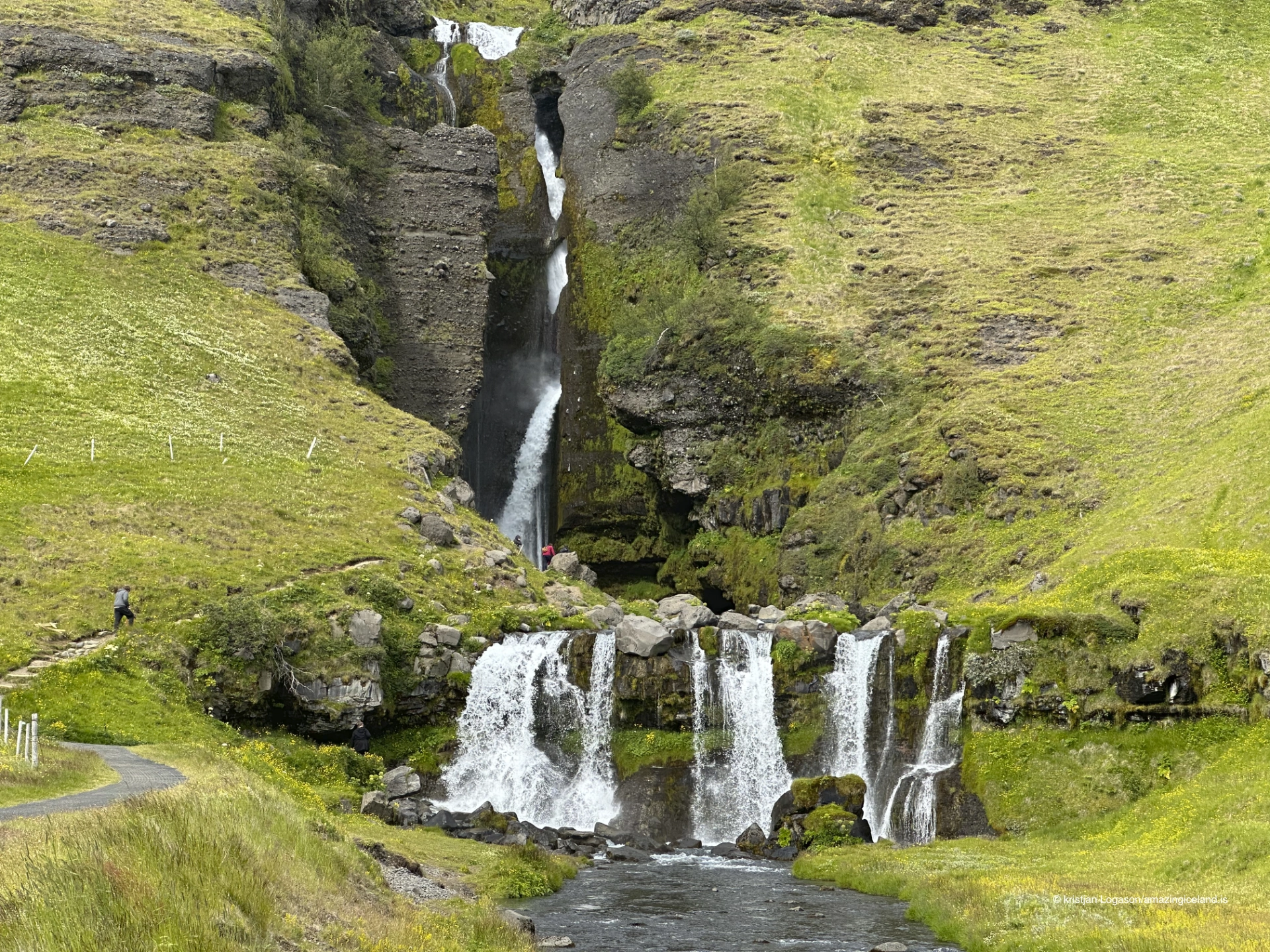
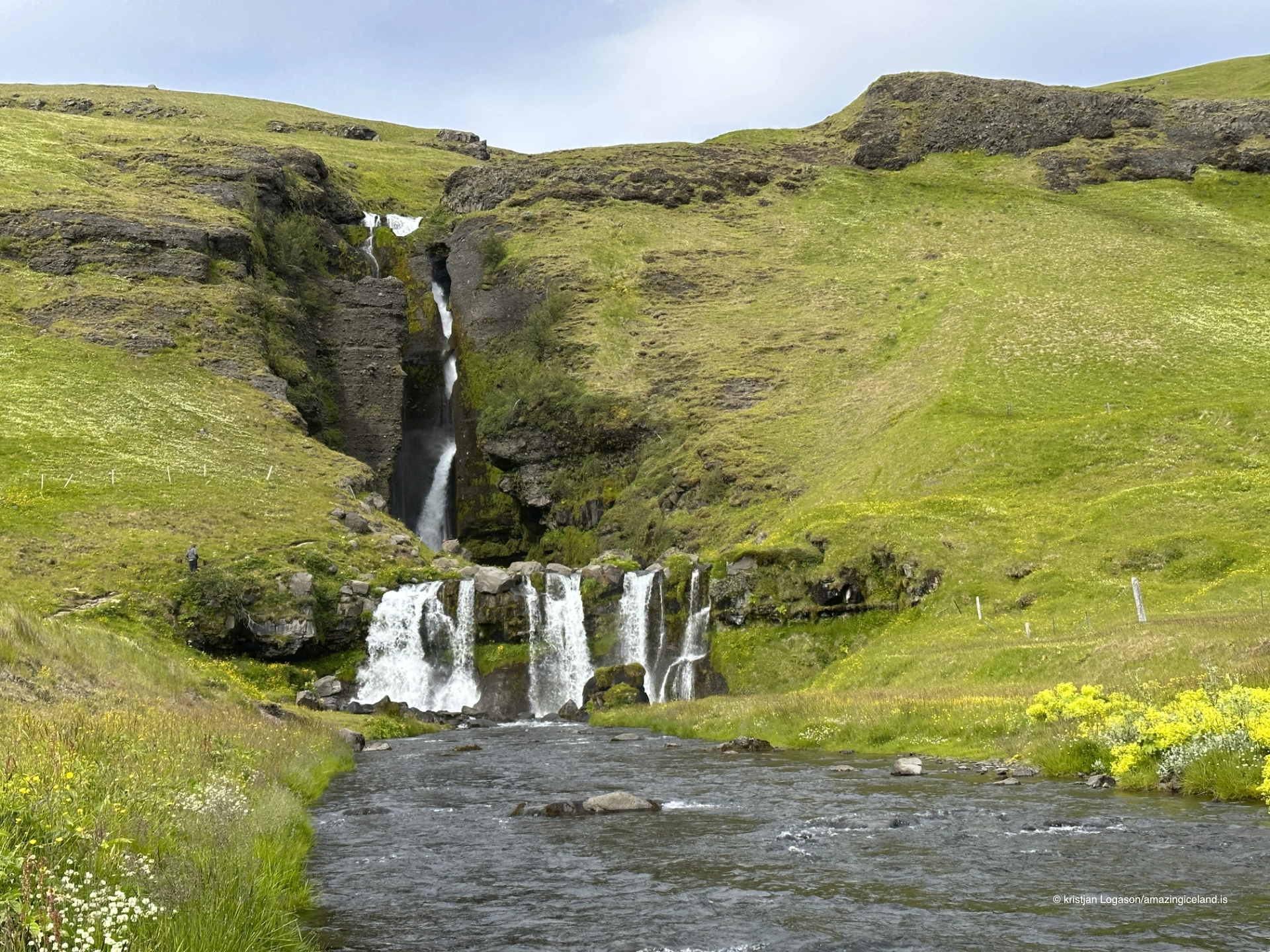
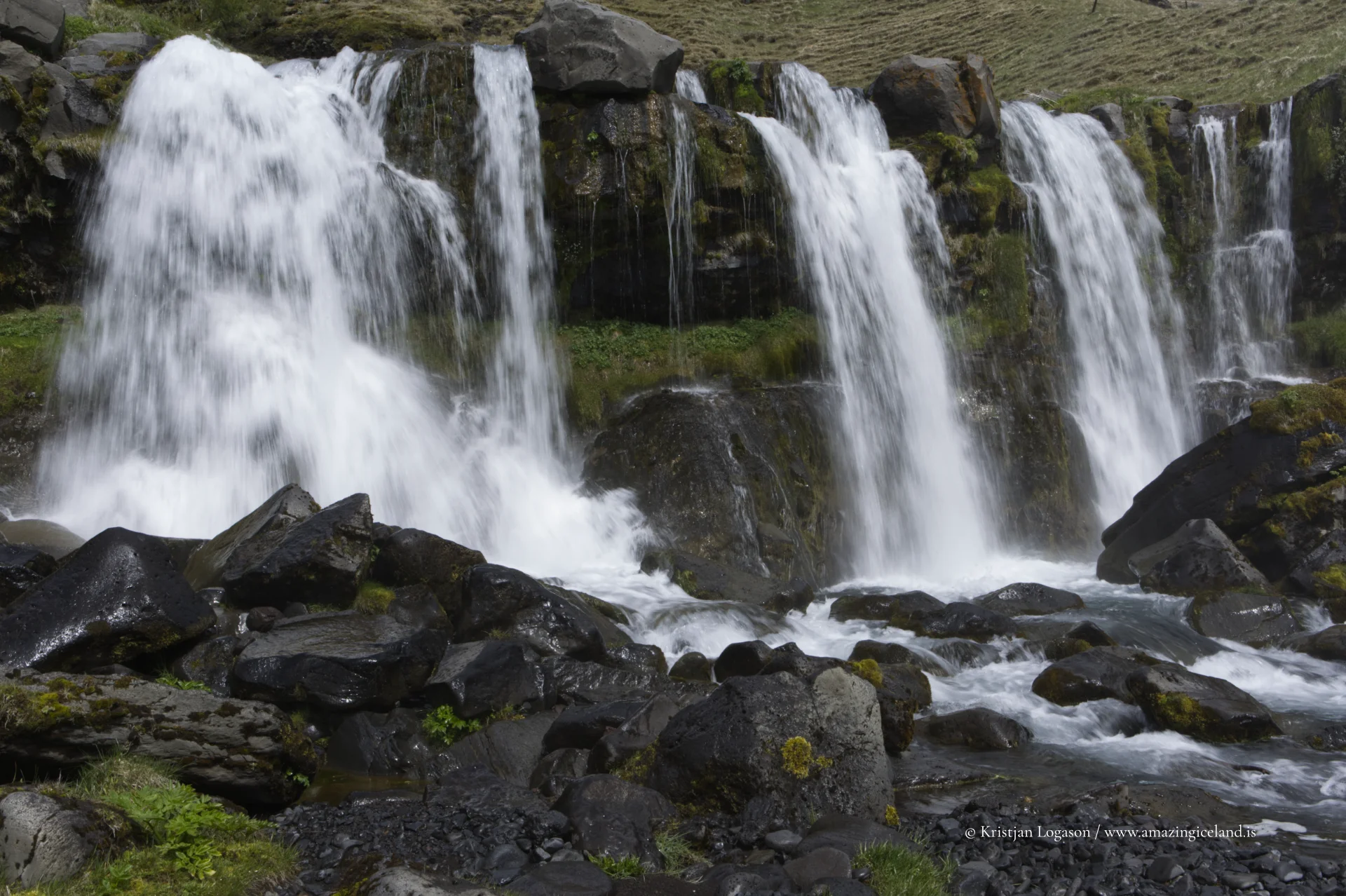
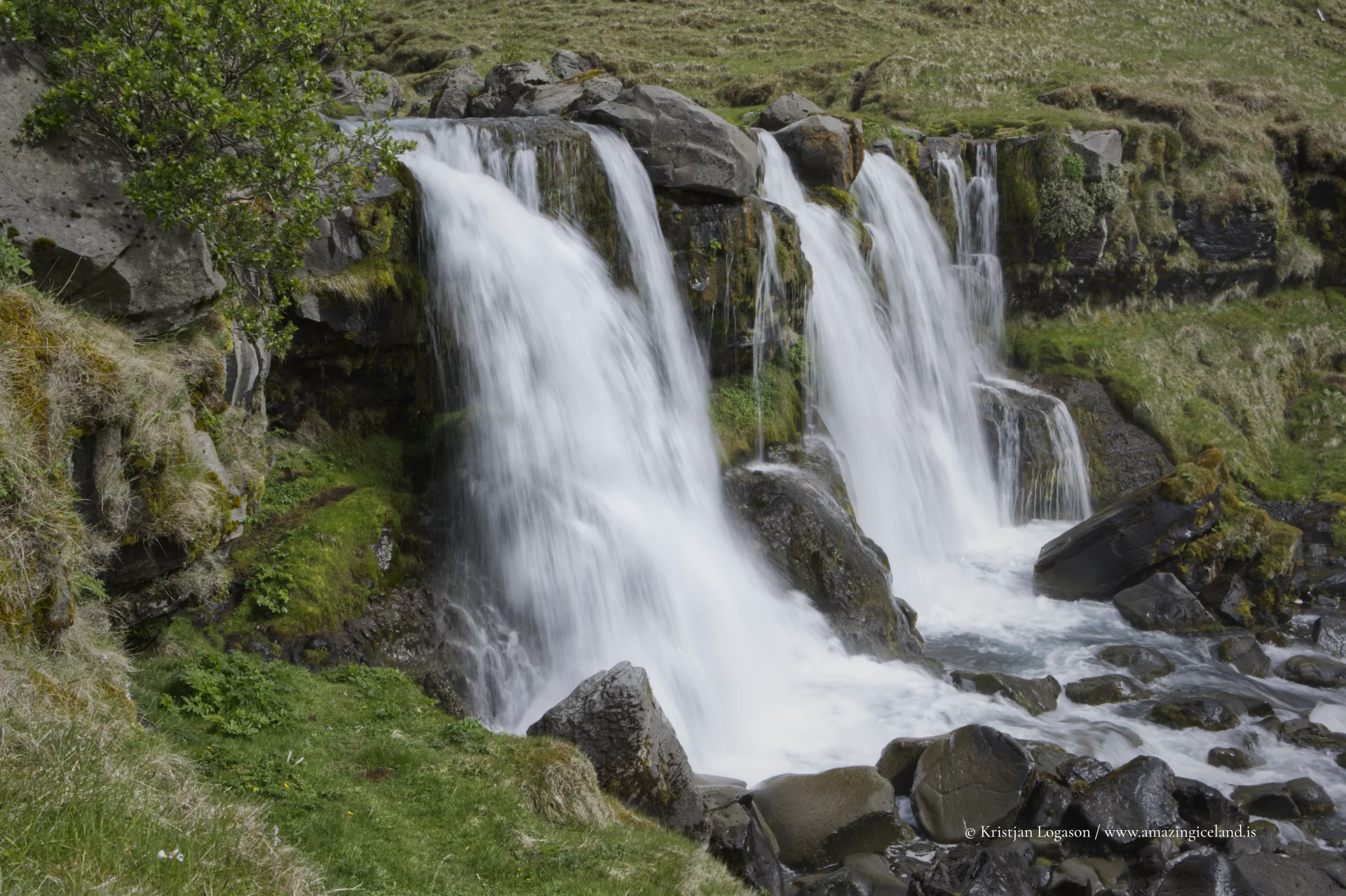
Gluggafoss is located in South Iceland east of Hvolsvöllur, along a relatively short river system draining the foothills beneath the southern highlands. The waterfall consists of several stepped drops rather than a single vertical plunge.
The total height of the waterfall system is approximately 40–50 meters, though it is divided across multiple tiers. The upper sections are characterized by water streaming through narrow rock openings before descending into broader cascades below.
From a geomorphological perspective, Gluggafoss reflects erosion through fractured volcanic rock, where joints and weaknesses allow water to carve openings rather than uniform ledges.
The surrounding bedrock is primarily basalt formed during past volcanic activity associated with Iceland’s active rift systems. As the river cut downward, it exploited vertical fractures and softer layers within the lava flows.
The “windows” visible in the rock are not carved intentionally but result from uneven erosion patterns and structural weaknesses within the basalt. Over time, flowing water widened these openings, creating the defining visual feature of the waterfall.
Seasonal variation significantly affects the appearance of the upper openings. During high flow, the windows may be partially obscured; in lower flow conditions, the rock structure becomes more clearly visible.
Hydrologically, Merkjá is not a glacial river. Its flow is primarily influenced by precipitation, groundwater, and seasonal snowmelt. As a result, water clarity is typically high, and sediment load is relatively low compared to rivers draining large glaciers.
Because the waterfall is divided into tiers, the energy of the water is dissipated progressively rather than concentrated in a single plunge pool. This reduces canyon formation and results in a more open, terraced landscape around the falls.
The surrounding terrain is relatively accessible compared to highland waterfalls, and infrastructure near the site remains limited and practical.
Gluggafoss has not historically been associated with large-scale settlement or industrial use. Its significance lies primarily in its distinctive morphology and accessibility within South Iceland’s rural landscape.
The stepped structure allows close observation of water movement across basalt surfaces. Unlike taller waterfalls that require distance for appreciation, Gluggafoss can be experienced at multiple vertical levels.
The name itself emphasizes form rather than scale, reinforcing how the waterfall is perceived locally.
Gluggafoss ultimately demonstrates how small structural irregularities in volcanic rock can shape entire waterfall systems. The falls are not defined by height alone, but by interaction between fracture, flow, and gradual widening of openings.
Its tiered design makes the geological process visible, providing a clear example of how Icelandic waterfalls evolve where rivers intersect layered basalt.
Interesting facts:
- Gluggafoss is also known as Merkjárfoss.
- The waterfall system is approximately 40–50 meters in total height across multiple tiers.
- The name refers to window-like openings in the rock face.
- It is fed by the non-glacial river Merkjá.
- The waterfall is structured in steps rather than a single drop.
Image Gallery
The Locomotive Elite
What do Donald Trump and Iceland’s Locomotive Elite have in common?
Far more than you think.
In The Locomotive Elite, you’ll uncover how a tiny clique in Iceland captured extensive control—of banks, courts, media, and even the central bank.
For decades they ruled, first democratically, then through corruption and in the end through crime, enriching themselves and their cronies while dismantling oversight.
The result?
One of the most spectacular financial collapses in modern history.
Photography tips:
- Work vertically: The stepped tiers benefit from layered composition.
- Moderate shutter speeds: Preserve detail in upper “windows.”
- Use mid-range lenses: Avoid excessive distortion of rock openings.
- Overcast light enhances texture.
- Include foreground rock for depth.
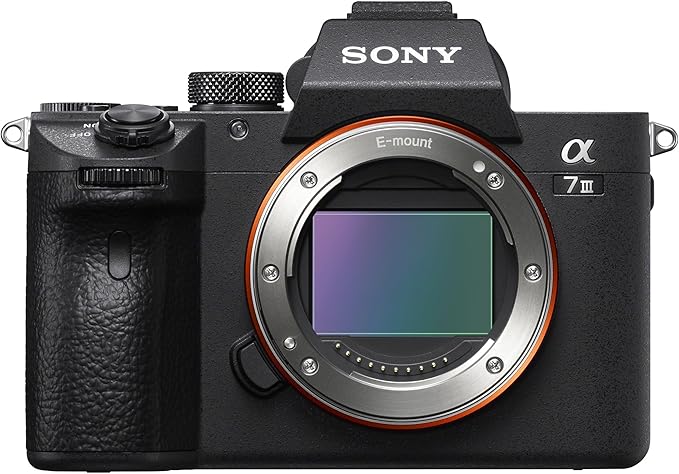
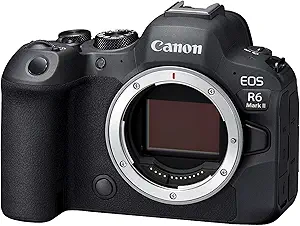
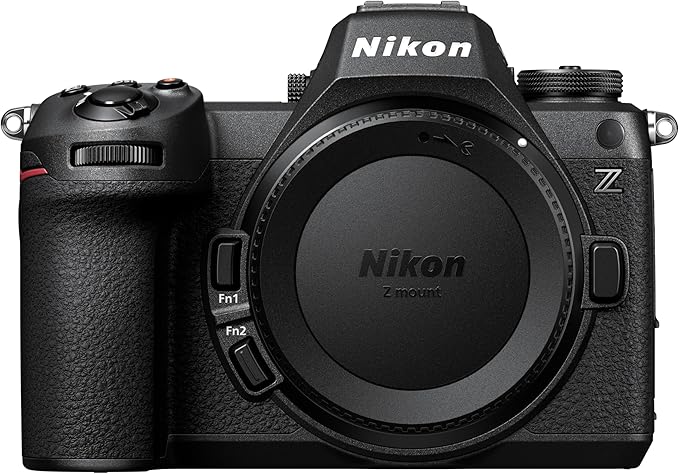
Good cameras for Iceland
Sony A7R V
Sony A7s lll
Canon R6
Nikon Z6 lll
Destinations nearby
Good to have in Iceland