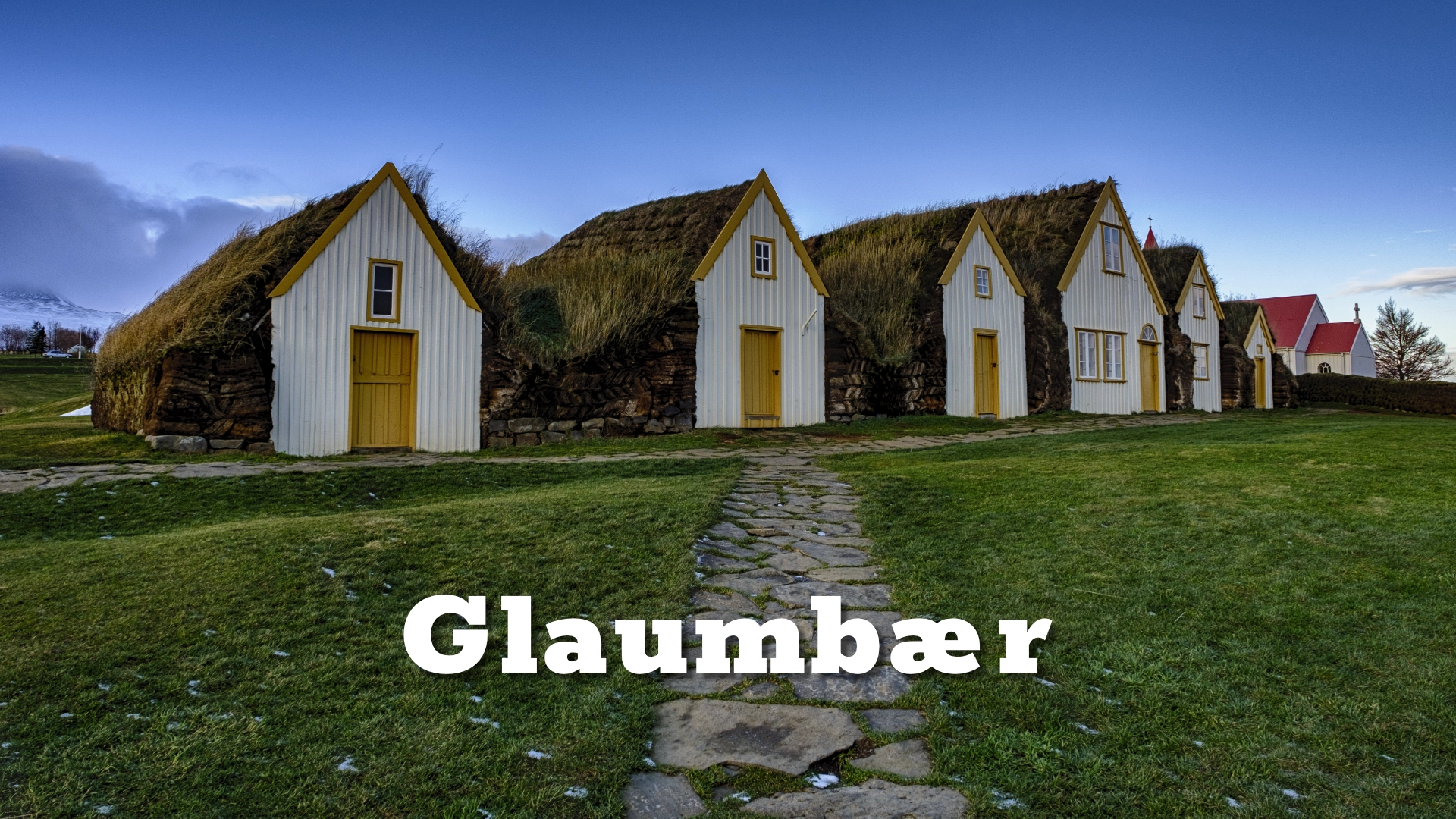
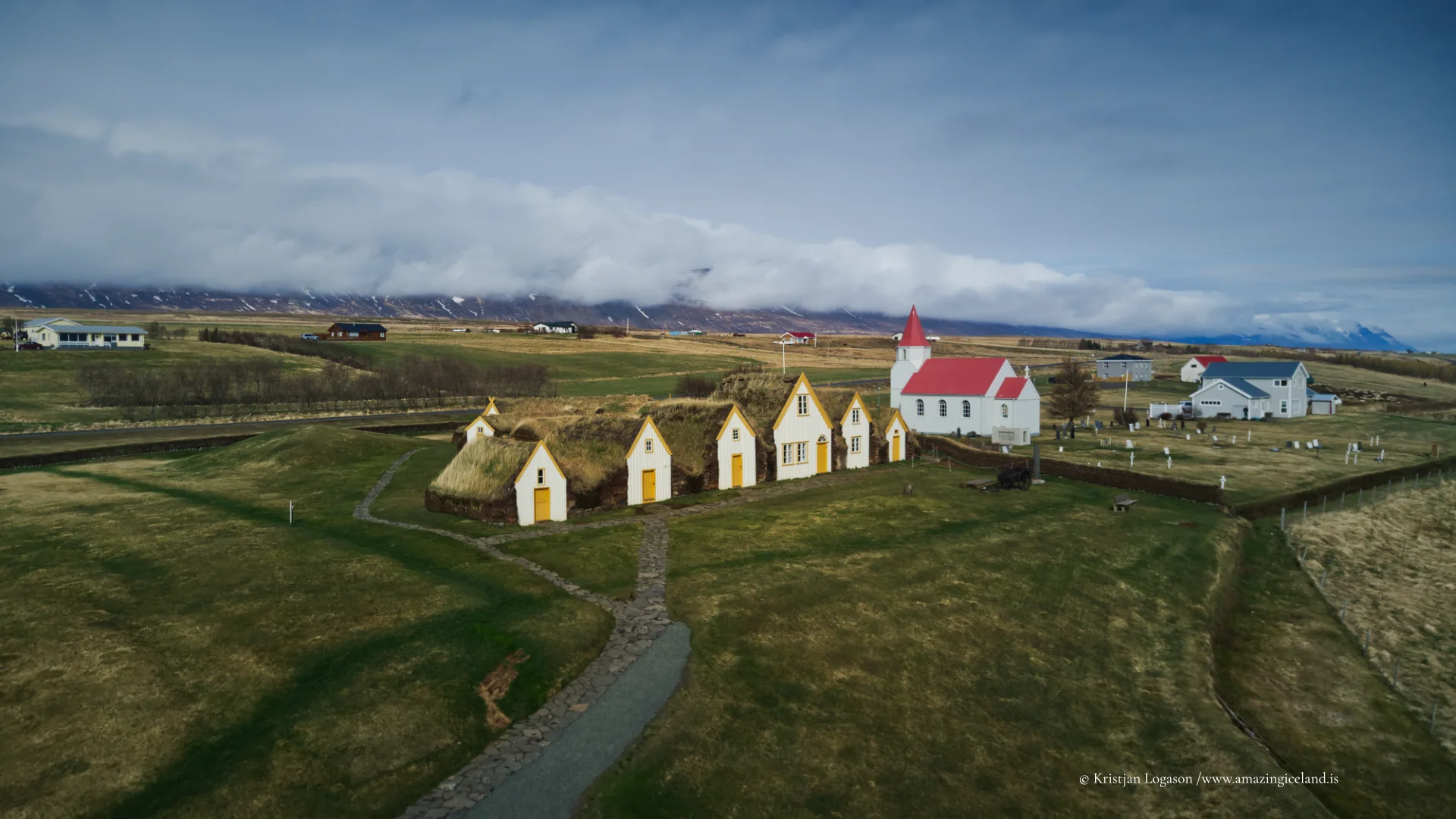
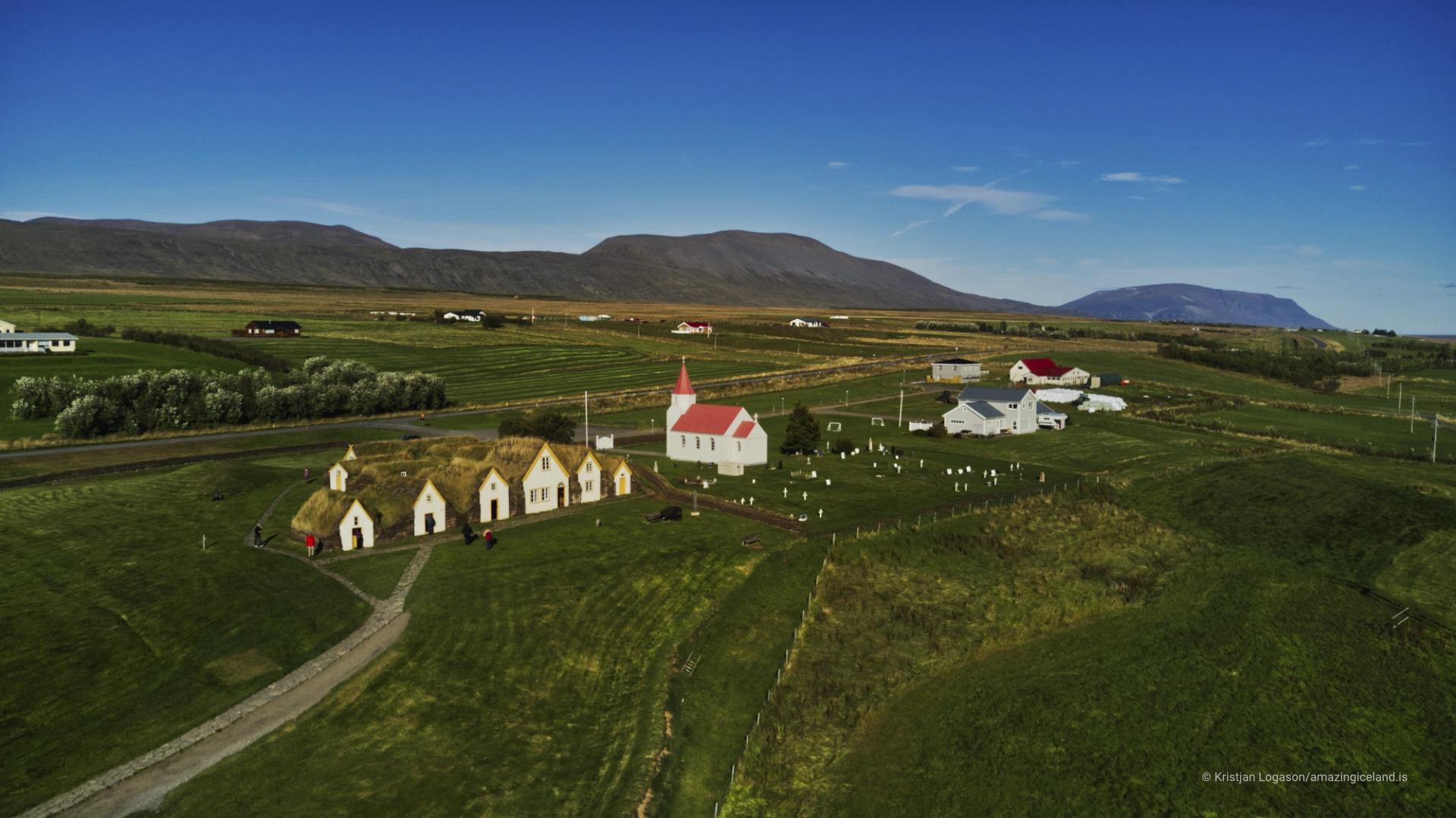
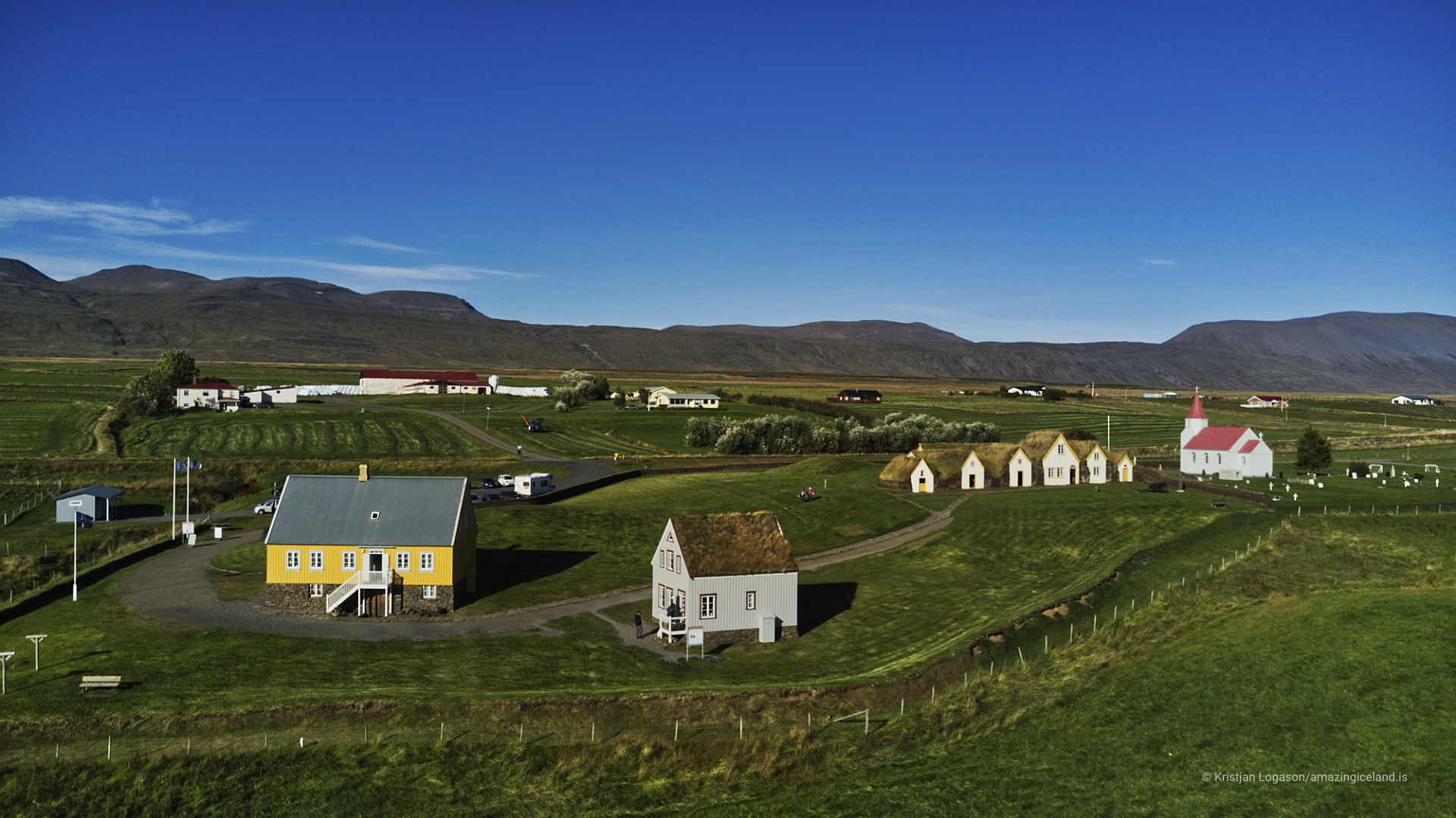
Located in Skagafjörður in Northwest Iceland, Glaumbær is one of the country’s most complete and significant turf farm complexes. Preserved as a heritage site and museum, Glaumbær offers a rare, spatially coherent insight into Icelandic rural life from the medieval period through the 19th century, where architecture, landscape, and social structure formed a single adaptive system.
The location of Glaumbær farm
Latitude
65.7469
Longitude
-19.5616
Glaumbær farm
Geographic and historical setting
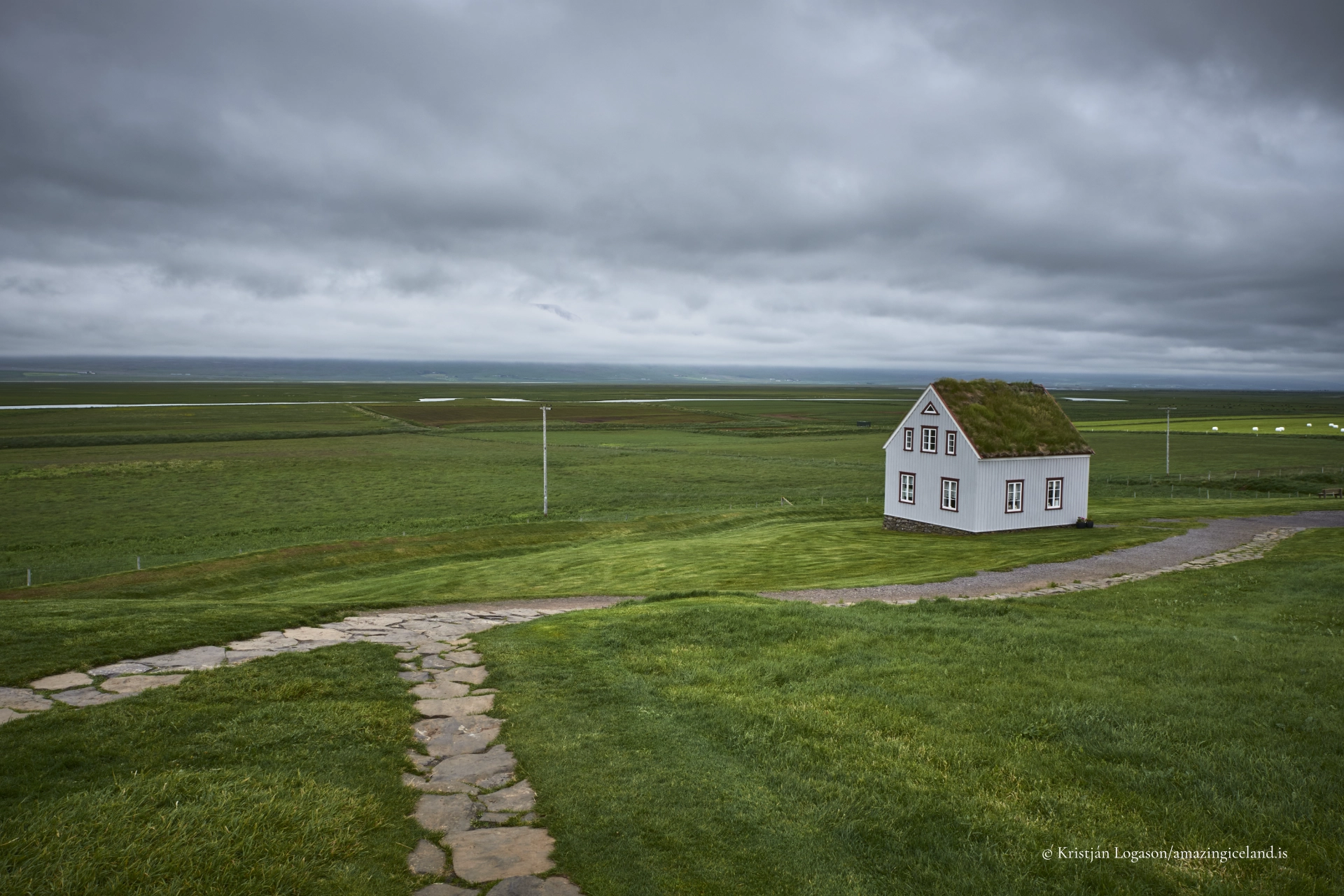
Glaumbær sits within the broad agricultural valley of Skagafjörður, one of Iceland’s most productive farming regions. Sheltered by surrounding mountains and enriched by river sediments, the valley provided relatively stable conditions for livestock farming, hay production, and long-term settlement. These conditions made Skagafjörður a regional centre for power, culture, and trade throughout Icelandic history.
The site of Glaumbær has been occupied since the early settlement period. Written sources suggest a church and farm here as early as the 11th century, placing Glaumbær within the formative phase of Icelandic society. Over centuries, the farm evolved not through wholesale rebuilding, but through incremental adaptation—rooms added, walls reinforced, materials reused—producing the layered structure visible today.
This continuity is central to Glaumbær’s significance. The farm does not represent a single historical moment, but a long trajectory of rural life shaped by necessity, climate, and social hierarchy. Its preservation allows scholars and visitors alike to read architecture as process rather than artifact.
Turf architecture and environmental logic
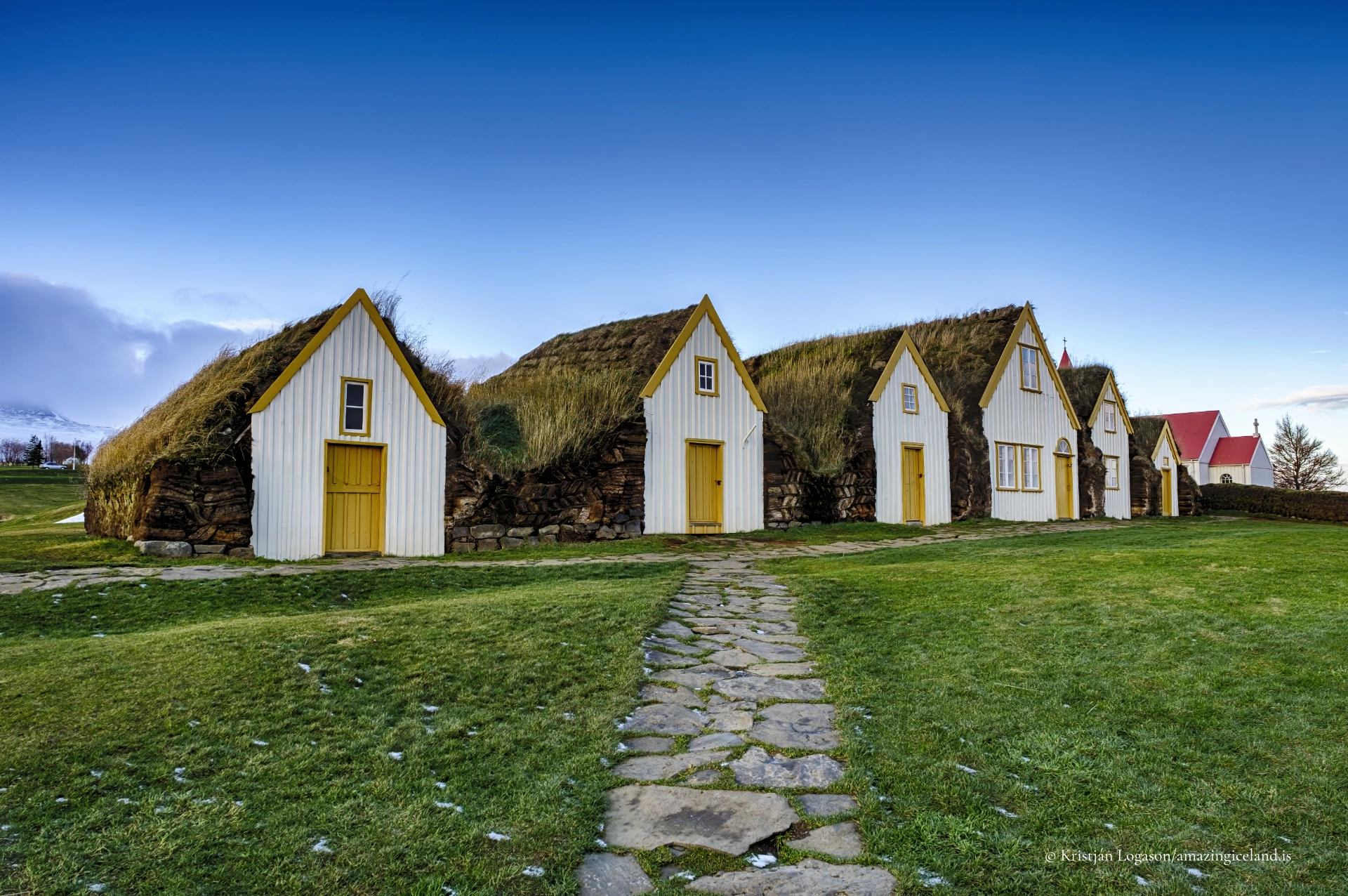
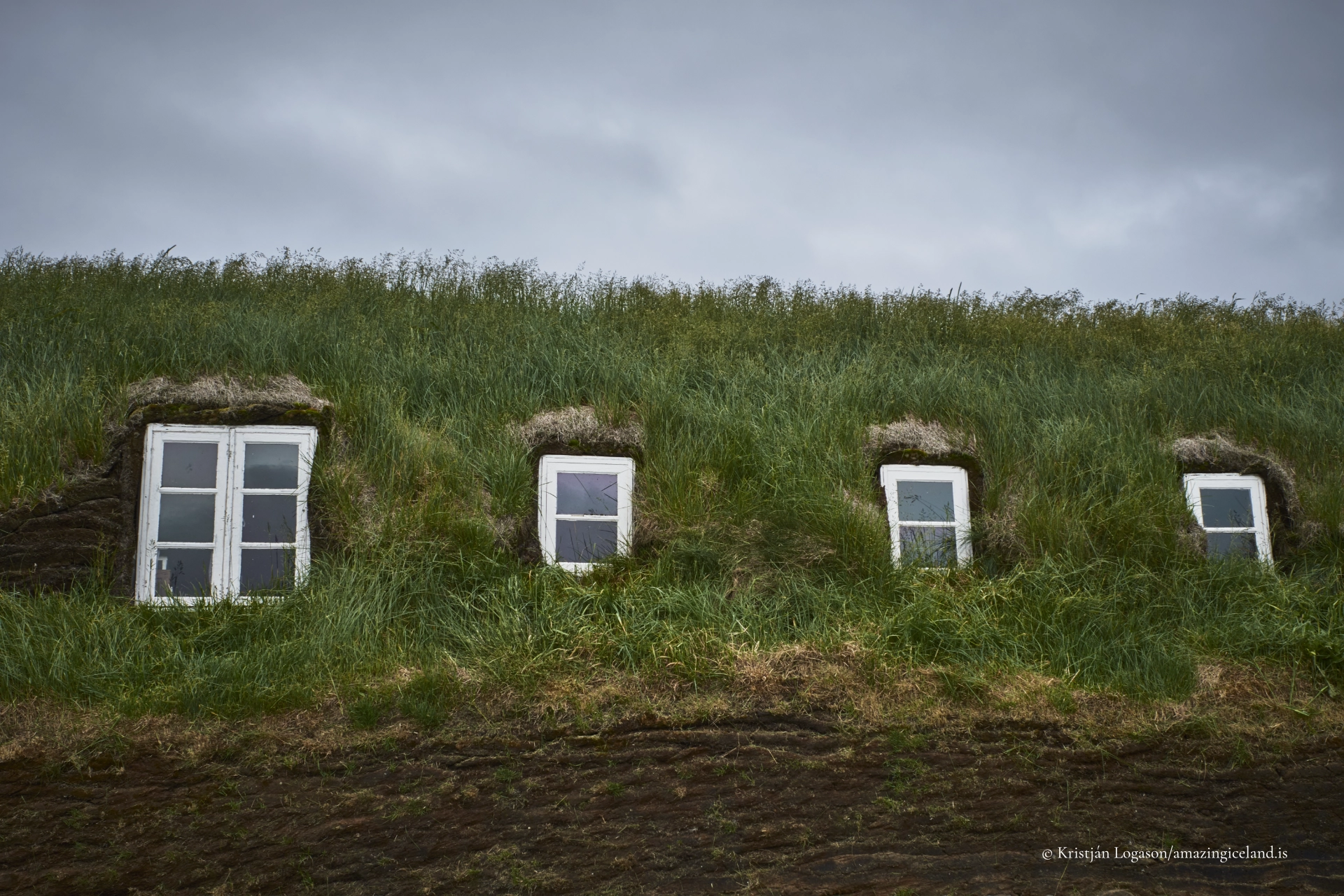
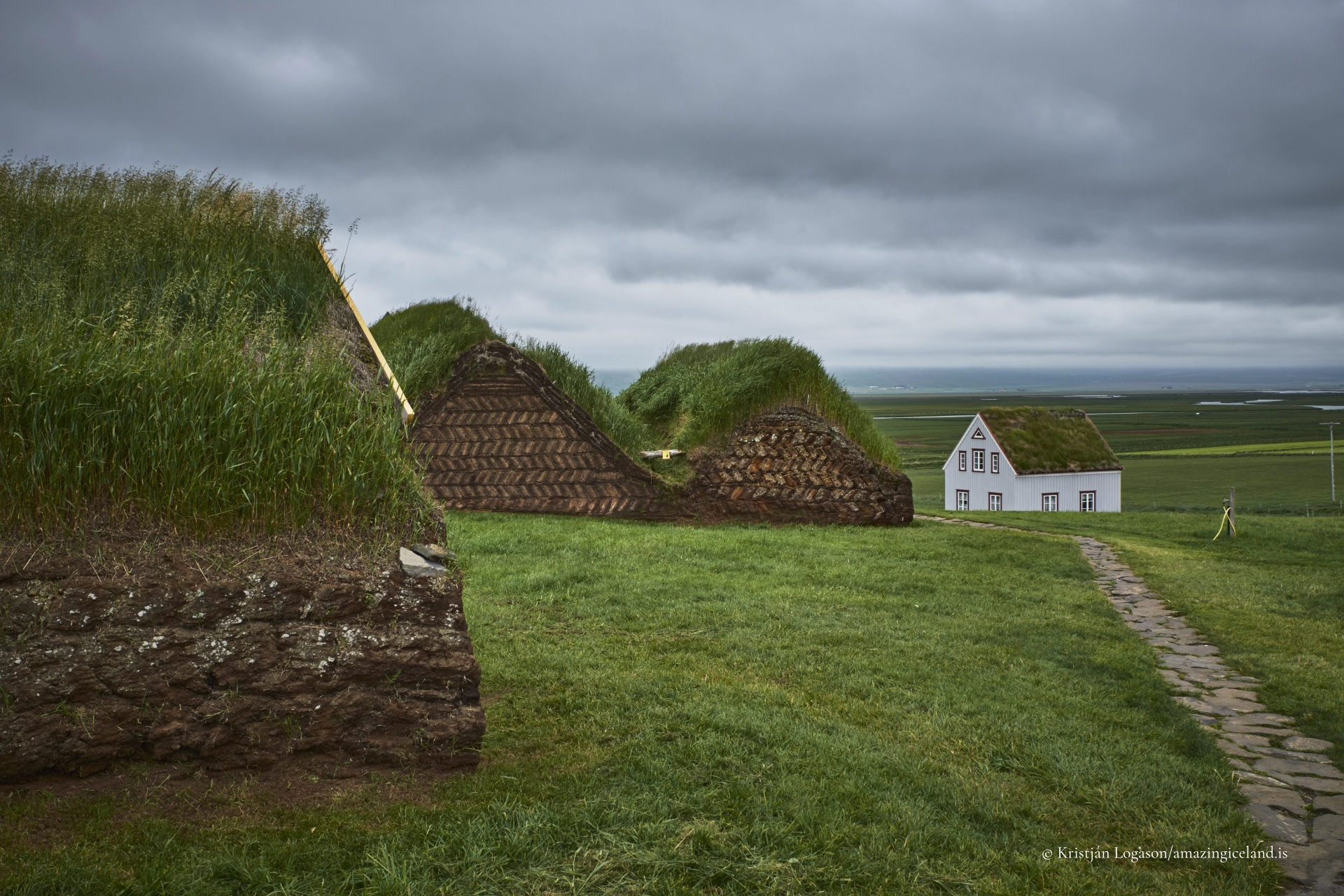
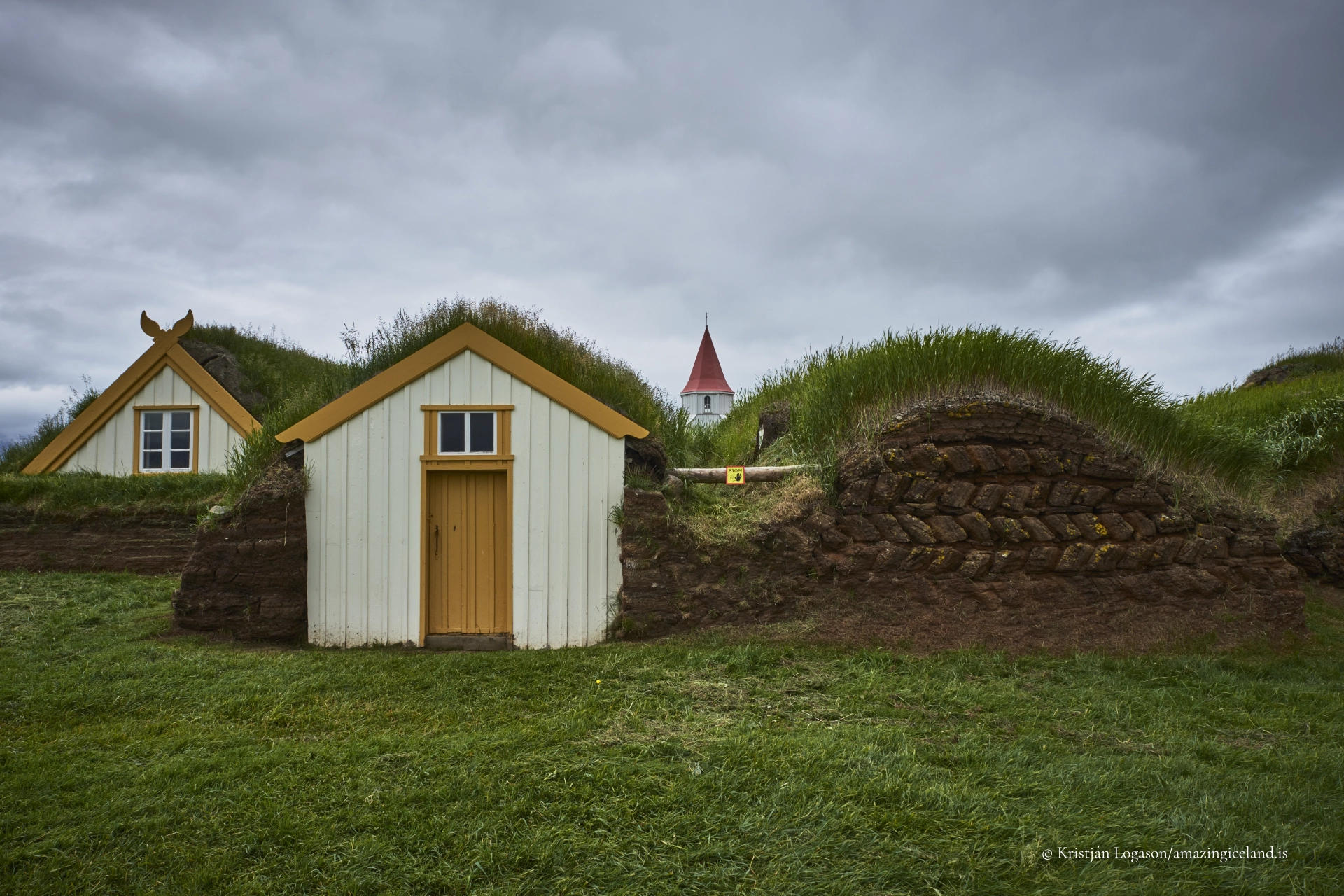
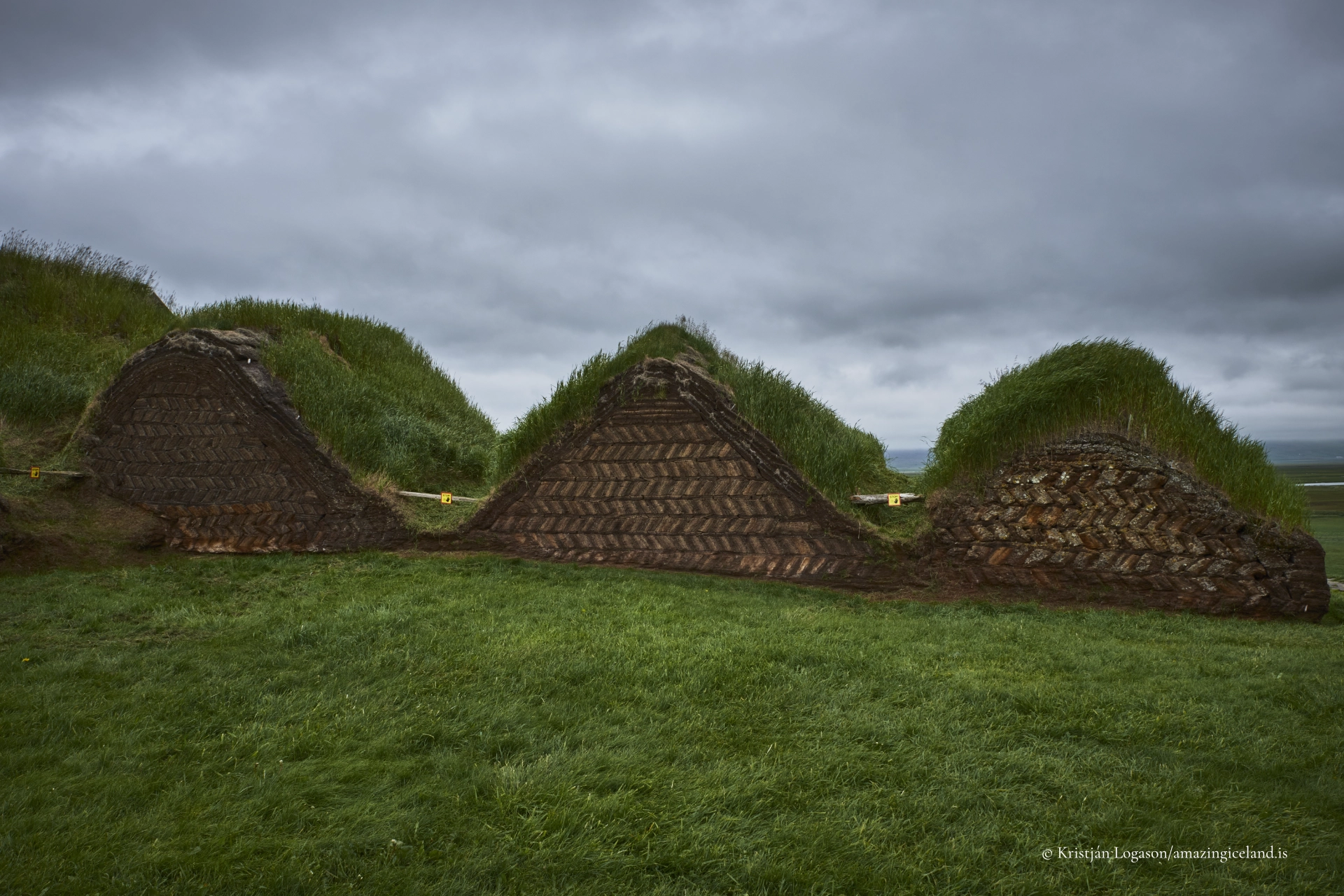
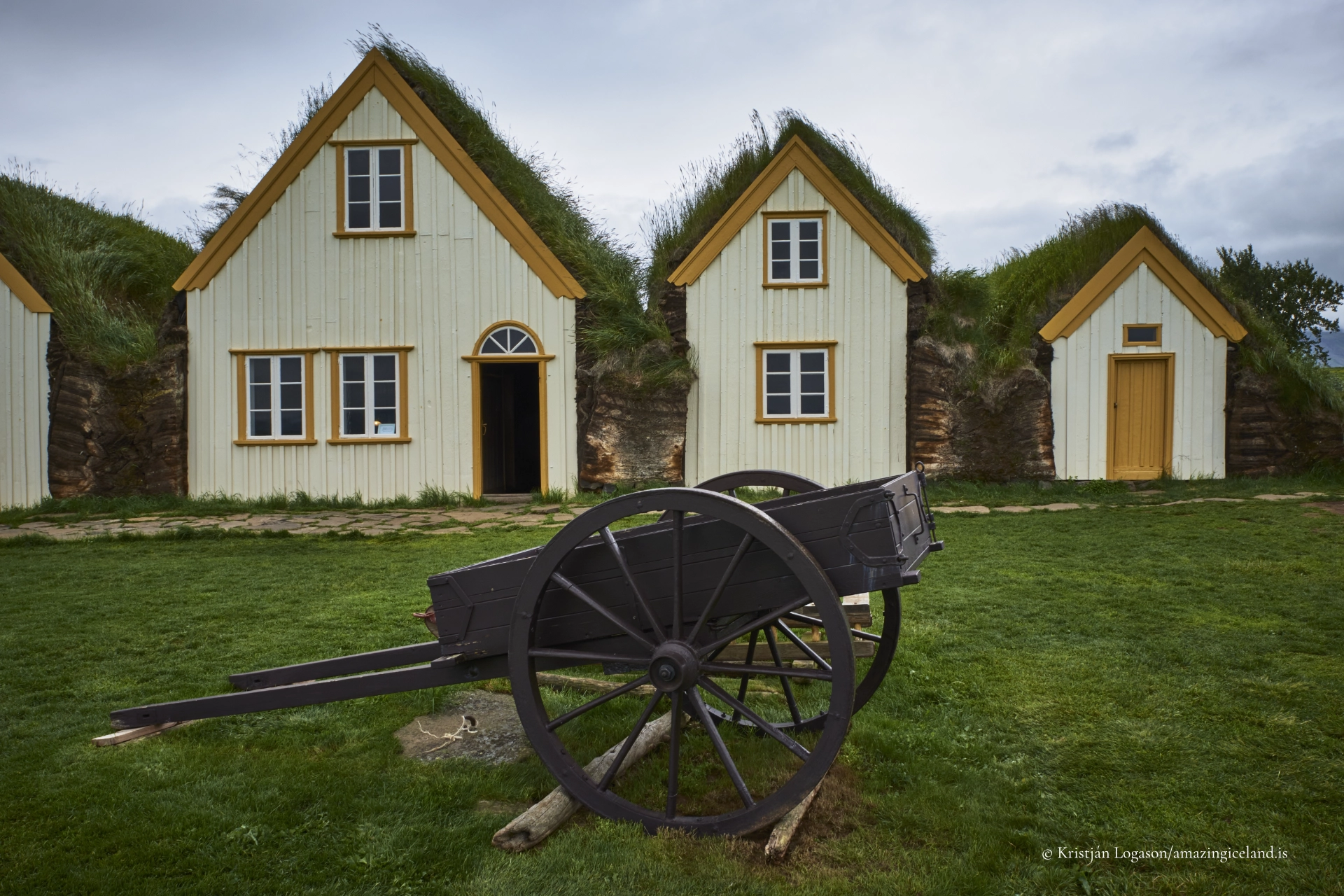
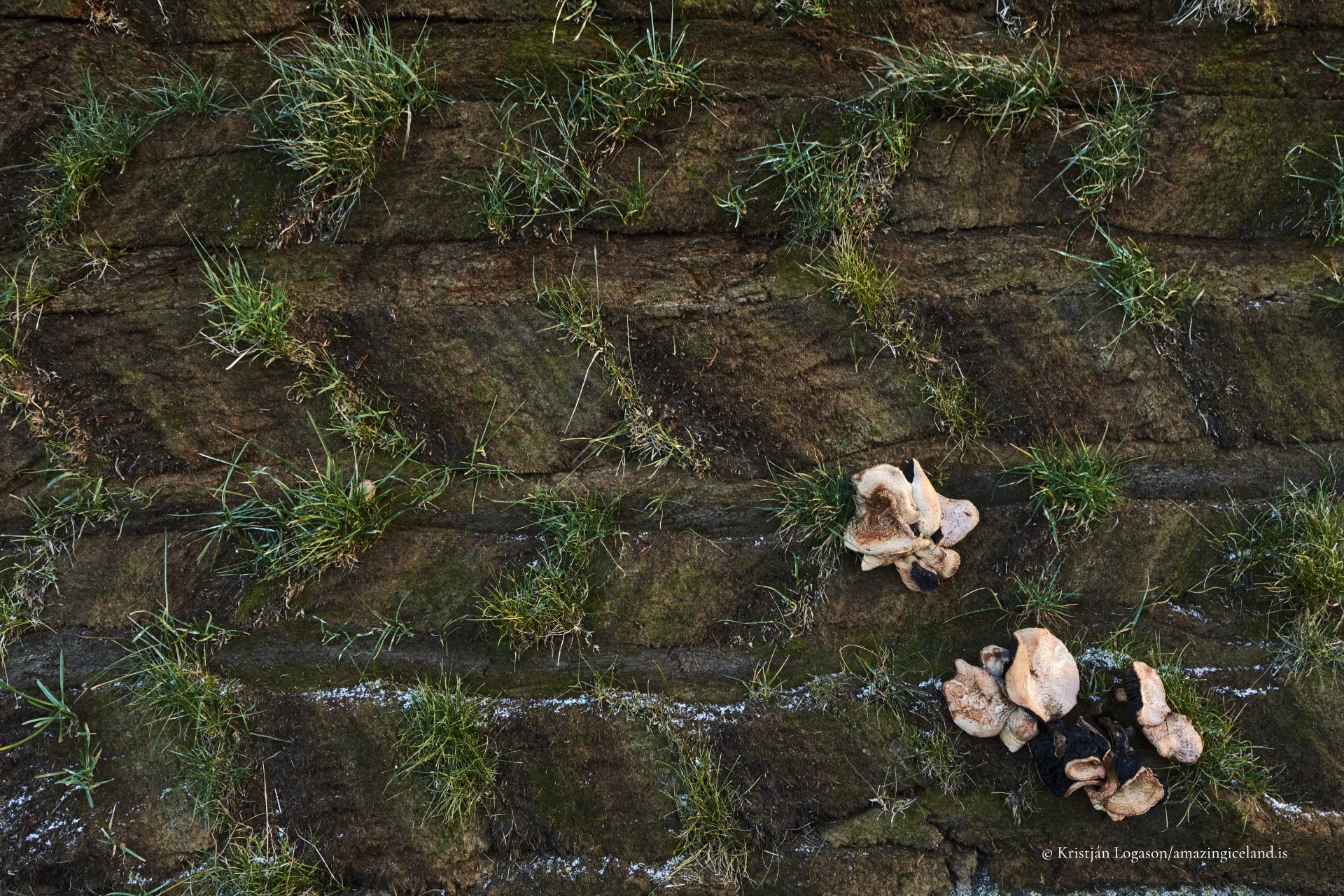
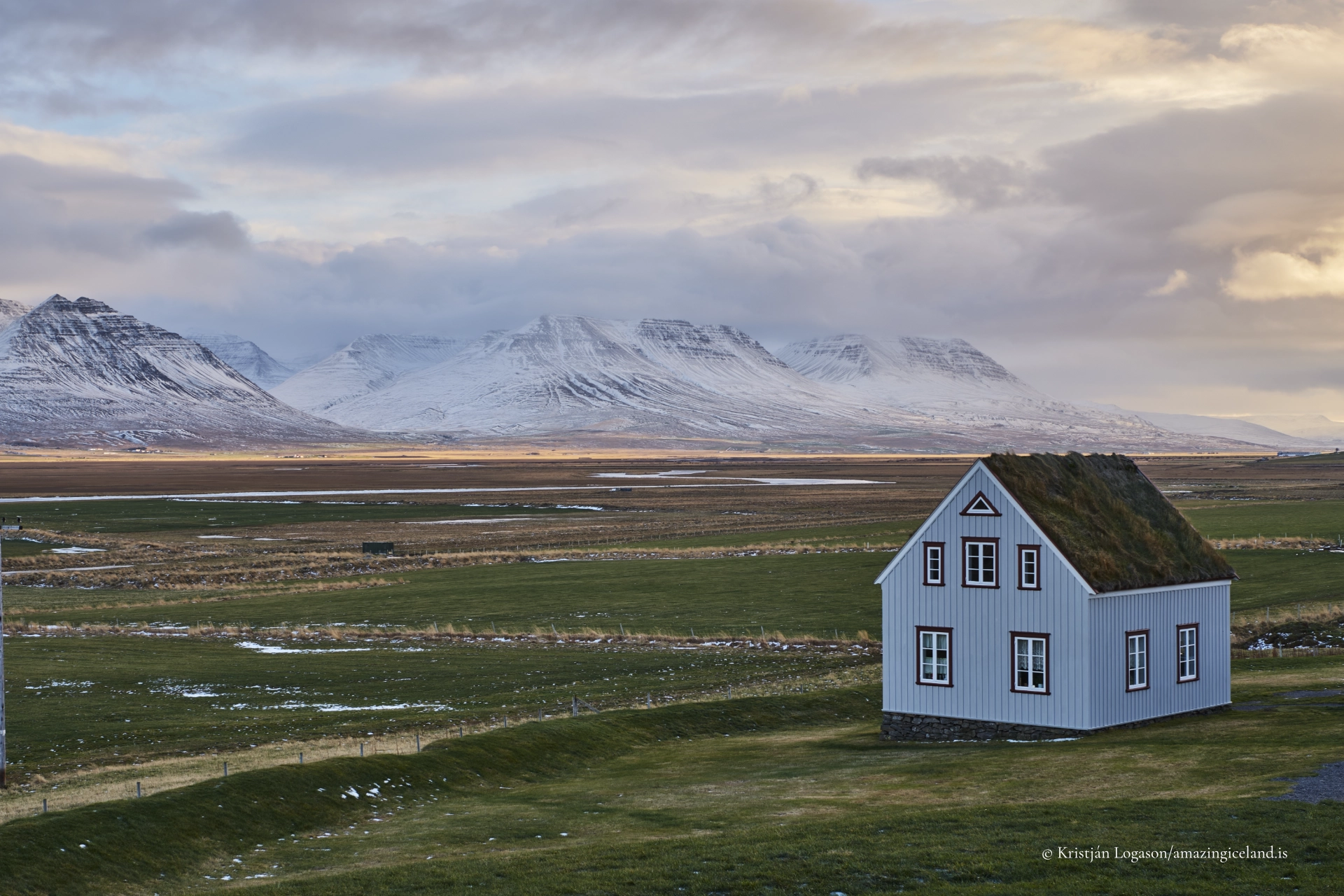
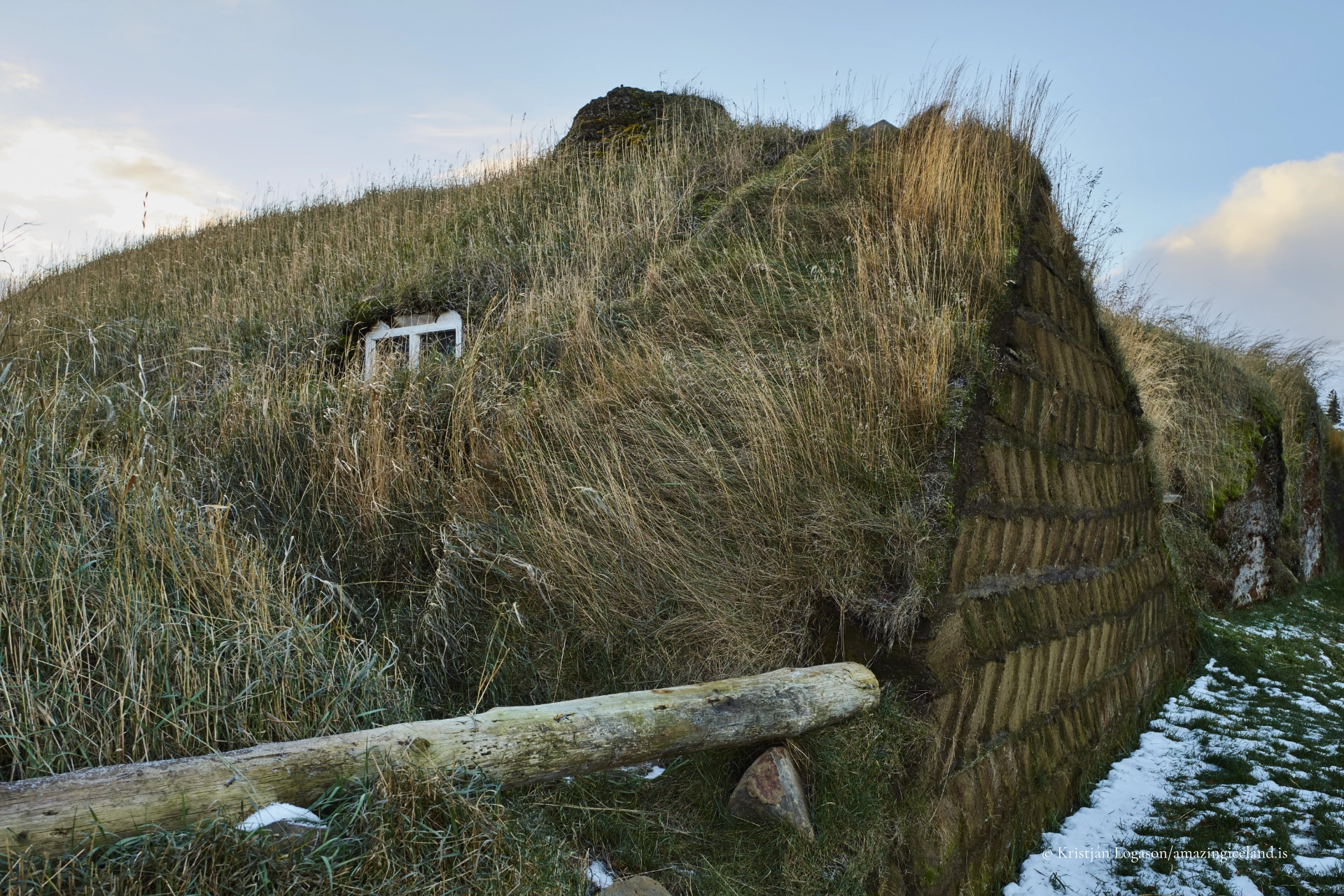
The defining feature of Glaumbær is its turf construction. Thick walls of compacted earth and grass, supported by timber frames, provided exceptional insulation against cold and wind. In a landscape where timber was scarce and imported wood expensive, turf was not a primitive substitute but an optimal material—locally available, renewable, and thermally efficient.
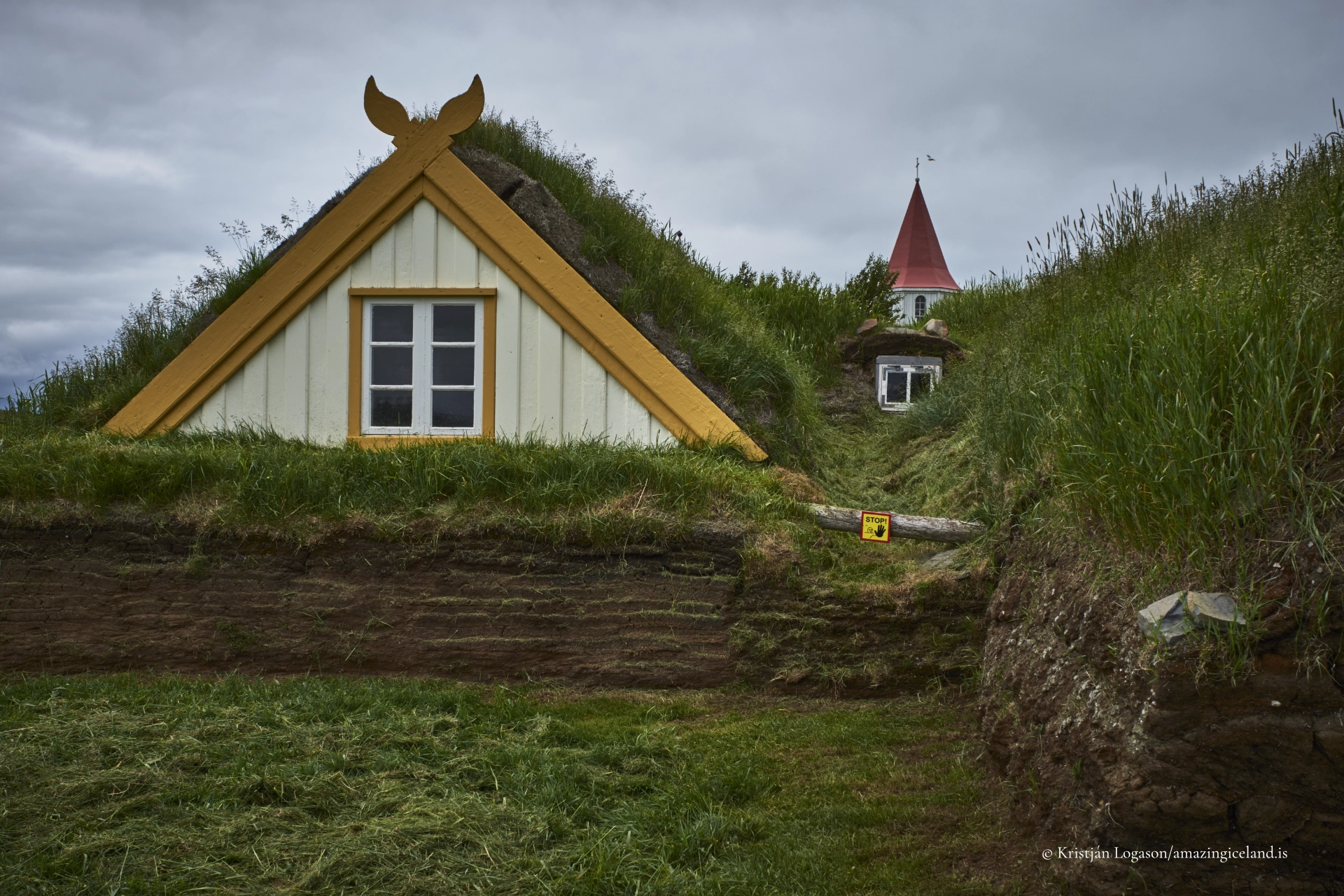
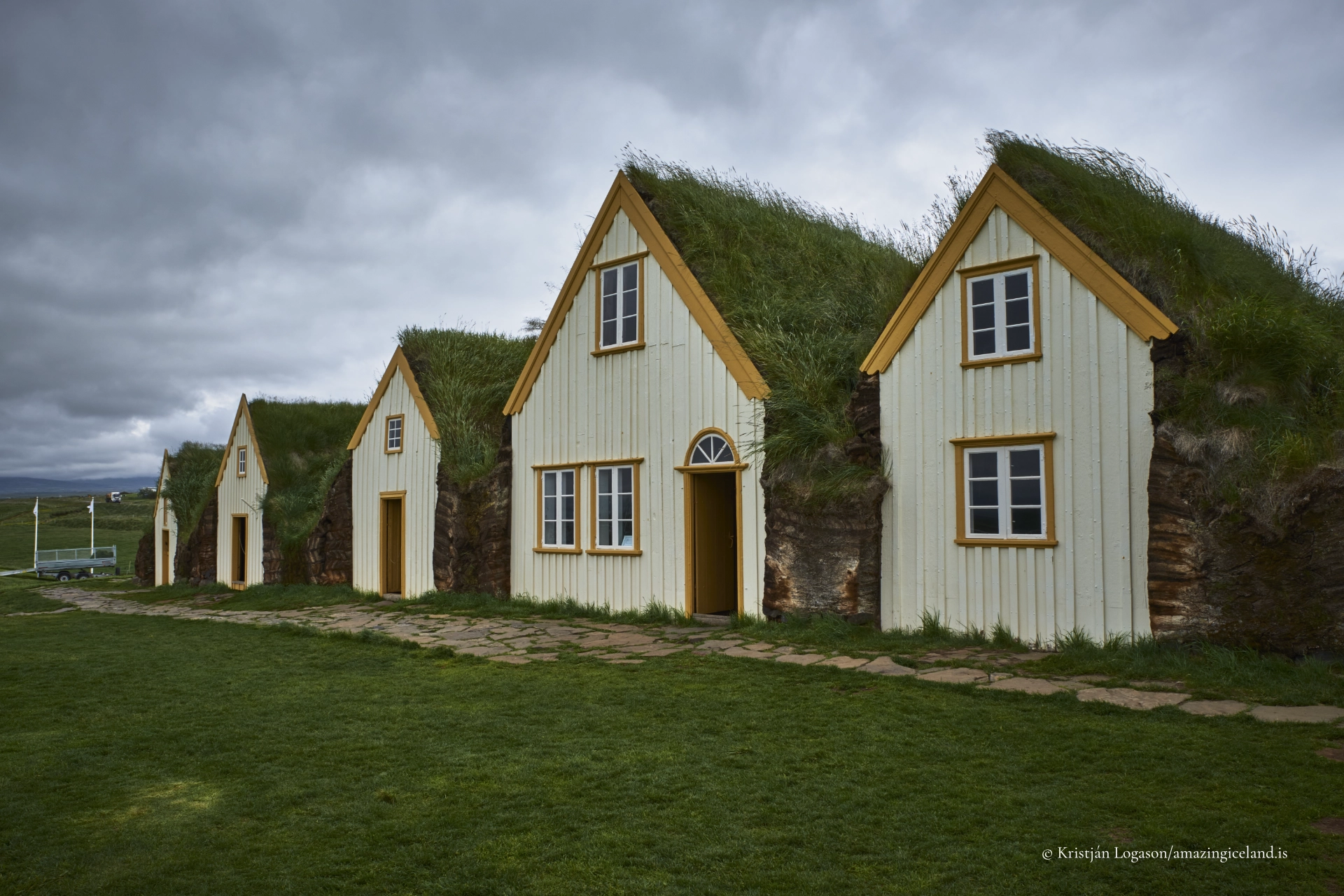
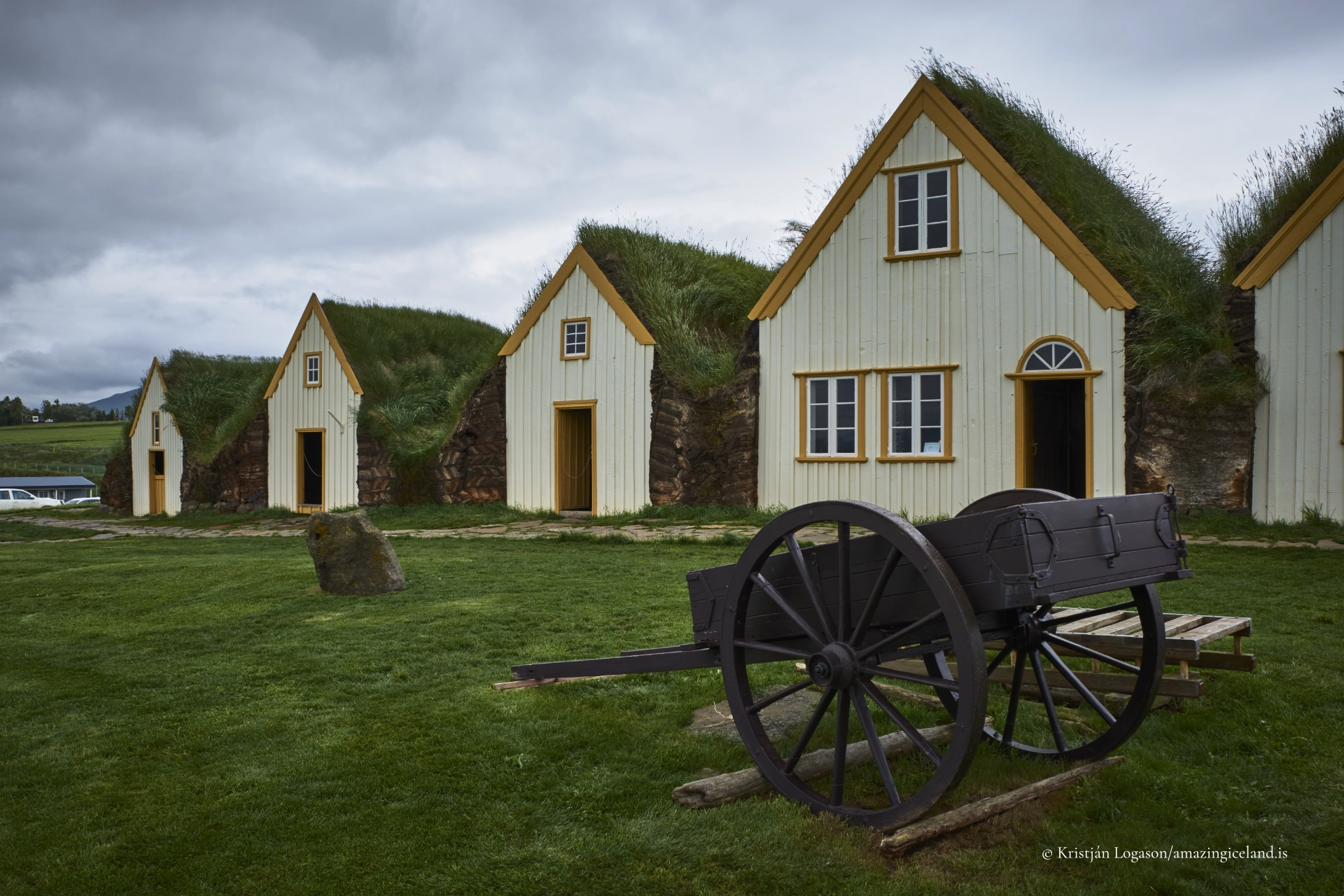
The farm complex consists of interconnected rooms arranged along a central passageway, often referred to as the baðstofa system. This layout minimized heat loss, reduced exterior wall exposure, and structured daily life around shared indoor space. Functions were distributed spatially: sleeping, working, storage, and hospitality each occupied defined zones within the complex.
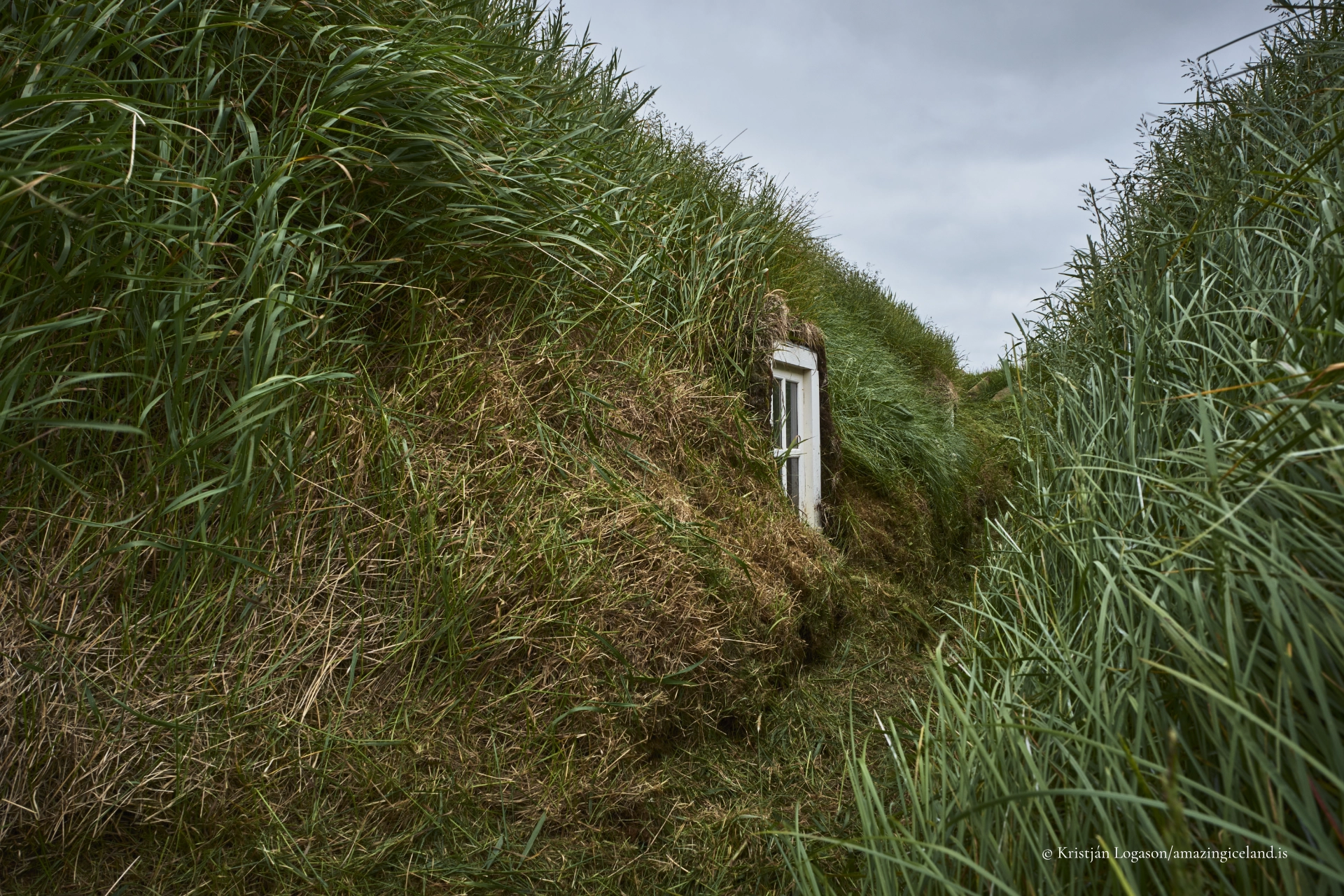
Rooflines were deliberately low and segmented, reducing wind load and heat loss while blending the buildings into the surrounding terrain. From a distance, Glaumbær appears almost geological—an extension of the ground itself—underscoring how Icelandic architecture often sought integration rather than dominance.
From an academic perspective, Glaumbær exemplifies vernacular architecture at its most refined: design decisions emerge directly from environmental constraint, material economy, and social practice rather than aesthetic ambition.
Social structure and daily life
Glaumbær was not merely a dwelling but the administrative and social centre of a working farm. Households included landowners, tenant farmers, laborers, and servants, all operating within a rigid but functional hierarchy. Spatial organization reflected this structure, with room size, placement, and access correlating directly to social role.
Life within the turf walls was communal and seasonal. Winters were spent largely indoors, with work focused on textile production, tool repair, and food preservation. Summers shifted activity outward to hayfields and grazing land, but the house remained the anchor point of daily rhythm.
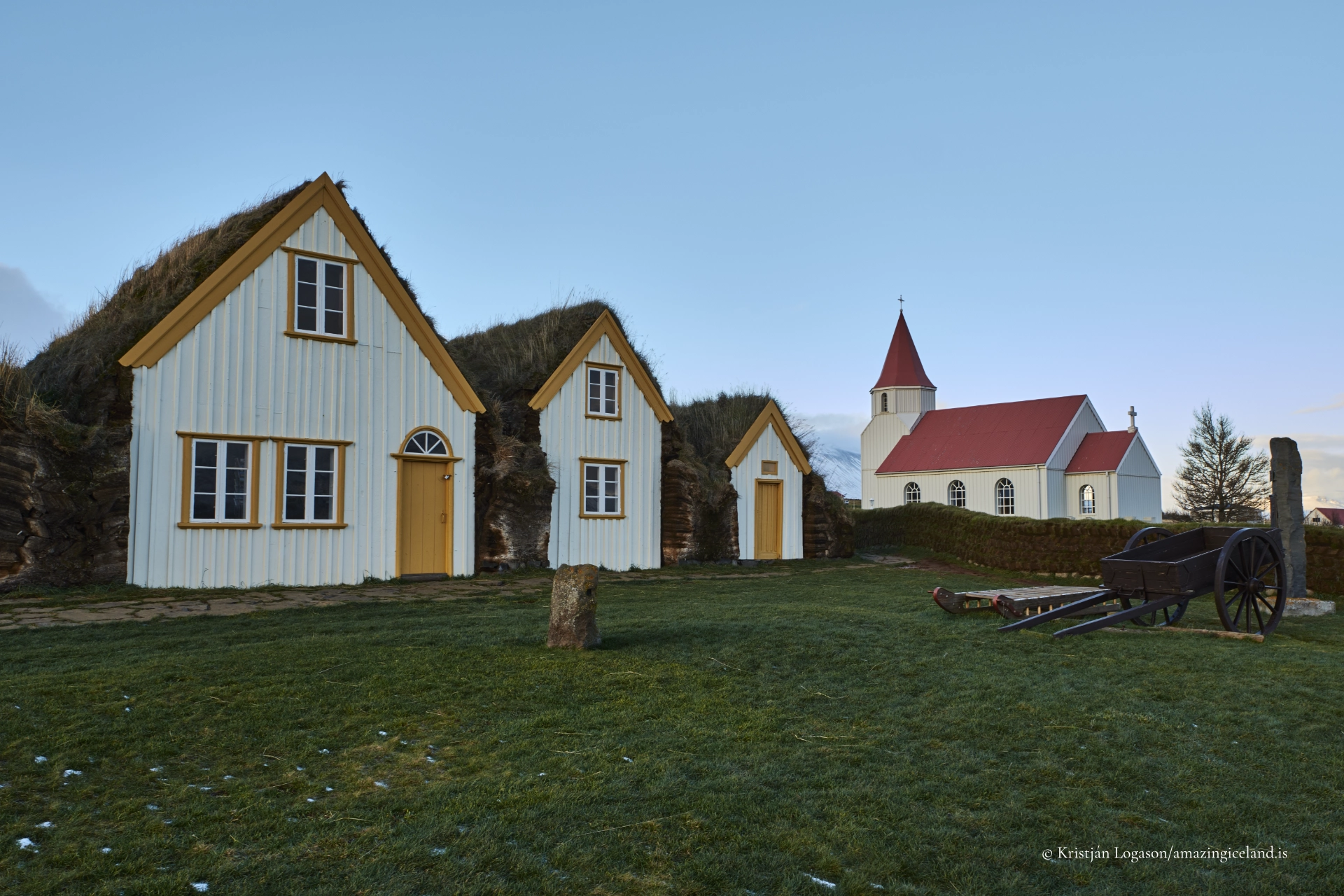
The church at Glaumbær further reinforced the site’s importance. Religious observance, education, and record-keeping were integrated into farm life, blurring boundaries between domestic, spiritual, and administrative spheres. This integration reflects broader patterns in Icelandic rural society, where farms functioned as multifunctional institutions rather than isolated households.
Preservation, interpretation, and museum context
By the late 19th century, turf houses were rapidly replaced by timber and concrete structures, and many historic farms were abandoned or demolished. Glaumbær’s survival is therefore exceptional. Recognizing its value, the site was preserved and later converted into a museum, ensuring both structural conservation and interpretive accessibility.
Today, Glaumbær is managed as a heritage site, with interiors furnished to reflect different periods of occupation. This approach emphasizes lived experience over abstraction: visitors move through spaces as inhabitants once did, encountering low ceilings, narrow passages, and controlled light.
The museum context is deliberately restrained. Interpretation supports understanding without overwhelming the architecture itself, allowing the material reality of turf construction to remain central. For scholars of architecture, anthropology, or environmental history, Glaumbær functions as a three-dimensional primary source.
Glaumbær in regional and national context
Within Skagafjörður, Glaumbær represents the domestic counterpart to the region’s historical prominence in chieftain power, horsemanship, and ecclesiastical authority. While sagas and historic sites often focus on conflict and leadership, Glaumbær records the everyday infrastructure that made such systems viable.
Nationally, it stands as one of the clearest examples of Iceland’s turf-building tradition, comparable in importance to sites such as Laufás or Þverá. Together, these farms articulate a distinctly Icelandic architectural response—one that prioritized thermal performance, adaptability, and longevity over display.
For modern visitors, Glaumbær provides perspective. In a country often associated with dramatic natural forces, it reminds us that survival depended equally on quiet ingenuity and material discipline.
Interesting facts:
- Glaumbær has been continuously occupied since at least the 11th century.
- The turf house complex reflects centuries of incremental rebuilding, not a single construction phase.
- Turf walls can exceed one metre in thickness, providing exceptional insulation.
- The site functioned as both a farm and ecclesiastical centre.
- Glaumbær is one of the best-preserved turf farms in Iceland.
Image Gallery
The Locomotive Elite
What do Donald Trump and Iceland’s Locomotive Elite have in common?
Far more than you think.
In The Locomotive Elite, you’ll uncover how a tiny clique in Iceland captured extensive control—of banks, courts, media, and even the central bank.
For decades they ruled, first democratically, then through corruption and in the end through crime, enriching themselves and their cronies while dismantling oversight.
The result?
One of the most spectacular financial collapses in modern history.
Photography tips:
- Work with low angles: emphasize rooflines merging with landscape.
- Interior light is limited: embrace contrast and shadow rather than forcing brightness.
- Details matter: door frames, turf texture, and timber joints tell the story.
- Avoid wide distortion indoors: preserve spatial realism.
- Seasonal context helps: summer greenery and winter snow offer different narratives.
Good cameras for Iceland
Sony A7R V

Sony A7s lll

Canon R6

Nikon Z6 lll

Destinations nearby
Good to have in Iceland