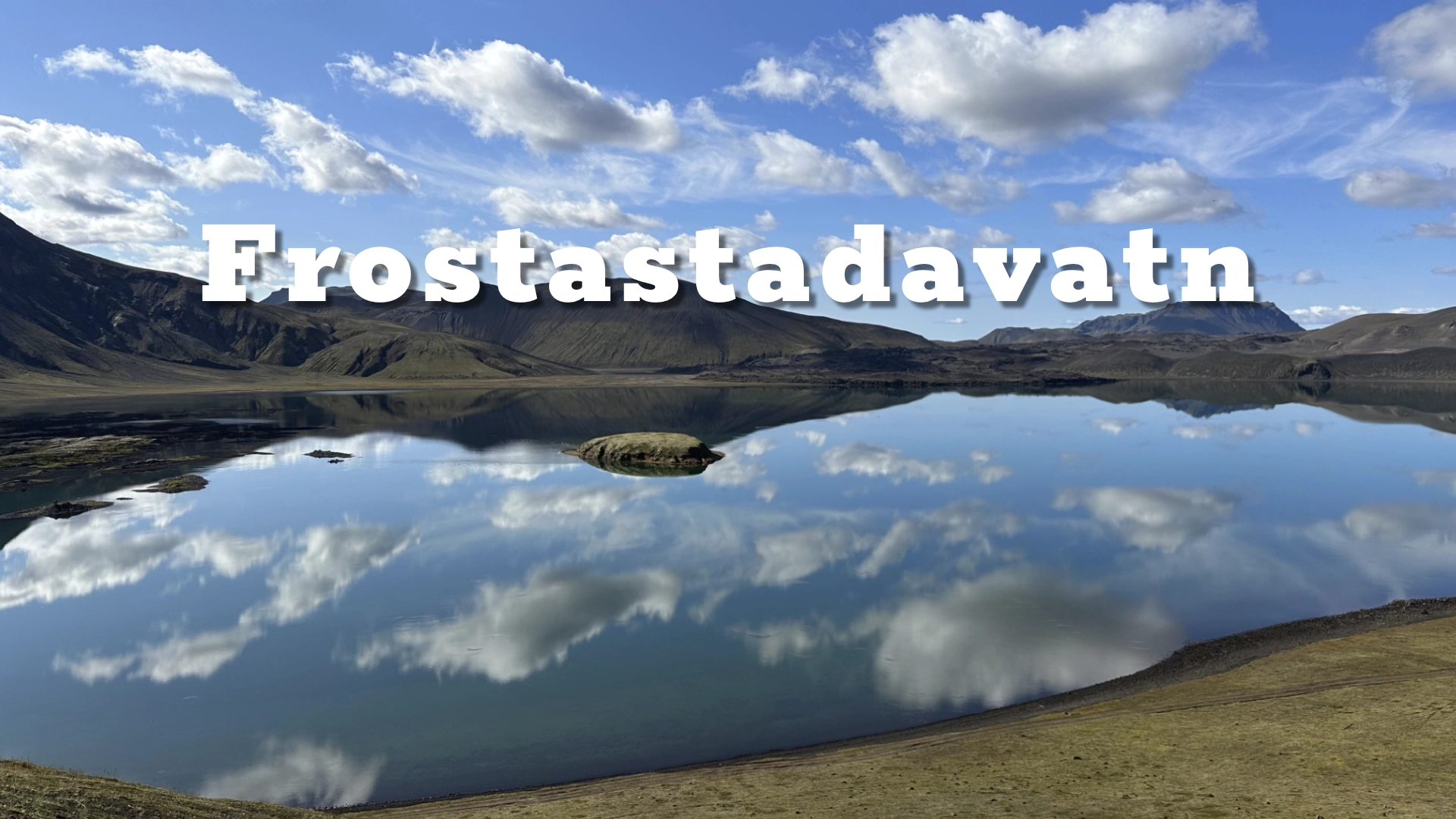
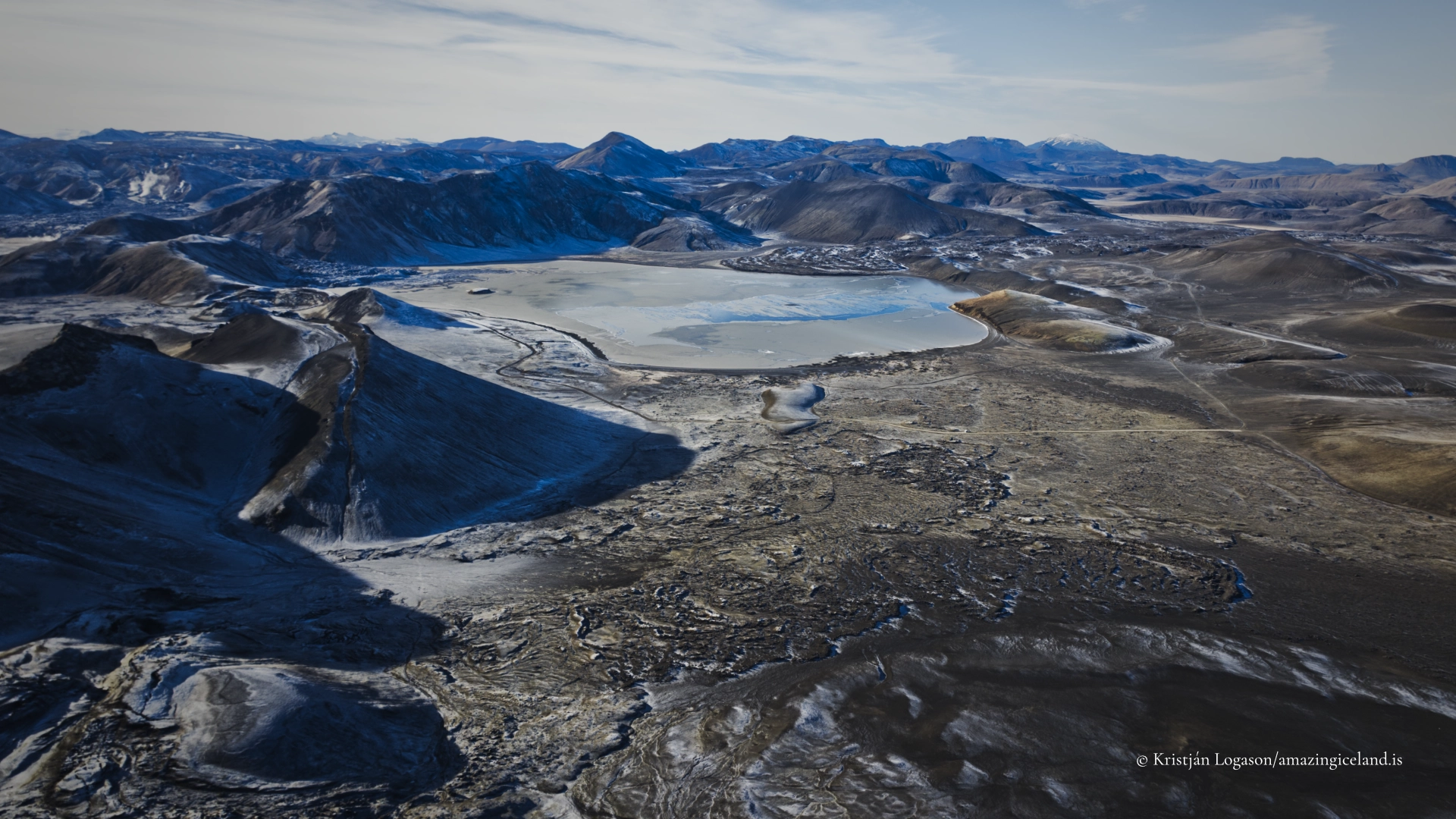
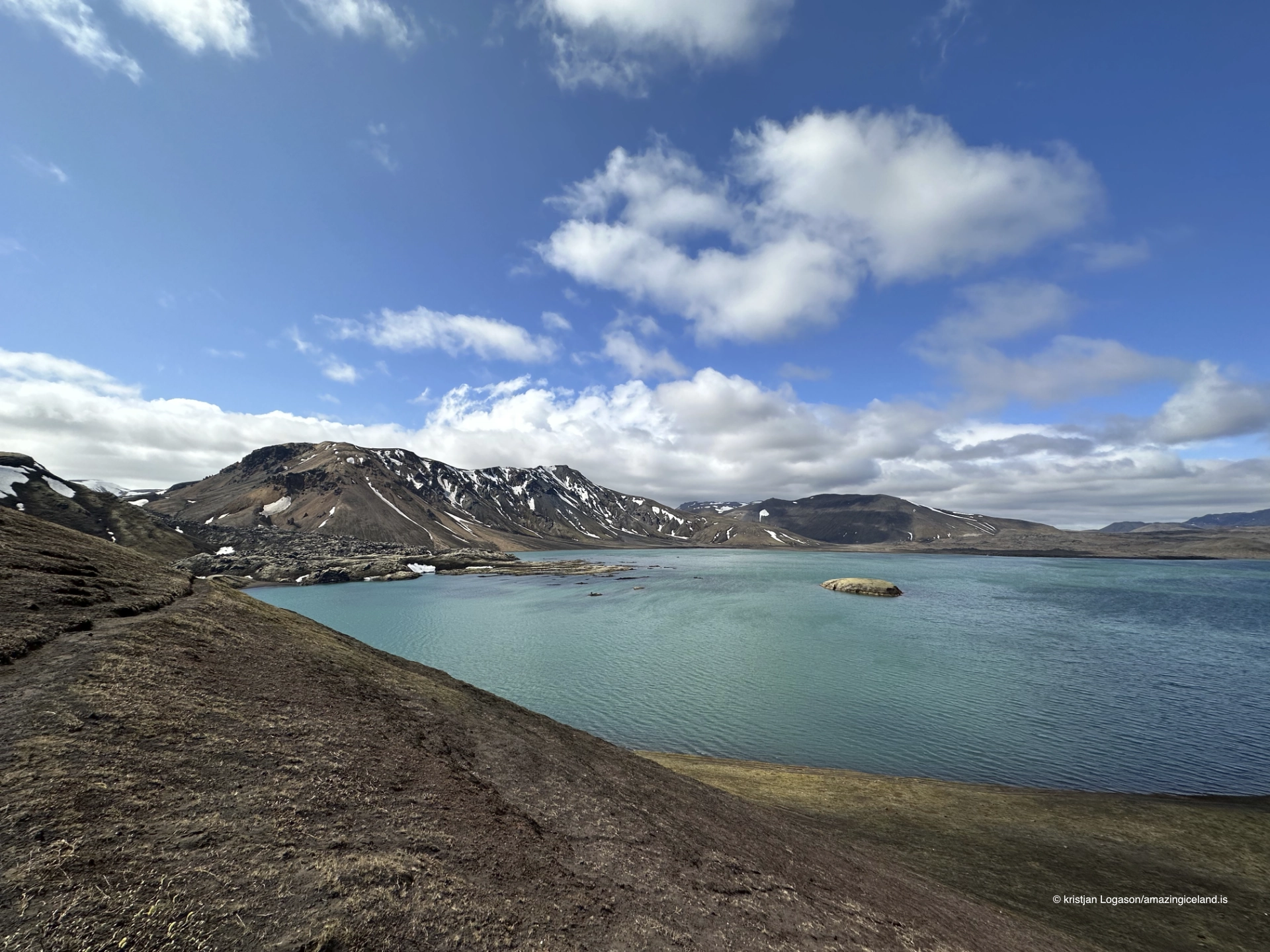
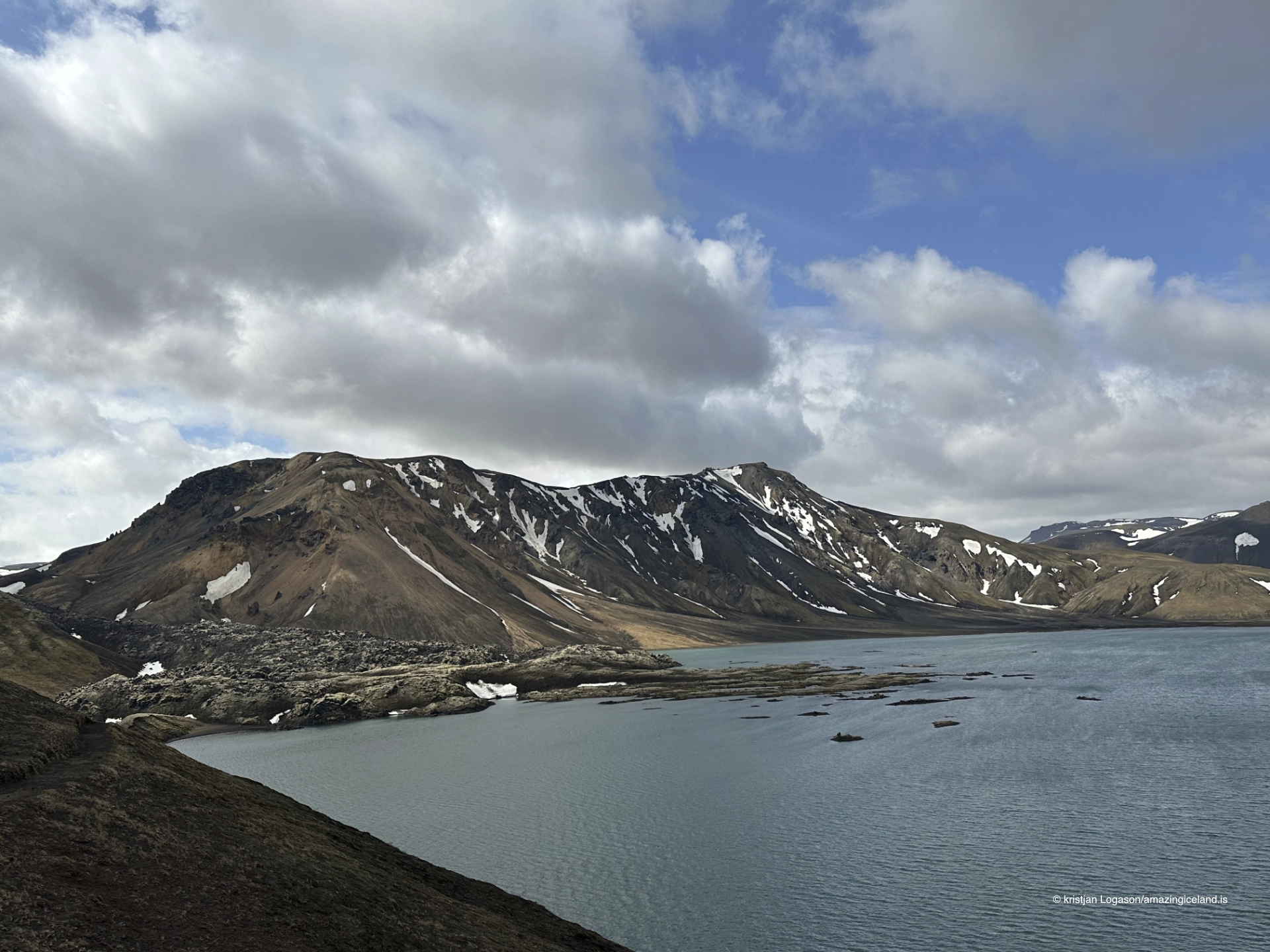
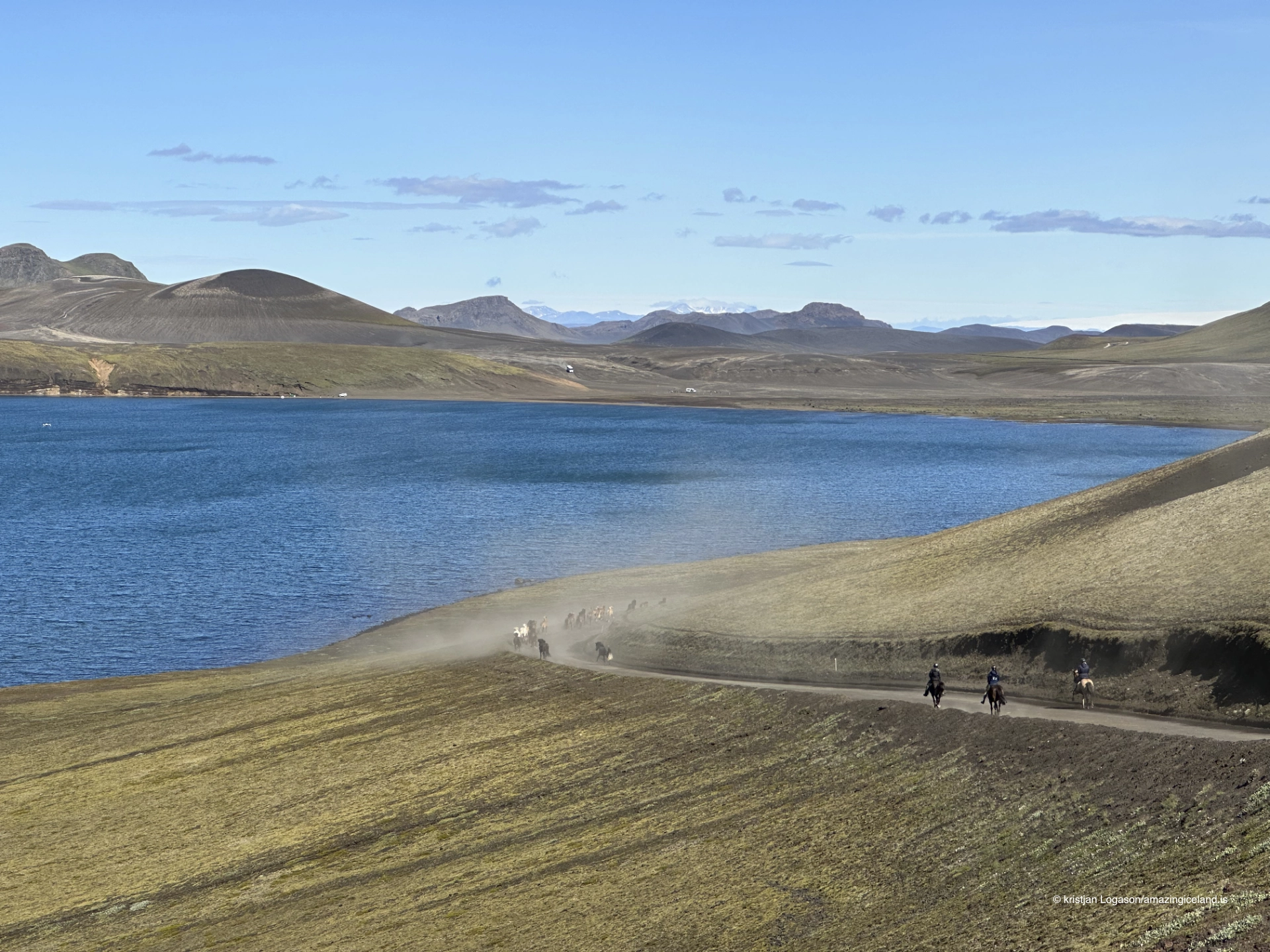
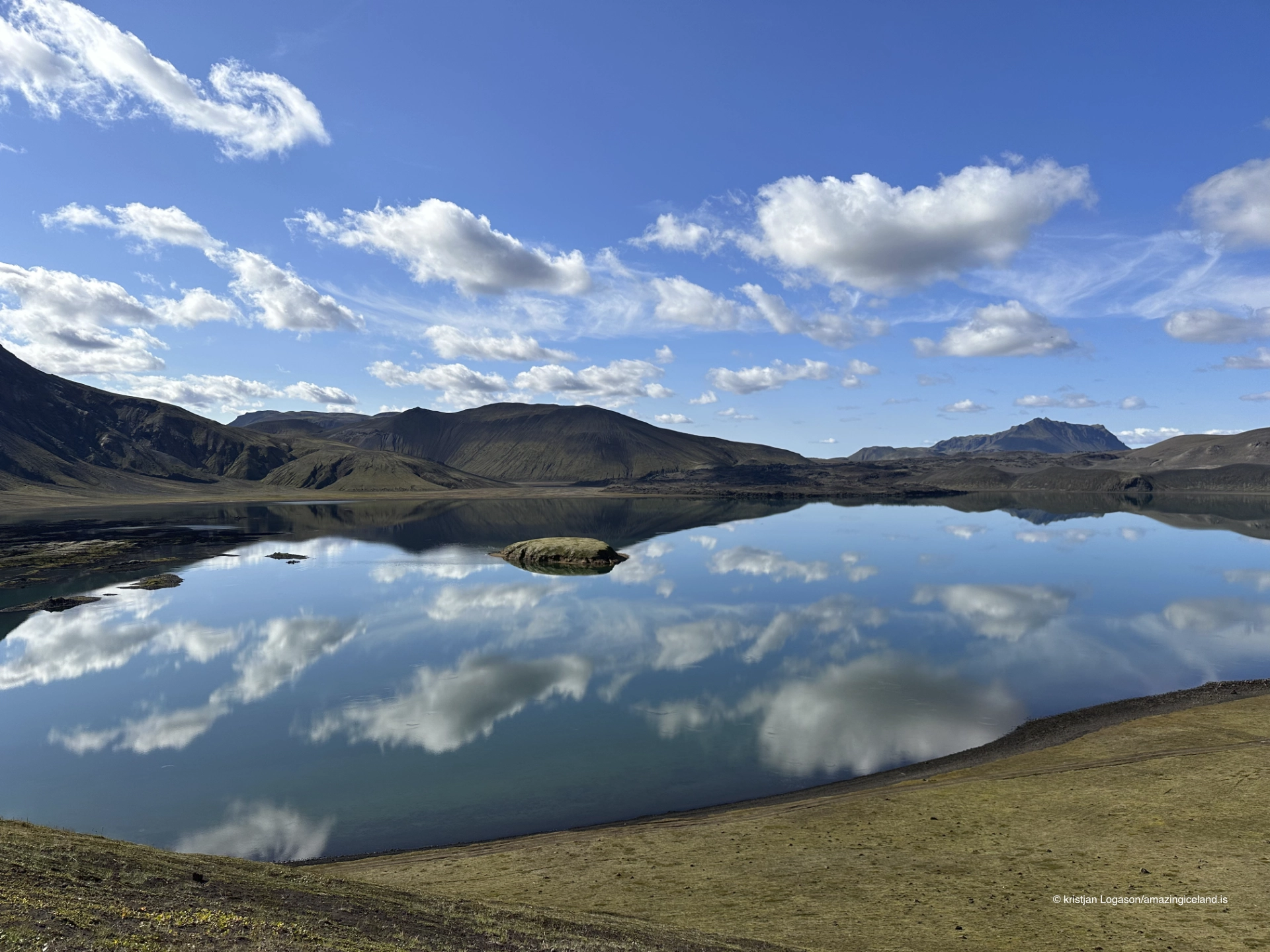
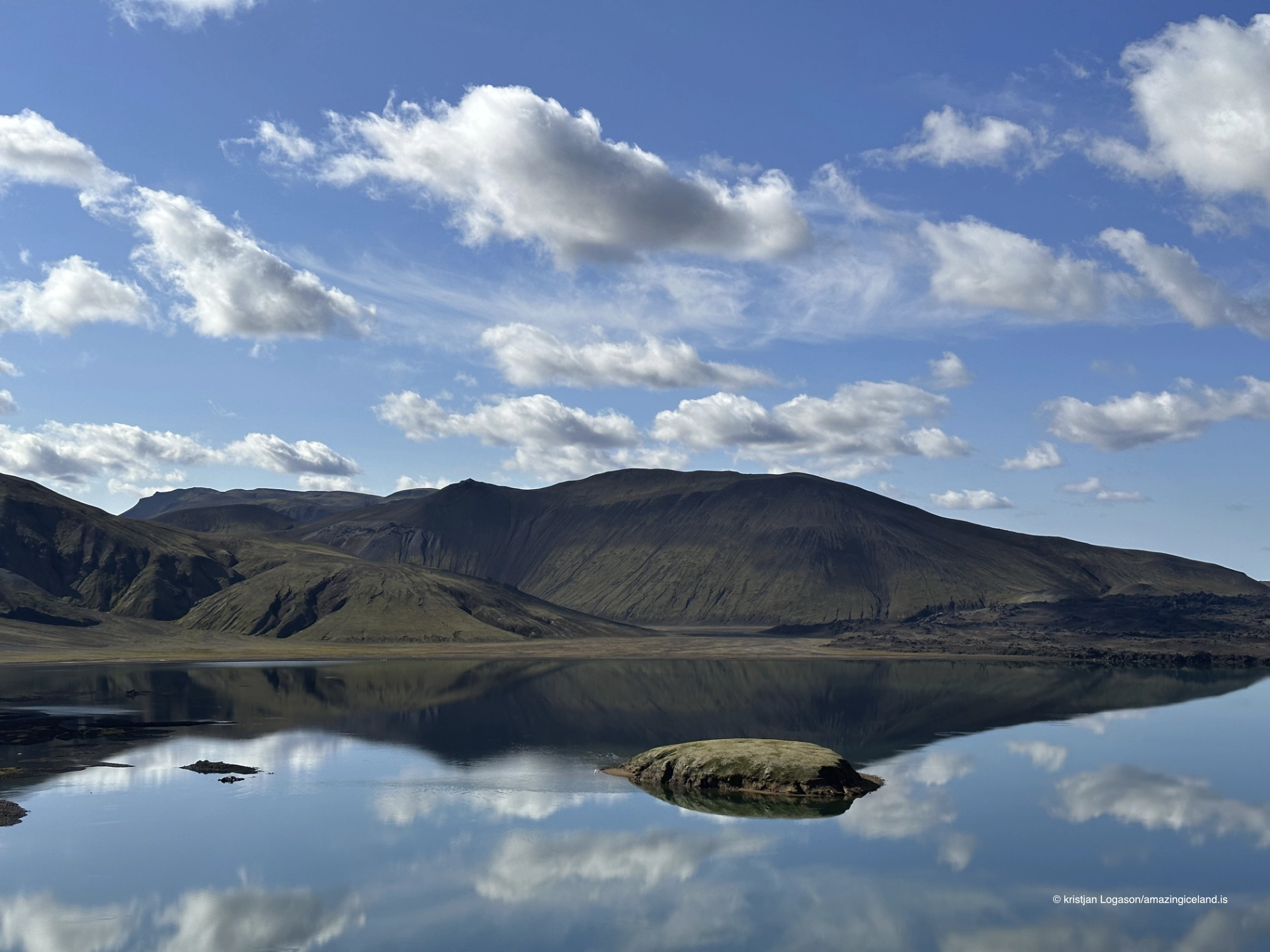
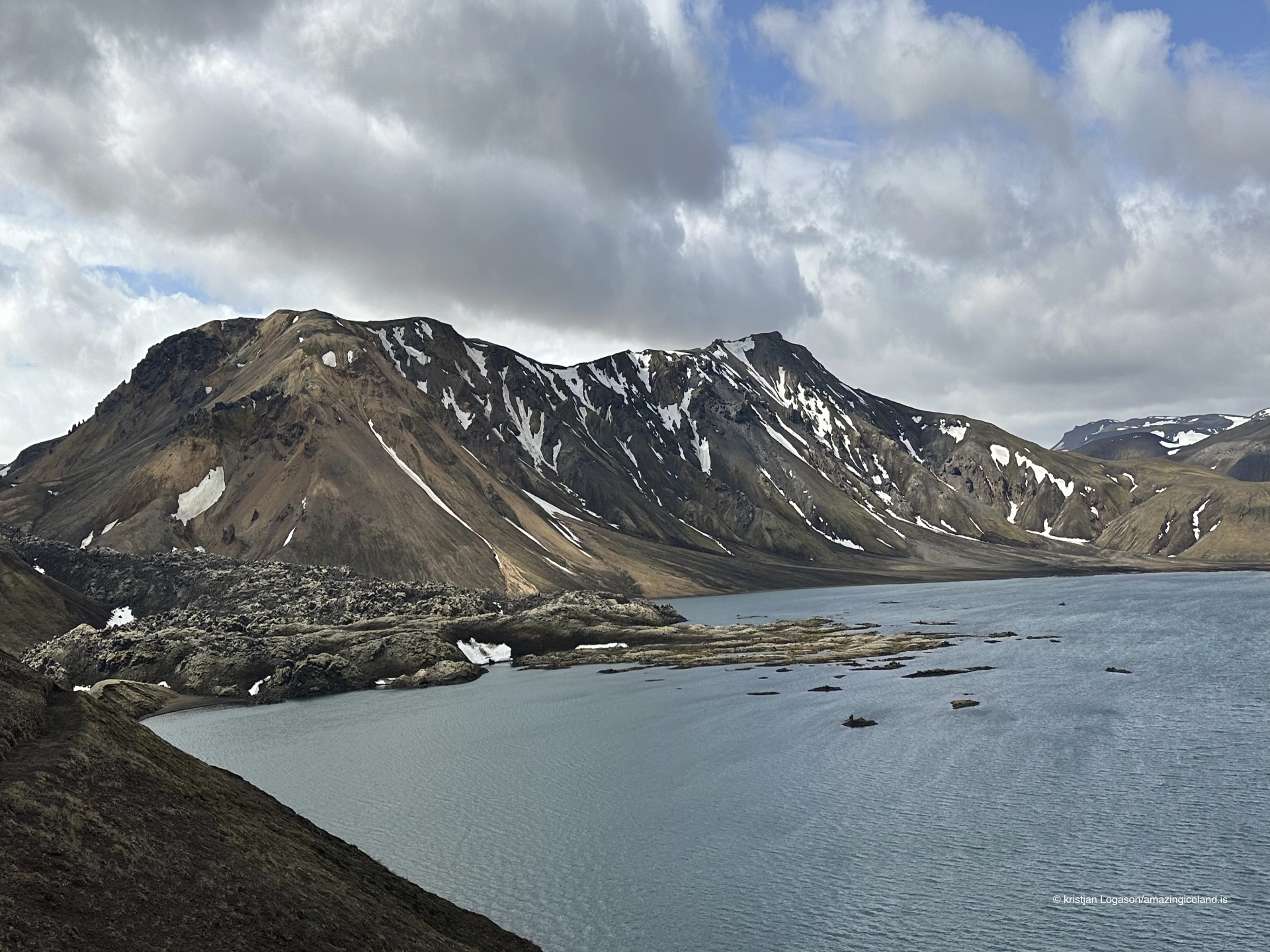
Frostastaðavatn is a shallow highland lake within the Fjallabak Nature Reserve, located directly beside F208 just south of Landmannalaugar. Surrounded by rhyolite mountains, lava fields, and geothermal terrain, the lake is less about dramatic scale and more about balance—water acting as a reflective pause within one of Iceland’s most geologically complex regions.
The location of Frostastadavatn in Fjallabak Nature Reserve
Latitude
64.1469
Longitude
-19.0375
Frostastadavatn in Fjallabak Nature Reserve
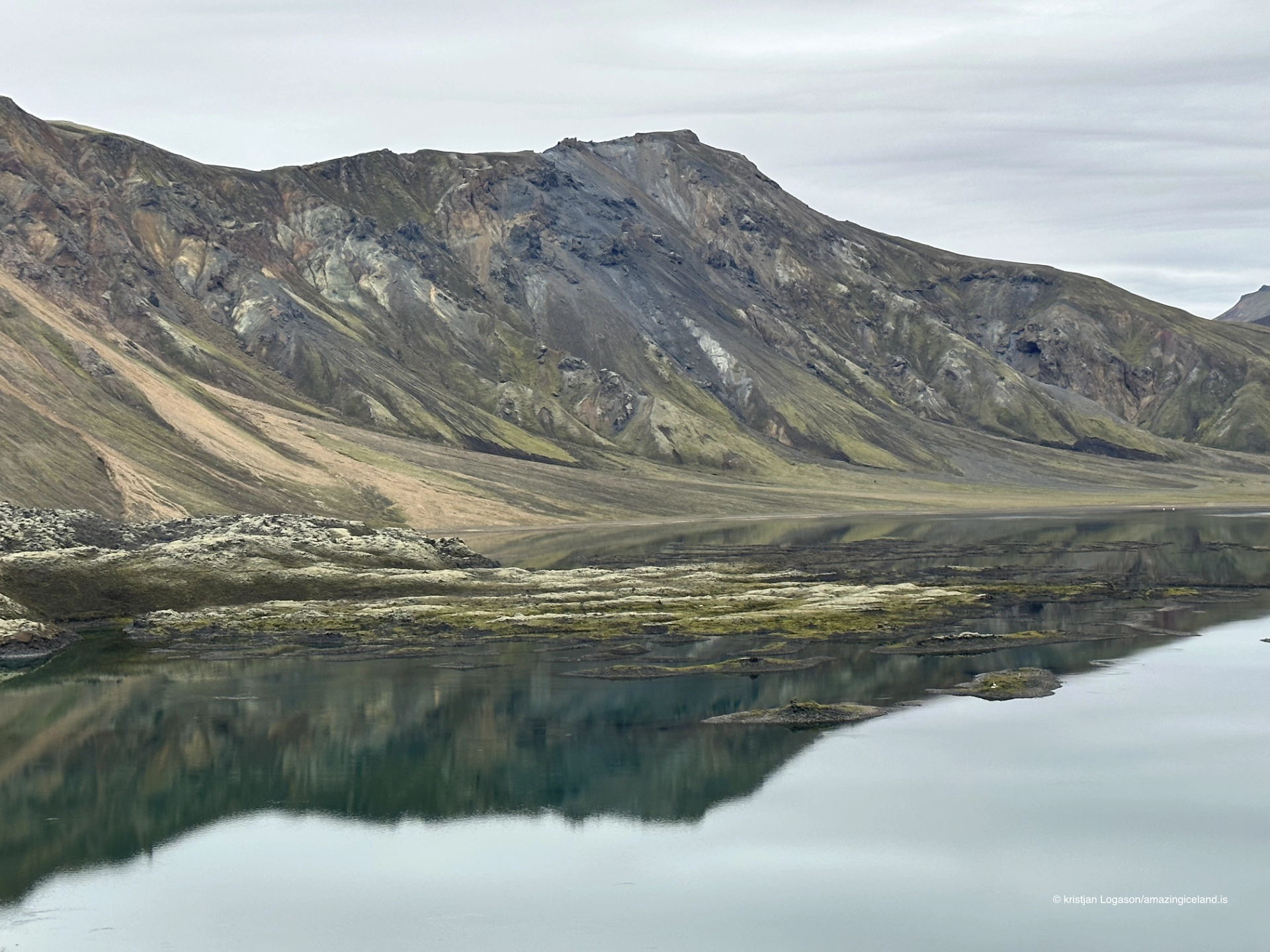
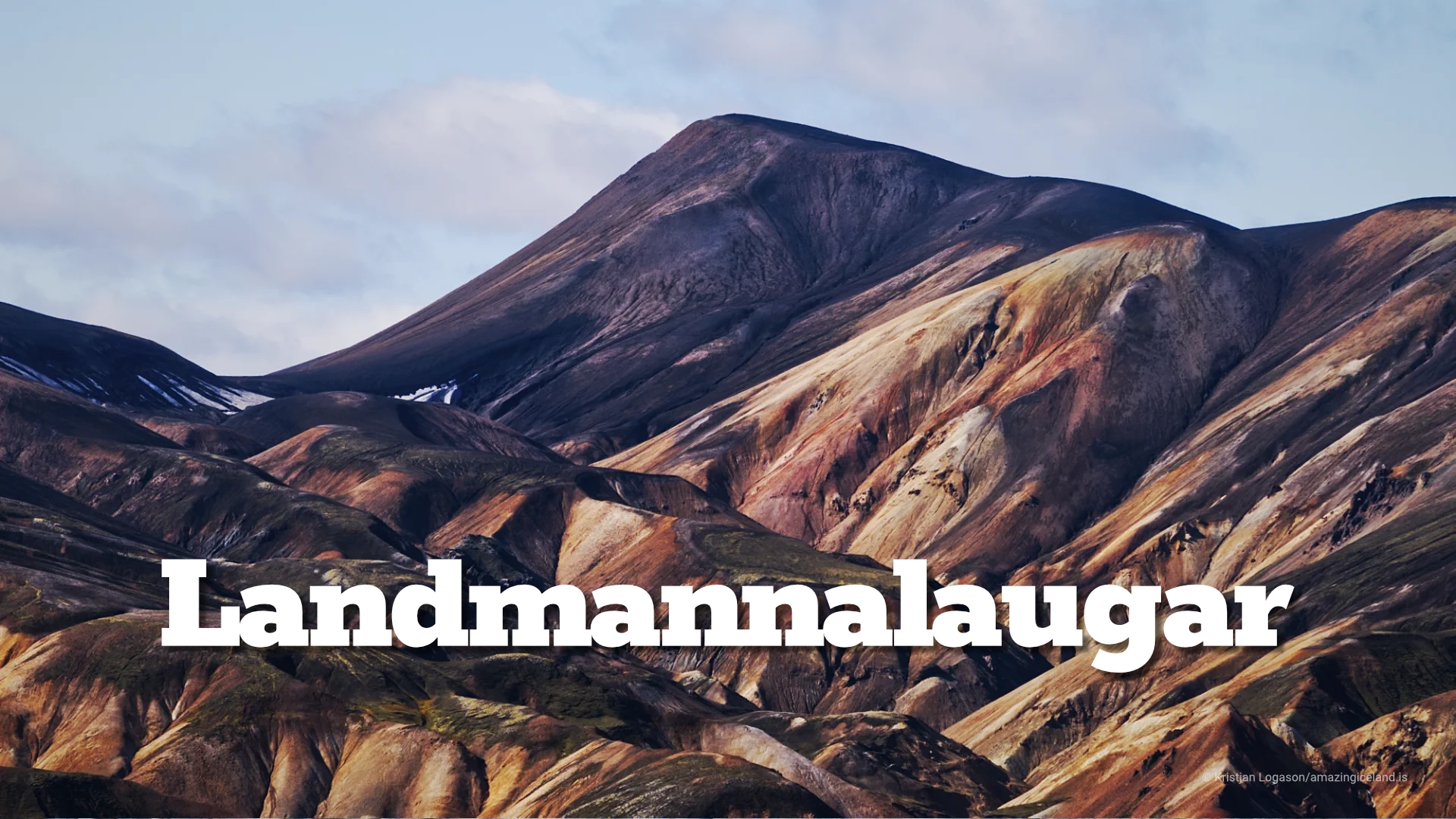
Frostastaðavatn lies in a zone where multiple geological processes intersect. The surrounding mountains are dominated by rhyolite, a silica-rich volcanic rock that forms during explosive eruptions and is characteristic of the Torfajökull volcanic system. Rhyolite weathers differently from basalt, producing softer contours and a broader colour palette—muted yellows, greys, greens, and occasional reds—which are especially visible around the lake basin.
Unlike crater lakes such as Hnausapollur, Frostastaðavatn does not occupy a single volcanic vent. Instead, it sits in a shallow depression shaped by a combination of volcanic deposition, erosion, and later hydrological processes. Lava flows in the area have repeatedly altered drainage patterns, creating basins where water can collect temporarily or semi-permanently. Frostastaðavatn represents one such basin, where water persists long enough to become a stable visual and ecological feature of the landscape.
The lake is relatively shallow, and its margins shift subtly with seasonal changes in precipitation and snowmelt. This variability reinforces its character as a highland lake shaped more by ongoing processes than by a single defining event.
Water, sediment, and environmental character
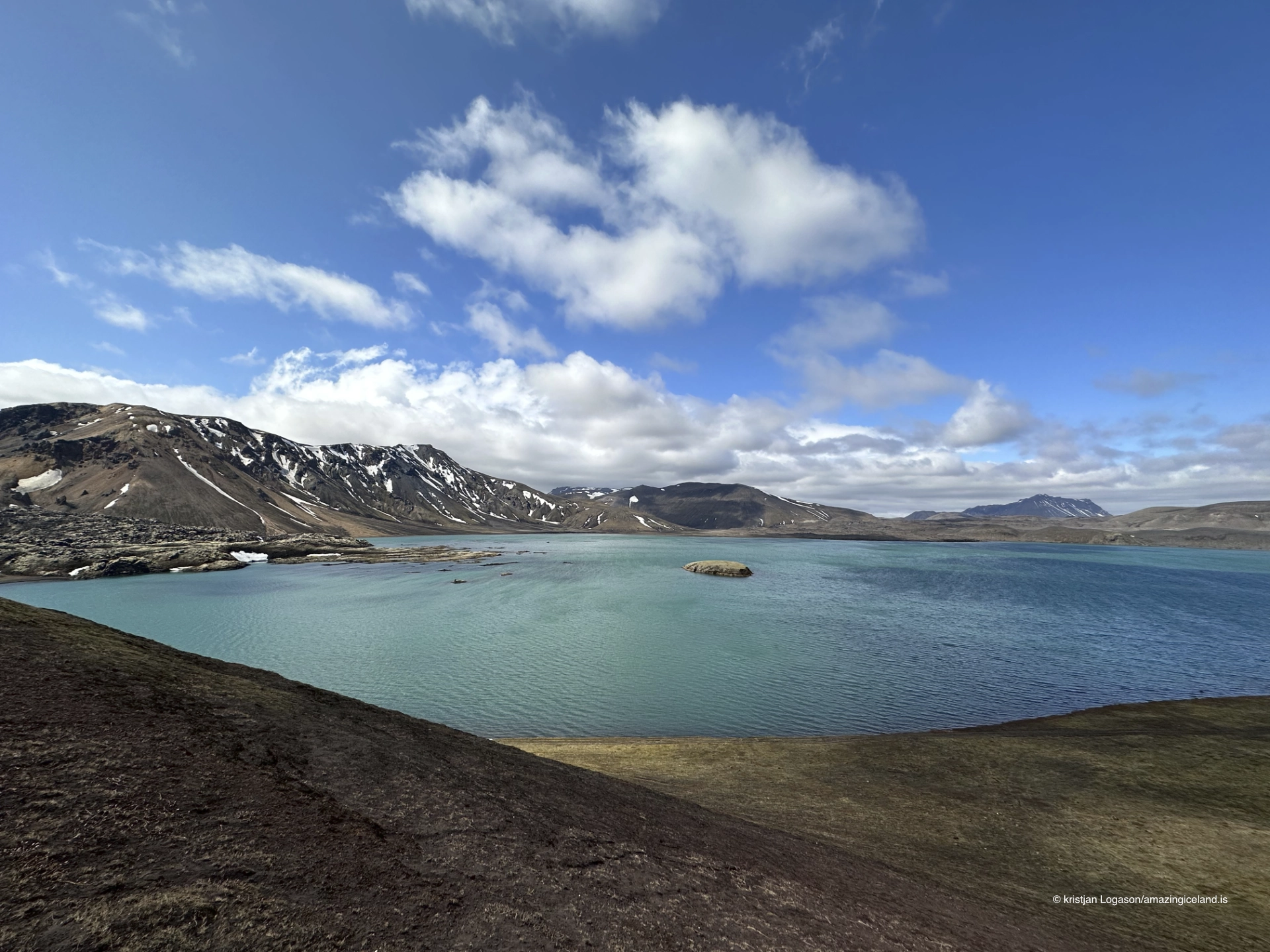
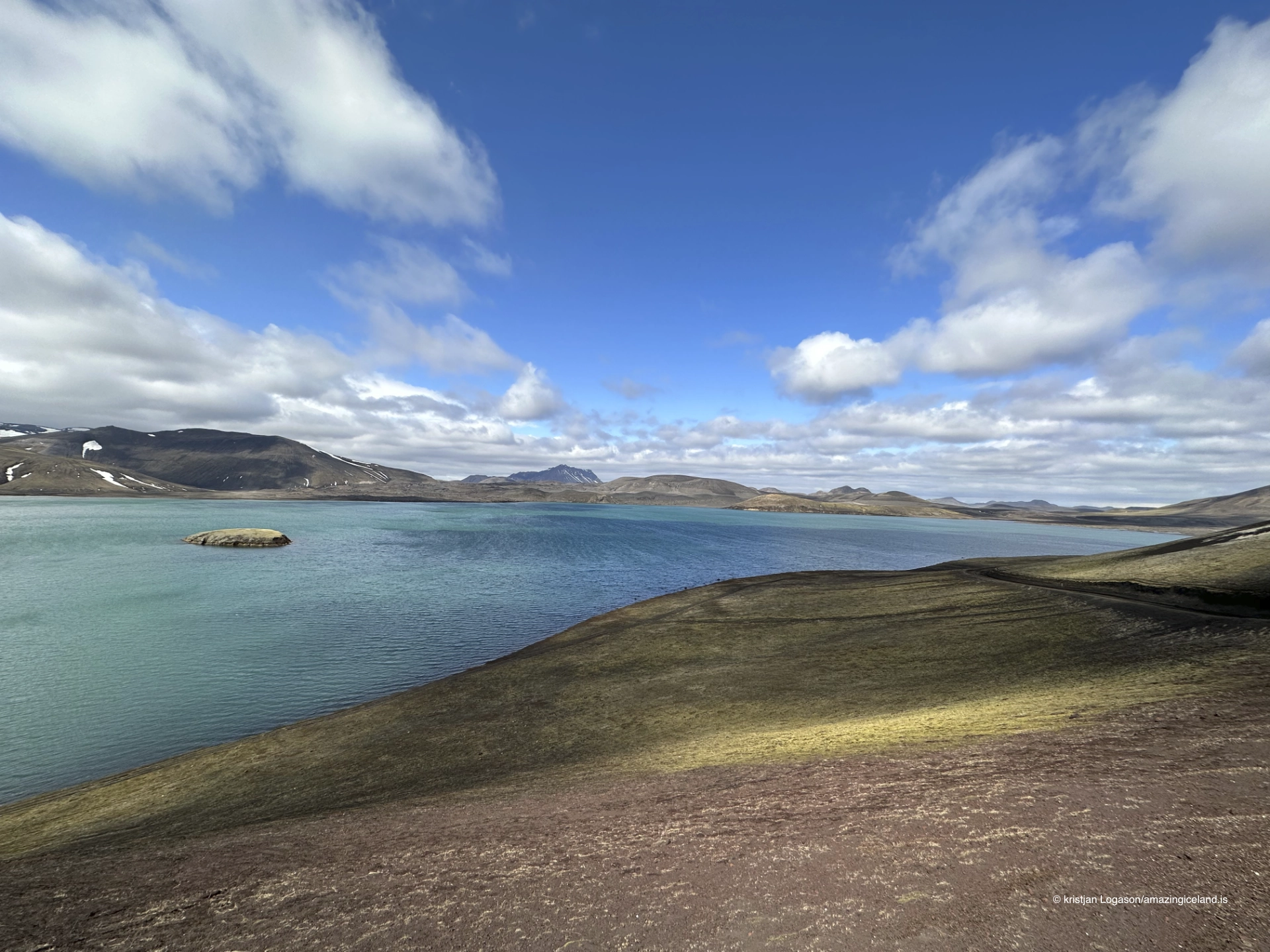
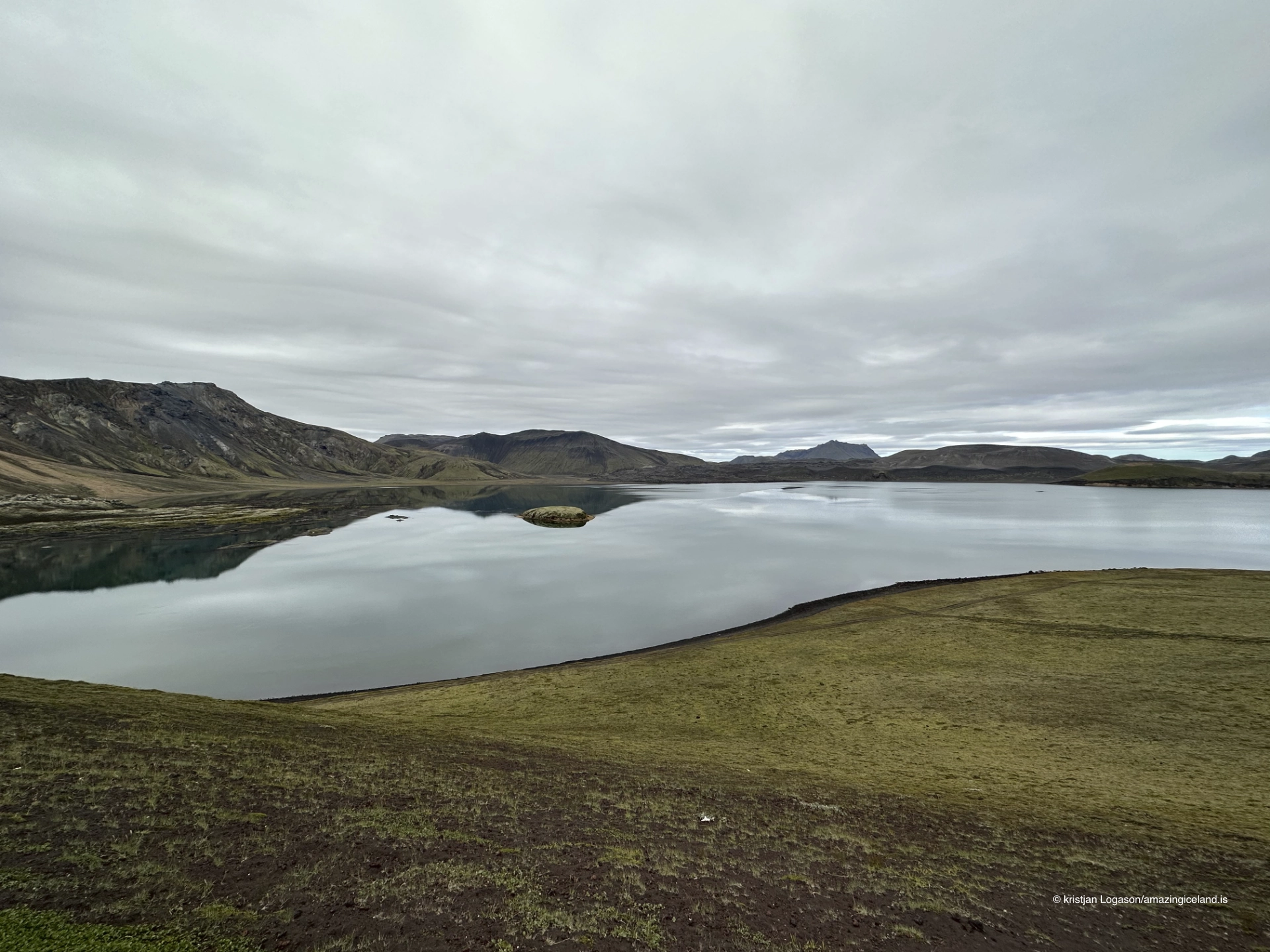
The colour and clarity of Frostastaðavatn vary considerably depending on weather, light, and sediment input. In calm conditions, the lake often appears pale blue or grey-blue, reflecting the sky and surrounding rhyolite slopes. When wind increases, suspended sediment and surface ripples break up reflections, producing a more textured and subdued appearance.
Sediment in the lake is derived primarily from volcanic material—fine ash, weathered rhyolite, and reworked lava fragments. Unlike glacially fed lakes with strong turquoise tones, Frostastaðavatn’s colour range is more restrained, aligning closely with the subdued palette of the surrounding terrain. This makes the lake an effective visual mirror rather than a focal colour accent.
Vegetation around the lake is sparse but present. Mosses and low alpine plants occupy sheltered edges and moist ground, while exposed areas remain largely barren. This limited vegetation underscores the youth and elevation of the environment, where soil development is slow and conditions are harsh for sustained plant growth.
Relationship to F208 and Landmannalaugar
Frostastaðavatn is encountered naturally when travelling along F208 toward Landmannalaugar, and its proximity to the road makes it a common stopping point. Yet, unlike sites designed around viewpoints, the lake does not present itself with signage or structured access. It is simply there—quiet, open, and visually integrated into the terrain.
Its importance lies in how it functions within the broader Fjallabak landscape. Frostastaðavatn acts as a visual buffer between distinct geological zones: darker lava fields to the south and increasingly colourful, geothermal rhyolite terrain to the north. This transition is perceptible even to casual observers and becomes clearer the longer one spends in the area.
The lake also contributes to the sense of spatial openness that defines this section of the highlands. While nearby mountains draw attention upward, Frostastaðavatn pulls the eye back down, flattening the visual field and allowing scale and distance to be read more clearly. This balance between vertical and horizontal elements is one reason the lake feels calming despite its austere surroundings.
Frostastaðavatn does not compete with Landmannalaugar’s geothermal features or hiking routes. Instead, it complements them by offering a quieter, more contemplative experience—one rooted in observation rather than activity.
Interesting facts:
- Rhyolite setting: The lake is surrounded by rhyolite mountains, part of the Torfajökull volcanic system.
- Not a crater: Frostastaðavatn occupies a shallow basin rather than a volcanic vent.
- Seasonal variability: Water level and shoreline shape change with snowmelt and rainfall.
- Roadside presence: Located directly beside F208, it is one of the first lakes encountered when approaching Landmannalaugar from the south.
Image Gallery


The Locomotive Elite
What do Donald Trump and Iceland’s Locomotive Elite have in common?
Far more than you think.
In The Locomotive Elite, you’ll uncover how a tiny clique in Iceland captured extensive control—of banks, courts, media, and even the central bank.
For decades they ruled, first democratically, then through corruption and in the end through crime, enriching themselves and their cronies while dismantling oversight.
The result?
One of the most spectacular financial collapses in modern history.
Photography tips:
- Use reflection selectively: Calm conditions allow the mountains to reflect clearly; even partial reflections add depth without symmetry.
- Wide lenses work well: Emphasize the lake as foreground and let the mountains recede gradually.
- Muted processing: Frostastaðavatn benefits from restrained colour grading—avoid pushing contrast or saturation.
- Low angles: Shooting closer to the water surface increases reflection and emphasizes horizontal layers.
- Weather awareness: Overcast conditions can be ideal here, enhancing tonal subtlety rather than flattening the scene.
Good cameras for Iceland
Sony A7R V

Sony A7s lll

Canon R6

Nikon Z6 lll

Destinations nearby
Good to have in Iceland