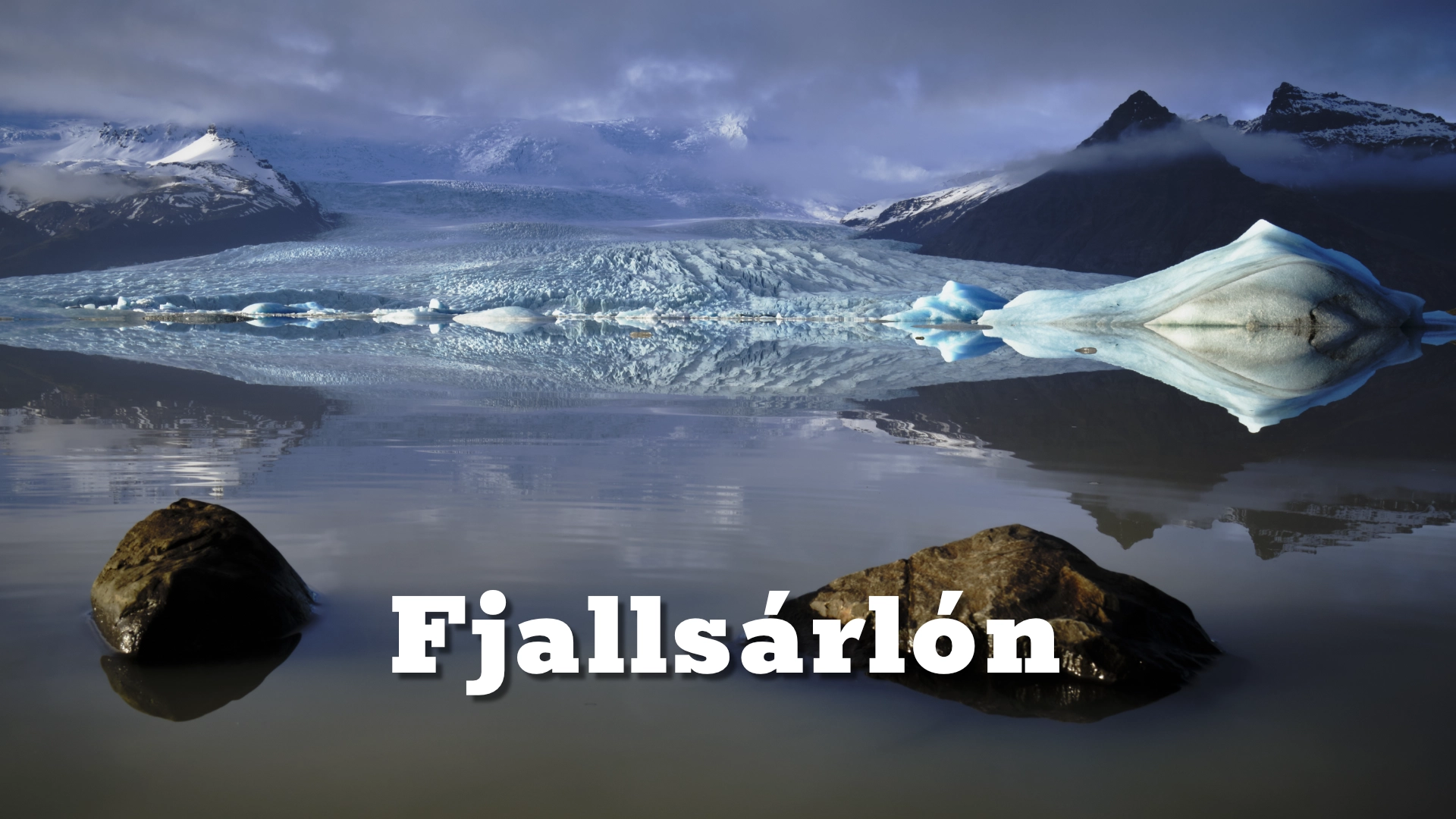
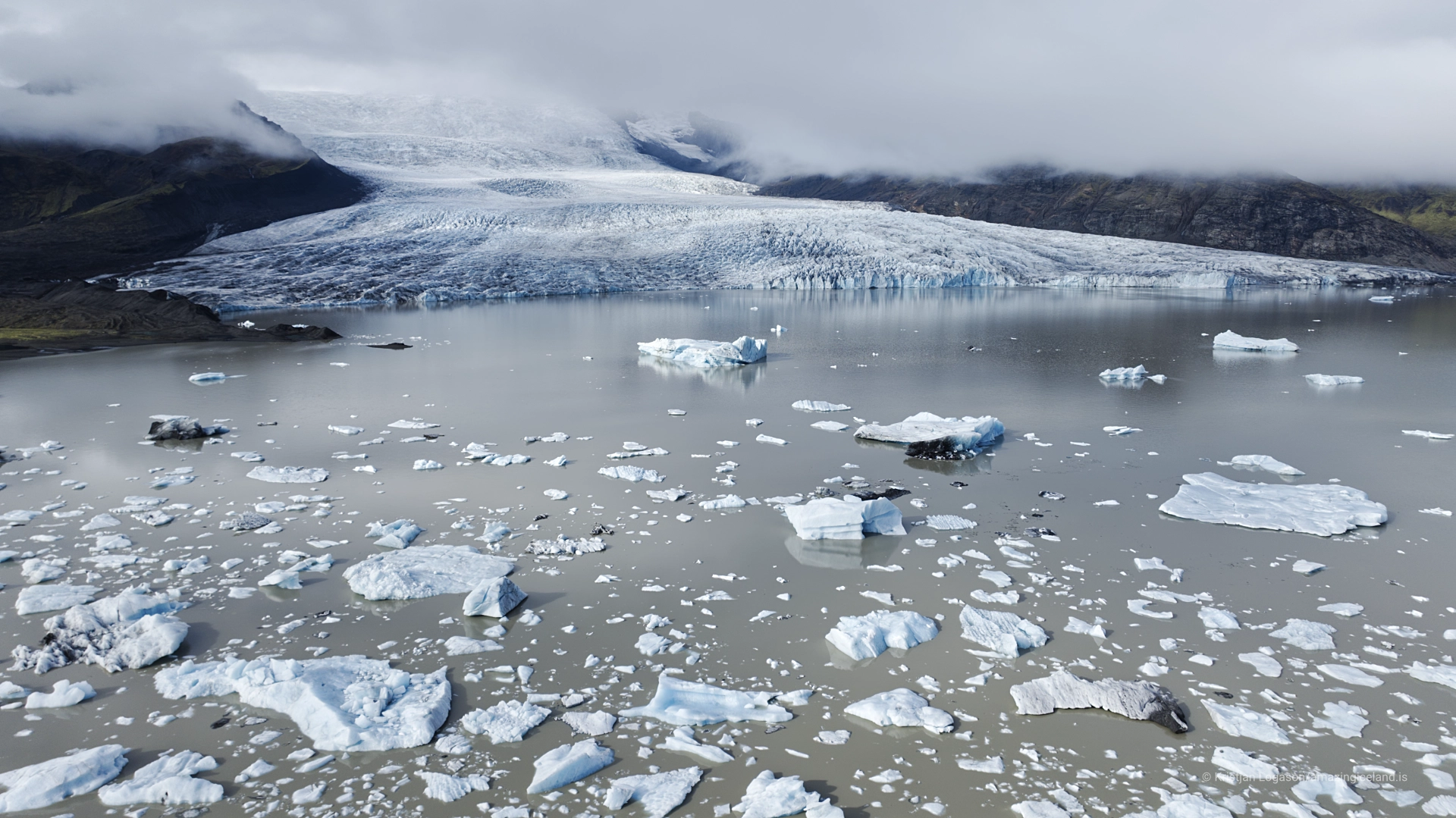
At the southeastern edge of Vatnajökull, Fjallsárlón sits at the foot of Fjallsjökull, forming a quiet but active interface between ice and meltwater. Smaller and less trafficked than nearby Jökulsárlón, Fjallsárlón provides a more contained setting in which glacial processes can be observed with clarity and restraint.
The location of Fjallsárlón glacier lagoon
64.0442
Latitude
Longitude
-16.1803
Fjallsárlón glacier lagoon
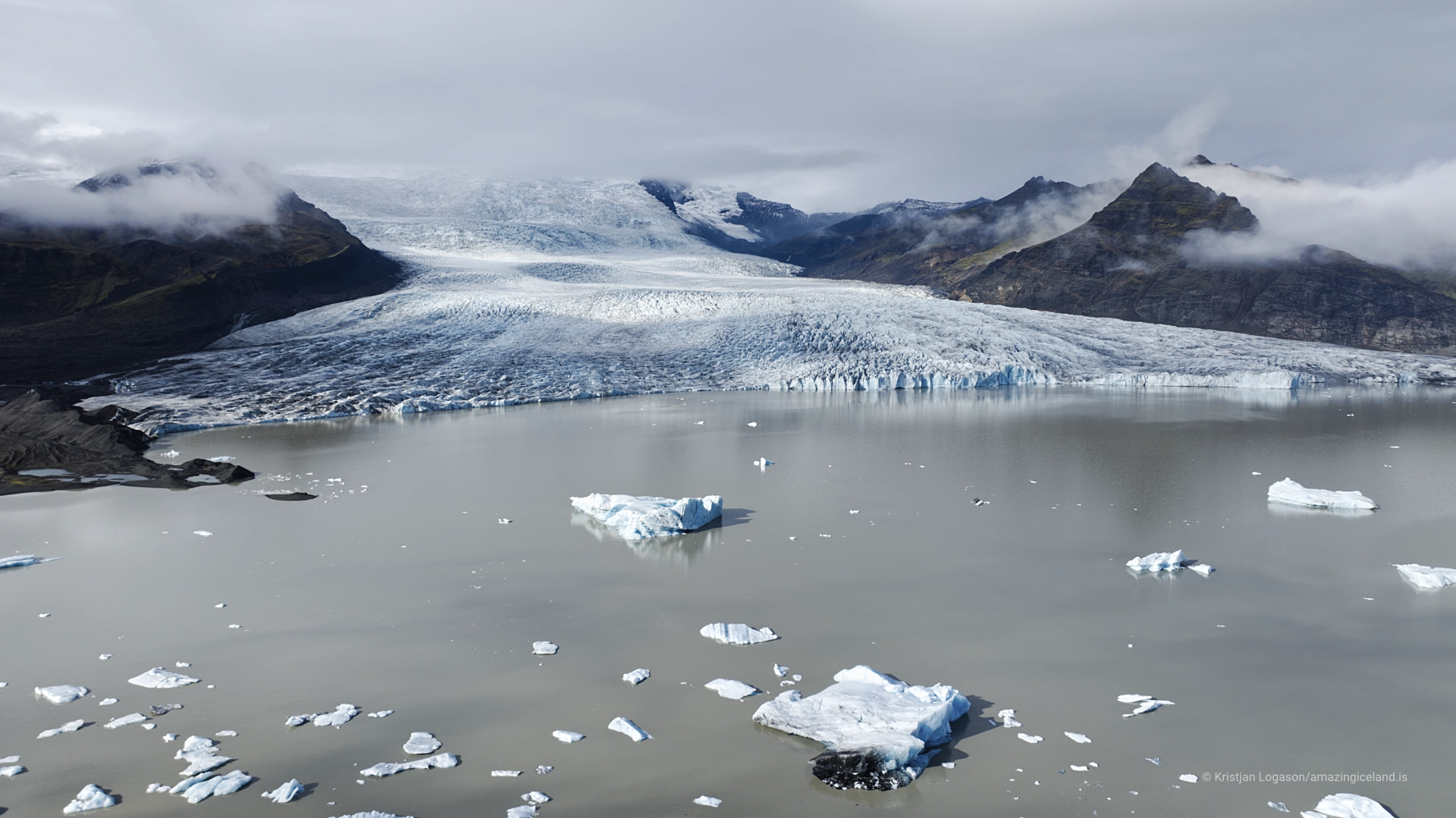
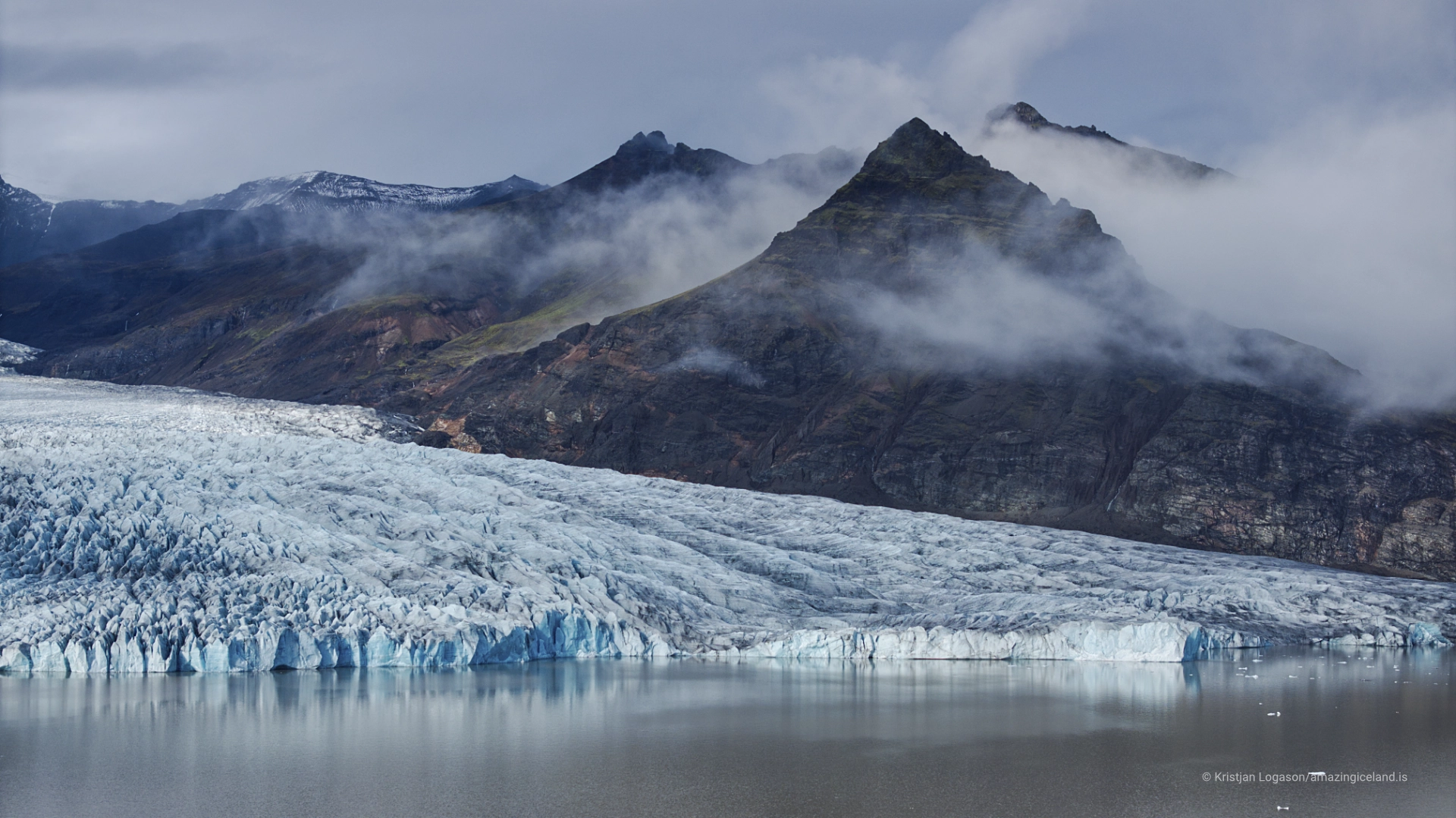
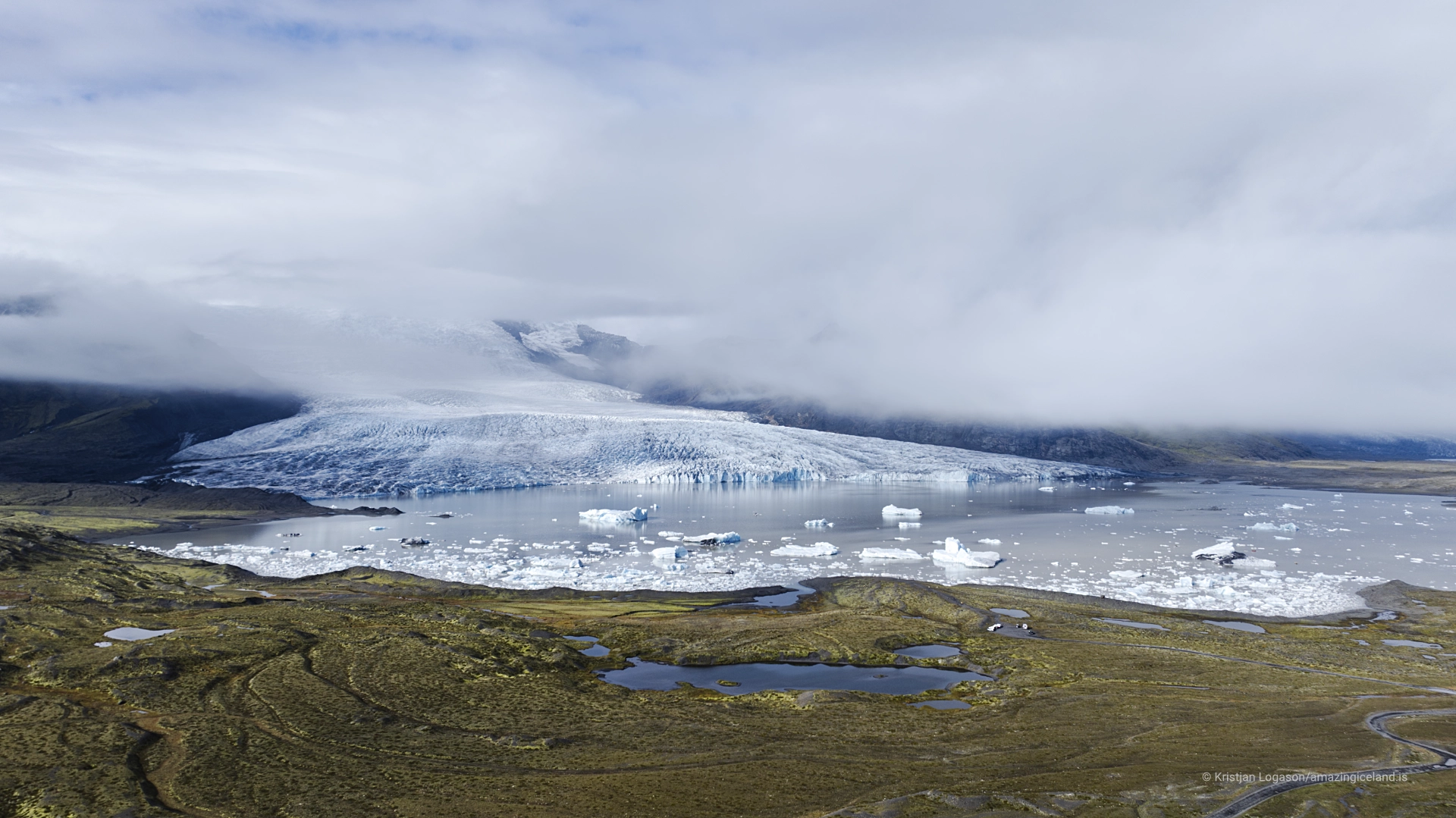
Fjallsárlón is a proglacial lagoon formed by the retreat of Fjallsjökull, one of the many outlet glaciers draining the southern margin of Vatnajökull. Like other glacial lagoons in the region, it occupies a depression created by ice erosion and later enlarged as the glacier thinned and pulled back. As the terminus retreated, meltwater accumulated in front of the ice, creating the lagoon visible today.
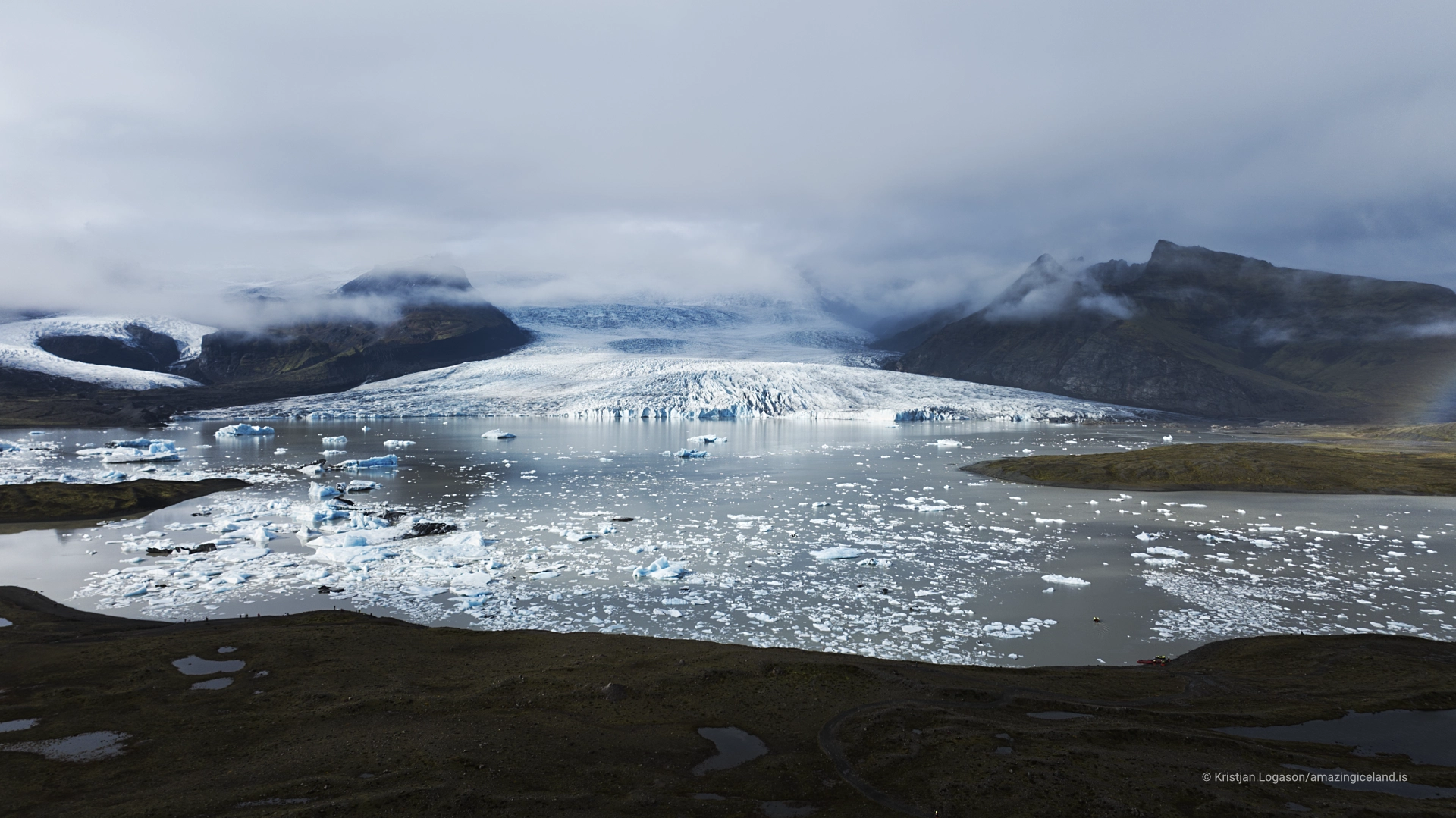
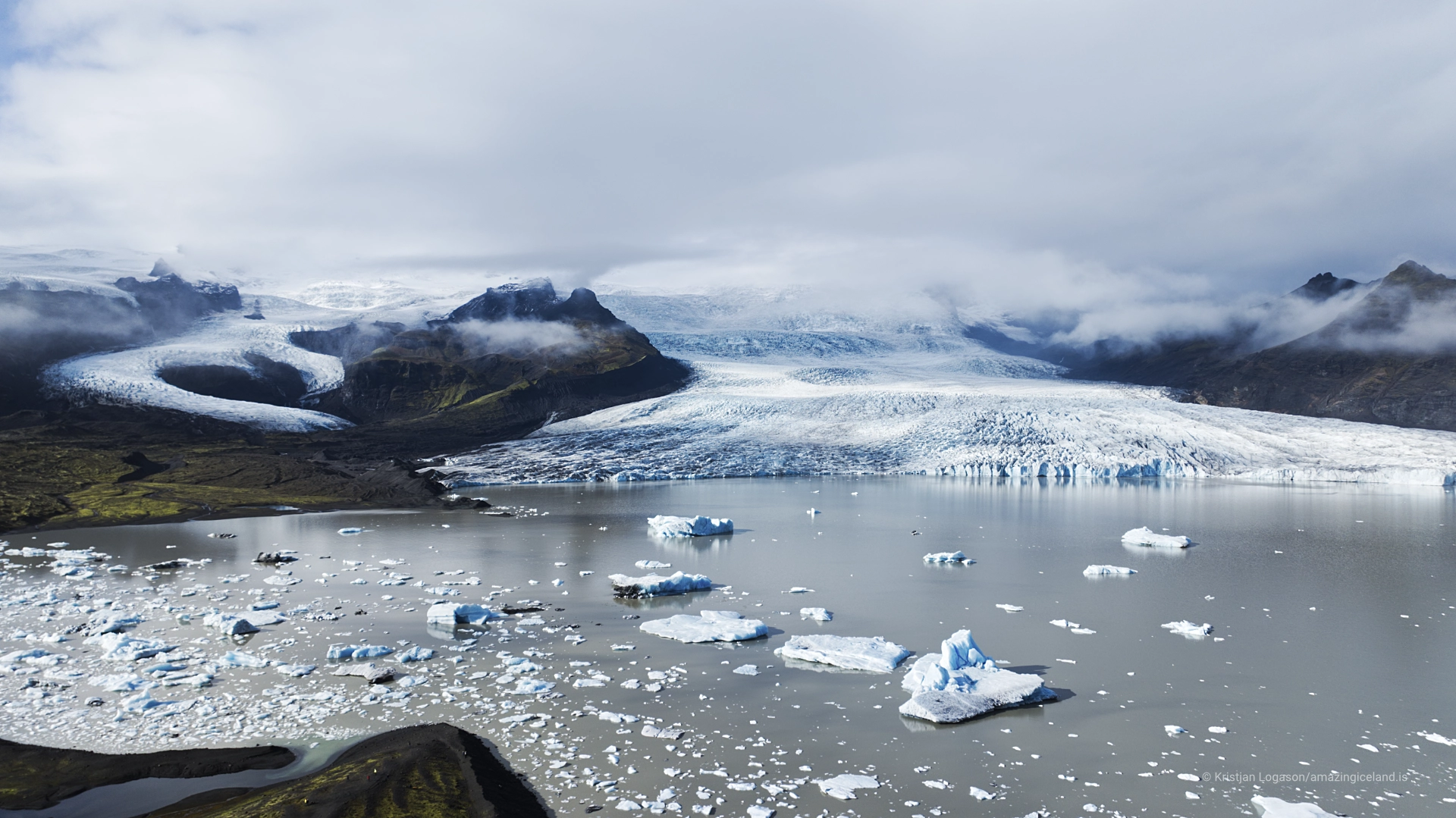
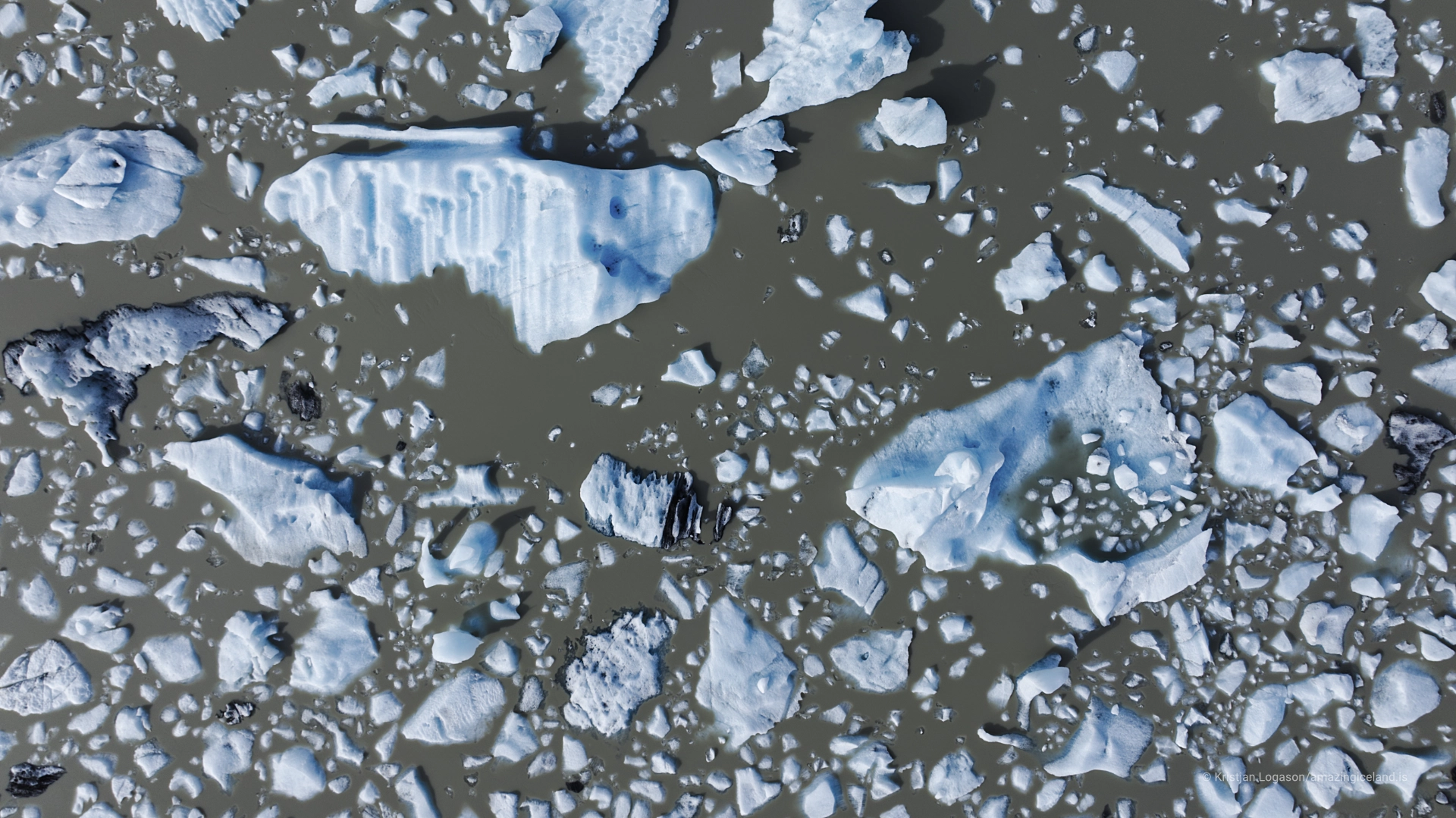
The lagoon is relatively young in geological terms, expanding primarily during the late 20th and early 21st centuries as regional warming accelerated glacial mass loss. Icebergs calve directly from the glacier front into the lagoon, where they drift slowly before melting in place. Unlike larger lagoons with active outflow to the sea, Fjallsárlón is largely enclosed, which limits iceberg movement and prolongs their presence.
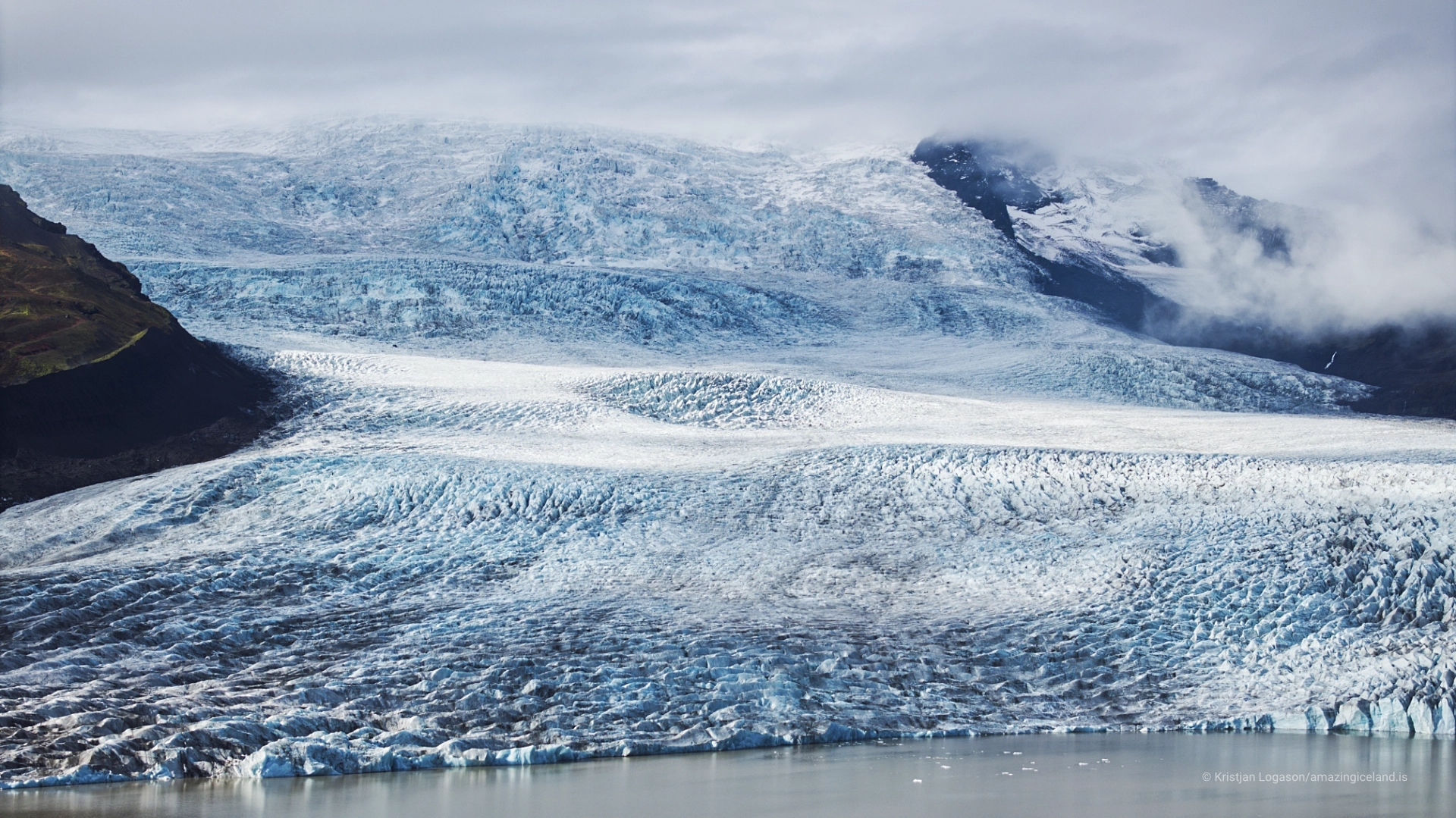
From a glaciological perspective, Fjallsárlón functions as a short-term archive of ice dynamics. The size, frequency, and distribution of icebergs reflect stress conditions at the glacier terminus, while surface debris on the ice records transport from higher accumulation zones. The lagoon’s calm surface allows these details to remain visible rather than rapidly dispersed.
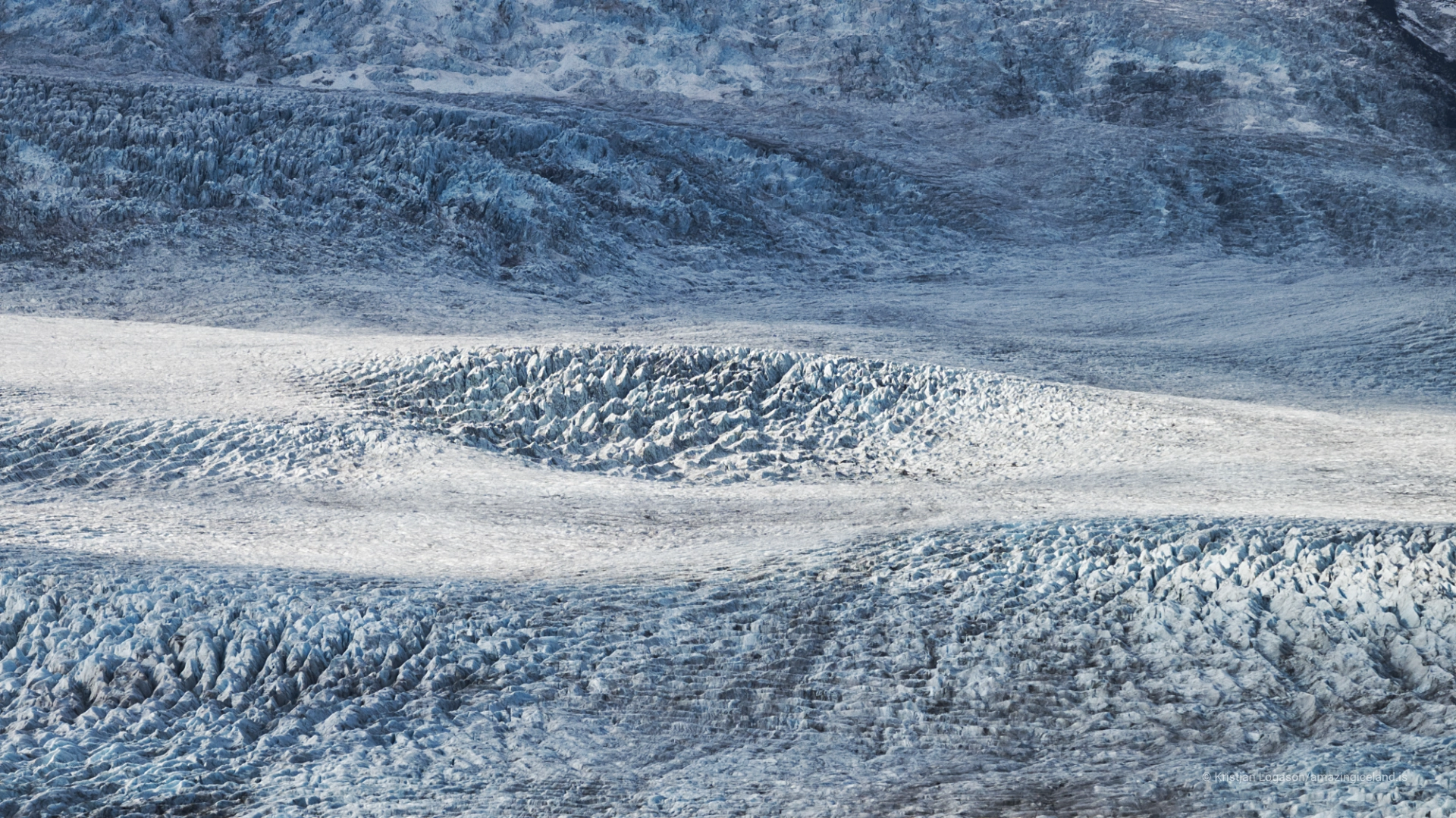
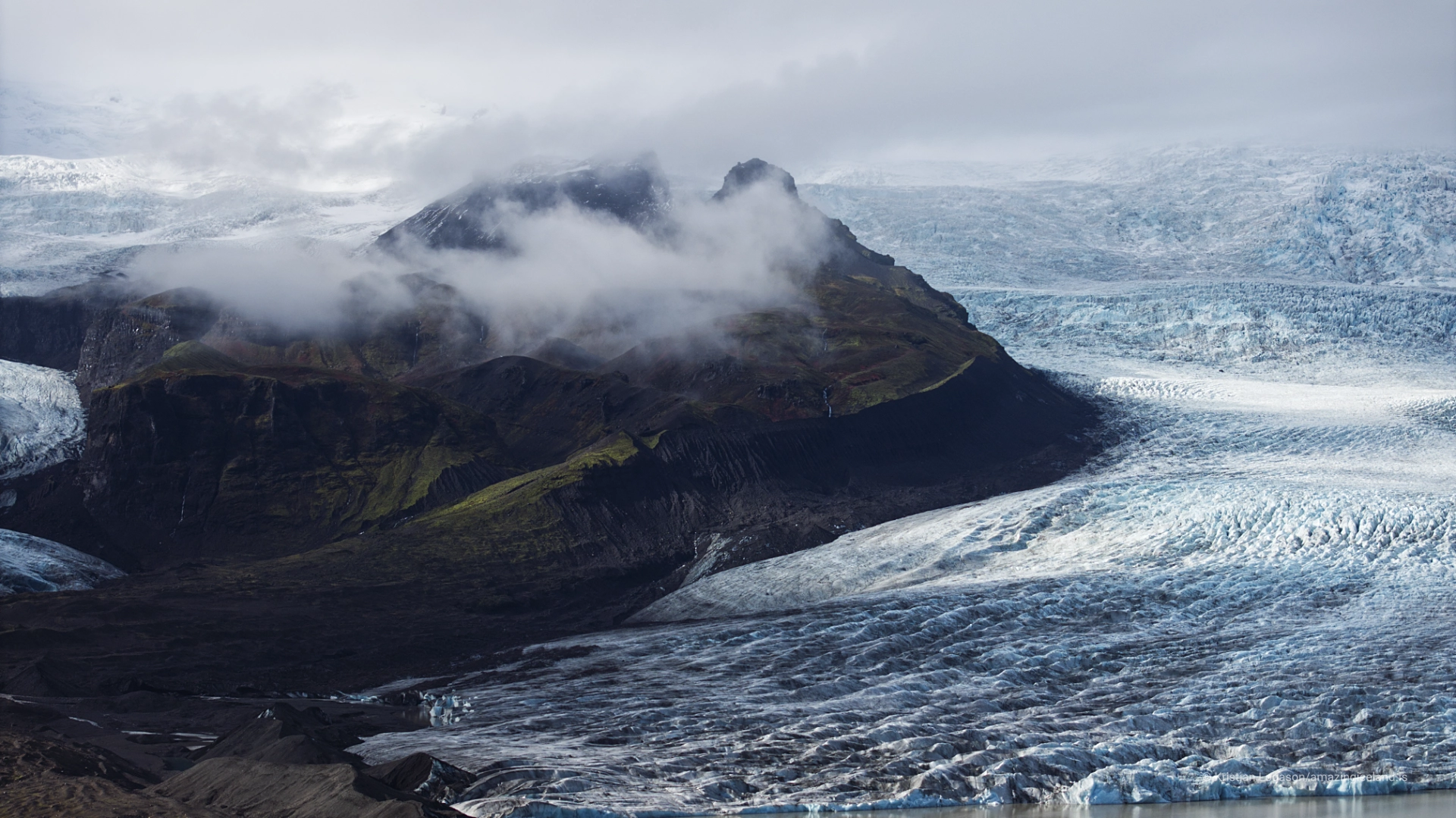
The visual character of Fjallsárlón is defined by proximity. The glacier face looms close to the water’s edge, and the lagoon’s modest size keeps attention focused on the ice itself rather than on distant horizons. Crevasses, seracs, and debris bands are clearly visible, reinforcing the sense that this is a working glacier rather than a static remnant.
Water color varies with light, sediment load, and melt rate. In calmer conditions, the lagoon can appear steel-blue or grey-green, reflecting both sky and suspended glacial flour. After periods of increased melt or rainfall, turbidity increases, flattening reflections and emphasizing the material density of the water. These shifts are subtle but instructive, especially when observed over time.
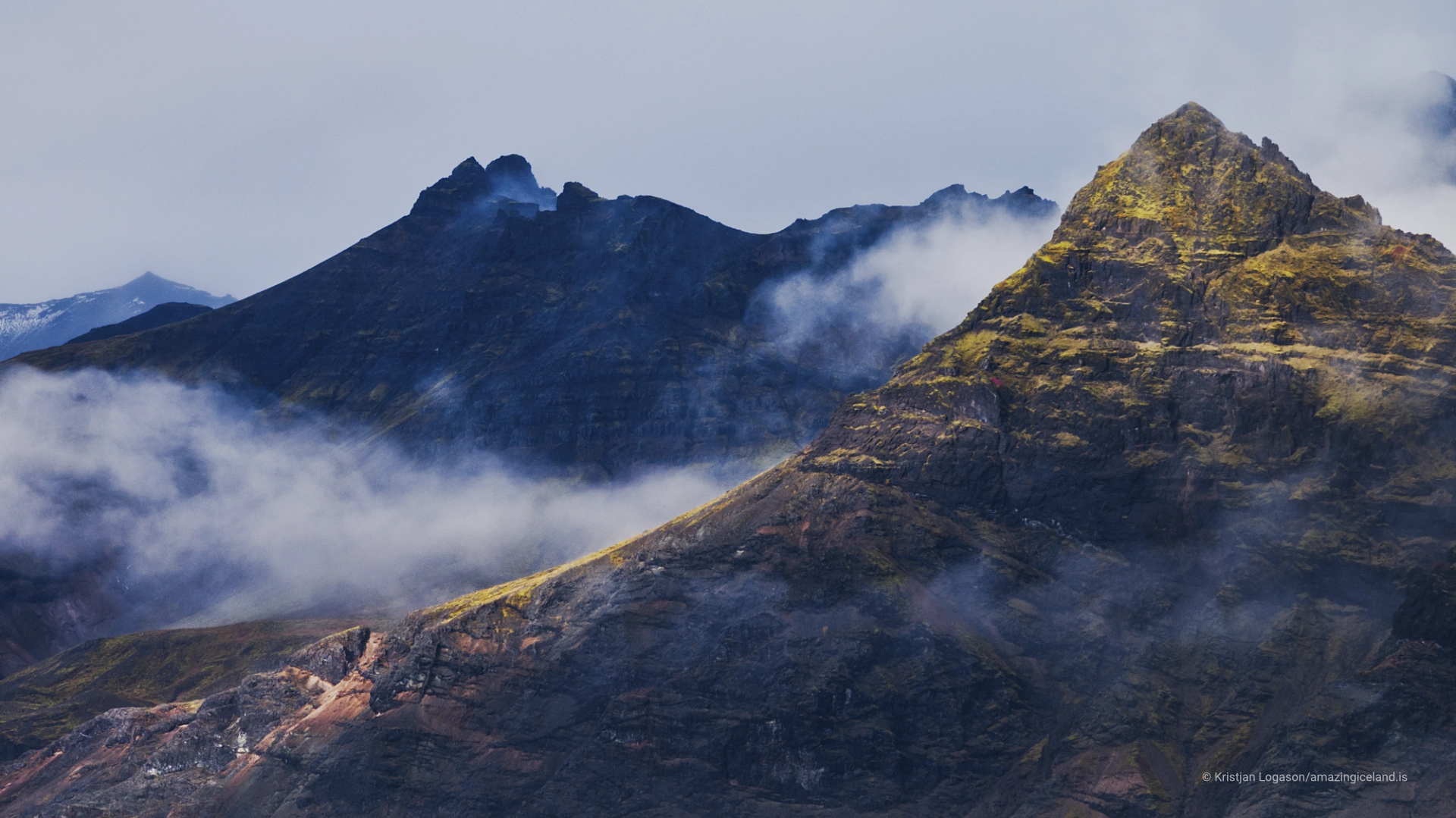
The surrounding terrain—moraines, outwash sediment, and exposed bedrock—frames the lagoon without softening it. Vegetation is sparse, and the landscape remains transitional, emphasizing that Fjallsárlón exists in a state of adjustment rather than equilibrium.
Access to Fjallsárlón is straightforward compared to many glacial environments. A gravel road branches from the main Route 1 corridor, leading to a parking area and informal walking paths along the lagoon’s edge. The lack of heavy infrastructure preserves the site’s openness while allowing safe observation from stable ground.
Despite this accessibility, Fjallsárlón remains less crowded than nearby Jökulsárlón, making it better suited to slower observation and quieter interpretation. The absence of constant boat traffic allows the lagoon to retain a subdued acoustic character, where calving events, cracking ice, and wind-driven ripples become perceptible.
Safety considerations are essential. Icebergs can roll without warning as they melt, and the glacier front is inherently unstable. Distance is not optional; it is the only correct posture in a landscape defined by mass and gravity.
Fjallsárlón also serves as a comparative site. Observed alongside Jökulsárlón, it highlights how small differences in topography, drainage, and ice dynamics produce markedly different outcomes. Fjallsárlón remains enclosed and intimate; Jökulsárlón expands outward and empties to the sea. Both originate from the same ice cap, yet they tell different stories.
This contrast reinforces a broader academic point: glacial retreat is not uniform, even within a single system. Local conditions—bedrock depth, slope, sediment, and meltwater routing—determine how landscapes respond once ice withdraws. Fjallsárlón, by virtue of its scale, makes these variables easier to isolate and understand.
Ultimately, Fjallsárlón is defined by immediacy. Ice calves here not as a distant spectacle but as a near-field process. Change is slow enough to observe, yet fast enough to register within a single visit. This balance makes the lagoon one of the most instructive glacier-facing sites in Iceland.
In the broader context of Vatnajökull National Park, Fjallsárlón functions as a threshold landscape—between ice and meltwater, between permanence and loss. It does not demand attention through scale alone. Instead, it rewards those willing to look closely, listen carefully, and accept that what they are seeing is temporary.
Interesting facts:
- Fjallsárlón is a proglacial lagoon formed by the retreat of Fjallsjökull.
- Fjallsjökull is an outlet glacier of Vatnajökull.
- The lagoon expanded rapidly during the late 20th and early 21st centuries.
- Icebergs in Fjallsárlón often remain in place longer due to limited outflow.
- The site is quieter and less developed than nearby Jökulsárlón.
Image Gallery

The Locomotive Elite
What do Donald Trump and Iceland’s Locomotive Elite have in common?
Far more than you think.
In The Locomotive Elite, you’ll uncover how a tiny clique in Iceland captured extensive control—of banks, courts, media, and even the central bank.
For decades they ruled, first democratically, then through corruption and in the end through crime, enriching themselves and their cronies while dismantling oversight.
The result?
One of the most spectacular financial collapses in modern history.
Photography tips:
- Work close, not wide: Proximity to the glacier rewards mid-range lenses and detail-focused compositions.
- Watch iceberg rotation: Rolling icebergs reveal clean blue ice—anticipate rather than chase the moment.
- Low contrast days excel: Overcast conditions preserve ice texture and avoid blown highlights.
- Foreground restraint: Water edges and moraines help establish scale without clutter.
- Respect distance: Long lenses preserve both safety and compositional clarity.
Good cameras for Iceland
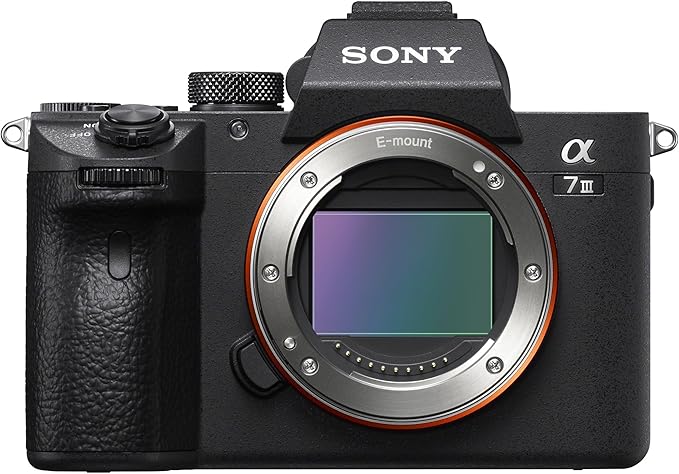
Sony A7R V
Sony A7s lll
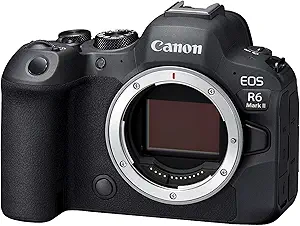
Canon R6
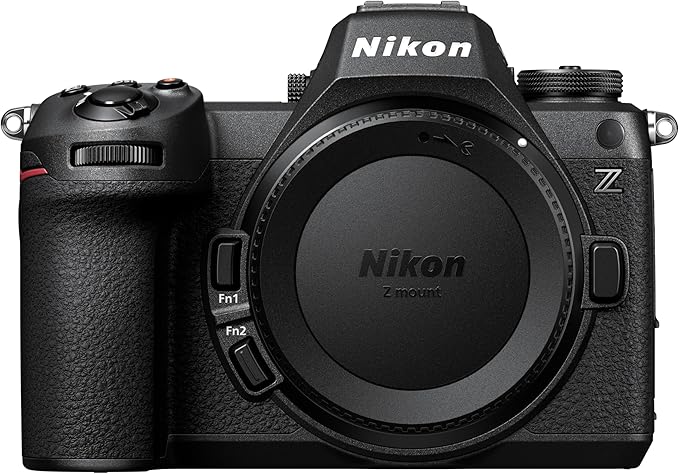
Nikon Z6 lll
Destinations nearby
Good to have in Iceland