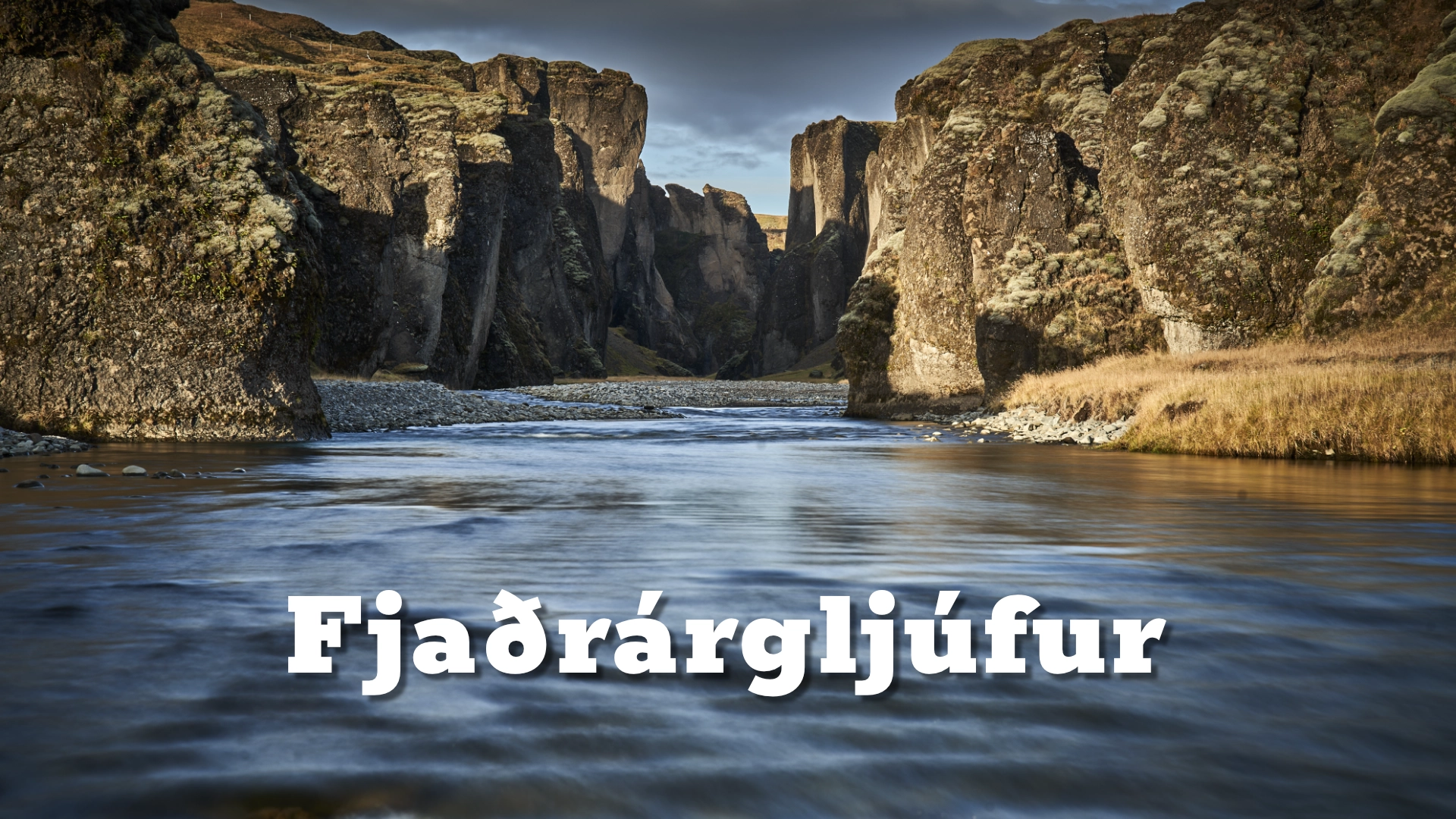
In South Iceland, near Kirkjubæjarklaustur, Fjaðrárgljúfur presents a compact yet highly legible canyon system shaped by sustained fluvial erosion. Its moss-covered walls, tight meanders, and stepped waterfalls offer an instructive view of how glacial rivers interact with volcanic stratigraphy long after the ice has retreated.
The location of Fjaðrárgljúfur canyon
63.7716
Latitude
Longitude
-18.1723
Fjaðrárgljúfur canyon
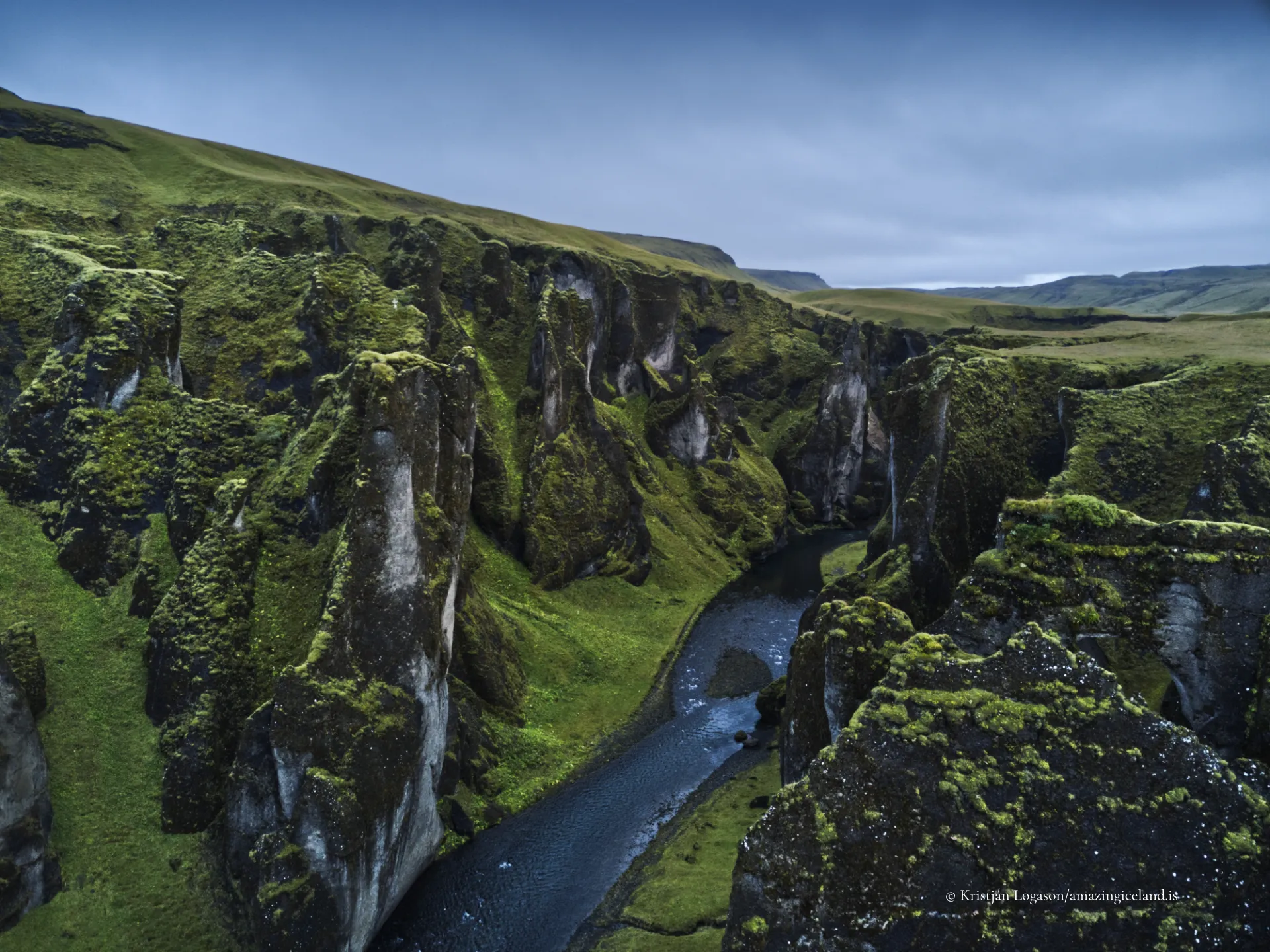
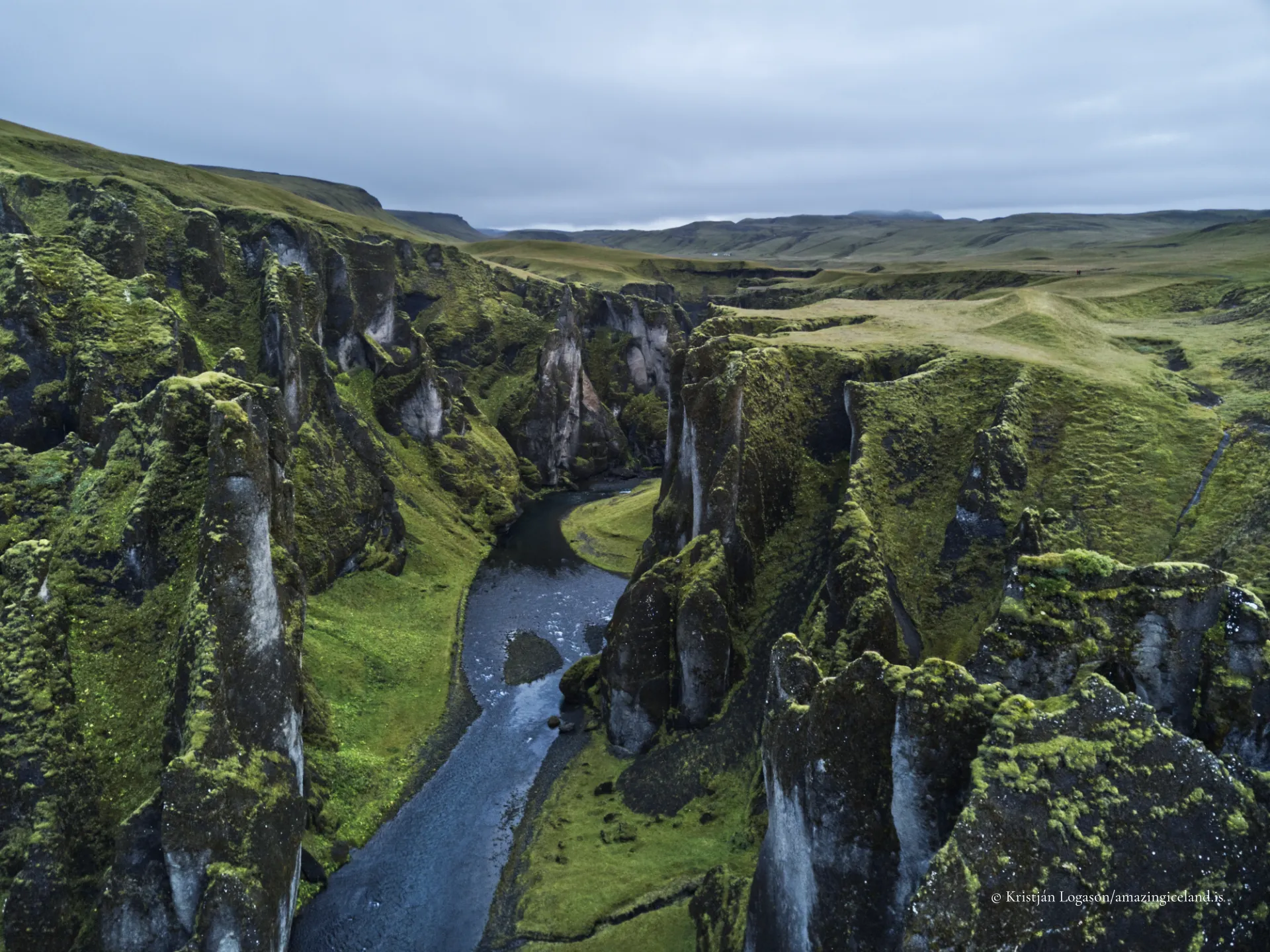
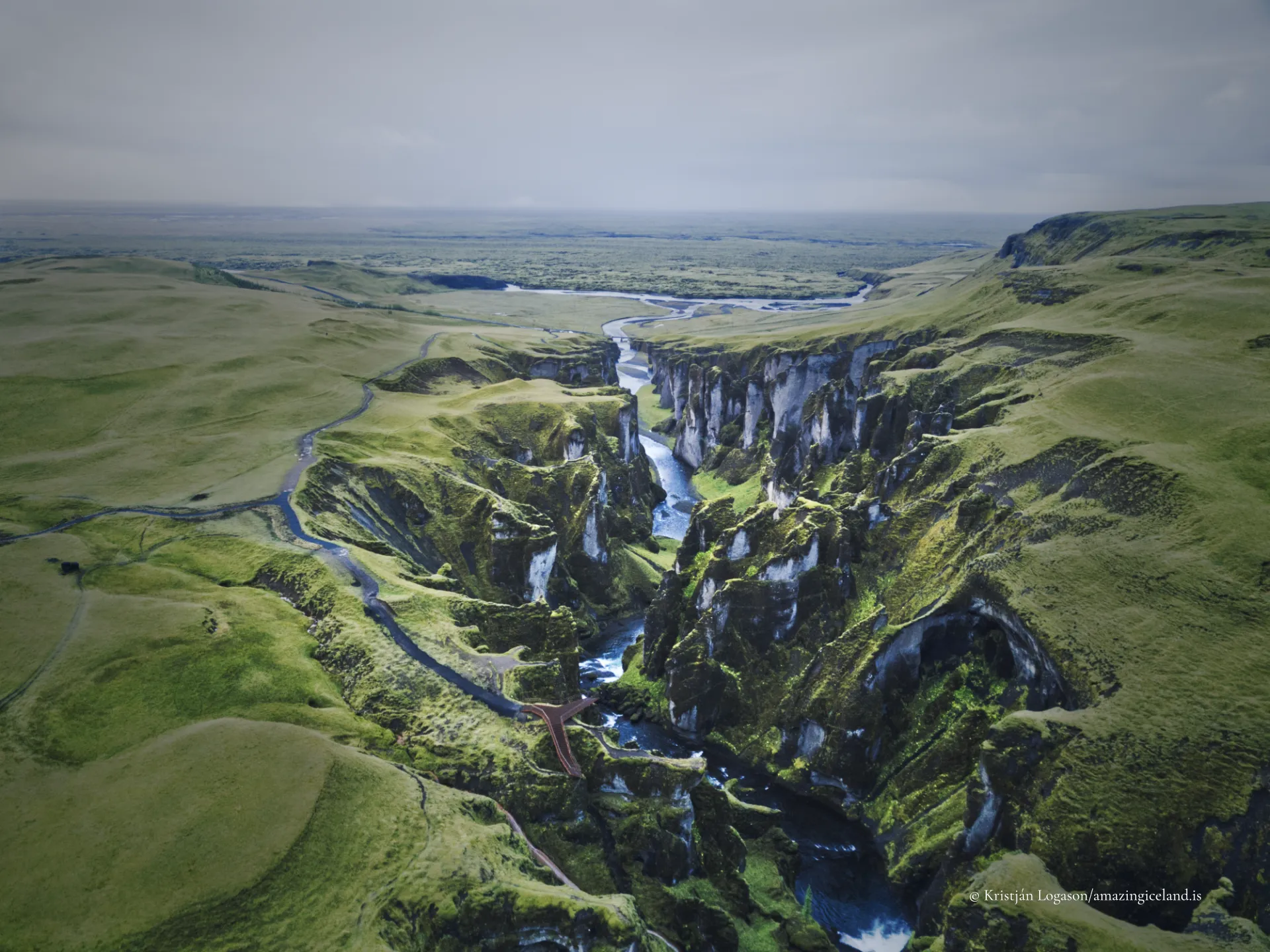
Fjaðrárgljúfur is approximately 2 kilometres long and up to 100 metres deep, carved by the Fjaðrá river as it descends from the highlands toward the lowlands of South Iceland. The canyon’s origin is closely tied to the region’s glacial history. During the last glacial period, meltwater volumes were significantly higher than today, giving the river the energy required to incise deeply into the underlying rock. As ice retreated and discharge decreased, erosion slowed, preserving the canyon’s narrow, sinuous form.
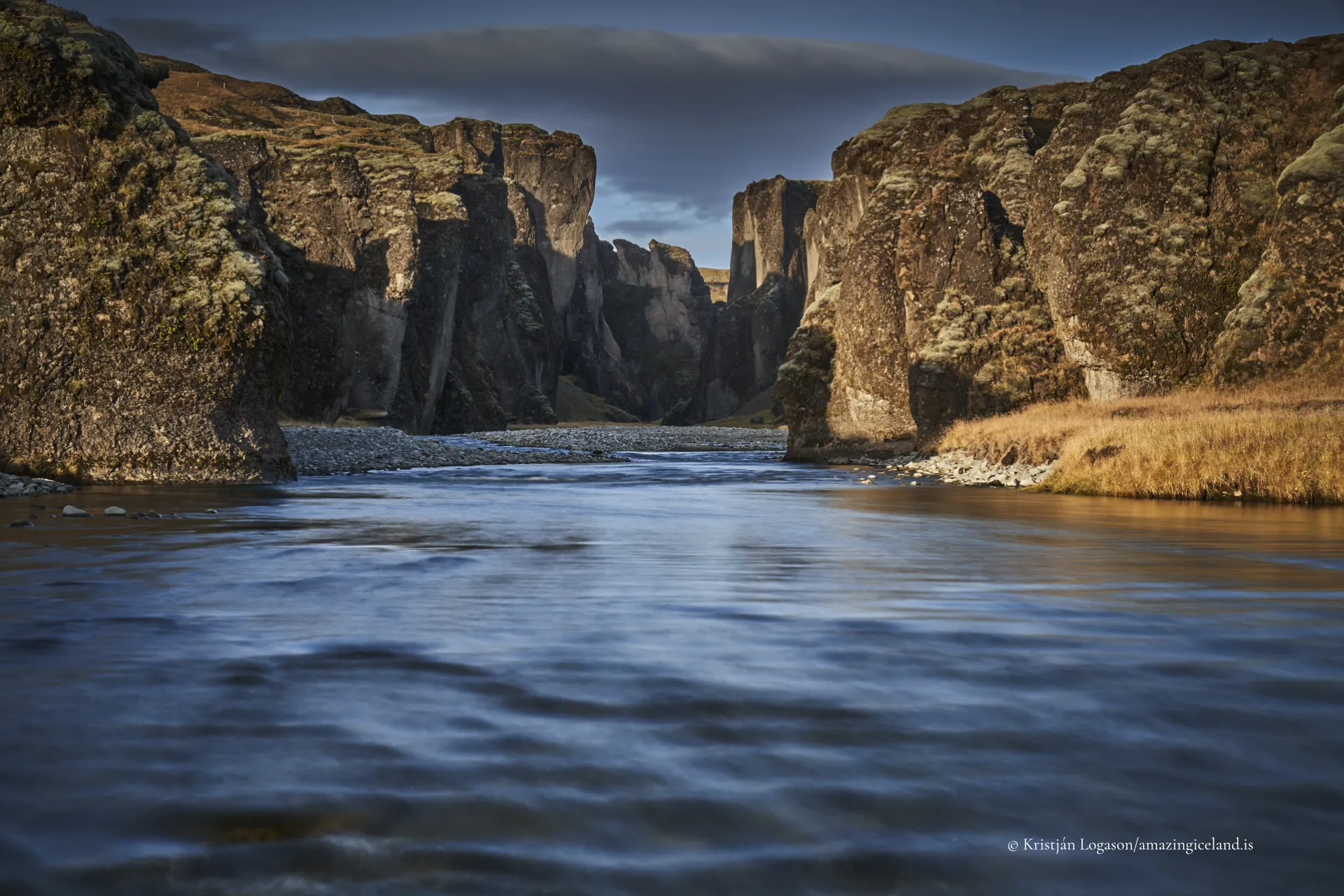
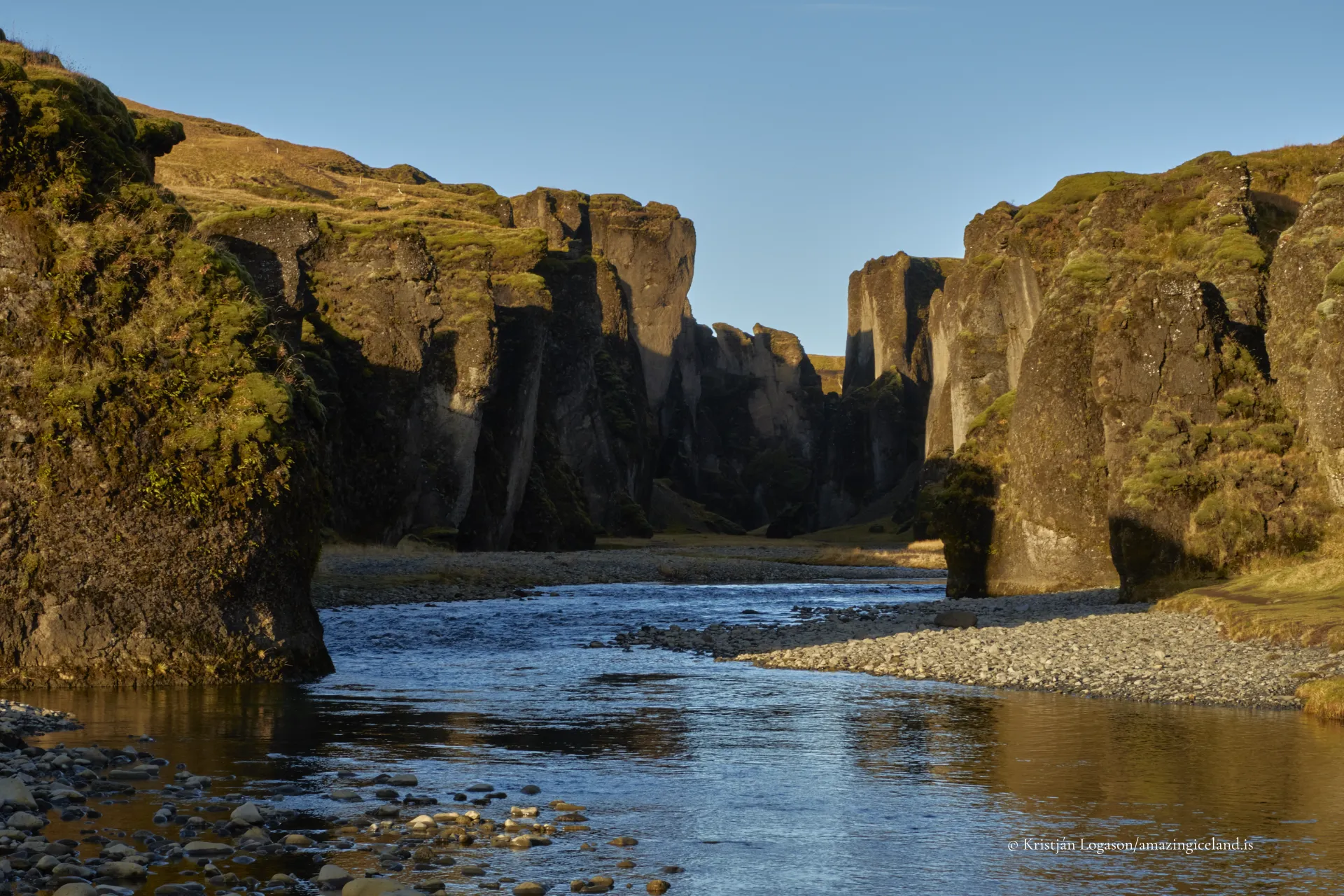
The bedrock through which the canyon is cut consists primarily of layered basalt and palagonite, materials produced during volcanic activity under glacial conditions. These layers differ in hardness and fracture patterns, creating variable resistance to erosion. Over time, the river exploited weaker zones, producing the canyon’s stepped profile and alternating narrow and slightly wider sections. The result is a gorge that emphasizes depth and curvature rather than width.
From an analytical standpoint, Fjaðrárgljúfur functions as a vertical cross-section through Iceland’s volcanic past. The exposed strata document successive eruptive phases, while the canyon geometry records changing flow regimes. Unlike broad glacial valleys, this is a fluvial feature refined by precision rather than scale.
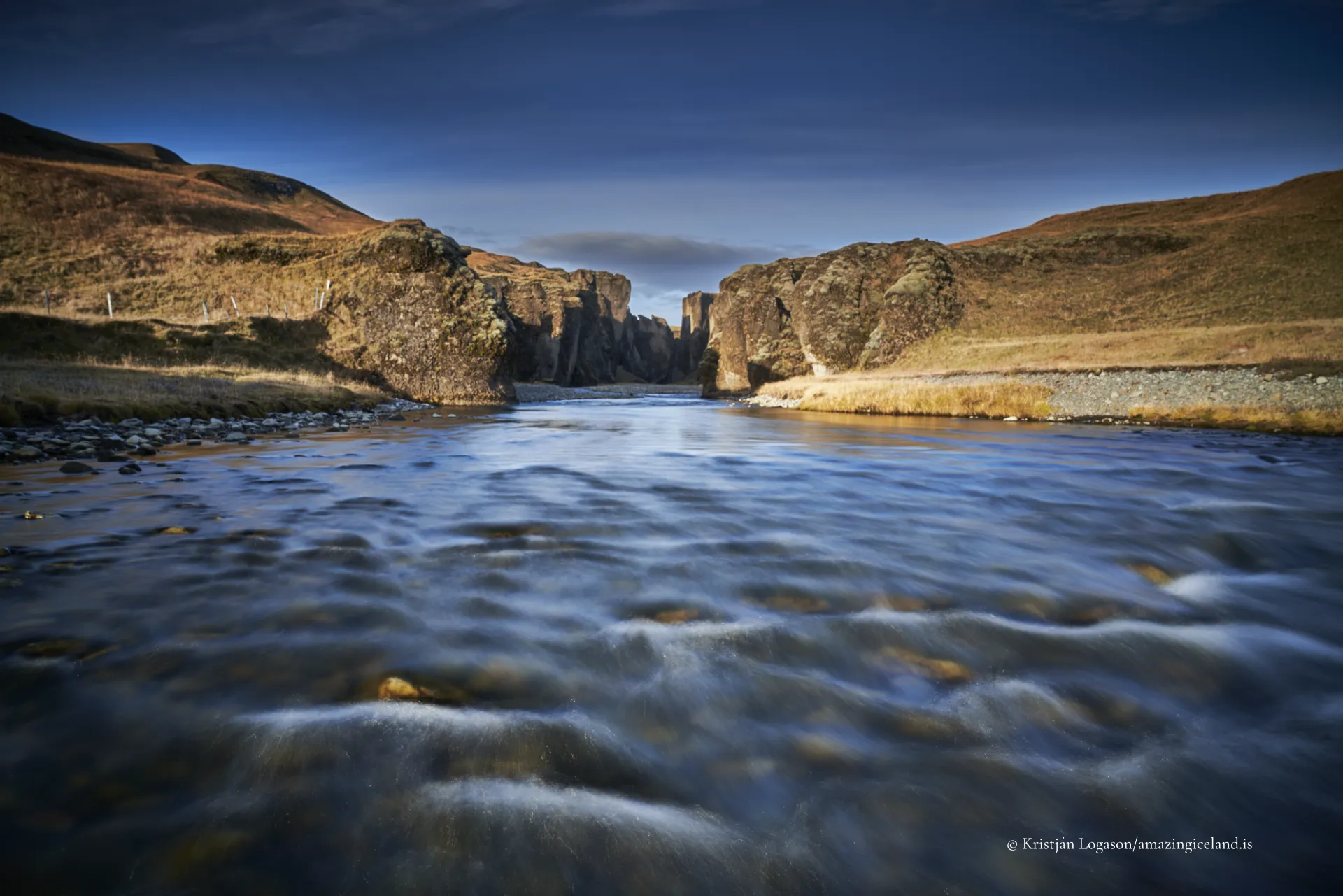
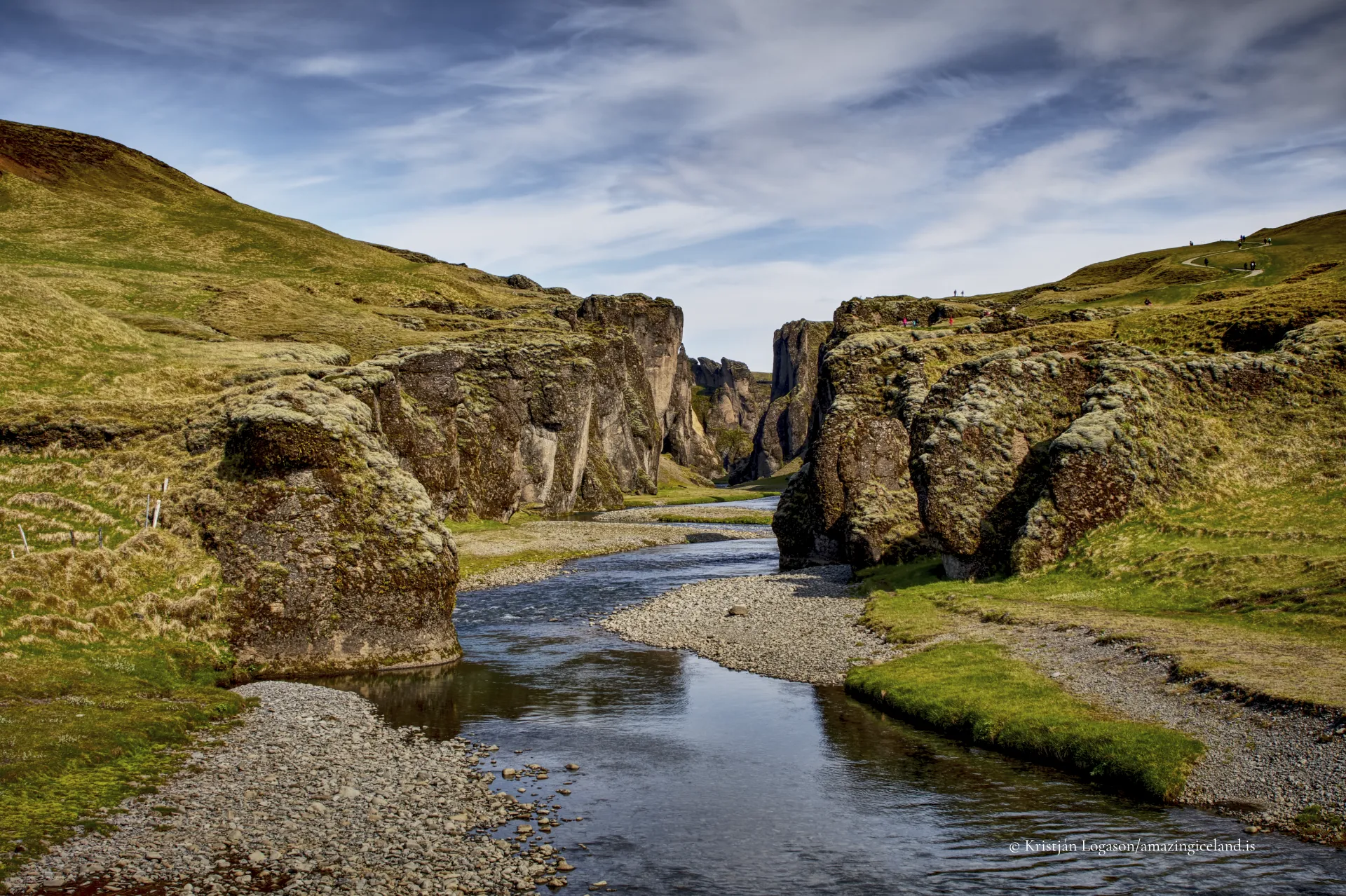
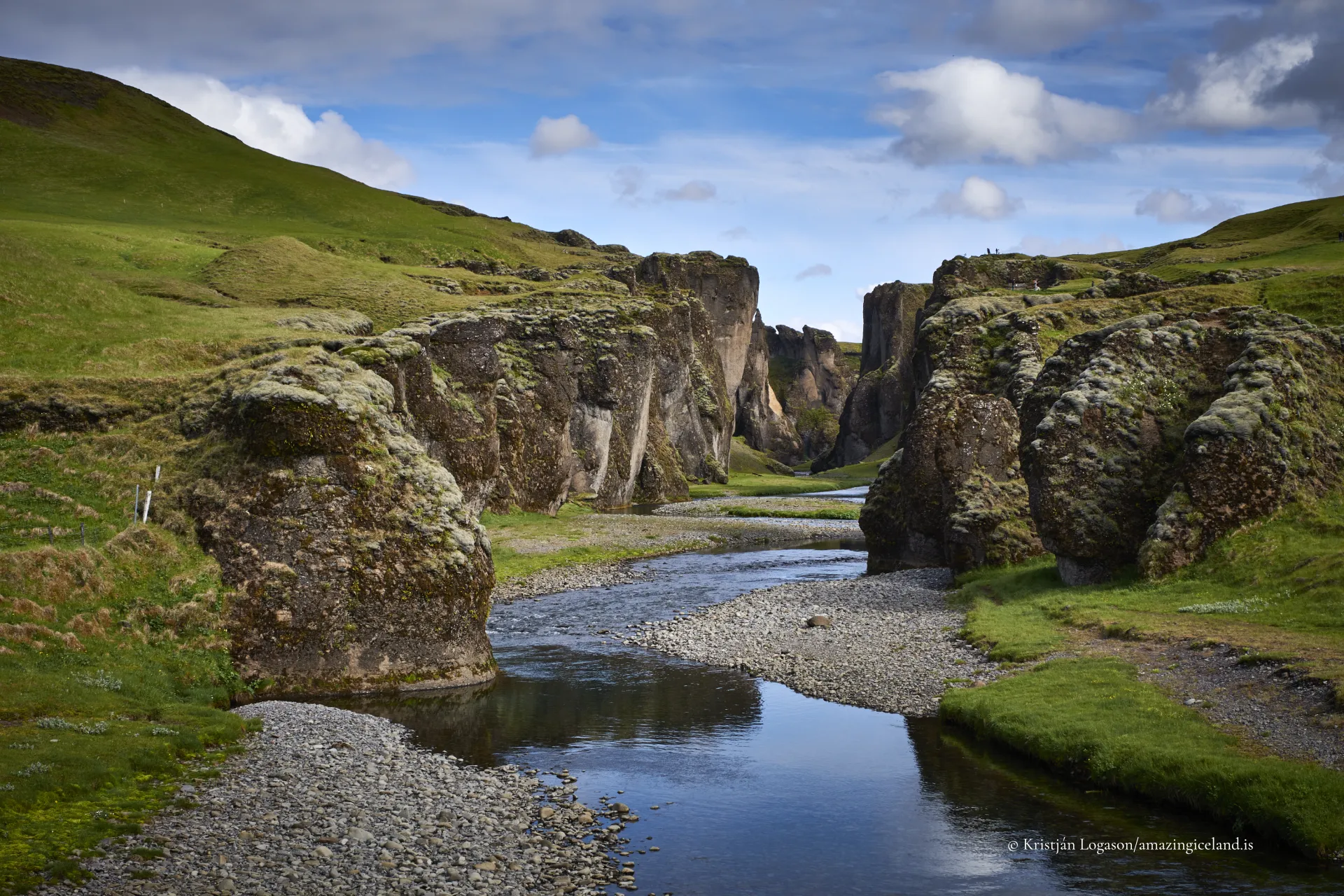
The visual character of Fjaðrárgljúfur is strongly influenced by vegetation. Moss and low alpine plants cling to the canyon walls, softening the hard geometry of basalt without obscuring it. This vegetation thrives in the humid microclimate created by the river below and the canyon’s limited exposure to wind. The contrast between green surfaces and dark rock reinforces the canyon’s contours and highlights subtle variations in slope and fracture.
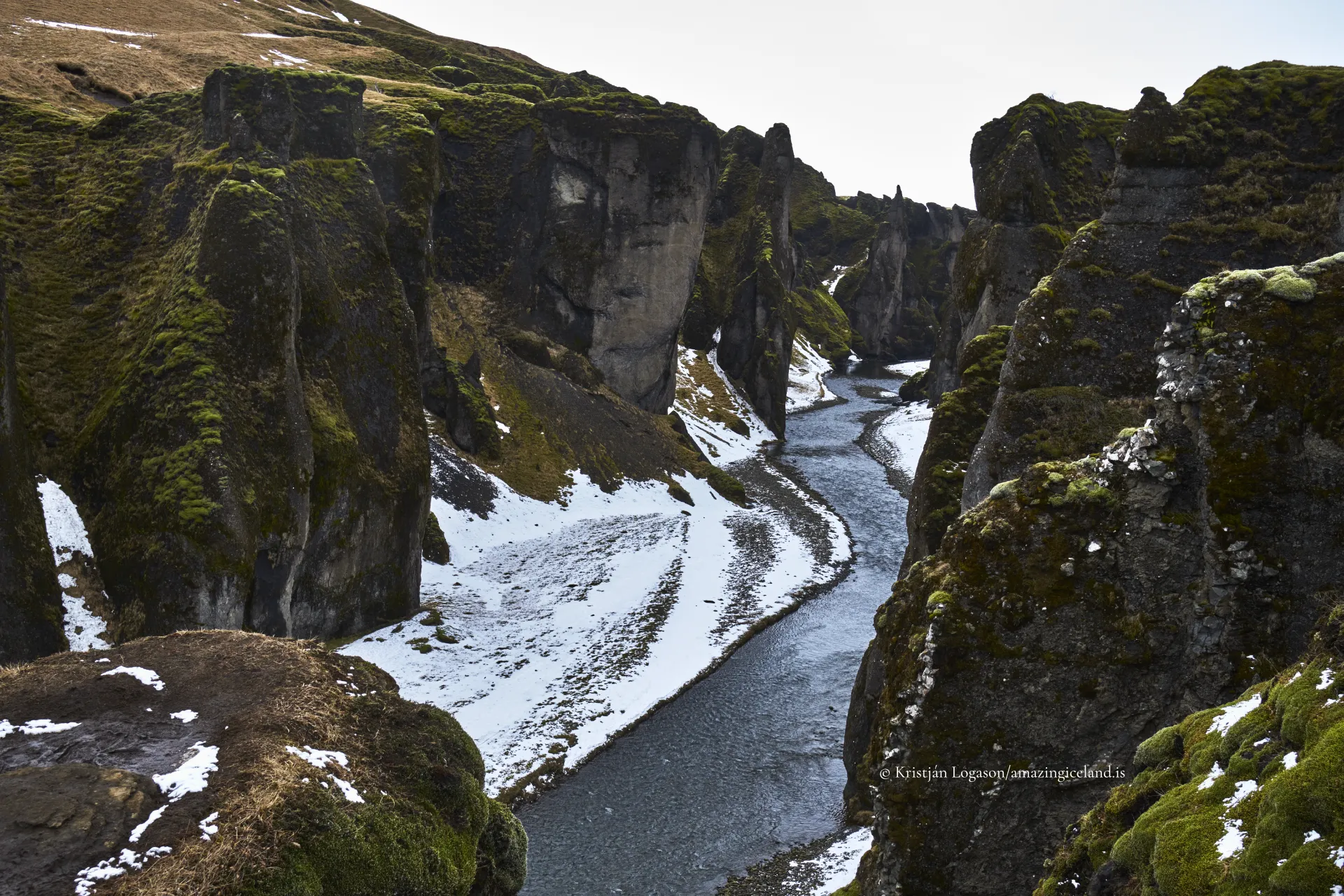
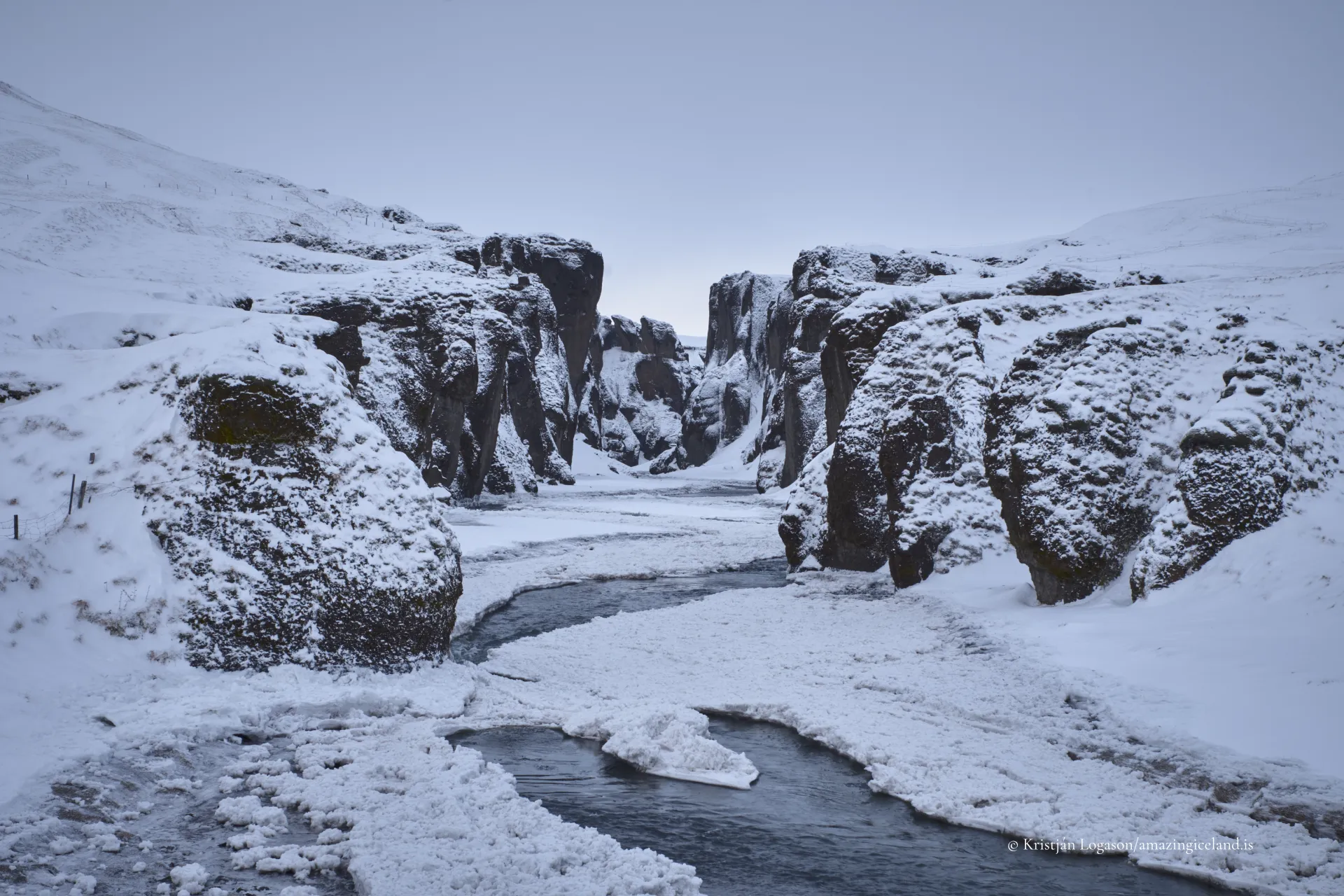
Seasonal conditions alter this balance. In summer, vegetation is at its most vivid, and the river’s flow is moderate, allowing the canyon’s internal structure to remain visible. In wetter periods, increased discharge amplifies sound and motion, while spray and shadow reduce visual clarity. Winter strips the canyon back to structure—vegetation recedes, ice forms along ledges, and the underlying rock becomes dominant.
These shifts are instructive. They demonstrate how landscapes are not fixed images but systems whose appearance depends on water volume, temperature, and light. Fjaðrárgljúfur rewards repeat observation precisely because it changes within a stable framework.
Access to Fjaðrárgljúfur has evolved significantly in recent years. Increased visitation led to erosion and vegetation damage, prompting the introduction of managed paths, viewing platforms, and periodic closures for restoration. These measures reflect a broader recognition that fragile volcanic and moss-covered environments require active stewardship.
The established trail follows the canyon rim, offering controlled viewpoints that emphasize the canyon’s planform and depth. Importantly, access to the canyon floor is restricted. This limitation is not arbitrary; steep walls, loose material, and sudden changes in river level make the interior hazardous. Observation from above aligns both with safety and with the canyon’s most informative perspectives.
From a methodological standpoint, the managed access clarifies interpretation. Viewpoints are positioned where curvature, incision depth, and river alignment are most legible, supporting an analytical rather than extractive experience.
Fjaðrárgljúfur is often compared to other Icelandic canyons, but such comparisons can obscure its specificity. Unlike glacially carved gorges with broad U-shaped profiles, Fjaðrárgljúfur retains a tight, V-shaped geometry more typical of sustained river incision. Its modest width amplifies verticality, creating a sense of enclosure that is disproportionate to its length.
This makes the canyon particularly effective for understanding scale compression—how relatively small rivers can produce dramatic landforms when given time, gradient, and suitable rock. The canyon does not overwhelm through mass; it persuades through coherence.
In the context of South Iceland, Fjaðrárgljúfur also functions as a transitional feature, linking the highland interior with the lowland plains. It marks a point where water energy shifts from erosive dominance to distributive flow downstream.
Ultimately, Fjaðrárgljúfur is defined by discipline—both geological and observational. The river has worked within constraints imposed by rock structure and gradient, producing a canyon that is precise rather than expansive. The visitor experience benefits from a similar discipline: slow movement, attention to detail, and respect for boundaries.
Within broader destination framework, Fjaðrárgljúfur complements glaciers, waterfalls, and open plains by demonstrating what sustained, moderate force can achieve over long timescales. It is not a spectacle of excess, but a study in persistence.
Read carefully, the canyon offers clarity—about erosion, about restraint, and about the value of allowing landscapes to remain legible rather than consumed.
Interesting facts:
- Fjaðrárgljúfur is approximately 2 km long and up to 100 m deep.
- The canyon was carved by glacial meltwater following the last Ice Age.
- Bedrock consists mainly of basalt and palagonite layers.
- Vegetation thrives due to a humid canyon microclimate.
- Managed access was introduced to protect fragile moss and soils.a
Image Gallery
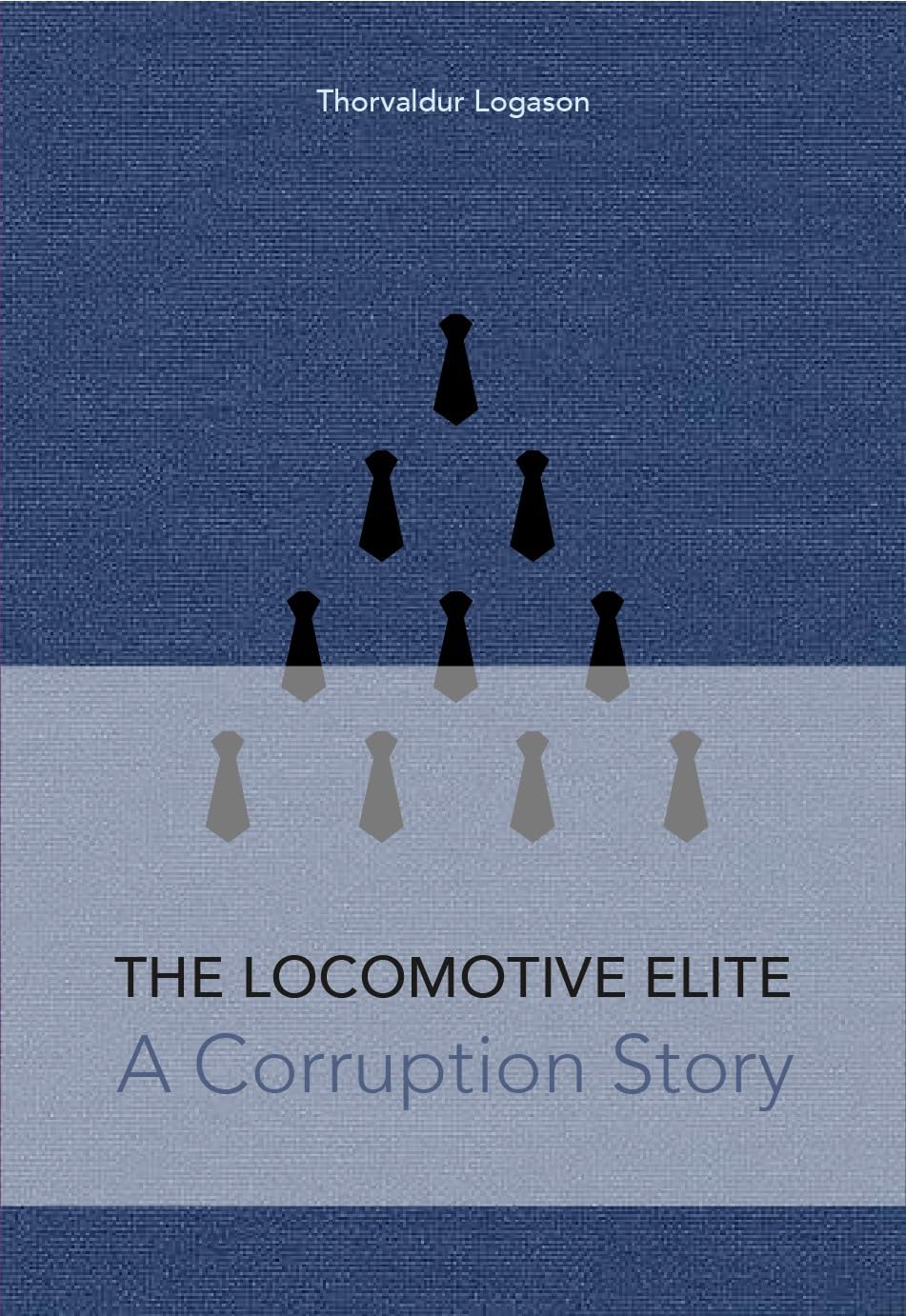
The Locomotive Elite
What do Donald Trump and Iceland’s Locomotive Elite have in common?
Far more than you think.
In The Locomotive Elite, you’ll uncover how a tiny clique in Iceland captured extensive control—of banks, courts, media, and even the central bank.
For decades they ruled, first democratically, then through corruption and in the end through crime, enriching themselves and their cronies while dismantling oversight.
The result?
One of the most spectacular financial collapses in modern history.
Photography tips:
- Rim-level compositions: Elevated viewpoints best reveal curvature and depth.
- Midday works: Even light reduces harsh shadows inside the narrow gorge.
- Avoid edge compression: Keep distance from rims—space improves both safety and scale.
- Seasonal intent: Summer emphasizes color; winter emphasizes structure.
- Minimal foregrounds: Let the canyon geometry carry the frame.
Good cameras for Iceland
Sony A7R V

Sony A7s lll

Canon R6

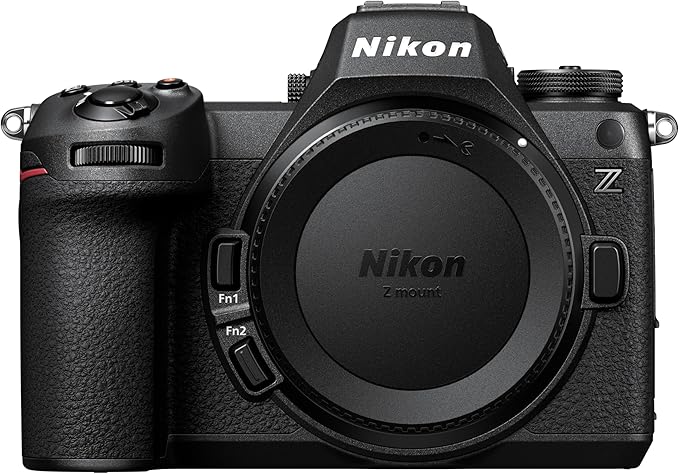
Nikon Z6 lll
Destinations nearby
Good to have in Iceland