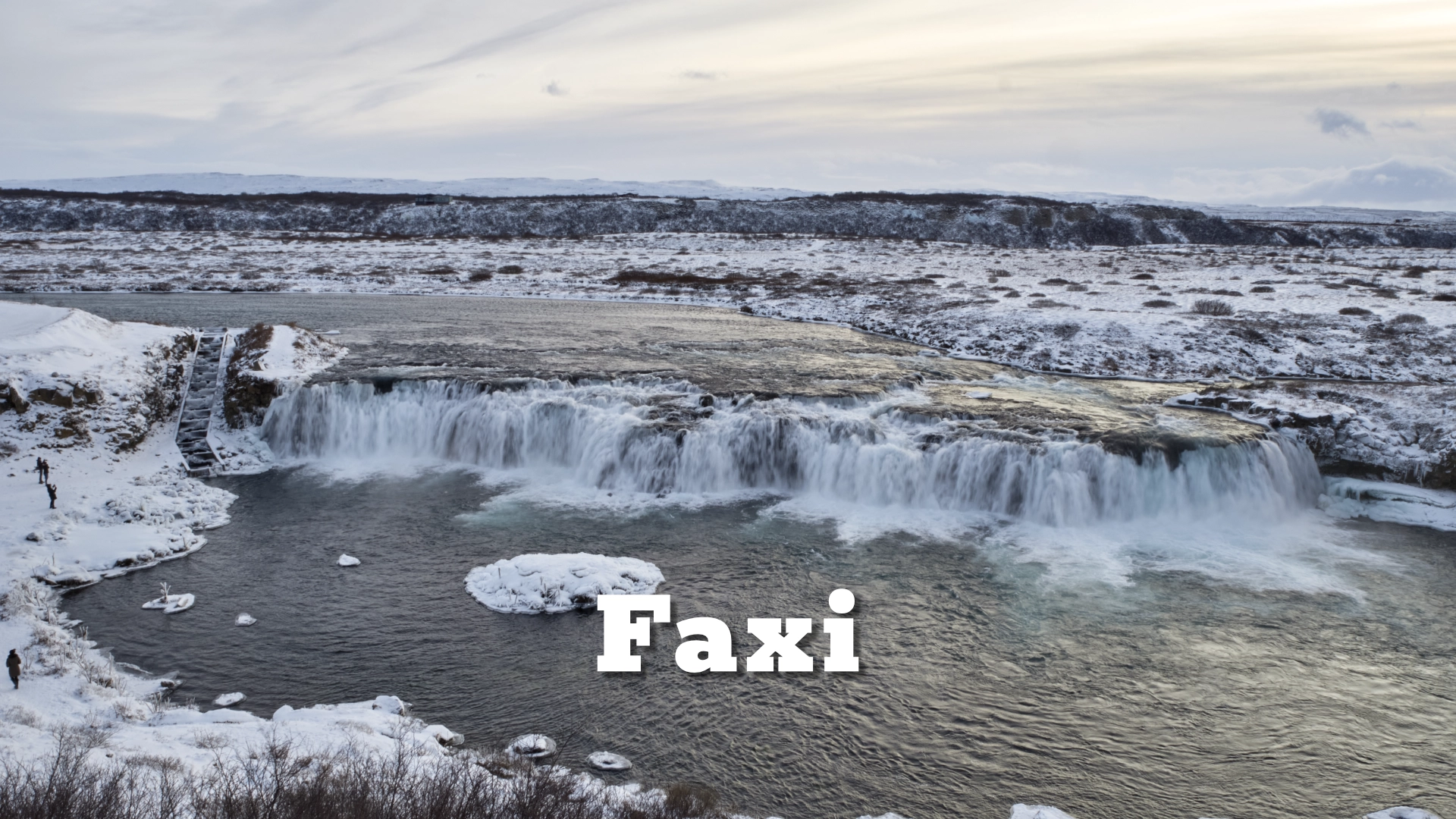
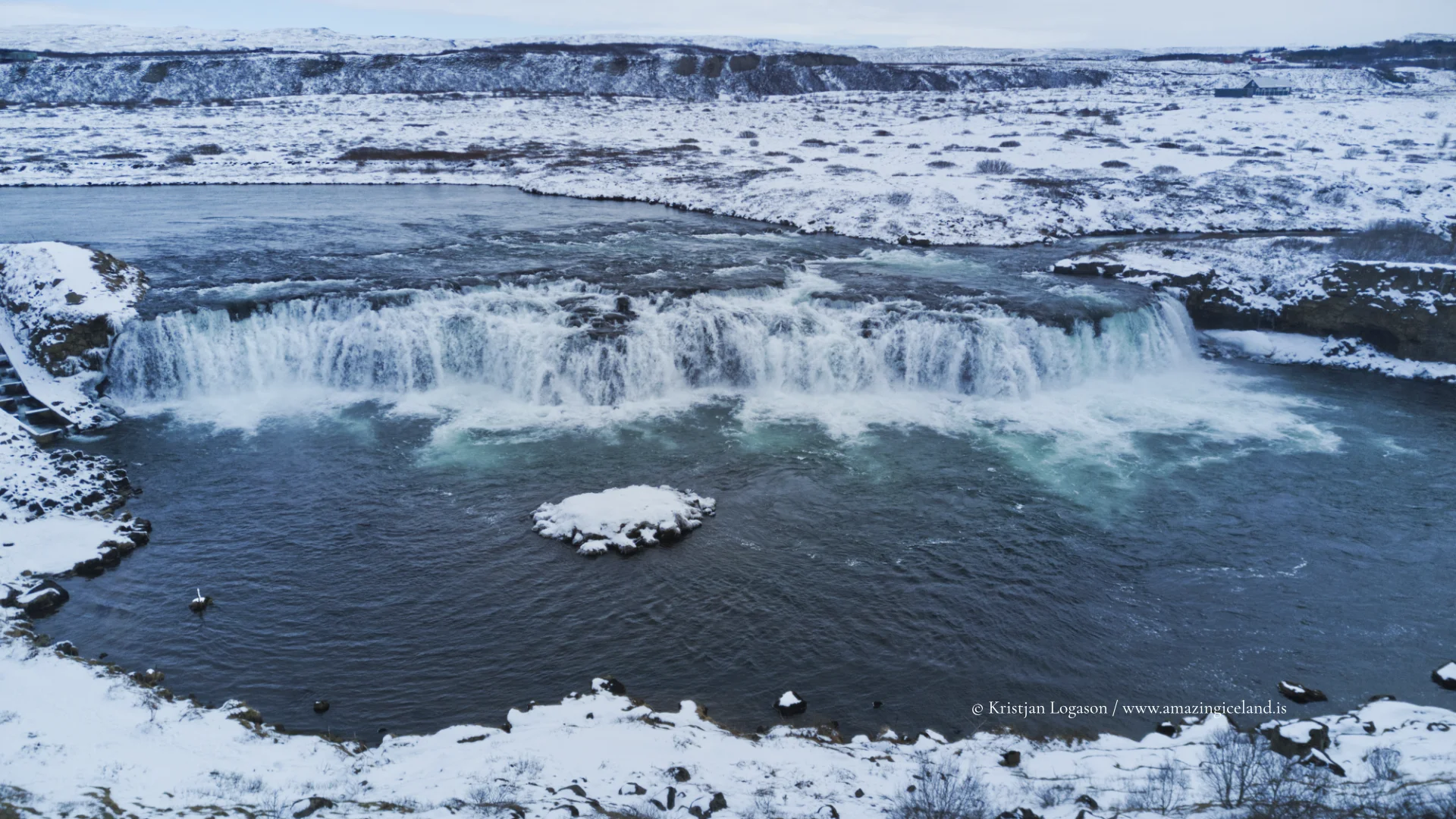
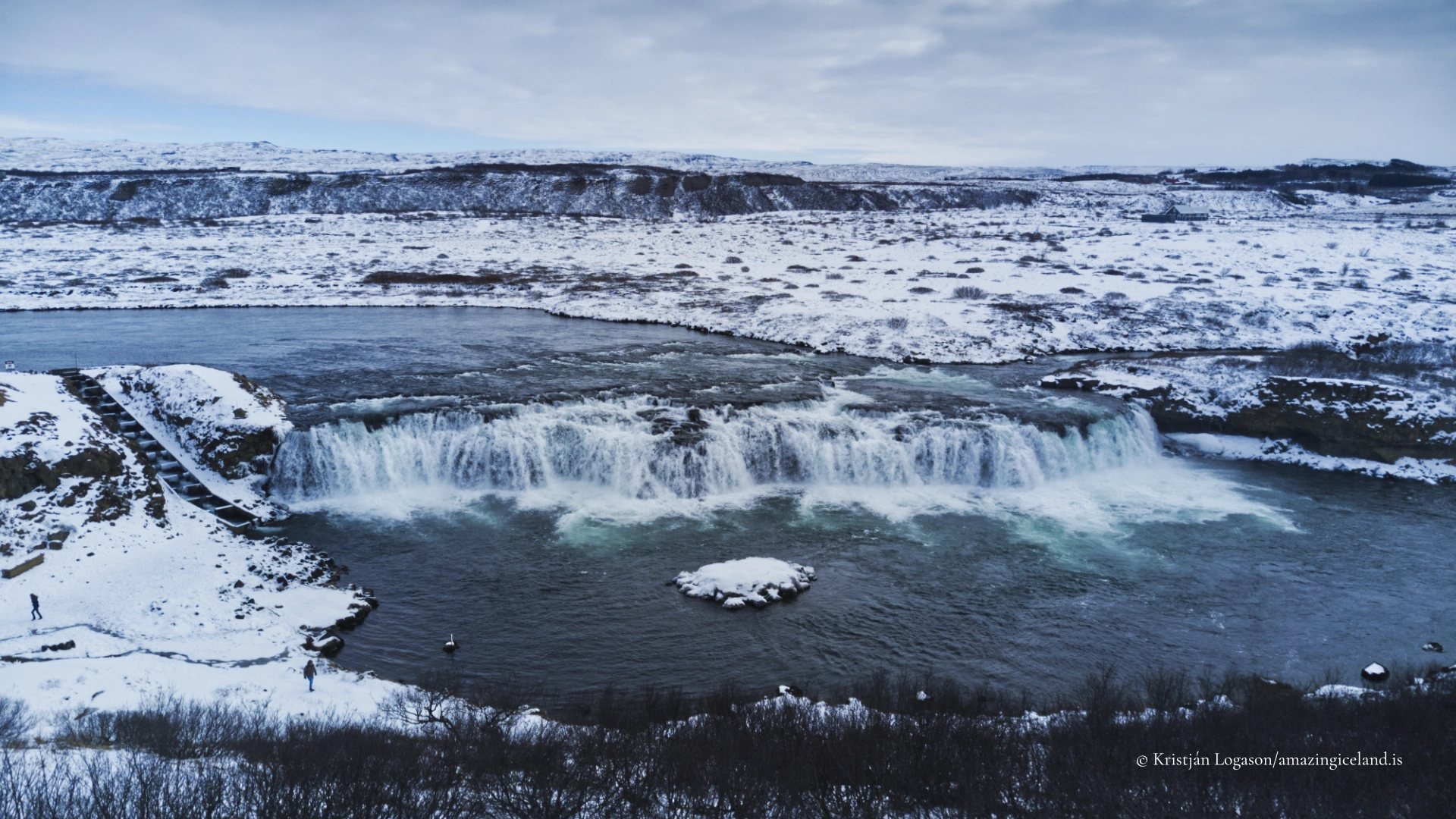
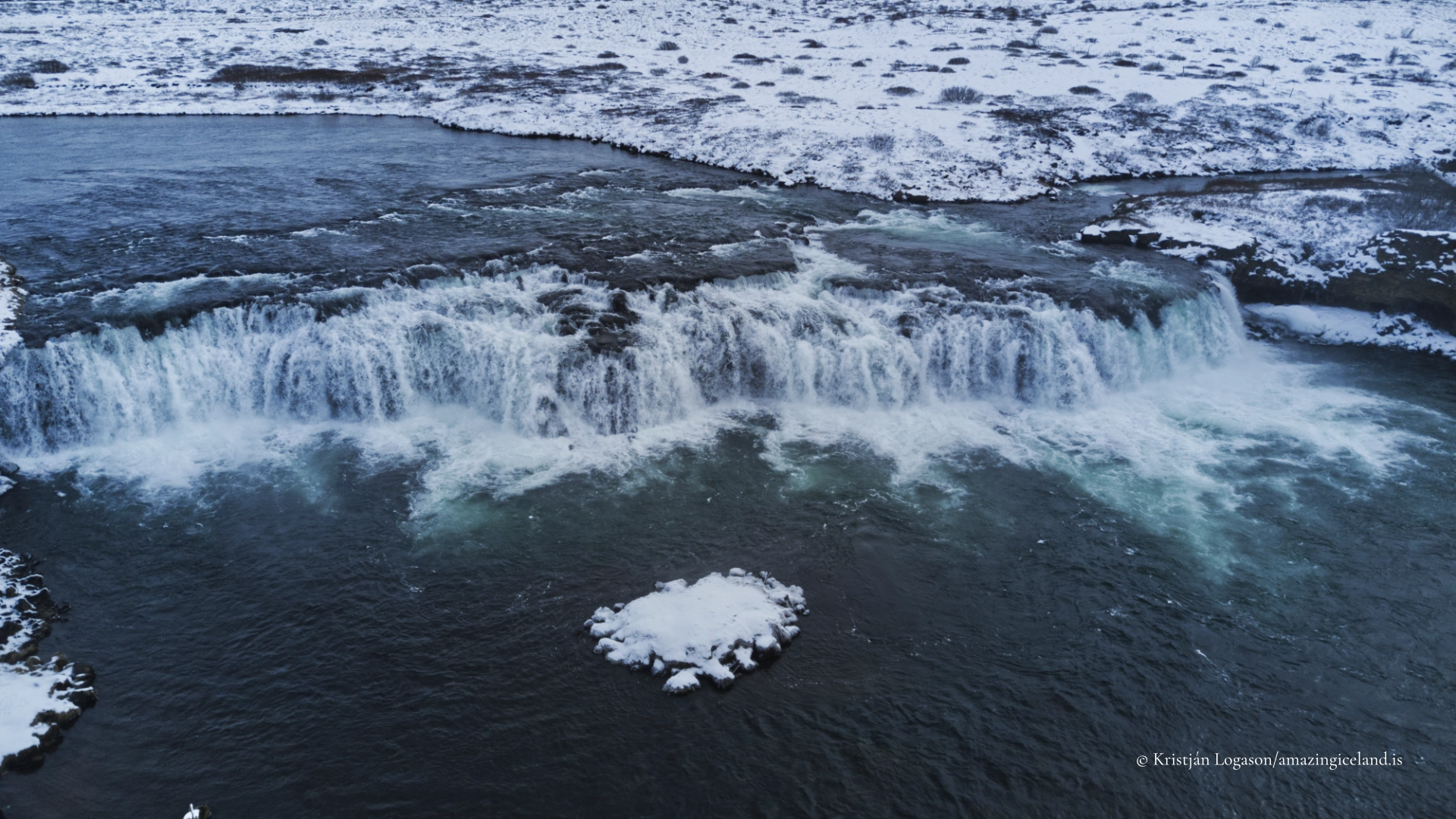
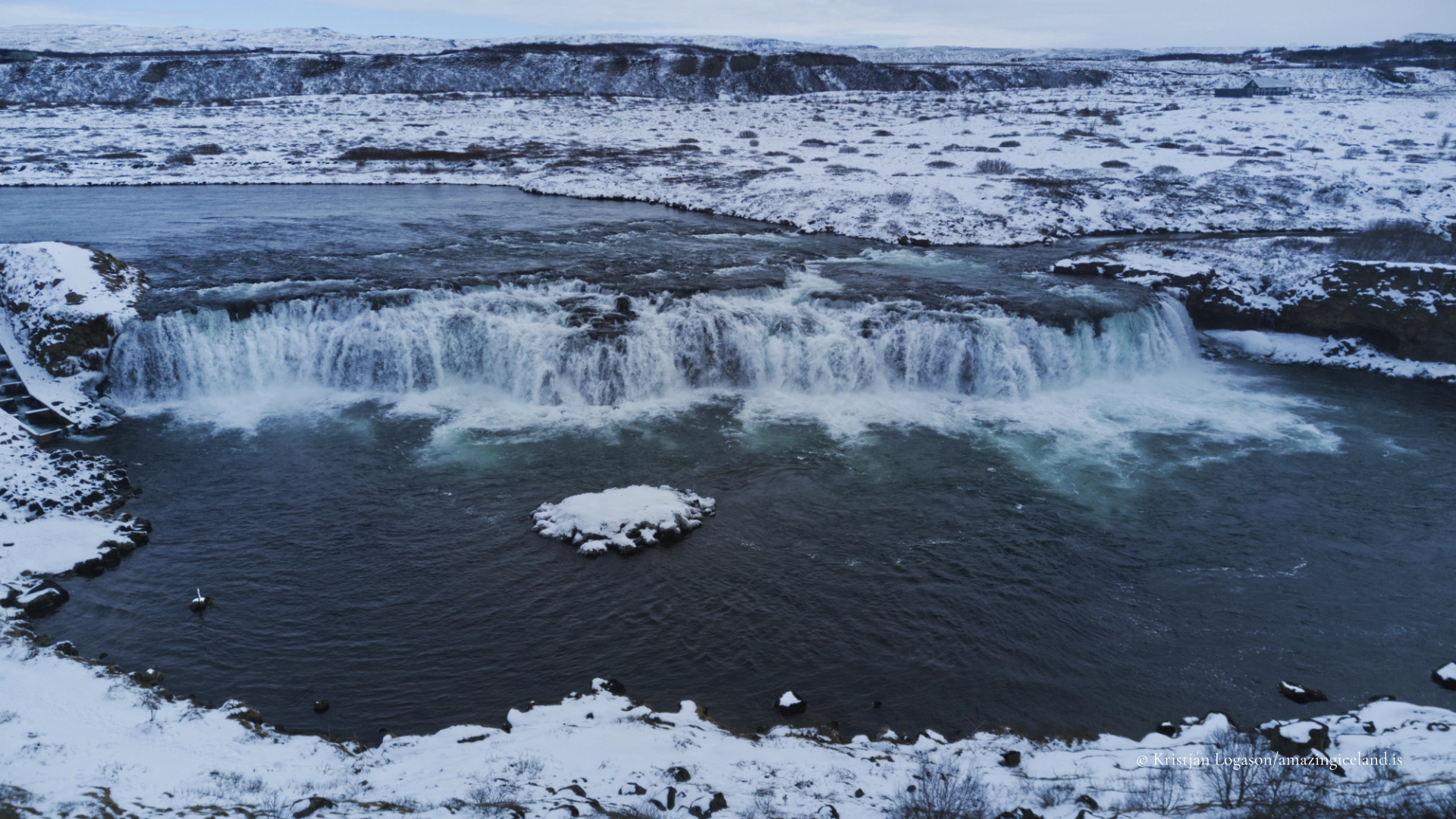
On the river Tungufljót, not far from the Golden Circle route, Faxi—also known as Faxafoss—spreads across a low basalt step. The waterfall is modest in height but substantial in discharge, offering a clear example of fluvial power expressed horizontally rather than vertically.
The location of Faxi waterfall
Latitude
64.2096
Longitude
-20.9987
Faxi waterfall
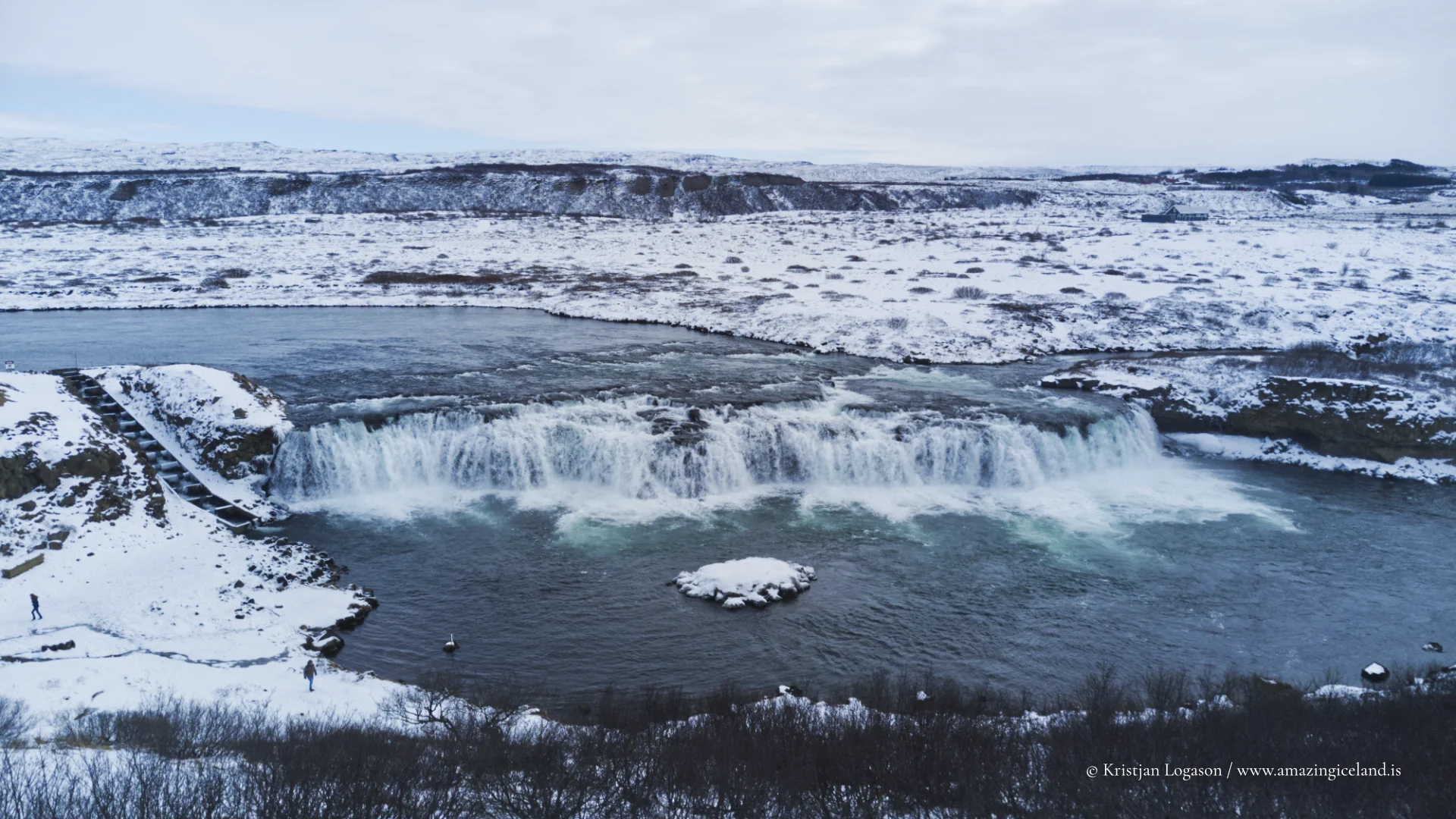
Faxi is situated on Tungufljót, a river that drains agricultural lowlands east of the Golden Circle area. The waterfall is relatively low, with a drop of approximately 7 meters, but it spans a wide section of the river, creating a continuous curtain of water rather than a single concentrated plunge.
Geologically, the waterfall marks a basalt ledge formed by successive lava flows. Over time, river erosion has exploited joints and fractures in the basalt, maintaining a stable step rather than carving a deep canyon. This stability explains why Faxi has retained its broad form rather than migrating rapidly upstream.
From a geomorphological perspective, Faxi represents a mature lowland waterfall, shaped more by sustained discharge than by episodic extreme events.
The character of Faxi changes significantly with season. During spring snowmelt and periods of heavy rainfall, Tungufljót carries a high sediment load and increased volume, amplifying the waterfall’s width and sound. In drier periods, flow remains steady but visually calmer.
Unlike waterfalls fed directly by glaciers, Faxi’s hydrology is governed primarily by precipitation and groundwater input. This produces relatively predictable seasonal variation rather than abrupt flooding or jökulhlaup-driven change.
The river’s consistency has historically made it suitable for fishing. Faxi is known as a salmon waterfall, and a fish ladder has been installed to allow upstream migration without altering the waterfall’s overall form.
Culturally, Faxi has never functioned as a landmark of national symbolism. Its role has been practical rather than emblematic—part of a working landscape shaped by farming, fishing, and transport routes.
This lack of monumental framing has preserved the waterfall’s character. There are no cliffs, no canyon walls, and no visual compression. The landscape remains open, with the river flowing through low terrain rather than confined space.
Modern access to Faxi is straightforward, with short paths and viewpoints close to the river. Infrastructure remains minimal and functional, reflecting the site’s role as a stop rather than a destination that requires interpretation or control.
The surrounding area is actively farmed, and the waterfall should be understood within this context. Fields, roads, and river management structures are part of the setting, not intrusions to be excluded from interpretation.
This integration reinforces the idea that Faxi belongs to a lived landscape rather than a preserved wilderness.
Faxi ultimately demonstrates that scale in Icelandic landscapes is not always vertical. Width, volume, and persistence can be equally expressive. The waterfall does not demand attention; it rewards observation.
Interesting facts:
- Faxi is also known as Faxafoss.
- The waterfall is approximately 7 meters high but very wide.
- It lies on the Tungufljót river.
- A fish ladder allows salmon to migrate upstream.
- The surrounding area is actively farmed.
Image Gallery
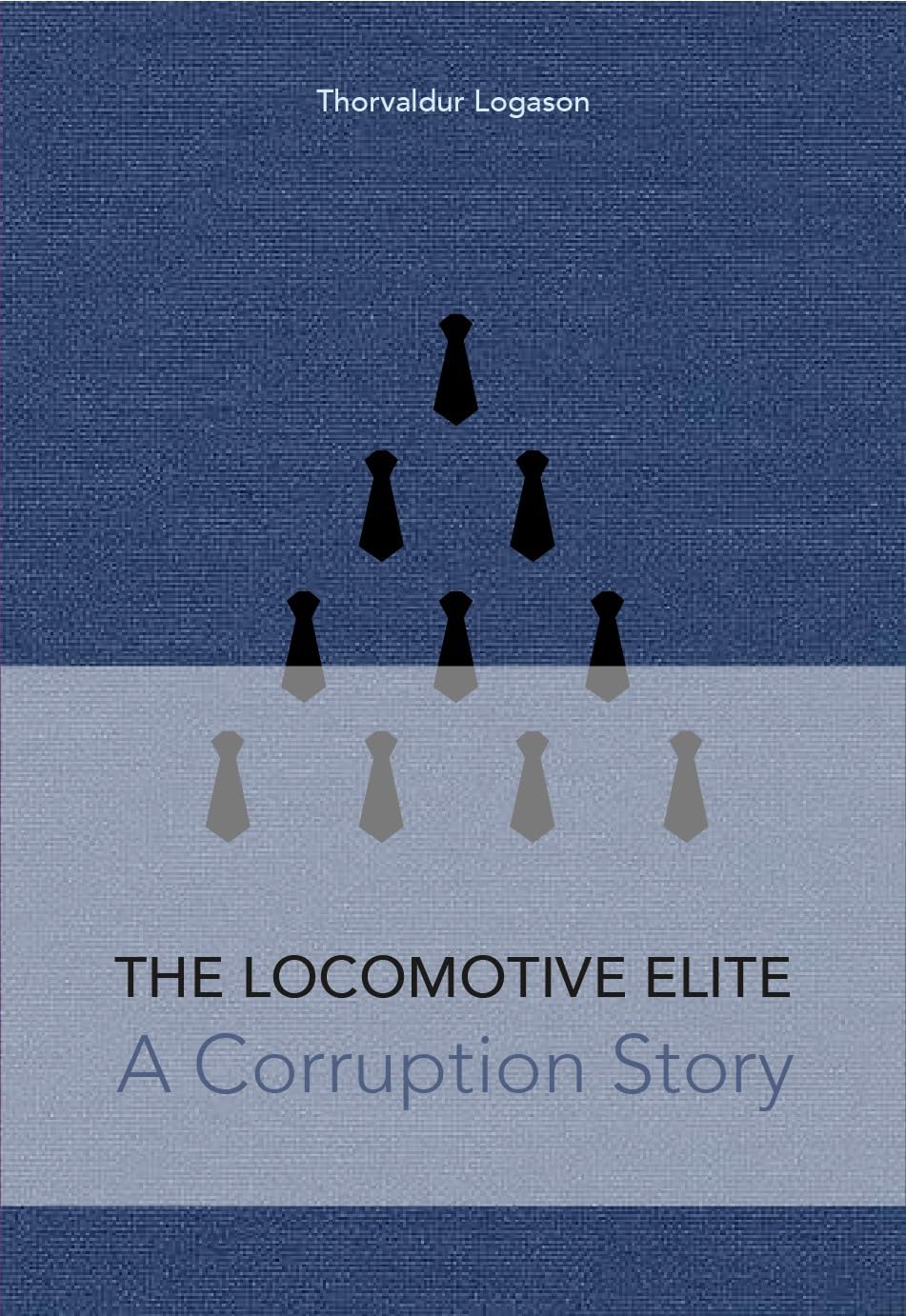
The Locomotive Elite
What do Donald Trump and Iceland’s Locomotive Elite have in common?
Far more than you think.
In The Locomotive Elite, you’ll uncover how a tiny clique in Iceland captured extensive control—of banks, courts, media, and even the central bank.
For decades they ruled, first democratically, then through corruption and in the end through crime, enriching themselves and their cronies while dismantling oversight.
The result?
One of the most spectacular financial collapses in modern history.
Photography tips:
- Go wide: Horizontal framing suits the waterfall’s character.
- Include the riverbanks: They explain scale better than close-ups.
- Season matters: High water dramatically changes the scene.
- Avoid exaggeration: Long exposures should remain restrained.
- Context counts: Fields and sky belong in the frame.
Good cameras for Iceland
Sony A7R V
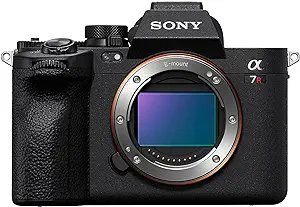
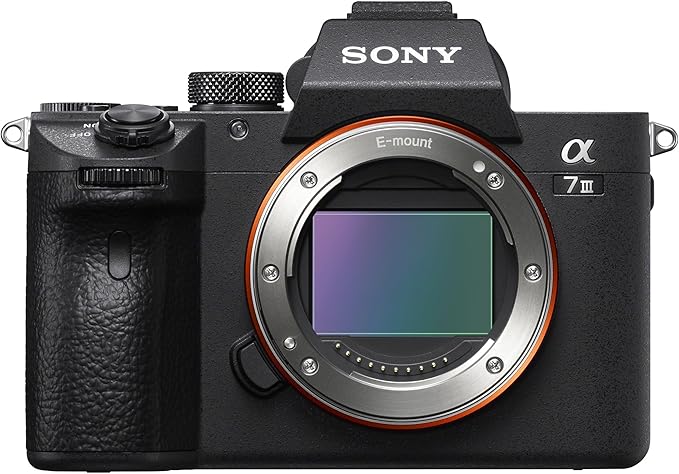
Sony A7s lll
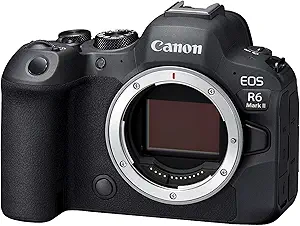
Canon R6
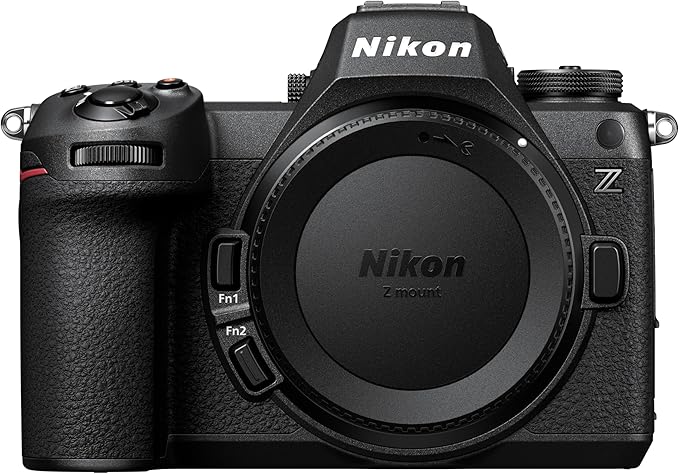
Nikon Z6 lll
Destinations nearby
Good to have in Iceland