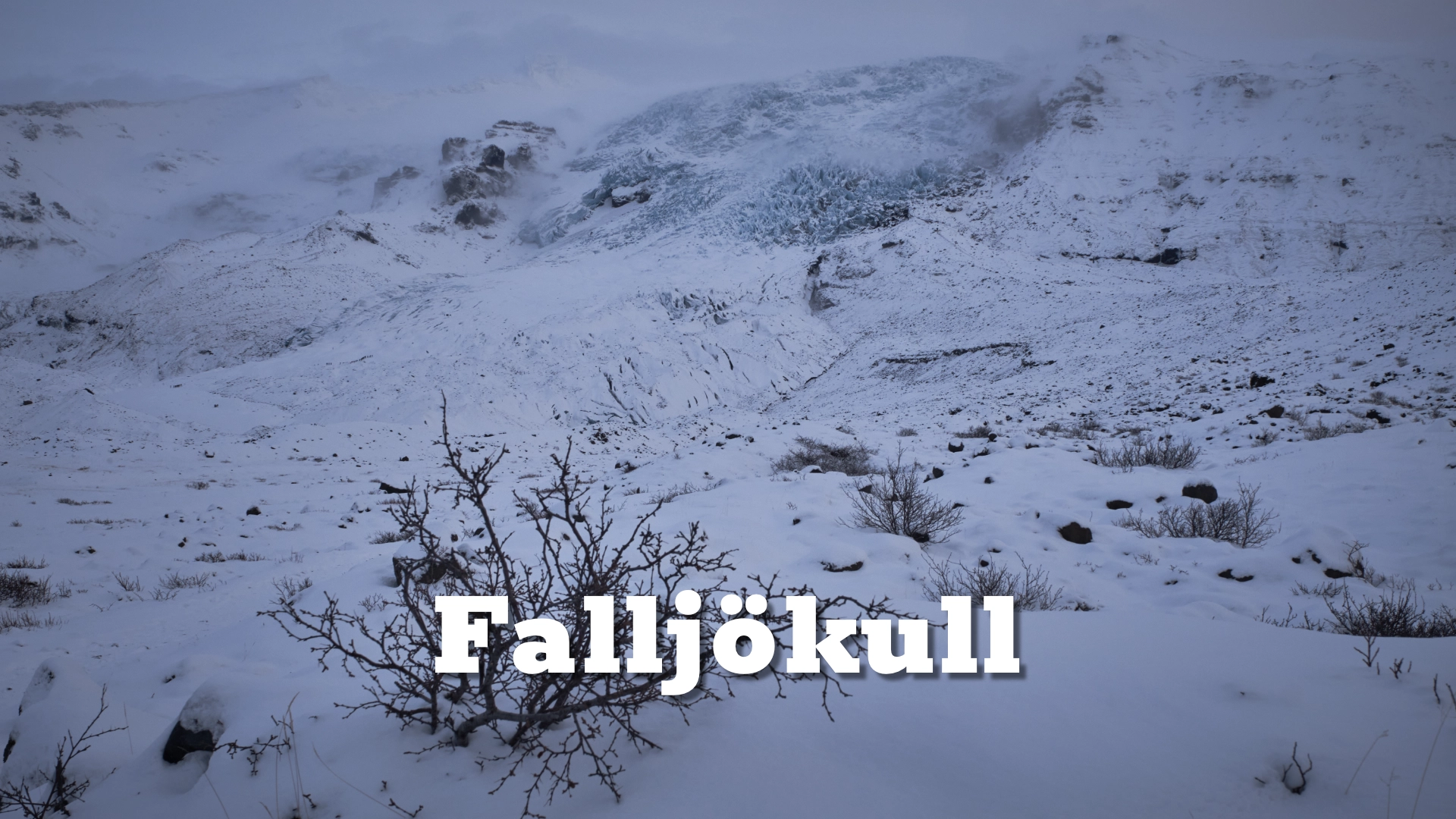
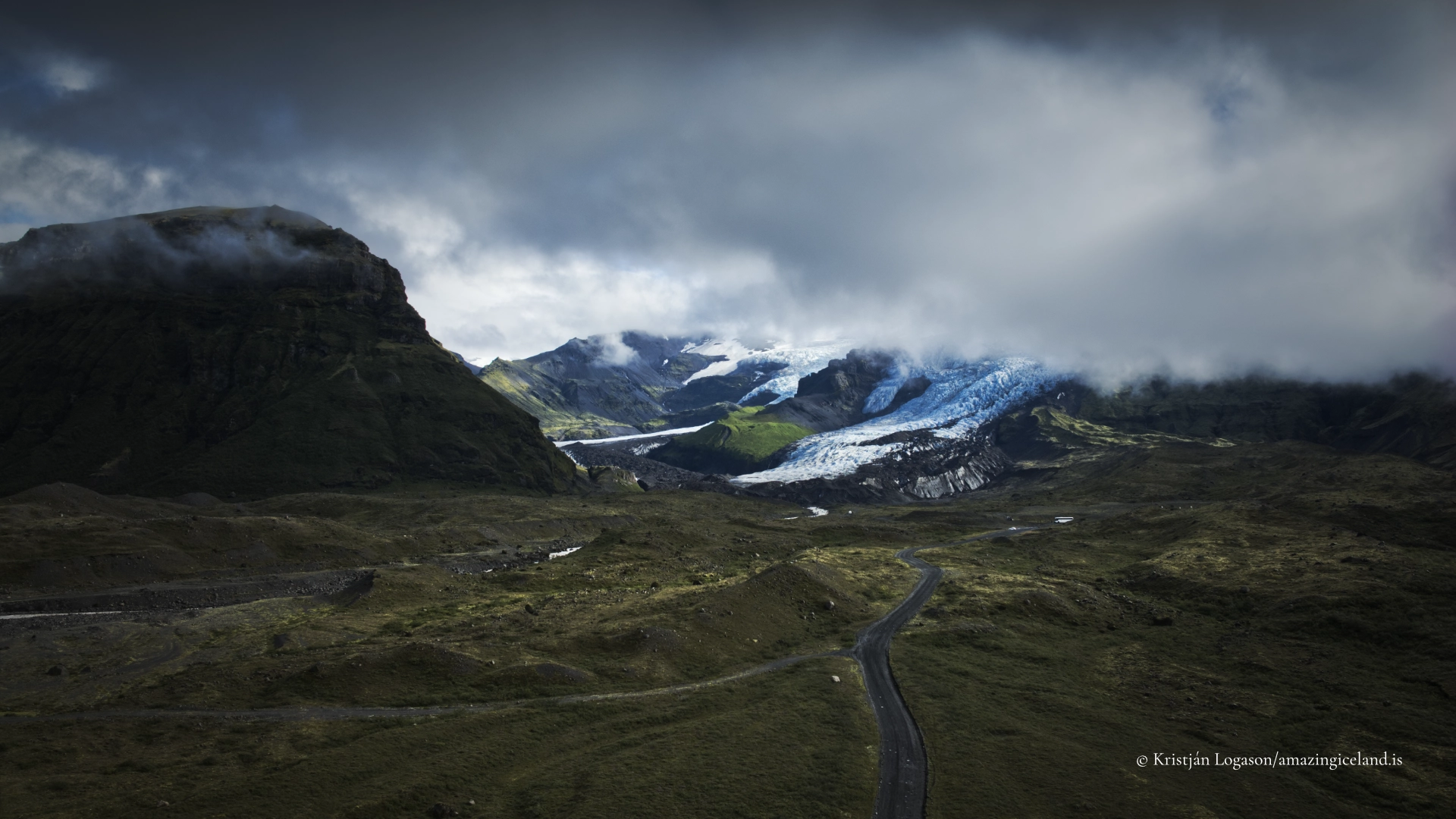
On the southern margin of Vatnajökull, within the Skaftafell area, Falljökull descends sharply from the ice cap. The glacier is known for its steep icefall, dense crevassing, and clear expression of how outlet glaciers respond to terrain and climate.
The location of Falljökull glacier
64.0157
Latitude
Longitude
-16.9678
Falljökull glacier
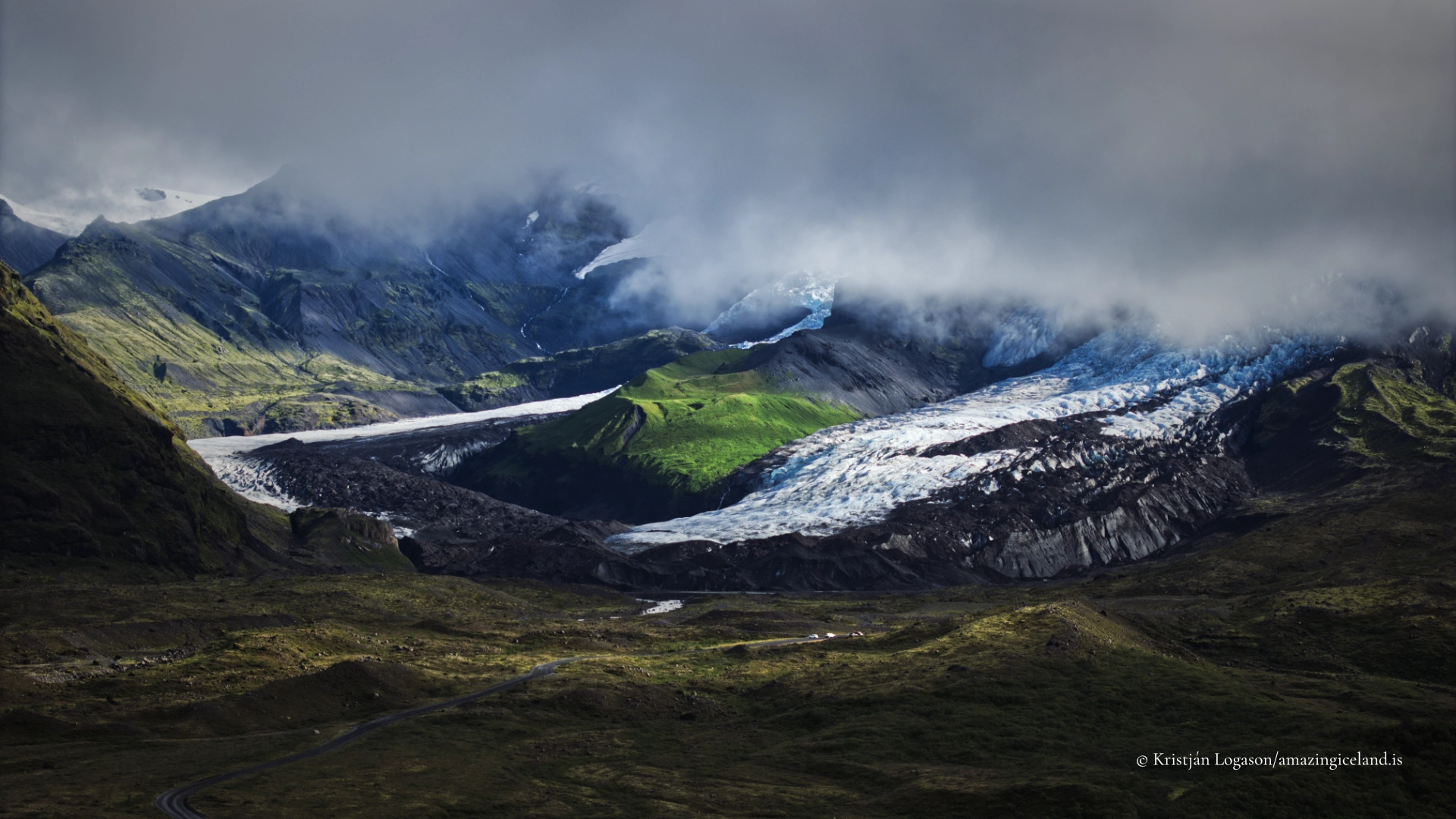
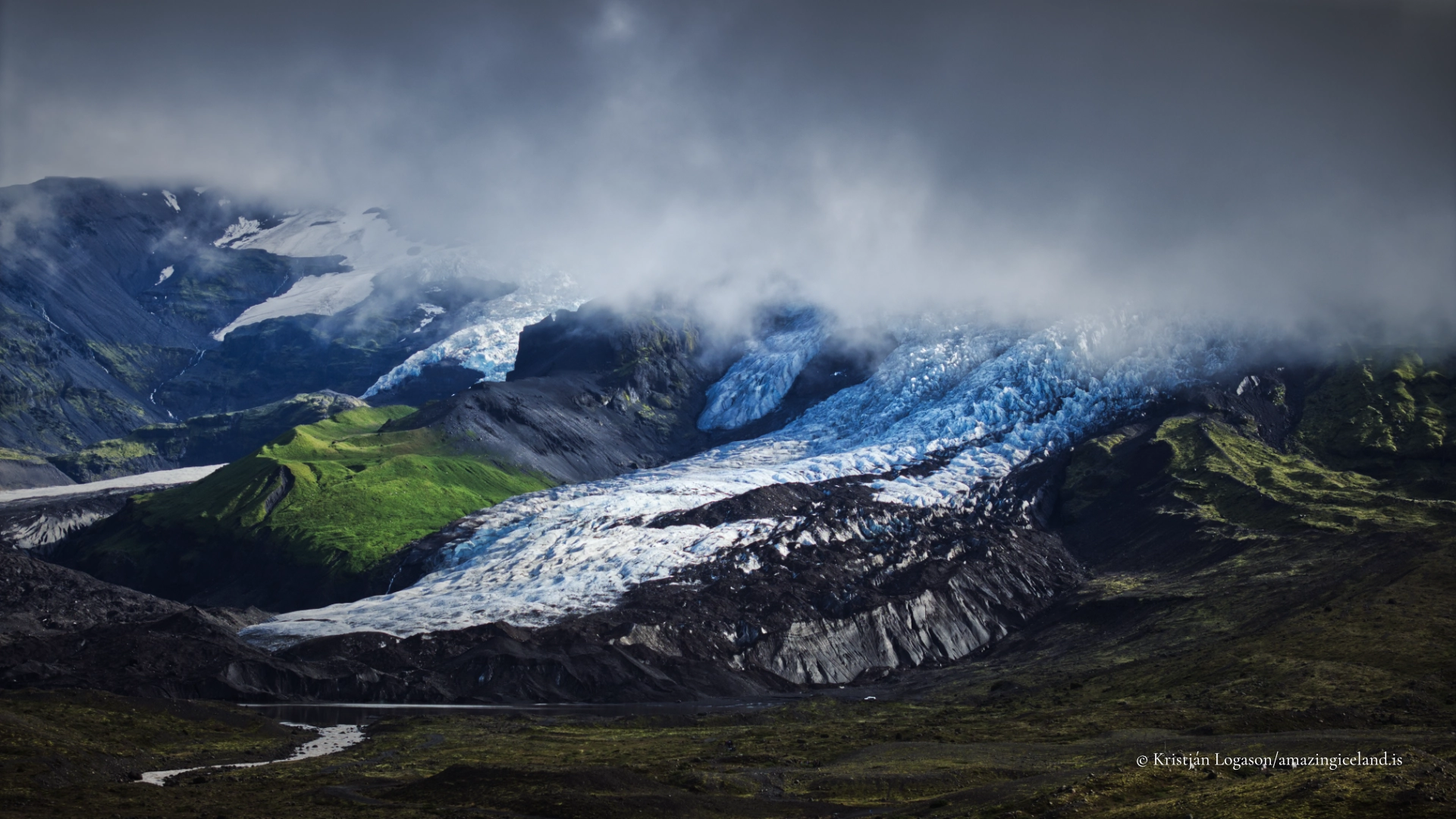
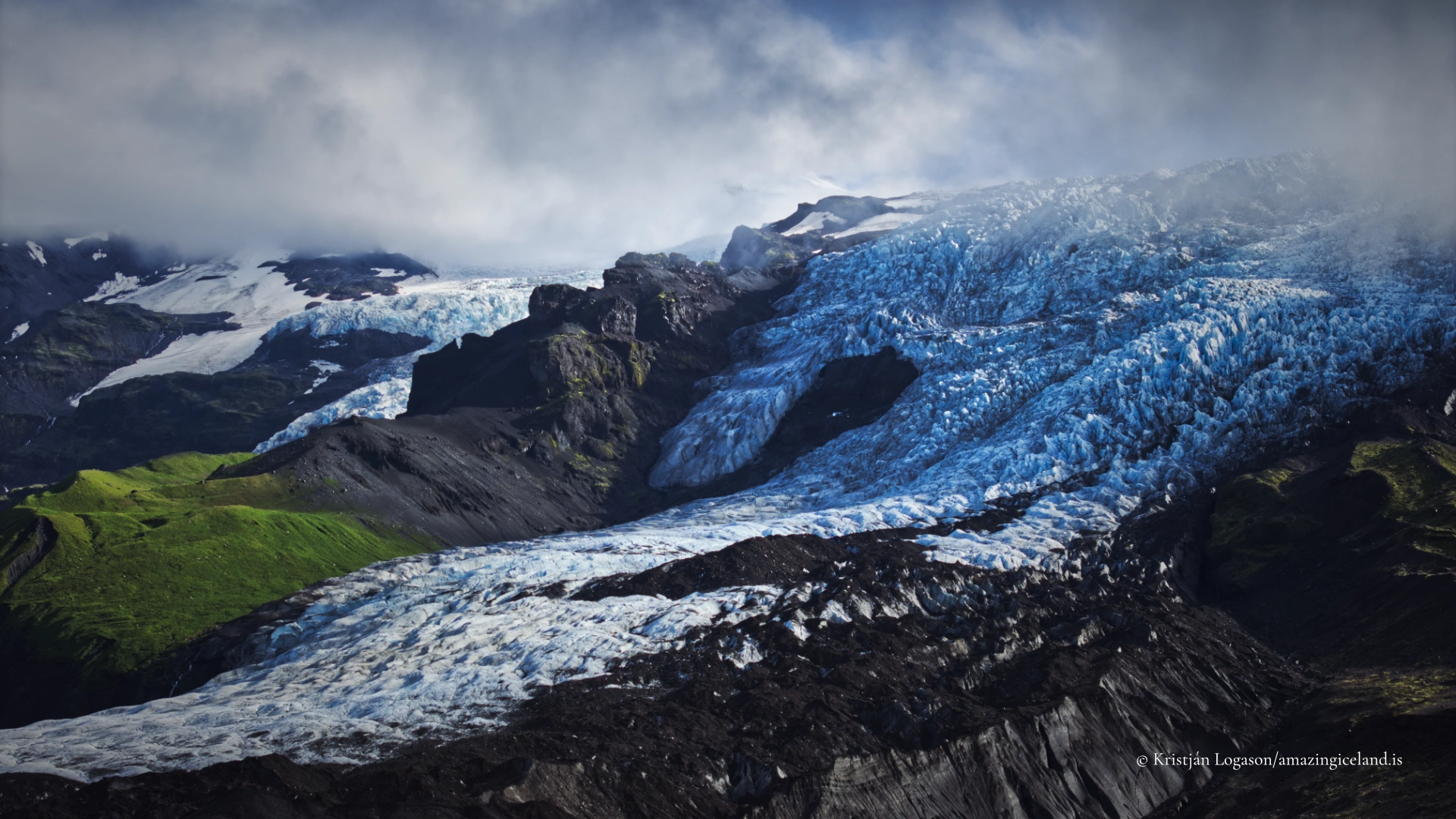
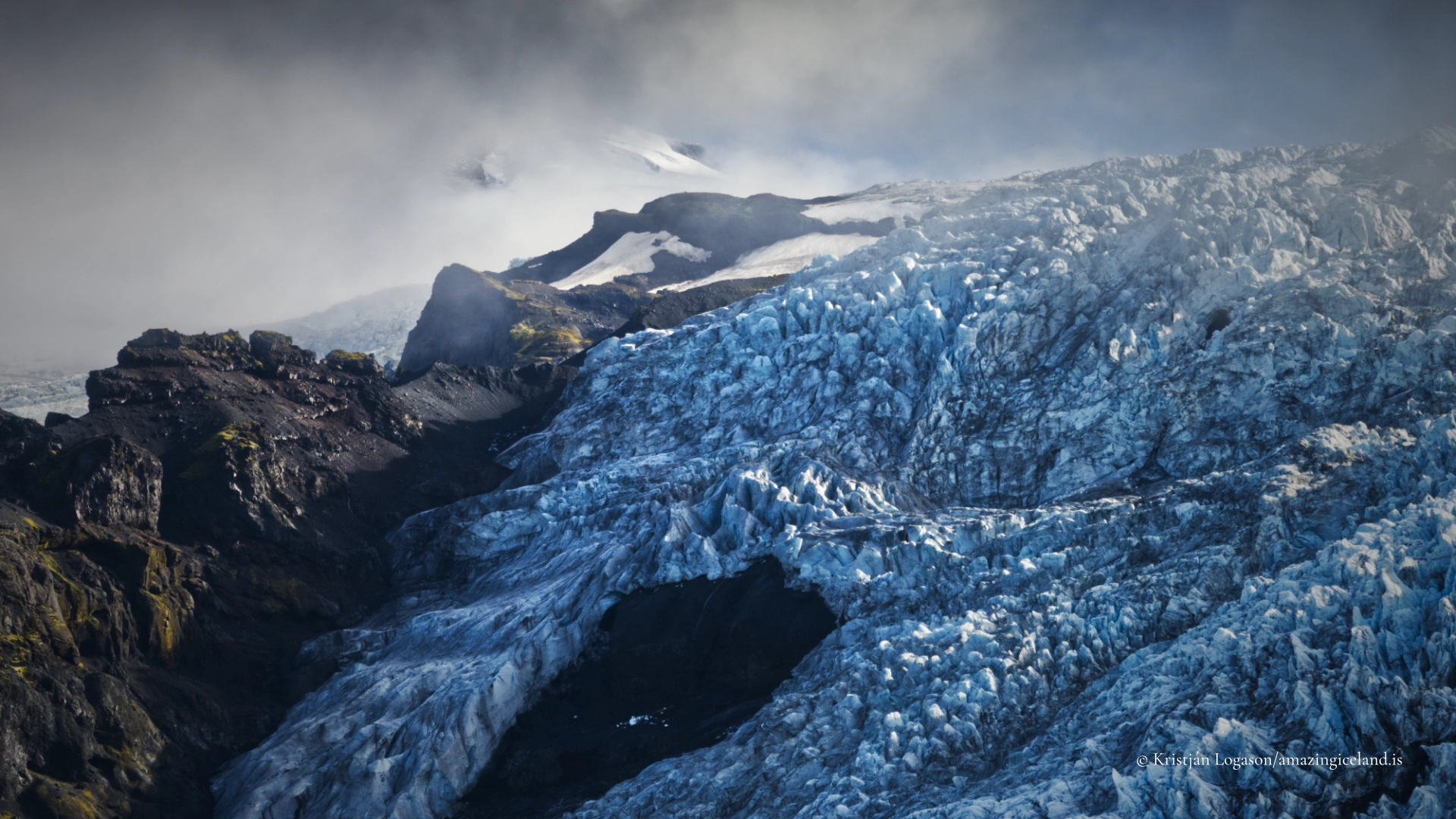
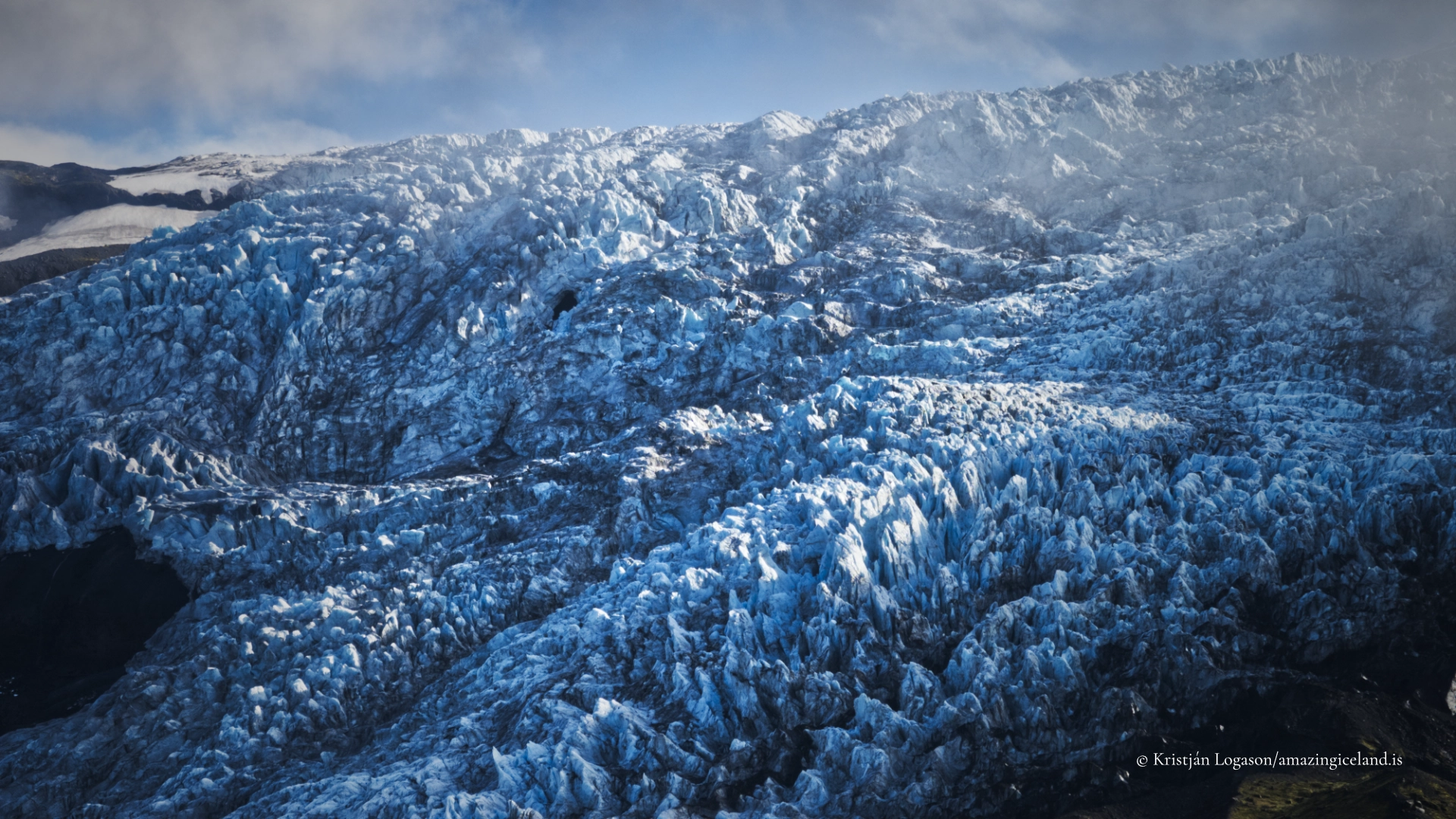
Falljökull is an outlet glacier flowing southward from Vatnajökull, Iceland’s largest ice cap. Unlike broad, gently sloping glacier tongues, Falljökull descends over a pronounced break in slope, producing an icefall—a zone where ice fractures into blocks and seracs as it accelerates downslope.
This steep gradient is central to the glacier’s character. Gravity-driven flow causes intense internal stress, resulting in closely spaced crevasses and chaotic surface structure. The glacier’s name, derived from the Icelandic falla (“to fall”), reflects this visual impression of cascading ice rather than any discrete falling event.
From a glaciological perspective, Falljökull is a clear example of how topography governs glacier behavior. Ice dynamics here are dominated by slope and meltwater lubrication rather than uniform ice thickness.
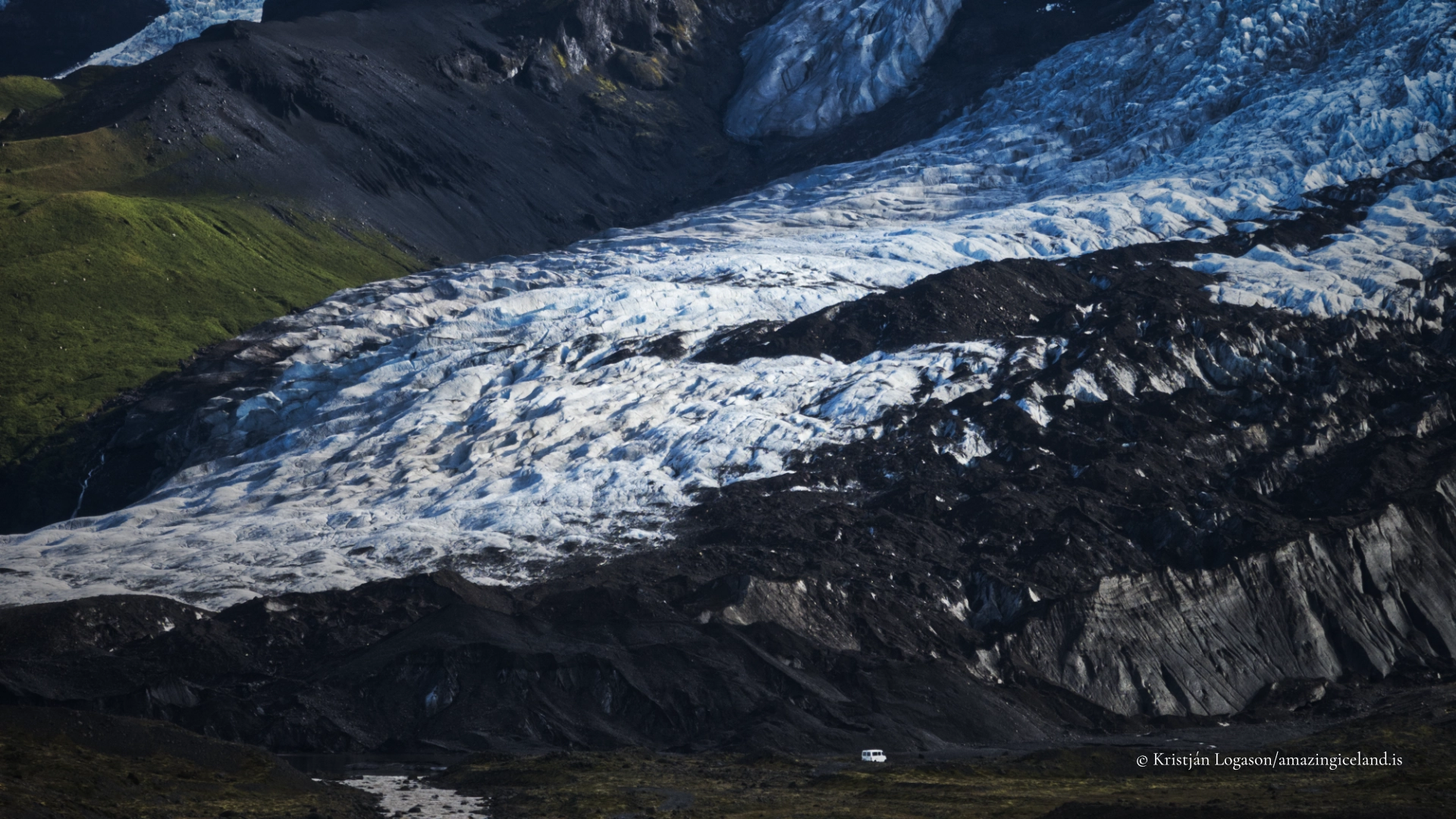
The bedrock beneath Falljökull consists primarily of basalt, shaped by volcanic activity and later modified by glacial erosion. As the glacier moves, it plucks and abrades this substrate, transporting debris that becomes visible as dark sediment bands and surface moraine.
Seasonal meltwater plays a significant role. In warmer periods, water penetrates crevasses and reaches the glacier bed, temporarily increasing basal sliding. This process accelerates movement through the icefall zone and contributes to ongoing fracture and collapse.
Compared to flatter outlet glaciers, Falljökull responds quickly to temperature variation. Changes in mass balance are expressed not only in retreat of the terminus, but in structural instability higher up the glacier.
Falljökull has retreated noticeably in recent decades, consistent with broader patterns observed across Vatnajökull’s outlet glaciers. The lower terminus has thinned and pulled back, while formerly continuous ice surfaces have broken into smaller, disconnected units.
This retreat has altered access and appearance. Areas once covered by ice are now exposed as unstable moraine and sediment plains. The glacier’s front is no longer a single, clean edge, but a shifting boundary between ice, debris, and meltwater.
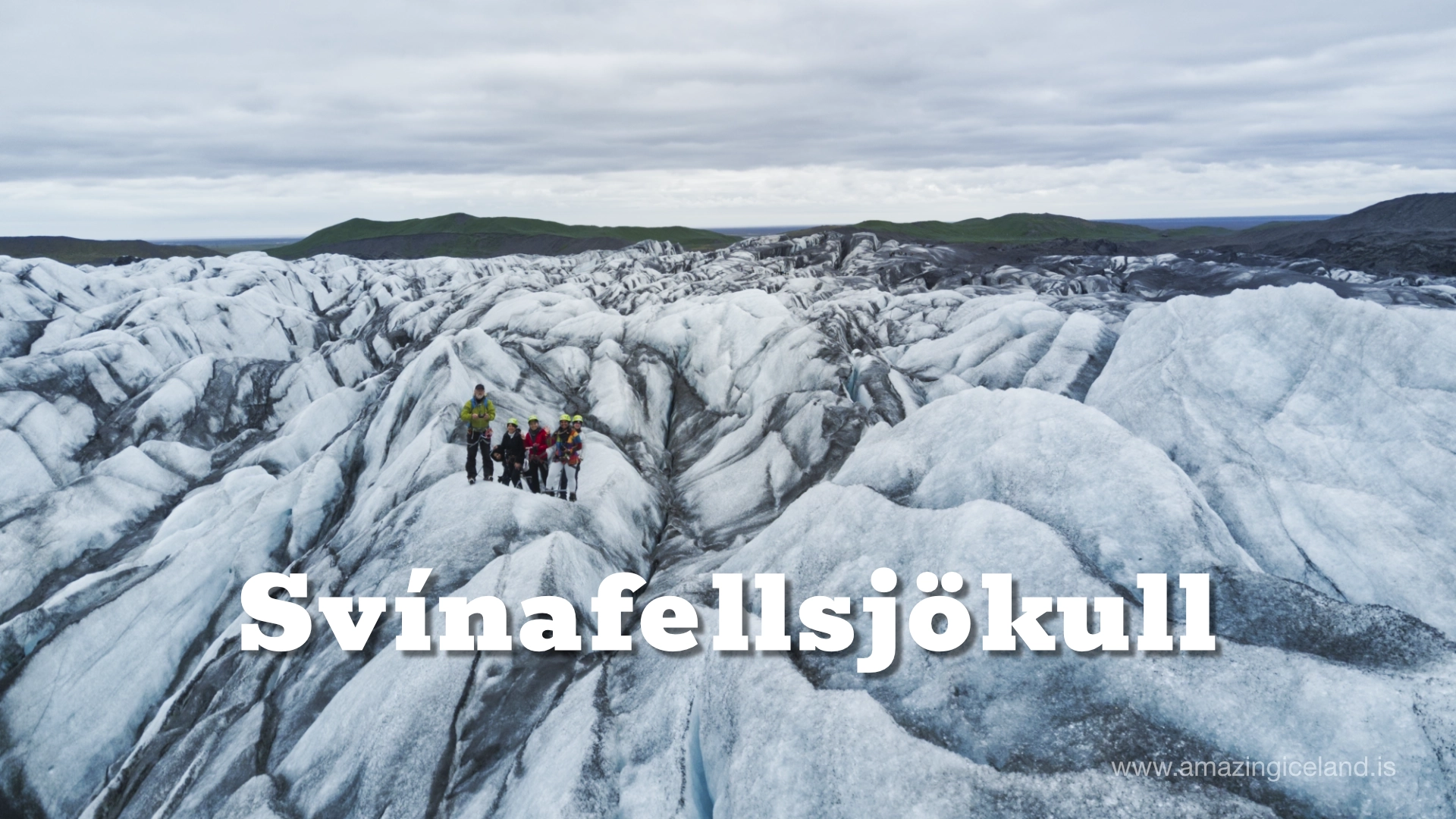
Human interaction with Falljökull is limited and controlled. The glacier is often used for guided glacier walks and ice-climbing activities, but access is restricted to defined routes under professional supervision. The icefall itself is hazardous and not navigable without technical equipment and expertise.
There is no infrastructure on the glacier. Trails stop at a distance, and interpretation focuses on observation rather than immersion. This restraint reflects the glacier’s instability and reinforces its role as an object of study rather than recreation.
Visually, Falljökull is most legible from mid-distance viewpoints where the icefall structure can be read as a whole. Close proximity obscures scale and increases risk without adding clarity.
Falljökull ultimately demonstrates ice as an active material, continuously reorganizing under stress. It is not smooth, balanced, or symmetrical. Its value lies in exposure—of fracture patterns, flow dynamics, and retreat occurring simultaneously.
Interesting facts:
- Falljökull is an outlet glacier of Vatnajökull.
- The glacier features a pronounced icefall with heavy crevassing.
- Its name derives from the Icelandic verb falla (“to fall”).
- The glacier has retreated and thinned significantly in recent decades.
- Access is limited to guided activities due to instability.
Image Gallery

The Locomotive Elite
What do Donald Trump and Iceland’s Locomotive Elite have in common?
Far more than you think.
In The Locomotive Elite, you’ll uncover how a tiny clique in Iceland captured extensive control—of banks, courts, media, and even the central bank.
For decades they ruled, first democratically, then through corruption and in the end through crime, enriching themselves and their cronies while dismantling oversight.
The result?
One of the most spectacular financial collapses in modern history.
Photography tips:
- Mid-distance framing: Capture the icefall as a system, not fragments.
- Use contrast carefully: Blue ice and dark sediment benefit from restrained exposure.
- Avoid summit framing: The structure reads best from below and across.
- Weather matters: Flat light reveals crevasse density better than harsh sun.
- Scale references: Small human figures (at safe distance) help communicate size.
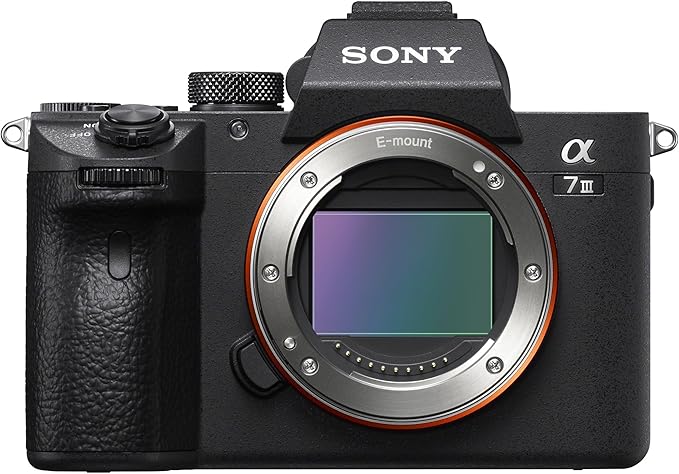
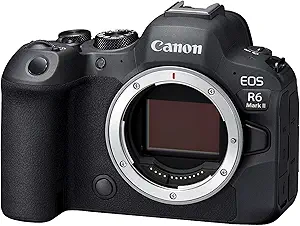
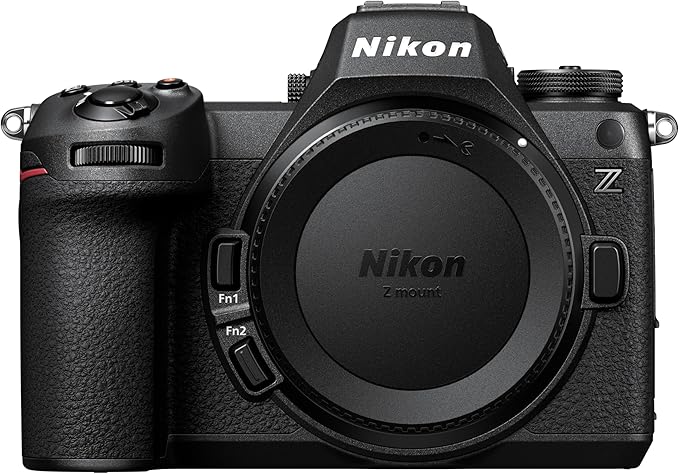
Good cameras for Iceland
Sony A7R V

Sony A7s lll
Canon R6
Nikon Z6 lll
Destinations nearby
Good to have in Iceland