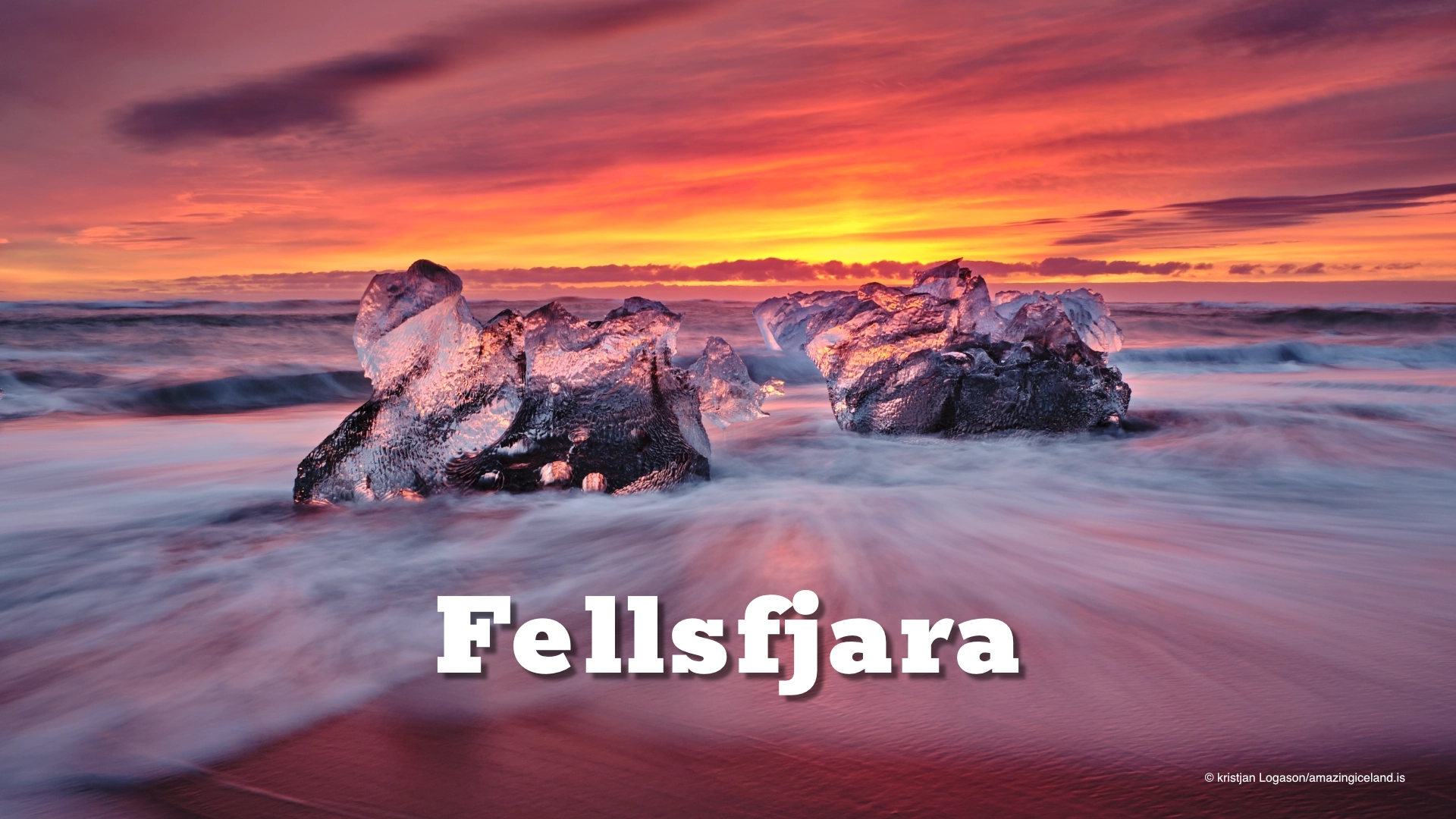
Fells fjara – Diamond beach in south east Iceland
Fellsfjara lies where Jökulsá carries water and ice from Jökulsárlón into the Atlantic. The beach is widely known internationally as Diamond Beach, a name inspired by the contrast between glacial ice and black sand, but Fellsfjara is the local name of the shore.
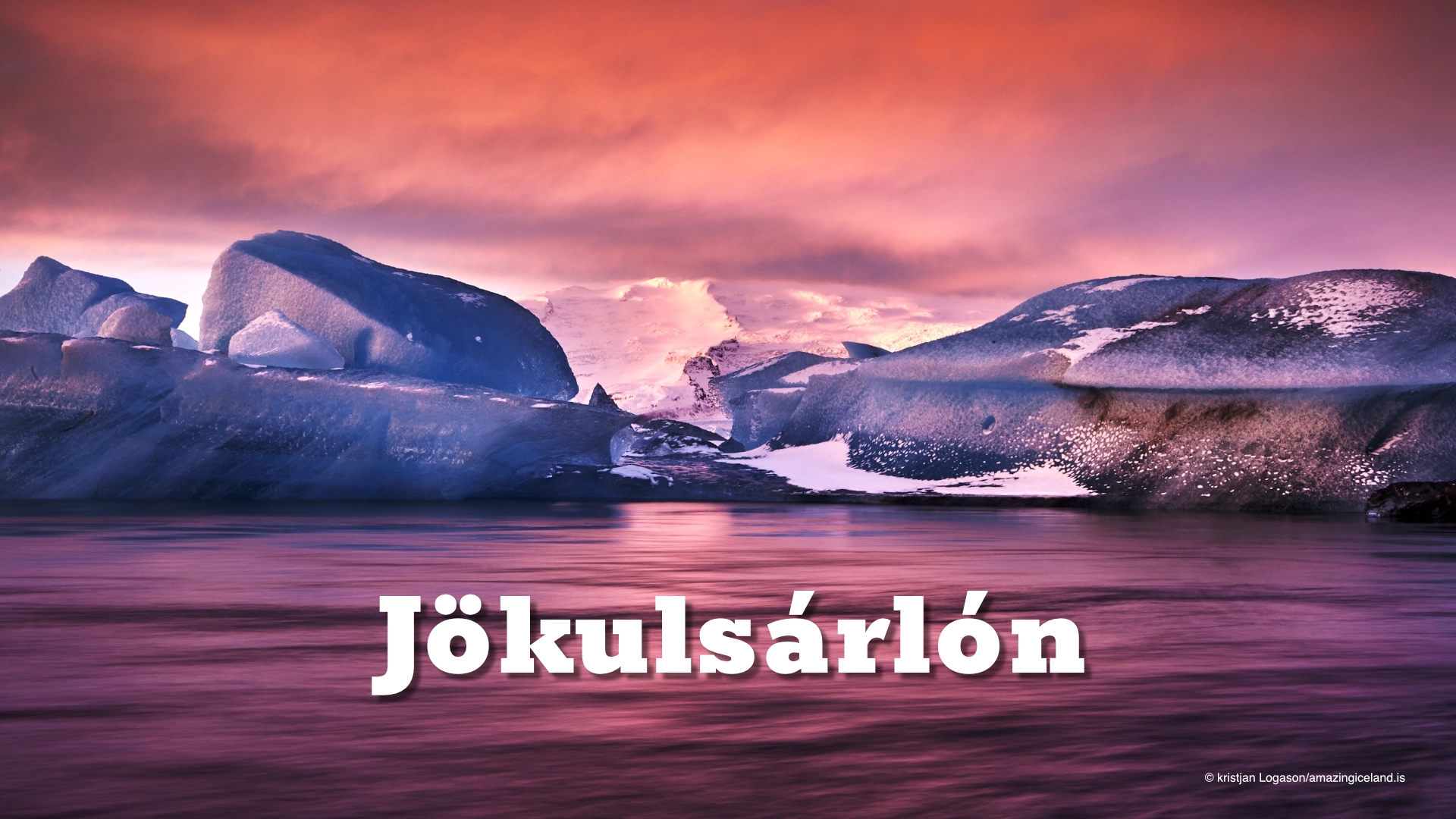
Every piece of ice has already travelled through a much larger landscape. It calved from Breiðamerkurjökull into Jökulsárlón, drifted across the lagoon and became small enough to pass through the outlet channel. At sea, waves and currents determine whether it continues offshore or is returned to the beach, where it melts, fractures and moves again.
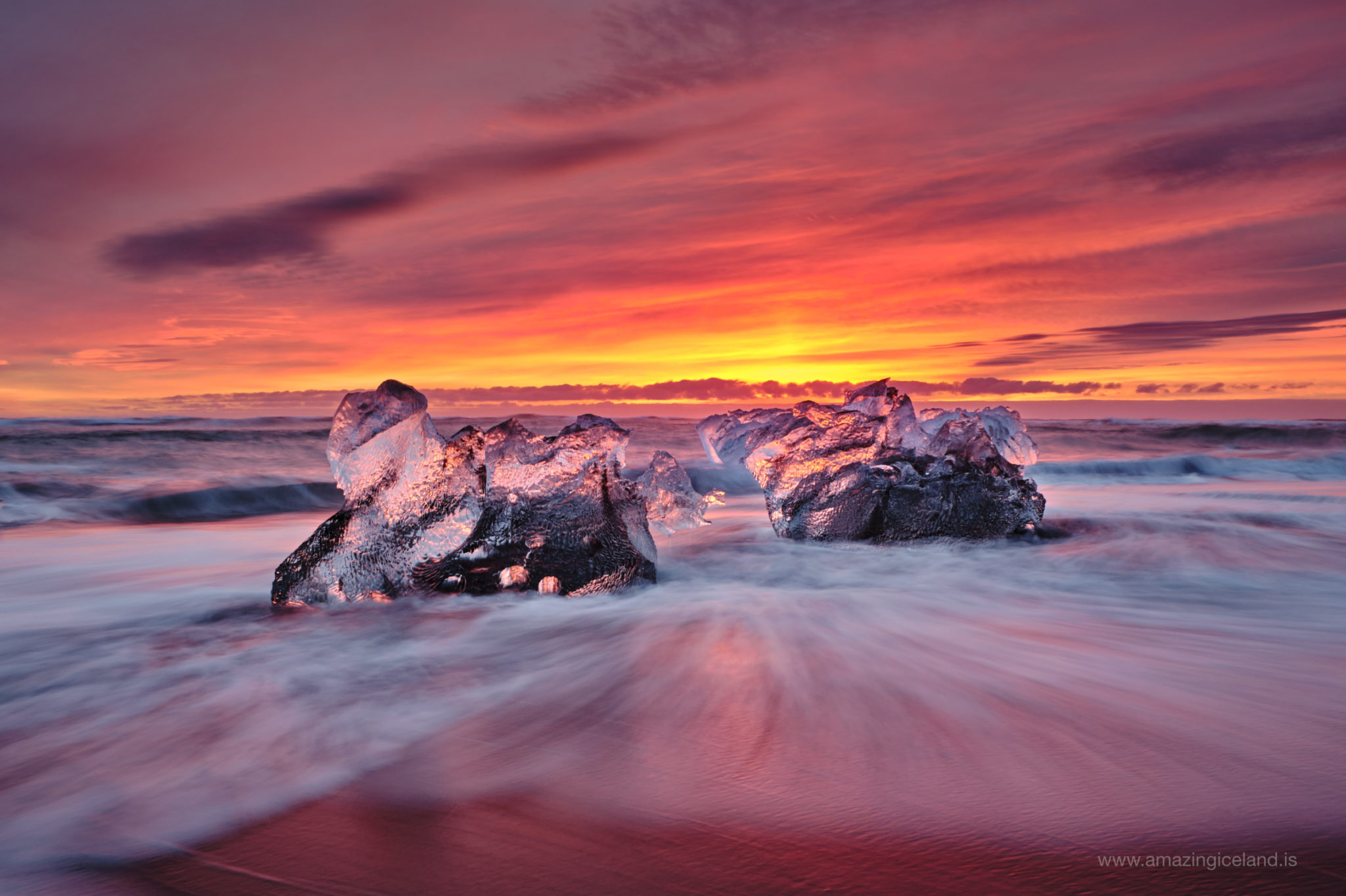
This means that the familiar image of a shore crowded with ice is never guaranteed. One side may hold many pieces while the other has few, and the distribution can change with wind and waves. Fellsfjara is compelling not because it repeats one perfect arrangement, but because the final stage of the ice’s journey is continually being rewritten.
The location of Fells fjara – Diamond beach in south east Iceland
Latitude
64.0441
Longitude
-16.1827
Fells fjara – Diamond beach in south east Iceland
Ice returned by the Atlantic
The story of Fellsfjara begins far inland at Breiðamerkurjökull. Calved ice moves through Jökulsárlón under the influence of wind and current before entering the tidal Jökulsá channel. Once it reaches the Atlantic, the sea sorts it again: some pieces move offshore while others are lifted, rolled and deposited on the black sand.
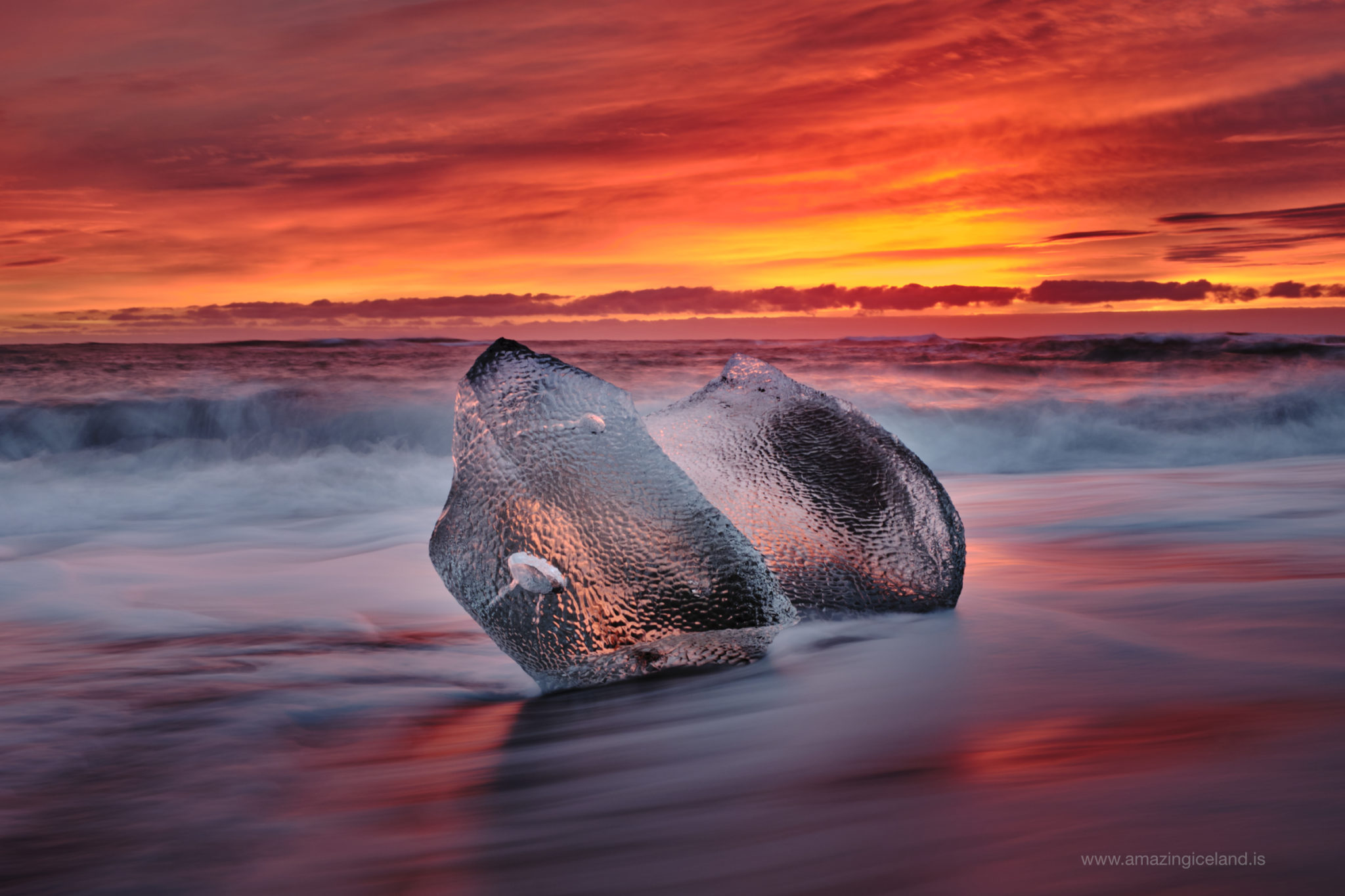
Ice stranded on the beach continues to change. Waves undercut it, melting alters its balance, and fractures divide larger blocks into smaller forms. Clear surfaces, dense blue ice, trapped air and dark streaks of sediment may all become visible as the pieces turn and lose mass.
Fellsfjara is therefore not an isolated coastal curiosity. It is the last visible stage in a connected system of glacier, lagoon, river and ocean. Understanding that journey gives the scattered ice more meaning than the popular beach name alone can convey.
A shoreline without a fixed appearance
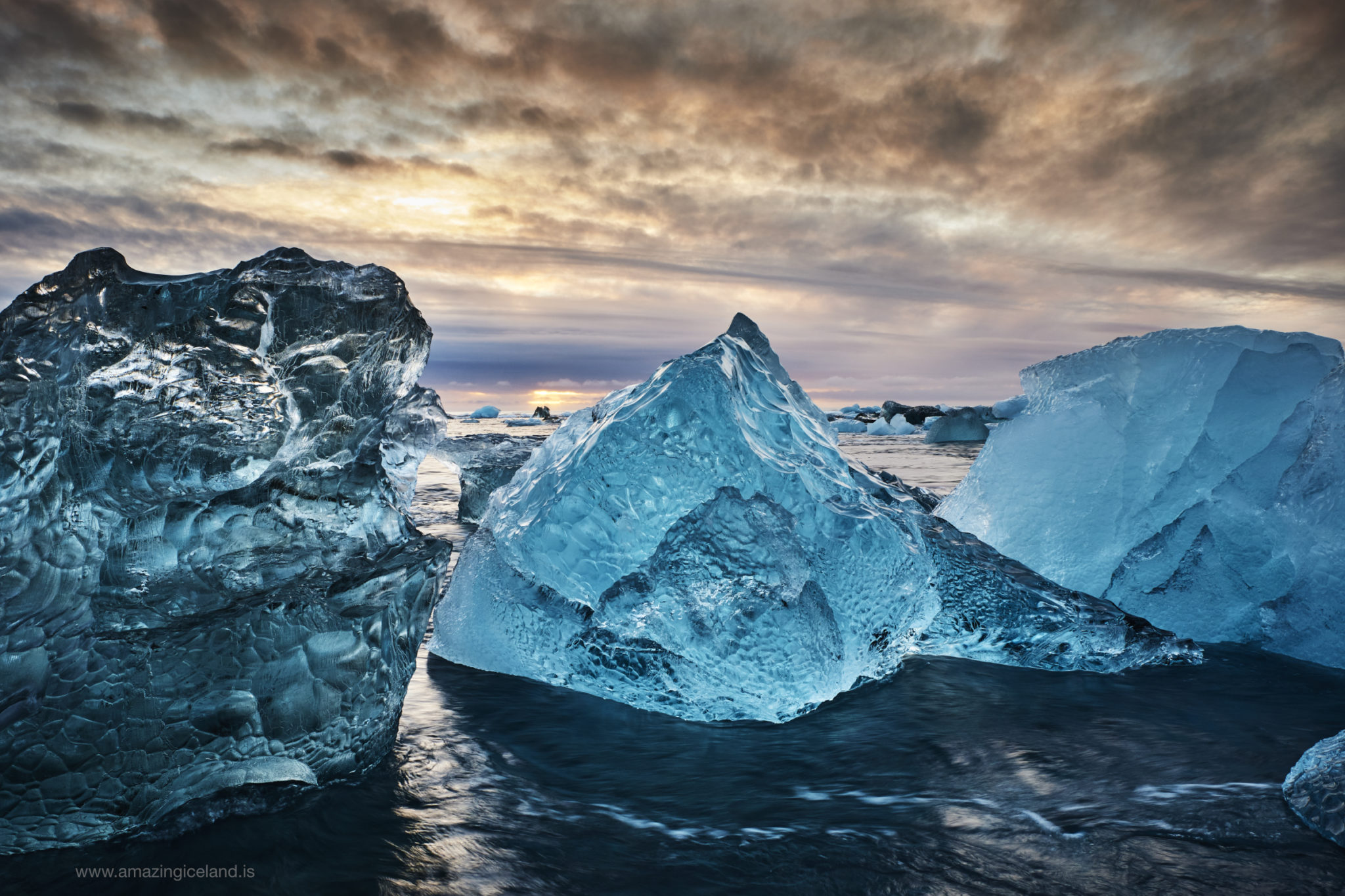
The number and size of ice pieces on Fellsfjara cannot be predicted reliably. Conditions within Jökulsárlón affect how much ice reaches the outlet, while wind, waves and currents decide where it comes ashore. A beach crowded with large blocks and a beach holding only a few fragments are equally natural states of the same place.
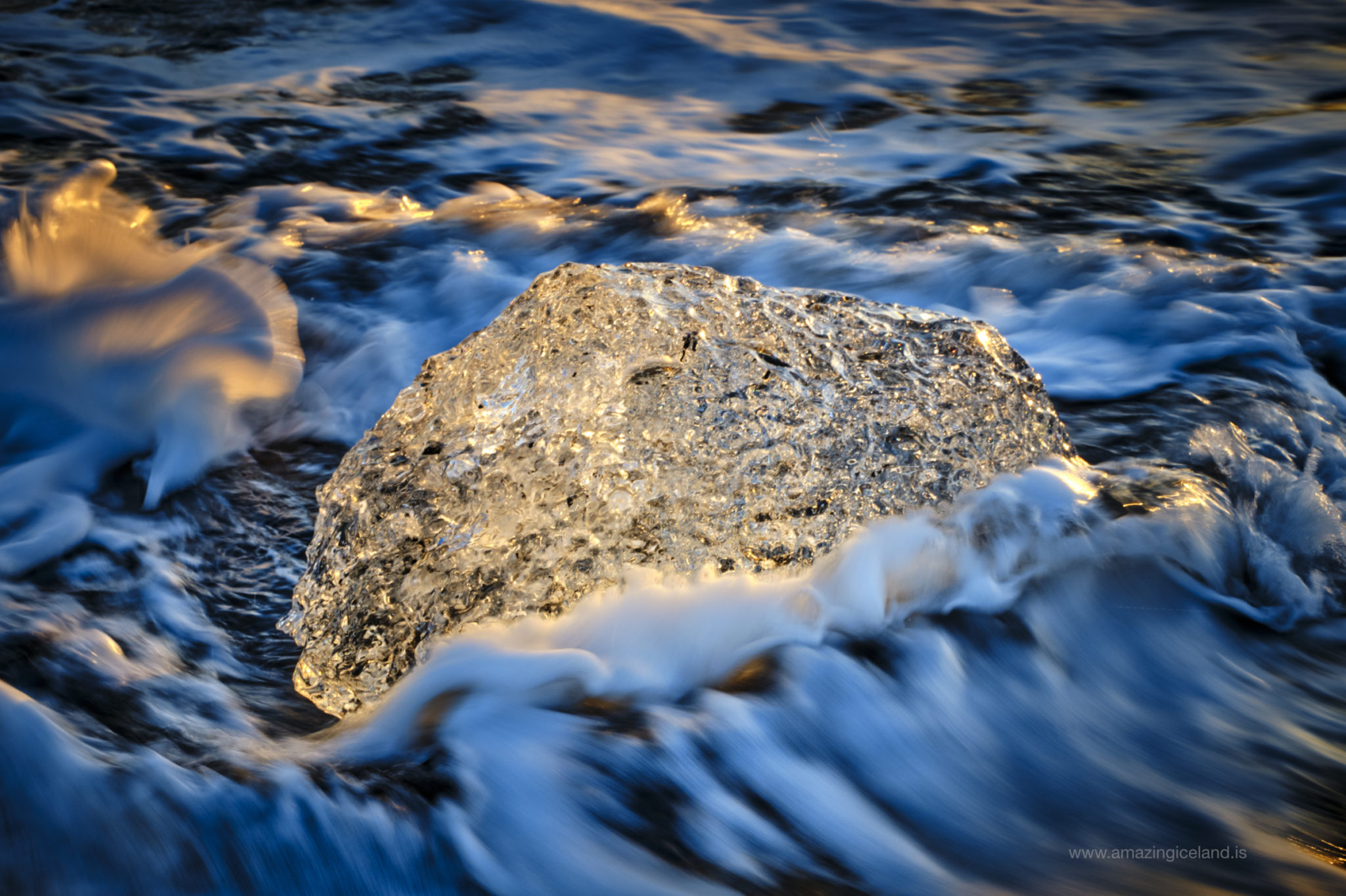
The sea also changes the character of the experience from moment to moment. Gentle water can leave individual forms clearly separated on wet sand, while stronger waves surround them with movement and shift smaller pieces along the shore. The most interesting area may change during a single visit as ice is moved or newly deposited.
The beach remains an exposed Atlantic shoreline. Visitors should watch the water continuously, keep a safe distance from incoming waves and avoid placing themselves between unstable ice and the sea. Pieces that appear firmly stranded can move, roll or break when struck by water.

Two sides of the same beach
Jökulsá divides Fellsfjara into eastern and western shores, with established access and parking on both sides. They are not separate destinations, and neither is consistently better. The useful side is the one where ice, light and sea conditions come together on that particular visit.
If time allows, looking at both sides before committing to one can be worthwhile. Ice may accumulate unevenly around the river mouth, and the direction of light can strengthen one view while flattening the other. The decision should be made from the conditions present rather than from a fixed rule about east or west.
Jökulsárlón lies immediately inland across Route 1 and should be experienced as part of the same system. The lagoon shows the ice still afloat; Fellsfjara shows what happens after some of it reaches the ocean. Established access should be used to move between areas rather than walking across the road bridge.
Looking closely at temporary forms
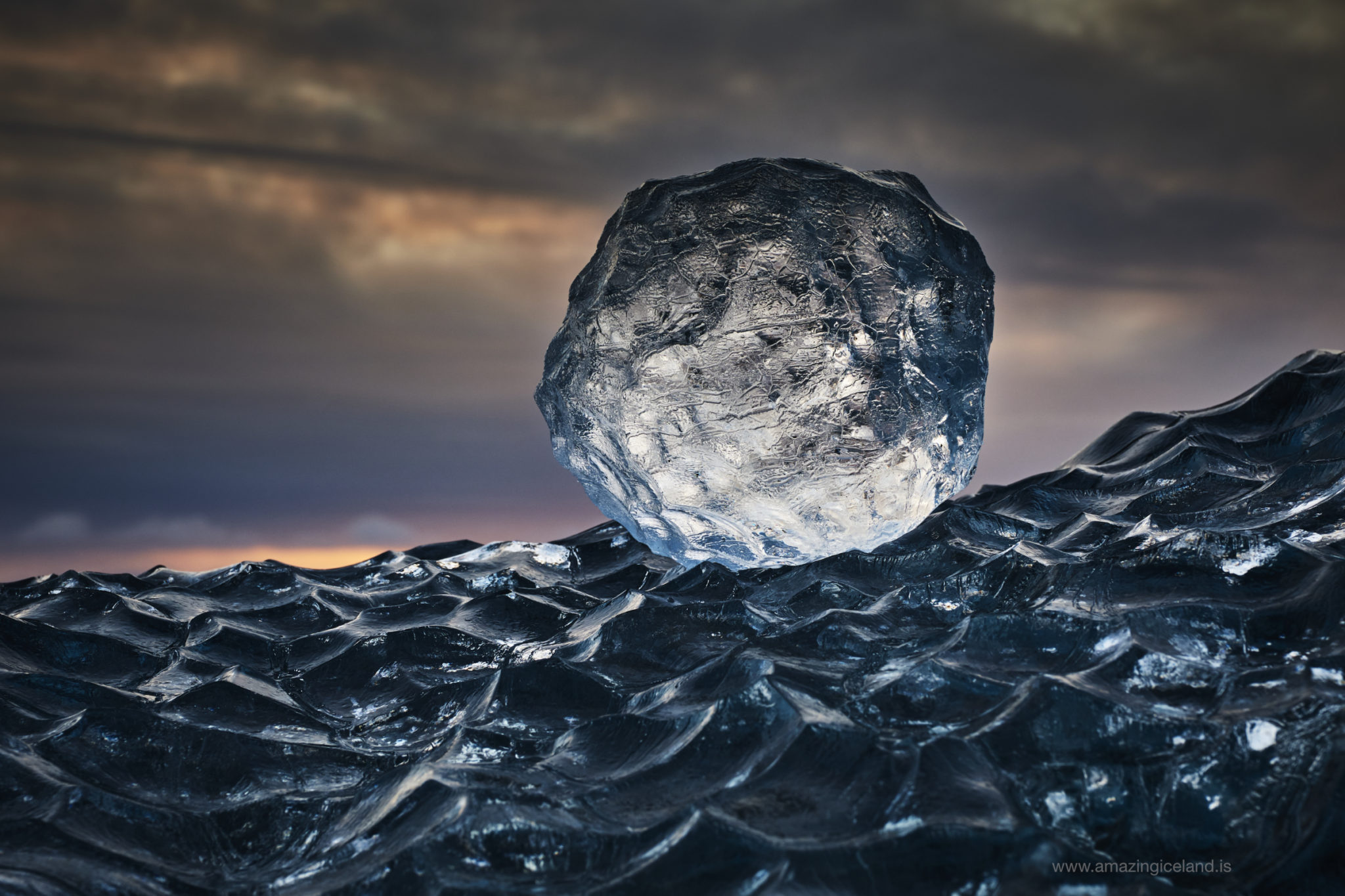
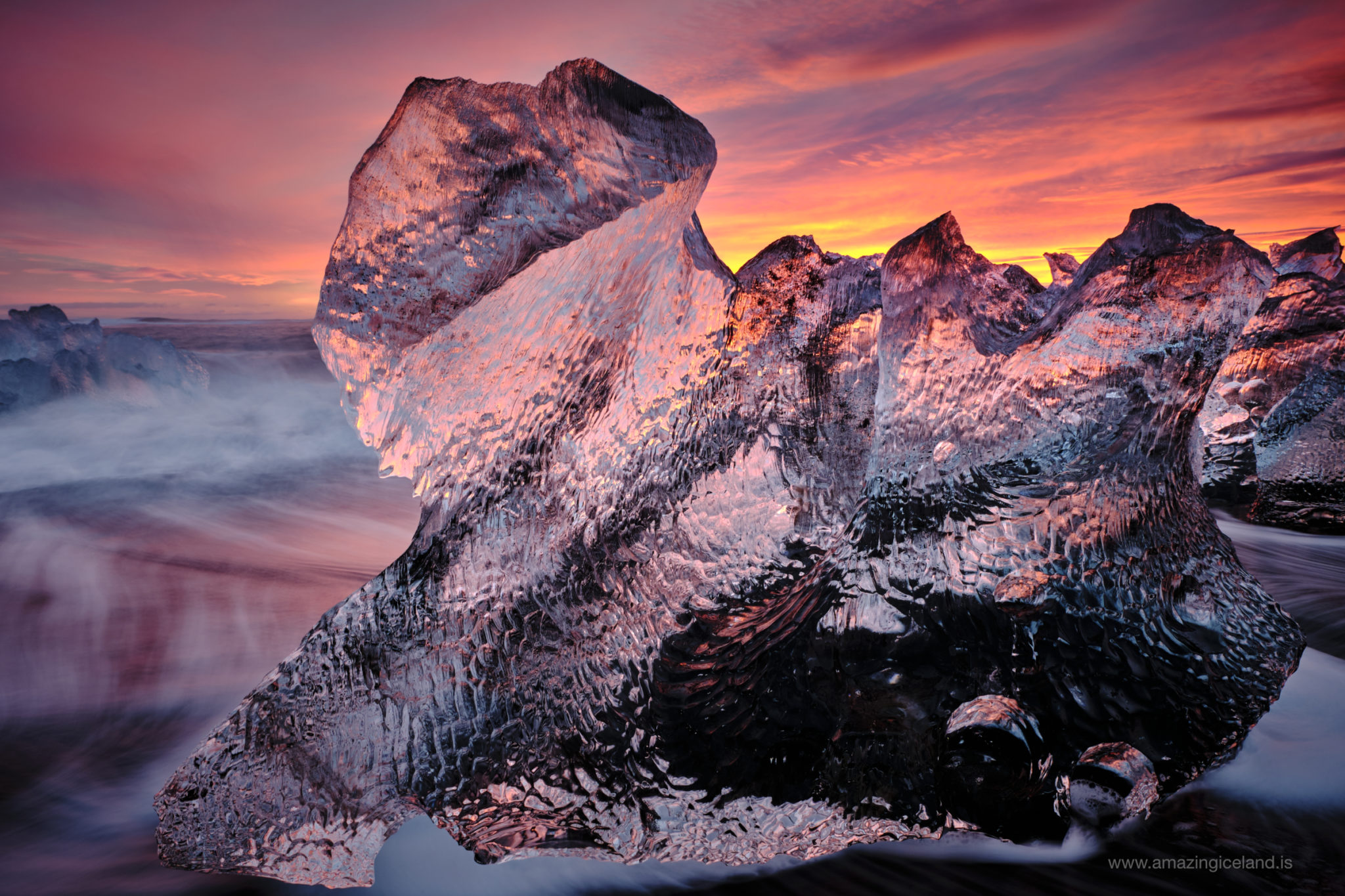
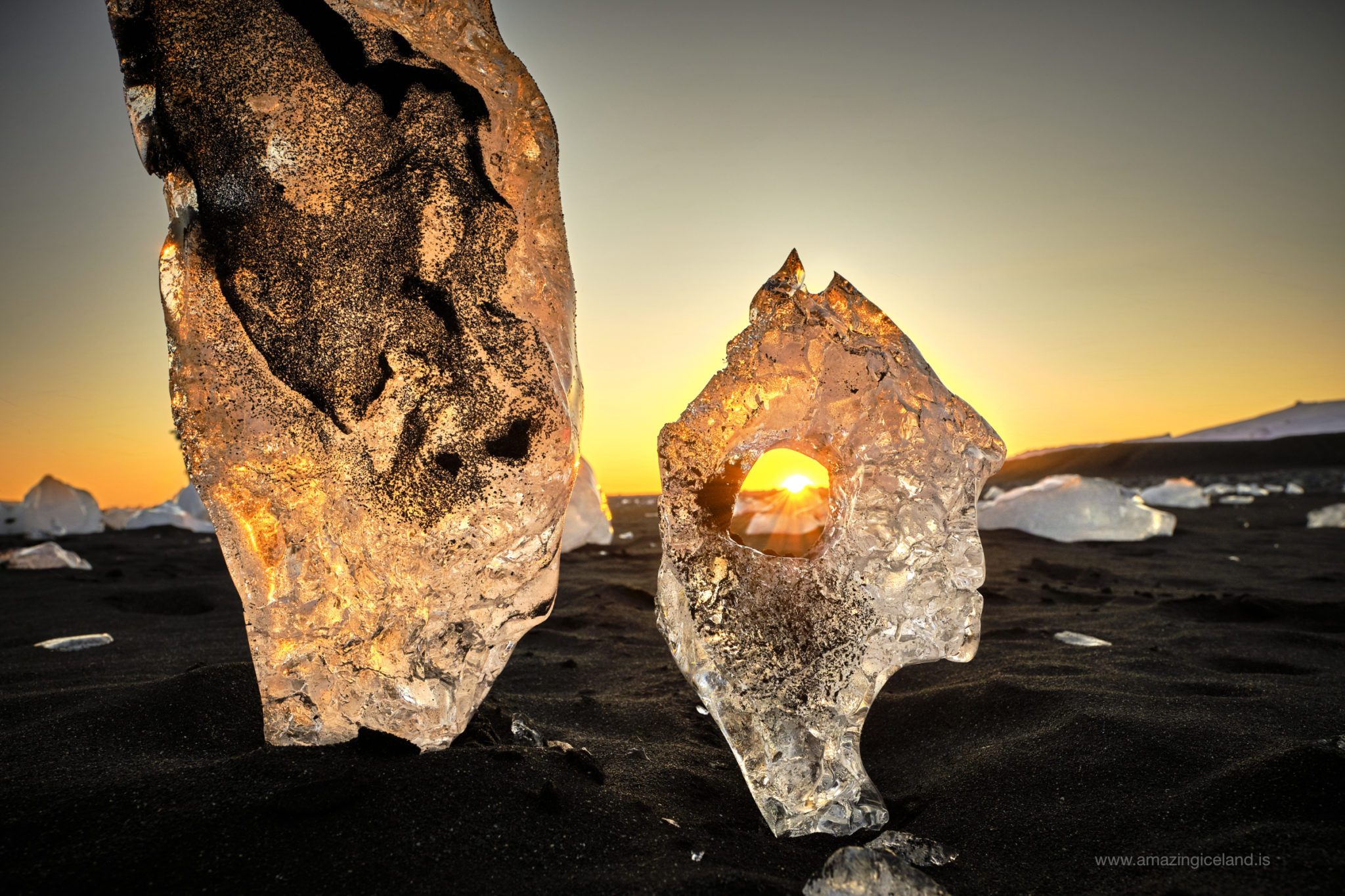
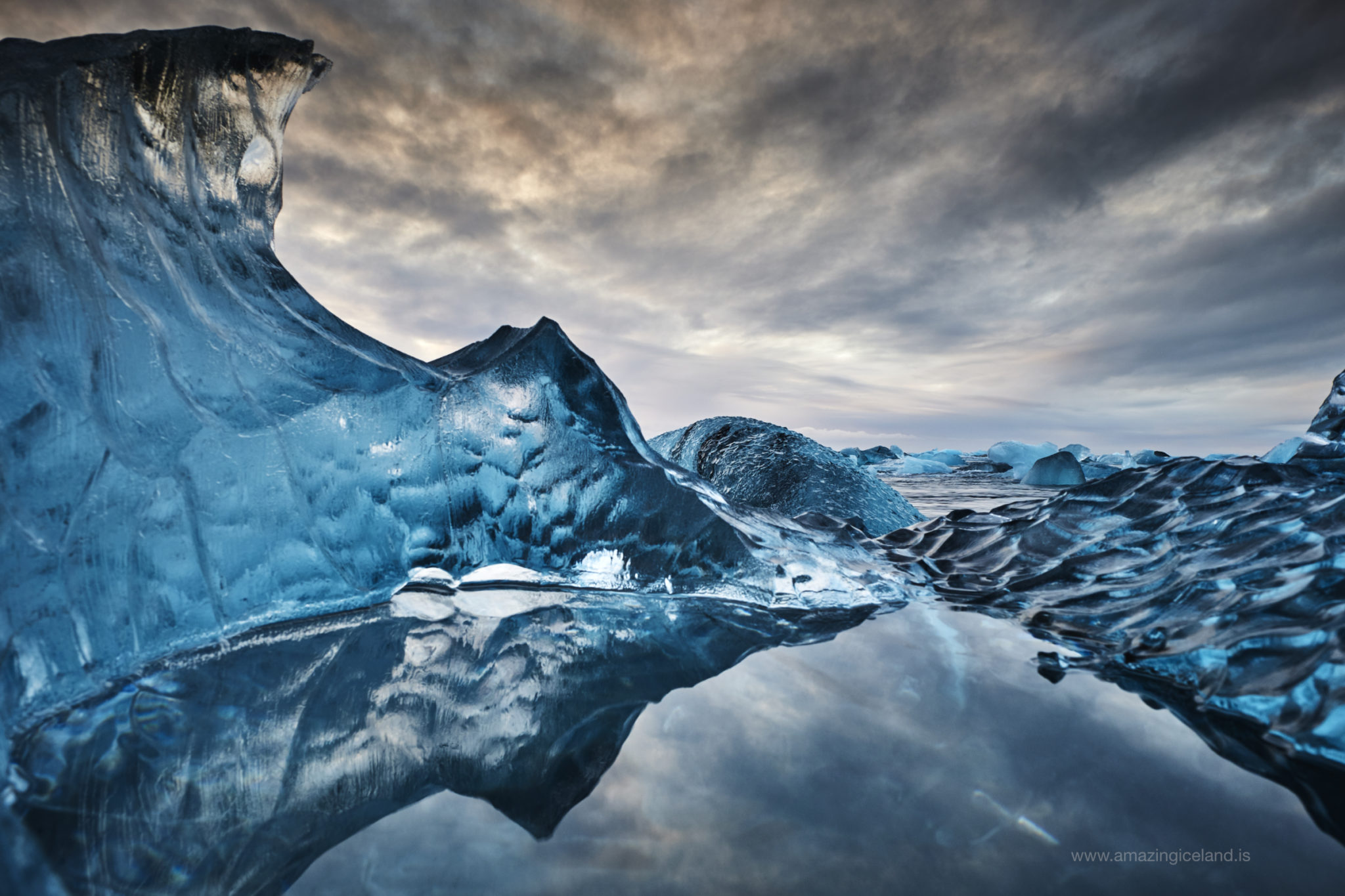
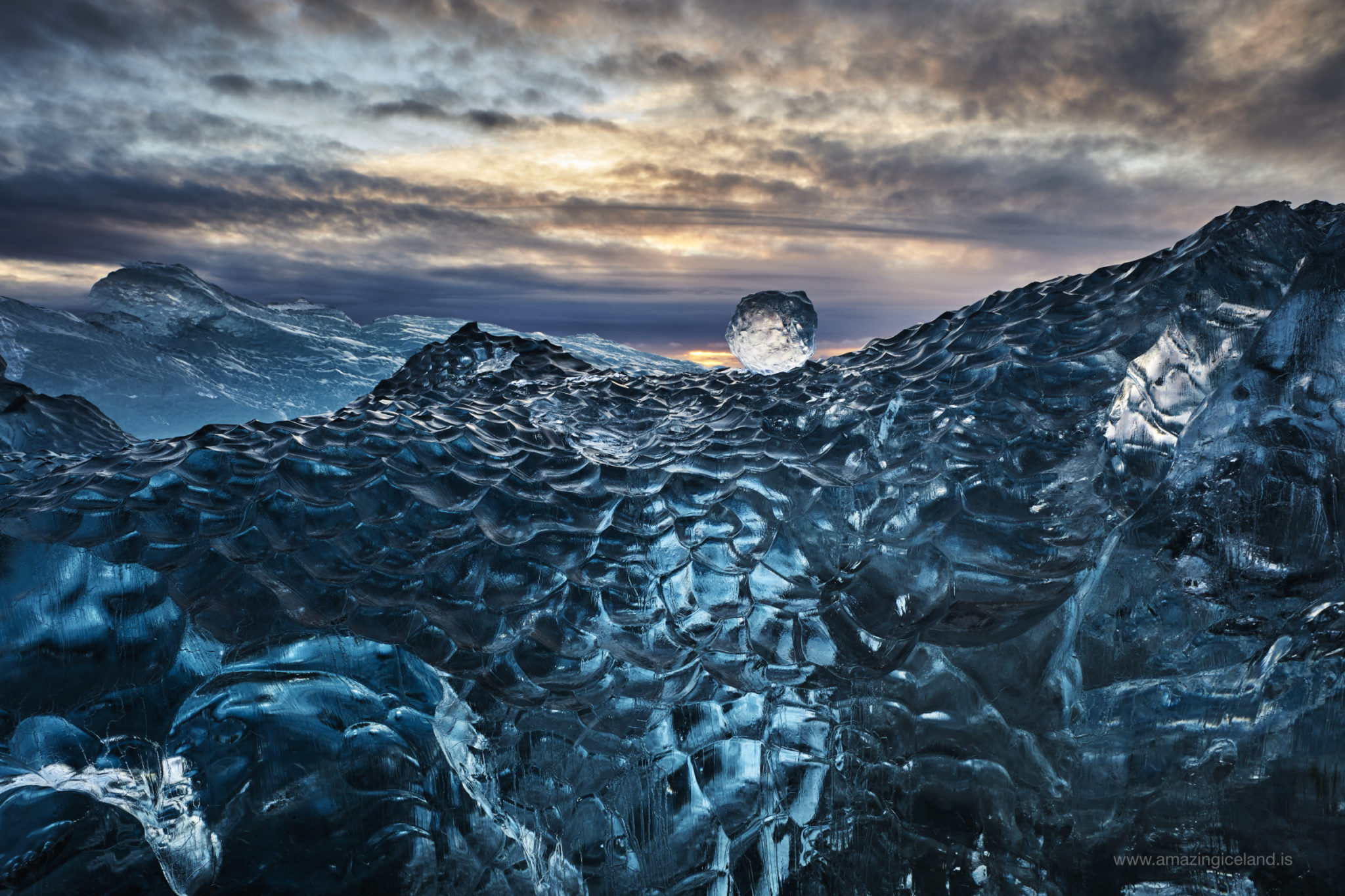
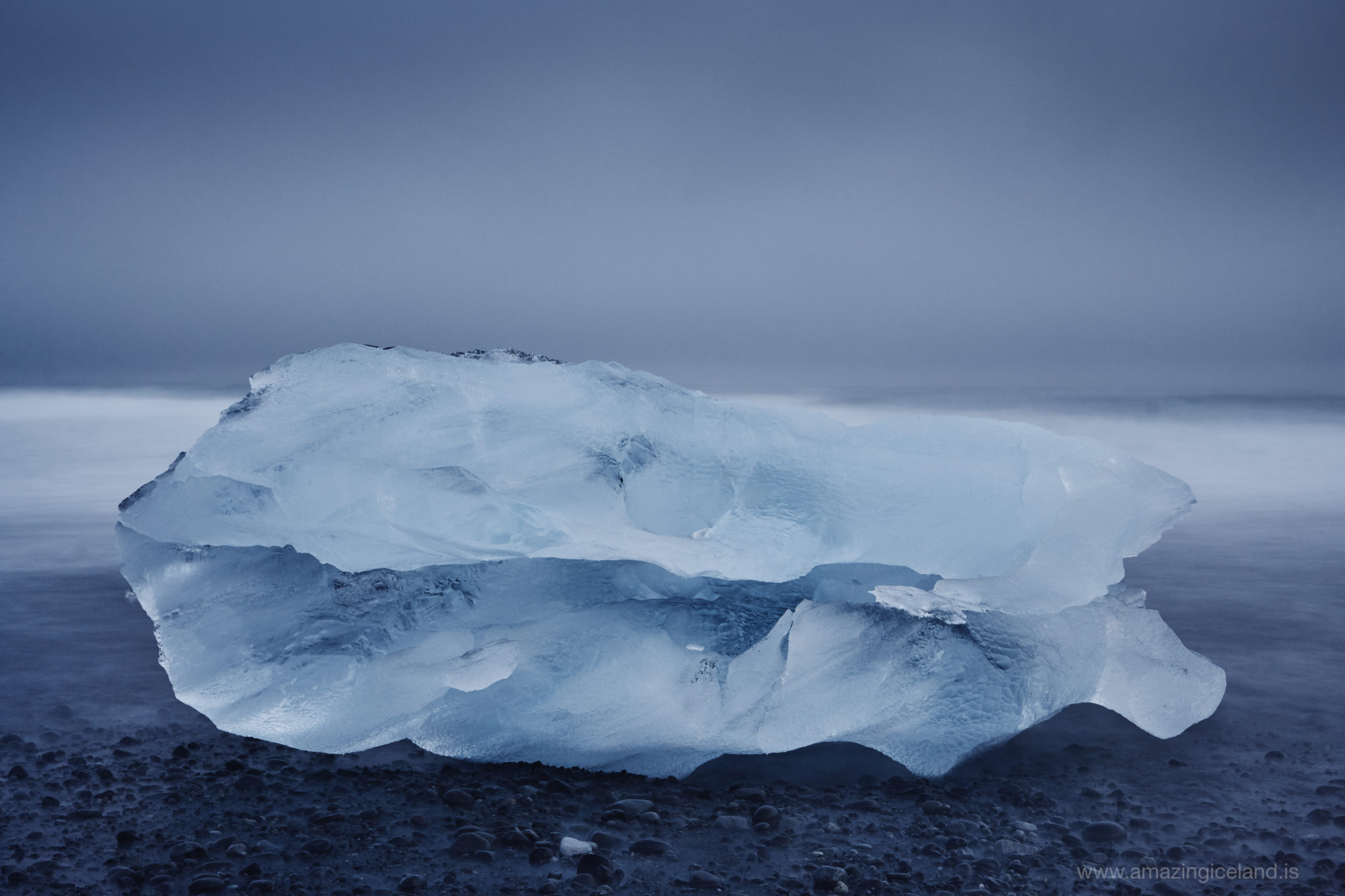
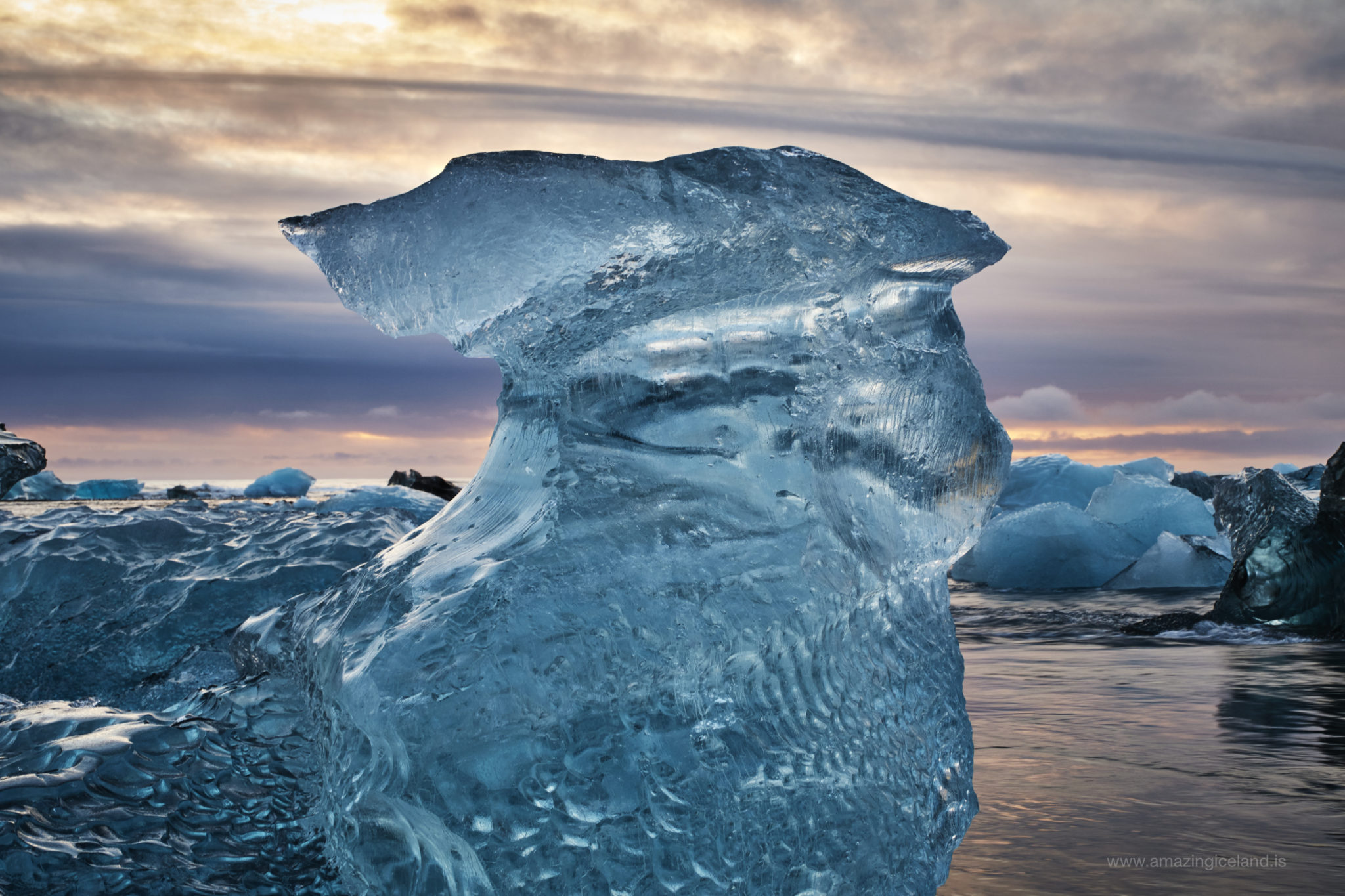
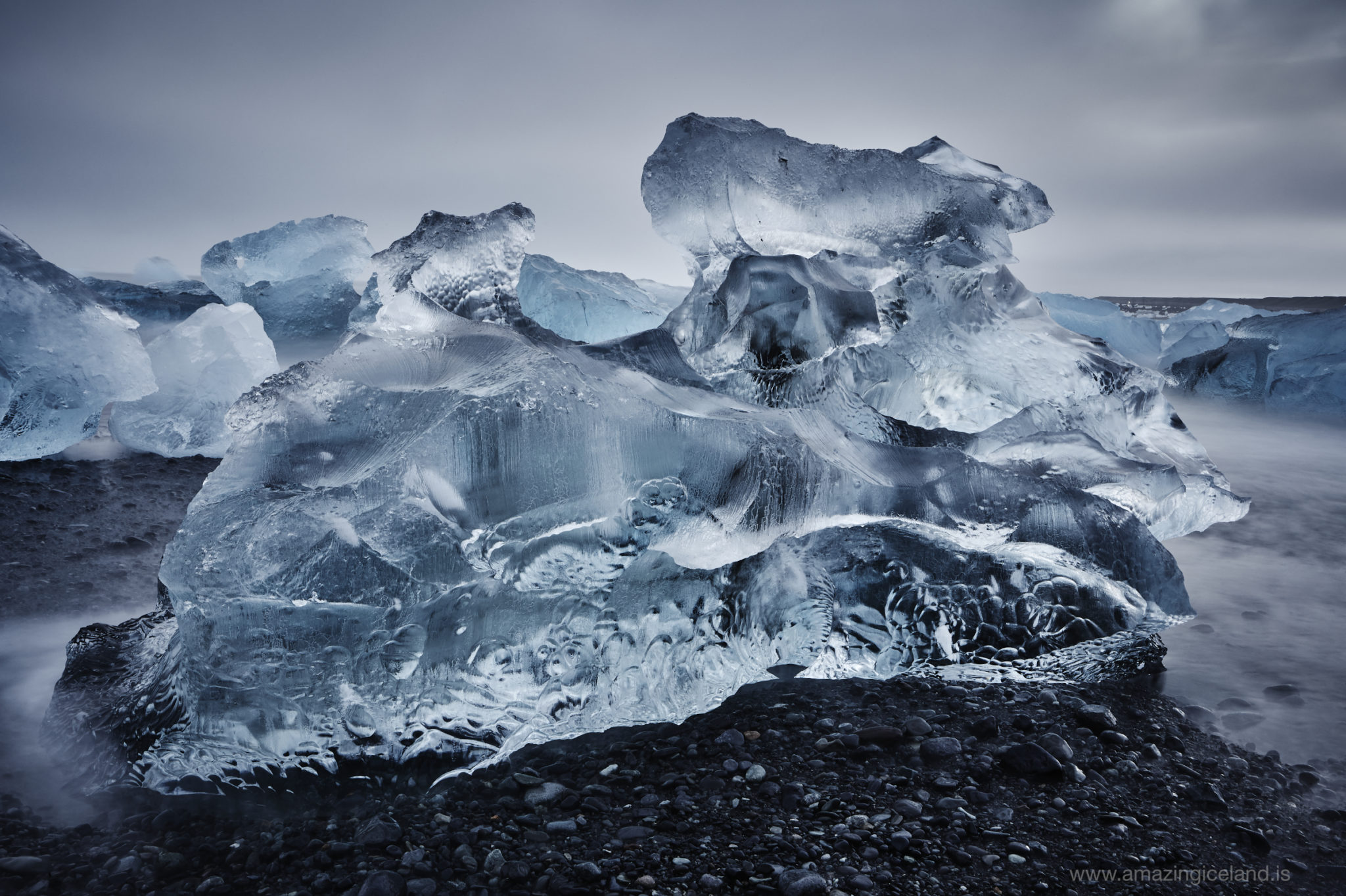
The beach as a whole can be impressive when ice is abundant, but its most distinctive subjects are often individual pieces. Each has been shaped by pressure within the glacier, calving, melting, the journey through the lagoon and repeated contact with the sea. Shape, transparency, trapped bubbles and streaks of sediment turn temporary blocks of ice into complex forms.
Working close to one piece changes the scale of the landscape. A low viewpoint can place the ice against black sand, moving water and open sky, while smaller fragments create depth around it. The strength of the image depends less on finding the largest block than on recognising a form that works with the water and light.
These subjects are brief by nature. A composition can disappear when a wave rotates the ice, and the piece itself may be gone within hours or days. Fellsfjara rewards attention to what is present rather than an attempt to reproduce a photograph made under different conditions.
Interesting facts:
- Fellsfjara is the local name of the shore widely known as Diamond Beach.
- The beach lies at the mouth of Jökulsá, where Jökulsárlón meets the Atlantic.
- Ice on the beach originated at Breiðamerkurjökull and reached the sea through Jökulsárlón.
- Wind, waves and currents determine how much ice reaches the shore and where it collects.
- The eastern and western shores are two sides of the same beach.
- Fellsfjara lies within Vatnajökull National Park.
Image Gallery
Photography tips:
- Check both sides of Jökulsá before choosing where to work; the best side depends on the distribution of ice, light and sea conditions.
- Get low and close to a single piece of ice, using its shape, transparency and texture as the principal subject against black sand and water.
- Look for relationships between one strong piece, smaller fragments and the surf rather than relying only on a wide record of the beach.
- Wind and wave state usually matter more than tide alone because they control movement around the ice and the character of the water.
- Sunrise and sunset can both work; the better choice depends on season, cloud, light direction and where the ice has collected.
- Keep watching the sea while composing, and do not stand where waves can move ice into you or cut off your retreat.
Destinations nearby