Brimketill or Oddnyjarlaug lava rock pool in Reykjanes peninsula
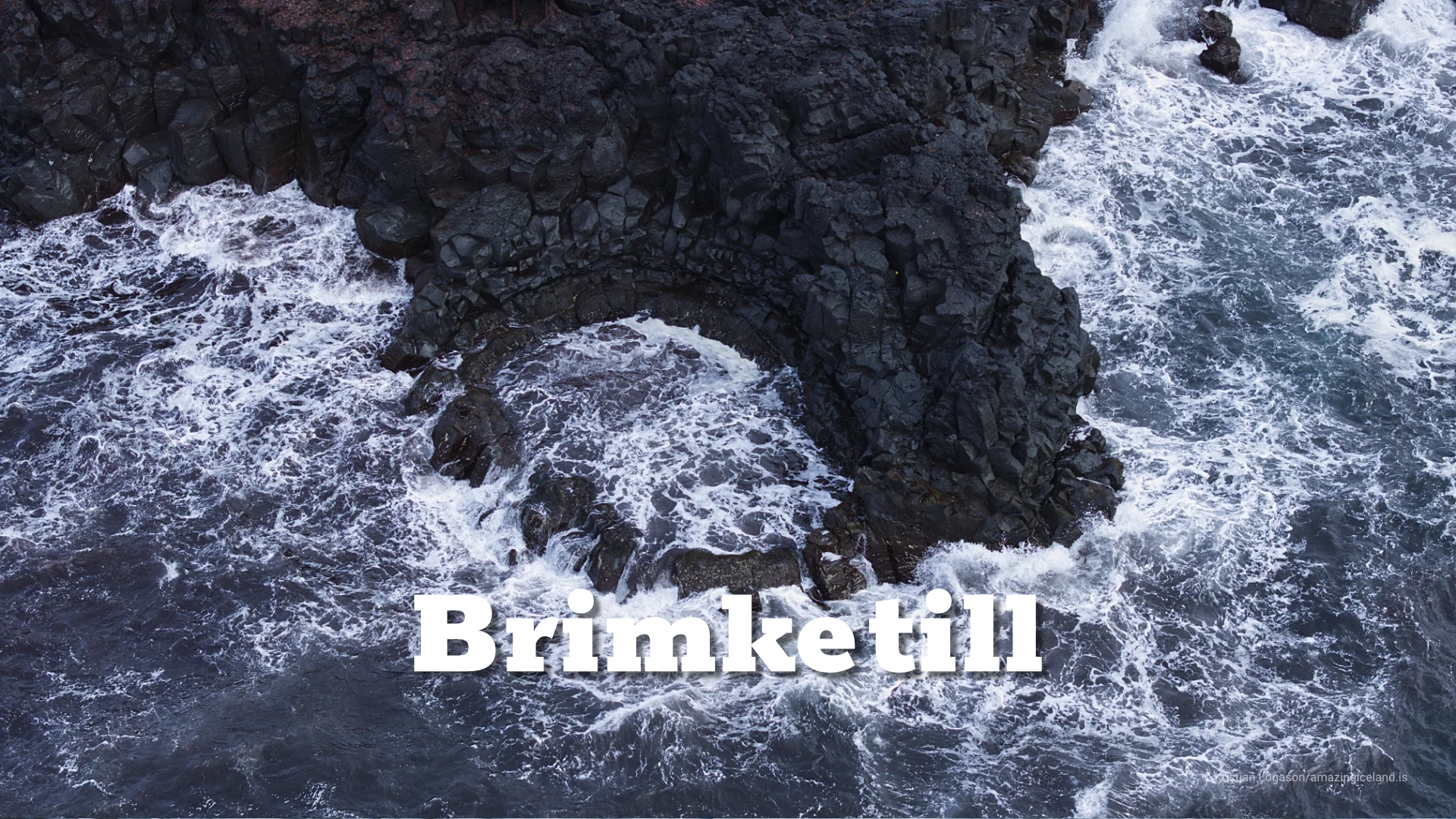
Brimketill is a natural cauldron-shaped pool carved into the lava cliffs of Staðarberg on the southern coast of the Reykjanes Peninsula, a short distance west of Grindavík. It is also known as **Oddnýjarlaug**, after the troll Oddný who, according to local legend, once bathed in the pool.
The site brings together two very different ways of understanding the same landscape. Geologically, Brimketill is the result of persistent Atlantic erosion acting on relatively young lava. In folklore, the same place became associated with a troll who was eventually turned to stone and then, in time, destroyed by the sea.
Today the pool is viewed from a platform above the coast. It may look inviting in calm weather, but this is not a bathing place. Brimketill belongs to an exposed shoreline where waves can reach far beyond the immediate edge of the water, especially in rough conditions.
The location of Brimketill or Oddnyjarlaug lava rock pool in Reykjanes peninsula
Latitude
63.8204
Longitude
-22.6059
Brimketill or Oddnyjarlaug lava rock pool in Reykjanes peninsula
A pool carved by the sea
The coastline around Brimketill gives a clear demonstration of how the North Atlantic continues to reshape the Reykjanes Peninsula. Repeated wave action forces water and compressed air into cracks and weaknesses in the lava, gradually loosening material and enlarging existing fractures.
As the water withdraws, loose rock is carried away and thrown back against the cliffs by later waves. Freeze-thaw weathering also contributes when water enters cracks, freezes and expands.
Over long periods, these processes have cut into the lava and produced the deep rounded hollow now known as Brimketill. The Icelandic word ketill can mean a cauldron, which suits the appearance of a feature that seems almost as though a large vessel has been carved into the rock.
The surrounding lava is associated with the Reykjaneseldar, the prolonged period of volcanic activity on the Reykjanes Peninsula during the 13th century, traditionally dated to approximately 1210–1240.
The contrast between that relatively young volcanic landscape and the constant work of the sea is central to the place. The lava created the coastline, but the Atlantic has been editing it ever since.
Visiting Brimketill
Brimketill lies beside Road 425 west of Grindavík. A parking area gives access to a short path leading towards the coast and the viewing platform.
The platform has been enlarged over the years to provide a better view of both Brimketill and the surrounding shoreline. Access begins with a small set of steps, so the platform is not wheelchair accessible.
Visitors should remain on the platform and should not climb down towards the pool or attempt to enter the water. The waves along this coast can be unpredictable, and in rough conditions they can reach surprisingly far inland.
There is no need to move onto the coastal lava for a better view. The platform is positioned to show both the pool and the surrounding cliffs, and it is the place from which the site is intended to be experienced.
Brimketill changes considerably with the sea. In calm weather, the shape of the pool and surrounding lava is easier to understand. In stronger swell, the coastline becomes a much more dynamic landscape of breaking waves, spray and moving water.

Oddnýjarlaug and the legend of Oddný
Brimketill is also known as Oddnýjarlaug — Oddný’s pool. According to local legend, a troll named Oddný lived at Háleyjabunga west of Brimketill with her husband Hróar and their son Sölvi.
One night, Oddný travelled east to Ræningjasker to retrieve a whale that had drifted ashore. On her way home she stopped at Brimketill, where she rested and bathed in the pool.
She stayed too long.
In Icelandic folklore, trolls could not survive sunlight, and dawn caught Oddný before she managed to return home. As the first rays of the sun struck her, she turned to stone.
For many years, a tall rock formation near Brimketill was said to be the petrified Oddný. Eventually the same waves that had carved the pool gradually broke down the rock until it disappeared.
The story gives Brimketill its alternative name and fits the landscape unusually well. Even within the legend, the sea remains the dominant force. It created the pool and eventually destroyed the stone figure associated with it.
Interesting facts:
- Brimketill is a naturally eroded pool in the lava coastline of Staðarberg.
- It is also known as Oddnýjarlaug, after Oddný in local folklore.
- The surrounding lava is associated with the Reykjaneseldar, approximately 1210–1240.
- The pool continues to be shaped by Atlantic wave action and coastal weathering.
- Brimketill is a viewing site, not a bathing pool.
- The viewing platform is reached by steps and is not wheelchair accessible.
Image Gallery


Photography tips:
- Work from the viewing platform rather than trying to improve the angle by moving onto the coastal lava.
- Longer shutter speeds can soften the movement of the sea and contrast it with the hard volcanic rock.
- Shorter exposures work better when the aim is to freeze individual waves, spray and impact against the cliffs.
- Overcast or stormy weather often suits Brimketill because darker skies and rough water strengthen the character of the coastline.
- Salt spray can become a serious problem in strong swell, so keep the front element of the lens clean and protected.
- Wind is common and can make tripod work difficult, so camera stability matters more than carrying unnecessary equipment.
- Wider lenses are useful for showing the relationship between the pool and the surrounding coast, while longer focal lengths can isolate waves and details in the lava.
Destinations nearby