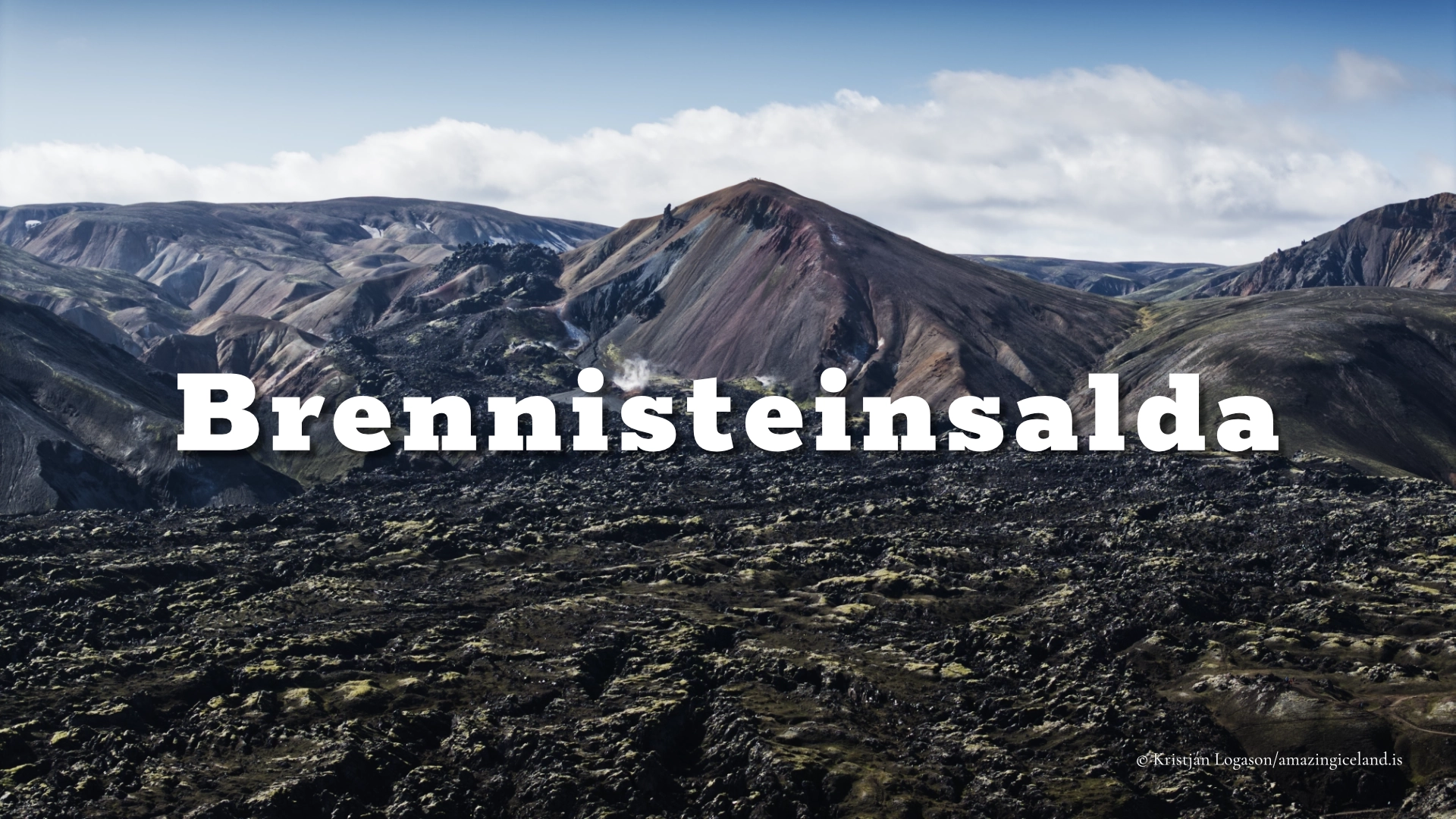
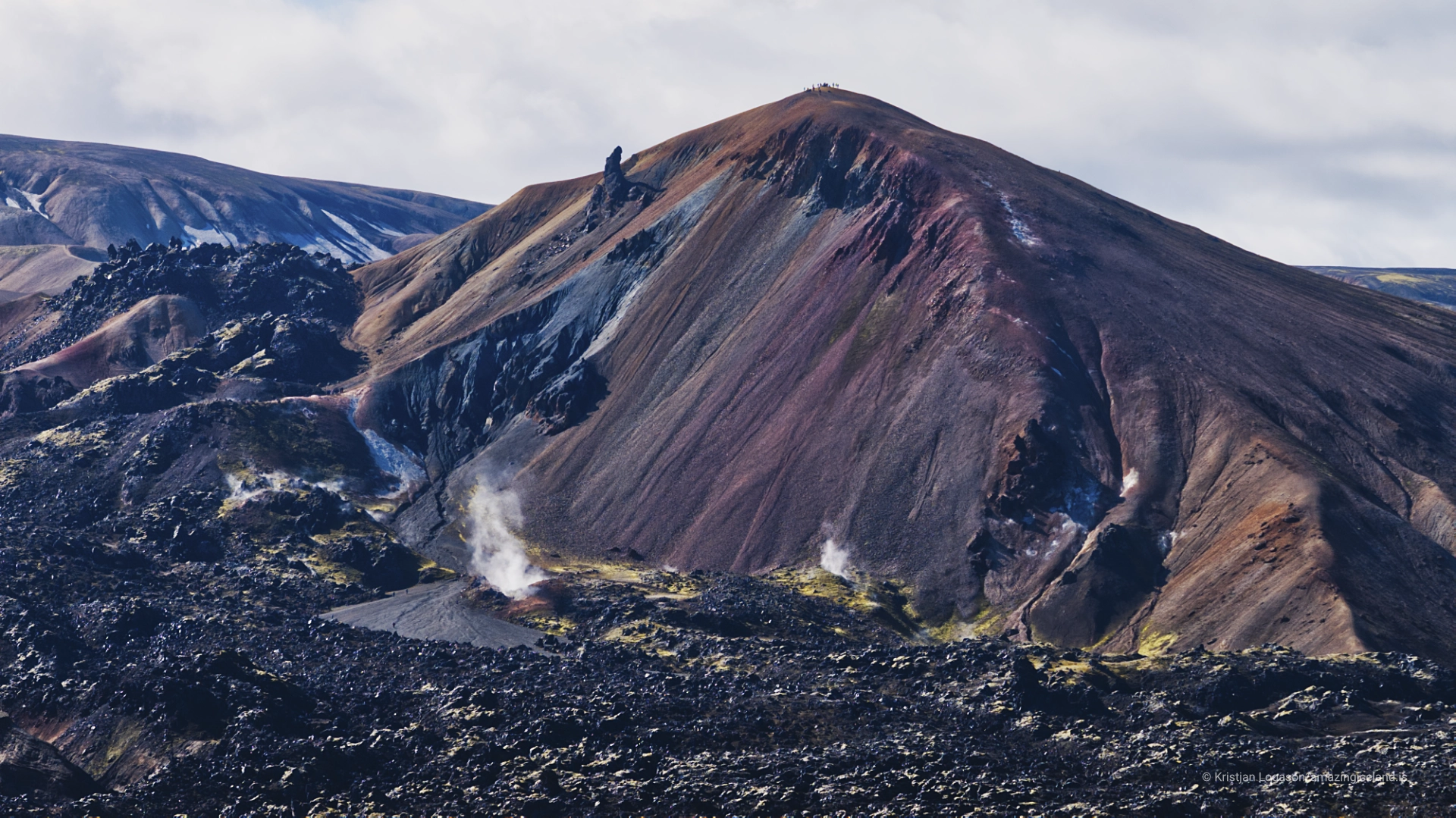
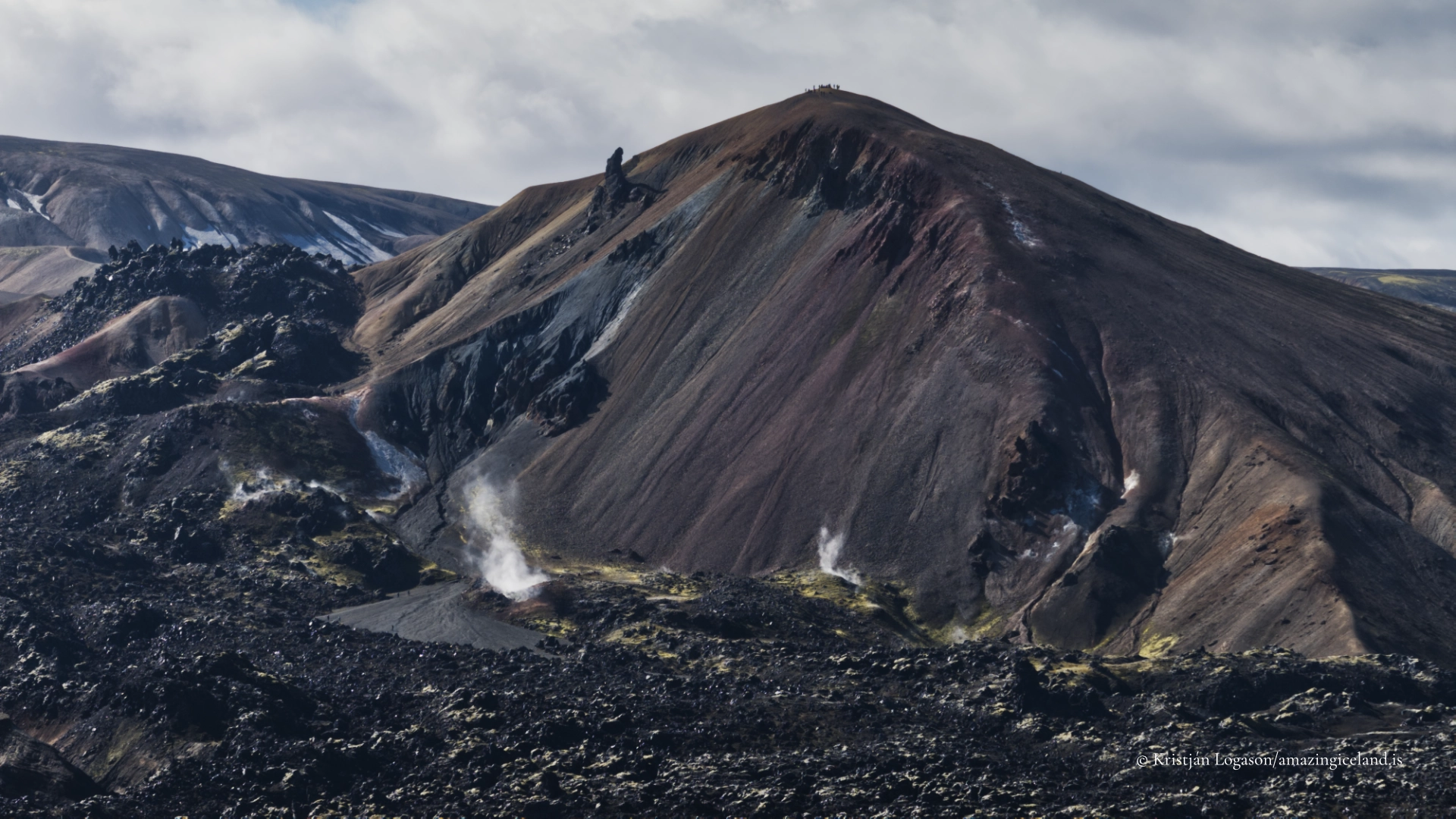
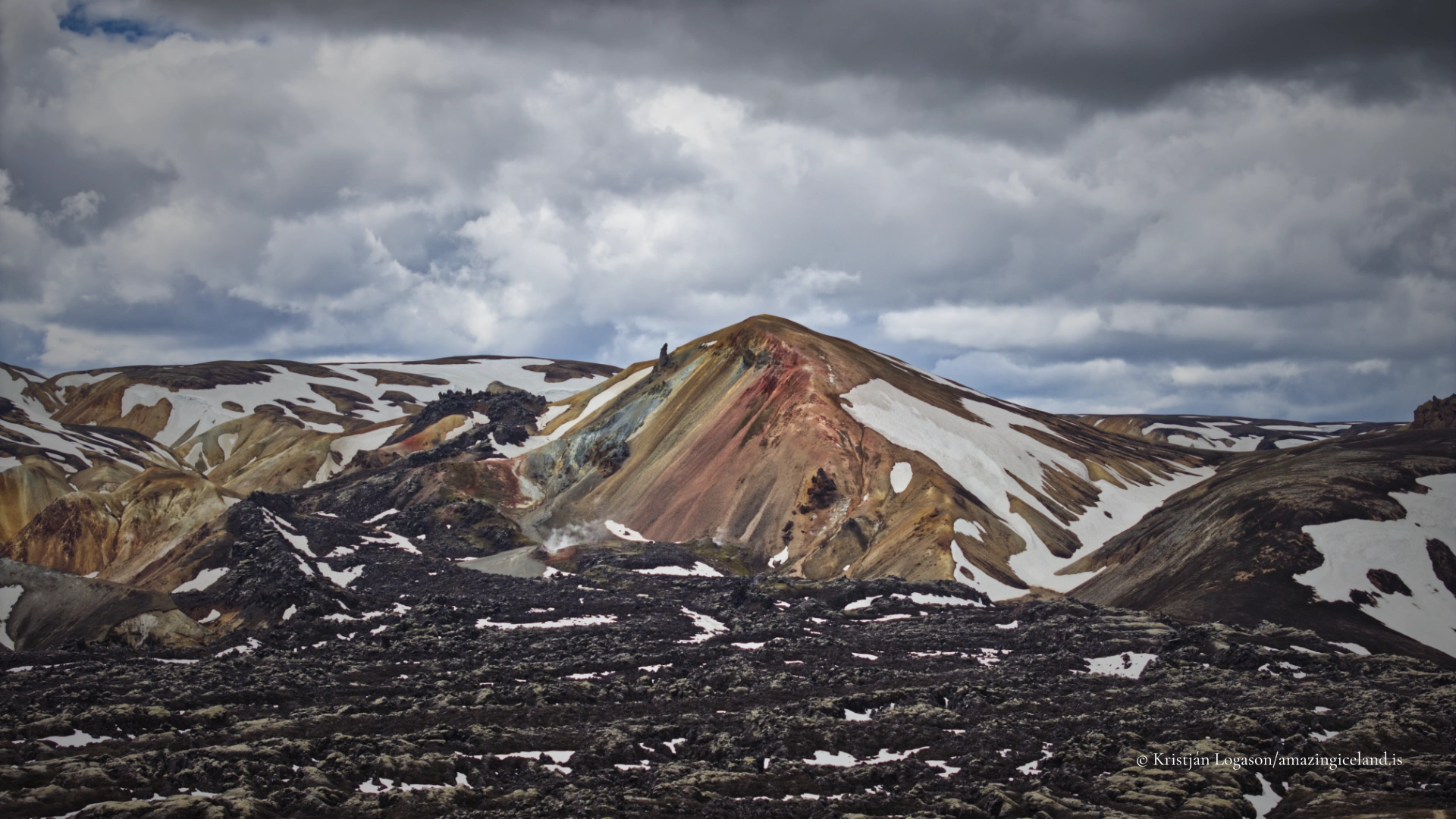
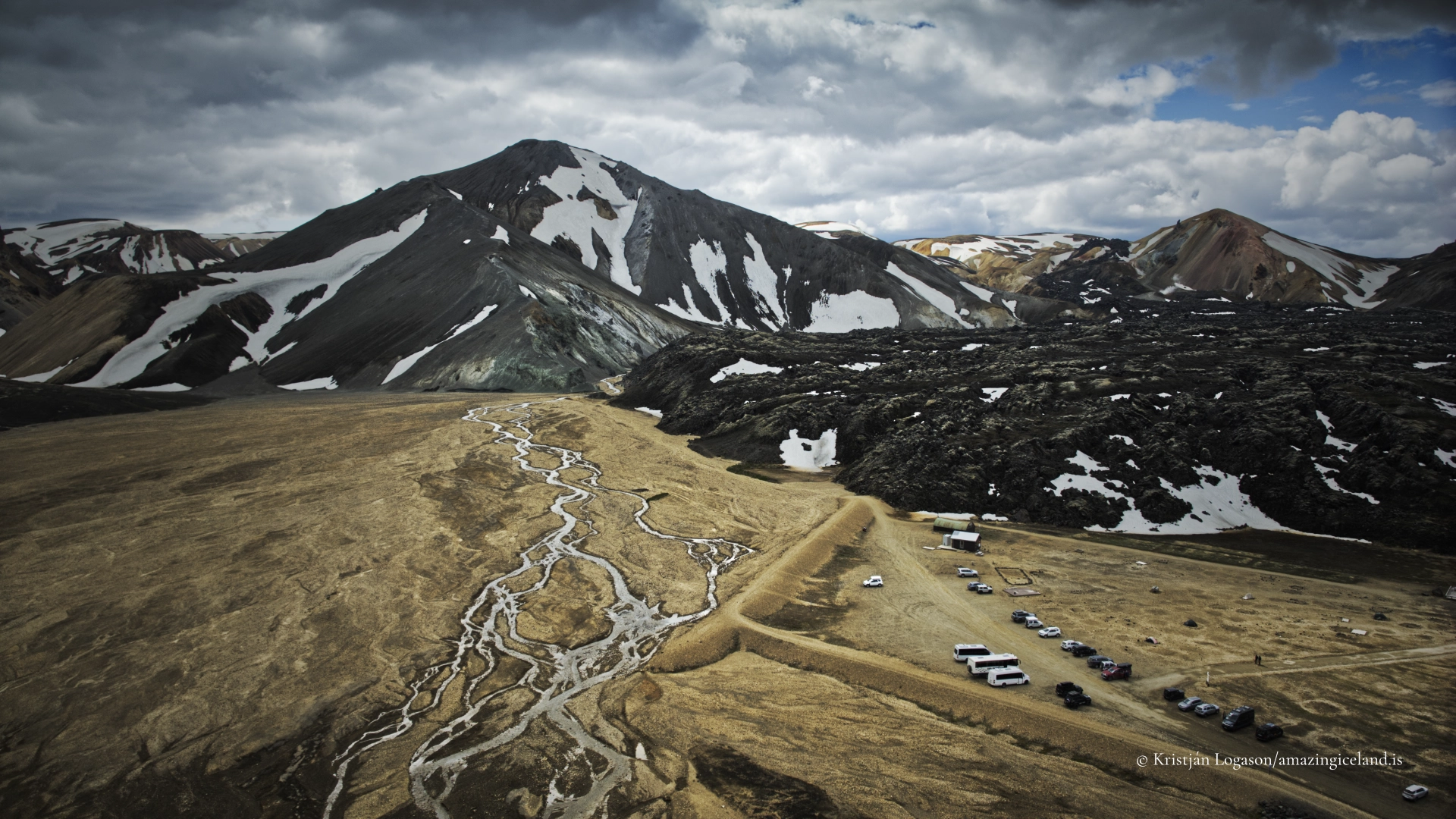
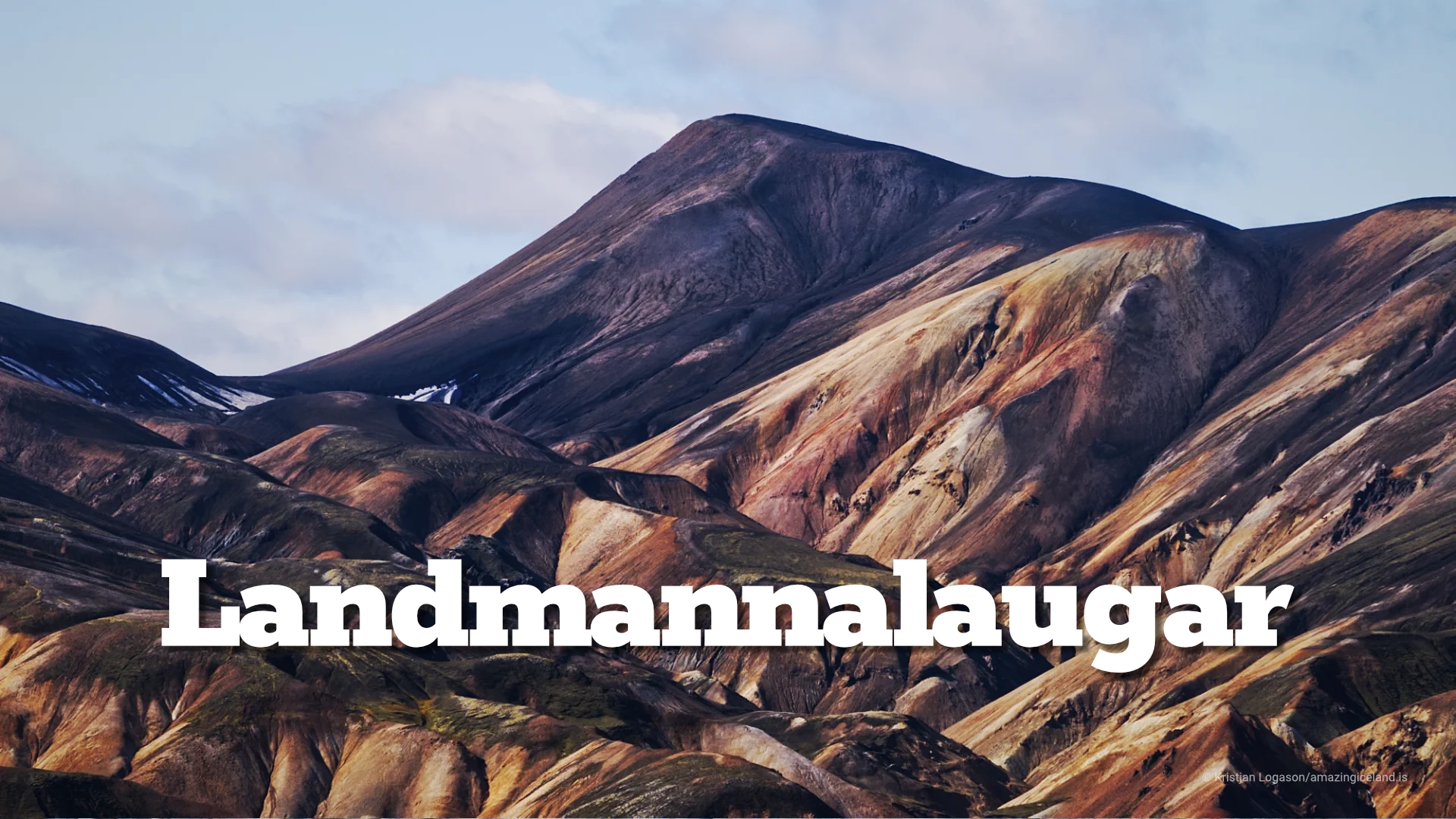
Brennisteinsalda is one of the most distinctive mountains in Landmannalaugar, rising directly above the geothermal basin and trail network of the Fjallabak Nature Reserve. Known for its strong colour contrasts and active geothermal alteration, the mountain offers a clear, close-range view of rhyolitic volcanism and surface processes that continue to shape the landscape today.
The location of Brennisteinsalda in Landmannalaugar Nature Reserve
Latitude
64.0456
Longitude
-19.2589
Brennisteinsalda in Landmannalaugar Nature Reserve
Brennisteinsalda belongs to the Torfajökull volcanic system, a region dominated by rhyolite rather than the basalt that defines much of Iceland. Rhyolite forms from silica-rich magma and tends to erupt explosively, producing fragmented material that weathers and alters rapidly. This rock type is the primary reason Brennisteinsalda displays such an unusually wide colour spectrum.
The mountain is composed largely of rhyolitic lava flows and tephra layers that have been repeatedly altered by geothermal fluids. As hot, mineral-rich water rises through fractures in the rock, it reacts chemically with the surrounding material. Iron oxidises, sulphur precipitates, and clay minerals form, gradually transforming the original volcanic rock. The yellows, reds, whites, and greys visible on Brennisteinsalda are not surface stains; they are the result of long-term chemical alteration within the rock itself.
Structurally, Brennisteinsalda is relatively modest in height compared to Iceland’s large volcanic edifices, but it is steep-sided and visually dominant due to its proximity to the Landmannalaugar basin. Its form allows visitors to observe geological transitions over short distances—from relatively unaltered lava to heavily altered, friable slopes where erosion proceeds quickly.
Geothermal processes and surface activity
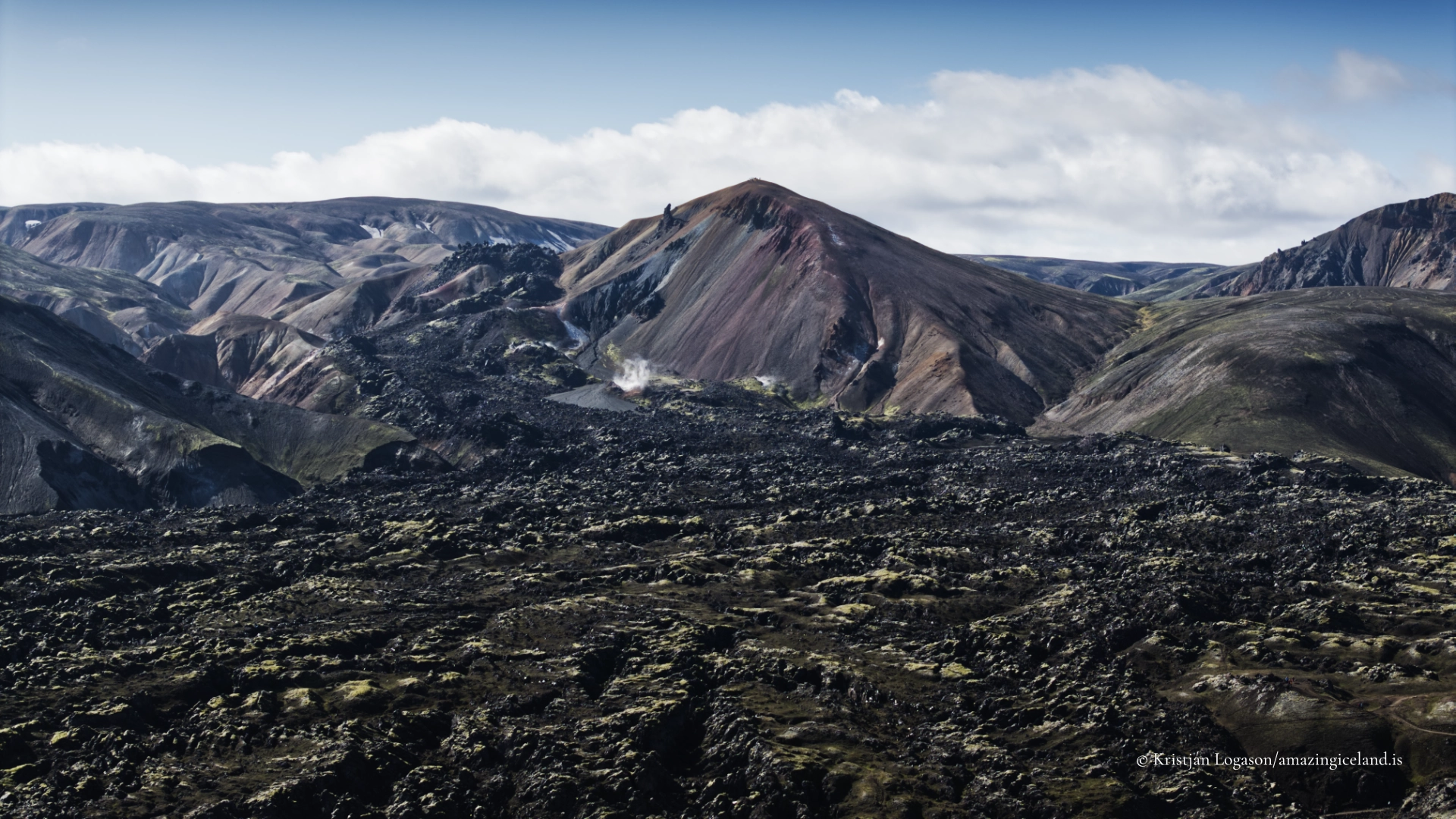
The name Brennisteinsalda translates roughly to “Sulphur Wave,” a direct reference to the sulphur deposits and undulating colour patterns that mark its slopes. Fumaroles and warm ground are present in several areas, particularly along fracture zones where geothermal gases escape to the surface. While the geothermal activity here is not violent, it is persistent, and its cumulative effect on the landscape is substantial.
Sulphur deposits form when hydrogen sulphide gas rises from depth and oxidises near the surface. Over time, this process produces the pale yellow crusts visible on parts of the mountain. These deposits are often ephemeral—washed away by rain or redistributed by wind—yet the underlying geothermal system remains active, continually renewing the alteration process.
This ongoing activity makes Brennisteinsalda an important visual indicator of subsurface heat flow in Landmannalaugar. Even without dramatic steam plumes, the mountain communicates geothermal presence through colour, texture, and smell. In damp conditions, sulphur odour becomes more pronounced, reinforcing the sensory connection between surface features and deeper processes.
Vegetation struggles to establish itself on these altered slopes. The chemically aggressive environment, combined with unstable ground and seasonal frost, limits plant growth primarily to surrounding areas where geothermal influence is weaker. As a result, Brennisteinsalda remains largely exposed, preserving its geological readability.
Access, observation, and role within Landmannalaugar
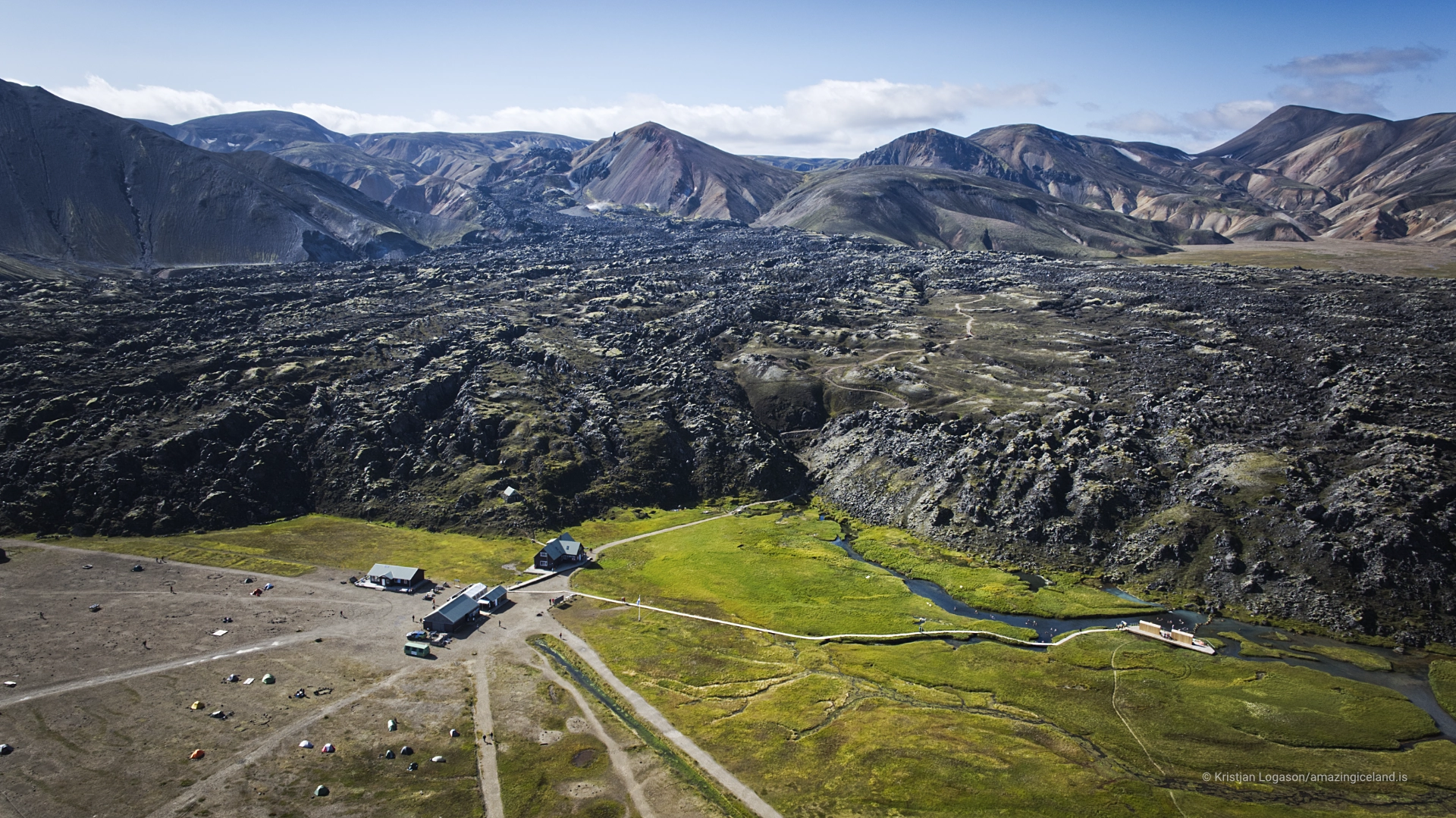
Brennisteinsalda is closely integrated into the hiking network of Landmannalaugar. Trails pass along its base and ascend its slopes, offering multiple perspectives on the mountain’s structure and colour variation. The ascent is not technically difficult but involves loose material and steep sections, reflecting the altered and eroded nature of the rock.
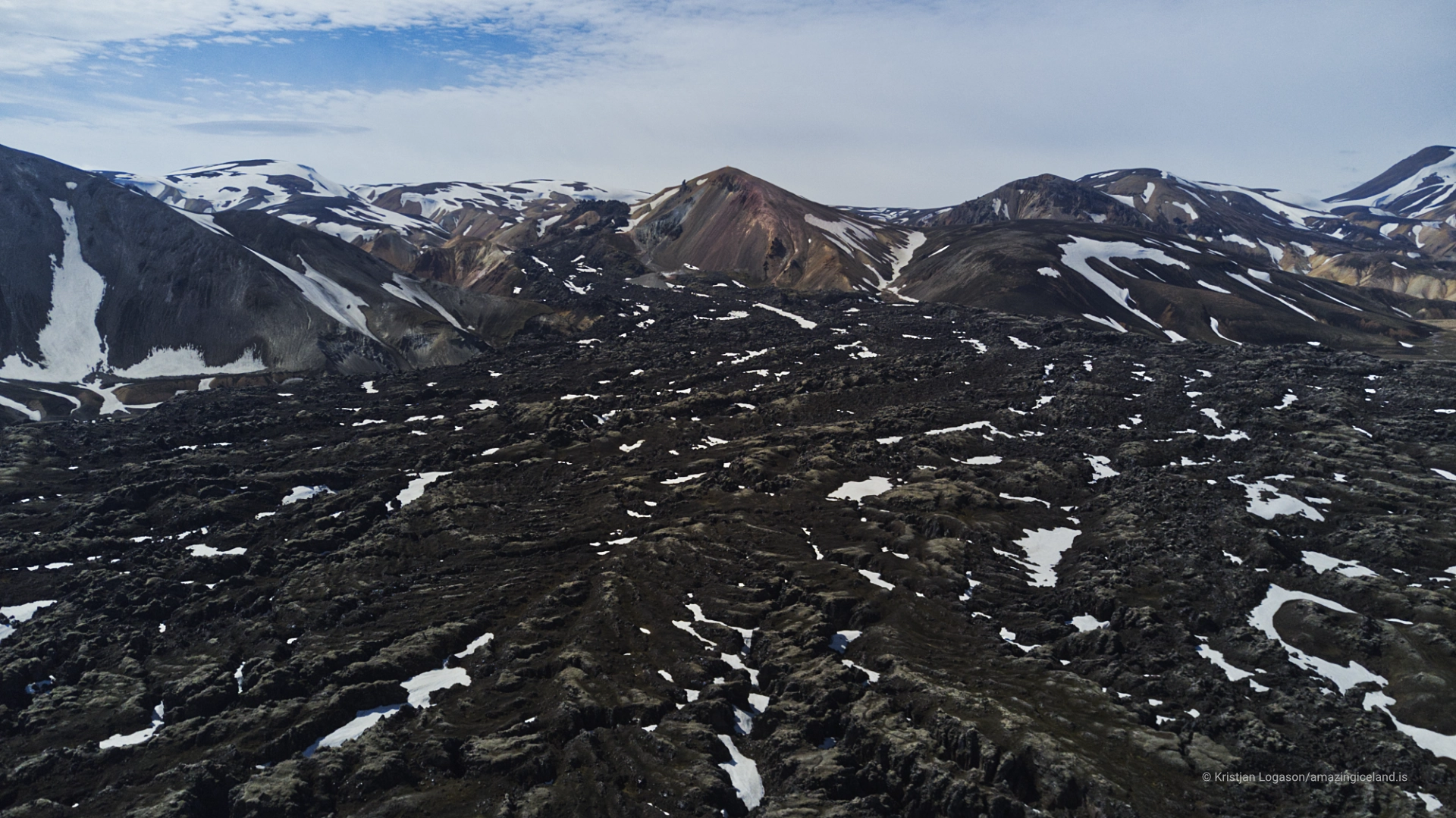
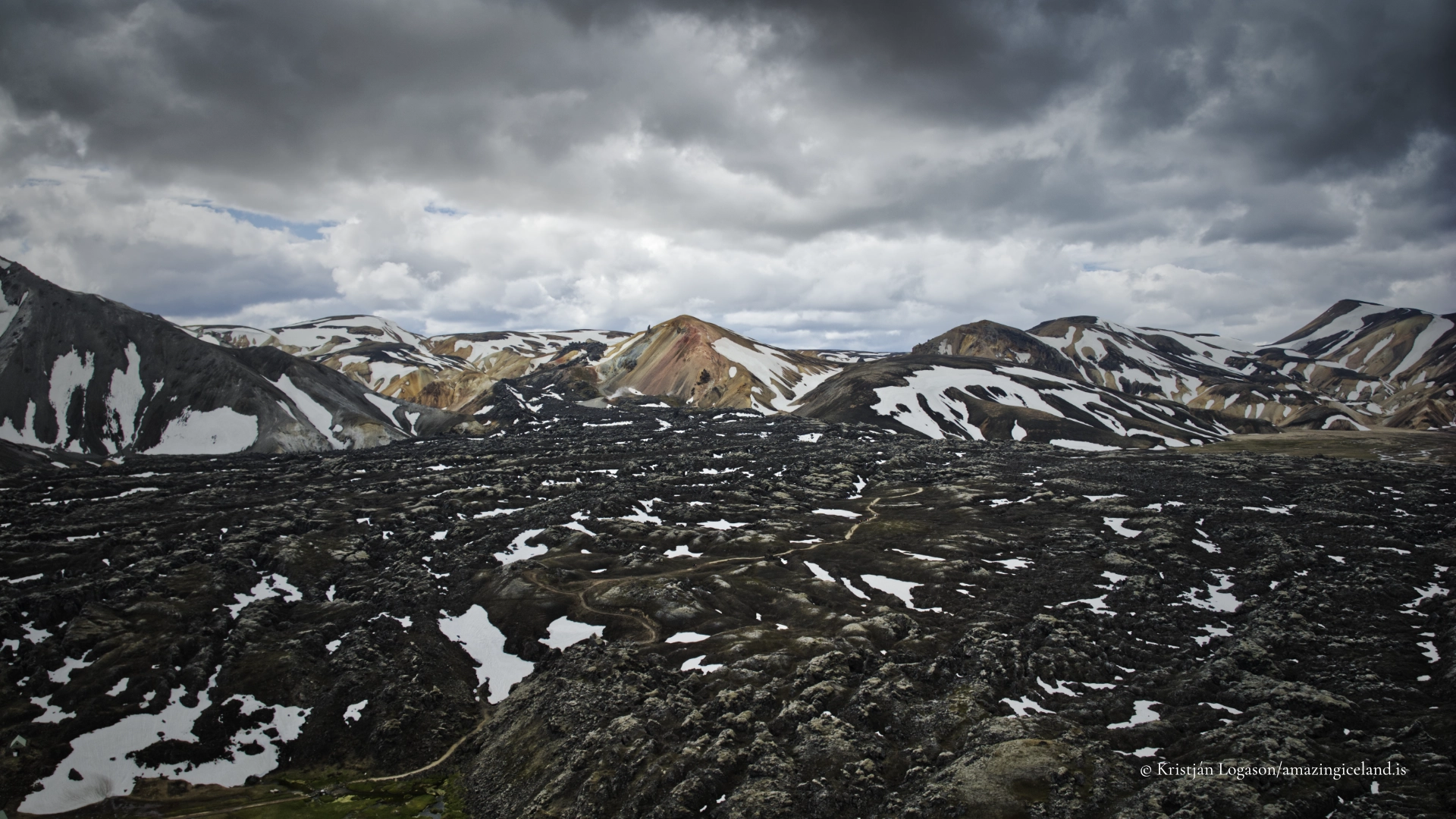
From elevated viewpoints on or near Brennisteinsalda, the wider Landmannalaugar basin becomes visible: the Laugahraun lava field, braided rivers, and surrounding rhyolite peaks. This makes the mountain an effective observation point for understanding how individual features relate to the larger volcanic system.
Importantly, Brennisteinsalda should not be viewed in isolation. Its significance lies in how clearly it demonstrates the interaction between rhyolitic volcanism and geothermal alteration—a process that defines much of Landmannalaugar’s visual identity. Where other mountains in the area express colour through weathering alone, Brennisteinsalda shows colour as an active, ongoing process.
For visitors, the mountain offers a concentrated experience of the forces shaping the region. It does not overwhelm with scale, but it rewards close observation. Changes in light, moisture, and cloud cover can dramatically alter how the slopes appear, making repeated views feel meaningfully different.
Interesting facts:
- Name meaning: Brennisteinsalda means “Sulphur Wave,” referencing sulphur deposits on its slopes.
- Rhyolite mountain: Composed primarily of silica-rich rhyolite, uncommon in much of Iceland.
- Active alteration: Colours result from ongoing geothermal chemical processes, not just erosion.
- Trail-integrated: Several Landmannalaugar hiking routes pass directly alongside or over the mountain.
Image Gallery

The Locomotive Elite
What do Donald Trump and Iceland’s Locomotive Elite have in common?
Far more than you think.
In The Locomotive Elite, you’ll uncover how a tiny clique in Iceland captured extensive control—of banks, courts, media, and even the central bank.
For decades they ruled, first democratically, then through corruption and in the end through crime, enriching themselves and their cronies while dismantling oversight.
The result?
One of the most spectacular financial collapses in modern history.
Photography tips:
- Diffuse light is ideal: Overcast conditions enhance colour separation without harsh shadows.
- Detail shots work well: Isolate mineral patterns, cracks, and colour transitions for abstract compositions.
- Watch footing: Loose, altered rock can be unstable—compose first, move second.
- Include context sparingly: Pair Brennisteinsalda with lava fields or rivers to show geological contrast.
- Resist saturation: The mountain’s colours are strong enough without digital exaggeration.
Good cameras for Iceland
Sony A7R V

Sony A7s lll

Canon R6

Nikon Z6 lll

Destinations nearby
Good to have in Iceland