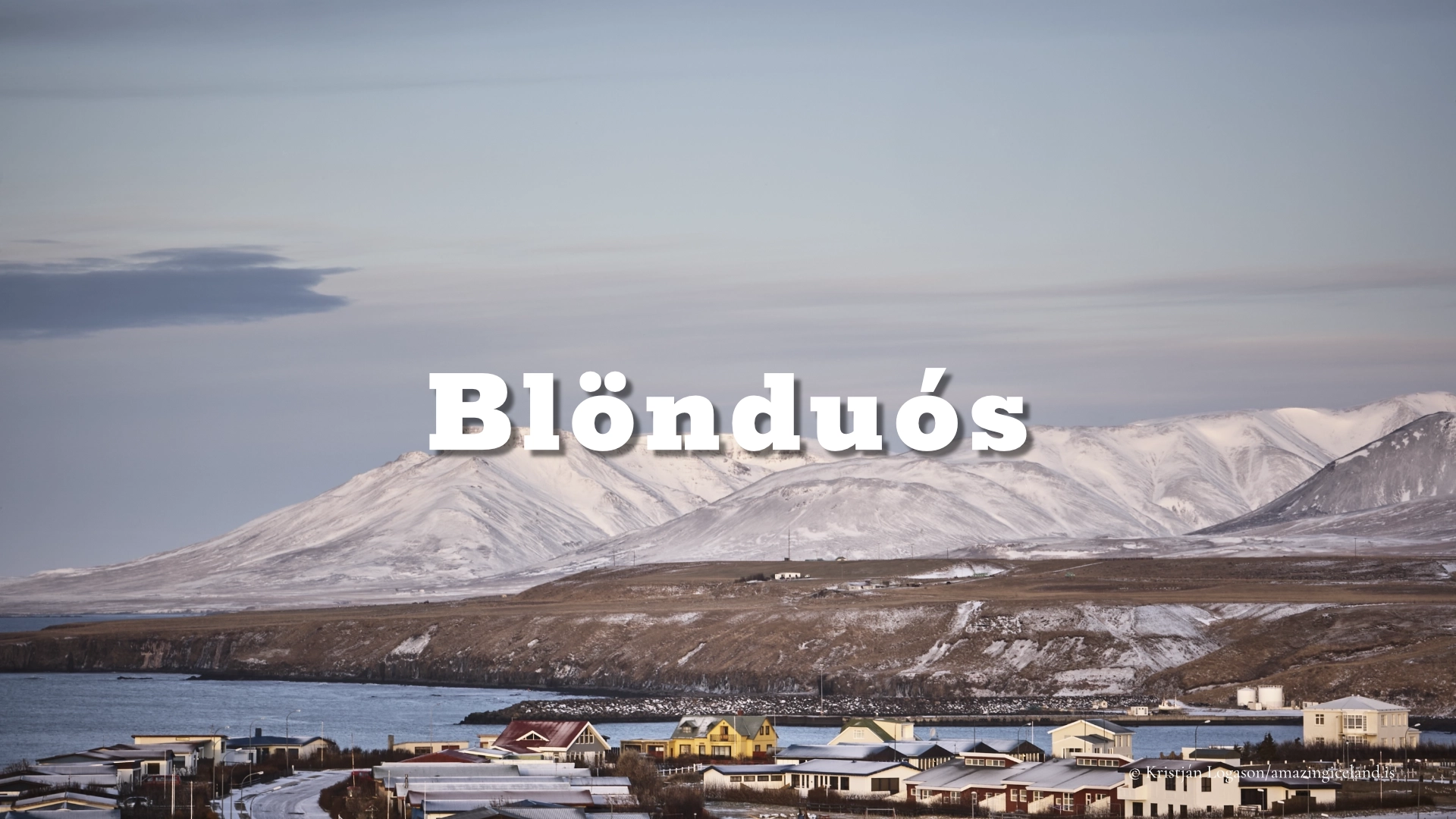
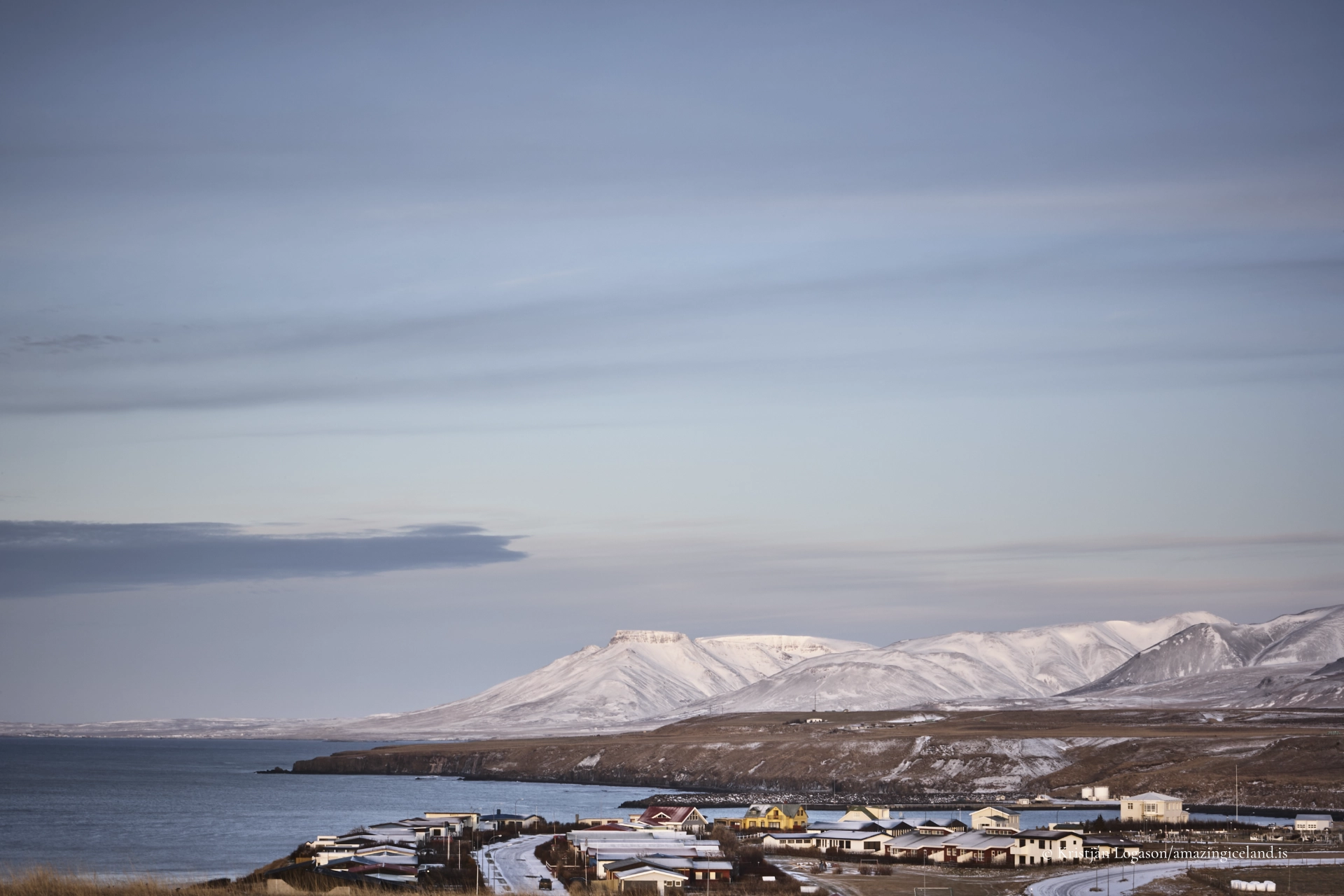
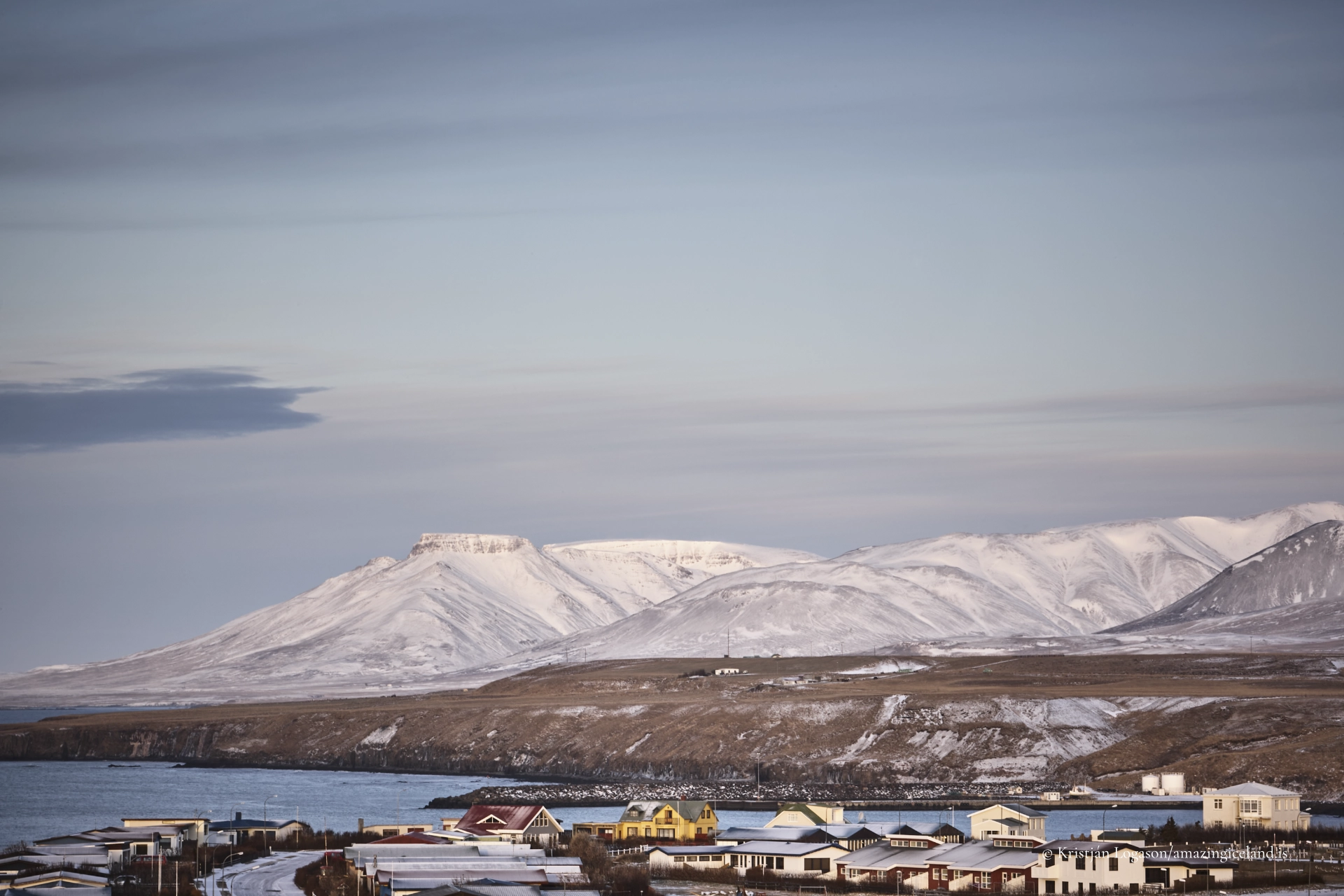
On the north coast of Iceland, at the edge of Húnaflói, Blönduós occupies a strategic position at the mouth of the Blanda river. The town developed as a service and transport point between inland agricultural districts and coastal routes, forming a modest but persistent regional center.
The location of Blönduós
Latitude
65.6586
Longitude
-20.2817
Blönduós
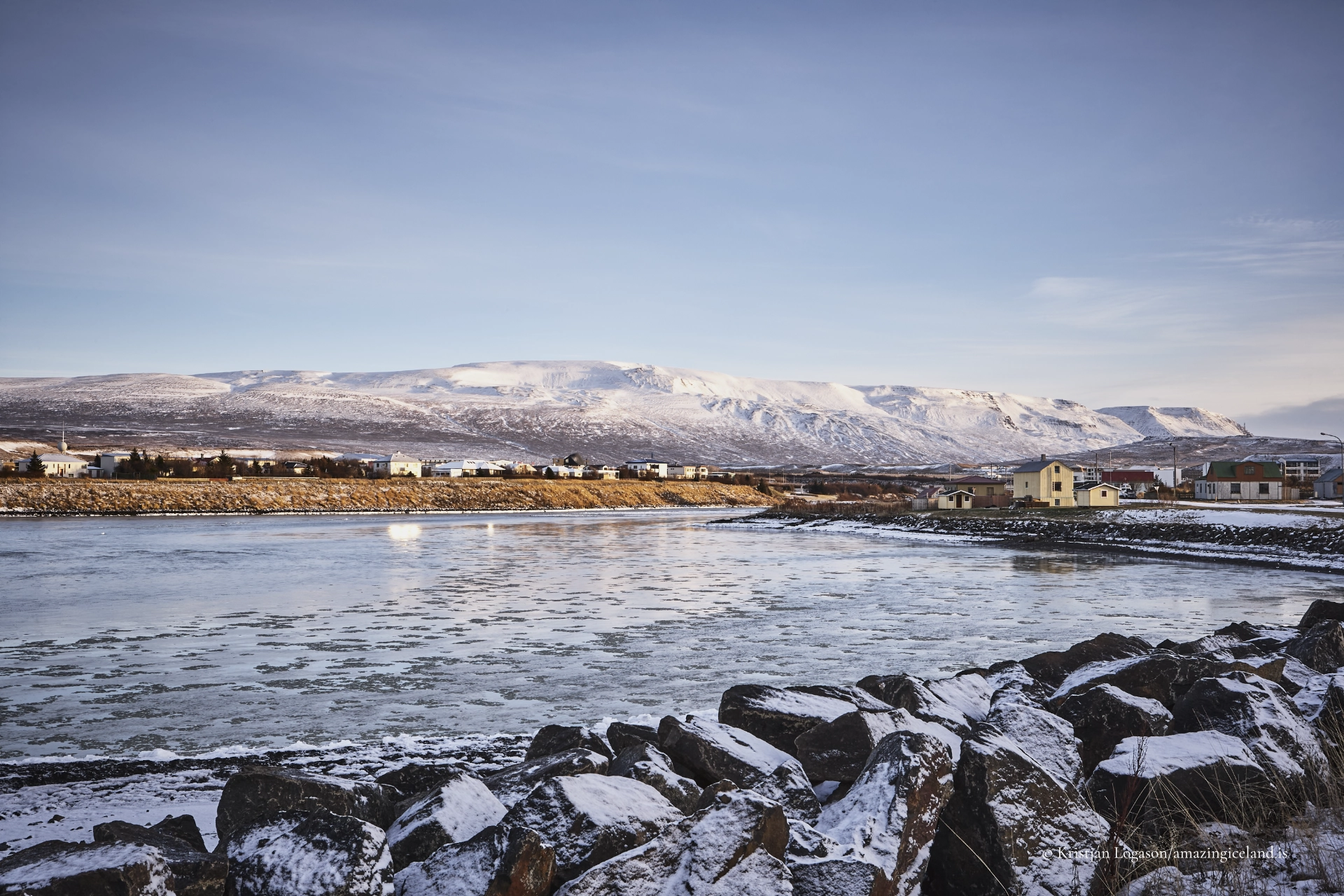
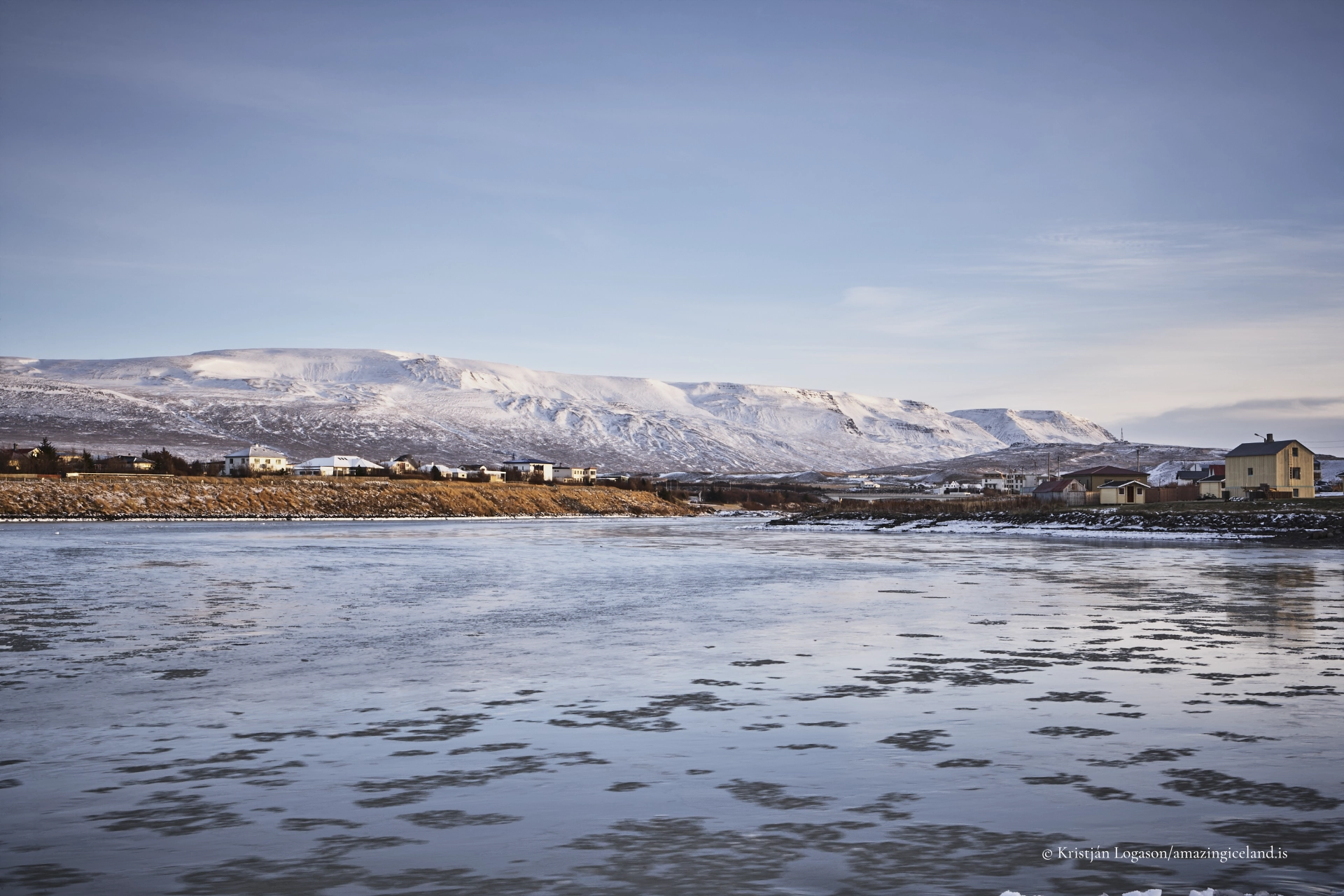
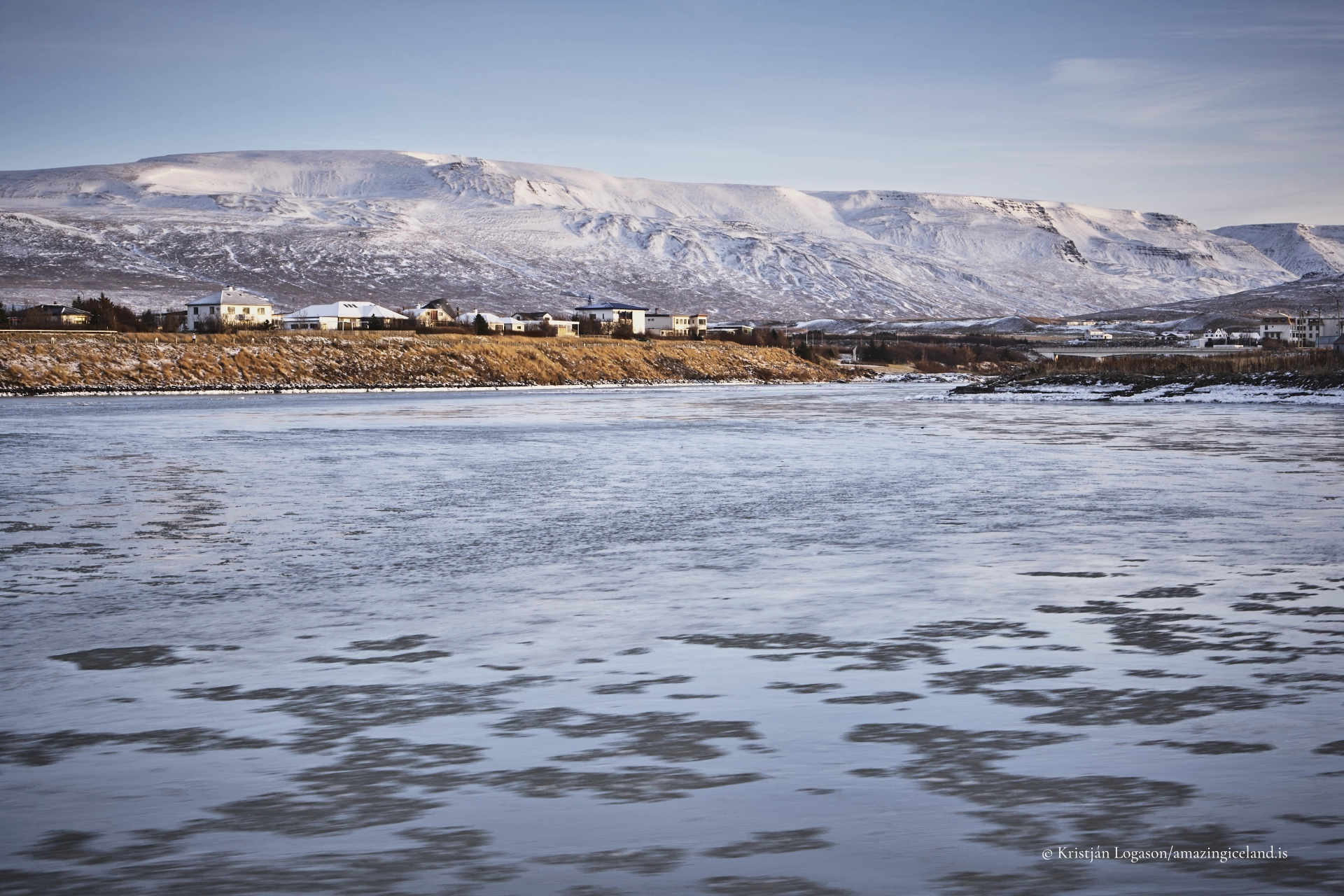
Blönduós lies in Northwest Iceland, within a lowland environment shaped by glacial deposition and river activity. The Blanda river descends from the central highlands, carrying sediment that has gradually built a flat delta at its mouth. This geomorphological setting provided relatively stable ground for settlement in an otherwise exposed coastal zone.
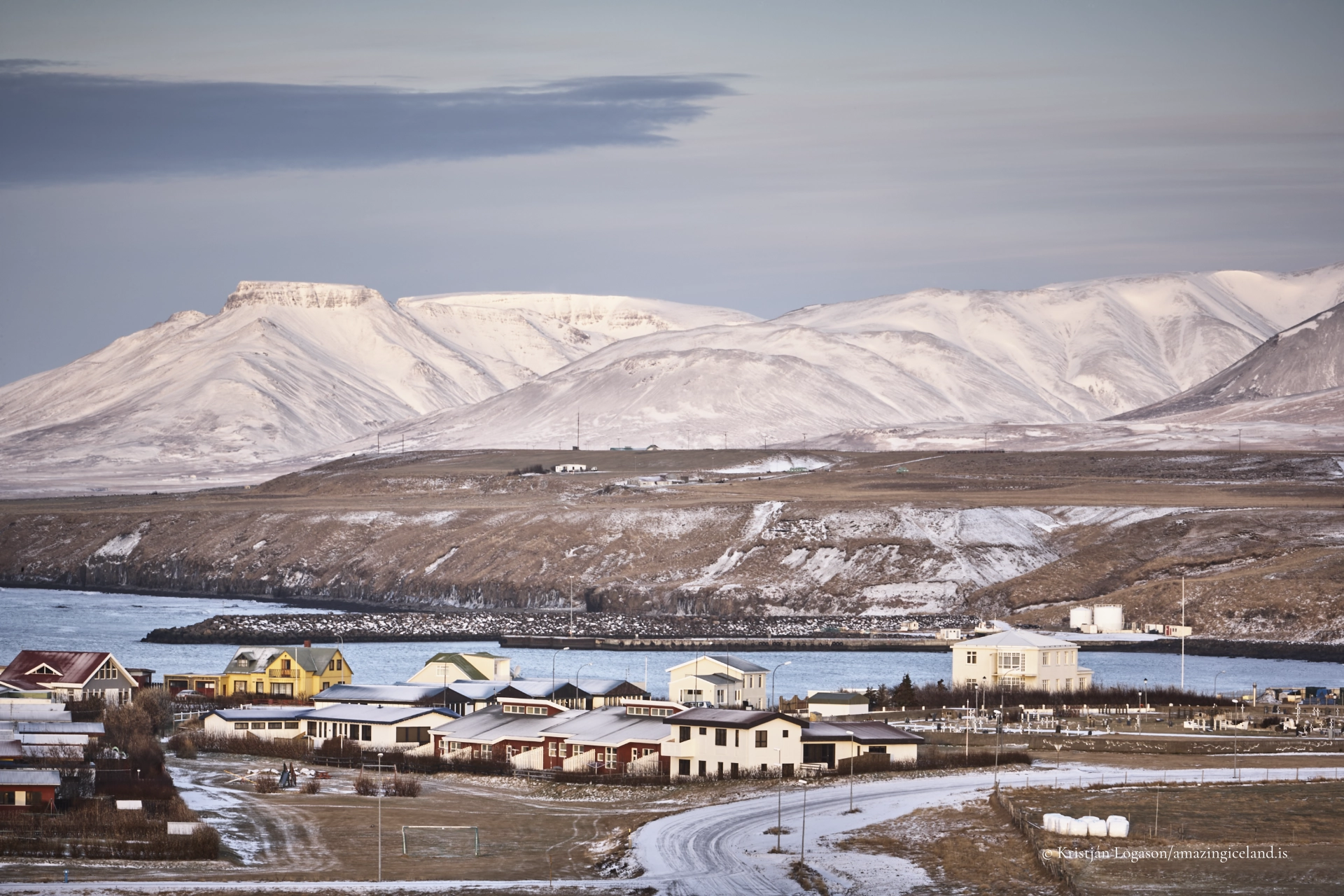
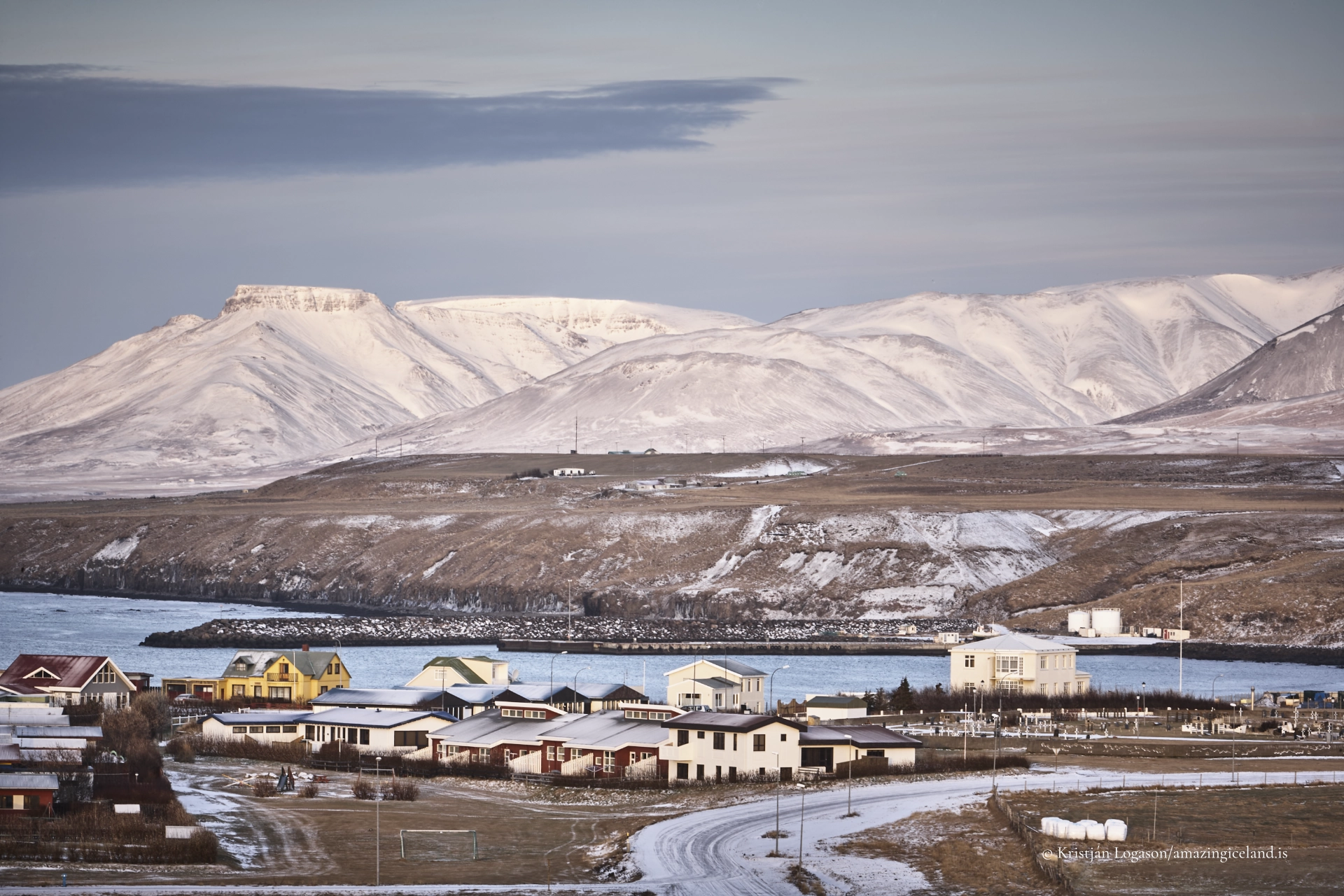
The town’s coastal orientation is outward-facing. Húnaflói opens broadly to the Arctic Ocean, offering little shelter from wind and weather. As a result, Blönduós developed with an emphasis on resilience rather than expansion. Buildings are low-profile, infrastructure is functional, and the settlement remains compact.
From a geographical perspective, Blönduós represents a river-mouth settlement, where inland hydrological systems connect directly to marine environments. Its significance lies in mediation rather than dominance.
Historically, Blönduós grew as a local trading and service center for the agricultural districts of Húnavatnssýsla. Farming, rather than fishing, defined the region’s economy, and the town’s role was to facilitate transport, storage, and administration rather than large-scale maritime activity.
The Blanda river was both a resource and a constraint. While it provided access to inland routes and supported salmon fisheries upstream, its shifting channels and seasonal flooding required careful land use. Settlement remained slightly elevated and set back from the most dynamic river zones.
Blönduós achieved town status in the 19th century, developing gradually rather than through industrial acceleration. This slow growth produced a settlement pattern aligned with everyday regional needs rather than speculative expansion.
Culturally, Blönduós is closely tied to North Icelandic rural identity. Its population has remained relatively small, reinforcing strong ties between town and countryside. Schools, healthcare, and municipal services serve both the town and surrounding farms, maintaining Blönduós as a practical hub.
The town is also associated with modern Icelandic architecture through the distinctive Blönduóskirkja church, whose design reflects 20th-century experimentation rather than traditional ecclesiastical forms. This architectural presence contrasts with the town’s otherwise restrained built environment.
Infrastructure has reinforced Blönduós’ connective role. The Ring Road passes directly through the town, linking it efficiently to Akureyri and the Westfjords. This positioning increased accessibility without transforming the town into a transient service stop alone.
Climatic conditions remain a defining factor. Strong winds, winter darkness, and seasonal light variation shape daily life and planning decisions. The open bay offers little climatic moderation, reinforcing the town’s functional and restrained character.
Despite these conditions, Blönduós persists—not through growth, but through relevance.
Blönduós ultimately exemplifies a settlement shaped by flow rather than feature. River, road, and bay intersect here, producing a town whose identity is cumulative rather than iconic.
Interesting facts:
- Blönduós is located at the mouth of the Blanda river.
- The town faces Húnaflói, an open and exposed bay.
- It developed primarily as a service center for agricultural regions.
- The Ring Road passes directly through the town.
- Growth has been gradual and function-driven, not industrial.
Image Gallery
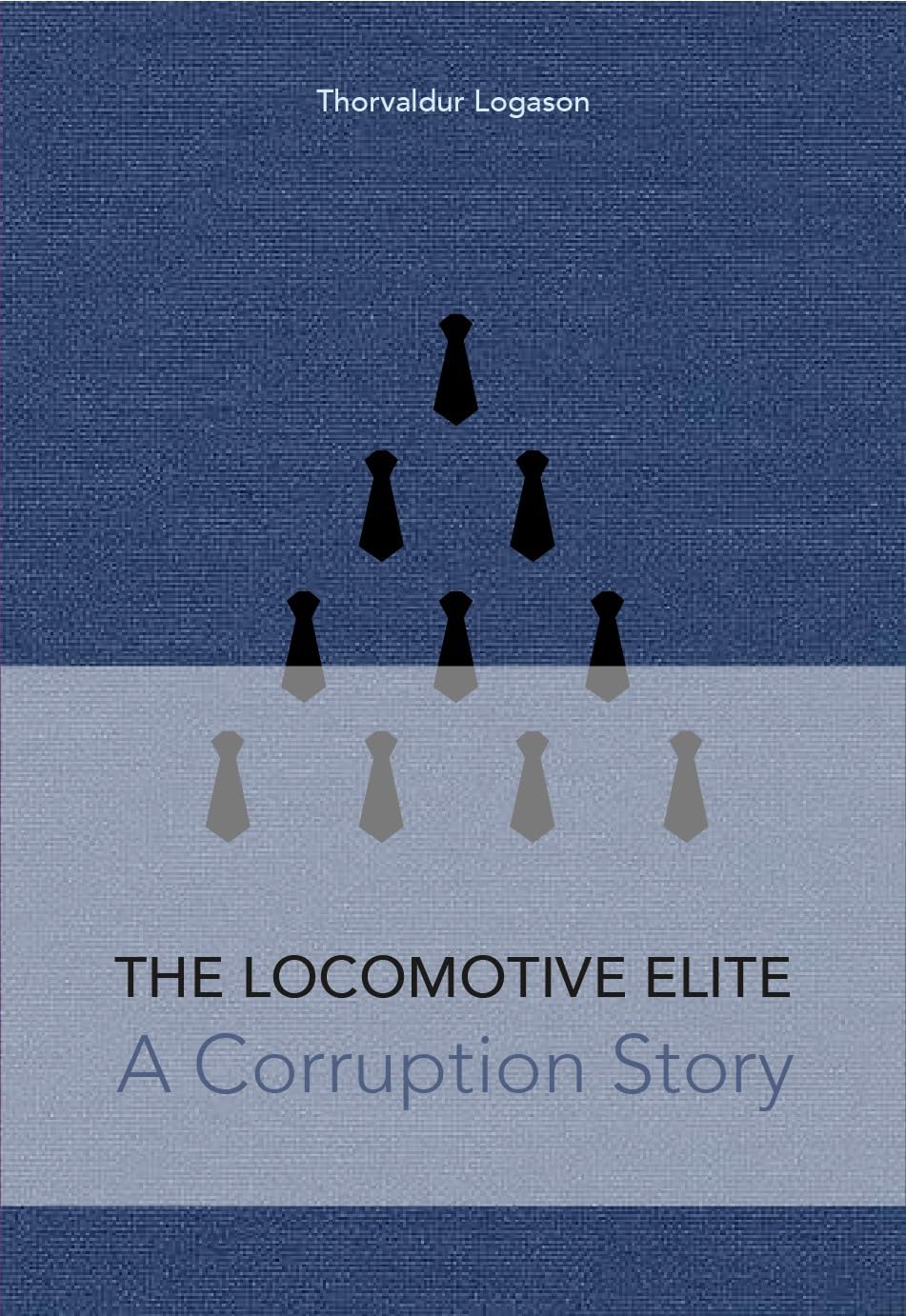
The Locomotive Elite
What do Donald Trump and Iceland’s Locomotive Elite have in common?
Far more than you think.
In The Locomotive Elite, you’ll uncover how a tiny clique in Iceland captured extensive control—of banks, courts, media, and even the central bank.
For decades they ruled, first democratically, then through corruption and in the end through crime, enriching themselves and their cronies while dismantling oversight.
The result?
One of the most spectacular financial collapses in modern history.
Photography tips:
- Use the river: Bridges and riverbanks explain settlement logic.
- Wide horizons: The open bay reinforces exposure and scale.
- Minimal compositions: Blönduós suits clean, uncluttered framing.
- Seasonal contrast: Winter emphasizes structure; summer reveals openness.
- Context matters: Roads, river, and town should appear together.
Good cameras for Iceland
Sony A7R V
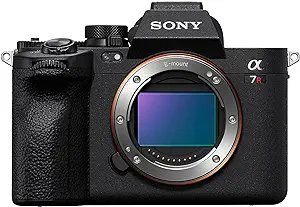
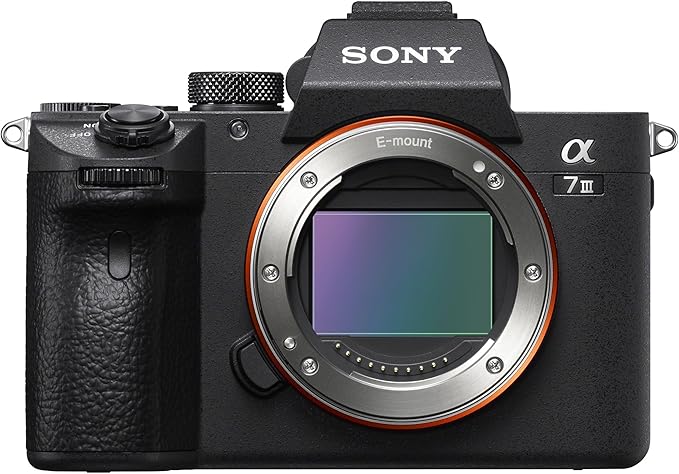
Sony A7s lll
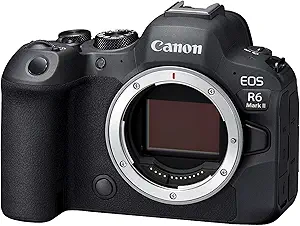
Canon R6
Nikon Z6 lll

Destinations nearby
Good to have in Iceland