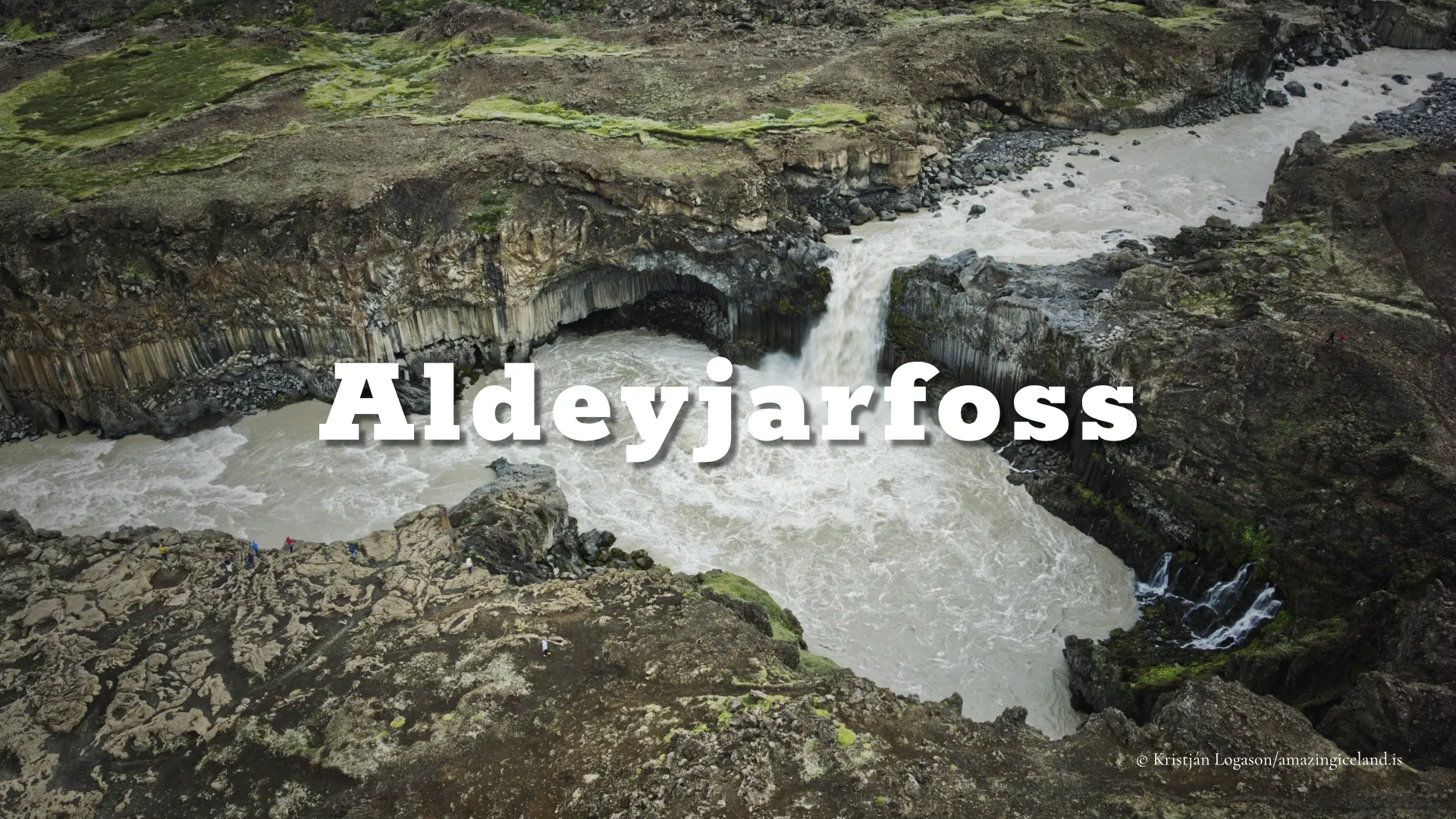
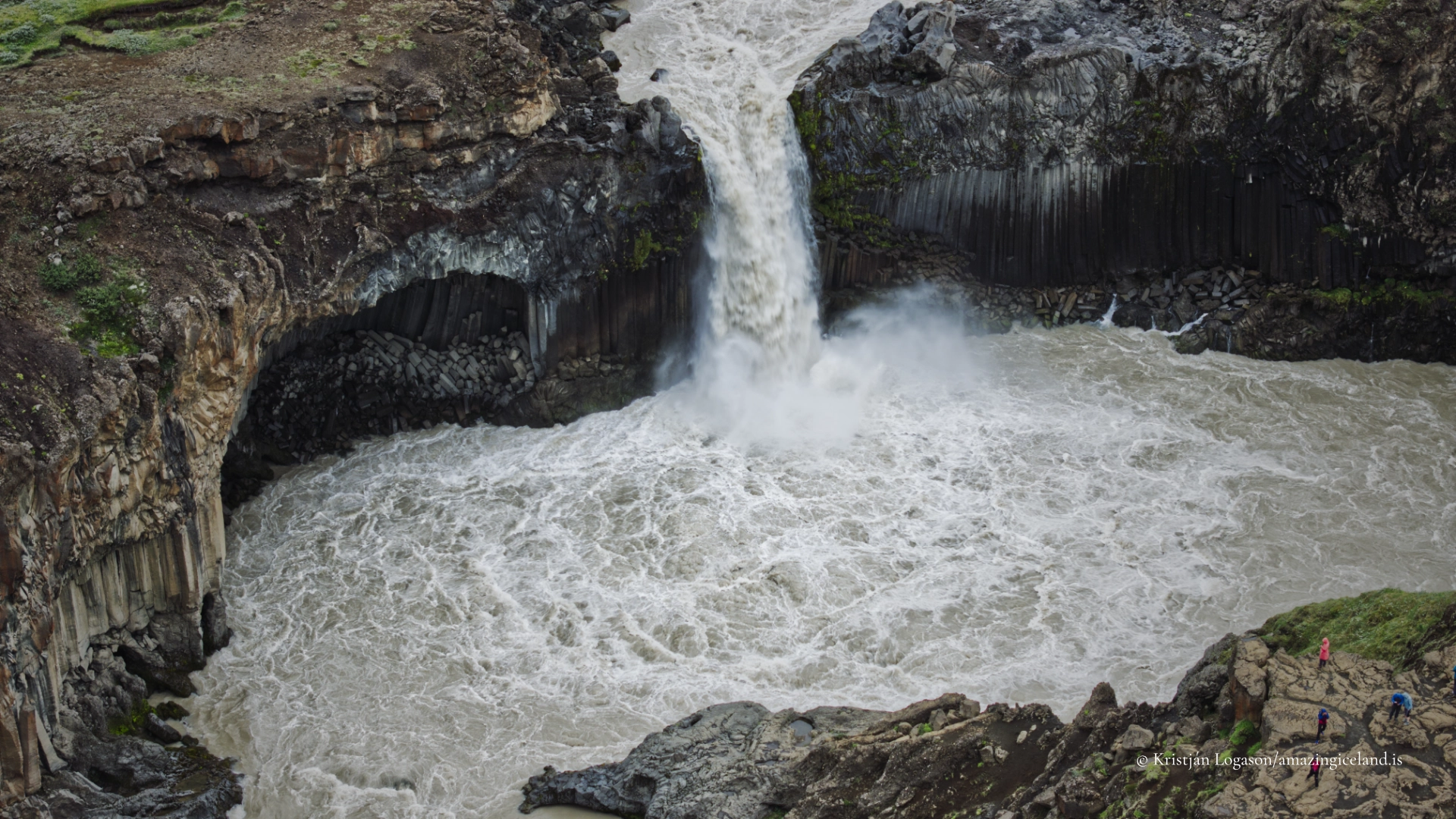
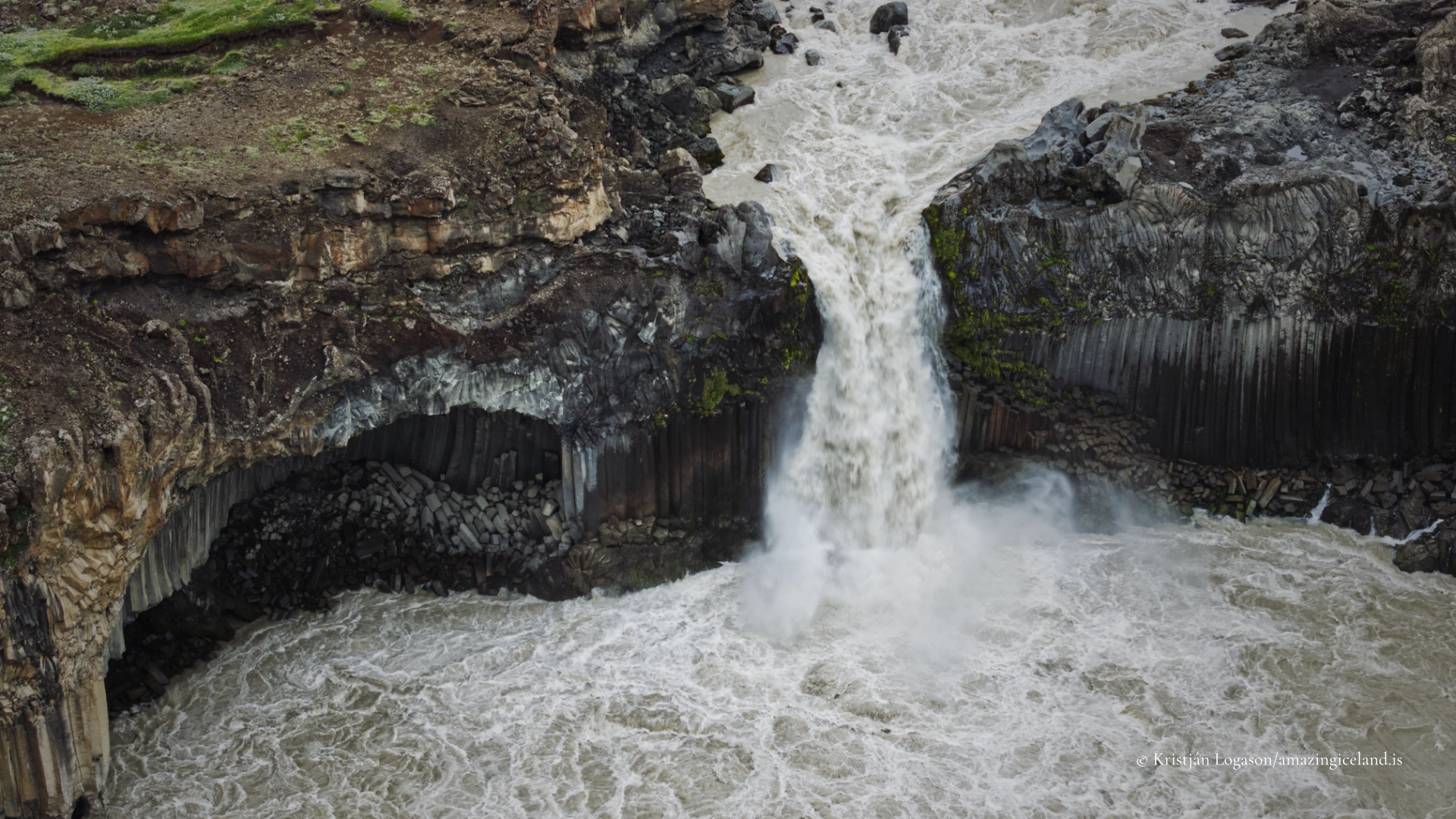
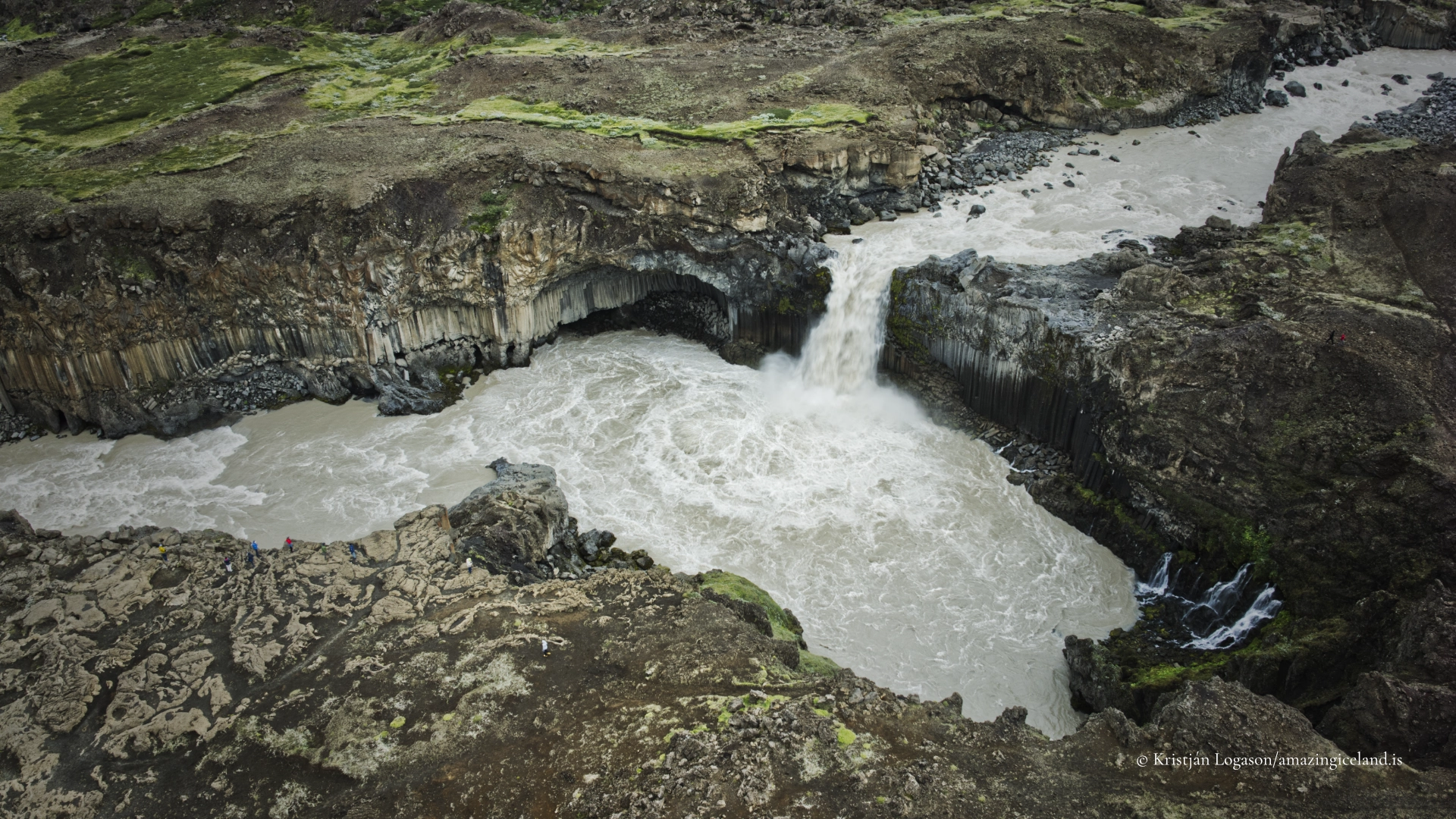
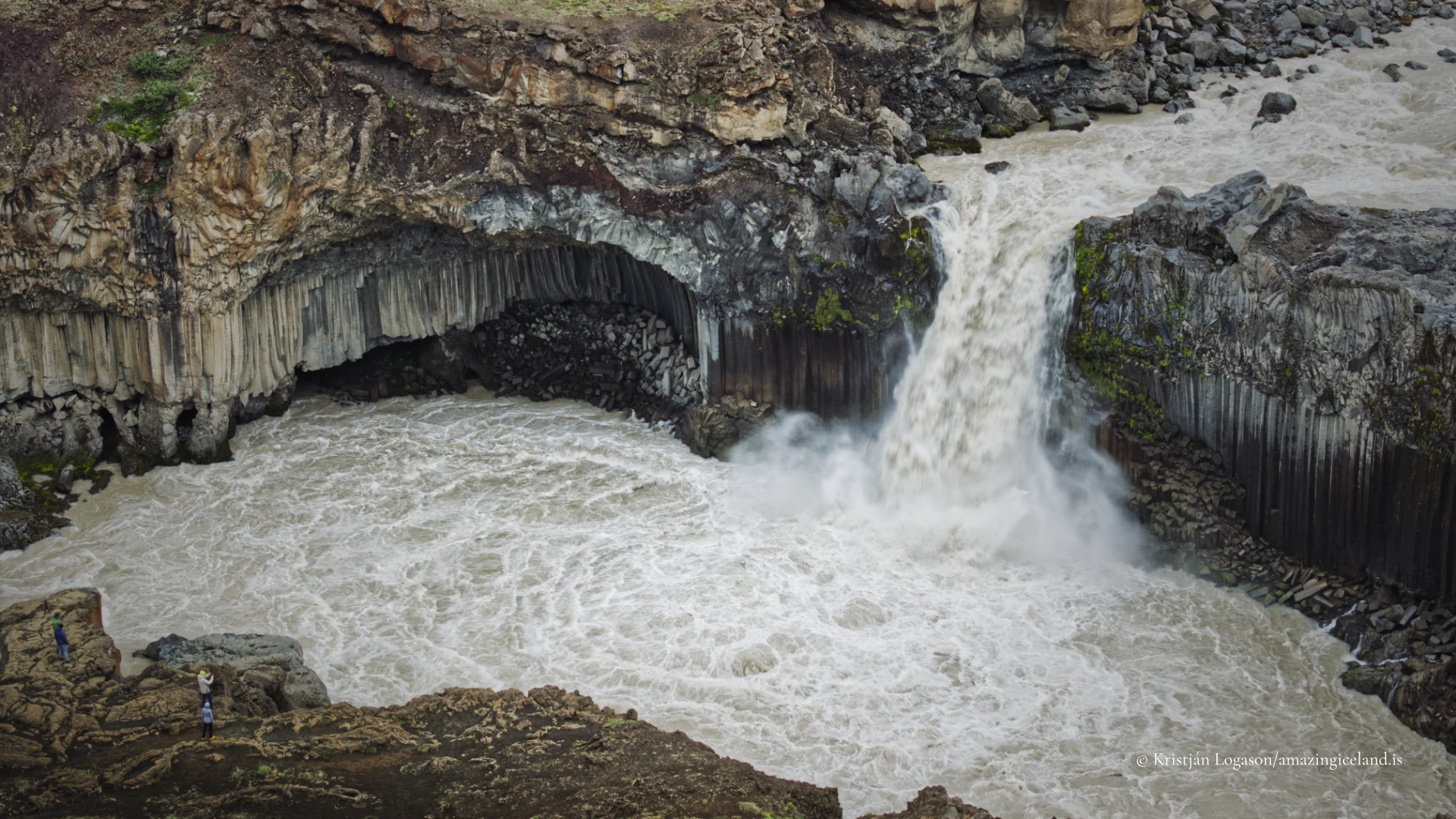
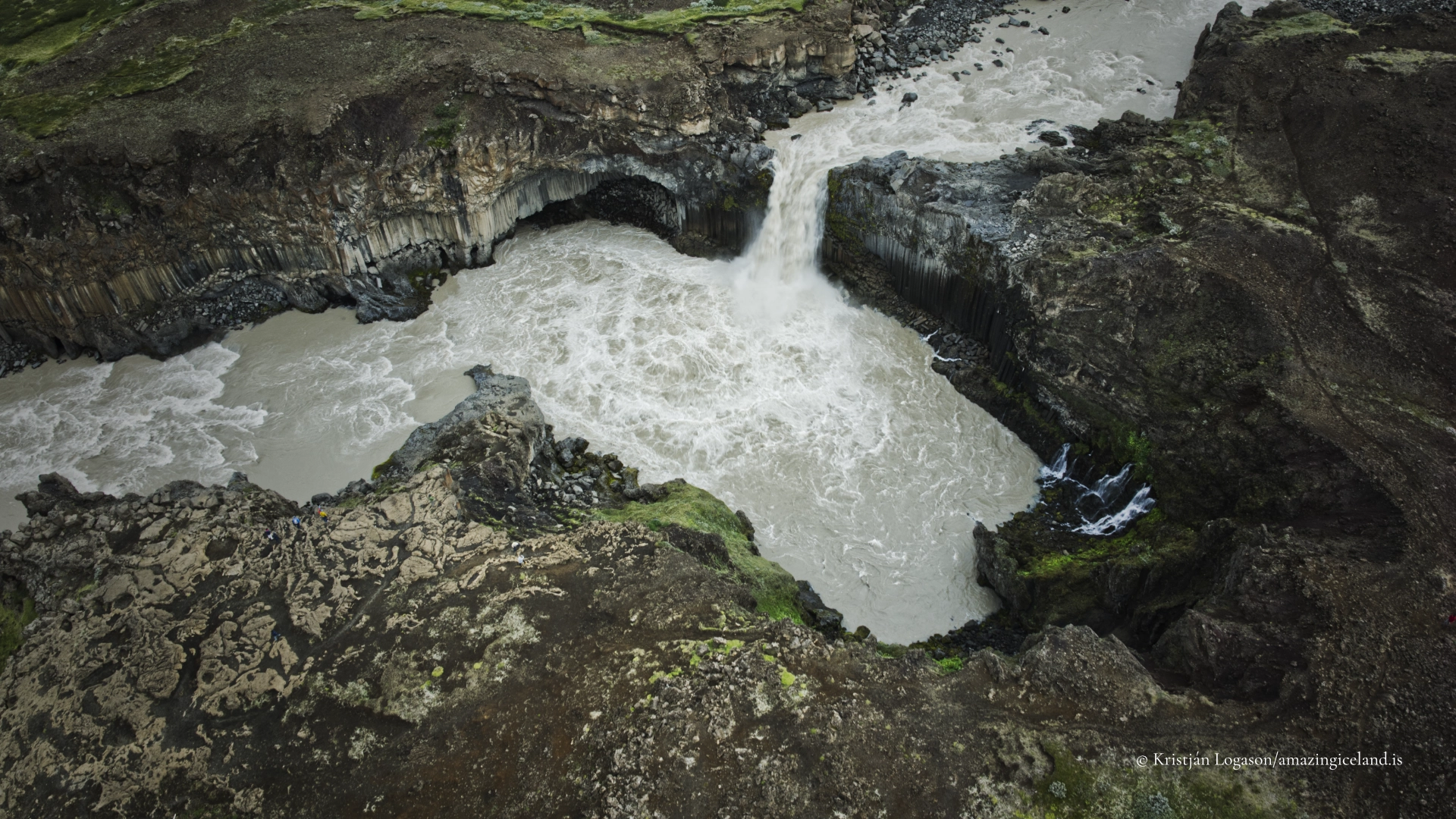
Situated in the upper reaches of Bárðardalur in North Iceland, Aldeyjarfoss marks a transition zone between highland volcanism and river-driven erosion. The waterfall’s defining feature—its symmetrical basalt columns—anchors it firmly in Iceland’s volcanic past, while the river that cuts through them continues to reshape the site in the present.
The location of Aldeyjarfoss basalt column waterfall
Latitude
65.3622
Longitude
-17.3894
Aldeyjarfoss basalt column waterfall
Geological framework and basalt architecture
Aldeyjarfoss lies on the Skjálfandafljót, one of North Iceland’s major glacially fed rivers. The defining basalt formations surrounding the waterfall originate from extensive lava flows associated with volcanic systems in the Icelandic highlands, most notably linked to fissure eruptions related to the Bárðarbunga volcanic zone.
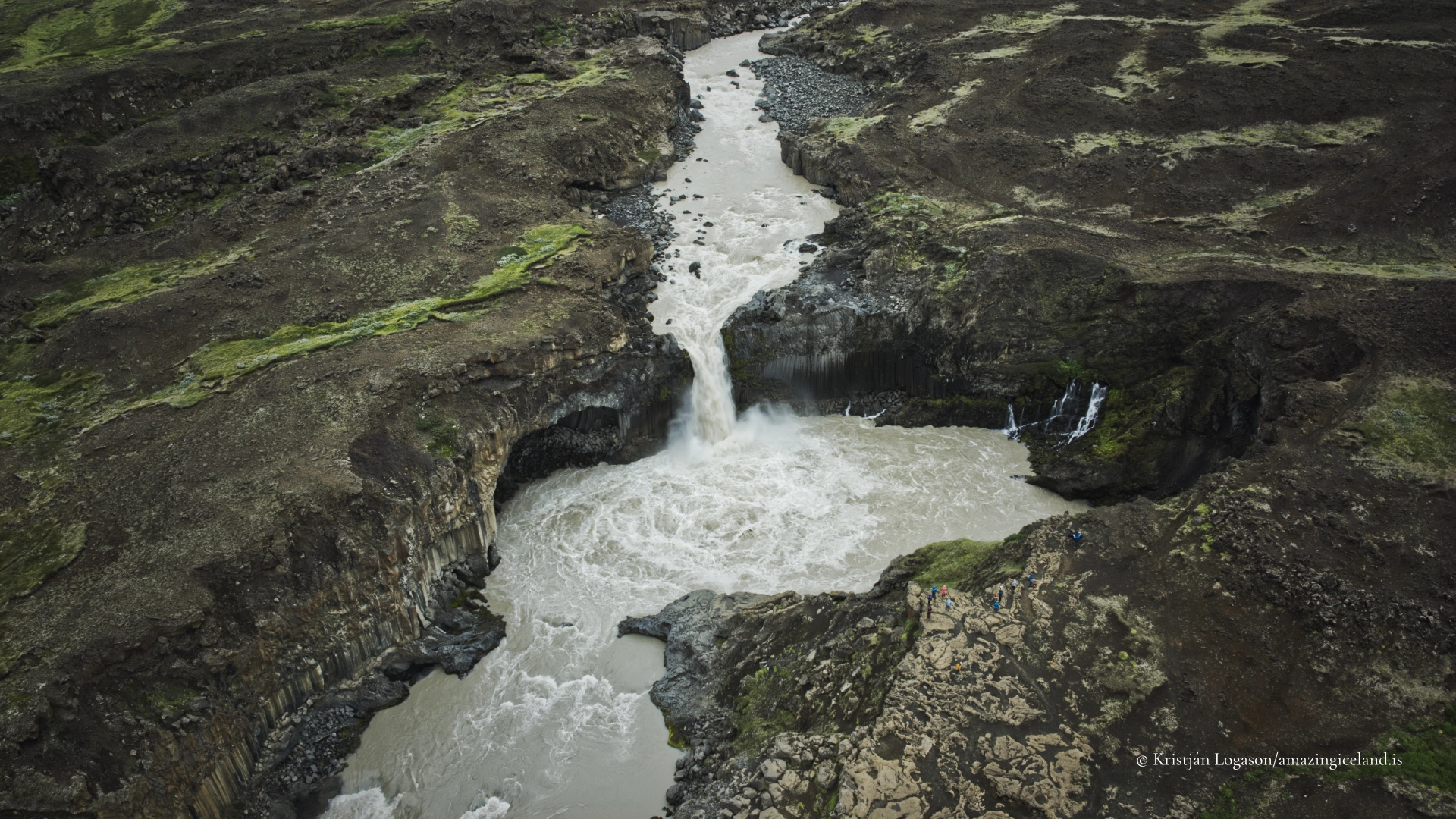
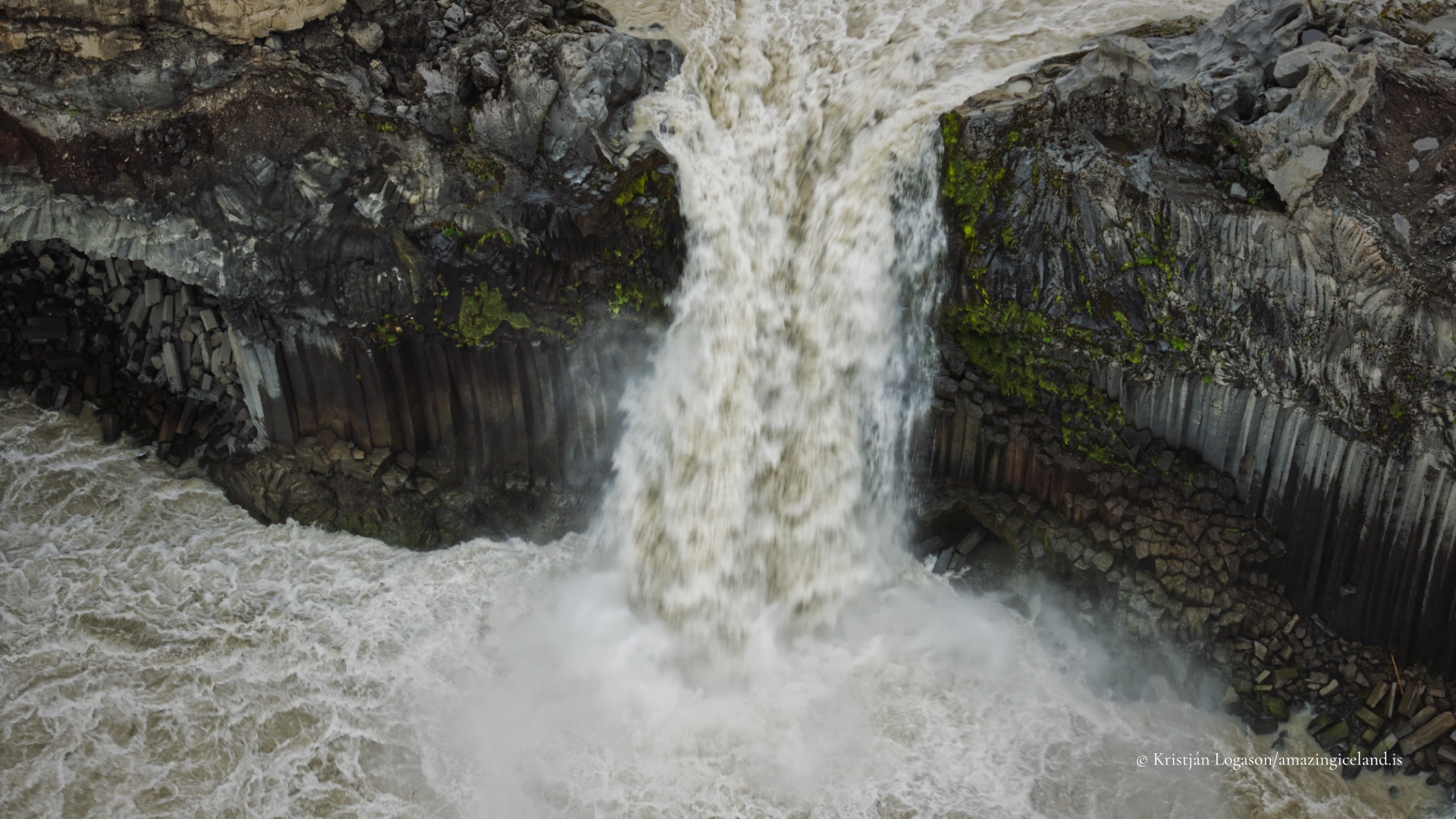
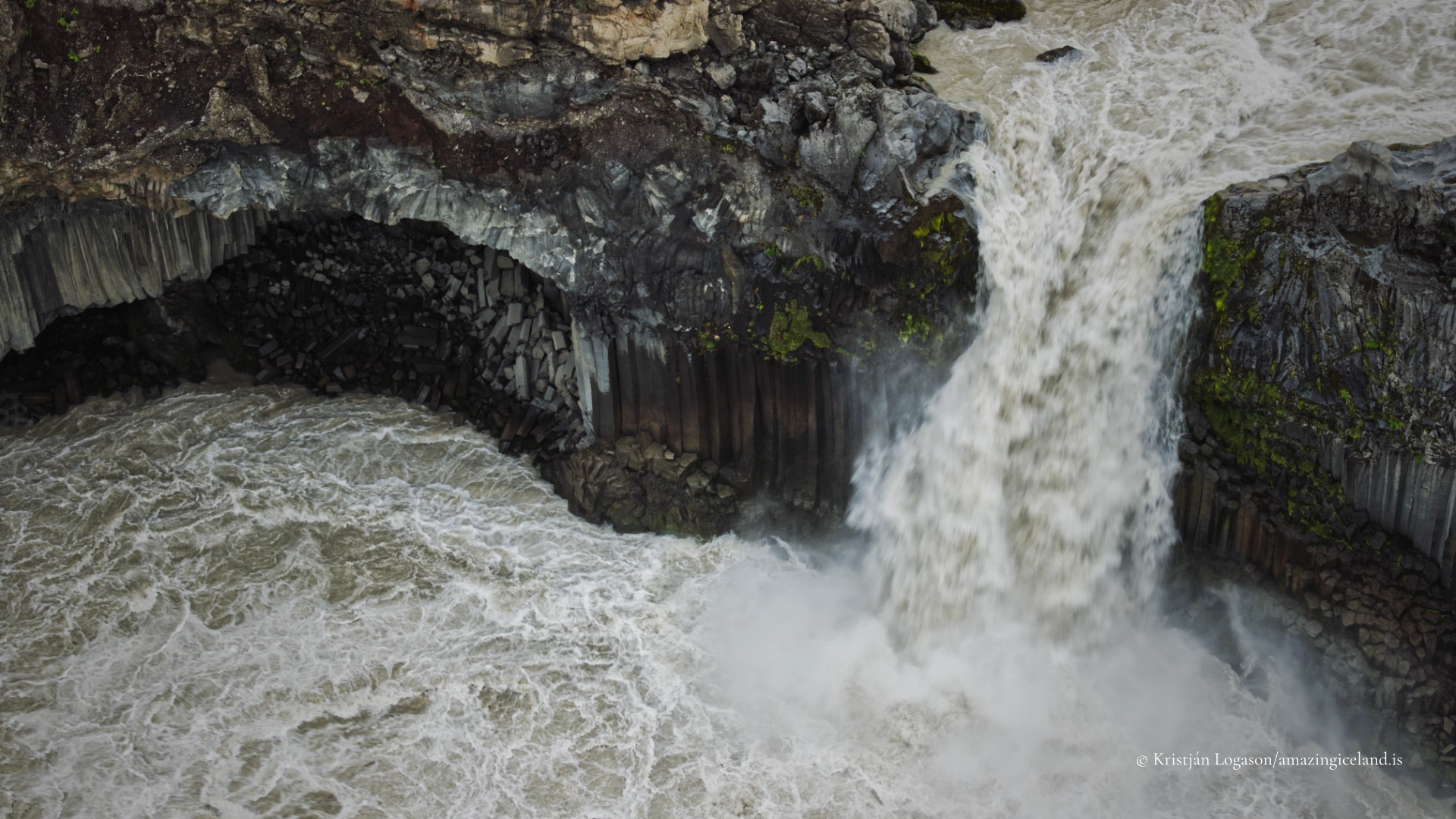
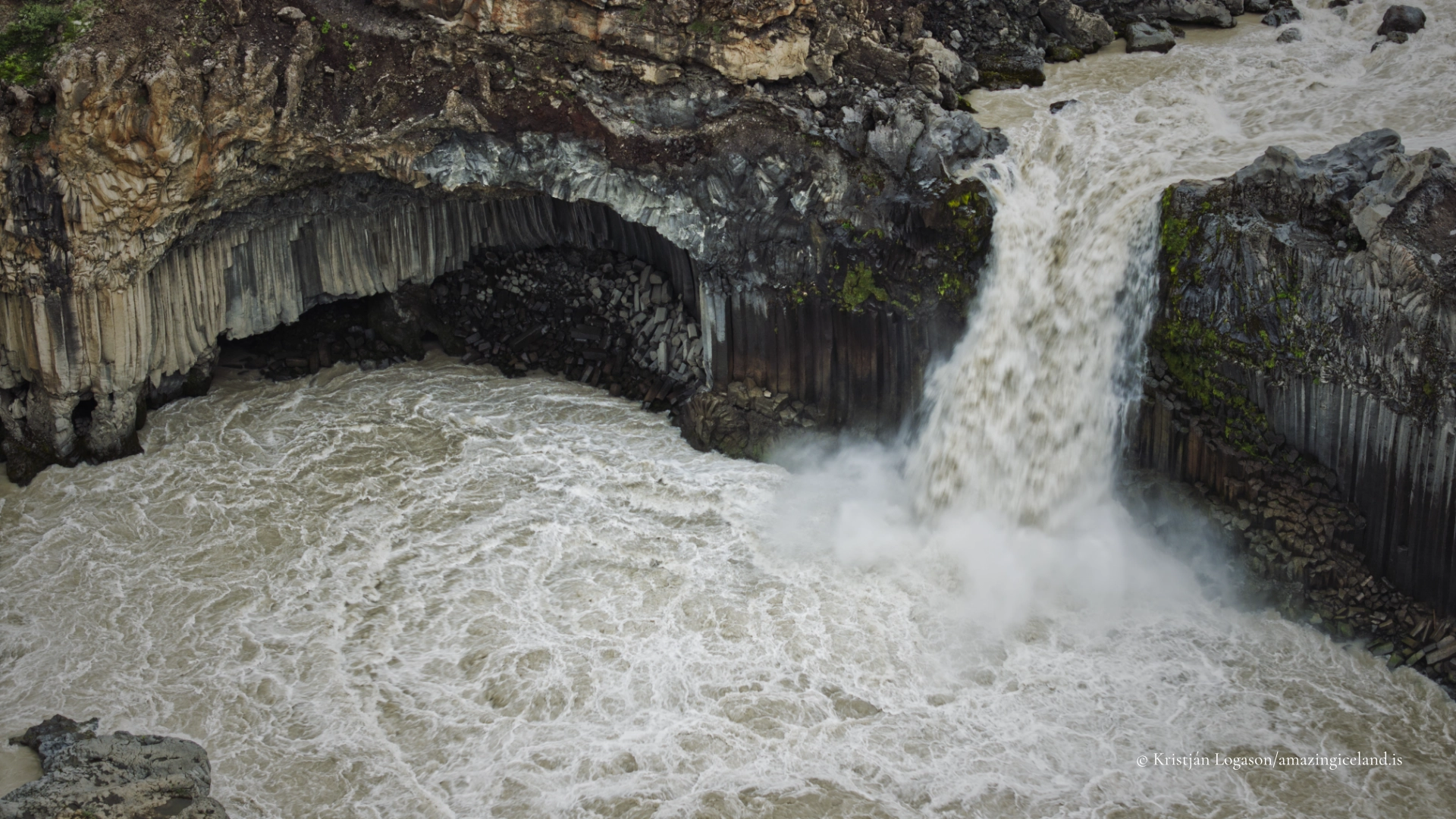
The columnar basalt at Aldeyjarfoss formed as thick basaltic lava cooled slowly and contracted. As thermal stress increased during cooling, the lava fractured into polygonal columns—most commonly hexagonal—perpendicular to the cooling surface. This process is mechanically driven and remarkably consistent, producing the near-architectural regularity that frames the waterfall today.
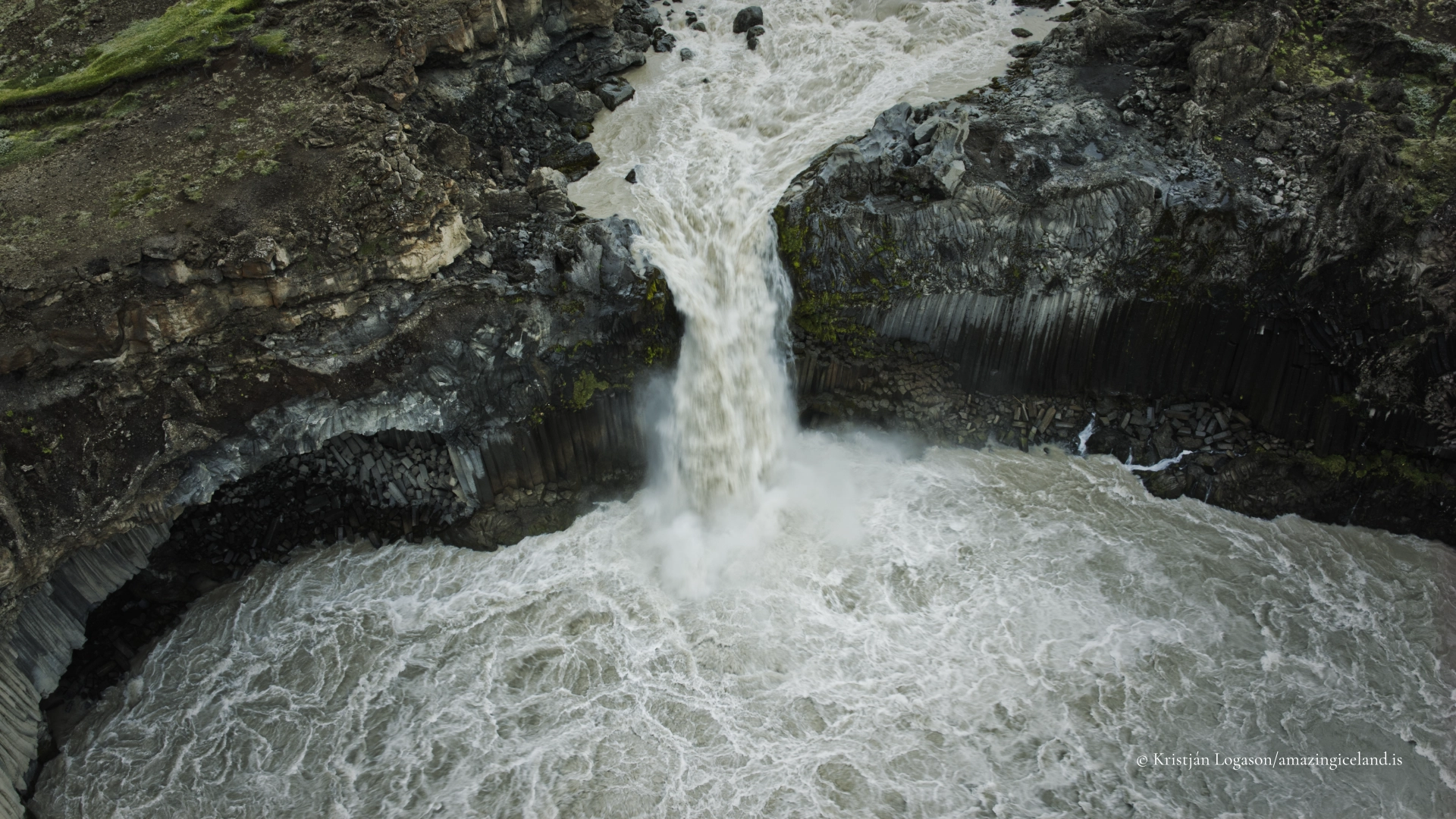
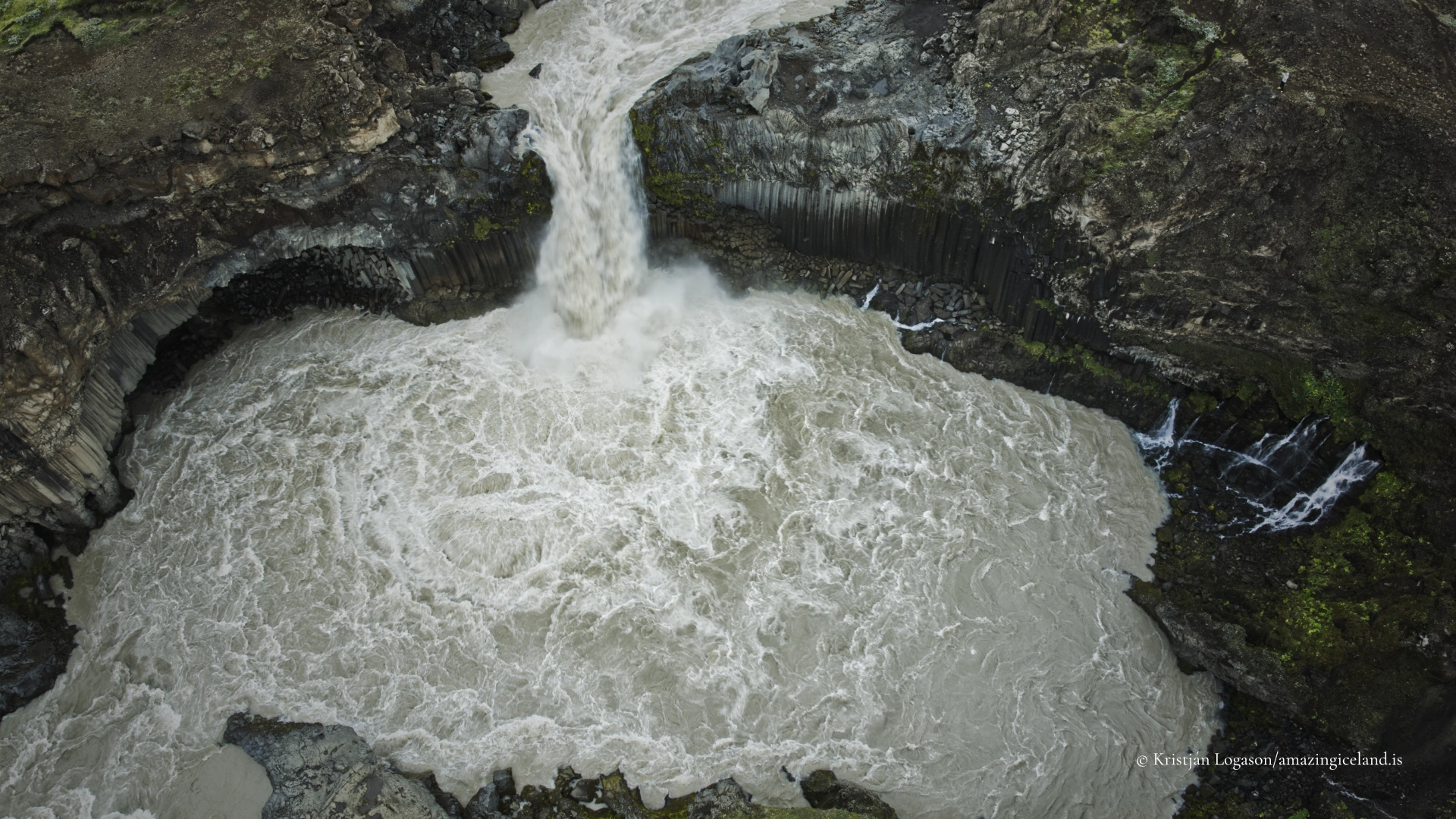
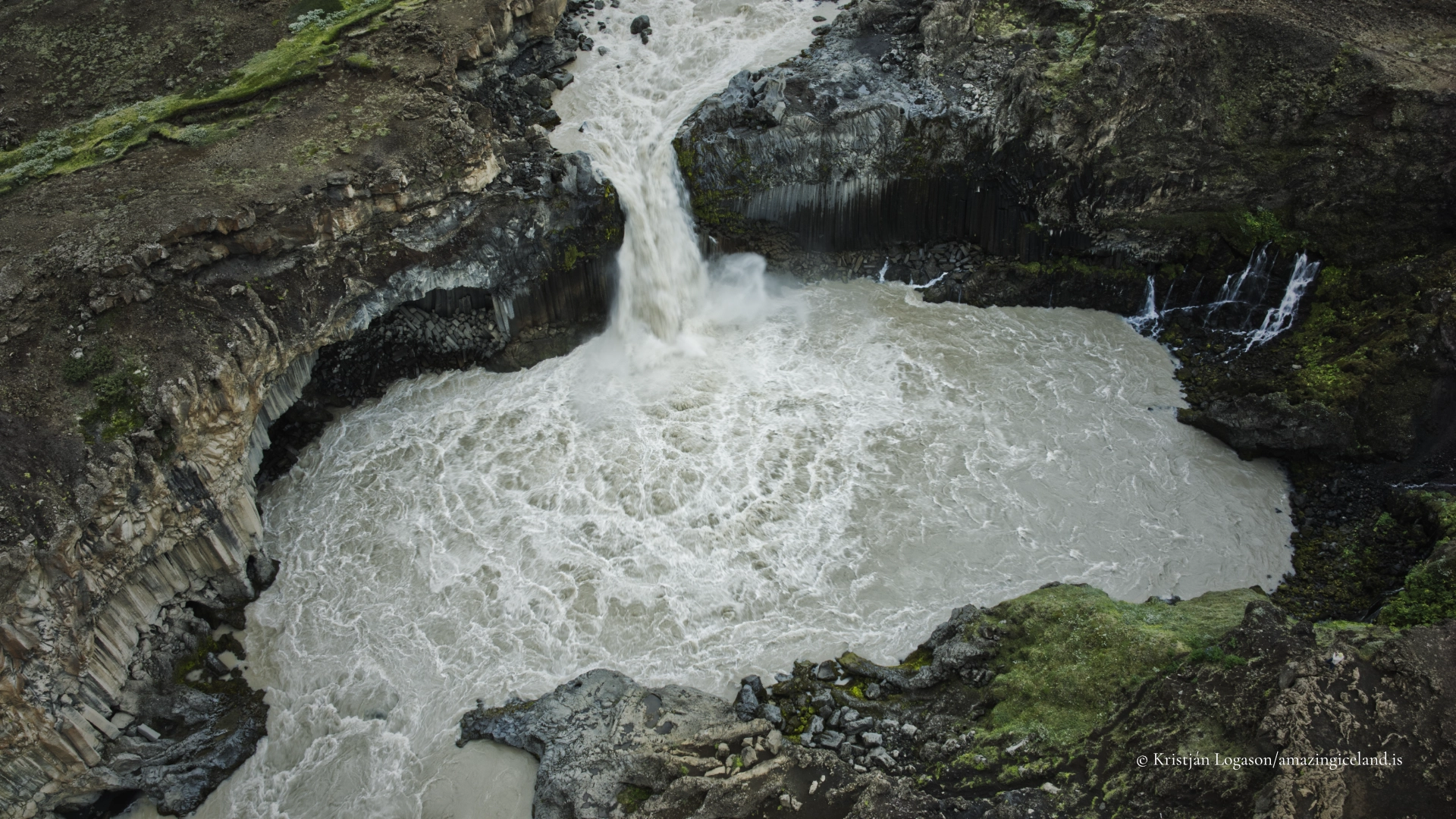
What distinguishes Aldeyjarfoss from other Icelandic waterfalls with basalt features is the density and scale of the columns. Rather than forming scattered cliff faces, the columns here create a semi-circular enclosure around the plunge pool, focusing attention inward. The waterfall does not dominate the landscape; it is contained by it. This containment is central to the site’s visual and geological coherence.
Over time, the erosive power of Skjálfandafljót exploited joints and weaknesses between columns, deepening the channel and undercutting the flow lip. The result is a stable yet evolving system: the basalt defines the form, while the river continues to refine it incrementally.
Hydrology, seasonality, and landscape dynamics
Skjálfandafljót originates in the Icelandic highlands and derives much of its discharge from glacial meltwater and seasonal precipitation. Consequently, Aldeyjarfoss is highly responsive to seasonal change. Summer typically brings higher flow volumes, increased sediment load, and greater acoustic intensity, while winter reduces visible discharge but amplifies the sculptural quality of the basalt through snow and ice accumulation.
Hydrologically, the waterfall is a short drop—approximately 20 metres—but its confined setting amplifies perceived force. Water accelerates rapidly through a narrow channel before plunging into the basalt-lined basin, generating persistent spray and turbulent circulation below. This turbulence contributes to ongoing erosion at the base, although the basalt’s durability significantly slows large-scale retreat.
From an academic standpoint, Aldeyjarfoss serves as an accessible example of interaction between columnar jointing and fluvial incision. Unlike waterfalls formed purely by differential erosion between rock types, Aldeyjarfoss is shaped by uniform basalt, where structure—not composition—controls erosion pathways. This makes it particularly useful for illustrating how internal rock architecture can guide surface processes.
The surrounding valley further contextualizes the site. Bárðardalur itself reflects repeated volcanic resurfacing followed by glacial and river erosion, reinforcing Aldeyjarfoss’s role as a localized expression of much larger regional processes.
Visiting Aldeyjarfoss—access, experience, and restraint
Aldeyjarfoss is reached via the Sprengisandur route (F26), with a short side road leading to a parking area above the waterfall. Access conditions vary significantly by season; the road is typically only passable in summer, and even then requires attention to weather and road status. The site’s relative remoteness is part of its character and should be treated as such.
From the parking area, a short walk leads to the main viewpoints. There are no constructed barriers or boardwalks at the waterfall itself, and footing near the edge can be unstable due to loose gravel and spray-polished rock. Approaching the brink requires caution; the visual temptation to move closer must be balanced against safety and environmental impact.
Aldeyjarfoss is not a destination for extended exploration but for focused observation. Its strength lies in compositional clarity: basalt columns, confined water flow, and minimal visual noise. In this sense, it rewards patience rather than movement—standing still and allowing scale, sound, and structure to register.
In a broader itinerary, Aldeyjarfoss pairs naturally with other highland-edge sites, but it stands apart from more touristic waterfalls. There is no infrastructure narrative here, no interpretive signage to mediate the experience. The landscape communicates directly, provided it is approached with restraint and respect.
Interesting facts:
- Aldeyjarfoss is formed entirely in columnar basalt, without contrasting rock layers.
- The basalt columns likely relate to extensive lava flows from the Bárðarbunga volcanic system.
- Despite its modest height, the waterfall’s confined geometry amplifies its visual and acoustic impact.
- The surrounding area marks a transition between Icelandic highlands and settled lowlands.
- Winter conditions can transform the site into a basalt-and-ice formation, though access is usually restricted.
Image Gallery

The Locomotive Elite
What do Donald Trump and Iceland’s Locomotive Elite have in common?
Far more than you think.
In The Locomotive Elite, you’ll uncover how a tiny clique in Iceland captured extensive control—of banks, courts, media, and even the central bank.
For decades they ruled, first democratically, then through corruption and in the end through crime, enriching themselves and their cronies while dismantling oversight.
The result?
One of the most spectacular financial collapses in modern history.
Photography tips:
- Use vertical framing: portrait orientation emphasizes column height and waterfall confinement.
- Work with shutter speed: slower exposures soften water against rigid basalt; faster speeds emphasize force and texture.
- Mind spray and wind: lens protection is essential, especially in higher flow conditions.
- Include foreground basalt: this reinforces scale and anchors compositions.
- Avoid edge silhouettes: they flatten depth perception in a site defined by three-dimensional structure.
Good cameras for Iceland
Sony A7R V

Sony A7s lll

Canon R6

Nikon Z6 lll

Destinations nearby
Good to have in Iceland